


Quick Summary
- We last wrote about bomb threats in 2021. In early November, a fresh wave of threats affected flights across Europe.
- Between Nov 2-6, flights were diverted or escorted by military jets, and some airports and runways temporarily closed. No explosives were found.
- Here’s what happened, what to expect from ATC, and what crews should do if a threat comes in.
Recent events
The map below shows where flights affected by bomb threats between Nov 2-5 landed or were searched. Some diverted, while others continued to their planned destination:
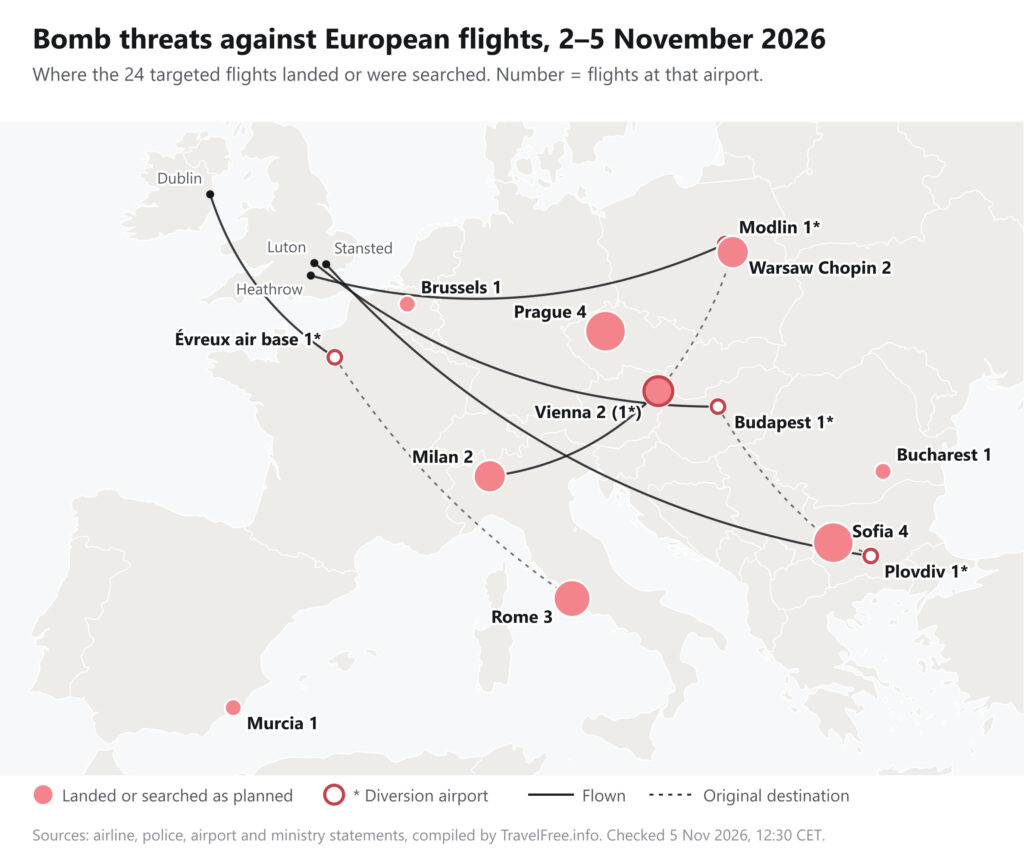
On Nov 6, more flights were affected. Hungarian fighter jets escorted flights from Brussels to Sofia and from Prague to Bucharest and Cyprus. Four flights over France landed at Paris Orly for inspection, and a WizzAir flight from Prague to Rome diverted to Venice. A Tarom flight from Prague to Bucharest and a Ryanair flight from Lisbon to Rome were also reported affected. No suspicious items were found!
So the response varied from flight to flight: some aircraft were diverted or escorted, others continued to their planned destination and were checked on arrival. Also on the 6th, the threats also reached beyond aviation – emails claiming responsibility were sent to several broadcasters, prompting a few building evacuations. Authorities have still not established who was behind the incidents or whether they were linked.
Who’s behind it?
Fake bomb threats are fairly common, but it was unusual to see so many in such a short time. It still isn’t clear who was behind them.
Warnings sent to airport operators in Rome and Milan were signed with “Fighters of the Male State” – but this is unlikely because the founder of the group has said it doesn’t exist anymore and isn’t involved.
Intelligence also suggests the hoaxes may have originated in Russia. While there’s no clear link to the Russian government, the threats arrived at a time of increased geopolitical tensions and warnings from intelligence that Russia may be escalating a campaign to unsettle Europe by targeting civilian infrastructure.
But for now, authorities haven’t directly attributed the bomb threats to any one state or actor.
What to expect from ATC
So what actually happens if your aircraft is unlucky enough to receive a bomb threat while inside European airspace?
EASA publishes procedures for air traffic control under Section 11 of its Rules of the Air, Unlawful Interference. Here’s a summary of what it says.
If a bomb threat is received, ATC must go to work for you. Aside from accommodating any requests, they will notify adjacent ATS units, inform your operator and notify rescue coordination centers and relevant authorities.
If the threat is against a specific aircraft, the crew will be notified immediately. ATC will request your intentions, which will be shared on your behalf.
They will handle your flight as expeditiously as possible, as long as they don’t cause any additional danger. This includes a re-clearance to any destination without delay, along with level changes to reduce differential cabin pressure.
On landing, expect to be directed to an isolated parking position to remain clear of other aircraft and buildings.
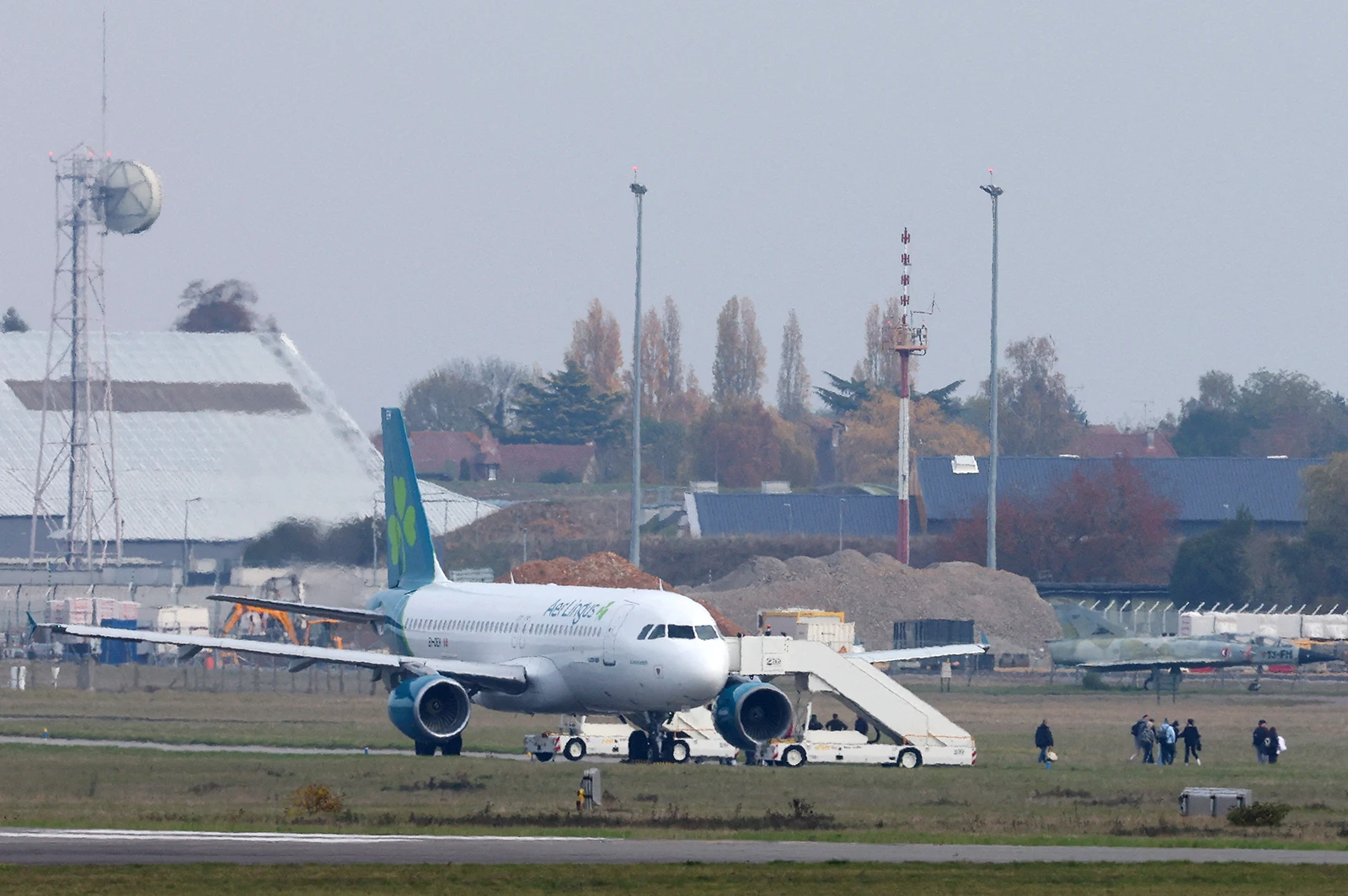
After landing, expect to directed to an isolated area. Be careful of passenger safety after you exit.
One thing that is important to note – ATC will not offer any advice to the crew on how to deal with an explosive device. That responsibility remains with the relevant authorities in conjunction with your operating procedures.
What to do onboard
Always treat any bomb threat as genuine. For a full briefing on how to handle one onboard, see our original article. But here’s a brief summary if you receive a threat:
- Always let ATC know without delay. That will get the wheels in motion on their side, and they can help you pick a suitable diversion airport.
- Conduct a thorough search of your aircraft – especially of places that may have been missed during security checks or where it might be easy to hide something e.g. lavs, galley, storage areas. While searching, use the HOT principle – you’re looking for anything Hidden, Obviously Suspicious, or not Typical.
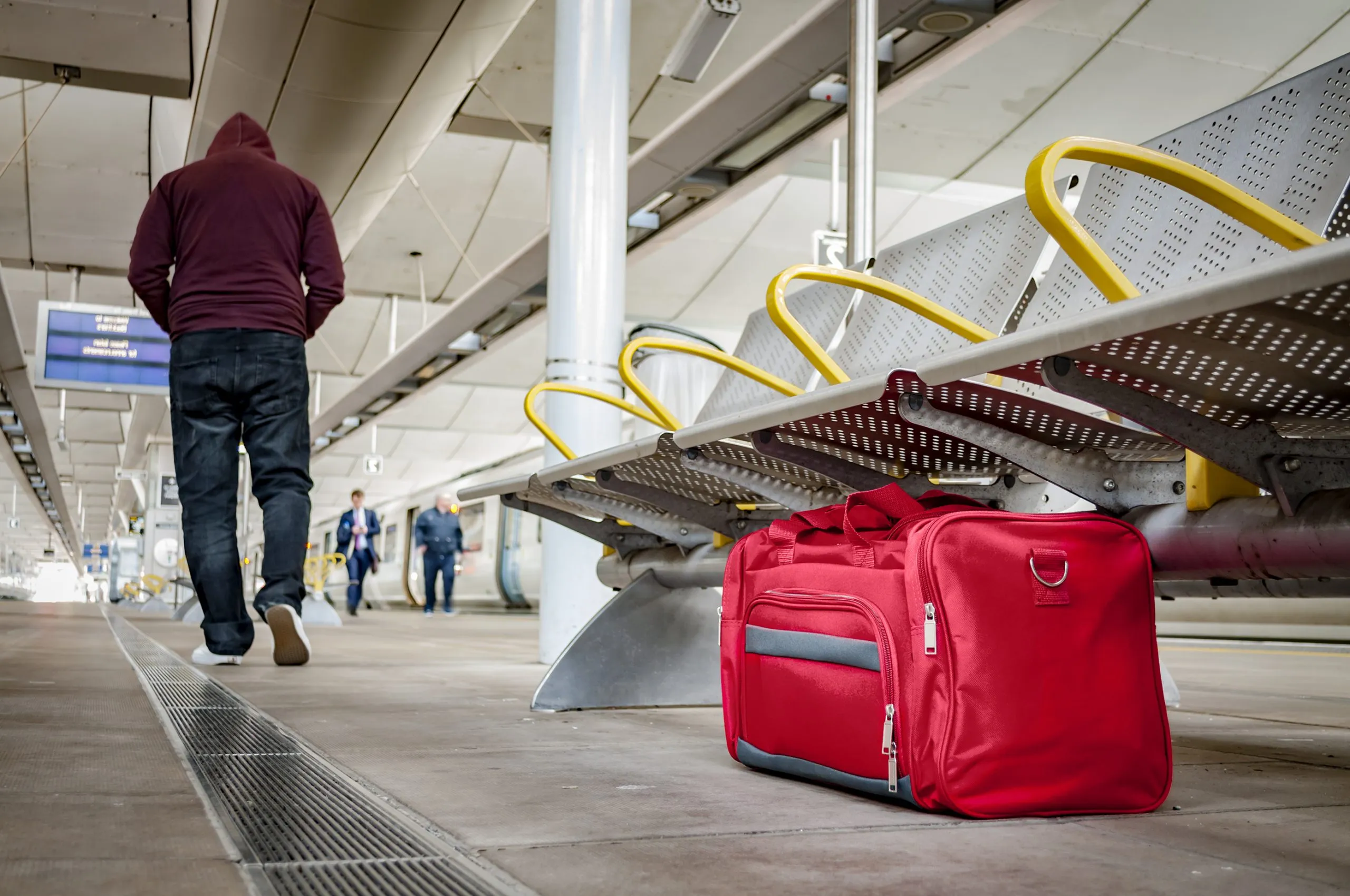
When searching for a suspicious device, remember the HOT principle above.
- If you find something, don’t touch it unless a checklist says it’s appropriate. Many manufacturers have a bomb-on-board checklist, which may include relocating the device to the least risk bomb location.
- Move passengers away from the device and consider gradually reducing the cabin pressure differential to lessen the impact of a detonation. Avoid abrupt changes.
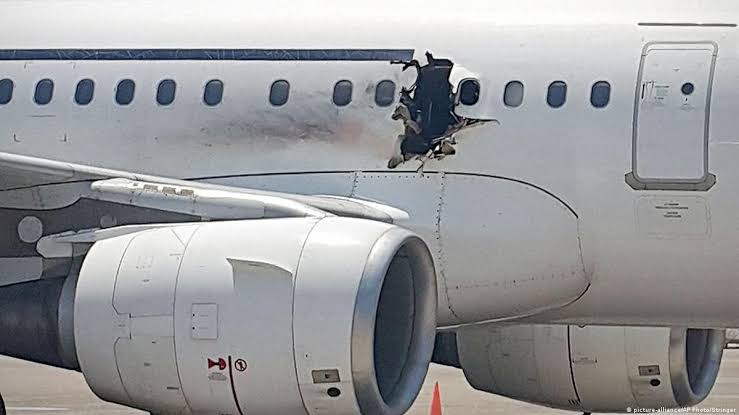
An incident from Somalia in 2016 shows how low cabin differential can limit damage from an onboard detonation.
- Finally, think about what is going to happen after you land. Make sure your crew is briefed on a possible emergency landing and evacuation. You’ll likely be parking in a remote spot, so look out for your passengers once they’re off the aircraft.
More info
With threats against aircraft unlikely to end anytime soon, it helps to do more reading. Here are the official sources.
- EASA’s Easy Access for the Standardized European Rules of the Air (SERA). Look for Section 11, Unlawful Interference.
- If you’re after US guidance, the best place to look is the FAA AIM Chapter 6, Emergency Procedures and Flight Services Order JO 7110.10EE Chapter 3 – Emergency Services.
The vast majority of bomb threats against aircraft turn out to be hoaxes. But if you’re unfortunate enough to receive one, knowing these procedures means you can act quickly and calmly to protect your passengers and aircraft.

More on the topic:
- More: Haiti Crisis: Airport Attacked, Aircraft Shot
- More: Airspace Risk: Conflict Zones and Security in 2023
- More: New US Terrorism Warning: What’s the impact to aviation?
- More: Beyond Covid: The Biggest Security Risks We Face Right Now
- More: Bomb Onboard: Do you know your procedures?
More reading:
- Latest: Bomb Threats: What to Expect from ATC and What to Do Onboard
- Latest: Winter Ops: The Stuff You Don’t Want to Forget
- Latest: Paris Le Bourget: Recent Crew Reports
- Safe Airspace: Risk Database
- Weekly Ops Bulletin: Subscribe
- Membership plans: Why join OPSGROUP?





 Get the famous weekly