


EASA has issued a new Safety Information Bulletin (SIB) warning operators about the potential introduction of Jet A fuel at European airports that have historically supplied only Jet A-1.
As supply chain pressure builds from the ongoing crisis in the Middle East, suppliers and airports may increasingly begin to consider the wider use of Jet A to help bridge the gap.
It’s not that Jet A is any more dangerous. Far from it – it’s the standard offering throughout North America. But for European ops, this matters because most procedures, assumptions and fuel handling systems have been built around Jet A-1 for decades. And EASA are concerned that this may introduce new risk for operators.
Jet A vs Jet A-1
It helps to frame a little context here, – I mean jet fuel is just jet fuel, right?
Well, not really. And this is where the danger lies.
But for starters, it isn’t about quality. There’s very little difference in the actual refining process. Jet A and Jet A-1 both come from the same level of refinement, known as a ‘kerosene fraction.’
The key operational difference is freezing point – how cold than can get before they start to wax up and stop flowing properly.
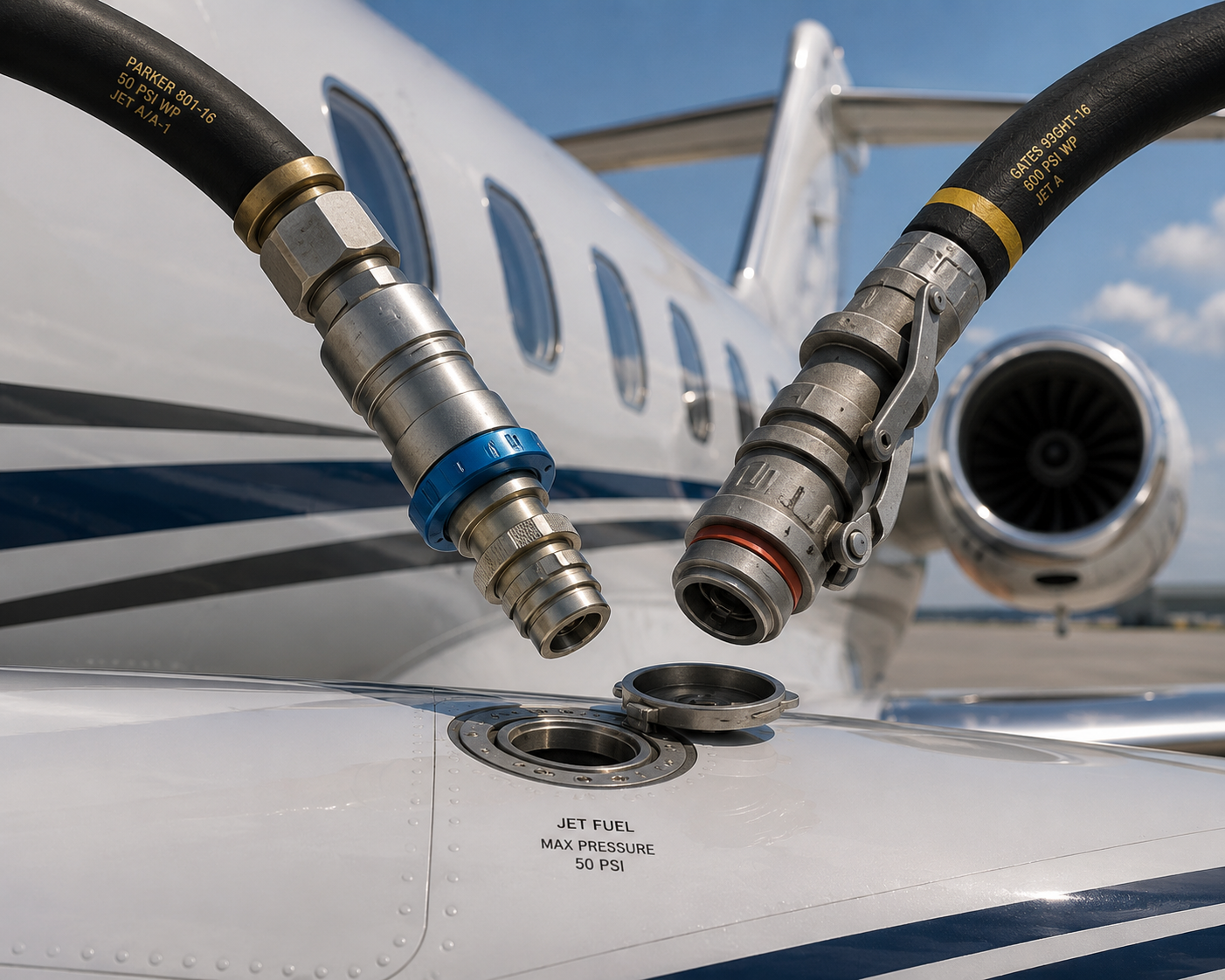
Jet A begins to freeze at -40°C, compared with -47°C for Jet A-1.
Jet A-1 has a lower freezing point, typically favoured for high-latitude, long haul operations.
Jet A-1 is refined to handle colder temperatures than Jet A, which is why it became the standard for international and long haul flying – especially on routes through very cold airspace.
There are a couple of other smaller differences too. Jet A-1 normally includes an anti-static additive, and the two fuels are certified under slightly different standards in the US versus the rest of the world.
But let’s cut to the chase. Operationally, pilots and dispatchers mainly care about freezing point, availability and whether an aircraft is approved for one or both fuels.
Right, onto the EASA bulletin…
What are EASA worried about?
Essentially, the risk of ‘fuel grade confusion’ between suppliers, operators, dispatchers and flight crew.
One example in the bulletin is especially concerning: an aircraft may receive Jet A, but the electronic fuel ticket incorrectly identifies it as Jet A-1. In that case, crews could unknowingly operate outside safe fuel temp margins.
There’s also a broader operational issue. If some airports in a region switch to Jet A, while others remain Jet A-1 only, crews and dispatchers may have to start tracking fuel grade availability as part of normal flight planning. EASA says this may affect route planning, alternate selection, fuel contingency margins, cold weather ops and overall crew workload – ie. it has potential to become a fuel-induced can of worms.
Then there’s the issue of commingling, and it’s sadly not as fun as it sounds! EASA are concerned about mixing of the two fuels. If they are combined in airport systems, operators may need to apply more conservative operating assumptions unless aircraft manufacturers provide clearer guidance. In other words, assume the more restrictive limitations apply.
If the two fuels are mixed, it’s important to use the more restrictive limitation: a -40 degree freezing point.
As we touched upon before, EASA is also warning against the dangerous assumption that ‘jet fuel is jet fuel.’ For crew, the practical takeaway is that fuel grade can no longer be treated as background information.
Operators should expect greater emphasis on checking Notams and AIPs carefully for fuel grade info, verifying what fuel was actually uplifted, and paying closer attention to fuel temperature margins on long/cold sectors.
And to connect all the dots – dispatch, fuel providers and flight crew all need to make sure they’re all working off the same page.
So is this all just plain dangerous?
No. The bulletin stops short of calling this an unsafe condition, or issuing mandatory action. What they are saying that Jet A can be used safely in Europe if the transition is properly managed.
EASA has essentially issued a warning that Europe and other traditionally Jet A-1 regions are entering unfamiliar territory operationally. The biggest risk is not the fuel itself – it’s confusion, assumptions and mismatched procedures during the transition.

More on the topic:
- More: Middle East Crisis: Impact on Jet Fuel Prices
- More: EASA’s New Cyber and Data Risk Rule for Operators in Europe
- More: Ops to Europe: How to Get a Third Country Operator (TCO) Approval
- More: EASA Removes CZIBs: Middle East Risk Gets Harder to Read
- More: Why EASA has Withdrawn Airspace Warnings for Iran and Israel
More reading:
- Latest: NAT Pack 2026: All the North Atlantic goodies
- Latest: New 2026 NAT Oceanic Checklist
- Latest: The Bahamas wants your cash
- Safe Airspace: Risk Database
- Weekly Ops Bulletin: Subscribe
- Membership plans: Why join OPSGROUP?






 Get the famous weekly