



We recently received a report from an OPSGROUP member of a surprise ramp check at LFPB/Le Bourget.
Police attended the aircraft after boarding and requested fuel receipts and questioned if the passenger was also the aircraft owner.
This did not appear to be a routine SAFA check, so we reached out to the group for more info and it turns out this isn’t uncommon.
France has always been strict with its enforcement of charter rules, but subsequent reports from members indicate an uptick in active enforcement lately – not just a random one-off.
The responses we received confused us a little, until we realised there are two independent and distinct issues authorities are checking:

🔍 Illegal charter flights disguised as private flights.
🔍 False declarations to reduce fuel tax.
Here is a closer look at both of these issues, so you can have your paperwork in order when next les forces de l’ordre come a knockin at your jet.
Is this really a private flight?
This one has to do with the charter pax levy.
In France, if you are operating a charter, air taxi or any other commercial flight departing the country under Part 135, it is treated the same as an airline flight.
Three taxes are applied to these flights per passenger.
The first is the Civil Aviation Tax (TAC). This varies between €4-9 depending on whether you flight is short haul or long haul. Think of this like a standard departure tax.
The second is Airport Tax (Taxe d’Aéroport). The charge is between €10 – 18 depending on the airport class. Big Class 1 airports (like Le Bourget) are the most expensive. This is used to find things like RFF, security and airport infrastructure.
Lastly, there’s Solidarity Tax (the big one). This is what most people mean when they refer to ‘Charter Tax.’ This increased massively in 2025. A typical BizAv charter flight would incur a charge of €420 per passenger for flights within Europe, or up to €2100 per passenger for longer-haul flights.
No wonder authorities are checking you’ve paid it, and it’s the one causing all the noise.
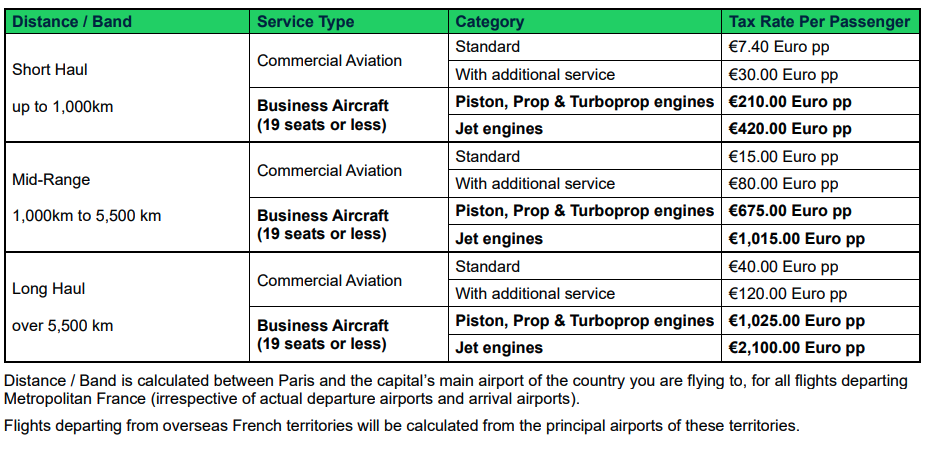 Bottom line (and try saying this quickly three times over) – when departing France under Part 135, expect a per-pax tax stack.
On rare occasions, charter operators have declared their flights as private to avoid these charges. It seems authorities are clamping down on these ‘fake’ private flights.
For this issue, authorities are checking who actually owns or controls the aircraft. The red flags they’re looking for include passengers who are not registered owners or share holders, complex ownership structures (such as trusts) with no clear links, passengers who appear to be ‘clients,’ and empty legs that aren’t truly private repositioning.
Hence why the passenger in the report was asked if he was the owner of the aircraft.
VAT on Fuel
It’s an entirely separate issue.
In France, VAT is paid on fuel as you buy it – but whether you can re-claim it depends on your operation. Because of this, France is one of the more expensive countries to uplift.
Flights operated under an AOC (charter, airline etc) are exempt and can seek reimbursement later.
Private and non-commercial flights aren’t, meaning VAT becomes a real cost (typically around 20%).
The gap is significant, and so there is an incentive to mis-declare a private flight as commercial.
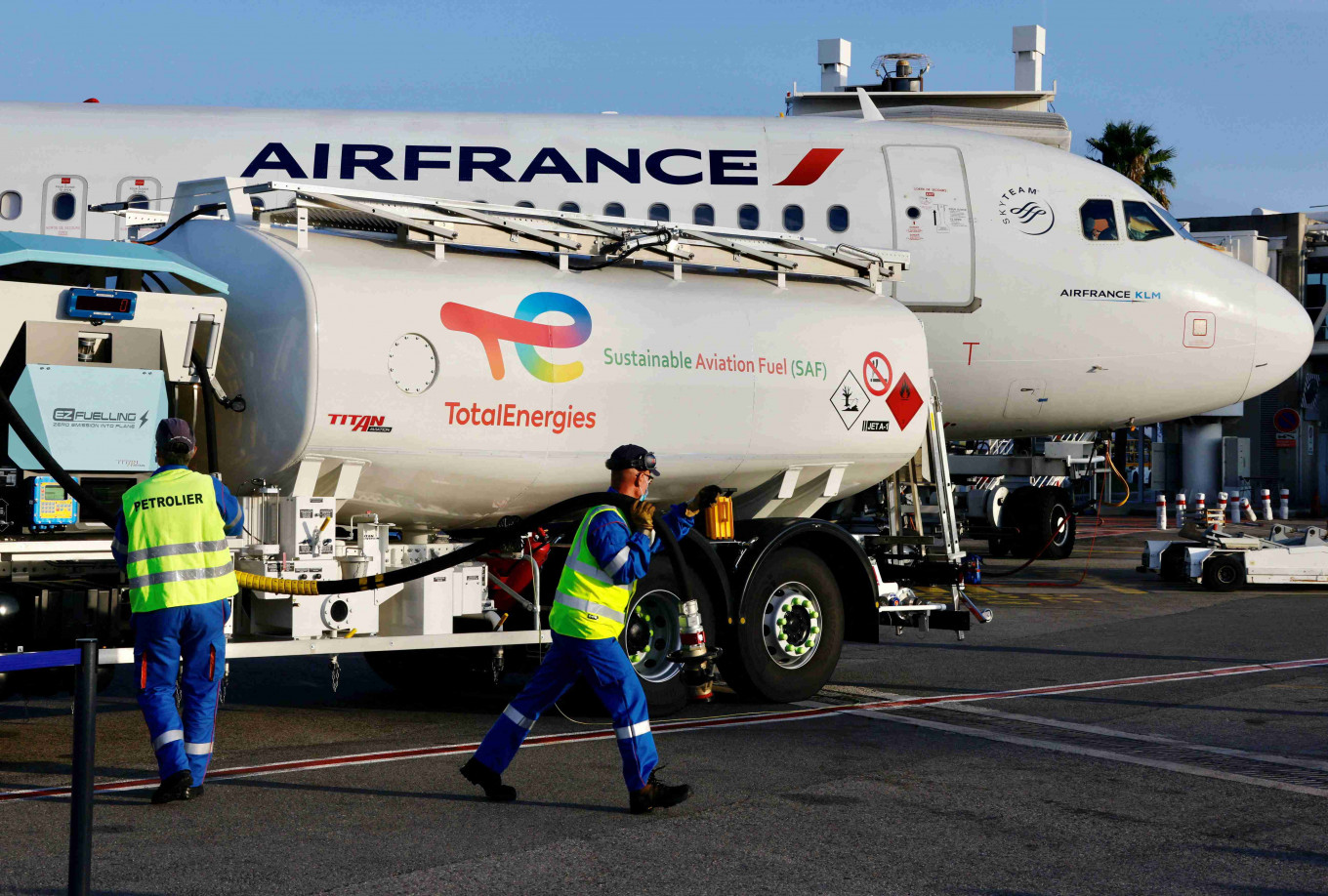
In France, flights operated under an AOC (charter, airline etc) are exempt from VAT.
When authorities board your aircraft, they want to check your fuel uplift receipts and other docs.
Red flags include using an AOC number that doesn’t match the actual flight, inconsistencies in your flight plan (G vs N), AOC status or a paper trail that leads to an invalid AOC.
Penalties can include back payment of VAT and fines.
So why are they sniffing around so much at Le Bourget?
These issues aren’t new, but it appears the frequency of enforcement is.
LFPB/Le Bourget is Europe’s busiest business aviation airport. It receives a huge volume of private aircraft, with very little airline traffic to dilute the numbers.
Recent tax increases (especially the solidarity tax) have unashamedly targeted premium travel, private jets and high-emission-per-passenger ops.
Le Bourget fits the profile perfectly for active enforcement. It isn’t being singled out by name in the rules, it’s just the biggest, most concentrated, and most unavoidable BizAv hub in the country.
If you operate there, the safest approach is to assume you will be checked.

More on the topic:
- More: Flying commercial to France? Get ready for API/PNR
- More: Maps of Misery: Europe Summer Parking Guide 2026
- More: How to survive a French ATC strike
- More: France Summer BizAv Parking Tips
- More: Heat Damage in Nice: When APU Rules Damage Aircraft
More reading:
- Latest: NAT Pack 2026: All the North Atlantic goodies
- Latest: New 2026 NAT Oceanic Checklist
- Latest: The Bahamas wants your cash
- Safe Airspace: Risk Database
- Weekly Ops Bulletin: Subscribe
- Membership plans: Why join OPSGROUP?


 Get the famous weekly





Interesting write-up, but I think it’s worth adding a bit more nuance based on the nature of those controls.
While fuel VAT and passenger taxes are definitely part of the picture, a lot of these checks in France are also very clearly linked to the long-standing issue of illegal commercial operations being presented as private flights.
This is something authorities have been focusing on recently, especially with smaller aircraft (PC-12, TBM, etc.), where arrangements can sometimes blur the line — for example with separate invoicing for aircraft and crew. On paper it may look private, but in reality it can fall under public transport without the appropriate AOC.
That’s typically why inspectors ask questions like:
• Who owns the aircraft?
• Who is paying for the flight?
• What is the link between passengers and the aircraft?
These are key elements to assess whether the flight is genuinely private or not.
So rather than being only about tax enforcement, it’s often a broader compliance check, where:
• illegal charter,
• incorrect flight classification (G vs N),
• and tax aspects
all come together.
For those who want to dig deeper, the French authorities provide quite a lot of guidance on these distinctions (and useful references here):
https://www.ecologie.gouv.fr/politiques-publiques/transport-public-prive
(site in French only, but very relevant).
Overall, I’d say the article is correct, but in practice these ramp checks are usually part of a wider effort to ensure the nature of the operation matches the regulatory framework.
Thanks for the feedback Baz, appreciated.
There’s an OPs Group review of LFPM – search ‘Paris without the Pain’.
It gets worse, before it maybe gets a little better.!
So Fuel in France not only has VAT(20%) but also TICPE (The internal consumption taxe on oil products). It’s currently a fixed rate at €0.7256/litre. That also adds up pretty quickly. Private flights pay this unless they have an exemption, as do even commercial flights internal to France (unless the AOC holder is exempt). It can get complicated, but as it’s France nobody is surprised by this extra layer of nonsense.
Given the now significant expense from flying directly long range from Le Bourget, and the other hassle of Le Bourget’s limited operating hours, meaning your PAX have to be leaving their nice evening out in Paris by 9pm or or so, to get to Le Bourget to be able to get out in the evening, it may well be worth considering the alternative….LFPM. Only 45-50 minutes from central Paris, via a variety of nice easy motorways and unrestricted for slots or operating hours or noise. Leave at 2am, fine by us.
The hic, no customs/immigration, so only to/from EU/Schengen airports. But bitch and moan in writing as we need to show the authorities there would be interest in customs and a review is in process now. The alternative to LFPB.
Ramp checks…..they can occur…we had two happen in the last year…..and only during the weekday, normal operational hours…..never yet for the night flights…