Singapore Ops Update: Two New Rules to Know Before You Go

If you’re planning ops to Singapore this year, expect it to be busier than ever. Traffic into Singapore exceeded previous records last year, and slots and parking are already harder to secure than they used to be.

In addition to the capacity challenges, there have also been changes to immigration and operator procedures that can catch you out if they’re not on your radar. They’re not complicated, but they do mean doing things earlier than before. These include the new No-Boarding Directive (NBD) for passengers and updated requirements around the Singapore Foreign Air Operator Certificate (FAOC).

NBD – No-Boarding Directive

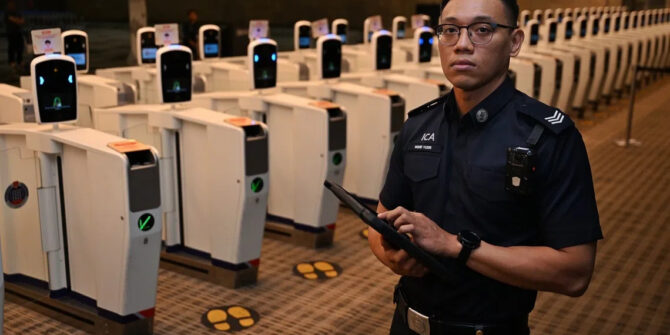
Effective 30 Jan 2026, all operators (private or commercial) must check passengers in advance for a clearance (or refusal) to enter Singapore.

You can check the official announcement on this here. The process sounds more complicated than it really is. In the past, passengers who were denied entry would only be identified after arrival, once immigration determined they were ineligible to enter Singapore. This could be due to a lack of visa, being assessed as an undesirable or prohibited traveller, or a red flag arising from their SG Arrival Card submission.

Previously, the system waited until the passenger was already on Singapore soil, which was always somewhat counter-intuitive. From 30 January, however, an operator must receive confirmation that a passenger is cleared to enter (effectively a green light). If you carry a passenger into Singapore without this clearance (even if that passenger ultimately would have been approved) the operator is liable for significant penalties under the Immigration Act.

So what do you need to do?

As the operator, your role is actually very simple. You must submit your general declaration / passenger manifest to your agent or handler ahead of departure. Current guidance is no later than two hours before departure. This allows the handler to submit the passenger details via a dedicated ICA portal.

That portal will return one of two responses: “OK to Board” or “Do Not Board.”

The key takeaway is this: you must receive one of these two responses before departure. In this case, no news does not mean good news.

The upside is that operators do not need access to the portal themselves (and cannot access it anyway). Everything is handled by your agent. Your only responsibility is to ensure the passenger manifest is submitted in good time before departure.

FAOC – Singapore Foreign Air Operators Certificate

In Singapore, any foreign AOC holder (Part 121 or Part 135) is now required to apply for a FAOC (local validation of your AOC). This process is completed online via the Flight SG portal.

You should allow 2-3 weeks to receive your FAOC, which is typically valid for 3-6 months on the first application. Subsequent approvals generally come with a longer validity period. Be aware that CAAS conducts ramp checks on all FAOC holders, and in particular, operators are more likely to be ramped during the renewal period. CAAS follows the standard SAFA inspection methodology.

The FAOC itself is not new. What has changed is the introduction of ANR-129, which is now in force. This replaces the old FOSP (Foreign Operator Surveillance Programme) and the permit rules that went with it.

So what does ANR-129 change?

Quite simply, any aircraft listed on an AOC must now hold both a valid FAOC and a permit to operate into Singapore. CAAS no longer exempts ferry, positioning, or so-called “private” flights if the aircraft is on an AOC.

The only operations exempt from the FAOC requirement are private aircraft (Part 91 / CAT 2) and certain emergency situations. Overflights are also exempt. This means that any aircraft operated commercially overseas must still hold a FAOCif it is coming to Singapore for maintenance, or even if it is operating an owner-only flight.

The FAOC application process is well documented on the CAAS website, so I won’t repeat it here. The key point is to apply well in advance of your planned operation to avoid any last-minute surprises.

CAAS is currently conducting frequent ramp checks to ensure compliance, and ground handlers are now verifying FAOC permits before confirming airport slots.

More info on Singapore ops

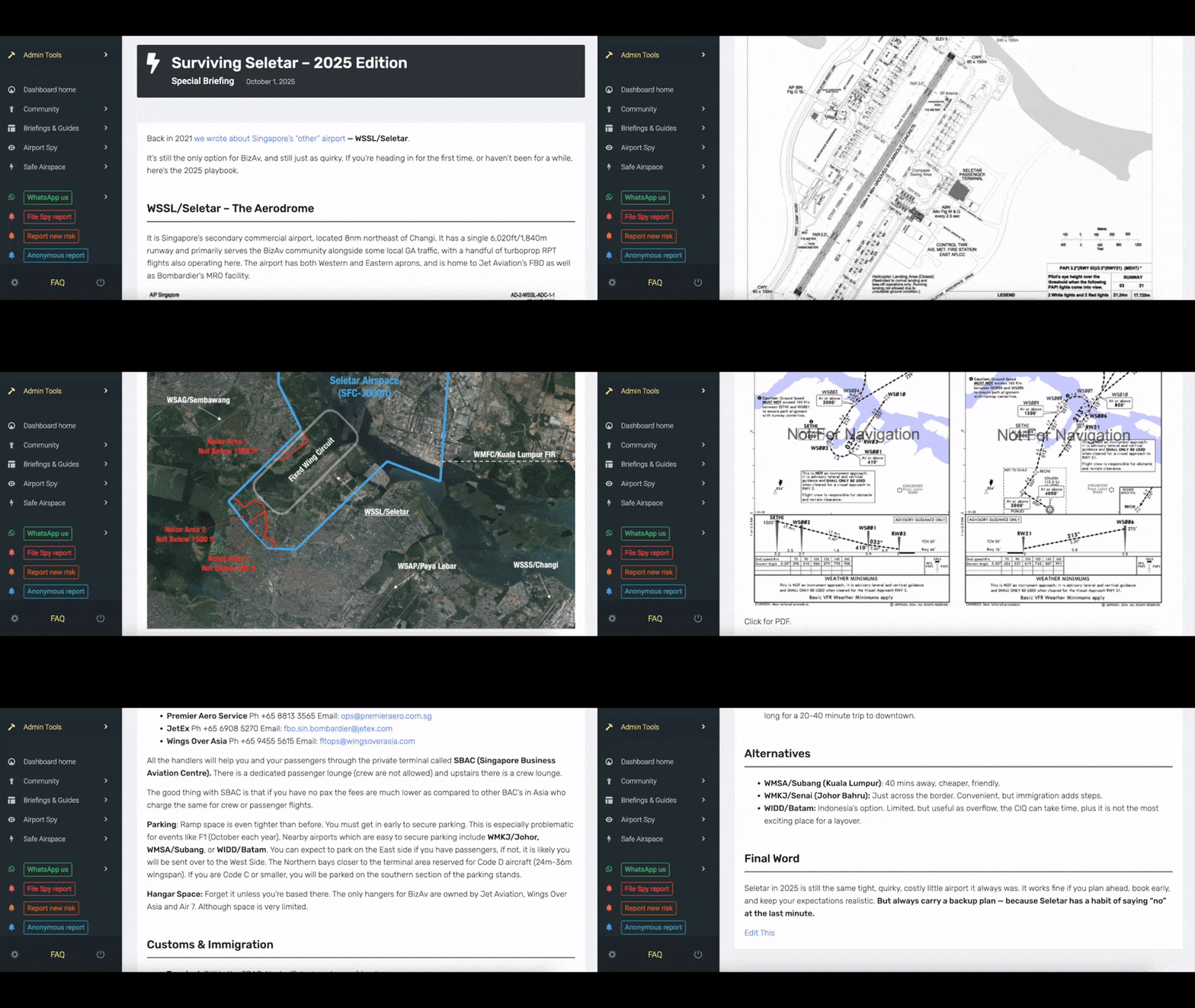
If you’re flying a bizjet into Singapore, WSSL/Seletar is your only option. Our recent guide covers the key survival tips – from managing the visual-only arrivals to dealing with limited parking and other quirks that can catch you out. OPSGROUP members can access the guide via your members dashboard here.


Ops Planning for the 2022 Singapore Airshow

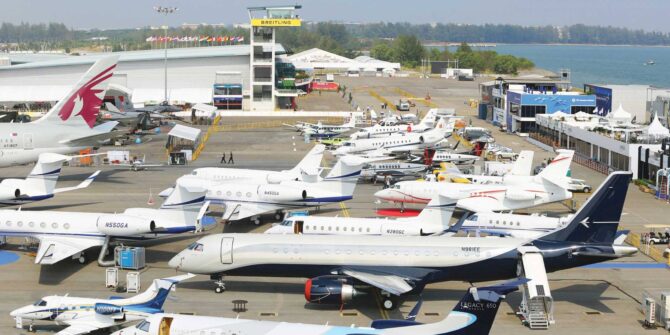
The Singapore Airshow is back, and taking place from Feb 15-18 at WSSS/Changi airport.

As one of the largest aviation events in Asia, things are going to get busy.

If you’re flying in, here is a rundown of everything you’ll need to know before you get there.

Airport Closures

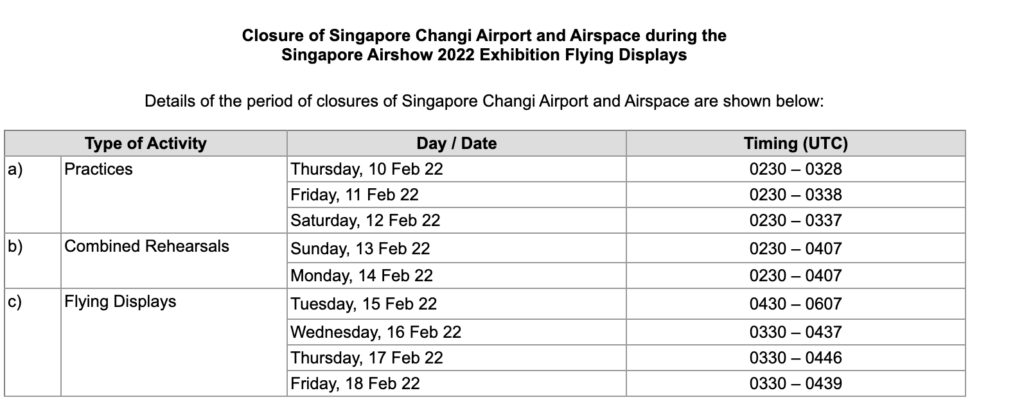
From Feb 10-18 Changi will close to all arrivals and departures for over an hour in the middle of each day. This is to allow for practice displays and then the main event.

The closures all commence late in the morning and vary slightly each time. You can find the exact timings below – Singapore’s time zone is UTC + 8.

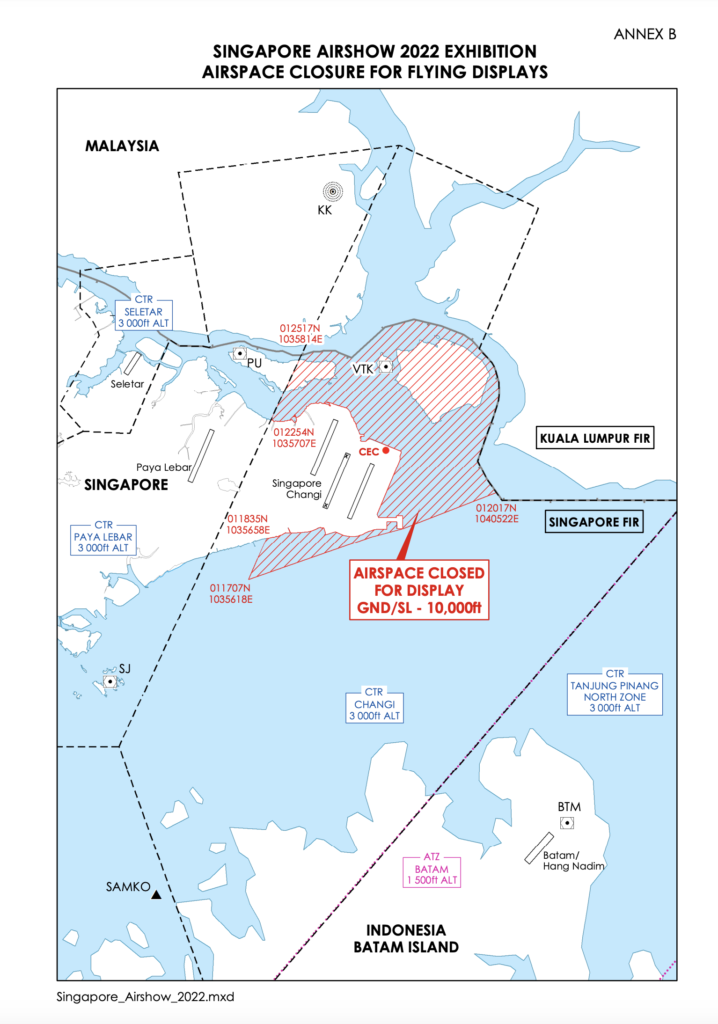
The restricted airspace covers a large portion of Changi’s CTR and will apply from surface to 10,000 feet.

Here’s a picture:

Nearby WSSL/Seletar will not be affected by the closures.

Rush Hour

Avoid planning to take-off or land on either side of the closure windows. There will likely be a back log of traffic and extensive delays. Arriving aircraft are advised to plan for at least an extra twenty minutes of holding fuel.

If you’re arriving from a major airport in the Asian region, also be aware of Singapore’s ground delay program which may be activated. Here’s the relevant page from Singapore’s AIP, but if you are departing an affected airport for Changi, you may need to stick to a calculated take off time (CTOT). The allowance is -5/+10 min. Outside of this window you’ll need to ask for a new CTOT.

Once airborne, if you get held up by more than 15 minutes make sure you let them know. Their AFTN address is WSJCZQZX.

Permits

Both private and commercial operators need a landing permit for Singapore. Commercial ones reportedly take a number of working days to process so apply early. You can speak to the CAA directly on +65 65 42 1122 or caas_atlas_admin@caas.gov.sg. If you’d prefer the help of a local agent, we’d suggest SG World Aviation Services. You can reach them on +65 85 774830 or ops@sgworld.net.

Weather

Singapore is found just one degree north of the equator, and so convective thunderstorms are common all year round, and can be quite severe. The worst times are in the afternoon and evenings. Expect to use additional fuel for deviations or holding.

Covid Entry Rules

The rules for foreigners to enter Singapore are tight. But there are ways they can enter with no quarantine. The most common is via the ‘Vaccinated Travel Lane,’ which most travellers are eligible for. There’s a bunch of boxes to tick here, so we recently put together this article that should help.

Crew have two choices. You can enter under the standard rules which don’t require a vaccination or Covid test. But you’ll be stuck isolating in the hotel until departure. If you want to get out (and enjoy the show) you can also apply for the VTL above if you follow the same requirements as your passengers.

Seletar

If you’re planning on flying into nearby WSSL/Seletar, the biggest issue is likely to be parking. If you haven’t already, make sure you get in touch with your agent to make sure you reserve a spot as the airport can quickly fill up.

The airport itself can be operationally challenging – there are no instrument approaches, and it is in close proximity to military airspace. Click here for a full briefing on what to expect.

The Official Word

You can find the official Singapore AIP Supp (026/2022) for the event here.


Demystifying Singapore’s Entry Rules

Ah, Singapore. The Lion City. Home to chilli mud crab, Clarke Quay, Raffles and some of the most confusing entry rules we have ever seen.

If you’re feeling particularly motivated, they’re all found on the official Safe Travel website. But brace yourself for bewilderment…

Or you could try this summary. It is a super simple break down of how the current entry rules work for passengers and crew alike. So hop aboard the Singapore Flyer and crack open a fresh Tiger Beer. We promise it’ll be a smooth ride.

Lanes, Lanes and more Lanes

All foreigners must apply for entry using an approved ‘travel lane’. Then they’ll get an approval letter before they travel.

For the vast majority of foreigners, the options are limited. There are lanes for those who live in Singapore, have immediate family there, study there or work there.

Surprisingly there is no general lane for business travel. Only ones with special rules for travellers from select Asian countries.

Which means the vast majority of foreigners headed to Singapore right now will only be using one lane – The Vaccinated Travel Lane, and it’s only for countries who have been good. It made headlines this week because the US, Canada, and the UK among others have been added to it.

Travellers from these countries can enter for any reason – as long as they’re vaccinated. So, let’s take a closer look.

The Vaccinated Travel Lane (VTL)

As the name suggests, all passengers must be fully vaccinated at least two weeks before they arrive. Click here for those requirements.

Passengers will need to prove it with either:

All passengers need to apply at least 7 days in advance to use the VTL. Don’t leave it until the last minute!

Here’s what they’ll need:

  • Their pre-approval.
  • A PCR test less than 48 hours prior to departure.
  • A PCR test on arrival (book and pay beforehand).
  • Travel insurance which includes at least $30K cover for Covid.

On arrival they will need to self-isolate in their hotel until the result comes back (about 24 hours). That’s it!

Can private aircraft use the VTL?

Great question – yes! Despite causing some confusion among FBOs there, Singapore’s CAA have clarified this with a new circular. If you’re operating a charter flight there, make sure you follow the rules. This includes getting approval from CAAS – apply at least a week in advance.

Jet Aviation, the handling agent based at WSSL/Singapore Seletar Airport, provided this FAQ on Oct 18, which includes some good info here:

  1. How do business jet pax apply for VTL?
    a) Foreign passengers must hold a valid VTP (Safe Travel). Take note that the trip must be a direct flight from VTL country to Singapore.
    Click on this link to apply for VTP – https://eservices.ica.gov.sg/STO/VTL
    **Recommended Internet Browser to be used – Google Chrome**
    Once approved, an email by Safe Travel will be sent to passengers via the contact details provided (eg. passenger’s email address).
    Alternatively, operators can “Check VTP status” (as shown above)
    b) Once VTP is approved, another application to CAAS must be submitted at https://go.gov.sg/nsvtl1
    CAAS VTL application for entry should be made at least 7 calendar days before the start of the flight, and approvals will be issued at least 2 calendar days before the indicated start date of the flight.
  2. In case of fuel stops, does the routing below qualify for VTL?
    VTL country > non-VTL country (fuel stop) > Singapore.
    (for example, London (origin) > Dubai (fuel stop) > Singapore. Is this a VTL?)
    No, this route arrangement does not qualify for VTL. Arriving from a VTL country, you must do a tech stop in another VTL country to qualify for VTL.
  3. What happens if there is a diversion of flight?
    VTL will not qualify if a flight is diverted from VTL country, to a non-VTL country, prior to arriving in Singapore.
  4. Can VTL be applied to Part 135 flights?
    Yes. Please ensure FOP and AT permits are in place first before VTP can be applied for the passengers.
  5. Do foreign crew qualify for VTL?
    CAAS strongly recommends crew to apply for entry into Singapore via existing schemes. The different types of entry approval for crew are as follows:
    — CAAS BAGA LAYOVER (for non-scheduled flights)
    — CAAS ANNEX A C33 LAYOVER (for maintenance flights only)
    However, foreign crew does qualify if they apply via https://safetravel.ica.gov.sg/vtl/requirements-and-process.
  6. Maintenance-related aircraft?
    Crew under VTP can perform post-maintenance Local Test Flights in Singapore.
  7. Will Long-Term Pass Holders (eg, EP), need both MOM approval and VTP?
    Yes. LTP Holders must obtain the necessary approvals to enter Singapore (applies to both Commercial Airlines and Non-Scheduled).
  8. Do passengers still need to have MTI and PBP passes?
    Yes. Passengers who have existing MTI and Pre-approved Business Passes approval must also apply for VTP to qualify for VTL. All passengers (if there are more than 01 passenger) must be fully vaccinated.
    We must emphasize that the purpose of VTL is to exempt passengers from serving SHN in Singapore.
  9. Are Guam and Hawaii considered part of the US territory, for VTL?
    Both Hawaii and Guam are considered part of the US continent. As such, tech stops at Guam are allowed for flights carrying VTL passengers.
  10. Are Monaco and Vatican City considered part of France or Italy?
    As for Monaco and Vatican City, these are city-states, and are not part of France or Italy respectively, so travel history for these locations within the last 14 days would disqualify pax from the VTL scheme currently.

Crew Layovers

So, you’ve scored yourself a layover in Singapore eh? Nice work! There are two options for crew:

The “I’d like to isolate in my hotel room” option.

 Then follow the standard procedures found in CAAS Circular 2021/08. Both operating and positioning crew are allowed.

You’ll need CAAS approval – make sure you apply at least two weeks in advance by emailing CAAS_FS_FOS@caas.gov.sg. When you get there, make sure you all have three bits of paper – your approval, a letter from your operator to say you are on layover and your crew passes.

For transport to your hotel you can only use one transport company – Woodlands Transport Service. You must then isolate in one of two hotels – the Crowne Plaza Changi Airport, or the Holiday Inn Orchard City Centre. Both are decent.

This is probably the easiest option if you’re staying for less than 24 hours.

The “I’m sick of isolating, I want to enjoy my layover” option.

We don’t blame you. In which case your only option is the Vaccinated Travel Lane – you’ll need to meet all the same requirements as the passengers including pre-approval, and *24 hours of isolation.

* you have to isolate until you get the SMS with a negative PCR test result. This is likely to arrive within 24 hours, but for scheduled arrivals at Changi airport it is taking 6 hours or less (reportedly as few as 2).

So probably only worth the fuss it if you’re staying for longer.

The Other Lanes

If you’ve made it this far, well done! If you’re only interested in the VTL the show ends here. But if you’re carrying passengers in other lanes, there’s one more thing you should know about – travel categories.

For almost all other lanes, testing and self-quarantine is required. The rules depend on where you have been in the last 14 days (including transit). Singapore divides the world up into four categories – 1 is the lowest risk, and 4 is the highest. The length of quarantine and where you have to do it depends on where you have been. You can find those breakdowns here.

We’re here to help.

Navigating entry rules in these times can be confusing and frustrating. If you still have questions reach out to us on team@ops.group, and we’ll do our best to help you find the answer you’re looking for.

Headed to Seletar?

We wrote an article on ops there recently, check it out here.


Surviving Seletar: Singapore’s Second Airport

Update Oct 2025

OPSGROUP members can access an updated version of this guide, effective Oct 2025, on the members Dashboard here.

Original Article from Sep 2021

If you’re planning to operate a business jet into Singapore, there’s a good chance you won’t be bound for WSSS/Changi Airport at all. Instead you may be headed for the lesser known WSSL/Seletar – Singapore’s secondary commercial airport, and it can be a lot more challenging.

Here’s a basic rundown of just what to expect to keep you ahead of the game next time you are flying into Seletar.
The Basics

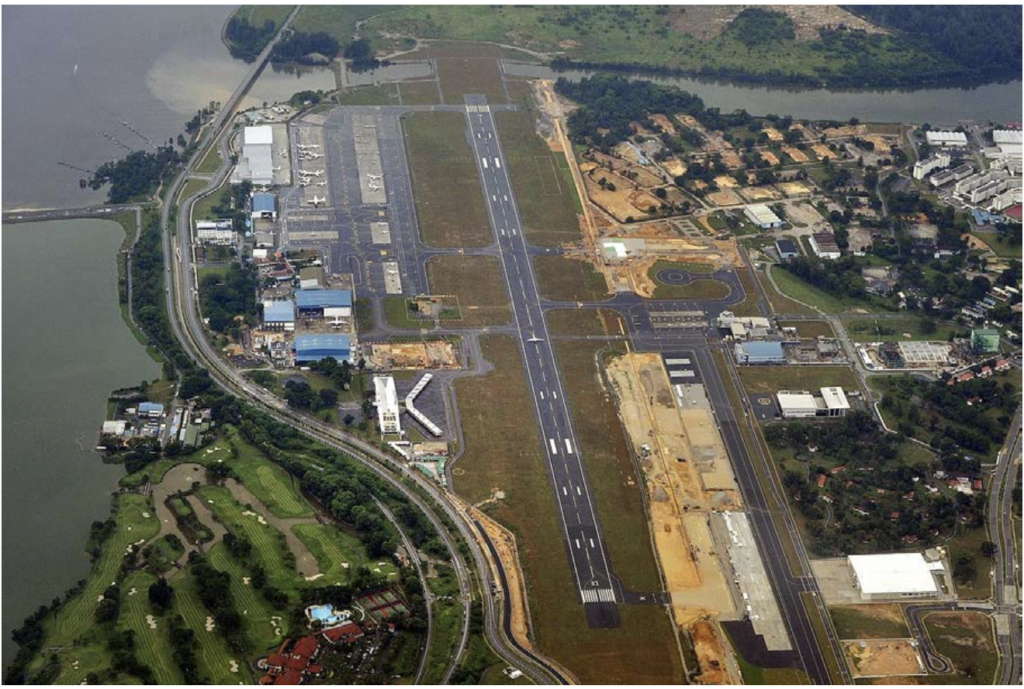
Seletar is a stone’s throw (8nm) northeast of WSSS/Changi. It has a single 6020ft/1840m long runway and serves predominantly turbo prop and corporate jet traffic. It has fuel and good facilities for business ops.

Just getting in there at all can be a pain – the airport is surrounded with prohibited and restricted airspace, noise abatement areas, training areas, military airports; as well as a bunch of buildings, cranes, boats, and other obstacles to the north of the airport on the Malaysian side – just across the Strait of Johor.

And since Malaysia effectively killed the plans for ILS at Seletar back at the start of 2019, there are no available instrument approaches at all, requiring visual approaches to be flown onto both runways.

The Airspace Picture

Operations at Seletar are difficult because of the complicated airspace that surrounds it, and it is the reason why there are no instrument approaches. There just isn’t enough room.

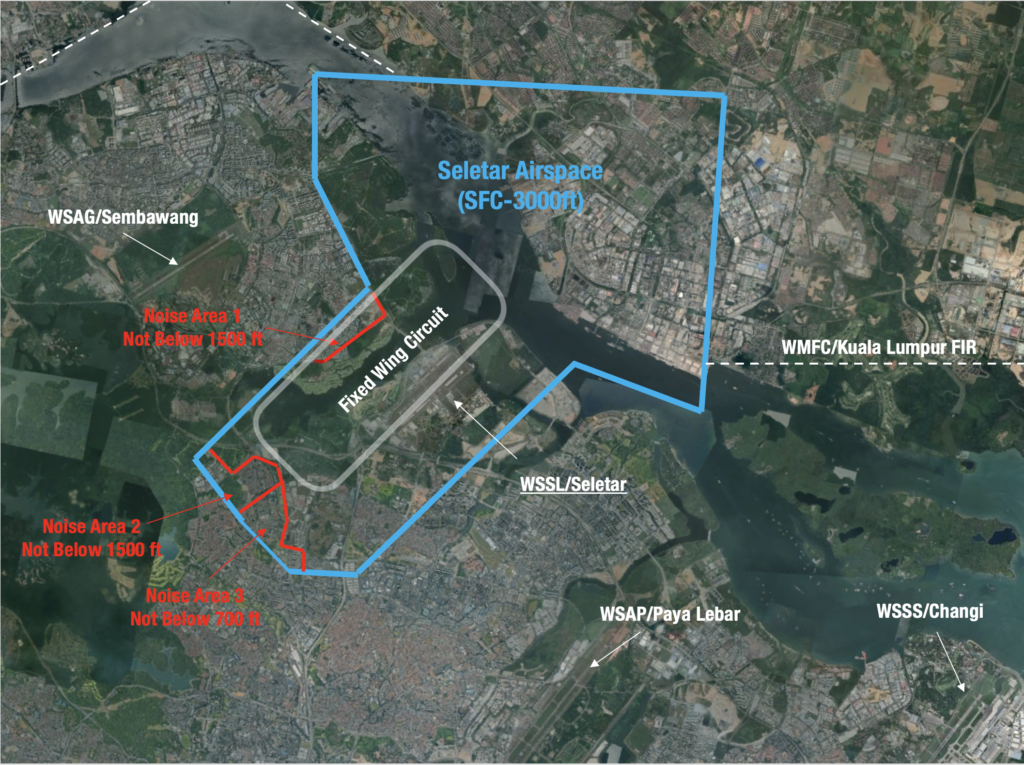
Seletar is literally boxed in by a variety of restricted airspace. To the west lies the Sembawang airbase, and to the east the Payar Lebar airbase. Both are strictly military.

Then just a smidge to the north is the boundary with Malaysian airspace, the WMFC/Kuala Lumpur FIR. South of the airport is highly noise sensitive, with three noise abatement areas where hefty fines await.

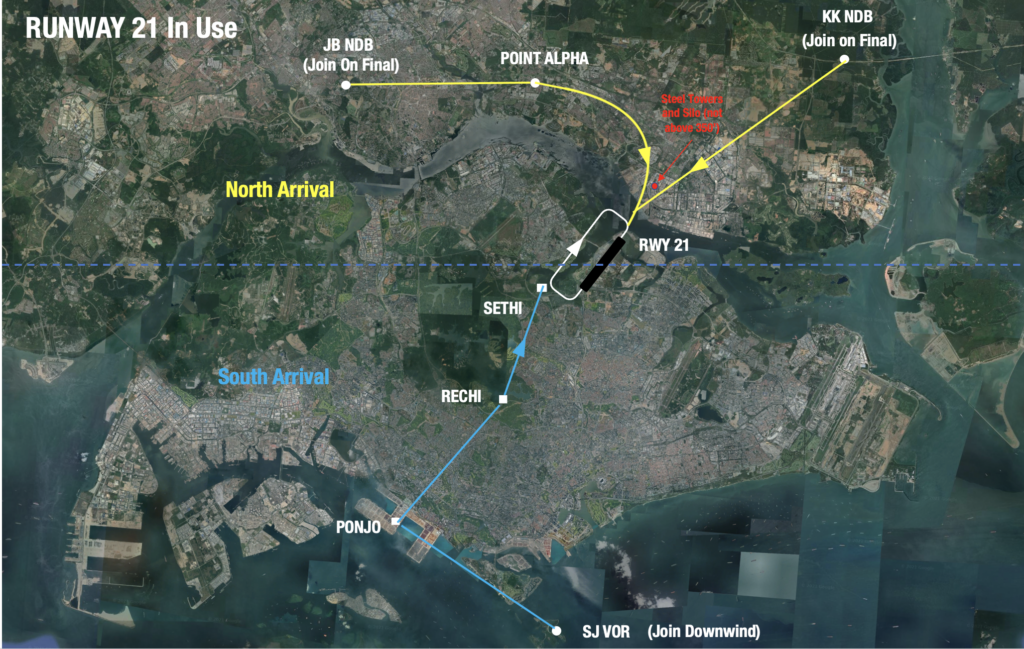
Throw these things together and you have the Seletar ‘Fish Bowl’ – a small bubble of airspace where there is precious little room to manoeuvre. Here’s a picture of what this all looks like.
Arrival Procedures

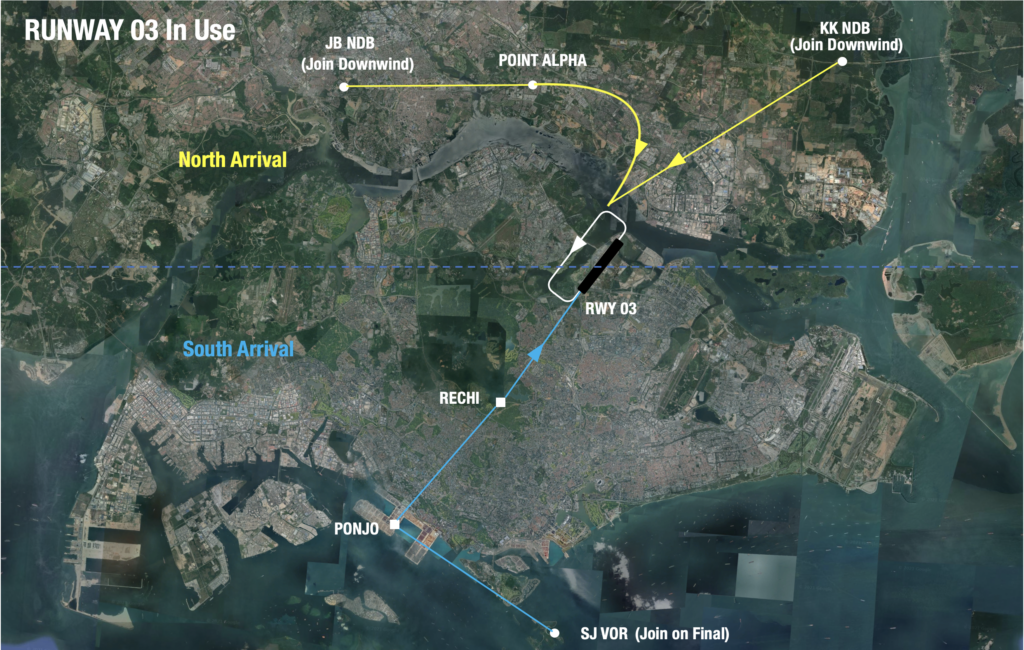
To keep things simple, the end game is to join the circuit and fly a visual approach, without busting any airspace. To help you with this there are a number of visual arrivals that require you to be in VMC conditions. If you can’t get visual, you’ll need to hold or divert to nearby Changi.

There are essentially two arrival procedures – North and South. And all arriving aircraft will join them through one of three feeder points – Jaybee NDB (JB), Sinjon VOR (SJ) or Kong Kong NDB (KK). From there you will either join downwind, straight in or even overhead if you need the extra track miles.

You can view the current plates for those procedures in the Singapore AIP online. But to make it easy, here’s a couple of pictures.
Things to look out for

Day and night closures: The airport is closed every night between 22-07 local time except for medevac and SAR. And then during the daytime, there are several infuriating closures to accommodate training flights. So essentially, GA/BA flights can only operate to Seletar at these times : 0700-0930, 1030-1200, 1300-1500, 1600-1700, 1800-2200 local time.

The circuit is tight. It is always on the western side of the airport and you cannot fly your circuit wider than 1.5nm due to Sembawang’s airspace. Which means the turn onto final is also going to be tight.

The profile is steeper than normal. 3.2 degrees on Runway 03, and 3.5 degrees on Runway 21. Which means you will need higher rates of descent than a standard visual circuit ‘outta the book’.

You need to be visual. If you’re not VMC, you can’t land at Seletar. Thunderstorms are common in Singapore with heavy rain, and they tend to be slow moving. The worst times are afternoons and evenings.

‘Steel Structures and Silos’  – You’ll hear it on the ATIS, and you need to report you have them in sight if arriving on Runway 21. They’re on the Malaysian coastline north of Seletar. Spot them early and you’ll get an earlier approach clearance from ATC which will make your job easier.

Mistaken Identity: Both nearby Sembawang and Paya Lebar airports have similar runway orientations to Seletar and it is easy to line up with the wrong one. Tune up Seletar’s NDB (220) – the needle doesn’t lie!

Missed Approaches. Expect to re-enter the circuit for both runways – which means a prompt turn downwind and not above 1500ft.

Ops on the Ground

You’ll be pleased to know, pretty straight forward. Parking can become limited, and so it always pays to book a spot with your handling agent well in advance.

Departures

Both runways have noise abatement. Just the standard stuff here – NADP 1 or 2. Your call.

There are published visual departure procedures for both runways. Essentially they involve a climb straight ahead to 1000ft, followed by a turn onto a radar heading.

For departures downwind, the challenge is to stay within the ‘Fish Bowl.’ Which means keeping your turn tight, and your speed down. Ironically the noise abatement procedures help here.

Your Layover

Assuming Covid isn’t still ruining the party, Singapore is famous for food. Three words: Chilli Mud Crab. Jumbo Seafood Restaurant in Clarke Quay is the place to go. And if you’re beer inclined, Tiger is the perfect accompanying drop. For the time being, you may need to rely on Uber Eats. Don’t worry though, Jumbo also delivers.

Handling

 There’s a few good options to choose from. Here are some contacts:

Other options?

Technically, bizav operators are still allowed to go to WSSS/Changi, but will normally only be allowed quick turnarounds subject to runway/bay availability, and then you’ll have to go elsewhere for parking.

Another option is WMKJ/Johor Bahru, on the Malaysian side, around 25nm north of Singapore. It’s open from 06-00 local time, with extensions possible with prior notice. It has a separate FBO with its own VIP lounge and hangars with maintenance support, and has no slots or parking restrictions for bizav ops. Check out the brochure!
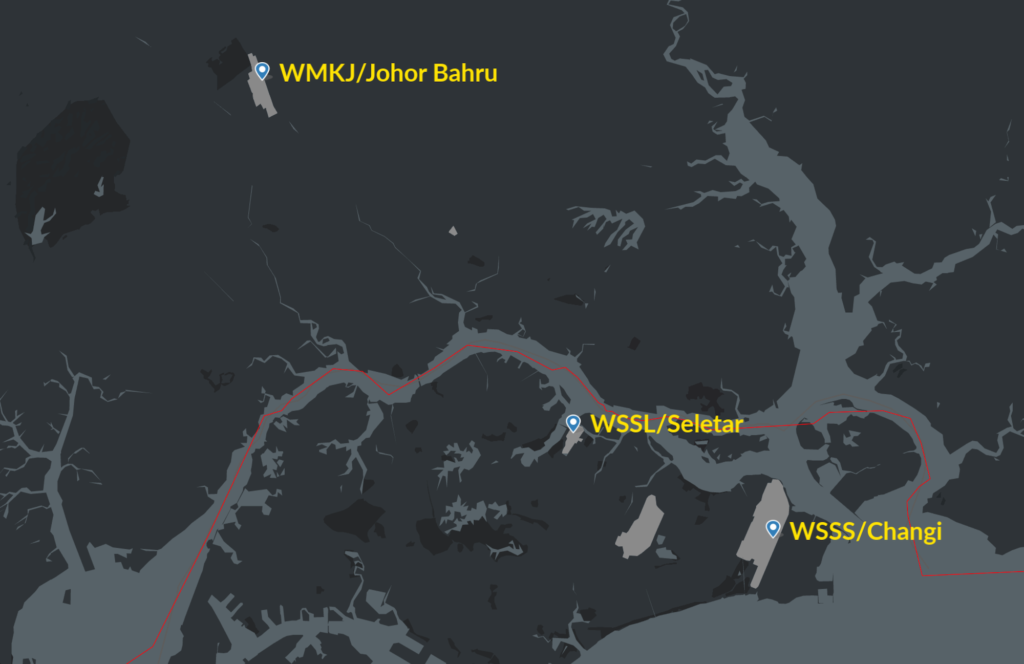
The only downside in WMKJ is that it can sometimes take a bit of time for immigration when you cross the road border heading south into Singapore – sometimes 2-3 hours during busy travel periods.

Opsgroup members can read reports on all these airports in Airport Spy.

Permits and stuff

If you’re operating as a private flight to either Changi or Seletar, things don’t get too complicated, as permits are not required for private flights. Just make sure you have parking arranged, and file your inbound ATC flight plan 12 hours in advance, being sure to copy in the Singapore ATC AFTN address WSJCZQZX.

If you’re doing a charter flight on the other hand, you’re going to need a landing permit, which means you’re going to have to jump through a few hoops.

For this, you’ll need to get an Operations Permit from Singapore CAA, which is basically a blanket approval to conduct revenue flights to Singapore, valid for up to one year. You’ll then need to get an Air Transport Permit, which is required for every individual charter schedule into Singapore (Changi or Seletar). Save yourself some hassle and get a local handler to help arrange these for you.

Airport Lowdowns

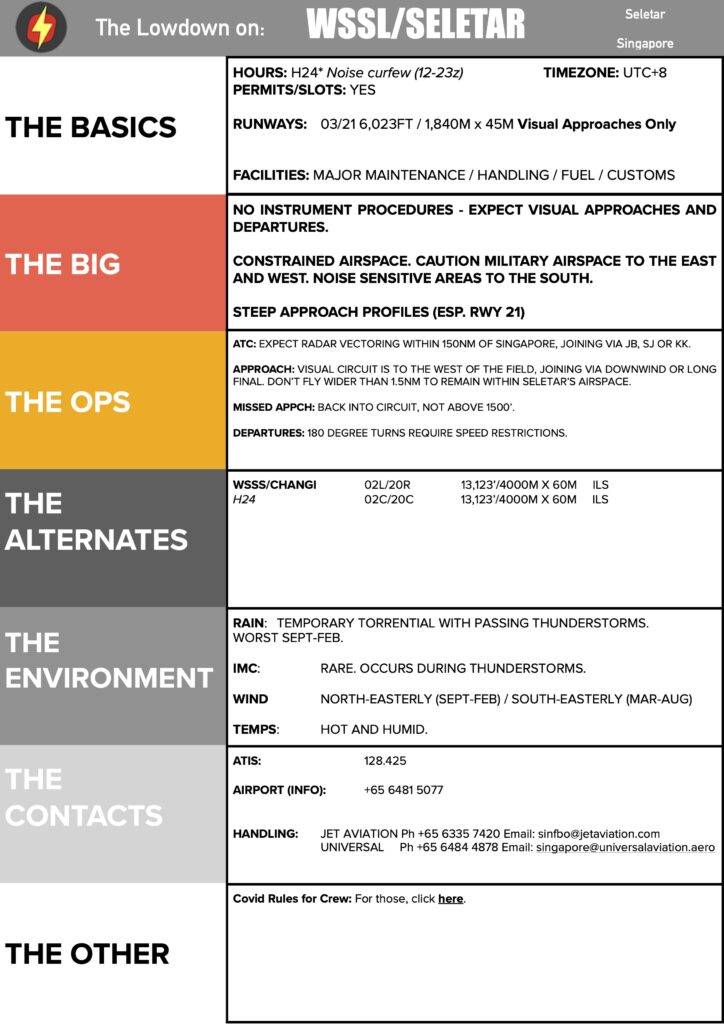
Have you heard of them? We make a bunch, especially if you ask for one! They’re what you need to know from crew who have been there. And they’re on one small, simple piece of paper. You can read more about them here.

We’ve got you covered. Check out Seletar’s here.

Seletar launches new terminal

As WSSL/Seletar prepares to open its new $80 million terminal on Nov 19, the authorities have announced that WSSL is now a “schedules facilitated” airport.

Don’t panic – at least, not yet. This basically just means that because demand is now getting close to the airport’s capacity, all airline and charter flights must confirm their schedules with the airport in advance  – BA/GA flights don’t need to do this.

It does not mean that the airport has become slot coordinated, although that might happen at some point in the future if congestion continues to be a problem.

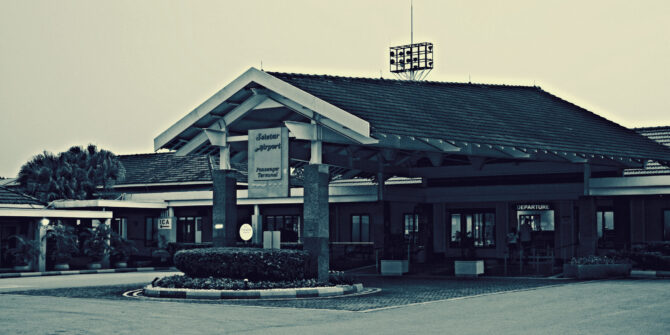
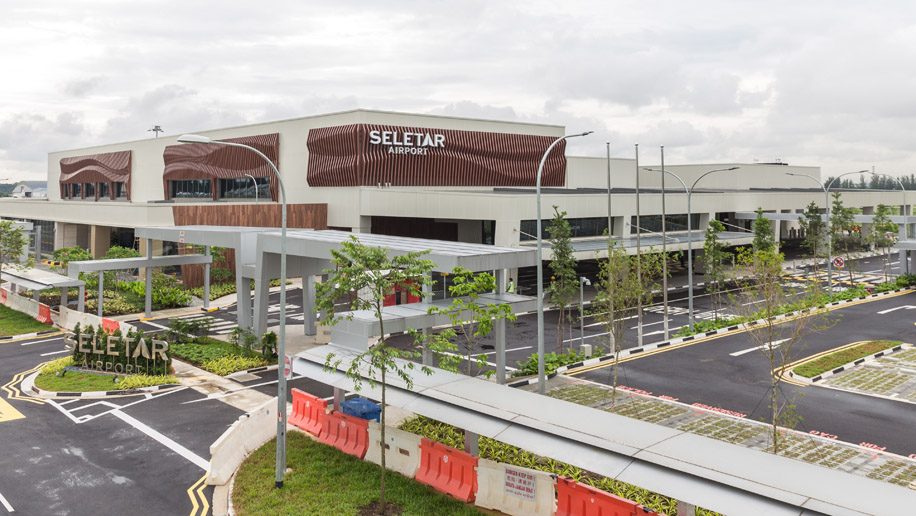
As for the new terminal, it looks like it will be a decent improvement on the old one…

The new facility – six times bigger than the old terminal – will be split in two, with one large section for airline flights, and another separate section dedicated for GA/BA.

Here’s a video of what the new terminal looks like!

The idea is to free up capacity at WSSS/Singapore by moving all scheduled turboprop flights to WSSL/Seletar when the new terminal opens. At the moment, the only airline that falls into this category is Malaysia’s Firefly – which currently operates 20 daily flights at WSSS – to and from WMSA/Subang, WMKI/Ipoh and WMKD/Kuantan.

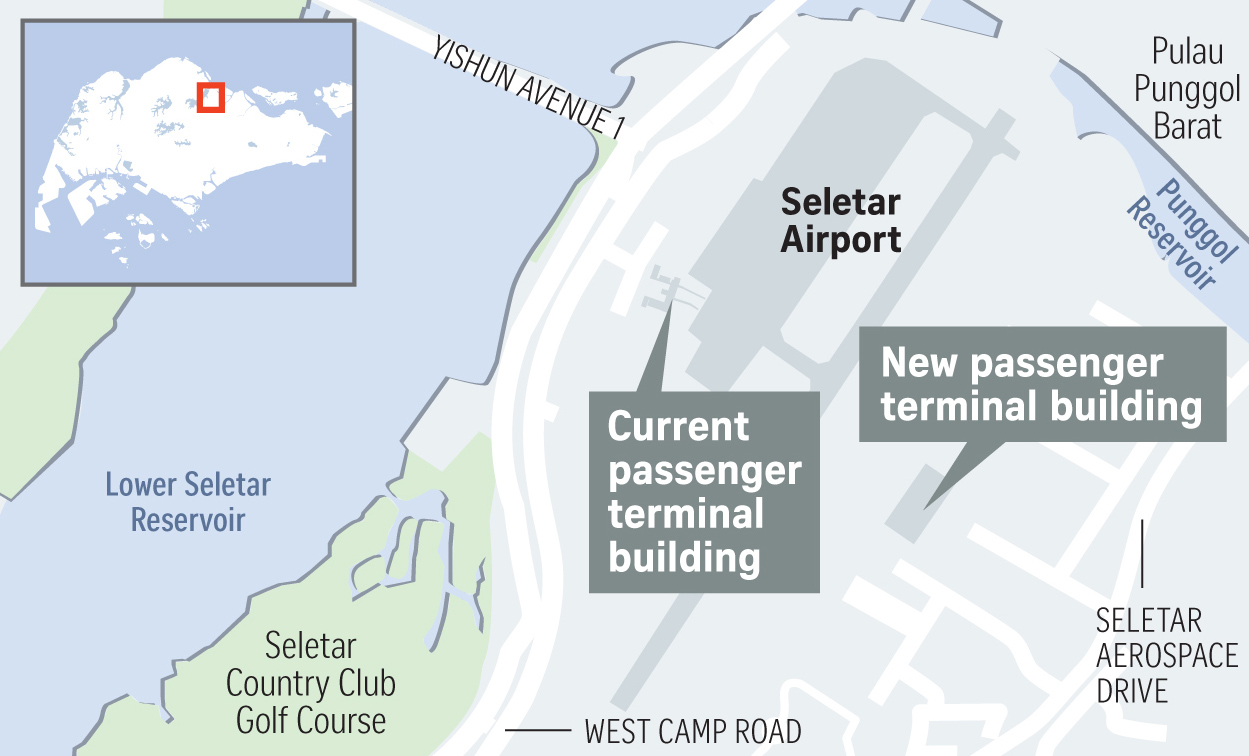
Important to note – all BA/GA traffic must switch to using the new terminal when it opens on Nov 19 at midnight local time. Jet Aviation have provided a handy printout which tells you all you need to know about using the new terminal. Note that the new terminal is on the other side of the runway from the old terminal!


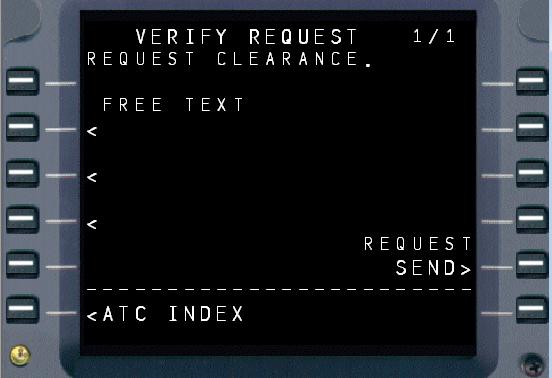
Singapore Changi (WSSS) Departure Clearance by Datalink

Starting April 23rd, 2018, Changi Airport (WSSS) will begin giving departure clearance (DCL) via datalink, on certain routes. The idea is to clear up voice communications when DCL can be used. Full details listed in CAAS AIP SUP 013/2018.

To use this, you’ll need ACARS, and be compliant with EUROCAE ED85-A. You’ll login to the ground system at WSSS.

The departures are as below:

– Destinations in Peninsular Malaysia via ATS Routes A457 and B466
– Destinations in Thailand via ATS Routes B466 and B469 / M751
– Destinations in Indonesia via ATS Route A457, R469 and B470
– Destinations in Australia and New Zealand via ATS Route B470
– Flights with allocated Calculated Take-Off Time (CTOT) under Bay of Bengal Cooperative Air Traffic Flow Management (BOBCAT)

A few other notes:

-The DCL message will not include requested crusing levels and final cruising levels. Your planned flight level in 15b will be used, and ATC will give cruise FL when airborne. Sounds like they won’t entertain any requests for a different FL while on the ground.

-No revisions allowed over datalink, all changes must be made by voice comms.

-Make your request with RCD message (see format in attached AIC) no more than 20 minutes before TOBT. If you’ve got a CTOT under BOBCAT, you’l need to put that in the message. If you’re routing via ANITO B470, list your FL at ANITO crossing.

If your DCL is rejected, you’ll get a “revert to voice procedures” message. A few auto-rejects:
-Flight routes not applicable.
-RCD message doesn’t comply with ED-85A or inaccurate data.
-Invalid TOBT
-When required due to flow restrictions.

Operating out of WSSS soon?  CAAS AIP SUP 013/2018 is worth a read.


PBCS is coming to Singapore

It’s not only the North Atlantic that will be seeing PBCS being implemented on March 29th – on that same date, the weird acronym is coming to Singapore too!

However, the requirements for Singapore airspace are slightly different to that for crossing the NAT.

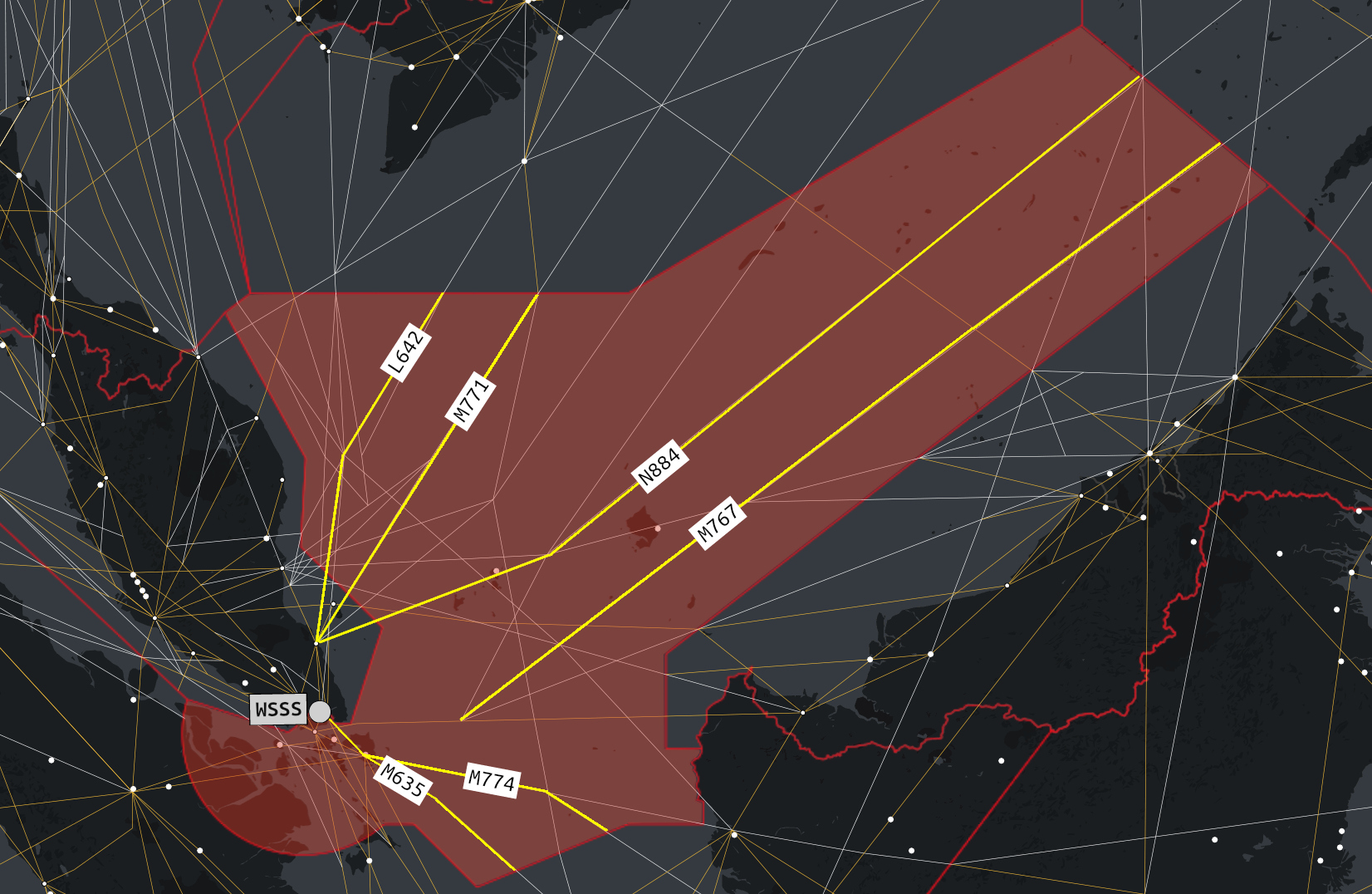
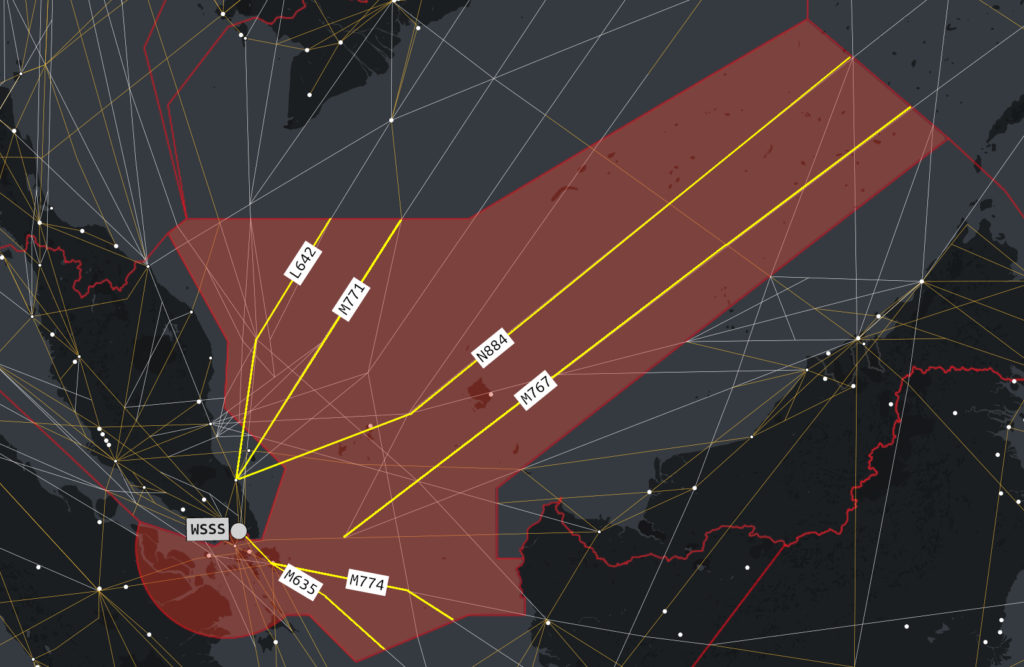
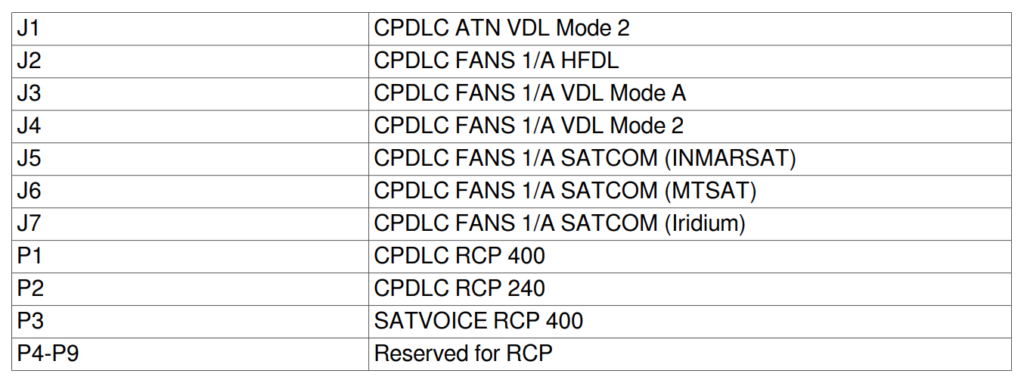
The short of it – compliant aircraft will be allowed a reduced separation of 50NM (or 10 minutes in trail) on certain airways: L642, M635, M767, M771, M774 and N884. For everyone else, it’ll be 80NM (or 20 minutes in trail). For Singapore, ‘compliant aircraft’ basically means anything with RNP10, CPDLC and ADS-C capable of the RCP240 / RSP180 performance requirement.

You’ll still need to obtain some kind of operator approval from your State of Registry. As we mentioned in our article on PBCS on the NAT – the best way to do that will probably be to submit an AFM Statement of Compliance for PBCS, showing exactly what data link communication systems you aircraft has, along with the selected performance.

For Singapore, if you want to operate on those airways at the reduced separation, here’s what you’ll need to remember to include in your ATC FPL:

In 10a:

In 10b:

In Item 18:
Make sure you include SUR/RSP180 to show you’re capable of the RSP180 performance requirement.

For more info, check out the full AIC published by Singapore here.


Sorry, you gotta go to Seletar: Ops to Singapore

Singapore Changi Airport has been named the best airport in the world by Skytrax for the past four years running.

It already has a butterfly garden, free 24-hour cinema, rooftop swimming pool and spa, but soon it’s going to become even more awesome – work is currently underway on the new ten-storey ‘Jewel Terminal’, scheduled for completion in 2018, with a gigantic ‘rain vortex’ waterfall cascading from the ceiling, indoor rainforest park, playgrounds, shopping mall and hotel complex. If it ends up looking anything like the pictures in the brochure, it will be pretty spectacular…

Unfortunately, if you’re operating a business jet to Singapore, you probably won’t be allowed to go there!

The Singapore authorities will not allow overnight parking at Changi for charter flights under any circumstances, and parking for private flights is limited to a maximum of 48 hours. Slots are required, and with the amount of scheduled traffic currently in place, unless you’re planning to do a really quick turn at super off-peak times (ie. the middle of the night), your request will probably be denied.

This is where the authorities would like all corporate flights to go instead:

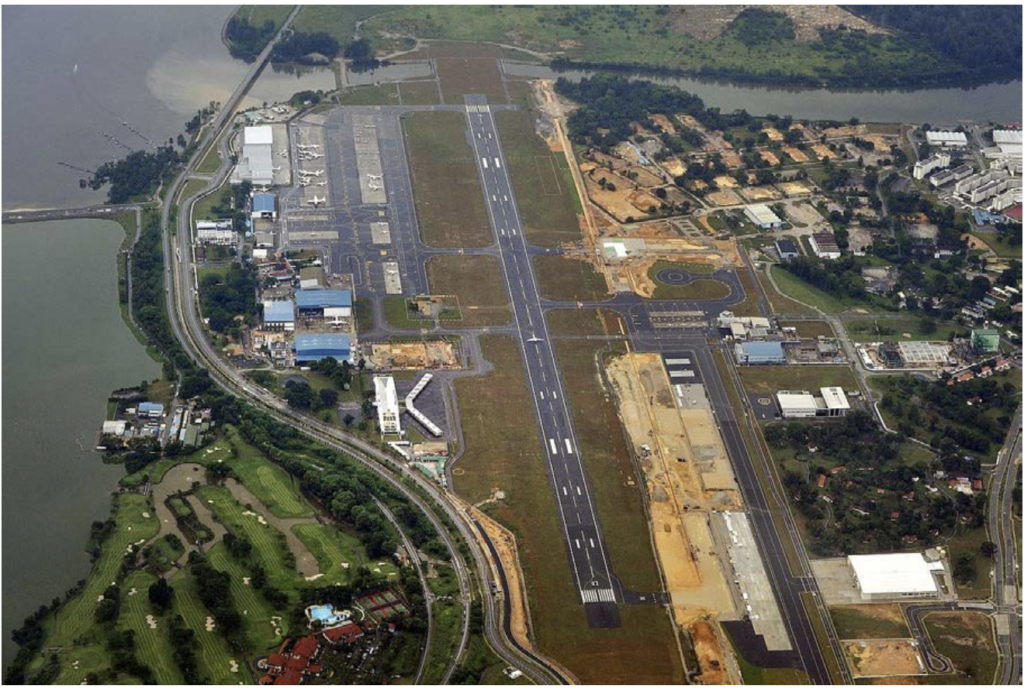
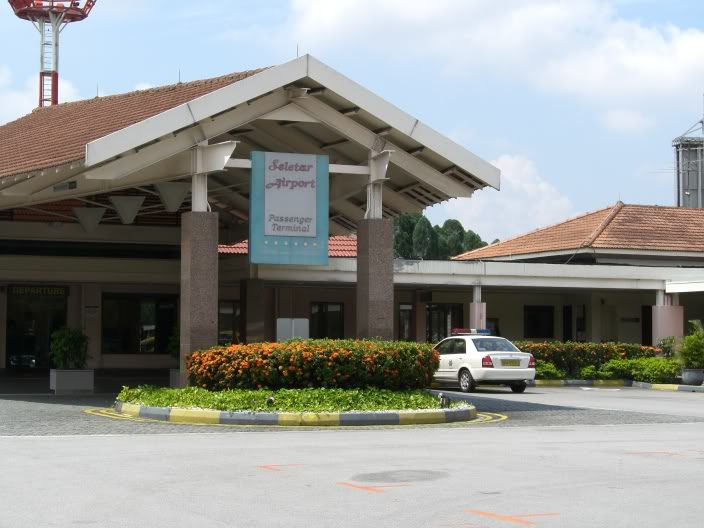
Seletar Airport. Doesn’t look quite as fantastic, does it?

The good news is that unlike Changi, at Seletar there is much less congestion, no parking time limits, and much lower handling costs. However, it does only have a 6024 ft runway and is not due to have ILS installed until some time next year. Added to that, fuel is around $1 per US gallon more expensive than at Changi.

Whether you end up going to Changi or Seletar, if you’re operating as a non-scheduled commercial flight you’re going to need a landing permit, which means you’re going to have to jump through a few hoops.
Here’s a quick breakdown of how to organise that non-sked flight:

Step 1: Get an ‘Operations Permit’ (OP)

You will need to open an ATLAS Account with CAAS and then log in to appoint a handling agent. Then either you or the handling agent will be able to liaise with the authorities to obtain the Operations Permit (OP).

This is basically a blanket approval for that operator to conduct revenue flights to Singapore, and you may have up to 20 aircraft on this permit.

Once this permit is approved, CAAS will advise the validity period which may be up to one year, although the OP will only remain valid for as long as the other aircraft documents are valid for. The OP usually takes 3 working days for approval by CAAS if all paperwork submitted is in order.


Step 2: Get an ‘Air Transport Permit’ (AT)

After securing the OP, it means CAAS have in principle approved you as an operator to carry out charter flights to Singapore.

With the OP in place, you can then apply for an Air Transport Permit (AT) which is required for every individual charter schedule into Singapore (WSSS or WSSL). The AT Permit for WSSS usually takes around 3-5 working days for approval by CAAS, although they will often reject your request and demand that you operate to WSSL instead. The AT Permit for WSSL usually takes around 3 working days for approval.

For the OP and AT permits, you should register an account here:
https://appserver1.caas.gov.sg/ATLAS/welcome.do


Step 3: Slots –  but only if you’re going to Changi!

Remember, slots are only required at Changi, and not at Seletar. You can only obtain slots after you’ve obtained an OP and an AT. Slots will likely take several hours to obtain, and available slot times may differ from what you’ve requested, due to other scheduled traffic. You can only submit requests for slots a maximum of 7 days prior to ops, and a minimum of 24 hours prior. And you will nearly always need to change your schedule in order to match available slot options!

For more information than you could ever possibly need about slot requests at Changi, check the Singapore AIC 2/13:
http://www.caas.gov.sg/caasWeb2010/export/sites/caas/en/Regulations/Aeronautical_Information/AIC/AIC_PDFs/2-13.pdf

For requesting Changi airport slots, if you already have an account then you should use the online system:
https://www.online-coordination.com

Or if you don’t have an account then just send an email with your request in the standard SCR format to:
csc@changiairport.com

Other things to consider…

  • If you’re operating as a private flight to Singapore (instead of non-scheduled commercial), life suddenly gets considerably easier, as permits are not required for private flights! Just make sure you have parking arranged, and file your inbound ATC flight plan 12 hours in advance, being sure to copy in the Singapore ATC AFTN address WSJCZQZX. You’ll still need slots if operating to Changi, but at least you don’t have the added hassle of having to obtain the OP/AT.
  • Permits are not required for Singapore overflights either. The only exception to this is for special airworthiness flights, where for both overflights and landings you basically follow same process – apply for a Singapore Permit To Fly. To do that, complete the form at the following link: http://www.caas.gov.sg/caasWeb2010/export/sites/caas/en/PDF_Documents/Others/aw101.doc
  • It’s also worth noting that in the Singapore FIR, ADS-B is now mandatory for aircraft wishing to fly at or above FL290.