Canada Airport Options Up North
Canada, the (often) cold and (parts of it) remote northern neighbour to the US. 

We thought we would take a little look at what is available out there, should you find yourself anywhere north of Highway 16 (above N54°).

Why N54°?

Well, because there is not much north of it. Or rather, there is a whole lot of country but not many options north of it. The main cities (and airports) in Canada are primarily in the southern region, close to the US/Canada border.

Here is a picture, because a picture speaks a thousand words. Or in this case, speaks about 10 airports…
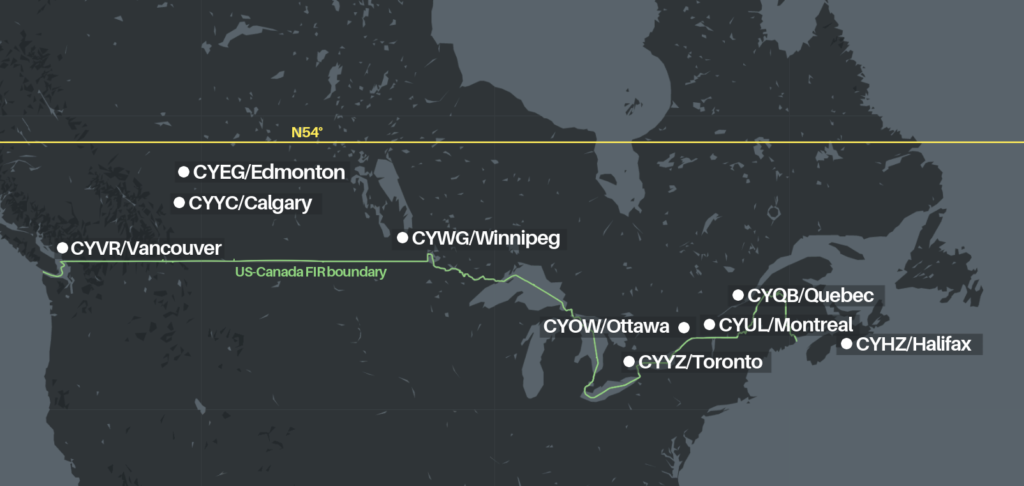
The main Canadian airports are mainly along the southern border.

Canada is big. Very big. And the main airports (big international ones) are generally all situated below N54°. There are others out there though. The most northerly airport which receives scheduled passenger airlines services is CYRB/Resolute Bay sitting right up at N74°.

Unless you are actually operating into somewhere in the outer fringes of Canada then it is unlikely you will be routing over this region. Most polar routes bring you down across central eastern Canada and are unlikely to go so far west for the very reason there are very few airports available there if you need them.
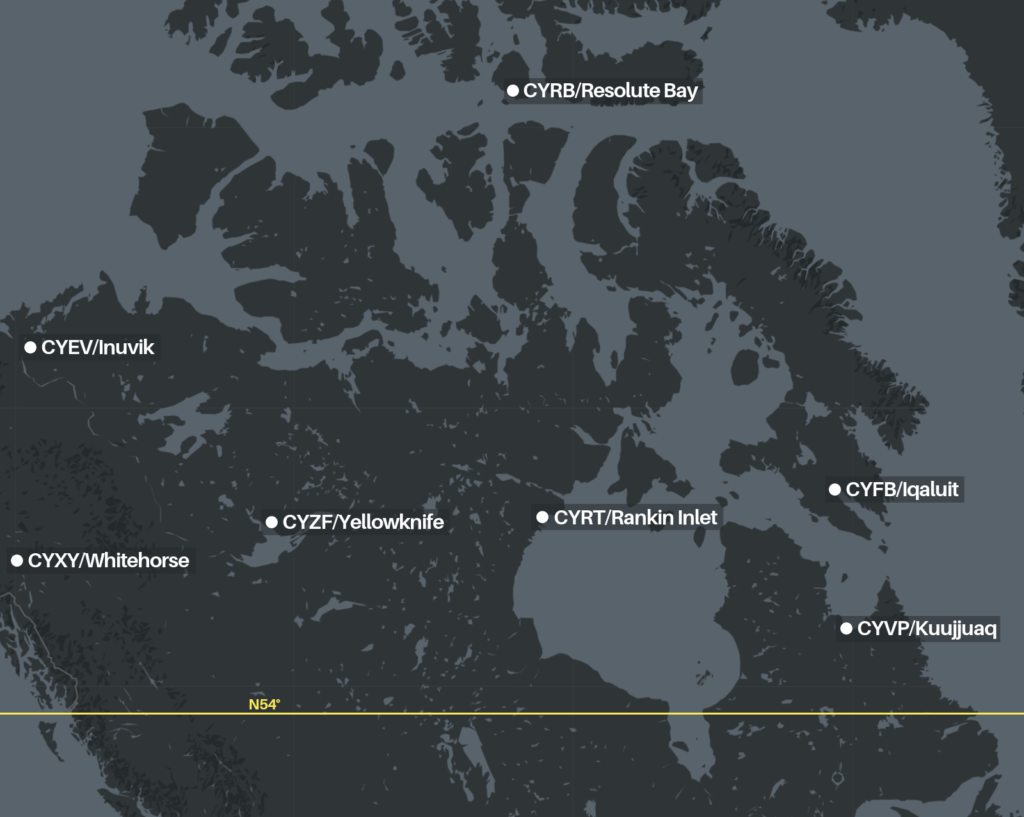
The airports to consider above N54°.

CYRB/Resolute Bay

This has a 6504’ runway 17/35 (that’s orientated to True North, FYI). Watch out though – it’s a gravel runway, so only really useful in a dire emergency!

There is an ILS to runway 35, an RNAV (GNSS) for runway 17, and a warning for severe turbulence during strong easterly winds. Probably something to do with the airport sitting on the edge of a craggy outcrop with lumpy, bumpy terrain to its east. Aside from the (cold) weather warnings, this airport also suffers from WAAS outages.

CYFB/Iqaluit

If you are up as high as this, and around the eastern region, you are probably better checking out CYFB/Iqaluit. This is often used as a planning airport for en-route diversions during polar and northerly North Atlantic crossings.

Runway 16/34 is 8605’ with an ILS to 34 and an RNAV to 16. Land on 16 and you have a few nice runway exits. Land on 34 and you’ll be doing a 180. It is an RFF 5.

There are a lot of ‘CAUTION’ notes on the airport chart here. Caution a steady green laser light, radiosonde balloons, terrain near the airport, large animals, wind that swings all over the place, a nearby blasting area, a random 2.5° ILS slope…

When the wind is from the north you can expect ok weather, if it is from the south the weather is less good, and this is particularly the case in Spring and Fall.

The charts suggest limited winter maintenance, but folk who have operated there say the maintenance is good.

So this is a good airport for emergencies, but has challenges of its own.

The main FBO is Frobisher Bay Touchdown Services who you can reach on +1 867 979 6226 / land@cyfb.ca / 123.350

CYVP/Kuujjuaq

Another eastern option. Runway 07/25 is 6000’ with an ILS to 07 and an RNAV to 25, and a VOR backup. There is a second gravel runway 13/31 which is 5001’.

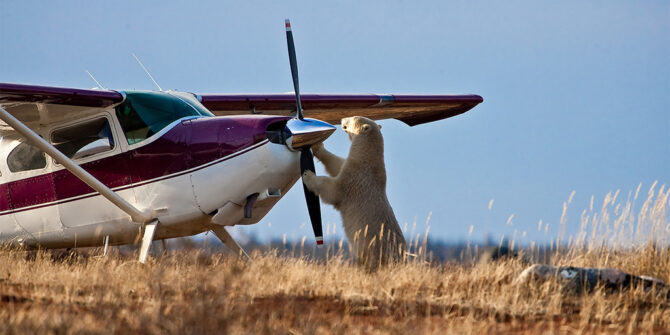
The challenging environment means there are a few gotchas here too. Runway 07/25 has poor drainage and there is a risk of hydroplaning. It also has large animals in the airport perimeter (not sure if this means moose, bears or polar bears. Probably Caribou though), radiosonde balloons and seaplane activity on a nearby lake.
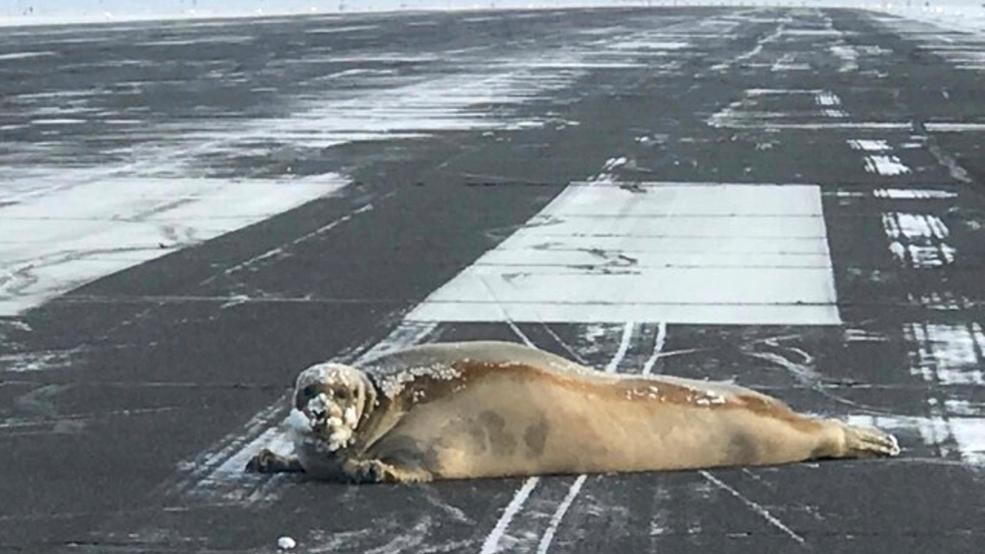
Might have been in Alaska

They say winter maintenance is limited, but this is because they do not operate 24/7. A few hours notice and they can clear the runway, and be available if needed though.

Talk to Halutik Enterprises if you are planning on planning this airport +1 819 964 2978 / cgadbois@makivik.org or try the airport direct on +1 819 964 2968 / 122.2

So CYFB/Iqaluit and CYVP/Kuujjuaq are your only paved runway options to the east.

CYRT/Rankin Inlet

The only paved runway in the central region, this offers a 6000’ runway 13/31. Both approaches are RNAV (GNSS) and orientated to True North.

There isn’t much info on Rankin Inlet, but given the remoteness of the region you can probably assume limited ground support and harsh winter conditions but actually the services are very good and those harsh conditions are limited to the winter! Winds are a bit of an issue here at times – expect some strong, gusty crosswinds.

Check out the picture below…

The only FBO is the airport operator who you can reach on +1 867 645 2773 / +1 867 645 8200. yrtmaintainer@gmail.com might work too.
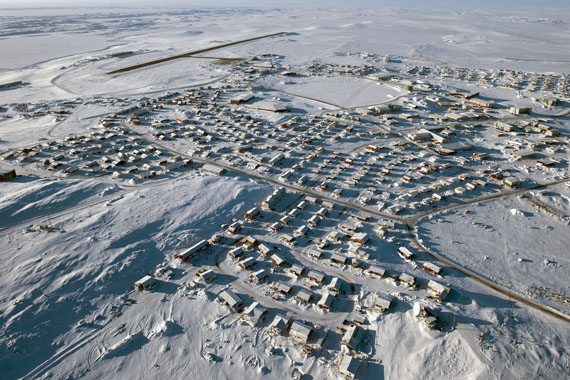
Good luck spotting that runway when it is covered in snow

CYEV/Inuvik Mike Zubko

You have three paved options to the west.

First up, Mike Zubko. Mike, in case you’re wondering at the name, was a local aviator of note. Originally from Poland, he emigrated to Canada, became an Engineer with Canadian Pacific Airlines and went on to set up the Aklavik Flying Service, serving the remote region of the northwest corner of the North West Territories.

Anyway, the airport of his name has a 6001’ runway 06/25 with an ILS for 06 and an RNAV for 24. There are ‘limited graded areas’ outside the runway area here which basically means stay in the runway and you’re good.
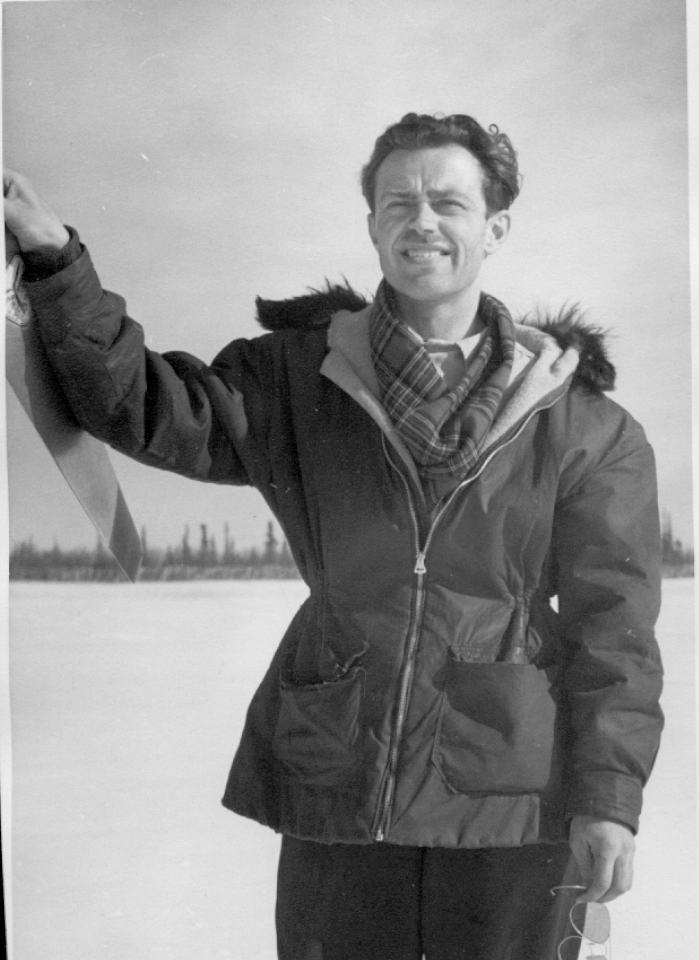
Good ol’ Mike Z

CYZF/Yellowknife 

You will find two runways here – 10/28 5001’ with  RNAV (RNP) approaches and 16/34 7503’ and offering an ILS to 34, or an RNAV (RNP). It is an RFF6 with 2 vehicles on call.

Yellowknife has limited winter maintenance (because of those operating hours again) and extensive bird activity but is a major hub in the area and will be able to provide ground support for most aircraft.

CYXY/Whitehorse

The biggest of the three, there are three runways here although 14R/32L at 9500’ and 14L/34R at 5317’ are the only two long enough for anything bigger than a short field Canadian Goose landing. 32L has an ILS,  14R has an RNAV. And actually there are no published approaches for 14L/32R let alone 02/20. This is an RFF5.

This airport is right in the middle of some pretty challenging terrain. Loads of it with an MSA rising up to 8500’ in the south. So you can expect some mean winds and a fairly challenging approach, missed approach and departure procedures.
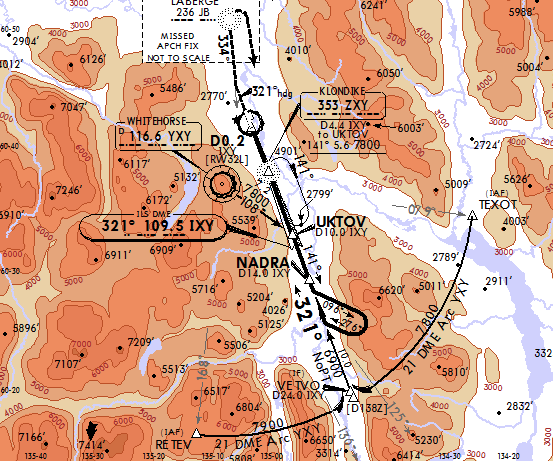
Lots of terrain

And we’ve been told about some others…

CYYQ/Churchill in the shores of Hudson Bay. The airport is not open 24 hours, but does boast a 9195′ runway with an ILS to 33 and an RNAV to 15.

This airport might look relatively small, but it sees high traffic numbers as the area is famed for ecotourism (great polar bear sightings) and it is also a primary transit hub for people and cargo travelling between Manitoba and the more remote regions. It can accept emergency diversions from up to Boeing 777 and 747 aircraft so a good option.

CYMM/Fort McMurray is a nice central international airport in Alberta used as a destination for narrow body aircraft, but a decent alternate for wide body aircraft with its 7503′ runway and ILS approach.

CYPR/Prince Rupert in BC has a 6000′ runway, and RNAV approach. There is limited taxiway and apron space here so a good emergency or diversion airport, but not much other support available and it has “limited winter maintenance”. The airport is on an island and weather observation is not done at the field so caution using this in poor weather.

CYXJ/Fort St. John also known as North Peace Regional is another BC airport option for emergency diversions. It has an unusual crossed runway layout, with 6909′ and 6698′ lengths. Runway 30 has an ILS, otherwise you’re looking at an RNAV. This airport is also slightly higher elevation, sitting at 2280′.

CYXT/Northwest Terrace Regional has Dash-8 sized aircraft operating in. It offers a 7497′ runway with an ILS and a shorter 5371′ runway with RNAV approaches.There is high terrain here (the airport is in a valley) and it is not recommended to use unless familiar with the airport, and even then only during daylight hours. 

That’s your lot!

Unless someone knows about one we haven’t heard of? If you have, please share. Email us at news@ops.group. Someone, somewhere, someday might be out in the great Canadian wilderness in need of an airport.
13 things we learned this Winter

More specifically, 13 things we learned about GRF.

What is GRF? This is the Global Reporting Format for runway surface conditions. It came in back in Nov 2021, and if you have flown anywhere wintery since then, chances are you have encountered it.

The aim of GRF? To have one worldwide standard for how runway surface conditions are reported – to help make things a bit safer and reduce runway excursions.

In Feb 2023, EASA held a webinar which involved a load of updates for various wintery airports on how GRF was going.

We listened in to the webinar. Here are the 13 things we learned…

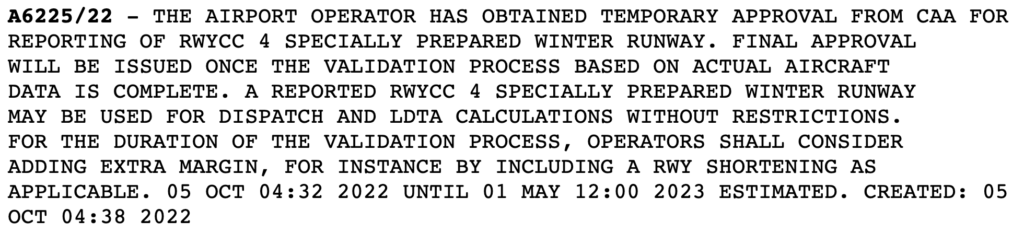
1. SPWR means Specially Prepared Winter Runway

And it seems to be quite EU specific (we haven’t seen it in ICAO docs).

What it means: An airport where the temperature is -15 degrees C or below, and which is covered in compacted snow or ice can be treated (usually with sand) to improve the friction characteristics (how well you’ll decelerate). When it is done properly (and checked and approved) then authorities will designate it an SPWR and it will be rated RWYCC 4 (or possibly 3, but 4 is probably what you need in order to land on it).

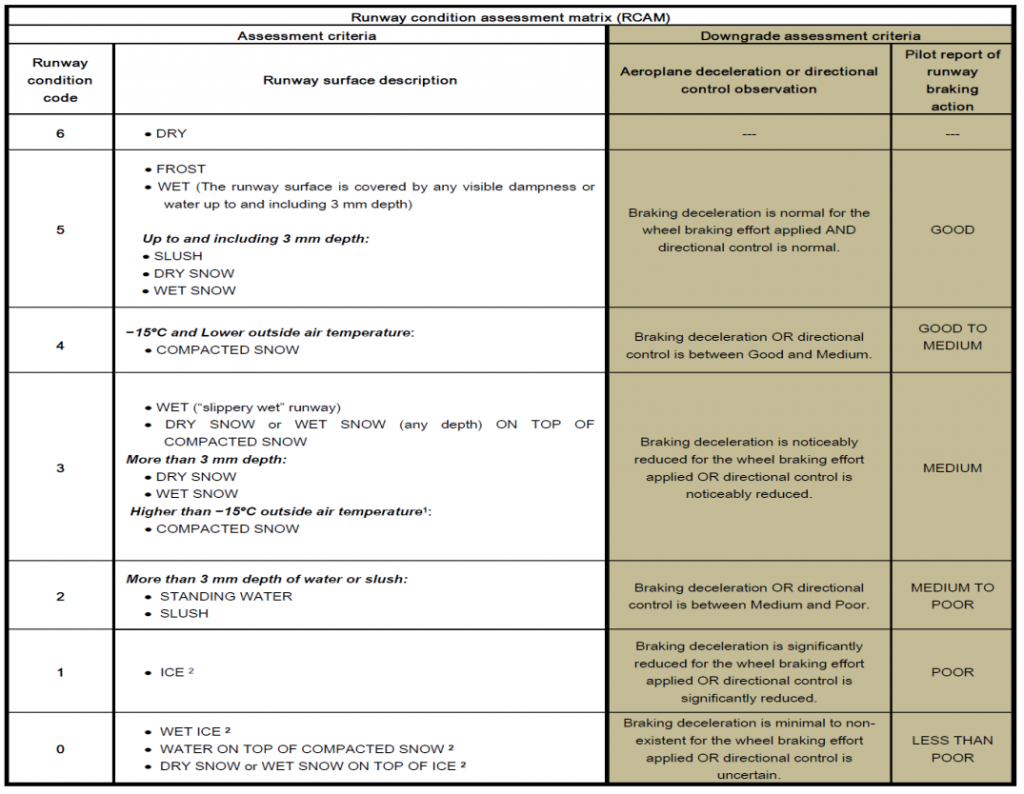
CC stands for condition code, 4 stands for a pilot braking action of good to medium, and an observed braking deceleration or directional control of good to medium on the runway condition assessment matrix.

2. Norway approved a bunch of airports for SPWR

It wasn’t easy, but they did it. The approvals were only temporary (most expire at the end of the Winter season in April/May 2023), but still, well done Norway.

What it means: You can expect more and more SPWR spots in winter zones.

3. The ATIS reports at airports giving GRFs can be really, really long.

What it means: If a runway was contaminated and then becomes Dry or Wet (so not contaminated anymore), they don’t necessarily cancel out the earlier report, which means all the info is going to be on the ATIS and that makes it really long (that’s what Norway said).

They are working on it. Trouble is, the other options are SNOWTAMs (these work, but how do you get an up-to-date one when you need it?) or ATC (clogs up the radio).

So for now, if you head somewhere wintery you can probably expect a pretty lengthy ATIS.


That was the top 3 things we learned. Here’s some more…

4. It isn’t easy for airports to be approved for SPWRs.

To get approval you need data, and to get data you need folk to be landing on the runway. But to land on the runway while it is treated you need approval…

What it means: You might still find yourself flying to airports next winter which don’t have their approval fully sorted. They issue temporary approvals, but until the data is in there may be some ‘uncertainty’ about the braking and directional control characteristics. But Norway got some done this year. Folk landed on them. It all went ok.

If you aren’t sure, talk to the airport authority to find out what they have, what they will report and what it means for you.

5. There is an airport in Norway called ENHV/Hooningsvåg

And it gets real wintery there.

What it means: 50% of landings in winter are on a contaminated runway, and the other 50% are on an SPWR. Oh, and their ‘winter season’ can be 50% of the year long. The same actually goes for a lot of airports in the upper latitudes so be prepared for winter ops and GRF if you head up there.

5. They are 95% confident in their GRFings.

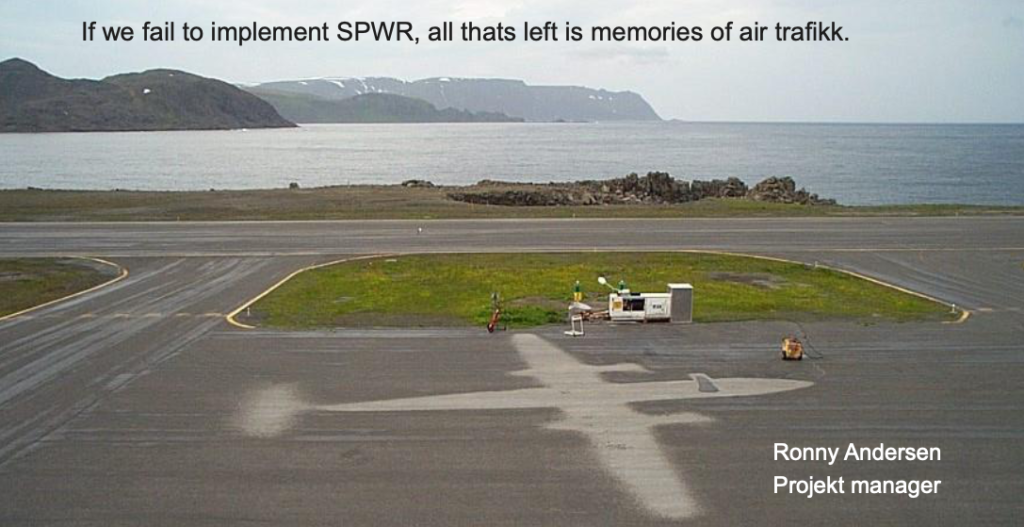
What it means: GRF works, even on SPWRs. Which is lucky because, according to Ronny Anderson:

OK, let’s see what folk outside of Norway have to say…

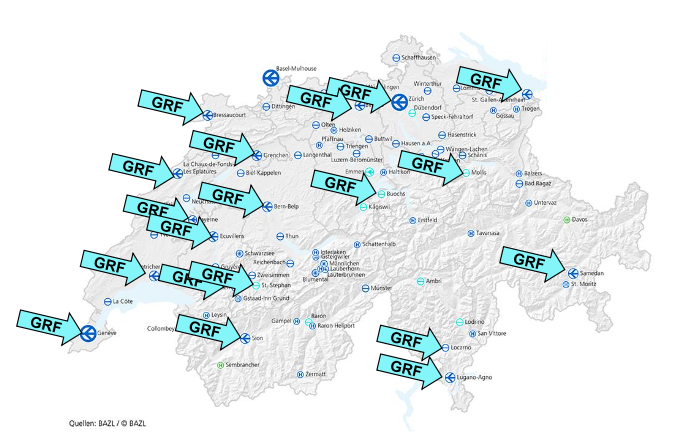
7: Switzerland also have a lot of runways using GRF.

19 in fact.

What it means: Well, they probably have long ATIS-es too. But also, GRF is supposed to be Global but we seem to be seeing it used predominantly at winter airports. Hmm…

8. Spain use it too!

They have 46 airports, and only experience what they call ‘soft’ winters – basically snow and ice isn’t that common, and actually rain is the biggest issue. In fact, only 20 of their aerodromes even have a snow plan.

What it means: They are probably pretty unfamiliar with handling snow and ice when it does occur… but also that GRF should be used anywhere you find runway contamination, which can mean rain too!

9. According to Spain, GRF doesn’t actually work very well for rain.

What it means: It means they discovered a bit of an issue with GRF when it comes to watery measurements… If there is 3mm or less of water then it is considered wet and the RWYCC is 5, but add just 1 more mm of water and you are in the standing water category and now the RWYCC drops to a 2.

Which is a problem? They think so, because measuring to that level of precision is difficult, detecting big changes quickly is difficult, and when they try it generally messes with their runway capacity because, presumably, guys are having to go and wade about the runway trying to measure a 1mm change in water level.

What that means: There is no solution right now that is entirely excellent, so there is a level of ‘subjective’ in the GRF you might experience when flying into wet runways anywhere in the world in fact (and you don’t want to be the first to discover that code 5 is actually a code 2 so be careful when hearing ATIS-es that talk about standing water).

Let’s hear something positive again…

10. Germany consider their GRF implementation a total success.

We say Germany, actually we’re talking about EDDL/Dusseldorf.

What it means: Well done them! We shall expect perfect runway condition reports whenever we operate there.

What are operators saying?

11. Crews need to understand the GRF works in runway thirds.

That means you use the lowest of the RWYCCs, you should check how much of the first third of the runway is ‘flared’ over, and should shorten the runway by a third if there is an RWYCC outlier (but always use an outlier crosswind).

What it means: Well, trying to calculate takeoff performance using GRF is not always easy because we don’t tend to work in runway thirds for it, and it isn’t necessarily clear how much ‘conservatism’ should be applied.

And then there is the fact you might only get an updated report just prior to takeoff which means trying to rework all your calculations under pressure.

What that means: There is probably some training to do with your crew if they aren’t totally familiar with GRF, and you should make sure what you put in your company manuals is clear and answers all these questions so they aren’t rolling down the runway thinking “Is this actually ok?”

12. Because GRF considers braking deceleration and directional control, it isn’t just the contaminant or surface condition that impacts this.

Downgrade and upgrade criteria need to be defined to include things like wind speed, precipitation, temperatures, various vehicle behaviours, etc etc.

Which means: If you operate in somewhere you need to really do your part reporting back. This has been in for a couple of years, but there are still some creases (ice ridges if you like) that need ironing out.

And don’t assume it is all spot on and a runway excursion will no longer be a possibility at a GRF using airport. This is a tool for improving safety only.

The 13th thing we learned about GRF:

We need to read up on it a bit more. If you do too, then here are some links:


The Day After Tomorrow is Now…

Pilots and operators are definitely not the ones hoping for a white Christmas because it means horrible weather, delays and disruption.

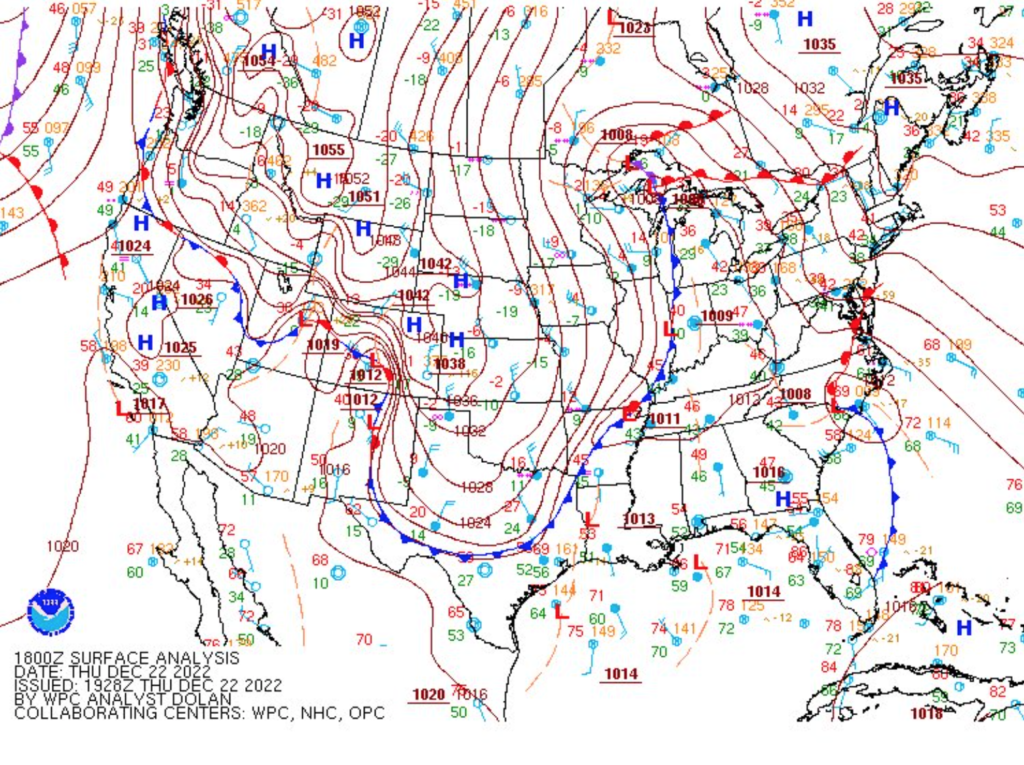
Unfortunately for all, weather news sites are calling a ‘storm of epic proportions’ is heading towards North America. It might already have reached you even…

So here is the update on the weather forecast, and a hopefully handy refresher on some of the challenges this might mean for aviation. (So you know we care and are thinking about you while we sit cosy in our warm houses drinking Eggnog).

The Forecast.

On a scale of 1 to bad, they are calling this a ‘once in a generation’ weather event, a ‘looming winter storm of historic proportions’. Not quite A Day After Tomorrow level weather phenomena, but not far off…

The weather is being caused by a severe low pressure system known colloquially as a ‘bomb cyclone’ because of the rapid and significant pressure drop that occurs – around 24 millibars in 24 hours (and that right there is one thing to be cautious about).

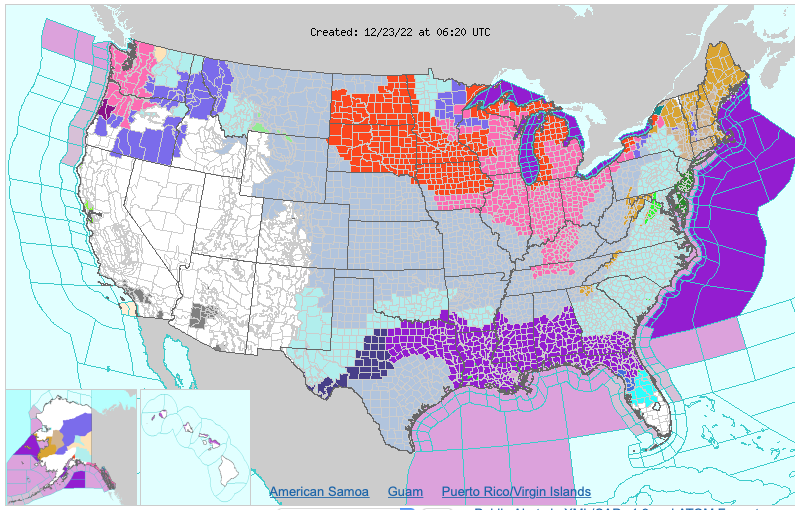
The arctic storm is expected to fully impact the east coast of the US and Canada later on December 23, and the following warnings are in place:

  • Powerful winter storm bringing sharp cold front and severe snowfall from Midwest to Ohio Valley: Dec 23 onwards
  • Powerful winter storm bringing sharp cold front and severe snowfall through Great Lakes and interior Northeast: Weekend Dec 24-25 onwards
  • Extreme cold and high gusts over central an eastern US: Dec 23 onwards
  • Flooding in the Northeast: Weekend Dec 24 onwards
  • States of emergency declared across New York, Kentucky, North Carolina, West Virginia, Georgia and Oklahoma. An ‘energy emergency’ in Wisconsin.

What is the impact for aviation?

Here is a general ‘things to look out for’ list:

  • Airports are likely to see significant disruption, cancellations and closures leading to limited alternate options. En-route airspace will be more congested with diversions and detours taking place
  • Significant ground delays for de-icing/anti-icing, and during periods of extreme weather operations will be grounded leading to significant backlogs, parking issues and congestion
  • Power outages are likely in the Midwest and Canada which may have a knock on effect for airports
  • Staff shortages may occur if folk are unable to commute to airports
  • Oil prices are leaping up. Check the costs for fuel.

You can find the National Weather Service page on the storm warnings here. They post regular updates via their Twitter page as well.

You can monitor the current US National Airspace System Status here.

Is there anything you can prepare for?

The weather conditions are severe, they are saying things like “life-threatening wind chills” so think about that before sending your poor First Officer out, unless you want a fingerless icicle trying to fly with you. It really is going to get nasty in places.

Here is our list of Winter Chillers & Thrillers to look out for:

  • Conditions might really get too severe so don’t push it if they do. Look after yourselves!
  • There are going to be significant delays in the air and on the ground. Take fuel and make a plan B (preferably before you need it).
  • HOTs are going to be hard to manage: Anyone who has ever operated out of JKF on a winter’s day and has waited 7+ hours for de-icing knows what I am talking about. With queues of traffic and bad weather there is a good chance you’ll go out of your HOT so keep an eye on the clock.
  • The Global Reporting Format is great but if it is saying things like 1/1/1 then you might find you can’t stop so well, so check that performance. Some operators don’t allow takeoff on icy runways unless treated, for example.
  • Ice pellets, hail etc, and severe icing ain’t great. Check them SigWx charts too.
  • Refresh on Cold Weather operations procedures.We found some that might or might not be helpful:
  • Look after your batteries – they have minimum temperature limits and you might need to take them off if you’re parking up outside.
  • Watch the fuel temperatures – JET A1 freezes at -47°C, Jet A at -40°C.
  • Check your altitudes – apply those cold temperature corrections
  • Snow and blizzards bring LVPs

We have a few posts which you might find handy for swotting up on all things chilling:

Be careful!

Not much more to say than that. Stay warm and safe.


De-Ice De-Ice Baby: Cold Weather Opsicles

In the Northern Hemisphere the winter season is well and truly upon us, which means various extra things to think about – like different procedures, low visibility challenges, cold temperature corrections, where you left the other glove, and of course de-icing!

So, to help you out if you aren’t so familiar with all things Winter Ops we have put together a little series of Opsicles – Refreshing bits of ops info, just for members.

Winter Opsicle #1: De-Ice De-Ice Baby

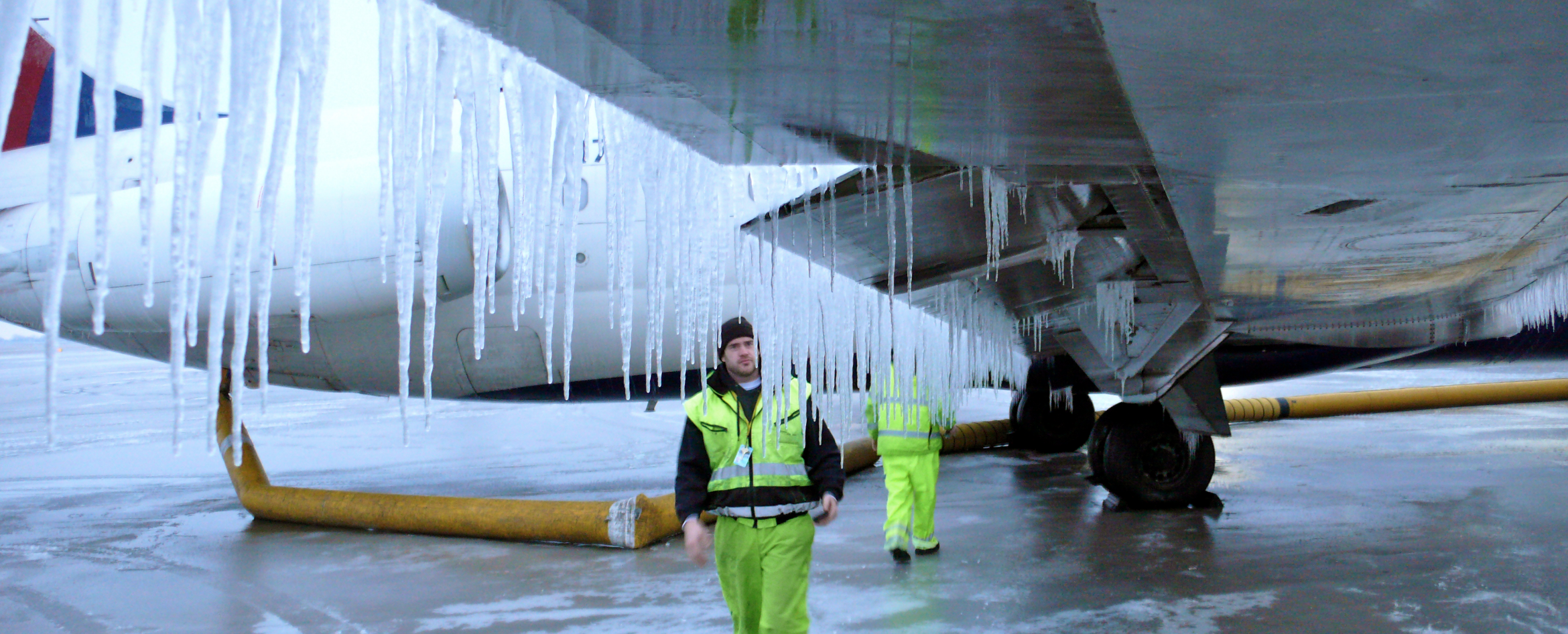
Most operators we’ve met apply a “Keep it clean, keep it safe!” policy meaning don’t risk it; if there is anything on the airplane get it off before you take-off.

There are some caveats to this – less than 3mm of frost on the underside of the wing around the fuel tanks is generally acceptable. If you don’t have a tiny frost ruler to hand then a general rule of thumb is clear paint markings showing through means it’s ok. A light dusting of hoarfrost on the fuselage is also fine (if your manual says so).

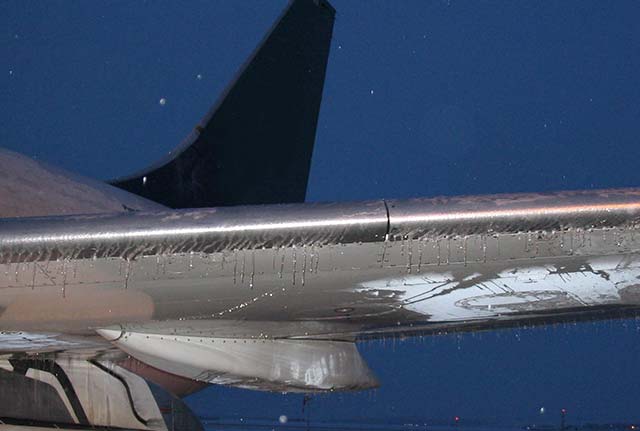
The areas where anything is unacceptable are your critical surfaces – the upper surface of the wings, horizontal stabilisers, leading edge devices… Basically any lift and/or control surface on the aircraft. If you’ve ever done a Winter Ops Refresher you probably know this statistic off-by-heart but “a very small amount of roughness, in thickness as low as 0.40mm (1/64in) can disrupt the airflow and lead to severe lift loss…”

So keeping it clean seems like a good rule. Alas, a rule not all follow…

The trouble is, it can get confusing (no, that crew in the video weren’t confused, just negligent). But when you are out there, under pressure, managing a bigger and more complex workload, it can quickly get complicated especially when you throw in some variable weather conditions to the mix, and some different mixtures into your HOT calculations.

So our Winter Opsicle #1 is a handy guide to help with just that.

What’s in them?

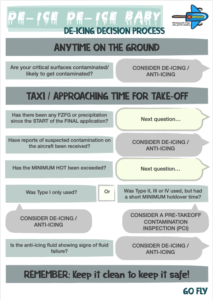
De-Ice De-Ice Baby is looking at de-icing/anti-icing. It comes in three parts, and you can download all, none, just one depending on what you find helpful.

  • A De-Icing Decision Process checklist – to help you determine whether or not to consider de-icing/anti-icing.
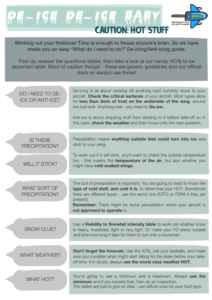
  • Caution: Hot Stuff – a sort of FAQ on Holdover Times.
  • Too HOT to Handle – a generic guide on what HOT to expect.

None of these are designed to be used in place of official (and possibly much more accurate) documents and manuals, but we do hope they will provide some refresher info on things to think about during the winter season.

Over the winter season, we’ll try and post more so you can build up your own Winter and Cold Weather Ops Pack.

If you’re an OPSGROUP member you can click on each thumbnail to head to the Opsicle PDF download page.

Further reading

There is a huge amount of info out there (from more official sources) including:


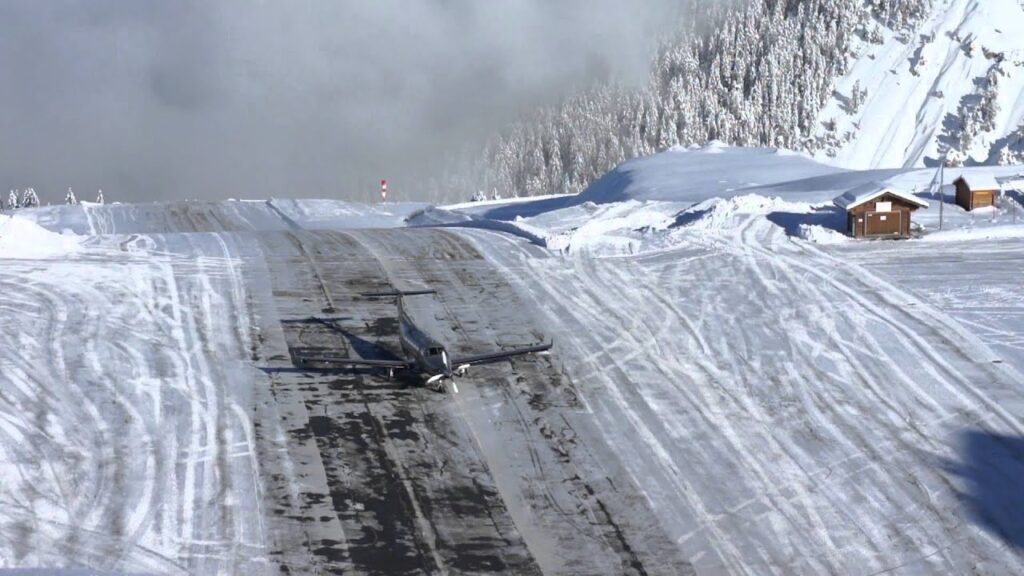
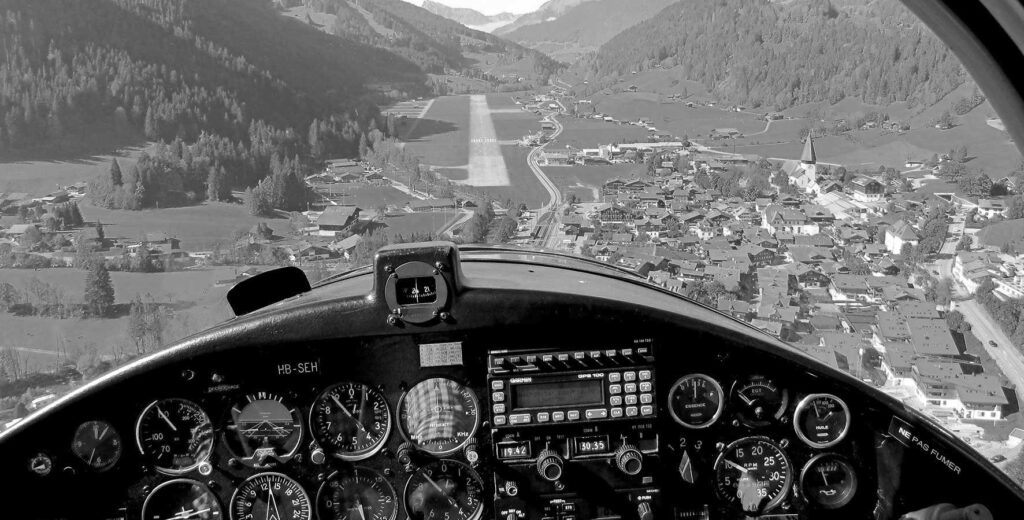
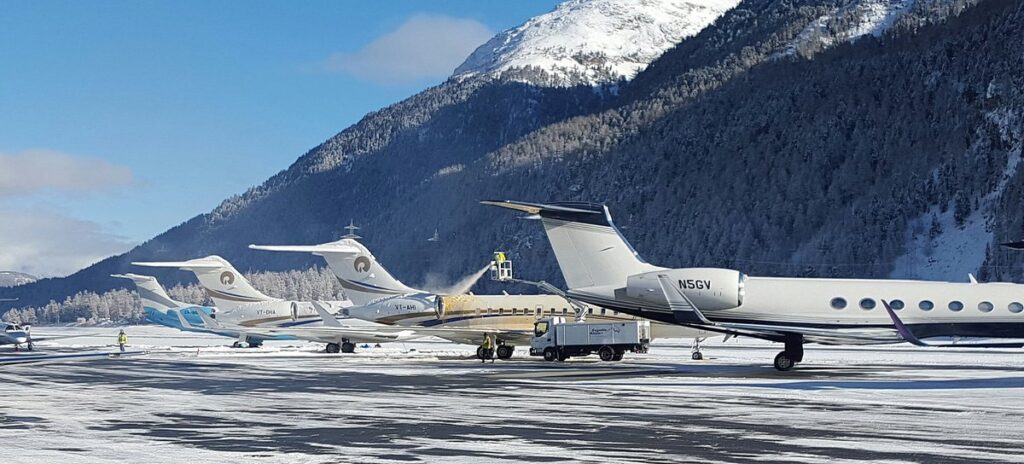
Don’t snow where to go? Here’s an Alps Ski Airports Guide

Winter is coming, and that means two big things to think about in aviation. Operating in cold, wintery conditions and operating into cold, wintery ski destinations.

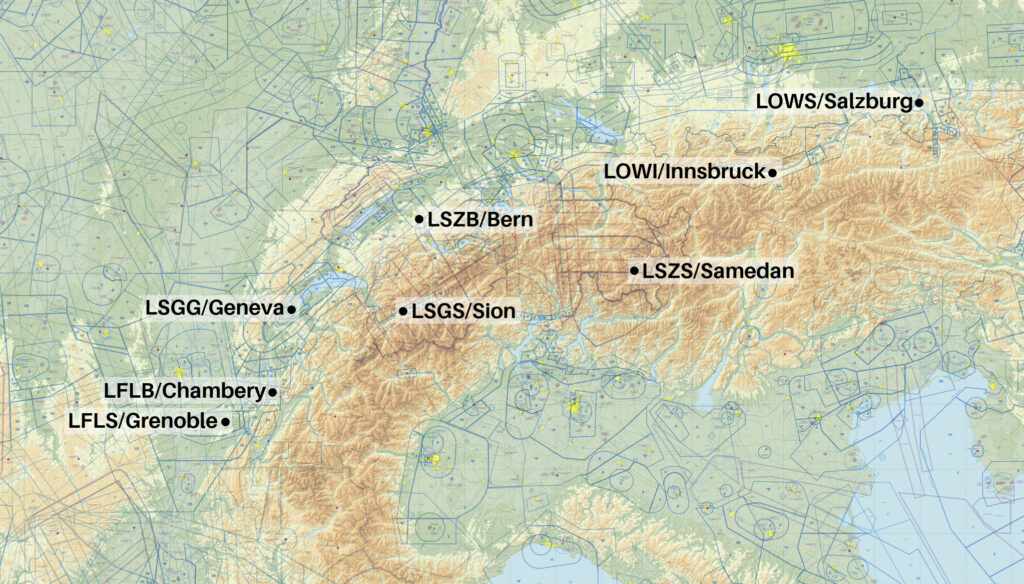
So, to help you avoid getting ‘piste’ with airport restrictions, parking problems and other annoying operational obstacles, here is a look at some of the main Alpine ski destination airports which you might be thinking about flying into later in the year.

Innsbruck – Austria

LOWI/Innsbruck will get you as close as you can to Lech, St Anton, Zurs and Kitzbuhel.

It is 1hr 15 from Kitzbuhel by road, 90 minutes from Zurs or Lech, and 70 minutes from St Anton. Or about 25 minutes by helicopter from them all.

Innsbruck is one that you need to be familiar with, and have briefing material set up for, prior to operating in. The airport administration can provide a sample briefing, but you’ll need to tailor it for your operation. ernst.wieser@austrocontrol.at / ernstwieser@hotmail.com can help with that.

The full info is available in the Austria AIP, but you basically needed to have practiced in an FSTD before heading in with weather less than 3000’ ceiling or 5km visibility.

Slots are required here and the best folk to talk to are operations@innsbruck-airport.com

Innsbruck is not a big airport so parking is likely to be limited.

Airport Spy reviews give this a 3.5/5 rating.

Salzburg – Austria

LOWS/Salzburg requires special permissions from Austrocontrol – special.procedures@austrocontrol.at

This is a larger airport with a 9022′ runway, ILS to 15 and CAT III capability. However, terrain at the end of runway 15 means there is a specific and challenging missed approach procedure fo runway 15, and a very challenging RNP procedure for runway 33.

Historically, a PPR has been required during the busy season from mid-December. Notams are usually issued in November confirming this, along with confirmations of charter and corporate slot availability.

Get your requests in early with +43 662 8580-261 / sas.ops@salzburg-airport.at

Chambery – France

LFLB/Chambery is best used if you want to head into Courcheval, Meribel or Val d’Isere.

You have probably heard of LFLJ/Courcheval Airport – it is the one in the mountains that is always on the top 10 scariest airport list. Chambery is *less of a challenge but you’re still going to need some training before heading in here, particularly if you plan to head in after dark, if the ceiling is less than 3500 or visibility is below 5000m. The airport has some terrain challenges of its own, sits at an elevation of 779′ and offers an ILS (in only one direction) to a 6627’/2020m runway.

The AIP says “Due to mountainous terrain in the vicinity of Chambery APT, it is considered essential that pilots are well familiar with approach, missed approach, circling maneuvers, and departure procedures. Therefore, concerned operators have to set specific operational instructions for the use of Chambery APT as well as provisions for their pilots’ training. The responsibility for the preparation of such information rests on the operator (or pilot-in-command for non-commercial flights).”

If you need ops assistance, the main business aviation FBO is available at +33 4 79 54 49 52 / fbo@chambery-airport.com

All the fees and charges are available here on the airport website.

The first 60 minutes of parking are free, after which they start to charge you 0.36 euro per ton (MTOW) per hour. Parking is arranged though SEACA (handling@chambery-ariport.com).

There is a dedicated business terminal and a good 30 parking spots at the airport, however, during peak times where forecast traffic exceeds capacity, they do ave scheduling in place. This means any take-off needs a PPR from the COHOR association.

Peak time is weekends (and some Fridays) from mid December to April, and the first week of January. You can email hdqcoxh.scr@cohor.org or slots@chmbery-airport.com to organise, or cy.myhandlingsoftware.com if you are a general or business aviation operator.

Contact the BRIA de Bordeaux : +33 5 57 92 60 84 and ensure you have a gendec for customs at least 24 hrs before arrival/departure.

Airport Spy reviews give this a 4/5 rating. 

Grenoble –  France

LFLS/Grenoble airport is well situated for at least 10 different ski resorts. It is an hour’s drive from Saint Pierre de Chartreuse, Chamrousse and Lans en Vercors, and up to 2 hours from other major resorts.

The airport has a 3050m runway and no specific qualification requirements for the ILS or RNAV procedures. They also up their RFF to a level 7 during the peak winter season (normally an RFF 5 with 7 on request).

The opening hours during the winter season will be 0700 to 2100 local time and can offer full security and customs without PPR.

However, it gets busy! It is the second most convenient after Chambery and particularly during February tends to fill up fast so you are going to need PPRs, slots and to confirm parking in advance. Slots and apron space are handled though the same myhandlingsoftware.

You can find the fees and charges on their main site.

We got in touch with businessaviation@grenoble-airport.com / +22 4 76 93 49 24 and they are very helpful and can assist in handling support.

We don’t have any Airport Spy reports for here yet! Send us one!

Bern – Switzerland

LSZB/Bern airport will get you close to Gstaad.

They have a very handy airport site with info for GA flights including an airport manual.

They don’t require slots and advised that they rarely see restrictions or capacity issues even during the busy season. As with many of these airports, they are not H24, but can offer different hours on request if required.

There is no pre-training required, but the airport is challenging. They have cold temperature corrections for the terrain (highest MSA is 15,800’) and the airport elevation itself is 1675’. The arrivals also take you through Class E airspace and VFR traffic without transponder and radio is common in the vicinity.

Reports for the airport suggest you may get terrain alerts, and preparing for the circle to land runway 32 with waypoints is a good idea. Our Airport Spy reviews gave it 4/5 stars and called it ‘tricky’.

Ground handling is mandatory here so get in touch with groundservices@bernairport.ch / +41 31 960 21 31 for info.

Gstaad does have its own airport – LSGK/Saanen – which, like so many, requires pre-training before you head there. You will need a PPR as well, but only a few hours before. The airport can handle jets up to at least a MTOW of 15,000kg and requiring up to RFF 5, but in winter they don’t have jets landing because of runway condition. So if you’re anything other than a Pilatus PC-12 or equivalent, stick with Bern.

You can get in touch directly with them at +41 33 748 33 22 / info@gstaad-airport.ch

Engadin (Samedan) – Switzerland

LSZS/Engadin, also known by some as Samedan is the closest airport for the St Moritz ski spot. It is actually a dedicated private jet airport just for St Moritz, and is barely a 10 minute drive from the ski chalets.

Parking here can get tight during Christmas, New Year and White Turf (weekends in February). There are limitations for jets with fire & rescue category 4 and higher.

Engadin was built, literally, into the mountains and you need prior training (and have to pass an exam) before going here. The main website provides some good briefing info on all this.

There are also some specific flight plan filing requirements for the airport – which you can read about here.

For handling support, get in touch with +41 81 851 08 51 / info@engadin-airport.ch

Airport Spy reports rated this airport 4.5/5 stars.

Geneva – Switzerland

LSGG/Geneva is the closest airport for the Chamonix resort, and is about 1 hour 20 minutes drive away, or has multiple helicopter transfer options.

There is no particular pre-training required to operate into Geneva, however it is a relatively challenging airport with very high terrain in close proximity. Check out our Airport Lowdown here.

Geneva is busy in the summer and busy in the winter. All year around really. But it does get particularly busy from December 15 to the end of April, and there are generally restrictions (and Notams) issued around this time.

You will need a PPR slot for arrival and departure. In the past there has been a maximum slot reservation window of 21 days. 

This is where you need to head to check for info on all things PPR at Geneva.

Geneva has a dedicated business aviation terminal which is pretty convenient for the main terminal. There are three big hangars here, however, hangar space is limited during peak times and in the busiest part of winter often only the hangar run by the airport is available to “general public”. So get in touch and make arrangements early if you need them!

The main FBOs are:

You can find full details of Geneva Airport charges direct from the airport website.

Our Airport Spy reviews gave it 4/5 stars.

Sion – Switzerland

LSGS/Sion is the main airport for the Verbier, Zermatt and Villars resorts. The really posh ones.

Before we go any further into planning and operating there, you need to know that Sion does require special authorisation from the Swiss Authority because of the challenging procedures due terrain.

This authorisation requires pilots to undergo training before operating there, but there is a decent list of places where you can do this training, including training facilities in the US. They also have some great airport briefing info on their website.

Possibly because it is so challenging (guessing less folk fly there), the FBO we contacted advised that they don’t have any parking limitations at the airport, and that aircraft can stay for as long as they like, in a hangar too if needed.

For queries on handling, try Signature Flight support +41 27 305 2424 / sir@sigantureflight.ch

Our Airport Spy reports only rate this 3.5/5 stars. The VFR traffic makes it tough, but less challenging than some.

Where else?

We haven’t covered some of the bigger European airports which can be used for parking and to reach Alpine ski destinations.

LSZH/Zurich and the Milans (LIML/Milan Linate and LIMC/Milan Malpensa), as well as EDDM/Munich are all relatively convenient for ski destinations in the Alps and are larger airports which offer better parking, hangarage and easier operating options.

If you are familiar with other airports which are good options for winter ski destinations, then please share those “gotchas” or need to know “heads ups” – and we will share them on to everyone in the group. You can file an Airport Spy report here: ops.group/blog/spyreport


The Seven Deadly Things

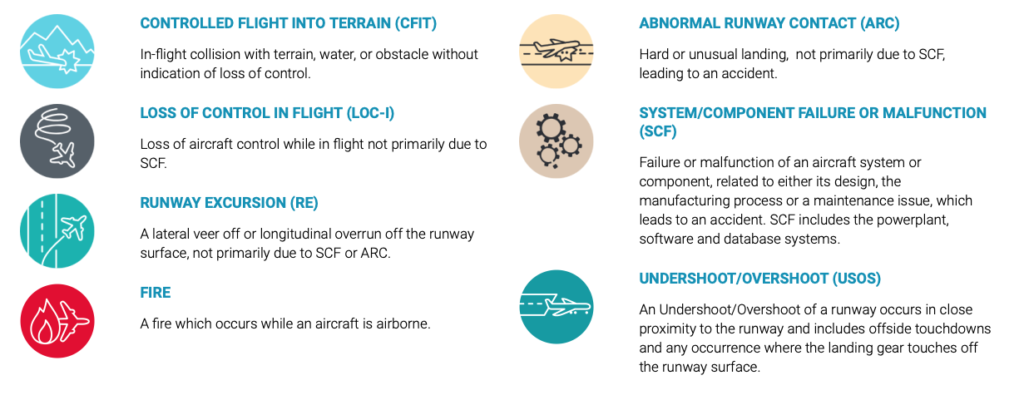
Have you ever taken a look at a report listing the distribution of Accidents by Accident Category? There are apparently more than 40 possible ways an accident can be categorized, but there are 7 that seem to pop up way more often than any other.

Airbus took a look into all fatal and hull loss accidents which occurred between 2009 and 2019 and the results are shocking in that a lot of those accidents just should not have happened.

P is for…

Yep, pilots. We are a big problem. We mess up a lot. That is what seems to be said in the media anyway…

But, it isn’t always our fault, (sadly some of the time it also is), and we all know that the news reporter’s favorite phrase “pilot error” (or “human error” if they are feeling particularly generous about it) is rather meaningless, and very unfair.  It removes all the context of the why’s and the how’s of what led to a pilot making an error, and it is rarely ever as simple as “they just messed it up.”

There are usually countless small things that lead up to any incident, and many a CRM course has been spent discussing and brainstorming how we can better avoid all of these little things and so avoid it ending up in a “one big thing” event.

So, why are these big events still happening? And what can the pilot in the equation do to prevent them? (Because the vast majority of these definitely are preventable).

1. Loss Of Control In Flight

This is the single biggest cause of fatal airplane accidents in this period, accounting for a scary 33%, and 12% of hull losses. We are not talking about situations where something major has broken or failed – we are talking about times where aircraft have somehow managed to get into a situation they shouldn’t be in, and the crew have not able to safely get them out of said situation.

Air France Flight 447 is one of the most discussed examples of this occurring.

All these accidents no doubt had other factors involved – it was not just the pilots not knowing how to fly. There were things like startle factor, bad weather, other warnings, other traffic…

But a large number of these could have and should have been recoverable.

So, what can we do about this? Well, ICAO took an in-depth look at why these kept happening, and they came up with a great and simple thing – UPRT. 

Upset Recovery and Prevention Training

When they say simple they really mean it – all you really need to know is PUSH, ROLL, POWER, STABILISE (and maybe have had a few practice goes in the sim).

This is the recovery though. It is the point when everything has gone wrong and all you have left is fixing it.

Luckily, we pilots do have a few other tools in our toolbox which we can pull out earlier at a time when prevention might still be possible. Things like good monitoring, situational awareness, an understanding of startle factor.

In fact, we have a post right here if you’re up for some more reading on the old startle thing.

There is also that Other thing we can do. It might be one that makes a few palms get a little sweaty at the thought of it – but we can disconnect the autopilot and actually hand-fly now and then.

2. Controlled Flight Into Terrain

Second on the list of the ‘7 Deadly Things’ is Controlled Flight Into Terrain. Again, not because something has broken, but because a crew have just totally lost their situational awareness. These account for 18% of all fatal accidents, and 7% of all losses reviewed in the 20 year period.

The Korean Air Flight 801 accident report offers more insight into how these occur.

Again, other things factor into this – distractions, visual illusions, somatographic illusions – and these can be tough to handle because they are one of the few things a simulator cannot realistically simulate.

We have backups though. GPWS for one. Although this really is the final layer of the safety net. If this is going off then you’re out of the prevention and well into the recovery and mitigation part of the accident curve.

There is good old Situational Awareness again though – this is the stuff of heroes. It is something you can gain, or regain, with a simple briefing. A “What if… then what will we do?” chat. Briefing threats is important, but briefing how to avoid them is even better. Get a bit of CRM in and ask the other person next to you what they think you should be looking out for.

Situation Awareness is knowing where you have told your plane to go but, most importantly, it is knowing if it is actually going there (and this means vertically and laterally).

3. Runway Excursions

These account for 16% of fatal accidents, and a whomping great 36% of hull losses. No failed brakes or issues with steering involved, just big old “oops, didn’t check the performance properly” type situations. We have mentioned this before. It is one of the biggest “that just shouldn’t have happened” types of event.

Actually, the biggest thing that leads up to runway excursions is generally unstabilised approaches.  These are something we can definitely avoid and IATA has some great tips on how. Cut out the unstabilised approaches and you’ll probably cut out a big proportion of runway excursions right away.

There are a few things to help us here too – if you are flying an Airbus then lucky you, because these have a great system on them called ROW/ROP that squawks at you on the approach, and on the landing roll, if it reckons you’re going to go off the runway. But if you don’t have this, then checking your performance properly and managing that approach well are going to be what saves you from an embarrassing call to your chief pilot.

There is also a big change to runway friction reporting coming in on 4th November 2021 – The Global Reporting Format, or ‘GRF’ as he is known to his friends. Griff will standardize how runway surface conditions are reported worldwide and with better reporting will hopefully come better awareness of the risks.

That was the Top 3. What about the others?

The other four are lumped together into ‘Other’ which makes up the remaining 33%. (Actually, 11% of that is ‘other’ others!) Combined, our final four account for 22% of all fatal accidents and 22% of hull losses.

These are:

  • Fire
  • Abnormal Runway Contact
  • System/Componet Failure or Malfunction
  • Undershoot/ Overshoot

Now, I know what you’re going to say – fire probably isn’t your fault (unless you dropped your phone under your pilot seat and then ran over it repeatedly with your chair trying to hook it out again).

But there are still things a pilot can do to help lower the impact of these.

How? Well, by knowing our fire procedures (the what to do if something Lithium Ion powered in the flight deck does start smoking), and by knowing the comms procedures needed to help support our cabin crew if there is something going on down the back. We can also prepare in flight – be ready with something in the secondary flight plan in case we need to suddenly divert.

As for system and component failures, well, the 737Max accidents of the last few years account for a big proportion of this, however, in all cases having a strong systems knowledge and preparing for those “what if?” situations might help save your life one day.

You might have noticed a shift in the training paradigm in the industry, and with good reason – the days of focusing on practicing specific failures in the sims are vanishing and in its place is Evidence Based Training – training that focuses on building the skills needed to handle any situation. If that all sounds newfangled to you then think of it this way – a pilot is there just not to push buttons, but to manage the flight, and these skills are the tools which will enable us to do that.

Fancy reading some more?

  • A full report from IATA on LOC-I can be found right here


SNOWTAMS slip into a new style

ICAO will be updating the format of SNOWTAMs later this year – the special issue Notams that deal with surface condition reports and contaminated runways. They have published updated guidance on how SNOWTAMs should be issued when the changes take effect on November 4, 2021.

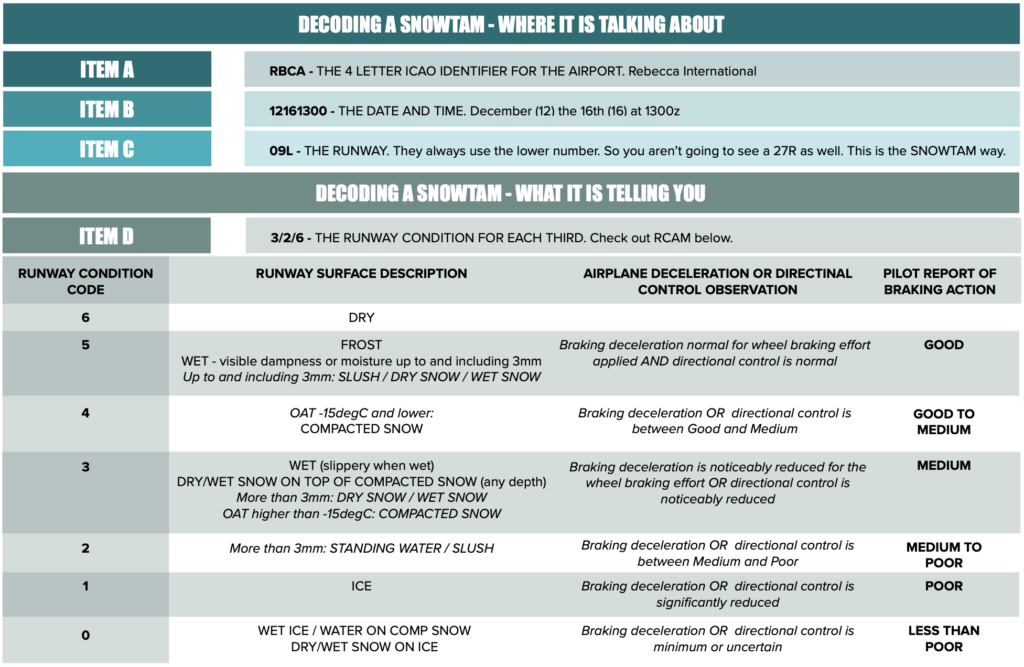
Here’s a summary of what’s changing, what the new style SNOWTAM will look like, plus a handy chart to help you decode them…

The Friction Task Force

There is such a thing, and we can only assume they wear skintight suits and body surf down runways to measure the friction. Anyway, they make recommendations on global reporting formats and also how to assess runway surface conditions.

It is quite a big thing. A lot of accidents happen because runway friction is not reported correctly. Or rather, pilots don’t understand it/choose to ignore it. Just ask (several) crews flying into UEEE/Yakutsk about it.

But if you check out the RCAM (Runway Condition Assessment Matrix) below, you will notice that offering a braking action is the preferred method nowadays. Friction coefficients are not so useful.

What is a SNOWTAM?

It is a special series Notam that provides a surface condition report to let pilots know what is on the runway, how much of that is on the runway, and what they can expect their airplane to do (braking wise) on said runway.

So, it is something that basically tells the pilot: “Watch out, slippery!” in a rather complicated sort of way.

SNOWTAMS use metric units, and a bunch of codes for deciphering. More about that later on.

What are ICAO changing?

As of 4 November 2021, the maximum validity of a SNOWTAM will be 8 hours. Currently they are 24 hours and a lot can change in that time meaning you have to try and discover what is still valid and relevant and what is not.

With the new ones, if they don’t say anything different after 8 hours then you can assume the runway surface condition is good and normal again. If anything changes, they will release a new one which will automatically replace the old one.

Each SNOWTAM will get its own serial number for identifying it.

What else is in the Guidance?

TTAAiiii CCCC MMYYGGgg (BBB)

Yep, that is written in it. It is an abbreviated heading demonstrating how certain things should be written. For example:

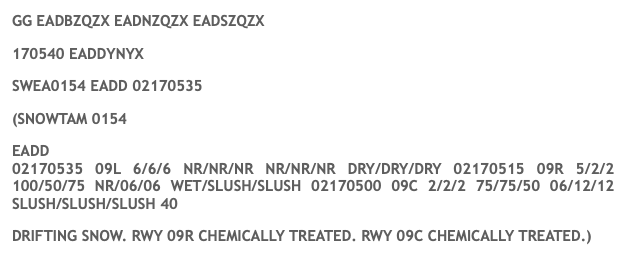
This is an example of how the new style SNOWTAM will look. Not a huge difference to the old ones, but here is a decode for you anyway.

  • GG EAD etc etc is who produced it. Not super relevant for pilots.
  • Snowtam 0154 is the serial number of the Snowtam
  • EADD is where we get interested. That is the airport identifier. Issued on the 17th February at 0535
  • Runway 09L 
  • It then gives the runway condition code for each runway third, as determined by the RCAM (runway condition assessment matrix). 6/6/6/ means dry/dry/dry.
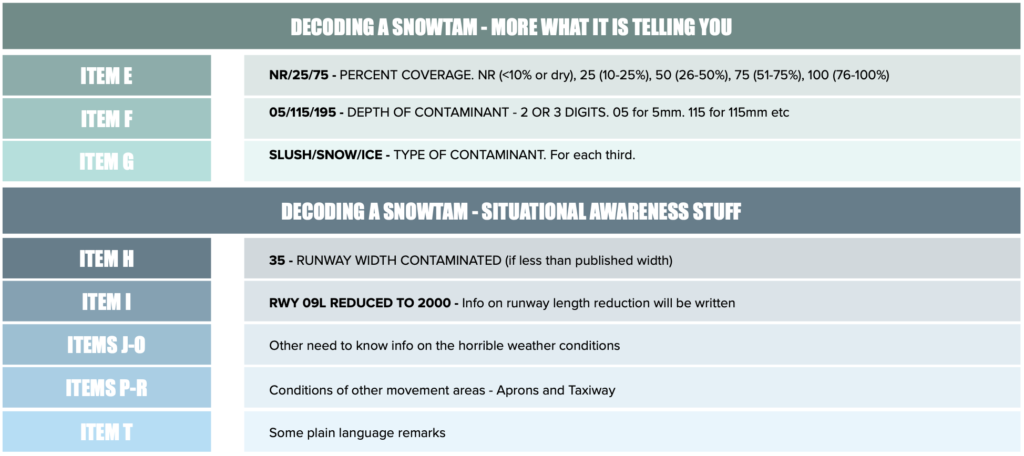
  • Next up is the percentage coverage. NR means less than 10% or dry. Hence the many NRs
  • This SNOWTAM then moves onto 09R because frankly 09L was quite boring and dry.
  • 09R is 5/2/2 (good, medium-poor, medium-poor according to RCAM). 100% covered, 50% covered, 50% covered) and NR/06/06 is the depth – dry/ 6mm/6mm of wet/Slush/Slush
  • Then it moves onto another runway…. blah blah blah

The last bit is another change – this gives you “Situational Awareness” – a free text (i.e. real human language) section reporting other important stuff you might want to know.

A decoding device

We aren’t going to be there to decode for you, so here is a decoding device we made earlier (by copying the ICAO one and adding some nice colours).

You might also want to download something like the SNOWTAM app on your smartphone (just make sure whatever you use is correct against your company manuals).

Why these changes?

Well, in order to make SNOWTAMS better, because they are fairly important. You might get some frosty toes if you step in a puddle of slushy snow, but you’re going to get more than cold feet if you go skidding off the end of a runway.

SNOWTAMs are there to make winter weather safer. They give critical information about the state of the runway, and this should be plugged into whatever performance calculating device your airplane needs you to use so that you can see whether you will stop before, or after, the end of the runway.


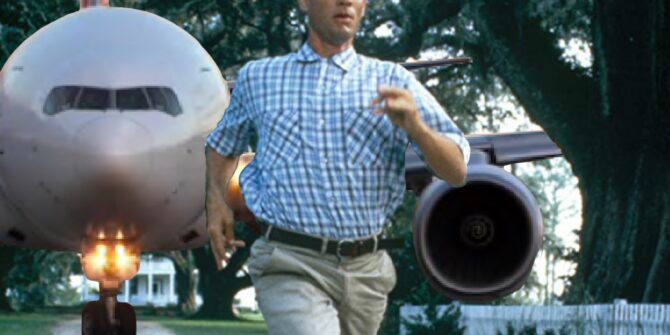
Overrun, Forrest, Overrun!

Earlier this week the Accident and Investigation reports came out about two aircraft overruns, on the same runway, that occurred within two hours of each other.

So what was going on in UEEE/Yakutsk back in 2018?

Or rather, what was going off, and why?

A bunch of factors contributed to this double whammy of airplane excursions. First up, the runway at Yakutsk airport had been shortened for works. It was, in fact, 1,150m shorter – which is quite a significant amount.

There were some Notams published about this, (and pretty decent Notams at that)

A5991/20 said –
DAILY 0000-0800: RWY 23L AVBL FOR LDG ONLY. LDA 2248M. TKOF FM RWY 23L CARRIED OUT BY REQ DURING THIS PERIOD. 2. DAILY 0800-2359: RWY 23L AVBL FOR TKOF/LDG. DECLARED DIST: TORA 2248M, TODA 2398M, ASDA 2248M, LDA 2248

And then there was A3621/ 20 which said –
AD TEMPO UNAVAILABLE FOR ACFT OF FLW TYPES: IL-96-300, IL-96-400, IL-86, IL-62, A-310, A-330, TU-154, BOEING777, BOEING747, BOEING-767-400ER, MD-11F AND THEIR MODIFICATIONS.

What about the airplanes, I hear you ask. 

Well, the Sukhoi Superjet 100LR is not included on the list of “can’t land here” airplanes. However, the Notams should have at least given them pause for thought, especially since both of them had technical issues reducing their deceleration performance.

Number 1 “First to Overrun” was found to have significantly worn out tires (which should have been spotted during a walk around), while Number 2 “Also Skidding Through” had a thrust reverser out of action. No big deal, but factors to be considered in the context of the other conditions of the day.

Talking of those conditions – the ATIS was reporting a tailwind of 6kts which is not outside anyone’s limits, and of course 150% of any tailwind is taken into account for landing calculations.

The braking co-efficient, however, was reported as 0.45
Now, ICAO and most national authorities have moved away from reporting measured friction because they decided that, really, it is a pretty useless thing to report. There is not actually any great way to work out how those contaminants on that day will result in whatever friction for whichever aircraft – because there is no way to correlate the measurements a ground measuring device can measure in a meaningful way to what an airplane will actually experience. In other words – it has limited practical use in actually characterizing the runway conditions for an aircraft operation.

To further add to its pointlessness, the 0.45 was not even accurate. The real coefficient measured that day was actually less than 0.3. 

As slippery as an oiled-up eel
Now, these pilots did do a landing performance calculation using what they thought were accurate figures. Even with their selection of only medium auto brake, and the mandatory 15% safety margin added in during in-flight performance calculations, the results looked ok and so they gave it a go.

However, had they known the coefficient was only 0.3 then they would hopefully have come up with landing results similar to those calculated during the subsequent investigation. These showed that a Superjet needs about 1,598m on a dry runway, 1,838m on a wet runway and a whopping 3,650m if the coefficient of friction is 0.3. Their 15% safety margin could not even cover the extra distance because of the poor braking action.

So, with one of the reversers out of action, a tailwind, an incorrectly reported friction co-efficient and only 2,248m available for stopping in, poor old airplane Number 2 never stood a chance of stopping in the space available.

What can we take away from this?

Runway Excursions are still in the top 3 most common bad stuff that happens to airplanes, and considering the vast majority are avoidable with a bit of planning, better procedures or common sense, this is fairly shocking.

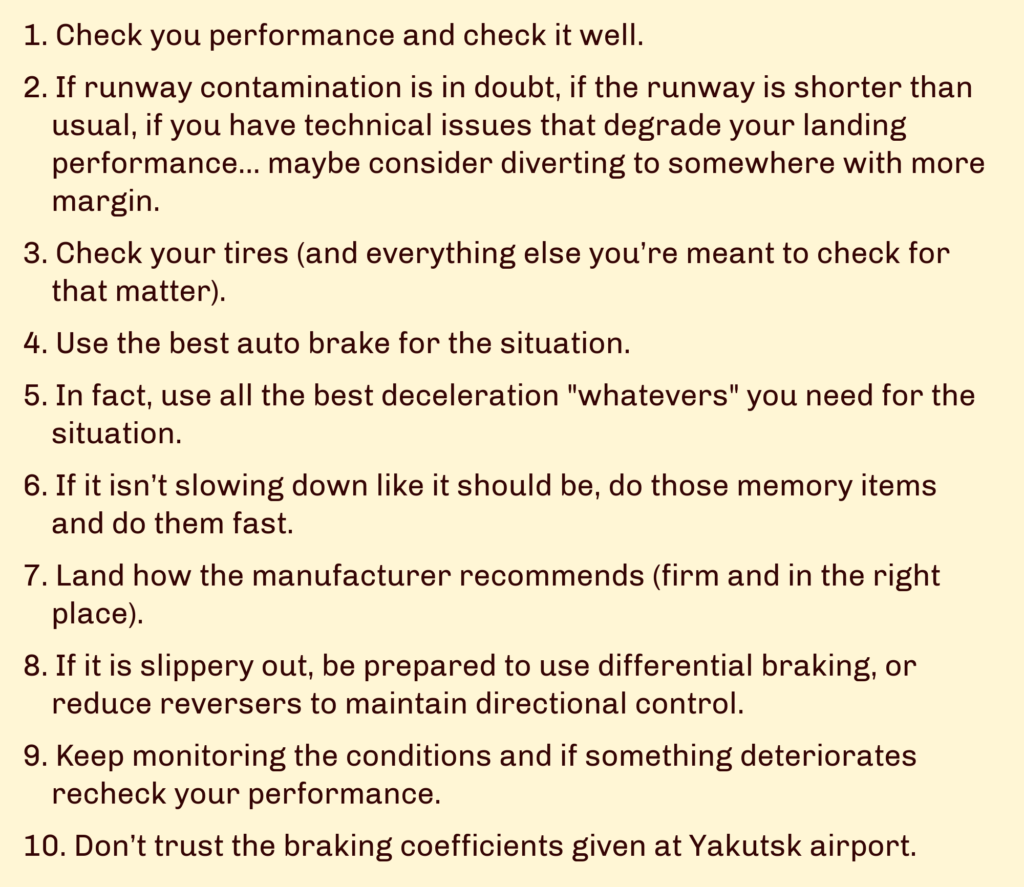
So, what can pilots do to prevent overruns?

Braking, braking, broken…

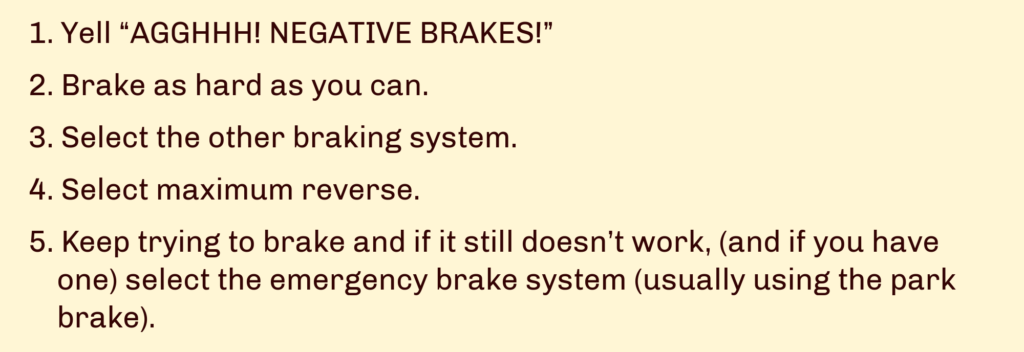
Sometimes brakes do fail, or systems malfunction, and if that happens being ready with your memory items  is the best way to deal with this. They might vary slightly across different types, but the basic actions are probably something along the lines of – 

What are manufacturers doing to help stop overruns?
A lot of airplanes have some clever devices installed in them nowadays. 

Take Airbus for example. They have their ROW/ROP systems. The ROW bit (runway overrun warning) does useful things like monitoring the conditions in real time, and running speedy little calculations based on the known runway length and aircraft weight to make sure the aircraft is still stoppable in the distance available. If it isn’t, it will yell at the pilot.

The ROP bit (the protection that kicks in after landing) does something similar, and can automatically apply full whiplash effect with the brakes if it thinks you need it, as well as reminding you to “Set Max Reverse!”

Other aircraft have similar systems with warnings that trigger if an aircraft is too fast, or if the landing flare is too long, or the remaining amount of runway is too short…

What can authorities do to stop excursions?
Ensuring operators train crew and staff properly, and that information is distributed in the industry is important. 

Airlines and Operators should have in place technical and practical training for their crew to help them have a better awareness of the risks and factors that lead to overruns. Better monitoring of areas like unstabilised approaches which often precede overrun incidents, and contaminated runway and winter operations awareness, is also necessary.

Airports should makes sure Notams about works and changes to runway characteristics are up to date and correct. Giving correct information to pilots about the conditions on the day would also help…

In the US the FAA is advocating the use of  EMAS (engineered materials arresting systems) at airports within insufficient runoff space, and this has apparently prevented the severity of 15 aircraft overruns in the years they’ve been installed.


Further Reading

  • Opsgroup article: 5 Tips for Safter Winter Ops
  • Airbus “Safety First” magazine: new issues published every 6 months, a wealth of info about all things safety-related.
  • Useless fact: If you wanted to ski down a concrete slope using rubber skis, the coefficient of friction for rubber on concrete is 0.9 which means you would need a 42 degree slope to actually get moving.


Winter Is Coming

Well, we have a question for you.” The New York Center controller seemed amused.

“Go ahead,” I replied, my voice made uneven by the moderate turbulence we were bouncing around in. As I answered, I cast another look over my shoulder at the ice on the wings. The Dash-8 boots were doing their job, at least for now. The aircraft took on a bit of shudder as the props flung ice unevenly off of the blades.

The Center controller delivered the news with a mixture of ironic humor and pity. “Williamsport wants to know if you want them to plow the runway. They say they are closed currently. They have four inches of snow on the runway, but there is a hard crust of ice on top.”

I quickly retrieved the flight release and rifled through the six foot paper scroll to find the NOTAMs. Nothing about the airport being closed, thank Zeus. At least I didn’t miss something big like that. Dispatch should have known—but here we were, halfway between Philadelphia and Williamsport, in and out of freezing rain. I eyed the fuel gauges critically. Plenty left to get there and fly back, if need be. At least there was that.

“Well yeah,” I told the controller. “Plowing the runway would be helpful.”

That night ended with a circling approach to minimums through a narrow valley in light freezing rain mixed with snow. The First Officer flew the approach perfectly, and thanks to the superior stopping power of the Dash 8 we had plenty of slick runway left to play with. Just another Northeast U.S. winter night—par for the course from November until March.

Winter is coming. In some parts of the world, winter is already here and people are insistent on staying inside on top of their twin mattress. However, for pilots, they still have to brave the weather. Flying always brings challenges, but winter supplies extra problems that separates mere pilots from imaginative problem solvers. Problem solving must always be wrapped in a healthy rind of risk analysis. When things go bad in winter weather, they often go bad in a big way.

The accident record is filled with examples of the problems that ice and snow can cause. The American Eagle ATR in Indiana in 1994 was brought down by the crew’s lack of appreciation for the extreme effects of super-cooled large droplets (SLD). In 2005, Southwest Airlines slid off of the end of a slick runway at Chicago Midway. There have been icing induced loss of control events the world over and a few aircraft seem to slip off of the taxiway every winter. Sometimes, simply the additional worry and workload posed by extreme winter weather can add risk. A crew can find themselves rapidly being overcome by events, leaving little time to make decisions in a highly dynamic environment.

de-icing

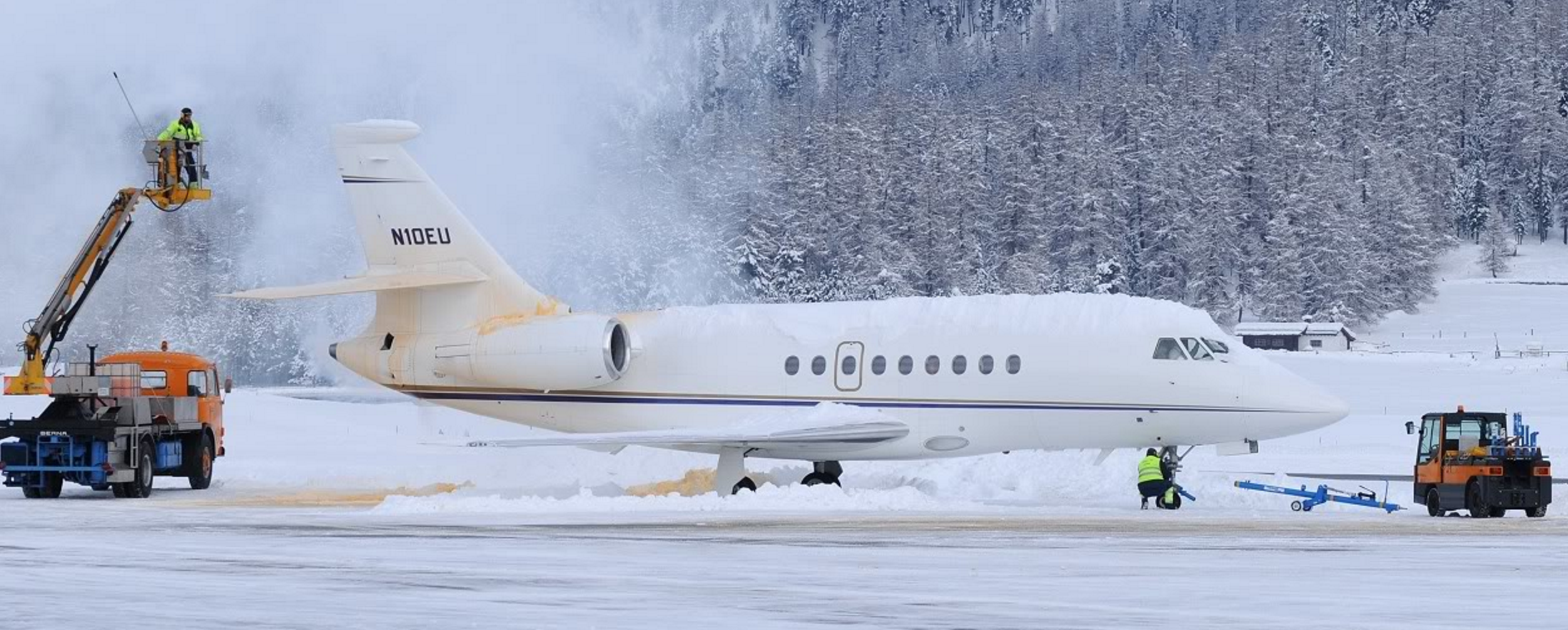
Technology has come a long way in helping to mitigate the risks that winter can pose. There are now predictive charts for SLD that pilots can examine prior to flight. Deice and Anti-ice fluid technology has improved in past years; there are now three different types of fluid available for use, each tailored for a specific application. The holdover times (the amount of time that fluids remain effective) are revised on a yearly basis as formulations change and the science improves. Some airports are even experimenting with large heaters and infrared deicing technology. Predictive weather tools are much better as well, leading to proactive cancellations that allow aircraft to be positioned for relatively rapid system recovery once a major winter storm has passed.

But there are still problems … Even the best anti-icing fluids can rapidly lose effectiveness in the right conditions; temperatures near freezing with high humidity makes for large, wet flakes that can quickly saturate even the most robust Type 4 fluids and render them useless. Weather systems can capriciously change course with little warning, meaning the difference between a snow apocalypse and a mild dusting of white. Winter is expensive too, with deicing and anti-icing fluids costing more per gallon than jet fuel. Duty days get longer, crews get fatigued, schedules lag and dispatchers become swamped with work. There is nothing more expensive than operating a late airline, and late is often the rule rather than the exception when it comes to winter operations.

So, what is the key to safe winter operations? Planning is essential, but so is flexibility. Many airports have instituted gate hold programs for deicing operations, which helps prevent needless burning of jet fuel on the taxiway. Proactive assessment is key. Knowing the conditions at the destination prior to departure can mean the difference between a successful outcome and tens of thousands to dollars of expense for a divert to an alternate. Caution is the most important concept. Aircraft performance numbers are important, but takeoff and landing distance data should be taken with a grain of salt: it is not uncommon for conditions to vary significantly along the runway length, especially at smaller airports with limited snow removal capabilities.

Planning and caution can mean the difference between a successful, safe operation and having to have a crew have to get creative in the middle of the night. Winter is coming. Time to get ready.