Pakistan/India Airspace Update

Update May 12

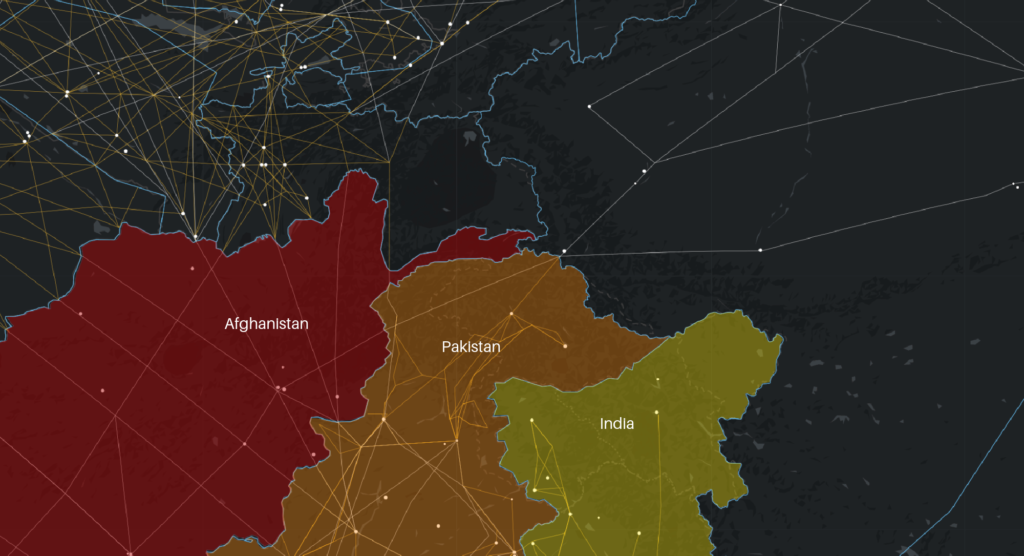
A ceasefire between India and Pakistan, announced on May 10, appears to be holding despite mutual accusations of violations.

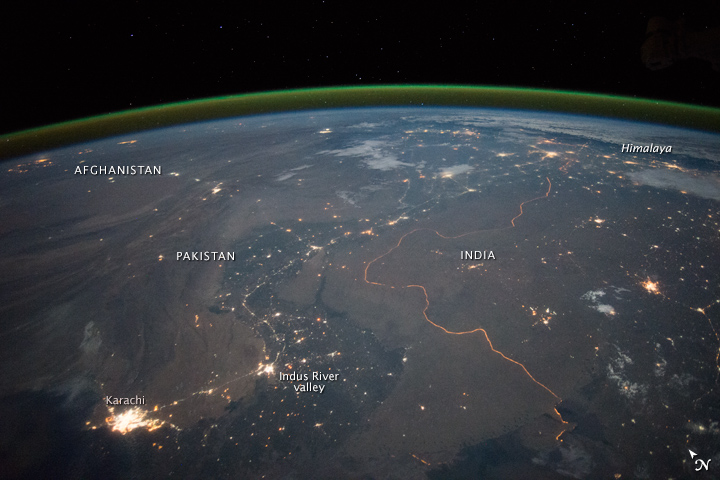
We continue to advise caution, particularly over the Kashmir region and along the shared border where air defense activity could resume with little warning if hostilities were to restart.

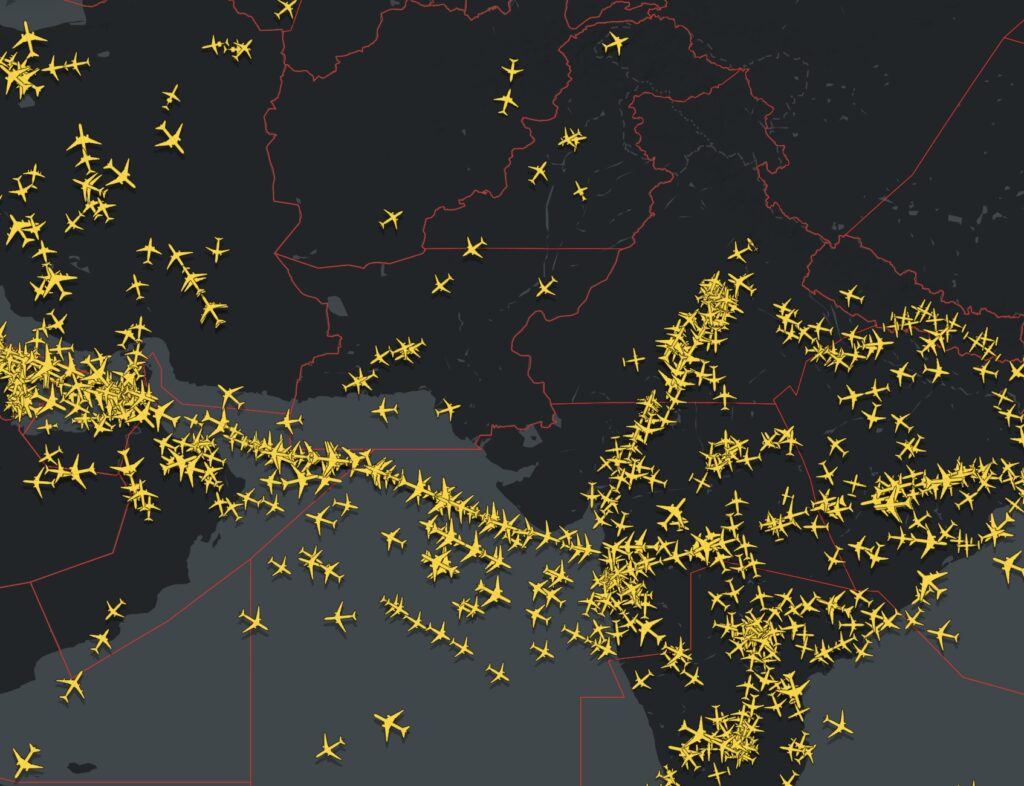
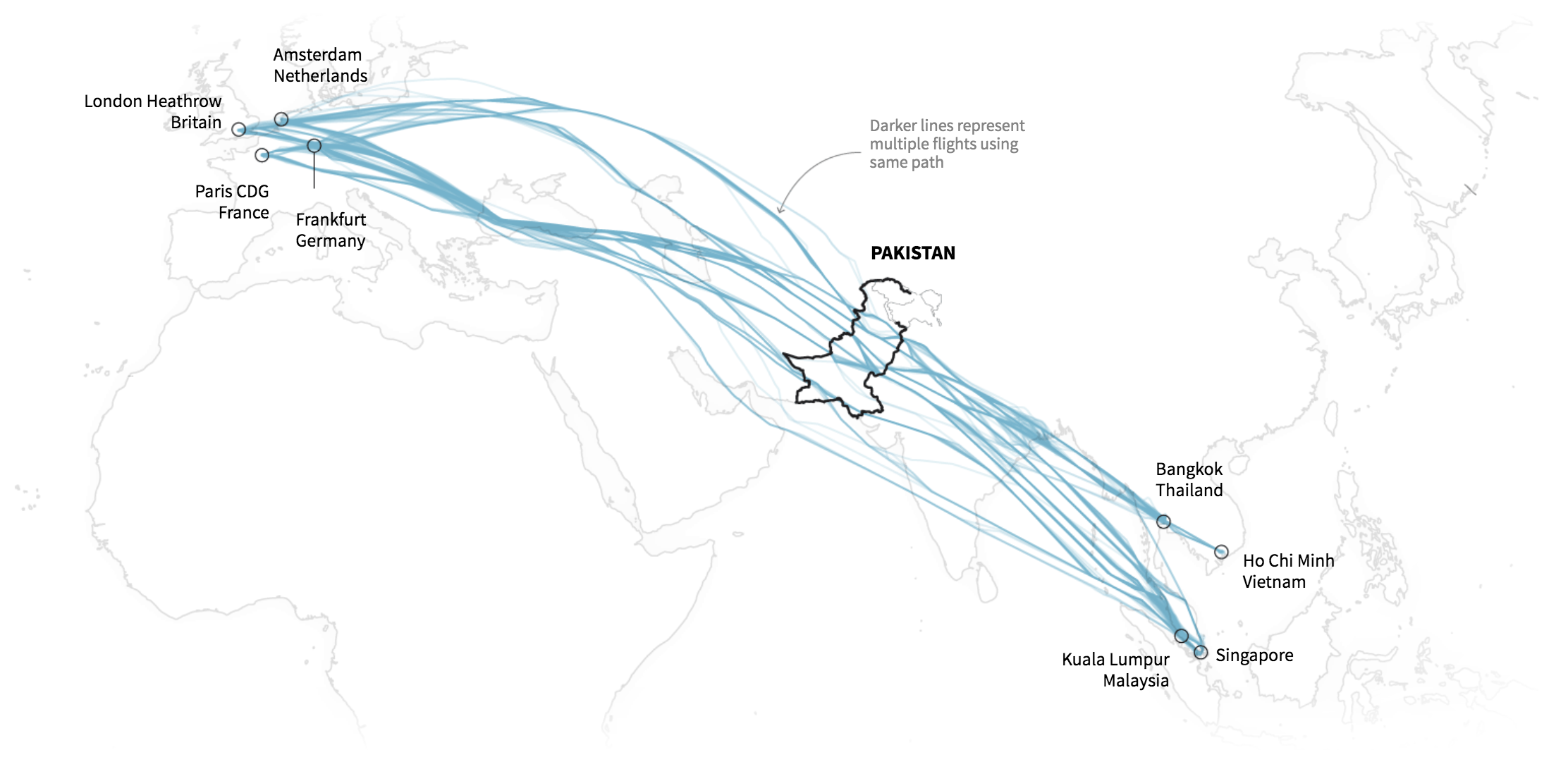
Flight tracking indicates that nearly all operators are still avoiding the area, opting instead to reroute south via the Gulf of Oman and the UAE.

Pakistan has reopened all previously closed airways. India has reopened all previously closed airports. But both countries continue to prohibit each other’s aircraft from entering their respective airspace (Notams: VIDF G0510/25 and OPLR A0220/25).

Update May 7

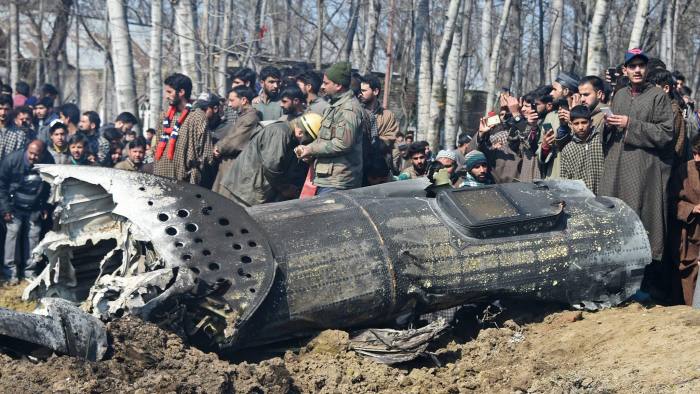
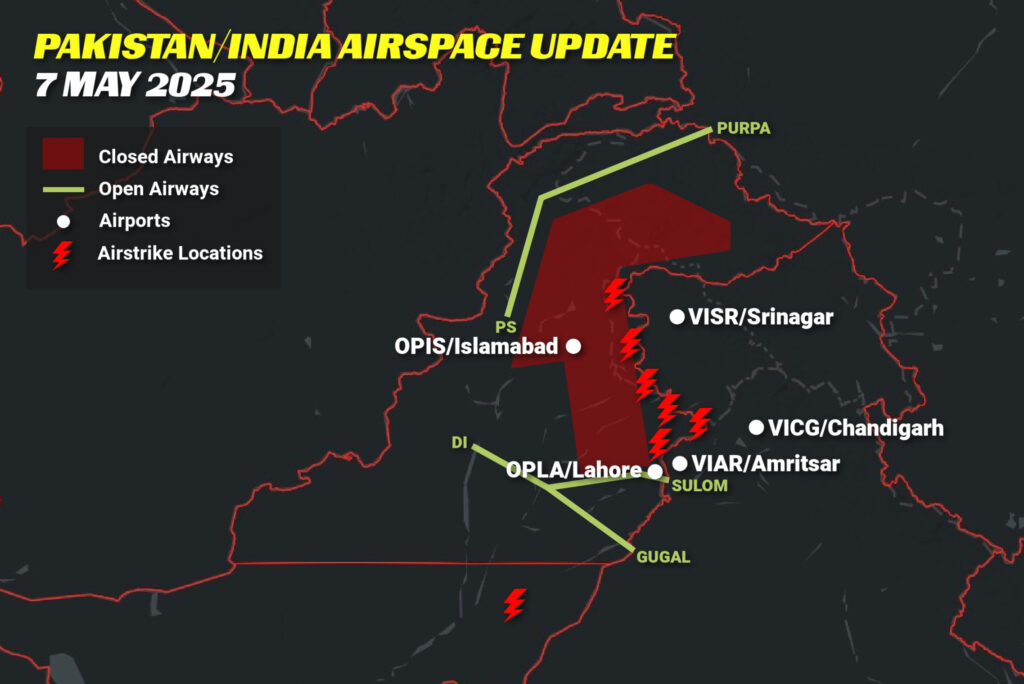
India launched airstrikes on multiple locations in northern Pakistan early on May 7, leading to a broader exchange of fire and escalating tensions along the border. There were drone attacks on both sides the following night.

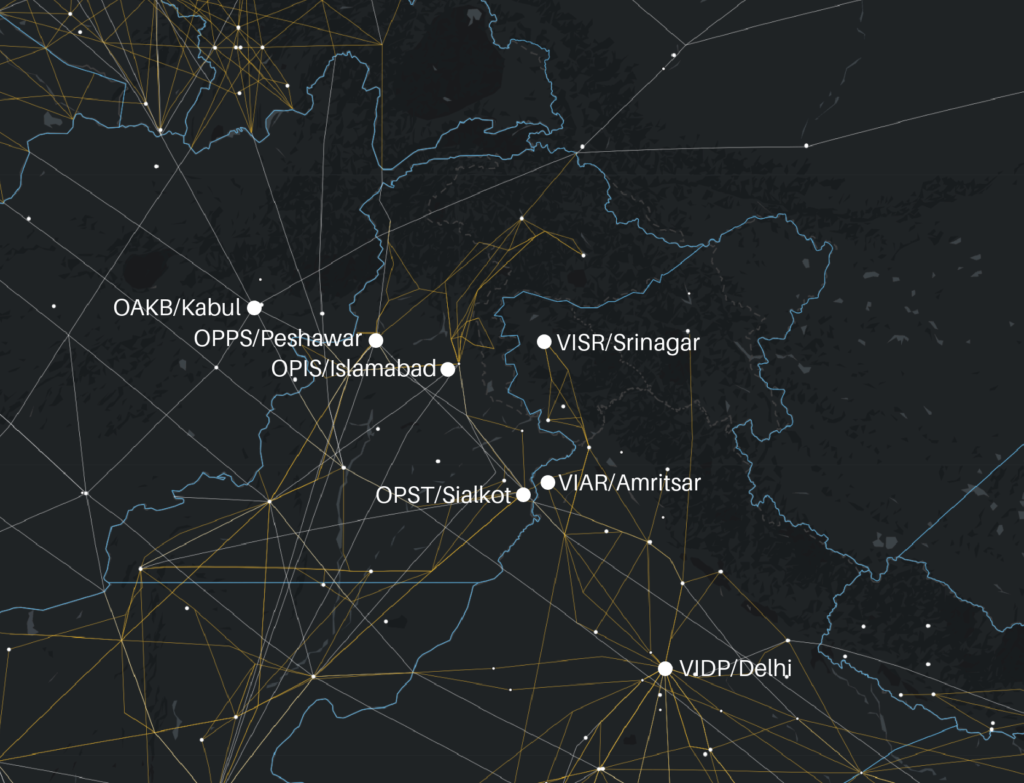
In India, VIAR/Amritsar, VISR/Srinagar and VICG/Chandigarh airports are closed to civil flights until May 10 as a precaution. In Pakistan, flights have now resumed at all airports that were temporarily closed on May 7, including OPLA/Lahore and OPIS/Islamabad.

Despite some media claims, Pakistan has not closed its entire airspace. Instead, several airways in the northern OPLR/Lahore FIR remain unavailable until May 10, although alternate routings are still possible.

These restrictions are listed on the Pakistan CAA Notams website, many of which are not mirrored on the FAA’s site, so it’s best to check the source directly for the latest updates.

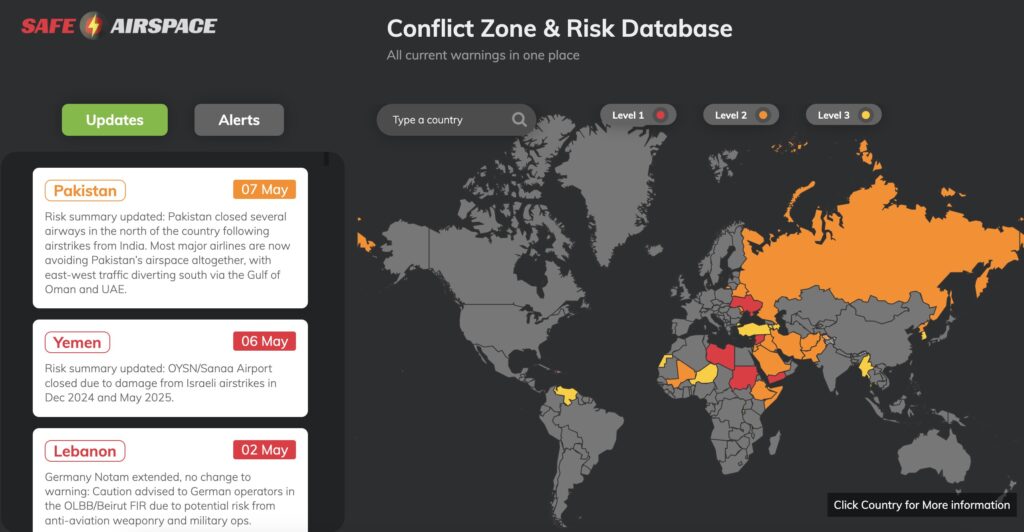
However, most major airlines are now avoiding Pakistan’s airspace altogether, with east-west traffic diverting south via the Gulf of Oman and UAE. Given the uncertainty and potential for rapid escalation, this seems a sensible choice.

If the conflict continues, there is a chance that Pakistan could impose a full airspace closure, as they did from Feb to Aug 2019 under similar circumstances. Check SafeAirspace.net for any major updates to airspace risk.


ADC Numbers in South Asia: What You Need to Know

The ADC number is a security clearance required for flights operating through the Air Defence Identification Zones (ADIZ) of several countries in South Asia: India, Pakistan, Bangladesh, Myanmar, and Nepal. Without one, flights could face delays, or potentially being denied entry into the airspace.

The process for obtaining an ADC is roughly the same in each country. So we’ll start with that, then we’ll move on to some slight variations to know about for each country.

The Process!

File the Flight Plan

  • File the flight plan as usual, including the overflight/landing permit number.
  • The ADC number is normally not included in the flight plan.

Obtain the ADC number:

  • For departures from the country where the ADC is required, the local handling agent should obtain the ADC number from ATC and then inform the crew. In some countries, ATC might provide the ADC number directly to the crew along with the start-up clearance.
  • For overflights of the country where the ADC is required, ATC will typically confirm the ADC number to the crew when the aircraft approaches the country’s ADIZ. However, it’s useful if your agent (whoever got your permit number) has also given the crew the ADC number in advance.

Main gotchas to watch out for:

  • Departures: When departing from a country where ADC is required, make sure you get the number from ATC before departure! This helps avoid any last-minute issues with routing, fees, or documentation that could delay the flight. A common best practice is for the crew to contact ATC as soon as the APU is running to allow enough time to address any issues.
  • Delays: If a flight is delayed beyond the allowed window (eg. 30 minutes up to 2 hours, depending on the country), a new ADC number must be obtained.
  • Routing: Some countries, like Bangladesh, do not require an ADC number for specific routes (more on that below). However, if you have to deviate from those routes, you may be required to obtain an ADC number.

So that’s generally how it works.

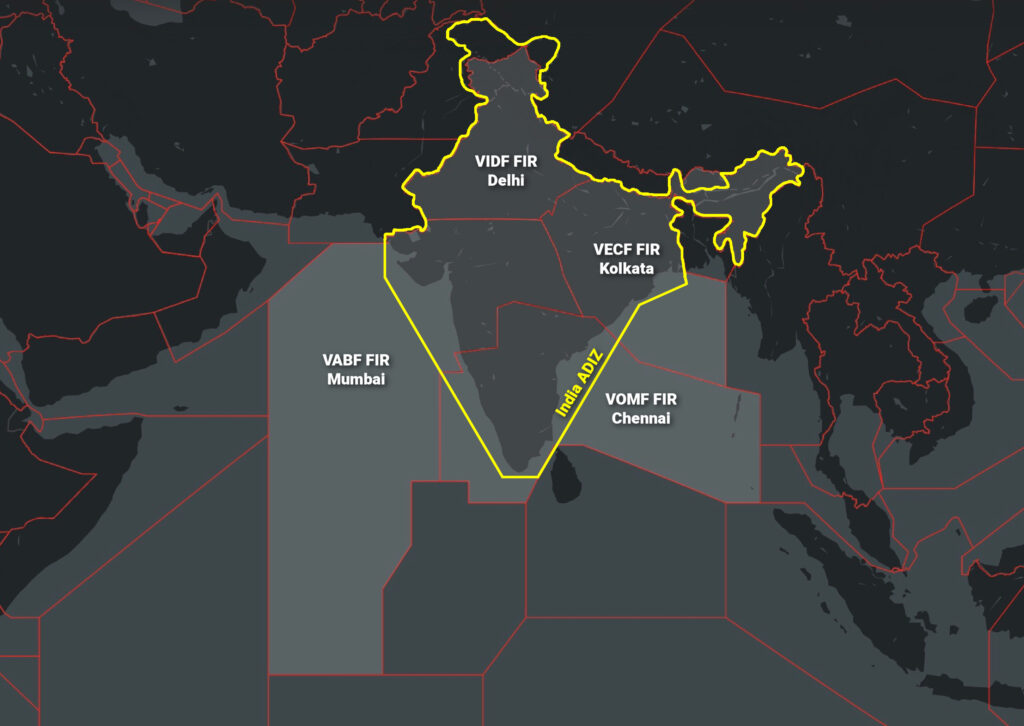
Now for some country-specific info, links to AIPs, and badly-drawn maps!

India

  • The process for getting an ADC number is kinda interesting here. You basically have to file your flight plan with your overflight/landing permit (YA number) on it, then ATC review it and issue you a FIC number (Flight Information Clearance), then the Indian Air Force reviews it plan and issues an ADC number!
  • The overflight/landing permit is valid for 48 hours. If the aircraft is returning to the same airport or operating another leg within that window, a new permit may not be needed, but this depends on how the routing and timings are filed.
  • Indian authorities will send the invoice for nav fees directly to the operator for payment.
  • Delays: If the flight is delayed by more than 1 hour, a new ADC number must be requested.
  • More info: India AIP ENR section 1.12.
Bangladesh

  • The handling agent is responsible for paying the nav fees (not the operator).
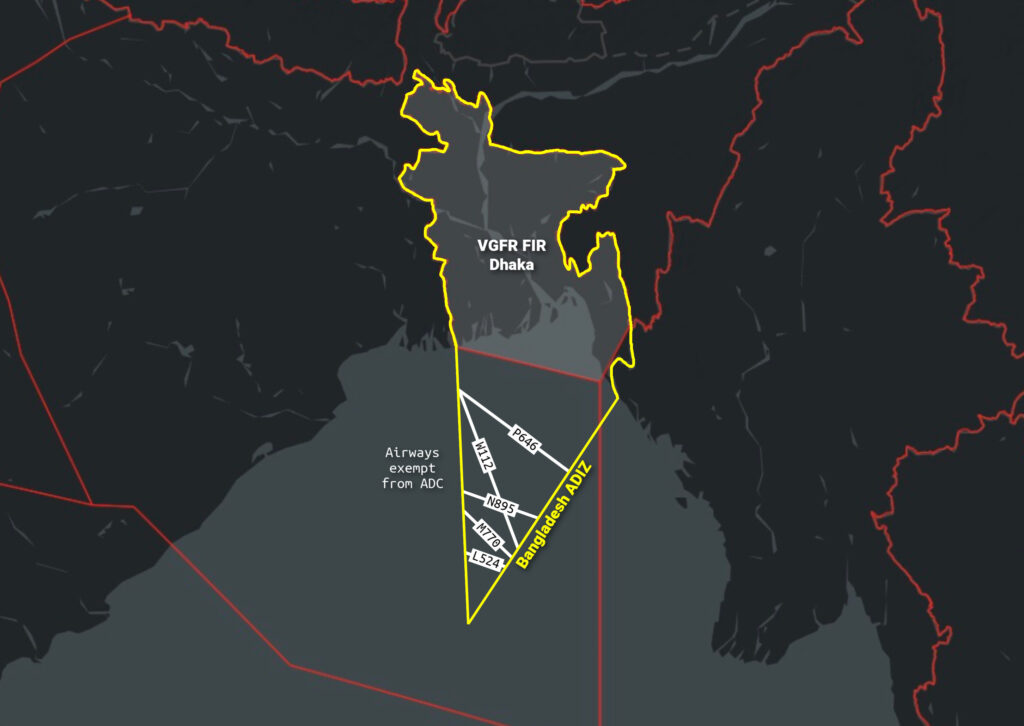
  • The Bangladesh ADIZ actually stretches down beyond Bangladesh airspace into the adjacent Indian VECF/Kolkata FIR. But overflights through this part of it (airways P646, N895, M770, L524, and W112) do NOT require an ADC number unless the aircraft deviates toward the landmass of Bangladesh.
  • After filing the flight plan, the ADC number is issued via AFTN or you can request it from the Bangladesh Air Force at adnc@baf.mil.bd.
  • Domestic flights, state aircraft, and general aviation flights within Bangladesh are now exempt from ADC requirements – a key change reflected in the latest AIP amendment.
  • Also, the option to use the same ADC number for a return flight on the same day? Gone. You’ll need to request a fresh ADC for that.
  • Delays: If the flight is delayed by more than 2 hours, a new ADC number must be requested.
  • More info: Bangladesh AIP ENR section 5.2.
Myanmar

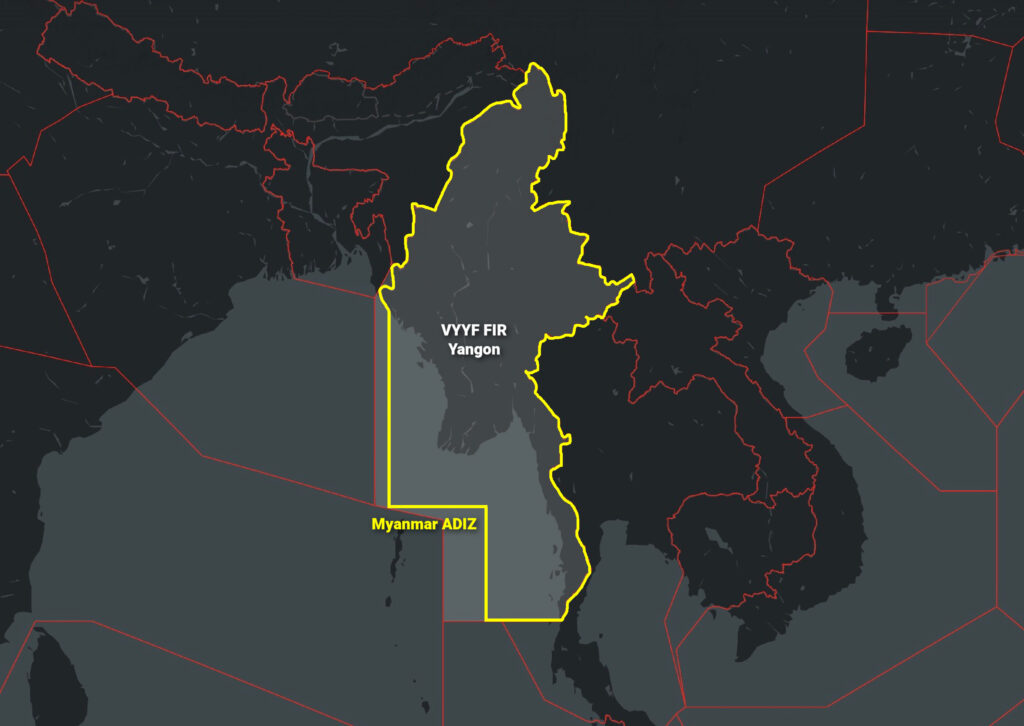
  • Some crews report being asked for the ADC number at the departure airport if entering Myanmar airspace within 30 mins of takeoff. So if you’re heading to/over Myanmar from somewhere nearby (i.e. VGHS/Dhaka, Bangladesh), try to get the ADC Number before you depart, to avoid delays.
  • Delays: If the flight is delayed by more than 30 minutes, a new ADC number must be requested.
  • More info: Myanmar AIP ENR section 1.1.
Sri Lanka

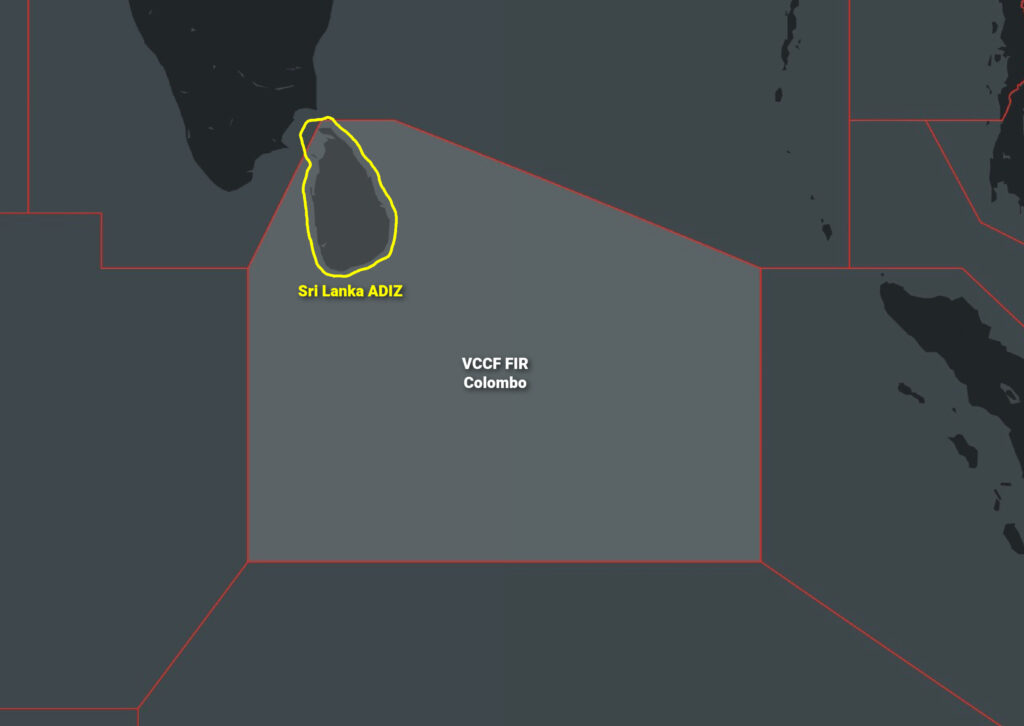
  • Unlike the other countries on this list, the ADIZ only covers the territory of Sri Lanka including its territorial waters up to 12 NM from the coastline, rather than the entire FIR. So that’s kinda nice.
  • Delays: If the flight is delayed by more than 1 hour, a new ADC number must be requested.
  • More info: Sri Lanka AIP ENR 5.2.
Pakistan

Nepal
  • Although Nepal’s AIP doesn’t mention ADC, local handling agents confirm that an ADC Number is required! We currently don’t have any specifics on the process or any possible exemptions. If anyone has more information, please reach out to help complete this section! Email us at team@ops.group


The India-Pakistan Conflict: Impact on Flight Operations

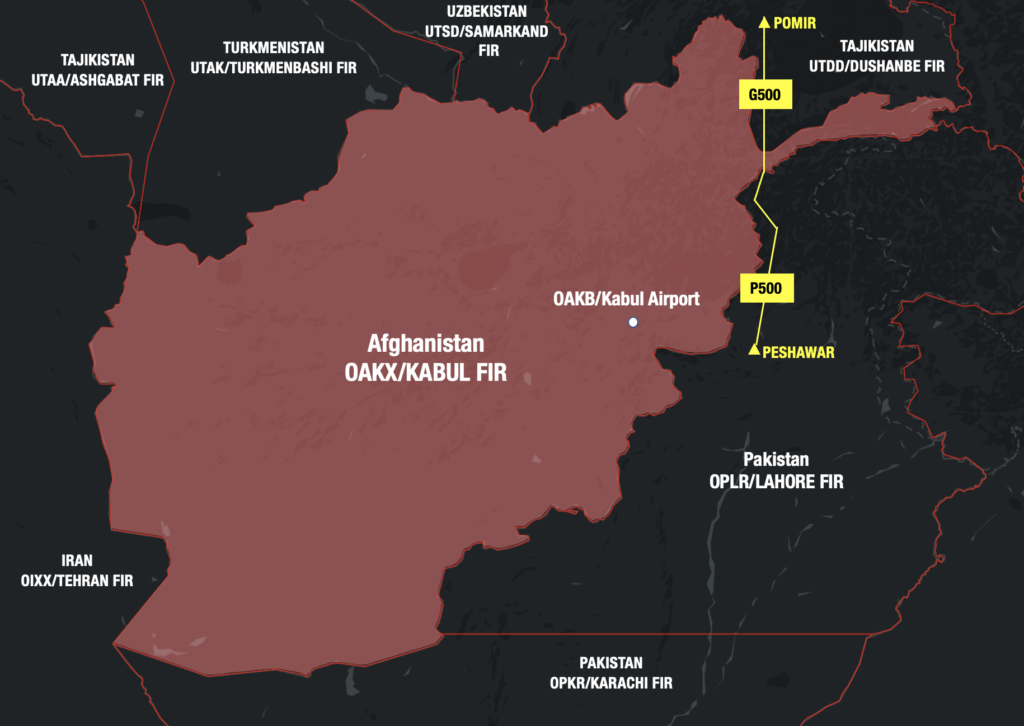
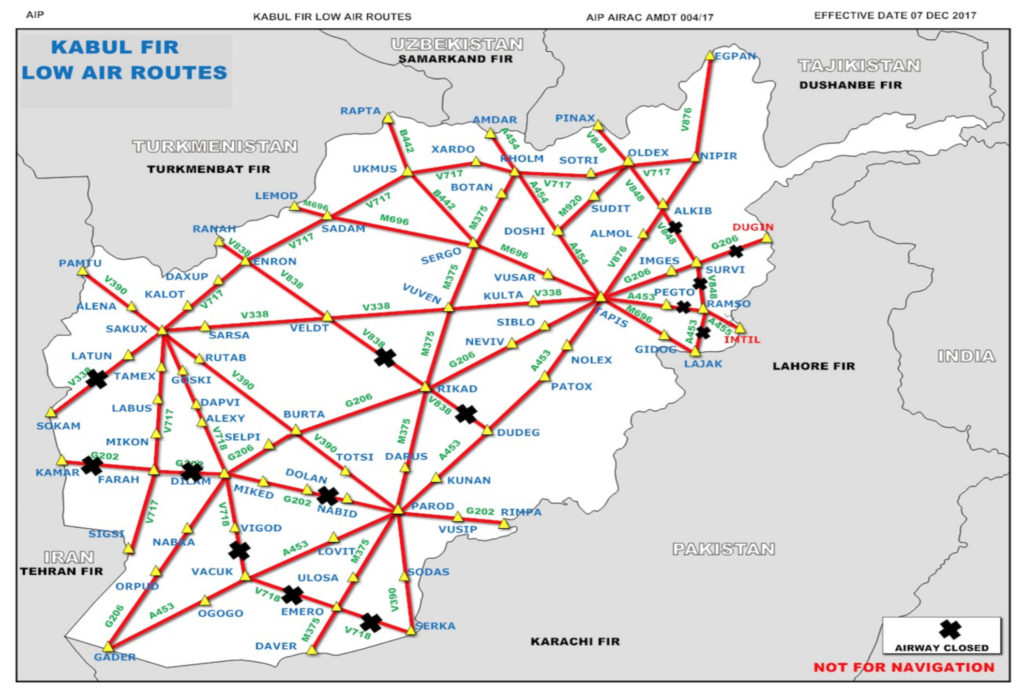
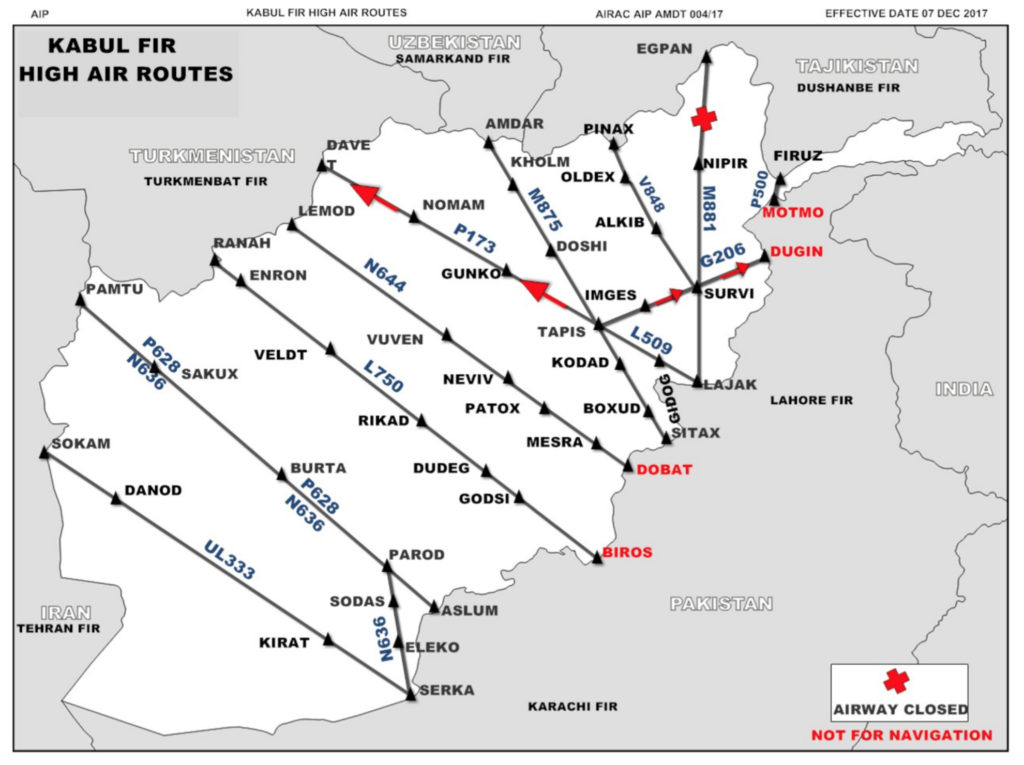
The current situation in Afghanistan has led to the effective closure of the OAKX/Kabul FIR to overflights, which means that some traffic routing between Europe, India and the Far East may now need to plan routes which cross the northern Pakistan/India border.

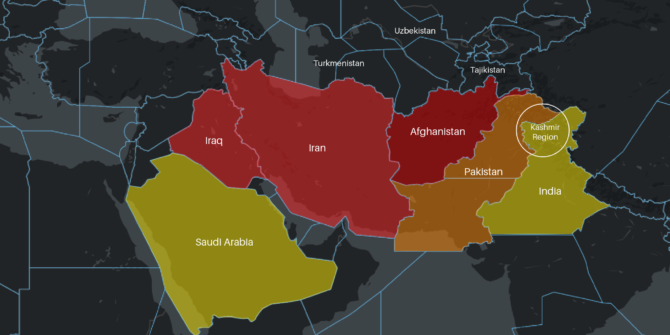
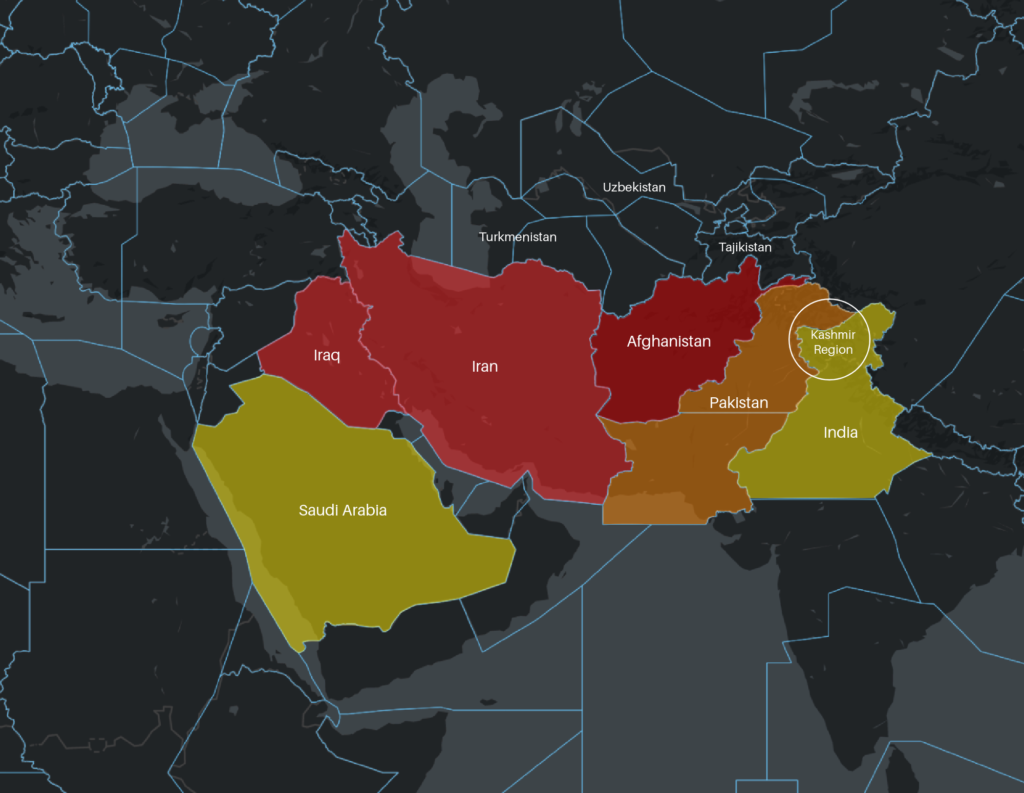
This post will take a look at the additional operational threats and info to be considered here, particularly due to the ongoing dispute over the Kashmir region, and the airspace warnings in place for Pakistan because of this.

The conflict in brief.

This conflict is rooted in who controls the region, with both India and Pakistan laying territorial claim to it. In fact, this conflict has been ongoing since 1947 and shows no signs of resolving in the near future.

Currently India control around 55% of the area, Pakistan approximately 35% and China have a third party hand in the remaining 20%.

There is also a secondary focus on the region from both sides due to cross-border terrorism and security and safety issues. Pakistan’s border with Afghanistan on the other side poses a similar threat.

The route structure of the region.

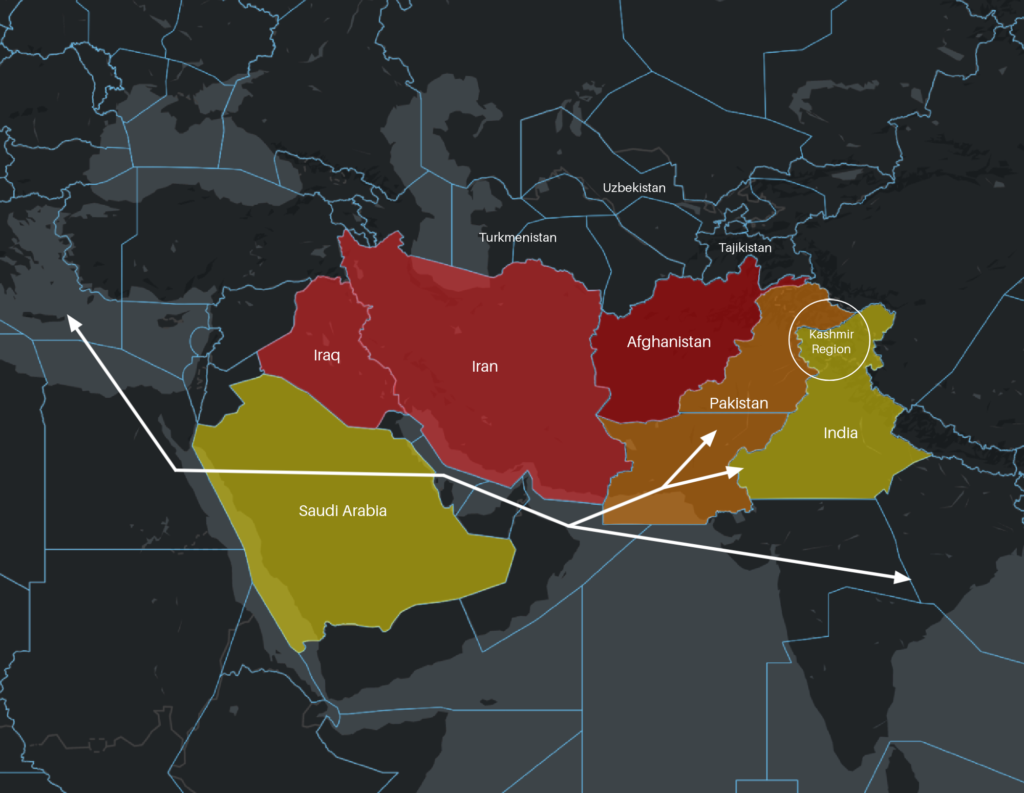
Aircraft routing from Europe and across to India and beyond have historically had 3 general routing options available to them:

  1. Via Saudi Arabia and then east direct to India. This avoids Pakistani airspace, or crosses just the most southerly portion of the airspace;
  2. Via Turkey and down through Iraq/Iran and then east via southern Pakistani airspace and into India;
  3. Across Eastern Europe via Azerbaijan, Turkmenistan and then south east crossing Afghanistan’s central airspace, avoiding the northerly Kashmir region.

That third routing option which utilised Afghanistan’s airspace, bypassed Saudi Arabia, Iran and Iraq – all of which have airspace safety considerations. Overflights across Iran and Iraq, for instance, are prohibited to US operators.

While Afghanistan also had airspace safety risks associated with it, these were previously generally low level and not “all altitude” concerns. That has recently changed with the Taliban takeover of Afghanistan. However, though the US and several other countries have since issued airspace bans and warnings for Afghanistan, overflights are still generally allowed on airways P500 and G500 which run along the eastern boundary of the Kabul FIR.

Aircraft now needing to re-route to avoid Afghanistan’s uncontrolled OAKB/Kabul FIR, and who do not wish, or are unable to utilise Saudi, Iran or Iraq airspace, may now be limited to this more northerly routing – via the G500/P500 airway in eastern Afghanistan, the northern portion of Pakistan and into India, potentially through the Kashmir region.

What is the risk in this region?

Several countries have long-standing airspace warnings for Pakistan which advise against overflights below FL260, due the risk posed by small-arms fire and indirect weapons fire. There is also a potential anti-aircraft fire risk, and there have been previous attacks against airports.

What is the current situation?

An escalation in activity across the border has been seen of late, with the number of drone attacks and activity across the line of control increasing, including several attacks against Indian Air Bases since 2019.

India possess strong air defense systems and an active air force. Historically, they have employed both fighter jets and conventional SAM systems to mitigate attacks. With the increase in both drone size and capability, and the escalation in number of attacks, there is a risk they will resort to SAM systems and fighter jets once again. If this happens, this will lead to a higher risk at all altitudes for aircraft mis-identification.

General considerations for operating over or into Pakistan.

Operators to OPIS/Islamabad have been reporting an increase in security measures and crew procedures. Crew can expect more stringent security and ID checks. Pakistan are actively guarding against terror threats at the airport and passengers may experience stricter security and ID controls as well.

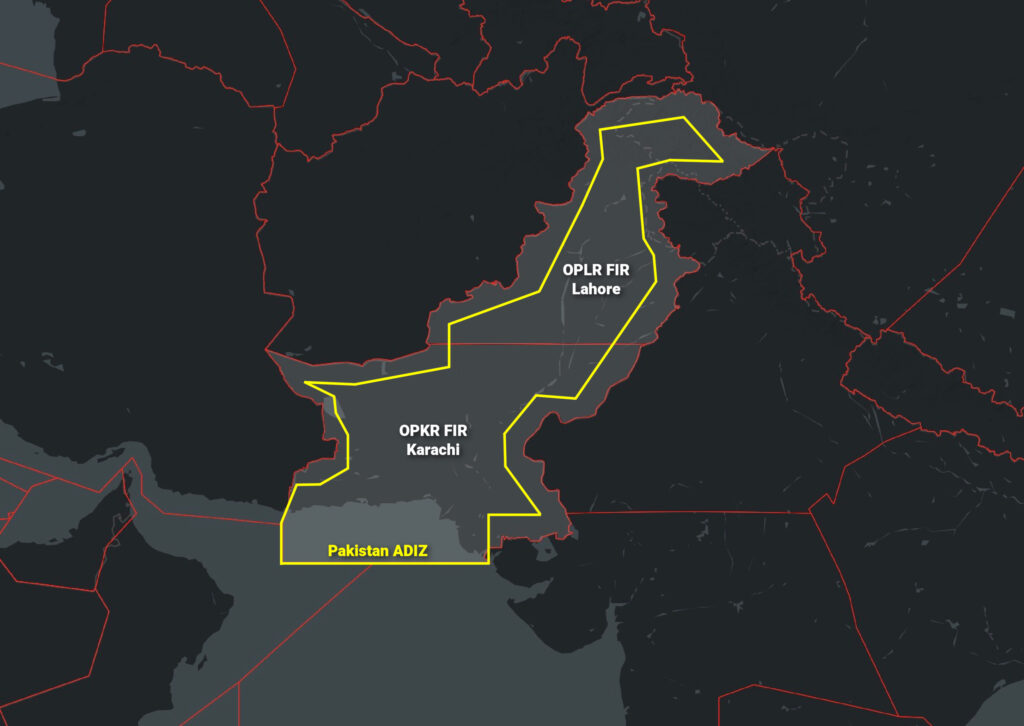
Pakistan is an ADIZ and requires crew to check-in prior to entry. Comms handover between India and Pakistan can also be difficult so an advance confirmation of next frequencies is advisable when routing across any part of the border.

There traffic levels in Pakistan’s airspace have also increased recently, and crew should be aware of potential separation and traffic conflict concerns.

Pakistan airspace closures.

Pakistan have previously closed sections of their airspace. In Feb 2019, conflict between India and Pakistan resulted in Pakistan closing its airspace to overflights. The conflict was a result of escalating clashes between the two countries in the disputed Kashmir region, with numerous airstrikes on both sides. The airspace slowly reopened, and only became fully open again in August 2019.

Diversion options.

Both India and Pakistan allow tech stops (up to 24 hours) and are accommodating of diverting and emergency aircraft, however, avoiding Indian Military Air Bases (unless a dire emergency) will save you a fair amount of extra security checks, paperwork and grief on the ground.

OPIS/Islamabad is a major Pakistani international airport close to the border, and is used as a southerly Himalayan diversion airport. It offers two well equipped CAT II/III runways of 12,001′.

OPST/Sialkot has a single runway, 11,811′, with an ILS and an RNP approach available.

VISR/Srinagar on the Indian side has s single 12,090′ runway.

VIAR/Amritsar also offers a single CAT II/III equipped 12,001′ runway.

There are also several other smaller airports which serve domestic routes.

Permits and overflights

Both India and Pakistan require overflight and landing permits.

For India, the lead in time for overflights is 3 days, while for landing it is 7 days. All permit applications are sent to the Ministry of Civil Aviation (MOCA) and then pass through several other government departments for security checks. You need your PPR overflight number available before reaching Indian airspace and they do often ask for it so have it handy.

India have fairly strict slot policies at several of their airports. During peak times they also might change your slot at short notice, or give you lengthy delays (2 hours+).

We recommend the use of an agent to assist with the permit process:

Freedom Air +91 11 2981 3311 / ops@freedomair.aero / freedomair@airtelmail.in

The CAA of India contact info is +91 11 2462 0784 / +91 11 2462 9221 / dgoffice.dgca@nic.inirsec.dgca@nic.in

For Pakistan, overflight and landing permits are issued through the Pakistan CAA. These take around 96 hours for overflight and 6 days for landing.

An agent can also assist with the process:

Aircraft Aviation Services (ACAS) +92 213 468 0109 / ops@acas.com.pkops1@acas.com.pk

CAA of Pakistan contact info – +91 21 997 1111 extn: 2288/2289 / +91 21 9924 2004 / support@caapakistan.com.pk / AFTN: OPHQYAYX

In summary

With the exception of US operators, flights between Europe and India/the Far East generally opt for routings via Saudi Arabia, Iran or Iraq. While routings via Tajikistan are possible, the lack of coordination between Pakistani and Indian ATC, and with few established airways, presents a planning and potential safety risk.

Pakistan has airspace safety concerns, particularly in the northern airspace (OPLR/Lahore FIR). With the closure of Afghan airspace, flights routing from Europe to Pakistan may benefit from routing via Tajikistan. However, most international flights continue to use the southerly routing for overflights.

Further Information

Information on Pakistan airspace can be found on the Pakistan CAA website.

If any operators or crew have experience of overflying this region please send us any insights you have on it so we can share the information team@ops.group.


The Hills Have Ice: Considerations for Himalayan ops

Flying over the Himalayas soon? Read on! From patchy comms to limited alternates to meters that might get your feet in a twist, this briefing will have you covered…

A good place to start might be “Where are the Himalayas?”

The Himalayas border a bunch of countries, but the bits we are generally interested in lie in Pakistan and China – along the primary flight routes between the Middle East and Asia.

Interesting fact – they are the fastest moving mountains in the world, thundering along at a right old pace of 67mm a year (so don’t worry, they will still be in pretty much in the same spot when you route over them).

Are they a big deal?

They are the biggest mountains in the world so “big” – yes. “Big deal”? – well, not so much if you are cruising happily at altitude, but if for some reason you suddenly need to descend then they can become a very big deal very quickly.

With 30 peaks higher than 24,000’, and stretching over 200 miles, they are a pretty significant obstacle.
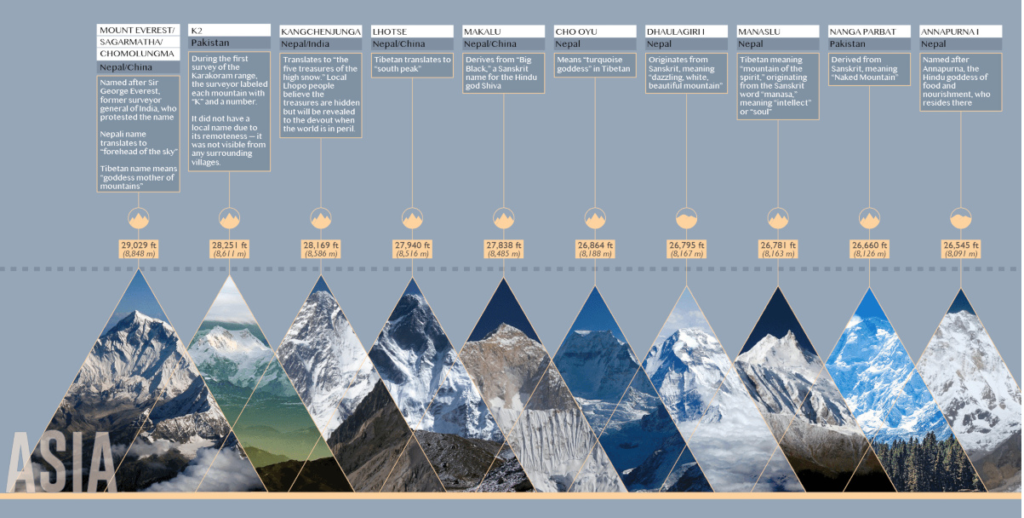
There are some good-to-know and some need-to-know points about these parts, so read on…

The Basics

Limited Alternates – Not many people live in the Himalayas, (not counting Yetis), so airports are few and far between, and are often fairly remote.

The Region – Pakistan has ongoing conflicts with India over the Kashmir region. Afghanistan is also unstable so operating near the border is not advised, particularly into OPPS/Peshawar and OPQT/Quetta airports.

Weather conditions – ‘Himalaya’ translates as ‘abode of snow’ so that should be something of an indication. The airports are remote and facilities are not always up to standard. Significant mountain waves can be experienced when crossing.

Communications – Big mountains block radio signals and this can be particularly bad around the point where you transfer from Pakistani airspace into Chinese. Which leads us onto the next point…

China – They have their own procedures including different sized airways, different contingency procedures, and of course…

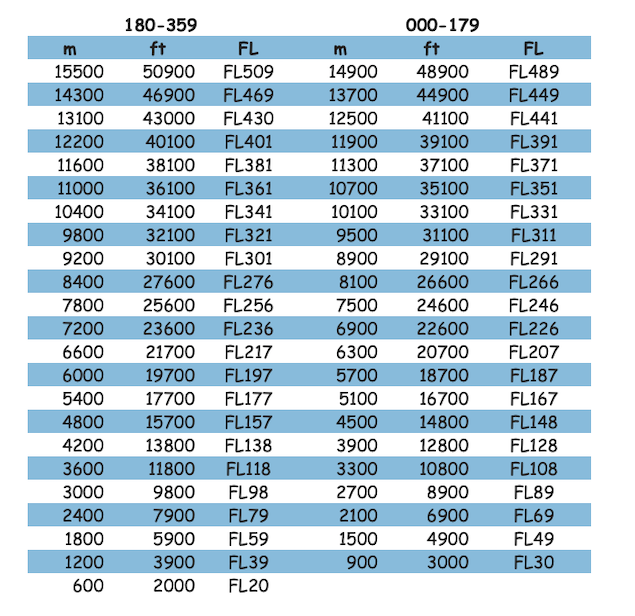
Metres and Feet – China operate in metric. Keep reading for a handy feet to meter conversion table!

Oxygen – Airplanes have oxygen in them, unless they suddenly don’t anymore and then you are going to have to find some pretty rapidly. Unfortunately, oxygen is generally at its most plentiful lower down which can be problematic if routing over high terrain…

The Alternates

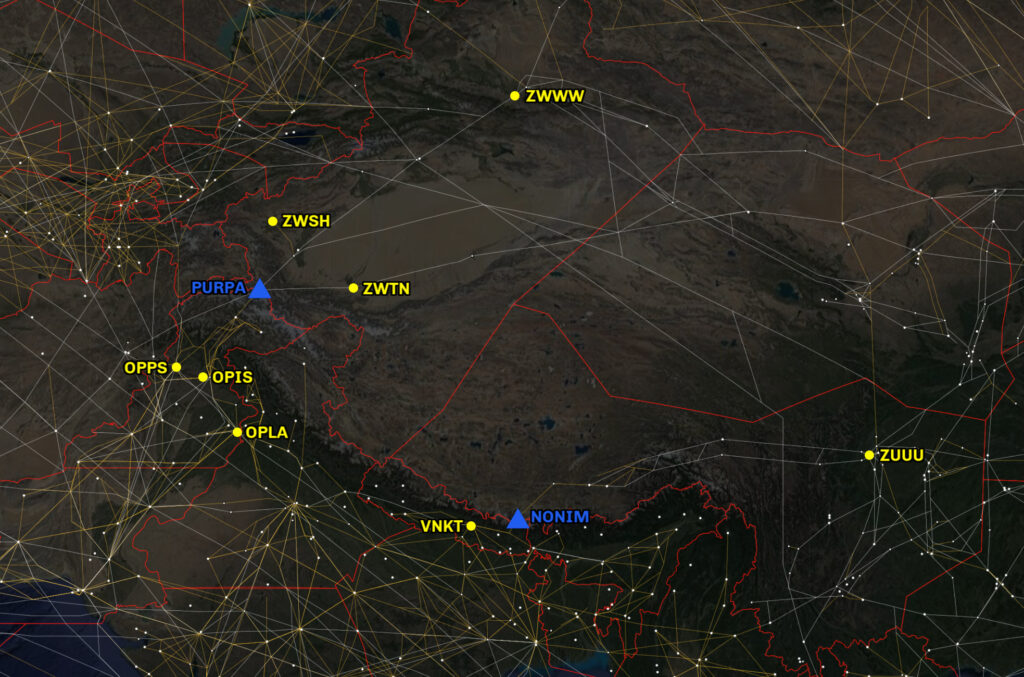
There are two published crossing points for the Himalayas – PURPA on the Pakistan/China border to the north, and NONIM on the Nepal/China border to the south. So the alternates you’re going to be interested in very much depends on which route you’re going to take.
ICAO/ IATA

Airport

Open

RWY (m)

ELEV

PCN

OPIS/ISB

Islamabad

H24

3658

1761

110FCXT

OPPS/PEW

Peshawar

H24

2743

1211

068FCXU

OPLA/LHE

Lahore

H24

3360

712

085RBXU

ZWSH/KHG

Kashi

H24

3200

4528

074RAWT

ZWTN/HTN

Hotan

HS

3200

4672

052RBXT

ZWWW/URC

Urumqi

H24

3600

2126

080FBWT

VNKT/KTM

Kathmandu

0045-1845Z

3050

4390

054FAWT

OPIS/Islamabad, Pakistan – There are two parallel runways with RNP and ILS approaches, including a CAT II on 28L. 10R has an offset final track (VOR approach). This is a destination for some major airlines and so likely has good handling and ground services, an is an RFF Category 10.Where you decide to divert to will depend on what your problem is and whether you can stay up over the mountains. Peshawar, Islamabad and Lahore are each accessible from each other and all lie south of the mountainous zone.

OPPS/Peshewar, Pakistan – This airport is situated near a No Fly Zone and is close to the Afghan border. It has CAT I capability, but report of GS fluctuations are common. Ground handling is available, but engineering and other support is likely to be limited.

OPLA/Lahore, Pakistan This is another major airport in the area with multiple runways, and Cat IIIb approaches onto 36R. Terrain is relatively low, but the airport lies close to the border with Indian airspace.

ZWSH/Kashi, China The airport is CAT I. There is serious terrain to the north and west of the airport. Particularly if you are landing onto runway 08, wind off the terrain might be a factor. Runway 08 may require a 180 degree turn at the end with a backtrack due to works. Support here will be fairly limited.

ZWTN/Hotan, China There is no customs at Hotan so offloading passengers might pose a problem. The closest alternate is not really very close, and the weather here can be a challenge. The MSA is 16,000’ and terrain lies predominantly to the south of the airport, but close to the ILS intercept for runway 29. Runway 11 only has a VOR/DME approach. Both runways require a 180 degree turn and backtrack to vacate. Engineering support is available here.

ZWWW/Urumqi, China Urumqi is a better equipped airport, with CAT I and II approaches available, and likely to have better ground support and engineering services. However, there is significant terrain in the vicinity of the airport, and it’s also a long way to have to go in an emergency (around 700nm from Pakistan/China crossing point PURPA).

VNKT/Kathmandu, Nepal – Down south, Kathmandu is really the last decent diversion airport before the endless mountains of the southern Himalayas come into view. If you don’t stop here, it’s a good 3 hours of flying time before you reach ZUUU/Chengdu on the other side. VNKT is not 24 hours (has quite specific hours), no engineering facilities but fairly good ground support as it is quite a “major” tourism spot so a fair few airlines route in there. Does not have precision approach (only VOR and RNP), and they have a lot of diversions due to weather and higher minimus due no precision approaches. Very difficult approach because you route between mountains into a sort of bowl to land.

Communications

The mountains can cause serious interference with radio comms so keep the following SATCOM codes handy in case you need them:

Urumqi 441208
Lanshou 441205
Kunming 441204
Beijing 441201
Lahore 446302

China

China has some pretty specific procedures and requirements which should probably be looked over before you route this way, but here’s a quick summary.

Contingency/ Emergency Procedures if deviation from level required:
– Aircraft must turn RIGHT and track out to 10km/ 5nm from the airway centerline.
– Once parallel with the original route climb or descend as required.
– Switch your lights on, keep talking on 121.5, and keep a good eye out.

Any deviation or reroute requests in China usually needs some serious coordination, and they are strict about any routes that take you off commercial airways or close to military airspace. ATC often send airplanes in random directions, or refuse to clear them to the flight levels they have filed for, without much explanation so be prepared for a lot of extra fuel burn.

Meter to Feet Conversion:
Oxygen

The most critical route is PS-G325-Purpa-B215 where the MTCA is the highest. Confirming your aircraft is equipped with suitable passenger oxygen systems and awareness of the depressurisation strategies and MSAs for each route is extremely important before operating into this area.

Permits

Pakistan requires overflight and landing permits. These must be requested by an agent. They require one day notice to arrange the permit. Operating into Pakistan airspace required an ADC at least 15 mins prior to entering Pakistan Airspace/ADIZ, and flights operating in need to establish communication at least 15 mins prior to entering.

China also require permits. These can be intimidating. They require use of AFTN/SITA, have specific routing, and are only valid for the exact timing given. Commercial landings require a sponsor later written in Mandarin by the receiving party. We recommend applying direct to a Chinese agent, as the authorities aren’t very patient and it can become frustrating at how short they’ll be on the phone. If you want to apply direct, you’ll send your application through AFTN and SITA, in the specific format required. 

China requires aircraft to be ADS-C, CPDLC and SATCOM capable on some of their routes over the Himalayas, and operators need to verify their equipment with them at least 60 days in advance! So they recommend that only regular scheduled flights apply to use these airways. For more on that, check out our dedicated article here


For some great insights into escape route planning, check out this doc from Flightsafety.org

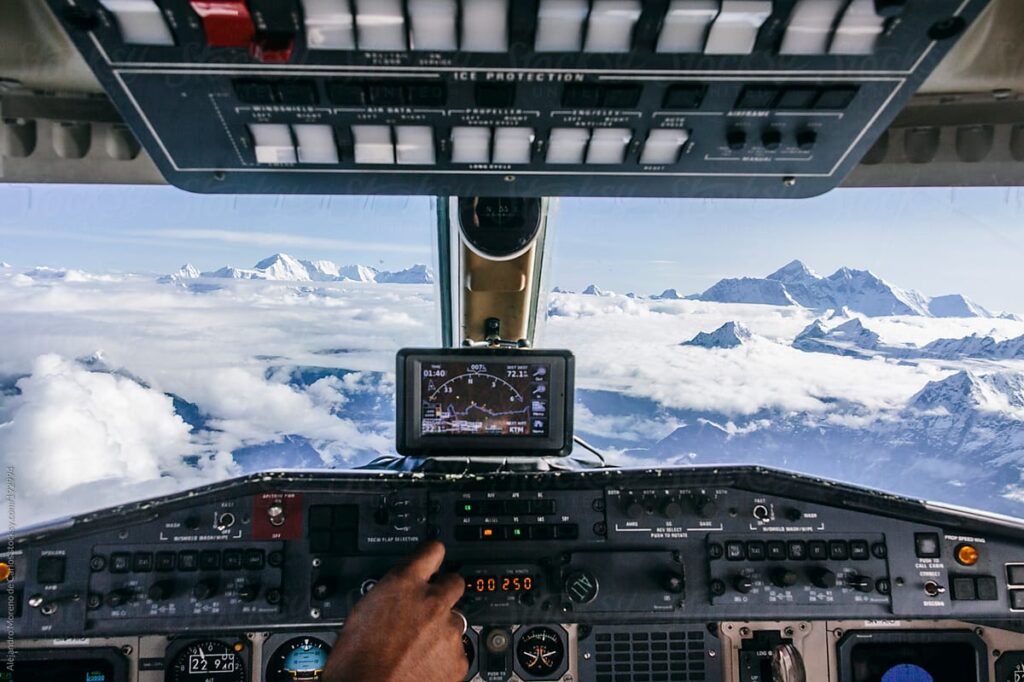
And finally, don’t forget to take your camera because when the air is clear the views can be amazing!
No, Pakistan’s airspace is not closed

Several reports have emerged in the media over the past few days claiming Pakistan has closed a number of airways to Indian carriers, linking these closures to the rising tensions between the two countries over the disputed Kashmir region.

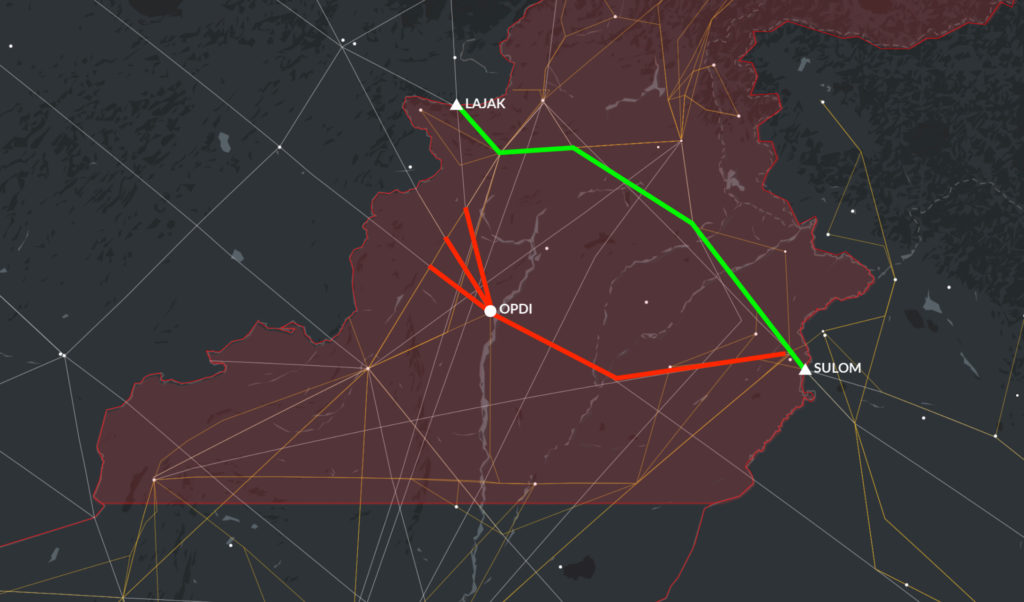
But these reports are not strictly accurate. Pakistan has partially closed some airways in the north of the country used for overflights between India and Afghanistan, which pass over OPDI/Dera Ismail Khan airport – but these particular airway closures have been ongoing since 23rd July. Local agents say these closures are simply due to operational reasons, and not related to the current political situation.

Here’s the Notam which has caused all the fuss:

OPLR NOTAM A0785/19
FLW RTE SEGMENTS OF INTL ATS RTE WI LAHORE FIR WILL NOT BE AVBL
AT OR BELOW FL460 DUE OPS REASONS.

INTL ATS RTE RTE SEGMENT
============ ===========
A466 SAKUV-SAJAN
N644 REGET-D.I.KHAN
P500/M881 LAKRA-D.I.KHAN

ALTN RTE SEGMENT AVBL FOR TRANSITS AT OR ABOVE FL300:
SULOM / LA – INDEK DCT NONIB – HANGU – LAJAK / SITAX (VIA SAJAN) / DOBAT (VIA REGET) AND VICE VERSA.
NOTE: FLT BELOW FL300 TO OPR VIA INDEK DCT 3333N07251E (BTR VOR 114.6 MHZ) DCT KALMI NONIB AND
VICE VERSA.

GND – FL460, FM 06TH AUG TO 05TH SEP 2019 BTN 0245-1100 DLY (EXCLUDING SUNDAYS),
06 AUG 12:30 2019 UNTIL 05 SEP 11:00 2019.
CREATED: 06 AUG 12:43 2019.


So these airways will be closed between 0245-1100z daily (except Sundays) until Sep 5. And there’s an alternate route for operators to use, from SULOM on the Indian FIR boundary, to LAJAK on the Afghanistan FIR boundary. Hardly a big deal.

The rest of Pakistan’s airspace remains open to overflights.

It is true that this week has seen a worsening of diplomatic ties between India and Pakistan with regards to the disputed Kashmir region.

Indian-administered Kashmir has been on lockdown since 5th August, when the Indian government decided to take back control of the region by stripping it of its special constitutional status.

Authorities in Pakistan are not too happy about this, and have responded by downgrading their diplomatic ties with India and suspended trade between the countries. Both countries’ air forces are now on high alert, and there has been daily artillery shelling along the Line of Control by both sides.

But for now, most of the airspace over Pakistan remains open to overflights.


At long last, Pakistan declares airspace fully open again

Pakistan airspace is open! In a clearly written, yet quietly announced in-the-dead-of-night Notam, Pakistan has today declared the entirety of its airspace fully open and available for all overflights.

This is very welcome news for long-haul airlines and operators transiting the Middle East and Asia, where finding a usable and safe route route through the region has become akin to navigating a level of Pac-Man with few escape options left.

Pakistan being open again makes the traditional and preferred Europe-Asia route through Afghanistan, Pakistan, and onwards to India available again, and means that city pairs abandoned after the February shutdown will likely be restarted.

The good-news Notam was issued around midnight Pakistan time:

A0710/19 NOTAMN
Q) OPXX/QARXX///E/000/999/
A) OPKR OPLR
B) 1907151908 C) PERM
E) WITH IMMEDIATE EFFECT PAKISTAN AIRSPACE IS OPEN FOR
ALL TYPE OF CIVIL TRAFFIC ON PUBLISHED ATS ROUTES

So, what does this mean?

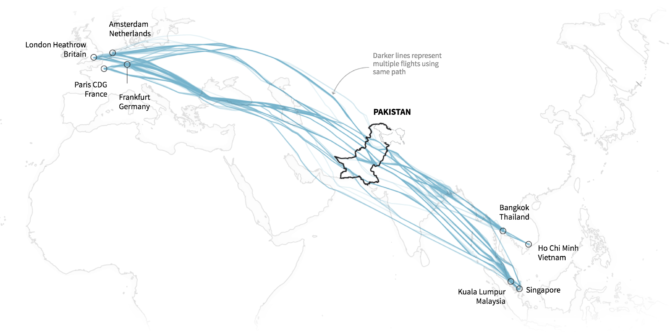
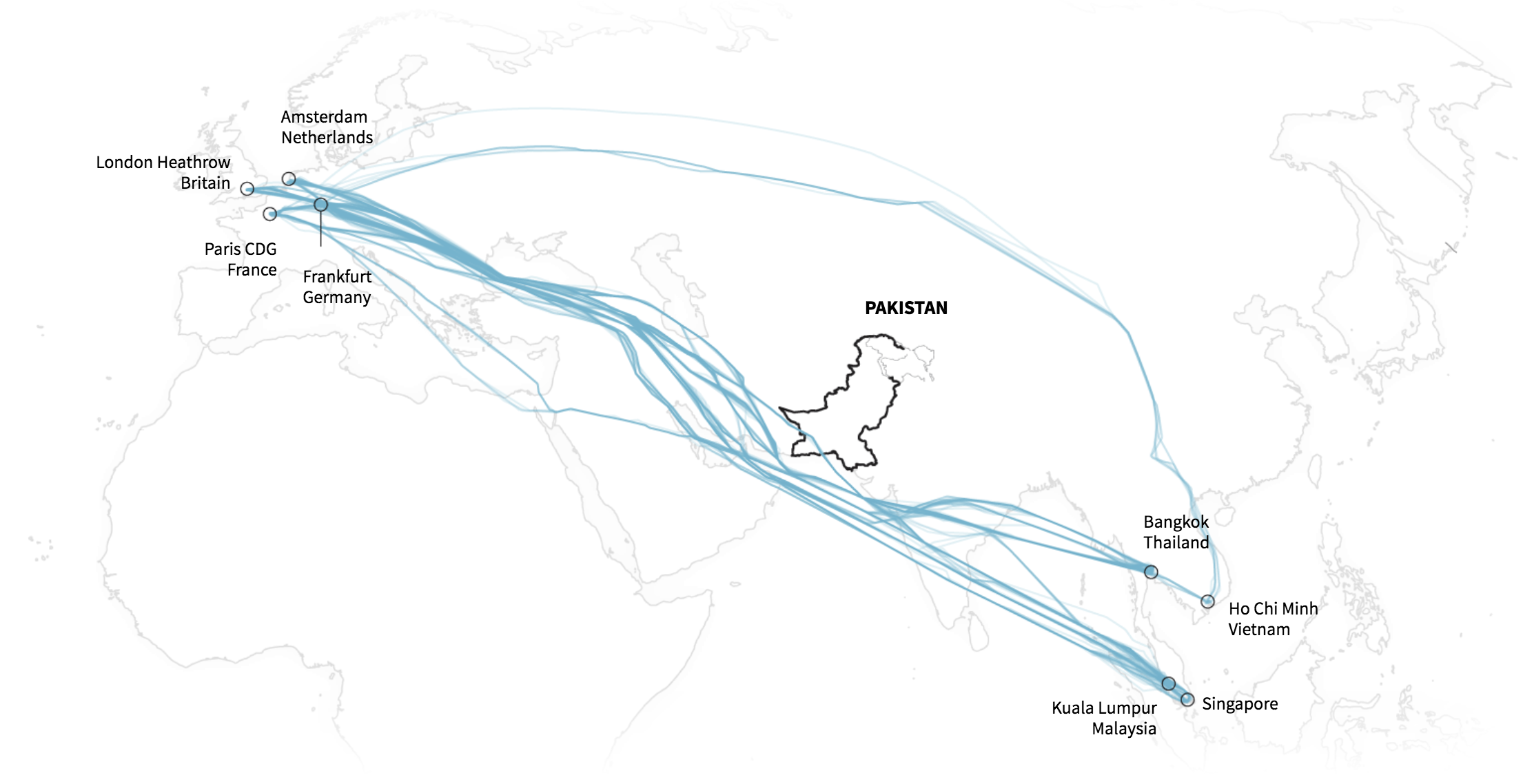
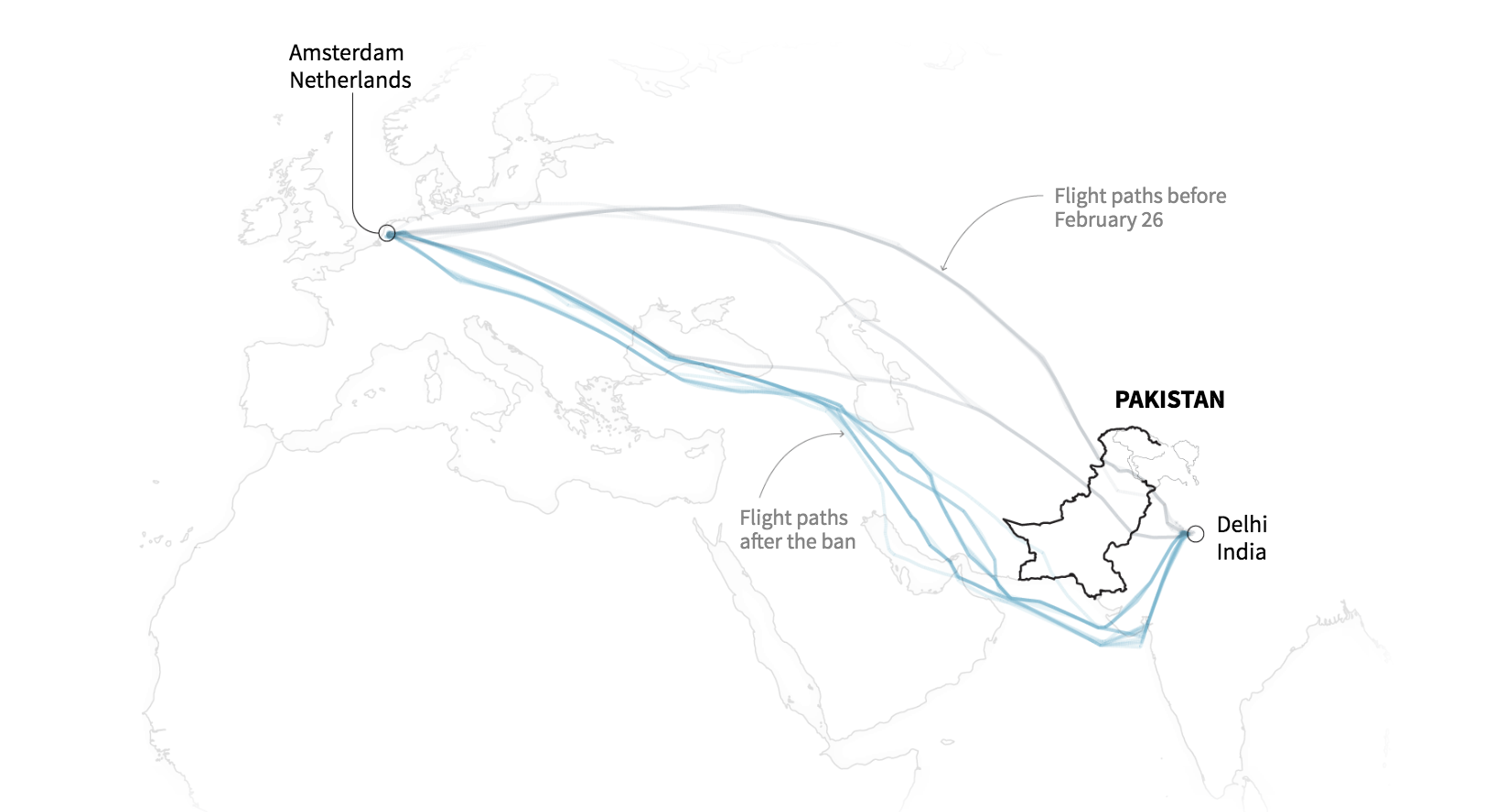
In recent months, operators have had to avoid Pakistan and route much further south, as this graphic from an article we worked on with Reuters in April shows:


The impact has been significant. Avoiding Pakistan has meant up to an additional 410 miles, or an hours flying time, for Europe-Asia flights.

For many long-haul operators trying to get to India, the dog-leg around Pakistan made the trip unworkable, either because of fuel endurance, or crew hours. Many operators cancelled flights to Delhi, the worst located airport in terms of the airspace closure.

Now, with this reopening, we have the ability to fly closer to optimum routings once again.


So, good news for airlines and long-haul operators.


Afghan/Pakistan border waypoint name changes

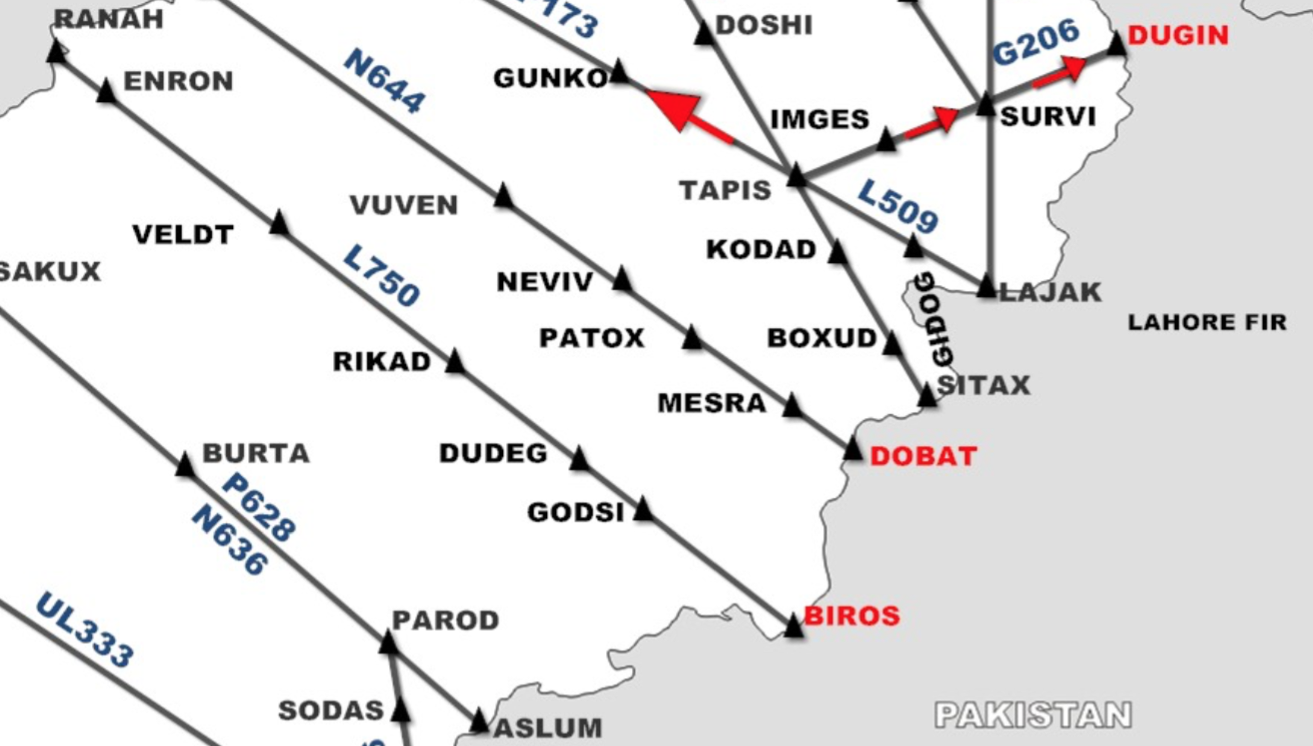
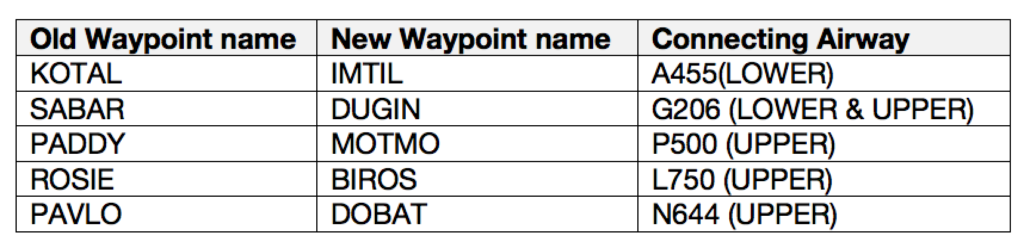
Afghanistan has changed a bunch of waypoint names on its border with Pakistan today. If you’re flying that way, you’ll need to know these for when you submit your Pakistan permit – they only approve permits for specific entry/exit points.

For more details, check out the full AIP AIRAC AMDT here.

Overflight advice for Afghanistan averages out at a minimum FL250, though as with other mountainous countries we think FL320 is a better starting point. For Pakistan, the consensus among foreign authorities is to cross the OPLR/Lahore and OPKR/Karachi FIR’s at higher flight levels. For full details check out safeairspace.net

If you want to know exactly how to get your landing or overflight permits, check out our Permit Book, which tells you how to get a permit for each and every country in the world!


Pakistan closes part of airspace below FL330

Pakistan has closed part of its northern airspace (within the Karachi FIR) below FL330, amid tensions between India and Pakistan.

Overflying international traffic on the ATS routes A325, A454, A791, B505, G208, G210/214/216, M504, P518, and T385 will be restricted to a minimum enroute altitude of FL330. The full NOTAM is below.

pakistan-fl330-closure


A0938/16 – I) FOLLOWING ROUTE SEGMENTS OF INT’L ATS ROUTES WITHIN KARACHI FIR WILL NOT BE AVBL FROM SFC TO FL330 DUE OPERATIONAL REASONS: INTERNATIONAL ATS ROUTE ROUTE SEGMENT ======================= ============= A325 KC-JIWANI A454 KC-TAPDO A791/R462 JIWANI-KA B505 APELO-PI G208 KC-BINUR G210/M638 PG-KC G214 PG-IDEBA G216 ALPOR-KA M504 ALPOR-GOGUM N894 LATEM-DALDA P518 PAXUR-BINUR T385 ADGUL-TAPDO

II) ALTERNATE ROUTE FL330 AND BELOW: ================================ I. JI-PG-272000N 0650000E-IDEBA-SK-RK-TIGER/MOLTA/MULTAN VICE VERSA. II. JI-ASVIB/KEBUD-PG-272000N 0650000E-IDEBA-NH-KC/SAPNA VICE VERSA. III. ASVIB/KEBUD-PG 272000N 0650000E-IDEBA – NH-TELEM. IV. TASOP/RAMSA-KE-NH-IDEBA-272000N 0650000E-PG-KEBUD/ASVIB/JI. V. SAPNA/KC-NH-IDEBA-272000N 0650000E-PG-KEBUD-ASVIB/JI.

III) EXPECT CLIMB/ DESCEND TO / FROM FL340 REMAINING SOUTH AND SOUTH EAST OF KC UNDER ATC CLEARANCE. SFC – FL330, FM SEPT 26-29 AND 01-03 OCT BTN 0100-1130 AND 1400-1800, 26 SEP 01:00 2016 UNTIL 03 OCT 18:00 2016. CREATED: 22 SEP 13:30 2016


Midweek Briefing: Taiwan ADS-B requirement, Costa Rica volcano

Taiwan ADS-B requirement 21SEP Yesterday, Taiwan pushed the requirement for ADS-B above FL290 for all aircraft, back to 2020 – as a fast approaching deadline of December this year was looming. Read the article.

Costa Rica volcano 21SEP MROC/San Jose, Costa Rica has reopened after the eruption of the Turrialba volcano on Monday. A risk of further closures continues. Read the article.


OPZZ/Pakistan Some airspace in the north of the country (Kashmir region) has been closed by the Pakistan CAA. Details are unclear but reports indicate Gilgit, Skardu and Chitral Airports are affected by the closure.

BIKF/Keflavik Departing KEF eastbound? Icelandic ATC would love you to file the following as a standard route: PIXUM PETUX ORTAV ODPEX, or 63N022W CELLO if you’re planning to cross 10W at GOMUP or south of.

EDDL/Dusseldorf has closed 05L/23R for a couple of days to remove a WW2 bomb. Some delays at peak times may result.

HLGT/Ghat, Libya Three foreign nationals were kidnapped along the road that leads to Ghat Airport on 19SEP, located in the Fezzan province along the southwest border with Algeria. The foreigners were construction workers employed by the Italian-owned Conicos company to service Ghat Airport. There are numerous armed militia and terrorist groups active in the area and the foreigners were said to be operating under discretion due to the security risk.

EDHL/Lubeck will closed on Oct 4th for repairs – all day.

ENGM/Oslo will introduce new RNP AR approaches in November, available to all runways. Auth from Norwegian CAA is required to use them.

FKKD/Douala now requires PPR 72 hours prior arrival, for non-scheduled flights, due to upcoming space restrictions as a result of WIP. You can make requests directly to Airport admin at pce.douala@adcsa.aero.

GBZZ/Gambia In a change to procedure, Overflight Permits, and Landing Permits for traffic operating to GBYD/Banjul, are now issued by the Department of Flight Safety Standards at the GCAA.

HCMM/Mogadishu has issued a security reminder to operators: “OPERATORS SHOULD EXER EXTREME CTN AND FULLY ASSESS THE POTENTIAL FOR RISKS TO FLT SAFETY AND SECURITY WHEN PLANNING OR CONDUCTING OPS INTO MOGADISHU AIRPORT DUE TO LACK OF INFORMATION ON ARMED CONFLICT AND LACK OF AERONAUTICAL INFORMATION.”

FAZZ/South Africa The CAA has updated its warnings for operators, with new guidance for two airspace blocks: that affected by the Syrian conflict – namely Baghdad, Damascus, and Tehran FIRs; and that affected by recent concerns over the Northern Sinai – their advice is to overfly at FL260 or higher.

LMML/Malta airshow coming up on 24-25 Sept, multiple restrictions, check before operating or filing as alternate.

FZZZ/DRC Congo Since September 19 large-scale demonstrations have been resulting in violent clashes between demonstrators and security forces in Kinshasa and elsewhere in the country. The situation is particularly tense in Kinshasa where violence has caused casualties. These demonstrations could continue over the next few days and the situation could further degenerate. The sole road to the Kinshasa airport could be blocked and some flights have been cancelled.

OJZZ/Jordan It’s White Stork migration season, and Jordan has issued warnings for all of its airports, for crews to be mindful of the high chance of presence of large flocks of them on arrival and departure.

SKED/Bogota has some comms issues on north/south bound routes to Peru (Lima FIR); 10 minute separation is applied betwen aircraft on these routes until at least Sept 26th.

KZZZ/USA For some good reading, the FAA (thanks Andy for passing this on), have updated their Aviation Weather guidance doc. This is the first revision to the document since 1975.

Input: ATC, Pilots, Dispatchers: Any topical items that you think should be going out to the community? Let us know, and we’ll get your message out there. tellus@opsgroup.co.

View full International Bulletin 21SEP2016


Midweek Briefing 25MAY: Cairo airspace -GPS jamming, Australia: new RNP rules (again)

Cairo airspace – GPS jamming 25MAY Egypt notified operators yesterday that GPS jamming is a concern to HECA/Cairo arrivals and overflights, and warned against conducting RNP/RNAV arrivals or approaches. Read the article.

Australia: new RNP rules (again) 25MAY A last minute relaxation by CASA has exempted Foreign private operators from having to be RNP2 compliant, ahead of many Navaids being switched off on Thursday. Foreign Commercial operators have a two year window to comply. Read the article.


LFZZ/France A French national strike is being called for on 26MAY by the DNSA. French Strike Regulation plan will be applied from 26/0400 UTC to 27/0400 UTC. Monitor NOP.

NTAA/Tahiti may not have fuel available from 25-28MAY due to strike action.

KZMA/Miami FIR A Falcon 9 rocket is set for launch from Cape Canaveral on 26MAY, a 2-hour launch window opens at 2140Z. 27MAY is the back-up day for the launch. Check KZMA/KZJX FIR NOTAM’s for restrictions.

VECF/Kolkata has updated SATCOM and local phone numbers: Kolkata Oceanic is at 441921 or 00870762092876 and Area Control is at 441902 or 00913325119520. The Satcom numbers are routed through the public telephone system.

EBLG/Liege Not available from 1530-2000 due to Staffing issues (which may recur later in the week).

MZZZ/Mexico A new law in Mexico expands the business, tourist and transit visa exemption for up to 180 days to visa nationals with a Canadian, Japanese, Schengen or UK visa, effective immediately, and to visa nationals who are permanent residents of Chile, Colombia or Peru effective July 1. APEC Business Travel Card (ABTC) holders, certain airplane crew members remain eligible for this exemption.

MROC/San Jose On 21MAY Mount Turrialba erupted. The volcano is located approximately 30NM west of MROC. Some flights were cancelled in response to the eruption. Please monitor the Washington VAAC for further advisories.

EZZZ/Europe Eurocontrol has confirmed the date of 01JAN18 for all aircraft to be 8.33 kHz compliant. Currently 8.33 kHz is required only above FL195 but as of 01JAN18 it will be required below FL195 to the surface. Europe has an ongoing shortage of voice communication frequencies.

KZZZ/USA The U.S. Department of Transport has banned e-cigarettes from checked airline baggage over fire risks. This includes both passengers and flight crew.

USHH/Khanty-Mansiysk is closed until 30MAY at 1500Z due to the runway being repaired.

FACA/Cape Town FIR CPDLC/ADS-C is not available until 31MAY.

LLLL/Tel Aviv FIR has updated their security procedures for entering the the LLLL FIR. Please see AIC 2/16.

VGEG/Chittagong Flight operations at Chittagong airport have resumed after suspension due to cyclone Roanu.

OPZZ/Pakistan has issued AIC 03/16 covering NAVAID outages due to scheduled maintenance until June.

NZQN/Queenstown New Zealands most challenging airport is now open for night traffic but only for airlines that meet CAA approval to operate to very specific RNP procedures. The first are Air New Zealand and Jetstar.

View the full International Bulletin 25MAY2016