Libya Airspace Risk: An Idiot’s Guide
Key Points
  • EASA has amended its Conflict Zone Information Bulletin (CZIB) for Libya. They no longer recommend against flights to “airports located on the coast” – as long as you approach from the sea, talk to ATC, and do a risk assessment.
  • This new advice is curious, because it’s not clear there has actually been any reduction in airspace risk here. None of the Libya airspace warnings issued by other countries (US, Canada, Germany, France, UK, etc), have changed recently. Everyone says the same thing – there remains a high risk to civil aircraft in Libyan airspace (HLLL/Tripoli FIR), and it should be avoided.
  • Read on for a 7-Step Idiot’s Guide to Libya – a look at airspace risk, with some maps, pictures, analysis, and advice for operators.

An Idiot’s Guide to Libya

I’m Dave, and I’m an idiot. It’s been 12 days since I last did something stupid.

Hi Dave.

I know almost nothing about Libya.

Back in the day, I worked for a cargo airline that did flights there. We picked up some cheap fuel in Tripoli before jetting off down to Entebbe to pick up fresh fish to take back to Europe.

God knows why. Fly to Uganda to get some fish to take back to the UK? A country literally surrounded by sea needs to send a plane to Africa to get some fish? Makes no sense, does it. But it never occurred to me – because I’m an idiot.
Just leave those pallets of fish out there in the sun, they’ll be fine.

I bashed out a few flight plans – Ostende to Tripoli to Entebbe and back again – and hoped for the best. And most times, things went just fine.

We stopped operating in 2010. No more Libya, no more Uganda, no more fish.

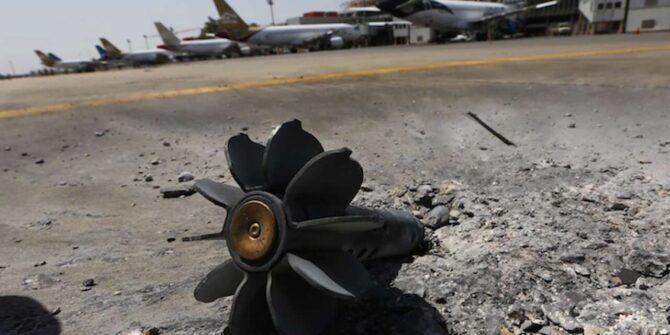
Good thing too, because four years later, Libya descended into chaos with the outbreak of a civil war that saw HLLT/Tripoli airport closed after clashes between rival militias destroyed most of the airport’s facilities. The airport remains closed to this day; most flights operate out of the city’s other airport – HLLM/Mitiga.
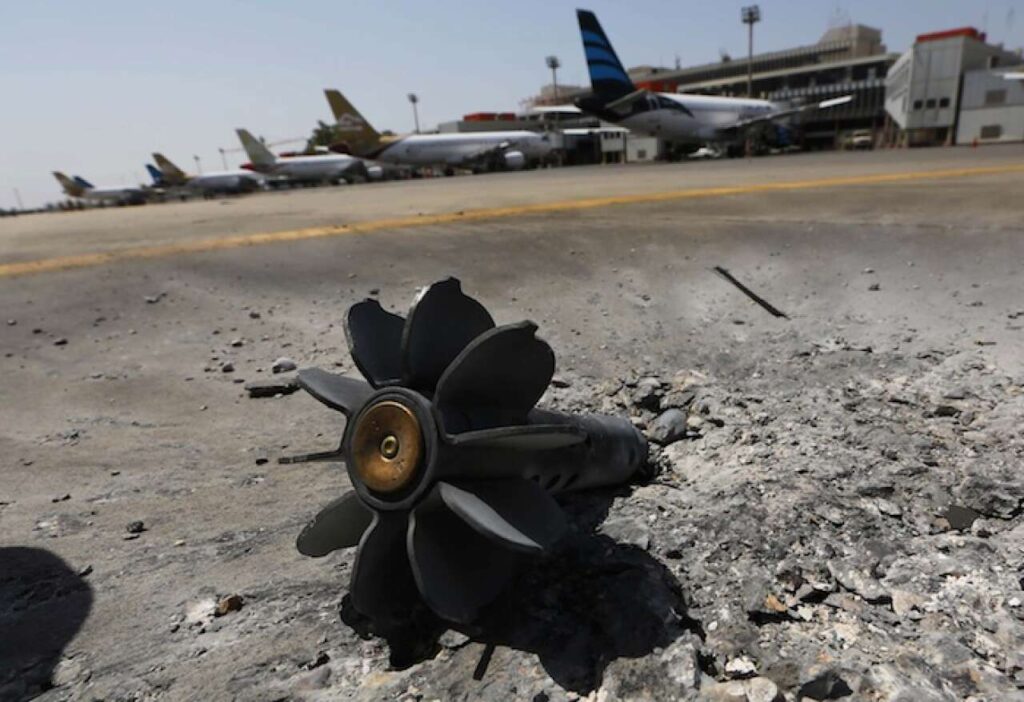
The Battle of Tripoli Airport, 2014.

All the standard “Do Not Travel” warnings followed soon after, and people stopped flying to Libya.

So here we are, ten years later, and EASA are now saying it’s probably OK to start flying to airports on Libya’s coastline again – as long as you approach from the sea, talk to ATC, and do a risk assessment…

Hmm, sounds weird, doesn’t it? Why on earth would we want to do that? Well, let’s have a look…

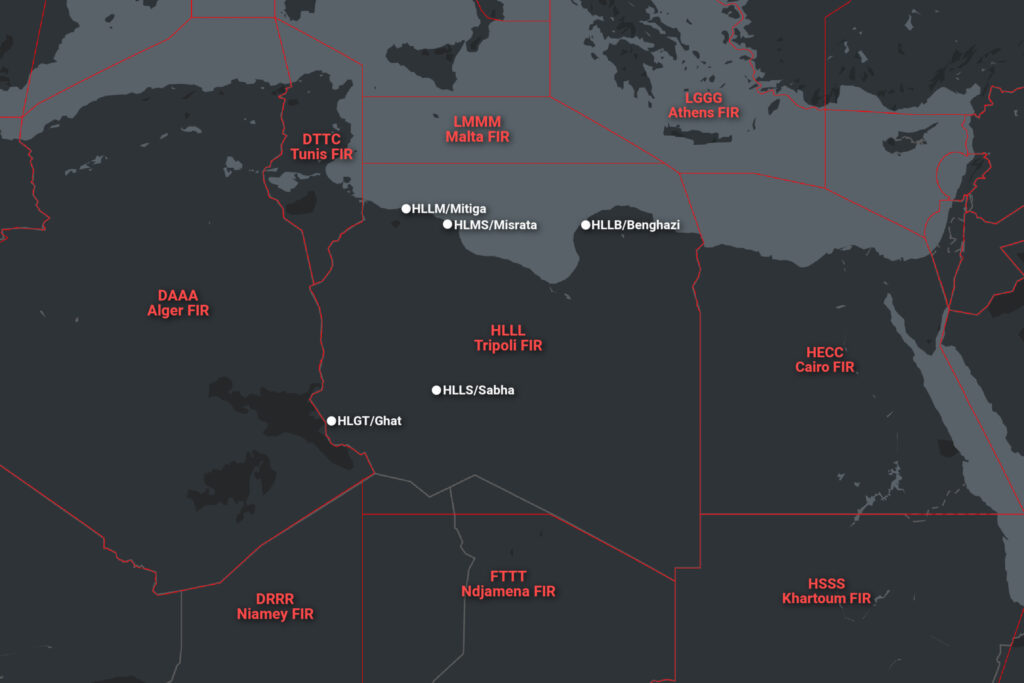
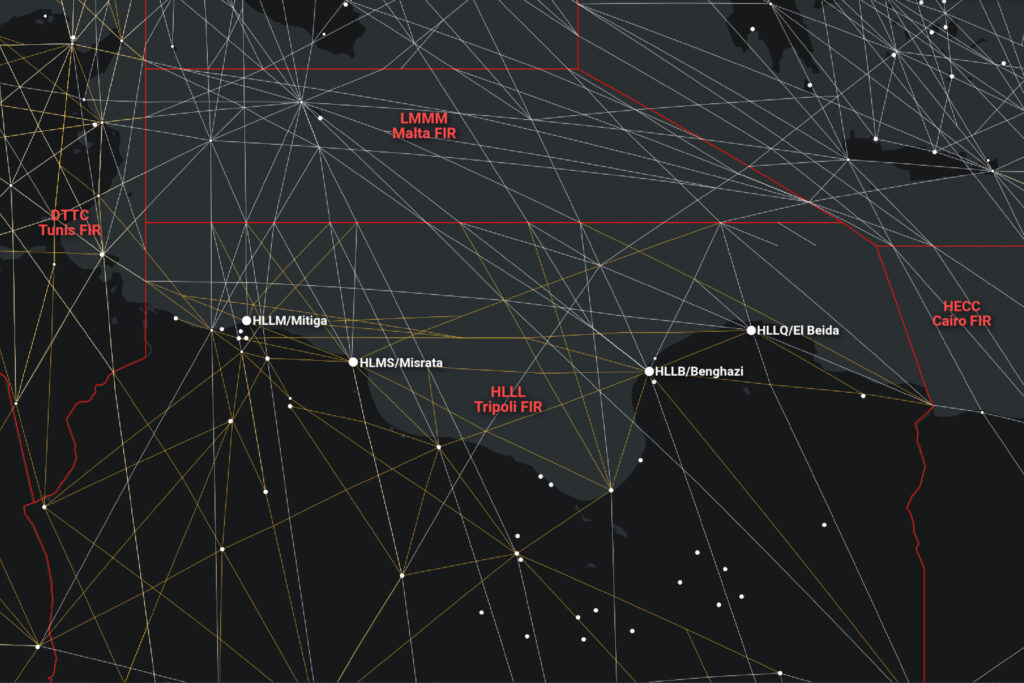
Step 1: Find Out Where It Is

Remember, this is an “Idiot’s Guide” where I know almost nothing about Libya. So this is where we start.
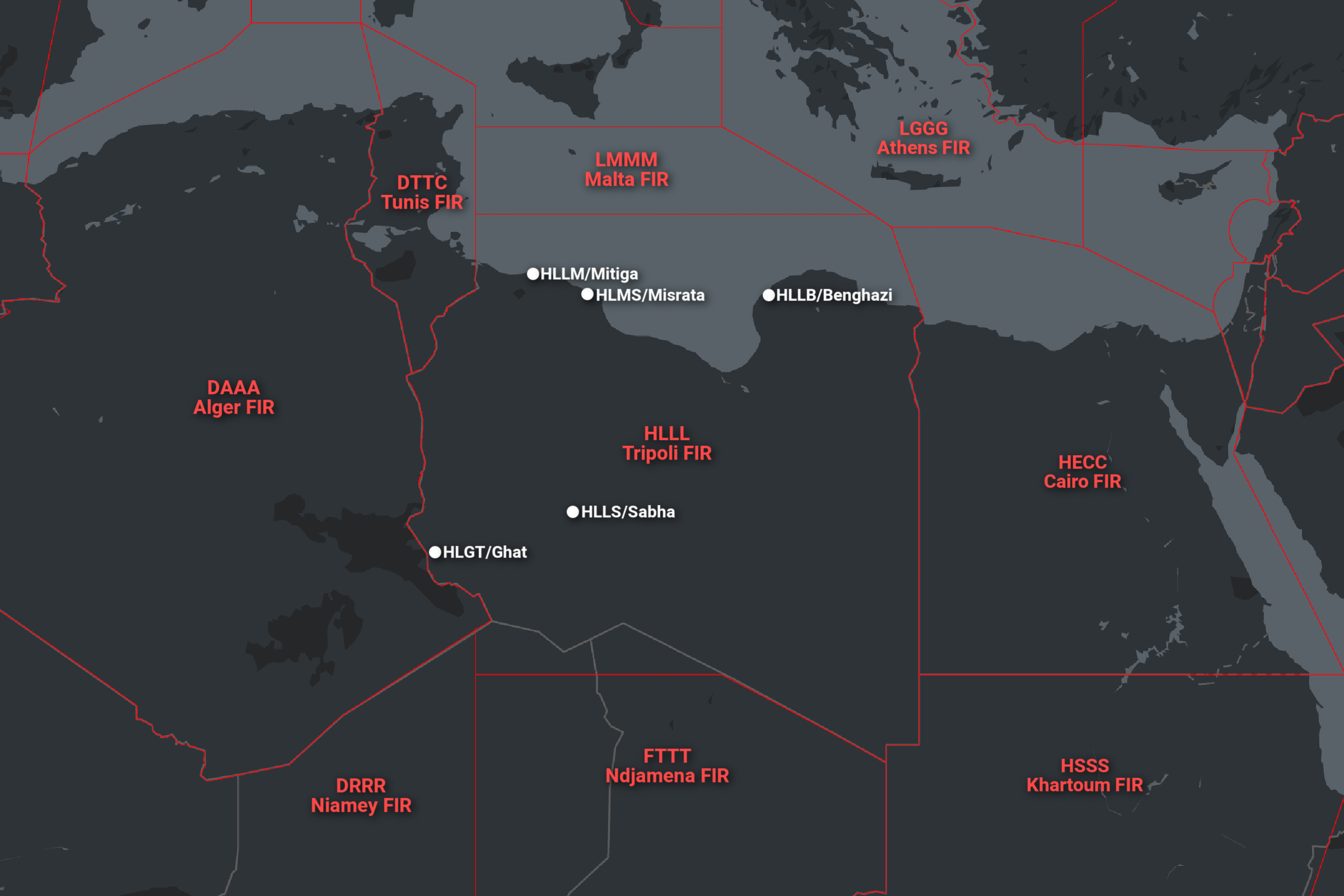
White dots = airports. Red stuff = airspace boundaries.

Step 1 complete!

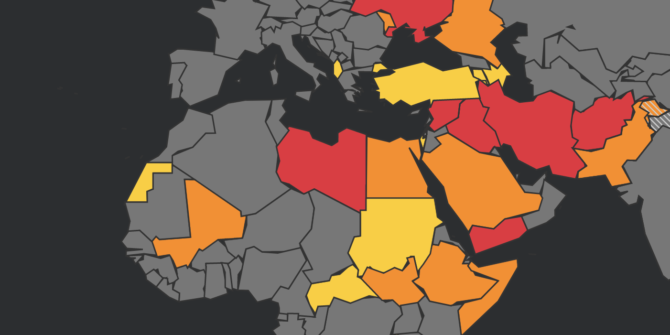
Step 2: Find Out How Scary It Is
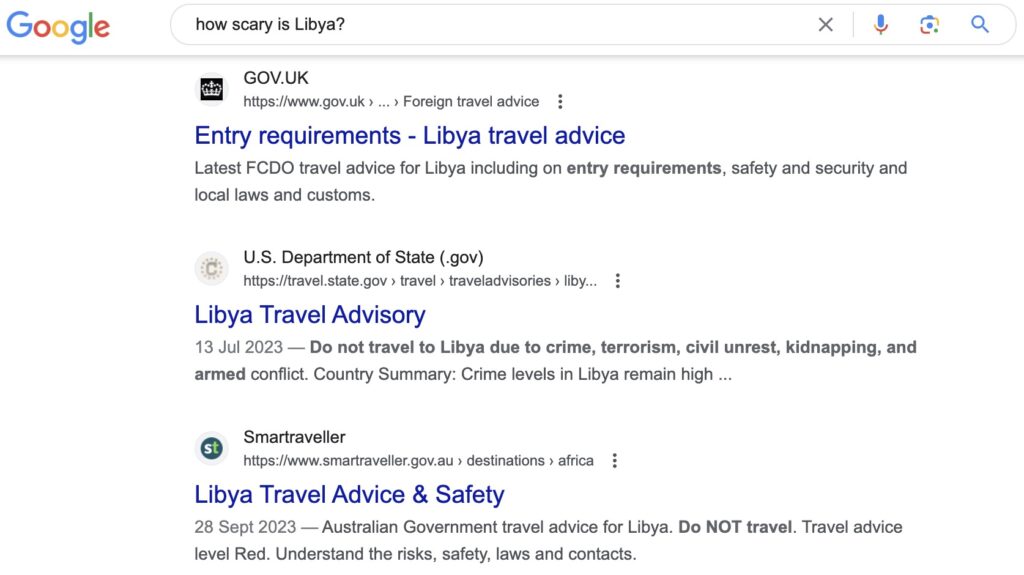
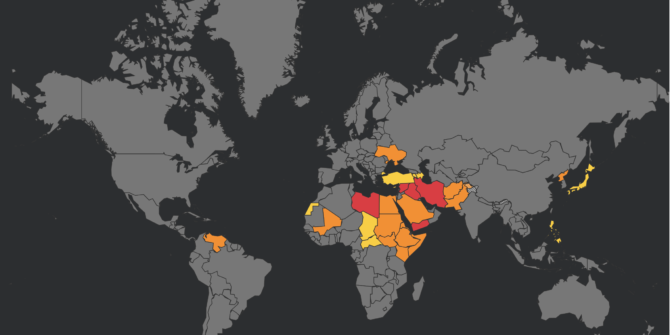
Not a great start.

Yeah but that’s travel advice for passengers. We’re pilots, so we want to know about airspace and missiles and stuff…
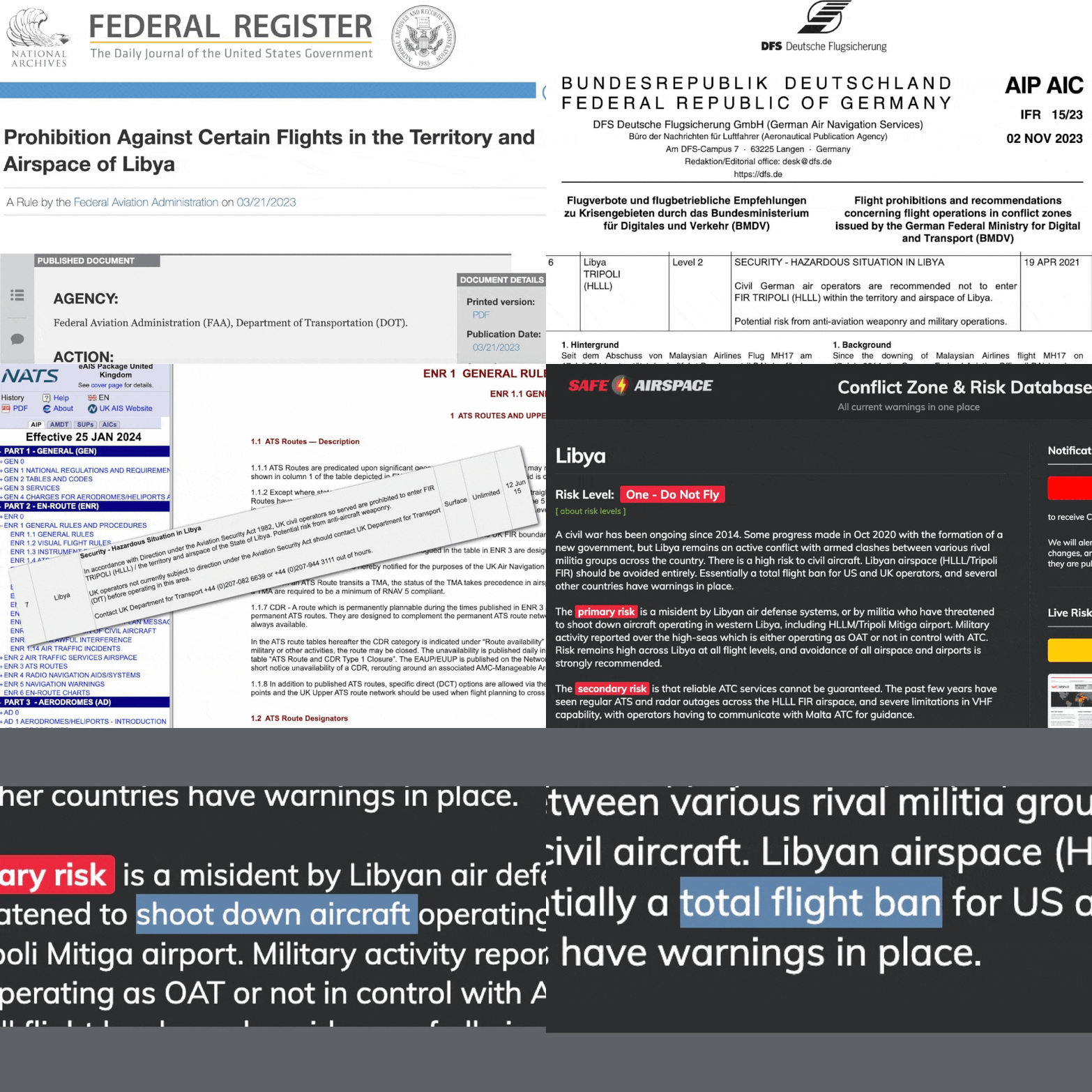
All the airspace warnings in one digestible, non-stop GIF.

Oh dear. None of that looks great either, does it?

Step 3: Actually Read The Warnings In The GIF

Just like the classic 80’s tv advert said: GIFs are for Christmas, Airspace Warnings are for life. 

Or was it dogs? GIFs are for dogs, not just for Christmas? Christmas is for GIFs, not just for dogs?

Something like that. What I mean is – GIFs are hardly a solid basis for a risk decision of this magnitude. It’s worth taking some time to check out what the official airspace warnings actually say…
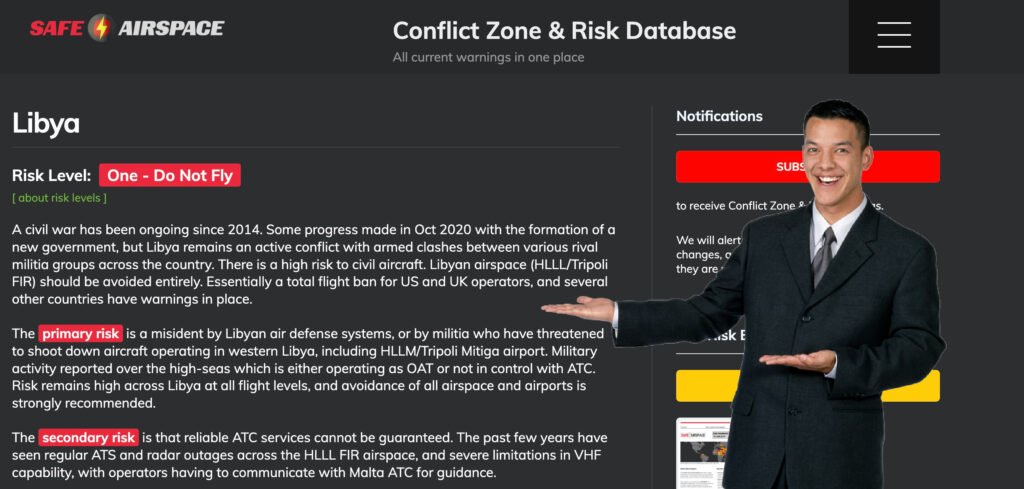
Step into our office…

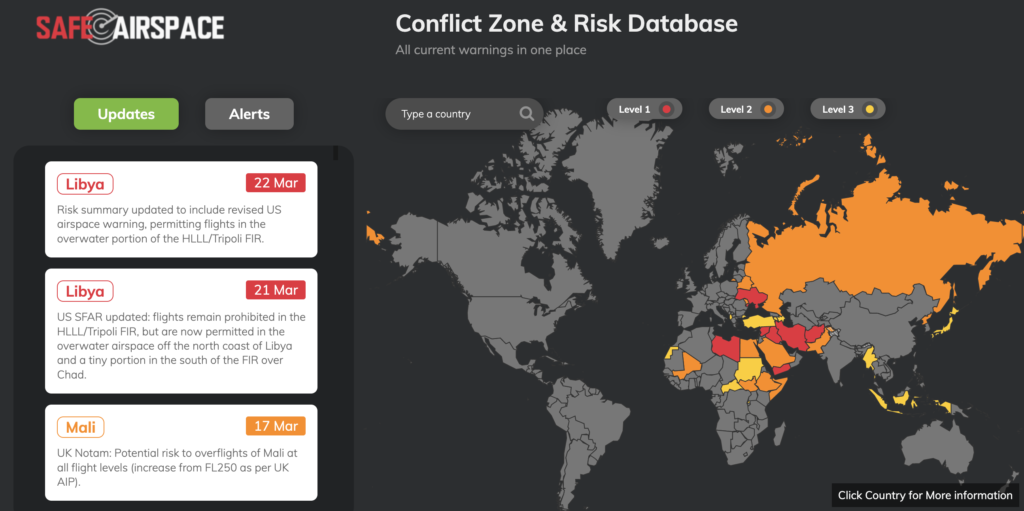
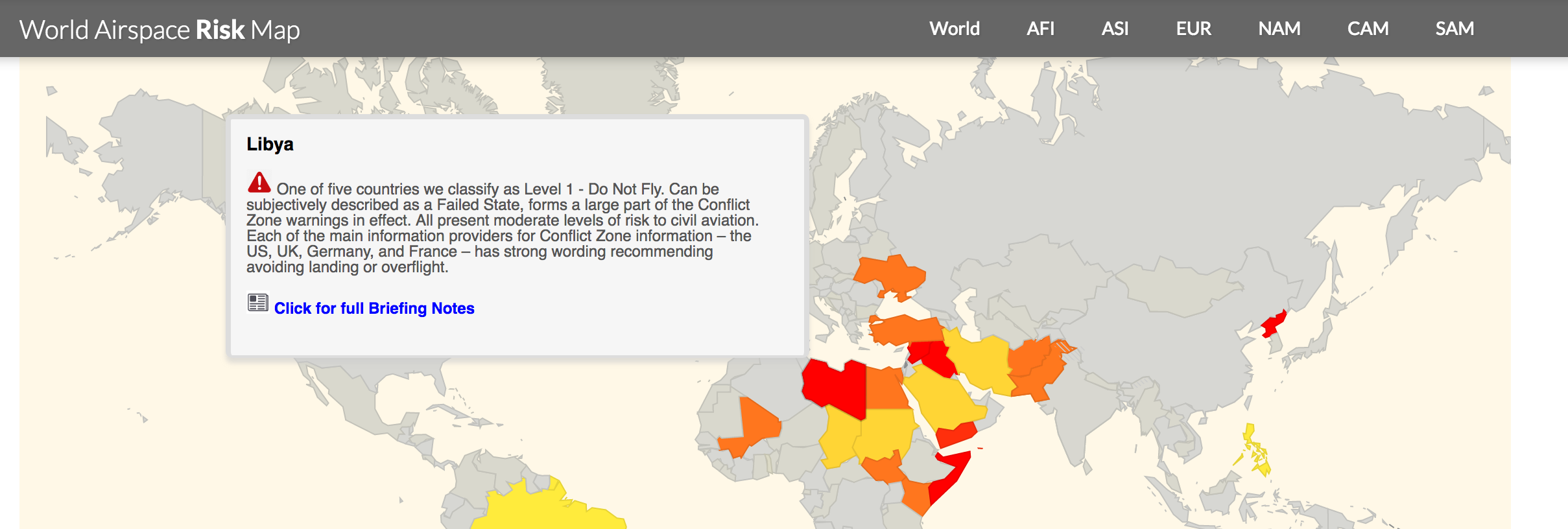
Safeairspace.net is our Conflict Zone & Risk Database. It will tell you what you need to know about airspace warnings.

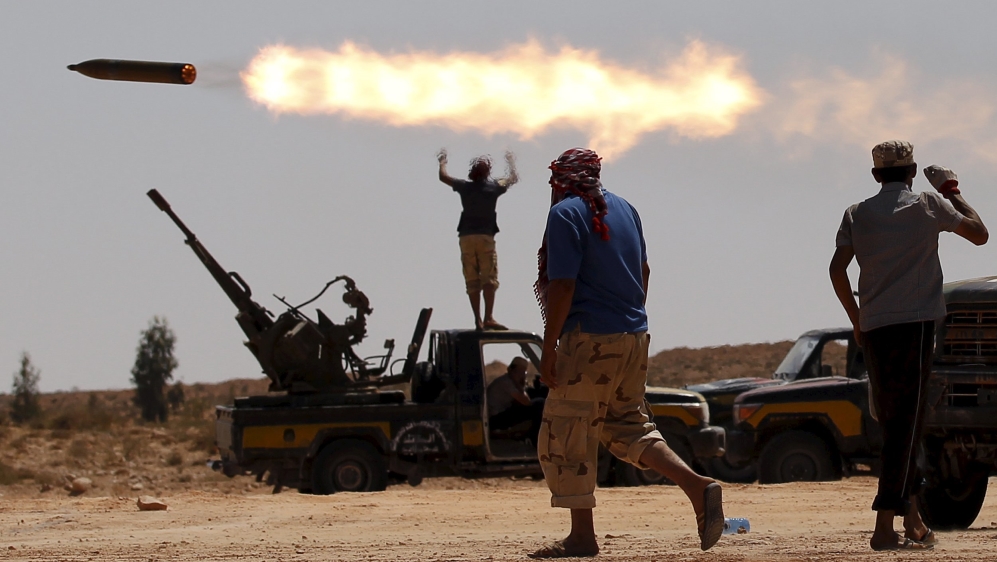
The short story for Libya is this: Several countries have airspace warnings for Libya, and all say pretty much the same thing – operators should avoid Libya’s HLLL/Tripoli FIR entirely, due to the potential risk from anti-aviation weaponry and military operations. Libya remains an active conflict zone with armed clashes between various rival militia groups across the country, and there is a high risk to civil aircraft.

Starting to get the feeling like we’ve been here before? That’s because we have. We asked all these exact same questions back in 2022, and again in 2023, and decided that no, Libya probably wasn’t safe to fly to.

But anyway, that was then and this is now. On with the guide…

Step 4: Check The News

August 2023: Major evacuation of aircraft from Tripoli due to violent clashes and gunfire at Mitiga airport. More info.

Aug 2022: Militia air defense forces claimed to have shot down a US drone operating in the vicinity of Benghazi during a period of increased tensions and threats of renewed violence between competing militias vying for control of Tripoli.

June 2022: Failed attempt by militia to enter Tripoli to seize control of government offices, resulting in armed clashes and suspension of flights at HLLM/Mitiga airport.

Jan 2020: Multiple airstrikes targeting HLLM/Mitiga airport. Videos on social media showing planes landing at the airport as shells are falling in the background.

Nov 2019: Militia advancing on the capital, Tripoli, declared a no-fly-zone around the city, threatening to shoot-down civil aircraft attempting to fly to HLLM/Mitiga airport.

And that’s just the big-ticket aviation related stuff. For a full history of the endless horrors suffered by the poor people of Libya stretching back to 2011, check here.

Step 5: Ask Someone Who’s Gone There

If in doubt, just look at what other people are doing. 

Here’s a report we recently received from an operator who went to Libya:
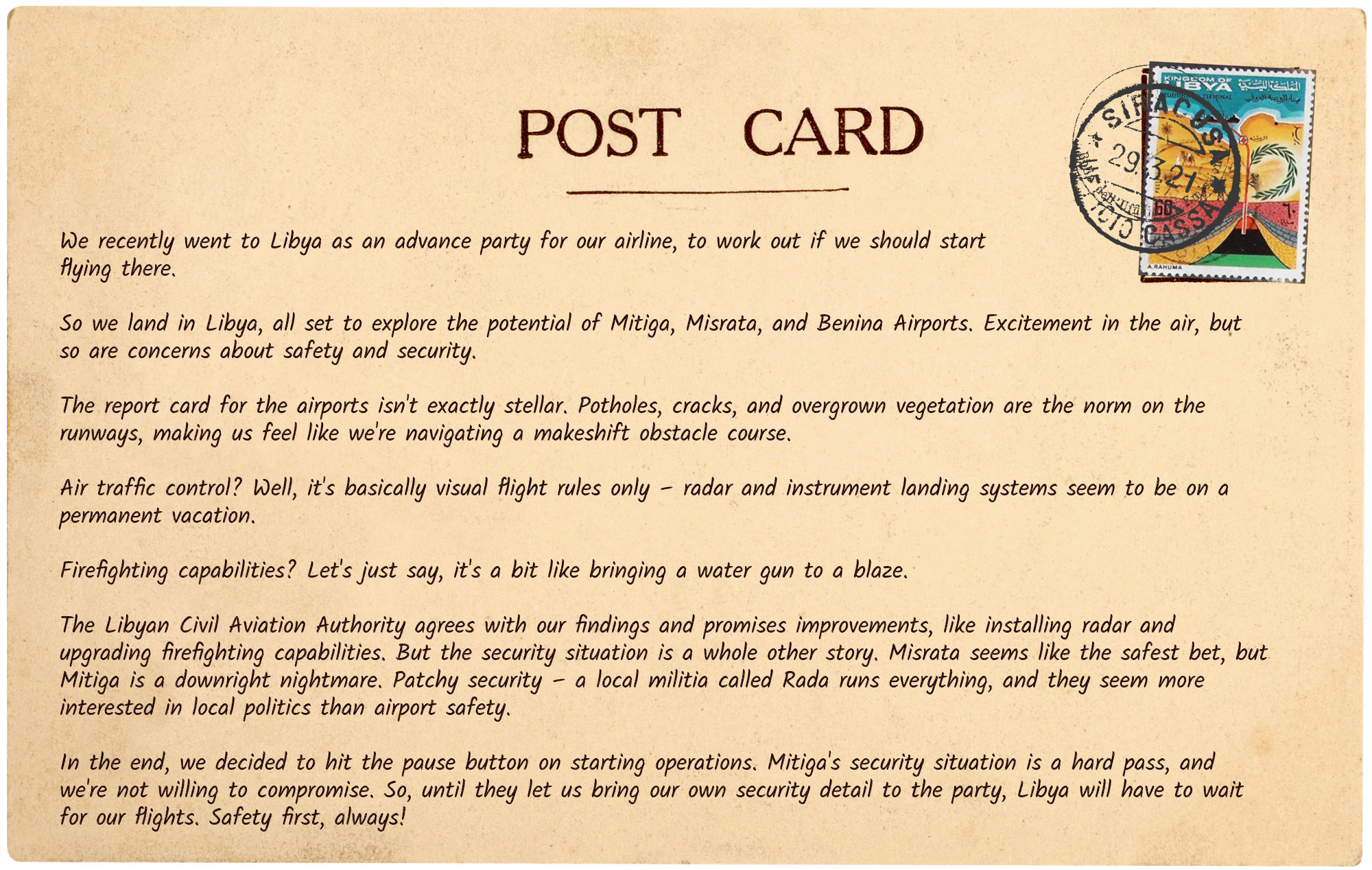
Sent via postcard on layover in Siracusa, Sicily.

Step 6: Ask Someone Who Has To Deal With It ALL THE TIME

The ultimate shortcut to solving complex stuff you don’t know much about? Ask someone who knows a whole bunch about it. 

Here’s a report from ATC in a neighbouring ACC to Libya:
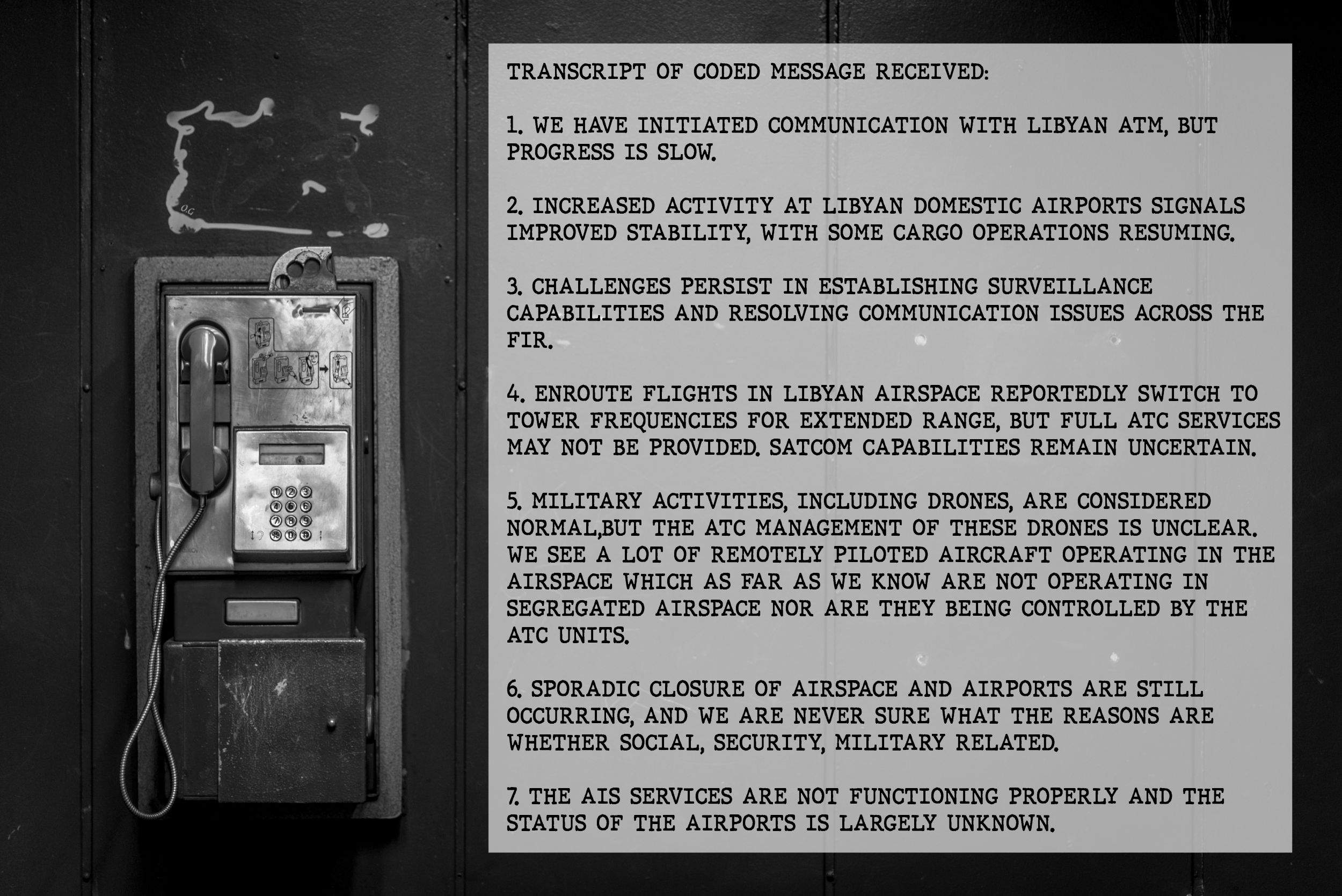
OPSGROUP Listening Station, back alley of Lucky Star Chicken Restaurant, Berlin.

Step 7: Conclusion

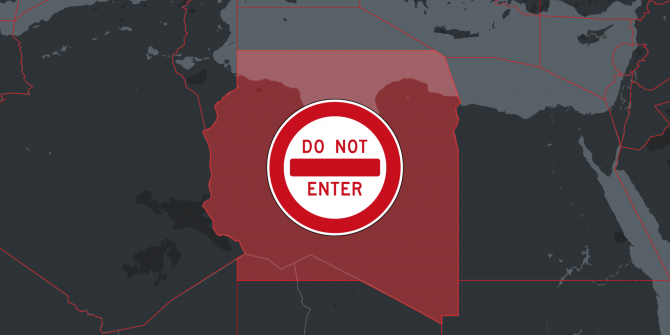
The conclusion to this Idiot’s Guide to Libya? NO. Do Not Fly. Avoid. 

If you need reminding, you can print out this helpful Opsicle, and take it with you in your flight bag.
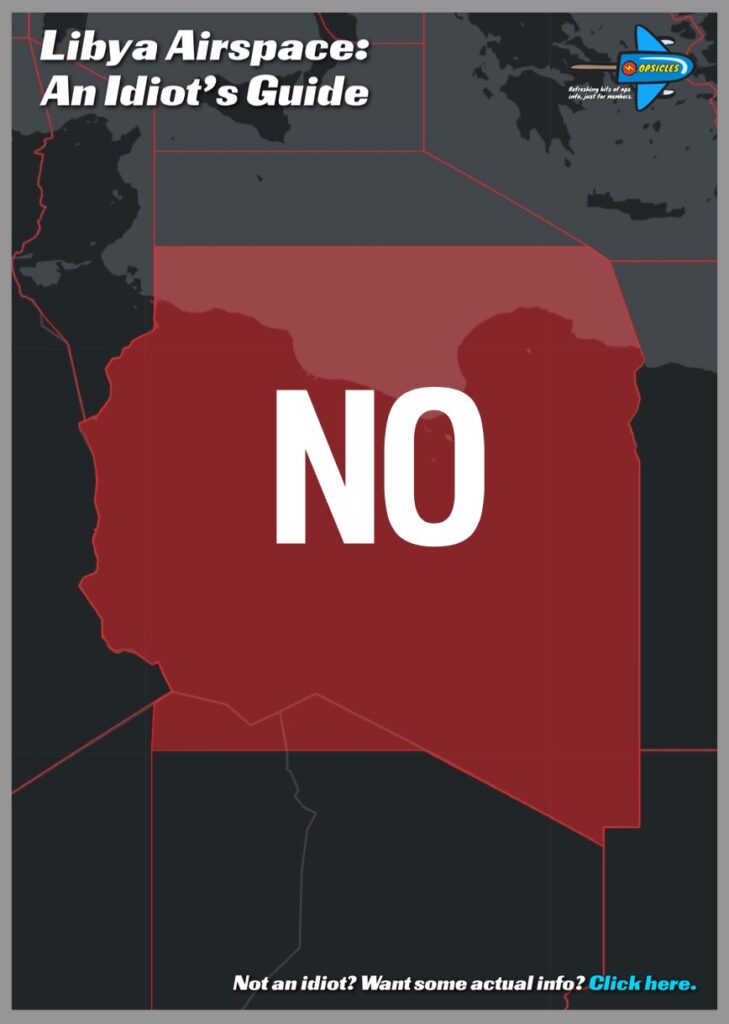
⬆️ You can click the image above to download the PDF.

Postscript: The Curious Case of the EASA CZIB

We mentioned this at the start. And in the middle. Now again here at the end.

In their amended CZIB, EASA are now saying it’s probably OK to start flying to airports on Libya’s coastline again – as long as you approach from the sea, talk to ATC, and do a risk assessment.

If you’re a European airline keen to resume flights to Libya, you might like this piece of news. Everyone’s risk appetite is different, after all.

Some history here: In July 2023, Italy cancelled its 10-year ban on flights to/from Libya, the idea being to resume airline flights between the two countries at some point. So aircraft are technically no longer banned from Italian airports and airspace if they want to fly from Libya (apart from Libyan operators, who are still banned from EU airspace). You still need to get special permission from the Malta CAA if you want to do this, as per the LMMM Notams.

Why is the amended EASA CZIB “curious”? Because there’s no evidence that there has actually been any reduction in airspace risk here. None of the state airspace warnings have changed, and EASA have not provided any of the reasoning behind the decision to ease their warning.

So for now, our advice remains the same: Libyan airspace (the HLLL/Tripoli FIR) should be avoided entirely.

See you again next year for another look at why you might want to avoid Libya!
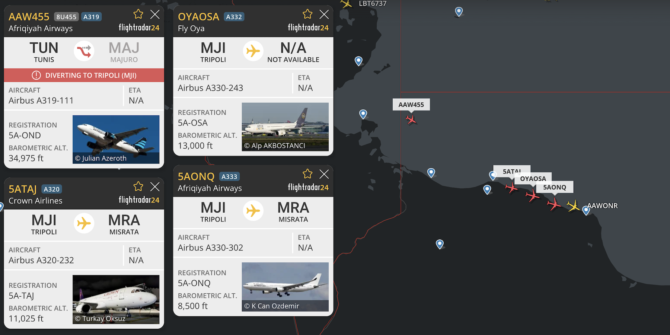

Mass evacuation of aircraft – Libya

Ops Alert – August 14, 2300Z
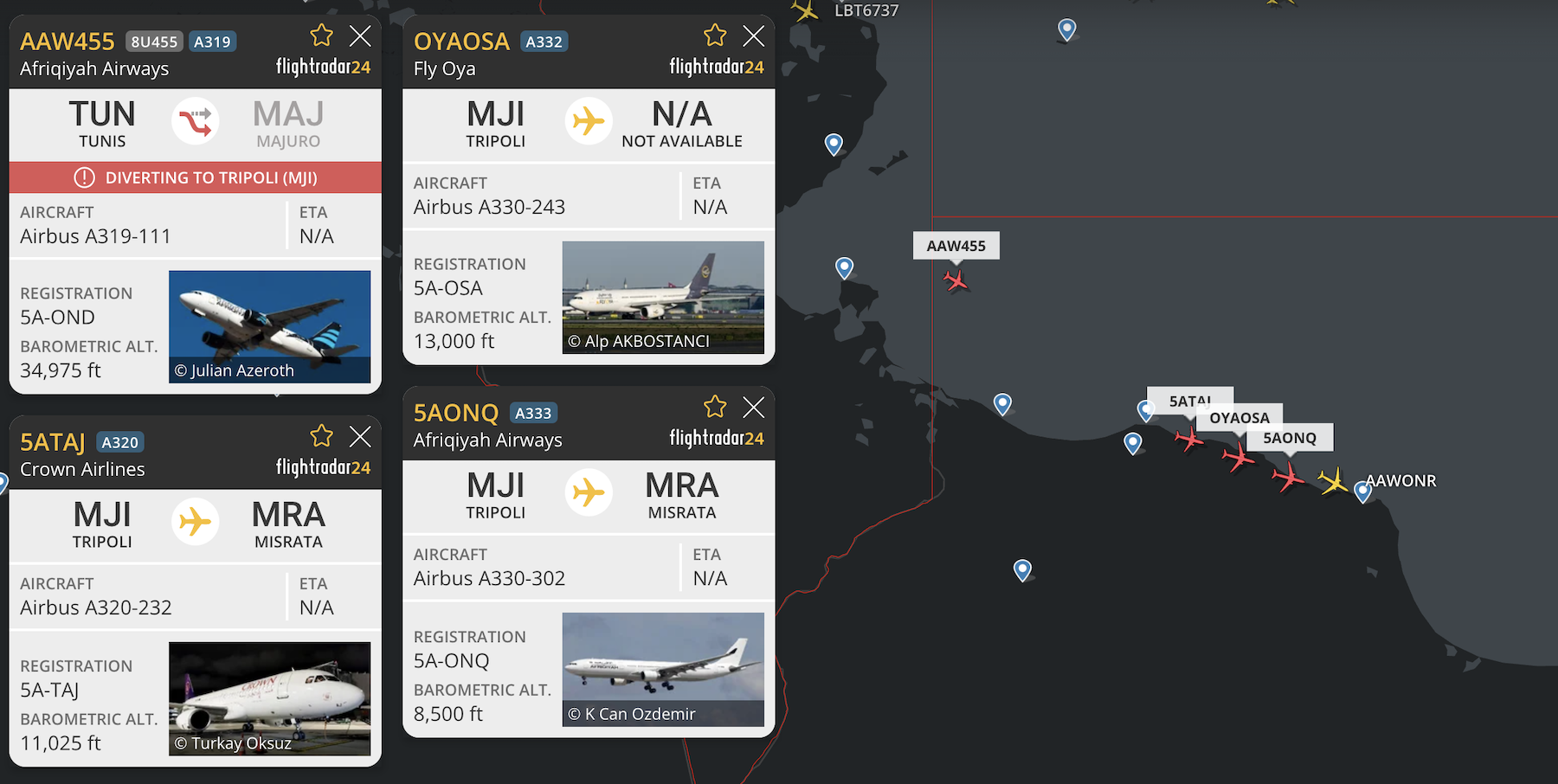
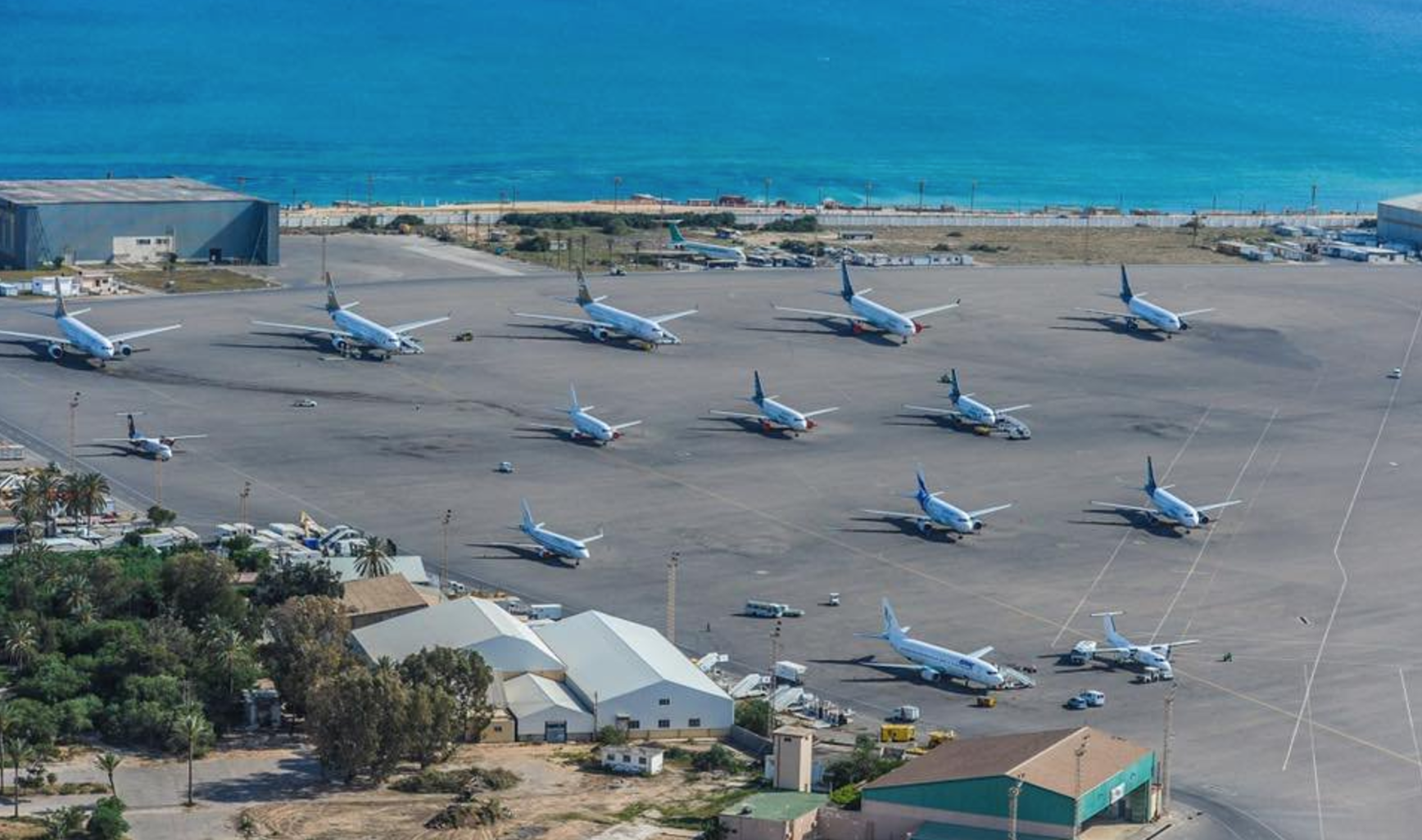
  • A mass evacuation of aircraft is taking place at the moment from Tripoli, including a number of A330 and A320 aircraft from both the largest carrier (Afriqiyah) and smaller operators. Inbound flights are also diverting, and the Libyan government aircraft, a King Air 350, is also being taken out of Tripoli. Almost all aircraft are being repositioned to Misrata (HLMS) – with approximately 25 aircraft being moved.
  • The reason for the evacuation is violent clashes involving gunfire taking place at Tripoli Mitiga airport (HLLM), as well as on road leading into Tripoli itself. Earlier on Monday night the head of ‘444 brigade’ that controls much of Tripoli, was detained at Mitiga airport by the Special Deterrence Force. The resulting risk to aircraft operations was deemed sufficiently high to begin the removal of aircraft to a safer location.
  • This situation highlights the instability of the security situation in Libya. With the airspace closure in Niger last week, routes over Africa have become very limited, and Libya/the Tripoli FIR may seem a tempting alternative.
  • Operators considering a Libya overflight should consider routings very carefully. This is the most significant aviation security event in Libya in the last few years, and highlights the ongoing risk to operations.

Refer to safeairspace.net/libya for the background, and ops.group/blog/2023-is-libya-safe-to-overfly-yet for more information.

A timely summary of the risk to civilian operators in the Tripoli FIR, from earlier in 2023, gathered by OPSGROUP from neighboring ATC units:

  • The ATM/CNS situation in the HLLL FIR is very basic and from our experience there are issues with communications and surveillance (or the lack of it).
  • There is a lot of military activity which is not always known to Tripoli and Benghazi ACCs also due to these communication and coverage issues.
  • There are still issues regarding coordination between the Tripoli and Benghazi ACCs. One seems to have certain rules which the other ignores. It is very frequent for example that either one or both reject overflights resulting in significant re-routings which we have to sort out (normally military flights) but not excluding civilian flights – sometimes even Libyan flights.
  • We see a lot of remotely piloted aircraft operating in the airspace which as far as we know are not operating in segregated airspace nor are they being controlled by the ATC units.
  • Only recently Libyan controllers went on a flash strike informing us that they cannot continue to handle the traffic with no radar equipment.
  • The AIS services are not functioning properly and the status of the airports is unknown.


Libya Airspace Update Aug 2023

Update: Mass Evacuation of aircraft from Tripoli, August 14
  • A mass evacuation of aircraft is taking place at the moment from Tripoli, including a number of A330 and A320 aircraft from both the largest carrier (Afriqiyah) and smaller operators. Inbound flights are also diverting, and the Libyan government aircraft, a King Air 350, is also being taken out of Tripoli. Almost all aircraft are being repositioned to Misrata (HLMS) – with approximately 25 aircraft being moved.
  • The reason for the evacuation is violent clashes involving gunfire taking place at Tripoli Mitiga airport (HLLM), as well as on road leading into Tripoli itself. Earlier on Monday night the head of ‘444 brigade’ that controls much of Tripoli, was detained at Mitiga airport by the Special Deterrence Force. The resulting risk to aircraft operations was deemed sufficiently high to begin the removal of aircraft to a safer location.
  • This situation highlights the instability of the security situation in Libya. With the airspace closure in Niger last week, routes over Africa have become very limited, and Libya/the Tripoli FIR may seem a tempting alternative.
  • Operators considering a Libya overflight should consider routings very carefully. This is the most significant aviation security event in Libya in the last few years, and highlights the ongoing risk to operations. Refer to safeairspace.net/libya for the background.

A timely summary of the risk to civilian operators in the Tripoli FIR

From March 2023, gathered by OPSGROUP from neighboring ATC units:

  • The ATM/CNS situation in the HLLL FIR is very basic and from our experience there are issues with communications and surveillance (or the lack of it).
  • There is a lot of military activity which is not always known to Tripoli and Benghazi ACCs also due to these communication and coverage issues.
  • There are still issues regarding coordination between the Tripoli and Benghazi ACCs. One seems to have certain rules which the other ignores. It is very frequent for example that either one or both reject overflights resulting in significant re-routings which we have to sort out (normally military flights) but not excluding civilian flights – sometimes even Libyan flights.
  • We see a lot of remotely piloted aircraft operating in the airspace which as far as we know are not operating in segregated airspace nor are they being controlled by the ATC units.
  • Only recently Libyan controllers went on a flash strike informing us that they cannot continue to handle the traffic with no radar equipment.
  • The AIS services are not functioning properly and the status of the airports is unknown.

Is Libya safe to overfly?

With the vastly reduced number of routing options available to operators as of August 2023 (closures of Niger and Sudanese airspace), this question will come up quickly for operators crossing North Africa. We asked this question back in 2022, and decided that no, it probably wasn’t.

Now, the FAA have added some areas of the HLLL FIR that they determine to be “OK”.

Where are we talking about?

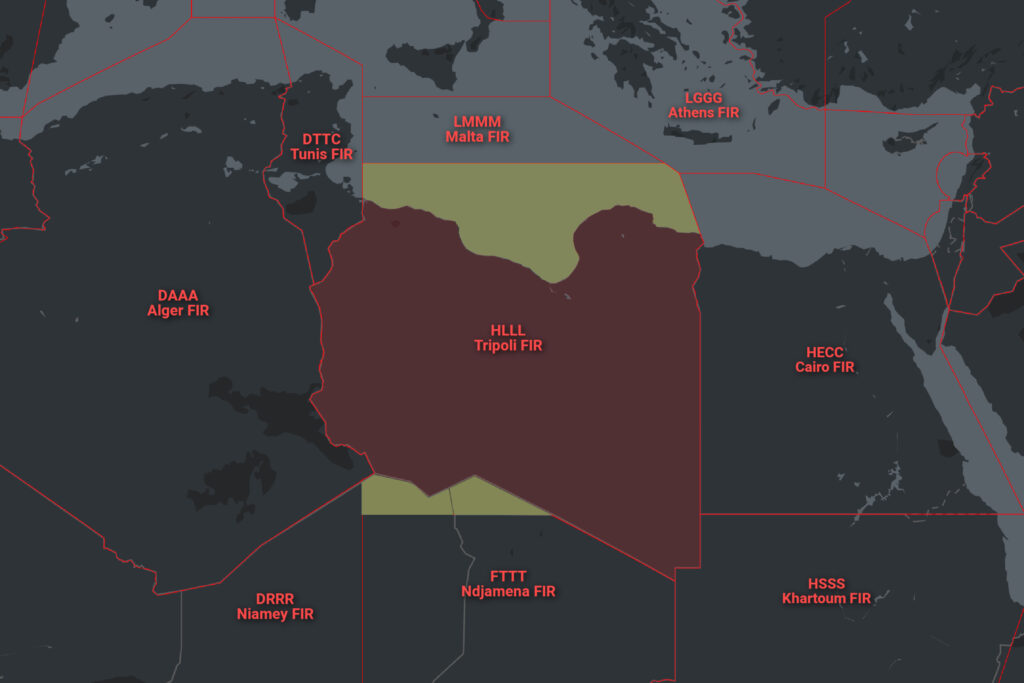
Libya’s airspace is the HLLL/Tripoli FIR:

What’s the deal?

The US FAA says this:

The FAA assesses the risk to U.S. civil aviation operations in the portions of 
the Tripoli FIR (HLLL) outside the territory and airspace of Libya at altitudes 
below FL300 has diminished and the situation has stabilized sufficiently to 
permit U.S. civil aviation operations to resume in that airspace. 
Since the October 2020 ceasefire agreement, foreign actors have significantly 
reduced weapons shipments and military activities off the coast of Libya. 
Previously, these activities included targeting suspected weapons shipments 
destined for the opposing side or their foreign sponsors. As a result, the risk 
of either side or their foreign sponsors misidentifying civil aircraft operations 
in the overwater portion of the Tripoli FIR as carrying weapons shipments destined 
for the other side or their foreign sponsors and mistakenly targeting them has 
diminished. The reduction of widespread conflict has also reduced the risk to U.S. 
civil aviation operations in the small portion of the Tripoli FIR (HLLL) that 
extends into Chad's territorial airspace. Therefore, due to the diminished risks 
to the safety of U.S. civil aviation operations and stabilized situation in those 
portions of the Tripoli FIR (HLLL) outside the territory and airspace of Libya, 
the FAA amends SFAR No. 112, 14 CFR 91.1603, to remove the prohibition on U.S. 
civil aviation operations in those areas.

Which is basically a whole lot of text to really say:

We reckon the bit over the water is ok now (and the bit extending into Chad).

So the map of where the US FAA says you can and can’t fly now looks like this:

Here is our summary of it

Feel free to fly over the water, but you won’t, because there’s no reason to.

What do we mean by that?

Well, most of the airways in this bit of water are North-South, connecting airports on the Libyan coastline to the Malta FIR. You can’t use them, because you can’t fly to Libya.

There are some East-West airways, and some of these might be useful for flights from the likes of Tunisia to Egypt, for example. But none of these airways stay overwater the whole way – they all hit the Libyan landmass at some point. So you can’t use these either.

So in practical terms, we suspect that the FAA lifting the prohibition of flights over the water north of Libya doesn’t mean very much, because no-one’s going to fly there. 

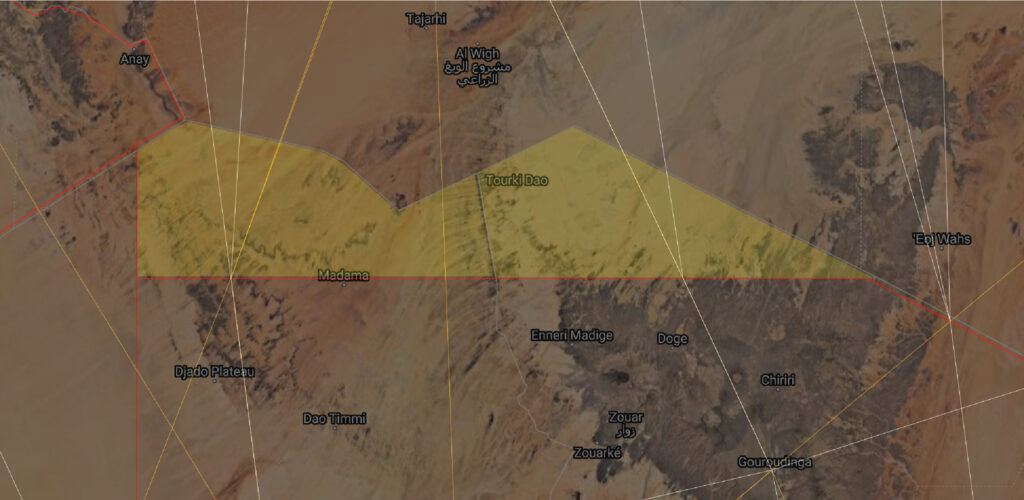
Oh, and the thing about Chad

Yes! There is a little patch of nothing in northern Chad (the tiny bit which is technically underneath Libya’s HLLL/Tripoli FIR) where you’re now allowed to fly too. Yay!

So, what does this really mean for ops?

Well, first up, the rest of Libya is very decidedly still not OK.

There have been a whole bunch of reports of issues in Libya, some fairly recently. From GPS jamming, to reported drone shoot-downs, to known anti aircraft weapons that can reach 49,000’…

Aside from the slight improvement the US has mentioned, there is really no change on what we wrote last year.

So Libya remains a “Do Not Fly” area.

Libya remains volatile. Safety and security on the ground is not good, and there is a significant risk to aircraft overflying due to the conflict and weapons available to militia groups.

Tell me more about the SFAR

SFAR 112 has been extended to March 20, 2025 but they will keep monitoring the situation and updating it as and when the security situation changes.

The SFAR provides a good summary of the situation (the ongoing, messy, risky situation). You can read it via the link at safeairspace.net/libya


Libya Airspace Update March 2022

We haven’t mentioned Libya in a while. Our last in-depth look was back in 2019, which is several years and a whole lot of Covid ago. So, what is the current situation and does it look likely that the country will be safe to overfly anytime soon?

Any alerts to know about?

In the first half of 2021, the Libya situation did change somewhat, with signs that security and stability in the country might be improving.

In June 2021, a ‘fragile’ ceasefire appeared to be holding, despite increased military activity on the western border with Algeria. The ceasefire came after a UN led agreement was put in place and was implemented in April 2021.

Egypt and Libya saw a resumption of passenger flights, along with Malta from April 2021. However, there are very limited international operations, the majority being domestic within the country.

What’s been happening recently?

The security situation has reportedly deteriorated through the start of 2022, with intermittent fighting and armed clashes occurring regularly between rival militia groups. These groups are backed by competing geopolitical parties and the overall situation is very volatile and complicated.

In fact, the UN led elections at the start of 2022 and a new Prime Minister was brought in with the hope of unifying the country, but sadly this does not, so far, seem to have resolved what is described as an “intensifying political crisis”.

The fighting has led to significant damage to infrastructure, particularly to power supplies across the country, and to road systems. Disruption and security concerns on the ground are common. Civil unrest including protests and strikes occur relatively frequently.

Islamic State militants do conduct operations in the country, although these are primarily restricted to the southern regions. Attacks on high profile locations, including international airports, remain likely.

The FAA Prohibition.

The US extended their airspace warning in 2021, updating their SFAR 112 to run until least March 2023.

You can read all about it in depth here, but the general summary is don’t overfly HLLL/Tripoli FIR except for altitudes at or above FL300 “outside of Libyan territorial airspace” (the international bit over the southern Mediterranean sea).

Check out Safeairspace for other state warnings and prohibitions as we update this regularly.

Airport Options.

HLLT/Tripoli airport remains closed following significant damage to many of the airport facilities. 

HLLM/Mitiga is the main international airport. A major attack in May 2020 resulted in damage to parked aircraft, terminal and runway. Jet fuel tanks were also set on fire. The airport was also closed in January 2020 due to a rocket attack. Prior to this, airstrikes in the area made it critically high risk and dangerous.

HLMS/Misrata and HLLB/Benghazi are also operational for international flights.

HLMS/Misrata has a single runway 11,155’ with VOR DME approach only.

HLLB/Benghazi is a much better equipped airport offering minor airframe and engine maintenance facilities, two 11,811’ (3600m) runways with an ILS to 33L, and VOR DME or LCTR approaches to the other runways. However, Al-Qaeda linked militants are reportedly active in this general area.

HLLS/Sabha also has an 11,811’ runway with ILS to 13 and VOR DME to 31.

HLGT/Ghat has an 11,811’ runway but no precision approach and is relatively lacking in maintenance and support facilities.

The Airspace.

Entering the airspace without prior contact may result in aircraft being “engaged by air defense systems”. This message was passed to Malta ATC in April 2020.

Militia stated in 2020 that certain areas around major cities were no-fly zones, and there was a very real risk they could attempt to shoot down any aircraft which attempted to fly to HLLM/Mitiga airport in particular.

The northern airspace borders the Mediterranean sea and Maltese airspace, and caution should be taken if routing over this region to not accidentally detour into Libyan airspace.

Aircraft operating east/west particularly from Tunisia, Algeria and Morocco, or Egypt and further east, can fly through Maltese airspace and this does not pose a significant detour to avoid Libyan airspace. Suitable alternate airports are available along these routes.

What Libya says.

We occasionally get contacted by Libyan ATC to update us on the situation from their perspective, because often what is said (and assessed) via media reports does not match what those in a country experience.

Their most recent feedback (early 2022) was this:

  • International airlines are operating into HLLM/Mitiga and HLMS/Misrata without (apparent) incident
  • There are passenger flights from Tunisia operating 3 times a week, and several cargo flights per week
  • Overflying east/west is considered safe, north/safe requires some more information for a full assessment
  • VHF ATC services over international waters are reliable

What Malta says (because they’re right next door).

  • The situation has improved over the last few months but there is not much transparency as to the real state of affairs in terms of ATM/CNS provision in the HLLL/FIR.
  • Libyan airspace is entirely procedural and there must be huge swathes of airspace where the service provision is either limited or unreliable especially in the domain of air-ground communications. We do not know the status of the international / national aerodromes in Libya as their AIP does not seem to be updated regularly (understating it here).
  • We are also aware of military activity over the high-seas which is either operating as OAT or not in control with Tripoli ACC / Benghazi ACC including RPAs. We are not aware how RPAs are being integrated in the airspace, if at all. GPS jamming could also be an issue.
  • The issue of 5A-registered aircraft which are banned from EU airspace has not been resolved and we still have a lot of restrictions from EU States including Malta banning all flights departing from HL aerodromes from entering EU national airspace due to security issues.
  • So whilst the military / conflict situation might have improved on the ground there is not much evidence to support the claim that all is safe and sound.

This was sent in December 2021, prior to the UN-led elections. The continued instability following these elections is what led us to pop this update out now.

Our risk assessment.

Libya remains volatile. Safety and security on the ground is not good, and there is a significant risk to aircraft overflying due to the conflict and weapons available to militia groups. Despite feedback from local ATC, and reports that some operators do overfly the country, we continue to advise against it.

It remains a Level 1: Do Not Fly region on Safeairspace.

Have you operated in or over?

Share your feedback with us at news@ops.group, or file a report of a recent trip on our Airport Spy page.


SafeAirspace: 2021 Update

2020 was a heck of a ride. But therein lies the risk – what else might you have missed amongst all the Covid-related noise? Sadly, conflicts and their risks to civil aviation have not taken a break during the pandemic.

As it’s a new year, we thought a summary of Airspace Risk was called for. Here’s what’s making headlines at the moment:

Saudi Arabia & Yemen

Houthi rebels in Yemen are regularly firing explosive drones and rockets across the border into Saudi Arabia, and these usually target airports in the south such as OEAH/Abha and OEGN/Jizan. Their latest attack was on OYAA/Aden airport in late December which resulted in mass casualties.

Saudi Arabia continues to retaliate with airstrikes. The latest was in the capital Sanaa just weeks ago, where multiple munitions landed near the airport.

The risk to aviation is that overflying aircraft may get caught in the crossfire or might be misidentified by Saudi air defences. Active terrorist groups in Yemen may also use anti-aircraft weaponry to target foreign interests.

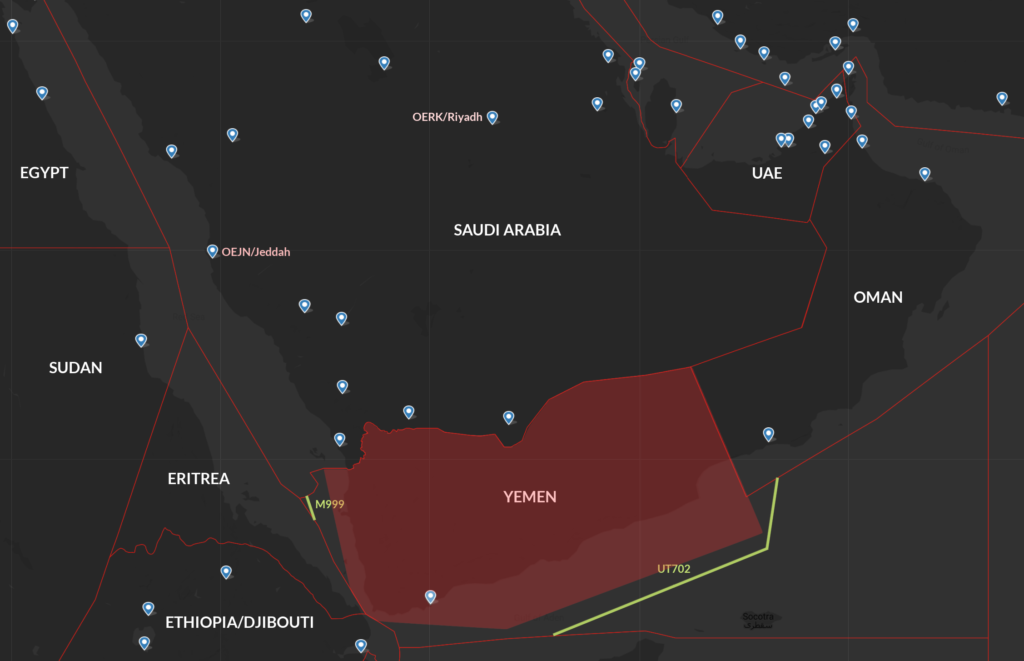
The FAA prohibit all US operators from entering most of the OYSC/Sanaa FIR at any level. Only two airways are allowed, and they are well off the coast – UT702 and M999.

There are no restrictions on Saudi Arabia but use caution in the southern regions. France and Germany have issued their own warnings.

SafeAirspace Yemen page – click here.
SafeAirspace Saudi Arabia page – click here.

Iraq

Rocket attacks on military interests at airports have become a common occurrence. They are generally fired by local militia without warning. ORBI/Baghdad is frequently targeted, along with other airports including ORER/Erbil. There is a clear risk to aircraft at low levels.

US relations were further strained through 2020 with multiple attacks on the US embassy in Baghdad. The tensions escalated to a point where the US considering closing it.

Foreign aircraft continue to be at risk from armed militia who have access to portable anti-aircraft weaponry, while misidentification by the air defence systems of multiple foreign forces in the country is also possible.

The FAA has extended its ban on US operators entering the Baghdad FIR at any level. Even though the SFAR says you can enter above FL320, the long-running Notam KICZ A0036/30 says otherwise.

SafeAirspace Iraq page – click here.

Syria

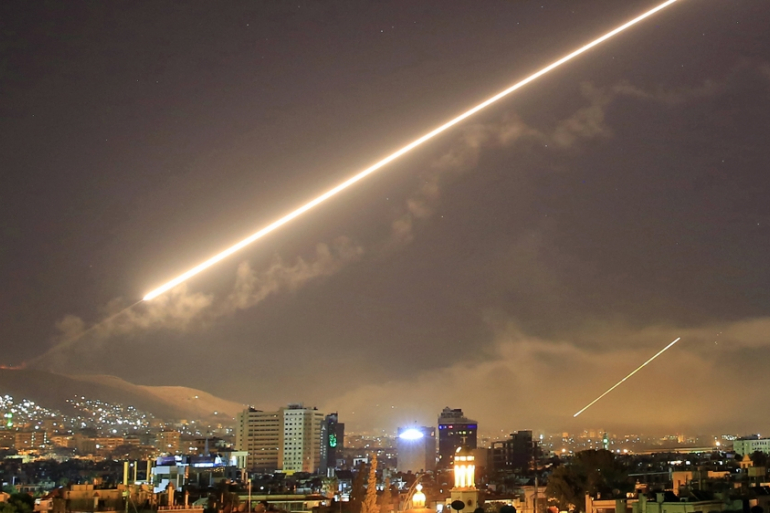
There have been several recent Israeli airstrikes on targets throughout Syria. In late December there are reports that Israeli fighters transited Lebanese airspace at low level causing alarm in Beirut before attacking targets in Western Syria. Just weeks ago, several sites around Damascus were targeted by Israeli missiles.

The primary risk is that aircraft may be misidentified by Syrian air defence systems which are regularly activated. Civil operators may get caught in the crossfire as missiles may erroneously lock on to the wrong aircraft.

The FAA are taking no chances – the ban on US operators entering the OSTT/Damascus FIR at any level has been extended a full three years to 2023.

SafeAirspace Syria page – click here.

South Sudan

Just this week ICAO issued a concerning warning about the risk to aircraft operating below FL245 in the HSSX/Khartoum FIR over South Sudan, or flying in and out of HSSJ/Juba. They are ‘gravely’ concerned about ATC disruptions, a lack of contingencies, inadequate training of controllers, limited info about equipment outages and a lack of co-ordination with other ATS units.

SafeAirspace South Sudan page – click here.

Emerging Conflict Zones

2020 saw three new conflict zones emerge, here is what is happening with them now.

Ethiopia

A civil conflict erupted in October last year in the Tigray region of Northern Ethiopia. The government went to war with the TPLF – a regional force seeking independence.

The region’s airports were closed and TPLF showed an intent to internationalise the conflict by attacking aviation interests. They fired rockets into Eritrea targeting HHAS/Asmara, and also attacked multiple airports to the South of the Tigray region.

Two airways were closed (T124, and M308) with no explanation of the risk.  Other airways remained open but uncomfortably close to the fight – especially UG300, UN321 and UL432. No airspace warnings were issued despite the dangers.

What’s the latest?

In late November Ethiopian forces captured the region’s capital Mekelle and regained control. Remaining TPLF forces have retreated leaving behind a humanitarian disaster and a vow to continue the fight. Since then, the airway closures have been removed and things have gone quiet, but an airspace risk remains – armed militia continue to be active in Northern regions and may be looking to make a statement. Be wary of operating in the area.

Western Sahara

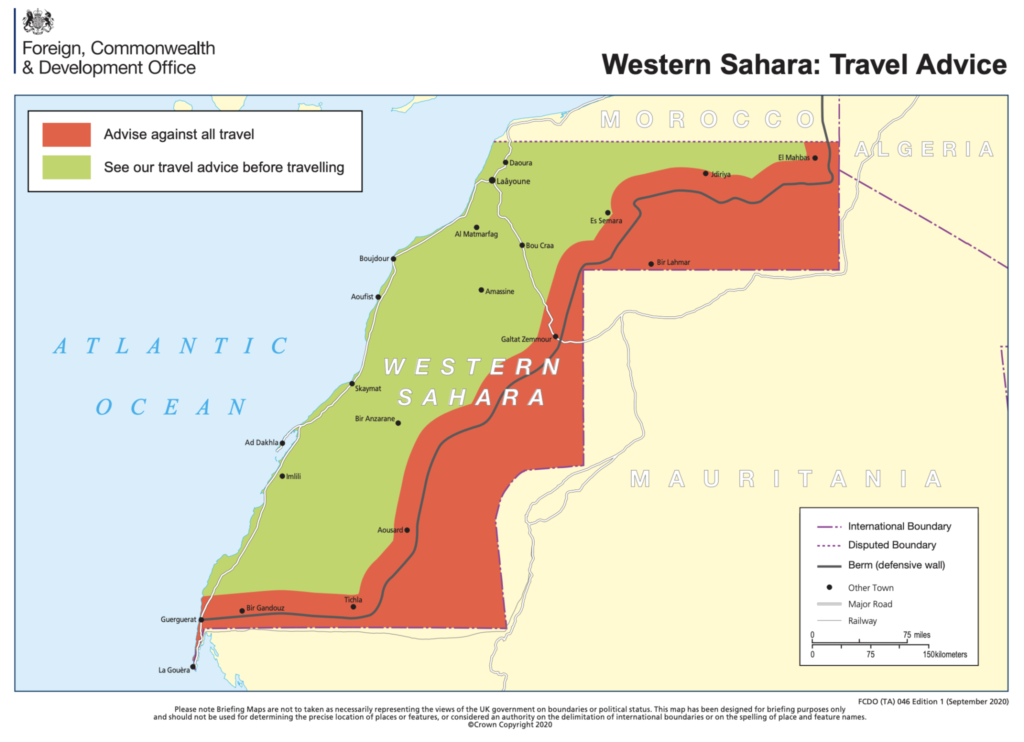
Late last year the region’s independence movement (the Polisario) declared war on Morocco for breaching a ceasefire agreement. The FAA published a warning that the Polisario might have access to anti-aircraft weaponry left over from previous conflicts.

What’s the latest?

It is still an active conflict zone.  The fight has reached the international stage after the US declared their support for Morocco. The Polisario have indicated they are willing to at least talk, but so far have not put down their weapons. So, it is a wait-and-see type deal.

The risk to overflying aircraft remains. The GCCC/Canarias FIR keep extending a Notam advising operators to not fly below FL200 on the following airways: UY601, UN728 and UT975.  However, the reason is still missing: because of the risk of anti-aircraft fire. The GOOO/Dakar FIR haven’t issued any warnings despite the threat. Take care if operating in the area.

Armenia-Azerbaijan

In September last year, an ethnic conflict erupted over a disputed territory in Western Azerbaijan – Nagorno-Karabakh. The fight was between Azerbaijan and Armenia.

As a major air corridor for en-route traffic, there were significant flight disruptions. Azerbaijan swiftly closed all but one west/eastbound airway and routed traffic via Georgia. Armenia asked aircraft to take extra fuel and expect re-routes. The conflict was short but intense, with heavy artillery fire from both sides. The conflict eventually spread beyond the contested regions with longer range weapons. The entire border region posed a risk for civil aircraft.

What’s the latest?

For once the news is good. In November a ceasefire agreement was signed with the help of Russia. Armenia effectively lost and withdrew from the region and the conflict was officially over. Armenia removed its airspace warning, while Azerbaijan re-opened the affected airways and a large section of airspace near the border.

With the conflict now over, and no new reports of significant fighting since the peace agreement in November, direct crossing traffic between the two countries is now technically possible again.  However, most East-West flights are currently still electing to go further north instead, connecting between Azerbaijan and Georgia’s airspace, avoiding Armenia.

What about Safeairspace.net?

Our conflict zone and risk database is updated constantly. We assess risk with official sources and build a simple picture for you of those need-to know-places.

There are currently 5 regions which are assessed as a Level 1 Risk – No Fly. These are: Iraq, Iran, Yemen, Libya, and Syria.

Head over to SafeAirspace.net and take a look. With a single click you can download a risk briefing of the entire world in just a few pages of nice simple English.

The mission of SafeAirspace is this: to provide a single, independent, and eternally free resource for all airspace risk warnings, so that airlines and aircraft operators can easily see the current risk picture for unfamiliar airspace. If you know of a risk not listed on the site, or you have anything else to add, please get in touch with us at news@ops.group


Libya Airspace Update Oct 2019

On 23rd Oct 2019, the US issued an emergency order prohibiting U.S. operators from flying in Libyan airspace. The guidance here is very clear: do not operate anywhere in the HLLL/Tripoli FIR, at any flight level.

This follows months of civil war in Libya, with militia from the east mounting a campaign to seize control of Tripoli, including HLLM airport, and threatening to shoot down aircraft operating in western Libya.

In recent months there have been a number of airstrikes targeting HLLM/Mitiga airport, the latest coming on Aug 15, which reportedly killed two people and forced the airport to close. There are videos on social media showing planes landing at the airport as shells are falling in the background.

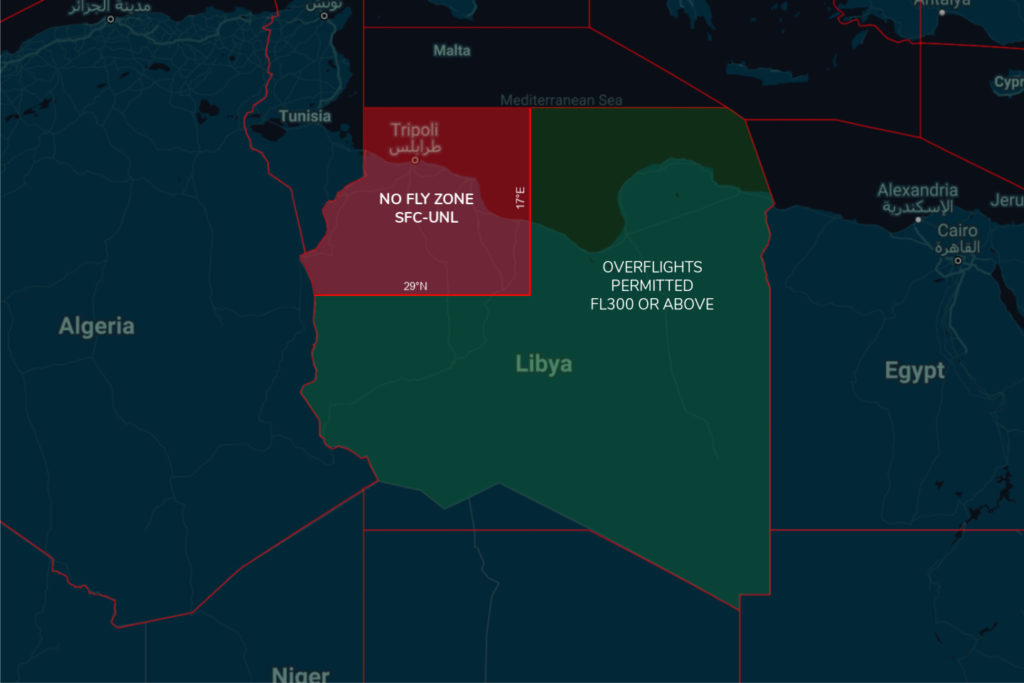
Prior to yesterday’s announcement, the U.S. guidance on Libya was that operators were allowed to overfly Libya at FL300 or above, except an area in the north-western part of the country over Tripoli, where all flights were prohibited. Here’s what that looked like:

But this guidance is now defunct. The FAA website now shows the updated guidance for Libya – including the Background Notice.

Germany and Malta still have warnings in place which mirror the old advice of the U.S. – do not fly over the north-western part of Libya, but overflights of the rest of the country are permitted at the higher flight levels. The UK and France advise against all overflights. These warnings may be updated in the coming days, following the new advice from the U.S.

Libya remains politically unstable, with a fragile security situation across the country. In their SFAR issued back in March 2019, the U.S. said that the main threat to aviation at the lower flight levels stems from the widespread proliferation of man-portable air-defence systems (MANPADS) across the country:

“Both GNA and advancing LNA forces have access to advanced man portable air defense systems (MANPADS) and likely anti-aircraft artillery. These ground-based weapon systems present a risk to aircraft, but only at altitudes below FL300. LNA forces have tactical aircraft capable of intercepting aircraft at altitudes at and above FL300 within the self-declared military zone in Western Libya, which may present an inadvertent risk to civil aviation operations in Western Libya. While the LNA tactical aircraft threat is likely intended for GNA military aircraft, an inadvertent risk remains for civil aviation at all altitudes due to potential miscalculation or misidentification.”

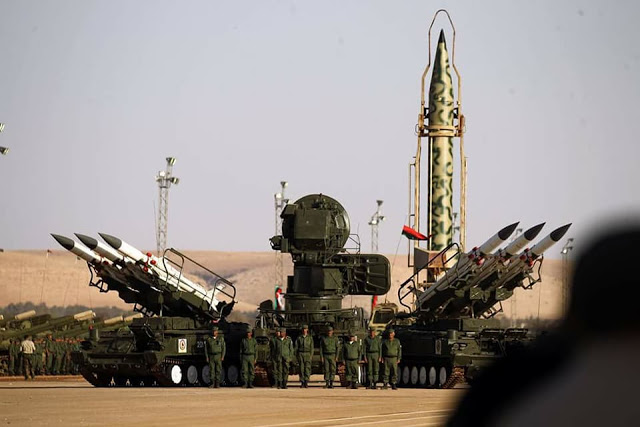
However, there are factions on the ground in Libya which possess weapons capable of targeting aircraft above FL300. The LNA is one of many armed groups in Libya which continues to use various rocket systems looted from Gaddafi’s stockpiles at the end of the war in 2011. In May 2018, the LNA proudly displayed a refurbished Russian-made surface-to-air missile system at HLLB/Benina Airbase in Benghazi. This system has the capability to engage aircraft at altitudes up to FL450.

The opposing GNA forces have surface-to-air missile systems of their own. Some reports indicate that the GNA are in possession of the Russian-made SA-3 system, which has the capability to engage aircraft at altitudes over FL800.

With the current conflict between these and other rival factions on the ground in Libya now escalating, it’s not clear what level of control the main players hold over their missile systems.

Bottom line, there’s still a potential risk to aircraft at all altitudes and across all parts of Libya.

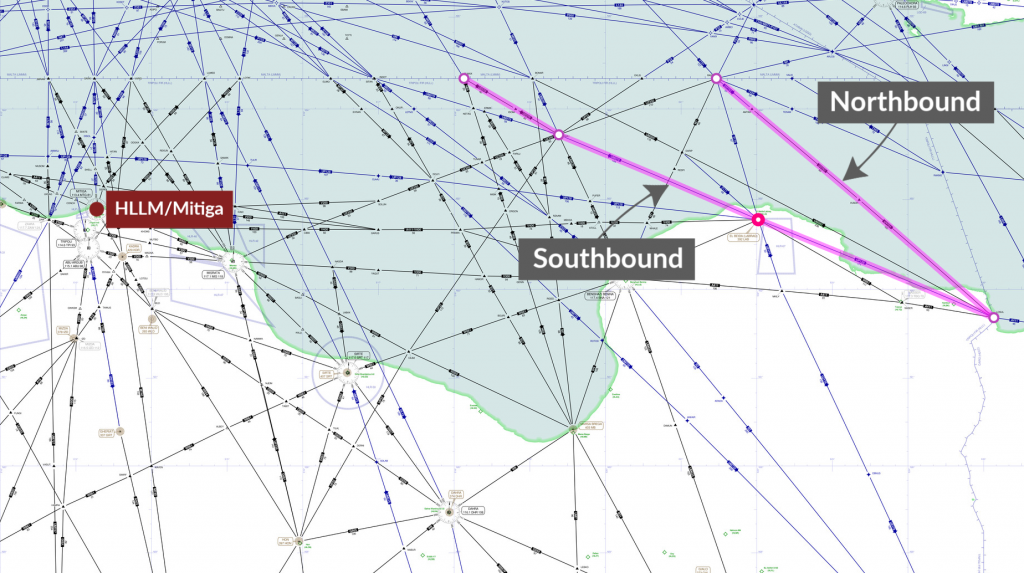
Even if you are allowed to overfly the country, there are only two approved routes available, in the far north-eastern corner of the country, as per HLLL Libyan Notam A0063/17:

Northbound: LOSUL UP128 LAB UM979 RAMLI UZ270 OLMAX (even levels)
Southbound: RASNO UY751 LOSUL (odd levels)

Even on these routes, reliable ATC services cannot be guaranteed. The past few years have seen regular ATS and radar outages across the HLLL FIR airspace, and severe limitations in VHF capability, with operators having to communicate with Malta ATC for guidance.

Given the current security concerns, we continue to list the entire country as “Level 1 – Avoid” at SafeAirspace.net


A319, A330 hit by gunfire at Tripoli

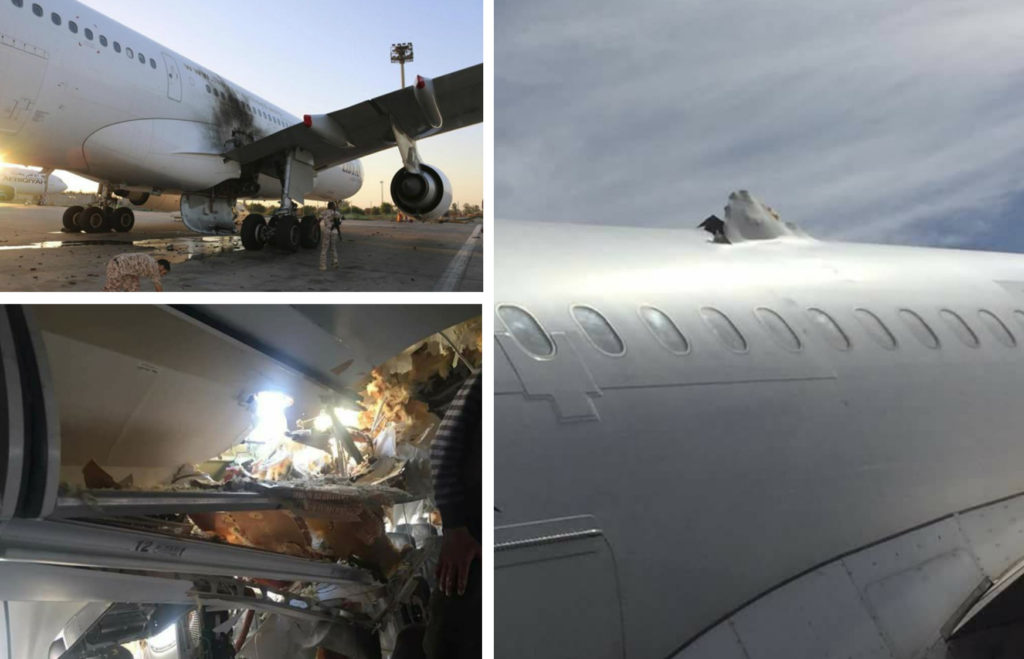
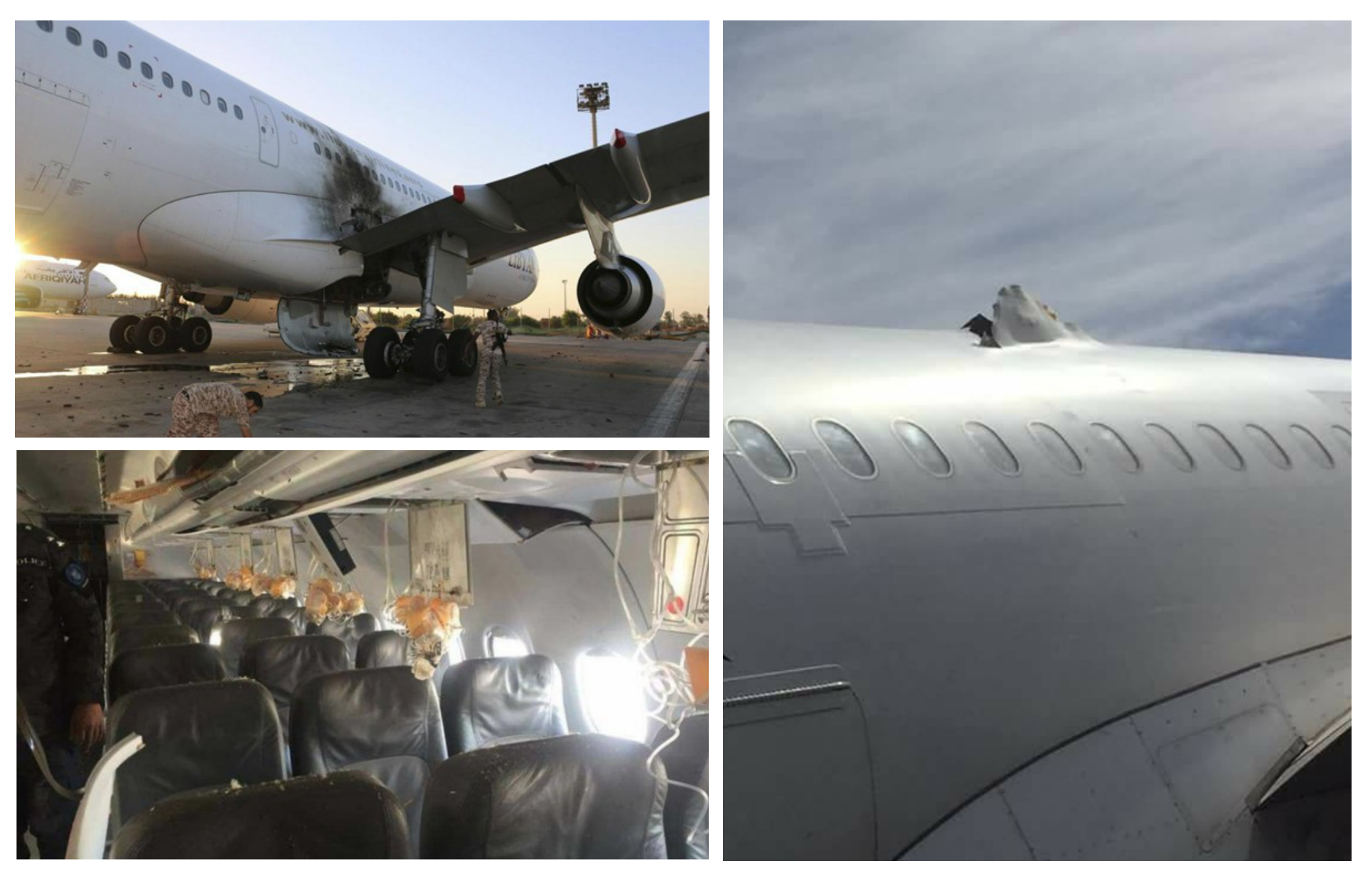
Heavy clashes broke out in the Libyan capital Tripoli on Jan 15, leaving at least twenty people dead and forcing HLLM/Mitiga airport to close for five days, re-opening again on Jan 20.

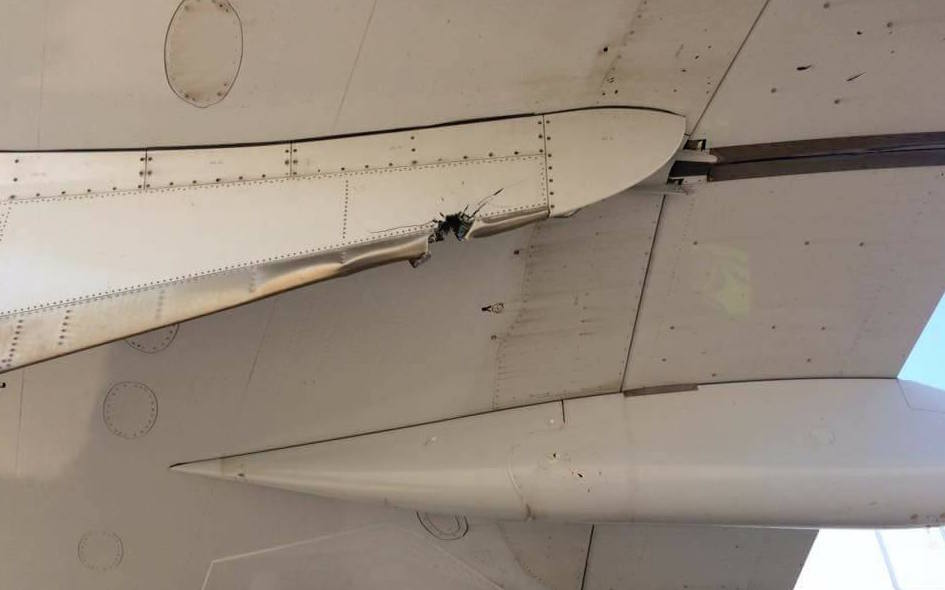
Gunfire at the airport damaged multiple aircraft, including a few A319s and at least one A330.

Here are some photos of some of the damage:


Both airports in Tripoli are focal points for fighting. Given their strategic value, they periodically serve as headquarters for various local militias.

HLLT/Tripoli has been more or less completely closed since mid-2014, when at least 90% of the airport’s facilities were destroyed in fighting between local militias. Since then, international flights to and from Tripoli have been using HLLM/Mitiga instead. Technically, HLLT/Tripoli is now only available for VIP, emergency and ambulance flights; but in reality, it should be avoided at all costs.

HLLM/Mitiga is the old military airfield, which is now being used for civilian traffic, since the closure of HLLT/Tripoli. However, the airport has been plagued by violence over the past few years, and has been forced to close a number of times.

Back in July 2017, we reported on the intense fighting that took place at Mitiga airport where 5 people were killed and 32 injured, and then on 19 Oct 2017, a Libyan Airlines A330 at the airport was hit by gunfire during an exchange of fire between local militia in the district directly south of the airport.

A number of countries already have blanket warnings in place against operating to Libya, and they all say pretty much the same thing: avoid the entire country – don’t land at any airport, don’t even overfly.

So we suggest you ignore whatever gets pumped out on the HLLL FIR Notams about airports being “AVAILABLE H24 FOR INTERNATIONAL FLIGHTS AND EN-ROUTE DIVERSIONS”. (You can read that nonsense in full by clicking here.)

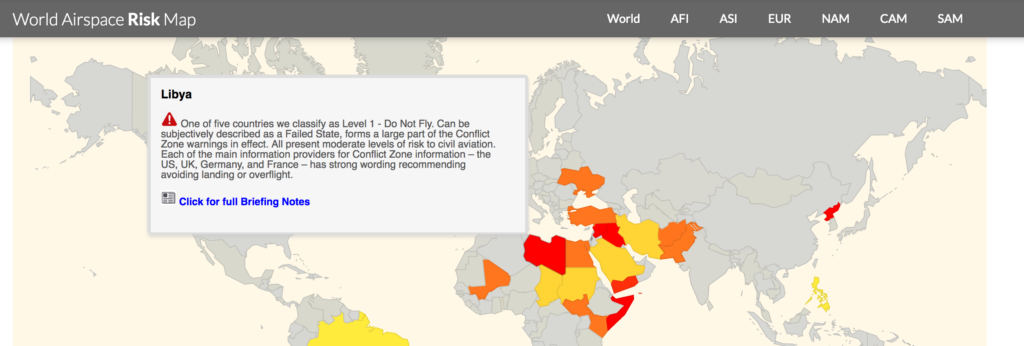
Libya remains categorised as a Level One country (Do Not Fly) at safeairspace.net


Libya: it’s simple – don’t land, don’t overfly.

There has been a flurry of activity in Libya of late. The people with their hands on the AFTN printer for Libya have been putting out all kinds of information, advertising availability of aerodromes and the Tripoli FIR. All are welcome!

Don’t be too hasty.

Libya is still a desperately unstable country. A Notam published today (A0070/17) indicates that HLLM/Mitiga is open and available “H24 for International Flights and Diversions”.

We’d love you to come visit, they say. What the Notam doesn’t mention is that two weeks ago, 5 people were killed and 32 injured during fighting at the airport.

As a matter of update on the Libyan ATM situation, we can inform operators that there are regular outages in the provision of ATC services especially at the main airports due to security or technical failure issues.

The main ACC in Tripoli is also subject to severe limitations with no radar service and limited provision of CNS/ATM services in most of the HLLL FIR airspace.

Overflight through HLLL FIR is only approved by the Libyan authorities on one southbound route from RASNO-LOSUL but even this is subject to severe limitations and a degree of confusion as to who is actually authorizing flights to transit the airspace.

There are several NOTAMs issued by adjacent States prohibiting overflights on certain entry/exit points creating further complications.

Here’s a simple guide for you from FSB:

  1. Don’t overfly Libya or enter the Tripoli FIR, and don’t land in Libyan airports.
  2. Refer to 1.


Libya remains categorised as a Level One country (Do Not Fly) at safeairspace.net


Fighting at Tripoli Airport, 5 killed

Update Jan 21: Heavy clashes broke out in the Libyan capital Tripoli on Jan 15, leaving at least twenty people dead and forcing the airport to close for five days, re-opening again on Jan 20. Gunfire at Mitiga Airport damaged multiple aircraft, including a few A319s and at least one A330.

July 5, 2017 – HLLM/Tripoli Mitiga : Intense fighting at the Airport yesterday, with 5 people killed and 32 injured. The fighting is ongoing between rival members of the Buni Brigade militia, which controls the airport terminal building. It is understood that there had been a falling out over the distribution of the income the militia earns from goods and passengers passing through the terminal.

Operations were switched to Mitiga from HLLT/Tripoli International in 2014, after that airport was severely damaged in the heavy clashes that broke out across the capital in mid-2014 and closed to all operations.

Also yesterday, July 4th, the first flight in three years to land at HLLT/Tripoli International arrived from Addis Ababa, which was a non-scheduled flight operated by Libyan Arab Airlines. There is no indication yet that HLLT is open again for regular traffic.

Libya remains categorised as a Level One country (Do Not Fly) at safeairspace.net


International Bulletin: Sharm El Sheikh reopens, New ICAO Phraseologies 10NOV

Sharm El Sheikh reopens 03NOV  HESH/Sharm El Sheikh, Egypt has reopened to international traffic, with a number of airlines starting services again on 01NOV. However, there are conflicting views on security at the airport, depending on your state of registry. Read article.

New ICAO Phraseologies 03NOV From 10NOV, new international aviation phraseology for SIDs and STARs is effective, but there’s a problem. Read article.


OEJN/Jeddah, Saudi Arabia On 27OCT, Saudi Arabia intercepted and destroyed a ballistic missile launched from Houthi-controlled territory in Yemen. The Houthis confirmed the launch via the Saba news agency, saying that the missile was targeting Jeddah International Airport (OEJN), not the holy city of Mecca, as some other news reports had claimed.

EHEH/Eindhoven has new procedures for PPR effective 30OCT – if you’re flying there, get PPR direct from the airport. You can read all the info on their new GA page. Oh, and there’s now a fee. €300 for PPR for a 21 ton aircraft, for example.

LFMN/Nice Runway 04R/22L will be closed during November.

WARR/Juanda Airport is closed due to works in progress except for helicopter medical evacuations from until 15NOV

UTZZ/Tajikistan Disagreement between Russia and Tajikistan may lead to operational restrictions between the two countries. Air traffic between Moscow and Dushanbe may be suspended from 08NOV.

FAZZ/South Africa Reports this week suggest that foreign nationals entering South Africa through any port of entry should expect delays up to four hours due to a new enhanced security measure that requires the capture of fingerprints and a photograph. OR Tambo in Jo’burg seems to be the worst offender.

BGKK/Kulusuk has updated opening hours: 1100-1900Z Tuesday to Saturday. They ask for 3 hours minimum notice PPR.

PLCH/Christmas Island Fuel is in short supply, notified as being only available for Scheduled service and emergency flights. PLCH is often used on Pacific crossings as an alternate, so any diversion would be considered an ‘emergency’, but check before actually planning a tech stop.

LEZZ/Spain Previously notified fuel strike now appears to be one provider only, so it looks like impact minimal.

DGAA/Accra ATC is having a few VHF issues, primarily on 126.7 – if you can’t reach them, call HF 8903 instead.

EDDT/Berlin Tegel will be busy 14-18 NOV due to state visits, they won’t accept GA/Private traffic during this time, but you can check specifics with them at vvd-txl@berlin-airport.de

HLLS/Sabha, Libya The airport has been closed for over 2 years due to fighting in the area. A new Notam has been issued which officially extends the closure period to 26DEC, as talks continue between the authorities and local groups to find a way to re-open the airport.

LYBE/Belgrade Jet A1 not available through the airport fuel service provider until the end of the month. Make sure you get a confirmed fuel release through a third-party fuel provider before operating here.

LTZZ/Turkey On 29 October, the US Department of State ordered the departure of family members of employees posted to the US Consulate General in Istanbul due to security information indicating extremist groups continued aggressive efforts to attack US citizens in Istanbul. US Operators should consider ops into airports in Turkey carefully.

OMDB/Dubai Traffic was stopped for approx 1.5 hours on 29OCT due to a drone. The Airport closed from 1930-2050 LT, and some flights were diverted. OMSJ/Sharjah was also briefly closed due to the same drone. Unauthorized drones have halted airport operations in Dubai twice in recent months.

GMZZ/Morocco is busy from 4-20NOV, GA and non-sched traffic will see restrictions. Check their Notam A0896 from 01NOV. If you’re part of the event, put RMK/COP22 in your FPL. No long stays will be allowed.

WSSL/Singapore Seletar We’ve received crew reports of challenges with visual approaches into Seletar (there are no instrument approaches). There are unlighted obstacles on the approach to Runway 21. After dark, approaches are only possible to Runway 03. More importantly, noise rules will soon demand a challenging base turn, greater than 5 degrees, to a half-mile 3.5 degree final, to a 1% down slope runway. We welcome further comments (bulletin@fsbureau.org).

LGZZ/Greece There will be a ferry strike between the Greek mainland and all Islands on 24NOV. No services will operate that day.

FTZZ/Chad Reports of nationwide public service strike including Airport operations at N’Djamena. The unions stated that the strike will persist until the government pays overdue wage arrears.

View Full International Bulletin 03NOV2016


Midweek Briefing: Taiwan ADS-B requirement, Costa Rica volcano

Taiwan ADS-B requirement 21SEP Yesterday, Taiwan pushed the requirement for ADS-B above FL290 for all aircraft, back to 2020 – as a fast approaching deadline of December this year was looming. Read the article.

Costa Rica volcano 21SEP MROC/San Jose, Costa Rica has reopened after the eruption of the Turrialba volcano on Monday. A risk of further closures continues. Read the article.


OPZZ/Pakistan Some airspace in the north of the country (Kashmir region) has been closed by the Pakistan CAA. Details are unclear but reports indicate Gilgit, Skardu and Chitral Airports are affected by the closure.

BIKF/Keflavik Departing KEF eastbound? Icelandic ATC would love you to file the following as a standard route: PIXUM PETUX ORTAV ODPEX, or 63N022W CELLO if you’re planning to cross 10W at GOMUP or south of.

EDDL/Dusseldorf has closed 05L/23R for a couple of days to remove a WW2 bomb. Some delays at peak times may result.

HLGT/Ghat, Libya Three foreign nationals were kidnapped along the road that leads to Ghat Airport on 19SEP, located in the Fezzan province along the southwest border with Algeria. The foreigners were construction workers employed by the Italian-owned Conicos company to service Ghat Airport. There are numerous armed militia and terrorist groups active in the area and the foreigners were said to be operating under discretion due to the security risk.

EDHL/Lubeck will closed on Oct 4th for repairs – all day.

ENGM/Oslo will introduce new RNP AR approaches in November, available to all runways. Auth from Norwegian CAA is required to use them.

FKKD/Douala now requires PPR 72 hours prior arrival, for non-scheduled flights, due to upcoming space restrictions as a result of WIP. You can make requests directly to Airport admin at pce.douala@adcsa.aero.

GBZZ/Gambia In a change to procedure, Overflight Permits, and Landing Permits for traffic operating to GBYD/Banjul, are now issued by the Department of Flight Safety Standards at the GCAA.

HCMM/Mogadishu has issued a security reminder to operators: “OPERATORS SHOULD EXER EXTREME CTN AND FULLY ASSESS THE POTENTIAL FOR RISKS TO FLT SAFETY AND SECURITY WHEN PLANNING OR CONDUCTING OPS INTO MOGADISHU AIRPORT DUE TO LACK OF INFORMATION ON ARMED CONFLICT AND LACK OF AERONAUTICAL INFORMATION.”

FAZZ/South Africa The CAA has updated its warnings for operators, with new guidance for two airspace blocks: that affected by the Syrian conflict – namely Baghdad, Damascus, and Tehran FIRs; and that affected by recent concerns over the Northern Sinai – their advice is to overfly at FL260 or higher.

LMML/Malta airshow coming up on 24-25 Sept, multiple restrictions, check before operating or filing as alternate.

FZZZ/DRC Congo Since September 19 large-scale demonstrations have been resulting in violent clashes between demonstrators and security forces in Kinshasa and elsewhere in the country. The situation is particularly tense in Kinshasa where violence has caused casualties. These demonstrations could continue over the next few days and the situation could further degenerate. The sole road to the Kinshasa airport could be blocked and some flights have been cancelled.

OJZZ/Jordan It’s White Stork migration season, and Jordan has issued warnings for all of its airports, for crews to be mindful of the high chance of presence of large flocks of them on arrival and departure.

SKED/Bogota has some comms issues on north/south bound routes to Peru (Lima FIR); 10 minute separation is applied betwen aircraft on these routes until at least Sept 26th.

KZZZ/USA For some good reading, the FAA (thanks Andy for passing this on), have updated their Aviation Weather guidance doc. This is the first revision to the document since 1975.

Input: ATC, Pilots, Dispatchers: Any topical items that you think should be going out to the community? Let us know, and we’ll get your message out there. tellus@opsgroup.co.

View full International Bulletin 21SEP2016


Unsafe Airspace – a summary

With the events surrounding the shootdown of MAS17, risk assessment of potentially unsafe airspace has given far greater weighting to the situation on the ground. Access to reliable information to determine the ever-changing risk level, is by nature of it’s inherent uncertainty, challenging.

Today we published International Ops Notice 02/16 – “Unsafe Airspace”.

Three levels of airspace risk are used in our assessment.

  • LEVEL 1. Moderate risk – No Fly
  • LEVEL 2. Assessed risk
  • LEVEL 3. Caution

The countries that issue the most relevant updates for unsafe airspace are:  The US (FAA) – through FDC Notams and SFARs, the UK (NATS) – AIP and Notam, Germany (DFS) – Notam, France (DGAC)- AIC. In general, the Civil Aviation Authorities of the countries whose airspace is determined to be unsafe are unlikely to issue reliable guidance.

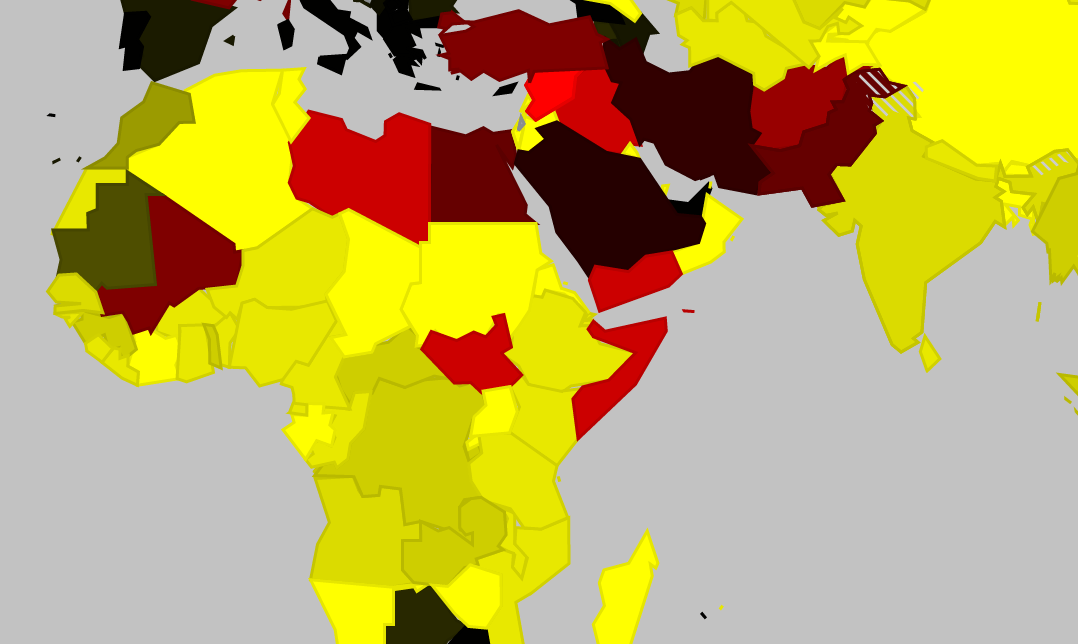
Five countries are currently included in the LEVEL 1 – Moderate Risk category: Libya, Syria, Iraq, Somalia, and Yemen.

The basis for inclusion is the highly unstable current events on the ground, and in all cases the ground factions having access to RPG’s, Surface-Air missiles. We strongly recommend avoiding this airspace entirely. All countries have multiple warnings, and your country of registry is likely to have issued specific instructions not to penetrate these airspaces.

Download the full notice.

References:

ION0216 Shot


Monday Briefing: Russian overflights of Ukraine now prohibited, EUR: TCAS 7.1 Compulsary

All Russian overflights of Ukraine now prohibited 29NOV In a development of the dispute between Russia and Ukraine regarding traffic between the two countries, Ukraine has extended the original ban (which affected specific Russian Airline only) to all Russian registered Aircraft Operators. Notam 2604/15 issued last Wednesday has the specifics.

EUR: TCAS 7.1 Compulsary 01DEC The EASA Mandate for compulsary carriage of TCAS version 7.1 (with changes to “Adjust Vertical Speed” RA and resolution of “Reversal RA” problems) is 01DEC. All operators must have 7.1 on board. Note that this applies also to EU Territories abroad, eg. New Caledonia, Tahiti.


OYSC/Sanaa FIR We’ve received input from a number of US Airlines that although Yemeni landmass airspace is prohibited, operations through the OYSC/Sanaa FIR Oceanic portion are available in accordance with FDC5/5575.

NZAA/Auckland is closed every Monday morning 0130-0430LT for runway maintenance. However, Robin Leach at Air Centre One notes that several aircraft have departed for Auckland with an arrival time during this period resulting in airborne holding. Part of the issue is that a NOTAM is only issued if the work is cancelled; otherwise the (hard to spot) AIP/IFG notes for Auckland apply.

ZBAA/Beijing Chinese Authorities have issued an ‘orange level’ alert for smog on Sunday, with reports that visibility in places is down to a few hundred feet. This alert requires industrial plants to reduce or shut down production. With the current temperatures, Freezing Fog is affecting operations at Beijing Airports.

North Atlantic First day with the new NAT Tracks structure will be 01DEC per advice from NATS and Nav Canada, reporting that previous IT issues with the new tracks have been resolved.

Spain The National AFTN COM Centre is out of action for a few hours on Monday night (after 2100Z), meaning that FPL filing and other AFTN based messaging will be affected for Airports in Spain and the Canary Islands.

Bermuda Transatlantic Operators should note in addition to the new track structure on 01DEC, that Bermuda will be without radar coverage for the afternoon (1200Z-1600Z), and the National Authority there is recommending to avoid Bermuda airspace. A limited non-radar service will be provided, and only airways L459, 461, and 462 are useable if you do overfly. Refer to KZWY A0461/15 for more.

EINN/Shannon is again closed for maintenance this Monday night 01DEC, 2145Z-0500Z; use alternate diversion alternates!

EGLL/London Heathrow has a high risk of regulation for Mon, Nov 30th from 0540-2200Z due to strong winds. Please plan fuel accordingly for possible airborne delays.

HLLL/Libya FIR Due to the recent escalation of the Libyan Crisis all Italian aircraft operators have been prohibited from flying through HLLL FIR. Prior Permission to operate into HL available aerodromes also requires Prior Permission by the Libyan CAA. REF NOTAM A8382/15 which replaced A5637/15.

LFRR/Brest FIR Training and stepped implementation of the ERATO paperless strip system in Brest FIR commenced on 24NOV and will last until 18DEC with significant capacity reductions. A transition period with capacity reductions will follow from 19DEC; this may potentially extend into Summer 2016. Moderate and (in some case) high delays may be expected daily, depending on the sector configuration provided.

LTxx/Turkey In response to the downing of a Russian Fighter Jet, Russia will be suspending the Visa-Free Travel program between the countries effective 01JAN2016.

VICG/Changigarh The new Chandigarh international airport which was originally scheduled to close for runway resurfacing which was estimated to take approx a year will in fact now remain open during the construction. Work to resurface the runway will take place without disturbing the flight operations there.

EIDW/Dublin The DAA and IAA are currently exploring a further reduction in SID separation to 75 seconds (following aircraft given take-off clearance when preceding aircraft reaches 1NM past DER). Ongoing AIM is to reduce further to 60 seconds if possible.

MKJS/Montego Bay The operator of Sangster International Airport, MBJ Airports Limited, Announced that, effective 24NOV, electronic boarding passes will be accepted as part of the security screening process.

DNxx/Nigeria The Nigerian Civil Aviation Authority, NCAA, suspended some oil marketers from supplying Jet A1 to airlines due to a lack of depot facilities. The affected marketing companies include Jushad Oil and Gas Limited, Lubcon Limited, Ascon Oil Company Limited, Acon Petroleum Limited and Star Orient Aviation Limited.

FQNC/Nacala,Mozambique Mozambique’s airport management company AdM stated on 24 November 2015 that Nacala Airport is expected to receive the proper certification to service international flights by December 2015. International airlines can begin using the facility by March or April 2016. Nacala Airport was a former military airbase and it opened as a civilian facility in December 2014. However, to date, the airport has only been permitted to service domestic flights.


View the full International Operations Bulletin for 30NOV2015


Monday Briefing: Security in Caracas, Tripoli, UK Permit rules

Security issues rule out Venezuela, Libya Mar 23: SVMI/Caracas, Venezuela, and HLLT/Tripoli, Libya, should be off your tech stop or charter lists for the foreseeable future. Both airports have been subject to rising security risks over the last months, reaching a climax last week with a bomb attack on RWY 09/27 in Tripoli and increased civil unrest in Caracas.

New rules for UK Permits Mar 23 : Significant changes to the approval process for Landing Permits for the UK will take effect on 06 APR. CAA will take over the responsibility for issuing approvals from the Department for Transport (DFT). Also, previously, a cabotage objection could be raised by a group of UK Charter Operators – this is removed. A fee is likely to be charged by the CAA for permits from this point forward.

SVMI/Caracas, Venezuela Public unrest has raised tensions in the capital to the point where several airlines have suspended service, including Air Canada this past week. Coupled with the security issue is a payment issue, with the Venezuelan government not releasing ticket payments. SVMI remains open and operational, but not recommended. For tech stops, consider TNCC/Curacao just to the north.

Uxxx/Crimea Region. Following the referendum on 16MAR, Crimea is now officially Russian Territory. This places the Simferopol FIR under Russian Control, but service is still provided by Ukraine. Simferopol Sectors 3,4 and 5 are now controlled by Odesa, and Sectors 1 and 2 are controlled by Dnipropetrvosk. UKFF/Simferopol and UKFB/Sevastopol are closed to civil traffic. No decision has yet been made by the Russian CAA as to whether permits will be required to overfly Crimea. It seems unlikely that there will be any change to the present ‘no permit required’ situation in the coming weeks at least, though when Simferopol Airport reopens we would anticipate Landing Permits being required through Russia.

VTSP/Phuket – International restrictions due to construction until 31MAR. Slot and PPR require 48HR PN, Landing Permit requests should allow 10 days.

LIxx/Italy ATC Industrial action announced for 30MAR 1030-1430Z. For this and subsequent strikes, ENAC, the Italian provider, will accept a limited number of pre-arranged flights from each AO.

EHAA/Amsterdam FIR Due to Nuclear Summit in the Hague on 24 and 25MAR, most of the FIR is accessible by Prior Permission only, including all flights to EHAM, EHRD, EHEH. Contact nss.ppr@minienm.nl or +31 (0) 577453696.
LLOV/Ovda, Israel will be closed to all flights 01MAY-07MAY

DGAA/Accra, Ghana Until 23JUN, The main runway (03/21) is open daily from 0500-2300Z only; no traffic accepted outside these hours.

YPXM/Christmas Island is closed and unmanned at present due to a Cyclone.

HLLT/Tripoli, Libya was subject to a bomb attack on Friday. The device was placed on the centerline of RWY09/27 overnight and detonated with a timer. Most regular operators cancelled flights immediately, with no set date to resume operations.

OSDI/Damascus FIR – For those still overflying, Syria has closed airway L513 from BURSA to LEBOR UFN.
UK Charter Permits. Significant changes to the approval process for Landing Permits for the UK will take effect on 06 APR. CAA will take over the responsibility for issuing approvals from the Department for Transport (DFT). Also, previously, a cabotage objection could be raised by a group of UK Charter Operators – this is removed. A fee is likely to be charged by the CAA for permits from this point forward.

Turkey. Effective 10APR2014 Visa on Arrival is no longer available at Turkish Airports. Visitors must apply online through https://www.evisa.gov.tr/en/ for an e-Visa.

Australia. A reminder to all operators who are not ADS-B equipped, of the restrictions when operating into Australian Airspace effective from 15DEC13. If you not ADS-B equipped you must file with CASA, a Form 208 exemption application 14 days in advance of proposed operations into Australian Airspace. Then operations will be confined to the SSR radar coverage area extending from 200 nm north of Cairns down the East coast to 200 nm west of Adelaide. This is commonly referred to as the J curve. If you intend operating into the Brisbane or Melbourne FIRs from the west and north west of Australia, and are not ADB-B equipped you will be required to operate at FL290 or below.

URSS/Sochi Starting from 20JAN, including period of XXII Winter Olympic Games and XI Winter Paralympic Games 2014, airlines are obliged to send the passenger manifest with exact Name, Surname, Passport number and series, or other ID, Ticket number, 24 hours prior to departure and no less then 4 hours prior to departure – passenger manifest changes, when operating to Sochi International airport (IATA code-AER). Information should be sent to the following e-mails: Checkin_DIsp@aer.basel.aero, Chief_smena_SAB@aer.basel.aero. See NOTAM A3075, A4018.