Venezuela & Caribbean Airspace Update

It’s been a busy few days across Venezuelan and Caribbean airspace.

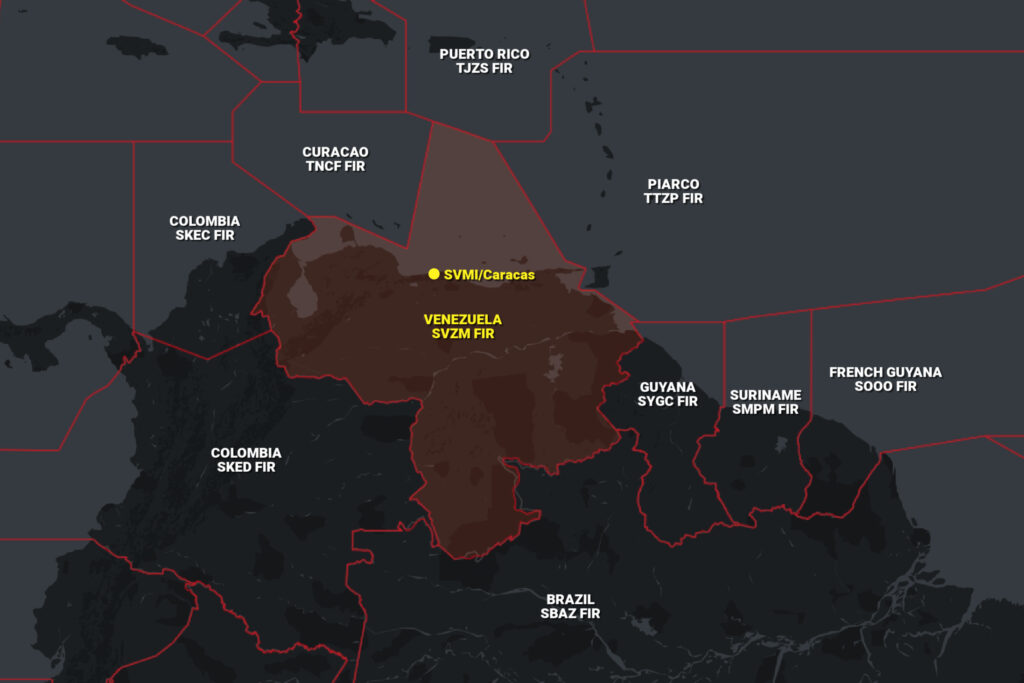
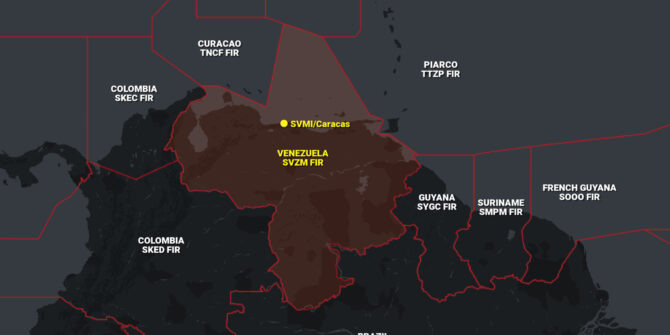
On Jan 3, the US FAA issued a temporary flight ban for US operators in Venezuela’s SVZM/Maiquetia FIR, the TJZS/San Juan and TNCF/Curacao FIRs, plus the TTZP/Piarco FIR west of 57W – which in practice covers the entire eastern Caribbean island chain.

The move followed US airstrikes in Venezuela and was driven by safety-of-flight concerns linked to military activity and misidentification risk.

That prohibition was short-lived. Within hours, the FAA lifted the ban and reverted to advisory Notams, returning to earlier guidance for US operators to exercise caution at all altitudes in the affected FIRs.

While the temporary FAA ban has ended, airspace warnings still remain in place. The US, Canada, EASA and several European states continue to advise avoiding Venezuelan airspace and to exercise caution across the surrounding region.

These sit on top of earlier warnings from late 2025 flagging GPS interference, reduced ATC visibility, and unpredictable traffic. Operators have been reporting these issues for months, with no clear indication they’ve fully gone away.

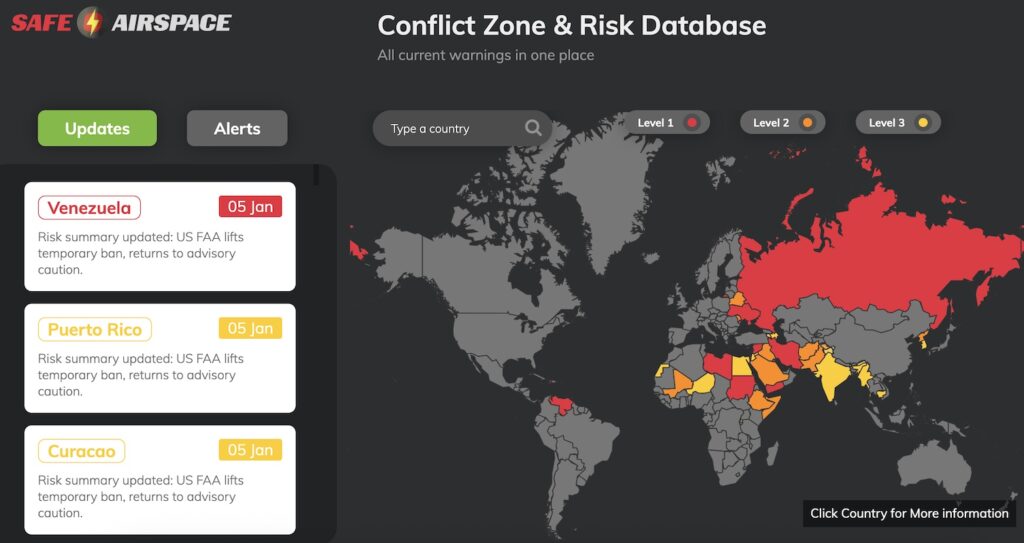
On safeairspace.net, we continue to list Venezuela as Level 1: Do Not Fly.

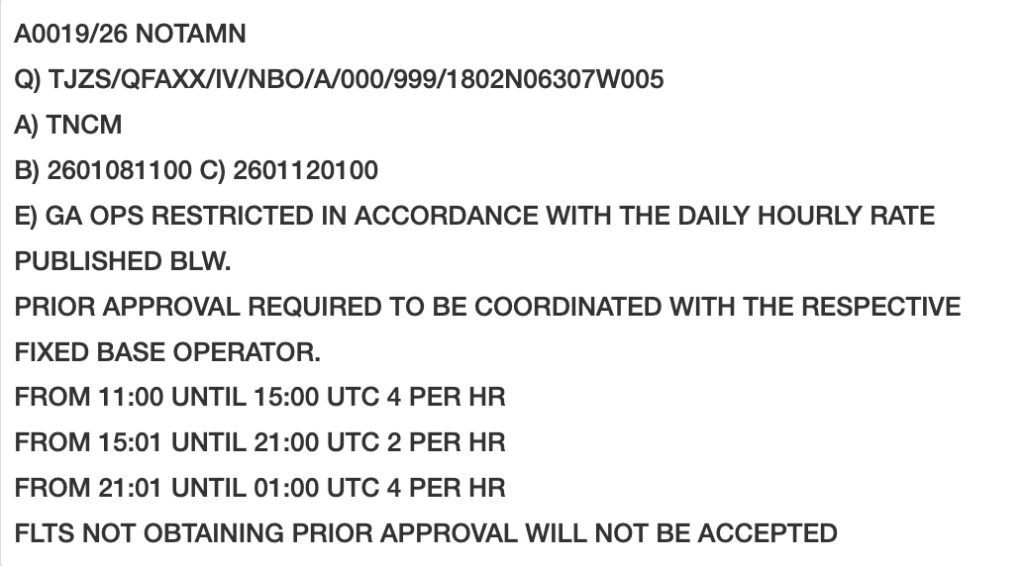
For several days after Jan 3, departures from parts of the eastern Caribbean were heavily delayed, with aircraft held on the ground due to parking constraints and ATC flow controls. Most of that disruption has now cleared. FAA flow programs are no longer active and the situation at the airports has largely returned to normal. The main exception is TNCM/St Maarten, where ramp congestion continues to limit GA flights through Jan 12 as per the current Notam.

If you’re operating in the area and have updates to share with OPSGROUP members, please email news@ops.group and we’ll update this article as things change.


Caribbean: File Your Flight Plans Early!

The Cricket T20 World Cup is taking place at various spots in the USA and West Indies throughout June.

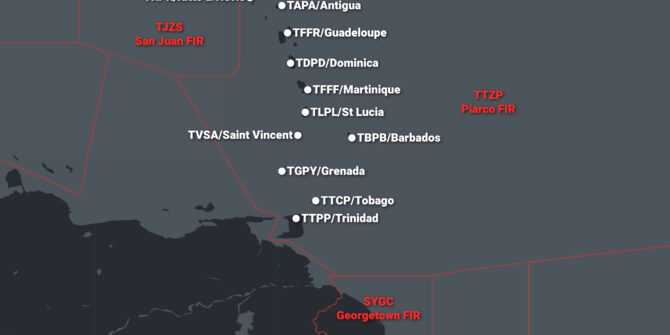
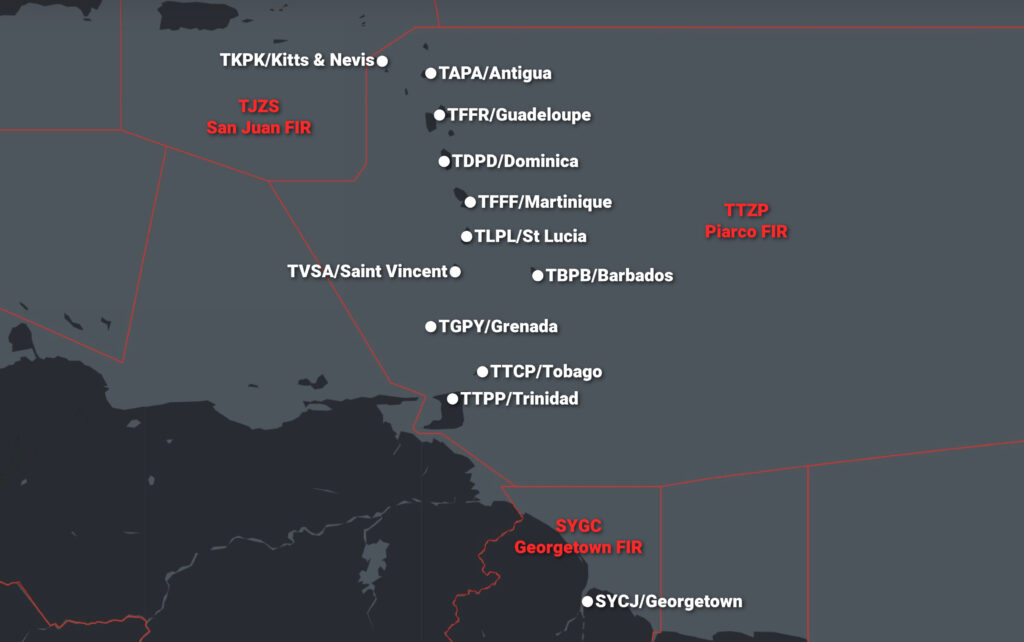
From May 20 to July 15, if you want to operate a flight to any airports within the TTZP/Piarco or SYGC/Georgetown FIRs, they want you to submit your flight schedule to the authorities 72hrs before departure.

So that’s basically every airport in the island chain from TKPK/St Kitts & Nevis in the north down to SYCJ/Georgetown in the south.

Check AIC 1-24 for details of how this is going to work. But essentially, if you’re heading to any of these airports, send an email to piarcoatfmu@caa.gov.tt 72hrs before departure telling them the following info:

(a) Aircraft call sign
(b) Aircraft type
(c) Point of departure
(d) Date of flight
(e) Estimated Time of Departure (ETD)
(f) Destination
(g) Estimated Time of Arrival (ETA) for arrivals to airports within the Piarco (TTZP) FIR and airports within the Georgetown (SYGC) FIR
(h) Estimated Elapse Time (EET) for Piarco FIR
(i) Route
(j) Flight Level (FL) requested.

They also want you to file your flight plan early, to avoid delays. 4hrs prior to departure should do the trick.

They’re also warning of extra delays in the TJZS/San Juan FIR to the north.

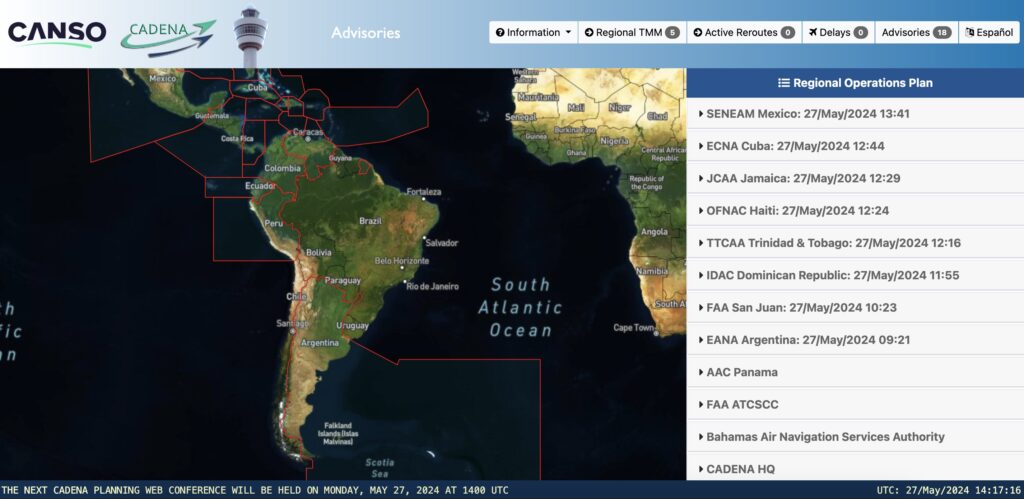
For updates, keep an eye on the Cadena website.


PIREPs of the Caribbean

It is heading, at a chillingly fast pace, into winter in the northern hemisphere, which means we usually write posts on ski season spot ops. But we did that last year, so this year, we thought a nice hot weather one could be fun instead.

Which is why this is a post all about operating to the Caribbean.

*There is nothing about PIREPs in this at all, I just thought that was too good a pun to not use.

When is peak season?

That would be now: Late November to mid April.

It is peak for two reasons:

  • One, its still nice weather there while the northern hemisphere is generally in the midst of cold and wet misery so like winged sunflowers, or maybe moths, everyone starts heading for the sunshine.
  • Two, there are a bunch of big holidays like Christmas and New Years and people like to go somewhere nice to celebrate.

All this means a lot more GA traffic which means busy airspace, delays, and parking problems if you haven’t pre-planned.

What to pre-plan?

Read this very helpful post from the folk at Universal Weather. We could re-write it all out for you here but seems pointless when they’ve done such a good job. And all that permit parking slot stuff is dull.

So, on to more interesting stuff.

We thought we might take a look at the airports themselves instead, because there are challenges that will really shiver yer timbers if you don’t know about them.

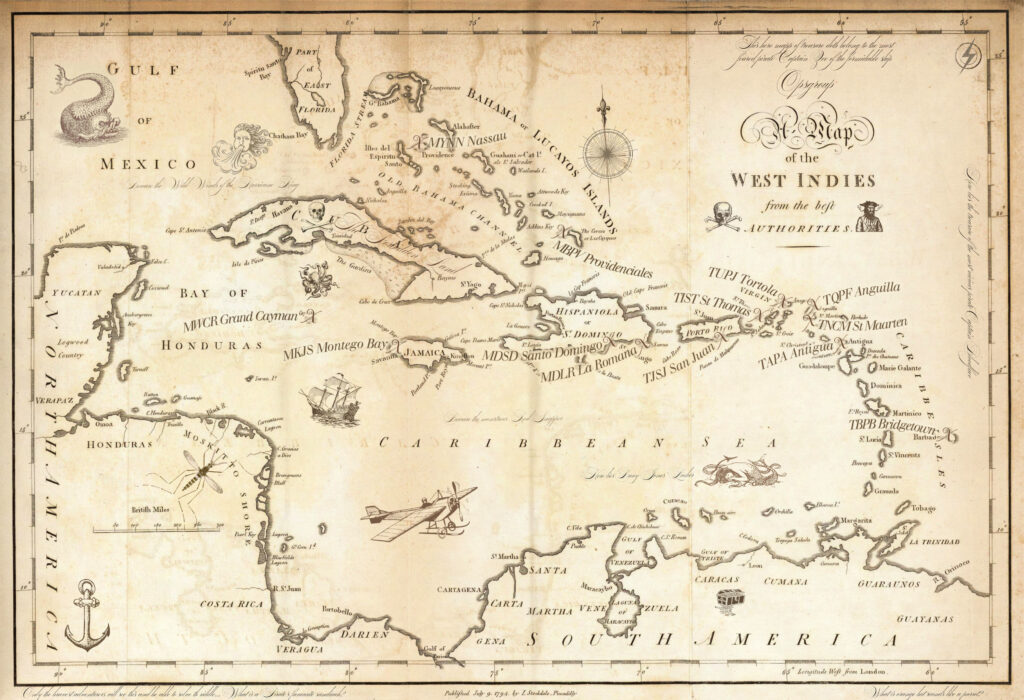
While looking up information, we also discovered this old pirate map in an ancient bottle of rum 🙂 🏴‍☠️

The Airports

TNCM/Princess Juliana, St. Maarten, Netherlands Antilles

Hours: 0700-2100L, O/T O/R PNR available for non-scheduled flights
Runway/Approach info: 10/28 7546’/2300m RNAV/Visual RFF9
Timber shivering stuff: You’re going to need a special qualification to head in here. It has some unusual procedures because of the big old mountains near it. There is Class C airspace right above it and it all gets super congested there.

TIST/ Cyril E King, St. Thomas, Virgin Islands

Hours: 0700-2300L, US preclearance airport
Runway/Approach info: 10/28 7000’/2134m ILS 10 RFF7
Contact Info: Airport +1 340-774-5
Ahoy matey! What else can yer tell me?: Another one needing special qualification due hills. They also have noise sensitive areas, class c airspace and all the congestion that comes with it, and turbulence and wind shear to deal with.

TUPJ/Terrance B Lettsome (Roadtown), Tortola, Virgin Islands

Hours: M-F 1230-2030Z, O/T PPR
Runway/Approach Info: 07/25 is only 4646’/1416m with an RNAV to 25 RFF5
Contact Info: Airport +1 284-394-8000/ FBO: IAM jet centre +1 284-495-0303 eisops@iamjetcentre.com
Yarr! Argh! stuff: Smaller airport. It is hilly around the airport, and the short runway ends in water… There are also no VFR ops by night.

TBPB/Grantley Adams, Bridgetown, Barbados

Hours: H24
Runway/Approach Info: 09/27 11017’/3358m ILS 09/RNAV RFF 9
Contact Info: Airport +1 246-536-1302FBO: IAM jet centre 1 246-428-1704 aviation@iamjetcentre.com
Avast, ye scurvy threats: This big one can handle big aircraft, although there are some ground restrictions for the medium and heavy folk. There are NABT procedures too. Nice one for tech stopping and maintenance action.

MYNN/Lyndon Pindling, Nassau, Bahamas

Hours: H24R US Pre-Clearance Airport
Runway/Aroach Info: 14/32 10925’/3330m ILS 14/RNAV RFF8 and 10/28 8302’/2530m RNAV/VOR
Contact Info: Airport +1 242-702-1010 feedback@nas.bs / FBO: Jet Aviation jnas@jetaviationnassau.com +1 242 377 3355 / Odyssey Bahamas info.mynn@odysseyaviation.com +1 242 702 0200
Yo ho ho: One of the biggers. Not without its challenges though. There are prohibited and danger areas near the airport to look out for. These mean some special IFR departure procedures if heading W, SW or NW (basically anyway involving some westwardly way). Lots of traffic below 10,000’ here too

MWCR/Owen Roberts, Georgetown,  Grand Cayman, Cayman Islands

Hours: Ops 0700-2100L, O/T O/R; Admin M-F 0830-1700L
Runway/Approach Info: 08/26 7867’/2398m RNAV RFF7
Contact Info: Airport +1 345-943-7070 ciaa@caymanairports.com / FBO: Island air +1 345-949-5252 2 0200
Here be treasure, matey: They don’t have radar here, but they do have noise sensitive areas so navigate carefully.

TAPA/VC Bird, St.John’s, Antigua

Hours: H24R
Runway/Approach Info: 07/25 9967’/3038m RNAV (GNSS) RFF8
Contact Info: Airport +1 268-484-2300 info@abairportauthority.com / FBO: Signature +1 268-462-2522 ANU@signatureflight.com
May yer compass be true:This has some skinny little taxiways that anything over 65000lbs, or with wings over 100’ (30m) isn’t allowed to use (and they can only use by day). This means backtracking aircraft on the runway which means you’ll probably have to hold on arrival for spacing. It is quite a popular tech stop airport though.

MBPV/Providenciales, Turks and Caicos

Hours: M-F 1230-2030Z, O/T PPR
Runway/Approach Info: 10/28 9199’/2804m RNP/VOR RFF 7
Contact Info: Airport +1 649-946-2137
Wall the plank: A bigger airport, this also has a lot go GA traffic and also some parasailing hazards to add to the fun.

TQPF/Clayton J Lloyd (Wallblake), The Valley, Anguilla

House: 1200-2000z
Runway/Approach Info: 11/29 5459’/1664m RNP RFF5
Contact Info: Airport +1264-497-2384/ FBO: Lloyd Aviation +1 264-498-4141 info@lloyd-aviation.com
Scallywags: Another little one that only allows IFR by night. There are a lot of poles, antenna and also birds around the airport. So keep a good look out (probably why its IFR only at night).

MKJS/Sangster, Montega Bay, Jamaica

Hours: H24R
Runway/Approach Info:  07/25 8735’/2662m ILS 07/RNAV 25 RFF 9
Contact Info: Airport +1 876-952-3124 Slots slotrequest@mbjairport.com/ FBO: IAM jet centre +1 876-979-3855 mbj@iamjetcentre.com
Batten down them hatches: A good tech stop spot, but look out for the mountains and the high minimas and the noise sensitive bits. Also look out for the many small airports (and traffic heading into them) which fill the airspace. They have some specific NABT procedures to look into, and it can get windsheary.

MDSD/Las Americas, Santo Domingo, Dominican Republic

Hours: H24
Runway/Approach Info: 17/35 11004’/3354m ILS 17/RNAV RFF9
Contact Info: Airport +1 809-947-2225 operador@aerodom.com/ FBO: Servair +1 809 549 1404 fbo@servair.com.do
Other stuff: Don’t confuse San Isidro AB for MDSD. And don’t head in unless you have the qualification – it’s one of those because of the airbase and prohibited areas nearby. Terrain nearby is also a bit of a concern, as is FOD on the runway (not sure why, but enough to permanently mention it apparently). There are also minimum ceiling restrictions of approaches so worth familiarising yourself with the charts before heading in.

MDLR/La Romana Casa de Campo intl, Dominican Republic

Hours: H24
Runway/Approach Info: 11/29 9678’/2950m RNAV(GNSS) RFF8
Contact Info: Airport +1 809-813-9000 info@lrm.com.do/ FBO: Swissport Dominicana +1 809 813 9123 lrmexecutive@swissport.com.do / Universal Aviation +1 809 813 9070
Hoist the mainsail: This place requires a 180 turn and backtrack on both ends of the runway and has limited taxiway and apron space. There is a nearby restricted area and noise sensitive bits.
ATC often seek in Spanish for local traffic so watch out.

TJSJ/San Juan Luis Munoz Marin, Puerto Rico

Hours:H24
Runway/Approach Info: 08/26 10400’/3170m ILS 08 / RNAV RFF8 and 10/29 8016’/2443m ILS 10 / RNAV
Contact Info:  Airport +1 787-253-2329 info@aerostarairports.com/ FBO: Airport Aviation Services +1 787 791 8500/
Jet Aviation San Juan +1 787 791 7005 hector.vasquez@jetaviation.com
Pazo’s fuel services +1 787-791-7005 fboservices@pazosfbopr.com
Down to Davy Jones’ locker with ye: A good tech stop option. It does have some mountains nearby, and it is in primary Class C airspace.
Also don’t get confused by TJIG/Fernando Luis Ribas Dominicci nearby

Where else can I get info?

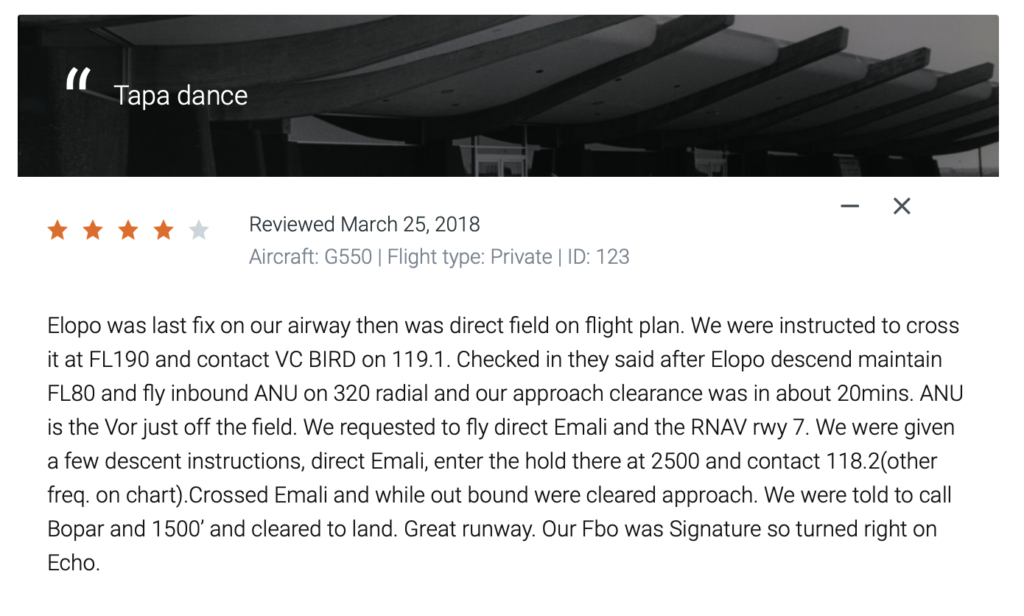
Opsgroup wise: we have a library of Airport Lowdowns that you might find useful. If you’re a member you can also head to Airport Spy and read a whole load of reviews from other members sharing what they experienced.

For example:

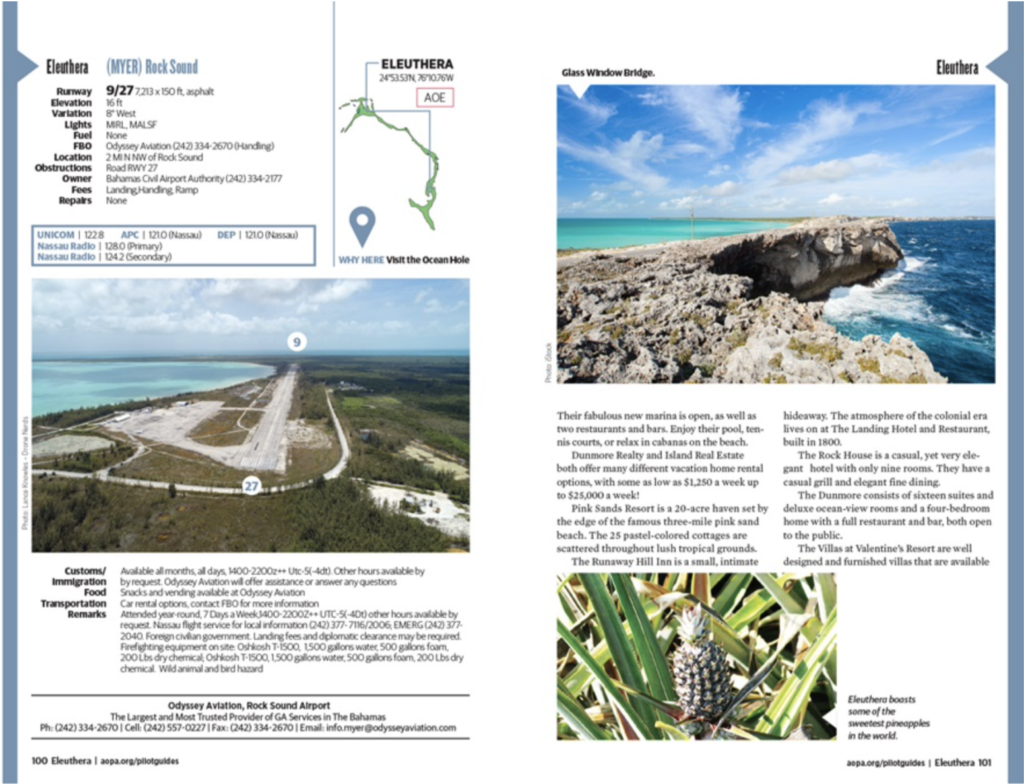
AOPA make some very handy slot guides which you can find here.

They include useful stuff like info on airports, stuff to do while you’re there, and photos of pineapples.

The Caricom e-APIS site is here. You’ll need this for advance information sending about passengers.

The FAA guide to the Caribbean en-route stuff can be discovered here. This is a treasure trove of information on en-route stuff, weather stuff, and all things to do with operating in the airspaces.


What we’re seein’ in the Caribbean

A bunch of Caribbean countries are changing things up to ‘harmonise’ themselves with ICAO SARPS. That’s Standards and Recommended Practices.

Here’s what we know.

You need TCAS 7.1

This is a Bermudian requirement. Bermuda is of course actually part of Great Britain, sort of (they are a British overseas territory), so by doing what ICAO say, they are fitting with the UK CAA regulations which makes it all a bit simpler.

So, if you want to visit Bermuda in a turbine-engined airplane under FAR 121, 135 or 91K rules which weighs more than 5700kg (12,500 lb) or is authorised to carry more than 19 passengers then you’ll need ACAS II (that’s TCAS II Version 7.1)

If you fly a turbine-engined airplane involved in FAR 91 or non-commercial operations, then the specifications to know are certified take-off mass more than 33,000 lbs (15,000kg) or passengers more than 30, with your airworthiness certificate first issued after January 1st 2007.

When will you need it?

April 1st 2023.

Where’s the official notice?

It is right here – OPSN 03-22 and it says exactly what we said but on official Bermudian BCAA headed paper.

You can also get in touch via email with them directly if you have any questions: foreignoperatorpermit@bcaa.bm

You said several countries?

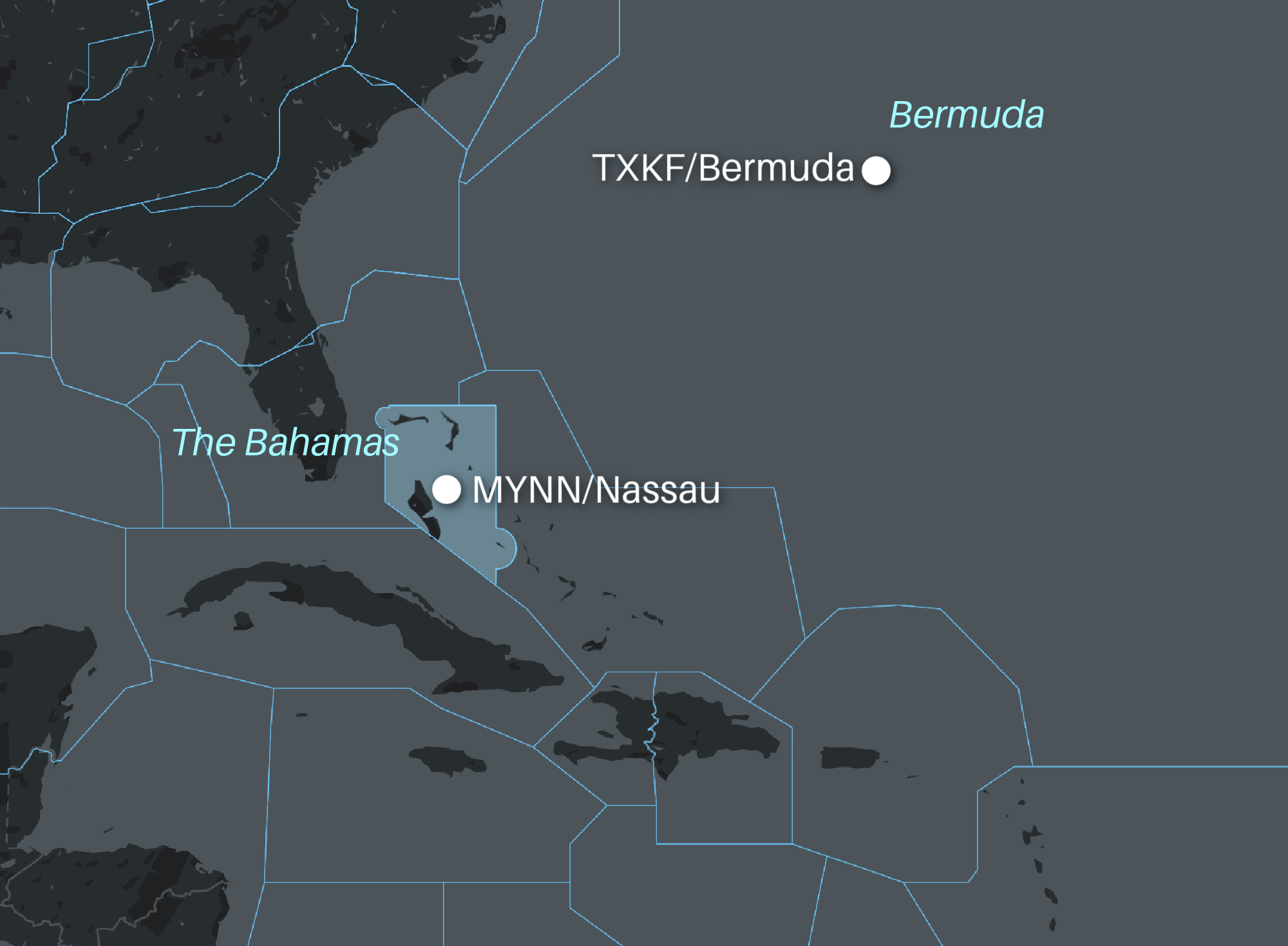
We did. The Bahamas also have some changes coming in. Actually, they came in in 2021, but with Covid you might not have noticed them so here’s a refresher.

They brought our their Civil Aviation Act of 2021, published in their ‘Extraordinary Official Gazette The Bahamas’.

What it says is that foreign commercial operators will need a Bahamian Air Transport License to fly there. To get this you need to be safe, secure and meet some financial obligations. These are listed in Section 15.

Section 16, Subsection 2 Part 1 clarifies a little point about foreign operators – it doesn’t apply to folk overflying or even landing if you don’t have passengers, cargo or mail that gets off in the Bahamas.

There are also a lot of pages on what will happen if you don’t abide by the rules etc etc so it is worth a read if you haven’t been into the Bahamas since February 16th 2021.

Is that it?

Yes, for now, but more things will hopefully come in at some point.

All this started to come about in 2018 during a big meeting between CARICOM (all the Caribbean member states) and ICAO where they talked about it. You can read the 2018 ICAO press release here if you want to.


Eruption in the Caribbean: The La Soufrière Volcano

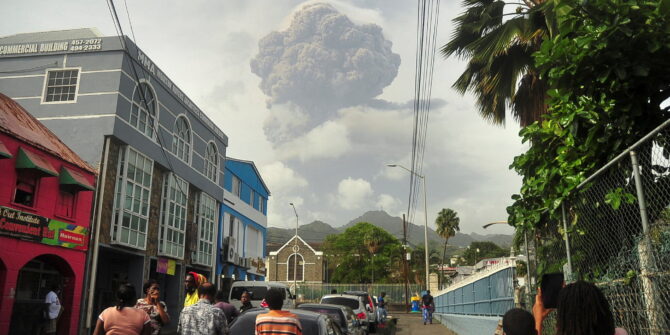
A tiny island in the Southern Caribbean has made headlines this week after a volcano, dormant for decades, suddenly erupted on Friday almost without warning. It ejected ash as high as FL440.

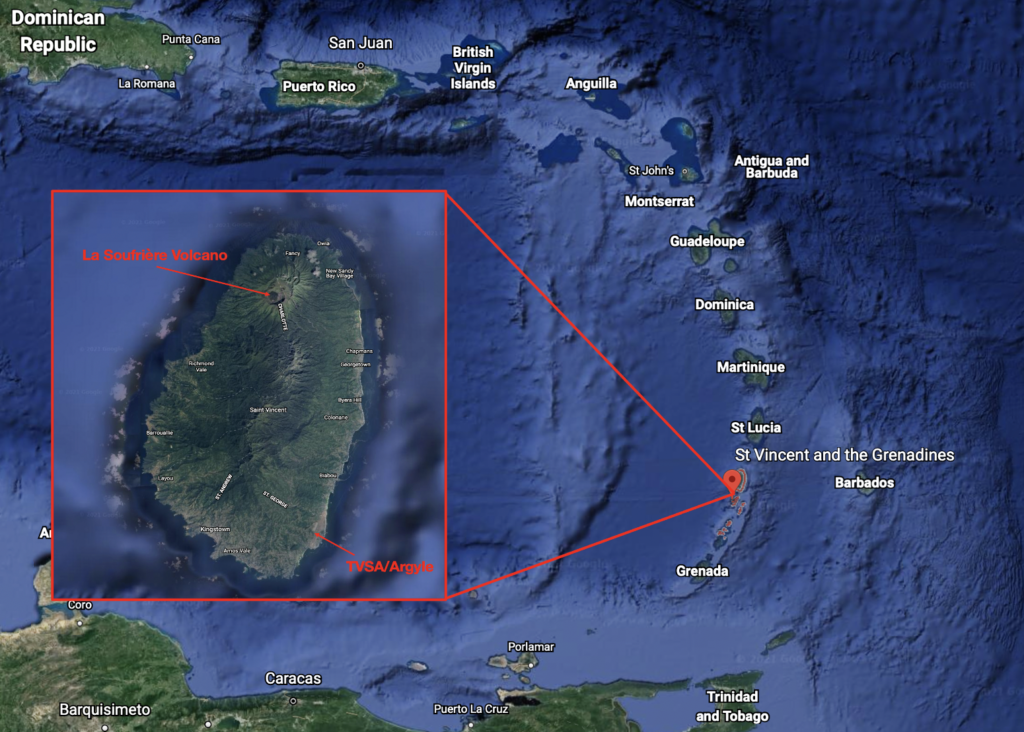
The La Soufrière volcano is found on the main island of Saint Vincent and the Grenadines, a small country nestled amongst the southeast Windward Islands of the Lesser Antilles. It is neighbours with Saint Lucia to the north, Barbados to the east and Grenada to the South.

The volcano first made headlines on Thursday when scientists detected large seismic tremors – an ominous sign that the La Soufrière volcano was stirring. It had last erupted back in 1979.

Evacuations began for people living near the volcano which is found only 10nm north of the country’s main airport, TVSA/Argyle. Scientists believed an eruption was imminent.

Then on Friday La Soufrière literally exploded back to life with several violent eruptions producing massive amounts of ash. Since then, sporadic eruptions have continued. The latest was on Monday, and scientists believe there is no end in sight. It may continue to erupt (and produce ash) for weeks.

What’s the current operational impact?

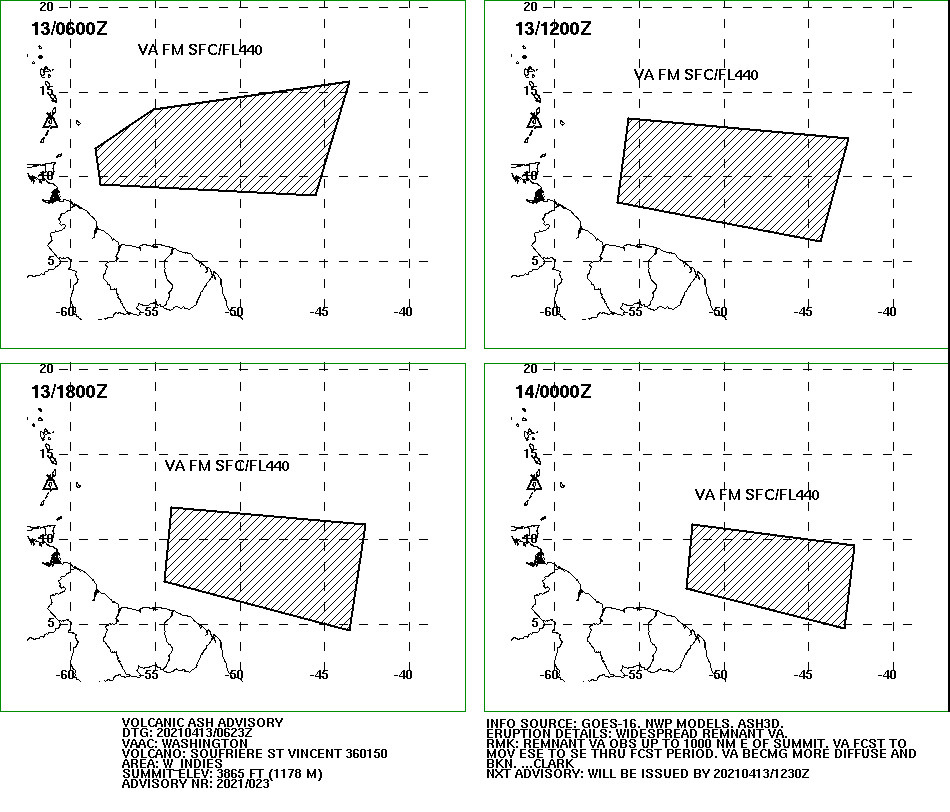
The initial VAAC advisories indicated a large ash cloud extending up to FL440 and moving in an easterly direction away from land and into the Central Atlantic:

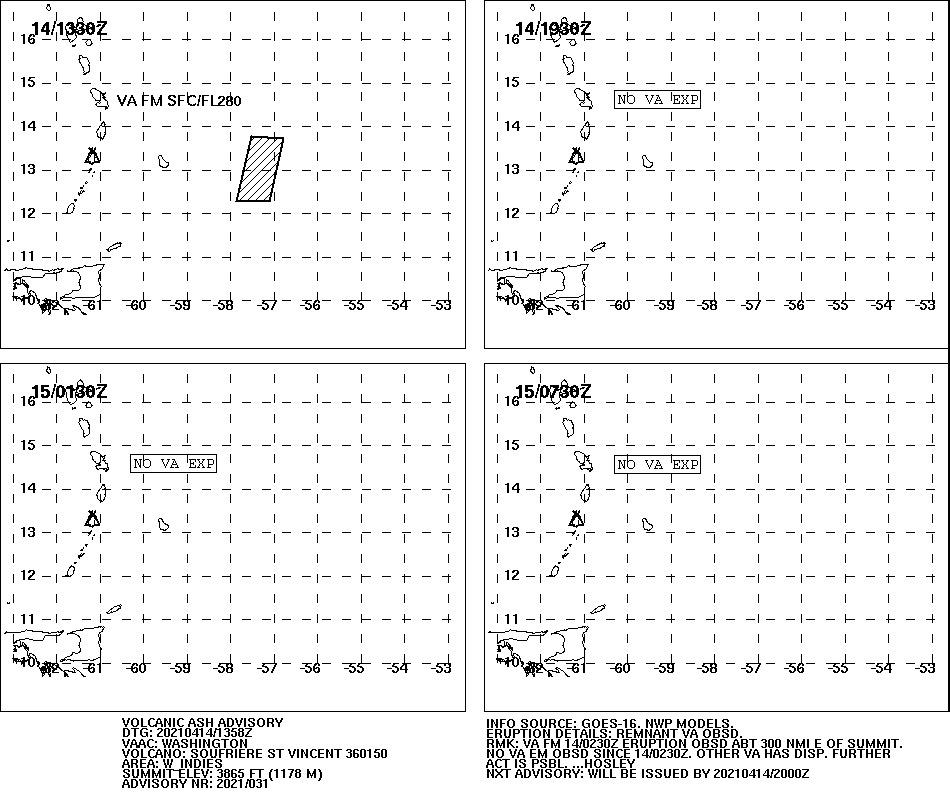
However, the most recent VAAC Advisory, dated 1358z on April 14, only shows a small area still affected by volcanic ash up to FL280, forecast to dissipate by 1930z:

Two main airports have been shut down by the eruption:

TVSA/Argyle has been closed until further notice having been coated in thick ash. TVSA Notam A0591/21 has that info and is due to expire at 00z on April 15 however it is very likely to be extended.

Further east, winds carried ash toward Barbados closing down TBPB/Bridgetown. It is due to reopen at 1600z on April 16, but further disruptions are possible (TBPB Notam A0585/21 refers).

Outlook

The La Soufrière Volcano remains at Aviation Colour Code Red, meaning a major eruption is underway with significant ash emissions.

The amount of ash it produces depends on the strength of each eruption which is difficult to predict. So far they have been many and varied.

Airports in neighbouring Saint Lucia and Grenada have remained open but may be impacted by further eruptions depending on prevailing winds. Disruptions and closures are possible throughout the South-Eastern Caribbean.

Scientists have seen no sign that the volcano is slowing down and it appears to be following the same patterns as previous eruptions that lasted for extended periods of time – so things may get worse before they get better.

More info

  • You can view the latest VAAC advisories for La Soufrière here.
  • For the dangers of flying in volcanic ash along with operational advice, see our recent article here.


Call for volunteers from OPSGROUP: We need flight ops people

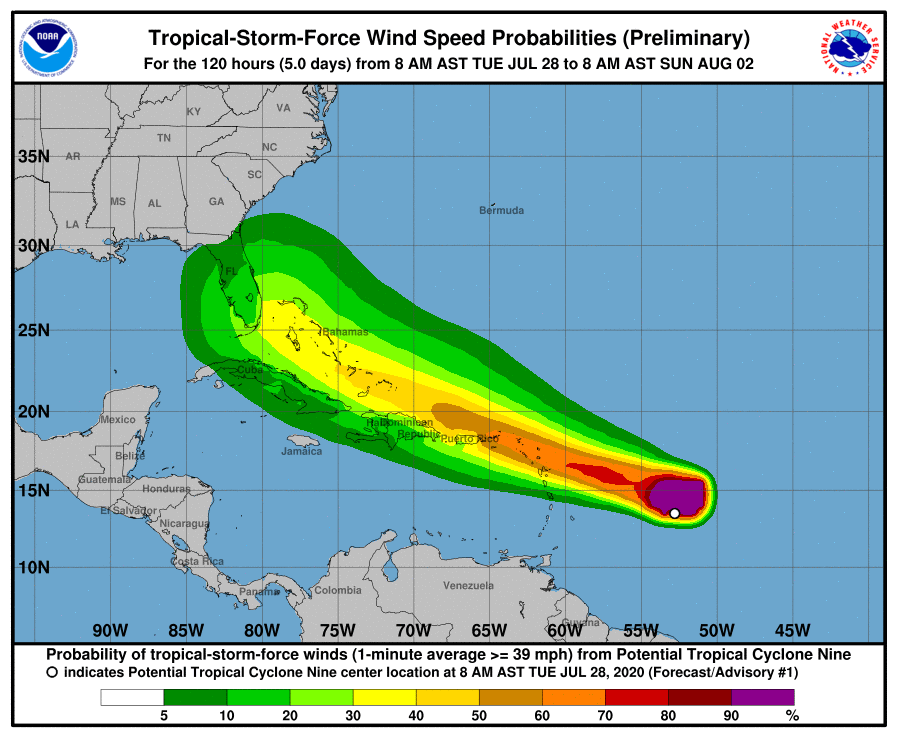
We’re tracking this developing storm in the eastern Atlantic, which is forecast to become a tropical storm (named Isaias) in the next 24 hours – and quite possibly develop into Hurricane Isaias.

There is a huge problem this year in relief efforts: Covid. It will mean that as little as 20% of the normal relief resources are available. We want to help, and we have a request…

If you are willing to share your expertise as a volunteer, we’re looking for flight planners, dispatchers, schedulers, pilots, ops specialists, and anyone that can offer a small amount of time to help out. Very simply, there’s stuff you are good at, and it can be extremely useful in a hurricane relief situation.


Relief Air Wing: OPSGROUP helping in disaster relief

We’re making a very specific plea for help today. OPSGROUP is capable of great things, and we are focusing on how we can assist families and individuals affected by major hurricanes in the Caribbean and the Atlantic seaboard this season.

It might be next week, it might be in a month, or two – but this is already an extremely active season. Sea temperatures are extremely high – and this is the fuel for hurricanes2020 is already setting records, but the worst is yet to come.

The depth of knowledge, experience, wisdom, and compassion in this group is huge. I think we all want to help, if only we knew how. So that’s what we’re working on.

This year more than ever, the Caribbean and the Atlantic seaboard will need real help. Covid is changing the relief landscape. Relief workers will have a tough time getting in to affected countries. Many may simply not be able to travel. Priorities have shifted. For families and individuals hit by a hurricane, help will not come as easily and quickly as normal.

So, we have set up a dedicated relief organization called Relief Air Wing. Why?

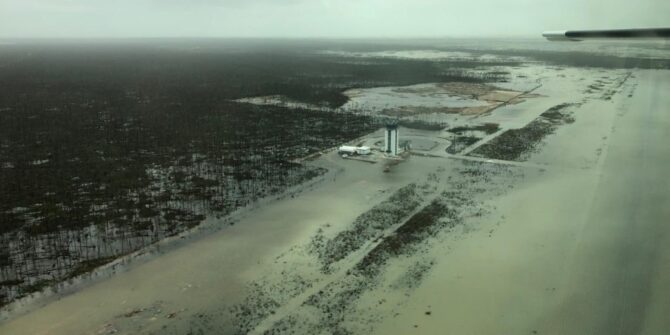
Because in Hurricane Dorian, as you might remember, OPSGROUP got involved in a big way. We were able to help, but we also saw a lot of big problems how aviation worked. It was a dangerous, chaotic mess. Airspace became saturated, and there was little ATC (pilots called it the “Wild West”). Rogue pilots flew dark. Little information was known about airports. Permits were hard to get. There were streams of small aircraft, individually helpful, but overall contributing to bottlenecks and preventing larger aircraft and the USCG from doing their work. Few knew how best to help, and many just flew in based on their own assessment. There was little communication between different agencies.


The simple net result: Relief flows far more slowly than it needs to. Supplies are wasted. People devastated by the hurricane suffer longer than they need to. Pilots and aircraft at put at risk.

So, how can I help?

Please sign up with Relief Air Wing and volunteer your time and expertise.

We thought of some basic ways that OPSGROUP members can help, and these are below, but you may have ideas too, and we would love to hear them. Here’s what we’ve got so far:

Overflight and Landing Permits
Make a list of the most overflown countries and FIR’s inbound to the hurricane area. For example, if it’s Dominica, relief operators from the US might need to overfly Cuba, Jamaica, Dominican Republic, Puerto Rico. What are the rules? What are the current contacts? What documents are needed? Aim: create a briefing sheet for overflight and landing permits to get in.

Operating permission
The local CAA will set up rules around what’s required for a permit to operate in the affected area. Get this information, prepare a briefing, so that crews know how to get a permit.

Security risks 
Assess the situation on the ground. What risks – new or existing – exist for relief operators. Are airports secure? What is happening locally? Aim: A set of notes highlighting risks for relief operators.

Flight Planning routes
Build flight-plannable routes to and from affected countries and airports. Look at airway restrictions, talk to ATC create routes that can be used by relief aircraft to get in and out. From this we can publish clear lists of how to flight plan in and out. This saves time and effort, and means relief can come faster.

Travel restrictions
Once it becomes clear what country is affected, we need to act quickly to create a clear briefing on how to get in. The more we can do before the storm, the better. What are the Covid entry rules? Are there exceptions for relief workers? Can you make contact with the Ministry of Health, Foreign Affairs? The CAA?

Listen in on Hurricane Telcons
The FAA and other agencies often have hurricane telcons a few times a day when big storms are approaching, and we need someone to join those calls and make notes of pertinent info to share.

Hunt down airport situation updates
Call the airport, email them, fax them, AFTN them. Try ATC. Find the airport manager on LinkedIn. Look through twitter hashtags. Ask a friend. Ask a friend to ask a friend. Whatever it takes.

Analyse situation PIREPS
Best info comes from those that have flown in. Use your network to ask crews for PIREPs, so we can tell other relief agencies what the picture at the airport is. We have a standard PIREP form for relief operations, you can help by analysing those pireps, fact check as much as possible, and add the report to the list.

Weather analysis
Track potential hurricanes, monitor their progress, alert the group when you think it might be a big one that will hit land. Monitor for further bad weather post-hurricane.

Use Tech
Maybe you know places we don’t. Secret satellite feeds. Apps, tools … wherever you think tech can help, suggest it and work on it.

Offer an Aircraft
Your owner, company, or operation may have an aircraft that you wish to offer for relief operations. Especially useful are freighters, large capacity aircraft, helicopters, and floatplanes.

Coordinate
Help to manage the relief efforts in Relief Air Wing. Take charge of specific items, and direct and guide volunteers.

Contactors
Reach out to people on our list of relief organizations. Find out who is responding. What flights are planned. What they know. What their needs are.

Local Networks
Lead a WhatsApp group of local people. We’re setting up small local networks, connecting ATC, Airports, FBO’s, Fuellers. The aim: Get the information on the local situation out … . Help them to report on critical info: is the airport open, what are the runways like, is there fuel, is there ATC, what are traffic levels like, what frequencies are working. More about Local Networks here.

Administration
Keep the info documents, maps, spreadsheets up to date. Add new information as it comes in. Filter and remove information that is not useful. Keep things simple.

What else?
You might have ideas of other ways that our OPSGROUP community can help. There are 7,000 of us. 75% are pilots. Even with a low average of 2,000 flying hours TT, that means we have a minimum of 10.5 million flight hours of experience in the group. How do we leverage that? We also have dispatchers, flight planners, ATCO’s, tech gurus, agencies, organizations. How else can we provide support? Ideas please!


How will it work?

1. We have a dedicated Slack group for Relief Air Wing. Here, we can all talk to each other, discuss, share information. This is the hub of our work. Specific channels for flight planning, permits, weather, airport status.
2. We set up international groups to coordinate with relief agencies responding (WhatsApp)
3. We set up local networks to bring aviation contacts together on the ground (WhatsApp)
4. We will prepare simple briefings for relief operators flying in.
5. We will coordinate between relief organizations, host nation government, CAA, and the relief operators to determine where help is needed.
6. We will help to match empty seats, capacity, and offers of aircraft with relief organizations that need it.

How do I sign up and get involved?

1. Start by reading Lessons from Dorian: aviation problems in relief, and read the story of Relief Air Wing
2. Sign up to volunteer here, and your details will be added to our list of volunteers.
3. You’ll get an invite to join the Relief Air Wing slack group. Post a quick intro.
4. When a storm looks like it will hit, we’ll contact you.
5. If you’re free and available, jump in and take part. Choose the area you can help in best, and get stuck in. We’ll guide you on how to best help.


In advance, thank you for your kindness, help, and generosity. There’s no obligation to take part when the time comes if you’re not able to, but if you are able to help at all in any way, we will be very grateful to get your volunteer registration.

Also, if you know of someone that might like to get involved, it doesn’t matter if they aren’t an OPSGROUP member – the more hands we have on deck, the better. Please share, or forward this post.

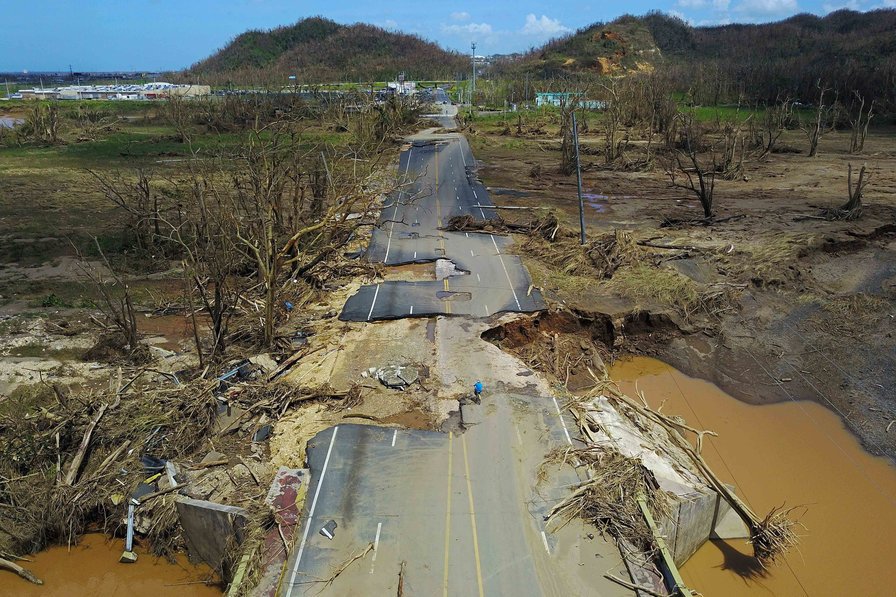
After Hurricane Maria – Airport Status

Post Maria Airport and Airspace status:

Updated October 25, 2017 1800Z

Bahamas

  • MYMM/Mayaguana: Open and operating
  • MYSM/ San Salvador: Open and operating

Turks & Caicos

  • MBPV/Providenciales: Open and operating
  • MBGT/Grand Turk: Open and operating

Dominican Republic

  • All Airports Open and operating

Puerto Rico

TJZS all aircraft should use caution when operating within the interior or near the Island due to numerous low flying rotary wing aircraft.  For additional operation information click here.

  • TJSJ/San Juan: Open and operating. Airport continues to be under massive strain and Humanitarian flights are still top priority. The VHF frequencies and radar are working but intermittent.  CPDLC unavailable.  Fuel is available. Operators must make contact with Aerostar or handler for gate allocation. Slots now only required if you’re using the contingency ramp there. Call MFOC at 001-850-283-5994 all other flights file FPL normal. Overnight parking is available.
  • TJIG/Isla Grande: Open and operating from 0600-1900. Customs open 0800-1730.  Frequency 121.7 for advisory. Tower is operational. Overnight parking available.
  • TJBQ/Aguadilla: Military and Relief flights only. Tower is open and operating. Limited water, electricity, and internet. For services phone contact has been more successful due to internet complications.
  • TJPS/Ponce: Military and Hurricane relief and Air Carriers with PPR.
  • TJRV/Ceiba: Military, Hurricane relief, and GA flights only. Sunrise to Sunset only due to airport lighting down. VFR only no ATC or Tower. Fuel available.  No heavy equipment available to offload supplies. Military flights are required 48HR PPR contact: 805-326-9041.
  • TJVQ/Vieques: Open and operating. Sunrise to Sunset only due to airport lighting down. Internet not available.

For more information on operating into Puerto Rico

For Ops reports in Puerto Rico

U.S. Virgin Islands

  • TISX/St.Croix: Open and operating. A contingency ramp has been established for FEMA/DOD flights they require Slot reservation contact MFOCC at 1-850-282-0236. All aircraft should contact Longhorn Ops on 251.9 or 139.9 (+/-20min) before landing to arrange parking and fueling. Normal ATC procedures. Customs available.
  • TIST/St.Thomas: Open and operating. Airport hours are 0900-1800 local time.  Customs available 0800-1600LT. Equipment available for Cargo offload.  Fuel available. Fema permit NOT required.  Tower and unicom frequency is 118.8. Limited coverage from SJU Center.  ATIS, navaids, ILS, runway lights – all out of service.  For services contact St.Thomas Jet Center customerservice@sttjetcenter.com (email is best as phones are intermittent Contact Roy Romney: 340-690-5076/ or Terri Thomas: 340-626-5270 for immediate questions.
    Include the following when requesting services:
    Company name
    Tail #
    Make and model of aircraft
    Date of arrival/departure
    Local time ETA/ETD
    Number of crew and pax both in and out
    Method of payment
  • TIST have island curfew 1900-0800 still in place

For more information on operating into TIST/STT

British Virgin Islands

  • TUPJ/Beef Island-Tortola: Open and operating 1130-2100z, but VFR only. Fuel available, limited internet, and electrical power.  The perimeter fence was badly damaged by hurricane Irma, so the airport is no longer secured. No overnight parking. Only Property owners, residents and citizens are allowed in the territory at this time.  ATS services reduced to 5nm radius of the airport. Flights will need to get PPR here: http://ppr.bviaaops.com or via email: clevons@bviaa.com mfrance@bviaa.com Csmith@bviaa.com Lyrubain@bviaa.com Dhamm@bviaa.com
  • TUPA/Anegada: Airport closed.
  • TUPW/Virgin Gorda: Airport closed.

Sint Maartin

  • TNCM/Princess Juliana: Open and Operating 0700L-Sunset (due to no lighting). Fuel is available.  File FLP from point of origin due to com difficulties.  Equipment to offload cargo is fine, Menzies in charge of the cargo loader.  Main Frequency 118.7. ATC is operational (1100Z-Sunset daily). 3 fire vehicles active at the airport, fire CAT 9. Hotel rooms are difficult to find but handler can help arrange.

For information on TNCM/SXM

St. Kitts & Nevis

  • TKPK/Basseterre: Open and operating
  • TKPN/Nevis Island: Open and operating

Antigua

  • TAPA/Antigua: Open and operating.

Anguilla

  • TQPF/The Valley: Open and Operating. Open from 1100Z to Sunset only. PPR required. Call sign Anguilla Radio on 118.500 25NM out. Fuel is available, Internet, Water and Electrical in terminal. ATC not available contact: 1-264-476-9642 or 1-264-476-5655. Comms with weather and traffic only. Call Aeronautical station for slot reservations (arrival and departure) 1-264-497-1646 and 1-264-584-5397

Guadeloupe

  • TFFR/Pointe-a-Pitre: Open and operating

Dominica

Serious damage. Homes and trees flattened. Recovery efforts are currently being coordinated from the nearby islands of St Lucia and Antigua.

  • TDPD/Roseau: Open and operating with limitations. Hours Sunrise – Sunset. Electricity is via standby generator. Water supply is limited and JetA1 fuel is available only. Comms 118.9 standby radio is working and Fire CAT5. Ground handling available on request. Customs, Immigration, and agriculture officers present. Perimeter fence is limited to 60%.
  • TDCF/Canefield: Open and operating on a limited basis. Largest aircraft that can operate there is a Twin Otter. Only handheld ATC from offsite location, tower was heavily damaged. Difficult to contact as most communications are still down. Most utilizing Helicopters and St.Lucia is being used as a staging airport.
Trinidad and Tobago
  • TTCP: Open and operating normally
  • TTPP: Open and operating normally

Save

Save

Save

Save

Save


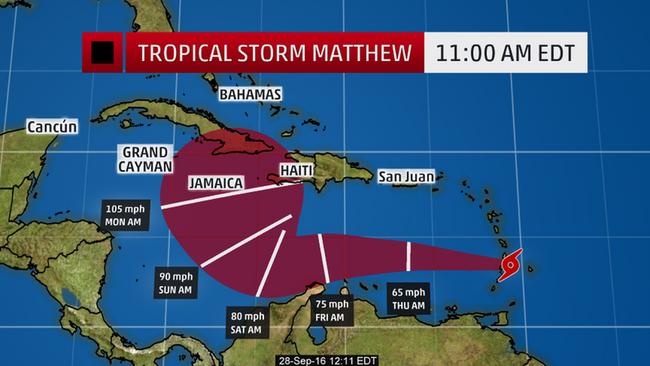
Caribbean Tropical Storm Matthew

TZZZ/Caribbean Tropical Storm Matthew is expected to increase to Hurricane strength as it tracks across the Caribbean. Today, Barbados, Martinique and a number of other airports in the Windward islands have notified closures.

Monitor http://www.nhc.noaa.gov/

map_tropprjpath14_ltst_5nhato_enus_650x366


Midweek Briefing 03AUG: TSA/eAPIS increase in US fines, Vanuatu Runway concerns

TSA/eAPIS increase in US fines 03AUG Fines and penalties for getting your CBP Arrival/Departure manifest wrong will increase from 01AUG. That means, screw up the eAPIS and you are looking at a potential fine of $1,312. Read the article.

Vanuatu Runway concerns 03AUG Following interim repairs to the runway in Port Vila (NVVV/VLI) earlier this year, concerns have been raised once again about the condition of the runway, with diversions on Monday. Read the article.


LFPZ/Paris Airports Couple of upgrades in progress, LFPO has 06/24 closed until 29AUG, and LFPG is installing a new ILS until 03OCT; both will cause some delays.

YZZZ/Australia The Australian Border Force have announced a strike for Friday, 12 August. This marks a resumption of Industrial Action in Australia after a 3 month ‘ceasefire’ was agreed. The strike period is 24 hours, precise impact not yet clear, but AQIS/Biosecurity/Quarantine will also take part to some degree.

OMDB/Dubai is reopening with a single runway following a full airport closure early on 03AUG due to 777 crash.

UIII/Irkutstk has no air starter available for large aircraft until the end of August.Irkutsk is a common enroute diversion airport.

ZKZZ/North Korea is back in action with the missile launches again, on 03AUG they fired two ballistic missiles, one of which landed in Japanese waters inside the country’s economic exclusion zone. Another missile reportedly exploded immediately after the launch. The missiles were fired at 2250 UTC on 2 August from a region southwest of the North Korean capital city of Pyongyang.

MZZZ/Caribbean Tropical Storm Earl, multiple weather warnings for Jamaica, Caymans, Belize, Guatemala, Mexico.

VABB/Mumbai continues their Continuous Descent Approach trials in the TMA. Interestingly, part of the procedure calls for pilots to call in on 121.9 after landing and report the total amount of fuel saved (how do you work that out?), and then send a detailed brief by email to cdomumbai@aai.aero. We forecast a relatively empty inbox.

AGGH/Honiara has some surface damage on the International Apron, taxi slowly.

SBZZ/Brazil On 02AUG, the mayor of Rio de Janeiro declared 4 August a new public holiday for the Olympic Games. The extra holiday comes after the mayor has already designated 5, 18 and 22 August as public holidays in Rio de Janeiro, and after the city experienced severe traffic congestion with the implementation of Olympic-designated lanes. On 1 August, the Olympic tracks caused more than 60 mi/100 km of traffic jams, with the worst traffic taking place on the Linha Amarela.

DZZZ/Lome UTA Following changes last year to the airspace over Benin and Togo (the two long thin countries squeezed between Ghana and Nigeria) – there’s still some confusion over who does what. In simple: Low Level (FL240 and below) is controlled by Cotonou Approach. High Level (FL250 and above) is controlled by Lome ACC.

EGGW/London Luton will close overnight weekends in November for some big repair work.

HLLL/Tripoli FIR Airstrikes this week by the USAF

LHPP/Pecs has no Jet A1 at the moment, back on 05AUG.

HEZZ/Egypt On 01AUG, reports announced that a semi-private company would take over responsibility for passenger and luggage screening at Sharm el-Sheikh International Airport (HESH/SSH). The same company, which is a joint public-private entity, will take over security at Terminal 2 of Cairo International Airport (HECA/CAI) beginning in October 2016 when the terminal is scheduled to reopen. The company will later take over screening procedures at Hurghada (HEGN/HRG), Borg el-Arab (HEBA/HBE), Marsa Alam (HEMA/RMF), Aswan (HESN/ASW) and Luxor (HELX/LXR) airports. Egyptian police will continue to be responsible for perimeter security around Egyptian airports, including the terminal and the tarmac.

LOWS/Salzburg starts a multilateration (MLAT) trial on 05SEP. Keep your Mode S on, they ask.

SBBZ/Brazil Olympic Games kick off in a few days, if you are operating to Brazil read through the current NOTAMS carefully, there are a bunch of flow restrictions, special routes, and procedures.

FABL/Bloemfontein is carrying out major works during August. Diversions not accepted. Jet A1 is supplied by bowser during this time, and not hydrant as this is also being worked on.

LTZZ/Turkey – post Coup. As of 01AUG, the situation in Turkey continues to stabilize, as the government continues to step up security measures and conduct operations to detain alleged coup plotters. Turkey remains under a state of emergency, which allows the government to drastically restrict civil liberties, and will likely remain so for the next three months. Raids and security operations are continuing throughout the country. Travellers should note that Turkish authorities have reportedly been conducting ID checks in the busier areas of Istanbul. 

 Demonstrations have continued over the past several days. While the threat of violence remains a concern at demonstrations throughout Turkey, most have been conducted peacefully. Travellers should nevertheless take care to avoid such gatherings as a precaution, because violence can occur with little notice. Additionally, terrorists have targeted major demonstrations in the past.

FLFI/Lusaka ACC have called out some AFTN addressing issues, if you are operating to land in Zamabia, then file to FLKKZAZX and FLHNZAZX respectively. OMMM/Muscat ACC has a radar-less day on 18th August, 0600-1700Z. Turn that TCAS up.

WADL/Lombok, Bali has reopened after a closure on Monday 01AUG due to the eruption of Mt. Rinjani. The last closure was in OCT2015.

View the full International Bulletin 03AUG2016


Monday Briefing: North Atlantic OTS Changes, Indonesia Volcano Eruption

North Atlantic OTS Changes this week 09NOV This Wednesday (12NOV) sees the implementation of the new NAT Track OTS, marking the first change to the lateral structure since the tracks were introduced in 1965. New requirements include RNP4, and 24 new Oceanic Entry Points come into effect. See below for further.

Indonesia Volcano Eruption 09NOV Operations into WADD/ Denpasar, Bali continue to be disrupted due to ongoing eruption of Mt. Rinjani on Lombok Island. Also affected are nearby WARB/Blimbingsari and WADL/Lombok.


EINN/Shannon FIR CPDLC service is withdrawn on the evening prior to implementation of the new NAT Track system, voice service only from 1715Z onwards on 11NOV.

LGGG/Athens FIR Strike of Greek Radio Operators (thereby including AFTN messaging, and AFIS) announced this morning for 12NOV. Overflights will not be affected. Full details here.

HESH/Sharm el-Sheikh remains open but subject to multiple advice notices from international Authorities. Many airlines have cancelled operations into the airport after increasing suspicions that a bomb was loaded here onto the A320 which crashed into the Sinai Desert.

HLLL/Tripoli FIR Libya has issued updated advice regarding airport availability – HLLQ, HLTQ and HLZW are only available for international arrivals, daylight hours only. PPR and Permit is required prior operations.

SCFZ/Antofagasta ACC, Chile. Crews on Airways UL780 and UL302 are requested to inform ATC of any speed changes greater than .02 Mach; if unable on VHF, use HF 10024. The procedure is to ensure separation between succeeding aircraft operating on CI speeds.

SBXX/Brazil The Brazilian Grand Prix takes place 13-15NOV making Sao Paulo operations at SBSP/Congonhas, SBGR/Guarulhos, and SBKP/Campinas busier than usual.

RPLL/Manila, Philippines APEC 2015 Summit being held 17-20NOV. Check restrictions, many commercial flights have been suspended during this period. Parking at a premium. Consider quieter alternates such as RPLC/Clark.

YXXX/Australia Australian Border Force strike commencing midnight 09NOV across Australian airports. As a result, departure and arrival processing at Australian airports may take longer then usual.

WADD/Denpasar, Indonesia Operations here continue to be disrupted due to ongoing eruption of Mt. Rinjani. Also affected are nearby WARB/Blimbingsari and WADL/Lombok. For updates monitor http://www.bom.gov.au/products/Volc_ash_recent.shtml

LIXX/Italy Possible ATC strike on 14NOV 1200-1600Z announced.

KXXX/US Airport Runway closures: BWI-RWY 10/28 CLOSED SEA-RWY 16C/34C CLOSED LAS-RWY 7L/25R CLOSED

KLAS/Las Vegas NBAA 2015 will take place 17-19NOV limiting airport capacity.

HECC/Cairo FIR, Egypt Point PASOS (LCCC FIR) is again available in both directions for flight planning. Please be aware flights departing OLBA via LCCC must file via VELOX-PASOS. Also see HECC NOTAM 1A277/15 and 1A278/15 for flight planning guidance.

VHHH/Hong Kong Arrival and Departure delays up to 30 minutes can be expected due to a flight check and maintenance on RWY 07L/25R on 09NOV 0530-0100 and 10NOV 2300-0100.

Caribbean Tropical Weather Advisory Shower and thunderstorm activity is showing signs of organization in association with a low pressure system located just north of the Turks and Caicos and the southeastern Bahamas. A tropical depression or a tropical storm is likely to form on Monday while the low moves west-northwestward to northwestward near or over the central and northwestern Bahamas. For further details see National Hurricane Center

KLAX/Los Angeles Due to military operations of the coast of LAX there is a risk of arrival delays and reroutes during the overnight periods until Nov 12th.

MWCR/Grand Cayman may be forced to shorten the runway at Owen Roberts International Airport (MCWR/GCM). The runway, which was extended to accommodate long-haul flights, may have to be shortened in order to accommodate a 400 ft/124 m safety area. An extension of the runway cannot be further extended, and the airport authority is examining all options.

CYYQ/Churchill has amended opening hours 1200-2200Z M-F.

PKWA/Bucholz has revised ATC hours from 01NOV, 0800-1230 and 1330-1600LT.

NWWW/Tontouta has a main runway closure 09-12NOV at various times, some daytime. Check NOTAM 1543/15.

EGPF/Glasgow is closed overnight 22NOV-11DEC for runway and taxiway repairs.

DRRR/Niamey Ouagadougou ACC is now operational H24 again; the previously implemented contingency plan for traffic operating outside ATC service hours is withdrawn.

View the full International Operations Bulletin for 09NOV2015.