Iceland ATC strikes at Keflavik

Update 19 Dec 1230z – The ATC strike at BIKF/Keflavik on Dec 20 has been cancelled due to a volcanic eruption on the Reykjanes Peninsula. 


An Icelandic ATC strike took place on Dec 12, 14, and 18, with another planned for Dec 20 (now cancelled).

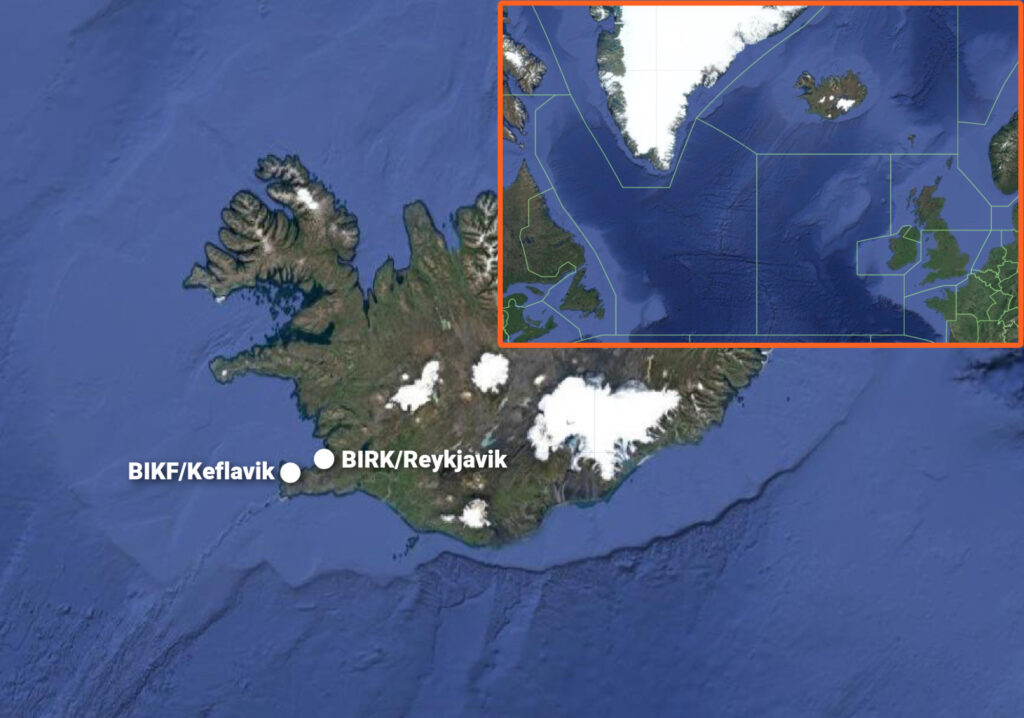
The Dec 12/14 strikes affected both BIKF/Keflavik and BIRK/Reykjavik. But the Dec 18/20 strikes were only planned at BIKF/Keflavik – no flights were allowed to operate in or out from 04-10z/

BIKF A0802/23 - DUE TO INDUSTRIAL ACTION KEFLAVIK CTR IS CLOSED. 
BIKF TWR SERVICES IS LIMITED TO AMBULANCE FLIGHTS, EMERGENCY FLIGHTS 
AND FLIGHTS ON BEHALF OF THE ICELANDIC COAST GUARD. 
18 DEC 04:00 2023 UNTIL 18 DEC 10:00 2023. 
CREATED: 15 DEC 13:40 2023

The Notams said that emergency flights were exempt. We confirmed with Isavia that all diversions were accepted, including emergency, and that carrying BIKF as an alternate (including ETOPS) was OK.

The strikes have gone quite smoothly so far, with minimal disruption to flights. Negotiations between controllers and employers are ongoing… 🤞


Iceland Airports Reopen to GA/BA Flights

Update 1000z May 18: The summit is over, and the restrictions on flights at BIKF and BIRK have now been lifted. Below is original story from May 16.


There’s a big state summit happening in Reykjavik this week, which means restrictions for GA/BA flights at Iceland’s main airports BIKF/Keflavik and BIRK/Reykjavik.

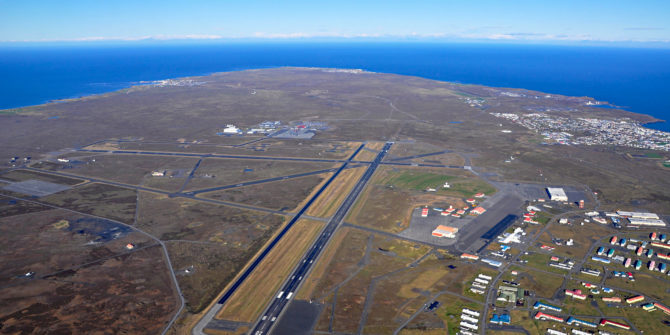
BIKF/Keflavik

This is the most common stop for GA/BA flights doing North Atlantic stops. There’s no parking allowed here from 0000z May 15 to 1000z May 18. That’s what this super vague Notam A0133/23 actually means:

A0133/23 - EAST APRON/WEST APRON RESTRICTED FOR SPECIAL OPERATION. 
STATE, DIVERTED AND AMBULANCE FLIGHTS ARE EXCLUDED. 
15 MAY 00:00 2023 UNTIL 18 MAY 10:00 2023. 
CREATED: 11 MAY 14:37 2023

We checked with a local handler at the airport, who said that quick turns are not allowed either during this period. You can contact them for more info at ops@southair.is.

BIRK/Reykjavik

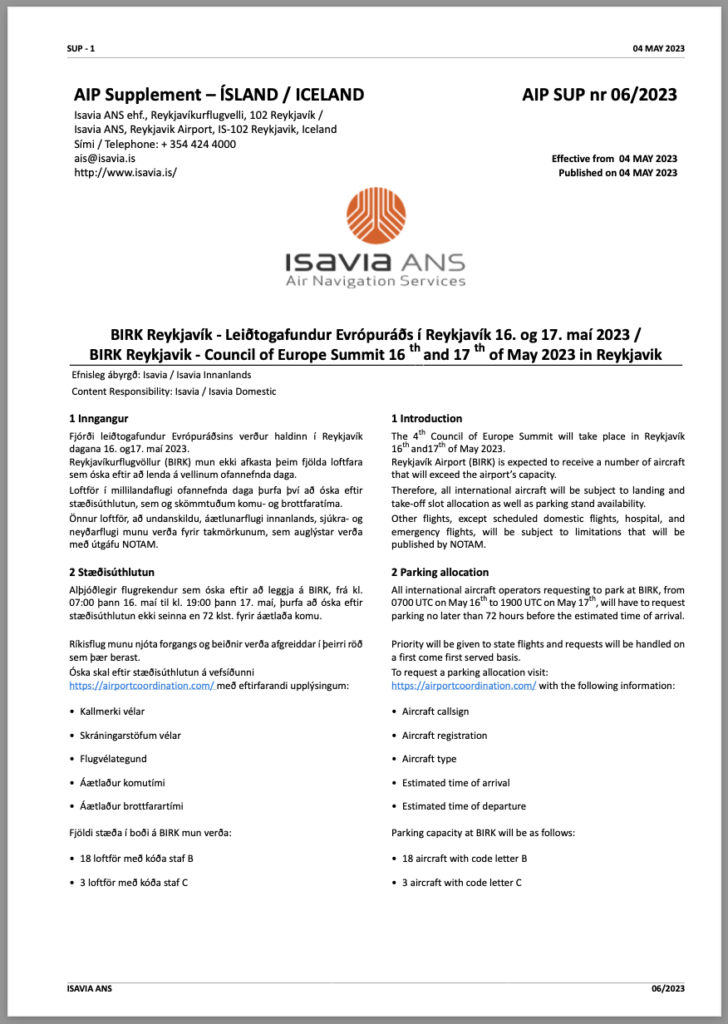
From 0700z May 16 to 1900z May 17, GA/BA flights are not allowed to go here either! Not unless your flight is directly related to the summit, in which case you need slots. And you can’t use it as a FPL alternate.

The days before and after (May 15 and 18), BIRK will be somewhat restricted as well – it’ll be busy, all areas and access to the airport will be restricted and guarded by police, and access will only be granted to operating crews, VIPs and staff that have been approved and listed by authorities. Roads and areas close to the summit in downtown Reykjavik will be closed or restricted as well, so good to keep that in mind if crews are staying at a hotels close to the summit.

The Notams for BIRK are actually pretty clear (unlike those for BIKF), and if you need more info about all this, you can contact the local handler at ops@reykjavikfbo.is, but also check out AIP SUP 6-23 below:

Where else to go?

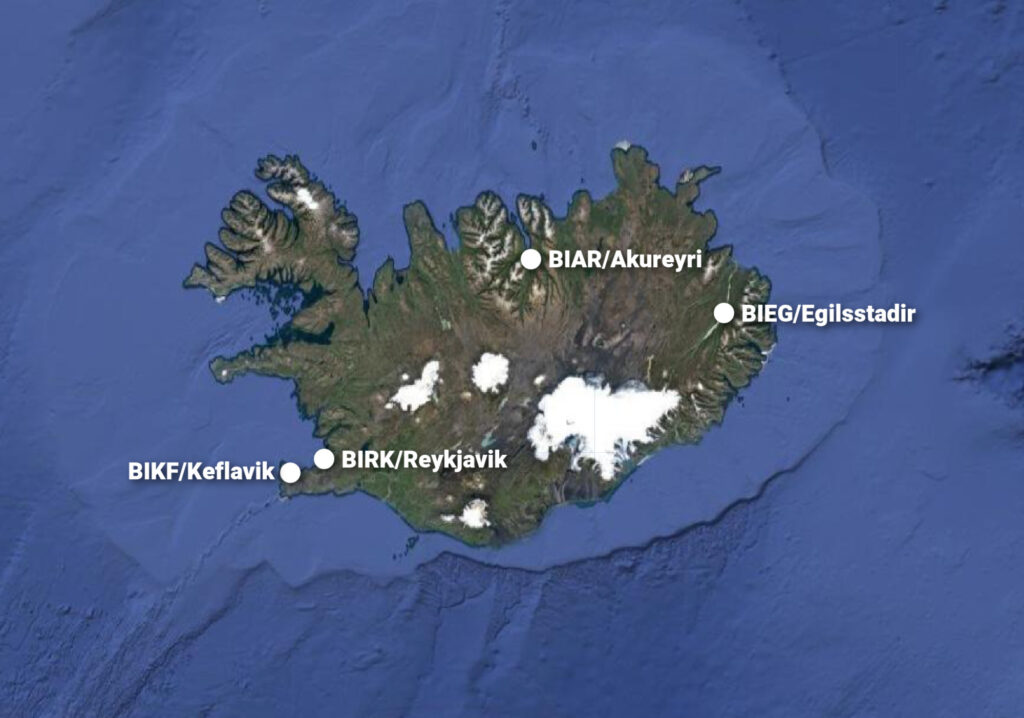
If you want to use Iceland as a North Atlantic night stop this week, local handlers are advising to use BIEG/Egilsstadir or BIAR/Akureyri in the north of the country.

BIEG/Egilsstadir is open weekdays 0800-1745z and weekends 0915-1745z (400EUR charge outside these hours), and are able to handle almost all GA/BA flights – but they do not have a VIP lounge or FBO. There seem to be a few different handling agents able to make arrangements here. We’ve been speaking with jetcenter@icelandair.is – so maybe get in touch with them for more info.

BIAR/Akureyri is open 0700-2300z (and outside these hours, for an extra fee), and they do have an FBO for GA/BA flights – so this might be the airport to go to. Local agents have reported that there is still space at the airport right now, but it’s busier than usual due to the summit. Contact them at jetcenter@icelandair.is.

Anything else worth knowing about ops to Iceland?

  • There’s been a change in AFTN addressing for filing of flight plans in the BIRD/Reykjavik FIR. IFR FPLs now need to be sent to BIRDZPZZ. VFR and mixed FPLs should be sent to BIRDZPZX. AIC 8-23 refers.
  • Iceland’s airspace is now entirely covered with ADS-B. Coverage extends from the North Pole to Scotland and from the Greenwich Meridian to the west of Greenland. You can see their coverage map including flight levels at this link.
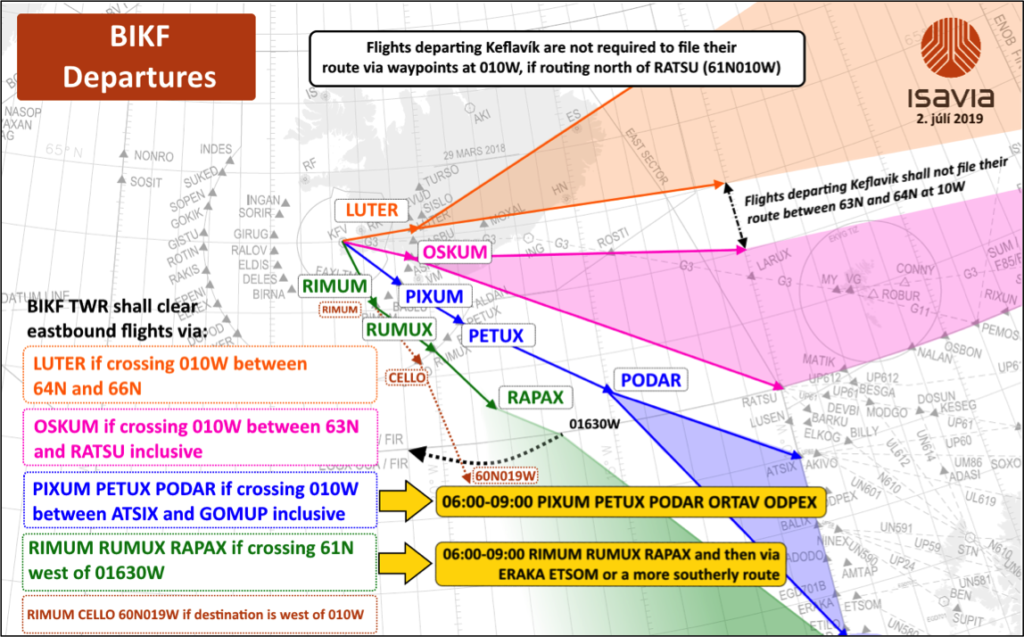
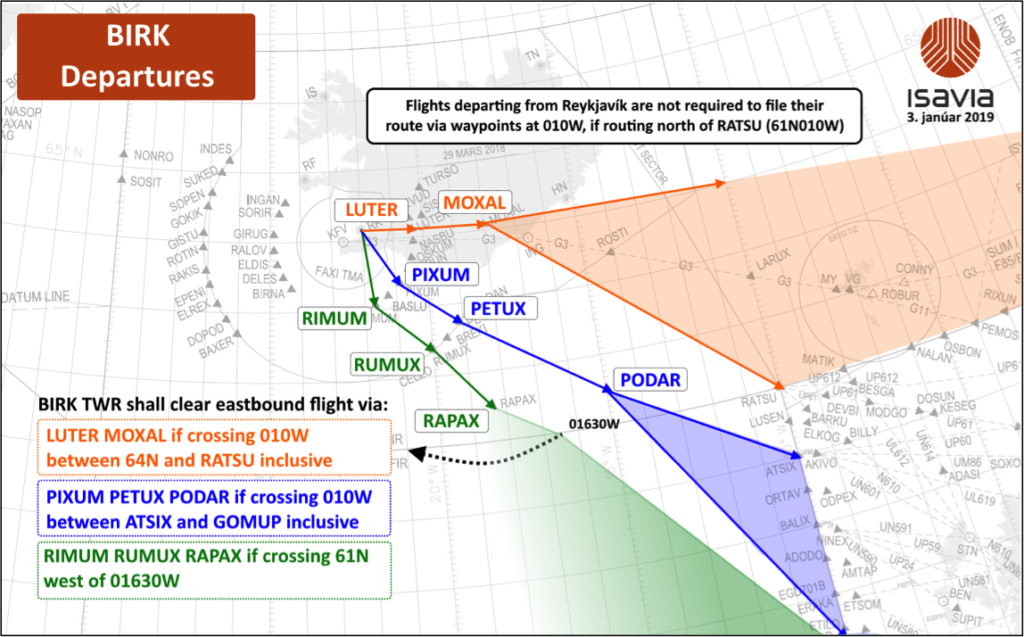
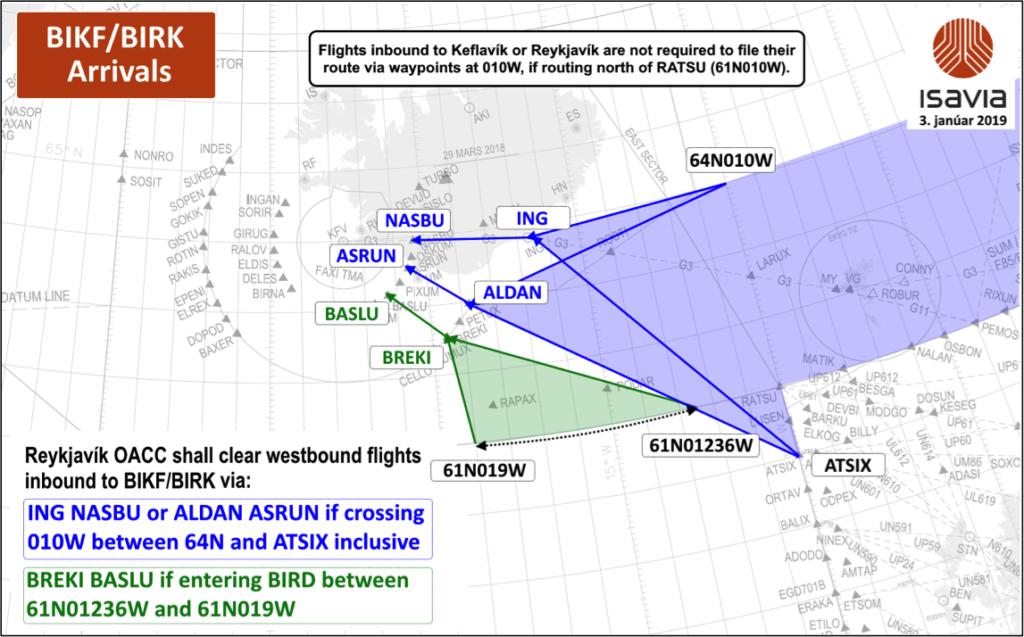
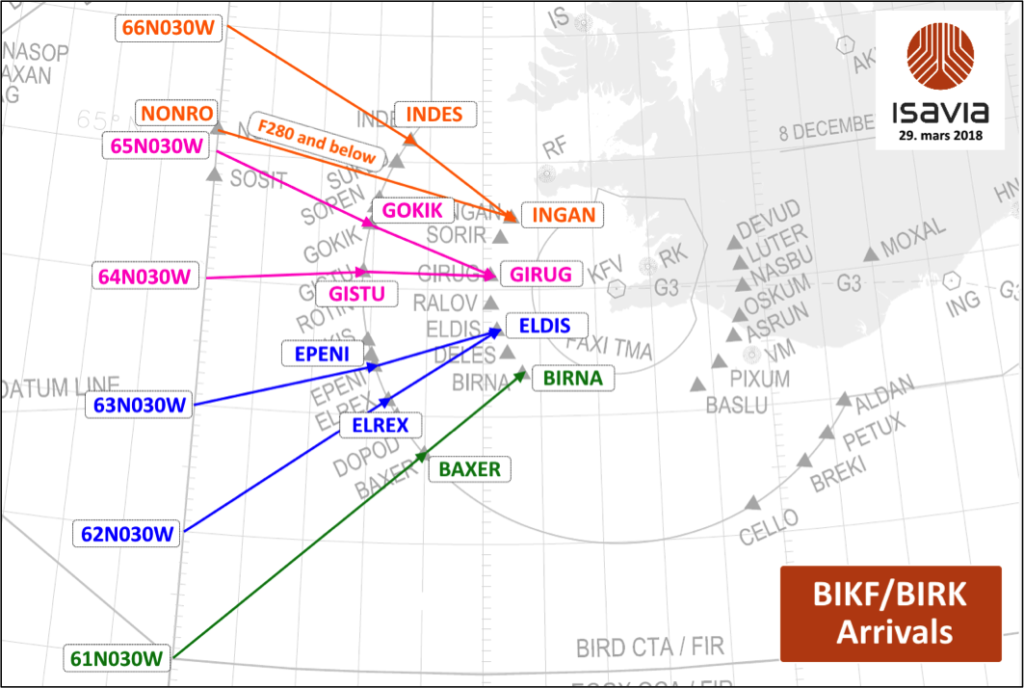
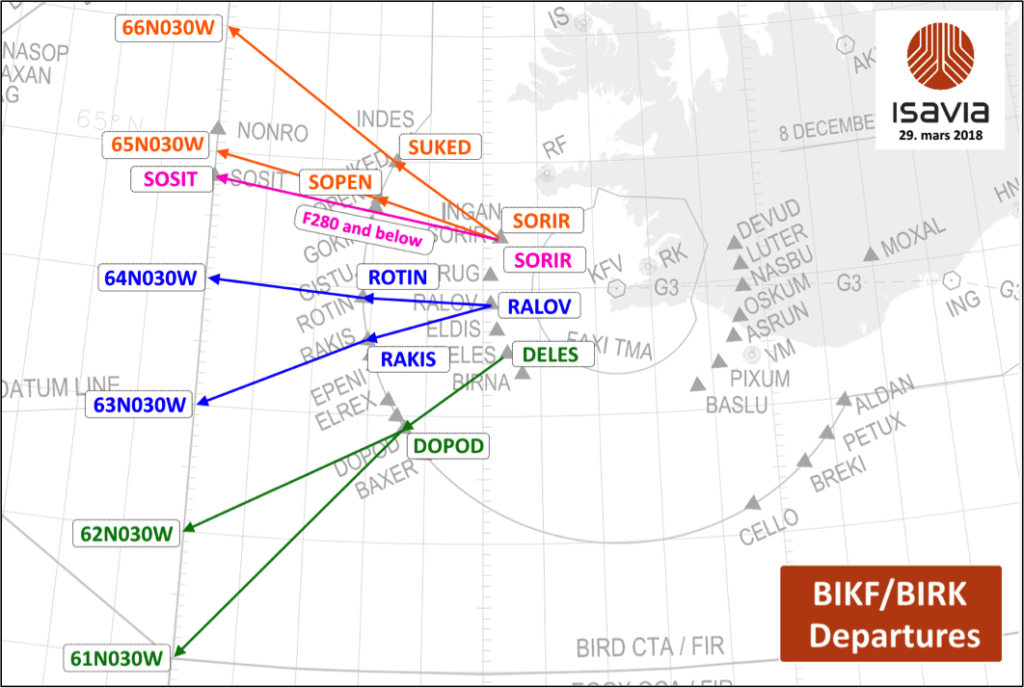
  • There are some specific route requirements for flights to BIKF/Keflavik and BIRK/Reykjavik. These can be found in AIP ENR 1.8.4.1.3.7 which explains exactly how you should file your flight plans to/from both BIKF and BIRK. But to make all this blurb easier to understand, the good folks at Isavia have published some handy graphic presentations of the requirements which you can find here.

Anything else big we missed? Let us know! Or even better, if you’ve operated to Iceland recently and can share some info on how it went, file an Airport Spy report!


New Covid testing rules in Iceland

There are new rules for all crew and passengers from August 19 regarding Covid testing on arrival.

The rules for crew have not been officially published yet, but local handlers have confirmed that if crew stay for more than 24 hours they will need to take a Covid test.

The process is different for passengers – all arriving pax will be able to choose between 14 days of self-quarantine, or a Covid test at the airport. However, those who choose to be tested will still have to enter self-isolation and be retested again 4-5 days later before they can be released. This was not previously the case. The rule applies regardless of whether or not their first test was negative.

All passengers must also complete a pre-registration form before travelling at covid.is. Iceland’s borders are currently open to all EU/Schengen States in addition to those countries on the EU’s “safe list.”


Covid impact on North Atlantic diversion airports

Planning diversion alternates is always fun – particularly when flying across vast tracts of open ocean like the North Atlantic. Check a few Notams, google some airport pics to work out just how scary the runway is, stick a couple of en-route alternates into your flight plan, and away you go…

The reality is it’s a bit more complicated than that. For use as a diversion alternate, an aircraft operator must ensure that the airport concerned meets basic criteria to be classified as ‘adequate’. In other words, just a runway is not enough – if only it were that simple!

Here are the kinds of things we’re interested in:

  • Sufficient weather forecasting.
  • ATC (or Flight Information Service) hours of operation.
  • Runway availability.
  • Instrument approach availability.
  • Runway Lighting.
  • Runway slope guidance (PAPI, VASI, Glideslope or similar).
  • RFF (Rescue Fire) operational status.
  • Status of facilities: refuelling, handling, parking bays etc.

During the course of the Covid-19 pandemic, a number of airports have used the lull in traffic to undertake work that can affect their operational status. As a result, these changes may create additional operational issues for pilots and flight planners seeking diversion alternates that meet their requirements.

Also, due to the general chaos of Covid-19, many airports have limited staff which has an effect on how your aircraft, passengers and crew will be handled on the ground if you do need to divert.

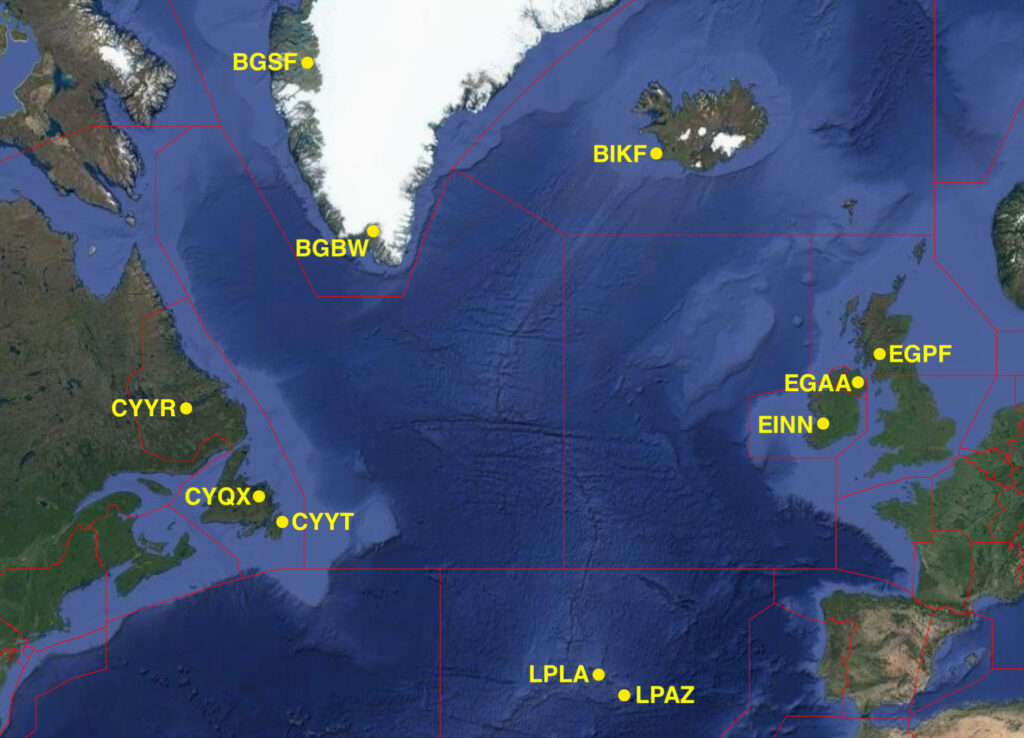
Here’s a summary of changes to operational status of airports commonly used as diversion alternates for aircraft crossing the North Atlantic. (Unless stated otherwise, airports listed below are open H24 for emergency diverts).
The Biggies

BGSF Kangerkussuaq Airport, Greenland – Airport is open 1000-1900z Monday to Saturday. Closed on Sundays. If you want them to stay open for you outside their opening times, you have to request it in advance – watch out for hefty fees if doing this, which get charged even if you don’t end up actually diverting there. Same applies if you just casually list BGSF as an en-route alternate on your flight plan if operating out of hours. More info on that here.

However, until at least June 10 the airport is classified as ‘non-instrumental.’ Effectively you can only use it during daylight hours in good conditions (NOTAM A0283/20 refers).

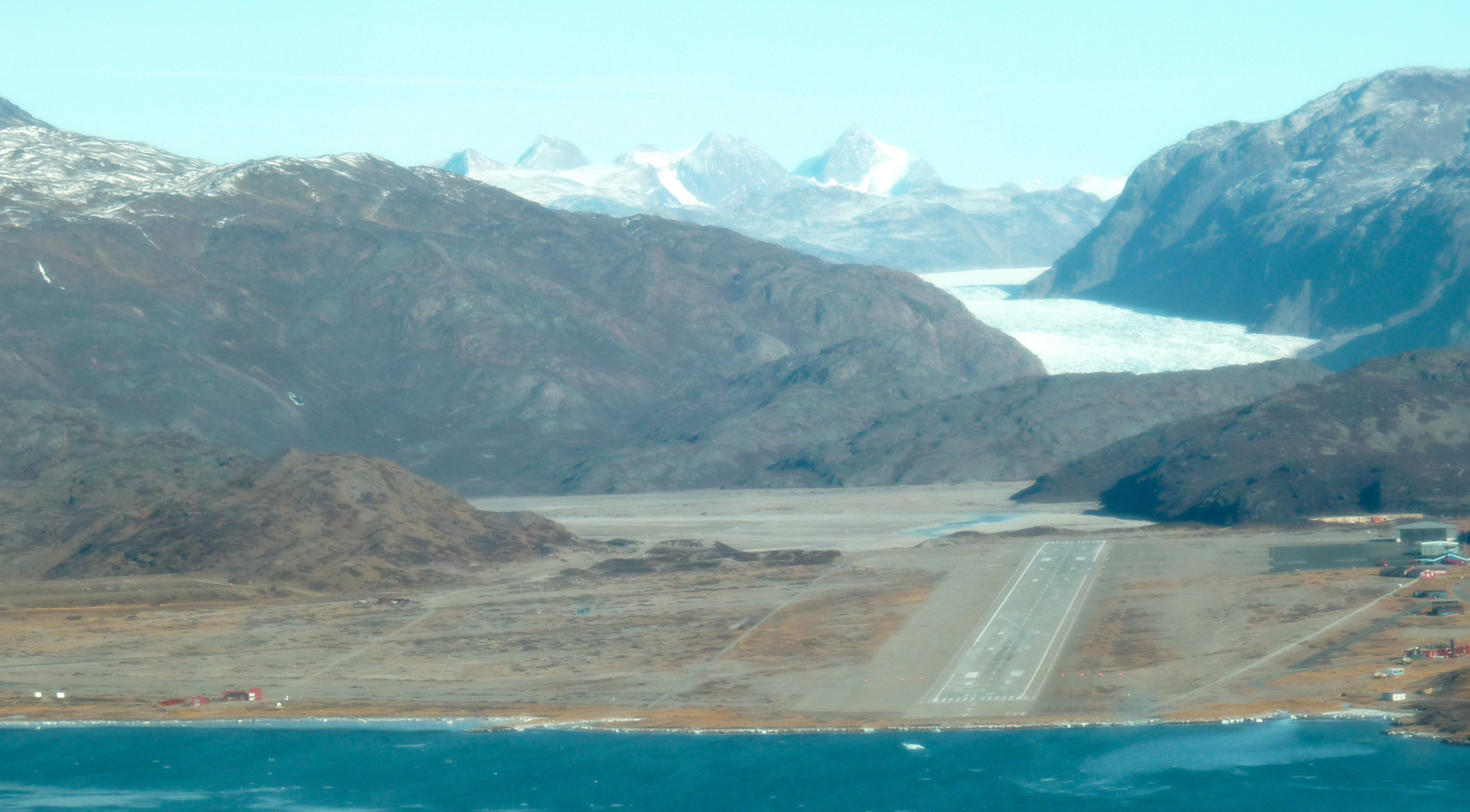
BGBW Narsarsuaq, Greenland – Similar deal to BGSF – airport is only open 1000-1900z Monday to Saturday, and closed on Sundays. And again, extra fees which get charged if filing BGBW as an en-route alternate on flight plans. RFF category 5, but grab a coffee because it requires 3 hour’s notice (NOTAM A0098/20 refers). Officially, the current rules for Greenland are that crew and pax will not be allowed to disembark, not even for diverts. Unofficially, the local handler says that if a divert was to happen, they’d “find a solution”.

LPLA Lajez, Azores – Several restrictions apply due to Covid. Essentially you can go there if you really need somewhere to land but expect chaos once you do. The airport is currently closed to international arrivals unless it’s an emergency. And even then you cannot disembark without permission and strict quarantine measures apply (NOTAM A1487/20 refers). Unscheduled arrivals of emergency aircraft can expect ‘extensive handling delays’ (NOTAM A1485/20 refers). All passengers and crew must wear face masks, and once you and your passengers leave the aircraft you will be quarantined in the local air force base (room service is unlikely).

LPAZ Santa Maria, Azores. If you have to divert there, no crew or pax are allowed to disembark. For medical emergencies, they actually recommend you go to LPLA instead!

EINN Shannon, Ireland – Aerodrome is currently only operational from 0500-2100z due to the impact of Covid (NOTAM A1062/20 refers). The airport has confirmed they are not available outside of these hours for emergency diverts – so if you’re operating overnight, the nearest available H24 airports are EGAA/Belfast and EIDW/Dublin.

And watch out for these potential ‘gotchas’

CYYR Goose Bay, Canada – Until June 29, runway 16/34 is closed. In strong northerly or southerly conditions, cross wind limitations may be reached – so keep an eye on your ETOPs alternate minima (NOTAM E3107/20 refers).

CYQX Gander, Canada – In case of divert, crew/pax all need to fill out a Government Declaration COVID form to stay overnight, and need to have proper PPR (Masks, Gloves and Sanitary Cleaner). RFF category 5 which requires at least 30 minutes notice.

BIKF Keflavik, Iceland – RFF category 8 from 0500-1900z, RFF category 7 from 1900-0500z (NOTAM A0123/20 refers).

EGAA Belfast, Ireland – Until June 13, RFF category 6 overnight between 1800-0600z (NOTAM A1968/20 refers). And until June 11, this is reduced to just RFF cat 4 between the daytime hours of 0600-1800z (NOTAM A1993/20 refers).

EGPF Glasgow, Scotland. Until June 16, available RFF category is 6 for the majority of the day due to staffing issues caused by Covid (NOTAM A1983/20 refers).


In other NAT-related news, the datalink mandate rules have been relaxed until the end of June, due to the fact that there’s now significantly less traffic because of all the COVID restrictions. Non-datalink mandate compliant aircraft may therefore flight plan and operate between FL290-410 until June 30. ICAO are saying that due to the decrease in traffic, there is a significantly higher chance of flights being cleared as requested, and are encouraging operators to file and request their optimal profiles at all stages of the flight. More info on the NAT Datalink Mandate can be found here.


New route requirements for Iceland

There are some new route requirements for flights to BIKF/Keflavik and BIRK/Reykjavik. 

These can be found in the updated version of AIP ENR 1.8.4.1.3.7 which explains exactly how you should file your flight plans to/from both BIKF and BIRK. But to make all this blurb easier to understand, the good folks at Isavia have published some handy graphic presentations of the requirements:

If you follow the guidance and flight plan accordingly, you should avoid any nasty last-minute “FPL REJ” messages!

Further reading:

  • You can check the full Iceland AIP online here.
  • For a summary of all the NAT changes, including EGGX/Shanwick, CZQX/Gander, BIRD/Iceland, ENOB/Bodo, LPPO/Santa Maria, and KZWY/New York Oceanic East, click here.


Iceland ATC Strike Over

We say the words with trepidation, because it’s been promised a few times over the last few months but then closures continued – but what we can tell you is that:

  • There was an agreement on July 18,  that appears to be holding
  • There have been no closures of BIKF, BIRK, or BIRD in the last week or so.

With that in mind we think it’s safe to say that the strike is over, and it should be Ops normal through Iceland from now on.


Iceland ATC strike bigger than ever

We had some really positive hints at a resolution of the Iceland ATC strike last week, but it’s not over yet – by any measure. Today sees another long list of airspace and airport closures. Oceanic Eastbound, Westbound and landing traffic all affected.

BIKF/KEFLAVIK A0454/16 06JUL 1007Z

(NOTAMR A0453/16) – DUE TO STAFF SHORTAGE BIKF TWR SERVICE LIMITED
TO SCHEDULED COMMERCIAL AND INTERNATIONAL
FLIGHTS, AMBULANCE AND EMERGENCY  FLIGHTS.
NO TOUCH AND GOES OR LOW APPROACHES FOR VFR
TRAINING FLIGHTS, ONLY DEPARTURE AND ARRIVAL.
TWR BIKF SERVICE LIMITED TO AMBULANCE AND
EMERGENCY FLIGHTS ONLY DURING THE FOLLOWING
HOURS: 09:00-09:30, 11:30-12:00 AND 14:00-14:30. 06 JUL 10:05 2016 UNTIL 06JUL 21:00 2016.

BIRD/REYKJAVIK OACC A0452/16 05JUL 2146Z

(NOTAMR A0451/16) – DUE TO STAFF SHORTAGE IN REYKJAVIK OACC WESTBOUND
TFC PLANNING TO ENTER BIRD FROM ENSV VIA GUNPA,
VALDI, IPTON, INGAL, ISVIG AND EGPX VIA LIRKI, GONUT,
OLKER, MATIK AND RATSU AND THEN PROCEEDING INTO EGGX
OR CZQX SHALL REMAIN SOUTH OF BIRD CTA. 06 JUL 11:00 2016 UNTIL 06 JUL 20:00 2016.

BIRD/REYKJAVIK A0450/16 05JUL 1518Z

– DUE TO STAFF SHORTAGE IN REYKJAVIK CENTRE,
OPERATORS SHALL FILE TO COMPLY WITH THE FOLLOWING:
1. EASTBOUND TFC WILL NOT BE ACCEPTED FROM CZQX AND
EGGX EXCEPT  TRAFFIC WITH DESTINATION IN ICELAND,
SCANDINAVIA, BALTIC STATES AND RUSSIA.
2. EASTBOUND TRAFFIC FROM AERODROMES EAST OF 105W
WITH  DESTINATIONS IN THE MIDDLE EAST SHALL REMAIN CLEAR OF
BIRD CTA.
OPERATORS ARE URGED TO KEEP REQUESTS FOR LEVEL AND
SPEED AMENDMENTS WITHIN BIRD CTA TO A MINIMUM.
FOR FURTHER INFORMATION CALL REYKJAVIK SHIFT
MANAGER +354 424 4141. 06 JUL 02:00 2016 UNTIL 06 JUL 08:00 2016.

BIRD/REYKJAVIK A0452/16 05JUL 2146Z

(NOTAMR A0451/16) – DUE TO STAFF SHORTAGE IN REYKJAVIK OACC WESTBOUND
TFC PLANNING TO ENTER BIRD FROM ENSV VIA GUNPA,
VALDI, IPTON, INGAL, ISVIG AND EGPX VIA LIRKI, GONUT,
OLKER, MATIK AND RATSU AND THEN PROCEEDING INTO EGGX
OR CZQX SHALL REMAIN SOUTH OF BIRD CTA. 06 JUL 11:00 2016 UNTIL 06 JUL 20:00 2016.


Iceland ATC strike – a solution

The strike goes on … but there may be a solution by Friday this week. Icelandic MPs passed a bill forcing a resolution to the ongoing pay dispute with air traffic controllers. The new law states that the air traffic controllers’ union and the airport operator Isavia have until Friday to reach an agreement – failing this, the matter be sent to a court of arbitration for a final resolution.

In the interim, sporadic airport closures at BIKF/Keflavik and BIRK/Reykjavik continue, as do general airspace restrictions in the BIRD FIR. If you can avoid a stop in Iceland, it would seem sensible to do so until the conflict is resolved.


Cheapest Jet fuel on the Atlantic? $1.15 a gallon

The cost of a gallon of Jet A1 has been rather unstable lately. Over the last couple of years, we’ve produced several versions of our  North Atlantic Plotting Chart, and as we’ve done so, the price of Jet A1 has dropped each time across the Atlantic seaboard.

So, where is cheapest? Answer: Keflavik. $1.15 for a gallon of Jet A1 at the best available commercial airline rate. Now, that was six weeks back or so, when we did the research for the chart, and prices have been rising since (tracking the Oil price pretty well).

BIKF

Next best on the list is Shannon, Ireland – $1.37 USD/USG, thanks to the Shannon Free Zone, which strips out most of the taxes that the EU levies as standard.

Next question, then: most expensive? Narsarsuaq, at $5.65 for a gallon. Why so much more? Primary reason: getting the fuel to BGBW is an awful lot harder than getting it to BIKF. The rest is down to the difference in government tax policy.

Fuel price is of course not the only tech stop or diversion consideration on the North Atlantic, but given that security, safety, and service quality is pretty much equal across the entire NAT region, it’s an important factor – along with the cost of handling.

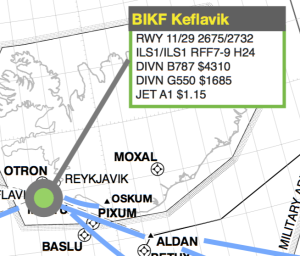
If you look at the snapshot above, you can see that your G550 will cost around $1685 including Airport Fees; taking a B787 to KEF will run around $4300 all in.

The North Atlantic Plotting Chart has all this information for all the common North Atlantic ETOPS/Diversion Fields – namely: CYYT/St Johns, CYQX/Gander, CYJT/Stephenville, CYYR/Goose Bay, CYFB/Iqaluit, BGSF/Sondrestrom, BGBW/Narsarauq, BIKF/Keflavik, EGPF/Glasgow Intl, EGAA/Belfast, EINN/Shannon, and LPLA/Lajes.
Download NAT Plotting Chart