Pax Problems: Do you know who you have down the back?

How often do you think about who you have down the back? The recent Belarus incident might be prompting you to think a little more about who you have onboard and whether there are any political or operational considerations their presence might lead to.

So, here are some things to think about – from the political considerations of country politics, to what to do if the troublemaking is taking place onboard.

The Politics.

It would nice to stay above this, but unfortunately even at 40,000 feet we seem unable to escape the (often messy) world of politics, which means some consideration of who you have onboard, where your aircraft is registered, and where you are heading to and from, should form part of your overall risk assessment.

Israel is a fairly obvious example. They have a long history of strained relationships with neighbouring countries. It was only in 2020 that several of their closest neighbours renewed ties with Israel and allowed operations and overflights to re-start. 

This has not happened with all their neighbours though. If you are routing to or from Lebanon then LLBG/Tel Aviv is unlikely to accept you in a diversion. Likewise, if you divert to OLBA/Beirut with Israeli passengers onboard, this could pose some serious issues for them. Checking Country Rules and Restrictions for notes on Israeli flights (originating from or routing to) will bring up a fair few places that you need to be aware of – such as Pakistan – who still will not accept overflights or diversions to aircraft coming from, going to, or registered in Israel.

Israel itself is allowing aircraft in, but read the small print on this because in order to land in Israel you must be departing from one of their approved airports, and your crew and passengers must be nationals of countries that have diplomatic relations with Israel.
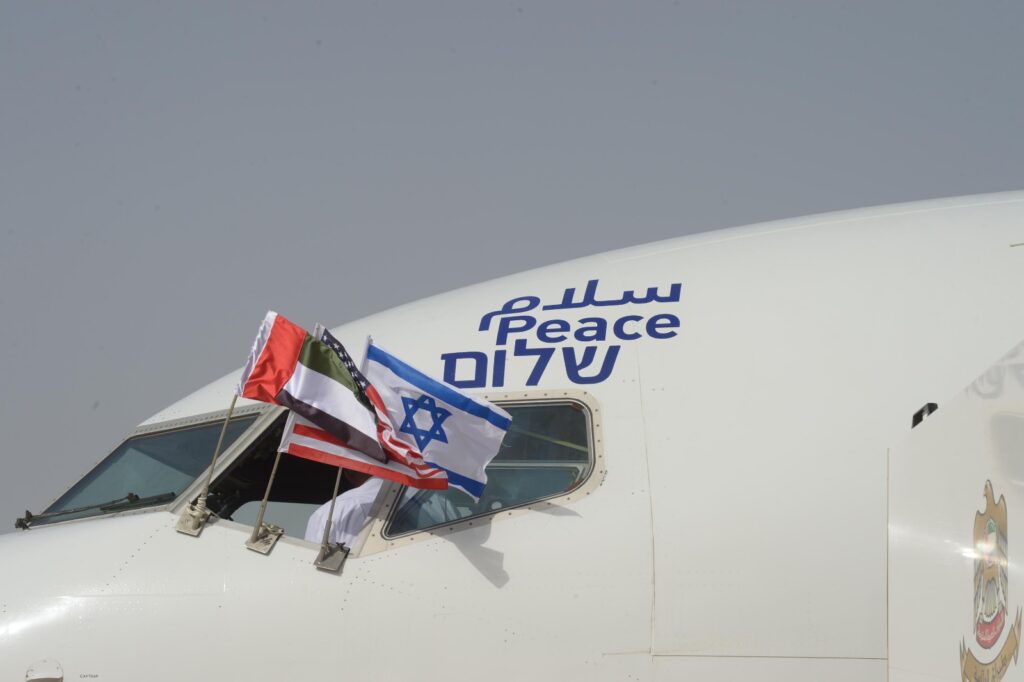
A major improvement in relationships between Saudi Arabia and Israel

India/Pakistan have an ongoing feud that has led to huge fence being erected along much of their border. The countries allow over flights from each other, but if you are operating into one, a diversion to the other may cause some consternation. OPLA/Lahore in particular is one to look out for because of its proximity to the Indian border.

If you divert into India with a technical issue that sees you grounded, and you are carrying Pakistani passengers there may be issues with them overnighting in the country.

The border fence is an impressive ‘monument’ to conflict

It isn’t always political though.

Sometimes the folk causing problems are the troublemakers onboard.

If you can spot them before takeoff then all the better. Cabin Crew are your last line of defense for ensuring anyone under the influence of alcohol (or just being generally offensive) is offloaded before they have a chance to cause issues. Remember, the law is on your side here – most countries specify that it is a criminal offense to be drunk onboard an aircraft.

The FAA have just made it a whole lot easier to handle disruptive passengers. In January 2021 they announced a zero tolerance policy for bad behavior, and they have a hefty 57 different civil penalty actions available to them. So far for 2021, they have received around 3,100 reports of unruliness and these have led to open investigations for 465 incidents – a sizable increase on the 146 seen in 2019.

What counts as disruptive?

Anything that is disrupting the flight, causing a nuisance to other passengers, or impacting the safety onboard really.

  • Being intoxicated with drugs or alcohol
  • Refusing security checks
  • Disobeying instructions
  • Threatening, abusive or insulting words

ICAO put out a list of the top reasons for unruliness and unsurprisingly, alcohol topped it, with compliance with regulations (smoking, seatbelt signs etc) not far behind. In the top 16 there were also pet/emotional support animal related reasons, along with seat reclining disputes.
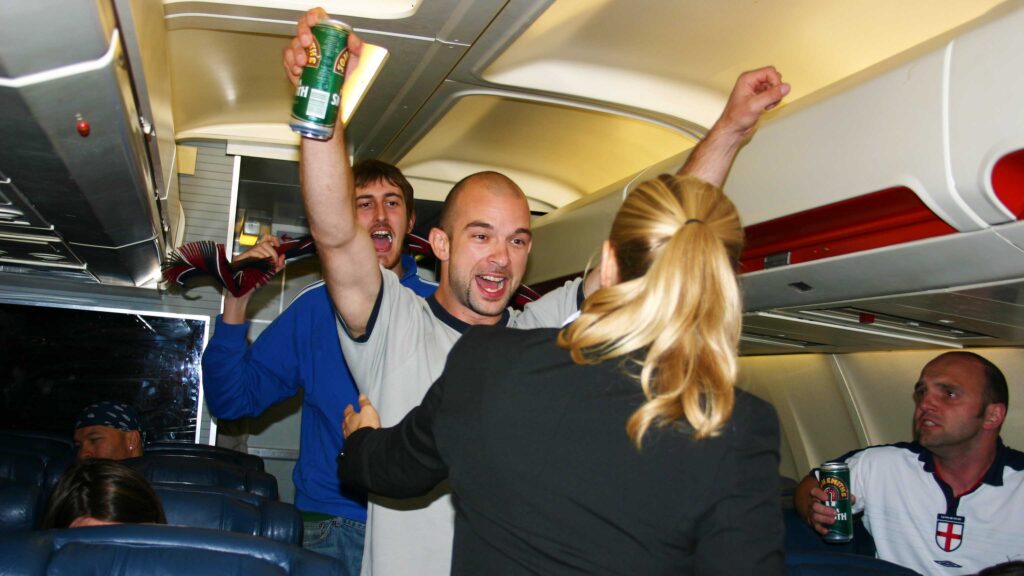
What actions do you have available onboard?

A PA from the Captain telling all the other passengers that “The Annoying Person in Seat 45B  is going to delay everyones’ holidays unless they sit down!” might do the trick for passengers who are just a bit of a nuisance (although your company might frown on this). But for those passengers that are posing an actual danger, the Tokyo Convention is your go-to convention here.

First written in 1963, it focuses on security and lays out what the rules and rights are.

The convention gives any passenger the right to take “reasonable preventative measures” to maintain their own safety (without having to ask permission first), but also makes it pretty clear that only the Captain has the right to order a passenger be restrained, and this requires some thought because it does need to be justified – a “high burden of proof” will be needed.

And justified means it really is the only remaining option available to prevent the person from endangering the safety of themself, passengers, crew or the aircraft. What you deem “endangering safety” is up to you but bear in mind there will be a bunch of witnesses on board.

Following on from Tokyo came the 1970 Hague hijacking definition and then the 1971 Montreal convention that deals with sabotage, and the criminalization of anything being brought onboard to jeopardize safety. In 1974 they revisited the good old Chicago convention and aviation security standards were developed. History lesson over, but it is worth having a vague understanding on what these contain in case you ever need to call on one.
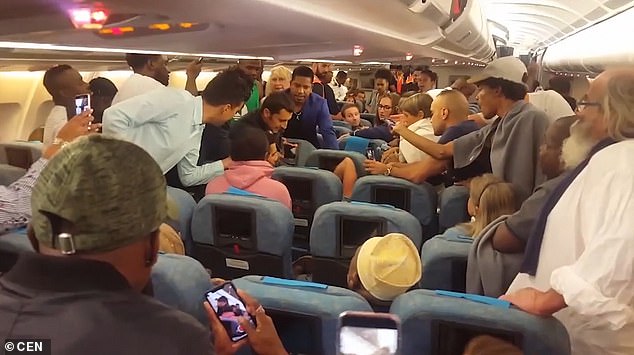
Cellphones mean a lot of witnesses…

Aside from these there always remains the option to divert.

In 2015, a flight from Las Vegas to Germany was forced to divert after a passenger became unruly over a cat. The woman had managed to board with the cat in her purse, rather than an official carrier, leading crew to storing the offending feline in a bathroom. This upset the lady and she threatened to “bring the aircraft” down if her pet was not released from its prison. Purr-ison if you like.

Diversions due unruly passengers are alarming not uncommon because while a passenger can be restrained, the implications of doing so for a substantially long flight need to be considered, as does the ongoing stress for other passengers onboard.

The UK CAA suggest that a diversion typically costs from around £10,000 – £80,000 depending on aircraft size.

Back on the ground

OK, so you’ve called the cops. Before they get there you might want to do a PA ensuring the other passengers know to remain in their seats and not get in the way of the police or that bad passenger might just slip out with the rest of the herd. But when they are arrested, who actually has the right to prosecute?

The Tokyo Convention give explicit jurisdiction rights to the airline’s country of registration when it comes to court. However, there are some doors left open there for other countries to seek extradition as well. These were brought in following a case in 1949 where a passenger sunk their teeth into the ear of the pilot. Alas, the US had no laws at that time which could apply to crimes committed while flying over an ocean, so the biter went free.

In 2014, the Montreal Protocol was also issued. This extends automatic jurisdiction over the crime to the destination. Important because it stops criminals sneaking off free because they were clever enough to commit the crime while heading into a country that the airplane was not registered in.

This rather ugly slide by ICAO gives an ‘Example of the problem’.
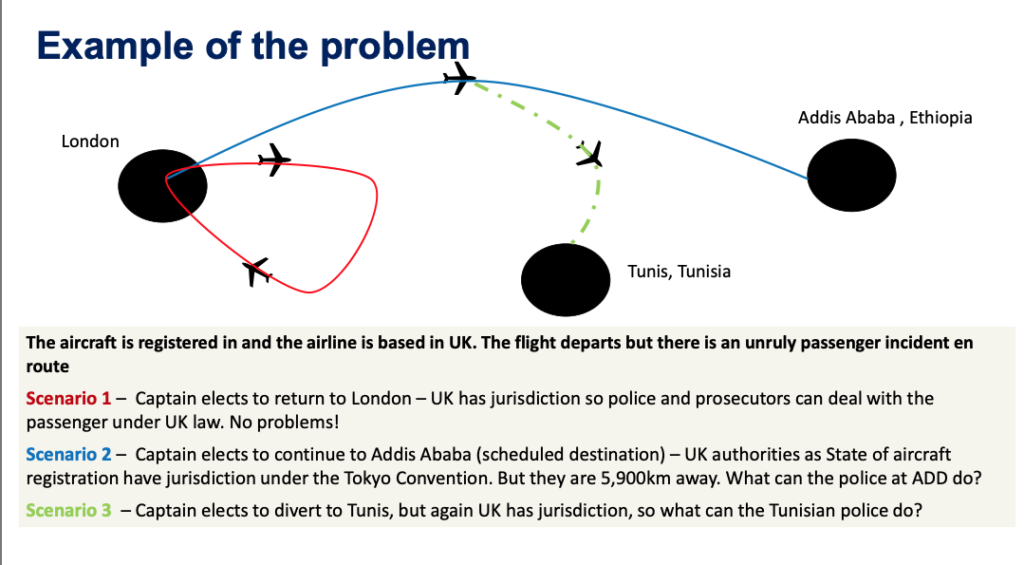
This was made in 2016 so no excuses for the lack of decent Powerpoint skills

So, for now, the crime is punishable by the country of registration, but the Montreal Protocol sort of extends the right of police in destination country to basically help in arresting the passenger.

In-ads/ Prisoners

An inadmissible passengers is not a prisoner.

Generally, it is some poor person who forgot to get a visa in their passport and have been turned away at destination. Usually it is on the carrier that brought them in (and didn’t check them at the departure airport properly) to take them home again, and as the Captain, you can expect to be handed the documents and passport for the in-ad at departure. However, you cannot detain an in-ad onboard when you land back wherever you are going. So alert the authorities and make sure they are there to meet the passenger. If not, you pretty much have to let them go.

Prisoners will always be escorted. For any “unusual” passenger, it is best to board them first and disembark them last. They must not seated at an emergency exit and preferably should be near the back of the aircraft and away from the aisle.

Emotional Support Animals

The rules for these recently changed and no more bizarre creatures have to be accepted. The UK do not allow any animals that are not service animals with full documentation. The US is the same, and only classify dogs as bone-afide service animals.

Cool sweater. But still not allowed onboard.

So, have a think about who is down the back.

Having an awareness of the nationalities of your passengers and considerations as to the countries you are overflying and their political relationships with other countries can be useful.

Knowing what the Tokyo Convention does and does not allow you to do with unruly passengers is also a good one to read up on. Your power as Captain only really extends to when the doors open.

If want to read more on unruly passengers then IATA put out some handy info here.

If it’s the Tokyo Convention then ICAO have it published here (although it makes for some dull legal reading).

And if you’d like to read about the emotional support pet rulings (for the US) then here you are.

IFALPA have a very useful paper on carrying in-ad, deportee and other non-revenue passengers.

Article photo courtesy @surachetsh.
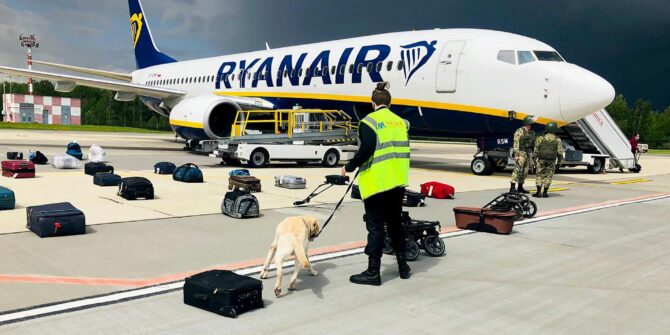

Belarus: Politics, Piracy or Airspace Risk?

Several countries and aviation bodies have urged airlines and operators to avoid the airspace of Belarus following the country’s interception of an international flight bound for Lithuania and forced to land in Minsk.

Is there any cause for additional concern? Or was this a one-off event that poses no additional threat to airspace safety?

Here’s what happened:

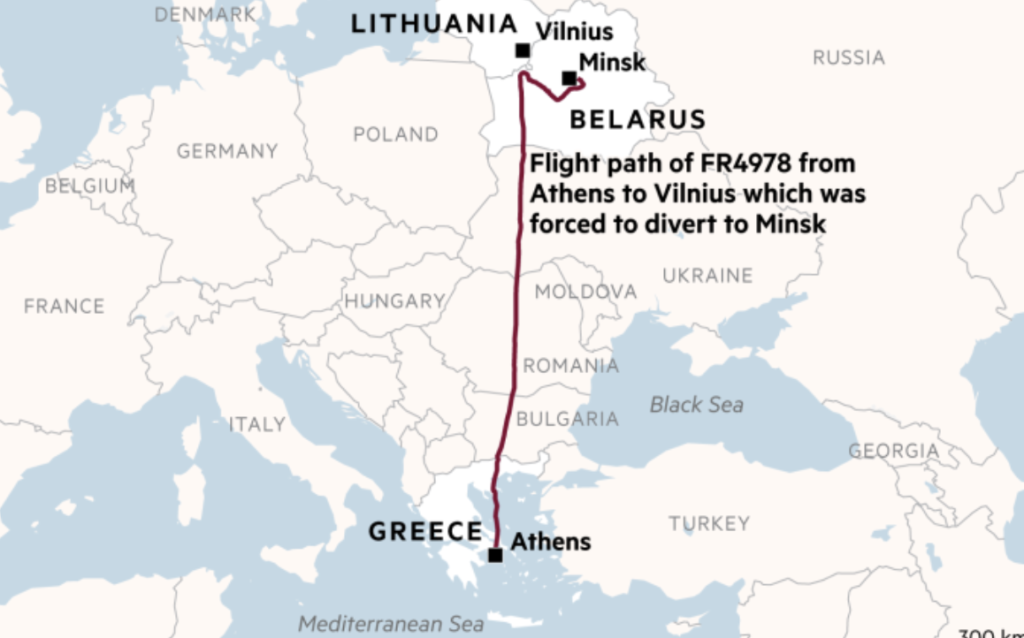
  • On Saturday, a Polish registered Ryanair 737-800 was operating a commercial flight between Athens and the Lithuanian capital, Vilnius. Toward the end of the flight while overflying the UMMV/Minsk FIR, ATC suddenly instructed the flight to divert to UMMS/Minsk due to a security threat onboard.
  • They were not allowed to exit Belarusian airspace despite being closer to EYVI/Vilnius at the time.
  • There are unconfirmed reports it was escorted to Minsk by a fighter aircraft.
  • Believing the threat to be genuine the crew squawked 7700 and made an emergency landing where all passengers were subjected to additional security screening. One passenger of particular political interest to Belarusian authorities was arrested and detained.
  • No bomb was found and the flight was cleared to depart seven hours later. It continued on to Vilnius (minus the arrested passenger).

Operational impact and airspace risk

The forced landing of this flight was politically motivated, and the crew were misled into believing that there was a credible security threat against the aircraft. Understandably, this is of major concern to civil aviation.

The perspective that OPSGROUP takes on any aviation-related incident or situation, is formed solely through the lens of operational impact to our members; in other words, “what does this mean for the flight we want to operate tomorrow“. If I am a pilot planing to operate a flight through the Minsk FIR tomorrow, am I subject to heightened risk of any kind?

Purely from this standpoint, we view this as a one-off incident, that is not likely to recur. We do not consider there to be additional risk to aircraft flying through the Minsk FIR.

But it’s still a major incident …

That does not mean that we are downplaying the magnitude of this event. The conventions and agreements that protect civil aviation are and should continue to be sacrosanct. Aviation itself here has been hijacked, not just this Ryanair aircraft: a dictator-led state has used the civil aviation system for its own nefarious, political purposes.

And as we have seen from the EU ban on Belarus related flights announced this week, the political response has been swift and strong.

But again, purely from an operational perspective, we must differentiate between political sanctions and genuine airspace risk warnings. The Belarus response is heavily weighted to the former, not the latter.

What aviation authorities are now saying

ICAO has issued brief statements online expressing concern, but are waiting for the circumstances of the incident to be investigated further.

EASA has published a Safety Information Bulletin saying that both EU and Third Country Operators should avoid the UMMV/Minsk FIR. However, EASA says it does not believe the safety concern relating to the incident comprises an “unsafe condition” that would warrant a Safety Directive which would force airlines to comply.

Latvia and Lithuania have banned all flights to/from their airports if overflying the UMMV/Minsk FIR. The UK, France, and Canada have all published Notams advising operators not to overfly the airspace of Belarus, and it seems highly likely that more countries will issue warnings in the coming days.

For an up-to-date list of these warnings and advisories, you can check the SafeAirspace.net page for Belarus here. SafeAirspace is a Conflict Zone & Risk Database, and we maintain this warning system to alert operators to tangible, credible threat information that should impact their flight planning decisions. To repeat – we do not consider there to be additional risk to aircraft flying through the Minsk FIR following this recent incident. However, with SafeAirspace.net we simply want to ensure that operators have a single source for all official risk warnings and advisories issued about individual countries, and it’s for that reason we have listed Belarus on the site.

How unprecedented is this?

It’s not a routine event for a country to force an overflying aircraft to land, but it’s also not as rare as you might think. Usually, a forced landing and/or fighter intercept occurs because of unpaid navigation charges, or the lack of an overflight permit. Each country publishes intercept procedures, so that pilots know how to respond to a military interception.

Indonesia is well known for this, and it doesn’t usually make headline news, but it did in 2019 when they forced an Ethiopian Airlines aircraft to land in Bantam. In 2016, Iran forced a Fly Dubai aircraft to land in Iran, following confusion about its flight plan. Peru is also known for forcing enroute aircraft to land because of issues with overflight permits.

Politically motivated interceptions are also not without precedent. In 1985, the Interception of EgyptAir 2843 followed US intelligence received reports that four Palestine Liberation Front Terrorists, responsible for hijacking a cruise ship, were located at an airfield near Cairo, and that Egypt was planning on flying them out to Tunis aboard an EgyptAir airliner. The flight was expected to route over international waters, close to a US Navy ship, and so the US coordinated with local ATC to ensure the aircraft was refused landing at both Tunis and Athens, and a pair of Tomcats were sent up to force the airliner to divert to a NATO base in Italy. Once on the ground the hijackers were removed and detained. 

In 1977, Lebanon accused Israel of ‘Air Piracy’ after they forced a Lebanese Middle East Airlines aircraft to land in Israel. The aircraft was en-route from Beirut to Baghdad, when it was intercepted by two Israeli fighters and diverted to an Israeli military air base in Haifa. Israeli intelligence thought the aircraft was carrying leaders of the Popular Front for the Liberation of Palestine. In fact, it did not have them onboard but had been chartered by Iraqi airlines following a delay by one of their own aircraft. The crew and passengers were all forcibly removed from the aircraft add interrogated, according to reports, but were released and able to depart some two hours later.

Bottom line

For now, our guidance to crews and aircraft operators is to follow whatever your national aviation authority prescribes in the first instance – and we may expect to see a US FAA KICZ Notam on the way in similar fashion to the EU ban announced this week.

Outside that, it’s your choice as to whether to operate through Belarussian airspace, or not – but be aware of the difference between politically motivated sanctions (even if that motivation is highly justifiable) and genuine airspace risk.

In rushing to respond to this unusual hijacking of civil aviation protocols, we must be careful not to create another hijack in turn – the trustworthiness of conflict zone and airspace risk warnings.


Belarus: A closer look at their aviation industry

Belarus is in the spotlight at the moment for their recent, controversial decision to force a foreign civilian aircraft to land under false pretences and for political reasons.

We thought we would take a look at their aviation industry, what you might experience if operating into the region, and a brief review of what it will mean if other countries ban use of their airspace.

Who is ‘Belarus’

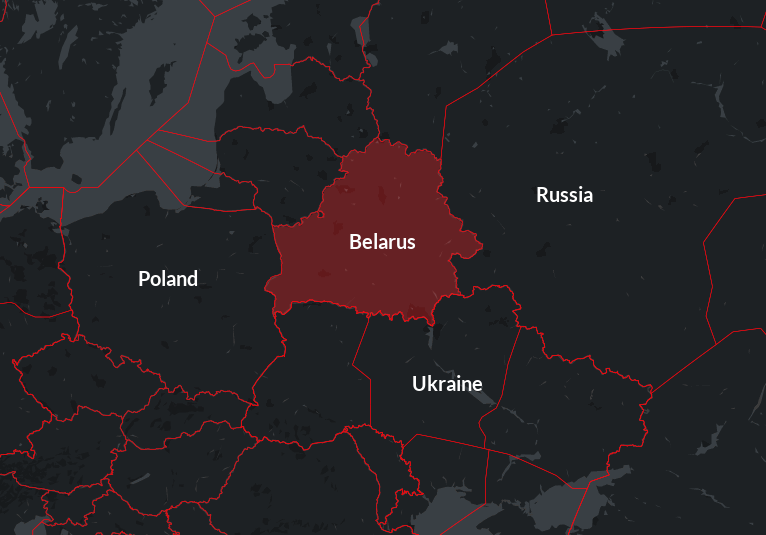
The Republic of Belarus is a landlocked country in Eastern Europe. They border Russia, Ukraine, Poland, Lithuania and Lativia. The capital is Minsk. Before gaining their independence in 1991, the country was known as Belorussia, or ‘White Russia’, and was a small Slavic Republic included in the Soviet Union (along with Russia and the Ukraine.)

The are considered a developing country and rank pretty high on the Human Development Index. They are a member the UN and have a decent bilateral agreement with the EU, but are not a member of it.

Tell us about their airports.

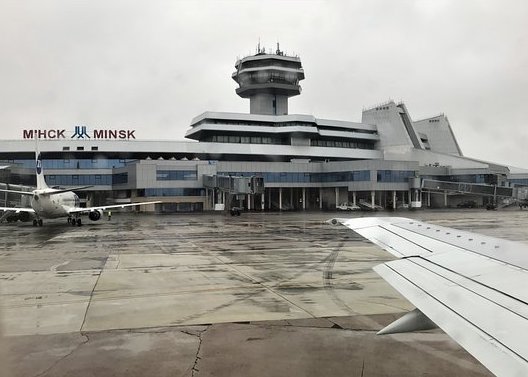
The main international airport is UMMS/Minsk:

  • 13R/31L    11,946ft/3641m    ILS CAT I
  • 13L/31R    12,139ft/3700m    ILS CAT III / CAT I

It is a decent airport with good facilities and no major threats for operating in.

Aside from UMMS, you also have the following airports with customs facilities (although none of them have a runway longer than 9000ft)

  • UMBB/Brest (not to be confused with Brest, France) with an 8596ft/2620m runway 11/29
  • UMGG/Gomel also known as Homiel/Gomel/Pokalubichi with an 8428ft/2569m runway 10/28
  • UMMG/Grodna with a 8399fr/2560m runway (limited taxi and apron space) 17/35
  • UMOO/Mogilev offering a 8419ft/2566m runway 13/31 (there is one taxiway off the runway so 180° turns and backtracks required here, and very limited facilities)
  • UMII/Vitebsk why 8550fr/2606m runway 05/23 (also very limited)
  • UMIO/Orsha opened in November 2020, offering a new cargo hub for the country. Runway 05/23 is a decent 9846ft/3001m with a CAT II ILS

Tell us about their airspace.

The airspace is what most operators are really interested in. Belarus is a fairly decent sized country which is the main airspace between Russia and Poland, and Western Europe (unless aircraft want to route further north through Lithuania and Latvia).

Above FL275 in the UMMV FIR is Free Route Airspace meaning you can plan directs between Entry and Exit points (AIP ENR 4.1)

Several authorities are currently banning their operators from routing through Belarus Airspace. This means significant detours to the north for aircraft routing to Russia.

The Ukraine borders Belarus and Russia has multiple airspace warnings and restrictions preventing many operators from overflying their airspace, so Belarus is a fairly important trade route for aircraft routing from Western Europe to Russia.

Using Minsk as a connection to Russia can have some customs issues though. Reports suggest Russia considers flights between the two as domestic (leading to cabotage issues with Russian customs), and so most operators seem to opt for EYVI/Vilnius or EVRA/Riga instead.

Tell us about their infrastructure.

Belarus’ infrastructure is a relatively aging ex-Soviet one. However, they have focused on improving their aviation infrastructure over the last decade or so. The major airports all offer at least a CAT I ILS landing system, and their en-route navigation facilities meet ICAO standards.

In 2020, the Belarussian government announced they would offer Minsk as a Fifth Freedom hub, allowing foreign operators to layover in Minsk, and fly onto other long-haul destinations.

The Aviation Market in Belarus was (pre-Covid) outpacing the growth of the wider Eastern and Central European market, with short haul carriers such as Wizz looking to increase flights to the country.

Tell us who to talk to if we want to fly there.

You need overflight and landing permits if you are a private or commercial operator. Easiest way is to fill out Form 2 and send it by AFTN direct to the authorities. They need 3 days notice if you’re heading to an international airport, and 5 if you want to fly to a domestic one.

The email for the Belarus CAA is ops@ban.by
AFTN: UMMDYAYX +375 17 222 5517

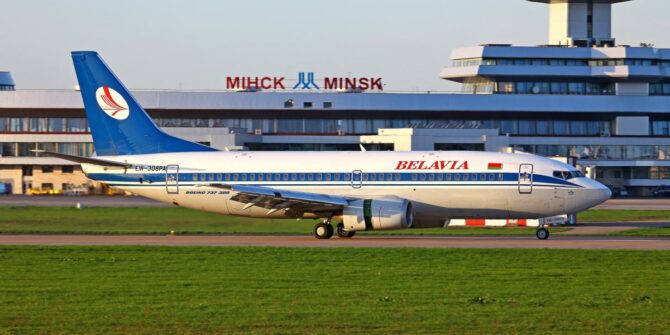
If you want to get in touch direct with someone at UMMS/Minsk airport then their admin number is +375 17 279 1436 or you can try one of the main handling agent, Belavia at +375 17 220 2555.

The Belarus AIP is available online http://www.ban.by/AIP/Belarus210715/html/index.html

Anything else to tell us?

Notam O0401/21 is in force from Apr 30 to July 31 closing runway 13R/31L at UMMS

For updated information on current airspace advisories and restrictions, check out our article on the current events surrounding Belarus.


Midweek Briefing 29JUN: Santa Maria Oceanic Strike, US Entry Requirements

Santa Maria Strike: Four Routes 29JUN Santa Maria Oceanic has published four special routes for use during the upcoming “July Friday Strike Series” ATC Industrial Action. Read the article and then Summer of Strikes.

New US Entry Requirements 29JUN The US has updated entry processing through ESTA (the online visa system for countries using the Visa Waiver Program). Read the article.


LTBA/Istanbul has reopened to traffic after a terrorist attack on 28JUN. 40 people were killed in a series of explosions and gunfire at the International terminal on Tuesday evening.

UMZZ/Belarus will undergo a re-evaluation of its currency and banks will be closed to the public between 30JUN and 01JUL, if operating to Minsk you should ensure you have sufficient cash available for those days.

EGZZ/UK Much has been written about Britain’s departure from Europe this week (and we’re talking Brexit, not football), but if you’re having trouble figuring out how this will affect you as an operator, that might be because it won’t. Read the article.

LGZZ/Greek Islands Now that summer is here in Europe, the annual capacity challenge at Greek Islands is most acute on weekends, expect healthy slot delays if operating to LGIR (Iraklion) LGKP (Karpathos) LGMK (Mikonos) LGZA (Zakinthos) LGSR (Santorini) LGSK (Skiathos) or LGSA (Chania).

VHHH/Hong Kong The CAD issued a reminder to operators this week that the airport is under strain, and slots issued must be strictly adhered to. It would seem that the Slot Adherence procedure issued earlier in the year isn’t really working. Any local operators have feedback? Let us know.

EFRO/Rovaniemi has no Jet A1 available from until July.

LPPS/Porto Santo is also out of Jet A1 until 01JUL.

DAAA/Algeria New fax/phone number for the ACC (Area Control) in Algiers: +213 (0)21 67 49 27until 23JUL.

AYZZ/Papua New Guinea Reports of civil unrest, student demonstrations across Papua New Guinea started in May 2016 and are ongoing. There have been violent clashes between students, other groups and the police in Port Moresby, Lae and the Highlands.

PWAK/Wake Island has advised its High Loader is out of action until later in the year, so for large aircraft like B767 upwards, no offload capability exists for cargo.

EGZZ/Scotland (Will we need a new ICAO code soon?) Glasgow ATC – at both EGPK and EGPF – has sporadic closures overnight at present due to staffing issues. Keep an eye on Notams.

WAAF/Ujung Pandang has some radar outages affecting high-level overflights, optimum levels may not be available.

LPPO/Santa Maria Oceanic has published four special routes for use during the upcoming “July Friday Strike Series” ATC Industrial Action. The Strike Time Period is : 0700-0900Z, during which time only these four routes will be accepted. -ROUTE A- 45N020W 40N030W 37N040W -ROUTE B- DETOX 39N020W 36N030W 34N040W -ROUTE C- LUTAK 36N020W 33N030W 29N040W -ROUTE D- ULTEM 27N040W

LIZZ/Italy We have been notified of possible ATC industrial action on 23JUL which was previously scheduled on 05JUL. Details and participation of relevant ACCs are as follows: National strike (ACCs and airports) 0800-1600 UTC. Local strike at LIRA – Ciampino 0800-1600 UTC.

VCBI/Colombo, Sri Lanka There was industrial action yesterday, 28JUN, by Immigration Officials, which may continue. Flight delays possible.

LEZZ/Spain There was a strike threatened by Apron Controllers at LEMD/Madrid but that was cancelled on Monday.

LPZZ/Portugal The seven unions of NAV Portugal sent a pre-notice for an industrial action for ATC and non-ATC personnel, during two hours daily on: 30JUN and 8/15/22/29JUL.

KATL/Atlanta Upgrades on the airport have officially started, which will include a new runway, concourse and hotel.

View the full International Bulletin 29JUN2016


Midweek Briefing 22JUN: Iceland ATC strike – end in sight, Israel FPL changes

Iceland ATC strike – end in sight 22JUN Operators on both sides of the Atlantic have been frustrated over the last 6 weeks with continual sporadic ATC Industrial action. And end may be in sight, but in the meantime keep a close eye on BIRK, BIKF and BIRD Notams. Read the article.

FPL changes: Israel 22JUN Current Flight Planning procedures for flights across Europe from Israel will change in light of a new agreement signed between Israel and Eurocontrol. Read the article.


LFZZ/France ATC Strike Number 9 gets underway today until 24JUN at 0400Z, usual disruption and restrictions apply. Avoid France where possible. NOTAM F1171/16 refers.

EGGX/Shanwick is having an 80’s party on the 28th of June at 1600Z. For engineering work, all the new technology is being taken offline for three hours, so no CPDLC, ADS-C or OCL. Instead we have Voice Reports, HF, Manual Clearance Requests (123.95 or 127.65), and so on; just like the good old days. When you hit 30W log on to Gander manually.

UMZZ/Belarus The Minsk FIR has updated its table of cruising levels and altitudes below Transition; view the AIC.

Gambia The UK FCO issued updated travel advice for The Gambia : “Demonstrations took place in April and May 2016 in Banjul. Demonstrations could occur at any time in any part of the country prior to presidential elections planned for 01DEC. You should be vigilant, avoid all demonstrations”

LPZZ/Portugal is joining the International ATC Strike Club and will begin with industrial action, for two hours daily on: June 30th, and July 8th,15th, 22nd and 29th.

KCXO/Houston Regional will be opening a new customs facility mid July. KCXO serves the Metro-Houston area and is 46 miles outside of town. The new CBP facility adds more choice to international operators over the already saturated Houston area airports.

KZZZ/United States The U.S. Navy has scrubbed the planned military GPS interference testing across the U.S. Southwest that was supposed to happen this month.

LWSS/Skopje is implementing Free Route Airspace in the Skopje ACC above FL245, effective 23JUN. FRA is available H24 with DCT limit unlimited. The ATS network above FL245 is withdrawn. Additional info is available in the Republic of Macedonia AIP AMD 58/16. New RAD measures can be found in the increment file and will become part of Annex 4 on AIRAC 1608.

LWZZ/Macedonia Late on 20JUN, tens of thousands of anti-government protesters gathered in central Skopje, Macedonia’s capital, to conduct another demonstration. The protesters gathered outside the Special Prosecution building before then marching to the Ministry of Justice building, where they broke some of its windows and threw red paint at its exterior.

EZZZ/Scandinavia Another Free Route Airspace update is happening in the two Functional Airspace Blocks NEFAB and DK/SE FAB. NEFRA Phase 1 will be implemented as of AIRAC 1607 on 23JUN, to implement H24 cross border Free Route Airspace between DK-SE FAB and NEFAB, except Norway, above FL285. ATS routes will be kept. Norway plans to implement cross-border Free Route Airspace spring 2017.

CYZZ/Canada has introduced “No Drone Zones” around airports that includes fines for offenders caught operating drones in the restricted areas. They are also drafting new legislation to strengthen rules regarding drone operations.

LEMD/Madrid may have industrial action on 28JUN, the Apron controllers are making noises about a strike. Not confirmed.

WAZZ/Indonesia FIR Ujung Pandang FIR has a couple of radar outages from 19-27JUN. Reroutes or delays are not likely, but strong potential for lower than optimum Flight Levels.

HECC/Cairo FIR If for some reason you are operating flights to or from Libya, then A: You’re probably not reading this bulletin carefully enough, and B: Be aware that you are required to obtain PPR from  Egypt via AFTN to HECAYNYX, at least 48 hours before the flight, in order to overfly Cairo FIR.

EGAA/Belfast ILS 25 out of service along with other ongoing runway and taxiway closures until 11AUG16. Please check EGAA NOTAM’s for specific closures.

EGLF/Farnborough Temporary restricted airspace will be in effect for the annual Farnborough Airshow 16-17JUL. AIC M 033/2016.

France The French authorities have extended the document checks at their borders, these measures will apply to all airports in France and also to Basel airport. Especially during the period of the European Football Championships, passengers travelling to/ from French airports are asked to ensure they have a valid identity document (passport or identity card) with them whilst travelling. A drivers license is not an acceptable document.

VTBB/Bangkok FIR Monsoon season runs July-September. Big potential for holding and airport closures in the region, taking extra fuel is recommended.

OEZZ/Saudi Arabia FIR is introducing new Navigation Charges on 01JUL. All the maths is here.

LSZA/Lugano will close 10-19OCT due to heavy maintenance work on the main runway. No traffic will be able to operate. The airport operator has said 20OCT should be the reopening day but risk that this may be extended.

WMZZ/Malaysia Following a directive by the Malaysian Immigration Department, all foreign nationals travelling on all domestic flights will be required to produce passports upon passing through Immigration control, effective immediately.

Azerbaijan An online e-visa issuing system, called ASAN Visa, will be established that should streamline the visa application process. Eligible foreign nationals will be able to obtain supporting documents, submit their visa applications and receive an e-visa within three days of submission through the portal. The list of eligible nationals is expected to be available soon on the Foreign Ministry website.

EGPK/Prestwick has ongoing overnight closures due to ATC staffing problems, keep an eye on NOTAMs.

EIDW/Dublin will closed for 15 minutes at 1500Z on 23JUN due to a VIP departure.

NWWW/New Caledonia The South Pacific is not exempt from ATC strikes either; overnight closure of the NWWW airspace means no enroute traffic accepted in the FIR tonight – and sporadically ongoing. Note that the Fire Service also has reduced RFF category at specific times. Check Notams.

SKED/Bogota FIR NOTAM of the month award: Colombia Notam A1947 issued on 17JUN. Be aware of the potential for your Cabin Crew to request a change to the SID from ATC, unbeknownst to you. In full: “CHANGES TO STANDAR (sic) INSTRUMENT DEPARTURE (SID) COULD BE DONE BY RADIOTELEPHONY BETWEEN CABIN CREW AND THE CORRESPONDING ATS DEPARTMENT WHILE COMMUNICATION INTERCHANGE, IN ACCORDANCE WITH AERODROME OPERATIONS REF. AIP ENR 1.10”.

We actually have no idea what they mean. Let us know, and keep an eye out for those sneaky flight attendants.

LEPA/Palma has a bunch of outages, and runway and taxiway closures at present that will create restrictions and delays. Take a close look at your arrival and dep times before operating.

Suriname Immunisation checks for Yellow Fever are being carried out throughout June at all border check points, ports and international airports in Suriname; make sure you have a valid yellow fever certificate if required.

RJZZ/Japan On 22JUN heavy rains caused building damage and fatalities in southwestern Japan. At least six people died, as a result of the rain and mudslides across the island of Kyushu. Emergency personnel evacuated several hundred people due to the threat of further mudslides.

Uzbekistan has increased security due to a major summit, from 23-34JUN which may result in changes to flight departures and lengthy check in and security clearance at airports across the county.

View the full International Bulletin 22JUN2016