Belarus: A closer look at their aviation industry

Belarus is in the spotlight at the moment for their recent, controversial decision to force a foreign civilian aircraft to land under false pretences and for political reasons.

We thought we would take a look at their aviation industry, what you might experience if operating into the region, and a brief review of what it will mean if other countries ban use of their airspace.

Who is ‘Belarus’

The Republic of Belarus is a landlocked country in Eastern Europe. They border Russia, Ukraine, Poland, Lithuania and Lativia. The capital is Minsk. Before gaining their independence in 1991, the country was known as Belorussia, or ‘White Russia’, and was a small Slavic Republic included in the Soviet Union (along with Russia and the Ukraine.)

The are considered a developing country and rank pretty high on the Human Development Index. They are a member the UN and have a decent bilateral agreement with the EU, but are not a member of it.
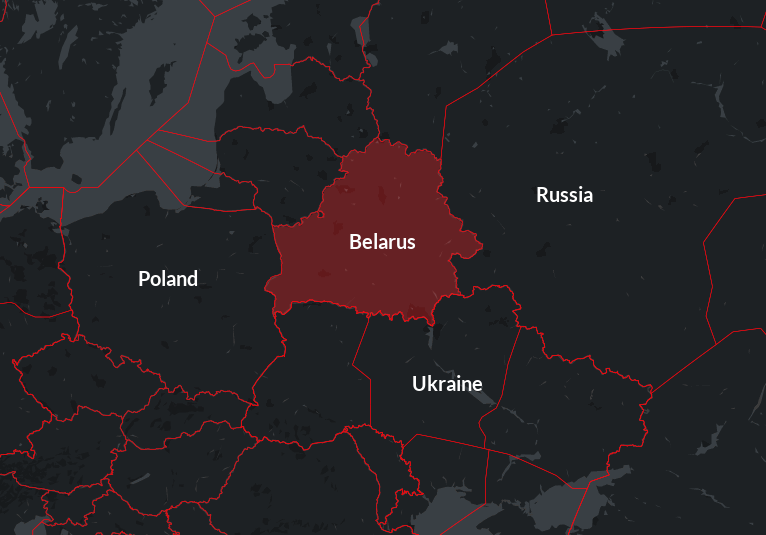
An important route connecting Russia to the rest of Europe.

Tell us about their airports.

The main international airport is UMMS/Minsk:

  • 13R/31L    11,946ft/3641m    ILS CAT I
  • 13L/31R    12,139ft/3700m    ILS CAT III / CAT I

It is a decent airport with good facilities and no major threats for operating in.

Aside from UMMS, you also have the following airports with customs facilities (although none of them have a runway longer than 9000ft)

  • UMBB/Brest (not to be confused with Brest, France) with an 8596ft/2620m runway 11/29
  • UMGG/Gomel also known as Homiel/Gomel/Pokalubichi with an 8428ft/2569m runway 10/28
  • UMMG/Grodna with a 8399fr/2560m runway (limited taxi and apron space) 17/35
  • UMOO/Mogilev offering a 8419ft/2566m runway 13/31 (there is one taxiway off the runway so 180° turns and backtracks required here, and very limited facilities)
  • UMII/Vitebsk why 8550fr/2606m runway 05/23 (also very limited)
  • UMIO/Orsha opened in November 2020, offering a new cargo hub for the country. Runway 05/23 is a decent 9846ft/3001m with a CAT II ILS
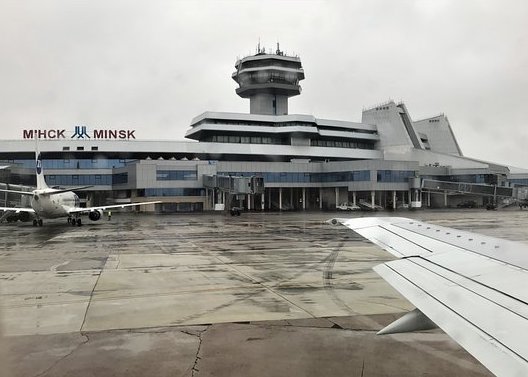
Those aprons could do with some work

Tell us about their airspace.

The airspace is what most operators are really interested in. Belarus is a fairly decent sized country which is the main airspace between Russia and Poland, and Western Europe (unless aircraft want to route further north through Lithuania and Latvia).

Above FL275 in the UMMV FIR is Free Route Airspace meaning you can plan directs between Entry and Exit points (AIP ENR 4.1)

Several authorities are currently banning their operators from routing through Belarus Airspace. This means significant detours to the north for aircraft routing to Russia.

The Ukraine borders Belarus and Russia has multiple airspace warnings and restrictions preventing many operators from overflying their airspace, so Belarus is a fairly important trade route for aircraft routing from Western Europe to Russia.

Using Minsk as a connection to Russia can have some customs issues though. Reports suggest Russia considers flights between the two as domestic (leading to cabotage issues with Russian customs), and so most operators seem to opt for EYVI/Vilnius or EVRA/Riga instead.

Tell us about their infrastructure.

Belarus’ infrastructure is a relatively aging ex-Soviet one. However, they have focused on improving their aviation infrastructure over the last decade or so. The major airports all offer at least a CAT I ILS landing system, and their en-route navigation facilities meet ICAO standards.

In 2020, the Belarussian government announced they would offer Minsk as a Fifth Freedom hub, allowing foreign operators to layover in Minsk, and fly onto other long-haul destinations.

The Aviation Market in Belarus was (pre-Covid) outpacing the growth of the wider Eastern and Central European market, with short haul carriers such as Wizz looking to increase flights to the country.

Minsk 1 (UMMM) closed in 2015

Tell us who to talk to if we want to fly there.

You need overflight and landing permits if you are a private or commercial operator. Easiest way is to fill out Form 2 and send it by AFTN direct to the authorities. They need 3 days notice if you’re heading to an international airport, and 5 if you want to fly to a domestic one.

The email for the Belarus CAA is ops@ban.by
AFTN: UMMDYAYX +375 17 222 5517

If you want to get in touch direct with someone at UMMS/Minsk airport then their admin number is +375 17 279 1436 or you can try one of the main handling agent, Belavia at +375 17 220 2555.

The Belarus AIP is available online http://www.ban.by/AIP/Belarus210715/html/index.html

Anything else to tell us?

Notam O0401/21 is in force from Apr 30 to July 31 closing runway 13R/31L at UMMS

For updated information on current airspace advisories and restrictions, check out our article on the current events surrounding Belarus.
The Gateway to the Skies

If you have not heard of the IFP Information Gateway then here is a little summary for you. It is the Instrument Flight Procedures Information Gateway which is, according to the FAA who run it, your centralized instrument flight procedure data portal.

It’s a handy site because it provides you with a single-source, one-stop-shop, first place to visit if you need info on any of the following:

  • Charts
  • The IFP Procedures plan
  • IFP Coordination (forms and things)
  • IFP Documents
  • IFP Request form – this is where you can submit a request or query on an IFP. SO if you fly somewhere and think an IFP needs creating, amending or cancelling, you can do it here!

And this isn’t just for US pilots – it is pretty handy for anyone flying into the US who flies IFR procedures.

The Optimisation Project

This is a major project that the FAA are undertaking. They are reviewing their entire inventory of equipment and procedures as part of a plan to modernize the National Airspace infrastructure – to improve airspace and airport efficiency and safety.

The NAS covers an area of something like 30 million square miles, so it is a big project.

What is the plan?

The introduction of PBN (performance based navigation) is a big part of the modernization. If you fly into the US then you need to know about this, because it is going to mean changes to routes and procedures, airspace and equipment required.

Charts are being updated to remove unnecessary clutter. In 2020 they cancelled 1,000 procedures and took out things like circling minima on charts that no longer needed it. You need to know about this because it will impact chart validity, and things like minimus are airports you might use.

As for the inventory check – they are reviewing all the procedures at airports and deciding which to keep, which to cease, and which just plain old need updating. This will start with the decommissioning of any ancient VORs and NDBs which no longer support the operations network. You need to know about this because there will be ongoing changes to the approaches available at airport.

Give us some more details on the inventory checks

The FAA are going to review all procedures.

Why?

Well, because having looked over some data they reckon at least 20% of current IFPs have pretty limited benefits to the NAS. If procedures are not being used then retiring them means lower admin, maintenance and training costs. It also means more efficient and effective airspace management, which means improved safety and access.

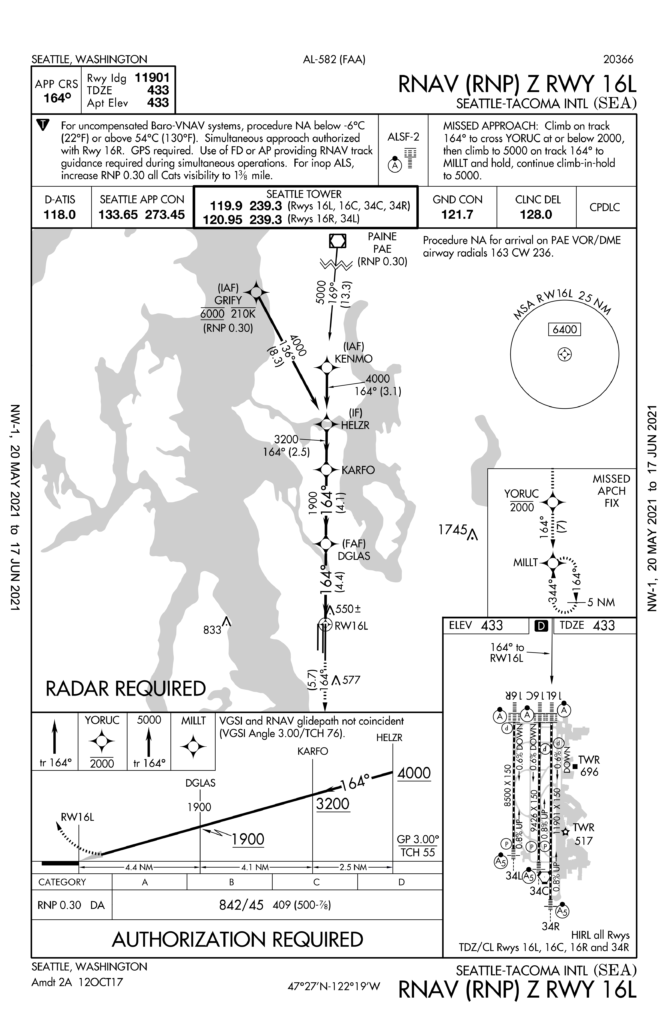
Take KSEA/Seattle for example. They have an RNAV RNP approach and a GPS approach for runway 16L. The RNAV RNP was only flown 17 out of a whopping 191,448 IFR arrivals.

It has higher minimum and an identical flight path to the GPS approach so there is really no reason for this approach to exist.

KPAE/Paine Field is another one worth looking at. It has a VOR-A approach which was only flown 95 times out of 10,348 IFR arrivals. It is under-utilized, costs a bunch to maintain and there are plenty other options. So it is a good one to chop.

What about KSBA/Santa Barbara airport and their VOR or GPS approach runway 25? This was also significantly under-utilized, being flown just 1,732 out of 17,174 arrivals. However, it is the most commonly used approach for GA traffic, and is the only one available when the wind is favoring that runway. Not such a good one to delete.

The IFP plan won’t just review data and statistics, it also engages with the folk using the IFPs to make sure changes are benefiting those it needs to benefit. Santa Barbara won’t lose the procedure just yet, although they might get itself a nice new space-based one out of this at some point.

Comments and feedback

If you fly into airports and have comments or feedback on IFPs then get in touch, either by filing in the form, or emailing at 9-AMC-Aerochart@faa.gov. This project is a long, ongoing one, but one that will benefit any operator who flies in or out of the US, and there are opportunities there to provide input.

Check out the info


ATC Zero in Class A Airspace: Is It Dangerous?

IFALPA has issued a new safety bulletin this week expressing concerns that existing US FAA contingency procedures that allow aircraft to continue using Class A airspace during ‘ATC Zero’ events are inadequate. They argue that the procedures expose aircraft to unacceptable risk and that more needs to be done to ensure their safety.

ATC Zero Events have become more common

Before Covid, ATC Zero events were quite rare. They’d usually only occur if controllers were forced to evacuate a facility. Fire, a force of nature, bomb threat – those sorts of things.

But then Covid came along and as we all know, it is super contagious. Amidst border closures and quarantine and testing rules, a new threat began to emerge in our skies.

ATC facilities began to be impacted by Covid infections, and short notice closures for cleaning have become a constant risk.

Last year we published an article on how to manage ATC Zero events in Oceanic Airspace after the New York ARTCC shut down affecting traffic crossing the NAT. The US FAA were sufficiently concerned that they published their own SAFO.

However since then the US has continued to be affected by ATC Zero events over land which affect large portions of Class A airspace, often for hours at a time.

What the FAA have to say about it

The FAA are satisfied that it is safe for aircraft to continue using Class A airspace when no ATC services are available, as long as you follow contingency procedures.

What contingency procedures?

Well, they can be broken down into two parts.

  1. When an ATC Zero event is scheduled, a NOTAM will be published. It will restrict traffic to specific routes through the affected airspace which contain compulsory reporting points. If you don’t intend to the fly the prescribed routes, you’re not allowed in.
  2. TIBA – Traffic Information Broadcasts by Aircraft. The FAA expects you to use them. Recent feedback from members who have operated under these conditions indicate that many aircraft either don’t know, or are choosing not to use them while operating in ATC Zero airspace. That in itself is concerning.

So what exactly are the TIBA procedures?

You can find them in ICAO Annex 11, or buried in lengthy NOTAMs if you prefer your procedures capitalised, abbreviated and barely punctuated.

Here’s a quick unofficial rundown:

1. Dial up your TIBA frequency. If you have two VHF comms, leave one on the normal ATS frequency to listen out for a controller.

2. Maintain a listening watch on the TIBA frequency.

3. In most cases you’ll need to remember ’10 minutes’. A radio call is required 10 minutes before entering the affected airspace, or if you have just taken off from an airport within the airspace as soon as you can.

4. Enroute, you’ll need to make routine position reports:

  • 10 minutes before crossing a reporting point
  • 10 minutes before you cross or join an airway.
  • And if your waypoints are really far apart, make a call every 20 minutes.

5. If you’re changing levels you need to make a radio call 2-5 minutes beforehand.

So what do you actually need to say?

The short answer: Who you are, what level you’re at, where you are and where you’re going next.

The slightly longer answer:

- ALL STATIONS
-  Call Sign
- FLIGHT LEVEL
- AIRWAY (or direct to/from)
- POSITION AT TIME
- ESTIMATING (next reporting point or crossing/joining airway) 
  AT TIME AND FLIGHT LEVEL

Don’t forget to listen

It’s important to remember: When you enter Class A airspace during an ATC Zero event, you are responsible for your own separation. You’re on your own. Which means you need to hear and be heard.

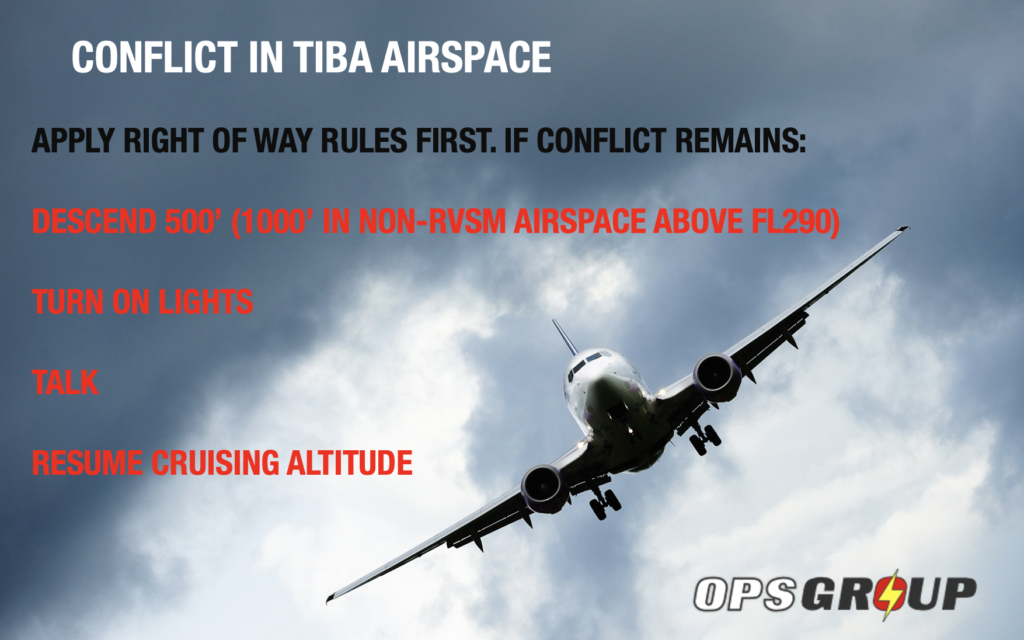
What if a conflict is likely?

There’s a procedure for that too. If you can’t solve the problem with right of way rules, here’s what you need to do:

So why are IFALPA worried?

For starters, there may be aircraft operating in Class A airspace without TCAS which greatly increases the risk of a collision. Secondly there is a lack of training standards about how to apply the contingency procedures. Lastly given that no one is watching, you may be exposed to other aircraft breaching the regs.

Until things change, they recommend you avoid the affected airspace by flight planning around it. If that’s not practical here are their suggestions:

  • Minimise the risk by taking the shortest possible path through it.
  • Make sure you review the contingency procedures beforehand.
  • Make sure there are no procedures in your in your manuals that will be affected by a lack of ATC.
  • Submit a safety report afterwards.

The threat remains

ATC Zero events are likely to continue in the near term, along with the risks they pose. It is important that pilots take those properly into account before they enter affected airspace.

Love them or hate them, sticking to the contingency procedures like glue is everyone’s biggest risk mitigator until new or better ones eventually come along.


The Central Florida Metroplex

Behold, Metroplex! The gigantic, towering Autobot warrior! The Walking City, capable of channeling awesome energies!

Wait, what? The Central Florida Metroplex, you say? Oh. Yeah, that’s different. Ok, let’s take a look…

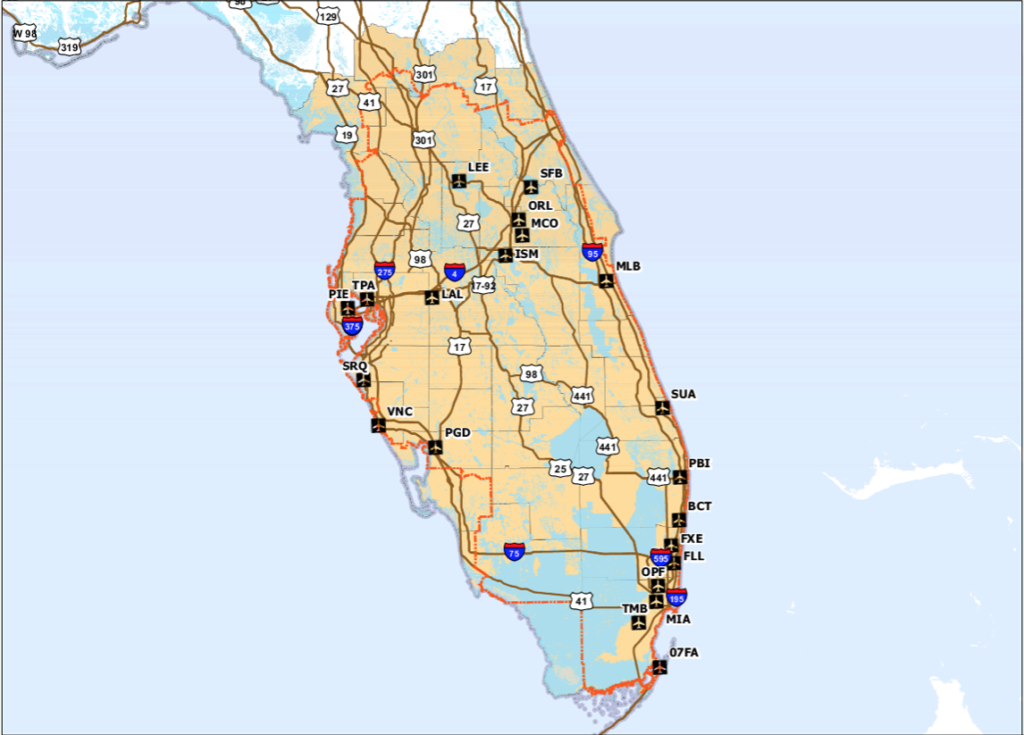
The Central Florida Metroplex an area encompassing various airports including (but not limited to) these big ones –

  • KMIA/Miami
  • KMCO/Orlando
  • KFLL/ Fort Lauderdale
  • KTPA/Tampa

It also includes other sightly less big ones, executive ones and basically any airport in the area. Here is a map of said area:

Phase One

The reason we are hearing about it a lot is because there is a major project underway to improve the safety and efficiency of the airspace here, and Phase One is just about to be implemented.

The start of the project is all about improving climb and descent profiles, so on April 22 a whopping 54 new procedures are going to come into force, many of which will enable more direct routings of flights.

All this means arrivals and departures will be optimized. Fear not though, the new procedures have been developed to follow current flight tracks where possible, so you hopefully won’t see major, confusing changes – just changes to make it all more efficient.

And then…

ATC are going to get their own new procedures as well. 17 of them coming in around August time. The ATC facilities have been enhanced over the last few years and automation advancements will tie in with these procedures.

What are the new procedures?

Well, we will have to wait until April 22 to actually see them in action, but it is mainly going to be changes to routings of SIDs and STARs, as well as some changes to altitudes. There are also a bunch of amendments to SIAPs and associated takeoff minimums as well as obstacle departure procedures based on the commissioning of new navigational facilities, adding of new obstacles, and general air traffic requirement changes.

The FAA published this list so you can take a look and see which are changing and when to check those charts for the correct and up to date version.

There will also be changes to routes – in particular the T routes. V routes will still be available but the plan is to phase these out over time so you are encouraged to file on Tangos.

And theeennnn…

The FAA have proposals in for an overhaul of the airspace across most of Florida, including changes to airspace boundaries around major Florida airports in order to more safely operate VFR and IFR traffic in close proximity.

Currently, the airspace surrounding KMIA/Miami is Class B, which is the most restrictive airspace around the busiest airports in the country. Miami’s Class B airspace extends to 20 nautical miles around the airport up to 7,000 feet in altitude. The FAA want to expand this out to 25 nautical miles east and west of the airport. The top will remain the same, while the bottom of the airspace gradually increases from the surface to 4000 feet as it extends out from the airport.

Then there is the airspace around KFLL/Fort Lauderdale. Another major, busy airport, they are surrounded by Class C airspace, which is less restrictive, but still highly controlled. Fort Lauderdale’s Class C airspace extends to 10 nautical miles up to 4,000 feet in altitude, and the proposal looks to extend this also out to 25 nautical miles to the east, and 20 nautical miles to the west, with its top and bottom following the same design as Miami’s class B.

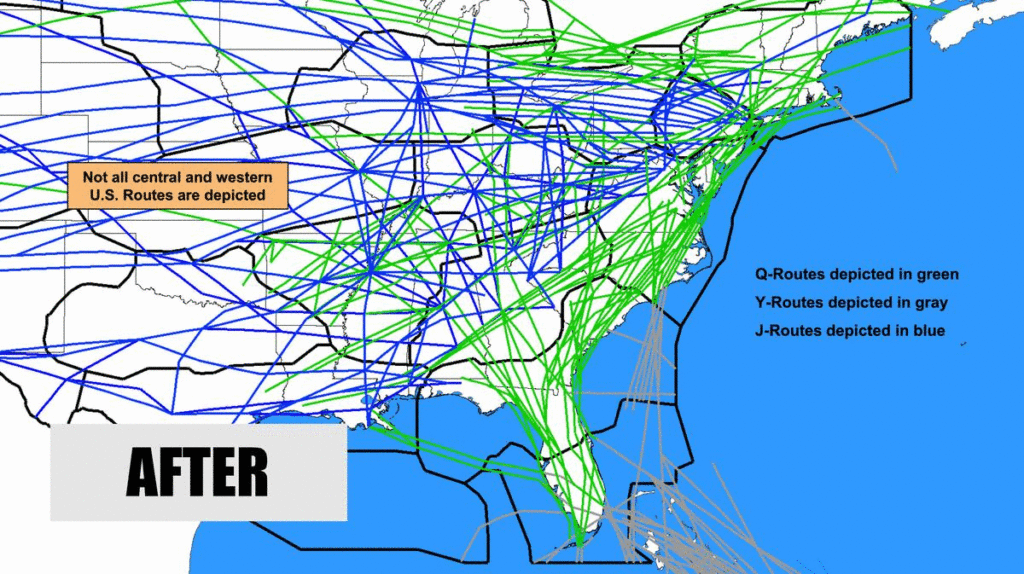
There are also changes planned for the Northeast Corridor Atlantic Coast Routes (NEC ACR).

7 new Q routes are being added and something called ZDC ultra-high sector 30 will go live in September. By the end of the upgrading there will be something like 40 new Q and Y routes which will replace the north-south high-altitude route structure over the East Coast.

The big plan here is the decrease in reliance in ground based navaids, and some fuel and time efficiency improvement for operators.

What can the pilots expect?

You can expect to see changes to charts and procedures – so keep an eye on them and make sure you are operating with the most up to date. You can also expect to see more efficient and safer airspace as the phases of this are implemented over the next year or two.


The Normalising of Balkan Airspace

The Kosovo War took place several decades ago. It was a conflict between the Serbs (former Yugoslavia) who had controlled Kosovo before the war and considered the land sacred, and the Kosovan ethnic Albanian rebel group who wanted Kosovo to have their independence (and ethnicity) from Serbia recognized.

Following the war, the usual sort of reaction from all parties involved ensued – namely Serbia refusing to talk to their new neighbour, Kosovo. Despite the conflict having been resolved several decades ago, there has been an ongoing impact on aviation in the region because of the continued political tensions between the two countries.

Tell us something about Kosovo?

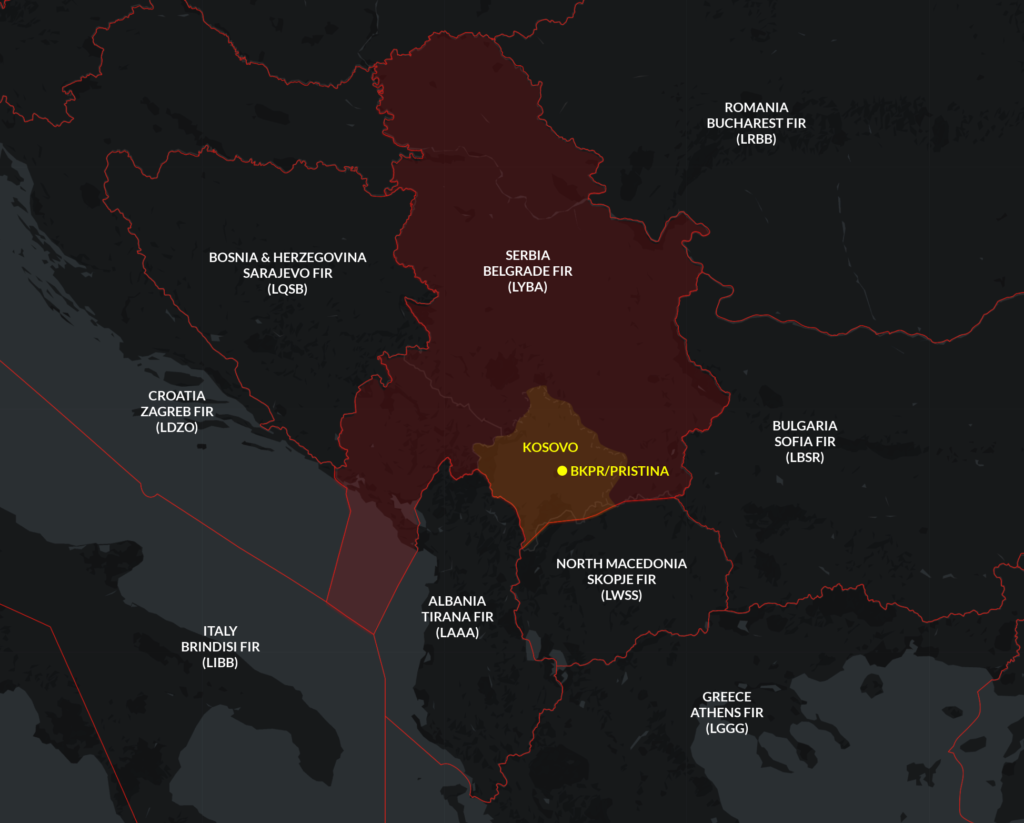
Kosovo is a landlocked country bordered by Serbia to the Northeast, Montenegro to the Northwest  and North Macedonia and Albania on the other sides.

It only has three airports –  two small domestic airports, and then BKPR/Pristina International.

Pristina International, also known as Adem Jashair, is a single runway airport. Runway 17/35 is 8,205’ (2501m) and has a CAT II ILS onto 17 and VOR DME onto 35. They have limited maintenance facilities and JET-A1 on prior request.

What was the airspace issue?

In short, Serbia refuses to allow Kosovan bound aircraft to route through Serbian airspace. This included upper and lower airspace. 

Since the bit where Serbia borders Kosovo makes up approximately half of Kosovo’s entire border, the overflight ban resulted in a major detour for any aircraft wanting to fly in or out Kosovo, and control and safety was limited.

What happened next?

In 2014, Hungarocontrol (Hungarian ATC) sorted the upper half the problem by assuming responsibility for all the upper airspace in the region. With them controlling all flights over FL205 (the lowest available flight level being FL210) this made it a lot easier for aircraft to route over some of Serbia. Aircraft still had to route around to Albania and North Macedonia in order to descend into Kosovo since SMATSA (Air Traffic Control of Serbia) continued to refuse aircraft to overfly the territory of Serbia below FL205.

The official re-opening of the upper airspace info can be found here. It is seven years old but still an interesting bit of historical Notamage.

This airspace falls under KFOR. Kosovo also has no designated RCC. Operations are under the control of the Combined Air Operations Centre Torrejón –  a military (NATO) command centre in Spain. Actually, they are kinda cool. They secure the skies, respond to crisis, protect territory and populations and do a bunch of other impressive peacekeeping stuff. So while Kosovo airspace is referred to under the Balkans airspace, it is still looked after by NATO.

But back to Kosovo – control for Pristina Airport was therefore from surface level to FL205, with Hungaro taking over from there. The only way in and out of the airport was via the southern border with Macedonia.

What has happened now?

Newly formed south-west air routes in the lower airspace will allow more efficient routings into Kosovo for civilian aircraft.

The new lower airspace will be controlled by Iceland, organized by NATO under their Balkans Airspace Normalisation program. Iceland will offer safety oversight and also help support technical solutions to allow more airlines to launch flight to and from Pristina in the future.

This is the official NATO news on this news.

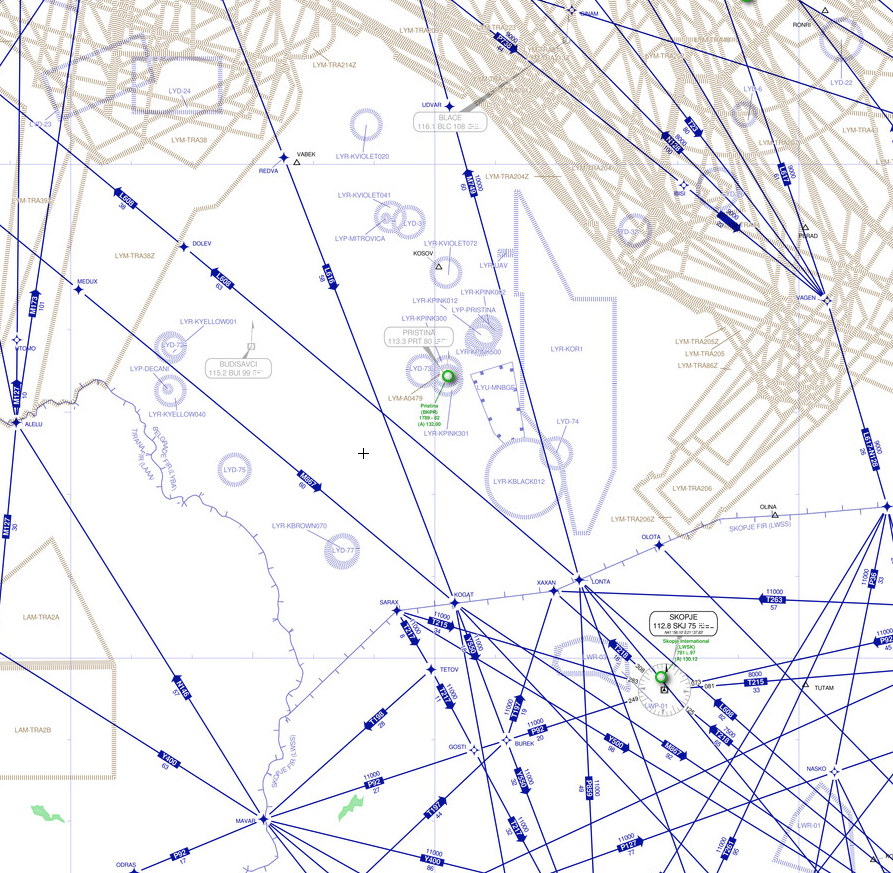
Airspace up to FL205 over Kosovo forms the Pristina ANSP. Everything in the CTR and CTA is Class D. Outride of that is Class G. General Air Traffic are not allowed in the Class G bits without prior permission (keep this in mind if you need to make weather deviations – it all has to be cleared by ATC unless a proper emergency).

General Aviation Traffic have the following routes available to them:

  • From North Macedonia, you can plan to route inbound by XAXAN and out via SARAX.
  • From Albania, you can route in via ARBER and then expect a direct to Pristina airport. Outbound will be via KUKAD.
  • From Montenegro the waypoint is MEDUX – but this is for Military only.
  • From Serbia flights along the L680/M867 routes (KUKES/JAKOV waypoints) are Military only.

Although this does not mean a major change for routings, the “normalisation” of control and airspace (high and low) is a step forward.

What next?

Well, that’s about it for now. There was apparently an agreement signed in 2020 between Serbia and Kosovo to start allowing flights between BKPR/Pristina and LYBE/Belgrade, but so far no sign anyone is planning on starting up this route.

The Kosovan CAA page is here (although much of it does not work). There are some old AIPS published so keep an eye out for the new ones showing the shiny new ATS routes.

Some planning info

If you are looking to fly into Kosovo then you are going to need a slot. You can email occpm@imakkosovo.aero, or call +383 38 501 502 2222

They want at least 3 days notice.

All the forms for requesting slots, and all the information on this can be found document entitled “Regulations for aircraft operating as General Air Traffic in the Balkans’ v4.0” which we have provided right here for you.


Gulf routings set to ease up as Qatar blockade comes to an end

After three and a half years of political stalemate, the Gulf blockade against Qatar by Saudi Arabia, the UAE, Egypt, and Bahrain, is coming to an end. These countries have restored diplomatic relations and opened their borders and airspace to Qatar – with Egypt also expected to follow suit shortly.

What does this mean for operators?

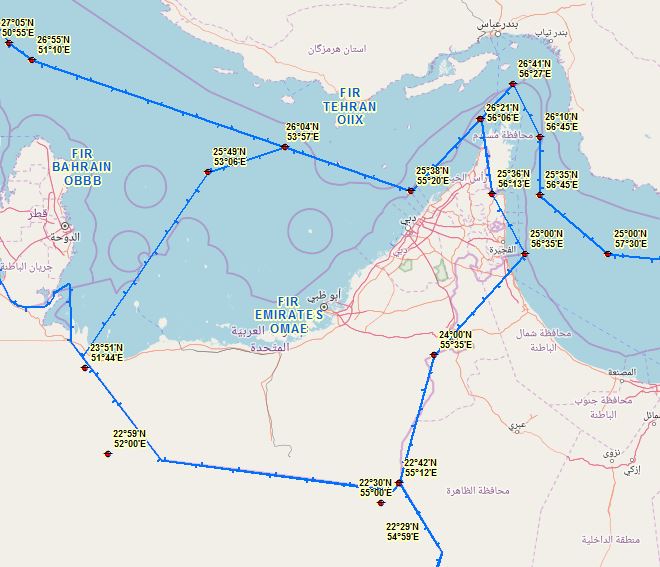
The biggest change seen will be for aircraft registered in Qatar (A7-) which will now be allowed to route via OEJD/Jeddah FIR and OMAE/Emirates FIR, and gain more efficient use of OBBB/Bahrain FIR – in addition to reinstated landing rights in those countries. This is as opposed to routing via OIIX/Tehran FIR, which incurs time and fuel penalties and in the worst cases requires a tech stop.

But this is also good news for foreign operators. For the past three years, foreign operators had been faced with various different restrictions if trying to fly to/from Qatar – they needed special permission from Saudi Arabia, Bahrain and the UAE if planning to overfly any of those countries, and Bahrain had banned direct flights from Qatar completely.

This has now changed. With Saudi Arabia, Bahrain and the UAE lifting their blockade against Qatar, they have cancelled a bunch of Notams which effectively means there are no longer any special requirements for foreign-registered aircraft flying to Qatar via Saudi/Bahrain/UAE airspace. In short, more efficient routings are now available if you are operating into, out of, and through the Arabian Gulf region.

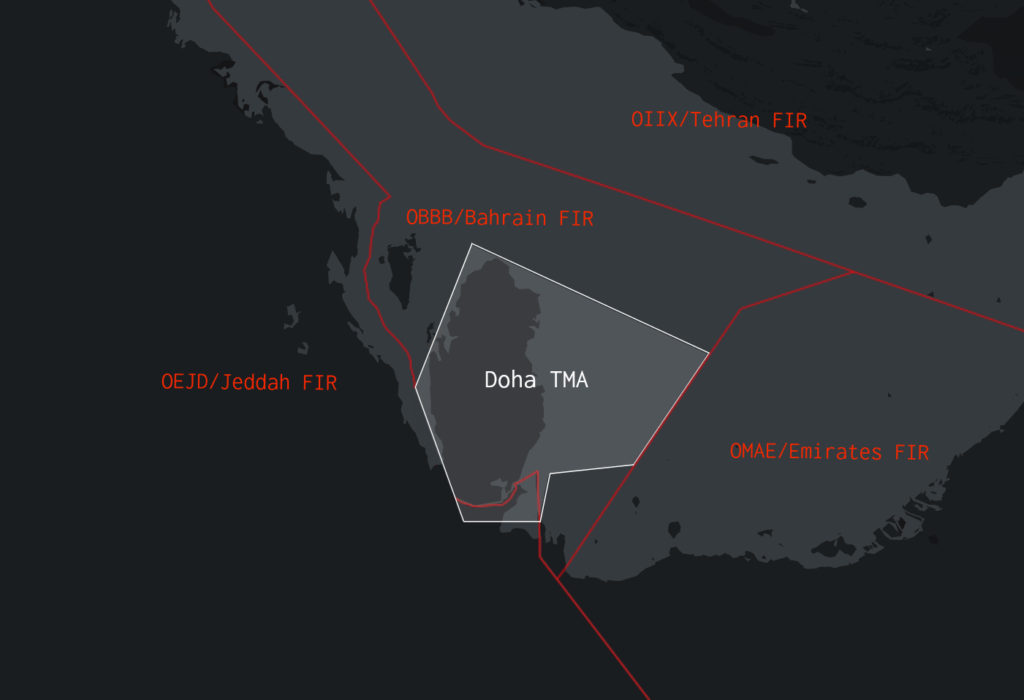
Here is the current state of play as of 20 January 2021:

Remember: Qatar does not have its own FIR, and is nested completely under the OBBB/Bahrain FIR – any Qatar Notams are therefore published under OBBB. The Doha TMA extends SFC to FL245, above which is the Bahrain UIR.

If you have a question or have information to share, use our Slack channels! We are a community based on sharing information and resources to help each other – jump in! 


PBCS – What, Where and How

In Short: The performance-based communication and surveillance (PBCS) framework allows for higher safety standards and more efficient airspace use. If your aircraft already has the equipment and you cross the Atlantic or Pacific Oceans often, it’s worth looking into getting your regulatory approval.

PB… what? It’s a good question. We have so many acronyms in aviation, it’s easy to forget what this one stands for and what it really means. So, let’s try and get to the bottom of it.

What is PBCS?

Official answer:

The ICAO performance-based communication and surveillance (PBCS) framework ensures that emerging technologies for communication and surveillance fully support ATM operations and are implemented and operated safely.

In plain speak:

With the technology already available on many aircraft and in the Air Traffic Control facility, aircraft can now fly closer than ever before, especially over non-radar oceanic airspace.

There are two key buzz words, so let’s define them. They are interlinked with RNP – Required Navigation Performance.
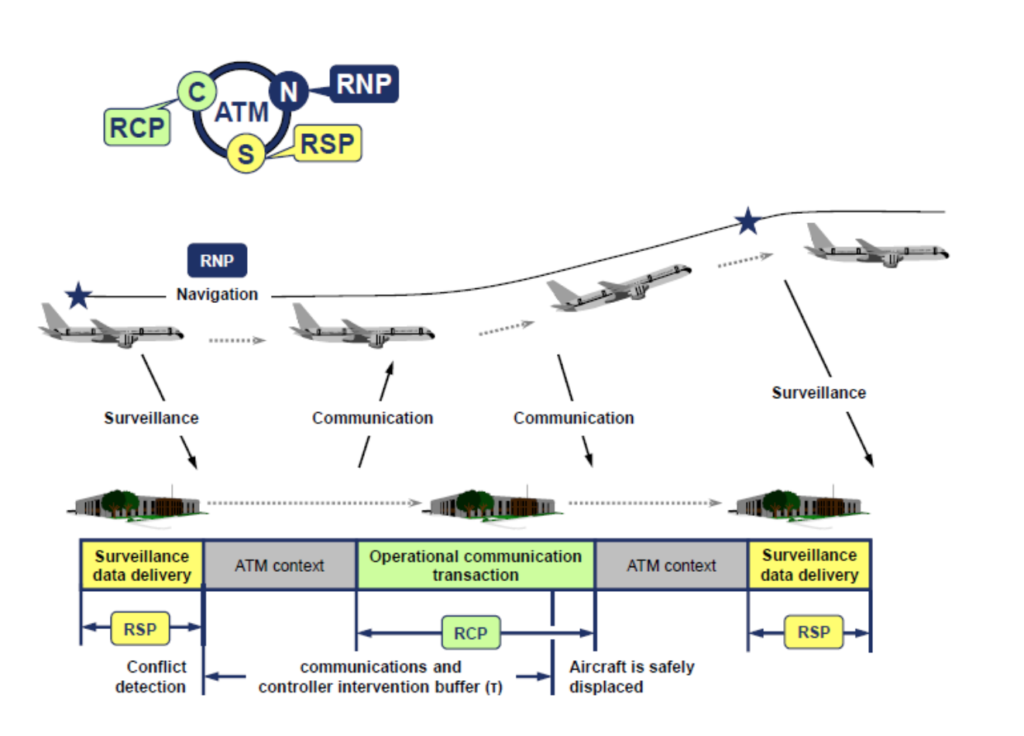
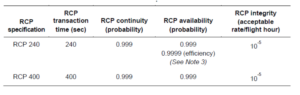
  • RSP – Required Surveillance Officially known as “surveillance data delivery”, often stipulated in the Airplane Flight Manual. Basically, how often does the aircraft send its position to ATC/ground station. There are two specifications, RSP180 and RSP400. The numbers indicate the maximum number of seconds (180 or 400) for the transaction to occur.
  • RCP – Required Communication ICAO has two specifications, RCP240 and RCP400. Again, the numbers indicate the maximum number of seconds (240 or 400), or “transaction time” taken for the controller to issue an instruction to the crew and for them to receive a response. This could be via CPDLC, HFDL, VDL or SATCOM.

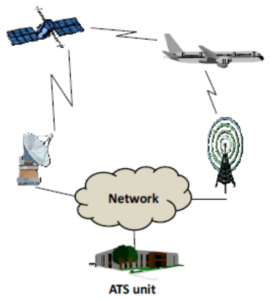
So, we have a loop here, C-N-S. Communication, Navigation and Surveillance. An aircraft sends surveillance information to ATC about where it is; the aircraft stays within confines of RNP navigation requirements and ATC communicates with the aircraft within the required transaction times.  Pretty easy!

But why do we need PBCS?

The take away? If all given aircraft in a certain airspace have a lower RSP value and a lower RCP value, we can start putting these aircraft closer together.

Essentially – performance-based separation minima. This allows aircraft to be separated safely according to technological capability rather than “one-size-fits-all” prescriptive distances.

What are the differences from PBN?

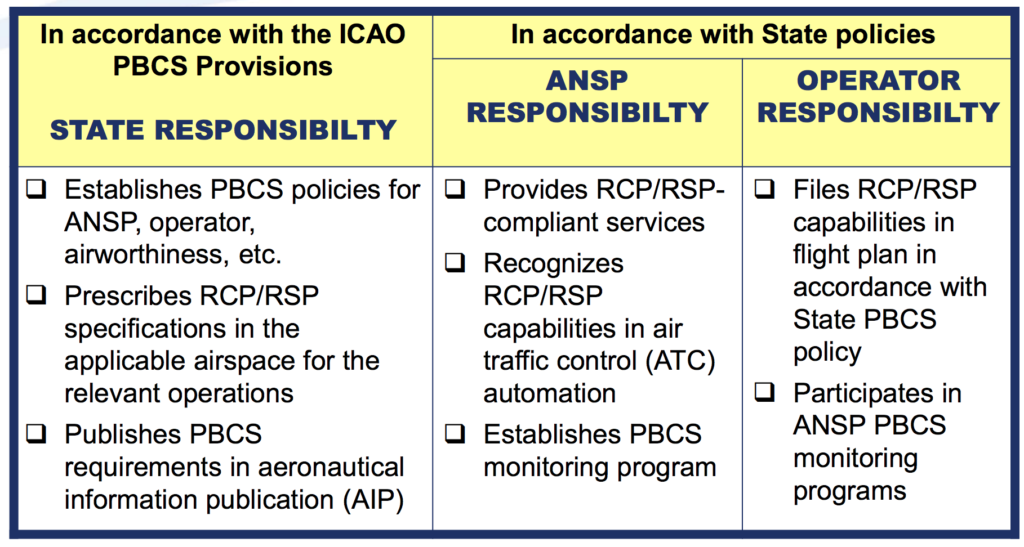
They are similar but there are notable differences. In a simple sense, the PBN (RNP/RNAV) only requires that the operator obtains approval because it focuses on how the equipment works. PBCS (RSP/RCP) however requires the involvement and approval of the air traffic service provider because it’s a two-way communication and surveillance effort. There are dependencies and complexity with the equipment standards on both ends.

In this graphic you can see a high-level summary of who is responsible for what:

Where is it in place?

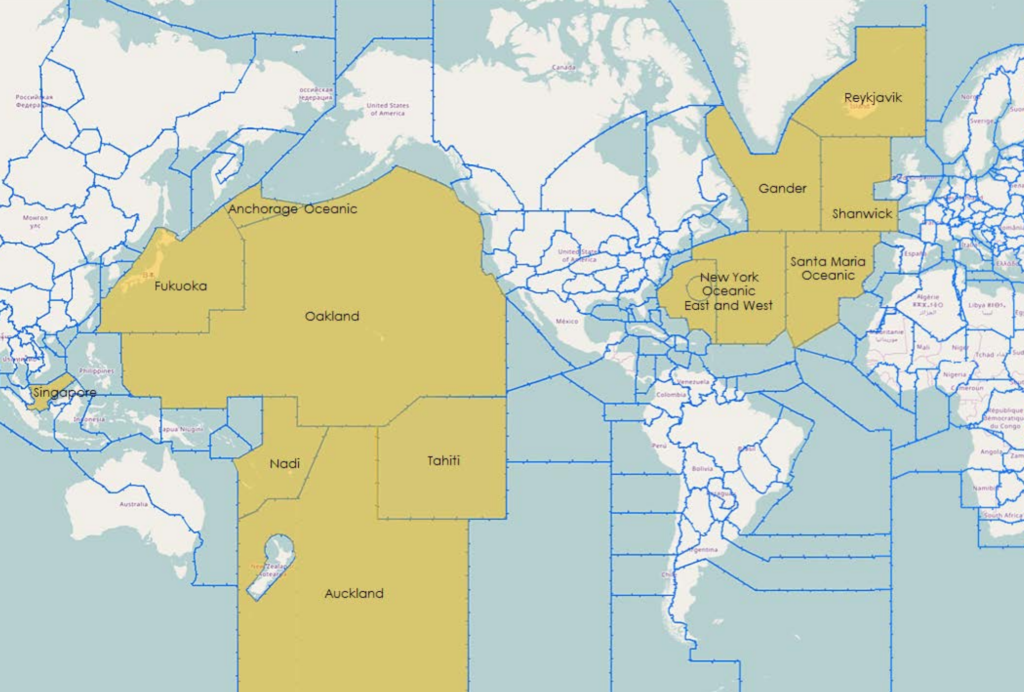
Currently PBCS is in effect in one form or another in the following FIR’s

  • NZZC/Auckland Oceanic
  • NFFF/Nadi
  • KZAK/Oakland Oceanic
  • PAZN/Anchorage Oceanic
  • WSJC/Singapore
  • VCCF/Sri Lanka
  • NTTT/Tahiti
  • RJJJ/ Fukuoka
  • KZNY/New York Oceanic
  • CZQX/Gander
  • EGGX/Shanwick
  • BIRD/ Reykjavik
  • LPPO/Santa Maria Oceanic

The Air Traffic Service providers of China, Brazil and Indonesia have also shown interest to introduce PBCS in the future.

Specifically, PBCS is being used between FL350 and 390 on certain “half” NAT tracks as we have written about before.

What do I need to do?

Requirements vary from state-to-state on the exact procedure for obtaining approval. It’s important to note that not all aircraft are automatically PBCS ready (refer to your aircraft manufacturer and your airplane flight manual).

The FAA has outlined its approval process here and has a handy powerpoint document here.

An important element is to prove that you have signed the “PBCS Global Charter” which can be found at the FANS Central Reporting Agency (CRA) website.

When a PBCS authorization is obtained an operator is required to file both P2 (indicating RCP240) in item 10 and SUR/RSP180 in item 18 of the flight plan, in addition to the J codes for CPDLC and D1 or G1 for ADS-C in item 10.

The correct filing of these two codes will indicate to any ATM ground systems applying performance-based separation minima that the aircraft is eligible for these minima and that the crew have received the relevant training in order to safely operate using the reduced separations.

Will you notice that PBCS standards are being applied to your flight?

Ok this is the funny part of this story. The short answer, probably not.
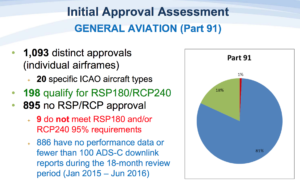
While it may be easier for RCP240/RSP180 approved aircraft to obtain optimal flight profiles, especially during high traffic periods, and particularly for NAT flights using the OTS, the application of these standards is generally tactical in nature for ATC. An aircraft may not have performance-based separation applied at all on an individual flight, or possibly may never have had it applied to any of its flights. Even if a you have RCP240/RSP180 approvals, if the aircraft nearby does not also have the approvals, the separation standards cannot be applied!

What if I don’t have RCP240 and RSP180 approval?

If you do not have RCP240/RSP180 approvals you will always have the larger separations, e.g. 10-min, applied, and not be eligible for the lower standards in cases where it may be beneficial.


The only airspace that has implemented tracks that will require PBCS to file is in the NAT OTS. There are still non-PBCS tracks in the OTS for which PBCS approvals are not required.

All other airspace in which performance-based separation minima are currently applied will allow aircraft with and without RCP240 and RSP180 approvals to enter and use the airspace in a mixed-mode operation.

Will I be penalized if I don’t have it?

Probably not in the short term. In the future as more and more airspace corridors become PBCS only, then it is possible you may be subject to reroutes, delays or the requirement to fly outside of certain flight levels.

So, our conclusion?

PBCS is a great step forward in maximizing efficiency in a busier airspace environment thanks to the advent of better technology. If you fly the NATs often and have an aircraft capable of PBCS certification standards, then yes – do it! The approval process is not overly burdensome, and many modern transatlantic jets already meet most of the technical requirements.

Ultimately, reduced separation standards mean more great air-to-air views. So, pack your camera!

Did we miss something, or does something need more explaining? Let us know!

Extra Reading:


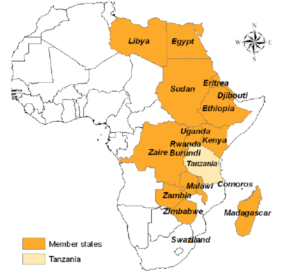
New 19-state Upper FIR planned for Africa

Africa has inched closer to achieving a broad Upper Area FIR  following the move by 19 regional states to adopt an airspace agreement at the end of May.

Ministers of Justice and the Attorney Generals from Common Market for Eastern and Southern Africa (Comesa) adopted the legal instrument on common airspace in Lusaka.

The regional airspace agreement aims at achieving a seamless upper airspace for the region which will lead to enhanced competition in air travel and efficiency.

Zambia Minister of Justice, Hon. Given Lubinda, who opened the May meeting said the COMESA seamless airspace programme will contribute to bringing down high costs.


“The draft legal instruments aimed at the implementation of the COMESA Seamless Airspace programme speak to this.”


Extra Reading:


Hong Kong near-misses on the rise

According to recent figures released by the Civil Aviation Department (CAD) of Hong Kong, 2017 saw an increase in ‘loss of separation’ incidents within it’s airspace.

Twelve times, two aircraft came within 1000 feet and less than 5 nautical miles of each other last year. This is the highest in six years.

Local law makers are now calling for a new ATC system to be implemented. A local pilot operating regularly through VHHH/Hong Kong International Airport (HKIA) commented to FSB recently that the Air Traffic Services have been in “constant decline” over the past seven to ten years.

CAD insisted that alerts were issued “in a timely manner as per system design”. It said “losses of separation” were due to a number of factors such as adverse weather, operating procedures and human factors and they did occasionally occur due to the old air traffic system and other systems around the world. “CAD would investigate every individual incident according to established procedures and make necessary improvement,” the department added.

Hong Kong airspace is congested at the best of times. With four major airports within 150 kilometres and many overflights to and from mainland China, the 2016 introduction of a new Air Traffic System known as “Autotrac3” was set to assist in solving some of the complexity whilst increasing safety. The transition to the new system was challenging with various system issues.

The TMA is also complicated by significant terrain and regular adverse weather. Recent statistics show that air traffic is up over 3.5% already in 2018 with 36,000 movements occurring monthly (6.4 million passengers).
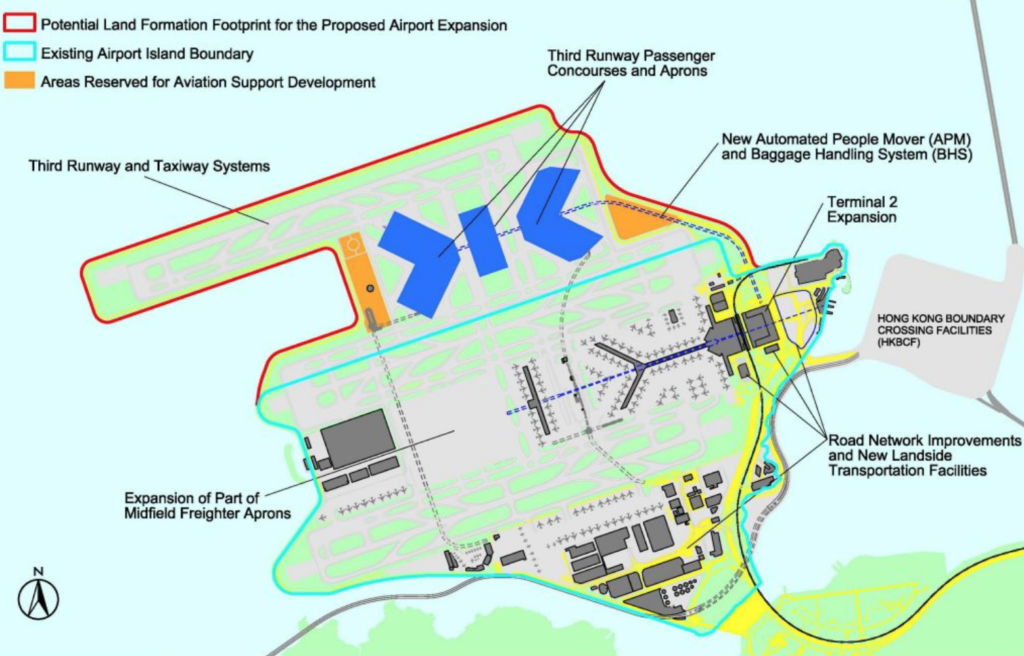
The continued massive year-on-year growth has seen the start of work to construct a third runway, expected to be operational in 2023-24 to facilitate the expected 100 million passengers using HKIA by that time.

This will no doubt just put further strain on an already complicated airspace situation.

The new third runway at HKIA- coming 2023-24.

Have you operated through the Hong Kong area lately? Can you provide an update?

Extra Reading:


Russia is not closing its airspace to American flights

On April 17, the Russian Ministry of Transport extended overflight approvals for US airlines through to October 28, 2018 – just hours before the old agreement on overflights was due to expire.

This should bring an end to the rumour that had been circulating all week that Russia has closed its airspace to US aircraft, and were denying overflights. There are a couple of unrelated events which caused this confusion:

1. US strikes on Syria on April 14, with rhetoric of Russia retaliation – which in the end didn’t happen.

2. Spooked about how Russia might respond directly after the strikes, American Airlines temporarily decided not to overfly Russia on some of their flights from the US to Hong Kong… but then they quickly went back to doing so again on April 15.

3. With the deadline looming for extending the agreement, Russian civil aviation officials had reportedly cancelled a meeting in Washington earlier this week to discuss renewing the agreement.

4. Some areas of the Baltic Sea are closed on April 19 for Russian missile firing, which is a routine event.


References – all the relevant stories are here:


Qatar airspace update – military jets intercepting civil flights

In short: The situation is volatile and constantly changing, even by the hour. Military interception has been reported so the best advice is to be vigilant with sticking to assigned routes for all operations around the region.

The airspace blockade of Qatar has been ongoing since June 2017 with little end in sight.

But over the past few months, tensions have been escalating;

Here is the latest operational information we have:

A reminder that Qatar does not have its own FIR. It sits entirely within the Bahrain FIR- you will find Qatar airspace NOTAMs under OBBB. The Doha TMA extends SFC to FL245. Above this sits the Bahrain UIR.

Bahrain and Egypt have relaxed some of their initial restrictions. Saudi and UAE have not.

The current state of play as of 6 April 2018.


_________________________________________________________________________

Have you been through the region recently? Can you provide an update?

Extra Reading:

Some fascinating reporting about what this whole blockade is all about.

  • How a ransom for Royal falconers reshaped the Middle East” – New York Times
  • What the falcons up with Qatar?” – NPR Podcast


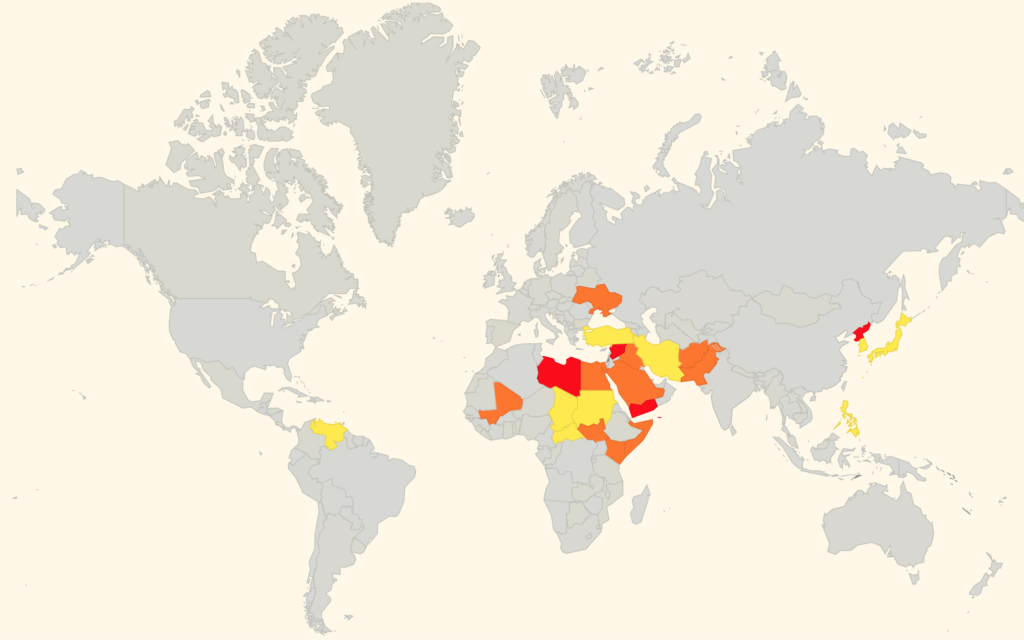
New Unsafe Airspace Summary and Map

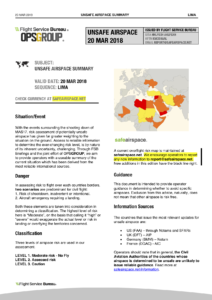
March 20, 2018: One of our biggest missions in OPSGROUP is to share risk information and keep operators aware of the current threat picture. The latest Unsafe Airspace Summary is now published, and available to members here as a PDF download (Unsafe Airspace Summary 20MAR2018, edition LIMA).

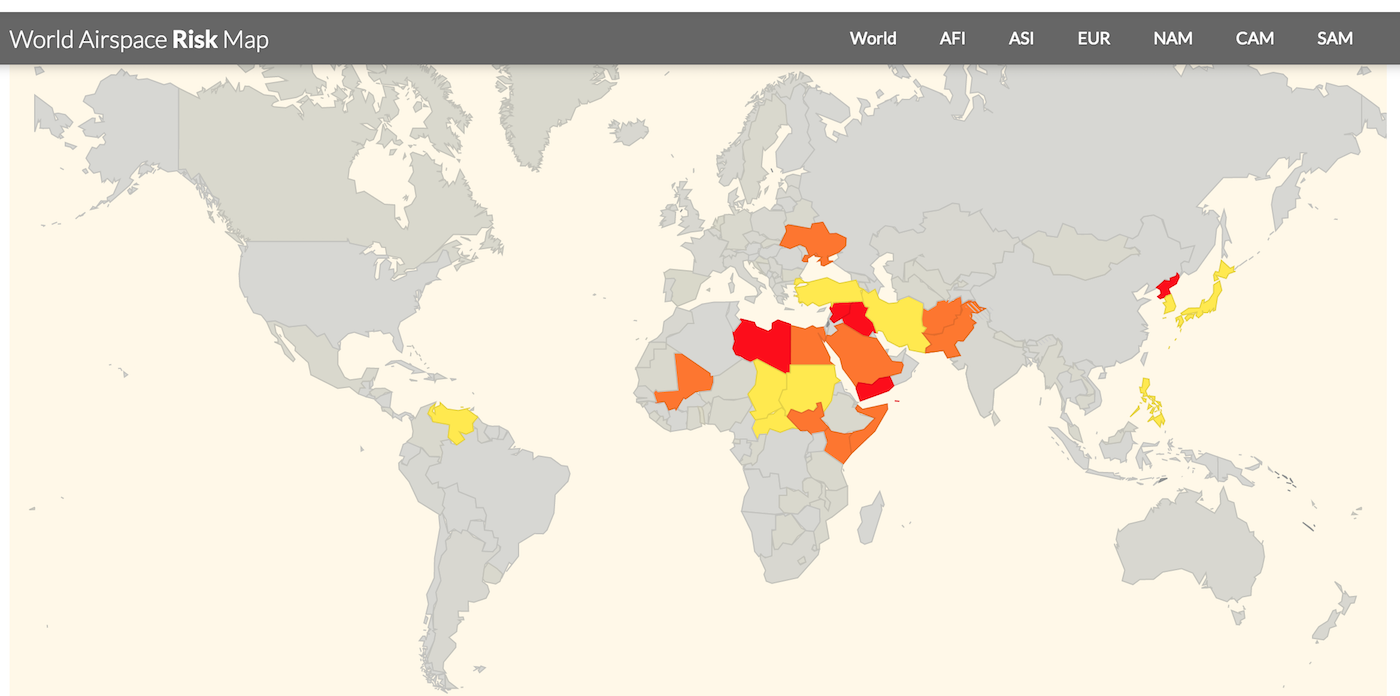
The main changes since the last summary are below. For a current risk map, refer to the Airspace Risk map in your member Dashboard.

The situation in Afghanistan remains similar. On March 13, Germany added wording to maintain FL330 or higher,  still recommending against landings at Afghan airports.

Germany also issued updated NOTAMs for Mali, Iraq, and South Sudan. All warnings remain as previous, unchanged from the prior NOTAMs.


Bangladesh is now one big ADIZ

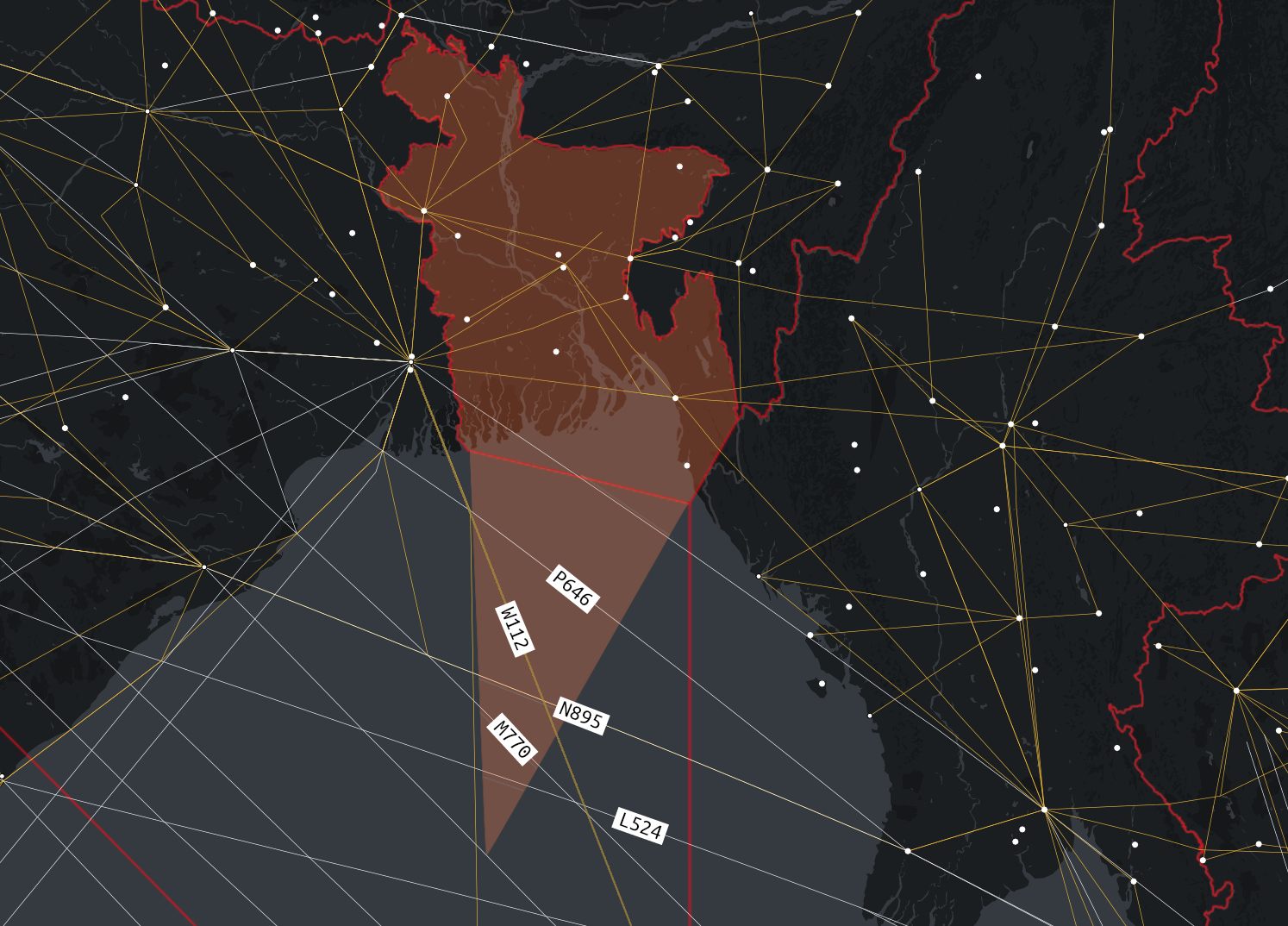
Bangladesh has decided to establish an ADIZ over the entire country, including a massive chunk of airspace off their south coastline that actually extends over much of the adjoining Indian VECF/Kolkata FIR.

Aircraft intending to fly into, through, or within this new Bangladesh ADIZ must now obtain an ADC (Air Defence Clearance) number beforehand. Just file your flight plan, and they will send this to you by AFTN. Make sure you write it down – as they will ask you for it on HF before you enter their airspace.

If you don’t have AFTN access, you can get the number by calling +880-2890-1081 or emailing adnc@baf.mil.bd

The authorities in Bangladesh have released a scary sounding AIP SUP on all this, which you can read in full here. What they fail to mention there, but did publish by Notam at the time, is that there are actually a bunch of airways over the ocean (P646, N895, M770, L524 and W112) where you won’t have to get this ADC number, unless you deviate towards the landmass of Bangladesh.

Here’s the Notam:

A0032/18 NOTAMN
Q) VGFR/QXXXX/IV/BO/AE/000/999/
A) VGFR B) 1802010001 C) PERM
E) THE FLW AMDT/UPDATES ARE BROUGHT TO THE AIP-SUPP 01/2018:
1. ACFT INTENDING TO OPR INTO, THROUGH OR WI BANGLADESH ADIZ SHALL
OBTAIN ADC NR FM THE FLW CONTACT DETAILS.

TELEPHE: +880 2 8901081
FAX : +880 2 8901081
E- MAIL: ADNC AT THE RATE OF BAF.MIL.BD
AFTN : VGHSZQZX

2. FLT OPR ON ATS RTE P646, N895, M770, L524 AND W112 SHALL NOT
REQUIRED TO OBTAIN ADC NR UNLESS DEVIATED TOWARDS THE LAND
MASS OF BANGLADESH.

3. GUARD FREQ. 121.50 MHZ SHALL NOT BE USED TO CTC THE AIR
DEFENCE UNIT.

4. ARTICLE ‘L’ IN THE PROCEDURES FOR AIR DEFENCE CLEARANCE IN
THE AIP-SUPP SHALL BE TREATED AS CNLD.

5. FOR THE TIME BEING DOMESTIC FLT AND FLT OF STATE ACFT AND
GENERAL AVIATION ACFT OF BANGLADESH SHALL NOT BE REQUIRED
TO OBTAIN ADC NUMBER

So you won’t need an ADC number on those airways, but for everywhere else in that big red ice pick-shaped chunk of airspace, you’ll need to get authorisation. As the Bangladesh AIS office politely warn in their AIC: “Aircraft flying without a valid ADC number or failing to comply with any restriction or deviating from flight plan will be liable to interception by Bangladesh Air Force Interceptor aircraft according to ICAO Standard Interception Procedure.”


PBCS: New rule on the NAT from March 29, 2018 – RCP240 and RSP180

Update March 16th, 2018: PBCS is turning into a PITA. After OPSGROUP input, we have an update on the latest status including rumours of delays, A056 LOA’s, and Aircraft that have failed to comply with PBCS.

For the latest changes and updates on the North Atlantic, including our most recent Guides and Charts, use our NAT reference page at flightservicebureau.org/NAT.

ICAO is introducing another acronym in the North Atlantic Region. This time, it’s PBCS (Performance Based Communication and Surveillance), and from March 29th 2018 you will need to be compliant if you want to fly on the half-tracks between FL350-390.

Initially, there will only be a maximum of three daily tracks where you will need to be PBCS-compliant between FL350-390. These will likely be the same tracks as we currently see being assigned as ‘half-tracks’ each day.

This requirement will eventually be extended to all the NAT tracks between FL350-390, but we understand that will only happen when the filing of PBCS designators on flight plans reaches the 90% mark, or 28th March 2019 – whichever comes first. Either way, the ‘transition period’ for this PBCS implementation is set to last six months, so the roll-out of the requirement to all the tracks won’t happen until Oct 2018 at the earliest!

But from March 29th 2018, Shanwick and Gander will basically just continue the concept used in the RLatSM trial – whereby daily tracks spaced at less than 60nm from an adjacent track will be specified as a ‘PBCS Track’ and will be notified in the Track Message Remark-3.

So what is PBCS?

PBCS is the thing that will replace two trials in the NAT which are both coming to an end on March 29th:

  • RLATReduced Lateral Separation Minimum: where a reduced lateral separation of 25 nm has been implemented on the tracks between FL350-390 (so now there are extra “half tracks” each day, spaced by one-half degree of latitude)
  • RLong – Reduced Longitudinal Separation Minimum: in the Shanwick Oceanic Control Area (OCA), longitudinal separation has been reduced to 5 minutes between aircraft following the same track.

When these trials end, PBCS standards will be introduced to continue to allow the application of both reduced lateral and longitudinal separation for aircraft that meet the Required Communication Performance (RCP) and Required Surveillance Performance (RSP) specifications.

How do I comply with PBCS standards?

To operate on the PBCS tracks between FL350-390, you will need to be RNP4 compliant, with CPDLC capable of RCP240, and ADS-C capable of RSP180.

But watch out! Some aircraft do have ADS-C and CPDLC but have never demonstrated RCP or RSP, and have no statement of compliance (e.g. most Honeywell Primus aircraft and several early Boeing aircraft). These aircraft may struggle to get approval to operate in PBCS airspace. Which brings us neatly on to…

Do I need PBCS approval from my state of registry?

PBCS approval will differ depending on which country operators are from.

For UK operators, check the requirements here.

US operators will need to update their LOA for Data Link Communications (A056). The FAA have published a new guide, which tells operators exactly what they need to do to get this authorisation, namely:

  1. Submit an AFM Statement of Compliance for PBCS, showing exactly what data link communication systems you aircraft has, along with the selected performance
  2. Since July 2016, various oceanic FIRs have been collecting data on whether certain aircraft meet RSP and RCP criteria. You need to make sure your aircraft isn’t already listed as having failed to meet these criteria, by checking here: https://www.faa.gov/air_traffic/separation_standards/pbcs_monitoring/

What new codes do I need to put down on my flight plan?

  • FANS 1/A CPDLC equipped aircraft planning to operate in the NAT HLA shall insert the appropriate designator (J2, J3, J4, J5 and/or J7) in Item 10a of the flight plan.
  • FANS 1/A CPDLC RCP 240 compliant aircraft intending to operate in the NAT HLA shall insert the designator P2 in Item 10a of the flight plan.
  • FANS 1/A ADS-C compliant aircraft planning to operate in the NAT HLA shall insert the designator D1 in Item 10b of the flight plan.
  • FANS 1/A ADS-C RSP 180 compliant aircraft planning to operate in the NAT HLA shall insert SUR/RSP180 in Item 18 of the flight plan.
  • RNP 4 compliant aircraft planning to operate in the NAT HLA shall insert PBN/L1 in Item 18 of the flight plan.

If I’m not eligible for PBCS, where can I go? 

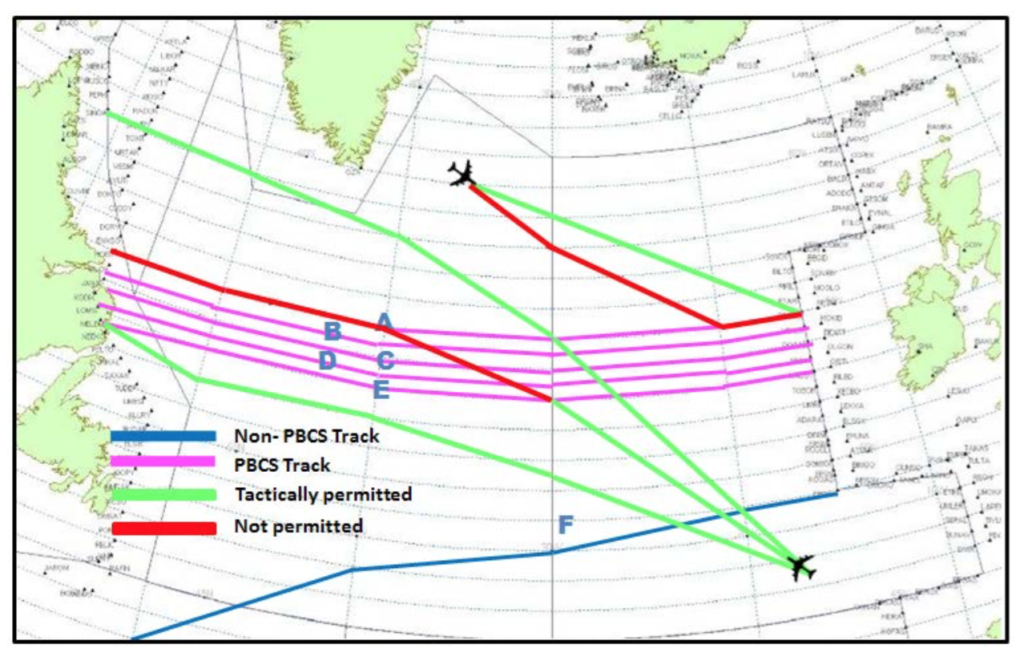
ATC may allow you to do either of the following, depending on how stressed/busy they are (i.e. decided on a ‘tactical basis’):

  • You can infringe on the daily PBCS tracks between FL350 – FL390 at only one point (including Oceanic Entry/Exit Point) i.e. cross but not join an NAT PBCS track
  • You can climb or descend through levels FL350 – FL390 on a PBCS track provided the climb or descent is continuous.

In their NAT OPS Bulletin 2018_001, ICAO have published a handy little picture to demonstrate this:


Further information:

  • For a great FAQ on all things PBCS, check out the latest FAA document here.
  • For more info on the PBCS implementation, check out the full UK AIC here.
  • To figure out where you are welcome on the NAT, depending on what equipment and training you have, check out our quick reference guide here.
  • Special thanks go to Mitch Launius at 30westip.com for help with this post. For assistance with international procedures training for business aviation crews worldwide, and to watch an excellent webinar about all things PBCS-related, check out the 30westip.


Airspace Changes Coming for the OMAE FIR

On October 12th, GCAA announced the changes to the OMAE FIR.  They’ve got it all detailed in the latest AIRAC (AIP link below).

The major change–all aircraft require RNAV1 with GNSS to operate in the Emirates FIR, starting December 7th.  This is a change from the previous RNAV5.  With that, you can expect changes to SIDs, STARs, all ATS routes, holding procedures, communication frequencies, and others.  It’s a major overhaul to anticipate for the expected increase in traffic.

We’ve got for you:

AIC 04/2017
AIP Link (you can find all the specifics to the changes here)
UAE ENROUTE CHART

OMAE/UAE 
TRIGGER NOTAM - PERM AIRAC AIP AMDT NR 13/2017 WEF 07 DEC 2017
RNAV 1 WITH GNSS OPS RQMNTS MANDATED
RNAV 1 ROUTES ADDED
STD ROUTINGS AMD
CONDITIONAL ROUTES ADDED
ENR HOLDINGS ADDED
WAYPOINTS ADDED, DELETED AND AMD
OMR-51 LOWER LIMIT AMD
ADDED FREQ FOR EMIRATES FIR. 
07 DEC 00:00 2017 UNTIL 21 DEC 23:59 2017.


Iraq Airspace to re-open for overflights

ORBB/Baghdad FIR Overflights of Iraq may be permitted to resume as early as next week, allowing international carriers access again to several previously heavily used routes through the eastern side of the Baghdad FIR.

In May of this year, SFAR 77 – banning US operators from operating within Iraqi airspace – lapsed, and was replaced by Notam KICZ 10/2017 – which had much the same wording.

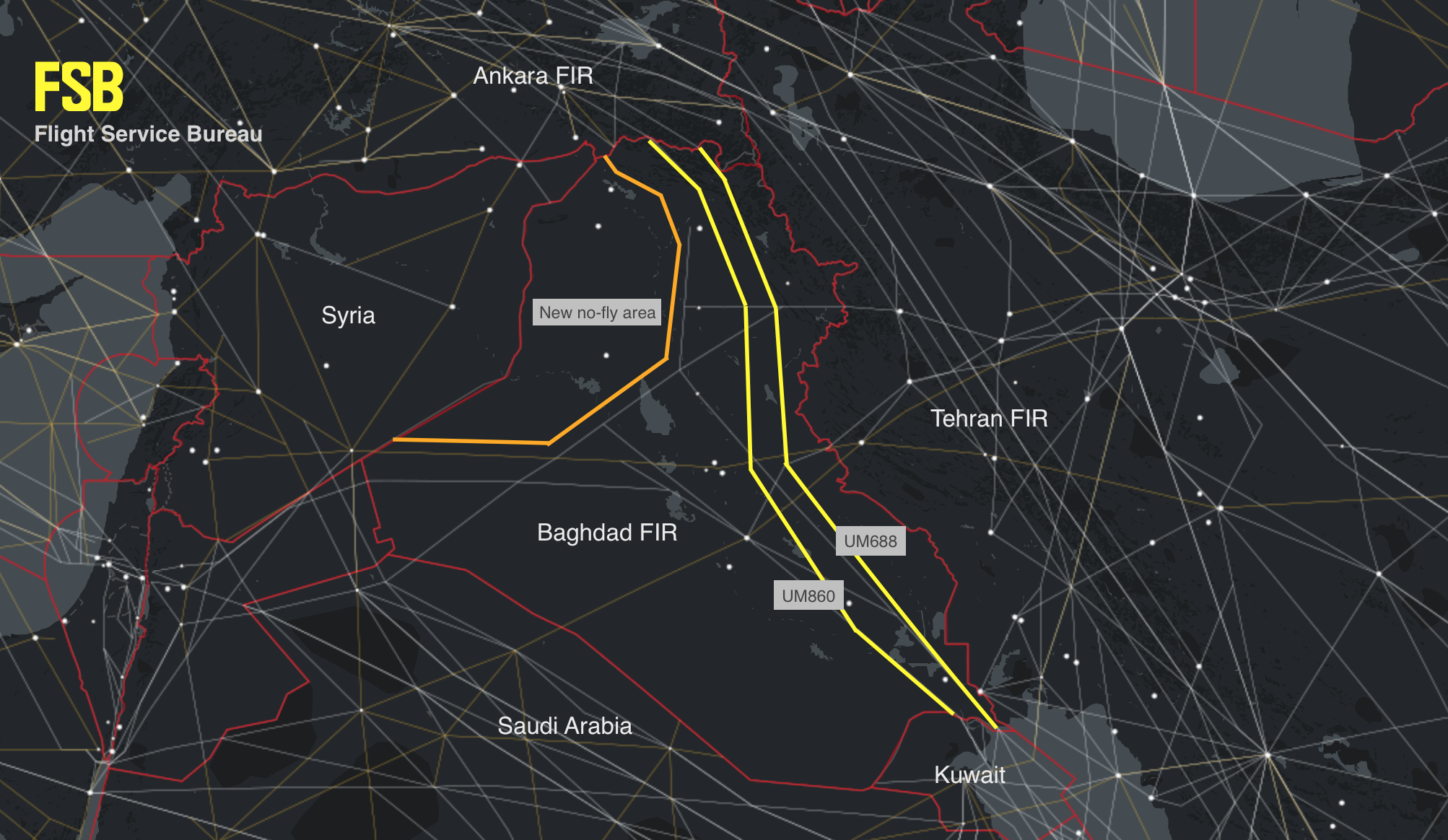
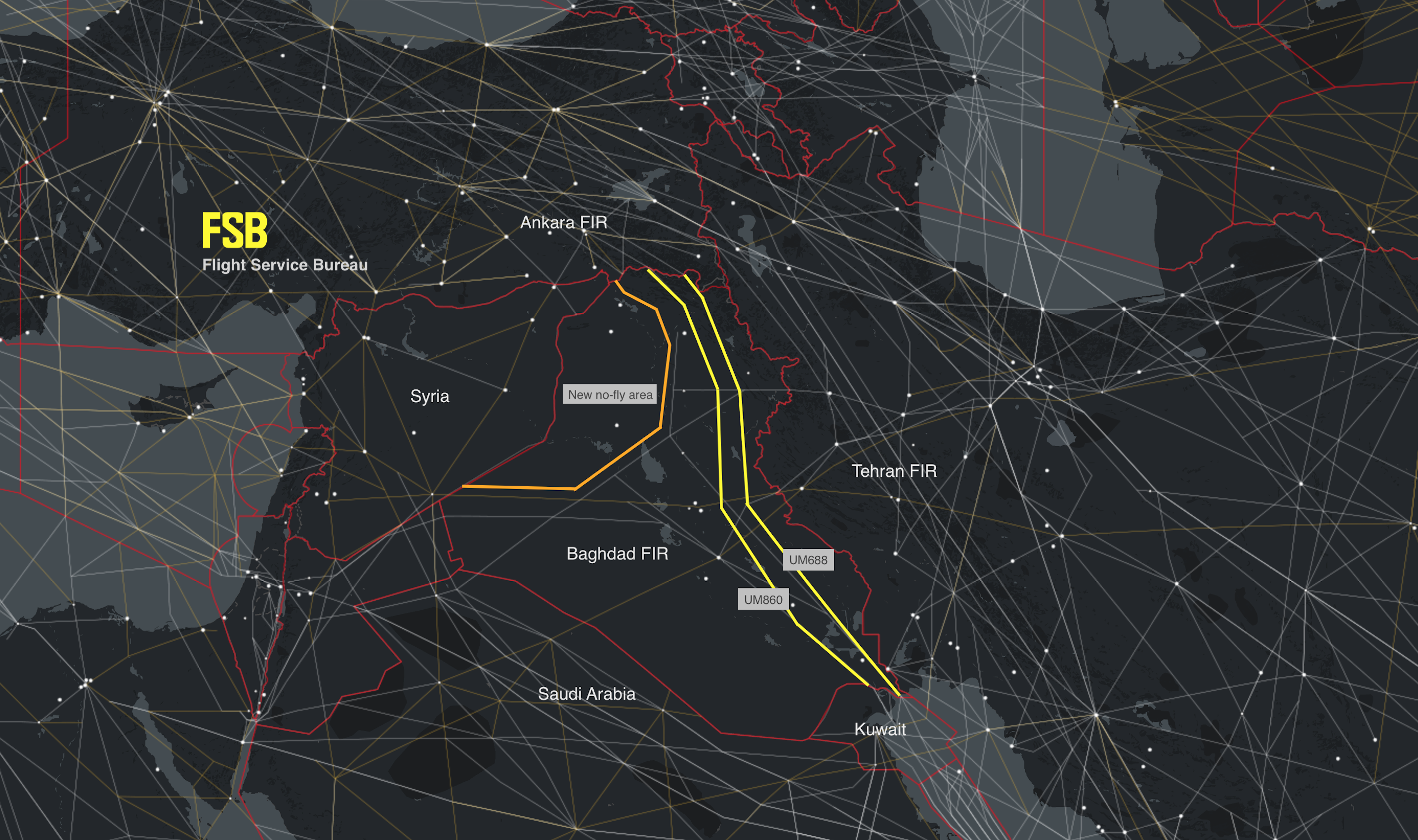
However, on October 3rd, Iraq issued a new Notam (A0477/17) – with a new restricted area in the northwest of the FIR, from Surface to FL460. The previous restricted areas 601 and 701 were withdrawn.

This re-shuffling of restricted airspace paves the way for two major international air routes to be reopened, UM860 and UM688 – which were realigned in April for this purpose, allowing operators additional route options through the Middle East to Europe and vv.

FSB expects an official announcement shortly, and will update operators further. OpsGroup members will be notified directly.


OIIX Tehran FIR 2017 Operational Changes – Iran

Feb 1st, 2017 Traffic is getting far busier through the Turkey-Iran FIR boundary (Europe-Asia main flight route). ALRAM is the new “corner” for avoiding Iraq. Here’s updated flight planning  guidance from Turkey for Jan-March 2017 – use these when planning your ATC route (refer LTAA A5716/16). We’ve translated the Notam a little for clarity, here’s the highlights:

1. SRT-ALRAM segment of UG8  – use FL330 or higher.
2. ULTED-ALRAM segment of UT36 – use FL330 or higher.
3. Going via UG8 or UT36, to leave Tehran FIR via ALRAM, at FL320 and below: Route EZS-UG81/UL124-VAN-BONAM-UMH. Check Iran AIP Sup 93/15 for more.
4. ALRAM-BAYIR segment UT888 minimum FL330. If entering LTAA/Ankara FIR via ALRAM lower than FL330, then route UMH-BONHAM-UI124/UG81-VAN-UI124-UG81-BAYIR.
5. VAN-BONAM segment of UG81 and UI124 can be used bidirectional below FL330.
6. ULTED-NINVA segment of UM688 – use FL330 or higher.
7. Entire R/UR21, SRT-KABAN segment of M/UM860, and ULSAB-KABAN segment of UT334 closed FL180-FL310.
8. UT332 – use FL330 or higher.
9. UT301 totally closed.
10. UT333 closed FL180-FL310 inclusive.


IOB Bulletins

31AUG 2016 OIZZ/Iran has approved the use of its airbases by Russian fighter aircraft; Russia has notified intention to launch missiles in the direction of Syria from the Caspian Sea fleet. The Russian Air Force has deployed six Tu-23M3 BACKFIRE bomber aircraft and multiple Su-34 FULLBACK strike fighter jets to Hamedan Air Base (OIHS/NUJ). FSBIOBXX

17AUG 2016 On August 16, Russian TU-22 bombers based in Hamedan, Iran, attacked targets in the Syrian towns of Deir Ezzour, Aleppo and Idlib. These were the first Russian airstrikes carried out from bases in Iran.

07DEC2015 German Authorities published a new Notam last week warning of a risk to flight for aircraft operating in the vicinity of OITT/Tabriz, OITL/Ardabil, and OIGG/Rasht. DFS, the German ATC agency, recommends overflying this general region at FL260 or higher. A6875/15.

13OCT 2015  On 06 OCT 15 the Russian military launched 26 Kalibr-class cruise missiles from 4 ships in the Caspian Sea at targets in Syria. These missiles were routed through the airspace of Azerbaijan, Iran, Iraq and Syria, causing concern as to the safety of international air traffic crossing the missiles trajectory. Full notice.


More stuff:

  • Iran Conflict Zone/Overflight risk warnings  at safeairspace.net


Iceland Volcano alert – Katla

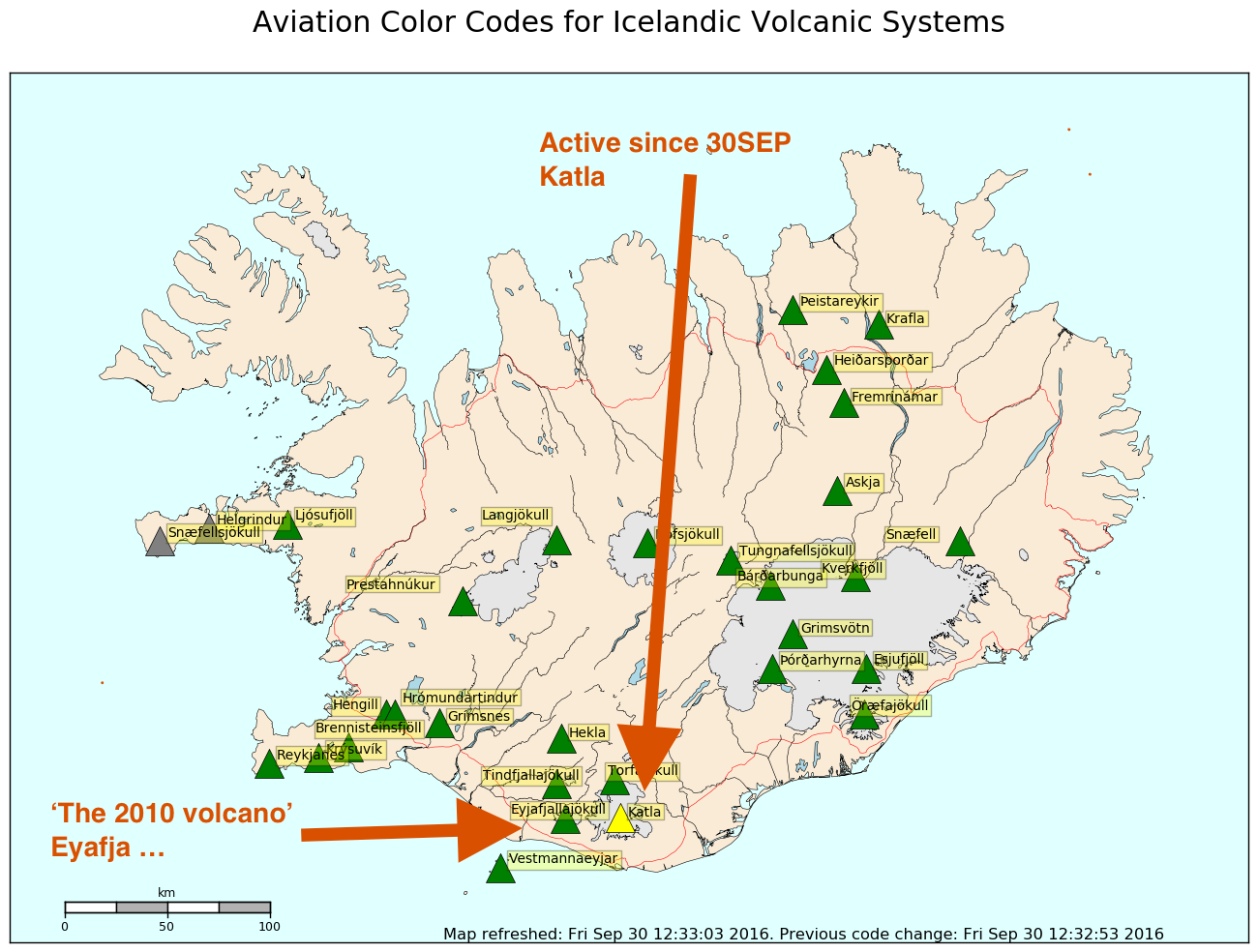
Icelandic volcano Katla has been raised to colour code Yellow by the Icelandic met office.

Katla lives beside Eyjafjallajökull, the volcano that closed much of Europe’s airspace for a week or so in 2010.

Colour code yellow means that there is increased activity, but no eruption … as of yet. 

volcano_status

It doesn’t mean that an eruption is ‘expected’ either, but given the proximity of Katla to the site of the major eruption in 2010, there may be correlation. Icelandic scientists have also said that an eruption of Katla is overdue.

For now, keep an eye on updates at http://en.vedur.is/weather/aviation/volcanic-hazards/


New airspace warnings – Turkey, Iran

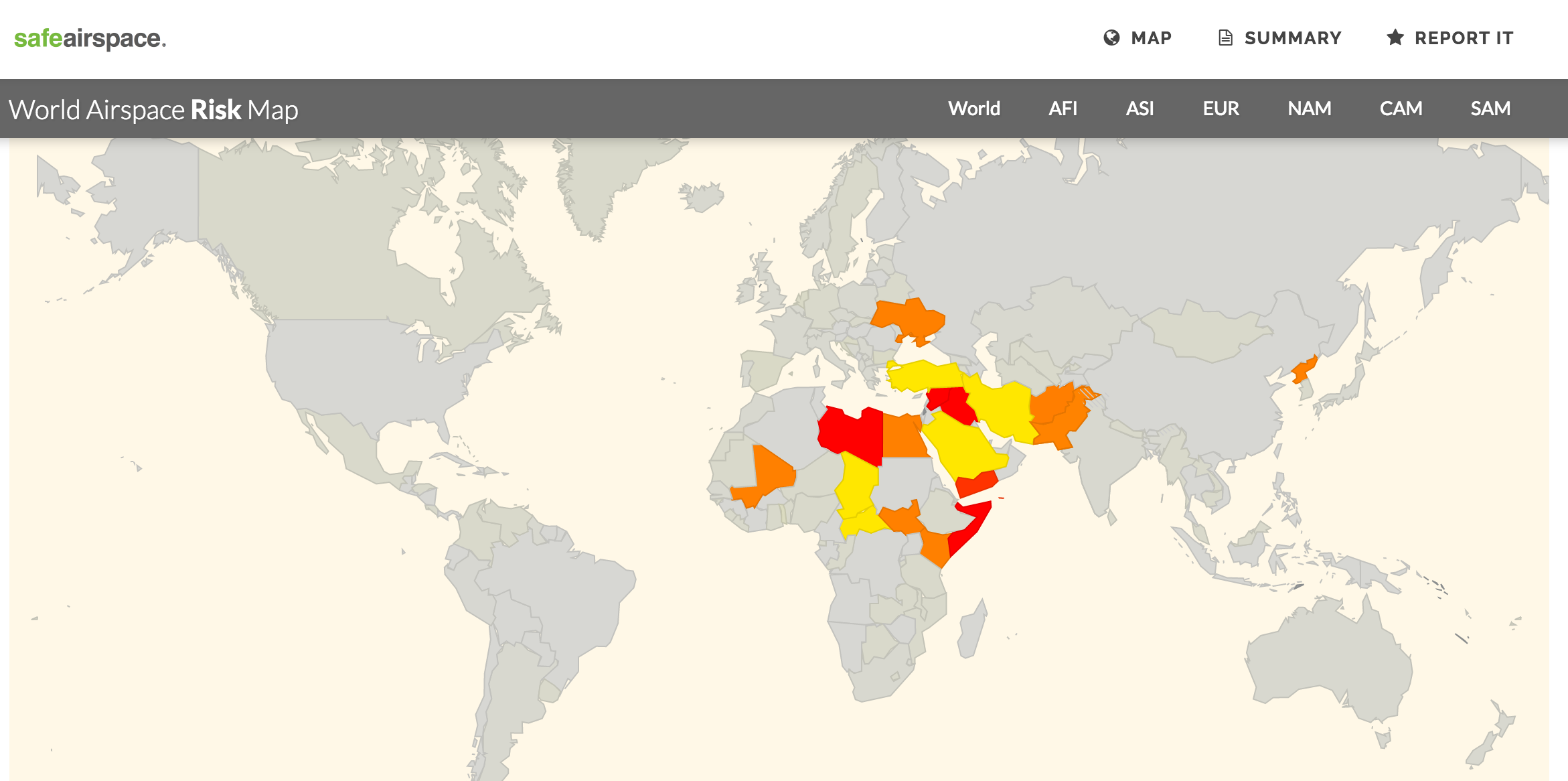
Today Flight Service Bureau has published ION05/16 – an updated Unsafe Airspace Summary, with new warnings for Turkey, and Iran, and a new map at safeairspace.net. This replaces 04/16 issued in August.

Turkey: 23SEP16 Germany B1289/16 Do not plan flights to LTAJ due potential ground to ground firing in the vicinity of LTAJ/Gaziantep Airport.

Iran: 09SEP16 FAA Notam KICZ 19/16 Exercise caution within Tehran FIR due military activity.

New information in the PDF is marked with a   I   beside it. Please distribute the PDF to anyone you like, we are keen to make sure as many operators as possible are aware of the risks.


opg-safeairspace