The Safety Watchlist 2022

The Transportation Safety Board of Canada released its Watchlist for 2022, highlighting what they think the bigs and the bads to look at in the industry are. We figured it would be a lot of specifically Canadian things like grizzly bears on runways, and whether a hockey stick counts as a dangerous weapon when brought on board.

Turns out that it’s all things which are globally big and bad. What’s more, now the Covid stuff has (mostly) gone away (you might remember the whole pulling airplanes out of storage and finding bugs nesting in them fear), these are big, bad things which we’ve been talking about in the industry for quite some time.

So, because it’s November 2022, which is basically December, which means the year is pretty much over, we figured we’d tell you all about it.

The Highlights

Seems an odd choice of word, theirs not ours.

So, the first one on the list was something about commercial fishing safety. We aren’t sure if we have any commercial fisherfolk at Opsgroup, apologies if we do, but we don’t think so, so figured we would not pause too long on this one.

Same for railway signal indications. Not so relevant to aviation. We will say that following signals as a pilot is important though. If you don’t know your interception signals, you can swot up on them here.
4 clues. Only 3 are ones we want to talk about.

Onto the Aviation highlights

There are 5. We reckon they are going to be quite familiar:

  • Runway Excursions
  • Runway Incursions
  • Fatigue
  • Safety Management Systems
  • Regulatory oversight

We’re going to ignore the last two, just because we don’t know much about them.

Runway Excursions

The biggest one. The baddest one. Aircraft going off the end of the runway. It happens way too often, and the outcome is often severe.

In Canada, between January 2005 and June 2022 there were on average 9.3 runway overrun occurrences per year, most of these during the landing phase.

Here’s the TSB’s graph:
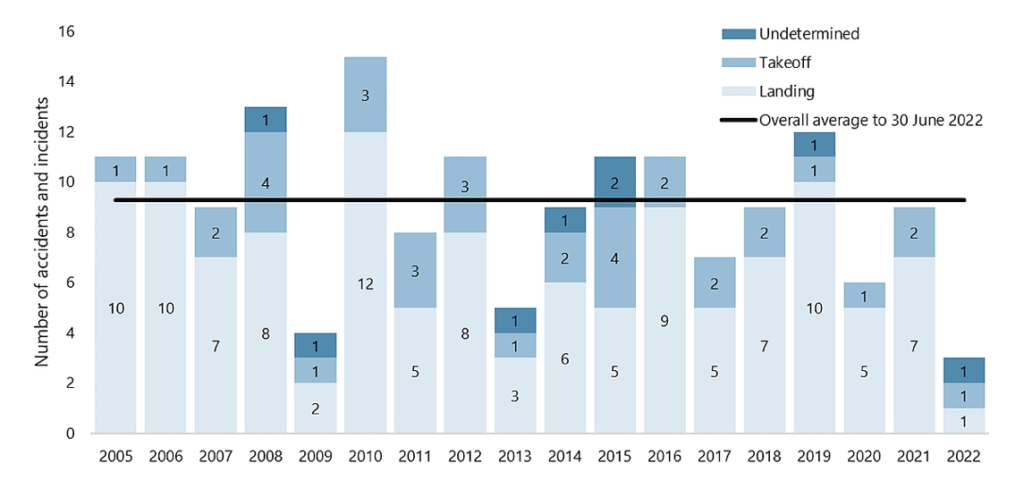
This is just in Canada.

Now, they do in all fairness get some ‘overrun encouraging’ weather in the deep and distant north because it gets so cold and icy up there.

But then again this isn’t limited to Canada.

You find places all over which have strong winds (tailwinds, ballon inducing gusts…), heavy rain (slippery runways), stuff that reduces visibility on short finals (increases chances of getting unstabilised), hot and high spots (increases the ROD required), unusual terrain (increases the chances of becoming unstabilised), short runways (possible performance mishaps), or just places which are totally easy-peasy so you think it will definitely all be fine and get complacent…

Runway excursions are a global problem that don’t seem to be going away. We might have mentioned this before.

So what can we do about it?

  • Know what GRF is and use it. If you haven’t heard of the (new) Global Reporting Format that came in 2021 then you can read about it here
  • Use arresting systems. OK, pilots can’t really do much about whether this is available at an airport, but knowing what it is and where it is, is important because some pilots have actively swerved to avoid it. If you’re heading off a runway then that sucks but if it has EMAS then USE IT, it might save your life.
  • Fly a stabilised approach. Or ask the question why you or your crew aren’t going around.
  • Do performance calculations… properly. Not much else to say on that.
  • Be go-around minded. Air France learned a thing or two about this in 2005 heading into CYYZ/Toronto when the weather deteriorated and they didn’t go-around. It led to a runway excursion. Read about it here if you’re not familiar with this one.
  • Read this. It’s the full TSB rundown on runway overruns.

Runway Incursions

If the risk of heading off the end isn’t enough, then there is also a big risk of heading onto the runway when we shouldn’t be.

The rate has doubled in 12 years. Thankfully it hasn’t resulted in a collision, but still… not ideal.

Here’s another graph. because we like their graphs:
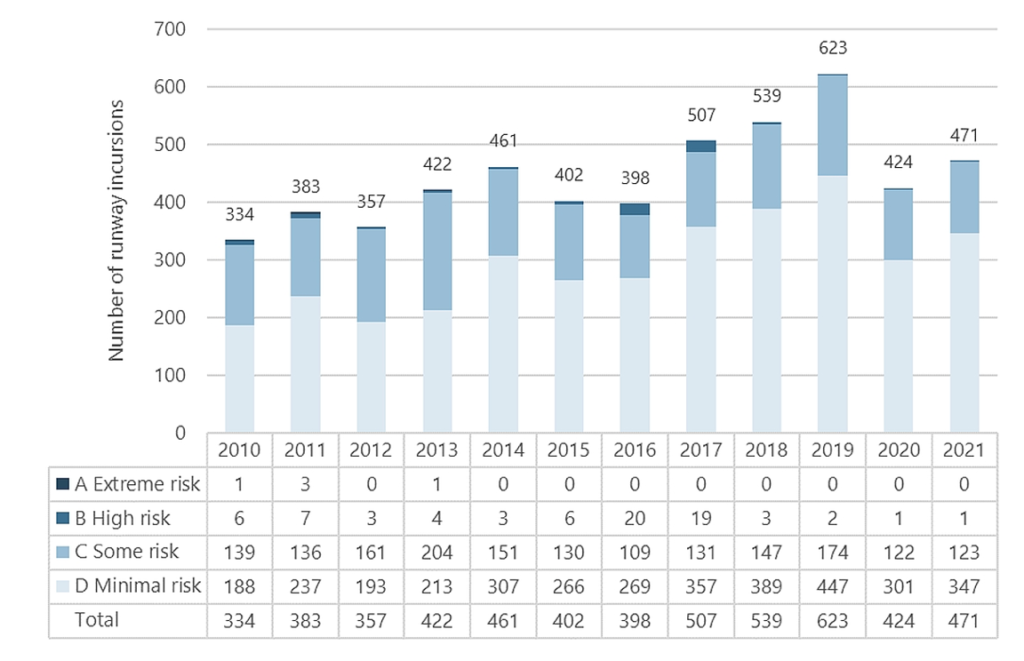
There are some big numbers on there.

What can we do about it?

  • Know your hotspot symbols. The US have recently changed up their hotspot symbols to help with situational awareness on the taxi.
  • Brief. Talk about the taxi, especially in poor visibility.
  • Stop! If you ain’t sure, stop taxiing. Rolling about willy-nilly never ends well.
  • Think about de-icing/anti-icing. There have been changes to HOTs in the FAA winter manual. Taking off with ice on your wings is going to make the takeoff roll hair-raising. Don’t risk it, de-ice!
  • Read this. The TSB’s stuff on incursions, in full.

Fatigue

Yep. Where to start. This is a big conversation which needs to be had more in the industry. Aside from FTLs and roster patterns (a can we won’t open now), we do think there are some things which aren’t getting mentioned enough which can lead to fatigue:

  • Staffing issues
    “Wait,” I hear you say. “What’s that got to do with fatigue?”
    Well, staffing issues in airports lead to delays, which lead to longer hours for crew, which can lead to tiredness and fatigue.
  • The Russia Ukraine conflict
    Longer routings mean more time in the air which can lead to, you guessed it, more tiredness and fatigue.
  • Strikes
    Strikes = delays and disruption = … same old story.

Now, just identifying random things which might be increasing fatigue levels isn’t really going to fix it. Having some real, human conversations about it might.

  • If you’re a pilot, don’t just think about now, think about 10 hours later.
  • Get some decent controlled rest policies into your operation.
  • Consider ways to improve sleep management, especially if you’re doing hideous time zone crossing flights.
  • Stop using tees like “sleep science” and harping on about circadian rhythm. Start talking about how to recognise fatigue, what that means for your performance, and what to do about it.

The Full Monty

So, that is the (Canadian) Safety Watchlist 2022 and if you want to, you can read the full thing here, (including the bits on fishing).

Out of Options, Out of Time: Why Aren’t We Declaring Emergencies?

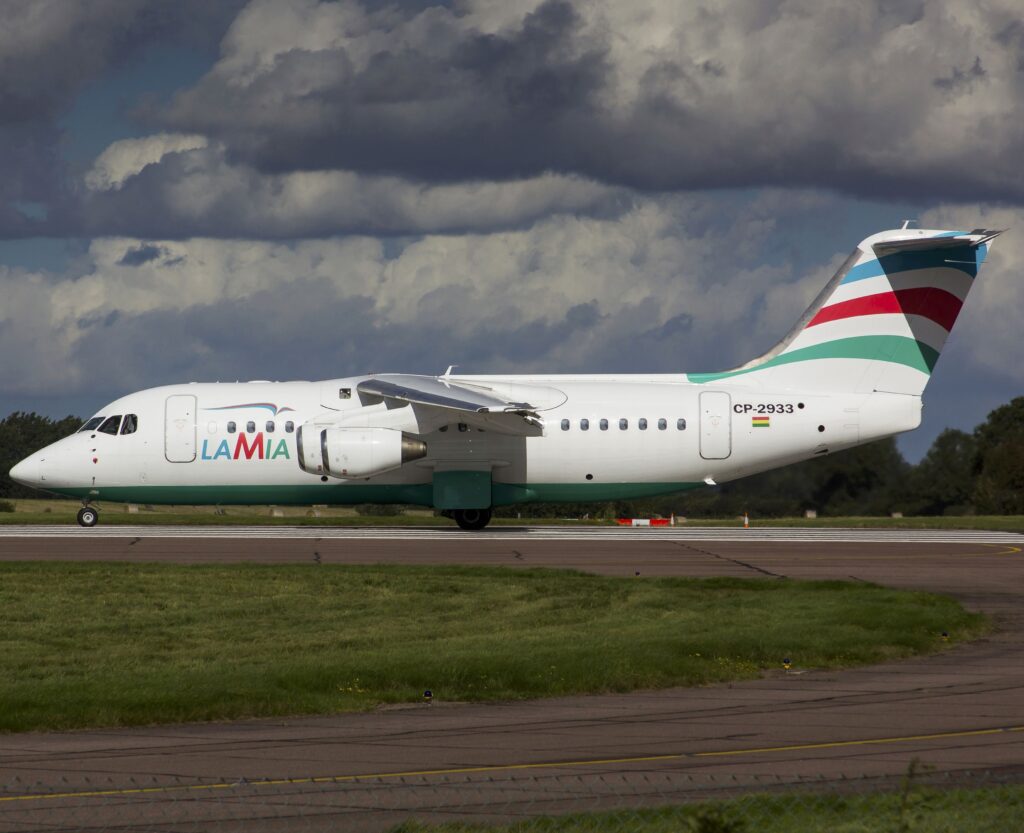
In 2016, an RJ85 operating a charter flight ran out of fuel in a holding pattern while waiting for another aircraft to land. The crew knew they were critically low on fuel but seemed reluctant or unwilling to tell ATC they were in trouble and get back on the ground.

This tragic accident highlights a dangerous mindset that continues to expose pilots to risk the world over: reluctance to declare an emergency.

Accident reports reveal that the RJ85 crew were certainly not an isolated case either. So, what’s going wrong up there? Why are we asking for help far too late or not at all?

The real world may offer up some answers.

For starters, what is an emergency?

Have a go at defining one in your own words. As I discovered, it’s not actually as black and white as it seems.

The US FAA tells us they come in two flavours:

Distress. These are things that need you to act on immediately. Engine failures, a fire on-board, structural failures. In other words, you have to do something about it now. Crew are good at declaring emergencies in these cases because it is an easy decision.

Urgency. The smoking gun here. These are emergencies that often develop through a set of deteriorating circumstances which become increasingly critical as time and options run out. You may not have an emergency to begin with, but through failure to act earlier it has developed into one.

It seems that in these cases crew are waiting until they have few or no options left before declaring an emergency, far too late.

So why not just declare earlier?

There are a few factors at play here, and the first is this – fear of the fall out. Or in other words, ‘what will happen once we’re back on the ground?’

It’s not hard to imagine mountains of paperwork awaiting your arrival, but this often isn’t the case. In most cases it is very limited and sometimes non-existent. Generally, aviation authorities just want to know if you have broken the law in dealing with the emergency, which the regs say you’re allowed to do.

Of course, operators will have their own reporting practices, but crew should never face disciplinary action for declaring an emergency – it is a safe response to an unsafe condition.

Enter Just Culture – if you haven’t heard of it, it’s worth googling and it’s part of a revolution in making the industry safer by enabling crew to act and report without fear of the repercussions.

It’s no secret that pilots tend to be mission orientated. In other words, we want to complete our flight as planned. We hang our professional hats on being able to navigate operational challenges on a daily basis and find ways to make it all work with our safety margins intact at the other end. You know the ones – weather, delays, MELs. They all make for long days and grey hairs, but we make it work.

The problem is that in this belief and dedication to ‘make it work’ that we can begin to fixate on completing the task, rather than taking notice of early warning signs that those safety margins are being steadily eroded while we still have options.

This is when declaring an emergency early really makes a difference. Here’s why…

‘The Emergency Mindset.’

By telling ATC you have an emergency you are sending yourself a powerful psychological message. You’re essentially flicking a switch in your brain from ‘complete the mission’ to the realisation and acceptance that there is a threat to your survival. Your training is essentially triggered.

Your new mission now becomes to do what you need to do to get back on the ground safely and as quickly as possible. You essentially put yourself onto a new script. This is the emergency mindset, and it is a powerful call-to-action.

But it’s not just our headspace that matters here. It’s also important to weigh up what you gain from ATC by declaring an emergency, against the perceived pitfalls of doing so.

By declaring an emergency to ATC, you are activating a huge resource and will have their undivided attention. While they’ll continue to control other aircraft around you, their priority will be your safety. They may even give you your own discrete frequency or controller. It is then up to the pilot-in-command to advise what help they need and their intentions. It is basically your call, and they’ll facilitate it – even if it means breaking the rules.

They’re also a wealth of knowledge. At a time where you’re likely busy managing the aircraft they can tell you what you need to know and quickly. They can help you find suitable airports for landing and begin co-ordinating with those control facilities.

While they’re giving you priority handling, they’ll also be facilitating a chain of events behind the scenes including organising rescue services both on and off the airport (all without you even having to ask).

According to FAR 91.3 pilots can deviate from the rules to the extent required by the emergency. Which means you can kiss goodbye to speed restrictions, clearance limits and other workload increasing airspace procedures.

There’s a lot you can do once you’ve declared one. On a side note, you don’t have to have physically declared an emergency for this to apply, but it certainly helps. Especially if you need an immediate change of course, speed or level.

When to declare?

The intent of declaring an emergency is to mobilise all the resources available to you while you still have options. Which means the earlier you do it, the better. Waiting until you have none left before you advise ATC is already too late.

In the simplest of sense, if you feel apprehensive for you or your passengers’ safety for any reason, you are likely already experiencing some type of emergency. The safest course of action is always to make the decision, and inform ATC sooner rather than later.


2020 Vision: A look at Safety

2020 was an interesting year for aviation. It was dominated by Covid, which saw traffic numbers fall to the levels of several decades before – which is why a review of the accident statistics is an interesting one to consider.

What sort of accidents are taking place?

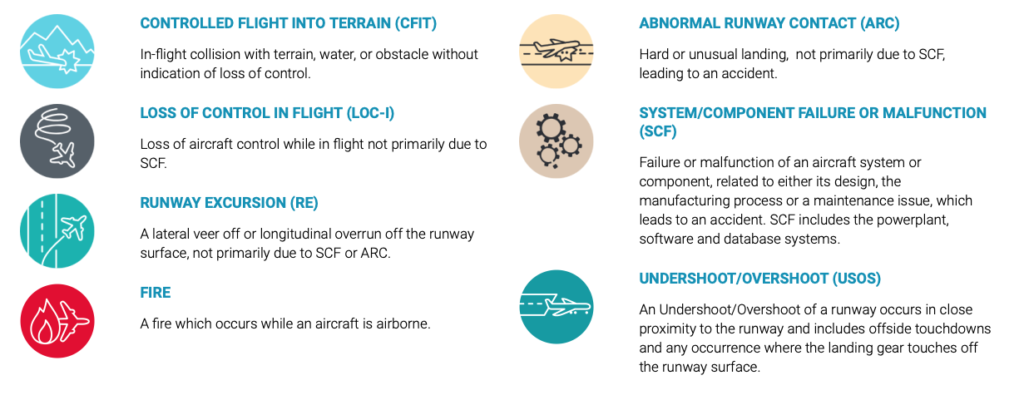
The primary accidents seen in 2020 are unsurprisingly similar to those seen over the last decade:

  • Runway excursions
  • Loss of control in flight
  • CFIT
  • Abnormal runway contact (hard landings and tail strikes)
  • Actually missing the runway (undershoot and overshoots)
  • System malfunction or failure
  • Fire

We wrote a bit about these in a bit more detail not that long ago. We called it the ‘Seven Deadly Things’ and you can read it here.

What are the 2020 stats?

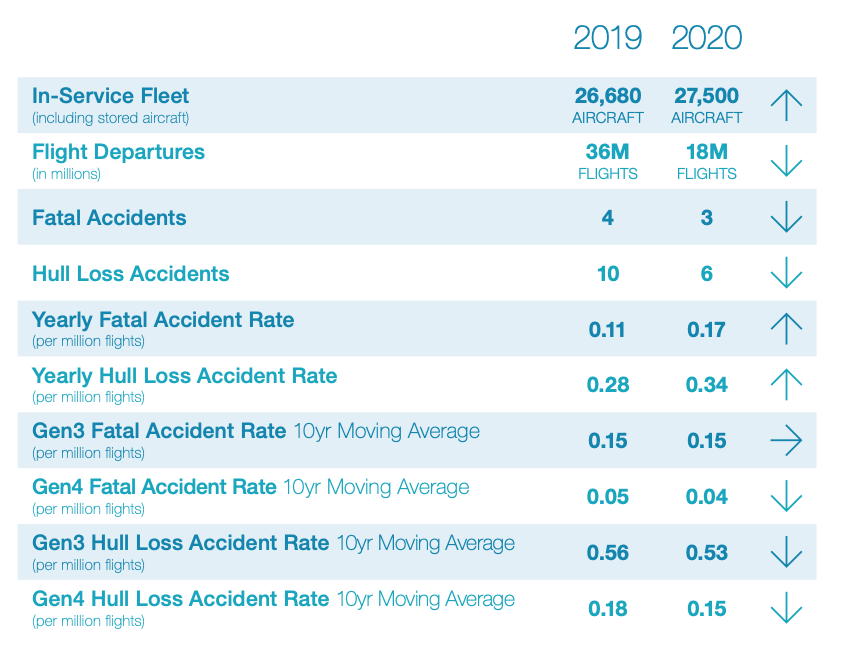
Well, first up, 2020 was roughly the same in terms of capacity as 1998 – a year known for Bill Clinton, the inception of the Euro and the movie ‘Titanic’. Yep, that long ago. So, same traffic levels, but different accident rates – 1998 saw 10 fatal accidents and 24 hull losses compared to “just” 3 and 6 in 2020.

But if we compare the 2020 numbers to 2019 it paints a different picture. Or rather, it is actually a very similar picture. While there there were only roughly 50% the number of flights in 2020 that took place in 2019, there were still 75% the number of fatal accidents. 

OK, this isn’t a very telling statistic since we’re talking 3 instead of 4 and neither is huge, but it does mean the fatality rate and hull loss rate went up per million flights in 2020. It was not a significant increase, but it is enough to suggest that yes, not flying regularly can lead to more accidents and incidents. 

Not really news there then, but something worth considering.

Point number 1 – Lack of flying leads to mistakes

If we take a leap back to 1958 and look at the accident rates through the decades then there has been a steady overall decline, and now we are sitting “comfortably” at under 5 fatal accidents per year, while flights have increased from about 12.5 million (1989 sort of time) to 35.8 million (the peak in 2019).

So, in thirty years the rate per million flights has dropped significantly to around the 0.17 per million flights point, and hull losses to 0.34 per million.

How did it get so low?

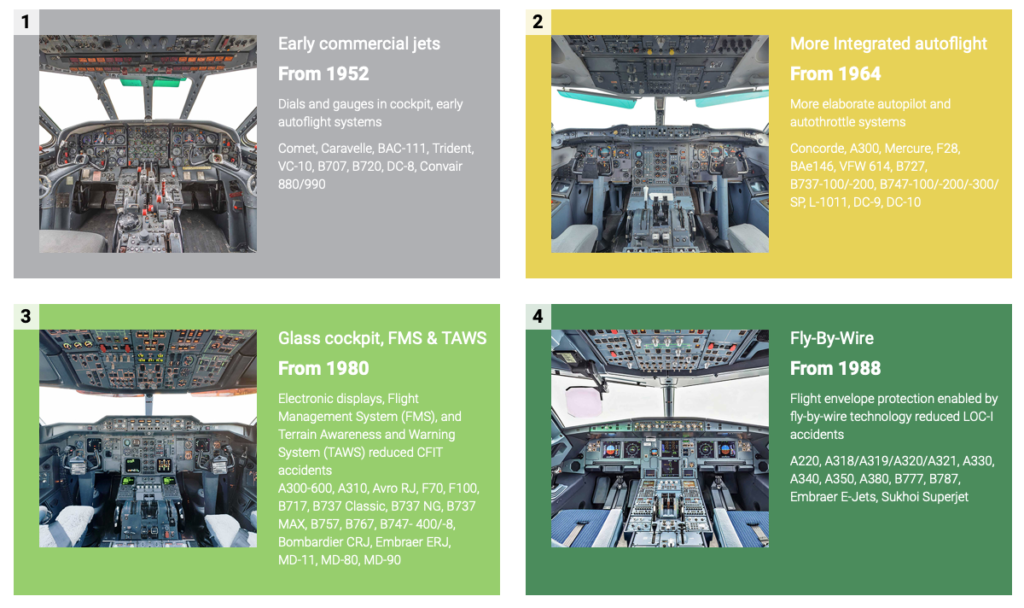
Significant leaps have been made in aircraft design over the years and this has had a huge impact on safety levels. Of course, training, CRM, Human Factors awareness and all of that has played a part too, but the major pat on the back goes to the airplane builders. For every silly mistake a pilot has made, they have generally identified it and then helped prevent it by building us better instruments, more robust systems, or things that catch our mistakes for us.

In fact, if you look at the fatal accident rates per million and then break it down into aircraft generation, it has dropped from 3.0 to 0.1 , and 5.4 to 0.2 for the hull losses. So technology is helping us. A lot.

Those big ones – the CFITs and LOC-I accidents – have reduced by 86% and 89% because of technology upgrades from Generation 1 to Generation 4 aircraft. This is down to the introduction of things like glass cockpits, FMW and TAWS systems.

How low can it go?

Can we reduce the occurrences to zero? If not, even with all this handy automation, then why not?

Well, these statistics offer us an answer there as well.

They are taken from across civil aviation, revenue flights on western built commercial jet aircraft that carry over 40 passengers, and also big cargo ones. It doesn’t include non-western built aircraft (possibly because the safety records on them ain’t great), and it doesn’t include Business Aviation.

Why not? Well, because the operational environment is very different, and very different in challenging ways. 

So, we are looking at the accidents which have involved nice, relatively modern commercial aircraft generally piloted by experienced folk going into places they have gone into many times before. And yet they are still managing to get it wrong.

What’s more, we’ve seen how automation is helping – it has brought us down to a very steady level.  So what is going on? We recently published a piece on the ‘Hidden Risks of Automation’, which we think offers some of the answer.

The ‘Problem of the Person’

Unfortunately, the solution to the Problem of the Person is not a simple one.

‘Human Factors’ might give us some reasons – poor decision making, bad workload management, lack of understanding the systems, but none of these really provide the answer to correcting it. The work now comes down to us.

1. Don’t Become Complacent: We have multiple systems put there to provide another layer of safety but we are seeing pilots rely on them as the only level of safety. These systems are a last line of defence though, not the the only defence.

ROW/ROP should supplement good landing performance assessment and stabilized approach management.

TAWS and GPWS systems give us a hard floor that we must not go below, but our own situational awareness should keep us well away from ever having to hear those calls.

Autopilots, flight protections and warnings should be a final alert, but basic airmanship and handling skills should correct our flightpath long before we reach a level that needs those systems to help.

2. Poor Decision Making and Workload Management: None of our clever automation and systems have the ability to think and question for us. So we need to make sure we are doing this, and we need to make sure we are doing it in the right way. Ask the right questions, gather information and use your resources properly.

Ask “What does this mean?” – Diagnose the problem not based on what has happened, but on what the impact and consequence of that failure is.

Ask “What has changed?” –  Review your decisions. Don’t fit new information into the solution you’ve already picked, rather adapt your solution to consider the new information. 

Ask “What do you think?” – Open-ended questions that gather input from someone else might catch things you have missed, or misinterpreted.

3. Just Do better

When we have seen automation and systems reduce the number of occurrences down to this point where the vast majority of accidents are down to human error, there really is no better solution than us Just Doing Better.

But this ‘better’ falls on the whole industry.

Sharing information, experiences, supporting development in others and improving training and pilot resilience. 

There are multiple projects out there:

  • IATA and the Flight Safety Foundation have just released their recommendations for reducing runway excursions (GAPRE).
  • ICAO are implementing new Runway Condition Assessment and Reporting standards from the end of this year.
  • UPRT training is being developed and improved.
  • IATA and ICAO Evidence Based Training development is shifting the training paradigm to train competencies rather than practicing solutions to singular events.

At the end of the day, aviation has grown progressively safer and more efficient over the last few decades, but the trend is flattening out and the same events seem to be occurring, for the same reasons. The ball is now in our court to try and fix the remaining issue – because, as harsh as it sounds, that issue is us.

Fancy reading some more?


The Bermuda Triangle: Fact or Fiction?

The Bermuda Triangle. A place of myths and legends. But how real is it, and what affect if any does it have on aircraft flying through it?

Where exactly?

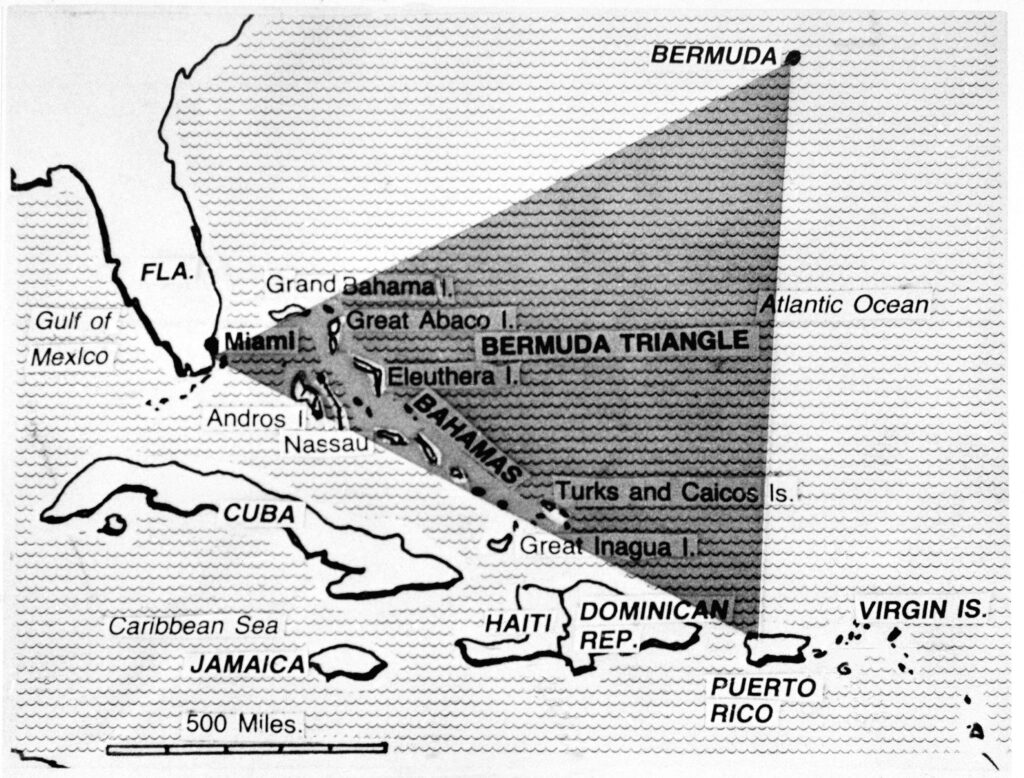
The Bermuda is a fairly loosely defined area out in the great Atlantic Ocean, generally mapped out with its three corners reaching Bermuda, Miami and the northwestern corner of Puerto Rico. It varies in size from around 500,000 sq. miles to 1,500,000 sq. miles depending on how its boundaries are drawn.

Why do we talk about it in Aviation?

It has a reputation for disappearances – sinking ships and vanishing airplanes, dots on the radar that are gone in a blink, never to be seen again. Some say it is haunted, some say aliens use it as a human abduction point, others reckon it is home to an immense Kraken that swallows ships whole…

These might be tall tales, but in fact is has been the location of a higher-than-its-fair-share of naval and aviation disappearances, and random technical malfunctions too. Somewhere in the region of 50 ships and 20 airplanes since folk started paying attention.

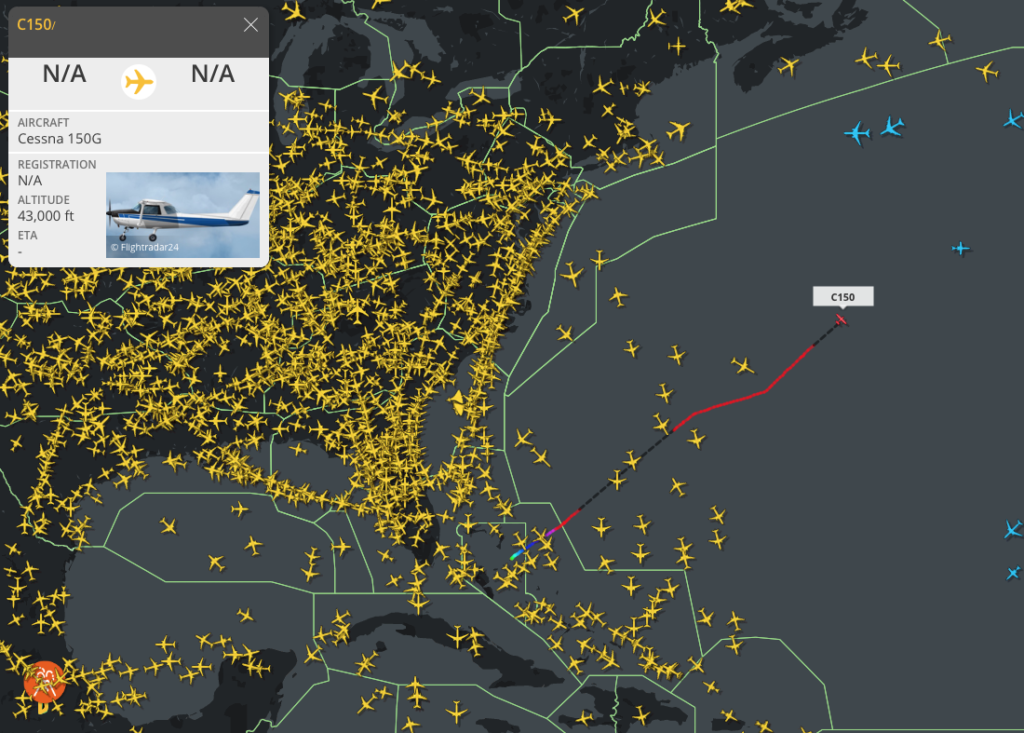
In 2017, a Turkish Airlines A330-200 experienced a series of electrical and mechanical malfunctions while routing over the Triangle. Routing from Istanbul to Cuba, they ended up making a diversion to Washington Dulles. Flight 19 was a squadron of five Torpedo Bombers that disappeared in the area. And of course the famous Amelia Earhart’s final flight was rumored to have gone down in this general location.

It gained its name from an article written back in 1964, which started with an attention grabbing hook –

Fact or Fiction?

Read through the list of sea and air incidents and accidents and you will notice something – the vast majority of events happened last century. Aside from TK183 and a few light aircraft accidents, all the rest generally took place between the 1940s and 1970s.

The investigations into Flight 19 and Amelia Earhart’s disappearance both concluded that poor weather, a loss of situational awareness regarding their actual positions, and ultimately running out of fuel were most likely to blame.

Flight 19 was attributed to the Flight Leader mistaking the Bahamas for the Florida Keys, a broken compass and the fact that the advice for if you got lost in the area back then was to just “take up a heading of 270”. And the Turkish Airlines flight was a fairly uneventful malfunction and diversion.

The high numbers of events can also be put down to the high amount of traffic that routes through this region. It is a fairly major shipping route between the East Coast of the US and the Gulf of Mexico, and in more modern times it has become a fairly busy area for aircraft too.

What is causing it all then?

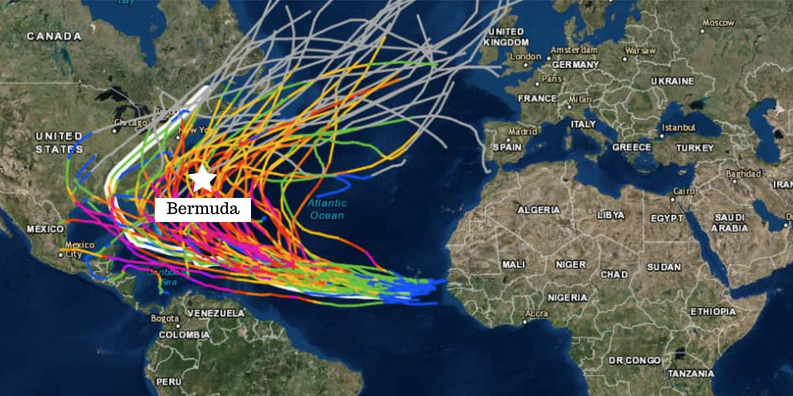
Well, weather seems an obvious answer. It is a pretty popular area for hurricanes to aim towards. In fact, Bermuda (the island) sits in Hurricane alley – the more frequent path taken by Atlantic Hurricanes. So it is no surprise old airplanes and ships without the use of modern weather radar systems might fly into this region and be surprised by some really nasty ship-sinking / airplane-crashing storms.

Another explanation offered up by science is to do with magnetism. You all know this, but the Earth’s magnetic pole isn’t quite in the same spot as True North. Your compass points to magnetic north, but there are these things called Agonic Lines which line up magnetic and true north and along these your compass is Truly (pun intended) accurate. One such line runs from Lake Superior and down through the Gulf of Mexico.

Back in the days before GPS, when pioneering navigators relied on compasses and stars (which they couldn’t see because of all the bad weather), they would have potentially corrected for Magnetic to True. But correcting along an agonic line would actually have led them astray.

Then there is the depth of the trenches in this area of the ocean. Most of the sea floor is as far down as 19,000 feet, some areas over 27,500 feet. Which means when things do sink there, they are not easily found. So your sunken ship or ditched airplane is not likely to be found and the conspiracies about aliens and wormholes start to run rampant.

So, the lack of recent aviation events attributable to supernatural phenomena do suggest that it was probably due to more standard reasons that incidents were higher here than in others areas. Added to the fact it makes a good story, and we find we just have an area of bad weather, lots of traffic, and disappointingly unexciting reasons for accidents.

Are there any things modern aviators should look out for in the region?

Yes. Those hurricanes are worth keeping an eye on. The main Atlantic Hurricane season runs from June to the end of November. We wrote a bit about it here.

If you are flying to Bermuda itself then the fact it is a very remote island is also worth thinking about. TXKF/Wade International is your main airport, and some of the nearest alternates lie a good 650 miles away on the east coast of the US.

Some serious fuel planning is a good idea then – Isolated Airport Procedures usually require you to carry at least 2 hours additional fuel (at normal cruise consumption above the destination aerodrome). Here is a useful CAA produced checklist for Isolated Airport Procedures.

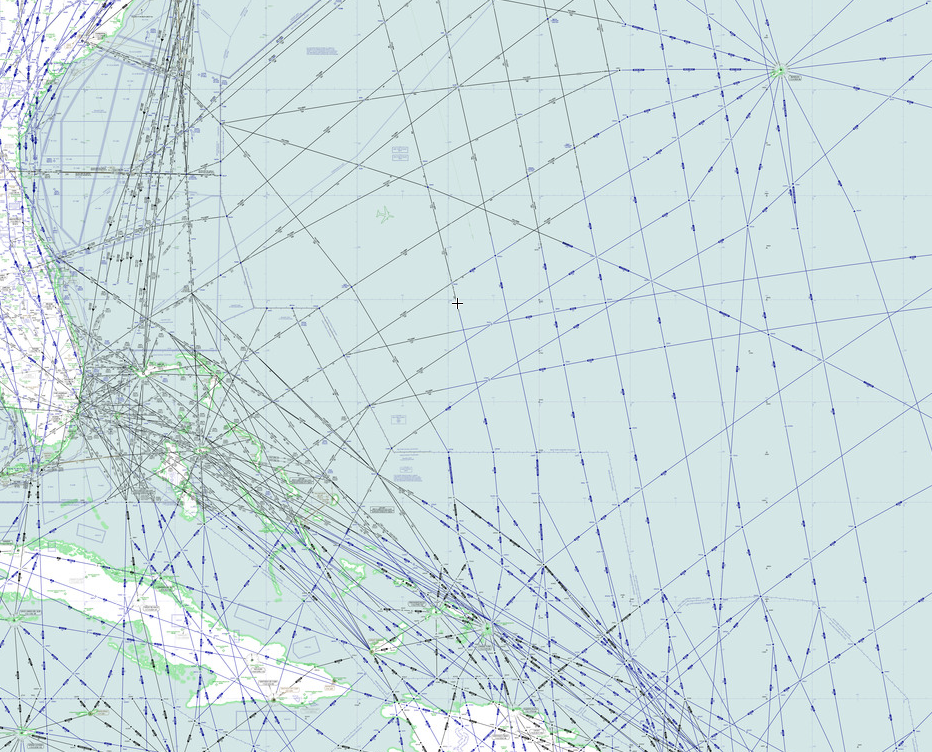
The surrounding airspace is also a threat. To the East you have the open Atlantic and all the procedures and challenges associated with that. To the West you have the East coast of the US, including the Florida Metroplex airspace, along with KMIA/Miami and KFLL/Fort Lauderdale – two of the busiest airports, in some of the busiest airspace of the USA.

Did you know there is a Bermuda Triangle in space?

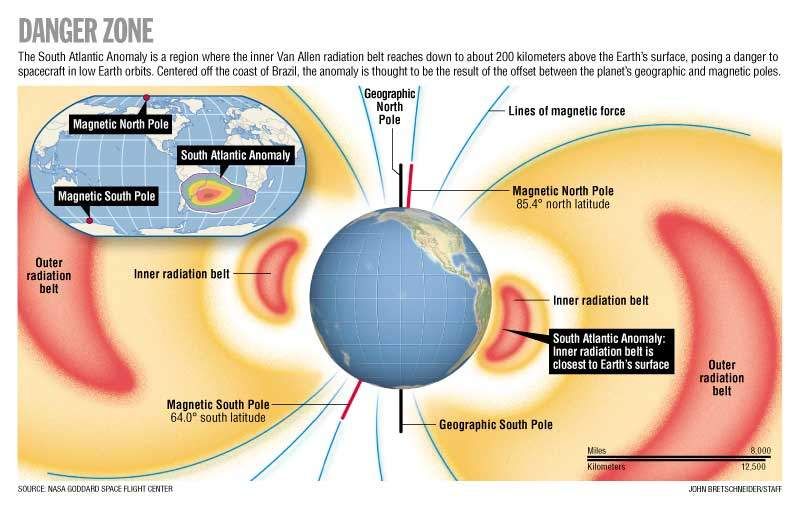
Yep, astronauts have their own ‘Bermuda Triangle’ to contend with. It lies over the South Pacific, stretching between Chile and Zimbabwe, and is rather more real than its earthly counterpart.

This area of space is where the inner Van Allen radiation belt comes closest to the Earth. These rings of charged particles – loads of electrons in the outer ring and high-energy protons in the inner –  surround the planet, and are caused by the Earth’s magnetic field which protects us from this harmful radiation by trapping these particles in its magnetic grip.

Unfortunately, in this particular area, the Earth’s magnetic field is weakest, so all those particles are free to swoosh around more. They have also managed to get much closer to the Earth which means our satellites, space equipment and space travelers sometimes orbit through it.  This pretty much messes with electrical equipment, and people for that matter.

For the Hubble telescope, which passes through it about 10 times a day, it means a disruption in its workings for about 15% of each day. Satellites often experience temporary system failures when passing through during high flux days, and the astronauts onboard the ISS have to be shielded to prevent excess radiation. They often report seeing random white flashes, and having issues with communication equipment.

Disappointingly then it seems the Bermuda Triangle is just the stuff of fiction

Most authorities and Scientific organizations agree, but if you fancy reading some more about it then these are some good places to head to:


The Seven Deadly Things

Have you ever taken a look at a report listing the distribution of Accidents by Accident Category? There are apparently more than 40 possible ways an accident can be categorized, but there are 7 that seem to pop up way more often than any other.

Airbus took a look into all fatal and hull loss accidents which occurred between 2009 and 2019 and the results are shocking in that a lot of those accidents just should not have happened.

P is for…

Yep, pilots. We are a big problem. We mess up a lot. That is what seems to be said in the media anyway…

But, it isn’t always our fault, (sadly some of the time it also is), and we all know that the news reporter’s favorite phrase “pilot error” (or “human error” if they are feeling particularly generous about it) is rather meaningless, and very unfair.  It removes all the context of the why’s and the how’s of what led to a pilot making an error, and it is rarely ever as simple as “they just messed it up.”

There are usually countless small things that lead up to any incident, and many a CRM course has been spent discussing and brainstorming how we can better avoid all of these little things and so avoid it ending up in a “one big thing” event.

So, why are these big events still happening? And what can the pilot in the equation do to prevent them? (Because the vast majority of these definitely are preventable).

1. Loss Of Control In Flight

This is the single biggest cause of fatal airplane accidents in this period, accounting for a scary 33%, and 12% of hull losses. We are not talking about situations where something major has broken or failed – we are talking about times where aircraft have somehow managed to get into a situation they shouldn’t be in, and the crew have not able to safely get them out of said situation.

Air France Flight 447 is one of the most discussed examples of this occurring.

All these accidents no doubt had other factors involved – it was not just the pilots not knowing how to fly. There were things like startle factor, bad weather, other warnings, other traffic…

But a large number of these could have and should have been recoverable.

So, what can we do about this? Well, ICAO took an in-depth look at why these kept happening, and they came up with a great and simple thing – UPRT. 

Upset Recovery and Prevention Training

When they say simple they really mean it – all you really need to know is PUSH, ROLL, POWER, STABILISE (and maybe have had a few practice goes in the sim).

This is the recovery though. It is the point when everything has gone wrong and all you have left is fixing it.

Luckily, we pilots do have a few other tools in our toolbox which we can pull out earlier at a time when prevention might still be possible. Things like good monitoring, situational awareness, an understanding of startle factor.

In fact, we have a post right here if you’re up for some more reading on the old startle thing.

There is also that Other thing we can do. It might be one that makes a few palms get a little sweaty at the thought of it – but we can disconnect the autopilot and actually hand-fly now and then.

2. Controlled Flight Into Terrain

Second on the list of the ‘7 Deadly Things’ is Controlled Flight Into Terrain. Again, not because something has broken, but because a crew have just totally lost their situational awareness. These account for 18% of all fatal accidents, and 7% of all losses reviewed in the 20 year period.

The Korean Air Flight 801 accident report offers more insight into how these occur.

Again, other things factor into this – distractions, visual illusions, somatographic illusions – and these can be tough to handle because they are one of the few things a simulator cannot realistically simulate.

We have backups though. GPWS for one. Although this really is the final layer of the safety net. If this is going off then you’re out of the prevention and well into the recovery and mitigation part of the accident curve.

There is good old Situational Awareness again though – this is the stuff of heroes. It is something you can gain, or regain, with a simple briefing. A “What if… then what will we do?” chat. Briefing threats is important, but briefing how to avoid them is even better. Get a bit of CRM in and ask the other person next to you what they think you should be looking out for.

Situation Awareness is knowing where you have told your plane to go but, most importantly, it is knowing if it is actually going there (and this means vertically and laterally).

3. Runway Excursions

These account for 16% of fatal accidents, and a whomping great 36% of hull losses. No failed brakes or issues with steering involved, just big old “oops, didn’t check the performance properly” type situations. We have mentioned this before. It is one of the biggest “that just shouldn’t have happened” types of event.

Actually, the biggest thing that leads up to runway excursions is generally unstabilised approaches.  These are something we can definitely avoid and IATA has some great tips on how. Cut out the unstabilised approaches and you’ll probably cut out a big proportion of runway excursions right away.

There are a few things to help us here too – if you are flying an Airbus then lucky you, because these have a great system on them called ROW/ROP that squawks at you on the approach, and on the landing roll, if it reckons you’re going to go off the runway. But if you don’t have this, then checking your performance properly and managing that approach well are going to be what saves you from an embarrassing call to your chief pilot.

There is also a big change to runway friction reporting coming in on 4th November 2021 – The Global Reporting Format, or ‘GRF’ as he is known to his friends. Griff will standardize how runway surface conditions are reported worldwide and with better reporting will hopefully come better awareness of the risks.

That was the Top 3. What about the others?

The other four are lumped together into ‘Other’ which makes up the remaining 33%. (Actually, 11% of that is ‘other’ others!) Combined, our final four account for 22% of all fatal accidents and 22% of hull losses.

These are:

  • Fire
  • Abnormal Runway Contact
  • System/Componet Failure or Malfunction
  • Undershoot/ Overshoot

Now, I know what you’re going to say – fire probably isn’t your fault (unless you dropped your phone under your pilot seat and then ran over it repeatedly with your chair trying to hook it out again).

But there are still things a pilot can do to help lower the impact of these.

How? Well, by knowing our fire procedures (the what to do if something Lithium Ion powered in the flight deck does start smoking), and by knowing the comms procedures needed to help support our cabin crew if there is something going on down the back. We can also prepare in flight – be ready with something in the secondary flight plan in case we need to suddenly divert.

As for system and component failures, well, the 737Max accidents of the last few years account for a big proportion of this, however, in all cases having a strong systems knowledge and preparing for those “what if?” situations might help save your life one day.

You might have noticed a shift in the training paradigm in the industry, and with good reason – the days of focusing on practicing specific failures in the sims are vanishing and in its place is Evidence Based Training – training that focuses on building the skills needed to handle any situation. If that all sounds newfangled to you then think of it this way – a pilot is there just not to push buttons, but to manage the flight, and these skills are the tools which will enable us to do that.

Fancy reading some more?

  • A full report from IATA on LOC-I can be found right here