


Update 4 March 1100z
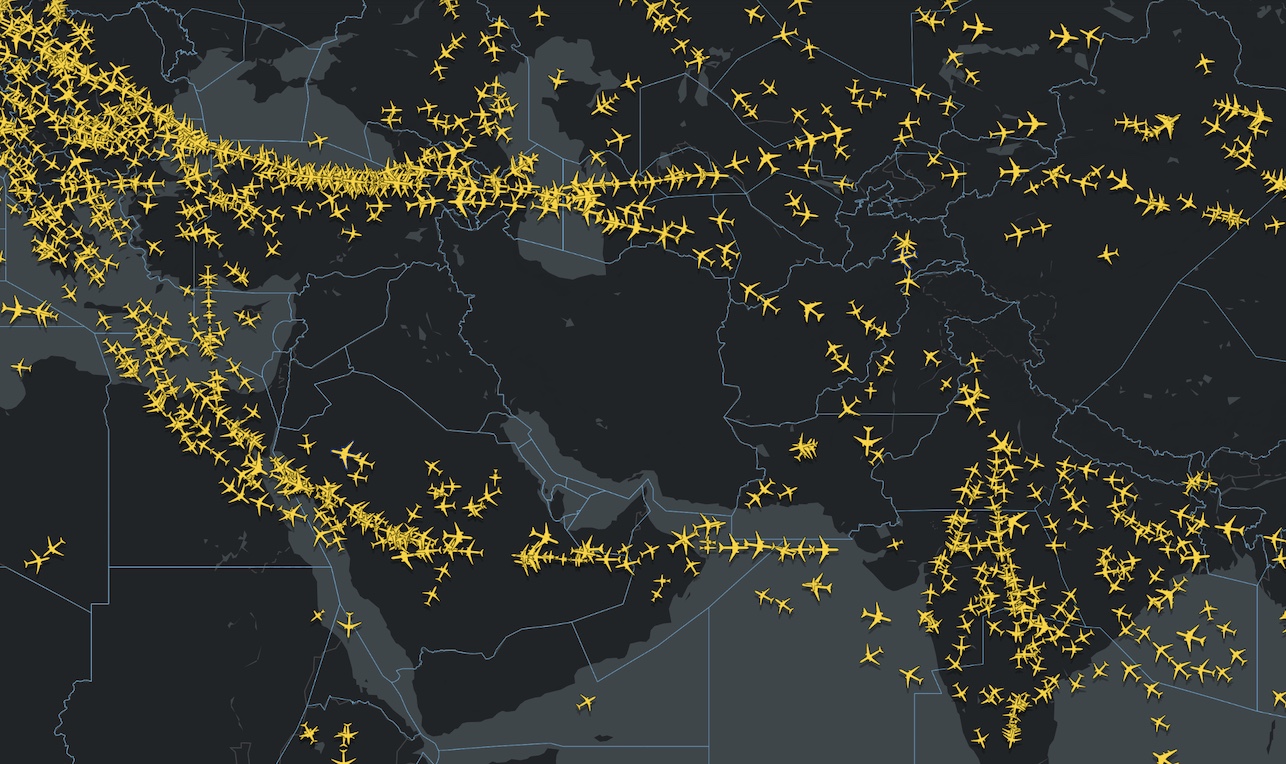
This is the current operational picture of Middle East airspace following US-Israel strikes on Iran and Iranian retaliation across the region.
The central middle east corridor is still shut. OIIX/Tehran, ORBB/Baghdad, OTDF/Doha, OBBB/Bahrain, OKAC/Kuwait and OSTT/Damascus FIRs are closed. Iran has also warned by Notam that conflict activity may extend over the Persian Gulf and Oman Sea. The LLLL/Tel Aviv FIR is closed except limited PPR. Bottom line – there is no usable routing across the Gulf right now.
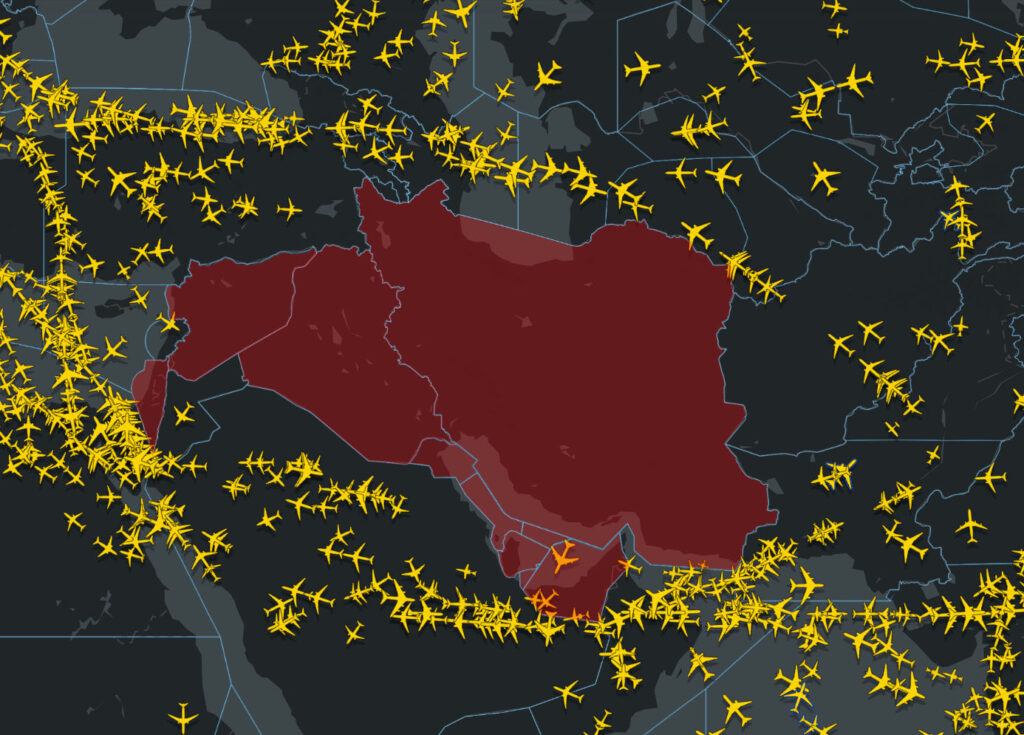
The OMAE/Emirates FIR is now partially open but only via tightly controlled waypoint corridors along the southern and eastern edges of the FIR, routing traffic via Saudi Arabia and Oman as per the Notam below. Only a limited number of flights are being allowed through these routes. Large areas remain under active ESCAT at all flight levels, and GNSS jamming/spoofing is reported across the FIR.
A0939/26 NOTAMR A0936/26
Q) OMAE/QAFXX/IV/NBO/E/000/999/2500N05430E200
A) OMAE B) 2603040700 C) 2603071200 EST
E) EMIRATES FIR PARTIALLY CLOSED.
ARR AND DEP TRAFFIC INTO EMIRATES FIR IS PERMITTED ONLY VIA THE
FOLLOWING WAYPOINTS:
OMAA, OMAL AND OMAD ARRIVALS VIA ITRAX, SODEX, TANSU AND PEKEM
OMAA, OMAL AND OMAD DEPARTURES VIA LABRI, RETAS, TANSU AND PEKEM
OMFJ ARRIVALS VIA MENSA, TANSU AND PEKEM
OMFJ DEPARTURES VIA TONVO, TANSU AND PEKEM
OMDB, OMDW, OMSJ AND OMRK ARRIVALS VIA TAPRA, PASOV, MUSAP, TANSU AND PEKEM
OMDB, OMDW, OMSJ AND OMRK DEPARTURES VIA TARDI, MEMTU, TANSU AND PEKEM
OVERFLIGHTS ARE ONLY AVBL WB VIA WPT LUDID
EXP FLOW MEASURES TO BE IMPLEMENTED
FOR RTE DETAILS REF UAE AIP SECN ENR 1.9 AND ENR 3.2
AIRSPACE USERS ARE ADVISED TO MONITOR NOTAM UPDATES.
This is not a normal reopening. Access is tightly controlled, capacity is limited, and military activity areas remain active.
Commercial operations remain heavily disrupted. A small number of flights have resumed from UAE airports under the restricted corridor routing, mainly to move stranded passengers, but many international carriers are still extending cancellations to Gulf destinations.
Routing Options
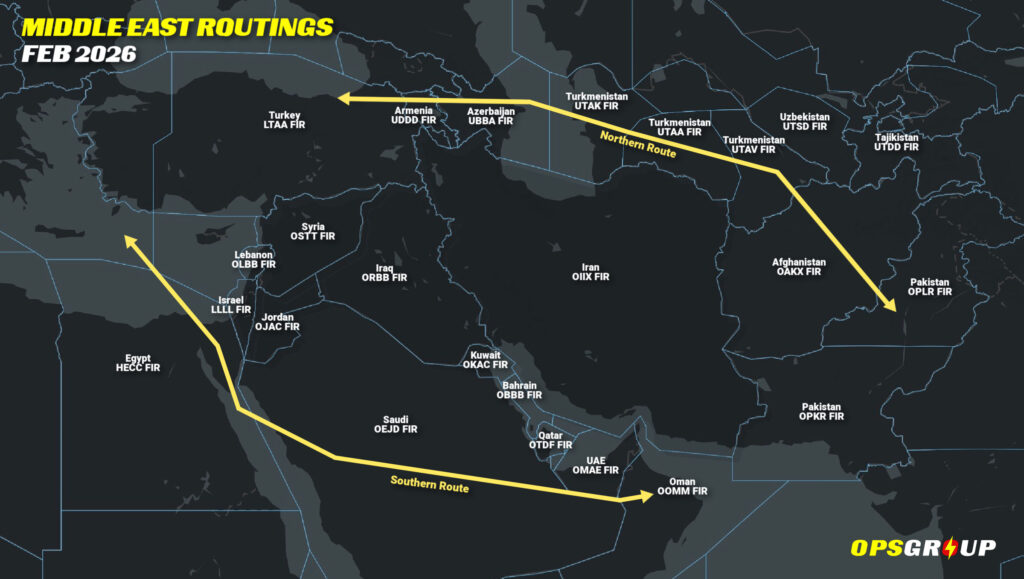
For Europe to Asia or Gulf positioning, there are basically two routing options – north via the Caucasus then Afghanistan, or south via Egypt then Saudi then Oman.
Egypt then Saudi then Oman:
This is the main southern bypass for Europe traffic. HECC/Egypt airspace is open, then you route down into OEJD/Saudi, then on into OOMM/Oman. Parts of Saudi airspace have route-level closures due to military activity, further concentrating traffic onto remaining routes. Oman has reported GNSS interference, so be ready for degraded and tactical changes.
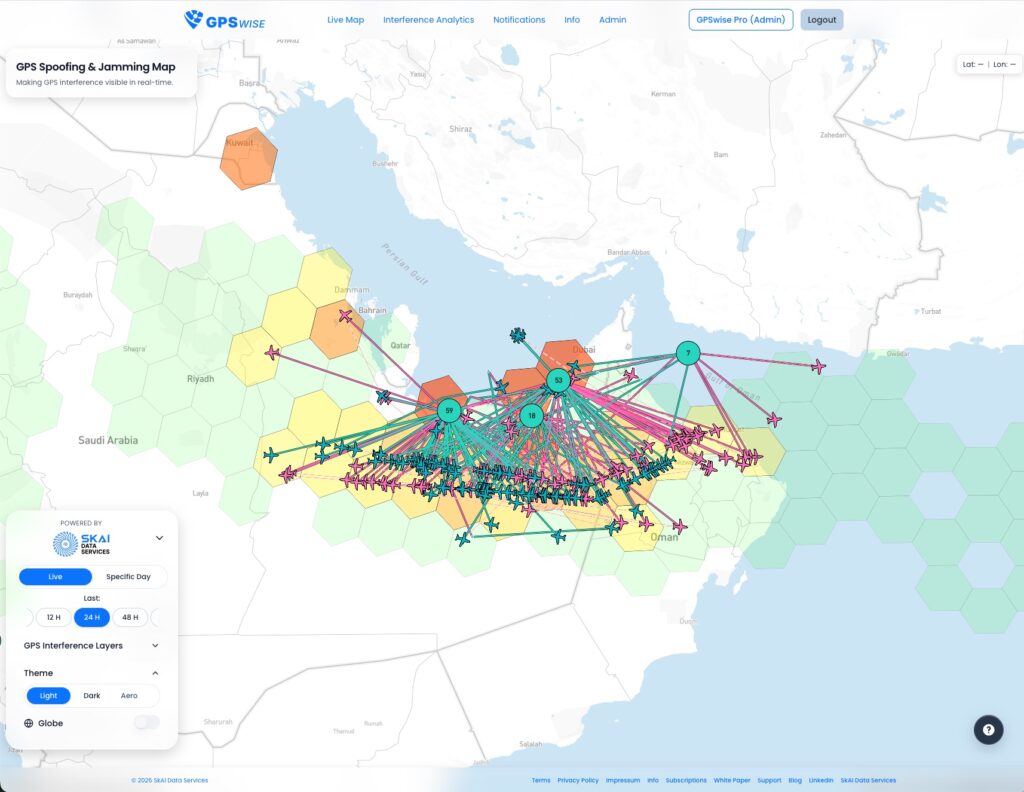
Click for latest spoofing map from gpswise.aero
North via the Caucasus then Afghanistan:
Armenia and Azerbaijan remain open and are being used heavily for the northern bypass. The issue here is that you then have Afghanistan airspace to deal with – the OAKX/Kabul FIR is open and seeing heavy overflight demand as part of the north routing, but remember it’s Class G with no ATC service available, so you have to follow the published contingency routes.
EASA CZIB Update
EASA has updated and extended CZIB 2026-03 following a review on March 2. The bulletin now applies at all altitudes across the airspace of Iran, Iraq, Israel, Jordan, Lebanon, Bahrain, Kuwait, Qatar, UAE, Oman and Saudi Arabia, and advises operators not to operate within the airspace of these countries due to the risk from missiles, air defence systems and interception activity. The current validity runs to 6 March.
Airport Status
- OMDB/Dubai, OMDW/Al Maktoum, OMSJ/Sharjah, OMFJ/Fujairah, OMRK/Ras Al Khaimah, OMAA/Abu Dhabi, OMAL/Al Ain and OMAD/Al Bateen are technically accessible under the OMAE partial-reopening Notam listed above, but only via strict waypoint corridors and subject to flow control.
- OTHH/Doha, OBBI/Bahrain and OKBK/Kuwait remain unavailable due to FIR closures.
- LLBG/Tel Aviv remains PPR only.
Recent Strikes
Definitely not a comprehensive list, but most of the big ones across the region worth knowing about:
- March 4 – Qatar: An Iranian missile struck Al Udeid Air Base near Doha. Damage reported.
- March 4 – Kuwait: An Iranian drone strike hit a US military facility. Casualties reported.
- March 4 – Oman: Drones struck infrastructure at Duqm port on the Arabian Sea coast. Damage reported.
- March 3 – Riyadh, Saudi Arabia: Iranian drones struck the US Embassy area in Riyadh’s Diplomatic Quarter. Damage reported.
- March 3 – Israel/Lebanon: Hezbollah launched missiles and drones toward northern Israel. Israel carried out further airstrikes in Lebanon.
- March 2 – Abu Dhabi, UAE: Debris from an intercepted drone fell in the city, causing injuries and damage.
- March 2 – Saudi Arabia: A drone strike hit the Ras Tanura oil refinery complex on the Gulf coast. Limited damage reported.
- March 1-2 – Cyprus: A drone strike caused minor runway damage at RAF Akrotiri. LCPH/Paphos was temporarily evacuated following a radar contact.
- Feb 28-March 1 – UAE, Qatar, Bahrain: Missile and drone waves targeted multiple Gulf cities. Most impacts were interception debris, with some urban damage reported.
- Since Feb 28 – Israel and Iran: US and Israeli strikes on Iranian military targets triggered ongoing Iranian missile and drone retaliation across Israel and Gulf states.
Bottom Line
A key point here is that this doesn’t look like a short disruption. There’s no sign of a quick de-escalation, and several FIRs remain closed by Notam through at least March 7. With military activity across parts of UAE and Saudi airspace, this remains an active conflict environment rather than a short-lived disruption.
For now the central block between Israel and Iran is effectively closed – which removes the normal Gulf corridor entirely. Airspace anywhere between those two countries carries elevated risk – either from direct missile activity or from defensive interceptions and misidentification.
In practical terms there are only two ways around it: north via the Caucasus and Afghanistan, or south via Egypt, Saudi and Oman. Both routes remain open for now, but both are carrying a lot more traffic than usual.
If you have operated in the region this week and could share your experience, please let us know at news@ops.group, and we can share anonymously with the group.

More on the topic:
- More: Crisis in Iran: Elevated Airspace Risk
- More: EASA Removes CZIBs: Middle East Risk Gets Harder to Read
- More: 2025 Update: BizAv Ops to Israel
- More: Why EASA has Withdrawn Airspace Warnings for Iran and Israel
- More: Dodging Danger: The Three Routes Through the Middle East
More reading:
- Latest: Middle East Airspace – Current Operational Picture
- Latest: March 2026: Afghanistan Overflight Update
- Latest: NAT CPDLC Route Uplinks: Crew Confusion and Errors
- Safe Airspace: Risk Database
- Weekly Ops Bulletin: Subscribe
- Membership plans: Why join OPSGROUP?





 Get the famous weekly