GPS Jamming: All the Wrong Signals

We live in a GPS world. This fantastic technology has revolutionised aviation since the first basic unit was approved for IFR use back in 1994.  It has become engrained in day to day operations. We use it for a bunch of really important stuff – navigation, communication, surveillance, ADS-B and even TAWS. It is a technology that we rely on to stay safe.

And herein lies the problem. It relies on radio signals from satellites to work, and they can be intentionally interfered with. If you operate between Europe and Asia then the chances are this is not new. What is concerning is that it is happening more and more. In the last five years EUROCONTROL report that cases of GPS outages have risen dramatically. The number one suspect? Deliberate interference.

The Hot Spots

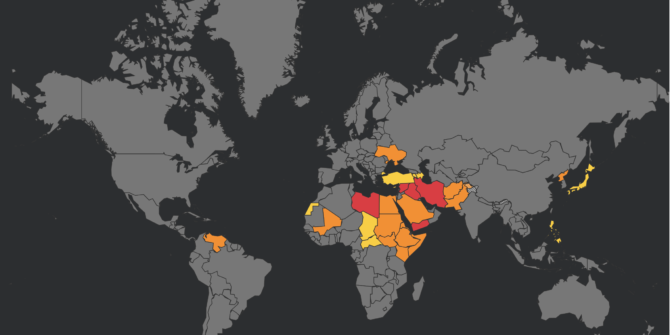
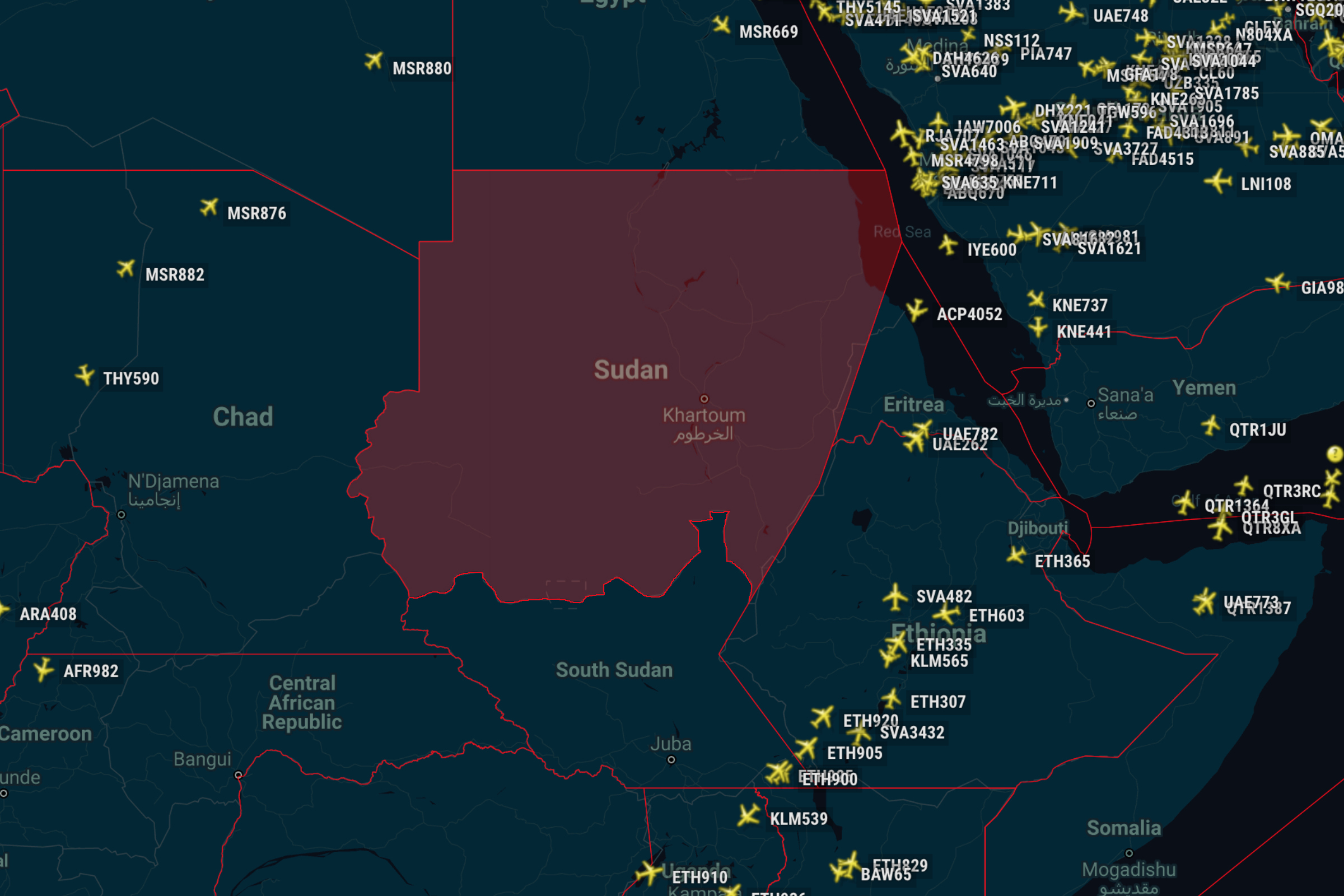
Almost always, widespread GPS outages occur in areas of political tension. It’s no surprise then that the Eastern Mediterranean, Middle East and Caucasus are consistently the most affected regions – last year alone there were 3,500 reports of outages there. About 10 a day. And that’s just from the people who spoke up. The LCCC/Nicosia FIR over Cyprus extending through to LLBG/Tel Aviv is particularly bad, with reports as far north as Italy, as well as Turkey and Egypt.

It is a part of the world alive with tension – spill over from the Syrian War, ongoing conflict in Libya and the current Azerbaijani conflict. Unfortunately it is also a major air corridor for flights between Europe and the Middle East and Asia. It is almost unavoidable.

But it’s not just there – There are reports of GPS sabotage throughout the world – rings of interference (also known as ‘crop circles’) have been traced to China, North Korea and even the US.

So why tamper with GPS?

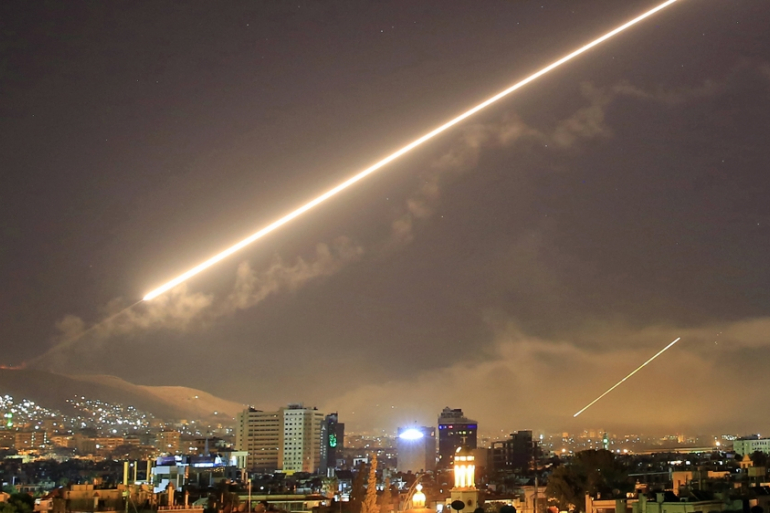
Unfortunately electromagnetic warfare is real. The goal for military interests is to make things as difficult as possible for the other side including disrupting communications and navigation. GPS jamming is also used as a defence against drones – the explosive ones which we see in the headlines, and the ones that are spying. In other cases, jamming is used to protect people’s privacy, and sometimes as a source of criminal mischief. Unfortunately for us, whether we like it or not, civil aviation is along for the ride

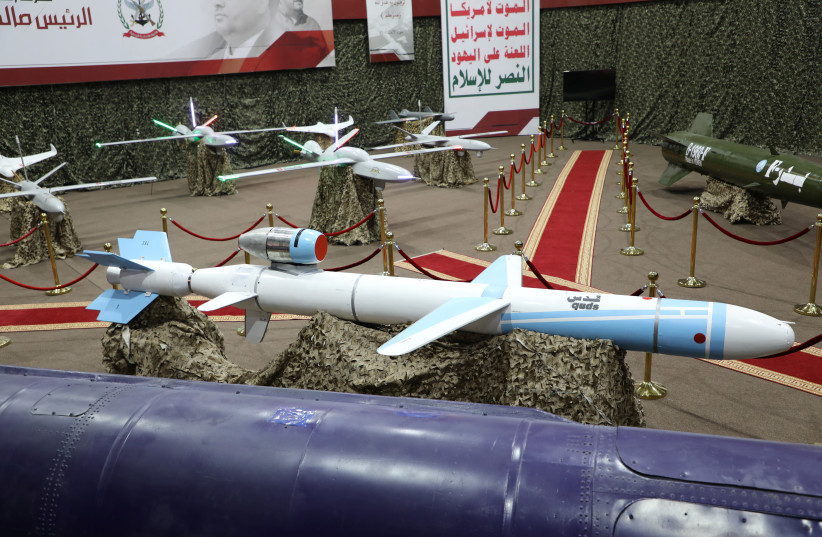
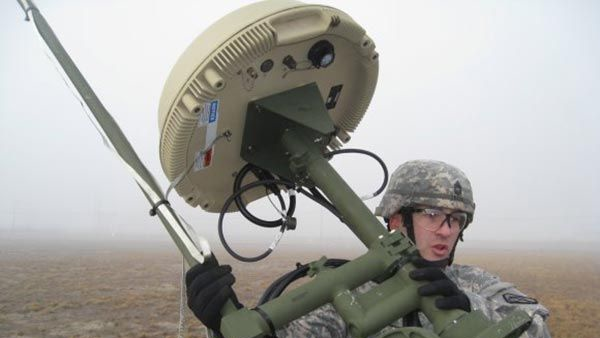
Portable GPS Jamming Device

Jamming or Spoofing?

GPS signals are low power, which means that a weak interference source can cause a receiver to fail, or more concerningly produce false information. A basic way to achieve this is with jammers – devices that mask the signal with noise. Although they are illegal in the US, they’re not in other countries. And they’re readily available.

Readily available: jammers for your car.

A more sophisticated approach used by the military is ‘spoofing’ where a ground station transmits a fake GPS signal that overrides the legitimate one.

In simpler terms – jamming causes the receiver to die, spoofing causes it to lie.

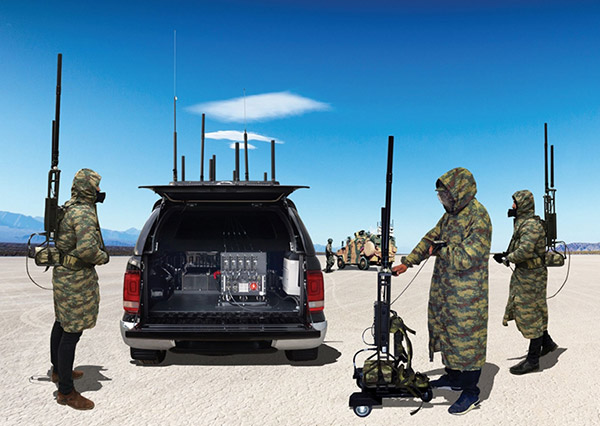
In powerful military applications, the effect of a single device has been known to affect a 300nm radius, and it is almost impossible to locate them. They can be installed at bases, mounted in vehicles or put onboard ships.

Jammer mounted in an SUV

So why is this a problem for aviation?

The issue is getting worse, and outages are sporadic and unpredictable. Three quarters of GPS loss worldwide is occurring in the cruise, and in ten percent of these cases it lasts for more than half an hour. There have also been reports where GPS receivers never regained a signal. According to ICAO’s rules, frequent outages must be Notamed but the reality is, few states are actually doing it. To make matters worse, with so few aircraft flying during the pandemic it is unclear just how bad it is getting.

For crew, a loss of GPS forces an aircraft to rely on other means to navigate in airspace that relies on accurate navigation to separate you from other traffic. It can also lead to other issues including false alerts and even GPWS warnings. Requiring pilots to ignore them is a concerning precedent.

The plot thickens, enter 5G.

We’ve all heard about it – the revolutionary technology that will let you download your favourite episode of ‘The Bachelor’ in record time. Worrying news in the US has emerged that the federal government has allowed a new network provider to access a slice of the radio spectrum usually reserved for GPS signals to power a huge 5G network across the country. The frequencies are powerful, and there is no guarantee that they won’t won’t interfere with GPS signals.

The mighty 5G antenna

So what can we do it about?

Unfortunately, like Covid, the problem isn’t going away anytime soon. While manufacturers work on new ways to protect your aircraft, there are a few things you can do.

The most important thing is contingency – have a plan. Be aware of the threat of jamming if flying in affected areas of the world, and the issues it may create for you in the flight deck. If you lose GPS signal, report it to ATC. The more reports they get, the better. They will work to increase your separation and coordinate with other units.

When you’re flying a GPS-based approach, know what you’ll do if the screen goes blank. Be prepared for the unexpected because as recent events have shown, that super reliable technology can fail.

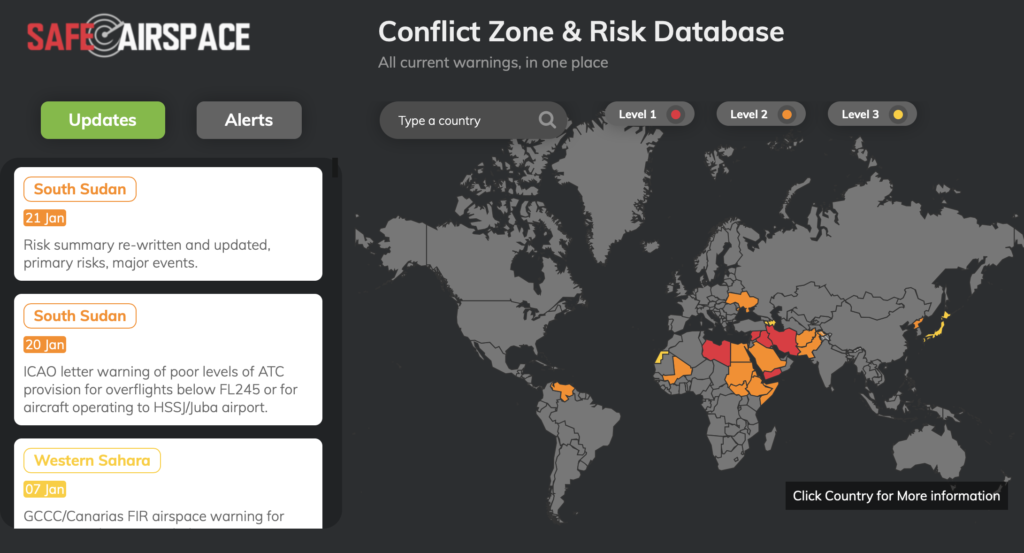
And stay informed, here are some useful resources:


Space Weather: Here Comes Hubble…

History has shown that every ten years or so, earth comes under attack from high amounts of space weather– and we’re about to embark on the next cycle.

Wait, there’s weather in space?

Yep, but not in the conventional sense. That big ball of burning energy we call the Sun does more than provide us with the light and warmth we all seek on vacation.

It also constantly spews gas and particles into space, in what is known as the solar wind. These particles are charged with electricity, and are flung towards earth at up to a million miles an hour.

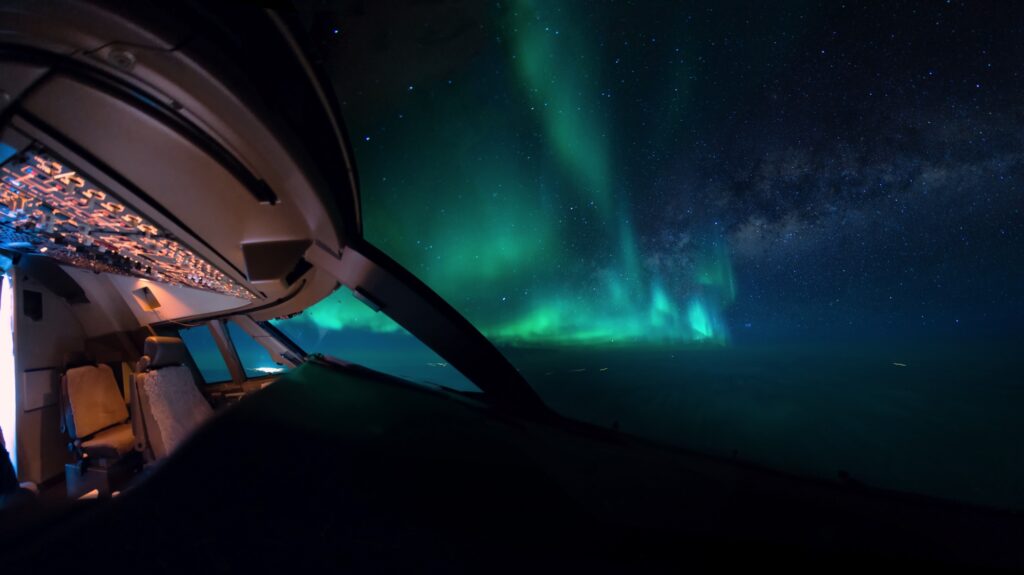
Luckily for us, our atmosphere and the earth’s magnetic field acts like a shield. But sometimes these determined particles make it through to our atmosphere. When that happens we are often treated to the spectacular light shows we know as auroras. If you fly at high latitudes at night, chances are you have been lucky enough to see them. Sadly space weather can have more serious consequences for aviation than struggling to capture that illusive insta shot on your trusty iPhone 4.

Like the earth weather we’re used to, space weather is changeable – its severity depends on what is happening on the sun.

Its surface is a busy place – hot gases are constantly on the move as powerful magnetic fields twist and turn. When things get especially rowdy, a storm occurs and the solar wind gets stronger. Occasionally these storms produce a solar flare – essentially the sun burps, and sends significant amounts of radiation towards earth. This is where the trouble can occur.

What kind of trouble?

Communications. During solar events, HF and satellite communications can be disrupted. In severe cases, even disabled. There may be effects on CPDLC and ADS-C services. Line of sight VHF is less likely to be impacted, but that does not help much when you’re over the middle of the ocean.

Systems. Some of your aircraft’s systems are sensitive to radiation storms. Space weather may induce sudden electrical failures that can range broadly from insignificant to ‘ruin your day.’ Systems that rely on magnetism can also be affected

Navigation. The sun’s particles disrupt the upper layers of the atmosphere, which can interfere with GNSS signals from satellites. You guessed it – the result is unexpected position errors. If it gets really bad, the signal may be lost all together. We’re using RNAV based approaches more than ever these days, and the likelihood of not having ground based aids as a backup is increasing.

The Body. During these storms, you can be exposed to unusually high levels of ionising radiation (the nasty one for humans, think Chernobyl). As a general rule, the higher you fly or the higher the latitude, the more exposed you are. The effects of this on crew is the subject of ongoing studies. But the more you can avoid higher exposure levels the better.

What can we do about it?

Here’s the best news: space weather is predictable. And ICAO are onto it.

Solar monitoring has improved significantly in recent years. A number of countries have joined forces to create three agencies responsible for issuing ICAO Space Weather Advisories (SWX) around the clock.

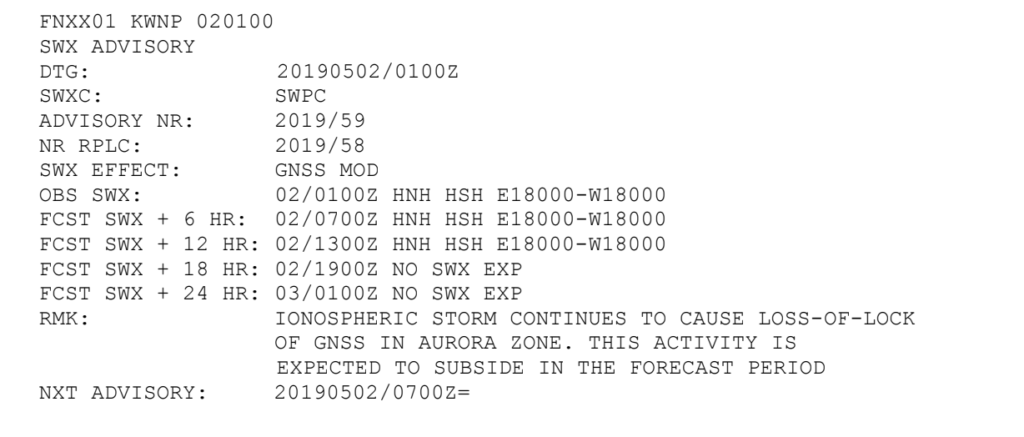
Space Weather Advisories have a standardised format, and are not the same thing as a SIGMET.

They are only issued whenever space weather conditions get bad – essentially moderate and severe impacts, and only when operations above FL250 are affected. They are activated for comms, GNSS and radiation interference, so seeing an SWX advisory during your pre-flight briefing is a pretty good indicator to have a closer look.

They predict the effect of space weather at six hourly intervals across a twenty four hour period. To define the areas affected, SWX advisories effectively draw a box. They divide the world into six bands of latitude, and tell you how wide the box is with longitude. Still confused? A picture always helps…

For a full briefing, the FAA has recently published a helpful information bulletin which explains how Space Weather Advisories work in more detail. And if you’re really brave, more info can also be found in ICAO Doc 10100.

Some other useful stuff:


2020: A Record Breaking Hurricane Season

It has been a record breaking season for the Hurricanes. We are not talking the Carolina based NHL team. We are talking actual hurricanes.

2020 has now tied with 2005 as the most active hurricane season in history. No surprise there given what’s gone on in 2020 so far.

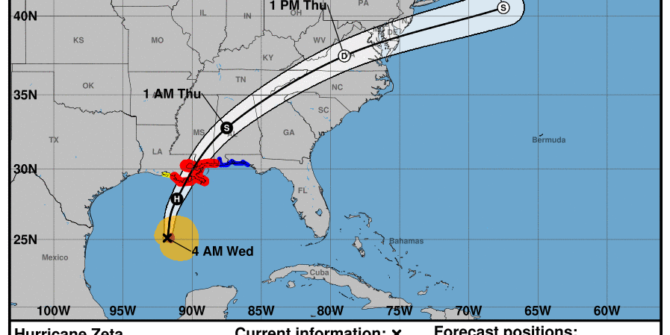
Hurricane Zeta became the 11th hurricane of the year. It is also the earliest in a season that 27 storms have needed naming (2005’s Zeta only formed at the end of November).

2005 is still (thankfully) beating 2020 in terms of major hurricanes.

What is the difference?

‘Hurricane’ comes from an old world which means ‘god of the storm’. ‘Typhoon’ comes from the beast Typhon – a Greek monster who fathered the sphinx, Cerberus and the super lion Nemean that Hercules had to kill. The etymology of the world ‘Cyclone’ is less terrifying, but they all boil down to the same thing – 

They are fancy terms for great, big, mess-making, flash-booming, horror storms. Whether it is a Hurricane, a Cyclone, or a Typhoon just comes down to where in the world it is wreaking havoc.

Hurricanes, Cyclones, Typhoons also get individual names if they get big enough. Some of these names get retired if they cause too much damage and destruction – like Katrina in 2005.

A full list of Hurricane names can be found here.

So, what are they?

They are “large-scale, atmospheric wind-and-pressure systems characterised by a low pressure at the centre, and by a circulating wind motion”. They spin counterclockwise in the Northern Hemisphere, and clockwise in the Southern Hemisphere.

Buys-Ballot famously stated if you stand with your back to the wind in the Northern Hemisphere then the low pressure will be to your left. I wouldn’t recommend standing with your back to a Hurricane though.

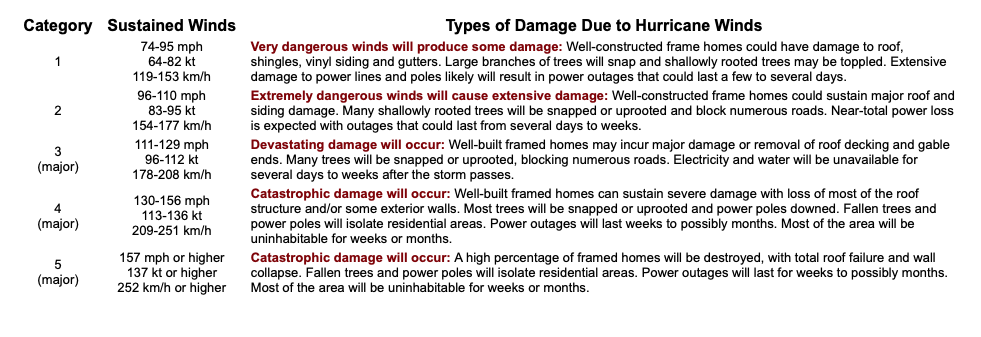
These storms only get classified as a Storm if the tropical depression they form from gets mean enough – basically, winds exceeding 39 mph. If the storm’s winds exceed 74 mph it gets reclassified as a Hurricane.

Hurricane’s also get classified from 1-5 based on their capacity for damaging things.

Why does aviation hate them?

Well, mainly because of the weather they bring. The crazy winds, serious rainfall and flooding, and power outages they cause.

How can we avoid them?

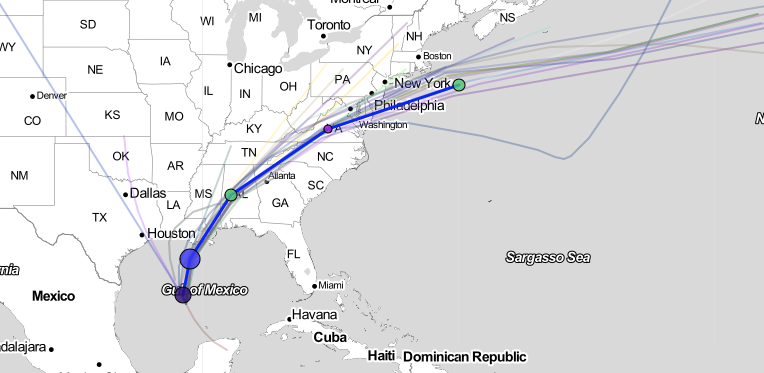
Meteorology departments track storms and try to forecast their movement. Some of the movement is based on air currents and sea currents (because hot water feeds them) amongst other things. From this they can create what are called Spaghetti models which help forecast where the storm will travel.

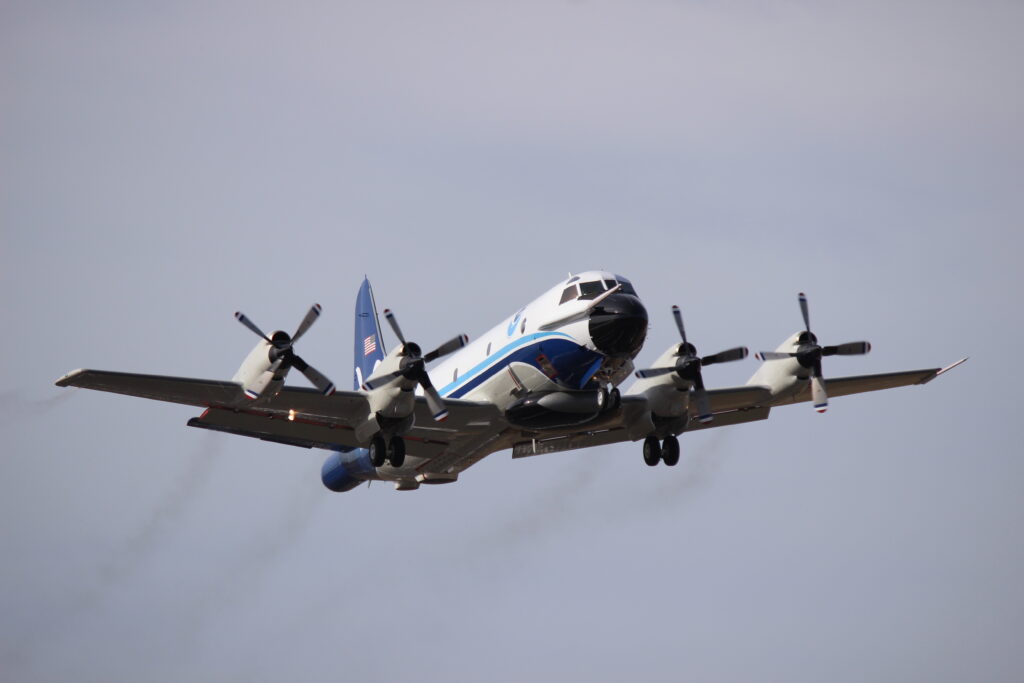
Agencies such as NOAA also (on purpose) fly airplanes into them. These Lockheed WP-3D Orion aircraft have 4 turboprops and are pimped out with probes for measuring every wind and pressure change to help scientists see what is going on inside. 

Little salute to the pilots who do those flights!

These aircraft measure everything! They have radars which can scan the storm vertically and horizontally, and can even drop probes to test the water temperature.

Satellites monitor storms as well, but mainly just send down horrifying photos of how massive they are.

All this information gets fed to sites, some of which we monitor…

What do we tell you?

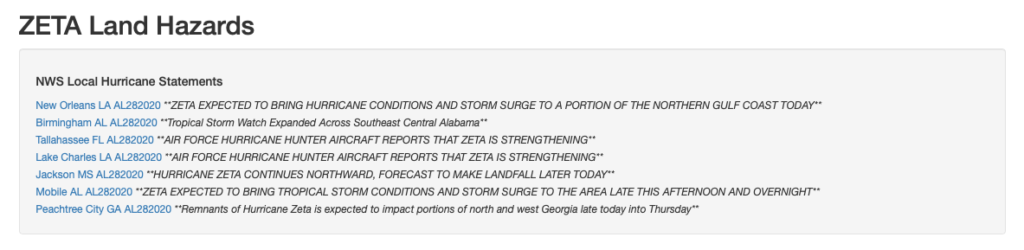
We check a site called Cyclocane which tells us about active tropical storms, and their forecast paths. We try to give an alert about severe weather forecasts, and alerts on airports that are cancelling operations due to weather.

We also check other weather forecast sites, and NOAA for warnings on serious weather which might affect operations.

Zeta…

Zeta is a serious storm. Still currently over the water, it is strengthening and is expected to bring storm surges and extreme winds of over 100 mph

There are storm surge, tidal and hurricane warnings in place for Florida and Louisiana.

It is expected to turn North on October 28 or 29, and is expected to make land fall close to New Orleans late in the evening of October 28


Volcanoes – No lavaing matter

One of the rowdy Icelandic volcanoes is at it again. Earlier this month, the Icelandic Met Office changed the aptly named Grímsvötn to a ‘Code Yellow’ after it started showing high levels of activity.. There has also been a fair amount of action in the Pacific Rim, and even Mount Etna has been rumbling…

Why is volcanic ash so dangerous?

For starters, it is not the same thing as smoke.

Volcanoes are on the ground, airplanes are in the air, but unfortunately volcanoes spit out loads of hot, nasty stuff and they tend to spit it rather high. That hot, nasty stuff is a mixture of glass, rock and mineral particles, and it is really fine – the diameter of a particle measuring less than 2mm. It is also very porous meaning it weighs next to nothing and is easily carried along on the wind. 

Once the ash cloud starts to spread it, it can be very hard to spot – even a fairly dense ash cloud is unlikely to show up on your weather radar because the particles are just too small.

If it is ingested into a jet engine, it will erode the compressor blades before forming a substance similar to molten glass inside the combustion chamber, and this then re-solidifies on the turbine blades. The end result can be stalling and engine failure – and you might not be able to get them going again. And if that wasn’t enough, it can also damage the flight deck windows, block pitot static systems, and get into the cabin air and damage ventilation and pressurisation systems.

So volcanic ash is to airplanes, like sand is to picnic on a beach – it gets everywhere, and pretty much ruins it.

Take British Airways Flight 9 for example…

In 1982 a British Airways 747 was en-route from London Heathrow to Auckland (with a few stops along the way). While overflying Indonesia, late into the night, their windshield began to glow an eerie shade of blue. They had unwittingly entered an ash cloud from the recently erupted Mount Galunggung. Within three  minutes, all four engines had stopped. They descended over 25,000’ and were making some pretty close-up eye contact with fish before they finally managed to get the engines running again.

In December 1989, a KLM 747 had a similar incident when en-route from Amsterdam to Tokyo, Narita. This time it was an ash cloud from the Redoubt Volcano that caused all four engines to fail. They also eventually managed to re-start and landed safely into Anchorage with no injuries, but with around 80 million dollars worth of damage to the airplane…

Okay, so what can we do about it?

For starters, understand the alerts you see in your pre-flight briefings.

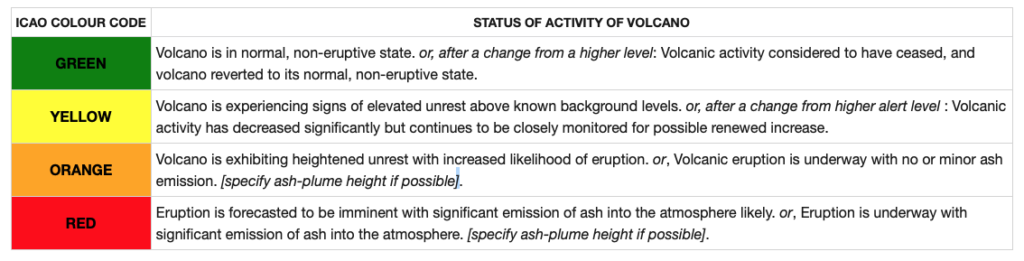
To help operators plan against potential ash encounters, ICAO have helped develop a universal alerting system for aviation that uses a simple but informative colour coding to give a heads up of the activity level of volcanoes.

ICAO also coordinate several Volcanic Ash Advisor Centers (VAACs) around the world that operate under the International Airways Volcano Watch. They use a network of met stations, satellites and even reports from pilots to provide forecasts, SIGMETS and advisories to the aviation community regarding ash clouds and eruptions. In other words, they try to tell you where it is, how bad it is and if it will get worse.

So, you can plan your flights to avoid affected areas both laterally and vertically.

Know the signs… 

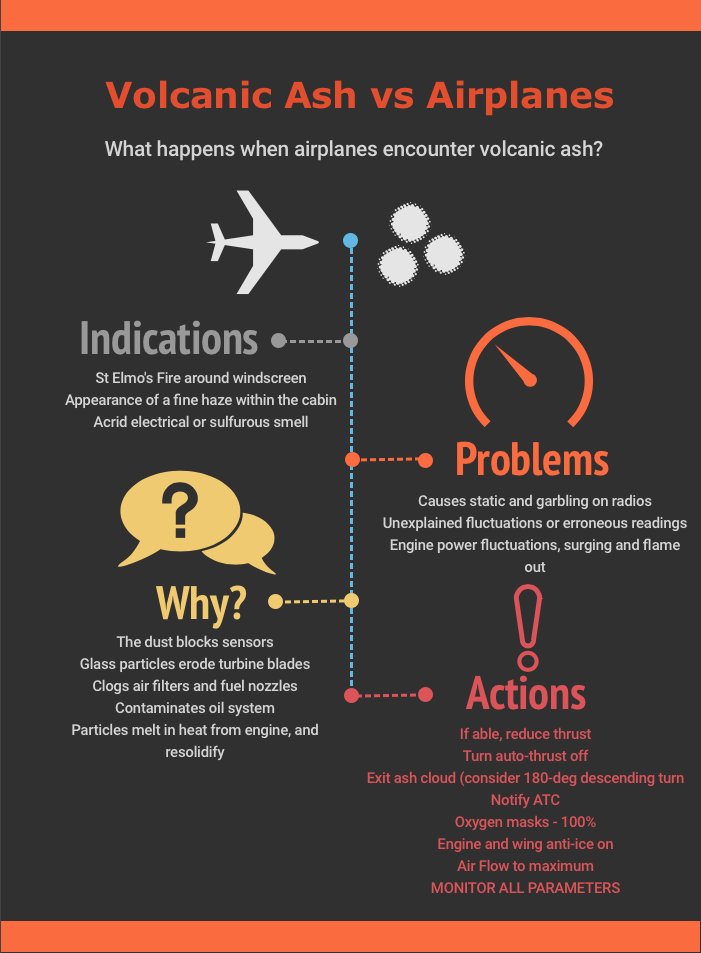
We have made you a handy infographic explaining what happens, and what you should do about it, but the general gist is:

Watch out for the signs that you might be entering an ash cloud – a strange colored cloud (in the vicinity of a known volcano), sulphuric or acrid smells in the cabin that can’t be blamed on the co-pilot, increased static charge around the flightdeck windows, garbled radio, or a picture of it on your sigmet chart (that you missed in the pre-flight briefing) are usually a good giveaway;

If you think you’ve flown into ash, get out fast. A 180 degree turn is usually best. Follow the actions or volcanic ash checklist for your aircraft type, and consider getting yourself on oxygen;

Look after your engines. Monitor your engine closely – you might see surging, stalling or high EGTs. If they are, reduce power and turn the auto throttle off. Do not try to climb out of it;

Watch your speed. If you’re getting erroneous speed indications, go back to basics using pitch and power until you can confirm your speed is safe;

Report it – Chances are if you’ve flown into it, so will another aircraft behind you, so make sure you put a radio call out to warn them, and to let ATC know why you just did a massive wheelie in the sky.

The Bigger Issue for Aviation

In 2010 the unpronouncable Eyjafjallajökull erupted and caused enormous disruption to air travel across Europe. The disruption lasted for over a week, and that was just one volcano!

A previously published report established that over one hundred airports in twenty-six different countries were affected by the eruptions of just forty-six volcanoes within a three period. Unfortunately for aviation, there are about 1500 active volcanoes in the world (not counting the ones that line the ocean floor.) 75% of these fire breathing mountains live in the Ring of Fire, in the Pacific, but there are some seriously cranky calderas on all continents bar Australia.

Which ones should we keep an eye on?
Volcano-watching organizations and aviation authorities have established a ranking system for volcanoes using an overall threat score, and a threat to aviation score which take into account 24 factors.

In the US, Kīlauea in Hawaii ranks numero uno worst with an overall threat score of 263, and an aviation threat score of 48. Mount St. Helens, Washington poses the greatest threat to aviation with a score of 59.

So what other resources are there to help avoid serious aviation disruptions from eruptions?
Unfortunately, volcanic eruptions can be a little hard to forecast, but generally how much they are rumbling, GPS data that monitors seismic activity, and historic eruption data are used to predict if and when they might pop.

Ash clouds are relatively hard to track as well – normally data is plugged into ash cloud modeling programs that consider the density and plume size, and the wind conditions for the day to model how it might disperse. Satellite sensing to detect radiation absorption levels, and thermal infrared wavelength levels also help, but there is no one sensor for observing everything.

Aviation authorities determine ash zones based on the concentration of ash. These are either a No Fly Zone, or an Enhanced Procedure Zone, and are based off tolerance levels agreed with aircraft and engine manufacturers. Generally enhanced procedures require training for the pilots (on identifying effects) and additional maintenance checks for the engines and aircraft.

Too Long; Didn’t Read

  1. Keep an eye on our alerts. Opsgroup will send out alerts on any volcanic eruptions that look like they will significantly impact flight operations;
  2. Familiarise yourself with the signs of ash clouds, and the actions to take in case you ever do end up in one.

Other resources


The 511 on the Nov 5th ICAO changes

A whole bunch of procedural stuff will be changing from 5 Nov 2020, with the release of a new amendment to ICAO’s Procedures for Air Navigation Services document. There will be changes to Oceanic Contingency and Weather Deviation Procedures, Wake Turbulence Separation, SLOP Procedures, and how the FAA defines Gross Navigation Errors.

What is the PANS-ATM (ICAO Doc 4444)?

Procedures for Navigation Services – Air Traffic Management. In other words, the ‘go to’ manual for aircrews who operate internationally. It explains in detail the standard procedures you can expect to be applied by air traffic services around the world, and what they expect in return.

Here is a summary of the most important changes coming on 5 Nov 2020. Thanks to Guy Gribble at International Flight Resources for this update.

Oceanic Contingency Procedures

Basically, what you should do if you need deviate from your flight path without a clearance. Weather avoidance, turbulence, depressurisation, engine failure – you get the picture. Published procedures are changing: there will be one standard set of Contingency and Weather Deviation Procedures for all oceanic airspace worldwide.

If you’ve been flying in the North Atlantic Region over the past year and a half, you’ll be familiar with how it works – the new procedures were introduced there back in March 2019, and now they’re being rolled out everywhere.

The main change here is that Contingency offsets which previously were 15 NM are basically now all 5 NM offsets with a turn of at least 30 degrees (not 45 degrees).

For more on this, check out our article.

Wake Turbulence

Flight Plan Category
There will be a new wake turbulence category for flight plans:

No longer will ‘Heavy’ rule the skies. ‘Super’ is about to be added, which will cover the largest aircraft including the A380-800, and Antonov 225. You will even get to say it after your callsign on initial contact with ATC.

ICAO Doc 8643 will shortly include all aircraft which qualify for the category.

You’ll need to tell them your category in Flight Plan Item #9 too. For Super, the letter ‘J’ is what you’ll need to include.

Here’s the new line up:

J – SUPER (Check Doc 8643 to see if you qualify)
H – HEAVY (Max take-off weight greater than 136,000kg/300,000Lbs)
M – MEDIUM (Max take-off weight greater than 7,000kg/15,500Lbs)
L – LIGHT (Max take-off weight less than or equal to 7,000kg/15,500Lbs)

Wake Turbulence Separation Categories
Countries may choose to use the ICAO wake turbulence codes above to determine how much room to give you from preceding traffic, or they can elect to use a grouping.

Currently, ICAO groupings are based simply on weight and there’s only three of them. The problem with that approach is that sometimes the separation provided is excessive which slows down the flow of traffic and creates unnecessary delays.

The US and Europe were on to it when several years ago the FAA and Eurocontrol joined forces to look at the wake characteristics of aircraft in more detail. They came up with a better system – it was a process known as Aircraft Wake Turbulence Re-Categorization or simply, RECAT.

Turns out that when you take into account factors such as approach speeds, wing characteristics and handling abilities of various aircraft it is possible to safely reduce separation.

As a result, six new categories were created. You can read about those in FAA SAFO #12007 and EU-RECAT 1.5 if you would like to know more.

The point is, ICAO is now adopting those categories.

So why does it matter?
Because the separation applied when following smaller aircraft may be reduced to as low as 2.5nm on approach. Closer than you may be accustomed to.

Out with the old, in with the new. Here’s what you can expect to see in November:

Old:
HEAVY (H) – aircraft of 136,000kg or more
MEDIUM (M) – aircraft less than 136,000kg but more than 7,000kg
LIGHT (L) – aircraft of 7,000kg or less

New:
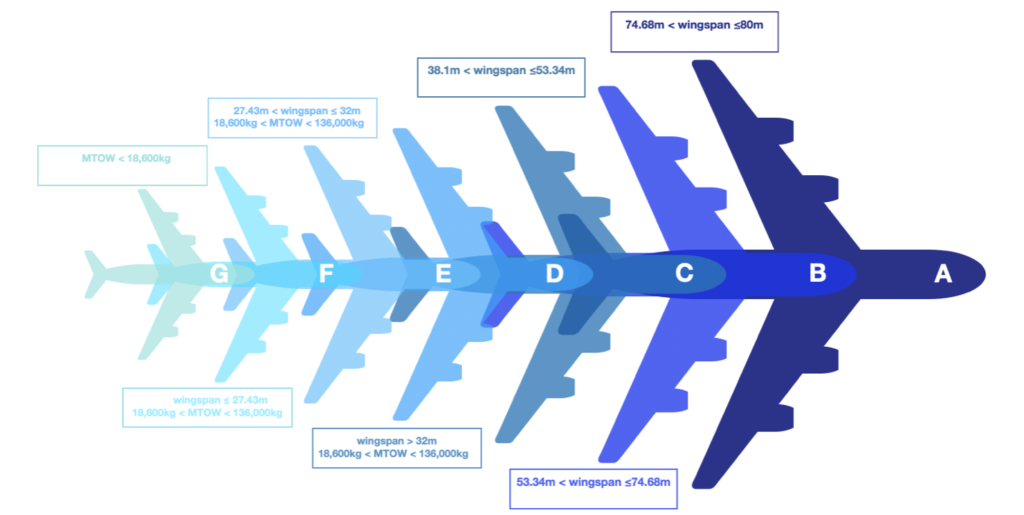
GROUP A – ≥136,000kg and a wingspan ≤80m but >74.68m
GROUP B – ≥136,000kg and a wingspan ≤74.68m but >53.34m
GROUP C – ≥136,000kg and a wingspan ≤53.34 m but >38.1m
GROUP D – <136,000kg but >18,600kg and a wingspan >32m
GROUP E – <136,000kg but >18,600kg and a wingspan ≤32m but >27.43m
GROUP F – <136,000kg but >18,600kg and a wingspan ≤27.43m
GROUP G – <18,600 kg or less (no wingspan criterion)

Separation standards will soon be published accordingly.

Strategic Lateral Offset Procedures (SLOP)

Wait, what?
As a result of extremely high levels of accuracy in modern navigation systems, if an error in height occurs there is a much higher chance of collision. It is also greatly increases the chance of an encounter with wake turbulence.

In some airspace, when the lateral separation applied or the distance between adjacent parallel routes is greater than 6nm, aircraft can deviate up to 2nm right of track without a clearance. This is what is known as SLOP.

The way in which it is applied is changing
Where the lateral separation minima or spacing between route centerlines is 15NM or more; offsets to the right of the centerline will allowed up to 2nm.

When the lateral separation minima or space between route centrelines is less than 15nm (but more than 6nm), you will be able offset up to 0.5nm right of track.

So, it is important you are familiar with what kind of lateral separation is being applied in the airspace you are operating.

The FAA will change their definition of GNE’s

On 5 Nov 2020, the US FAA will change their definition of Gross Navigation Errors to mean anything more than 10nm (down from 25nm), to align with ICAO’s 10nm definition that currently exists on the NAT HLA. So after this date, the FAA will require you report all lateral errors, 10nm or greater worldwide.

More on this from Guy Gribble at International Flight Resources:

“Keep in mind that ATC does not always advise a crew that it files a report; therefore, the FAA inspector will try and contact the crew as soon as possible so the crew will remember details of the event. ATC keeps voice and communications records for between 30-45 days. New York Radio and San Francisco Radio keep voice communications for 30 days. The FAA directs that oceanic error investigations should be complete within 45 days of the incident.”


Berlin’s long-delayed Brandenburg airport is finally opening

When we say “new” that is a little bit of a lüge – the new EDDB is actually sort of consuming the old EDDB (Schönefeld) into its airport infrastructure, like the creature from The Blob. On October 25, Schönefeld Airport will become “Terminal 5” at Brandenburg Airport; and on November 8, neighboring EDDT/Tegel Airport will close and all traffic will switch to Brandenburg. At this point it will be the third busiest airport in Germany, and the fifteenth busiest in Europe.

The new airport does have some new buildings as well though. Terminal 1 will be the main terminal for the airport, with a train station situated in it for direct connections to the city of Berlin. Eventually a Terminal 2 will also be built.

The airport operator is expecting around 5000 passengers to pass through Terminal 1 on Day 1, and a further 8000 through Terminal 5.

Here’s the chart for Schönefeld Airport (i.e. how it looked before):

And here’s the chart for Brandenburg Airport (i.e. what it looks like now)

You can get your hands on the new airport charts via the European AIS Database. It’s free to register an account, and lists AIP info (including airport charts) for most countries in Europe (plus Kazakhstan and the Philippines too, for some reason).

So, when?

October 31 will see EasyJet and Lufthansa both racing to be the “first” aircraft to operate into the airport. Rather un-excitingly they will land on the “old” runway though.

November 1 will see the first ever departure from Brandenburg International airport, with the Southerly runway expected to open up to traffic from November 4th.

You might have heard about it earlier…

Work on the airport actually started in 2006, and it was supposed to open in 2011, but nearly a decade later (and close to triple the original budget), it has only just been completed.

The airport suffered a range of construction, corruption and calamity riddled development which resulted in the near decade long delay. Everything from lift sizes to fire suppression systems to approach light power outages occurred. 

In 2016 the airport was less than 57% usable…

But jump forward to May 2020 the airport finally received its operational licence, and on October 19th it completed its operational tests. These tests have been running since April (it takes a lot of tests to put a new airport through its paces) and with the rubbish bins made bigger, better signage and more clocks it is now ready to go – for passengers at least.

What about the airplanes?

Well, the important bits for airplanes have actually been up and running for a while now.

The airport will have two parallel runways, spaced 1,900 m (6,200ft) apart allowing for independent flight operations (and high traffic capacity when required).

The old runway, built in the 1960s, has already been renovated – lengthened to a nice 3,600m (12,000ft) and the new runway, commissioned in 2012, is a juicy 4000m (13,000ft).

The airport will be controlled by Deustche Flugsicherung from their impressive 240ft (72m) tower, which has been operational since March 2018.

The general aviation terminal is located to the north of EDDB, and the main FBO for Schönefeld is still there.

What else can we tell you?

  • Noise Abatement regulations mean you can probably expect the standard German airport restrictions of no operations between midnight and 05:00LT.
  • It has an ATIS on 123.78mHz and a Tower frequency 118.8mHz.
  • The elevation is 157ft.
  • It’s official coordinates are 52’22’00’’N 013’30’12’’E.
  • The airport is named after Willy Brandt, who by all accounts was a total ausgezeichneter herr (awesome dude). He was awarded a Nobel Peace Prize for his work both in Deutschland and across Europe. He is also known for the Brandt report which called for the world to do better in supporting development in 3rd world countries, and he is the guy that flew to Iraq and got Saddam Hussein to free loads of hostages. He then flew back with 174 of them to Frankfurt.


Overrun, Forrest, Overrun!

Earlier this week the Accident and Investigation reports came out about two aircraft overruns, on the same runway, that occurred within two hours of each other.

So what was going on in UEEE/Yakutsk back in 2018?

Or rather, what was going off, and why?

A bunch of factors contributed to this double whammy of airplane excursions. First up, the runway at Yakutsk airport had been shortened for works. It was, in fact, 1,150m shorter – which is quite a significant amount.

There were some Notams published about this, (and pretty decent Notams at that)

A5991/20 said –
DAILY 0000-0800: RWY 23L AVBL FOR LDG ONLY. LDA 2248M. TKOF FM RWY 23L CARRIED OUT BY REQ DURING THIS PERIOD. 2. DAILY 0800-2359: RWY 23L AVBL FOR TKOF/LDG. DECLARED DIST: TORA 2248M, TODA 2398M, ASDA 2248M, LDA 2248

And then there was A3621/ 20 which said –
AD TEMPO UNAVAILABLE FOR ACFT OF FLW TYPES: IL-96-300, IL-96-400, IL-86, IL-62, A-310, A-330, TU-154, BOEING777, BOEING747, BOEING-767-400ER, MD-11F AND THEIR MODIFICATIONS.

What about the airplanes, I hear you ask. 

Well, the Sukhoi Superjet 100LR is not included on the list of “can’t land here” airplanes. However, the Notams should have at least given them pause for thought, especially since both of them had technical issues reducing their deceleration performance.

Number 1 “First to Overrun” was found to have significantly worn out tires (which should have been spotted during a walk around), while Number 2 “Also Skidding Through” had a thrust reverser out of action. No big deal, but factors to be considered in the context of the other conditions of the day.

Talking of those conditions – the ATIS was reporting a tailwind of 6kts which is not outside anyone’s limits, and of course 150% of any tailwind is taken into account for landing calculations.

The braking co-efficient, however, was reported as 0.45
Now, ICAO and most national authorities have moved away from reporting measured friction because they decided that, really, it is a pretty useless thing to report. There is not actually any great way to work out how those contaminants on that day will result in whatever friction for whichever aircraft – because there is no way to correlate the measurements a ground measuring device can measure in a meaningful way to what an airplane will actually experience. In other words – it has limited practical use in actually characterizing the runway conditions for an aircraft operation.

To further add to its pointlessness, the 0.45 was not even accurate. The real coefficient measured that day was actually less than 0.3. 

As slippery as an oiled-up eel
Now, these pilots did do a landing performance calculation using what they thought were accurate figures. Even with their selection of only medium auto brake, and the mandatory 15% safety margin added in during in-flight performance calculations, the results looked ok and so they gave it a go.

However, had they known the coefficient was only 0.3 then they would hopefully have come up with landing results similar to those calculated during the subsequent investigation. These showed that a Superjet needs about 1,598m on a dry runway, 1,838m on a wet runway and a whopping 3,650m if the coefficient of friction is 0.3. Their 15% safety margin could not even cover the extra distance because of the poor braking action.

So, with one of the reversers out of action, a tailwind, an incorrectly reported friction co-efficient and only 2,248m available for stopping in, poor old airplane Number 2 never stood a chance of stopping in the space available.

What can we take away from this?

Runway Excursions are still in the top 3 most common bad stuff that happens to airplanes, and considering the vast majority are avoidable with a bit of planning, better procedures or common sense, this is fairly shocking.

So, what can pilots do to prevent overruns?

Braking, braking, broken…

Sometimes brakes do fail, or systems malfunction, and if that happens being ready with your memory items  is the best way to deal with this. They might vary slightly across different types, but the basic actions are probably something along the lines of – 

What are manufacturers doing to help stop overruns?
A lot of airplanes have some clever devices installed in them nowadays. 

Take Airbus for example. They have their ROW/ROP systems. The ROW bit (runway overrun warning) does useful things like monitoring the conditions in real time, and running speedy little calculations based on the known runway length and aircraft weight to make sure the aircraft is still stoppable in the distance available. If it isn’t, it will yell at the pilot.

The ROP bit (the protection that kicks in after landing) does something similar, and can automatically apply full whiplash effect with the brakes if it thinks you need it, as well as reminding you to “Set Max Reverse!”

Other aircraft have similar systems with warnings that trigger if an aircraft is too fast, or if the landing flare is too long, or the remaining amount of runway is too short…

What can authorities do to stop excursions?
Ensuring operators train crew and staff properly, and that information is distributed in the industry is important. 

Airlines and Operators should have in place technical and practical training for their crew to help them have a better awareness of the risks and factors that lead to overruns. Better monitoring of areas like unstabilised approaches which often precede overrun incidents, and contaminated runway and winter operations awareness, is also necessary.

Airports should makes sure Notams about works and changes to runway characteristics are up to date and correct. Giving correct information to pilots about the conditions on the day would also help…

In the US the FAA is advocating the use of  EMAS (engineered materials arresting systems) at airports within insufficient runoff space, and this has apparently prevented the severity of 15 aircraft overruns in the years they’ve been installed.


Further Reading

  • Opsgroup article: 5 Tips for Safter Winter Ops
  • Airbus “Safety First” magazine: new issues published every 6 months, a wealth of info about all things safety-related.
  • Useless fact: If you wanted to ski down a concrete slope using rubber skis, the coefficient of friction for rubber on concrete is 0.9 which means you would need a 42 degree slope to actually get moving.


Ferry Flights in the time of Covid

Ferry flights are tough to operate even at the best of times. Whether it’s getting a new aircraft from the manufacturer to its customer, moving it to or from a repair facility, or just returning it to base, there are a bunch of things to consider beyond the normal planning you would do for a standard private or charter flight: extra permit requirements, insurance issues, equipment compliance, and a close eye on route planning!

Covid restrictions have made all this even more complicated, with many countries completely closing up shop to everything except repatriation and cargo flights at the start of the pandemic, only to reopen months later with complex entry rules and flight restrictions in place.

Here’s a summary of the main considerations when planning ferry flights, and a recent example of a trip we eventually managed to do despite the Covid restrictions of various different countries at the time.

Permit Requirements

One of the most important considerations for ferry flights is whether or not the aircraft will be operating on a standard Certificate of Airworthiness or on some form of a Special Flight Permit. While some countries around the world will allow an aircraft to overfly or land without permission while operating on a standard Certificate of Airworthiness, most countries will not allow an aircraft operating on a Special Flight Permit (or equivalent) to overfly or land without receiving an additional permit.

Permit Lead Time

When obtaining overflight and landing permission for Special Flight Permits, consideration should be given for the lead time. Some countries have different teams looking after these types of permits than the people who issue the permits for “normal” flights. The lead time can vary from 24 hours to five working days, or even longer. Watch out for weekends too! In some countries the working week is not necessarily Monday-Friday.

Flight support companies and local agents can be invaluable to assist with securing these permissions as they may have local contacts with the civil aviation authorities. These authorities are validating the Special Flight Permit and Operating Limitations, along with the Certificate of Registration and Certificate of Insurance to ensure they meet the requirements for their individual country.

Insurance Requirements

An important consideration when ferrying any aircraft is the Certificate of Insurance. This certificate needs to cover all areas that the aircraft will be operating in, as well as ensuring coverage for any flight crew who may be employed by the aircraft owner. Regions of the world (ex: Europe) may have minimum liability requirements that must be met and clearly stated on the Certificate of Insurance. Even though the certificate states ‘worldwide’ several countries in Central America will require that the certificate clearly states it includes their country prior to issuing the permission.

Navigation Equipment

Ferry flights are often being conducted to move older aircraft from one place to another with navigation equipment that is either out of date, due to be replaced, or unservicable. It is important to ensure that the navigation equipment and the crew qualifications are up to date and that the flight is being conducted in accordance to the requirements for the countries that the flights are overflying and landing at. A common area that local authorities will look at when conducting ramp checks is what equipment has been installed, certified and is operating.

Covid Complications!

In June 2020 we helped an operator move a Cessna 208 Caravan from the US back to Australia. What complicated this flight was that the operator had already attempted to move this aircraft in March at the beginning of the global pandemic to only end up with the aircraft being grounded for three months in Alaska while we waited for central and southern Asia to open up some of their restrictions.

This aircraft was issued an Australian Special Flight Permit which required permission from every country we were operating into or over, and was equipped with a ferry tank system to give us some additional range in our planning. As the flight was operating through Russia with an overnight stop, the crew were required to obtain Russian transit visas and due to the pandemic testing requirements, the crew were required to be tested prior to departing from the US as well as when en-route in the Philippines.

In the end, we decided on the following routing: PANC/Anchorage – PADK/Adak Island – UHPP/Petropavlosk – RJCC/Sapporo -RJBB/Osaka – ROAH/Okinawa – RPLC/Angeles – WAPP/Ambon – YBRM/Broome

We got special permission for the crew to stay overnight in PADK, UHPP, RJBB, RPLC and WAPP for crew rest.

Even without the additional Covid-related requirements, due to the Special Flight Permit, Japan required additional permissions from various government agencies, including their military. We got a local agent to assist with these arrangements, as well as the special Customs & Immigration arrangements required for the crew to remain overnight in RJBB. They were not authorized to remain overnight under any circumstances in RJCC or ROAH.

While the global pandemic raised a number of additional requirements, we needed to consider several things when determining the ferry flight for this aircraft. The most important consideration was aircraft range. Thanks to the ferry fuel system, we were able to have ample range to fly from Alaska into a customs airport in Russia. While a routing from PANC to UHMA (with or without a stop in PAOM) was considered, it was not possible at the time as UHMA was closed to all international traffic.

The routing through Japan was carefully considered with extensive consultation (and changes) with the Japanese agent. Many local authorities at different airports were back and forth on whether the crew would be allowed to overnight, and it was imperative to find an airport that would allow the crew sufficient rest.

The routing from Japan into the Philippines and through to Indonesia remained a challenge right up to the day of flight. Indonesia reopened their borders to international flights after the crew departed from the US, and required the crew to have a fresh Covid test which was arranged in the Philippines.

More info

Check out our Guide to Getting Unusual Permits. It has the details on 28 countries that have a special process for Ferry Flights and other Special Permits. You’ll find Civil Aviation Authority contact details, Agent details (when necessary), and our descriptions of the best practice for each permit.


The Hills Have Ice: Considerations for Himalayan ops

Flying over the Himalayas soon? Read on! From patchy comms to limited alternates to meters that might get your feet in a twist, this briefing will have you covered…

A good place to start might be “Where are the Himalayas?”

The Himalayas border a bunch of countries, but the bits we are generally interested in lie in Pakistan and China – along the primary flight routes between the Middle East and Asia.

Interesting fact – they are the fastest moving mountains in the world, thundering along at a right old pace of 67mm a year (so don’t worry, they will still be in pretty much in the same spot when you route over them).

Are they a big deal?

They are the biggest mountains in the world so “big” – yes. “Big deal”? – well, not so much if you are cruising happily at altitude, but if for some reason you suddenly need to descend then they can become a very big deal very quickly.

With 30 peaks higher than 24,000’, and stretching over 200 miles, they are a pretty significant obstacle.

There are some good-to-know and some need-to-know points about these parts, so read on…

The Basics

Limited Alternates – Not many people live in the Himalayas, (not counting Yetis), so airports are few and far between, and are often fairly remote.

The Region – Pakistan has ongoing conflicts with India over the Kashmir region. Afghanistan is also unstable so operating near the border is not advised, particularly into OPPS/Peshawar and OPQT/Quetta airports.

Weather conditions – ‘Himalaya’ translates as ‘abode of snow’ so that should be something of an indication. The airports are remote and facilities are not always up to standard. Significant mountain waves can be experienced when crossing.

Communications – Big mountains block radio signals and this can be particularly bad around the point where you transfer from Pakistani airspace into Chinese. Which leads us onto the next point…

China – They have their own procedures including different sized airways, different contingency procedures, and of course…

Metres and Feet – China operate in metric. Keep reading for a handy feet to meter conversion table!

Oxygen – Airplanes have oxygen in them, unless they suddenly don’t anymore and then you are going to have to find some pretty rapidly. Unfortunately, oxygen is generally at its most plentiful lower down which can be problematic if routing over high terrain…

The Alternates

There are two published crossing points for the Himalayas – PURPA on the Pakistan/China border to the north, and NONIM on the Nepal/China border to the south. So the alternates you’re going to be interested in very much depends on which route you’re going to take.

ICAO/ IATA

Airport

Open

RWY (m)

ELEV

PCN

OPIS/ISB

Islamabad

H24

3658

1761

110FCXT

OPPS/PEW

Peshawar

H24

2743

1211

068FCXU

OPLA/LHE

Lahore

H24

3360

712

085RBXU

ZWSH/KHG

Kashi

H24

3200

4528

074RAWT

ZWTN/HTN

Hotan

HS

3200

4672

052RBXT

ZWWW/URC

Urumqi

H24

3600

2126

080FBWT

VNKT/KTM

Kathmandu

0045-1845Z

3050

4390

054FAWT

OPIS/Islamabad, Pakistan – There are two parallel runways with RNP and ILS approaches, including a CAT II on 28L. 10R has an offset final track (VOR approach). This is a destination for some major airlines and so likely has good handling and ground services, an is an RFF Category 10.Where you decide to divert to will depend on what your problem is and whether you can stay up over the mountains. Peshawar, Islamabad and Lahore are each accessible from each other and all lie south of the mountainous zone.

OPPS/Peshewar, Pakistan – This airport is situated near a No Fly Zone and is close to the Afghan border. It has CAT I capability, but report of GS fluctuations are common. Ground handling is available, but engineering and other support is likely to be limited.

OPLA/Lahore, Pakistan This is another major airport in the area with multiple runways, and Cat IIIb approaches onto 36R. Terrain is relatively low, but the airport lies close to the border with Indian airspace.

ZWSH/Kashi, China The airport is CAT I. There is serious terrain to the north and west of the airport. Particularly if you are landing onto runway 08, wind off the terrain might be a factor. Runway 08 may require a 180 degree turn at the end with a backtrack due to works. Support here will be fairly limited.

ZWTN/Hotan, China There is no customs at Hotan so offloading passengers might pose a problem. The closest alternate is not really very close, and the weather here can be a challenge. The MSA is 16,000’ and terrain lies predominantly to the south of the airport, but close to the ILS intercept for runway 29. Runway 11 only has a VOR/DME approach. Both runways require a 180 degree turn and backtrack to vacate. Engineering support is available here.

ZWWW/Urumqi, China Urumqi is a better equipped airport, with CAT I and II approaches available, and likely to have better ground support and engineering services. However, there is significant terrain in the vicinity of the airport, and it’s also a long way to have to go in an emergency (around 700nm from Pakistan/China crossing point PURPA).

VNKT/Kathmandu, Nepal – Down south, Kathmandu is really the last decent diversion airport before the endless mountains of the southern Himalayas come into view. If you don’t stop here, it’s a good 3 hours of flying time before you reach ZUUU/Chengdu on the other side. VNKT is not 24 hours (has quite specific hours), no engineering facilities but fairly good ground support as it is quite a “major” tourism spot so a fair few airlines route in there. Does not have precision approach (only VOR and RNP), and they have a lot of diversions due to weather and higher minimus due no precision approaches. Very difficult approach because you route between mountains into a sort of bowl to land.

Communications

The mountains can cause serious interference with radio comms so keep the following SATCOM codes handy in case you need them:

Urumqi 441208
Lanshou 441205
Kunming 441204
Beijing 441201
Lahore 446302

China

China has some pretty specific procedures and requirements which should probably be looked over before you route this way, but here’s a quick summary.

Contingency/ Emergency Procedures if deviation from level required:
– Aircraft must turn RIGHT and track out to 10km/ 5nm from the airway centerline.
– Once parallel with the original route climb or descend as required.
– Switch your lights on, keep talking on 121.5, and keep a good eye out.

Any deviation or reroute requests in China usually needs some serious coordination, and they are strict about any routes that take you off commercial airways or close to military airspace. ATC often send airplanes in random directions, or refuse to clear them to the flight levels they have filed for, without much explanation so be prepared for a lot of extra fuel burn.

Meter to Feet Conversion:

Oxygen

The most critical route is PS-G325-Purpa-B215 where the MTCA is the highest. Confirming your aircraft is equipped with suitable passenger oxygen systems and awareness of the depressurisation strategies and MSAs for each route is extremely important before operating into this area.

Permits

Pakistan requires overflight and landing permits. These must be requested by an agent. They require one day notice to arrange the permit. Operating into Pakistan airspace required an ADC at least 15 mins prior to entering Pakistan Airspace/ADIZ, and flights operating in need to establish communication at least 15 mins prior to entering.

China also require permits. These can be intimidating. They require use of AFTN/SITA, have specific routing, and are only valid for the exact timing given. Commercial landings require a sponsor later written in Mandarin by the receiving party. We recommend applying direct to a Chinese agent, as the authorities aren’t very patient and it can become frustrating at how short they’ll be on the phone. If you want to apply direct, you’ll send your application through AFTN and SITA, in the specific format required. 

China requires aircraft to be ADS-C, CPDLC and SATCOM capable on some of their routes over the Himalayas, and operators need to verify their equipment with them at least 60 days in advance! So they recommend that only regular scheduled flights apply to use these airways. For more on that, check out our dedicated article here


For some great insights into escape route planning, check out this doc from Flightsafety.org

And finally, don’t forget to take your camera because when the air is clear the views can be amazing!


One Contingency Procedure to rule them all

From 5 Nov 2020, there will be one standard set of Contingency and Weather Deviation Procedures for all oceanic airspace worldwide.

If you’ve been flying in the North Atlantic Region over the past year and a half, you’ll be familiar with how it works – the new procedures were introduced there back in March 2019, and now they’re being rolled out everywhere.

The FAA has already published a Notice to say that these procedures will take effect in US oceanic airspace from 5 Nov 2020, and ICAO is expected to formally publish the Standard in an update to PANS-ATM (ICAO Doc 4444) to take effect from the same date.

Rarely do we see worldwide oceanic contingency procedures undergo a formal revision. The last time a major revision occurred was in 2006 when ICAO standardized a 15 NM offset executed with a turn of at least 45 degrees. Prior to that, the North Atlantic and the Pacific had used different offset distances and a 90 degree turn.

Wait… what are “contingency procedures”?

These are basically any time you have to do things differently if you need to deviate from your cleared route, and for one reason or another you cannot get permission from ATC first.

Why would you need to bust your clearance? You may not have the ability or capacity to communicate with ATC, or they may not be able to respond to your request quickly enough for a variety of reasons – meteorological conditions (severe turbulence and weather avoidance), aircraft performance, loss of pressurisation, immediate diversion, or a loss of navigational accuracy.

What are the new procedures?

The short answer
Contingency offsets that previously were 15 NM are basically now all 5 NM offsets with a turn of at least 30 degrees (not 45 degrees).

The long answer
Read the FAA Notice.

The slightly less long answer
– Turn at least 30 degrees (reduced from 45) to the left or right of track and establish yourself on a parallel track that is offset by 5nm (reduced from 15).
– The direction of turn is up to you, but you should consider airways around you – the likely direction of other aircraft, the applicable SLOP procedures, the direction of your diversion airport and of course terrain. (If going left or right is a 50/50 choice, going right is probably better – it gets you out of the way of all the SLOP offset traffic that might be coming at you from the opposite direction!)
– When established on your offset track, maintain an altitude that is vertically offset by 500 feet from normal levels (or 1000 feet if above FL410).
– In areas of parallel airways, it is recommended you descend below FL290.
– Watch your TCAS, and if possible, keep your eyes outside for other aircraft.
– Make sure your transponder is set to TA/RA (if able).
– Be seen – turn on as many exterior lights as possible.
– Squawk 7700.
– Try and talk to ATC via voice or CPDLC, and declare a PAN PAN, or MAYDAY.
– Establish comms with other aircraft on 121.5 MHz or 123.45 MHz. Make a position/intention report as you would in TIBA procedures.

The best answer
A picture! So often the best answer. And this one’s pretty neat. Not least because you can click on it, download it, print it out, and put it in your flight bag to take with you. (If you’d also like to laminate it, we’re ok with that).

Weather deviations

If you have to deviate from your assigned track due to anything weather-related, there’s a whole different procedure to follow.

Here’s what to do:

  • In the first instance, up the urgency with the phrase “WEATHER DEVIATION REQUIRED.” ATC will attempt to provide separation, and if they can’t they will ask you to advise your intentions.
  • If you intend to deviate, let them know. Say something like – “I am deviating under PIC emergency authority. At 5 NM from course I will employ the Weather Deviation contingency.”

Then apply the following:

  • Declare a PAN.
  • Deviate away from other airways if practical.
  • Talk to other aircraft on 121.5 and 123.45.
  • Keep an eye on your TCAS and outside.
  • Turn on all your exterior lights.

For deviations of less than 5 NM, remain at the flight level assigned by ATC.

For deviations of 5 NM or more, when you are at the 5 NM point initiate a change as follows:

If flying EAST, descend left by 300ft, or climb right by 300ft.

If flying WEST, climb left by 300ft, or descend right by 300ft.

In other words – SAND! (South of track = Ascend, North of track = Descend; Up/Down by 300ft)

Once you are back on track, resume your cleared level. If you’re already deviating and cannot get a clearance to deviate further. Change your level immediately in accordance with the table above.

Turnback procedure

The new guidance has left out any specific reference to how to divert across the flow of traffic or turn-back procedure, and instead simplified it to just “proceed as required by the operational situation”. Turning back would assume you either employ the 5NM offset as per the new contingency procedure, or else get a new revised clearance.

Bottom line

Download the pic, and give the new procedures a good read (they’re not actually that long). Beginning 5 Nov 2020, the new procedures are expected to be implemented. You might want to prepare changes for your ops manuals and checklists too.


US no longer limiting international arrivals to 15 airports

From September 14, the US is no longer limiting international arrivals from higher risk countries to specific airports. Under previous rules, any passenger from China, Iran, the Schengen area of Europe, the UK, Ireland and Brazil had to enter the United States through one of fifteen centralised airports capable of providing enhanced health screening. This is no longer be the case.

The previous system was deemed ineffective because so many people who transmit the disease don’t show symptoms. A new approach is being launched, which authorities say will better mitigate the risk of Coronavirus by focusing more on the individual passenger. Here’s how it will work:

  • Pre-departure, in-flight and post-arrival health education for passengers.
  • Robust illness response at airports.
  • Voluntary collection of contact information from passengers using electronic means as proposed by some airlines to avoid long lines, crowding and delays associated with manual data collection.
  • Potential testing to reduce the risk of travel-related transmission of the virus that causes COVID-19 and movement of the virus from one location to another.
  • Country-specific risk assessments to assist passengers in making informed decisions about travel-related risk.
  • Enhancing training and education of partners in the transportation sector and at U.S. ports of entry to ensure recognition of illness and immediate notification to CDC.
  • Post-arrival passenger recommendations for self-monitoring and precautions to protect others, with enhanced precautions, including staying home to the extent possible for 14 days for people arriving from high-risk destinations.

You can read the announcement by the Centers for Disease Control and Prevention here, and confirmation from US CBP here.

Although the 15-airports rule has gone away, all other US rules on inbound travel remain in place. The main one is this – with specific exemptions, foreign nationals are not allowed to enter the US if they have been in any of the following countries within the past 14 days: the European Schengen area, the UK and Ireland, mainland China, Iran, and Brazil. The ‘specific exemptions’ part basically means this: US residents and family members, and flight crew traveling to the United States on C, D or C1/D visas. For more details, check the US Government webpage here.


Increased ATC charges in Canada

Nav Canada has proceeded with its earlier proposal to significantly increase ATC service charges. The new fees were implemented on September 1. The price increase is to cover the loss of income caused by dwindling traffic levels during the Covid pandemic.

Terminal fees have increased by 30 percent; en-route by 26 percent; North Atlantic Track by 48 percent; and international communications by 41 percent. The good news is that the added cost to operators can be deferred over time to help absorb some of the impact.

The NAT and International Comms charges are not really a big deal – those are just flat fees charged per flight. It’s the Terminal Charge and Enroute Charge where the pain will most be felt; don’t be fooled by the figures in the table above – these are just the base rates that get incorporated into bigger equations and multiplied by other factors (MTOW, distance flown, etc).

If you want to test your math skills and take a deep plunge into how these equations work, check out Nav Canada’s Guide To Charges. But if not, here’s a basic example of how the charges have changed:

Aircraft: B777-300
Route:
CYUL/Montreal to LFPG/Paris
MTOW: 344.5 metric tonnes
Distance: 1,550 km

NAV Canada is a private company and not government-funded, and is therefore entirely reliant on the fees it charges to operators. And since most of its costs are fixed, it appears there wasn’t much alternative than to increase these fees, given the huge drop in air traffic over the past few months.

You can view the full schedule of revised fees here:


Jetpack Hazard at LAX!

Mystery in LA! There were two separate reports of a man in a jetpack flying uncomfortably close to arrivals at KLAX/Los Angeles on Sunday evening. The airborne offender was spotted by jets who were on approach at 3000 feet, and estimated to be at a distance of 300 yards. Unsurprisingly, he or she successfully evaded authorities and their identity remains unknown…

Listen to the actual radio transmissions between the pilot and the tower here:


American Flight 1997: “Tower, American 1997, we just passed a guy in a jetpack.”
Tower: “American 1997, OK, thank you. Were they off to your left or right side?”
American Flight 1997: “Off the left side, maybe 300 yards or so, about our altitude.”

Fox 11 reported a Skywest pilot also confirmed the sighting:
Skywest Flight: “We just saw the guy passing by us in the jetpack.”

Then the tower alerted an incoming Jet Blue flight to the reported hazard:
Tower: “Jet Blue 23, use caution, a person in a jetpack reported 300 yards south of the LA final at about 3,000 feet, 10 mile final.”
Jet Blue 23: “Jet Blue 23, we heard and we are definitely looking.”

Another pilot chimed in: “Only in LA.” 😊

At the time of the sighting, it was still light with plenty of visibility. There are a number of jetpack-like models out there on the market, but all have very limited range, and so some reports have suggested this was possibly some sort of drone that was made to look like a jetpack. Or a small helicopter. Or a flying car. Or some guy in a lawn chair with helium balloons tied to it (ok, probably not this one!)

Regardless of the specific technology, this incident is concerning – particularly given that the airspace around LAX is some of the busiest in the US, and that the craft was flying at the same altitude as the aircraft as it was making its approach to the airport. The FAA has reportedly referred the incident over to the LAPD for investigation.

Yves “Jetman” Rossi hasn’t accounted-for-his-whereabouts-on-the-night-of-the-crime yet. But we can probably rule him out, as his flights normally take place in highly controlled environments and in airspace clear of any other traffic. LAX really isn’t his scene – he prefers the Swiss Alps.


Update on GA/BA flight requirements to the Bahamas

With the lockdowns and flight bans in Grand Bahama and New Providence now at an end, all islands of the Bahamas with Airports of Entry have re-opened to international private and charter flights. Prior approval is required – send your request to covid19@bcaa.com and COVID19INTLTRAVEL@bahamas.gov.bs.

Here’s the lowdown on ops to the Bahamas right now:

Quarantine

Quarantine rules are changing from September 1. A 14-day quarantine will still be mandatory for all travellers, but they are now allowed to spend it in their own accommodation – a private residence, rental property, hotel or private/chartered yacht, all are considered quarantine facilities.

When quarantine is finished, anyone who wishes to stay must agree to be tested again. It is worth noting that you can leave the Bahamas at any point, as long as you notify authorities first.

Covid test

All travellers must obtain a negative RT/PCR Covid that is less than 5 days old before flying and apply for a Travel Health Visa which can take up to three days to process. Once in the country, all arrivals will be monitored by the ‘Hubbcat App’ on their phone. 

Crew arriving to pick up passengers only, cargo and courier flights who are staying with their plane, military and emergency medical flights must obtain the Travel Health Visa.

If crew will be in the country for less than 24hrs, they need to quarantine in the hotel but do not need proof a Covid test.

Some OPSGROUP member reports indicate that the Bahamas Travel Health Visa is not working properly, and will not complete the application process. So expect delays for a Health Visa until their systems are fully functional. Submit the form at least 24-48 hours prior to arrival. An automated response will be provided upon completion, only those who receive a green color-coded response can travel. It is essential that travellers present proof of confirmation upon arrival in their destination.

Hours of operation

Hours of airport operations are reduced, and prior approval for after-hours operations is required. A call before flying is strongly recommended. Fees for after-hours ops, restrictions to curfews, and limited availability of hotel rooms are additional considerations.

Local handling agent Odyssey Aviation are open as follows (requests for after-hours operations will be reviewed on a case by case basis):

MYNN/Nassau
Email: info.mynn@odysseyaviation.com
Opening hours: 0700-1800 local (1100-2200z)

MYEF/Exuma
Email: exuma@odysseyaviation.com
Opening hours: 0800-1700 local (1200-2100z)

MYSM/San Salvador
Email: info.mysm@odysseyaviation.com
Opening hours: 0800-1700 local (1200-2100z)

MYEM/Governor’s Harbour
Email: frontdeskeleuthera@odysseyaviation.com
Opening hours: 0800-1700 local (1200-2100z)

MYER/Rock Sound
Email: frontdeskeleuthera@odysseyaviation.com
Opening hours: 0800-1700 local (1200-2100z)

Where to look for latest updates

For updates to the rules, the Bahamas official page is here, but it tends not to get updated very quickly after new announcements from the government. The US Embassy keep a dedicated page on the Bahamas updated here, but that can sometimes lag behind a bit too. The most up-to-date source seems to be the one published by the UK FCO, which you can view here.

Odyssey Aviation also posts the latest updates on requirements and changes for Private Aviation on their Facebook page, and check out the Association of Bahamas Marinas website too – they work closely with the authorities and are often faster at getting their info out than other government entities!

Oh, and OPSGROUP too 😊 – the quickest way to get all the latest info we know on something is to head over to the #george channel in Slack. George is our friendly Ops-Bot. Ask him something, and he’ll dig into the OPSGROUP vault to see what the group knows. He understands a whole load of commands: permits, weather, ICAO codes, airport names, countries, keyword searches. If you’re still stuck for an answer, ask other members in the group in the #questions channel, or shoot us an email and we’ll see what we can dig up.


Massachusetts exempts 4 more states from quarantine requirement

Massachusetts has added four new states to its quarantine exemption list. Passengers from Colorado, Delaware, Pennsylvania and West Virginia no longer have to self-isolate on arrival or present a negative Covid test.

A reminder of how the rules work there: Anyone arriving from a “high-risk” state must either present a PCR Covid test that is less than 72 hours old or enter quarantine for 14 days, while there are no requirements for travellers from “low-risk” states. There’s a travel form to fill in too.

Aviation is considered an essential business by the U.S. Federal Government. The guidance issued by Massachusetts states that flight crew are “exempt from quarantine while they are commuting to or from or while at work”,  but goes on to say that “for the first 14-days after arrival, when the worker is not at work or commuting to work they must quarantine.”

The classifications change frequently, so be sure to check the latest info on the official government site


EU delays alcohol testing on ramp checks to 2021

The EU had some changes planned for Ramp Checks and Pilot Mental Health which were due to take place on 14 Aug 2020, but these have now been delayed to 14 Feb 2021.

The three big changes

  1. EASA regulations will be updated requiring alcohol testing during ramp checks. This will take effect across all SAFA participating countries. However, a lot of countries have already started doing this anyway: Austria, Belgium, Czech Republic, France, Germany, Greece, Iceland, Ireland, Italy, Netherlands, Portugal, Spain, Switzerland, UK, and Singapore. In most places, local authorities have the power to carry out breathalyzer tests at any time – not as part of ramp checks. For more on SAFA ramp checks, see our article.
  2. All pilots working for European airlines will have access to mental health support programs.
  3. European airlines will perform a psychological assessment of pilots before the start of employment.

Despite the delay to the implementation date, it’s still something worth looking at now. The UK CAA has published a Safety Alert with the following recommendations:

1. Operators are strongly recommended to continue to introduce Flight Crew Support
Programmes as required by the Regulation and to maintain existing programmes despite the deferred implementation date.

2. Operators should also consider the impact of the Covid-19 crisis on cabin crew and other safety-sensitive personnel as well as flight crew. It remains essential that senior management of operators, mental health professionals, trained peers and staff representatives work together to enable self-declaration, referral, advice, counselling and/or treatment, where necessary, in cases where there may be a potential safety issue resulting from a decrease in medical fitness.

3. Additionally, operators are encouraged to use this delay to develop their policies on the prevention and detection of the misuse of psychoactive substances and on the psychological assessment of flight crew.


Unreliable Airspeed and the Hidden Risks of Aircraft Storage

The dramatic effect that Covid-19 has had on the aviation industry has grounded an unprecedented number of aircraft. They have been placed into storage whilst the world waits to recover. The pandemic emerged without warning, and some operators were likely not prepared for what was coming.

Now travel bans are lifting, airports are reopening, and airlines are scrambling to return aircraft to the skies.

EASA recently released a disturbing Safety Information Bulletin. There has been an alarming trend in the number of aircraft experiencing unreliable speed and altitude indications during first flights after storage, caused by contaminated air data systems.

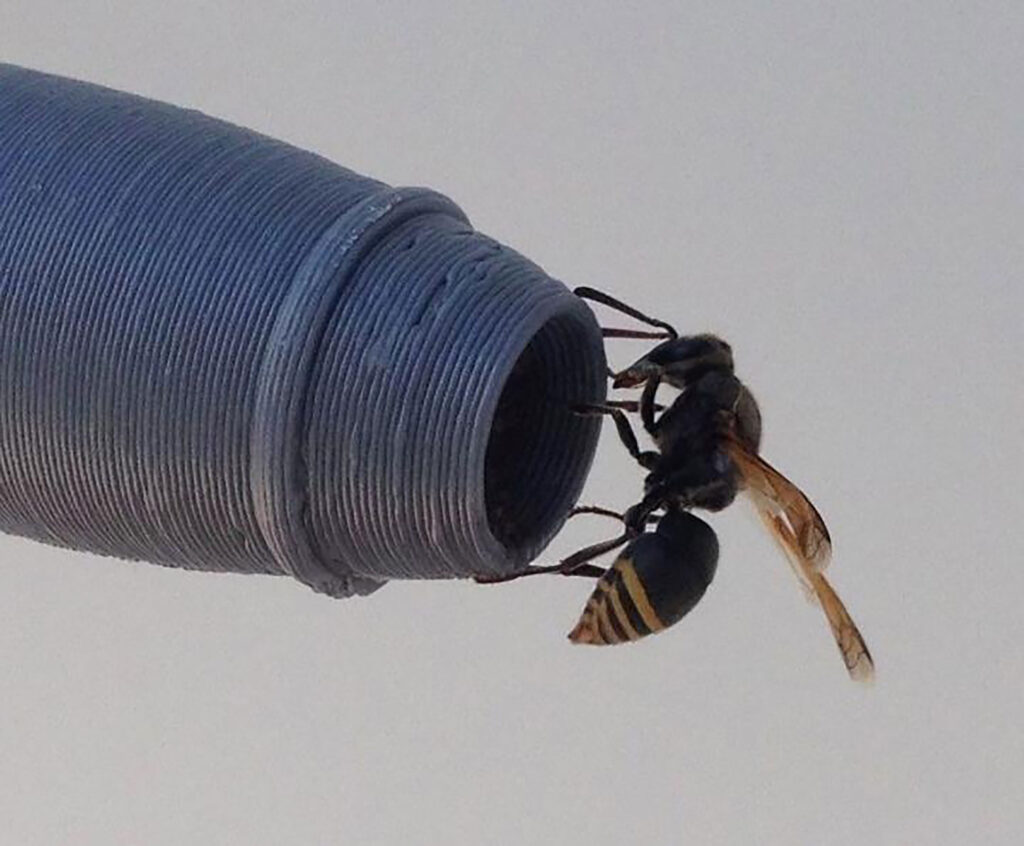
The result has been multiple rejected take offs and airborne returns. Most of the events have been caused by nesting insects in the pitot static system – even after covers were installed.

Modern flight instruments provide large amounts of information to crew with great precision, while automation makes flying transport category aircraft almost routine. Flight envelope protections and aural/tactile warnings keep us safe even in most abnormal scenarios.

At the heart of all of this is the air data computer (ADC) – a small piece of hardware that needs accurate information from outside of the aircraft to work correctly.  They are the “Achille’s heel” of modern electronic flight information systems. In a nutshell, these small computers obtain and process information from the aircraft’s pitot static system, and supply critical systems with information such as airspeed, altitude and temperature.

Like all computers, they don’t think for themselves. They are only as accurate as the information they receive. So, when the pitot static system is contaminated, they can only respond to what they sense. They can’t look out the window.

History has shown that unreliable airspeed events are dangerous:

February 6, 1996. Birgenair Flight 301, a Boeing 757, departed Puerto Plata in the Dominican Republic, on a routine flight. During the climb out, the Captain’s airspeed indicator began to increase dramatically. The autopilot reacted as designed, and increased pitch to reduce airspeed, while the auto-throttles reduced power.

In the meantime, the co-pilot’s ASI indicated a dangerously slow airspeed which was decreasing. Almost simultaneously, an overspeed warning was generated. The autopilot reached the limits of its programming and disengaged. The stick-shaker activated, warning the confused crew that the aircraft was flying critically close to a stall.

The Captain responded by applying full thrust. The excessively high angle of attack resulted in insufficient airflow to match demand and the left-hand engine flamed out. The right-hand engine developed full power and the aircraft entered a spin. Moments later the aircraft became inverted, before impacting the Atlantic Ocean. The three pilots had 43,000 hours of experience between them.

The cause of the accident was a blockage of a single pitot tube. The likely culprit was the black and yellow mud dauber – a small wasp known to nest in artificial cylindrical structures. The aircraft hadn’t flown in 20 days.

The threat of similar events is greatly increased by improper storage techniques and rushing to return to service.

Getting aircraft flying again is a complex process and presents major risks. It is up to operators to ensure adequate procedures are in place to accomplish it safely. They must anticipate the difficulties and rapid adaptation to internal procedures that this entails.

Don’t know where to start? We don’t blame you. Thankfully, EASA has published guidance which can help mitigate some of these risks. Here is a brief rundown of their recommendations:

  • Assemble your A-team. Everyone needs to be onboard. Flight operations, CAMOs, maintenance organisations, type certificate holders and aviation authorities are your first port of call. Find out what needs to be done for each individual tail number and communicate with human resources for manpower, supply chain for the tools, and flight ops for hangar spacing and crewing. Think about who you need to talk too and get started early.
  • Similar aircraft stored in similar conditions will invariably behave in the same way. Safe return to service begins with good data. It is vital that defects are reported and linked. If a nest is found in an aircraft’s pitot tube, the odds are there will be many more. The data needs to be analysed, and operating procedures (such as additional checks) need to be changed to reflect it.

  • Storage Procedures. It is possible that aircraft were not fully stored in accordance with manufacturer procedures. Implement a rock-solid audit programme to make sure things are being done properly. EASA recommend extra inspections, ground runs and flight testing of at least ten percent of aircraft before release to service.
  • Storage Environment The storage environment presents significant hazards to airworthiness. Insects, sand, salt, dust and humidity can all damage aircraft. There may not have been enough protective covers to go around. Was there biocide in the fuel? Is it even useable? It is advised that extra checks be carried out on aircraft parts that are susceptible to contamination, particularly pitot/static systems. Get additional support to add those inspections.
  • Remote Storage This presents unique challenges. Engineering services may be limited, and staff may become overwhelmed with the large number of aircraft waiting to become airworthy. You may need to send additional manpower or require ferry permits to move aircraft around. Is enough equipment on hand to complete extra checks?
  • Time. Nothing happens in a day. Commercial time pressure is a major risk factor. Getting an airplane airworthy can cause delays and rushing has a profound effect on safety. Plan ahead and make sure your deadlines are realistic. Communicate them with your staff to ensure confidence.

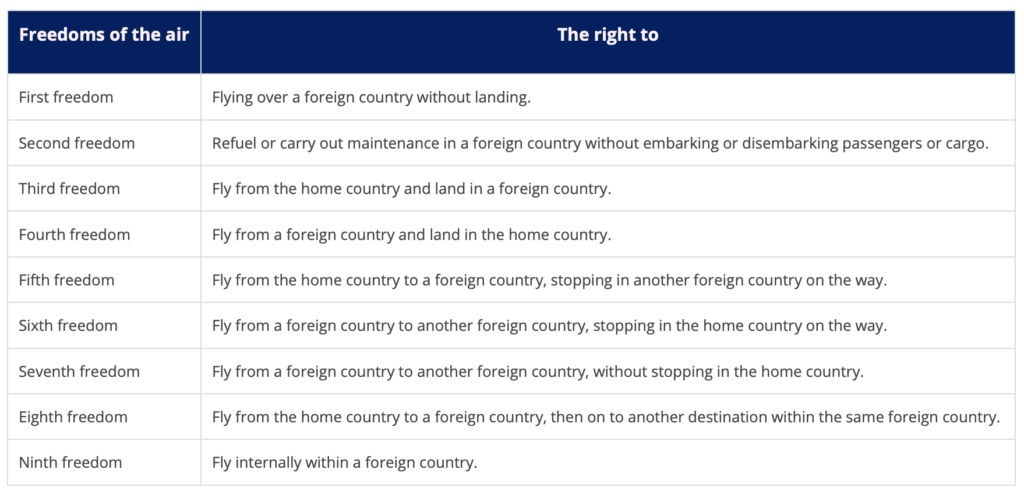

  • Inappropriate decision making. This is hazardous, particularly with unfamiliar procedures. Storage on this scale has never happened before and answers may not be in existing manuals. Key personal may not be immediately available to help. Remind staff not to act alone and create a team responsible for making decisions in this challenging scenario
  • Limited staff experience. Remember that this has never happened before and you may need the help of staff who are new to your organisation. Make sure they are aware of internal procedures that they need to know beforehand. It is a good idea to properly supervise them and assess their work.
  • The elephant in the room. Covid-19. The virus has changed the way we can work. Staff can’t move around as freely and there may be restrictions on how many people can work together. You may need to plan ahead and establish isolated teams who work remotely if practical.
  • Overdue maintenance. Airworthiness directives, MELs, routine maintenance, inspections, ground runs, test flights. There is a lot to do. Start with comprehensive airworthiness reviews of each individual tail number.
  • They will be under the same pressure that you are. Communicate with them ahead of time and check their availability.
  • Pilot training. It is likely they are uncurrent, and operating aircraft which have just come out of long-term storage. Simulator training should be relevant to the challenges they will face in the current operating environment. Consider critical systems vulnerable to damage in storage and the affect that these might have on the first flight. In other words, expect the unexpected and provide them with the ability to react quickly and with confidence.

Covid-19 has created a lot of unknowns in our industry. Amongst the noise of statistics and global media, it is important to remain vigilant to the risks specific to aviation that the virus has created. Most of us will have heard by now that aviation itself is not inherently dangerous, but terribly unforgiving of complacency. Never has this been more important than when returning 75% of the world’s fleet from storage to the skies.


New Covid testing rules in Iceland

There are new rules for all crew and passengers from August 19 regarding Covid testing on arrival.

The rules for crew have not been officially published yet, but local handlers have confirmed that if crew stay for more than 24 hours they will need to take a Covid test.

The process is different for passengers – all arriving pax will be able to choose between 14 days of self-quarantine, or a Covid test at the airport. However, those who choose to be tested will still have to enter self-isolation and be retested again 4-5 days later before they can be released. This was not previously the case. The rule applies regardless of whether or not their first test was negative.

All passengers must also complete a pre-registration form before travelling at covid.is. Iceland’s borders are currently open to all EU/Schengen States in addition to those countries on the EU’s “safe list.”


Flying to the EU: Everything you never wanted to know about customs regulations

If you are a non-EU operator, you are probably already using the Temporary Admission customs regulation when flying to the European Union – whether you know it or not!

It’s always been generally accepted that you trigger the use of this regulation just by filing a flight plan and crossing the external border into the EU, but in July 2020 the EU Customs Code was updated to explicitly ratify this practice.

As we were looking into this latest change and what it meant for operators, we quickly got that sinking feeling you get when you realise you’re about to be engulfed by a world of bafflement and overwhelming complexity. EU customs rules and regulations will do that to you.

So we asked our pals over at OPMAS to break it down for us. What is the Temporary Admission? How does it work? Who does it apply to? What follows below is their quick overview, giving you the essentials of what you need to know in less than 10 minutes.

To start, watch their quick explainer video, and to continue your journey check out their more detailed info below.

The Basic Rule: Any aircraft must come under customs control
Any aircraft flying into the EU will fly under EU customs control either using the Temporary Admission (TA) regulation or full importation. There are no other options. If the aircraft is not already fully imported, the aircraft will automatically be considered as flying under the TA regulation even though the owner or operator have not themselves taken any action to activate the TA regulation or realize that their aircraft is actually flying under the TA regulation. Non-compliance with the TA regulation will most likely activate a direct payment of the VAT (ranging 15-27%) and customs duty (7.7%).
KNOW MORE: See what is actually needed when arriving within the EU?

Who can use Temporary Admission?
Temporary Admission (hereafter TA) is meant to allow EU outsiders, which means that the aircraft is both owned/registered/operated/based outside the EU (all criteria must be fulfilled), to be able to roam freely within the EU for a certain period. TA cannot be used by EU insiders where the aircraft is either owned/registered/operated/based and mainly used inside the EU (just one criterion must be fulfilled). Mandatorily, EU insiders must use full importation.

Advantages
Most EU outsiders will practically have the same flying privileges as given under full importation as the few limitations do not influence the typical flight and will even give the typical operator more flexibility and extra advantages, such as: unrestricted personal/family/guest use without consequences; and no tax, VAT (Value Added Tax)or duty liability anywhere. Many of these points are often a problem and burden when using full importation.
KNOW MORE: See the quick overview: What you can and cannot do

Disadvantages
There are a few limitations:
1. Flights where the aircraft will be used for passenger transport subject to an individual and personal ticket fee or direct payment
2. Commercial freight items are not allowed
The below descriptions also include other matters that must be handled the correct way.

The basic preconditions for EU outsiders
TA can only be used if the aircraft is 
owned by and registered to a non-EU entity and further operated by a non-EU operator. The aircraft must also have its normal fixed base outside the EU. The term ‘non-EU’ relates to anything other than the 27 EU member states and related customs areas as the Isle of Man and the Channel Islands (at least until Brexit has become a reality).
KNOW MORE: The 27 European Union member states and special member state territories

Private or commercial use
The TA regulation distinguishes between private use and commercial use; where private use in general offers more privileges and flexibility than commercial use. There has been some earlier confusion about these forms of usage under TA, but the 2014 working paper from EU Customs Code Committee gave some clarification of these definitions where upon the modern use of TA is based. This description only describes private use of an aircraft.
KNOW MORE: See the quick overview: Private or commercial use of aircraft

When do the restrictions start?
Any EU outsider can fly to one EU destination without any consequences, if the next following flight is to a destination outside the EU. The restrictions are only related to internal flights within the EU.

What about the VAT and the customs duty?
Both the VAT and the customs duty is suspended as long the preconditions for TA is fulfilled. A violation will activate a full payment of these taxes.
KNOW MORE: See the quick overview: Customs duty and end-use exemption

When is TA used?
Any aircraft flying within the EU must somehow come under EU customs control using either TA or full importation, there are no other options. So, if the aircraft is 
not already fully imported, the aircraft will automatically be considered as flying under TA.
KNOW MORE: See the quick overview: What to do?

When is TA activated?
The use of TA regulation is activated (knowingly or not) every time an un-imported aircraft crosses EU’s external border on an entry and is terminated again when the same aircraft is crossing the EU’s external border on the way to a non-EU destination.

The grey zones – owned by?
Most aircraft used or indirectly owned by a high net-worth individual are directly owned by non-EU SPV. This is basically fine as long as this individual does not have their official place of residence or their centre d’affaires within the EU or is registered as a tax resident.

The grey zones – EU entities involved?
We recommend that no EU entities are part-owners or a part of a leasing structure (like a sublessee) for an aircraft using TA.

The grey zones – EU base, long-term parking or not?
The aircraft must have its fixed base outside the EU and spend the majority of time outside the EU, but certain facts can indicate that the operator or aircraft has become ‘resident/domiciled’ in an EU airport even though an official home base is established outside the EU. The TA regulation cannot be used as a circumvention of the import for free circulation by predominately using the aircraft within EU as opposite to outside the EU.
KNOW MORE: What is the limit for multiple continuous stays at the same place?

Which entity is actually ‘using’ the aircraft?
The users of the aircraft are actually the pilots (read: the operator of the aircraft) according to the 2014 working paper from EU Customs Code Committee. Most lay persons would probably think that the user of an aircraft would be the owner entity or the passengers, but the pilots are actually considered to be the users in a customs context.

Which entity must be the declarant?
The declarant must always be the entity who is truly operating (physically piloting) the aircraft. No other entities are allowed to be the declarant. If the aircraft is managed, the management company is normally considered to be the correct declarant in customs terms. Please be aware, that the ‘operational control’ definition related to the use of TA in the EU is not the same as the FAA’s definition which means that the typical entity with the FAA’s understanding of operational control is often not the correct declarant when using TA in the EU.
KNOW MORE: See the quick overview: Entity responsible for flight in the European Union
KNOW MORE: Which entity is allowed to be the declarant?

How can the aircraft be used?
The aircraft can be used for any business or non-business purposes (as Part 91) according to the 2014 working paper from the EU Customs Code Committee.
KNOW MORE: See the quick overview: Aircraft usage

EU resident passengers on flights within the EU
EU resident passengers are allowed according to the 2014 working paper from the EU Customs Code Committee.

EU resident pilots on flights within the EU
EU resident pilots are allowed according to the 2014 working paper from the EU Customs Code Committee but only if the pilots are directly employed by the declarant.

Non-EU resident passengers and pilots on flights within the EU
There are no restrictions.

Does the owner of the aircraft have to be on board or present in the EU?
According to Danish interpretation and the 2014 working paper from the EU Customs Code Committee, an aircraft under TA is used by the person who acts as the pilot and not by the passengers. Accordingly, the presence of the aircraft owner/registered party is not needed in most cases unless the aircraft is occasionally borrowed and used by an EU-resident person, who acts as the pilot. This rule is meant for smaller aircraft without hired pilots. Furthermore, the EU Customs Code Committee have also confirmed in one of its earlier minutes/summary records that any restrictions for EU residents only refers to the pilots on board.

What is a non-EU aircraft registration?
Aircraft registered in the 27 EU member states and related customs areas are not eligible for TA, but any other aircraft registration will work. This disqualifies aircraft registrations from the Isle of Man (M) and the Channel Islands (2/ZJ) at least until Brexit has become a reality.
KNOW MORE: See the quick overview: Aircraft registration
KNOW MORE: SURVEY 5: Does the nationality of the aircraft registration matter?

Period of stay within the EU
A stay is limited to a maximum of 6 months per entry. Multiple continuous stays are allowed as long as the aircraft is roaming around within the EU. We will advise any operator to check whether or not the preconditions for TA are still fulfilled, if the aircraft often tends to stay at the same location – or stay close to or more than 50% of the time within the EU. Please also see the above paragraphs about grey zones for owner entity and base.
KNOW MORE: See the quick overview: Period of stay in the European Union
KNOW MORE: SURVEY 7: How is the 6 months period of stay practically interpreted?

Demand for documentation?
The operator must always be able to document the flight pattern within the EU.

How to document a flight?
A form called the ‘Supporting document for an oral customs declaration’ can be used to document the entry and the exit. The operator should also document the flight pattern within the EU with EUROCONTROL records and the operator’s own flight records. Furthermore, the operator should always have records of all relevant EUROCONTROL charges and a total flight list. The use of the ‘Supporting Document’ can be beneficial but is not mandatory.
KNOW MORE: BREAKING NEWS: See what is actually needed when arriving within the EU?

What is the function of the ‘Supporting Document’?
A customs stamp on the ‘Supporting Document’ only serves to acknowledge that the aircraft has arrived and/or eventually exited the EU. The stamp does not mean that customs have accepted any use or the aircraft set-up as TA compliant. It is a common misunderstanding that the use of this form gives the operator/aircraft some kind of free circulation status for the next 6 months or a carte blanche to fly freely within the EU without meeting any preconditions. Even though the form is used, the operator is still obligated to comply to the TA regulation continuously when flying within the EU.

What is the validity of the ‘Supporting Document’?
The form is only valid as long as the aircraft has not left the EU, and for a maximum of 6 months. A new form must be stamped upon the next entry (even though there is still some time left within the 6 month period). The 6 months mentioned here is
the maximum stay of the specific entry whereupon the form is stamped (in customs terms = period for discharge). Again, it is a common misunderstanding that any future entries into the EU can be endorsed in advance by using this form.
KNOW MORE: Is a Supporting Document valid for one EU-trip or multiple EU-trips within 6 months?

Commercial group charters
This is allowed according to the 2014 working paper from the EU Customs Code Committee as long as the aircraft is used in the EU for passenger transportation without a ticket fee/direct payment. This means that a commercial group charter (as Part 135) is treated in customs terms as private use as long as the mentioned preconditions are met, even though the same flight is treated as commercial use according to the aviation regulators.

Traffic rights
Commercial non-EU operators will still need traffic rights where they are normally needed. A customs handling like an importation/admission will not influence any of the demands for traffic rights anywhere in the aviation regulation.

How to be ready to use TA?
Here’s what to do:

  1. Check that the basic preconditions are fulfilled
  2. Understand the limitations and subjects that must be handled correctly
  3. Have the relevant paperwork ready on board the aircraft in order to document the correct use of TA
  4. Instruct the pilots so that they are ready to handle a customs ramp check

How can an operator secure all positions?
OPMAS can help non-EU operators to check whether or not an aircraft operation is complying to the TA regulation. The important matters are simply to secure compliance and thereafter set-up a system to document that the preconditions for the TA regulation are fulfilled continuously and that the pilots have the correct paperwork ready for a customs ramp check.

Always ask first
Our advice has always been to ask the local tax authorities for a binding advance tax ruling prior to any importation/admission in order to eliminate any doubt about the outcome. All cases have different details and a binding advance tax ruling will also consider all new European Court of Justice (ECJ) judgements. Even if you have a fully working set-up, we believe, an importation/admission without a binding advance tax ruling from the EU member state into which the aircraft is to be imported, is too great a risk to take. Many of the above-mentioned points/uncertainties could easily be covered by simply asking and you should walk away from any service provider that refuses to provide a binding advance tax ruling.

Tax havens and the Paradise Papers
A few EU member states handle aircraft admission/importation differently. These states do not follow the EU standards or guidelines, and this is often sanctioned by their local tax/customs authorities in order to offer a better business environment or to create local gateways for certain industries. These jurisdictions are known to bend the rules in favor of local companies often by only implementing a light version of any new regulation or by simply ignoring or delaying the required implementation. The Paradise Papers have highlighted some of these EU tax havens. These jurisdictions and related industries will without any doubt have the full attention of several national and EU authorities in the future. We will see many changes and audits of the regulation in the future, thus no one should import an aircraft without a binding advance tax ruling.

Denmark as a jurisdiction
Denmark has the very best reputation both within the EU and worldwide and is the number one on the Transparency List over the least corrupt nations in the world. We are known always to implement all EU-directives promptly and 100% by the book without any bending of the rules in favor of local companies. Denmark is the only EU member state that is known to facilitate aircraft importation and admission for non-EU operators where the member state is not considered a tax haven.


Thanks to Frank Hansen at OPMAS for this post. To get in touch with OPMAS for more info on any of the above, contact: info@opmas.dk


The Lajes Lowdown: Atlantic Stopover and ETOPS Alternate

In 2001, Air Transat Flight 236, a heavily laden Airbus A330, developed a massive fuel leak midway across the Atlantic and lost power to both engines. It was hundreds of miles from land. The pilots managed to glide the stricken jet to an emergency landing at a lesser known air force base, Lajes, in the middle of the ocean. Its runway saved the lives of 306 people.

LPLA/Lajes is a large military airfield located in the Azores Islands – a Portuguese territory found midway across the Atlantic Ocean. It’s nestled amongst the NAT Tracks, 1900nm east of New York City, and 800nm west of Lisbon.

LPLA/Lajes was approved for civilian use by ANAC (the Portuguese Aviation Authority) in 2018.

Since then, it has grown considerably in popularity as a convenient stopover, refuelling point and ETOPs alternate airport for aircraft crossing the Atlantic. Lajes is regularly used by a variety of operations including scheduled airline services, ferry flights, air ambulance, VIP and private traffic. 

The Lajes Lowdown

It’s long enough, and strong enough. The fully lit asphalt runway is 10,870 feet (3,330m) long and 164 feet (50m) wide and has no weight restriction.

It’s fully IFR equipped. ILS approaches are available for landing in either direction and the runway is equipped with PAPI slope guidance and a Category 1 approach lighting system.

There’s always someone home. The airport is open and ATC is on watch 24 hours a day. There is no curfew at night and landing fees remain competitive. RFF category 8 and emergency medical services are available around the clock, along with accurate weather forecasting. Santa Maria FIR will direct aircraft experiencing an emergency in their airspace to LPLA/Lajes.

Fuel is available.  Jet A1 is available through Petrogal/Galp (a reputable Portuguese company) in partnership with WFS World Fuel Services, Total Aviation, AEG Fuels, US Government Air Card and AML Global. They will also happily accept cash and credit card payments.

It was good enough for the Space Shuttle. Lajes was used by NASA as an emergency landing site in the event of aborted shuttle launches. Emirates have also used Lajes as a primary alternate for their A380 aircraft crossing the Atlantic since they received approval in 2013. The USAF and NATO forces regularly use Lajes for large scale air exercises.

There’s ample parking. It has a spacious ramp capable of accommodating the largest transport category aircraft in the world including the A380 and Antonov AN225.

It is an EU entry point. Customs and immigration are on hand to process entry to Europe, and the terminal has both Schengen and non-Schengen circulation areas.

It has all the usual amenities. A well-equipped terminal includes check in counters, dining, security, customs and immigration, lounges, ground handling and rental cars. The airport is located an easy twenty-minute drive from downtown where ample accommodation options exist for crew and passengers.

How do I land there?

To land at LPLA/Lajes you need prior approval.

The good news is that it is really easy to get. Your request will generally be processed within four hours by the Civilian Terminal Operations.

If it is just a simple fuel stop you need, refuelling at the airport is also now authorised with passengers onboard.

If you prefer to handle things yourself, you can apply directly here or call airport operations on +351 295 545 461.

However, there are several local handling agents who can take care of clearances, approval, fuel, lavatory servicing and catering for you:

GROUNDLINK
Phone: +351 217 923 750
Email: portugal@groundlink.pt

SATA AZORES AIRLINES
Phone: +351 295 540 033
Email: terklsp@sata.pt
By VHF radio: 131.700 MHZ

WEXJET SUPPORT
Phone: +351 218 701 025
Cell: +351 938 650 864
Email: lpla@wexjet.com

For fuel enquiries contact:

PETROGAL/GALP
Lisbon Office
Mr Joao Meneses
Phone: +351 217 240 739
Email: joao.c.meneses@galp.com

Terceira (local) Office
Mr Gilberto Pereira
Phone: +351 295 512 396
Email: galpair.lgs@mail.telepac.pt


Thanks to Miguel Santos for this post. Visit www.atlantis-lajes.com for more information.


Planning for “ATC Zero” events in Oceanic Airspace

You’re halfway across the Atlantic when ATC declares that they are suspending all services. TIBA procedures are now in effect. Would you know what to do next? As Covid infections impact ATC facilities, short notice closures are currently a constant risk. With the possibility of an entire oceanic ATC area being shut down due to Covid, there are some big questions to consider, and to factor in to your planning: Are you tankering enough fuel if you suddenly have to fly around large sections of oceanic airspace? Where are your ETPs? Do you have a wet footprint?

Back in 2011, there was an incident where transatlantic flights were not allowed to enter CYQX/Gander oceanic airspace due to a smoke situation in ATC control centre which meant that controllers had to be evacuated. They issued a Notam, but that wasn’t much use to the traffic en-route at the time, which all had to be re-routed around the CYQX/Gander Oceanic FIR – a vast portion of oceanic airspace.

Fast forward to March of this year, where New York Air Route Traffic Control Center was forced to temporarily close due to a controller testing positive for Covid-19. The affected airspace restricted flights into New York area airports, with aircraft having to take longer routes in order to avoid closed sectors, as well as Oceanic airspace which stretches from New York past Bermuda and services flights heading to the Caribbean, Europe, South America, and Africa.

The New York ARTCC is not the only ATC center that has been affected over the past few months due to controllers coming down sick with coronavirus. Eleven sites across the US, including at major airports in New York, Chicago, and Las Vegas, have been temporarily closed for cleaning, affected flight operations. Some facilities have been closed for several days leaving inbound and departing aircraft left to their own devices for taxi, take-off, and landing.

NAT Doc 006 is the official go-to manual to check what happens during these “ATC Zero” events on the North Atlantic, but the spate of recent ATC shutdowns in the US led the FAA to re-examine the increased potential for these situations occurring during the Covid crisis, and in early July they published a SAFO as a result.

The NAT Doc 006 and the US SAFO are great resources, but here are two more which you might not know about!

Code7700.com has published an excellent 2-page crib sheet with clear guidance for pilots on what to do in these situations. You can download it here:

And 30WestIP.com have recorded a video webinar discussing this topic in more detail, which you can view here:


Call for volunteers from OPSGROUP: We need flight ops people

We’re tracking this developing storm in the eastern Atlantic, which is forecast to become a tropical storm (named Isaias) in the next 24 hours – and quite possibly develop into Hurricane Isaias.

There is a huge problem this year in relief efforts: Covid. It will mean that as little as 20% of the normal relief resources are available. We want to help, and we have a request…

If you are willing to share your expertise as a volunteer, we’re looking for flight planners, dispatchers, schedulers, pilots, ops specialists, and anyone that can offer a small amount of time to help out. Very simply, there’s stuff you are good at, and it can be extremely useful in a hurricane relief situation.


Relief Air Wing: OPSGROUP helping in disaster relief

We’re making a very specific plea for help today. OPSGROUP is capable of great things, and we are focusing on how we can assist families and individuals affected by major hurricanes in the Caribbean and the Atlantic seaboard this season.

It might be next week, it might be in a month, or two – but this is already an extremely active season. Sea temperatures are extremely high – and this is the fuel for hurricanes2020 is already setting records, but the worst is yet to come.

The depth of knowledge, experience, wisdom, and compassion in this group is huge. I think we all want to help, if only we knew how. So that’s what we’re working on.

This year more than ever, the Caribbean and the Atlantic seaboard will need real help. Covid is changing the relief landscape. Relief workers will have a tough time getting in to affected countries. Many may simply not be able to travel. Priorities have shifted. For families and individuals hit by a hurricane, help will not come as easily and quickly as normal.

So, we have set up a dedicated relief organization called Relief Air Wing. Why?

Because in Hurricane Dorian, as you might remember, OPSGROUP got involved in a big way. We were able to help, but we also saw a lot of big problems how aviation worked. It was a dangerous, chaotic mess. Airspace became saturated, and there was little ATC (pilots called it the “Wild West”). Rogue pilots flew dark. Little information was known about airports. Permits were hard to get. There were streams of small aircraft, individually helpful, but overall contributing to bottlenecks and preventing larger aircraft and the USCG from doing their work. Few knew how best to help, and many just flew in based on their own assessment. There was little communication between different agencies.


The simple net result: Relief flows far more slowly than it needs to. Supplies are wasted. People devastated by the hurricane suffer longer than they need to. Pilots and aircraft at put at risk.

So, how can I help?

Please sign up with Relief Air Wing and volunteer your time and expertise.

We thought of some basic ways that OPSGROUP members can help, and these are below, but you may have ideas too, and we would love to hear them. Here’s what we’ve got so far:

Overflight and Landing Permits
Make a list of the most overflown countries and FIR’s inbound to the hurricane area. For example, if it’s Dominica, relief operators from the US might need to overfly Cuba, Jamaica, Dominican Republic, Puerto Rico. What are the rules? What are the current contacts? What documents are needed? Aim: create a briefing sheet for overflight and landing permits to get in.

Operating permission
The local CAA will set up rules around what’s required for a permit to operate in the affected area. Get this information, prepare a briefing, so that crews know how to get a permit.

Security risks 
Assess the situation on the ground. What risks – new or existing – exist for relief operators. Are airports secure? What is happening locally? Aim: A set of notes highlighting risks for relief operators.

Flight Planning routes
Build flight-plannable routes to and from affected countries and airports. Look at airway restrictions, talk to ATC create routes that can be used by relief aircraft to get in and out. From this we can publish clear lists of how to flight plan in and out. This saves time and effort, and means relief can come faster.

Travel restrictions
Once it becomes clear what country is affected, we need to act quickly to create a clear briefing on how to get in. The more we can do before the storm, the better. What are the Covid entry rules? Are there exceptions for relief workers? Can you make contact with the Ministry of Health, Foreign Affairs? The CAA?

Listen in on Hurricane Telcons
The FAA and other agencies often have hurricane telcons a few times a day when big storms are approaching, and we need someone to join those calls and make notes of pertinent info to share.

Hunt down airport situation updates
Call the airport, email them, fax them, AFTN them. Try ATC. Find the airport manager on LinkedIn. Look through twitter hashtags. Ask a friend. Ask a friend to ask a friend. Whatever it takes.

Analyse situation PIREPS
Best info comes from those that have flown in. Use your network to ask crews for PIREPs, so we can tell other relief agencies what the picture at the airport is. We have a standard PIREP form for relief operations, you can help by analysing those pireps, fact check as much as possible, and add the report to the list.

Weather analysis
Track potential hurricanes, monitor their progress, alert the group when you think it might be a big one that will hit land. Monitor for further bad weather post-hurricane.

Use Tech
Maybe you know places we don’t. Secret satellite feeds. Apps, tools … wherever you think tech can help, suggest it and work on it.

Offer an Aircraft
Your owner, company, or operation may have an aircraft that you wish to offer for relief operations. Especially useful are freighters, large capacity aircraft, helicopters, and floatplanes.

Coordinate
Help to manage the relief efforts in Relief Air Wing. Take charge of specific items, and direct and guide volunteers.

Contactors
Reach out to people on our list of relief organizations. Find out who is responding. What flights are planned. What they know. What their needs are.

Local Networks
Lead a WhatsApp group of local people. We’re setting up small local networks, connecting ATC, Airports, FBO’s, Fuellers. The aim: Get the information on the local situation out … . Help them to report on critical info: is the airport open, what are the runways like, is there fuel, is there ATC, what are traffic levels like, what frequencies are working. More about Local Networks here.

Administration
Keep the info documents, maps, spreadsheets up to date. Add new information as it comes in. Filter and remove information that is not useful. Keep things simple.

What else?
You might have ideas of other ways that our OPSGROUP community can help. There are 7,000 of us. 75% are pilots. Even with a low average of 2,000 flying hours TT, that means we have a minimum of 10.5 million flight hours of experience in the group. How do we leverage that? We also have dispatchers, flight planners, ATCO’s, tech gurus, agencies, organizations. How else can we provide support? Ideas please!


How will it work?

1. We have a dedicated Slack group for Relief Air Wing. Here, we can all talk to each other, discuss, share information. This is the hub of our work. Specific channels for flight planning, permits, weather, airport status.
2. We set up international groups to coordinate with relief agencies responding (WhatsApp)
3. We set up local networks to bring aviation contacts together on the ground (WhatsApp)
4. We will prepare simple briefings for relief operators flying in.
5. We will coordinate between relief organizations, host nation government, CAA, and the relief operators to determine where help is needed.
6. We will help to match empty seats, capacity, and offers of aircraft with relief organizations that need it.

How do I sign up and get involved?

1. Start by reading Lessons from Dorian: aviation problems in relief, and read the story of Relief Air Wing
2. Sign up to volunteer here, and your details will be added to our list of volunteers.
3. You’ll get an invite to join the Relief Air Wing slack group. Post a quick intro.
4. When a storm looks like it will hit, we’ll contact you.
5. If you’re free and available, jump in and take part. Choose the area you can help in best, and get stuck in. We’ll guide you on how to best help.


In advance, thank you for your kindness, help, and generosity. There’s no obligation to take part when the time comes if you’re not able to, but if you are able to help at all in any way, we will be very grateful to get your volunteer registration.

Also, if you know of someone that might like to get involved, it doesn’t matter if they aren’t an OPSGROUP member – the more hands we have on deck, the better. Please share, or forward this post.


Covid restrictions by US state

With the United States seeing new hotspots for Covid-19 cropping up, varying forms of restrictions have been implemented by the individual states. Restrictions imposed at the state level are below, and also include links that may be helpful. States in red text have stronger regulations than the standard ‘mask and social distancing’ and are worth a closer look. All information is accurate to the best of our knowledge as of 28 July 2020. 

However, here are a few things to keep in mind regardless of where you plan to fly:

  • Always check all NOTAMs and relevant publications before flying
  • Consider fuel levels and alternates in light of unexpected ATC closures/restrictions
  • Follow CDC and state/local government guidance – this may include masks, gloves, Covid-19 testing, and cleaning/disinfection regimes
  • Check with your handler or airport representative to verify that city or county government regulations do not differ from the state regulations, and to confirm availability of services at the airport
  • Aviation is considered an essential business by the U.S. Federal Government, but some states may not have explicitly named it as such in their regulations. 

However, keep in mind that U.S. federal regulations still restricts international travel into the U.S. for those who are not citizens or permanent residents. There’s a long list of countries where passengers are not allowed to have travelled to within the past 14 days if they want to enter the US. This includes the European Schengen area, the UK and Ireland, mainland China, Iran, and Brazil. Passengers who have been in one of these countries in the past 14 days but who are exempt from the restriction to enter the US (i.e. they are US residents or family members), are only able to land at one of 15 airports: ATL, BOS, ORD, DFW, DTW, HNL, LAX, MIA, JFK, EWR, SFO, SEA, IAD, FLL and IAH. More information can be found on the Centres for Disease Control website

Alabama:

  • All individuals are required to wear a mask when within six feet of a person from another household.
  • Social distancing of six feet is also required between members of different households. 
  • https://covid19.alabama.gov/

Alaska:

  • All travellers from outside Alaska must fill out a declaration form, and present results of a negative Covid-19 PCR test from within the last 72 hours. If your test results are from the previous five days, you must be tested again on arrival.
  • In either case, those remaining in Alaska must also take another PCR test 7-14 days after arrival.
  • There is no mandate to wear a mask or social distance, but it is strongly encouraged. 
  • Alaska has a large number of remote settlements that may not have a robust healthcare system, and as a result may have instated stronger regulations – check local resources.
  • https://covid19.alaska.gov/

Arizona:

  • There is no statewide mandate to wear a mask or social distance, but it is strongly encouraged. 
  • Phoenix (Maricopa County), Mesa, Tucson, Flagstaff, Tempe, and a host of other cities have enforced masks/face covering requirements – check local resources. 
  • http://azhealth.gov/COVID19

Arkansas:

  • There is a statewide mandate requiring masks/face coverings to be worn in indoor public areas, and in outdoor areas where social distancing cannot be guaranteed.  
  • https://govstatus.egov.com/ar-covid-19

California:

  • There is a statewide mask/face covering mandate in place, and social distancing is encouraged.
  • https://covid19.ca.gov/

Colorado:

Connecticut:

  • Visitors to Connecticut from certain high risk states are required to quarantine for 14 days upon arrival and fill out this form. The states are: Alaska, Alabama, Arizona, Arkansas, California, Delaware, Florida, Georgia, Idaho, Indiana, Iowa, Kansas, Louisiana, Maryland, Mississippi, Missouri, Montana, Nebraska, Nevada, New Mexico, North Carolina, North Dakota, Ohio, Oklahoma, South Carolina, Tennessee, Texas, Utah, Virginia, Washington and Wisconsin.
  • Face coverings are required in all public areas where social distancing cannot be maintained.
  • https://portal.ct.gov/Coronavirus

Delaware:

District of Columbia (Washington, D.C.): 

  • Masks are required in public areas and social distancing is encouraged.
  • Those who have participated in non-essential travel to/from high risk states must quarantine for 14 days upon arrival. The states are: Arkansas, Arizona, Alabama, California, Delaware, Florida, Georgia, Idaho, Iowa, Kansas, Louisiana, Mississippi, Missouri, Montana, Nebraska, Nevada, New Mexico, North Carolina, North Dakota, Ohio, Oklahoma, South Carolina, Tennessee, Texas, Utah, Washington, Wisconsin.
  • https://coronavirus.dc.gov/

Florida:

  • There is no statewide mask/face covering requirement, but many individual cities and counties have one in place this site lists them.
  • Visitors from the Tri-State area (New York, New Jersey, Connecticut) must isolate for 14 days upon arrival. 
  • Florida is emerging as a hotspot, and many local authorities are rolling back plans to open businesses as a result – check with local contacts for the most up to date information.
  • https://floridahealthcovid19.gov/

Georgia:

Hawaii:

  • All interstate travellers must quarantine for 14 days on arrival in Hawaii, although this may be avoided from September 1 through the presentation of a negative PCR test from the preceding 72 hours. 
  • Inter-island travellers must fill out this form.
  • There is a statewide mask/face covering mandate in place, and social distancing is encouraged.
  • https://hawaiicovid19.com/

Idaho:

  • Ada County, which includes Boise, is encouraging a 14 day quarantine for those entering the area. Other counties are further along in their reopening plans and do not request a quarantine. 
  • Some counties are requiring the usage of masks/face coverings and others only encourage them. Social distancing is still encouraged. 
  • https://coronavirus.idaho.gov/

Illinois:

  • There is a statewide mask/face covering mandate in place, and social distancing is encouraged.
  • Travelers from the following states should quarantine upon arrival in Chicago: Alabama, Arkansas, Arizona, California, Florida, Georgia, Idaho, Iowa, Kansas, Louisiana, Mississippi, North Carolina, Nevada, Oklahoma, South Carolina, Tennessee, Texas, and Utah. Effective Friday, July 31, travelers from Missouri, Wisconsin, Nebraska, and North Dakota will also be directed to quarantine.
  • https://coronavirus.illinois.gov/

Indiana:

Iowa:

Kansas:

  • There is a statewide face covering mandate in place, and social distancing is encouraged.
  • Those who have travelled to/from Florida will be required to quarantine for 14 days upon arrival in Kansas. The same applies to anyone arriving from China, Iran, the European Schengen area, the United Kingdom, the Republic of Ireland and Brazil, and anyone returning from a cruise ship. 
  • https://covid.ks.gov/

Kentucky:

  • There is a statewide face covering mandate in place, and social distancing is encouraged. 
  • Individuals who have travelled to/from Alabama, Arizona, Florida, Georgia, Idaho, Mississippi, Nevada, South Carolina, Texas, and Puerto Rico are advised to quarantine for 14 days upon arrival in Kentucky. 
  • https://govstatus.egov.com/kycovid19

Louisiana:

  • There is a statewide face covering mandate in place, and social distancing is encouraged. Local areas have the ability to opt out of the mask mandate if they meet certain criteria.
  • http://ldh.la.gov/Coronavirus/

Maine:

  • There is a statewide mask/face covering mandate in place, and social distancing is encouraged.
  • Only those residents of Vermont, New Hampshire, Connecticut, New York and New Jersey can enter the state without restriction. All others must have a negative test result or must quarantine for 14 days – and must sign a Certificate of Compliance which is necessary to check-in to lodging in Maine. 
  • Maine residents who visit one of the five exempted states may return without restriction, but visits to any other states are still subject to testing and/or quarantine upon return. 
  • https://www.maine.gov/covid19/

Maryland:

Massachusetts:

  • There is a statewide mask/face covering mandate in place, and social distancing is encouraged.
  • All those entering the state must complete the Massachusetts Travel Form and quarantine, unless coming from a low-risk state or able to present a negative test result from the preceding 72 hours. Low-risk states are Connecticut, New York, New Hampshire, New Jersey, Hawaii, Maine, Rhode Island, Vermont. 
  • https://www.mass.gov/info-details/covid-19-updates-and-information

Michigan:

  • There is a statewide mask/face covering mandate in place, and social distancing is encouraged. Businesses may deny entry to those not wearing face coverings. 
  • https://www.michigan.gov/coronavirus/

Minnesota:

Mississippi:

Missouri:

Montana:

  • There is a statewide mask/face covering mandate in place for counties with more than four active cases – 25 counties currently meet the criteria. Social distancing is encouraged.
  • The state also includes multiple areas of tribal land governed by local councils – check local resources to see what rules may apply. 
  • https://www.visitmt.com/montana-aware

Nebraska:

Nevada:

New Hampshire:

  • There is no statewide mask/face covering mandate, but the use of them is encouraged along with social distancing. 
  • Those travelling into the state from outside the New England area are encouraged to quarantine for 14 days. 
  • https://www.nh.gov/covid19/

New Jersey:

  • There is a statewide mask/face covering mandate in place, and social distancing is encouraged.
  • Travellers from high-risk states are asked to voluntarily quarantine for 14 days, and provide contact information. States include Alaska, Alabama, Arizona, Arkansas, California, Delaware, Florida, Georgia, Idaho, Indiana, Iowa, Kansas, Louisiana, Maryland, Mississippi, Missouri, Montana, Nebraska, Nevada, New Mexico, North Carolina, North Dakota, Ohio, Oklahoma, South Carolina, Tennessee, Texas, Utah, Virginia, Washington and Wisconsin. 
  • https://covid19.nj.gov/

New Mexico:

  • There is a statewide mask/face covering mandate in place, and social distancing is encouraged.
  • All out of state travellers are required to quarantine for 14 days upon arrival.
  • https://cv.nmhealth.org/

New York:

  • There is a statewide mask/face covering mandate in place, and social distancing is encouraged.
  • Those who have spent more than 24 hours in a high-risk state must quarantine for 14 days upon arrival. The states include Alaska, Alabama, Arizona, Arkansas, California, Delaware, Florida, Georgia, Idaho, Indiana, Iowa, Kansas, Louisiana, Maryland, Mississippi, Missouri, Montana, Nebraska, Nevada, New Mexico, North Carolina, North Dakota, Ohio, Oklahoma, South Carolina, Tennessee, Texas, Utah, Virginia, Washington and Wisconsin.
  • Those arriving at New York area airports will be required to fill in a Health Department traveller form. 
  • https://coronavirus.health.ny.gov/home

North Carolina:

North Dakota:

Ohio:

  • There is a statewide mask/face covering mandate in place, and social distancing is encouraged.
  • Travellers from high-risk states are asked to voluntarily quarantine for 14 days. States include Alabama, Arizona, Florida, Georgia, Idaho, Mississippi, Nevada, South Carolina and Texas.
  • https://coronavirus.ohio.gov/

Oklahoma:

  • There is no statewide mask/face covering requirement, but many individual cities and counties have one in place, including Oklahoma City. 
  • https://coronavirus.health.ok.gov/

Oregon:

Pennsylvania:

  • There is a statewide mask/face covering mandate in place, and social distancing is encouraged.
  • Travellers from high-risk states are asked to voluntarily quarantine for 14 days. States include Alabama, Arizona, Arkansas, California, Florida, Georgia, Idaho, Iowa, Kansas, Louisiana, Mississippi, Nevada, North Carolina, Oklahoma, South Carolina, Tennessee, Texas and Utah.
  • https://www.health.pa.gov/topics/disease/coronavirus/Pages/Coronavirus.aspx

Rhode Island:

  • There is a statewide mask/face covering mandate in place, and social distancing is encouraged.
  • Travellers from high-risk states are asked to voluntarily quarantine for 14 days, although this can be avoided with a negative test result from the preceding 72 hours. States include Alabama, Arizona, Arkansas, California, Colorado, Florida, Georgia, Idaho, Indiana, Iowa, Kansas, Kentucky, Louisiana, Maryland, Minnesota, Mississippi, Missouri, Nebraska, Nevada, North Carolina, North Dakota, Ohio, Oklahoma, Oregon, Pennsylvania, South Carolina, South Dakota, Tennessee, Texas, Utah, Virginia, Washington, Wisconsin and Wyoming. Visitors from Puerto Rico must also quarantine.
  • https://health.ri.gov/diseases/ncov2019/testindex.php

South Carolina:

South Dakota:

  • There is no statewide mask/face covering requirement, and social distancing is encouraged. 
  • The state also includes multiple areas of tribal land governed by local councils – check local resources to see what rules may apply. 
  • https://covid.sd.gov/

Tennessee:

Texas:

  • There is a statewide mask/face covering mandate in place for counties with more than twenty active cases. Social distancing is encouraged. 
  • https://www.texas.gov/covid19/

Utah:

  • There is no statewide mask/face covering requirement, but many individual cities and counties have one in place, including Salt Lake City.
  • https://coronavirus.utah.gov/

Vermont:

  • There will be a statewide mask/face covering mandate in place effective August 1, and social distancing is encouraged.
  • Most arrivals to the state have to quarantine for 14 days, unless coming from a list of approved states/counties. Unlike other states, you may quarantine elsewhere before entering Vermont, provided you travel in a private vehicle and only make essential stops while wearing a mask. Quarantine may be shortened to seven days with a negative test result. 
  • https://www.healthvermont.gov/response/coronavirus-covid-19

Virginia:

Washington:

West Virginia:

Wisconsin:

  • There is no statewide mask/face covering requirement, but many individual cities and counties have one in place, including Milwaukee.
  • Wisconsin residents have been asked not to travel to summer or holiday homes, and local restrictions may apply.
  • https://www.dhs.wisconsin.gov/covid-19/travel.htm

Wyoming:

  • There is no statewide mask/face covering requirement, but many individual cities and counties have one in place.
  • https://covid19.wyo.gov/

For more information on some of the wider restrictions in place at US state level beyond the realm of aviation, Kayak.com keeps a pretty neat little page updated here.


OPSGROUP wants to help you find that new job.

Hi. Mark here. On Saturday morning, I posted a little note to our members in Slack, and this on LinkedIn:

I got a lot of messages. In starting to compile a list, it struck me that I hadn’t quite asked for the right thing.

I felt I wasn’t doing justice to telling each persons story.

What I’d said was, condense your CV/Resume into a little paragraph, and we’ll send that out to the group. But it felt a little flat.

And I think that’s because CV’s are a little flat. It’s just a snapshot of your story, but there are better ways to tell it. I want people to read your story, and think – yep, that person could be right for us. It’s hard to do that with a list of aircraft types and places you’ve worked and what certificates you have.

So if I’m really going to help, I have to look for a better way to tell your story.

When we hire at OPSGROUP, we don’t ask the standard HR questions. They don’t work for us. “Where do you see yourself five years from now?”: Kidding, right?

What we do, is try to get to know you a little – what lights you up, what do you love working on, what do you want to change in aviation, what adventures you’ve been on. We like those questions. They may be specific to our mission, but the concept is important: something about you stands out, and we want to find it.

So, if I’m going to send an email out to our group and tell them about you, how can I tell your story so that something stands out? How do we make it engaging, so that it’s actually fun to read, and people will actually read it – and in turn, give you a decent chance of someone contacting you with a role that might fit?

And so, I had a better idea (I think). How about we make each one into a mini-feature. Like you might read in a magazine. Short and sweet, but with a few good questions that bring out more about you than a CV can. Here’s what we have to get started – If you have a great question to add, comment below or send it to me and we’ll add it to the list (this is just a starter):

* What has been your biggest adventure?
* What book has had the biggest impact on you?
* What is your superhero skill?
* What would you love to do in aviation that you haven’t done yet?
* In the last five years, what new belief, behavior, or habit has most improved your life?
* What’s the most positive impact of 2020?
* What unusual hobby do you have?
* What advice would you give to your 20-year-old self?
* Is there something that really lights you up?

* What’s the best thing about working in aviation?

So here’s the plan. Send me your paragraph, but structure it like this:

1. Your name and your ‘resume snapshot’ – where you are based, your experience, etc.
2. Choose three questions from the list and answer them
3. Put down your contact details – email, LinkedIn profile, and if you like – social.

Here’s an example of what you might end up with:

So if you like, make your own paragraph, and then just email it to me. Whether you’re a member of the group or not doesn’t matter, we’ll get the word out. I suggest keeping it short and sweet! Maybe 10-15 lines, just like the one above.

If you don’t know about OPSGROUP, here’s our own little story: OPSGROUP was formed to solve a problem. When MH17 was shot down over Ukraine, we learned that a handful of people had known about the risk, and avoided the airspace. Nobody else did, because they didn’t know. Today, OPSGROUP has 7000 individual members – We are Flight Dispatchers, Pilots, Air Traffic Controllers, and operational specialists from large airlines, small aircraft operators, Civil Aviation Authorities, ICAO, NBAA, and a multitude of other aviation organizations. We work together to share critical new information about airspace risk, procedures, and just help each other out. Most importantly, this is a group of people, not of companies or authorities.  More on us here.

What this means for you, right now, is that we have a big group of people at the heart of flight operations, who will read your story, and might have a job that suits you. I know we have a great group and if there’s a chance for someone to help, they’ll take it.

As promised, I’ll compile a list, make it into an email, and send it out to our group.

I can’t promise that you’ll get responses, but I do think that this way of doing things gives you a much better chance.

I would also love your thoughts. Maybe you have even better ideas.

Cheers – Mark.


Email: mark.z@ops.group


July 2020 North Atlantic Ops Update

July 2020: There’s a bunch of new things to tell you about the North Atlantic this month! Here’s a summary:
– Two new ICAO NAT Ops Bulletins
– An updated NAT Doc 007 from ICAO (aka the North Atlantic “Ops Bible”)
– A guide for pilots from the FAA about what to do if ATC suddenly has to suspend services
– Some juicy Notams from all the NAT FIRs extending the relaxation of the North Atlantic datalink mandate rules until the end of September.

ICAO NAT Ops Bulletins

Two new ICAO NAT Ops Bulletins have been published this week, but it looks like there’s no need to panic.

First up, there’s 2019_003 Rev 2: Data Link Performance Improvement Options, which is just an updated list of common datalink errors and what to do about them.

Second, there’s a new Bulletin called 2020_002: Surveillance Service in the NAT Region / Flight Crew Operating Procedures. This is a strange one. The message seems to be this: back in the old days, you used to get a call from ATC saying “radar service is terminated” or “surveillance service is terminated” when heading out into the NAT, or when crossing from one oceanic control centre to the next. But nowadays, with improved SSR equipment and ADS-B more widely implemented, you might not get this message anymore.

ICAO NAT Doc 007 (2020, Version 2)

ICAO has published an updated version of the NAT Doc 007, applicable from July 2020. There are only some minor changes from the previous version, concerning the Tango Routes:

  • There’s now a specific note saying that state approval is required to operate on these.
  • There’s also a change to the transponder procedures when using T9 or T290: normally you change transponder code to 2000 30mins after NAT entry, but because of the limited time spent in the NAT HLA when flying on T9 and T290 you should instead make this change 10mins after joining either of those routes.

T9 is southbound only, even levels between FL300-400. T290 is northbound only, odd levels from FL290-410. For more info on the Tango Routes, check out our article here.

What to do during “ATC Zero” events

You’re halfway across the Atlantic when ATC declares that they are suspending all services. TIBA procedures are now in effect. Would you know what to do next? As Covid infections impact ATC facilities, short notice closures are currently a constant risk.

The FAA has published a safety alert for international flight crew with contingency procedures in the event of loss of ATC services in Oceanic airspace. It’s a good one to have in your flight bag. Dispatchers and flight crew are reminded to be thoroughly familiar with AIP specific procedures and traffic management contingency plans for the regions they are operating in. You can read the FAA’s alert here.

They have also published another one for ATC Zero events in Terminal airspace, which you can read here. There have been multiple ‘ATC Zero’ events at major air traffic control centres due to Covid prevention and the subsequent cleaning required. The alert contains important information regarding instrument approach selection, TCAS use, alternate minima, aerodrome lighting and other CTAF procedures at unattended airports. There are also important considerations applicable to Part 121 operations discussed.

NAT Datalink Mandate

EGGX/Shanwick, BIRD/Reykjavik, CZQX/Gander, KZWY/New York Oceanic West and LPPO/Santa Maria have all published Notams extending the relaxation of the North Atlantic datalink mandate rules until the end of September. This is due to the fact that there’s still significantly less traffic because of all the Covid restrictions. Non-datalink mandate compliant aircraft may therefore continue to flight plan and operate across the North Atlantic between FL290-410 until Sept 30. For more info on the NAT Datalink Mandate, check out our article here.

In addition, ICAO are saying that due to the decrease in traffic, there is a significantly higher chance of flights being cleared as requested, and are encouraging operators to file and request their optimal profiles at all stages of the flight. Read ICAO’s guidance here.


For a brief history of the most significant North Atlantic-related ops changes, check out our dedicated article here.