Ramadan 2017 – country by country

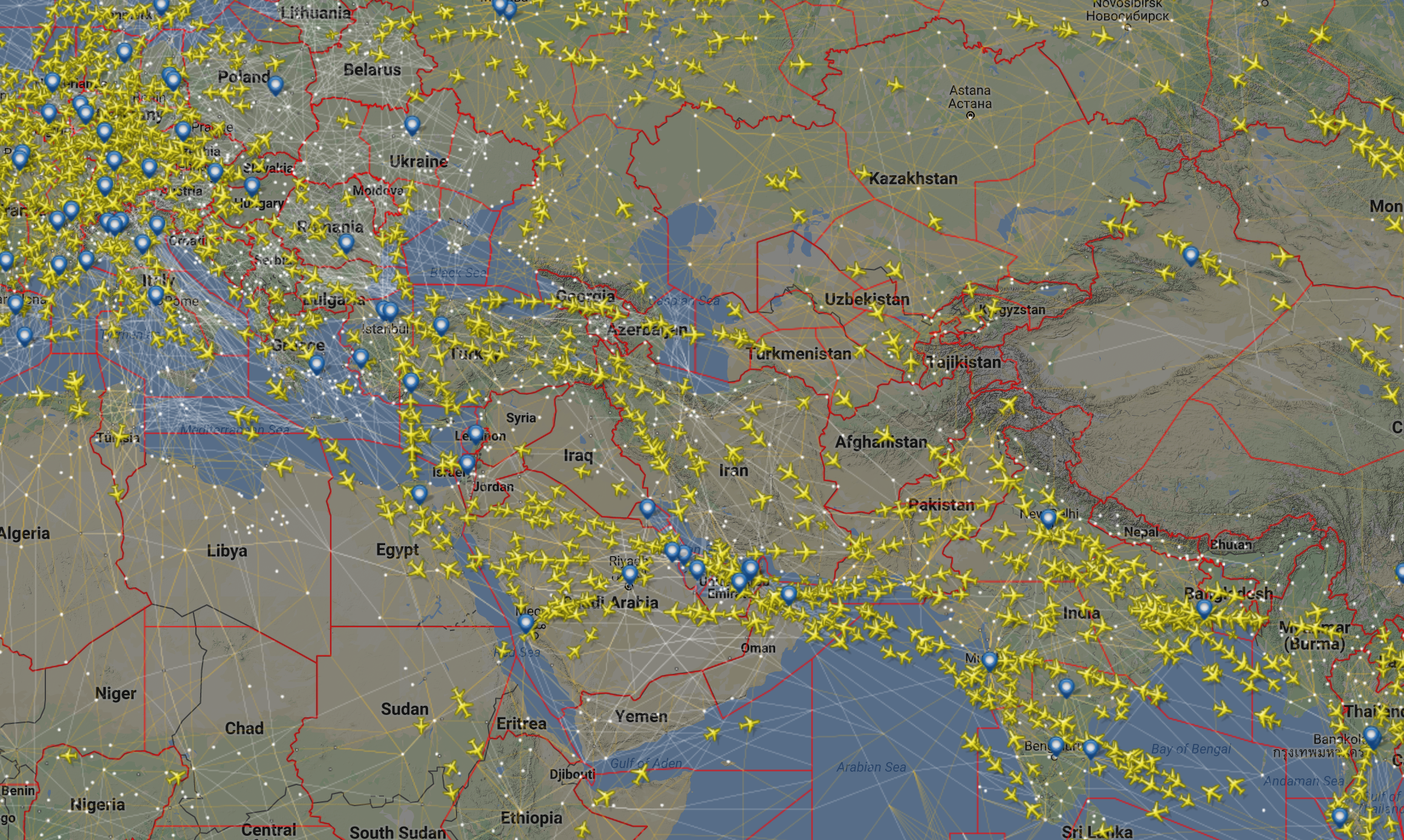
In most of the world, Ramadan is expected to begin on May 26 and end on June 24, with both dates depending on lunar sightings. Eid-al-Fitr is expected to be observed June 25, though the exact dates will vary by country. Across the countries which celebrate the holiday, there will be delays processing permits, slots, and other operational requirements involving CAA’s and Airport Authorities.

Ramadan Summary for 2017

Foreign nationals and their employers can expect immigration processing delays over the coming weeks in the Middle East, North Africa, Turkey and parts of Asia during the observance of the month of Ramadan and Eid-al-Fitr. Many government offices worldwide reduce their hours and/or close during Ramadan and Eid-al-Fitr.

Algeria: The month of Ramadan is expected to begin May 26 or 27 and end June 24 or 25, depending on lunar sightings. While public offices are not officially closed during Ramadan, most government offices will open at 10:00 a.m. and close at 3:30 p.m. Government offices will also likely be closed on Eid-al-Fitr. Processing delays can be expected.

Bangladesh: The month of Ramadan will begin on May 26. While the government offices will operate with reduced workforce during this month and until June 29, they will be closed from June 23 through 27 in observation of Eid-ul-Fitr. Processing delays of permit applications should be expected throughout the month of Ramadan.

Brunei: The month of Ramadan will begin on May 27. Government offices are expected to operate on reduced business hours throughout the month of Ramadan. These offices will be closed for the Hari Raya Aidilfitri holiday, which is expected to take place June 26 through 28, but may change depending on lunar sighting. Processing delays are expected throughout the month of Ramadan and may continue for up to two weeks after Ramadan ends.

Indonesia: The month of Ramadan will begin on May 26, ending with Hari Raya Idul Fitri which will fall on June 25 and 26. Most government offices and consular posts are expected to reduce their business days by one to two hours throughout the month of Ramadan, and closures will likely occur several days before and after the Idul Fitri holiday due to staffing shortages. Processing delays are also expected throughout the month of Ramadan.

Malaysia: The month of Ramadan will begin on May 26. Government offices are expected to operate with reduced hours throughout the month of Ramadan. Government offices will be closed for Hari Raya Aidilfitri on June 26 and 27. Processing delays are expected throughout the month of Ramadan and may continue for up to three weeks after Ramadan ends.
Middle East/North Africa (Bahrain, Kuwait, Morocco, Oman, Pakistan, Qatar, Saudi Arabia, United Arab Emirates): The month of Ramadan is expected to begin on May 27 and end on June 24. Government offices across the Middle East will be working reduced hours during Ramadan, which may affect processing times for all permit applications. Foreign nationals and employers are advised to check with the relevant office for exact hours of operation. Processing delays could continue in the weeks following Ramadan due to application backlogs that accumulate during the closures.

Turkey: Government offices will be closed June 26 and 27. Processing delays can be expected on these days.


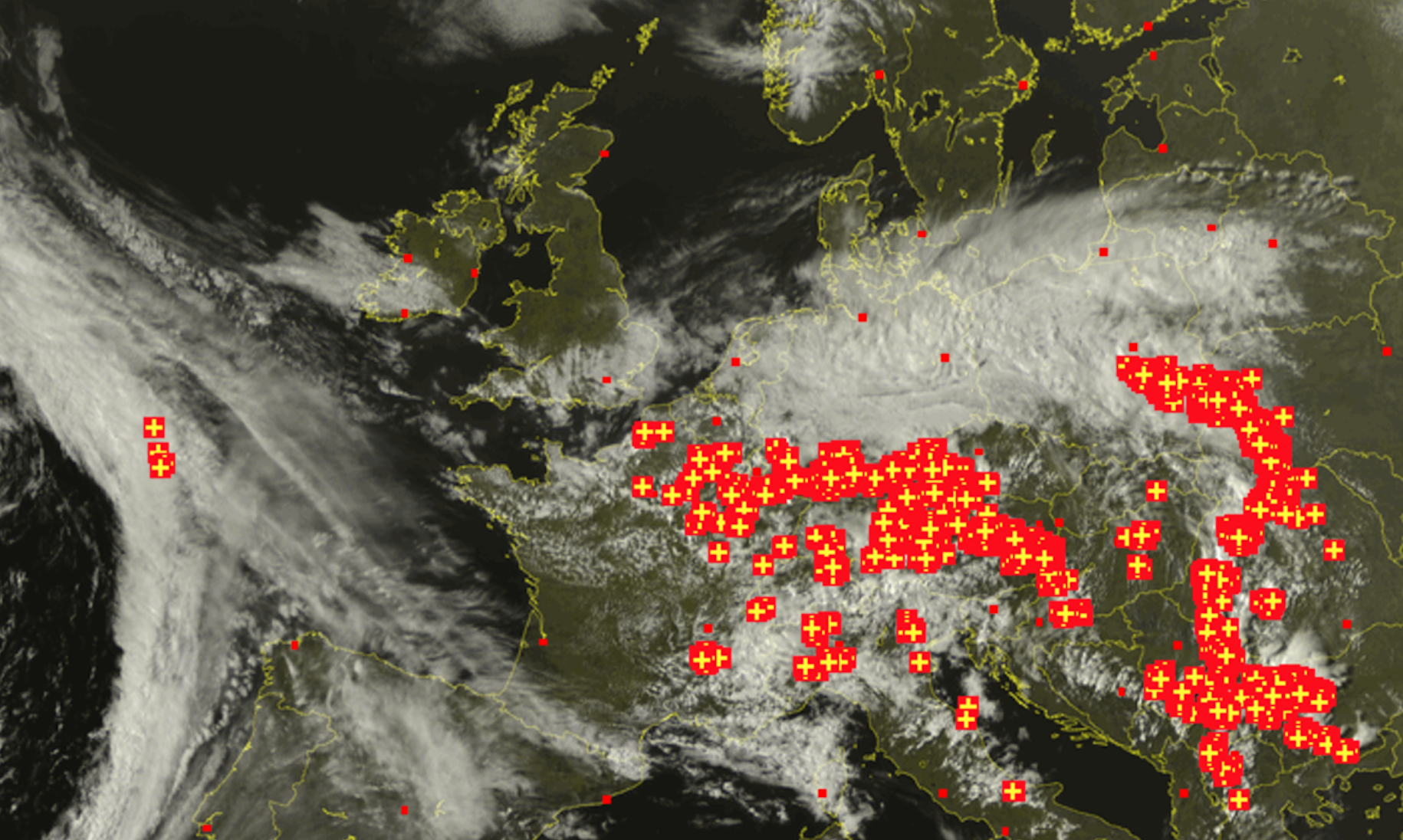
Europe’s on fire today!

Above is the current lightning map for Europe today; this is the first mass CB/Thunderstorm event of 2017.

These occur regularly during the Euro-summer, and operations in NL, Germany, Switzerland, and Austria get heavily impacted.

Eurocontrol says: CB activity with local Thunderstorm activity forecast over Austria, Germany and Switzerland. Several en route and aerodrome arrival regulations have been applied.
EDDF, EDDM, EDDS, Paris TMA, LOWW, LSGG and LSZH. Moderate to High delays can be expected.


New disinsection procedure for Hong Kong (VHHH/HKG)

From April 25th, 2017, Hong Kong will require disinsection for all aircraft inbound from Zika affected areas (i.e. last port being a WHO Category 1 or Category 2 area). The current list of Zika affected areas can be found in WHO’s latest Zika virus situation report:

Per the new regulations, there are three groups:

  • Airlines/Aircraft operators adopting residual disinsection – this group of airlines/aircraft operators should repeat residual disinsection before the expiry dates marked at the last residual disinsection certificates and provide PHO with the new disinsection certificates upon request.
  • Airlines/Aircraft operators adopting non-residual disinsection – Upon request, this group of airlines/aircraft operators should provide PHO with the details of non-residual disinsection in the Health Part of the Aircraft General Declaration and empty or partly used insecticide cans within 24 hours of arrival of each aircraft. These items should be submitted to PHO (Room 5T577, Level 5, Arrival Hall, Terminal 1, Hong Kong International Airport) at 2:30 pm to 3:30 pm daily. For private jets, their crew/operators should submit the Health Part of the Aircraft General Declaration and the photos of empty or partly used insecticide cans to PHO by email to sphi_ap@dh.gov.hk. PHO will take follow-up actions if an airline/aircraft operator fails to comply with the above requirement.
  • Airlines/Aircraft operators adopting no disinsection – For airlines/aircraft operators not adopting regular disinsection, they will be reminded of the disinsection requirement before their aircraft arrive. The Airport Authority will allocate an outside berth for the aircraft.

Residual Disinsection

The internal surface of the aircraft, excluding food preparation areas are sprayed with residual disinsection at intervals not exceeding eight weeks (WHO, 1995)2. Pesticides used and methods of application should be recommended by the WHO. Pesticides used should be registered according to the Pesticide Ordinance (Cap. 133).

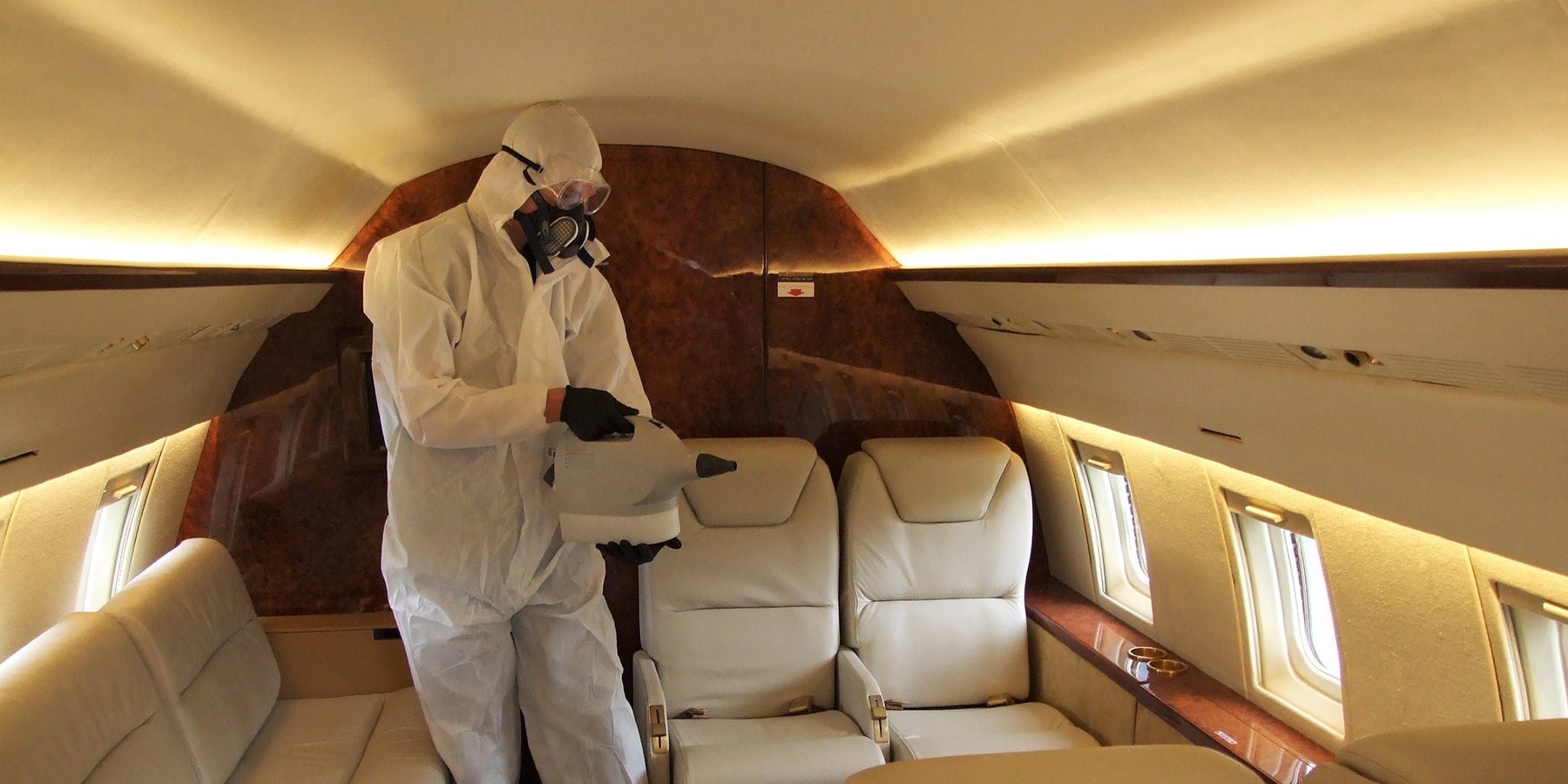
The residual disinsection remains efficacious for eight weeks and causes minimal inconvenience to passengers and prevents the crew or passengers from exposure to aerosol sprays.

Non-Residual (Spraying)

Blocks away The Blocks away disinsection is recommended by the WHO and takes place after passengers have boarded, the doors have been closed and prior to take-off. The cabin is treated by crew members walking through the cabins discharging aerosols.

Pre-flight and Top of Descent The pre-flight spraying involves the aircraft cabin and hold being sprayed with an aerosol containing a residual insecticide while the aircraft is on the ground but before passengers embark. Pre-flight is spraying usually followed by a non-residual top of descent spraying. The combined treatment lasts for the duration of single flight sector.

On-arrival On-arrival treatment of cabin and hold of incoming flights to Hong Kong should be carried out when no spraying has been conducted prior to departure for Hong Kong or during the flight. On-arrival treatment is carried out after landing with passengers on board by the crew under supervision of PHO.

Insecticides

For aircraft disinsection, WHO currently recommends permethrin (2%) for residual disinsection (WHO, 2005) and d-phenothrin (2%) for space spraying. The specification of the insecticides are attached in Annex I.

References


OpsGroup NYC Notam Summit – April 4th, 2017

JOIN US IN NYC

Tuesday, 4th April 2017- Manhattan, New York

 Ops Group Meetup and Notam Summit

We’ve never done this before, but we’re going to run our first OpsGroup meetup.  Emails and slacks are all fine, but human contact is where it’s at.  Come along and meet us and other awesome members of the OpsGroup!

Location: Secret downtown location in Manhattan, we’ll meet at 9am-ish on Tuesday morning, 4th April.  By 10am we’ll have kicked off into International Ops  2017 with Mark, NAT chats with Dave, Antarctica fireside stories with Jamie-Rose, and then move on to looking at stupid Notams and how to fix them.  You should come!

Here is the deal:

0900 You arrive. So will others. We will mostly be pilots, dispatchers, ATC’s and flight dept managers but whatever your specialty is, come along.

930-ish We’ll start with the International Ops Chats- NAT ops, Antarctica, 2017 changes, and your questions.

1100 We’re probably still going with the International Ops Chats

1130 We’re onto talking NOTAMS by now

1300 Powerpoint has overheated, we’re done. Off to Lunch

1330 We’ll be having a late lunch. Join us for chats and beers, war stories, jokes, or head home instead- whatever you like.

1500 That’s All Folks. We can recommend: A visit to Concorde, go see a show on Broadway like School of Rock, go see the Nicks v Bulls, visit the Comedy Cellar, or get your Uber back to the Teterboro Holiday Inn.

Afterwards, tell us what you thought: team@ops.group

Antarctica Fireside Chat

Jamie Rose McMillen from the FSB Int’l Desk is going to tell us some good stories from her six years living on the Ice.  Find out how International Ops works in Antarctica and McMurdo Station. Join us in NYC!

International Ops 2017

There have been a city-full of changes to the International Ops world so far in 2017.  A380 wake, no devices, BOE changes, ATC strike, Conflict Zones, 767 shooting, the end of Soviet QFE approaches. Mark will answer questions. Join us in NYC!

North Atlantic Changes

Dave Mumford will run through the new rules on the NAT, and answer questions from the My First Atlantic Flight guide. Just don’t ask him about the new contingency procedure. Join us in NYC!

NOTAMS

Judging is finally complete in the Notam Goat Show.  After we present the winners, we will have a good old fashioned competition, with prizes, and then get into the main event: How do we fix the Notam problem?

Join us in NYC!

COME TO NEW YORK!

RSVP


US 737 tests the China ADIZ

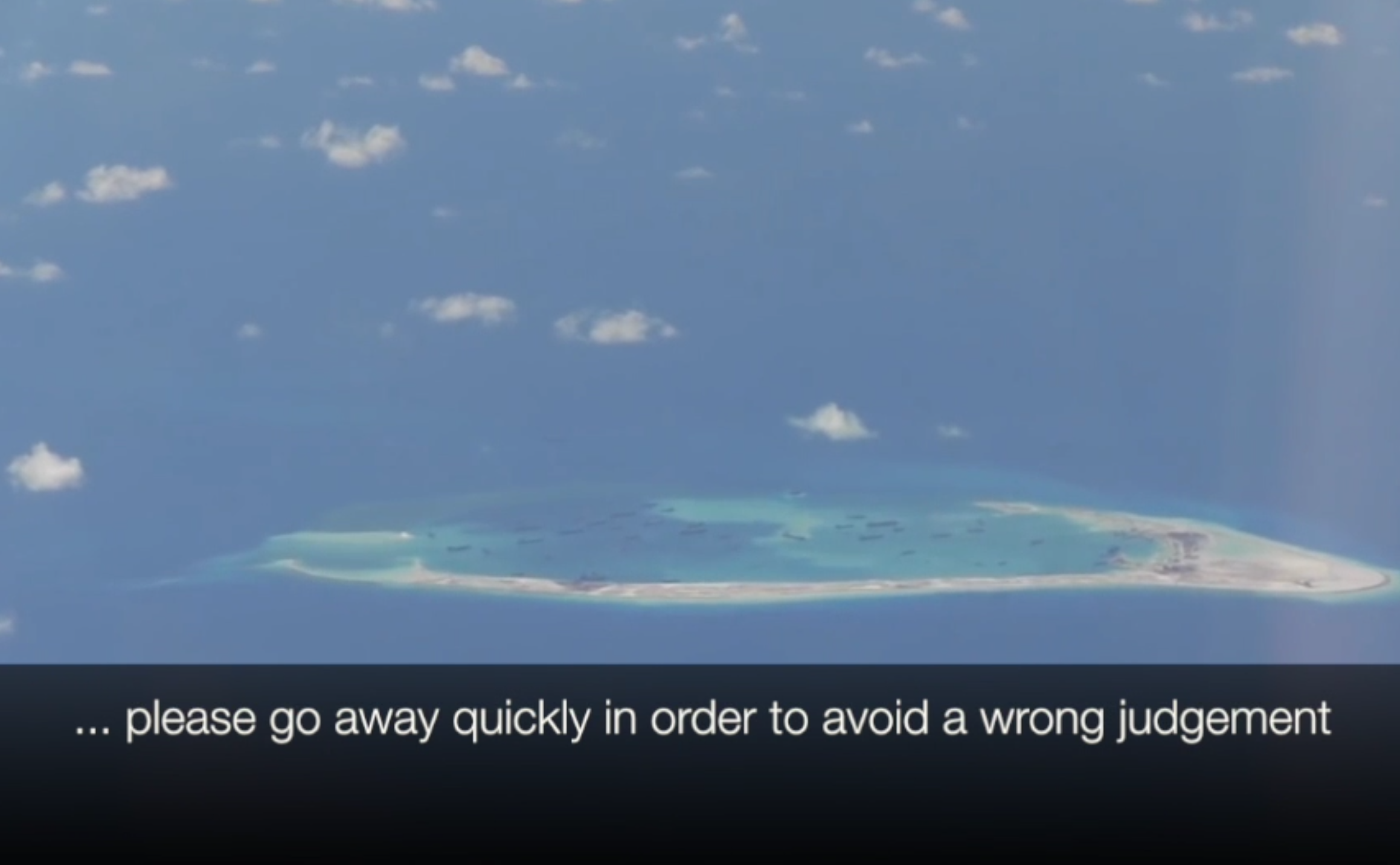
China: Go away quickly please
US Aircraft: Nope
China: Go away quickly!
US Aircraft: No!

The US is doing us all a huge favour at the moment. In fact, it’s been providing this service to the world for some time.

Every so often, a country extends its borders a little too far – outside the normal 12nm limit, for example. China has been busy. They’ve been building some things in the South China Sea. Islands, in fact. And on those islands they’ve built runways, control towers, and big radars. Naturally, they confirmed last Friday that they are for civilian use only. Hmmm.

So the US dusts off an airplane and knocks on the door. Flies around for a bit. Sees what’s going on. And reminds the country that international waters are just that. They publish a list each year of where they’ve done this. Worth a read.

In 2013 they popped up an ADIZ. And made everyone passing through it copy their Flight Plans to Beijing. In principle, ADIZ’s are a pretty good idea. The normal 12nm isn’t really much time for the military to figure out if you’re coming to bomb them. Especially on the weekend.

But you can’t tell airplanes to get out of an ADIZ. It’s an Identification Zone, not an Intercept Zone. So, normally ADIZ’s require you to squawk something and have a Flight Plan.

That much is OK. But China has been warning aircraft to get out of ‘their airspace’. And it’s not. This 737 (aka P-8 Poseidon) went for a nosey.

These operations help us all operating internationally to have less rules to worry about. Which is good.


Initially, most abided by the 2015 ADIZ rules. In 2016 that adherence quietly eroded. And China quietly didn’t care too much. It did threaten a second ADIZ in the South China Sea, but since the first one didn’t really take off, they probably won’t.

It’s part of a bigger diplomatic game. Interesting to watch, though.


Unsafe Airspace update – French Guiana, Egypt

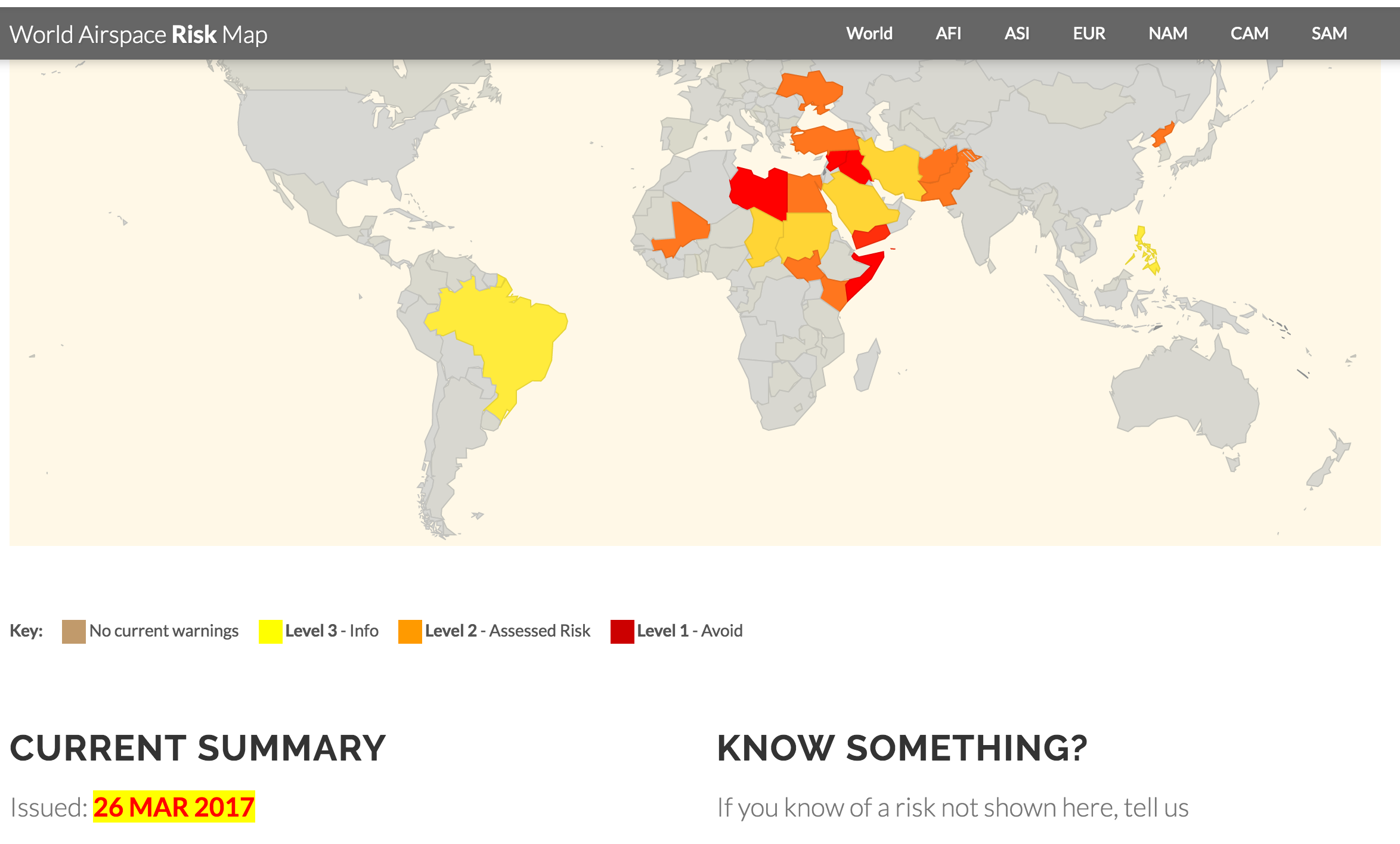
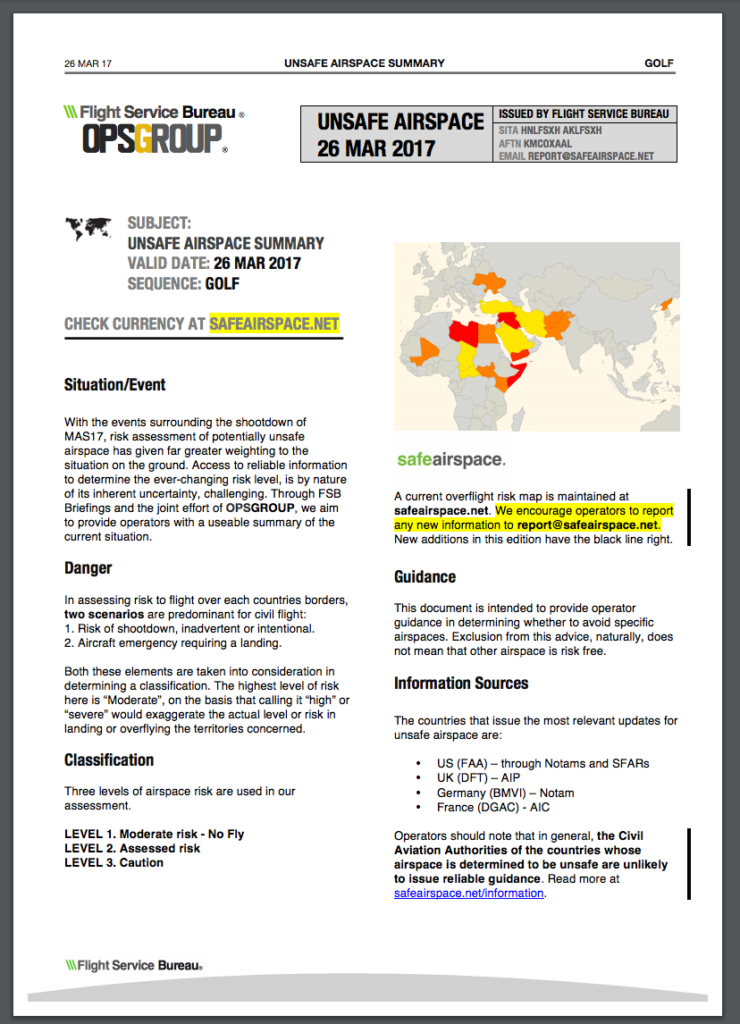
Flight Service Bureau has issued the 2nd Unsafe Airspace Summary for 2017, effective March 26th. Through safeairspace.net, FSB and members of OpsGroup work together to share information on risks and threats affecting Airspace and Airports around the world, and make this information available to all aircraft operators. Read about our mission here.

In this edition, the changes since January 2017 are:

  • New advisory (Level 3) for French Guiana (protests, airports closed). 26MAR17 Widespread protests, increasing in size. Avoid travel. SOCA/Cayenne has no fuel available, and per US Diplo reports 24MAR is closed. SOOG/St. Georges, SOOC/Camopi, and SOOR/Regina are closed. Monitor SafeAirspace.net for updates.
  • New summary for Egypt (SA-7 missile found), fresh GPS jamming warnings.
  • Updated warnings for Mali, Kenya, Pakistan, South Sudan, Saudi Arabia, Philippines.

Further Reading:

  • You can download the new PDF summary directly (600kb).
  • View the map at safeairspace.net
  • Join OPSGROUP for direct updates.


Inside the cabin – before and after the wake turbulence encounter

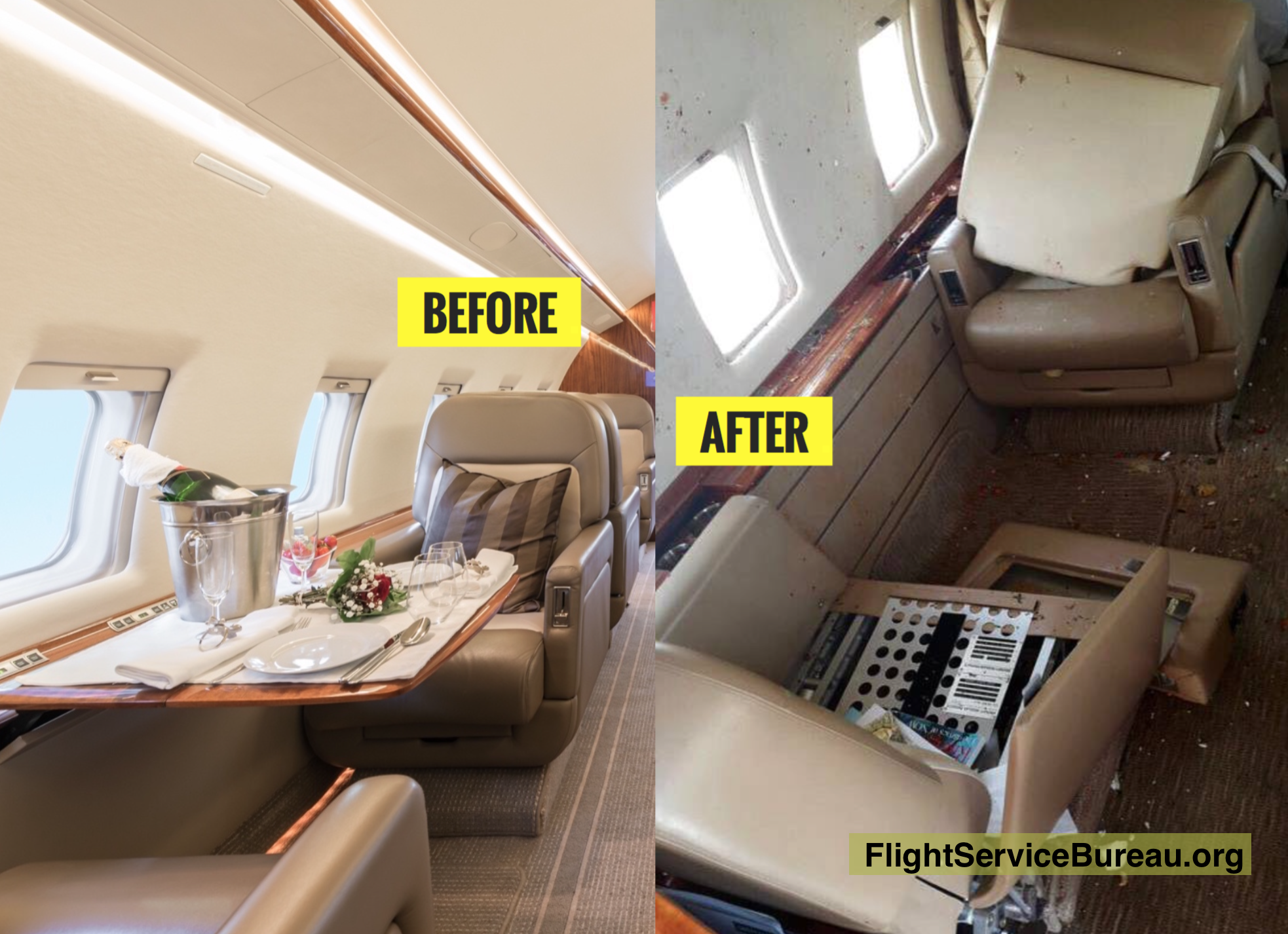
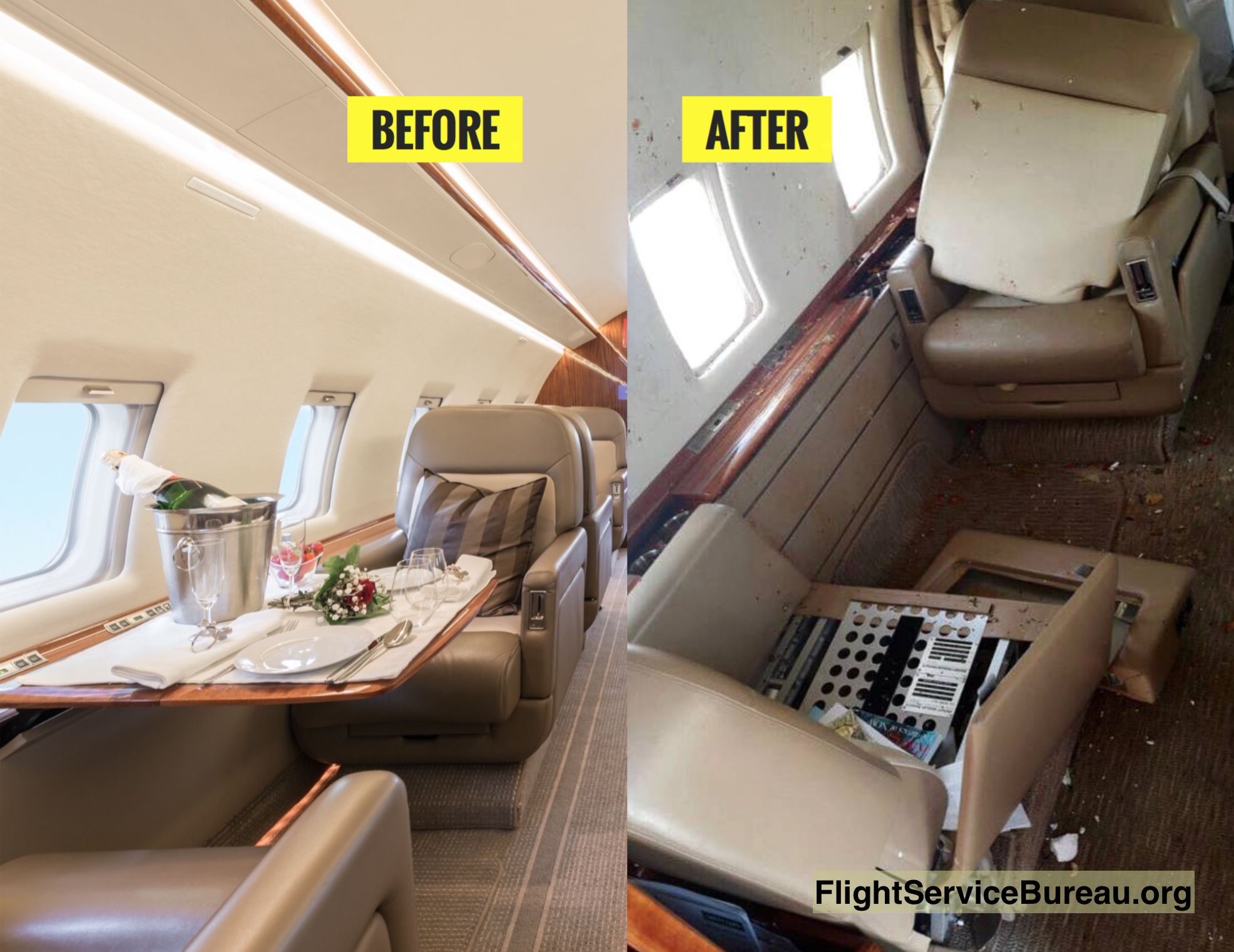
The Challenger 604 vs Airbus 380 story has gone once around the world.

But is it even true? Some have asked. Let’s do a reality check.

After our initial story was published in last weeks International Operations Bulletin, which we first monitored thanks to the great work of the Aviation Herald, it was republished in various versions in The Times of London, Flying magazine, AIN Business Aviation News,  Deutsche Welle, and NBC. The picture on the Flight Service Bureau facebook page was viewed 1.1 million times.

First, the picture.

The incident happened. This has already been confirmed by the German BFU, who have responsibility for investigating accidents. The Canadian TSB have assigned an accredited representative to the investigation, and Bombardier have assigned a technical advisor.

So to the cause. The crew reported that 1-2 minutes before the loss of control, at about 0840 UTC, an Airbus A380-800 had passed overhead, slightly to the left. The Aviation Herald’s reporting is of the highest standard, and we trust their source.

Like the Aviation Herald, we also deal in facts. Joining the dots to form the bigger picture doesn’t require Colombo on the job.

  • The incident happened on January 7th, since which time the German BFU have been aware of the case.
  • The story has been out in the aviation community since February 7th, when it was posted that: “A CL604 enroute Male to Europe, upset by opposite direction, 1,000′ above, A380’s wake. Several rolls, large G excursions. Diverted into Muscat.”


Since the authority, manufacturer, and operator are all aware of the story, it is reasonable to deduce that were a material part of the widely reported incident not true, then that would have been stated rather quickly.

The ultimate confirmation will come from the Germany BFU, hopefully on this Interim Reports page.


The Boeing 757 parallel

On Sunday, we reported the similarity between this A380 story, and the 10 years it took to determine that the Boeing 757 had a wake 1.5 times stronger than other similar aircraft.

Our primary interest here at Flight Service Bureau is keeping the International Flight Operations community safe and informed. Consider this opening line from the New York Times on Dec 23rd, 1993:

Nearly a year after being alerted to the problem, the Federal Aviation Administration has ordered air-traffic controllers to warn aircraft flying behind Boeing 757 jets of the potential for dangerous wake turbulence.

In the last year, two crashes that together killed 13 people have been attributed to turbulence caused by Boeing 757's. In the more recent crash, on Dec. 15, five people were killed when their private jet went down in Orange County during a landing approach" 

Wake Turbulence Enroute

The entire topic of wake turbulence is not fully understood by any of us. There is much more to learn. Truly innovative studies were last done back in the 1970’s. Some experienced crews have even questioned whether enroute wake turbulence even exists.  Flight school drills into us as pilots, that wake lives around the airport. “Heavy, clean and slow” are the dangerous ones. But “slow” means about about 150 knots for aircraft like the 380. In the cruise, that goes up to about 250 knots IAS at the higher altitudes. If 150 knots is slow, then 250 knots isn’t really “fast”.

Before the crash of a Delta Tristar at DFW in 1985, we didn’t know much about windshear and microbursts.  Maybe we have to learn the same lesson with enroute wake.

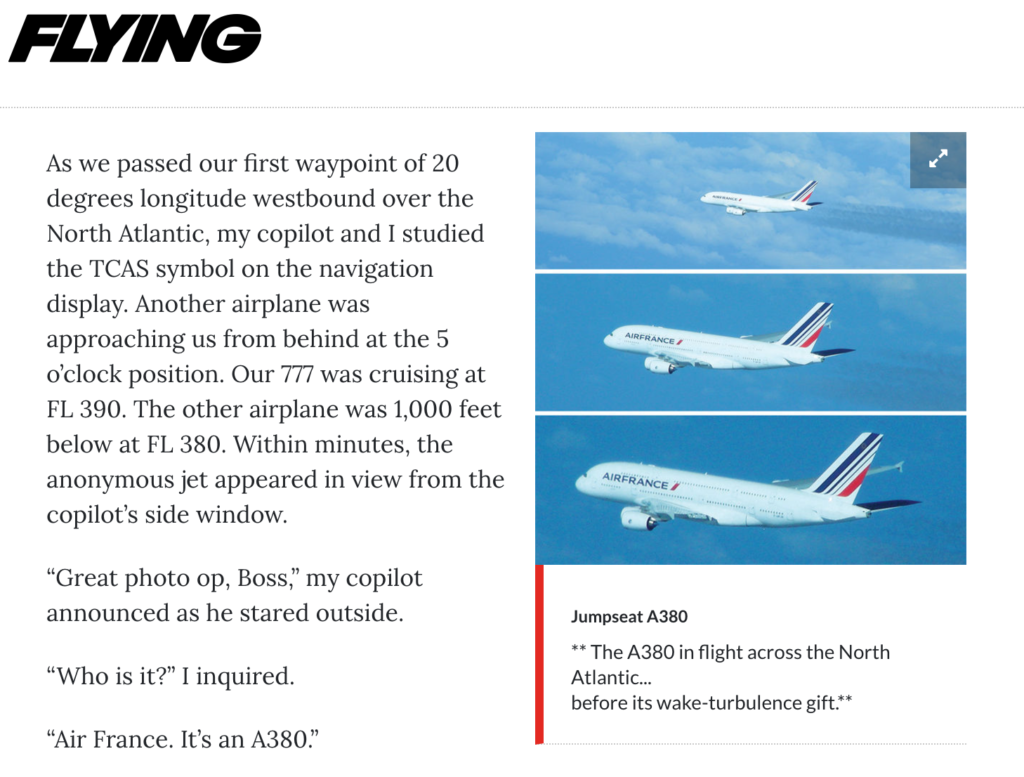
In Flying magazine, Les Abend has a very readable example of enroute wake in this article.


And here are some other examples of enroute wake turbulence encounters:

  • Air Canada, FL370, 55 degree roll at FL370 – wake from Boeing 747
  • Virgin Australia, FL350, 45 degree bank – wake from A380
  • American Airlines, FL220, bang – wake from B777
  • Air France, FL360, 25 degree bank – wake from A380
  • United Airlines, FL240, severe turbulence – wake from MD11
  • British Airways, FL320, 30 degree roll – wake from A380
  • Antonov 124, FL320, 15 degree roll, altitude loss – wake from A380
  • Vueling, FL320, sudden 40 degree right bank – wake from A340
  • Japan Airlines, E170 – uncommanded increasing roll to left – wake from A340
  • Armavia, A320 – A/P disconnect, steep banks – wake from A380

Note to Members #24 – Wake Turbulence Enroute

While the industry awaits further guidance from the authorities, Flight Service Bureau has made public its Note to Members #24 (normally restricted to OpsGroup circulation). Revised 22MAR2017.

Key points from our Note:

  • We might be wrong! Like we said above, there is much still to learn about enroute wake. Read the note, but make up your own mind.
  • Consider the wind. The danger point is roughly 15-20nm after the crossing point, as this is when the wake will have drifted down 1000 feet. In stronger winds, the wake may have drifted well away from the centreline. A turn away may not be necessary.
  • SLOP where possible. It may not prevent all situations, especially crossing traffic, but if you’re 2nm right of track you’re a lot less likely to be directly underneath another aircraft.
  • Read the note for the full guidance, and tell us if you have any further thoughts.


Passenger cabin device ban – what it means for non-scheduled flights

Just the facts:

– The US has banned devices larger than a smartphone in the passenger cabin from 10 departure airports:

  • HECA/Cairo International Airport (CAI),
  • OJAI/Amman – Queen Alia International Airport (AMM)
  • LTBA/Istanbul – Ataturk International Airport (IST),
  • OEJD/Jeddah – King Abdul-Aziz International Airport (JED)
  • OERK/Riyadh – King Khalid International Airport (RUH)
  • OKBK/Kuwait International Airport (KWI)
  • GMMN/Casablanca – Mohammed V Airport (CMN),
  • OTBD/Doha – Hamad International Airport (DOH)
  • OMDB/Dubai International Airport (DXB)
  • OMAA/Abu Dhabi (AUH)

– The TSA has published a Q&A

– The United Kingdom followed with a similar ban, specific to airlines. Read the BBC article.

– The nine airlines affected by the U.S. ban were notified of the procedures by the Transportation Security Administration at 0300 ET Tuesday and must comply within 96 hours, ie by 0300 Saturday morning.

– Intelligence showed credible evidence of a development of a bomb hidden in portable electronics.

– Two additional American officials, speaking anonymously, said the explosives were designed to be hidden in laptop batteries.

For non-airline/non-scheduled operators

  • Private flights: no impact
  • Charter flights (by Airline): unless operated from the points of departure listed, by the airlines notified, charter flights are not impacted.
  • Charter flights  (Business Aviation): not impacted. Closed-charter flights where passengers are known to each other are a much lower risk, and a small aircraft with 10 people on board falls outside the primary target threat area.
  • Ferry flights: no impact


Big changes to US Border Overflight Rules

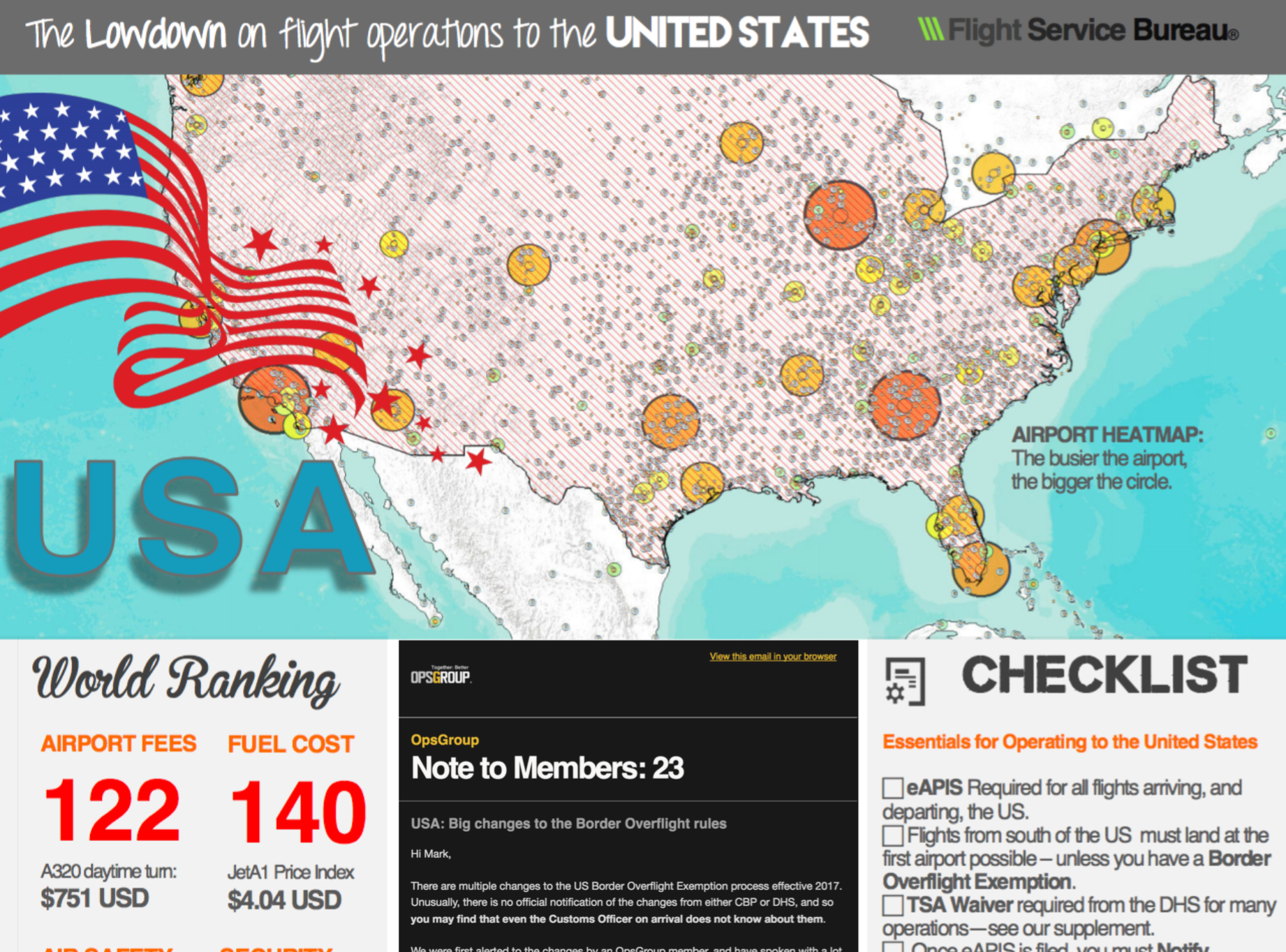
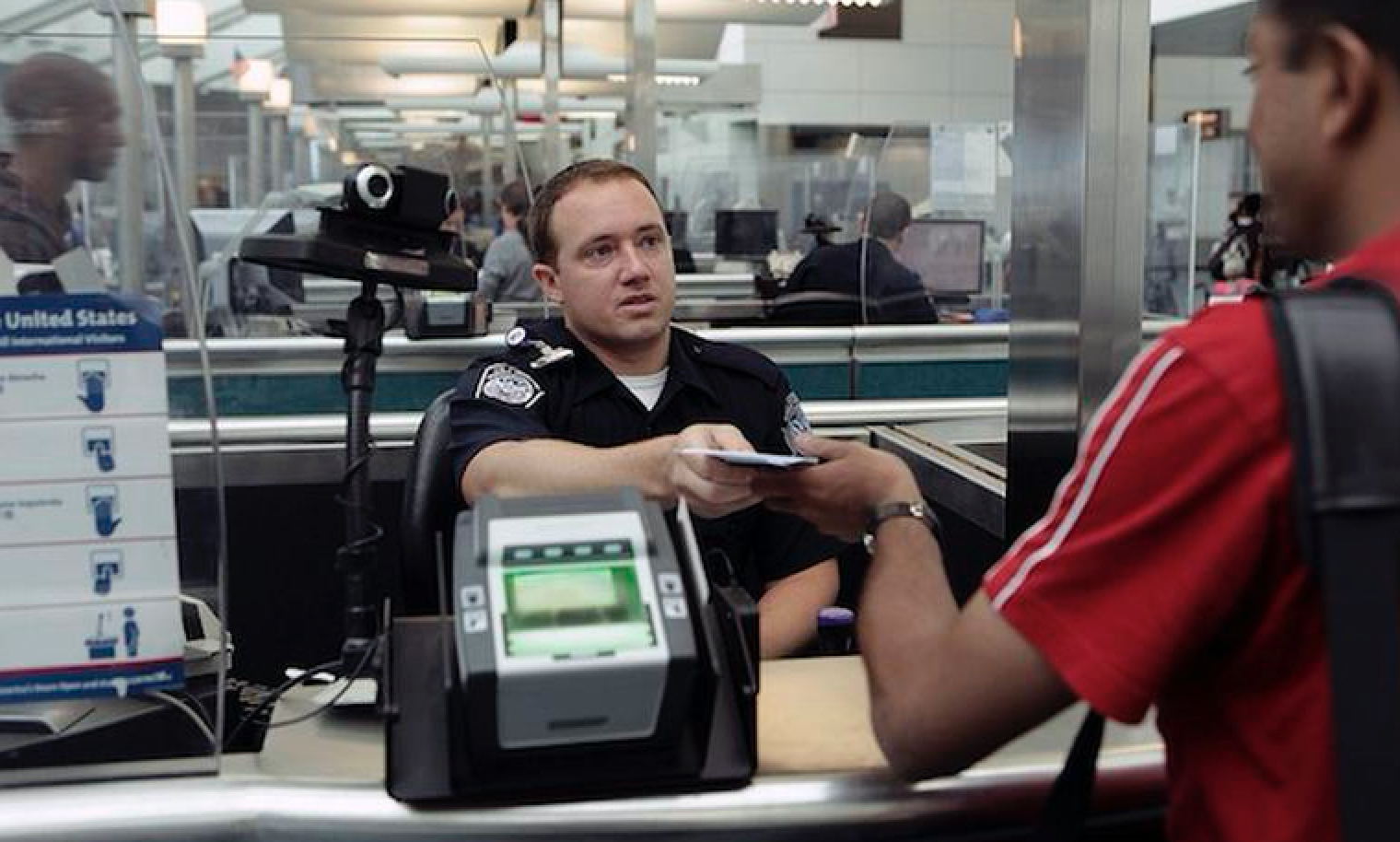
There are multiple changes to the US Border Overflight Exemption process effective 2017. Unusually, there is no official notification of the changes from either CBP or DHS, and so you may find that even the Customs Officer on arrival does not know about them.

The March 2017 changes may be the start of the end for the Border Overflight Exemption, since most requirements from the CBP perspective are transferred to eAPIS: notably, the fact that individual aircraft are no longer listed on the Approval Letter.

We were first alerted to the changes by an OpsGroup member, and have spoken with a lot of different DHS and CBP officials. From these conversations, we’ve put together our summary of the situation below.

Noteworthy is that at many Airports, the front line CBP officers were not aware of the new rules. CBP have said: “This is new not only to you but to most of the Officers in the field. Your pilots need to know what it says because they will be getting questions when they land.”

What is a Border Overflight Exemption?

  • If you operate a flight to the US from south of the 30th parallel, you must land at the first airport you come to.
  • To avoid this, you can apply to CBP for a Border Overflight Exemption (BOE)
  • With that in hand, you can fly to any airport with customs.
  • So, on to the changes:

Effective March 1st, 2017 :

  • A full list of the changes to the process is in Notes to Members #23 in your OPSGROUP dashboard.
  • We recommend you carry this in the aircraft as well, for any CBP official not aware of the new rules.


MEMBER LOGIN
Join OPSGROUP 


You can request membership of OPSGROUP to receive the full version delivered every Wednesday, along with all OPSGROUP member benefits: Members Questions, Group Discussions, Slack, free maps and charts (normally $25),  Full access to aireport for group reviews of handlers and airports, regular alerts for critical international ops info,  complimentary Airports Database (normally $375), Full access to safeairspace.net including updated risk alerts,  and guidance and help when you want it on any International Operations topic (that last one is really useful!). Read 125 different member reviews.


Week-long ATC Strike announced: France

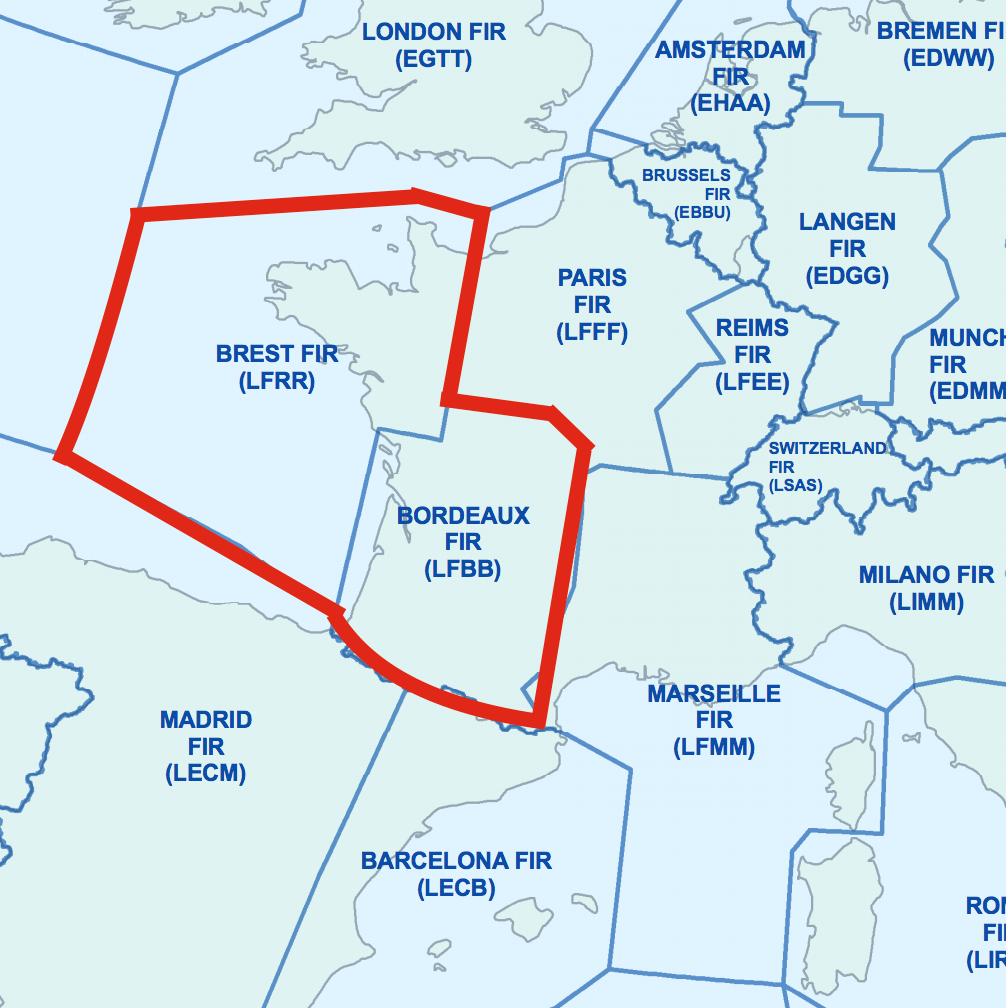
This is different to last years Summer of Strikes – where we had 12  French ATC strikes, but almost all were for 48 periods. This new strike is posted for a Monday-Friday, starting at 6am on Monday 6th March and running through to Friday evening, taking out the LFRR/Brest and LFBB/Bordeaux FIR’s.

Brest and Bordeaux FIR’s cover the west of France, meaning this will squeeze the offloaded traffic into Paris, Reims, and Marseilles FIR’s. As usual, our advice is to avoid overflying France if possible. We look forward to the day we can announce French Strikes are over (like the joy that Iceland brought us) but for now … no end in sight.

So, if you want some different options for getting around the Bordeaux FIR:

  • For north-south flights The Tango Routes – via Shanwick
  • For east-west flights try to file further north, into Belgian/Eurocontrol/German airspace, or come south into Barcelona/Marseilles
  • Read the Eurocontrol NOP for any relief routes accepted by other ACC’s
  • And, here’s a map :

Reroutes via Tunisia, Algeria

Tunisia and Algeria regularly open up their airspace to reroutes during French ATC action – and will likely do so again for this strike.

  • Tunisia (DTTC FIR): Overflight permit is required (AFTN direct DTTVYAYX)
  • Algeria (DAAA FIR): Overflight permit not required during this strike but copy FPL to DAAAZQZX and DTTCZQZX

Reroutes via Shanwick Airspace

Read our earlier post on this: https://ops.group/blog/the-three-sisters-shanwicks-tango-routes/

A teleconference will be held by DSNA (in French) on Wed 1st March at 1400 UTC.

Login details:
Call: +33 1 48 50 50 80
Pin Code: 34835821#

Keep an eye on the Eurocontrol NOP for updated info.


NOTAMS and the E-4B Advanced Airborne Command Post


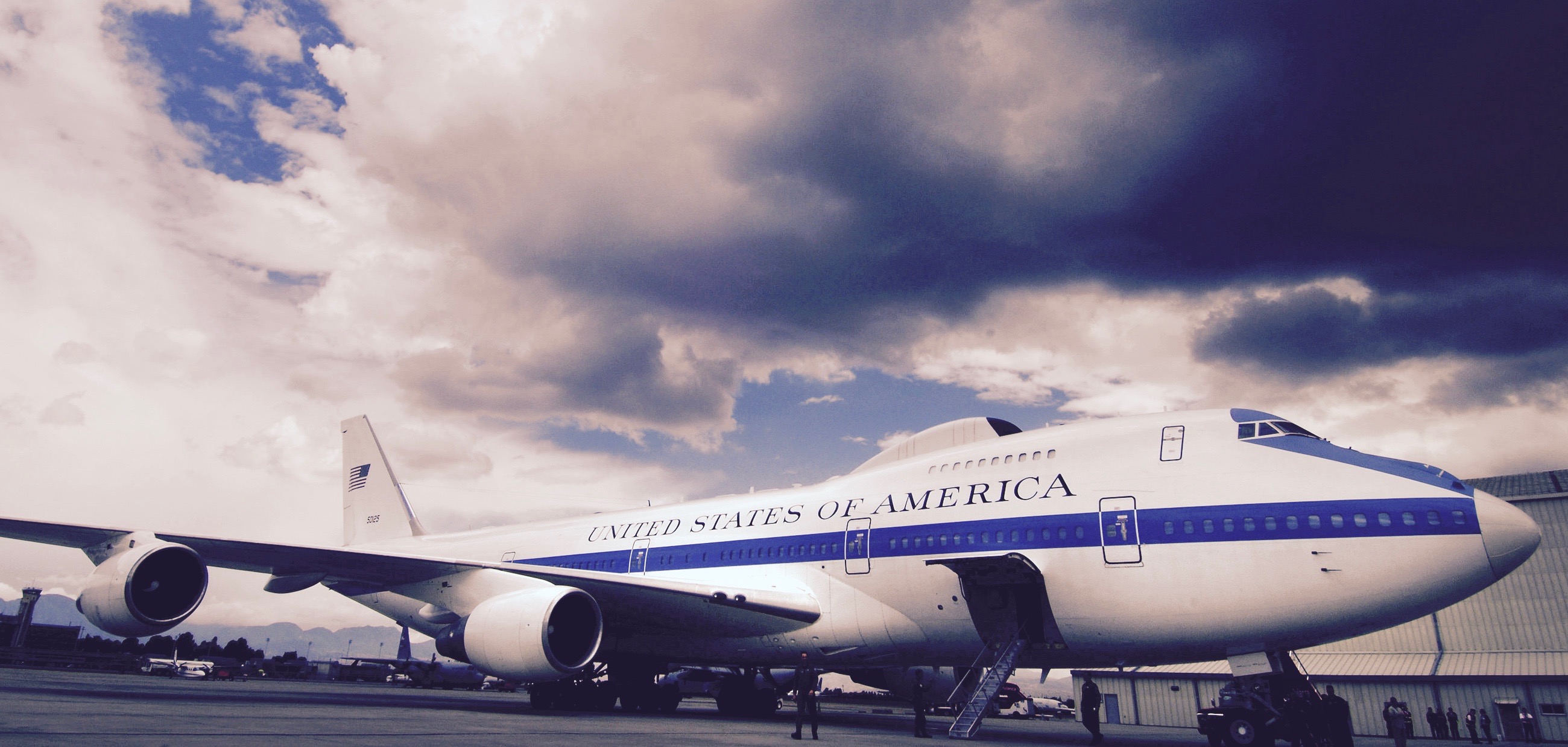
We’re hot on NOTAMs at the moment. Our OPSGROUP member Eddie (who’s just rebuilt the famous code 7700.com – take a look) has this great story for us from his early days flying the E-4B.

“The NOTAMS are a mess,” Major Tom Stevens said, “instead of the three pages of specific airports twice a day, we are now getting every single airport in the world big enough to handle a 747. The paperwork is immense.”

“How many pages a day?” I asked.

“Don’t know,” Tom said. “I just toss them on the bunks in the upper rest. But don’t tell Lieutenant Colonel Rodney G. Larson that. His edict from on high says we have to read every page of them.”
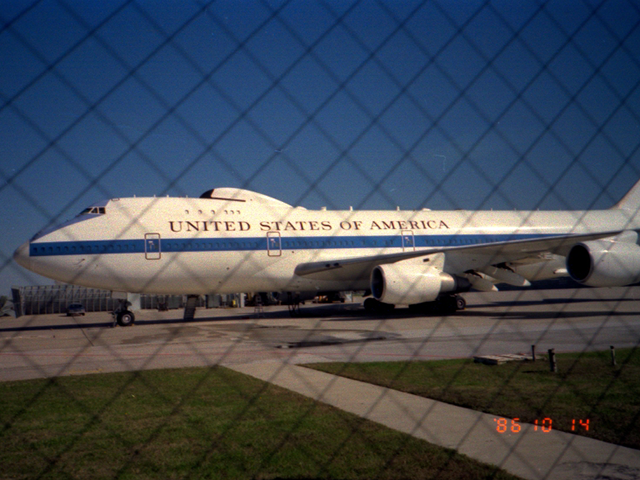


I boarded the airplane and caught up with the flight engineer in the forward galley, just aft of the spiral staircase that led to the cockpit. He handed me the aircraft forms and the crew read file. “Welcome to the new world,” he said.

“What world is that?” I asked.

“Lieutenant Colonel Rodney G. Larson’s world of course,” he said. “You got ten pages of his view of the world in the read file and then when you get upstairs, you got some more reading to do.”

The airplane was in good shape and in less than a minute the aircraft belonged to me. The read file was another matter. I took the nearest seat and read for thirty minutes how Lieutenant Colonel Rodney G. Larson wanted me to do my job. I scribbled dutifully into my notebook and quickly discovered there were three categories of Lieutenant Colonel Rodney G. Larson edicts. A lot of it made sense and pretty much put into writing techniques we had been using for years. A good portion of it was silly but harmless. The third category, however, was pure idiocy. We were required from this day forward to hand-fly the airplane from the takeoff to cruise altitude in an attempt to keep our stick and rudder skills sharp. Approach callouts were forbidden so that the pilot flying the jet could better concentrate on keeping the needles centered. I would have to get engaged on these.

But I didn’t know which category to place the strangest bit of news, our newly acquired fetish for having Notices to Airmen, or NOTAMS, transmitted directly to the operational bird. We were accustomed to getting them for the twenty or so airports tasked with supporting us on a regular basis. It was a convenience to have them delivered to the cockpit twice-a-day rather than having to hunt them down at base operations or having to call the nearest FAA flight service station. But now we would have to sort through every airport in the world with a runway able to support a Boeing 747. Was this just another harmless ruling from on high, something General Patton disciples would call “chicken shit,” because they made life harder but really didn’t matter in the end. Or was this in the idiocy category, elevated to the Patonesque level of “bullshit,” something that was as stupid as chicken shit but had a negative operational impact. I drew a large question mark next to the entry, closed my notebook, and made my way up the spiral staircase.

The upper deck of a Boeing 747 started out as an afterthought, just extra space behind the cockpit. Various airliners tried to put a lounge up there but soon figured out revenue-paying seats made more sense. The Air Force version had three beds in a small room, three bunk beds with curtains in a common area, a worktable, and several passenger seats. When the bird was operational, we tended to give up the entire space to our crew chiefs and security guards. For seven days and nights they lived on the airplane and needed a place to unwind, out of view from our passengers. I was used to seeing a bit of a disorderly mess up there and tried to restrain every urge to insist on a little more cleanliness.

On a scale of upper deck clutter, one to ten with five being the average, I was greeted with nothing more than a six. Unusually, there were no mechanics or guards asleep in the bunks. The head crew chief greeted me, as per normal, and I handed him the aircraft forms.

“Good bird?” I asked.

“Good bird,” he answered.

“Any personal squawks?” I asked.

“Just one, sir.” He pointed to the bunks on the right side of upper deck where two of the bunks were filled with reams and reams of silver-backed paper, thousands of pages of paper.

“What?”

“NOTAMS,” he said. “I don’t know what they are for but I wish you pilots wouldn’t leave your junk in our beds, sir.”

I took a handful for the top bunk and carried it forward to the jump seat in the cockpit. After ten trips I filled the jump seat and got one out of three bunks clear. I plopped myself into the pilot’s seat and started to read. “What the hell is Burkina Faso,” I muttered to myself.

“Ever hear of Upper Volta,” I heard as the copilot lowered himself into the right seat.

“Yeah,” I said.

“Well same country,” he said, “new name.”


Soon the rest of the flight crew joined me and we four came down with a system to speed things along. “Most these are days old,” the navigator said, “just look at the date time group on the top left and move on.”

“Good idea,” the engineer said. “But I gotta get me some gloves, this silver shit can’t be good for you.”

It can’t be harmful, I thought, but it certainly was messy. I took a break and went downstairs to learn why our NOTAMS were printed on the strange silver paper. Our 747 had the VIP bedroom in the nose, under the cockpit, and as you went aft there was the galley, a progression of conference rooms, passenger seating, a communications suite, and more seats. I entered the comm suite was immediately handed another stack of silver paper, maybe two hundred pages in all.

“I wish you pilots could get your news on T.V. like the rest of us,” the communications officer said. “That T3500 runs full time these days just for you guys. We hardly use it for our secrets any more.”

He explained that they had all sorts of printers but when the message came from the Department of Defense, as was true with our NOTAMs, they had to be printed on a printer rated at Top Secret or higher. That meant the T3500 on our airplane.

“So why does it have to be on this awful paper,” I asked, rubbing two fingers together and showing off the silver ink rubbed onto each.

“Because that’s what the T3500 uses, major.” As he spoke the printer came to life and I spotted the message header revealing another round of NOTAMS. “And it ain’t cheap either,” he added.

“How much?” I asked.

“Five hundred smackers a box,” he said. “I’m glad I’m not paying for it.”

“Somebody is,” I said while leaving with my new stack of paper, probably three hundred dollars of taxpayer money.

“Executive decision,” I said as I entered the cockpit. “Let’s throw all of the old stuff away and start worrying about the new NOTAMS as we get them.”

“Good idea,” the engineer said, “but we got a problem. Look at this.” He handed me about ten pages of silver paper, about half with a message header that began TOP SECRET and the other half with the code words that meant their security clearance was even higher.

“Whoa,” I said, “this stuff was in our NOTAMS?”

“Yeah,” the navigator said, “and it’s worse. You can be halfway through a set of NOTAMS and a page of this will be sandwiched between. It’s like the printer is in the middle of a hundred pages of NOTAMS but throws in a secret message as soon as it gets it. The comm team doesn’t bother checking all hundred pages so we get their secrets with our NOTAMS.”

I told the flight crew to go through the rest of the NOTAMS while I took the classified stuff with me off the airplane and straight to Lieutenant Colonel Rodney G. Larson’ office, where I found him attacking his own mountain of paperwork.

“Sir,” I said, “can I have a minute?”

“You got sixty seconds, major,” he said, “make them count.”

“We found five code worded messages in our NOTAMS this morning and we aren’t even ten percent into the stack. This has got to stop.”

“No,” he said, “this means you still have ninety percent left and you better get to it. I’ll put out a memorandum that makes sure all pilots do a better job of screening their NOTAMS. Thanks for bringing this to my attention, dismissed.”

“Sir,” I said, “why don’t we just discontinue the NOTAMS? I don’t mind going to base operations every day, it would certainly take less time. And then there’s the cost . . .”

“You got your orders,” he said, cutting me off.

“All I want,” I started to say but stopped as he rose his hand in front of his face.

“All I want,” he said, “is for you to shut up and color.”

“Sir,” I said, “yes, sir.”

With that I left his office, returned to the cockpit, collected ten more code worded messages and gave those to our Whamo passengers. While downstairs I was handed a set of flight orders and a few minutes later we were airborne headed east.

Four days later we came back with about 5,000 sheets of NOTAMS from which we had pulled over 200 pages of classified message traffic. I was walking into the squadron as Lieutenant Colonel Rodney G. Larson was walking out, on his way to fly the daily training sortie.

“Lieutenant Colonel Larson,” I said, thinking the full proper address might get a better reception. “Can we discuss the NOTAM situation.”

“Major I’ve been through this with all the other aircraft commanders,” he said. “You are the only one who has a problem with it. Why can’t you just salute smartly and press on?”

I saluted smartly and pressed on into the squadron. The mission planning room was packed with pilots, navigators, and flight engineers working on the next big trip. They all turned to look at me, expectantly.

“What?” I said.

“We thought if anybody could change his mind it would be you,” came from one corner of the room.

“You know somebody is going to jail,” I heard from another corner. “One of us is going to miss a code worded message and then it is off to Leavenworth.”

We all sat, quietly, realizing our fates were sealed. I decided the least I could do was get the mess off the airplane so I found a handcart in the steward’s kitchen and made my way back to the airplane.

As soon as the crew chiefs realized I was purging the upper deck of the dreaded silver paper they volunteered to help and we had the cart loaded up in just two trips up and down the three flights of our 747. The head crew chief volunteered to steady the cart as I pushed it back to the squadron.

“How much do you reckon all this paper cost the U.S. taxpayer,” he asked.

“A lot,” I said, “the commo said it was five hundred for a box.”

Once in the squadron we wheeled our way to the ready room. “Now what?” he asked.

“Let’s see if we can reach the ceiling,” I said.

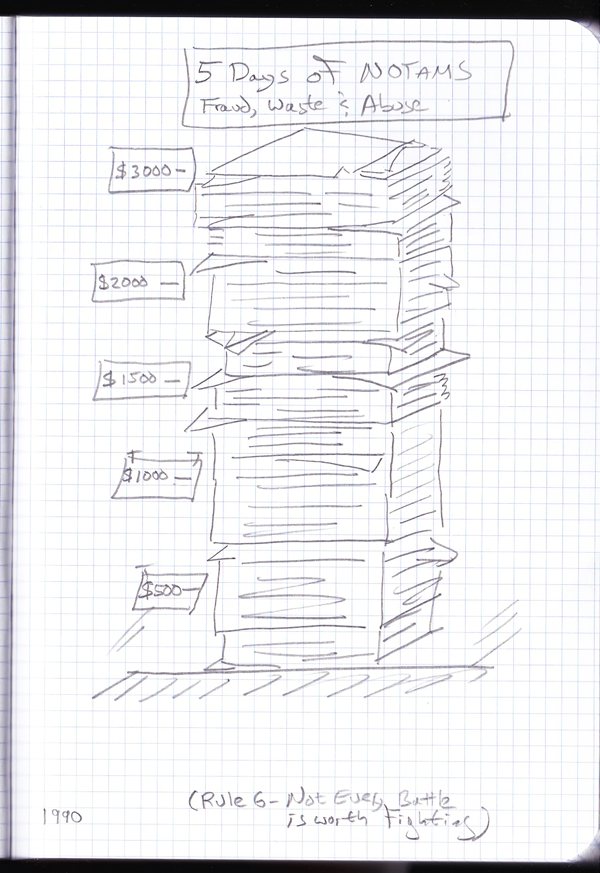
We piled them in a single stack against the wall to steady it. As the stack grew in height we drew a crowd. When we were done it was taller than me and was pretty impressive.

“What good is that going to do?” I heard. He had a point. In the end I decided to use Post It notes to delineate each $500 of wasted paper and topped it all with a banner revealing that all this was just from five days. In retrospect, I think what really capped it off was adding the subtitle, “Fraud, Waste and Abuse.”

That work done, my two-way radio came to life announcing I was needed at the airplane and a few minutes later I was headed for the west coast. Two days later I was back, the NOTAM stack was gone, there was another letter to the crew force announcing that the daily NOTAMS were no longer being provided and that it was up to us pilots to get them by alternate means, and there was a big red line drawn through my name on the scheduling board.

“Thanks for taking one for the team,” I heard over and over again. But I had to wonder, was it worth the price? Lieutenant Colonel Rodney G. Larson did not want to talk to me and he did his best to avoid me. But there was the scheduling board filled with trips without me.

“At least you went out in style,” I heard.

I didn’t want to go out at all, of course. After two weeks the drought was over and I was flying to Europe. We had a double crew on board so while one team flew the other was in the upper rest playing cards, reading, or trading vicious gossip.

“So you are resurrected again,” the navigator said. “You are like a cat.”

“More than a cat,” the engineer said. “I think this makes an even ten lives for the good major.”

“I owe it all to clean living,” I said. “Besides, not even Lieutenant Colonel Rodney G. Larson can hold a grudge forever.”

The crew looked at me in silence. Finally the navigator spoke. “You don’t know, do you?”

“Know what?”

“Lieutenant Colonel Rodney G. Larson was going to have you thrown out of the squadron when this trip came up,” he said. “Whamo asked for you by name and when they were told you couldn’t do it they blew a gasket. They said you were the only aircraft commander they would fly to Europe with.”

“Ah, so,” I said. It made perfect sense, I thought, they would want a pilot who got things done reliably and that would obviously be me. The last few Europe trips got botched up and Whamo was pretty upset. In retrospect, I think the smug grin on my face let the wild dogs know it was time to attack.

“I guess all that suck up time pays off,” the navigator said.

“Yeah, he’s just like Eddie Haskel,” the copilot said, everyone nodding.

“What do you mean?” I didn’t like the way this was going.

“No offense,” the navigator said. Of course that always meant offense was intended. “But you spend a fair amount of time downstairs with the pax, you invite them to the cockpit more than any other pilot, you go out of your way to make them happy.”

“Why that is a lovely dress, Mrs. Cleaver,” the copilot said.

The look on my face must have portrayed my hurt feelings. “No offense,” they all chimed in.

“The major is also one of only two aircraft commanders who doesn’t get Whamo nasty grams,” the engineer said. “I’d rather be on a crew that makes the pax happy than one that doesn’t. Life is easier that way.”

With the engineer’s two cents worth, my hurt feelings went away and pretty soon everyone forgot about the holy crusade against NOTAMS. Everyone, that is, except Lieutenant Colonel Rodney G. Larson.

A year later the base was looking for volunteers to go to Air Command and Staff College but didn’t want to nominate anyone who wouldn’t make the Air Force selection process. It was a problem for our base. Everyone on base who wanted to go wouldn’t be chosen by the Air Force; anyone who could make the Air Force cut didn’t want to go. I didn’t want to go and did not submit the required application.

“Sign here,” Lieutenant Colonel Rodney G. Larson said, handing me the application. “I had it filled out and I made a few phone calls. They say you are a shoe-in.”

“I don’t want to go, sir.”

“You need to go,” Lieutenant Colonel Rodney G. Larson said. “I told you to sign.”

“No, sir.”

I pushed the incident out of my thoughts until six months later I was selected. I rushed over to the personnel office to see the application was signed but not by me. The handwriting looked exactly like that of one Lieutenant Colonel Rodney G. Larson.

I thought about making a mess of the incident but realized that would ruin two careers instead of just one. A few months later I was in Air Command and Staff College writing an underground newspaper called “The Penguin Gazette, a newspaper for flightless birds.” The Gazette’s editor needed a pseudonym and Eddie was as good a name as any. So began the literary adventures of one Eddie Haskel.

Oh yes, the rule. The holy crusade against NOTAMS taught me that not every battle is worth fighting, sometimes you need to take a few losses along the way. I accepted orders to Air Command and Staff College as my first application of the rule. As it turns out ACSC was a great learning experience for me, got me promoted to Lieutenant Colonel, and eventually led to command of my very own flying squadron. There I vowed to face every difficult situation wondering what Lieutenant Colonel Rodney G. Larson would do, and then do the opposite.



JFK Runway 4R closure for the summer

We got a couple of reminders that we hadn’t covered this in our weekly bulletin, and … you’re right. So, here’s the details.

So, Runway 4R/22L will be fully out from today until June 1st, and then it will be out overnight until Sept 4th, at which time it will be fully out again.

So, first up:

Phase I – 1st Full Runway Closure – 94 Days (Feb 27- June 1, 2017)

  1. Runway will be fully paved after this
  2. Runway will be returned to operations on June 1 with edge lights only

Because NYC Tracon is so tight, the 4R closure also impacts La Guardia and Teterboro, so we expect to see some delays and restrictions there as well.

For your reading pleasure, we’ve bundled all the documents about this into 1 PDF.

Oh and yes, that’s Central Park and not Runway 4R, but it’s prettier than some concrete.

Reference:


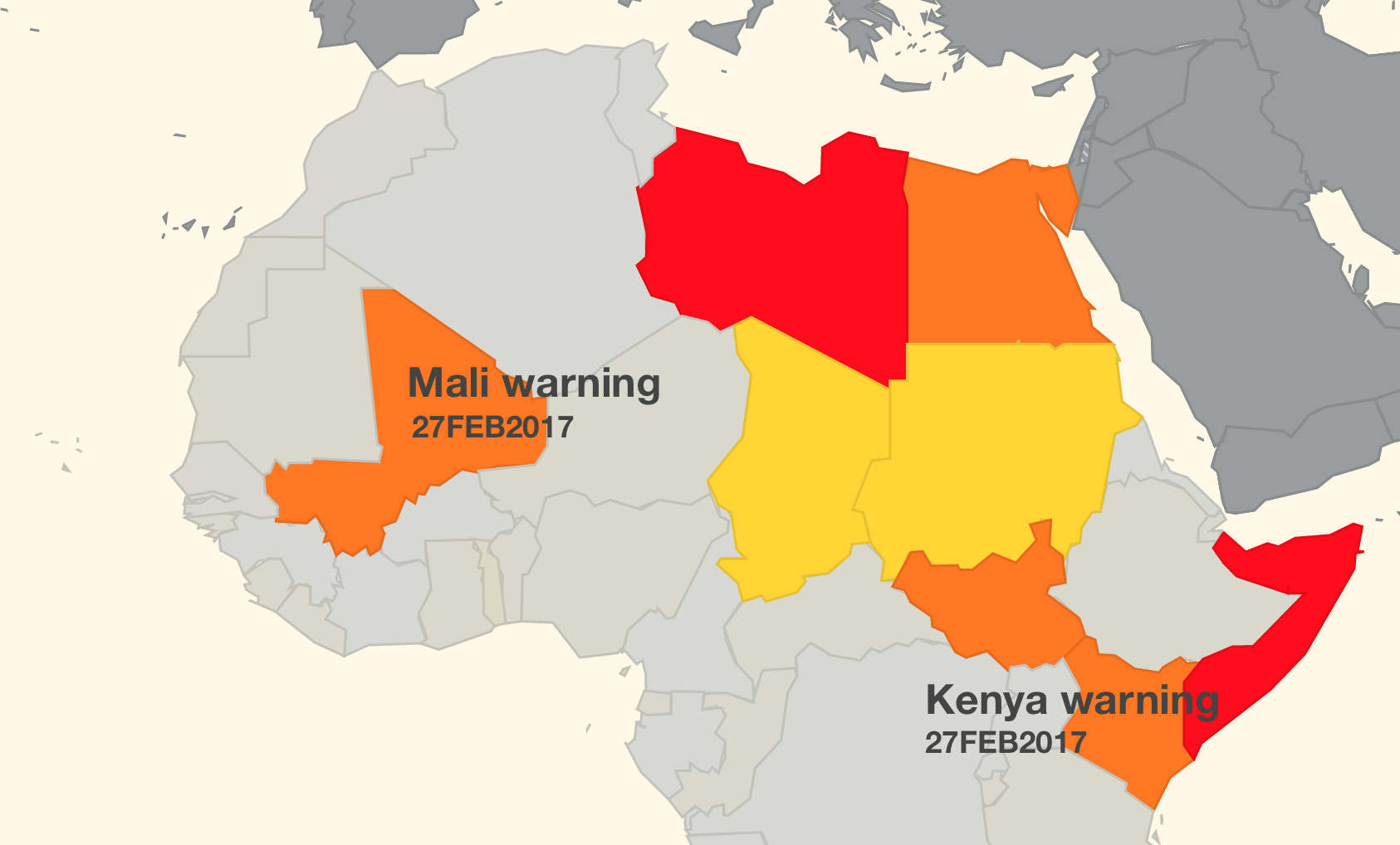
Fresh warnings as FAA clarifies weapons risk in Kenya, Mali airspace

Feb 27th, 2017: The FAA has issued fresh warnings for Kenyan and Malian airspace, warning US operators of the potential dangers in operating through both the Nairobi and Malian FIR’s.

Published on Feb 26th, the new advice also adds new language with clarification of the type of weapons and phases of flight that the FAA is concerned about, specifically:

  • fire from small arms,
  • indirect fire weapons (such as mortars and rockets), and
  • anti-aircraft weapons such as MANPADS.

The scenarios considered highest risk include :

  • landings and takeoffs,
  • low altitudes, and
  • aircraft on the ground.

The FAA uses the same wording for both Kenya and Mali. Additionally for Mali, the Algerian CAA has concurrently published airspace closures along their southern border due to the conflict, and the FAA’s background notes on the Mali conflict still stand.

The updated guidance is intended for US operators and FAA License holders, but in reality is used by most International Operators including EU and Asian carriers, since only four countries currently provide useful information on airspace security and conflict zones.

The Notams both use FL260 as the minimum safe level, though we would suggest, as usual, that a higher level closer to FL300 is more sensible.

These updates have been notified through SafeAirspace.net, a collaborative and information sharing tool used by airlines, business jet operators, state agencies, military, and private members of  OPSGROUP.

This is the new wording in the latest FAA Notams on Mali and Kenya:

POSSIBILITY OF ATTACKS ON CIVIL AVIATION BY EXTREMISTS/MILITANTS.
AIRCRAFT MAY ENCOUNTER FIRE FROM SMALL ARMS; INDIRECT FIRE WEAPONS,
SUCH AS MORTARS AND ROCKETS; AND ANTI-AIRCRAFT CAPABLE WEAPONS,
INCLUDING MAN-PORTABLE AIR DEFENSE SYSTEMS (MANPADS).SUCH WEAPONS 
COULD TARGET AIRCRAFT AT LOW ALTITUDES, INCLUDING DURING THE ARRIVAL
AND DEPARTURE PHASES OF FLIGHT, AND/OR AIRPORTS AND AIRCRAFT ON THE
GROUND.

The NOTAMs in full are on our Kenya and Mali pages respectively.

References:

  • Kenya country information page at safeairspace.net
  • Mali country information page at safeairspace.net
  • OPSGROUP collaborative project


NAT Tracks example with RLAT – 2017

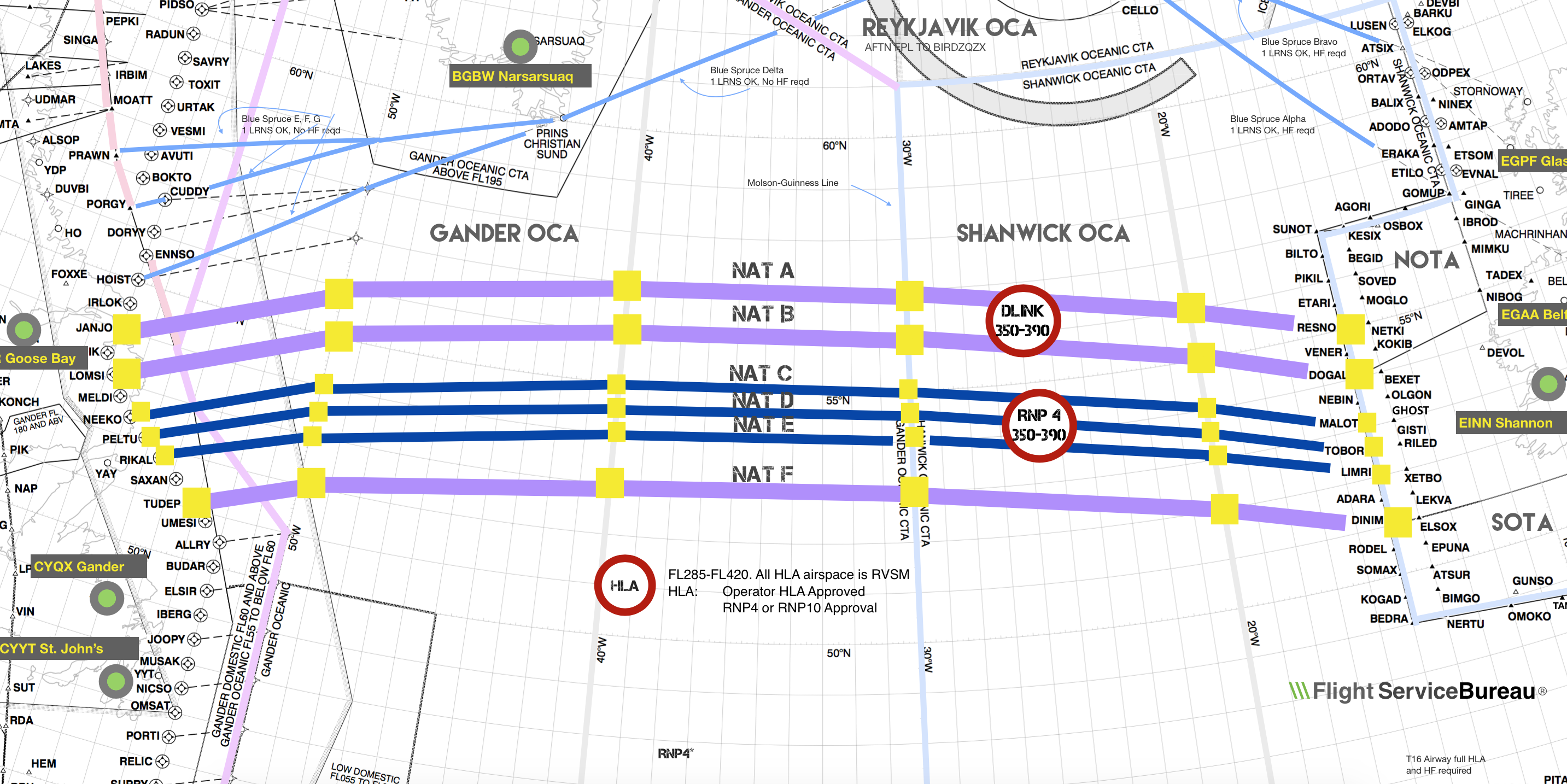
With the new (ish) RLAT Tracks, the standard NAT Track picture looks different these days. We thought we’d draw one out so you can see the RLAT Tracks. This example is the Westbound Tracks today, February 24th 2017. The RLAT Tracks are C, D, and E.

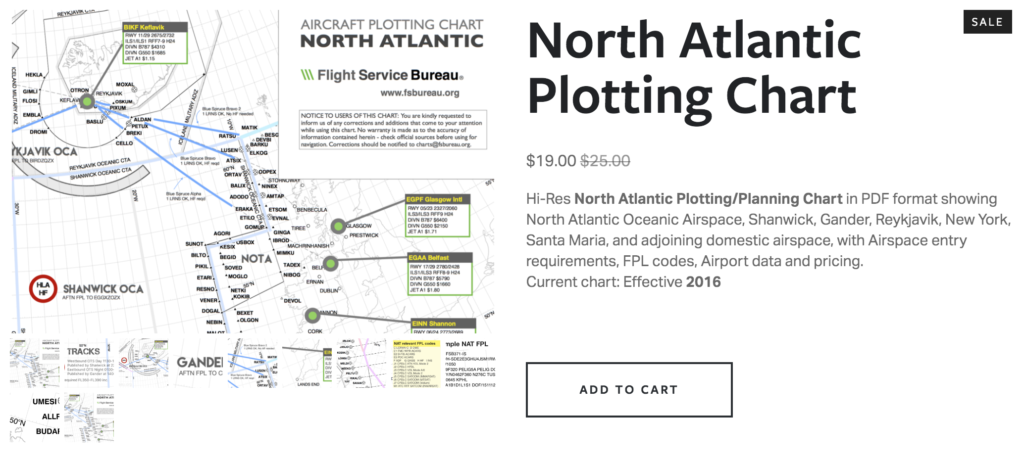
The neat plotting chart that this is drawn on is from Flight Service Bureau and available here.

Picture first (click for big version), Track message follows:


232034 EGGXZOZX
(NAT-1/2 TRACKS FLS 310/390 INCLUSIVE
FEB 24/1130Z TO FEB 24/1900Z
PART ONE OF TWO PARTS-
A RESNO 56/20 57/30 57/40 56/50 JANJO
EAST LVLS NIL
WEST LVLS 310 320 330 340 350 360 370 380 390
EUR RTS WEST NIL
NAR NIL-
B DOGAL 55/20 56/30 56/40 55/50 LOMSI
EAST LVLS NIL
WEST LVLS 310 320 330 340 350 360 370 380 390
EUR RTS WEST NIL
NAR NIL-
C MALOT 54/20 55/30 55/40 54/50 NEEKO
EAST LVLS NIL
WEST LVLS 310 320 330 340 350 360 370 380 390
EUR RTS WEST NIL
NAR NIL-
D TOBOR 5330/20 5430/30 5430/40 5330/50 PELTU
EAST LVLS NIL
WEST LVLS 350 360 370 380 390
EUR RTS WEST NIL
NAR NIL-
E LIMRI 53/20 54/30 54/40 53/50 RIKAL
EAST LVLS NIL
WEST LVLS 310 320 330 340 350 360 370 380 390
EUR RTS WEST NIL
NAR NIL-
END OF PART ONE OF TWO PARTS)


232035 EGGXZOZX
(NAT-2/2 TRACKS FLS 310/390 INCLUSIVE
FEB 24/1130Z TO FEB 24/1900Z
PART TWO OF TWO PARTS-
F DINIM 52/20 53/30 53/40 52/50 TUDEP
EAST LVLS NIL
WEST LVLS 310 320 330 340 350 360 370 380 390
EUR RTS WEST NIL
NAR NIL-
REMARKS.
1.TMI IS 055 AND OPERATORS ARE REMINDED TO INCLUDE THE
TMI NUMBER AS PART OF THE OCEANIC CLEARANCE READ BACK.
2.ADS-C AND CPDLC MANDATED OTS ARE AS FOLLOWS
TRACK A 350 360 370 380 390
TRACK B 350 360 370 380 390
TRACK C 350 360 370 380 390
TRACK D 350 360 370 380 390
TRACK E 350 360 370 380 390
TRACK F 350 360 370 380 390
END OF ADS-C AND CPDLC MANDATED OTS
3.RLATSM OTS LEVELS 350-390. RLATSM TRACKS AS FOLLOWS
TRACK C
TRACK D
TRACK E
END OF RLATSM OTS
4.FOR STRATEGIC LATERAL OFFSET AND CONTINGENCY PROCEDURES FOR OPS IN
NAT FLOW REFER TO NAT PROGRAMME COORDINATION WEBSITE WWW.PARIS.ICAO.INT.
SLOP SHOULD BE STANDARD PROCEDURE, NOT JUST FOR AVOIDING WX/TURB.
5.80 PERCENT OF GROSS NAVIGATION ERRORS RESULT FROM POOR COCKPIT
PROCEDURES. CONDUCT EFFECTIVE WAYPOINT CHECKS.
6.OPERATORS ARE REMINDED THAT CLEARANCES MAY DIFFER FROM THE FLIGHT PLAN, 
FLY THE CLEARANCE.
7.UK AIP. ENR 2.2.4.2 PARA 5.2 STATES THAT NAT OPERATORS SHALL FILE
PRM'S.
8.FLIGHTS REQUESTING WESTBOUND OCEANIC CLEARANCE VIA ORCA DATALINK
SHALL INCLUDE IN RMK/ FIELD THE HIGHEST ACCEPTABLE FLIGHT LEVEL WHICH CAN
BE MAINTAINED AT OAC ENTRY POINT.
9.ALL ADSC CPDLC EQUIPPED FLIGHTS NOT LOGGED ON TO A DOMESTIC ATSU
PRIOR TO ENTERING THE SHANWICK OCA MUST INITIATE A LOGON TO EGGX BETWEEN 10
AND 25 MINUTES PRIOR TO OCA ENTRY.-
END OF PART TWO OF TWO PARTS)


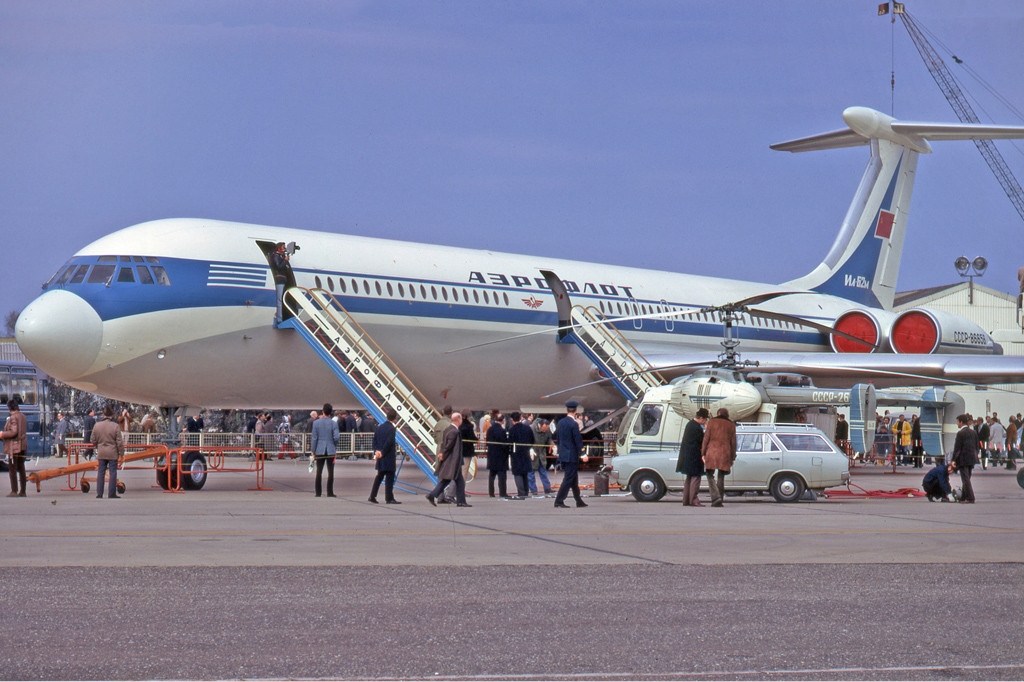
Big change: Russia finally moving to QNH

If you have a Russia trip coming up soon, then keep a close eye on those charts. The whole feet-meters conversion/QFE/”Descend to height” carry on is going to start disappearing effective February 2017.

Way back in 2011, we told you about Russia’s transition to using Feet instead of Meters, for enroute traffic – above the transition level. Ever since then, we’ve kind of been waiting for the same change at Russian airports.

And now, it’s happening.

  • As of February 2017, ULLI/St. Petersburg will be the first Russian Airport to start using feet and QNH – chosen because it’s pretty close to sea level. And one of the more ‘western’ Russian airports.
  • Descent clearances will be to an altitude in feet, based on QNH
  • The ALT/HEIGHT conversion chart will disappear from charts
  • You’ll get “Descend altitude 3000 feet QNH” instead of “Descend Height 900 meters” from ATC.
  • After the St. Petersburg ‘trial’ is complete, the rest of Russia will slowly follow suit. We don’t yet have a firm date for further airports within Russia, but will update this page when we do (or we’ll tell you in the bulletin).


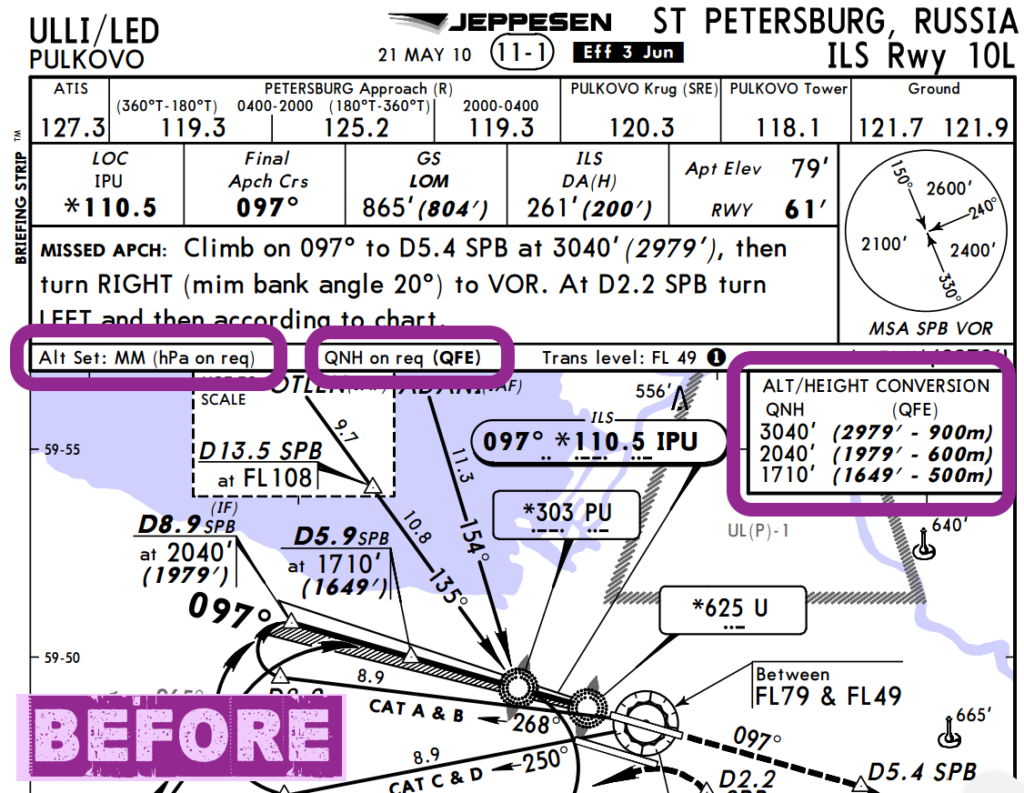
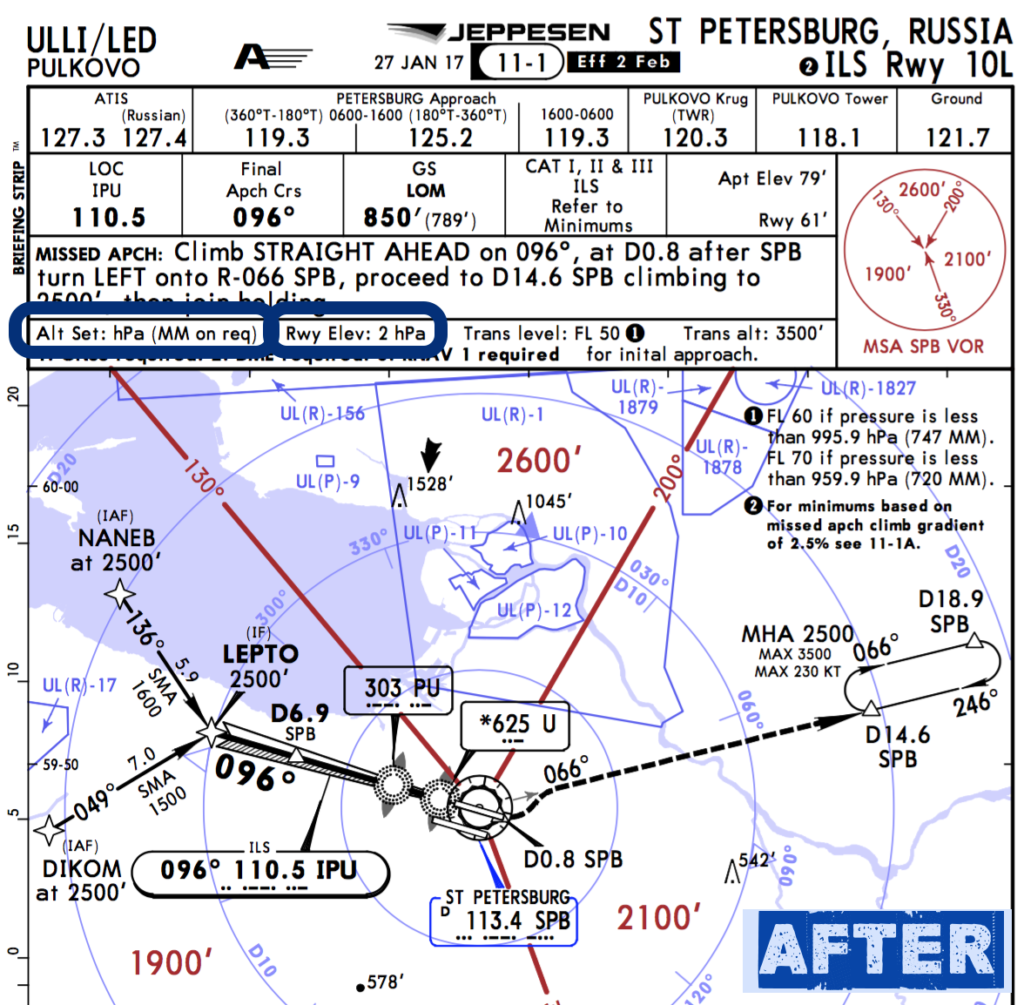
Quick example for ULLI ILS 10L, so you get the idea:

  • The ALT/HEIGHT conversion box is gone
  • The “Alt Set” or Altimeter Setting box shows hPA (Hectopascals) instead of MM (millimeters), which means a QNH-based approach
  • Previously charts showed QFE in bold which meant that was the preferred altimeter setting, now it’s QNH.


References:


UZZZ Russia FIR’s 2017 Operational Changes

Because there are about 6000 Russian FIRs, we don’t have a page for each. All Russian updates will appear here.

Feb 22nd, 2017 Russia is finally transitioning to QNH. Check this article.


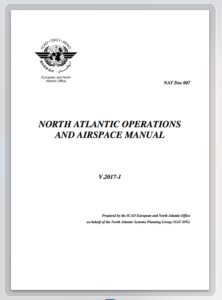
2017 Edition: NAT Doc 007 2017 – North Atlantic Airspace and Operations Manual

The 2017 version of NAT Doc 007, North Atlantic Airspace and Operations Manual, was published in January 2017 by ICAO/NAT SPG.

Download the original document here (PDF, 5mB), and see also:


Feb 15th, 2017 In the first six weeks of 2017 there have been some important changes on the NAT/North Atlantic. These are published in the latest edition of NAT Doc 007, January 2017.

  • TCAS 7.1: From January 1st, 2017, TCAS 7.1 is required throughout the entire NAT region.
  • Cruising Level: Effective 2017, you no longer need to file an ICAO standard cruising level in NAT airspace.
  • Gross Nav Error:  is now defined as greater than 10nm (used to be 25nm)
  • Contingency Procedure: Published January 2017, a new turn-back (180) procedure is introduced – turn back to parallel previous track by 15nm.
  • Datalink Mandate Exemptions: Announced January 2017, new exemptions for Phase 2B of the Datalink mandate, which will start on December 7, 2017 (FL350-390). Exempt: Tango Routes, airspace north of 80N, and New York OCA.

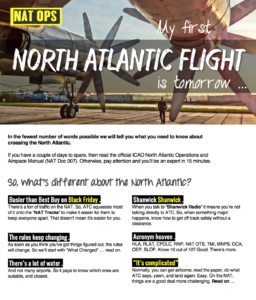
Feb 15th, 2017: FSB published the full NAT Crossing Guide “My first North Atlantic Flight is tomorrow“.

– What’s different about the NAT, changes in 2017, 2016, 2015, NAT Quick Map
– Routine Flight Example #1 – Brussels to JFK (up at 5.45am)
– Non Routine-Flights: No RVSM, No RNP4, No HF, 1 LRNS, No HLA, No ETOPS, No TCAS, No Datalink – what you can do and where you can go
Take a look.


Venezuela NOTAMs, where have you gone?

Last year, Venezuela partly stopped sending out Metars.

This year, they’ve gone one better, and stopped sending out NOTAMs entirely.

Anything with an SV** in front of it shouldn’t be high on your tech stop list at the moment, but for those that do need to operate to an airport in the country, or carry it as an alternate, this is definitely a problem.

How are you handling the outage? Comment below.


It’s 2017, where’s Zika now?

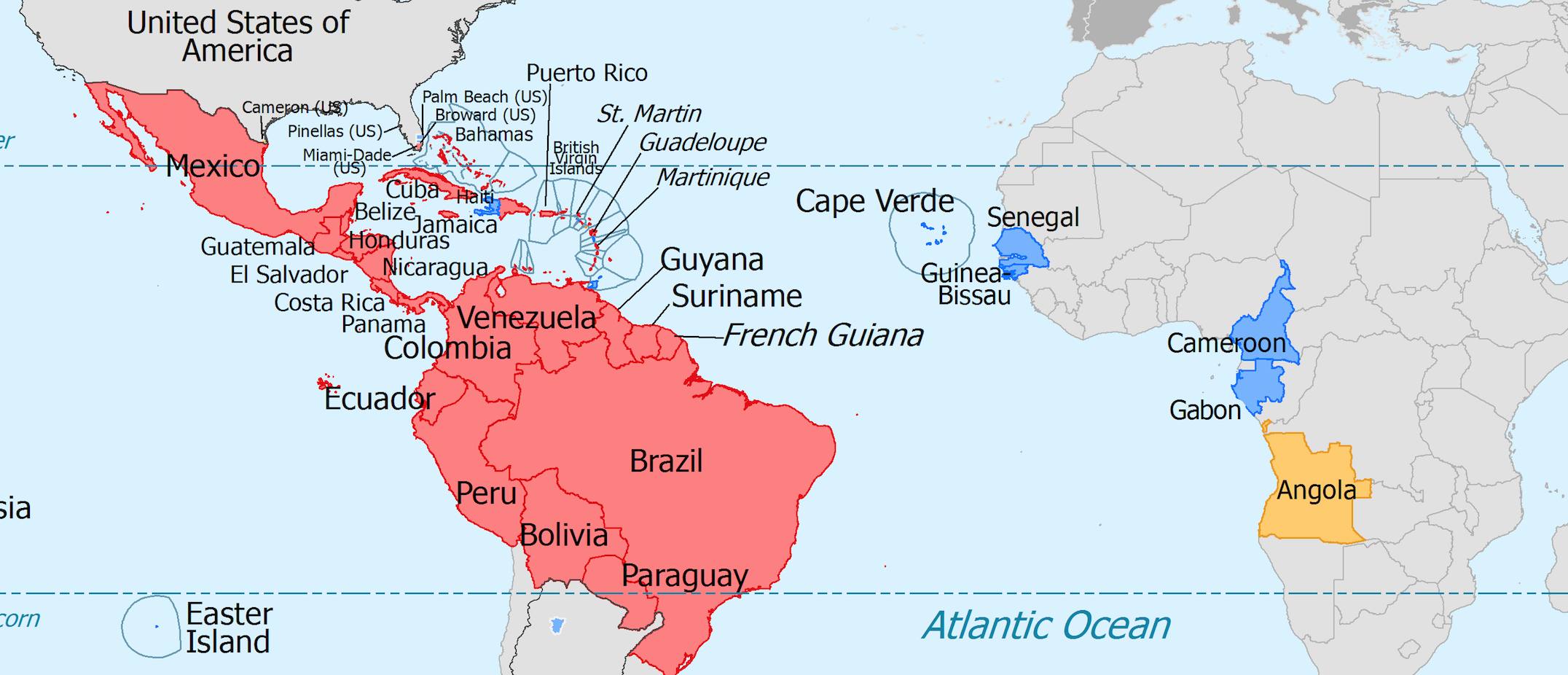
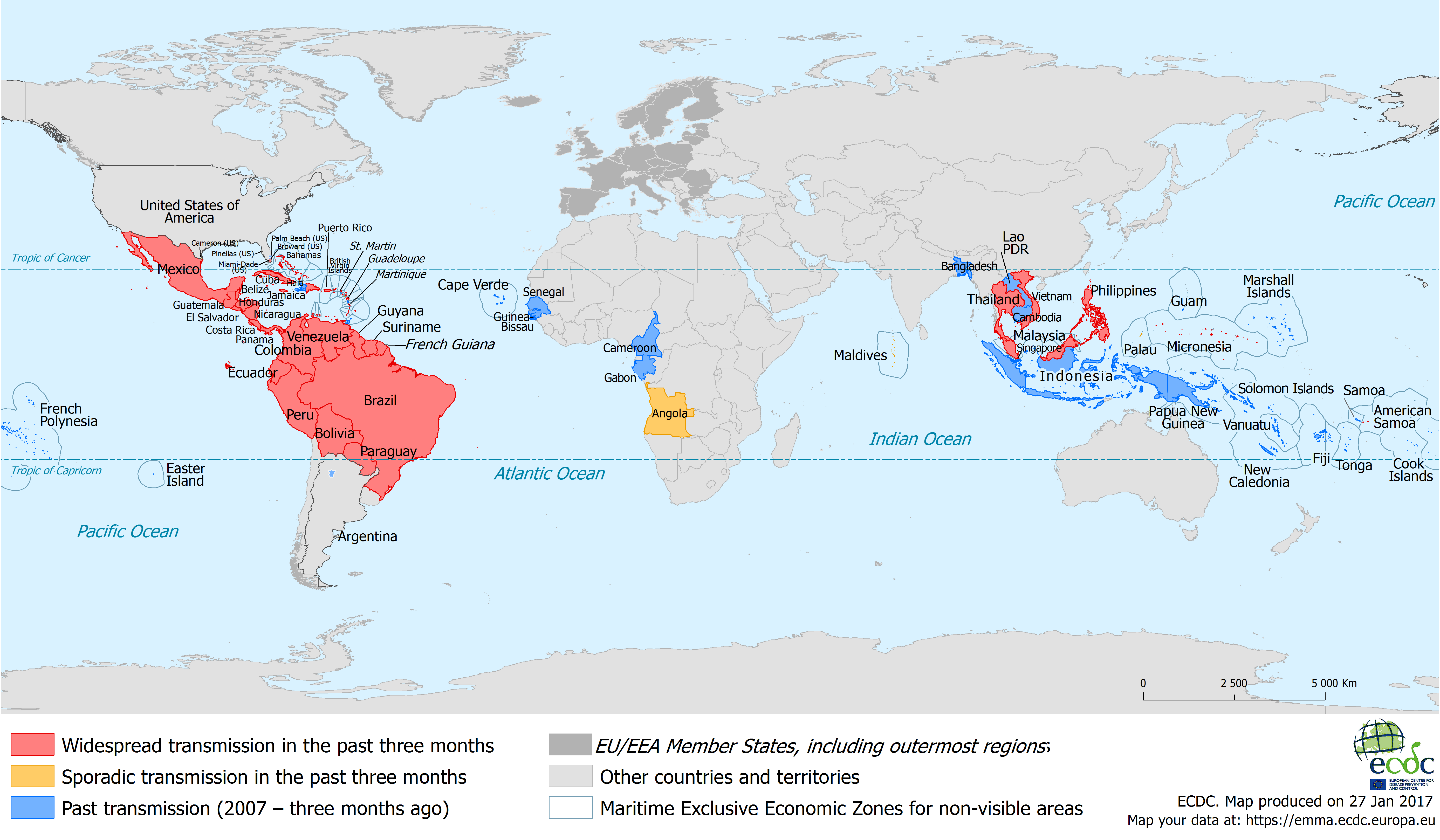
Feb 8th, 2017Zika is still very present.  The below map shows, in red, the ‘widespread transmission’ areas. Recent changes include Angola, where the first reported cases occurred in early January, and Florida, where the “Zika Zones” in Miami were cancelled on December 9th last.

Aircraft wise, no additional disinsection requirements specific to Zika have been reported recently. A full country list from the ECDC is shown below, with information current as of 01FEB2017.

A WHO report from Jan 20th says: “Overall, the global risk assessment has not changed. The Zika virus continues to spread geographically to areas where competent vectors are present. Although a decline in cases of Zika infection has been reported in some countries, or in some parts of countries, vigilance needs to remain high.”


Country list as at 01FEB2017.

American Samoa Widespread transmission
Angola Sporadic transmission
Anguilla Widespread transmission
Antigua and Barbuda Widespread transmission
Argentina Tucuman Historical Zika virus circulation
Aruba Widespread transmission
Bahamas Widespread transmission
​Bangladesh ​No
Barbados Widespread transmission
Belize Widespread transmission
Bolivia Widespread transmission
Bonaire Widespread transmission
Brazil Widespread transmission
British Virgin Islands (UK) Widespread transmission
Cape Verde No
Cayman Islands Widespread transmission
Colombia Widespread transmission
Costa Rica Widespread transmission
Cuba Widespread transmission
Curaçao Widespread transmission
Dominica No
Dominican Republic Widespread transmission
Ecuador Widespread transmission
El Salvador Widespread transmission
Fiji Historical Zika virus circulation
French Guiana Widespread transmission
Grenada Widespread transmission
Guadeloupe Widespread transmission
Guatemala Widespread transmission
Guinea-Bissau No
Guyana Widespread transmission
Haiti Historical Zika virus circulation
Honduras Widespread transmission
Indonesia No
Jamaica Widespread transmission
Malaysia Widespread transmission
Maldives Sporadic transmission
Martinique Widespread transmission
Mexico Widespread transmission
Micronesia, Federated States of Widespread transmission
Montserrat Sporadic transmission
New Caledonia No
Nicaragua Widespread transmission
Palau Sporadic transmission
Panama Widespread transmission
Paraguay Widespread transmission
Peru Widespread transmission
Philippines Widespread transmission
Puerto Rico Widespread transmission
Saba Historical Zika virus circulation
Saint Kitts and Nevis Widespread transmission
Saint Lucia Widespread transmission
Saint Martin Widespread transmission
Saint Vincent and the Grenadines Widespread transmission
Saint-Barthélemy Widespread transmission
Samoa No
Singapore Widespread transmission
Sint Eustatius Historical Zika virus circulation
Sint Maarten Widespread transmission
Solomon Islands No
Suriname Widespread transmission
Thailand Widespread transmission
Tonga No
Trinidad and Tobago No
Turks and Caicos Islands Widespread transmission
United States of America Miami-Dade Widespread transmission
United States of America Broward Historical Zika virus circulation
United States of America Palm Beach Historical Zika virus circulation
United States of America Cameron Sporadic transmission
US Virgin Islands Widespread transmission
Venezuela Widespread transmission
Vietnam Widespread transmission
United States of America Pinellas Historical Zika virus circulation


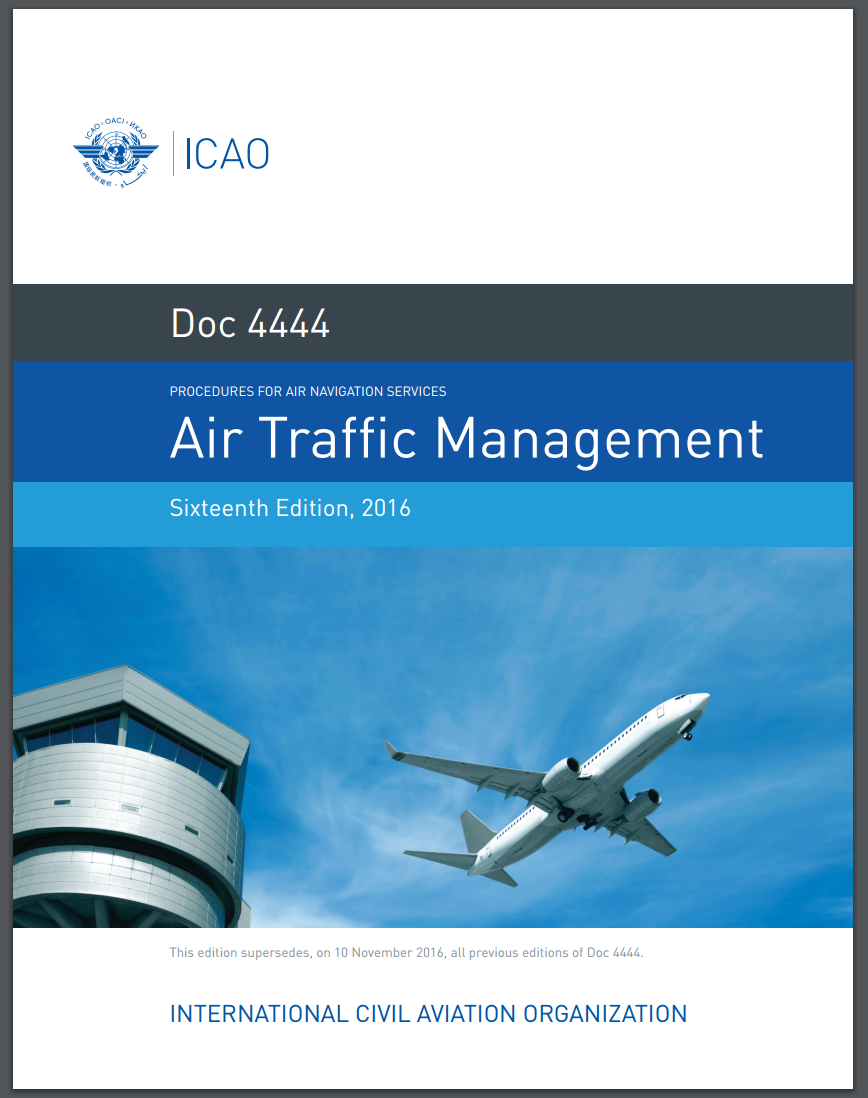
2016 16th Edition: ICAO Doc 4444 – PANS-ATM, Procedures for Navigation Services – Air Traffic Management

The 2016 version (16th Edition) of Doc 4444 (Officially “PANS-ATM, or Procedures for Navigation Services – Air Traffic Management) was published in November 2016 by ICAO.

This manual contains critical information for aircrews operating internationally.

Download the original document here (PDF, 6mB), and note:

  • The 16th edition incorporates the changes in Revisions 1-7 of the previous, 2007 edition.

Feb 15th, 2017 In the first six weeks of 2017 there have been some important changes on the NAT/North Atlantic. These are published in the latest edition of NAT Doc 007, January 2017.

  • TCAS 7.1: From January 1st, 2017, TCAS 7.1 is required throughout the entire NAT region.
  • Cruising Level: Effective 2017, you no longer need to file an ICAO standard cruising level in NAT airspace.
  • Gross Nav Error:  is now defined as greater than 10nm (used to be 25nm)
  • Contingency Procedure: Published January 2017, a new turn-back (180) procedure is introduced – turn back to parallel previous track by 15nm.
  • Datalink Mandate Exemptions: Announced January 2017, new exemptions for Phase 2B of the Datalink mandate, which will start on December 7, 2017 (FL350-390). Exempt: Tango Routes, airspace north of 80N, and New York OCA.

Feb 15th, 2017: FSB published the full NAT Crossing Guide “My first North Atlantic Flight is tomorrow“.

– What’s different about the NAT, changes in 2017, 2016, 2015, NAT Quick Map
– Routine Flight Example #1 – Brussels to JFK (up at 5.45am)
– Non Routine-Flights: No RVSM, No RNP4, No HF, 1 LRNS, No HLA, No ETOPS, No TCAS, No Datalink – what you can do and where you can go
Take a look.


OIIX Tehran FIR 2017 Operational Changes – Iran

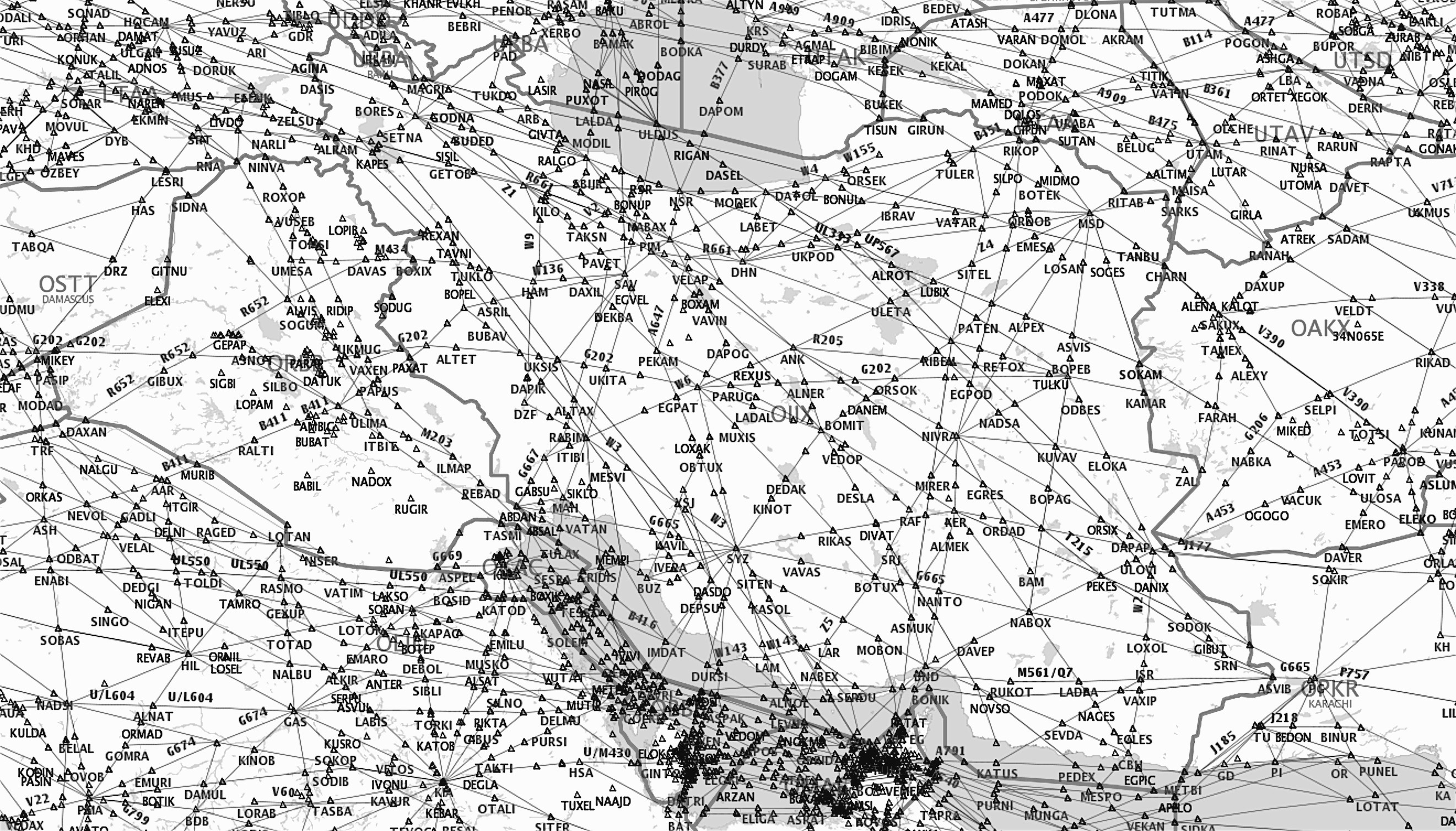
Feb 1st, 2017 Traffic is getting far busier through the Turkey-Iran FIR boundary (Europe-Asia main flight route). ALRAM is the new “corner” for avoiding Iraq. Here’s updated flight planning  guidance from Turkey for Jan-March 2017 – use these when planning your ATC route (refer LTAA A5716/16). We’ve translated the Notam a little for clarity, here’s the highlights:

1. SRT-ALRAM segment of UG8  – use FL330 or higher.
2. ULTED-ALRAM segment of UT36 – use FL330 or higher.
3. Going via UG8 or UT36, to leave Tehran FIR via ALRAM, at FL320 and below: Route EZS-UG81/UL124-VAN-BONAM-UMH. Check Iran AIP Sup 93/15 for more.
4. ALRAM-BAYIR segment UT888 minimum FL330. If entering LTAA/Ankara FIR via ALRAM lower than FL330, then route UMH-BONHAM-UI124/UG81-VAN-UI124-UG81-BAYIR.
5. VAN-BONAM segment of UG81 and UI124 can be used bidirectional below FL330.
6. ULTED-NINVA segment of UM688 – use FL330 or higher.
7. Entire R/UR21, SRT-KABAN segment of M/UM860, and ULSAB-KABAN segment of UT334 closed FL180-FL310.
8. UT332 – use FL330 or higher.
9. UT301 totally closed.
10. UT333 closed FL180-FL310 inclusive.


IOB Bulletins

31AUG 2016 OIZZ/Iran has approved the use of its airbases by Russian fighter aircraft; Russia has notified intention to launch missiles in the direction of Syria from the Caspian Sea fleet. The Russian Air Force has deployed six Tu-23M3 BACKFIRE bomber aircraft and multiple Su-34 FULLBACK strike fighter jets to Hamedan Air Base (OIHS/NUJ). FSBIOBXX

17AUG 2016 On August 16, Russian TU-22 bombers based in Hamedan, Iran, attacked targets in the Syrian towns of Deir Ezzour, Aleppo and Idlib. These were the first Russian airstrikes carried out from bases in Iran.

07DEC2015 German Authorities published a new Notam last week warning of a risk to flight for aircraft operating in the vicinity of OITT/Tabriz, OITL/Ardabil, and OIGG/Rasht. DFS, the German ATC agency, recommends overflying this general region at FL260 or higher. A6875/15.

13OCT 2015  On 06 OCT 15 the Russian military launched 26 Kalibr-class cruise missiles from 4 ships in the Caspian Sea at targets in Syria. These missiles were routed through the airspace of Azerbaijan, Iran, Iraq and Syria, causing concern as to the safety of international air traffic crossing the missiles trajectory. Full notice.


More stuff:

  • Iran Conflict Zone/Overflight risk warnings  at safeairspace.net


Immediate US Visa ban on 7 countries – Aircrew also

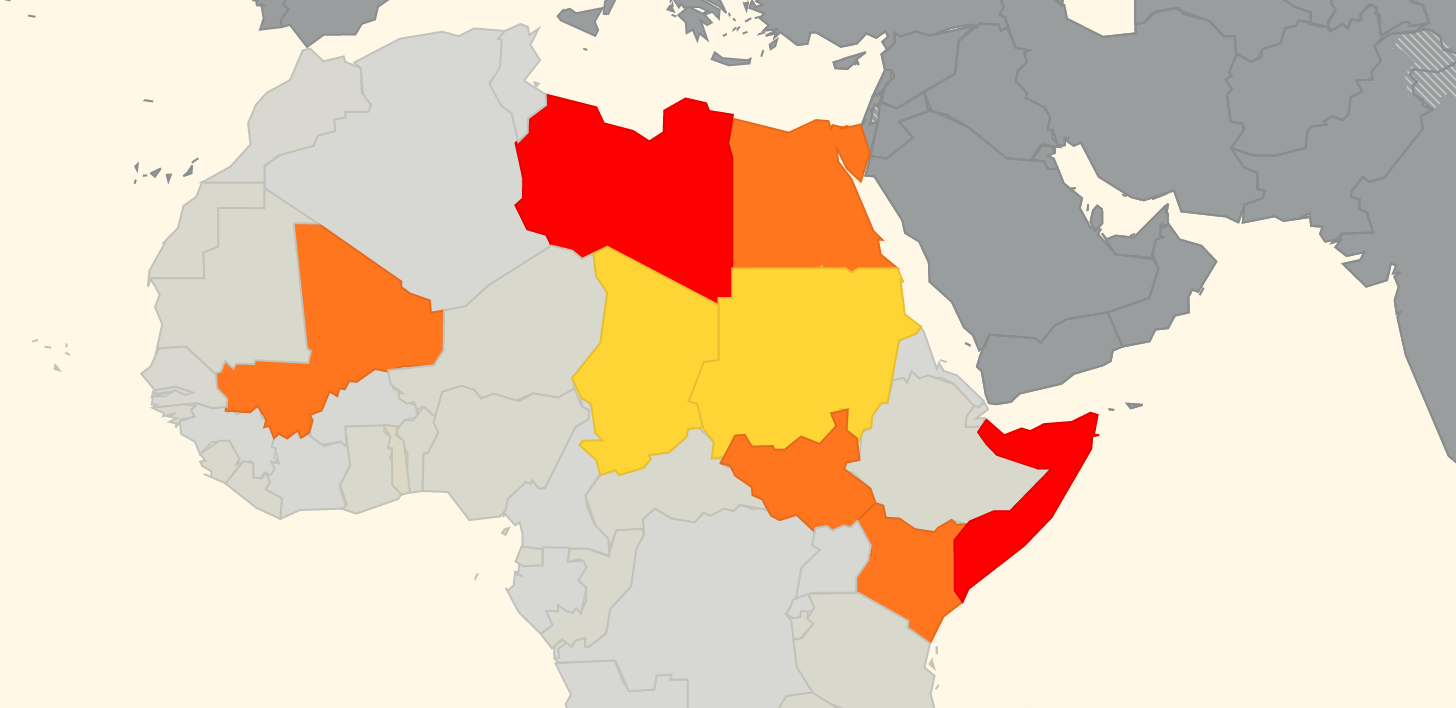
KZZZ/USA Now in force, is an immediate ban on US visas (and therefore US travel) for citizens from 7 countries: Iraq, Iran, Syria, Yemen, Sudan, Somalia and Libya. This is distinct from the Visa Waiver Program ban in effect since January 2016. The ban is posted for 90 days, but may last longer.

Admission will be refused to visitors with a passport issued by the following 7 countries: Iran, Iraq, Libya, Somalia, Sudan, Syria, and Yemen, and holding a valid immigrant or non-immigrant visa for the US.

This travel ban does not apply to:
– Lawful Permanent Residents (Green Card holders) of the USA who also hold a passport issued by one of the aforementioned countries
– Dual Nationals, holding and traveling with a valid passport issued by USA as well as a passport issued by one of the aforementioned countries
– Dual Nationals holding and traveling with a valid passport issued by a third country as well as a passport issued by one of the aforementioned countries
– Passengers with diplomatic visas, North Atlantic Treaty Organization visas, C-2 visas for travel to the United Nations and G-1 ,G-2 ,G-3 ,and G-4 visas

Aircrew
This affects aircrew as well, whether travelling on a C1/D visa, or whether on duty or off duty.

That’s the situation as we understand it, we’ll keep this page updated.


Updated airspace warnings for Egypt, South Sudan, North Korea

Germany has issued fresh warnings on the airspace of Egypt, South Sudan, and North Korea, in three separate Notams issued in the last week. Germany is one of four states that provides Aircraft Operators with conflict zone and risk advice. We have updated the SafeAirspace.net country information pages with the specifics.

The current Flight Service Bureau summary of each country follows:

Egypt Since the Arab Spring, Egypt’s stability and security situation as a state has declined. In October 2015 a Russian A321 was brought down over the Sinai peninsula by a bomb loaded at HESH/Sharm El Sheikh. In the aftermath, it was initially feared that a missile had caused the crash. Multiple warnings still in place from that fear. 19 May 2016 EgyptAir Flight MS804 from Paris to Cairo disappeared over the Mediterranean, cause unknown. GPS jamming reported at HECA/Cairo several times in 2016. High threat from terrorism in Egypt. Further attacks are likely. Not recommended as a tech stop. [Read full country information]

South Sudan Conflict Zone. South Sudanese Civil War since 2013. The security situation in Juba has been relatively calm since the July 2016 crisis. Daily reports of fighting throughout the rest of the country. The security situation is especially unstable in the Equatorias in the south. MANPADS risk to overflights. In addition, the South Sudanese army has declared intention to shoot down Aircraft without permits. Most Authority guidance recommends min FL260. We think FL300 is a better minimum for overflights. [Read full country information]

North Korea The level of tension on the Korean peninsula can change with little notice. Multiple missile launches in 2016, increasingly without prior notice to ICAO. The range of these has increased – previously safe airways B467 and G711 are now at risk. Over 1000 reports of GPS jamming issues reported by operators in the vicinity of the North/South Korean border. SFAR79 prevents US operators from operating west of 132E, other Authorities restrict operations east of that line. [Read full country information]


References:


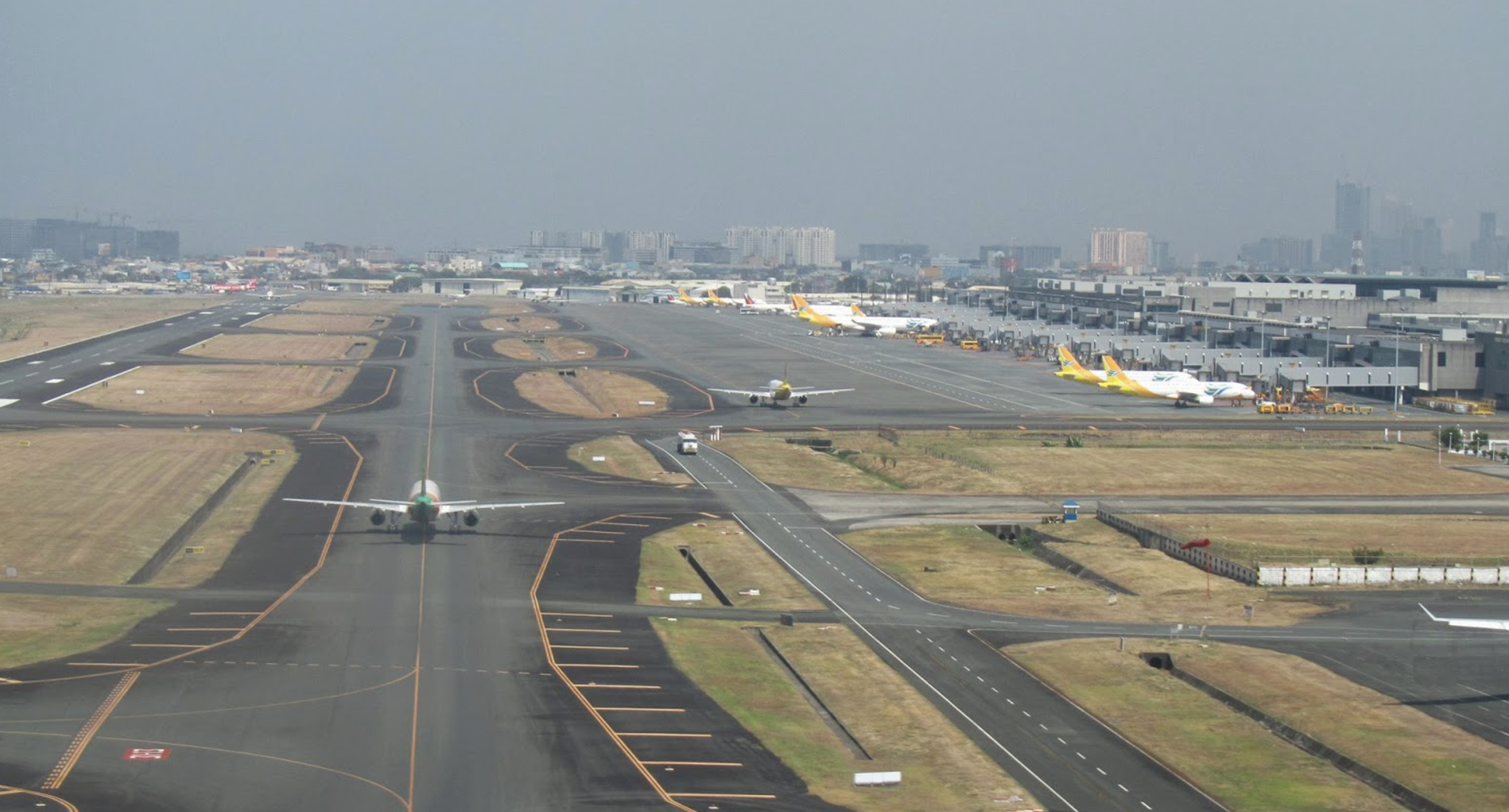
Manila’s GA ban-plan may be softening – RPLL

RPLL/Manila is not moving as quickly towards a complete ban of non-scheduled and General Aviation traffic as feared. This is good news for International Operators.

Background: The airport is heavily congested, it’s a big deal in the Philippines, and the President himself started the action to fix things.

The original plan  was that February 2017 would see all GA traffic moved to other airports (aka RPLC/Clark or RPLB/Subic Bay). For international operators, neither of these are great alternatives. Clark can be a 3 hour drive to Manila, and Subic Bay is further again, with about a 4 hour drive.

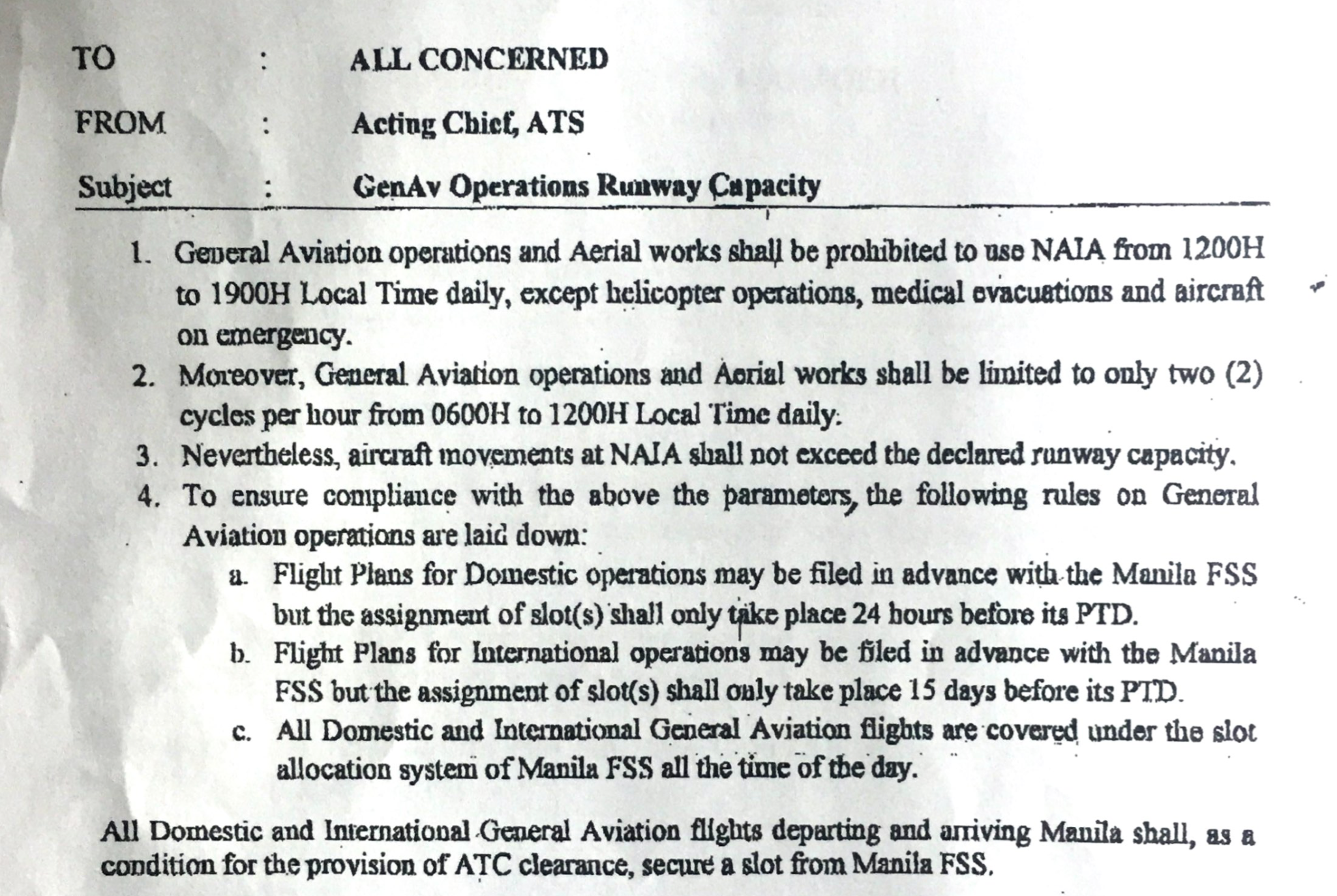
However, the original threat of moving everything that isn’t line traffic out of RPLL might have dissipated. The NAIA Airport Company has now introduced some hefty slot restrictions for GA:

  • 2 GA movements from 0600-1200 local time
  • No GA movements between 1200-1900
  • Slots will be assigned only 24 hours in advance for domestic flights
  • Slots will be assigned maximum 15 days in advance for international flights

The word on the ground (as of January 25th) from the local handling agents, is that the Airport Authority is evaluating whether this might be a sufficient restriction for GA. It seems that they don’t want to exclude GA or non-scheduled flights entirely. We’ll keep you posted.


Boeing 767 shot on approach in Brazil

Details still emerging: this page will be updated. Report any information to report@safeairspace.net.

25 JAN – Information updated.

At Flight Service Bureau we rarely report on individual aircraft incidents, because the impact to other operators in International Flight Operations  is very minimal.  This case is different.

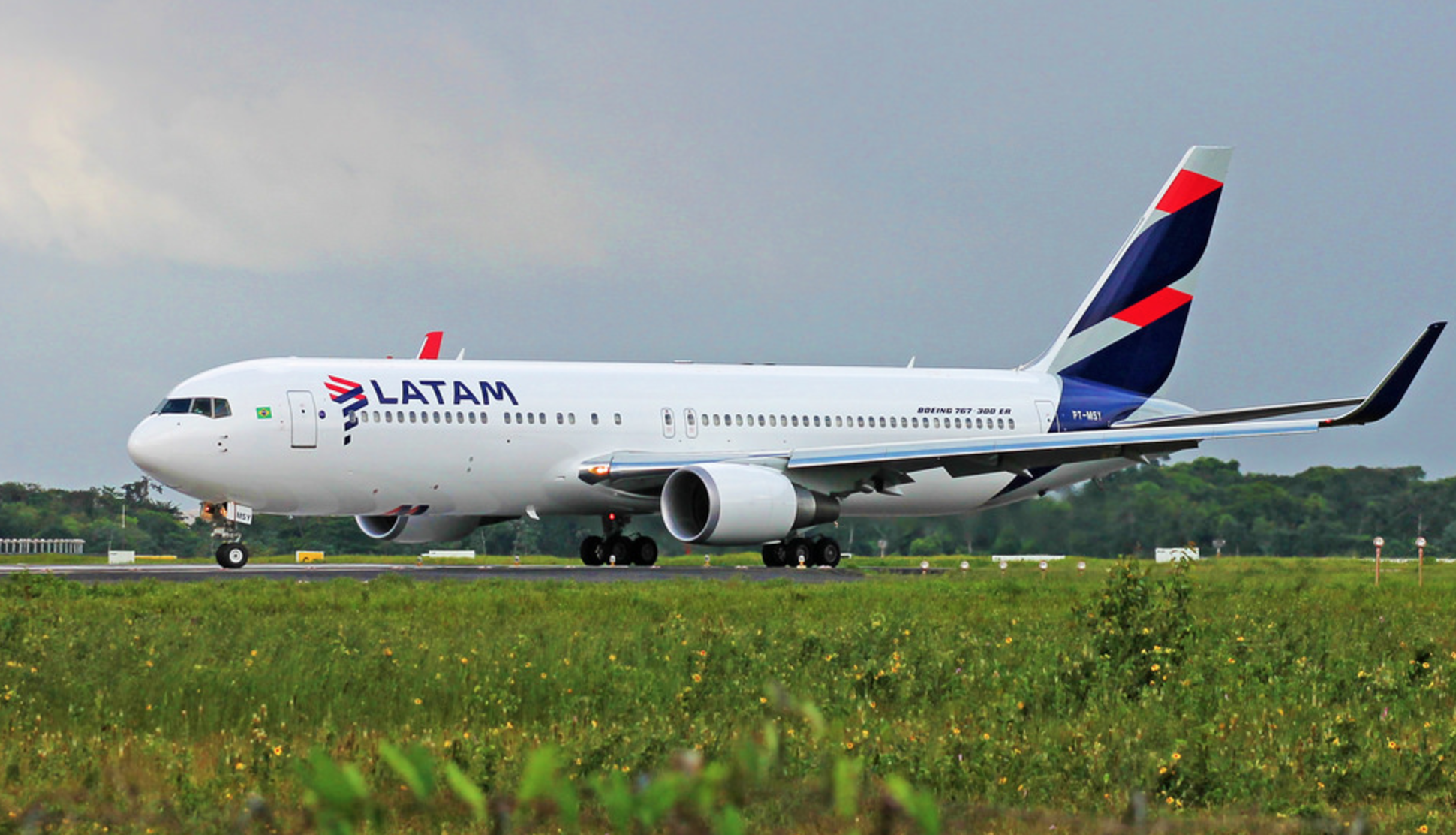
We received an OPSGROUP member report of an incident that occurred around January 15th, to a B767-300 operated by Latam Airlines, on approach.

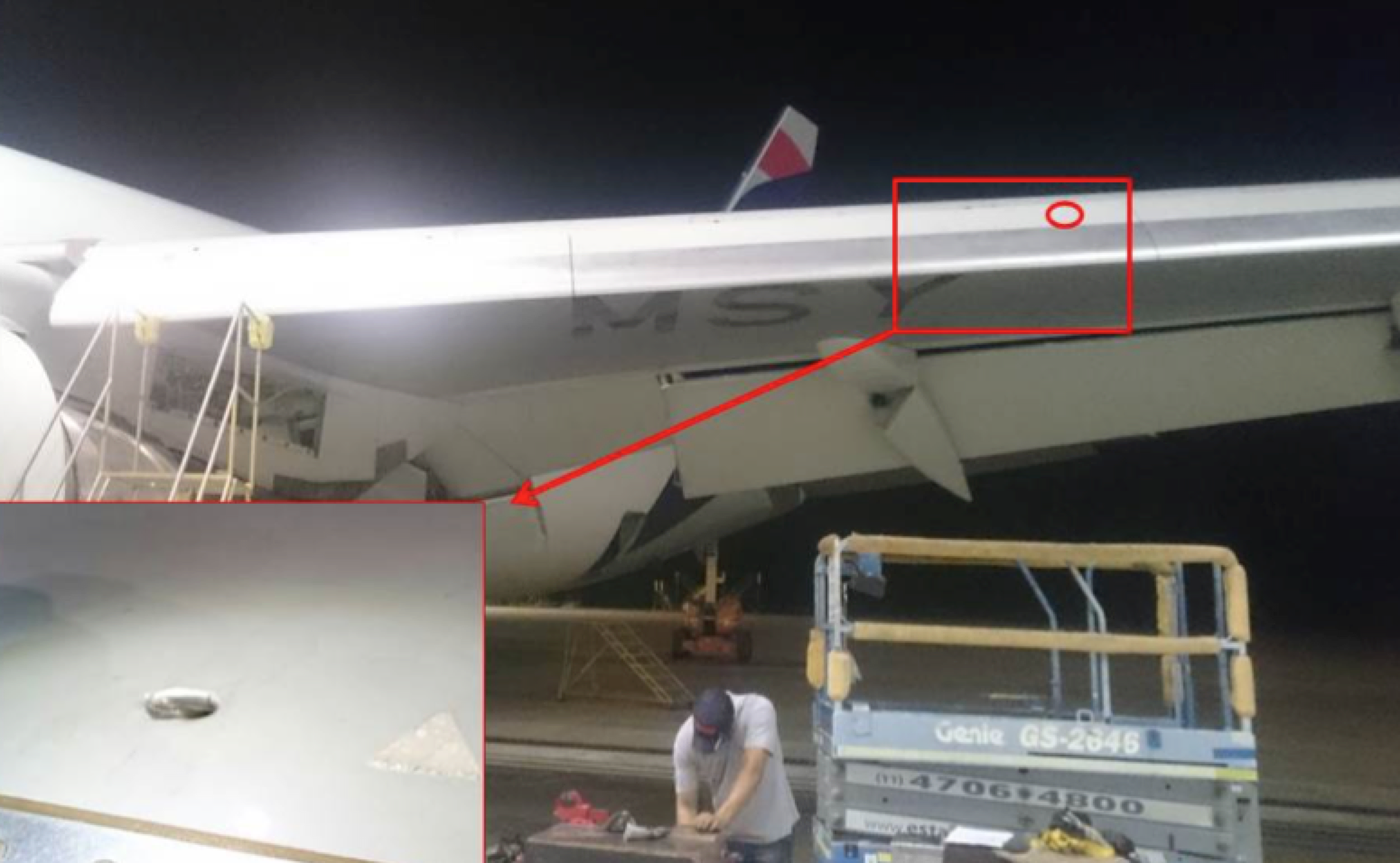
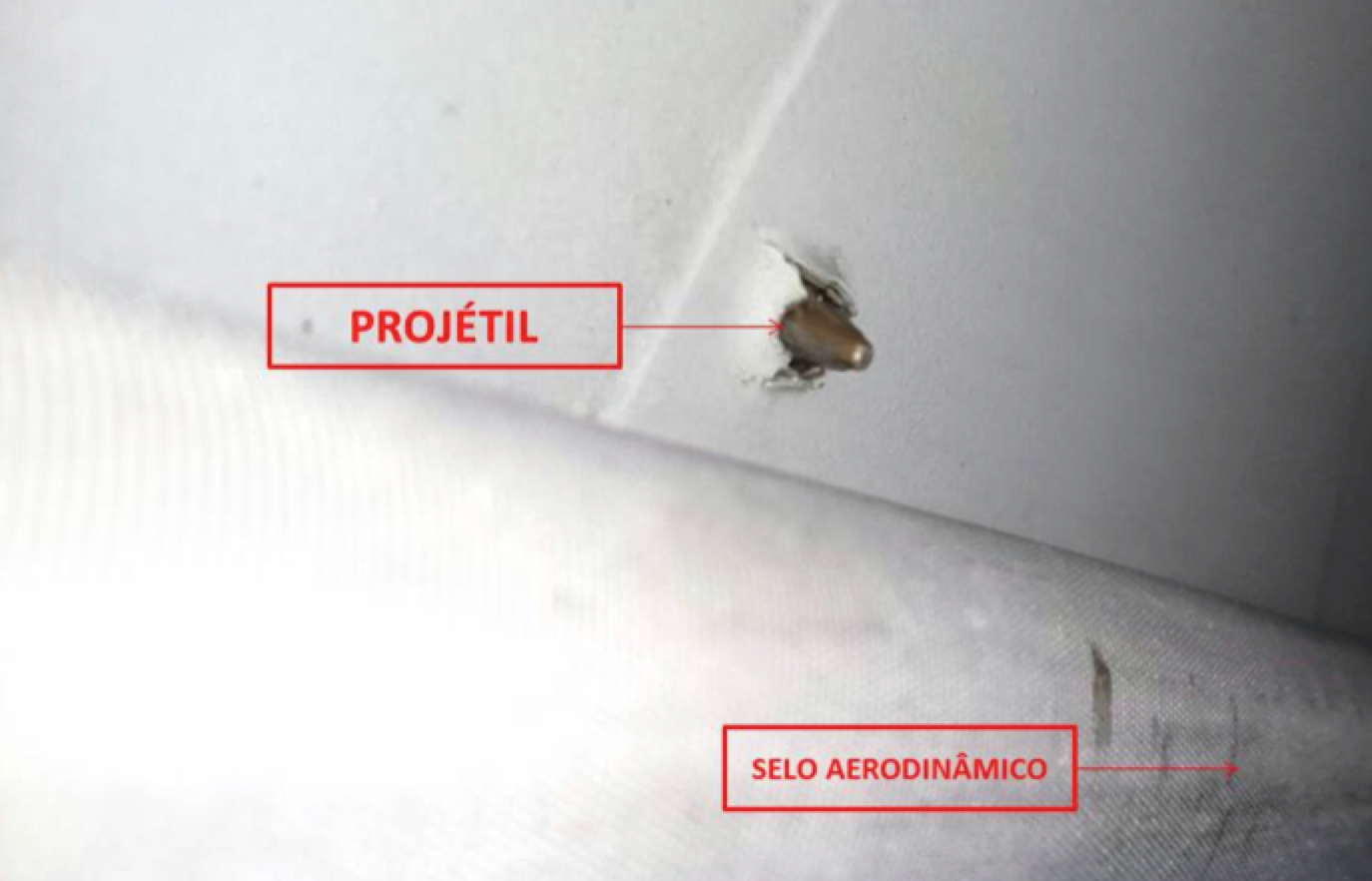
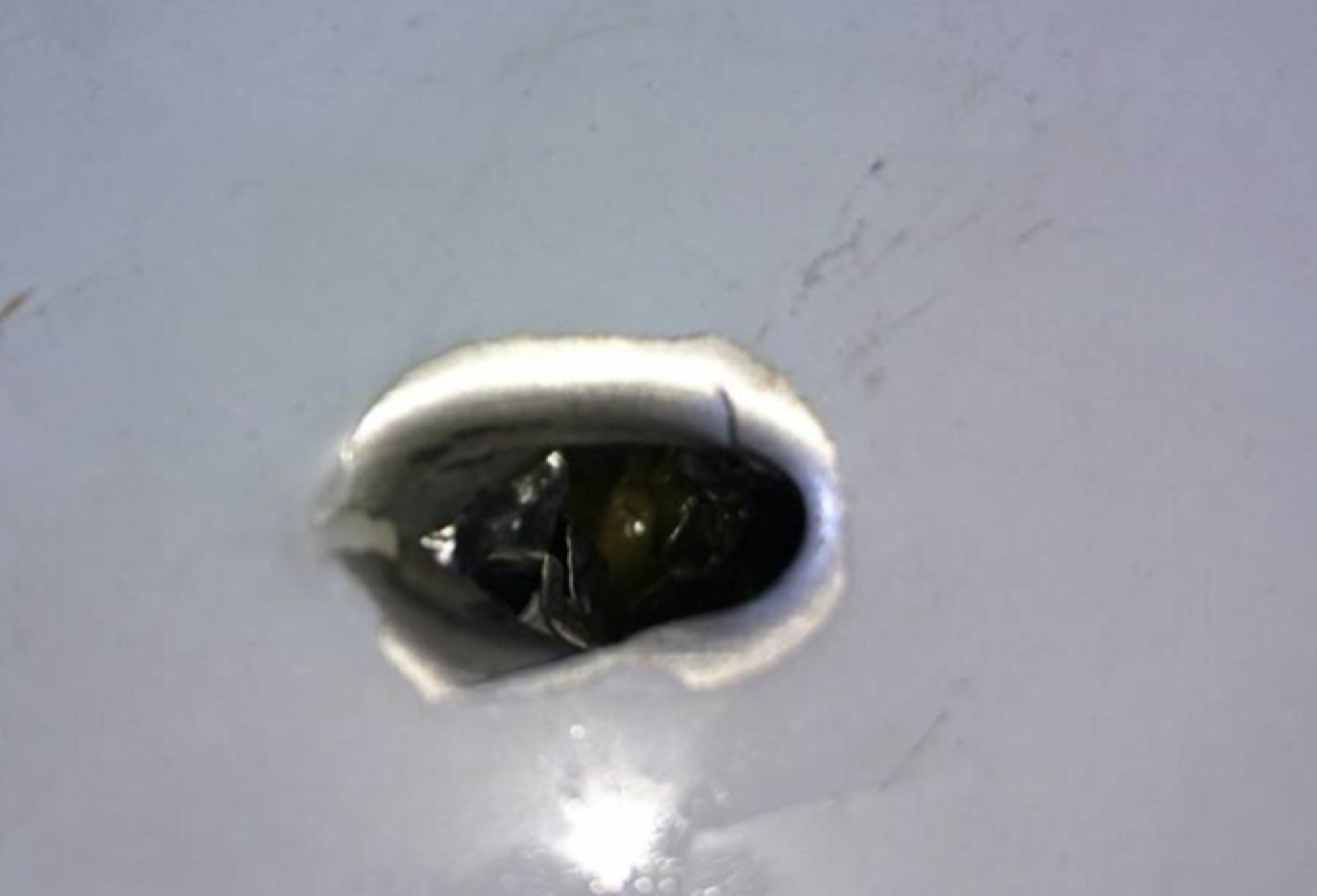
Our initial report indicated that the 767 was fired upon on approach to Runway 15 at SBGL/GIG – the main Rio de Janeiro airport. A 7.62mm bullet lodged in the No. 3 slat, on the left wing. Pictures are below. Subsequent reports from other sources suggest that it may have occured in Sao Paolo.

The specific location in Brazil is therefore uncertain, but anecdotal evidence suggests that the aircraft overflew a favela on approach, and that Rio remains the most likely candidate for the location.

Rio Airport has however asked us to publish this statement:

RIOgaleão, concessionaire responsible for the operation of Tom Jobim International Airport, in Rio de Janeiro (Brazil), informs that there has not been any record of an aircraft hit by a bullet within the airport site. The airline’s press office, in a statement, informed to the Brazilian press that it has activated the national and aviation security agencies. The public agencies investigate the case to identify where the incident occurred.

An entry for Brazil with the full report has been added to SafeAirspace.net, our shared repository on threats to aviation including Conflict Zones, Airspace Security, and Overflight risk.


Update:

19JAN: Rio Airport has asked us to publish this statement:

RIOgaleão, concessionaire responsible for the operation of Tom Jobim International Airport, in Rio de Janeiro (Brazil), informs that there has not been any record of an aircraft hit by a bullet within the airport site. The airline’s press office, in a statement, informed to the Brazilian press that it has activated the national and aviation security agencies. The public agencies investigate the case to identify where the incident occurred.


References: