ATC, CAA, Airports, Rulemakers – join our OPSGROUP Slack community
OPSGROUP is an international community of Pilots, Dispatchers, Controllers and Aircraft Operators. We have 4000 members across 90 countries, responsible for managing and operating Airline, Corporate, Private and Military flights. Members share information and work together to make International Flight Operations easier.

Every day in different channels in slack – an app that allows live discussion –  there are discussions on the latest rule changes, airspace rules, airport , big weather, incidents, events – anything that might make your day more interesting, especially if you don’t know about it.
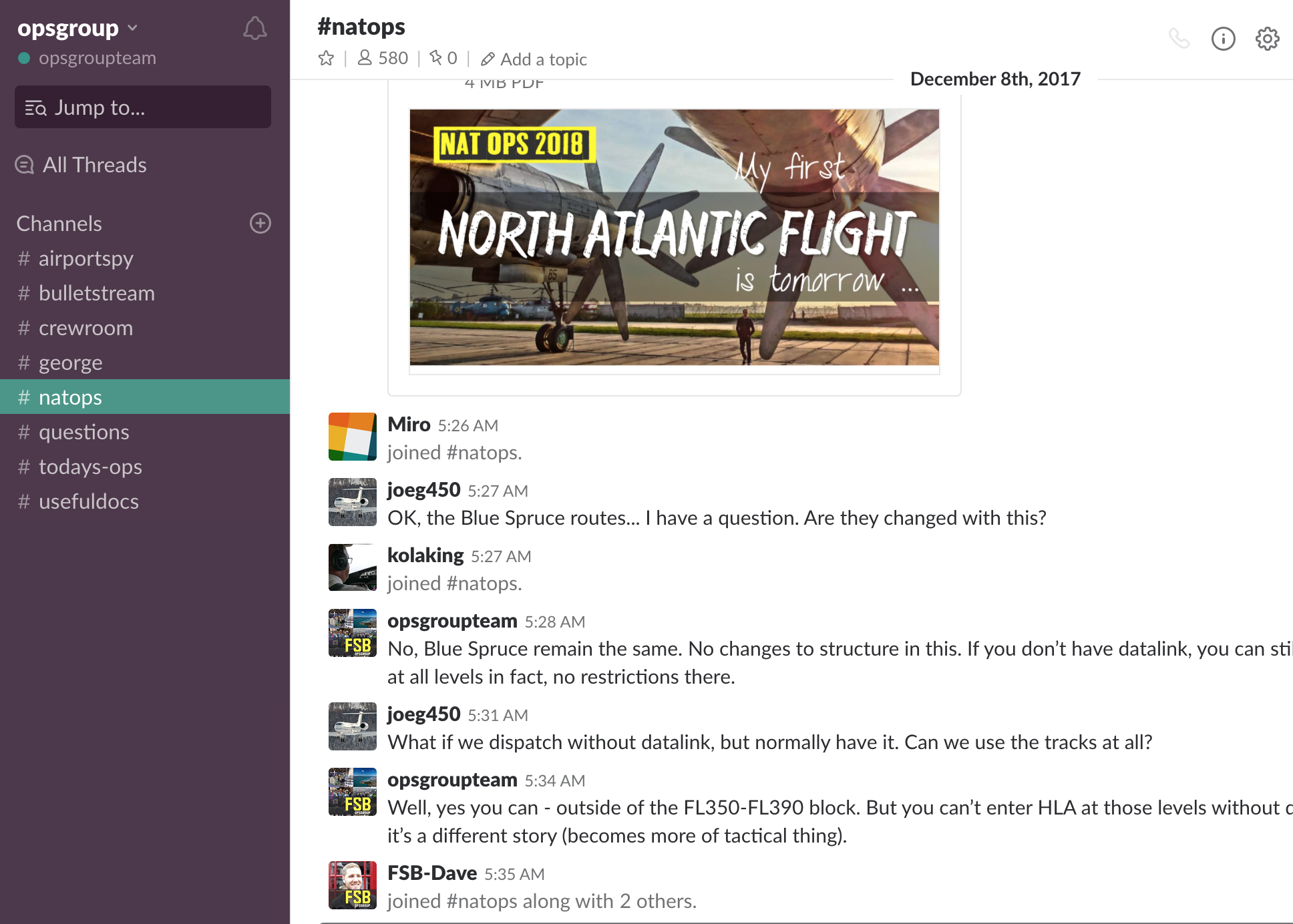
We have multiple channels discussion International Operations across the world.

So, to make our discussions better – and get more input from the official side – we are inviting controllers – Tower, Approach, Enroute, CAA’s, FAA’s, Airport operators – to join and be there to see what operators want to know from you.

We are inviting YOU to join the discussion. If you’d like to connect directly with the pilots and operators using your airspace, airport, or trying their best to follow your new rules, then you will find being part of the Slack discussion useful. And in turn, our members will be most happy to have you on board to ask questions now and again.

How it works

You’ll get a login that matches what you do, so it’s easy for group members to see who you are. If you’re a controller at Shanwick, then we might use @shanwick_atc, or if you’re the Ops manager for Sydney airport, then you’ll become @SYDAirport. If you’re the second person there, then we’ll call you @SYDAirport-Tim, or whatever. If you’re at Eurocontrol, then maybe @eurocontrol_ops. If you’re at the Slovenian CAA, then @SloveniaCAA. And so on.

You can view slack in your browser, download the App for your phone, or one for your Mac or PC. Either way, you’ll get immediate access to our group of 4000+ members, and can interact with them.

Win Win

You get to talk to your airspace users, customers, and rule-followers, and see what’s going on. And they get to talk to you. It’s an informal environment, so we don’t expect any official responses or need to use bureau-speak. Just help folks along their way. There’s no charge to join in this way – we are happy to have your input and knowledge!

OPSGROUP

There is no obligation to join the group as full member, but you are most welcome to – you’ll get a full weekly International Ops Briefing, daily updates, access to Airport Spy, Guides, Lowdowns, Charts – for the full rundown on that click here.

Invitation

Joining our slack discussion group is by invitation from the FSB Team. If you haven’t received an invite, pop your details in here and we’ll let you know.

[ninja_form id=5]



OPSGROUP 2018 is open – new members welcome – 20 reasons to join

Opsgroup2018 is open to new members.

Read OPSGROUP: The Power of the Group – and then see below for more reasons to join us.

01  You will be smarter and saferOPSGROUP makes International Flight Ops easier.
02  Safe Airspace. Learning lessons from MH17, we share risk information, with a big map.
03  Change. It’s not just a constant, it’s accelerating. OPSGROUP tells you the critical stuff.
04  Members. There are 4,000 of us – each a pilot, dispatcher, controller, or ops person.
05  Full Bulletin. Once a week, all the International Ops changes in one simple bulletin.
06  Ask Anything. Every intl ops question you have, answered – by the group, or the team.
07  Bulletstream. Daily news briefing in bullet point format – just the critical ones.
08  Guides. All the FSB regional guides, like our NAT Ops guide, free.
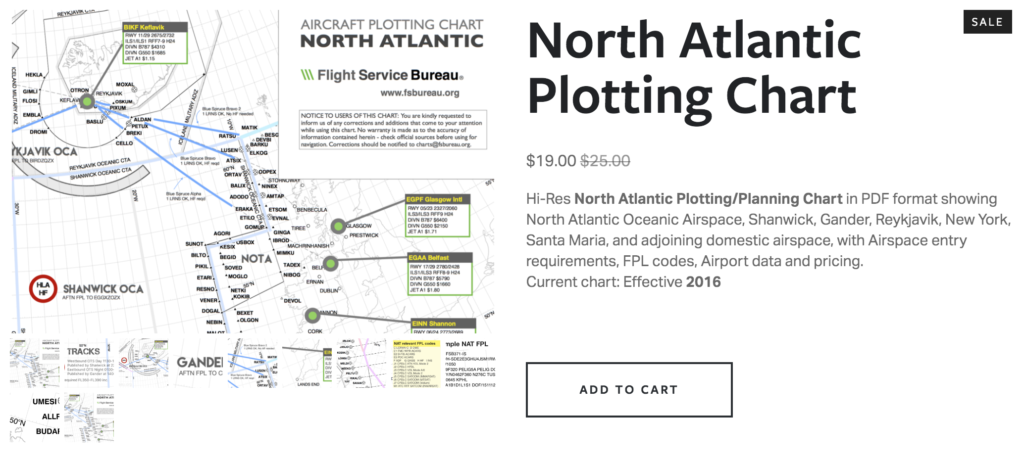
09  Charts. The FSB NAT Plotting Chart, free – and others as we make them.
10  Slack. Talk live with us and other members on #todaysops.
11  George. We built a bot. He’s George, and he answers your Ops questions.
12  Lowdowns. Country guides for the most popular tech stop and ad-hoc airports.
13  Infographics. Making new stuff easier to understand, like the Circle of Change.
14  Dashboard. All the OPSGROUP tools live here – you get your own login.
15  Airport Spy. We sneakily share our reports on ATC, Handling, and Airports worldwide.
16  It’s not all AIC’s and Notams. We do fun stuff too. We promise to keep it interesting.
17  Plain English. We translate the Fedspeak into words we all know.
18  Email Alerts when big things are going down – ATC strikes, severe weather, incidents.
19  Discount in the Flight Service Store – 15% off for members.
20  The Future. We’re just getting started – OPSGROUP is 20 months old. Help us grow!


Choose a plan and join OPSGROUP


2018 Edition: New NAT Doc 007 2018 – North Atlantic Airspace and Operations Manual

For the latest changes and updates on the North Atlantic, including our most recent Guides and Charts, use our NAT reference page at flightservicebureau.org/NAT.

2018 version – NAT Doc 007

The 2018 version of NAT Doc 007, North Atlantic Airspace and Operations Manual, was published in January 2018 by ICAO/NAT SPG.

Download the original document here (PDF, 5mB), and see also:


2018
 is off to a flying start again with NAT changes – these are the latest important changes. These are also published in the latest edition of NAT Doc 007, January 2018.

  • PBCS From March 29th 2018, PBCS is a requirement for the NAT Tracks between FL350-390 – RCP240 and RSP180. Read more about PBCS in our article.
  • RLAT  From January 4th 2018, Shanwick and Gander increase the number of RLAT tracks – most tracks between FL350-390 will now be RLAT – 25nm separation between them.

And there will be more! Keep an eye on the FSB NAT Changes page, we’ll keep it updated.


Feb 2nd, 2018: FSB updated the full NAT Crossing Guide “My first North Atlantic Flight is tomorrow“.

– What’s different about the NAT, changes in 2018, 2017, 2016, 2015, NAT Quick Map
– Routine Flight Example #1 – Brussels to JFK (up at 5.45am)
– Non Routine-Flights: No RVSM, No RNP4, No HF, 1 LRNS, No HLA, No ETOPS, No TCAS, No Datalink – what you can do and where you can go
Take a look.


Emirates aircraft intercepted, Qatar complains to UN

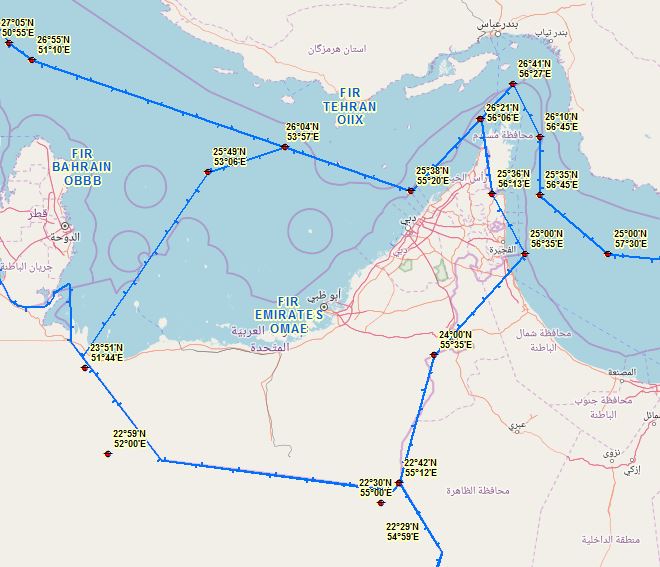
OTZZ/Qatar The UAE allege that on Jan 15, Qatari fighter jets intercepted an Emirates aircraft in international waters just north of the tip of Qatar. Qatar denies the claim.

Following the incident, the UAE CAA published a safety alert, warning about “unannounced and hazardous military activities within Bahrain FIR in airways UP699 and P699”, which they consider to be “a potential hazard to the safety of flight.”

Qatar have filed a complaint of their own with the UN, claiming that UAE military aircraft have repeatedly violated their airspace during the ongoing diplomatic crisis between the Gulf states.

All this complaining on both sides is much more likely to be political wrangling, rather than any kind of genuine airspace safety issue.


Missile attack on OERK/Riyadh was “warning shot”, other airports now targets

Update: Yemen-based Houthi forces fired another missile into Saudi Arabia on Dec 19. Saudi Arabia claim they intercepted it south of the capital Riyadh, with no damage or casualties reported, though a loud explosion was heard throughout the capital. The Houthi forces claim they were targeting a palace in southern Riyadh. This follows the previous Houthi missile attack on OERK/Riyadh Airport on Nov 4th, when they said: “the missile that targeted King Khalid airport was a warning shot and we warn all companies to prevent landing of their planes in the UAE and Saudi Arabia airports”. A Yemeni Army spokesman has said that the November 4 missile attack on OERK was a “warning shot”.

That missile was launched from rebel territory in Yemen, specifically targeting OERK/Riyadh King Khalid airport. Although most mainstream media carried the “missile was intercepted” story, we’re not sure that this is the case – even if it was, parts of it did fall on airport property and there was a visible explosion.

The spokesman said “the missile that targeted King Khalid airport was a warning shot and we warn all companies to prevent landing of their planes in the UAE and Saudi Arabia airports”.

Given that the Yemeni rebels have demonstrated their capability of reaching their target, there is some credibility to the threat.

Operators should consider this in operations to OE** and OM** airports.

At present, there is no indication of increased threat to overflight of Saudi or UAE airspace.

On Monday, the Saudi Arabia coalition closed all air, sea and land borders with Yemen after the missile strike on Riyadh on Nov 4, effectively closing all airports in Yemen. Yemenia airlines said that the coalition, which controls Yemen’s airspace, had declined it permission to fly out of Aden and Seiyun, the only two remaining functioning airports. OYSN/Sanaa has been closed since August 2016.

Also, all UN humanitarian flights to Yemen, one of the few international operators, have been cancelled after flights were no longer given clearance from the Saudi-led coalition to land in the country.

SCATANA remains active in the southwestern portion of the Jeddah FIR, no new Notams have been issued in relation to the last few days.

For further:

  • Monitor Saudi Arabia page on SafeAirspace
  • Monitor OPSGROUP member updates
  • Talk to us at team@fsbureau.org


International airlines resume Iraq overflights, airspace reopens today

Emirates will be the first international airline to resume overflights of Iraq, with the first flights through the Baghdad FIR expected today, Monday Nov 27. According to FSB sources, effective 0001Z this morning the GCAA will authorize UAE based airlines to use this airspace, after several years of restrictions. Emirates anticipates that about 150 flights a day will now route via Iraq, rather than having to take longer routes via Saudi Arabia or Iran.

This is the first in several steps we expect will lead to almost full resumption of overflights over Iraq, meaning operators will have shorter routes through the Middle East available once again.

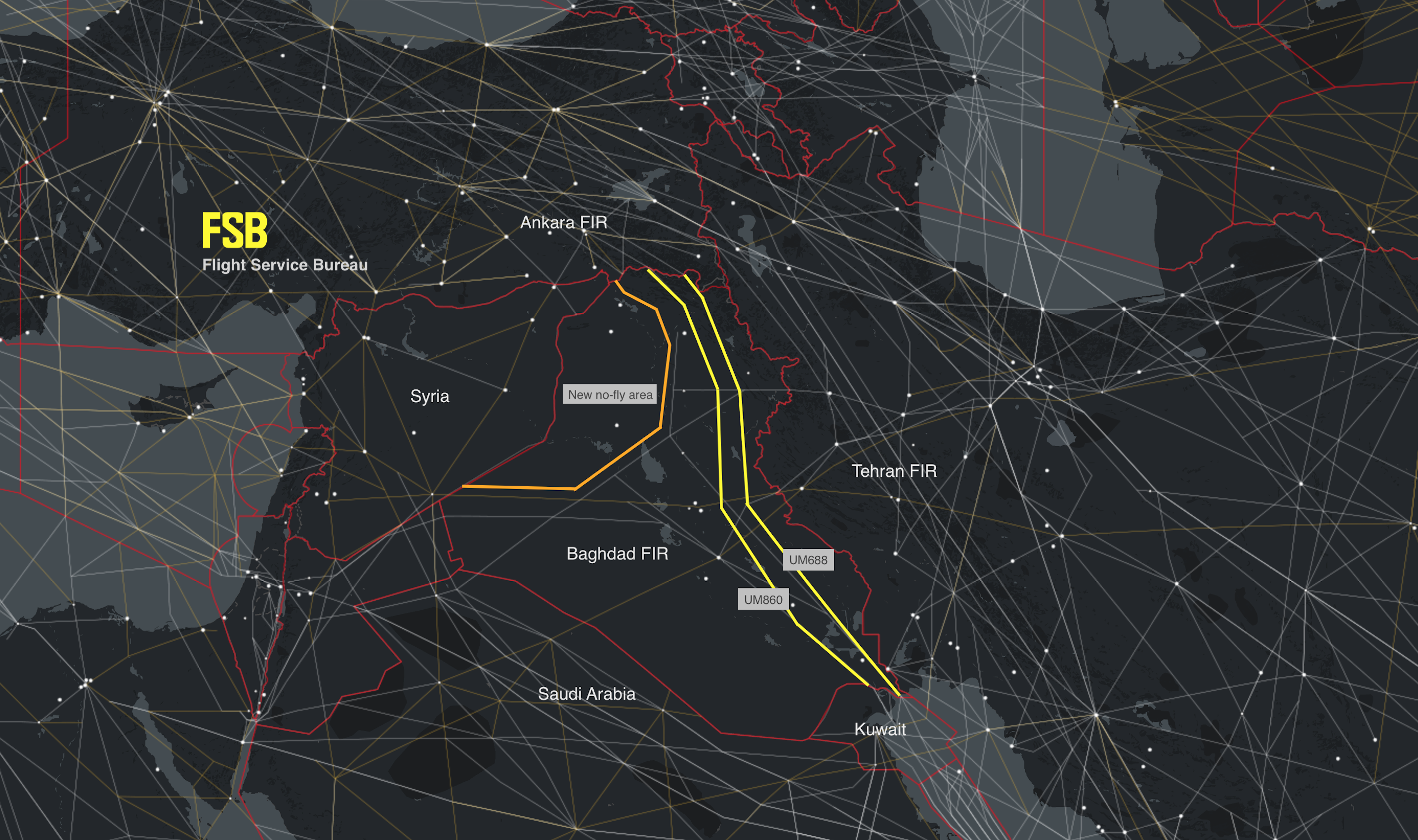
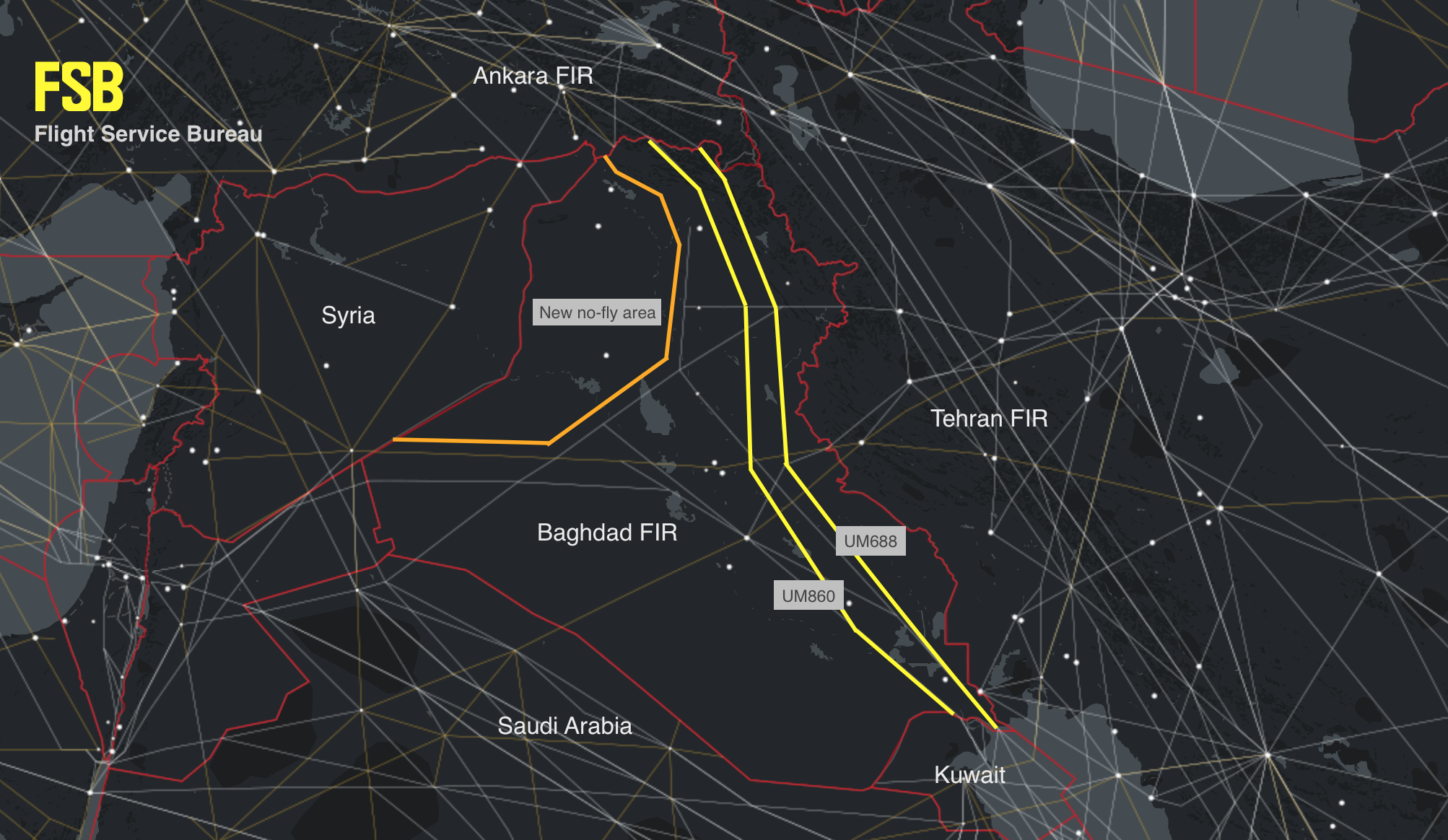
The next step will be for the FAA to authorise US carriers to overfly Iraq – most likely at FL260 or above. That approval was initially slated for the end of October, but was held back after events on the ground posed a security concern for UM860 and UM688 – the two main routes through the Baghdad FIR to Europe and vv.

The FAA were about to hit ‘publish’ on a Notam  which would have enabled US airlines to start overflying Iraq again. The text of this Notam included:

  • An amendment to the existing Iraq restriction
  • An authorisation for US airlines and operators to overfly Iraq at or above FL260

But then, a military operation by Iraqi forces to take control of Kirkuk from the Kurds the same day, created concern as to overflight safety. Kirkuk sits pretty much underneath the UM860 airway on the map above.

For now, only UAE carriers have been given the green light for Iraq. Other operators and authorities are likely to follow suit soon.

See also:


Overflight risk – Radioactive Russian airspace

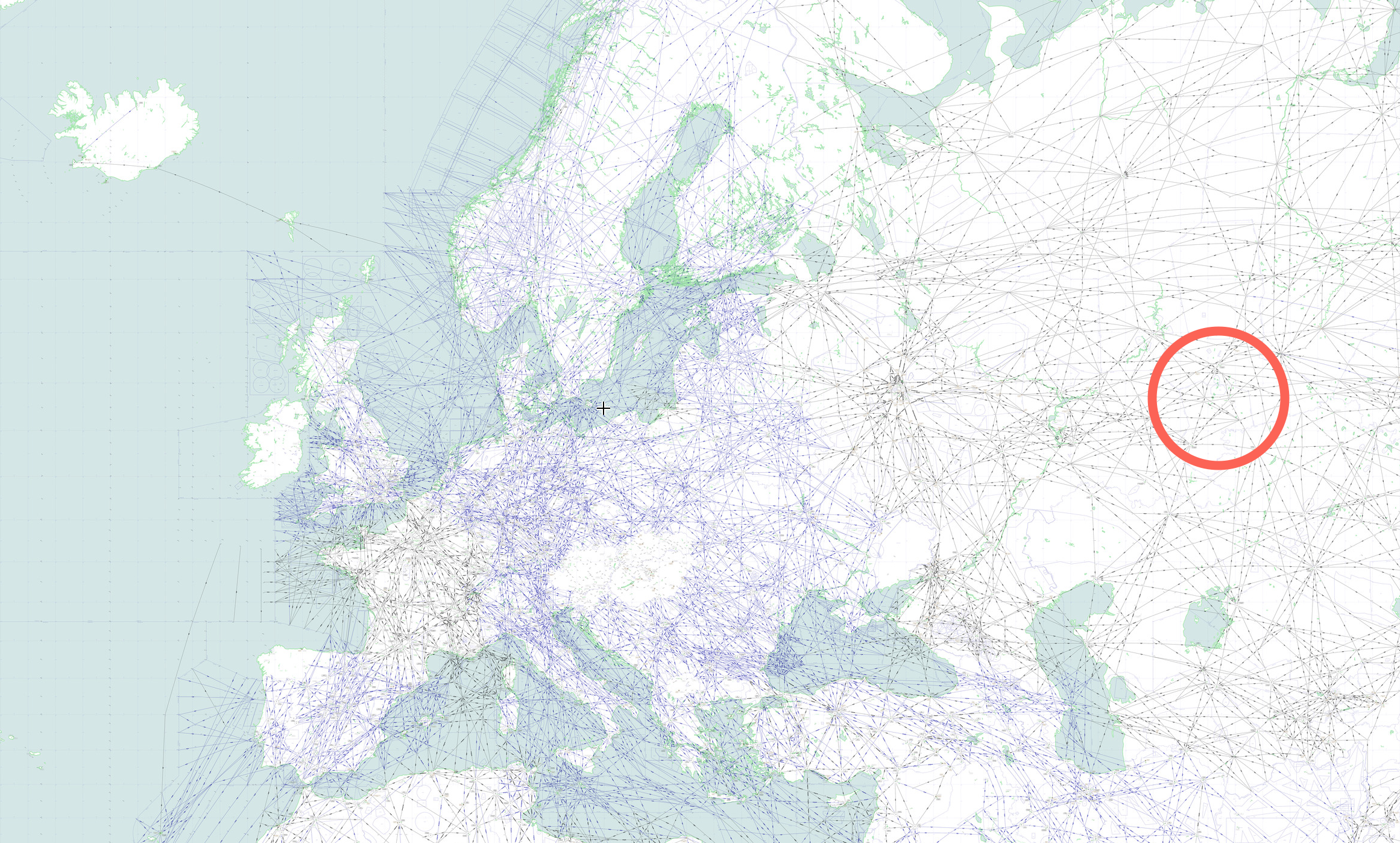
Media reporting in the last 24 hours has raised concerns amongst operators about a possible Nuclear accident in Russia, leading to a radioactive cloud in the region of Chelyabinsk, in the Ural mountains. USCC/Chelyabinsk is about 100nm south east of USSS/Ekaterinburg Airport.

Russia has denied that any such accident occurred, but cannot account for the increased levels of radioactivity in the region, which were 1000 times higher than normal. Through the Russian met service, they have confirmed the high radiation levels.

However, assessing a report last week from the French Nuclear watchdog, ISRN, we believe there should not be any risk to operators, especially for overflights. The facts are as follows:

  • The high levels of radiation were first detected at the end of September in Europe
  • Since the beginning of October, levels have decreased in Europe
  • ISRN says they are not concerned about risks to health, even at the higher levels
  • However, no recent data is presented from Russia

Further reading:


Zimbabwe Coup – Airport update

FVZZ/Zimbabwe (Don’t fly here) There’s a coup happening, watch live on CNN.

FVZA/Harare is operating, but the usual coup-style stuff is going on – lots of soldiers at the airport, checkpoints on the way in, and journalists being denied entry on arriving flights.

The city has tanks on the streets. President under house arrest.

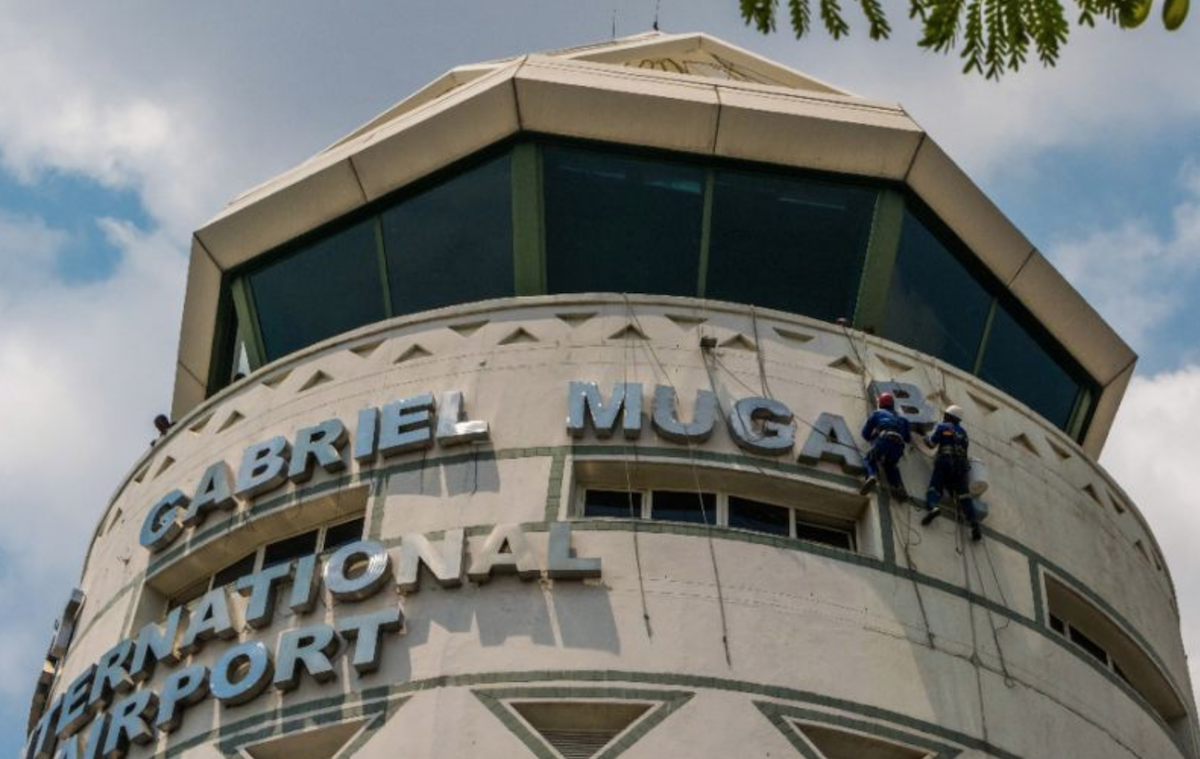
FVZA was renamed last week from Harare International Airport to Robert Mugabe International, this might be swiftly reversed.

Both UK and US embassies are advising people to shelter in place until the situation becomes clear.


CYYR/Goose Bay closed – sticky runways

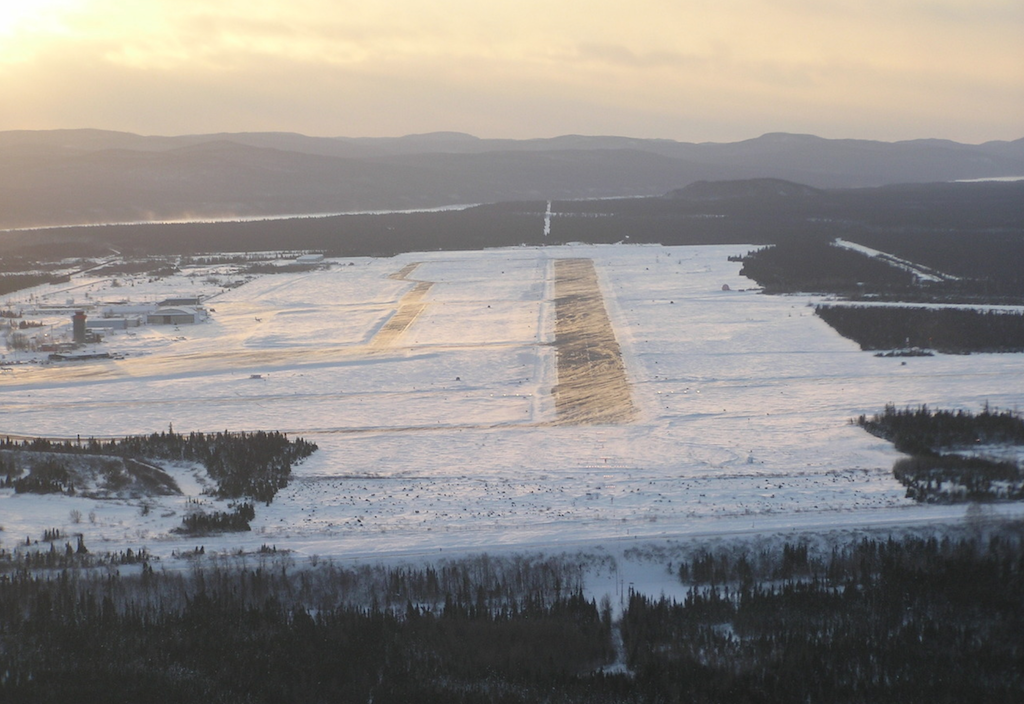
CYYR/Goose Bay was closed by the Canadian Department of National Defence on Nov 8, following the discovery of a problem with their runways. During snow removal operations over the past few days, crack sealant was found on vehicles after they were used on the runways. Specialists are en-route to Goose Bay to assess the situation.

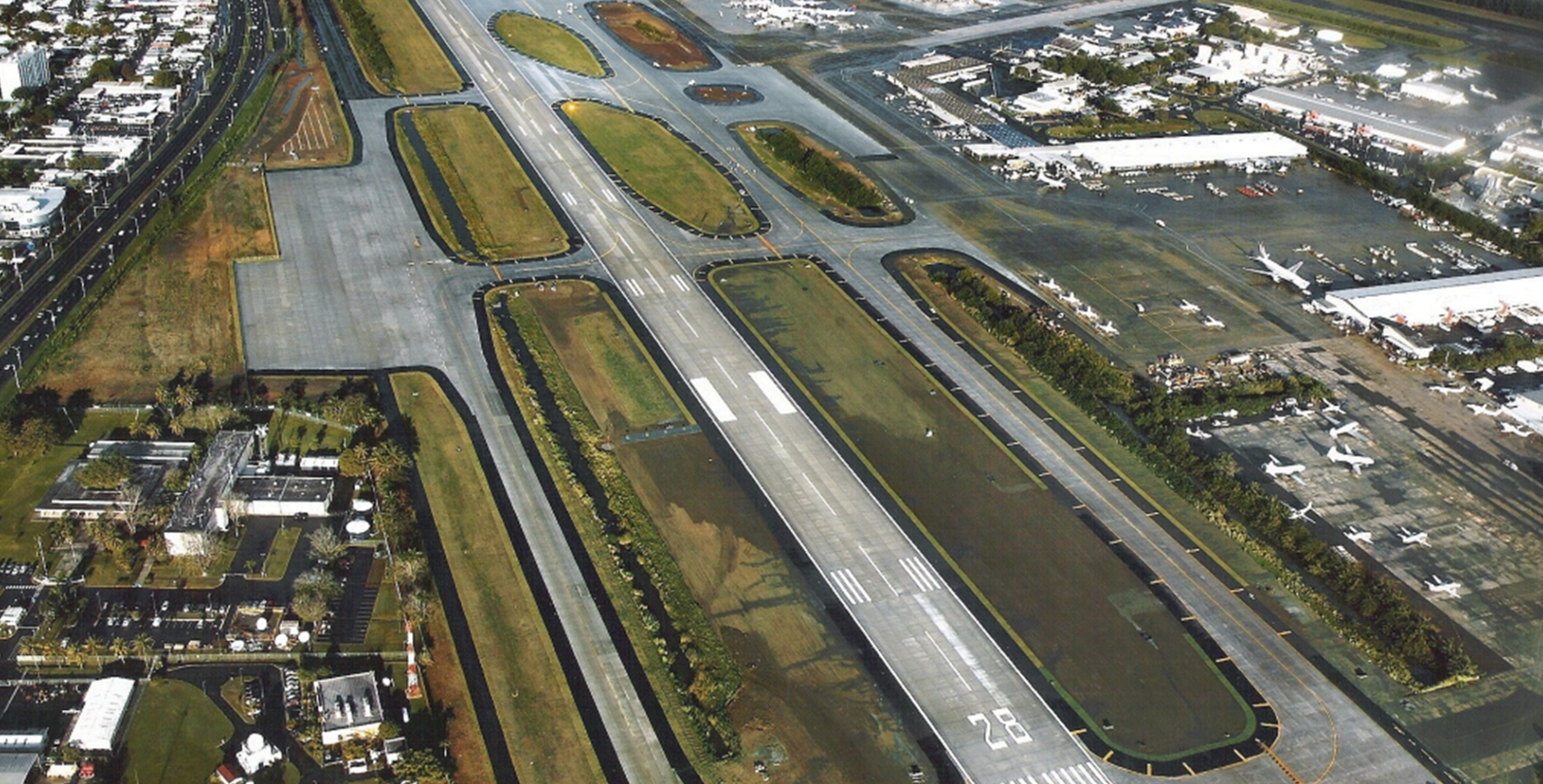
Runway 08/26 has been completely closed, and Runway 16/34 has closed to all except Medevac flights, with a shortened Landing Distance Available of 7600 feet.

The Airport has said that emergency flights will be considered on a “case by case basis”. However, for now, carrying CYYR as an ETOPS alternate does not make sense.


Iraq ATC strike – update

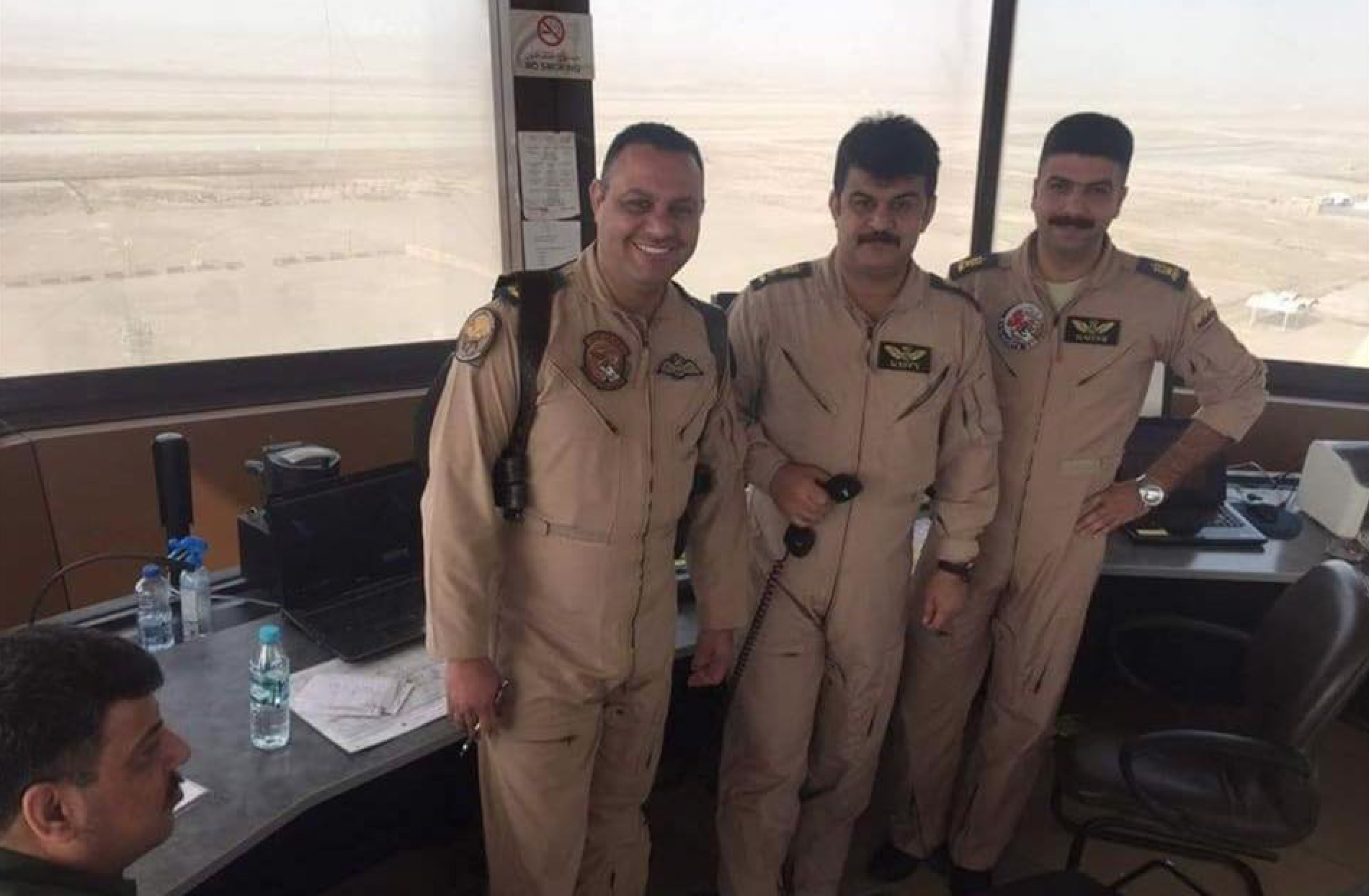
At 0800 local this morning, Iraqi controllers returned to work. For the last few days, Iraqi ATC had been on strike for better pay, effectively closing the Baghdad FIR and intermittently Baghdad and Basra airports. An 80nm in trail requirement has been removed. Military controllers, pictured above, who had been running ORBI/Baghdad Airport have completed their duties.

Local ATC controllers tell us that the strike is over – they are running what they call ‘ops normal’ for two weeks, before they will/may strike again as negotiations continue. Inside word is that a number of local controllers have been fired, and Serco were providing most of the staff to cover the centre. Baghdad FIR Control Centre and Iraqi Airports are running normally – for now.

We are still expecting the FAA to remove the restriction for US operators using the Baghdad FIR, this is a separate issue. No further news on that just yet.


New, single CPDLC logon for US airspace

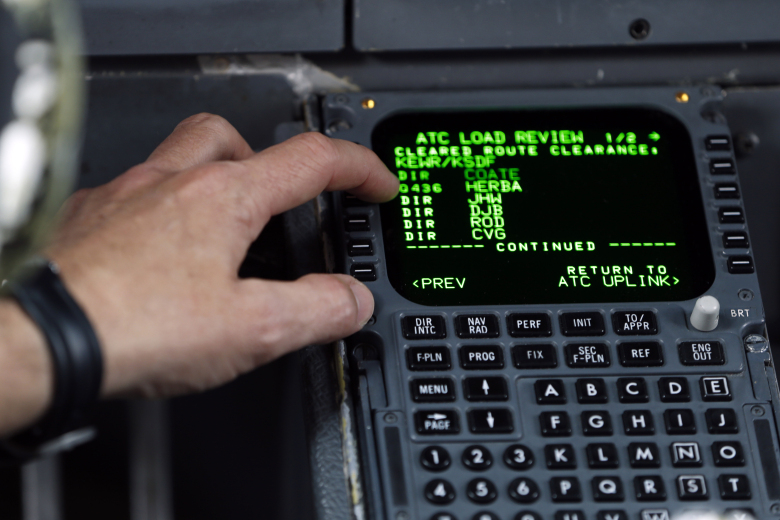
In case you missed the several hundred Notams this week, KUSA is the new identifier for all datalink logons in the US, including CPDLC-DCL, and enroute, which came into use on October 22nd. Now, the only logon you need is KUSA.

For all you could possibly want to know about Datalink operations in the US, take a peek at the new AC90-117, ” an overview of data link communication operations for U.S. domestic
operations and in oceanic and remote continental airspace”, which we’ve uploaded here.

More readable is the FAA’s CPDLC-DCL guide, uploaded here.

There are some comments that it doesn’t work properly if you don’t have an active FPL in the box, let us know your experiences on that in the comment section below.


Storm: Central America landfall of Selma on Saturday

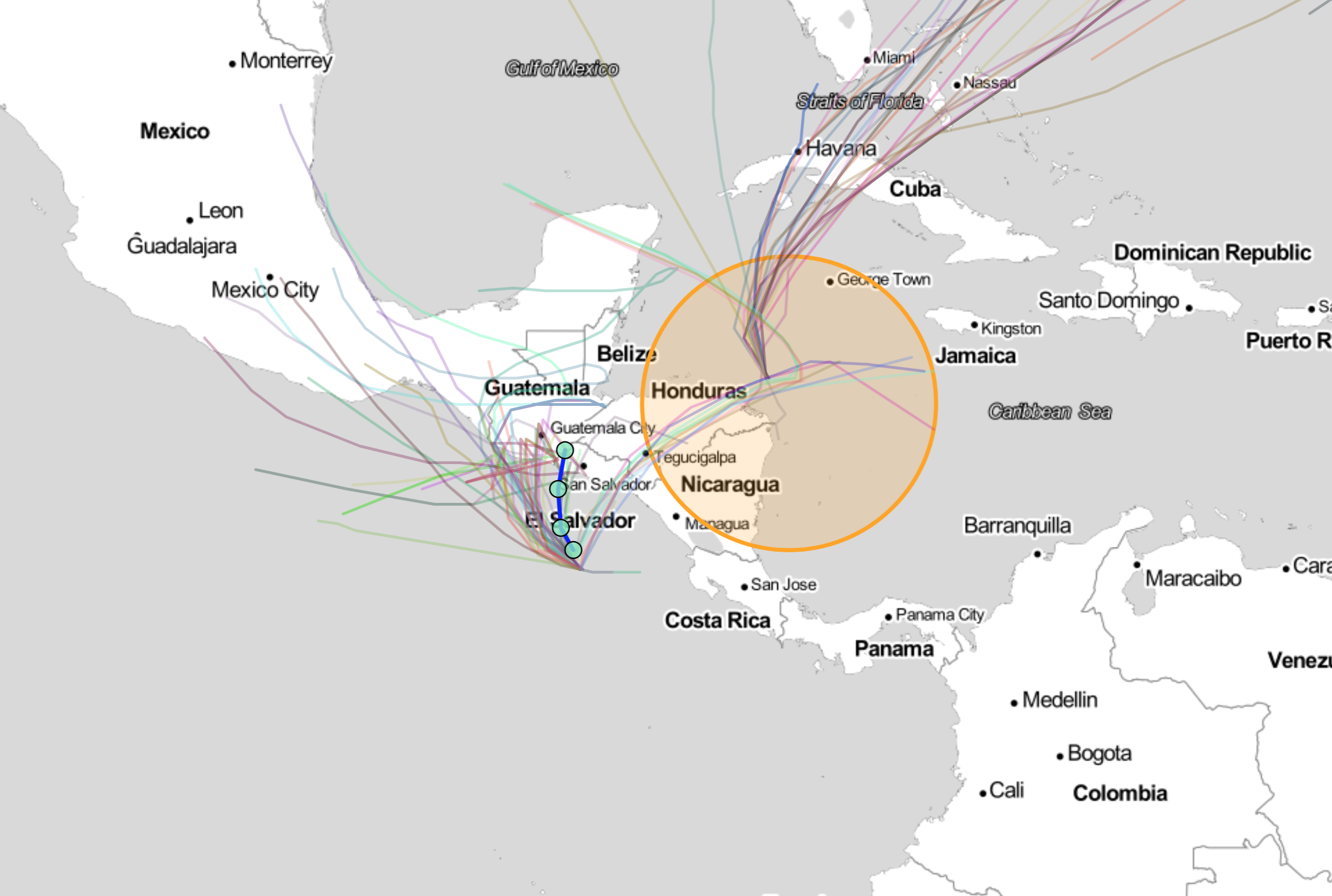
Tropical Storm Selma is heading for Central America, landfall El Salvador coast on Saturday, current winds 35G45 kts.

Monitor:

  • http://www.usno.navy.mil/JTWC/
  • https://www.cyclocane.com/


Inbound Japan this weekend: Tropical Storm Saola

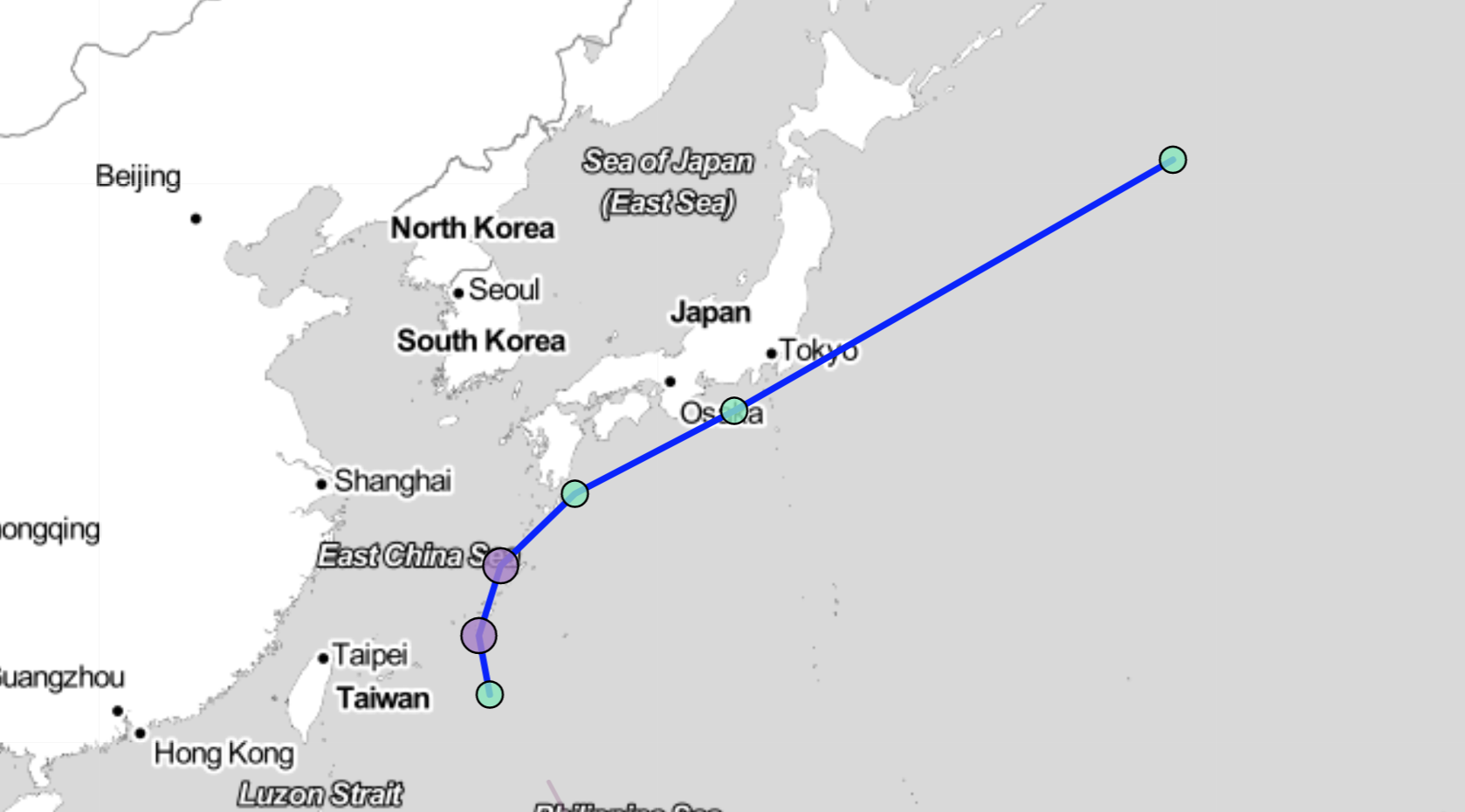
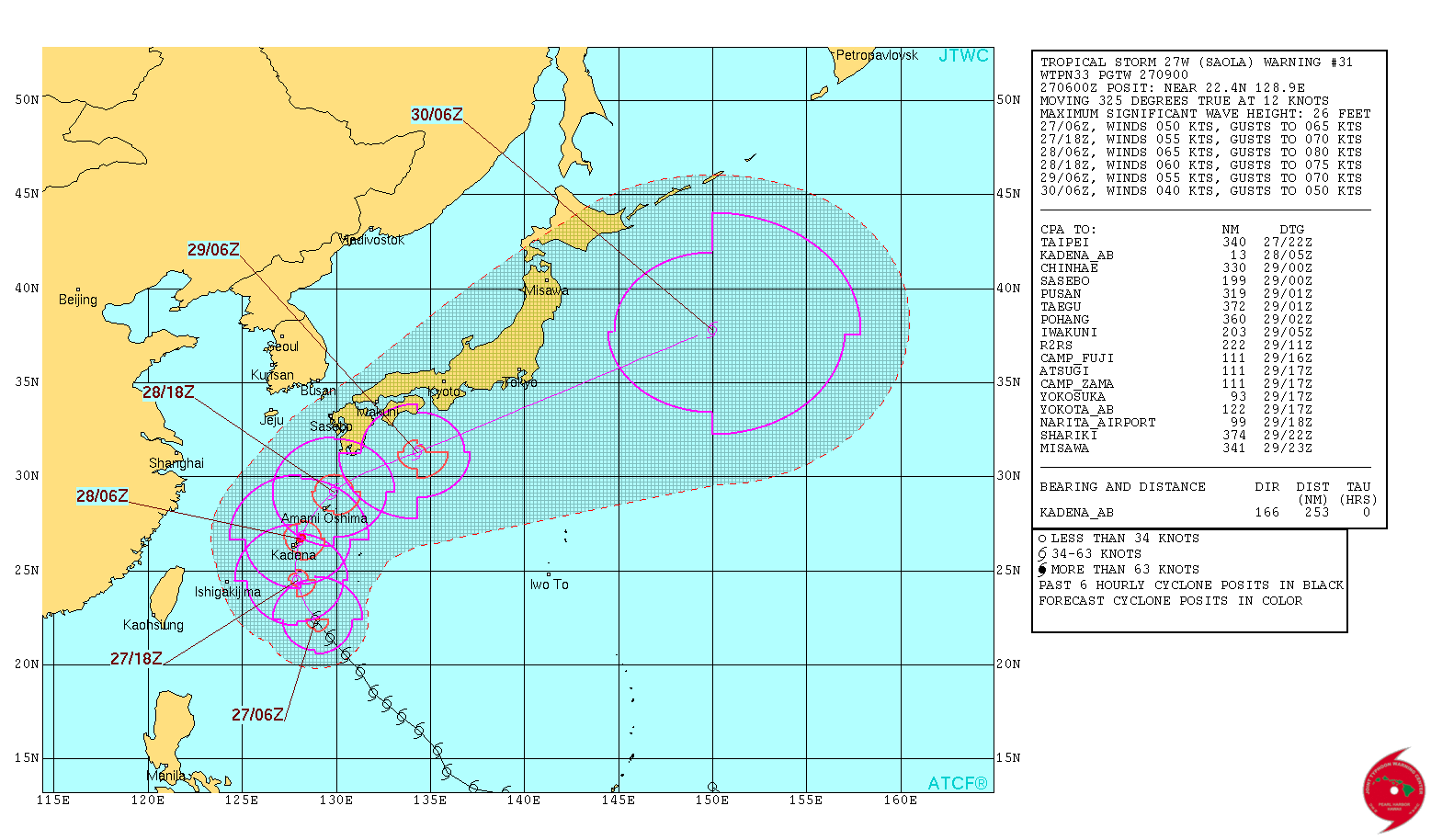
Tropical Storm Saola is south of Japan, gusts to 80kts, will affect southerly Japan airports ROAH, RJFF, RJFK on Sunday and on current track Tokyo likely affected by Monday.

Monitor:

  • http://www.usno.navy.mil/JTWC/
  • https://www.cyclocane.com/


CPDLC Departure Clearance for US Airspace – 22Oct

Earlier this month we reported about the transition of the United States ATC system to a National Single Data Authority (NSDA). https://ops.group/blog/cpdlc-for-us-airspace-the-implementation-process/

The initial phase of this process is scheduled to start this weekend on 22Oct at 0330Z with a single CPDLC logon ID for domestic US airspace (KUSA) and ATC issuing departure clearances using CPDLC.

You can read more details about Controller-Pilot Data Link Communication–Departure Clearance (CPDLC-DCL), general procedures for logging on/notifying, loading the flight plan, receiving the CPDLC-DCL, responding to the CPDLC-DCL message, and disconnecting/logging off  here:

NAS Data Communications Guide


EGGW/London Luton to close for 27 nights

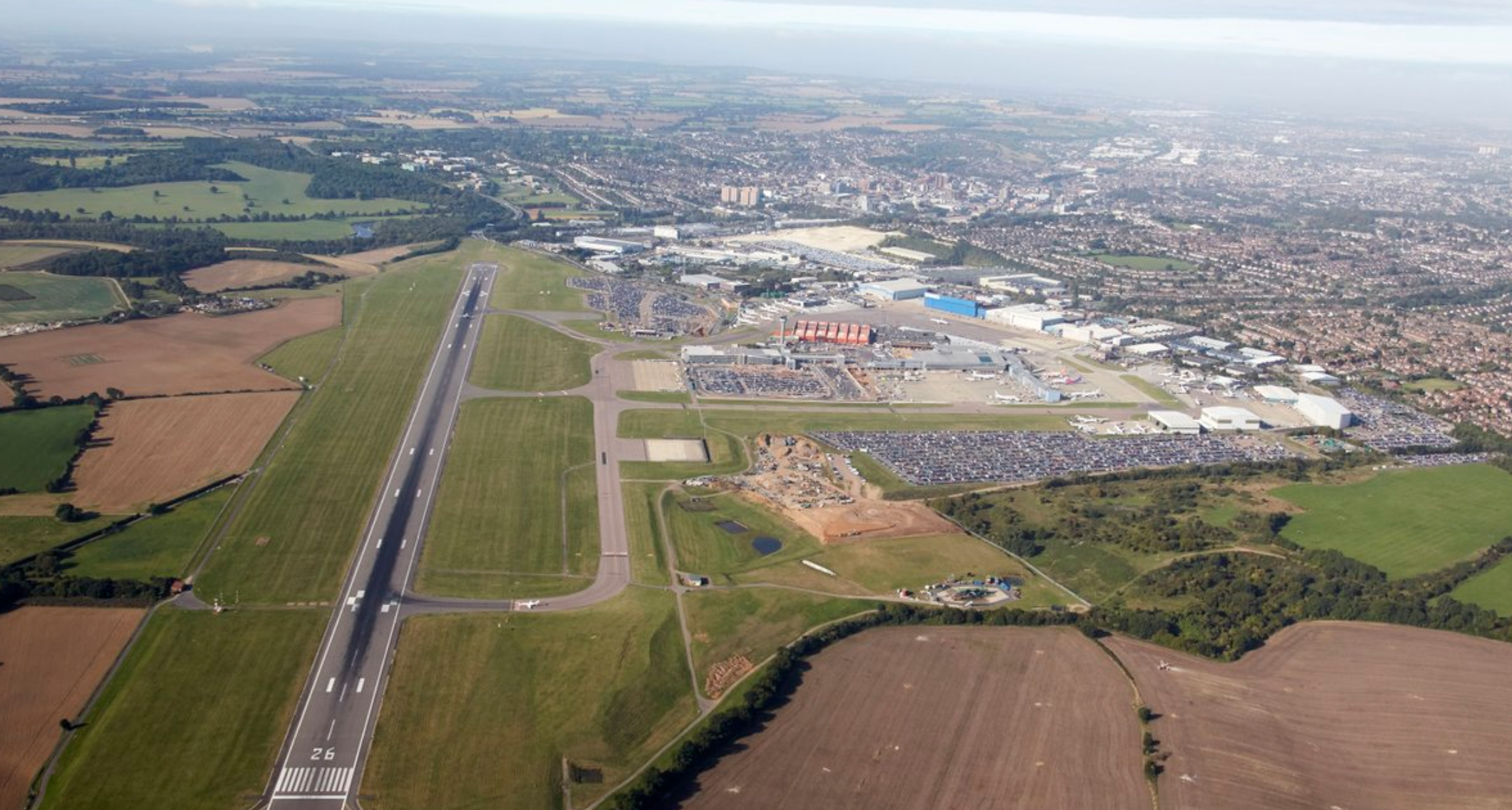
EGGW/Luton will be closed for 27 nights from 0000L to 0530L daily, starting Monday, November 6th and ending the morning of Sunday, December 3rd, 2017 for runway resurfacing.

So, late night and early morning arrivals and departures won’t be possible.

Standard operations will be practiced outside of these hours, with little to no disruption expected during daytime.


Baghdad FIR still reopening – but wait a little

So, last week we told you that Iraqi Airspace was about to re-open to international overflights. It still is, though the bit where it was going to happen this week is no longer true.

The FAA were about to hit ‘publish’ on a Notam this past Monday,  which would have enabled US airlines to start overflying Iraq again. The text of this Notam included:

  • An amendment to the existing Iraq restriction
  • An authorisation for US airlines and operators to overfly Iraq at or above FL260

But then, a military operation by Iraqi forces to take control of Kirkuk from the Kurds the same day, created concern as to overflight safety. Kirkuk sits pretty much underneath the UM860 airway on the map below.

So for now, do nothing and wait. It seems the situation is de-escalating, and we expect now that the Notam may be issued as early as next week.

Once that happens, we’d expect other countries to follow suit and allow overflights in the same way, meaning that these two airways will become busy again.

Keep an eye out, we’ll let you know.

See also:


Iridium fault prompts ban by Oceanic ATC

Aircraft Operators using the Iridium Satellite service for ATC comms should be aware of an equipment issue that has prompted a ban by a number of Oceanic ATC agencies in the last few days

Right now, Chile (SCIZ), Japan (RJJJ), Anchorage (PAZA), Oakland (KZAK), New York (KZNY and KZWY) have all told operators not to use Iridium for CPDLC or ADS-C. Until the fault is fixed, in those regions you’ll have to either use HF for ATC comms, or use another SAT provider. Auckland (NZZO) and Brazil (Atlantico SBAO) have so far only applied the ban to CPDLC alone. Nothing has been published yet by Gander (CZQX), Shanwick (EGGX), Reykjavik (BIRD) or Santa Maria (LPPO) – although we’re keeping a close eye on them for any update.

Here’s what happened:

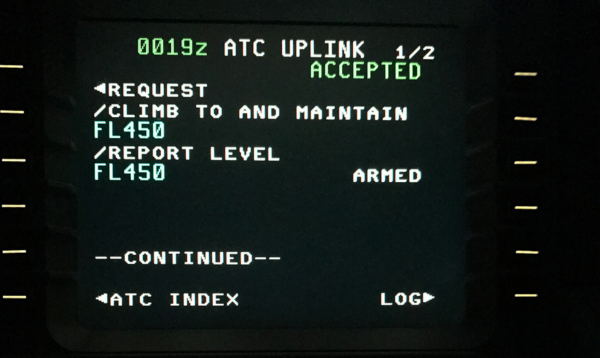
On Sep 12th, an Alaskan Airlines flight had a failure of their CMU (Comms Management Unit) that caused the Iridium connection to stop working. An ATC message was sent to the aircraft but not delivered. On the next flight, the CMU power was reset and corrected the issue, and the pending message was delivered. The CMU did not recognise the message as being old, and so it was presented to the Flight Crew as a control instruction. FSB understands that this aircraft took the climb instruction and executed the level change, climbing 1000 feet .

Another flight, operated by Hawaiian out of Oakland, had a similar problem. This aircraft had both Iridium and Inmarsat on board, and during the flight switched over to Inmarsat as the provider. An ATC message was routed via Iridium, but didn’t reach the aircraft before the switch. Some 23 hours later, on the next flight, Iridium was activated again and again the ATC message presented as a “live” instruction. On this occasion, the crew queried the instruction and did not climb.

The problem in simple terms is that if ATC sends a CPDLC message like “Climb FL370“, which is obviously only valid for “right now”, but another crew gets the message hours later, then you have a very high risk of the new crew accepting that and climbing.

For now, Iridium has a plan to fix the ground side to not allow older SBD messages to be delivered, and they say they are testing it at the moment and expect to release it soon.

OpsGroup members will be updated directly on further news.

Notam copies below:

ANCHORAGE PAZA A0626/17 - USE OF CPDLC AND ADS-C VIA IRIDIUM SATCOM IS PROHIBITED WITHIN THE ANCHORAGE OCEANIC, DOMESTIC AND ARCTIC FLIGHT INFORMATION REGIONS (FIRS). SFC - UNL, 13 OCT 19:40 2017 UNTIL 13 NOV 00:00 2017 ESTIMATED. 
CREATED: 13 OCT 19:35 2017
NEW ZEALAND AUCKLAND NZZO B4985/17 - USE OF CPDLC (DATALINK) VIA IRIDIUM SATCOM 
IS PROHIBITED WI NZZO FIR. COMMUNICATION WI NZZO FIR IS TO BE VIA HF 
RDO ON THE APPROPRIATE SP6 FREQ. OPERATORS USING IRIDIUM SATCOM MAY 
CONTINUE TO USE ADS-C FOR POSITION REPORTING WI NZZO FIR. HF VOICE 
POSITION REPORTS ARE NOT REQUIRED UNLESS SPECIFICALLY REQUESTED. 
08 OCT 21:56 2017 UNTIL 08 JAN 21:00 2018 ESTIMATED. 
CREATED: 08 OCT 21:56 2017
OAKLAND KZAK A4306/17 - FOR ACFT EQUIPPED WITH IRIDIUM SATCOM, USE OF CPDLC AND ADS-C VIA IRIDIUM SATCOM IS PROHIBITED WITHIN OAKLAND CENTER OCEANIC AIRSPACE. COMMUNINCATION WITH KZAK MUST BE VIA HF FOR IRIDIUM USERS. 
13 OCT 19:49 2017 UNTIL 31 DEC 23:59 2017. CREATED: 13 OCT 19:54 2017
NEW YORK KZNY A0334/17 - USE OF CPDLC AND ADS-C VIA IRIDIUM SATCOM IS PROHIBITED WITHIN NEW YORK CENTER OCEANIC AIRSPACE. 13 OCT 19:27 2017 UNTIL 30 DEC 08:00 2017. CREATED: 13 OCT 19:38 2017
NEW YORK KZWY A0502/17 - USE OF CPDLC AND ADS-C VIA IRIDIUM SATCOM IS PROHIBITED WITHIN NEW YORK CENTER OCEANIC AIRSPACE. 13 OCT 19:27 2017 UNTIL 30 DEC 08:00 2017. CREATED:13 OCT 19:36 2017
BRAZIL ATLANTICO SBAO N0095/17 - FOR ACFT EQUIPPED WITH IRIDIUM SATCOM, 
USE OF CPDLC IS PROHIBITED WITHIN ATLANTICO CENTER OCEANIC AIRSPACE. 
FLIGHT CREWS CAN LOG ON SBAO TO ALLOW THE USE OF ADS-C FOR POSITION 
REPORTING. COMMUNICATION WITH SBAO MUST BE VIA HF. IF USING ADS-C 
POSITION REPORTING, HF VOICE POSITION REPORTS ARE NOT REQUIRED 
UNLESS SPECIFICALLY REQUESTED. 15 OCT 12:00 2017 UNTIL
13 JAN 12:00 2018.  CREATED: 15 OCT 01:22 2017
JAPAN FUKUOKA RJJJ J7236/17 - FOR ACFT EQUIPPED WITH IRIDIUM SATCOM, USE OF CPDLC AND ADS-C VIA IRIDIUM SATCOM IS PROHIBITED WITHIN FUKUOKA OCEANIC AIRSPACE. COMMUNINCATION WITH RJJJ MUST BE VIA HF FOR IRIDIUM USERS. 16 OCT 10:08 2017 UNTIL UFN. CREATED: 16 OCT 10:09 2017


Crew Visa Requirements for India

India has new crew visa requirements.

  • Visa upon arrival is no longer available.
  • It is mandatory for all crew to have visas arranged before arrival to India.

When flying as operating crew you will need an e-Business Visa. Carry a copy with you when disembarking.

Processing time is around 4 to 5 days.

Use the following link to apply.

https://indianvisaonline.gov.in/evisa/Registration

Keep in mind e-tourist visa is for pax only.


Airspace Changes Coming for the OMAE FIR

On October 12th, GCAA announced the changes to the OMAE FIR.  They’ve got it all detailed in the latest AIRAC (AIP link below).

The major change–all aircraft require RNAV1 with GNSS to operate in the Emirates FIR, starting December 7th.  This is a change from the previous RNAV5.  With that, you can expect changes to SIDs, STARs, all ATS routes, holding procedures, communication frequencies, and others.  It’s a major overhaul to anticipate for the expected increase in traffic.

We’ve got for you:

AIC 04/2017
AIP Link (you can find all the specifics to the changes here)
UAE ENROUTE CHART

OMAE/UAE 
TRIGGER NOTAM - PERM AIRAC AIP AMDT NR 13/2017 WEF 07 DEC 2017
RNAV 1 WITH GNSS OPS RQMNTS MANDATED
RNAV 1 ROUTES ADDED
STD ROUTINGS AMD
CONDITIONAL ROUTES ADDED
ENR HOLDINGS ADDED
WAYPOINTS ADDED, DELETED AND AMD
OMR-51 LOWER LIMIT AMD
ADDED FREQ FOR EMIRATES FIR. 
07 DEC 00:00 2017 UNTIL 21 DEC 23:59 2017.


Iraq Airspace to re-open for overflights

ORBB/Baghdad FIR Overflights of Iraq may be permitted to resume as early as next week, allowing international carriers access again to several previously heavily used routes through the eastern side of the Baghdad FIR.

In May of this year, SFAR 77 – banning US operators from operating within Iraqi airspace – lapsed, and was replaced by Notam KICZ 10/2017 – which had much the same wording.

However, on October 3rd, Iraq issued a new Notam (A0477/17) – with a new restricted area in the northwest of the FIR, from Surface to FL460. The previous restricted areas 601 and 701 were withdrawn.

This re-shuffling of restricted airspace paves the way for two major international air routes to be reopened, UM860 and UM688 – which were realigned in April for this purpose, allowing operators additional route options through the Middle East to Europe and vv.

FSB expects an official announcement shortly, and will update operators further. OpsGroup members will be notified directly.


Turkey suspends US Visas

Effective immediately Turkey has suspended all Visa services to US citizens. This includes both physical Visa and E-Visa.

  • Any visa granted before 08OCT will stand until expiry of validity date.
  • Any visa granted after 08OCT will be revoked.
  • No new visa will be granted from now.

However, most operating crew will not be impacted. When listed on Gendec as Operating crew and you have a valid crew ID, you may stay up to 72hrs without visa.

We will update any changes here as and when known.


French ATC strike updates

Several ATC unions have called for a national strike, affecting French airports and airspace from Monday evening at 1700UTC (Oct 9) through Wednesday at 0400UTC (Oct 11).

All FIRs are experiencing high delays.

Impact expected to the FIR’s per current  (10OCT) information are as follows:


LFRR/Brest Experiencing high delays

LFFF/Paris All sectors experiencing delays with highest delays in the west. Situation is starting to show signs of improvement.

LFEE/Reims All sectors experiencing delays with highest delays in the East and North

LFBB/Bordeaux Some high delays and with no ease forseen

LFMM/Marseille High delays all around. Regulations will be in place until a least 2359UTC

The following routes are available:
Tango 9 Global and Tango 213 Global, UM30 and UZ180 are fully available.
T9 is still dealing with alot of delays.

Airports:

LFPG/Paris DeGaulle and LFPO/Paris Orly are experiencing delays and there is a 30% capacity reduction in both airports plus at the following airports:

LFOB/Beauvais, LFLL/Lyon, LFML/Marseille, LFMN/Nice, LFBO/Toulouse and LFRS/Nantes
LFSB/Basel – unconfirmed as of yet but may be used as an alternate
LFPB /Paris-Le Bourget will not be affected.


Expect high impact. Ops over or to France are best avoided today.

We will continue to post any further information here as soon as received.


CPDLC for US Airspace: The Implementation Process.

Update 03Oct: The FAA has released AC_90-117, which is their updated overview of Data Link Communications.

  • The United States ATC system transition to a National Single Data Authority (NSDA) is here.
  • The changeover will take place on 22Oct at 0330Z
  • A single CPDLC logon ID (KUSA) will be provided for domestic US airspace.
  • The initial phase is set up to issue departure clearances only
  • En-route CPDLC communications within US airspace will be implemented at a later time.
  • More details about the transition process are found here NSDA – Data Comm Program
  • We’ll post further information as it becomes available


Ops Reports – Puerto Rico

We got a ton of useful reports in the last few days from OPSGROUP members that have been to Puerto Rico after Hurricane Maria. Because they’ll be useful to the wider Ops community, we’ll share them there.

OPSGROUP members can login to Aireport for the full reports and latest additions as we get them – just view the latest reports and scroll through to see all.

Here are the reports:


TJBQ/Aguadilla 29SEP (G550)
 
*FAA*
o   Prior to departure local POI advised we needed to request the LOA A529
o   Were advised that military is increasing presence and slot system may be set in the next couple of days

*Arrival to TJBQ*
o   Staged in Orlando the night before
o   Crossed the southern end of the MIA FIR at 17,000/squawk 1200 VFR
o   Contacted tower on published frequency with no issue
o   Runway/taxiways had no issues

*Western Aviation (WASCO)*
o   FBO is up and running on generators but have no phones/radios
o   Utilized a contact on the ground with a sat phone to arrange arrival
o   Fueler advised they have approximately 200,000 gallons of Jet A
o   Front desk accepted credit card payments (not sure when they will post)
o   Security guard at the door of FBO to ramp
o   Were able to have truck driver escorted onto ramp to load supplies
o   Some reports of supplies being confiscated but we did not have any issues

*Surrounding Areas*
o   Gas/water/basic commodities are very scare
o   Power lines are down along the roads/in the roads so be cautious

*Departure*
o   Departed later in the day VFR to 6500’
o   Issued a transponder code by center and our ATC clearance to destination airport
o   Area radar was back up and running but the terminal was not


TJIG/Isla Grande 28SEP (Falcon 900)
We didn’t get FSDO approval but then again we are Part 91. I couldn’t say for 135 folks. The tower was open at Isla Grande today which should definitely improve things. There were still some planes having to go VFR an hour out of San Juan, but we found that filing the FAA recommended routes got us all the way there IFR.

TJRV/Ceiba 28SEP (Falcon 900)
We went into TJRV, about 30 miles SE of San Juan over the hills. There are no Jepp charts for it but Foreflight has an airport diagram. It’s a long runway with displaced thresholds. Frequency is 122.7. There’s a Millionaire there too. We thought it was uncontrolled but a Marine battalion came in and is staying at a hangar that Google has turned into a test facility. The Marines also opened up the old Naval base tower and gave us a clearance to land as we called giving us position reports so that was a bit surprising. Word is it that the military is going to use the airport to relieve stress on San Juan next week and private jets will be welcomed. Notams in the A/FD say to file TJSJ to use this airport but that backfired on us. We filed TJSJ and of course we didn’t have a PPR to go in so they held us at Ft. Lauderdale until we filed a new flight plan for TJRV. And that worked just fine. Hope this will help.

TJSJ/San Juan 28SEP (Falcon 900)
Getting the PPR for today into the international airport worked great. Very busy at Jet Aviation – but they were pretty efficient at getting us fueled.

TJBQ/Aguadilla 26SEP (G650)
Airport tower was operational on published frequencies. Full runway was in good shape. Off load was at FBO depicted on airport diagram near taxi way Charlie.Aircraft had to operate VFR reaching point ELMUC (TJZS FIR boundary) and cross it at 17000’ inbound to TJBQ. Cancellation of IFR was with MIA center once below FL180.  Aircraft inside the FIR were passing advisory position reports on 123.45 and de-conflicted using standard VFR altitudes from ELMUC. Aircraft was able to reach the airport tower about 40nm out. Departure was VFR from the airport climbing to 16500 to point SAPPO. Once in contact with MIA ON 126.45 the crew was able to activate an IFR flight plan and climb. MIA was very busy with all the traffic requesting clearances inbound to the states but we were eventually able to accommodate. Fuel plan accordingly, in case of a delay in climbing.

TJIG/Isla Grande 26SEP (MJET)
We had no delays going into TJIG, where Millionaire is doing a great job with fast service and lots of fuel. Miami Center is using a few fixes: Sappo, Idaho and Elmuc as their transition points between IFR and VFR. You must go VFR (about an hour out) at these fixes and then contact San Juan approach 80 miles north of San Juan using their tower frequency, 119.4. Isla Grande traffic was using the ground frequency of 121.7 for advisories. The taxiway on the northeast side of the field past B4 is only wide enough for Kingairs and smaller so if you have to back taxi on RWY 9, try to exit on the southside or wait past B4.”

TJSJ/San Juan 25SEP (MJET)
No major issues at TJSJ, but heads-up as there are many VFR operations below FL180.  IFR and VFR operations are occurring in close proximity.  Ground services appear to be normal. TJSJ tower was very busy this afternoon with arriving IFR and VFR traffic, transitioning shoreline traffic and local helicopters.  Be patient and vigilant and all will be well.

TJSJ/San Juan 25SEP (Falcon 7X)
To TJSJ expect to be asked to cancel IFR or remain IFR with some holding (our choice) by HARDE.  Both options seem to work equally well for operators.  San Juan TWR is operational and the airfield is in good condition.  Departed VFR, received IFR about 100NM north with NY AIRINC.  Fuel was available at Jet Aviation.

TJIG/Isla Grande 23SEP (CL30)
Airport is uncontrolled.  No lights, and no US Customs.  Expect to cancel IFR as soon as inside TJSZ FIR airspace. The TWR freq is unusable as of this morning.  CTAF alternative is 121.7 Ground frequency.


Local Contacts:
TJSJ/San Juan: 
Jet Aviation San Juan – (787) 791-7005 / (787) 399-3260 / fboservices@pazosfbopr.com
Airport Aviation Services – (787) 797-8500 / (787) 424-9499 / info@tjsjfbo.com

TJIG/Isla Grande:
Million Air – (787) 289-2021 / info.tjig@millionair.com
Signature Flight- (787) 721-1414SIG@signatureflight.com

TJBQ/Aguadilla: 
Copeca Jet Center – (787) 890-1250 / (787) 505-0256 / copeca@copecajetcenter.com
Western Aviation Service – (787) 890-2323 / ops@wascobqn.com

TJPS/Ponce:
South Puerto Rico Aero Service – (787) 844-5223 / CustomerService@SPRAeroservice.com

TJRV/Ceiba:
Million Air – (787) 289-2021 / info.tjig@millionair.com

TJVQ/Vieques:
Million Air – (787) 289-2021 . / info.tjig@millionair.com

TIST/St.Thomas: 

St. Thomas Jet Center – (877) 894 1810 / customerservice@sttjetcenter.com
Alliance Aviation – (340) 777 4646 / alliance@allianceaviation.net


ORER and ORSU: Closed to International Ops

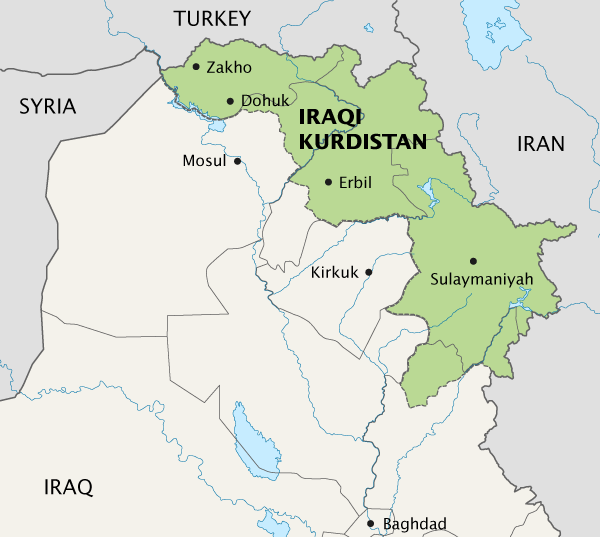
The Iraqi CAA will ban all international flights to/from ORER/Erbil and ORSU/Sulaimaniyah starting from Friday 29th Sep. 

From then on, those airports will only be open for Iraqi carriers and domestic ops.

Tensions around the Kurdish autonomous region of Iraq are rising following a referendum on independence.

The Iraqi govt has demanded that the KRG (Kurdistan Regional Government) hand over control of its two international airports – ORER and ORSU. Until the KRG comply with this request, the international ban on flights to these airports is set to continue.

At the request of the Iraqi govt, Iran had already closed it’s airspace to ORER/ORSU traffic earlier this week, and Turkey was considering implementing the same ban.

The KRG are now deciding whether to give up control of their airports or lose their international flights. Should it be the latter, then from now on anyone attempting to travel to the region will have to transit via Baghdad.

We will update as more information becomes available.