


It’s been a busy few days across Venezuelan and Caribbean airspace.
On Jan 3, the US FAA issued a temporary flight ban for US operators in Venezuela’s SVZM/Maiquetia FIR, the TJZS/San Juan and TNCF/Curacao FIRs, plus the TTZP/Piarco FIR west of 57W – which in practice covers the entire eastern Caribbean island chain.
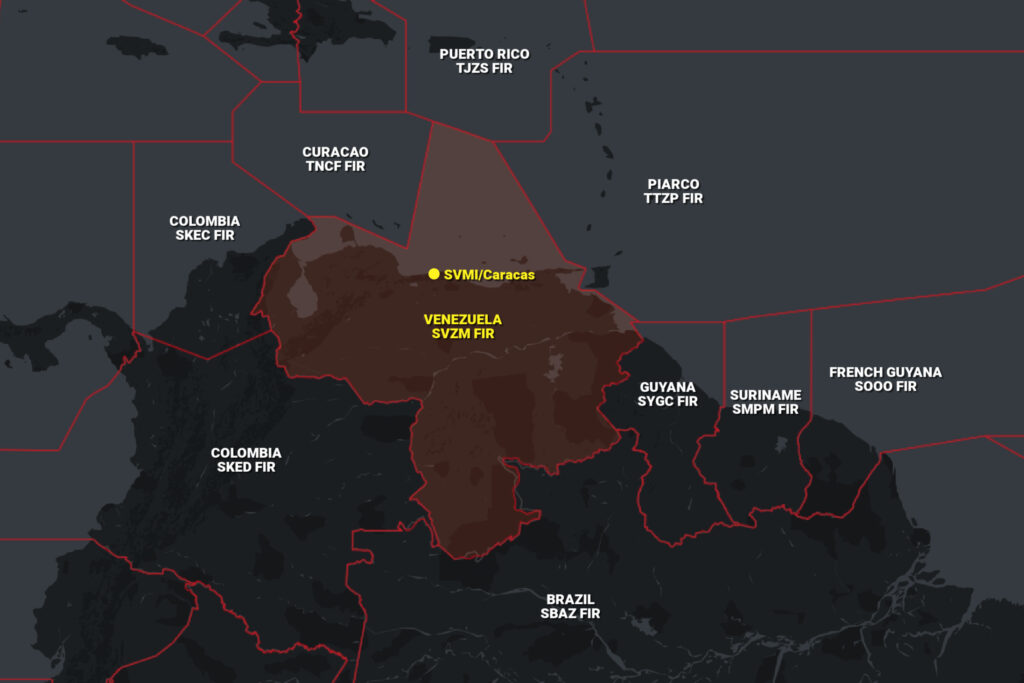
The move followed US airstrikes in Venezuela and was driven by safety-of-flight concerns linked to military activity and misidentification risk.
Venezuelan and Caribbean airspace from late last night (local time) through this afternoon. pic.twitter.com/oxu5ha3dXs
— Flightradar24 (@flightradar24) January 3, 2026
That prohibition was short-lived. Within hours, the FAA lifted the ban and reverted to advisory Notams, returning to earlier guidance for US operators to exercise caution at all altitudes in the affected FIRs.
While the temporary FAA ban has ended, airspace warnings still remain in place. The US, Canada, EASA and several European states continue to advise avoiding Venezuelan airspace and to exercise caution across the surrounding region.
These sit on top of earlier warnings from late 2025 flagging GPS interference, reduced ATC visibility, and unpredictable traffic. Operators have been reporting these issues for months, with no clear indication they’ve fully gone away.
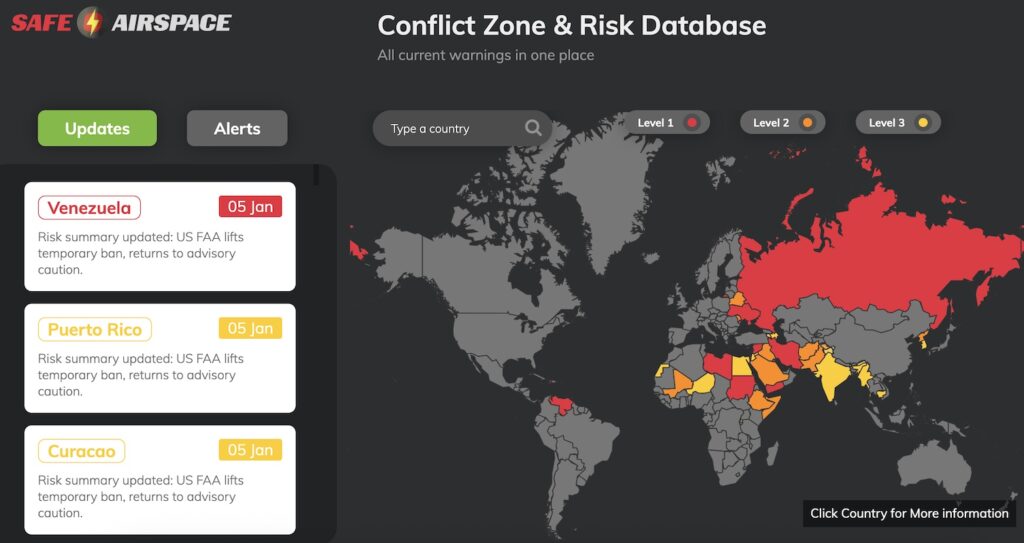
On safeairspace.net, we continue to list Venezuela as Level 1: Do Not Fly.
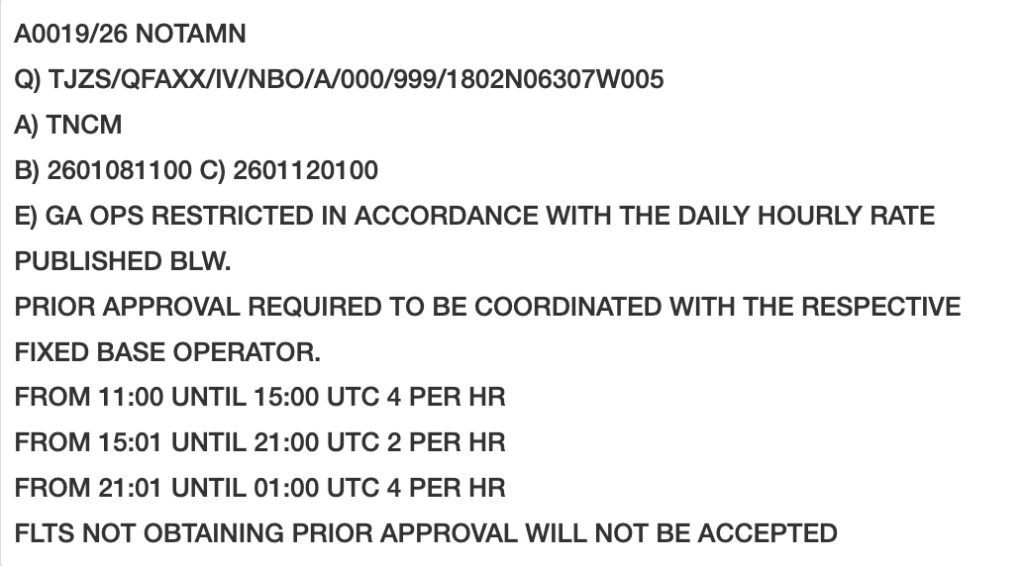
For several days after Jan 3, departures from parts of the eastern Caribbean were heavily delayed, with aircraft held on the ground due to parking constraints and ATC flow controls. Most of that disruption has now cleared. FAA flow programs are no longer active and the situation at the airports has largely returned to normal. The main exception is TNCM/St Maarten, where ramp congestion continues to limit GA flights through Jan 12 as per the current Notam.
If you’re operating in the area and have updates to share with OPSGROUP members, please email news@ops.group and we’ll update this article as things change.

More on the topic:
- More: New FAA Airspace Warnings for Venezuela and Puerto Rico
- More: Caribbean: File Your Flight Plans Early!
- More: Venezuela: FAA Restriction Lifted
- More: PIREPs of the Caribbean
- More: What we’re seein’ in the Caribbean
More reading:
- Latest: SAFA Ramp Checks: What the 2025 Findings Are Really Telling Us
- Latest: Crew Entry to Europe: EES and Visa Rules Explained
- Latest: SpaceX Starship Launches: Major Airspace Disruption
- Safe Airspace: Risk Database
- Weekly Ops Bulletin: Subscribe
- Membership plans: Why join OPSGROUP?







 Get the famous weekly