Introducing: Airport Operational Lowdowns
Ever been bamboozled when flying into airports you’ve never been to before? You’re on your approach and all looks good – straightforward, easy, no threats – and then, they cut 50nm off your arrival track and suddenly you’re high and fast and this is when your co-pilot (who has been there before) turns around and says – “Oh yeah, they always do that!”

Or what about that airport where they built a really big hanger in a really silly spot, and you don’t find out about the wind shear off it until you are there, at 30 feet, battling with it?

Calling All Pilots… 

  • All pilots who operate into random, challenging or interesting airports.
  • All pilots who do not operate into the same airports regularly.
  • And all operators, ATC, anyone with a bit of knowledge about an airport for that matter.

Following on from our OpsChat where some of you raised the idea of briefings on specific airports, we have started to put these together…

What’s the idea?

The idea is a lot of pilots, particularly corporate folk (but this is still for everyone) might not have access to loads of shared information on specific airports. If you do not fly somewhere regularly, or do not work for a big airline, then the only information you will have on certain airports is what you can read off the charts and in the AOIs.

But we all know there are airports out there which have specific challenges you only discover when you operate in. The useful, practical, operational stuff. The threats, risks and gotchas that you discover with experience.

Introducing: Operational Lowdowns

Our Operational Lowdowns are our new way of trying to share this information between you all.

If you have experience going into an airport and spotted something unusual, odd, tricky or interesting then send in that Airport Spy report. Or even drop us an email with a full lowdown about it.

If you are operating into a new airport and want some additional info before you go, then check the airport on our Airport Spy app – there might already be a Lowdown Briefing in there. If there isn’t, let us know and we will do some digging and try and put one together for you.

Sharing is caring…

… and it is also safety!

Knowing about specific operational challenges, environmental threats and tricky procedures before you get there, so you can BRIEF about it and come up with a plan to mitigate any risks, is important.

So we hope you find these useful, and keep getting in touch with info you have to share, and what info you would like to know.

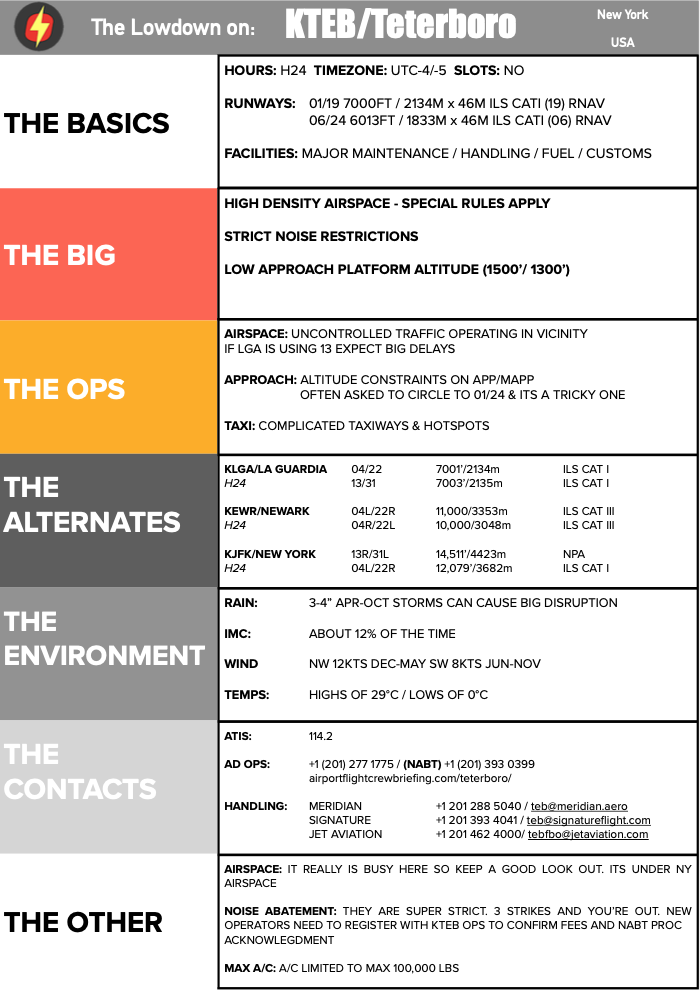
Take a look at the Operational Lowdown for KTEB if you want to see what we’re talking about 😃 ✈️


Is it time to upgrade to a newer (Decision Making) model?

In the brave new world of pilot training there is a new paradigm – evidence based training. But evidence of what? Well, of pilot competencies – a set of ‘tools’ for a pilot to quick draw out of their metaphorical tool belt in order to help them solve whatever situation flies their way.

Where does Decision Making fit into this tool belt?

It can be viewed as a sort of Swiss army knife of a competency because it is one which, when wielded well, helps build best outcomes, but when used badly will probably leave you with a few pieces of splintery wood and a nail through you hand.

The (badly metaphored) point trying to be made here is that the Decision Making & Problem Solving ‘competency’ is a big, multi-faceted one, and it turns out that making a decision is often easy, but making a good one is less so…

Double E’s give us the ‘O’ factor

A good decision, or an ‘optimal’ one is going to be the one that leads you to the safest, most efficient and effective outcome.

Efficient because you’ve done the ‘best’ thing. Effective because you got there the ‘best’ way.

Reaching this optimal solution is easier said than done though. You, the pilot, want to be as safe as possible, but then you have authorities wanting you to tick every rule and regulation box, and you have your company wanting you to tick every commercial box, and before you know it you can find yourself heaped under a pile of “What Ifs?” and “Why didn’t you’s?”.

All of which can quickly incapacitate any common sense and airmanship. So what can you do about it?

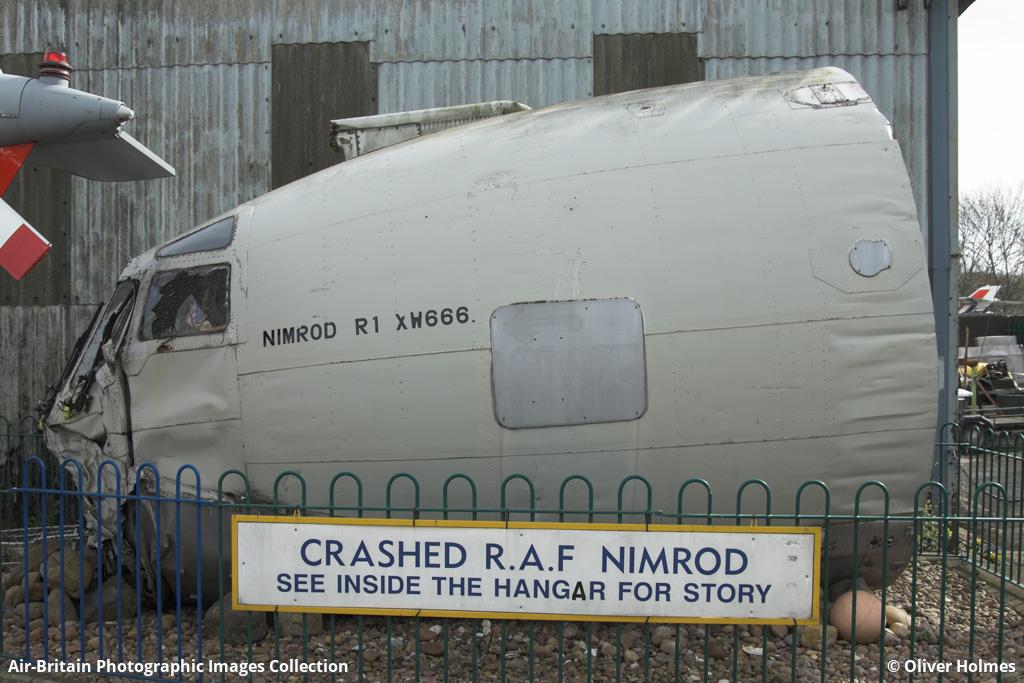
Have you heard the story of the Nimrod?

Everyone knows the Hudson tale, and a great story it is too – a captain (and crew) showing a level of decision-making that saved the lives of all passengers onboard. Well, the story of the Nimrod is similar.

It took place back in 1995, over the coast of Scotland. XW666 was a BAE Nimrod R.1P operated by the RAF, en-route from EGQK/Forres-Kinloss RAF station. They were approximately 35 minutes into the flight when the crew had a No 4 engine fire warning illuminate. During the drill to deal with this the No 3 engine fire warning also illuminated.

The moment that makes this story worth telling was this – at just 4.5nm from EGQS/ RAF Lossiemouth (and its 9,068 feet of runway) the captain discontinued his attempt to put the aircraft onto a tempting piece of tarmac, and instead ditched into the cold water of the Moray Firth.

So why, with just 4.5nm to go between him and a much easier landing, did the captain do this?

The captain had asked the rear crew member to watch through a window and to inform him if fire became visible through the aircraft structure. When this report was received, the captain ditched. When they dragged what was left of the poor Nimrod out of the water (actually, quite a lot of it was left and all the crew survived), the investigation confirmed that the structural integrity of the wing’s rear spar had deteriorated by over 25% in just 4 minutes.

In the time it would have taken to cover that last 4.5nm the wing would have failed, resulting in an uncontrolled crash.

The big learning point here though is that it wasn’t so much the ‘good decision’ (the “let’s land this thing quick” decision) that was the big save, but actually the captain’s ability to change his decision – to review the situation and say “yup, that ain’t gonna work anymore, let’s do this instead.”

When a good choice turns bad

Doesn’t this satsuma look fresh, fruity and delicious? Most people (who fancy a piece of fruit) would probably happily eat it.

I am hungry, I like fruit, this is a piece of fruit, I shall eat it – Problem diagnosed, options considered, decision made, action assigned… DODARing 101.

But what about now?

Turns out it was made of liver paté.

The (rather odd) point to take away from this is that a decision, based on the information you have, can be great. The best. The optimal. The satsuma of choices. But if the information changes, or if it turns out to be incorrect, then so too might the decision be. So fitting information into what you have already decided does not work. Nor does sticking with a decision and not continuing to gather information.

The golden rule of Decision Making, and the one the Nimrod captain applied so well, is the importance of the review – being able to change a decision when it needs changing.

This can be a tough thing to do. As pilots, we are very goal orientated, but when that goal becomes too focused – the “must land now”, or the “it looked alright 5 minutes ago, I’m sure it still is” attitudes – these can lead to unstabilised approached, overruns, accidents (more on that here).

So, don’t be a Nimrod, be like the captain of one instead!


Expect the Unexpected: Evidence-Based Training

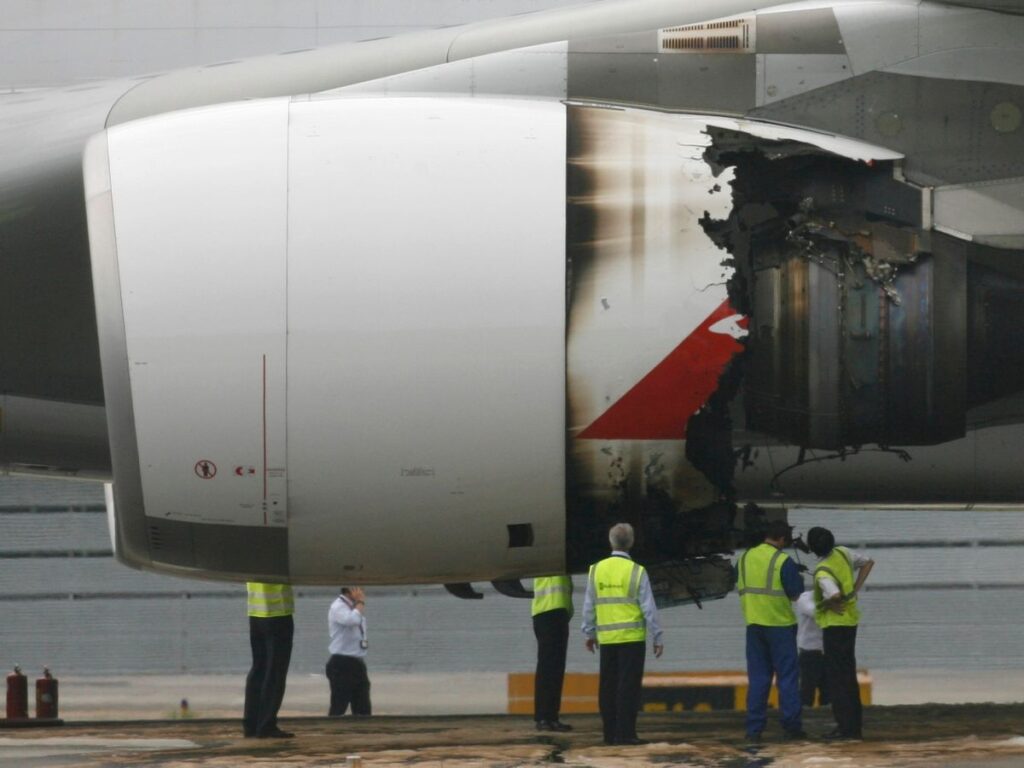
Today’s aviation environment is complex but incredibly reliable. Our aircraft are packed full of automation, systems and redundancies designed to keep us safe up there. Fancy things like EGPWS, Flight Envelope Protection and TCAS are there to protect us.

But herein lies the issue: because things are so reliable, the circumstances of the next accident waiting to happen are ever more challenging to predict.

All that technology is still limited by us humans. One thing we do know is that human factors have played a role in between 70 and 80% of airline accidents and serious incidents over the past thirty years. In many cases these accidents have certain things in common – poor group decision making, ineffective communication, inadequate leadership and poor flight deck management.

So it is clear we have an important role to play in making ourselves more reliable too.

Enter ‘Evidence Based Training’ or simply EBT for those in the know. And it’s a revolution for pilot training.

What is it in a nutshell?

In really simple terms it is about looking at data or ‘evidence’ to find relevant threats and errors and then changing the way we train pilots so they have the competencies they need to deal with them.

Cool, so what does that actually mean? Let’s delve into things a little more.

Out with the old

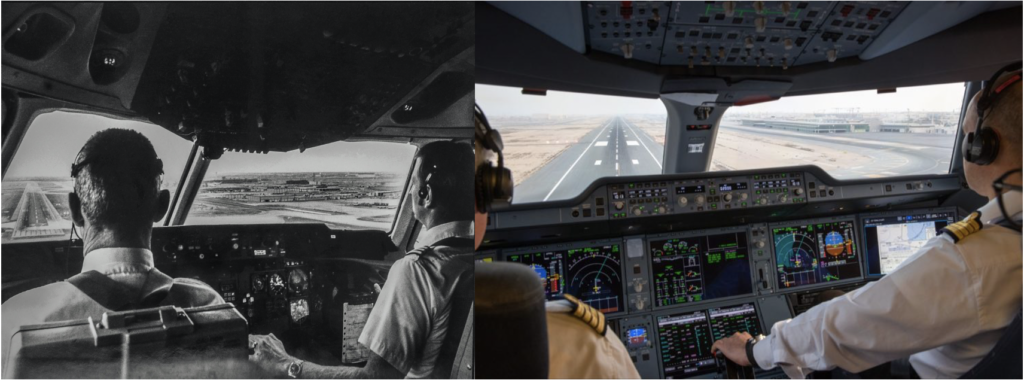
Traditional airline training was based simply on events that occurred on early generation jet aircraft from yester-year. There was a belief that simply exposing crew to those same ‘worst-casescenarios over and over again would be enough.

The cyclic was born. A long list of bad things that can happen which you’d periodically face in the sim. They tended to be manoeuvre based – you know the ones. V1 cuts, rejected take offs, go-arounds. As long as you flew them within limits you were officially ‘competent.’

It was simply a tick-in-the-box approach to pilot training. But you couldn’t help but get a nagging feeling the industry was missing the point: you have no way to predict what will actually happen to you when you go to work the next day.

Modern aviation has a way of throwing things at us that we haven’t seen before. Computer failures, mode confusion, strange stuff. Just look at the tragic case of Air France 447. Training in modern fly-by-wire aircraft has never been the same but it sadly came to late for that particular crew.

In with the new

Over time the amount of data or evidence out there improved dramatically. There were a bunch more sources – flight data, LOSA programs and air safety reports to name a few.

In 2007, a new industry-wide safety initiative emerged. It was led by IATA and began to use this evidence to identify relevant threat and errors that crews face for their particular operation and adjust training to better equip crew to deal with them. EBT was born. ICAO was sold on the idea too and hopped onboard in 2013.

The emphasis is on crew effectiveness as a whole by developing a bunch of competencies – tools that pilots can use in any scenario, normal or abnormal. The training uses unscripted situations to develop crew management strategies, techniques and human factors that are just as important to safe flight as technical skills.

Here is an example of the sorts of competencies that EBT training sessions look to develop (it really is the whole package):

  • Application of Procedures
  • Communication
  • Aircraft Flight Path Management, including manual flying
  • Leadership and Teamwork
  • Problem Solving and Decision Making
  • Situational Awareness
  • Workload Management
  • Knowledge

Isn’t that just Crew Resource Management?

Not really. Although CRM continues to be a solid step forward for the industry, when put into startling or surprising situations studies have shown we lack the capacity to immediately control our behaviour. What we need is practical training over time with consistency and reinforcement which is where EBT becomes so valuable.

It combines both technical and non-technical skills and focuses on the crew as a team, achieving successful outcomes when faced with the unexpected. It moves the emphasis away from checking and more toward training.

So how does this all work in the sim?

Good news, EBT doesn’t mean you’ll be in the sim more often. They’ll still pop up on a biannual basis. What will change is how the sessions are run.

EBT sessions are typically broken into two or three parts:

An Evaluation – this is where your baseline performance is measured. You’ll be given scenarios you may face in your own operation. This is so your trainer can get a good look at you in action and begin to identify your own personal areas of weakness that they can work on in subsequent sessions.

Proficiency Training– this is mostly manoeuvre based stuff you’re used to. Your trainer will focus on your technique. You’ll be put under pressure but the idea is to further develop your abilities in challenging circumstances. Your standard currency items will also be ticked off.

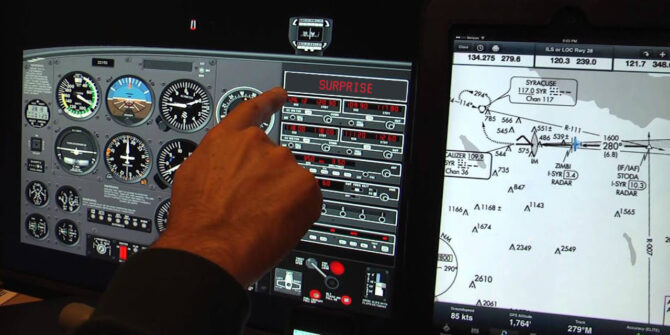
Scenario Based Training – this is the heart of EBT and where most of the work is done. The focus is on event management and the scenarios are off the script. You pretty much won’t know what is coming but you’ll have to apply your knowledge, skills and attitudes to a successful outcome. It is a journey of self-discovery in solving problems rather than simply following SOPs.

Over time these competencies will be reinforced – giving you the confidence in your own abilities to tackle whatever is thrown at you.

After all isn’t that how the real world works out there?

Other things to read

EBT is fast becoming an industry standard and many operators have have their new training programs up and running. For those that haven’t, here are two things you need to get started:

EBT looks at pilot competencies – a set of ‘tools’ for a pilot to quick draw out of their metaphorical tool belt in order to help them solve whatever situation flies their way. The Decision Making & Problem Solving ‘competency’ is a big, multi-faceted one, and it turns out that making a decision is often easy, but making a good one is less so. Read our article on this here.