South Africa Permits: Still a Mess

New Member Alert: January 2026

We’ve received yet another member report highlighting ongoing permit issues in South Africa. In the latest case, a private bizjet flying from the UK into FACT/Cape Town had its landing permit denied just one hour before departure, despite all paperwork being submitted more than a month in advance and overflight permits already approved. No clear reason was given, with the issue described as political in nature within the Department of Transport, and the passengers ultimately had to airline in instead. Unfortunately, this is not an isolated case and closely reflects the wider pattern we continue to see, last minute decisions, mixed messages and no real guarantees, even when everything appears to be done by the book.

Original Story: July 2025

We’ve had multiple updates over recent months about the ongoing chaos around landing permits and FOPs Foreign Operator Permits for South Africa. While there were signs of improvement earlier in the year, member reports and on-the-ground feedback continue to show that the process remains inconsistent, unpredictable and often painful.

What’s the issue?

Let’s quickly recap the two main permits you might need when flying into South Africa:

Landing Permit: Issued by the Department of Transport (DOT). This is required for all foreign-registered aircraft, even private ones. It usually takes 3 working days to process.

Foreign Operator Permit (FOP): Issued by the South African CAA. This is meant for commercial operations, typically with more than 8 passengers or cargo over 1000 kg. It takes much longer to obtain (up to a month), and the paperwork can be extensive.

The issue: Even for flights where an FOP shouldn’t be required under the official rules – for example, a private flight with fewer than 8 passengers – sometimes operators are still being asked to submit one. Sometimes this comes from local agents who’ve handled the same flights for years. 

This mismatch is at the heart of the problem. The South African AIP says one thing (like “no permit needed for private flights”), the law technically says another, and what’s being demanded in practice by officials is sometimes something else entirely.

One operator told us they submitted a full FOP package for a charter with just 6 pax, only to be told a week later it wasn’t required.

More recently, operators have also reported that the situation has become even more unpredictable. Any changes to an approved flight schedule, including timing, routing, passenger or crew details, can now trigger a requirement for the original landing permit to be revalidated by the Department of Transport before departure. This has been reported even for crew-only, ferry and maintenance flights.

The revalidation must be handled by a local handler and requires a signed power of attorney from the operator. Processing can take several days and critically, the Department of Transport only operates on weekdays, with no weekend support. As a result, schedule changes late in the week have left aircraft grounded until Monday, often with unexpected parking costs. Some operators have reported being unable to depart without unofficial after-hours assistance.

Why is this happening?

A new Minister of Transport took office, and a new Air Services Licensing Council (ASLC) was appointed. That might sound like progress – but according to folks on the ground, the new team found evidence of corruption, started clearing it out, and in the process created a massive vacuum. Staff were removed, new rules came in, but no one was properly trained. The result: total inconsistency.

One local agent told us: “It’s bureaucracy for the sake of bureaucracy… Officials now interpret the rules however they want, and nobody has been trained properly.”

Permit processing times?

Here’s the reality as it stands:

  • Landing permits: Officially 3 working days, but expect 7-10 days minimum, and if anything is missing or unclear, the clock resets.
  • FOPs: Can take a month or more, especially if your application gets bounced back for clarification (which it often does).
  • All permit applications go through permits@dot.gov.za – but your best bet is to use a local clearance company. Trying to deal with the DOT directly is not recommended.
Corruption?

There were credible reports of permits being deliberately delayed in hopes of bribes. The Department of Transport has acknowledged this and says reforms are underway – but in the meantime, honest operators are left paying the price in delays and uncertainty.

What do you need?

For most private ops under 8 pax, you shouldn’t need a FOP – just a landing permit. But the advice from multiple members is clear: don’t take anything for granted.

Suggested checklist:

  • Private flights (under 8 pax): Landing permit only (in theory).
  • Charter flights or more than 8 pax: Landing permit + FOP.
  • FOP applications require 20+ notarised and certified documents – use a local agent or FBO to manage the process.
  • Include a detailed flight purpose – vague terms like “business” aren’t accepted anymore.

Local agents like ExecuJet, Onyx, and others are actively supporting operators with this, but even they admit it’s a bit of a lottery.

We’ll keep tracking this, but for now: expect delays, get your paperwork in early, and triple-check everything before submitting. And above all – don’t trust the published timelines.
Unapproachable Approaches: South Africa’s IFR Crisis

April 10 marks an important date for operations in South Africa — it was the original deadline for the expiry of extensions granted to a large number of instrument procedures in urgent need of re-validation.

Then just yesterday, news broke that the South African Aviation Authority (SACAA) has re-approved procedures at major airports FACT/Cape Town, FAOR/Johannesburg, FALE/Durban and FAPE/Port Elizabeth.

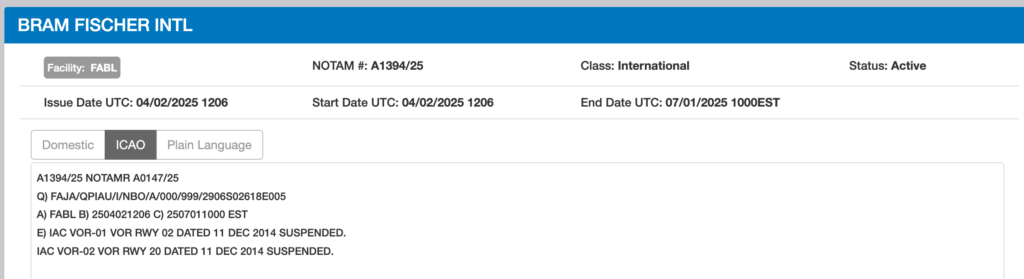
Others weren’t so lucky – IFR procedures at FABL/Bloemfontein, FARB/Richards Bay and FAUP/Upington will remain restricted until further notice.

The issue appears to be both a safety concern and a politically sensitive matter — the country currently faces what is being described as a looming ‘air navigation crisis.’

The Transport Minister is under growing pressure to provide answers, a process that has already led to the suspension of the CEO of Air Traffic and Navigation Services (ATNS). It’s clear that all is not well within the ranks.

So what exactly is going on there, and why do these procedures need revalidation anyway?

Unapproachable Approaches

Three months ago an investigation was launched into why the revalidation of over three hundred instrument procedures had lapsed leading to delays, and unnecessary headaches for pilots and flight planners.

The primary cause was identified as a critical staffing shortage.

IFR procedures aren’t just set-and-forget. Dig into the ICAO SARPs (more specifically Docs 9906 and 8168) and you’ll see that instrument flight procedures should be periodically revalidated (usually every 3 – 5 years) to make sure they remain safe and operationally relevant.

They must remain adequately clear of obstacles for instance, especially when terrain or construction has changed since a procedure was designed.

They must also comply with updated ICAO PANS-OPS or local regulations and keep up with changes to navigational standards (such as PBN). Not to mention, the charts themselves must remain correct and accurate.

It is a skill in demand, and there are comparatively few aircraft and crew in South Africa certified for this work – so much so that accusations have emerged of ‘poaching’ of staff between competing service providers.

In the case of South Africa, procedures due for revalidation are being pushed back months, especially at smaller lower priority fields. The result is a major backlog of unvalidated procedures.

It just isn’t a simple process.

Revalidations are a complicated business requiring both desk-based assessments and flight validation by specially calibrated check aircraft.

Aside from shooting an approach for instance, a full procedural design check is required by qualified designers which includes an analysis of updated obstacle and terrain data along with a cross check against changes in airspace structure and traffic flows.

‘Accelerated’ efforts are now underway to urgently recruit and train a bunch more of them, but this takes time.

Who is liable to pay for it?

While costs are circumstantial to the complexity of each procedure, it is not unreasonable to see bills for revalidations (including design, consultation and flight testing) to exceed $40,000 USD each.

In the case of smaller or regional airports this can fall on airport authorities or operators. At larger airports it is hard to know which entity is responsible for footing the bill.

A lack of consensus leads to delays, and the withdrawal of procedures.

What is the operational impact?

In a nutshell, pilots can show up expecting IFR access only to find that procedures are ‘not available until further notice.’

ATC can’t (and won’t) clear you for an IFR procedure that isn’t validated – even if it’s charted and in your nav database.

Ultimately, the onus will continue to fall upon operators to search for IFR alternates to keep their flight plan legal.
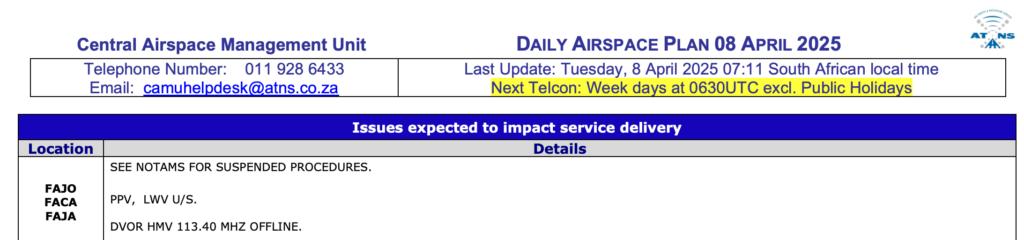
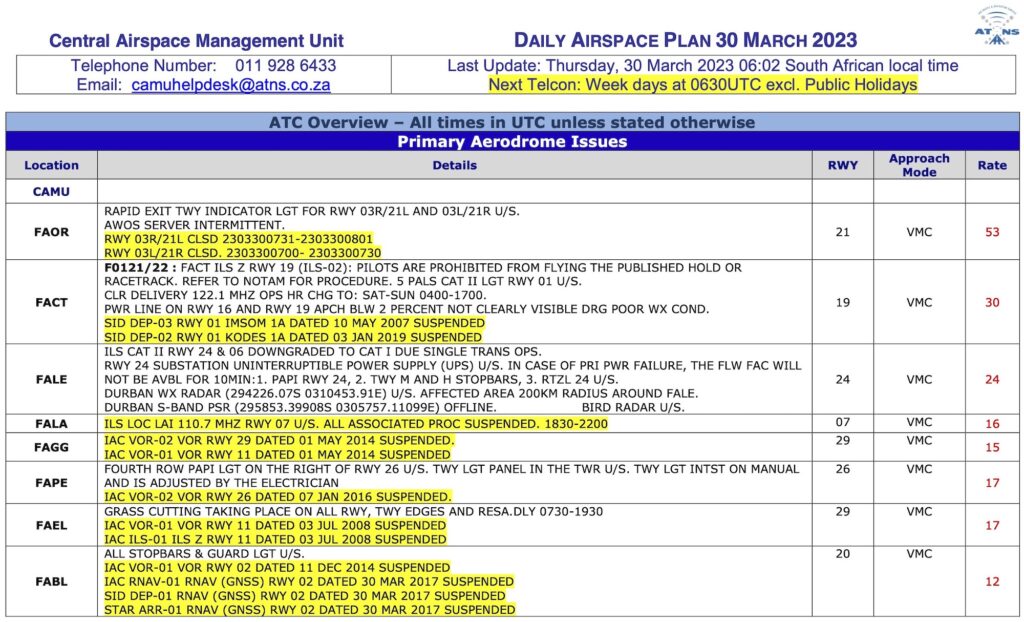
And if you’re unfamiliar with flight planning in South Africa, this can be a challenge. South Africa’s Daily Airspace Plan can provide some guidance on airports where procedures have been suspended – but it is important to consider the Notams carefully.

Look out at smaller airports.

It seems clear that there is no immediate fix to South Africa’s Air Navigation crisis.

News this week is consistent with plans to prioritise procedures at larger airports first – which will continue to be to the detriment of smaller ones. Therefore operators to South Africa’s regional airports will likely be grappling with this issue for some time yet.

Work continues between ATNS, SACAA and the Department of Transport on how best to future-proof the currency of South Africa’s IFR infrastructure. But at time of writing, a conclusive answer has yet to emerge.


South Africa’s Unapproachable Approaches

South Africa is going through some troubled times on the aviation front right now. Fuel issues, power outages, and now, apparently, they are losing a whole load of their instrument approaches nationwide.

The Fuel Thing

Not as serious as their ‘fuel thing’ in 2022 (when floods disrupted the main transport line to FAOR/Johannesburg and they had severe jet fuel shortages for months).

This is limited to BP, who are to stop providing jet fuel at airports across the country. They’ve already withdrawn from FACT/Cape Town, and will do so at other main airports FAOR/Johannesburg and FALE/Durban from the end of April.

Shortages have also been occurring FABE/Port Elizabeth, FALE/King Shaka, FAEL/East London and FAUT/Mthatha.

So if you’re headed there, double-check with your local agent what alternative fuel suppliers are available, and what actual fuel is available for that matter.

The Power Thing

Load shedding is an ongoing issue. All airports have their own generators, so ops generally aren’t the issue. However, it is causing some concerns (again) for fuel.

Airlines have been tankering into FACT/Cape Town due to potential limits after the load shedding caused problems with the primary supplier.

There have been some Notams suggesting limited tower availability at some (generally smaller, regional) airports.

The Instrument Approach Thing

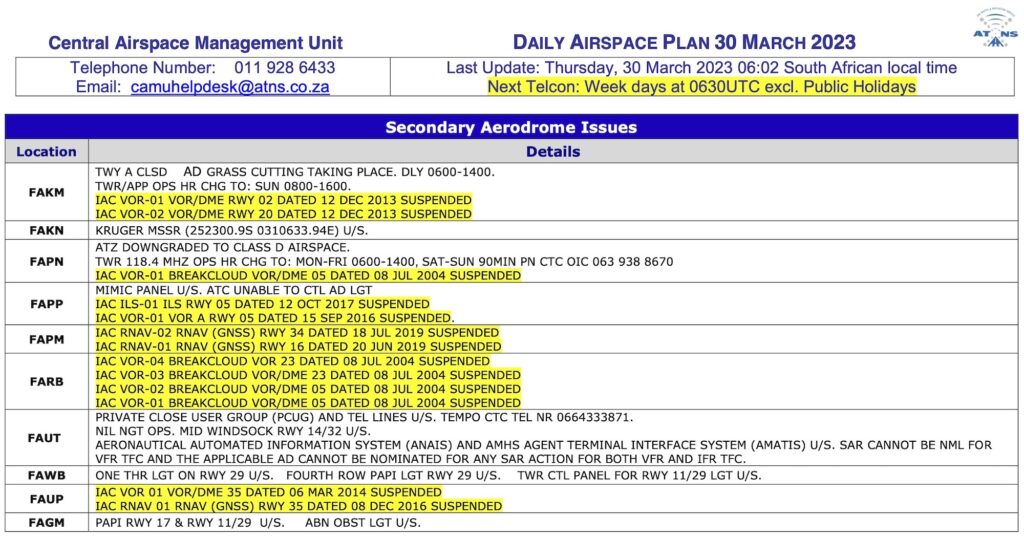
Authorities are suspending instrument approaches at a whole load of airports across the country. A check of South Africa’s Daily Airspace Plan shows issues with ILS, VOR, RNAV and GNSS approaches at various airports:

The reason for these suspensions is not yet clear, but seems to be related to an ICAO safety audit that is currently taking place – as most of the suspensions got published by Notam half-way through their visit.

What does this mean for operations?

It means you might want to see what is available at alternate airports, because many approaches might not be and that could turn out to be a nasty surprise for pilots.

Beyond that, it is not currently clear why they are being suspended – whether audit findings suggest safety issues, or if some are due to problems with power outages and intermittent signals.

If you have any information, please get in touch at news@ops.group


ATC radio outage in Johannesburg Oceanic

CPDLC has been fixed in the FAJO/Johannesburg Oceanic FIR following yesterday’s outage. That’s the only thing ATC have currently got to communicate with aircraft, as their radios have been out of action since November.

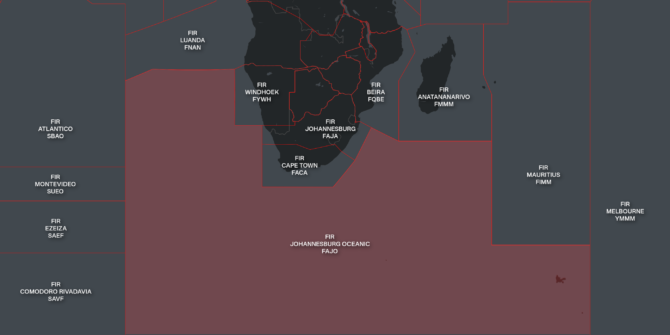
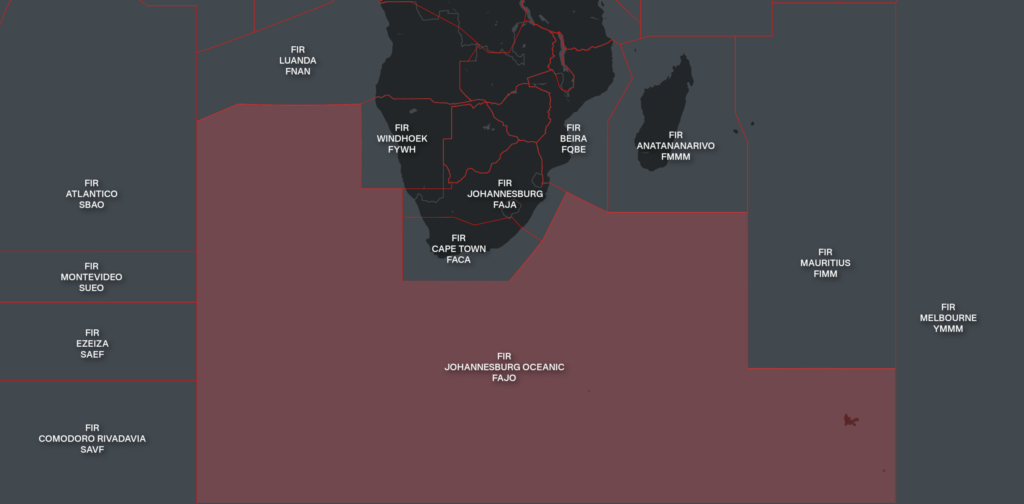
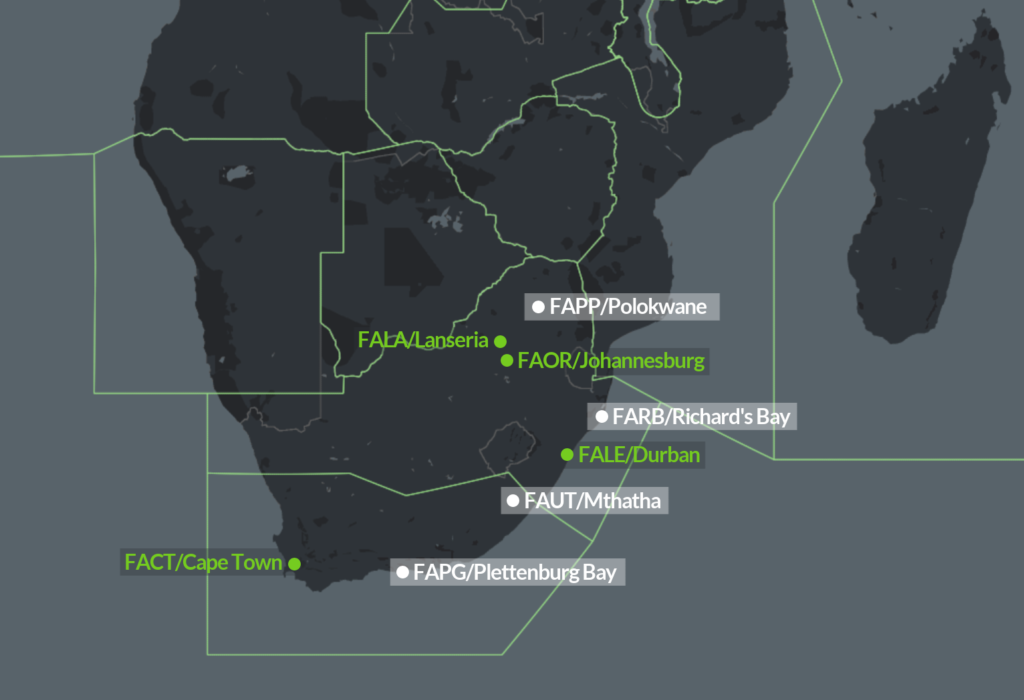
The FAJO/Johannesburg Oceanic FIR covers a pretty big chunk of airspace:

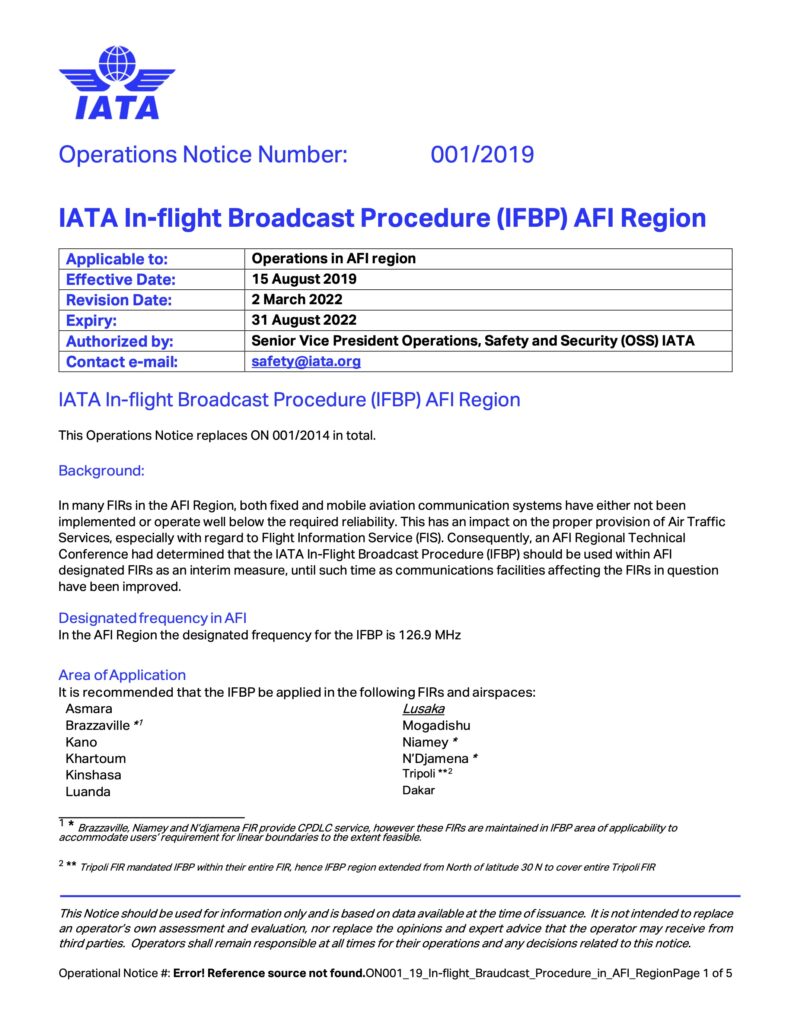
Aircraft not equipped with CPDLC will have to broadcast on the emergency In-Flight Broadcast Procedure (IFBP) VHF frequency 126.9, and maintain a continuous listening watch on 123.45. Here’s the Notam for that:

A3931/22 - TRANS AND REC U/S. PRI COM IS CPDLC. ACFT NOT CPDLC/ADS-C EQUIPPED MUST BCST 
AND MNT IFBP (IATA IN-FLIGHT BROADCAST PROCEDURE) ON 126.9 MHZ. 
11 NOV 17:57 2022 UNTIL 31 DEC 23:59 2022 ESTIMATED. CREATED: 11 NOV 18:06 2022

You can check IATA’s doc for a quick summary of IFBP here:

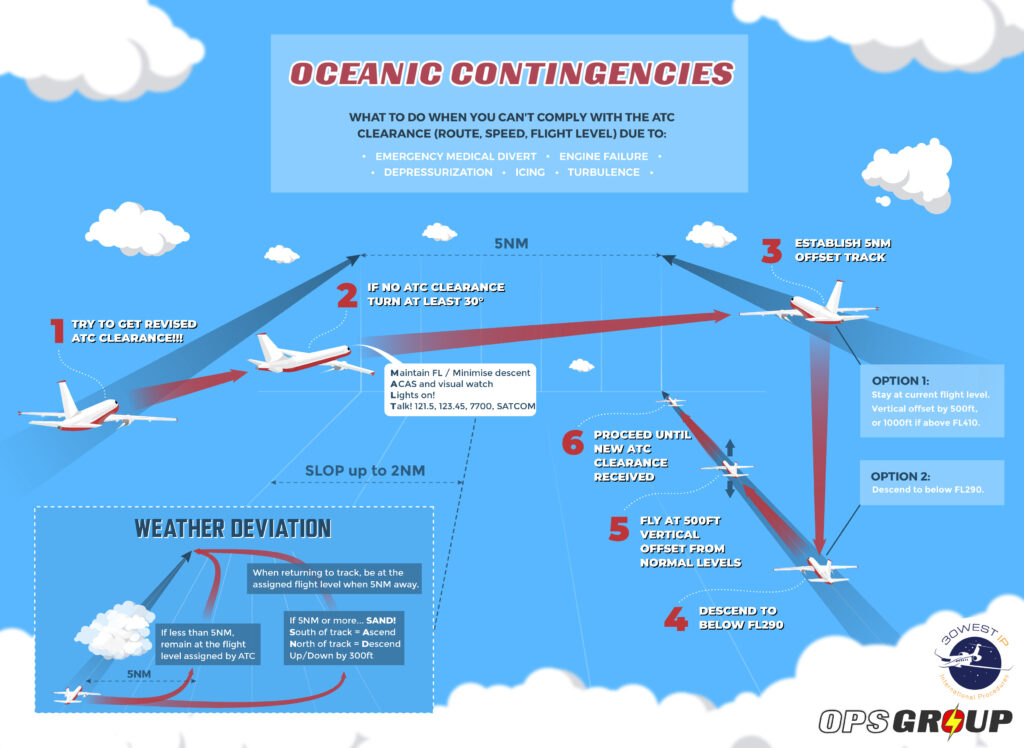
As far as we can tell, South Africa hasn’t published its own Contingency Plan to help us work out what to expect when we’re flying through their oceanic airspace and we can’t reach ATC.

But ICAO harmonized the contingency procedures for all oceanic airspace worldwide back in 2020. The basic rule is this: turn from the route by at least 30°, offset by 5 NM, stay at your current level or descend below FL290, then apply a cheeky little vertical offset.

Power Outages

Power outages are an ongoing issue in South Africa. Airports remain unaffected, directly. However, yesterday’s CPDLC outage coincided with a breakdown of several ESKOM powerplants. We aren’t sure whether this was a coincidence on not.

The continued power outage crisis may lead to delays with certain services which have a knock on effect on your operation. The likelihood of civil unrest is also growing so caution on the ground in the country is recommended at this time.


Is Aviation in South Africa Going South?

Two South African airports have recently had their licences revoked.

Why has this happened and does it mean anything bigger for aviation, particularly commercial aviation, in South Africa?

FAPP/Polokwane

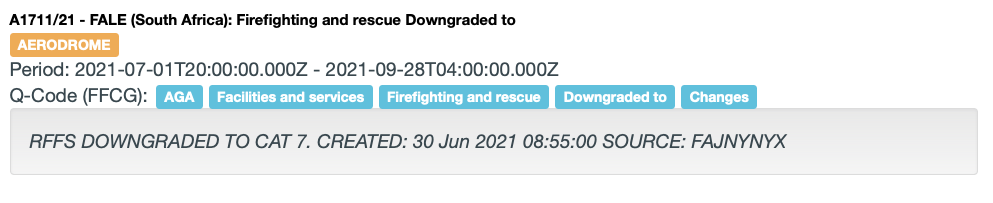
Polokwane International Airport in the Limpopo Province had their airport status downgraded in April 2021, moving it from a Category 7 to Category 2 after the SACAA determined they were non-compliant in safety standards.

Category 2 means it is unable to provide the minimum level of emergency services required for commercial aircraft. FALA/Lanseria and FAOR/Johannesburg are now the closest major airports for this province.

FAPG/Plettenberg Bay

Plettenburg airport had their licence revoked August 2021, following a downgrade from category 4 to category 2, also due non-compliance with safety standards.

FARB/Richard’s Bay

The municipal airport in Richard’s Bay lost its status in 2020 as the airport management company were unable to finance the necessary emergency and fire services to support commercial operations.

FAUT/Mthatha

Mthatha airport (formerly Umtata) was downgraded in 2019 due a lack of emergency services and emergency systems which need technology upgrades.

What are the regulations?

The SACAA applies standard ICAO licensing requirements to their aerodromes. These are laid out in ICAO Annex 14 (Aerodrome Design and Operations), Doc 9774 (Manual on Certification of Aerodromes) and ICAO Annex 19 (Safety Management).

The oversight and ability of the authority to monitor is also monitored.

ICAO audit countries through the Universal Safety Oversight Audit Program (USOAP). It is a little less in-depth than the FAA’s IASA program (which recently saw Mexico downgraded) but looks at the “effective implementation of the critical elements of a safety oversight system and conducts a systematic and objective review of the State’s safety overs…. something something… implementation of ICAO SARPS, procedures and aviation safety best practices.”

Basically, is the authority checking everything is up to scratch in their region of jurisdiction, and if not, do they do something about it.

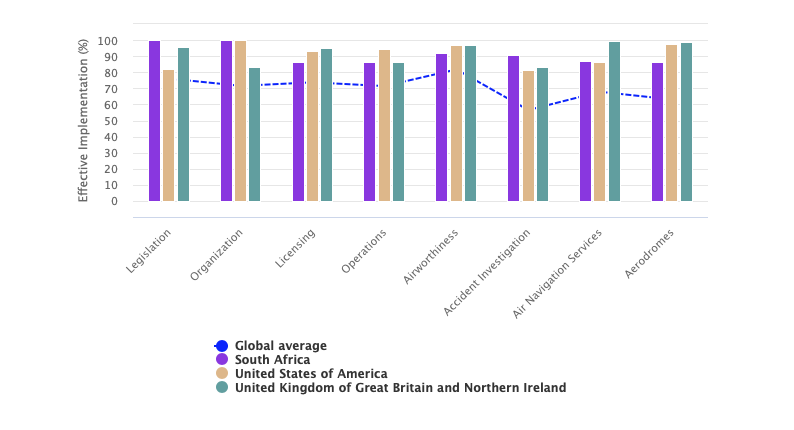
ICAO only have 8 countries red flagged. South Africa comes out pretty well in it.

So the downgrades are necessary?

Unfortunately, yes, but it means a Catch 22 situation for these aerodromes because without traffic, they do not have the finances to improve their capability.

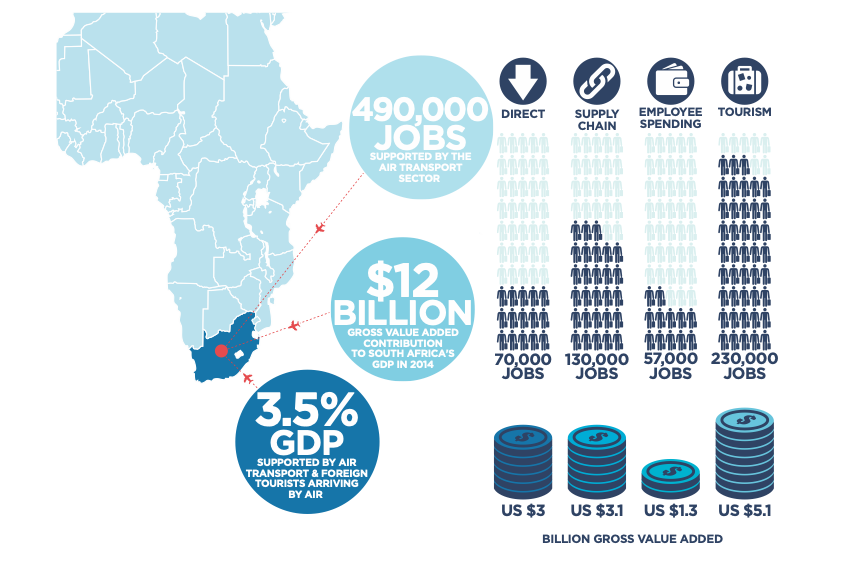
Aviation is a major contributor to the South African economy.

IATA published a report on aviation’s contribution to the South African economy (it is not clear when this was published). What is evident is South Africa is, like many countries, struggling with the Covid pandemic. The South African variant has seen them cut off to most of the rest of the world, and this is having a longer term impact on their aviation infrastructure.

The downgrading of airports unfortunately points at a lack of funding within the country. There are also questions of corruption within the government and the airport management companies. Whatever the reason, funds are not reaching (or are not available) to the airports which need investment, particularly those which do not not benefit from cash flow from international flight operations and so facilities and services are not being maintained.

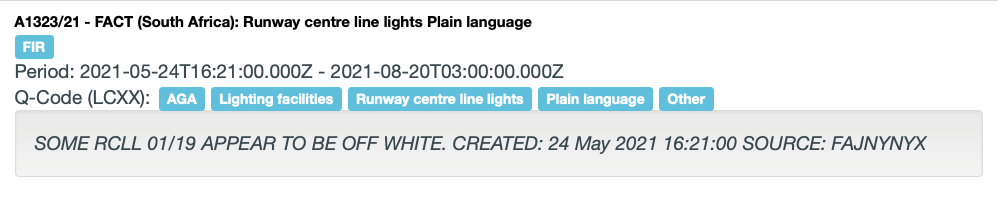
In 2020, the SACAA released this (rather odd) statement regarding rumoured ILS issues across the country. It isn’t immediately clear why or where the rumour started from.

A NOTAM check actually shows surprisingly few issues at the major airports.

Political problems

The country is undergoing moderate levels of civil unrest and political divide. King Shaka airport was targeted in attacks in July 2021, and there do not seem to be signs of it improving in the near future.

Power problems

South Africa is undergoing continuous load shedding due issues with their power supplier, ESKOM. The Airports Company South Africa (ACSA) confirmed however that all nine of its airports have the ability to operate on diesel generators covering essential loads for between 18 and 72 house – so load shedding should not impact their operations.

Fuel problems

A NOTAM search brings up fuel issues at several airports, however, they are all small domestic ones  FAEL, FAUT, FABE and FAUP

The Big Picture

South Africa is, like many countries, struggling with the long term impact of the Covid pandemic. However, the standards at the major international airports remain good and the aviation infrastructure is still more than able to support international flight operations.

Additionally, reports suggest general aviation is going strong within the country.

Cape Town was the top tourist destination for UK travellers in 2016, and regularly tops the top tourism destinations lists.

As the world reopens, hopefully the situation will improve. For now, all the global aviation industry can do is look to support countries like South Africa once they are able to again.


International Bulletin: Sharm El Sheikh reopens, New ICAO Phraseologies 10NOV

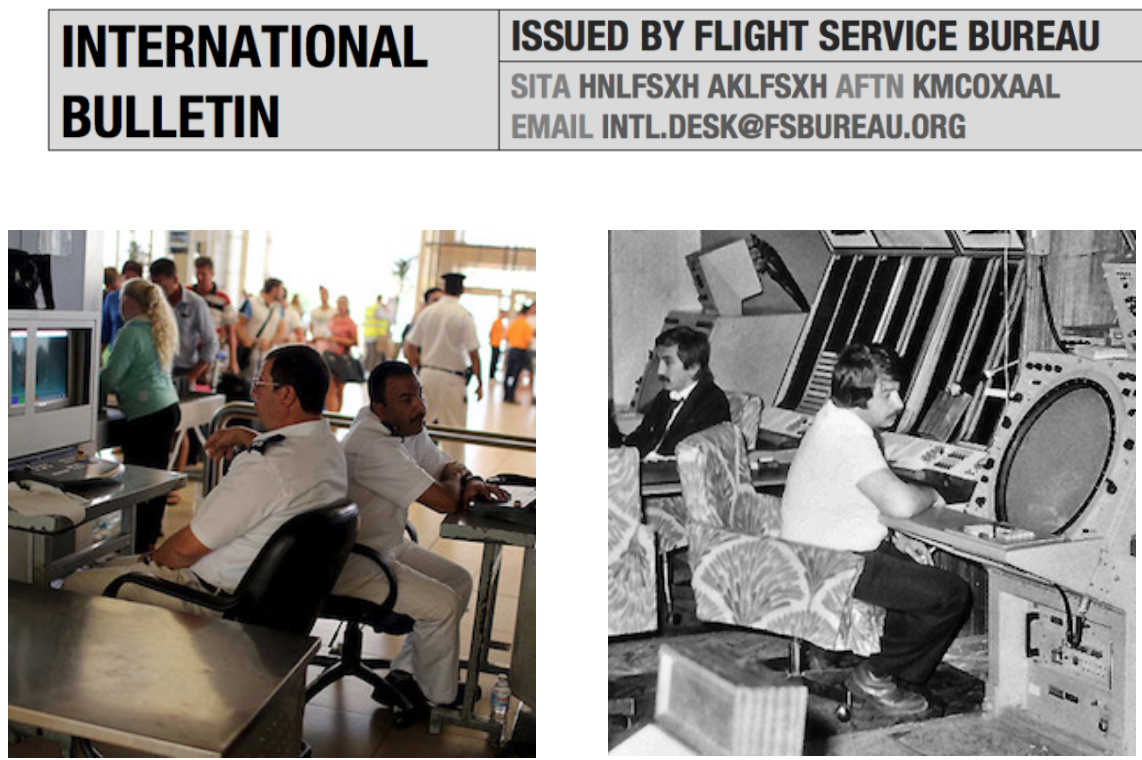
Sharm El Sheikh reopens 03NOV  HESH/Sharm El Sheikh, Egypt has reopened to international traffic, with a number of airlines starting services again on 01NOV. However, there are conflicting views on security at the airport, depending on your state of registry. Read article.

New ICAO Phraseologies 03NOV From 10NOV, new international aviation phraseology for SIDs and STARs is effective, but there’s a problem. Read article.


OEJN/Jeddah, Saudi Arabia On 27OCT, Saudi Arabia intercepted and destroyed a ballistic missile launched from Houthi-controlled territory in Yemen. The Houthis confirmed the launch via the Saba news agency, saying that the missile was targeting Jeddah International Airport (OEJN), not the holy city of Mecca, as some other news reports had claimed.

EHEH/Eindhoven has new procedures for PPR effective 30OCT – if you’re flying there, get PPR direct from the airport. You can read all the info on their new GA page. Oh, and there’s now a fee. €300 for PPR for a 21 ton aircraft, for example.

LFMN/Nice Runway 04R/22L will be closed during November.

WARR/Juanda Airport is closed due to works in progress except for helicopter medical evacuations from until 15NOV

UTZZ/Tajikistan Disagreement between Russia and Tajikistan may lead to operational restrictions between the two countries. Air traffic between Moscow and Dushanbe may be suspended from 08NOV.

FAZZ/South Africa Reports this week suggest that foreign nationals entering South Africa through any port of entry should expect delays up to four hours due to a new enhanced security measure that requires the capture of fingerprints and a photograph. OR Tambo in Jo’burg seems to be the worst offender.

BGKK/Kulusuk has updated opening hours: 1100-1900Z Tuesday to Saturday. They ask for 3 hours minimum notice PPR.

PLCH/Christmas Island Fuel is in short supply, notified as being only available for Scheduled service and emergency flights. PLCH is often used on Pacific crossings as an alternate, so any diversion would be considered an ‘emergency’, but check before actually planning a tech stop.

LEZZ/Spain Previously notified fuel strike now appears to be one provider only, so it looks like impact minimal.

DGAA/Accra ATC is having a few VHF issues, primarily on 126.7 – if you can’t reach them, call HF 8903 instead.

EDDT/Berlin Tegel will be busy 14-18 NOV due to state visits, they won’t accept GA/Private traffic during this time, but you can check specifics with them at vvd-txl@berlin-airport.de

HLLS/Sabha, Libya The airport has been closed for over 2 years due to fighting in the area. A new Notam has been issued which officially extends the closure period to 26DEC, as talks continue between the authorities and local groups to find a way to re-open the airport.

LYBE/Belgrade Jet A1 not available through the airport fuel service provider until the end of the month. Make sure you get a confirmed fuel release through a third-party fuel provider before operating here.

LTZZ/Turkey On 29 October, the US Department of State ordered the departure of family members of employees posted to the US Consulate General in Istanbul due to security information indicating extremist groups continued aggressive efforts to attack US citizens in Istanbul. US Operators should consider ops into airports in Turkey carefully.

OMDB/Dubai Traffic was stopped for approx 1.5 hours on 29OCT due to a drone. The Airport closed from 1930-2050 LT, and some flights were diverted. OMSJ/Sharjah was also briefly closed due to the same drone. Unauthorized drones have halted airport operations in Dubai twice in recent months.

GMZZ/Morocco is busy from 4-20NOV, GA and non-sched traffic will see restrictions. Check their Notam A0896 from 01NOV. If you’re part of the event, put RMK/COP22 in your FPL. No long stays will be allowed.

WSSL/Singapore Seletar We’ve received crew reports of challenges with visual approaches into Seletar (there are no instrument approaches). There are unlighted obstacles on the approach to Runway 21. After dark, approaches are only possible to Runway 03. More importantly, noise rules will soon demand a challenging base turn, greater than 5 degrees, to a half-mile 3.5 degree final, to a 1% down slope runway. We welcome further comments (bulletin@fsbureau.org).

LGZZ/Greece There will be a ferry strike between the Greek mainland and all Islands on 24NOV. No services will operate that day.

FTZZ/Chad Reports of nationwide public service strike including Airport operations at N’Djamena. The unions stated that the strike will persist until the government pays overdue wage arrears.

View Full International Bulletin 03NOV2016


Midweek Briefing: Taiwan ADS-B requirement, Costa Rica volcano

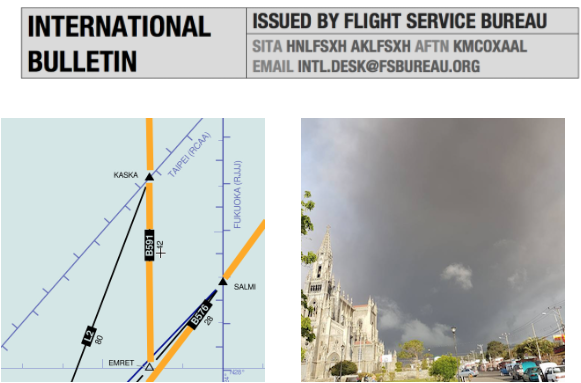
Taiwan ADS-B requirement 21SEP Yesterday, Taiwan pushed the requirement for ADS-B above FL290 for all aircraft, back to 2020 – as a fast approaching deadline of December this year was looming. Read the article.

Costa Rica volcano 21SEP MROC/San Jose, Costa Rica has reopened after the eruption of the Turrialba volcano on Monday. A risk of further closures continues. Read the article.


OPZZ/Pakistan Some airspace in the north of the country (Kashmir region) has been closed by the Pakistan CAA. Details are unclear but reports indicate Gilgit, Skardu and Chitral Airports are affected by the closure.

BIKF/Keflavik Departing KEF eastbound? Icelandic ATC would love you to file the following as a standard route: PIXUM PETUX ORTAV ODPEX, or 63N022W CELLO if you’re planning to cross 10W at GOMUP or south of.

EDDL/Dusseldorf has closed 05L/23R for a couple of days to remove a WW2 bomb. Some delays at peak times may result.

HLGT/Ghat, Libya Three foreign nationals were kidnapped along the road that leads to Ghat Airport on 19SEP, located in the Fezzan province along the southwest border with Algeria. The foreigners were construction workers employed by the Italian-owned Conicos company to service Ghat Airport. There are numerous armed militia and terrorist groups active in the area and the foreigners were said to be operating under discretion due to the security risk.

EDHL/Lubeck will closed on Oct 4th for repairs – all day.

ENGM/Oslo will introduce new RNP AR approaches in November, available to all runways. Auth from Norwegian CAA is required to use them.

FKKD/Douala now requires PPR 72 hours prior arrival, for non-scheduled flights, due to upcoming space restrictions as a result of WIP. You can make requests directly to Airport admin at pce.douala@adcsa.aero.

GBZZ/Gambia In a change to procedure, Overflight Permits, and Landing Permits for traffic operating to GBYD/Banjul, are now issued by the Department of Flight Safety Standards at the GCAA.

HCMM/Mogadishu has issued a security reminder to operators: “OPERATORS SHOULD EXER EXTREME CTN AND FULLY ASSESS THE POTENTIAL FOR RISKS TO FLT SAFETY AND SECURITY WHEN PLANNING OR CONDUCTING OPS INTO MOGADISHU AIRPORT DUE TO LACK OF INFORMATION ON ARMED CONFLICT AND LACK OF AERONAUTICAL INFORMATION.”

FAZZ/South Africa The CAA has updated its warnings for operators, with new guidance for two airspace blocks: that affected by the Syrian conflict – namely Baghdad, Damascus, and Tehran FIRs; and that affected by recent concerns over the Northern Sinai – their advice is to overfly at FL260 or higher.

LMML/Malta airshow coming up on 24-25 Sept, multiple restrictions, check before operating or filing as alternate.

FZZZ/DRC Congo Since September 19 large-scale demonstrations have been resulting in violent clashes between demonstrators and security forces in Kinshasa and elsewhere in the country. The situation is particularly tense in Kinshasa where violence has caused casualties. These demonstrations could continue over the next few days and the situation could further degenerate. The sole road to the Kinshasa airport could be blocked and some flights have been cancelled.

OJZZ/Jordan It’s White Stork migration season, and Jordan has issued warnings for all of its airports, for crews to be mindful of the high chance of presence of large flocks of them on arrival and departure.

SKED/Bogota has some comms issues on north/south bound routes to Peru (Lima FIR); 10 minute separation is applied betwen aircraft on these routes until at least Sept 26th.

KZZZ/USA For some good reading, the FAA (thanks Andy for passing this on), have updated their Aviation Weather guidance doc. This is the first revision to the document since 1975.

Input: ATC, Pilots, Dispatchers: Any topical items that you think should be going out to the community? Let us know, and we’ll get your message out there. tellus@opsgroup.co.

View full International Bulletin 21SEP2016


Midweek Briefing: Residual Disinsection for Italy, New Moscow Airport

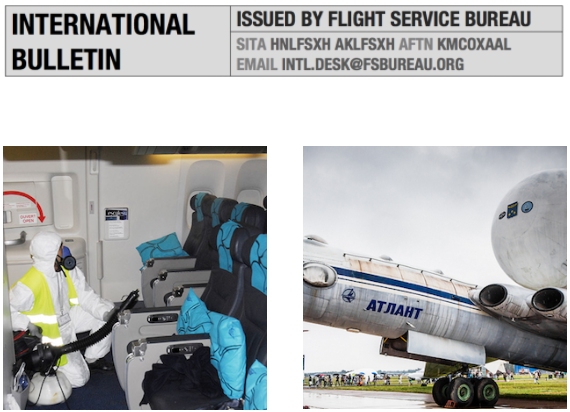
Italy  now requiring Residual Disinsection 17FEB In light of the spreading global coverage of Zika Virus cases, countries are rapidly changing rules related to Quarantine and Health. Italy is now requiring residual aircraft disinsection for every aircraft coming from any area, not only Zika affected ones.

Moscow Ramenskoye opens to civil traffic 17FEB UUBW/Moscow Ramenskoye, which previously served as a military airfield, is scheduled to open to civil traffic as an International Airport on 16MAR, becoming the fourth Moscow Airport. Read more … 


UUBW/Moscow Ramenskoye, which previously served as a military airfield, is scheduled to open to civilians as an International Airport on 15MAR2016. The airport will be Moscow’s fourth largest and is expected to serve approximately 1.9 million passengers per year. Russian Railways is planning on constructing a direct rail link between the facility and Moscow. Read the full article.

Worldwide As the mosquito-borne Zika virus spreads worldwide, some health and aviation authorities have begun targeting business aircraft to be treated with insecticide – similar to requirements that have been in place for commercial aircraft arriving from certain points of origin. The most prominent to date is Italy, which has reported several recent cases of the Zika virus affecting people who returned from trips to South America and the Caribbean. A “Certificate of Residual Disinsection” is now required for all aircraft operating in Italy, following recommended WHO and International Civil Aviation Organization Annex 9 procedures. Italy had originally limited the certificate requirement to aircraft arriving from Zika-affected countries, but “within 36 hours that changed” to all countries. Authorities in Costa Rica are requiring that aircraft arriving from affected countries be sprayed on arrival – with crew, passengers and luggage aboard – with an insecticide provided by the local agriculture department.

UADD/Taraz, Kazakhstan has been upgraded to RFF/Rescue Fire CAT9, and with regular international flights starting in June, should have customs available. Maybe become a useful Central Asian en-route alternate.

UKLV/Lviv FIR, Ukraine A new Notam (A0193/16) is issued to extend the ban in Ukrainian Airspace of any aircraft operator registered in the Russian Federation until 09MAY.

NWWW/Noumea has multiple runway (and therefore airport) closures until 25FEB, check Notams carefully if operating.

NZAA/Auckland Work is currently in progress on the threshold of RWY 23L with the threshold inset 2,270m.  The information is contained within AIP updates and not via NOTAM. Operators should note there is are no ILS approaches available at Auckland until 30MAR. While weather is usually very good during February and March operators can expect delays in poor wx.

NZQN/Queenstown is closed from 1800 each day until 31MAR for runway widening works.

AYPY/Port Moresby Telecoms outage continues. To contact ATC Centre
use (675) 325 8704 instead of published numbers. Multiple VHF freqs out of service, use HF 5565 as alternate.

RPHI/Manila has a radar outage on 18-19FEB meaning procedural control will affect the Luzon island area within the FIR, 10/15 minute enroute separation as standard.

Somalia A local terrorist organisation claimed responsibility for the bombing of a Daallo Airlines passenger aircraft on 02FEB shortly after it took off from Mogadishu’s Aden Adde International Airport (HCMM/MGO). The bombing forced the Airbus A321-111 to make an emergency landing at Mogadishu’s airport.

South Africa Refurbishment will affect Johannesburg’s OR Tambo International Airport (FAOR/JNB) beginning 13FEB when security and immigration will move from Terminal A to the Central Terminal. Slow processing expected until end March.

US and Cuba advance Air Service agreement US officials will travel to Havana to officially sign the agreement that will make the two countries a step closer for its first commercial flights. Once the  US-Cuba air travel pact that was agreed upon on 16DEC2015 will be finalized, airlines will have about two weeks to submit applications for US-Cuba routes with the US Department of Transport and get approval from Cuban authorities to obtain space at Cuban airports. Industry experts expect that the first Cuba-bound flights will be in the air sometime in 2016.

View the full International Bulletin 17FEB2016