Simthing to Think About

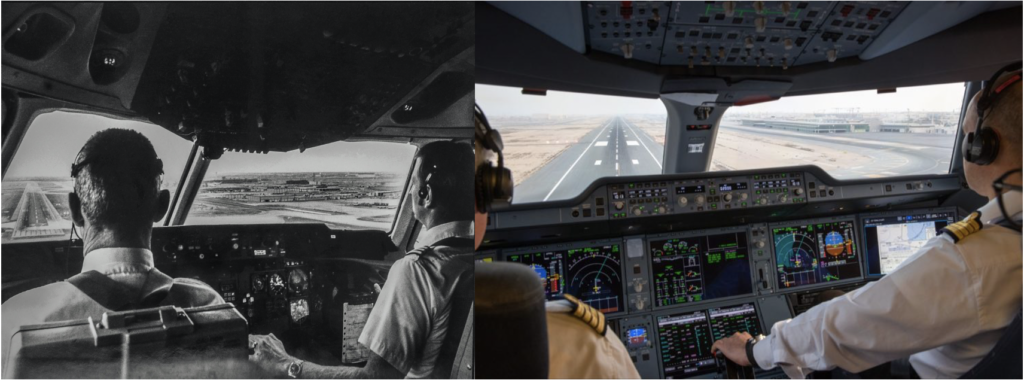
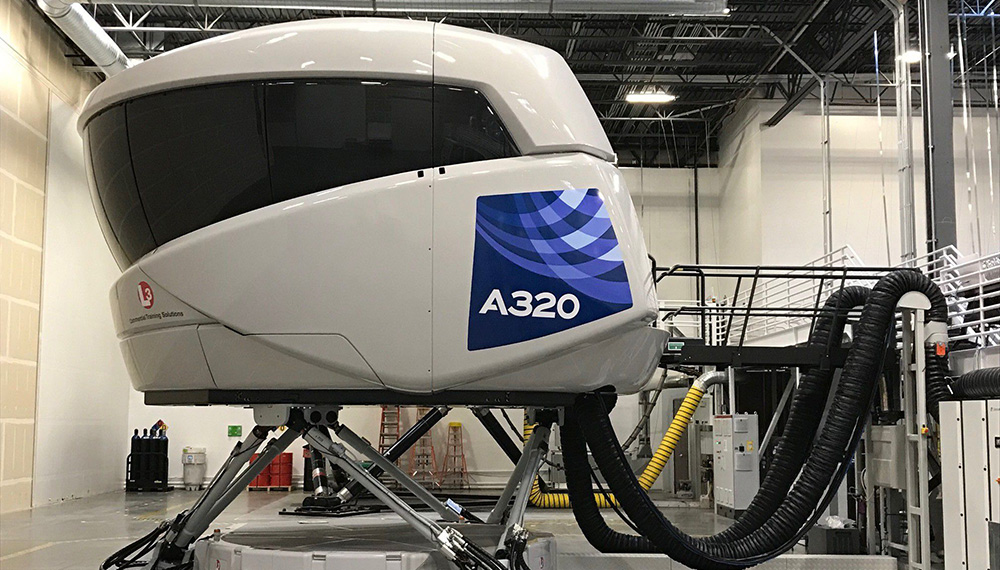
What are you practicing with your crew in the sim nowadays? An engine failure on take-off? A few technical malfunctions? An assessment of their competencies and then send them on their way for another year?

Well, we thought we might suggest a slightly different sim scenario for you to think about…

What else should you be throwing at your crew?

There have been a bunch of recommendations out from the authorities suggesting crew swot up on their Unreliable Speed procedures because the number of these occurring have increased a lot recently. Something to do with aircraft coming out of long term storage with bugs nesting in their probes…

However, an ‘Oracle of the NAT’ recently pointed out to us that many crew have not been doing anywhere near as many NAT routings, which means their NAT procedures probably need as much attention as their airplane’s pitot ports do.

What are we talking?

Incorrectly flown contingency procedures (not to do with weather) were one of the top reasons for lateral deviation events in the NAT in 2020. Now it was admittedly only 6% but that is still one of the Top Ten mess ups, and a mess up easily prevented with practice.

There were also a few incorrectly flown weather deviations. These procedures are not hard to do, but they do need thinking about once in while (preferably before you’re actually up there needing to know them) which is why the sim suggestion was presumably made. 

Left, right, up, down. Quick, whaddya do? (Credit: Ramon Stalenhoef)

Now, you could just email everyone a reminder of how to do it. A bit of text and a diagram. But a handier way to recap (and in a way that properly puts the info into their heads) would be to really put crew up there, throw some “fun” failures at them, and let them practice “for real” in the sim.

So, what’s the recommendation?

Well, we ain’t no trainers, but between us we have seen a few sims ourselves in our time. So here is what we suggest you might want to throw into a sim session if you think your crew could do with a refresher…
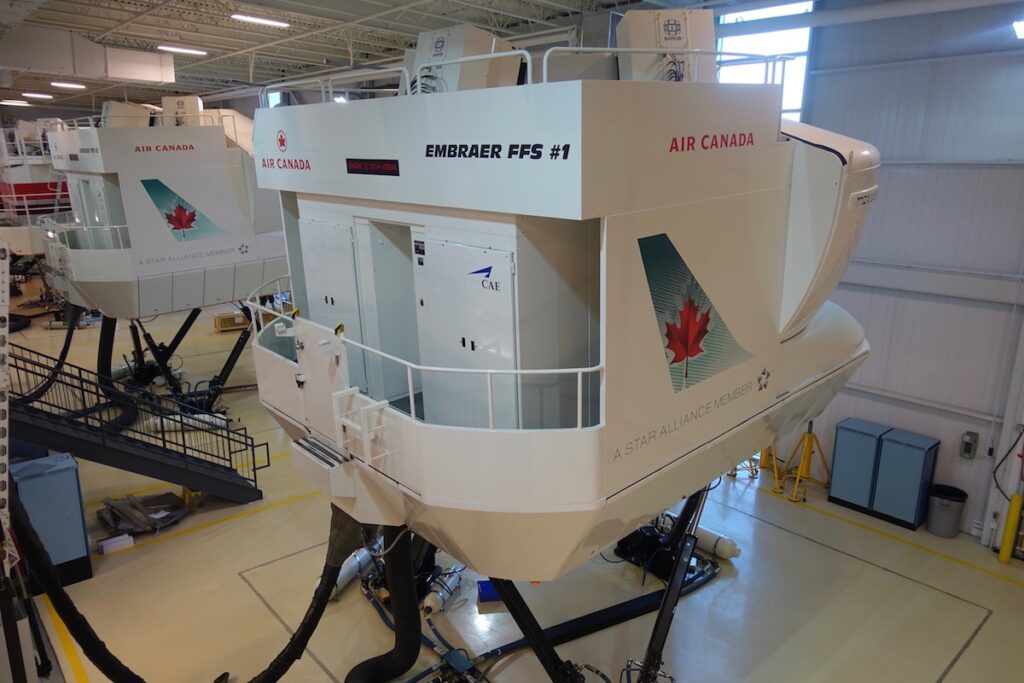
FFS for Full Flight Sim. Not for what all pilots think when they see ‘SIM Check’ on the roster.

The Opsgroup Ops on the NAT Sim Scenario Storyline Suggestion.

Let’s set the scene. It is the middle of the night, the flight is somewhere over the North Atlantic, dark, lonely and quiet, when…

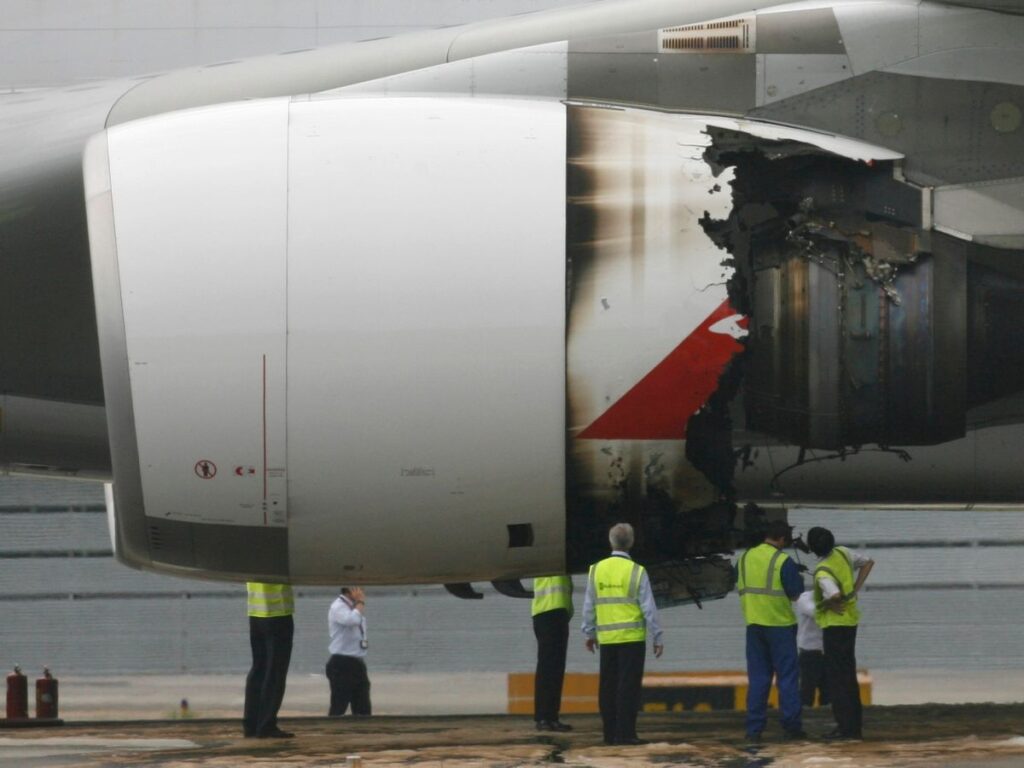
KABOOM! Rapid decompression.

This throws in a nice bit of startle factor (which is also something pilots need practice in dealing with.)

Now those contingencies will be put to the test – how much to turn, how much to offset, what else do they need to do and say?

There is also that good old Situational Awareness thing to look at as well.

Do they, for example, identify where other traffic is, think about the NAT tracks and their proximity to the next parallel one, and think about whether they were SLOPing already or not?

Let’s get really mean.

A big thing to consider with NAT flights is just how remote and far from land you often are. So Big Picture proactive planning is a good habit to get into.

This means setting up for emergency diversions before you find yourself suddenly having to do one. An awareness of where the closest and most suitable spot for a landing is in advance might really save the day. Or at least a few panicked minutes of trying to work it out.

This is important anywhere, but particularly so when flying in the NAT because something like a rapid decompression is going to have you zooming down to FL95.

Fuel can become a big problemo quickly, but so can separation to other traffic if you start diving down and crossing tracks.
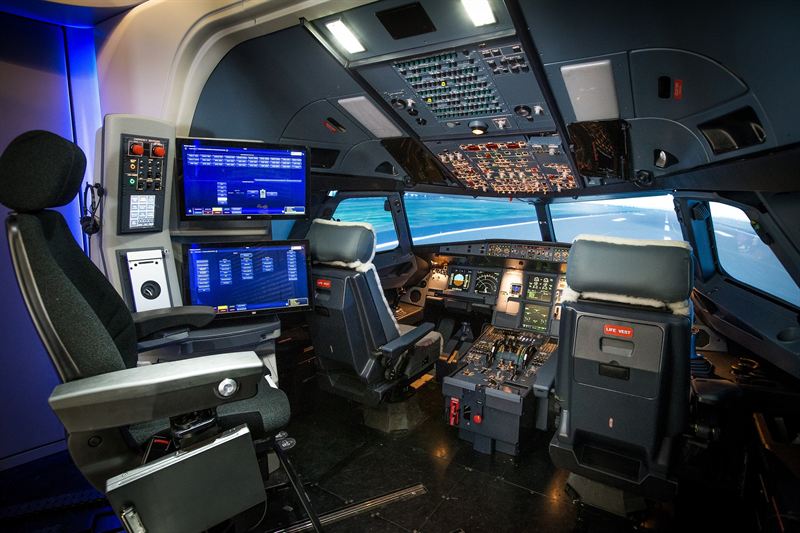
The fun seat.

Where we would do it.

We would be mean trainers. The ones that people always call sick for. Power-crazed with the fun of coming up with mean scenarios to inflict on our poor pilots!

We would definitely make sure it was remote, with a massive headwind making the “nearest” in distance the furthest in time. We would probably throw in some bad weather at one to see if the crew fly themselves into a corner, and maybe an HF blackout or ATC Zero just to make those radio procedures a bit more fun.

Then we would sit back and enjoy watching it unfold while rubbing our hands together gleefully.

You might be nicer than us though.

If you are then you could always share the following with your crew before the sim session:

Skills Fade.

The real point of this is that recent surveys of pilots returning to work (after prolonged periods) have shown that it isn’t the hand flying that gets rusty (well, it does, but comes back pretty fast).

It is the Procedures and the Workload Management which really suffer.

Unusual or unused (or not regularly used) contingencies and SOPs will need refreshing. The NAT is a prime spot where additional threats and challenges make it all the more important to not be rusty when you route through.

So sims to get your pilots’ flying skills up to scratch are critical. Practicing those engine-out procedures, crosswind landing techniques and general “How do I make actually it move?” hand-flying sessions will definitely help with confidence levels.

But opportunities to (re) consolidate those procedures, particularly those ones in challenging airspace like the NAT which are likely to be required on a standard flight could make a very big difference to safety in a practical way.
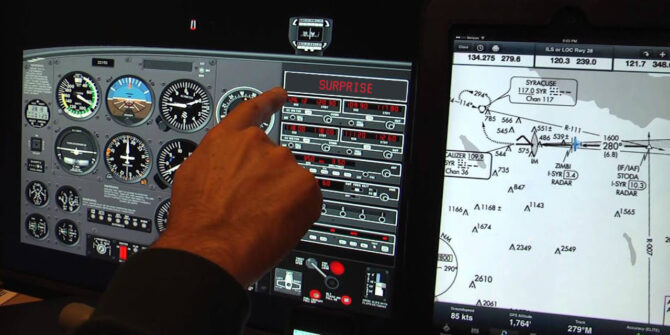

Expect the Unexpected: Evidence-Based Training

Today’s aviation environment is complex but incredibly reliable. Our aircraft are packed full of automation, systems and redundancies designed to keep us safe up there. Fancy things like EGPWS, Flight Envelope Protection and TCAS are there to protect us.

But herein lies the issue: because things are so reliable, the circumstances of the next accident waiting to happen are ever more challenging to predict.

All that technology is still limited by us humans. One thing we do know is that human factors have played a role in between 70 and 80% of airline accidents and serious incidents over the past thirty years. In many cases these accidents have certain things in common – poor group decision making, ineffective communication, inadequate leadership and poor flight deck management.

So it is clear we have an important role to play in making ourselves more reliable too.

Enter ‘Evidence Based Training’ or simply EBT for those in the know. And it’s a revolution for pilot training.

What is it in a nutshell?

In really simple terms it is about looking at data or ‘evidence’ to find relevant threats and errors and then changing the way we train pilots so they have the competencies they need to deal with them.

Cool, so what does that actually mean? Let’s delve into things a little more.

Out with the old

Traditional airline training was based simply on events that occurred on early generation jet aircraft from yester-year. There was a belief that simply exposing crew to those same ‘worst-casescenarios over and over again would be enough.

The cyclic was born. A long list of bad things that can happen which you’d periodically face in the sim. They tended to be manoeuvre based – you know the ones. V1 cuts, rejected take offs, go-arounds. As long as you flew them within limits you were officially ‘competent.’

It was simply a tick-in-the-box approach to pilot training. But you couldn’t help but get a nagging feeling the industry was missing the point: you have no way to predict what will actually happen to you when you go to work the next day.

Modern aviation has a way of throwing things at us that we haven’t seen before. Computer failures, mode confusion, strange stuff. Just look at the tragic case of Air France 447. Training in modern fly-by-wire aircraft has never been the same but it sadly came to late for that particular crew.

In with the new

Over time the amount of data or evidence out there improved dramatically. There were a bunch more sources – flight data, LOSA programs and air safety reports to name a few.

In 2007, a new industry-wide safety initiative emerged. It was led by IATA and began to use this evidence to identify relevant threat and errors that crews face for their particular operation and adjust training to better equip crew to deal with them. EBT was born. ICAO was sold on the idea too and hopped onboard in 2013.

The emphasis is on crew effectiveness as a whole by developing a bunch of competencies – tools that pilots can use in any scenario, normal or abnormal. The training uses unscripted situations to develop crew management strategies, techniques and human factors that are just as important to safe flight as technical skills.

Here is an example of the sorts of competencies that EBT training sessions look to develop (it really is the whole package):

  • Application of Procedures
  • Communication
  • Aircraft Flight Path Management, including manual flying
  • Leadership and Teamwork
  • Problem Solving and Decision Making
  • Situational Awareness
  • Workload Management
  • Knowledge

Isn’t that just Crew Resource Management?

Not really. Although CRM continues to be a solid step forward for the industry, when put into startling or surprising situations studies have shown we lack the capacity to immediately control our behaviour. What we need is practical training over time with consistency and reinforcement which is where EBT becomes so valuable.

It combines both technical and non-technical skills and focuses on the crew as a team, achieving successful outcomes when faced with the unexpected. It moves the emphasis away from checking and more toward training.

So how does this all work in the sim?

Good news, EBT doesn’t mean you’ll be in the sim more often. They’ll still pop up on a biannual basis. What will change is how the sessions are run.

EBT sessions are typically broken into two or three parts:

An Evaluation – this is where your baseline performance is measured. You’ll be given scenarios you may face in your own operation. This is so your trainer can get a good look at you in action and begin to identify your own personal areas of weakness that they can work on in subsequent sessions.

Proficiency Training– this is mostly manoeuvre based stuff you’re used to. Your trainer will focus on your technique. You’ll be put under pressure but the idea is to further develop your abilities in challenging circumstances. Your standard currency items will also be ticked off.

Scenario Based Training – this is the heart of EBT and where most of the work is done. The focus is on event management and the scenarios are off the script. You pretty much won’t know what is coming but you’ll have to apply your knowledge, skills and attitudes to a successful outcome. It is a journey of self-discovery in solving problems rather than simply following SOPs.

Over time these competencies will be reinforced – giving you the confidence in your own abilities to tackle whatever is thrown at you.

After all isn’t that how the real world works out there?

Other things to read

EBT is fast becoming an industry standard and many operators have have their new training programs up and running. For those that haven’t, here are two things you need to get started:

EBT looks at pilot competencies – a set of ‘tools’ for a pilot to quick draw out of their metaphorical tool belt in order to help them solve whatever situation flies their way. The Decision Making & Problem Solving ‘competency’ is a big, multi-faceted one, and it turns out that making a decision is often easy, but making a good one is less so. Read our article on this here.