Delays and Diversions in Dubai

An OPSGROUP member reported that on Feb 21, several long-haul carriers were forced to divert due to extended airborne delays.

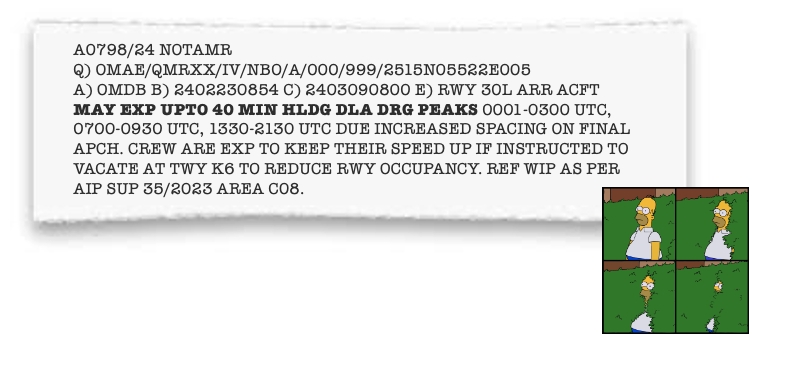
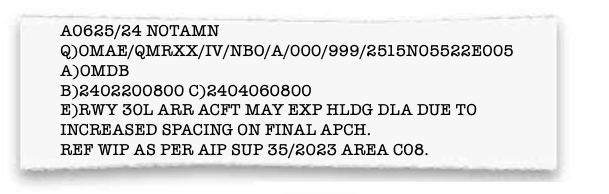
The problem stemmed from the following unassuming needle-in-a-haystack Notam…

 It was later re-issued (after-the-fact), somewhat sheepishly with an actual holding advisory …

The good news is that you can easily access the referenced AIP SUP online – provided you provide scans of your passport, your contact details, favourite colour, hobbies and the name of your first-born.

OR

You can just read the following summary of what’s been going on.

The Trouble SUP

You can read it in full here (but it’s heavy).

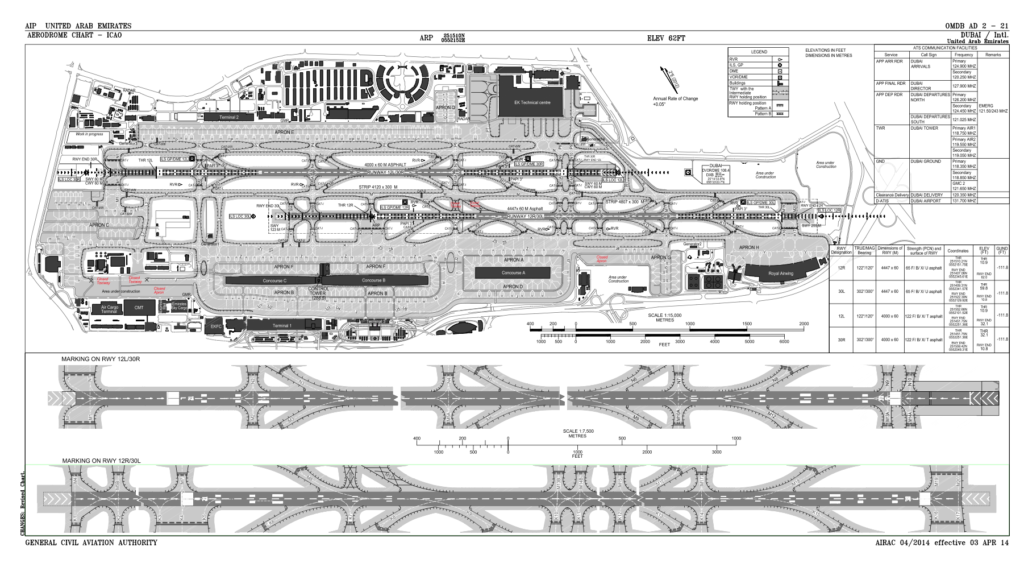
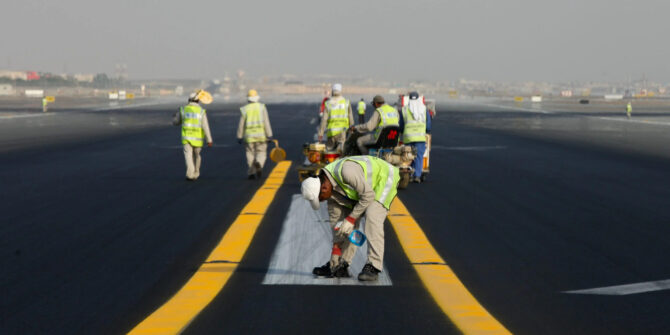
Basically, what you need to know is that there are ongoing taxiway works happening at the airport.

These are divided into areas, and the one causing issues is ‘C08’.

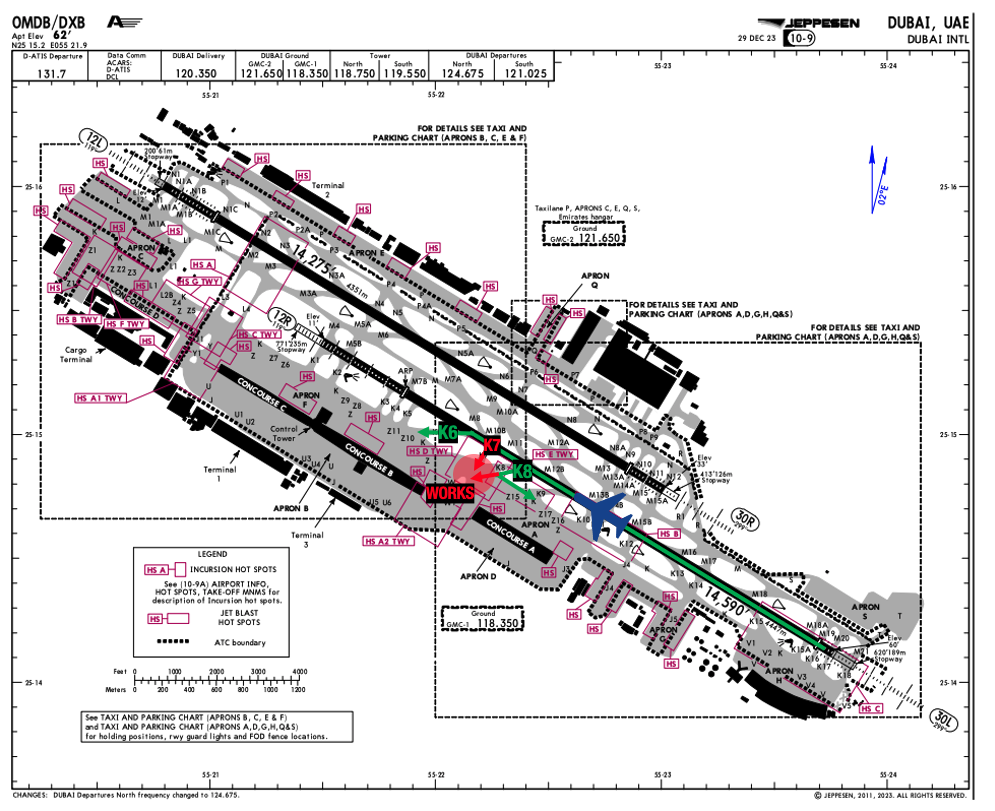
For Runway 30L, this is causing a bottle neck for aircraft exiting on the rapids bound for terminals 2 and 3.

The preferred exit (K8) is partially blocked by the works, along with the next non-rapid exit (K7) which is completely closed.

The next option is K6, which is further up the runway. The extra time needed to allow aircraft to vacate means increased spacing for arrivals. Word on the street is that frequent A380 ops are also compounding the problem.

Here’s what that looks like on a chart.

During peak times, arrivals are stacking up.

Those times are daily between:

  • 00:00 – 03:00z (04:00 – 07:00 LT)
  • 07:00 – 09:30z (11:00 – 13:30 LT)
  • 13:30 – 21:30z (17:30 – 01:30 LT)

If Runway 30L is in use, and you are arriving during one of these periods – carry at least an extra 40 minutes of holding fuel.

How long will this last?

The current Notam says until March 9, but may get extended. The SUP doesn’t provide an end date, and strangely the original Notam applied until April 6. In other words, your guess is as good as ours…

But wait, there’s more.

There are some other Notams hidden in the pile that include closures of the other runway (12L/30R) that infringe these times. That’s an average of seventy-five arrivals and departures per hour using the one problem runway – 40 minutes may still not be enough.

Please report back.

If you experience delays in Dubai related to works (or otherwise) we’d love to hear from you so we can share that info with the group. You can reach us on news@ops.group around the clock.


Say GooDubai to a runway for 45 days

OMDB/Dubai International airport (the main one in Dubai) is closing a runway again. But that’s not all. Another UAE based airport is also closing. And it is Ramadan.

So what will all this mean for operations into there?

The Dubai Runway Closure

This happens every few years. The last one was in 2019 where they shut the Southerly runway for 45 days to fix it up. Not it is the turn of the Northerly runway again – 12L/30R.

The closure is from May 9 to June 22, and it does mean a pretty big reduction in capacity at what is the busiest airport in the world in terms of international passenger numbers.

But…

The Dubai runways are actually too close together for proper simultaneous ops meaning the closure of one does not mean a halving of capacity. On top of that, the biggest operators into the airport are all planning some reduction in their flights during this period, or are sending a portion of their flights over to OMDW/Dubai Al Maktoum which is just down the road (20 miles or so).

So…

So if you operate in during peak times (the worst is between 7-11pm UTC) then take some extra fuel for holding delays. You also can’t file OMDB as an alternate during peak times (and that’s during normal ops, so definitely don’t try it during the closure period).

The other airport out in the UAE closure

OMAD/Al Bateen is a small but quite busy executive airport near OMAA/Abu Dhabi, which just caters for private jet ops. This airport will be completely closing from May 11 to July 20.

So what options do you have?

  • OMAA/Abu Dhabi International is the main airport for the UAE. They generally prefer not to be used as an alternate for Dubai bound flights since they are very busy.
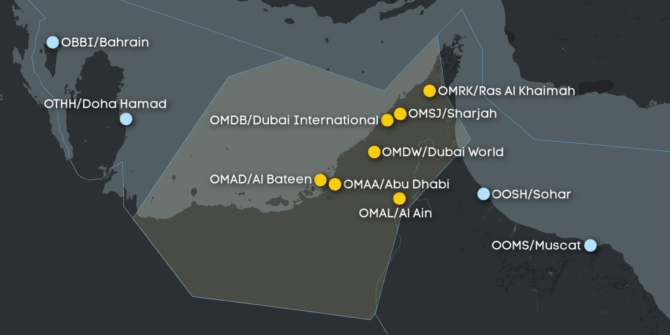
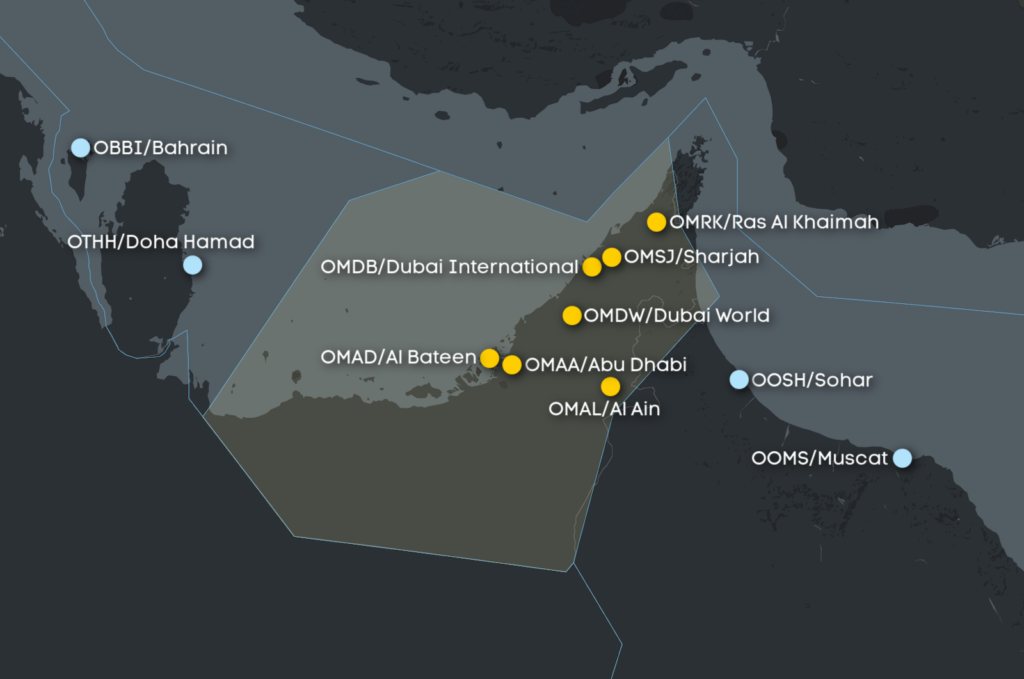
  • OMSJ/Sharjah International is the next door neighbour to OMDB/Dubai (around 20km north and you fly past it on some Dubai arrivals). Runway 12/30 is 13,320 ft long with an ILS either end. Watch out if OMDB is getting foggy though because OMSJ won’t be far behind given it is also close to the sea, and it will fill up fast with diversions if it isn’t.
  • OMDW/Dubai World is the slightly smaller international Dubai airport just next door. Mainly used for cargo flights, it offers a good alternate to OMDB. There is limited parking and fuel trucks though so if you divert here on a day a lot are diverting then expect long delays. Runway 12/30 has CAT 3 ILS both ends and is 14,764 ft long
  • OMRK/Ras Al Khaimah is a decent airport to consider as an alternate with an ILS on 34, an RNAV on 16 and 12,336 ft of tarmac between the two ends. Watch out for terrain here though.
  • OMAL/Al Ain has a 13,140 ft runway with ILS/RNAV approaches. Another UAE option for an alternate.
  • OMFJ/Fujairah can be a good alternate (especially when the weather gets foggy as it is on the Eastern side of the peninsular and less susceptible).
  • OOMS/Muscat is slightly further afield in neighbouring Oman, but included here because its often used as an alternate. 08L/26R is currently the only operational runway. It offers an ILS either end and 13,123 ft. Muscat is a decent fuel and tech stop if routing from the Far East.

Some other info on the UAE.

The UAE only became the UAE fairly recently. Before that it was seven separate emirates and a big port in Jebel Ali which the Brits took an interest in. When they got their independence from Britain, the emirates joined up, led by Abu Dhabi. Dubai is the most westernized of the all emirates.

During Ramadan, be cautious about eating and drinking in public, but beyond that there is not huge difference for foreign visitors visiting Dubai and Abu Dhabi, just remain respectful of their culture and customs. Sharjah is much stricter.

Conditions across the UAE (like all the Middle East) can be challenging:

  • Extreme summer temperatures leading to brake temperature issues, hot fuel etc.
  • Dubai can see some nasty lingering fog during the more humid months
  • Cloud seeding is common and often leads to large storms building up. When it rains everywhere (including airport aprons) tend to flood.

Other challenges?

  • Holding for Dubai can bring you close to the Iranian border
  • Departures can enter Iran quickly so ensure you call the ADIZ early if routing that way.
  • Watch out for the Burj Khalifa – World’s  tallest building. It is near the airport.
  • Conflict is common across the whole Middle East region. Monitor Safeairspace for the full lowdown on risk in the region.

For more operational info on Dubai, the UAE, and the Middle East in general – check out our earlier post here.


Helping you fly when it’s Hot & High

Here’s a look at some of the hottest and highest airports out there, and the challenges you might want to think about if operating into them.

Airplanes like to play it cool

What is it about hot and high airports that our airplanes don’t like? The obvious one is the air density – engines like their air cold for better performance, and wings like air nice and thick for better lift.

What can you do to keep them happy? 

  • Think about how you start the engines – If it is hot out, the air is thin, and you start throwing things like tailwinds into the mix, then it is going to be a recipe for some grumpy engines
  • Consider towing – move to a different start point for better air flow
  • Check that ground power unit – You might want to ask the engineer to see if two might be better (they can over heat too!)
  • Check that take-off performance – and check it early. If it is limited you’re going to have to throw some passengers or cargo off, or put less fuel on to keep the weight down
  • Watch you altitude constraints – If you are particularly heavy your climb performance is going to suck and where the airport is high, there is often other high stuff to think about too
  • Once you’re in the air – if you are struggling to meet restrictions then keep the speed back, make sure you’re using all the thrust available to you and if that still don’t work – let ATC know!

People like to play it cool

People get grumpy when they are stuck in a jam-packed, sweaty tube. And I am not just talking about your passengers. Think about the poor F/O too.

If you’ve sent them out into the sweltering heat to do the walk around then it might be kind to have an APU running and some cool air blowing for their return. It will help with the rest of the flight too – you probably don’t want to be sat next to someone who is sweaty up a stinky storm for the next however many hours.

Jokes aside, it can be a safety thing too. A performance study by NASA showed operators in temperatures of 80°F (27°C) made approximately 5 errors an hour, 29 errors over 3 hours. At 90°F (32°C) this increased to 60 in 1 hour and 138 in 3 hours. So 1 mistake a minute. If you consider how many critical tasks a pilot carries out in that hour on the ground prior to departure that’s concerning.

When your environment heats up above 95°F usual cooling methods like radiation and convection stop working. Your body’s only option is to pump blood to the skin to release heat and get you to perspire. Up to 48% of your blood is pumped to the surface level, which means useful things like your brain which are less close to the surface are getting nearly 50% less than normal.

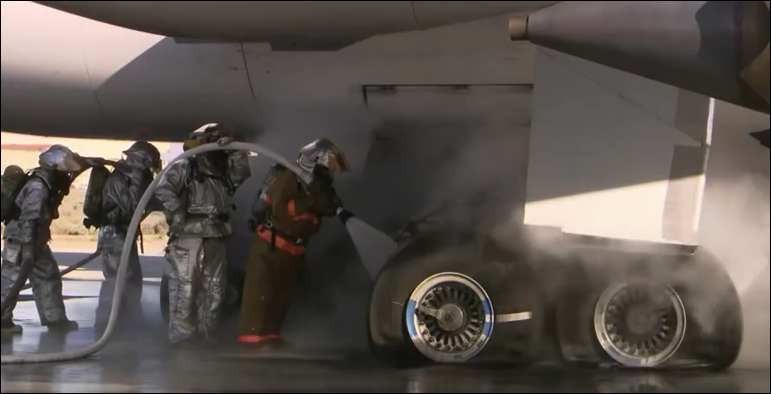
Brakes break

High OATs means hotter brakes, and longer cooling times. But it is the high elevation that really causes issues here because your groundspeed is going to be much greater for the same IAS. The result is much more work for your brakes which have to slow down that big hunk of metal.

If you are lucky enough to have brake fans then switch them on as soon as possible. If you don’t, then keep an eye on those temperatures, especially during the taxi out.

How long it will take your brakes to cool down is dependent on your type of brakes, type of aircraft, how hot it is outside, how hot the brakes actually got. Aircraft will have their own max temperature for takeoff limit which is important because retracting your gear with hot brakes is an increased fire hazard, and aborting the take-off with already hot brakes is an even bigger hazard.

A (very) general rule of thumb is something like 2 degrees every minute (at 15°C OAT) will give you a (very) rough estimate.
Energy Management

Make sure you have some coffee and a snack. Oh, sorry, the airplane energy. Also worth thinking about because it is going to be harder to slow down and cranking out the old speed brake will have less affect with thinner air because, well, something to do with drag.

This can all get really critical really fast on the approach. A higher groundspeed also means a higher rate of descent, again making slowing down tough. Plan that configuration and manage the energy early.

At very high elevation airports (especially if they have terrain around) you might be trying to reduce your speed above your flap limiting altitude so keep an eye on your minimum clean speed and your flap operating limits.

FLARE!!

A higher ROD, reduced lift, turbulence from thermals can all mess with your flare. We aren’t here to tell you how to fly, so will leave it at a “have a think about it before you get there” top tip. Especially if your FO is taking the sector and hasn’t landed in these conditions before.

One more tip…

Celsius to Fahrenheit Formula: (°C x 1.8) + 32 = °F

Fahrenheit to Celsius Formula: (°F – 32) / 1.8 = °C

Which airports are highest on the list?

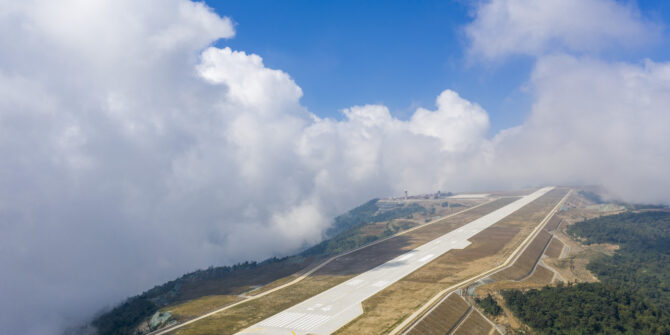
Topping the list is ZUDC/Daocheng Yading Airport which sits at a whopping 14,472ft. ZUBD/Qamdo Bamda airport holds the number two spot at 14,216ft closely followed by ZUKD/Kangding airport at 14,042ft. 

These airports are so high that the hot bit is less of a factor, but the altitude is a major one – 14,000ft is a limitation on some aircraft.

Airports at these altitudes will have special procedures for take-off and landing and you are unlikely to be operating into them without prior training. So, which should we pay attention to?

The Hot and the High

FAOR/Johannesburg airport sits at an elevation of 5558ft. Predominantly NW winds on the ground often lead to a tailwind for the approach to runway 03L/R which makes the energy management more challenging.The runways are 14,505ft and 11,171ft (so you have enough).

Johannesburg can heat up to the high twenties (80°F) in the summer.

HAAB/Addis Ababa Bole airport has an elevation of 7625ft and also some very high MSAs in the near vicinity. There are high altitude constraints for the departure due to close in terrain, and they need to be monitored (particularly if you are heavy and it is hot out). A challenging RNAV approach makes flight path and energy management more challenging.

The radar at Addis is fairly intermittent so you are going to have watch that terrain avoidance and energy management yourself.

MMMX/Mexico City This spot has an elevation of 7297ft, and MSAs of 19,400ft, 14,800ft and 12,100ft. The terrain surrounding the airport means some interesting arrivals and departures and the need for some accurate tracking. The tight arrival also means some low platform altitudes. The ILS for the 05 runways are slightly steeper (3.1°) adding to your energy management concerns. We’ve also heard that ATC sometimes keep you fast until 5000′, which can make slowing down last minute more tricky.

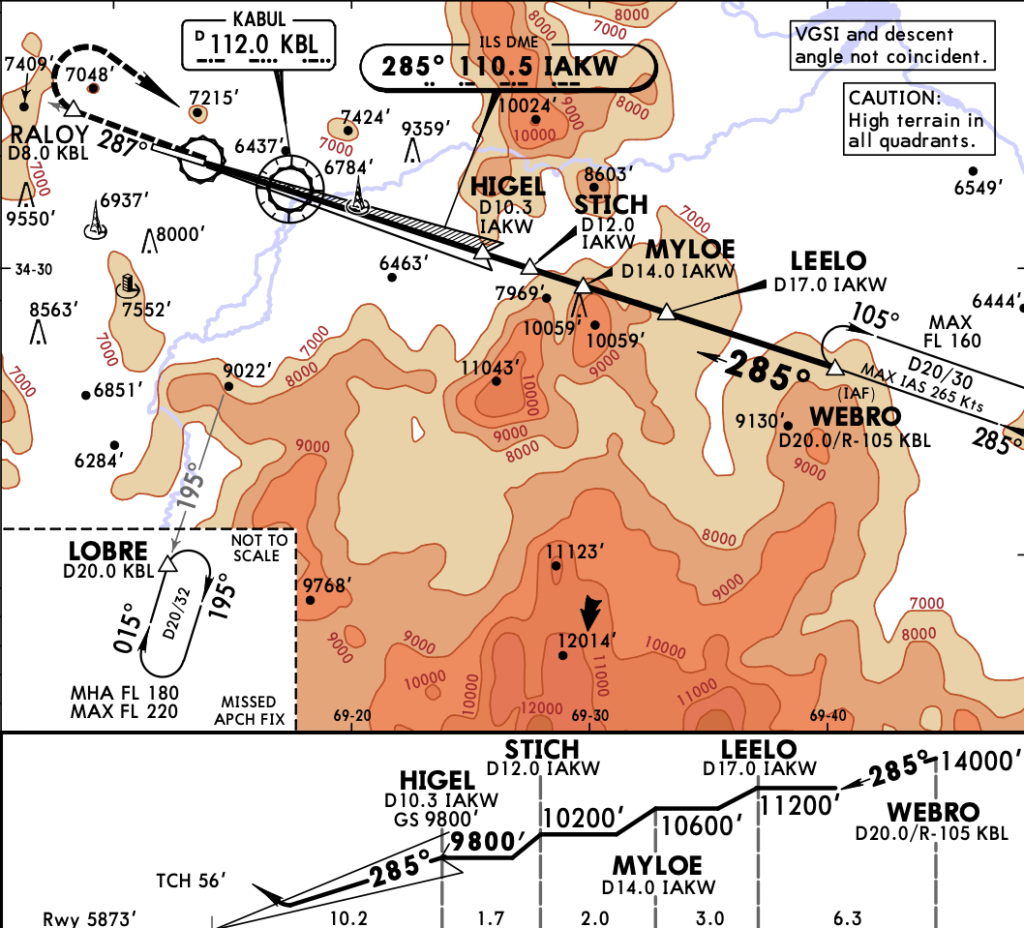
OAKB/Afghanistan I know what you’re thinking – there are probably bigger threats at this airport than the elevation, but despite the security risks here, it is a fairly frequented airport. Kabul tips the big three boxes – it has an elevation of 5877ft, an MSA of 17,500ft and it can get toasty warm in the summer months. The ILS for runway 29 starts from 14,000ft and the need to keep aircraft high due terrain can mean you suddenly find yourself diving down, while trying to slow down, with not many track miles to go.

You will probably want to keep you speed back on the departure to meet the minimum climb rate of 450ft per 1nm.
The just plain high

SLLP/La Paz Ok, we will add this one because its a fairly major international airport. The Bolivian airport has a 13,124ft runway which lies at an elevation of 13,314ft making this an Overall Top Ten winner. The surrounding terrain (it sits in the Andes Mountains) means MSAs up in the flight levels – FL220, FL230 and a paltry 18,000ft.

Your TAS here is going to be around 25% higher than your IAS. The high elevation means it is generally cooler, but the density is still going to be low leading to lower performance.

The just plain hot

Basically anywhere in the Middle East in the middle of summer is going to tick this box. 

OMDB/Dubai has been known to hit temperatures of 50°C. Hot means bumpy – you can expect some crazy thermals on the approach and an easy tendency to mess up the flare and float when that thermal catches you at 30 feet. Some airports (Dubai being one of them) temperature correct the ILS to account for the extra heat, so if you are doing height checks be aware of the discrepancy because of temperature.

OEJN/Jeddah is another spot known for getting very hot. It is also a very large airport with looooong taxis so keep a good eye on those brake temperatures for departure.

Where else?

Let us know any airports you think deserve to be on this list! Leave a comment or send us an email.

OPSGROUP members can check out AirportSpy – we have started to add Airport Lowdowns in here which cover the big threats (like hot and high!)
The Threat Of A Civil Aircraft Shootdown In Iran Is Real

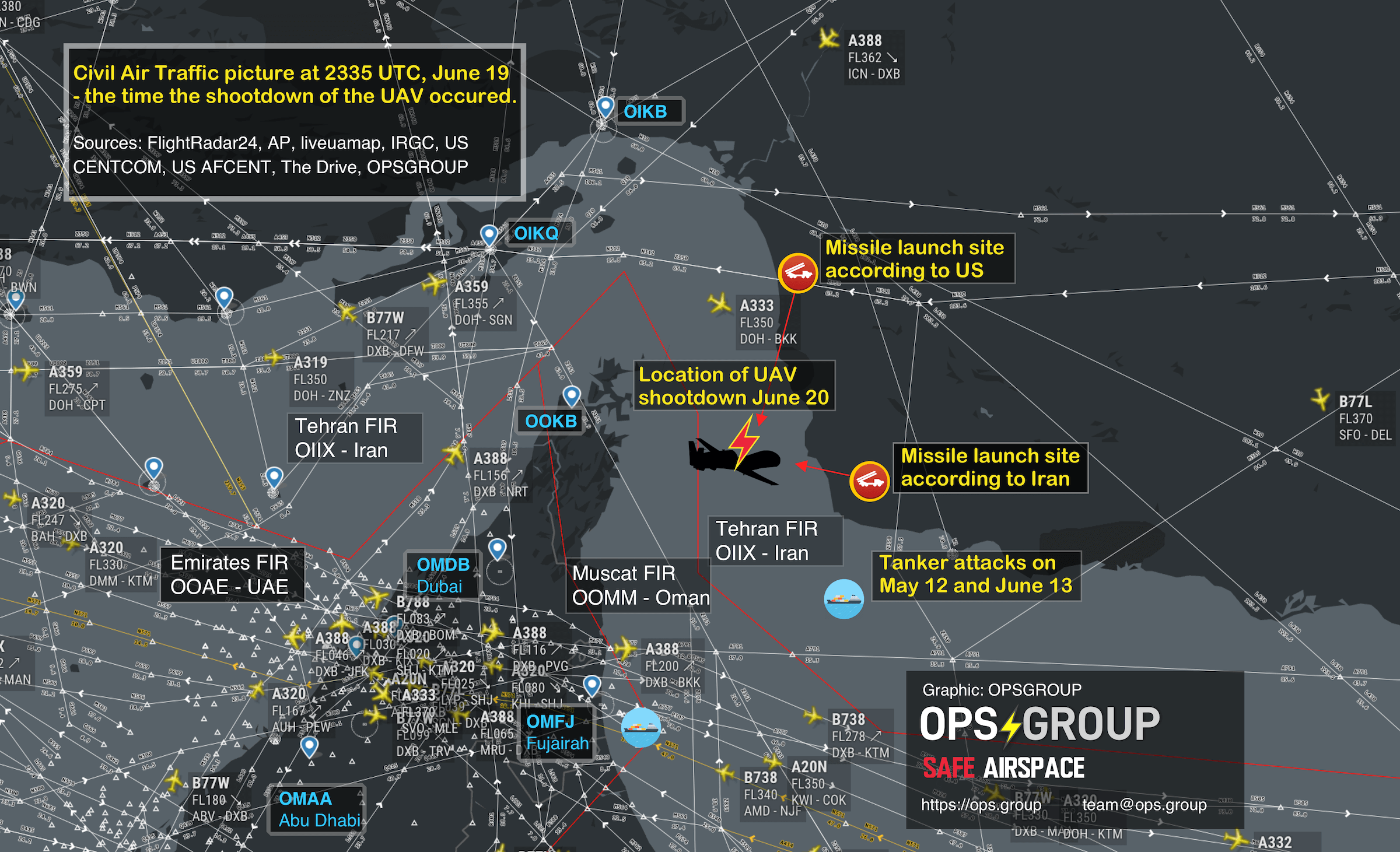
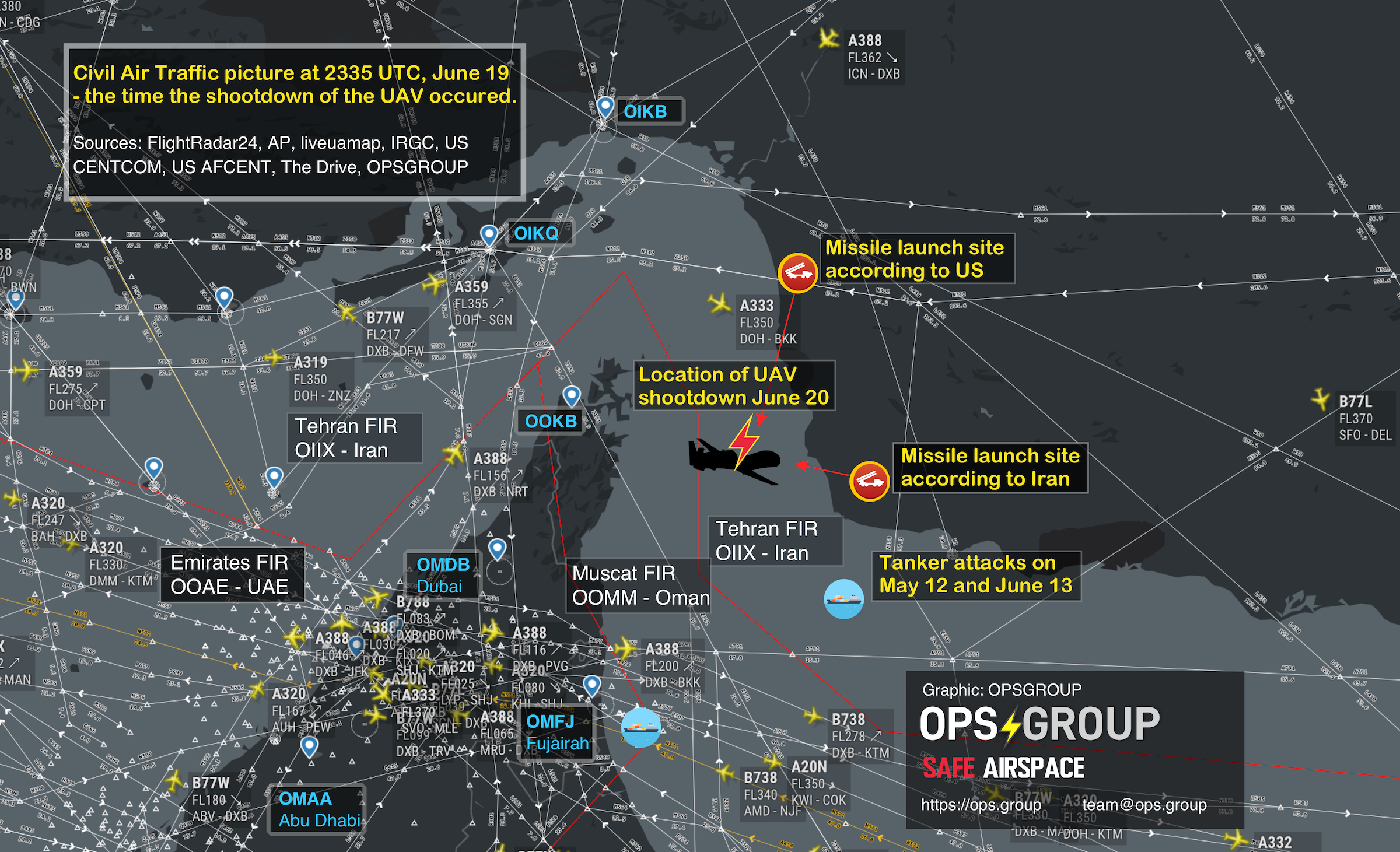
As we know by now, at 23:35Z last night (June 19, UTC), Iran shot down a US UAV on a high-altitude recon mission in the Straits of Hormuz. This was no small incident. The UAV was a $200 million aircraft, weighing 32,000 lbs, with the same wingspan as a 737.

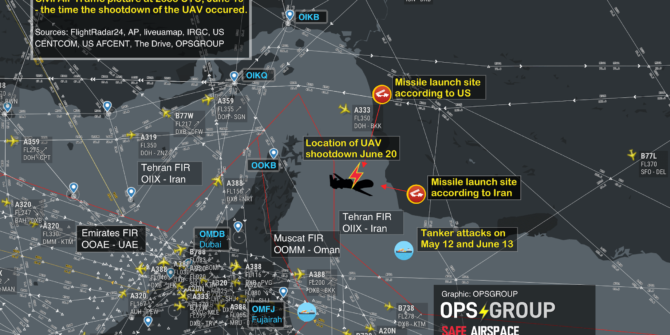
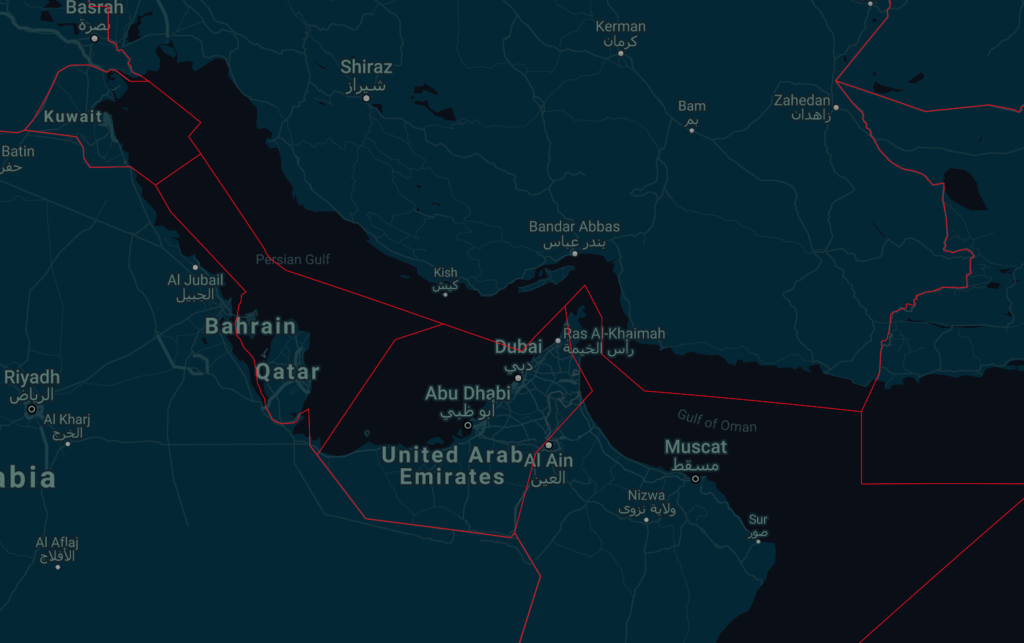
Although Iran and the US have slightly different versions of the position of the shooting down in the media, the approximate area is very clear, and marked on the map below, which shows the airspace picture at 2335Z, the time of the shootdown.

A high-res version of this map is available here.

For civil operators, the Straits of Hormuz have always been an area of high military activity, so it’s tempting to mark this as ‘more of the same’.  However, over the last few weeks tension between the US and Iran has heightened, and the launching of a surface to air missile by Iran represents an escalation in the current situation that crosses a threshold –  warranting a very close inspection by airlines and aircraft operators overflying, or using airports like Dubai, Abu Dhabi, Ras Al Khaimah, Muscat, and Fujairah.

As we approach five years since MH17, we should remember the build up to that shootdown took several months, and there are the warning signs here that we must pay close attention to. In the lead up to MH17, 16 military aircraft were shot down before MH17 became the 17th. Look closely at the map. Civil aircraft were very close to the site of this incident.

This morning, we sent this out to our members in OPSGROUP:

OIZZ/Iran Earlier today, a large US military drone was shot down by Iran over the Strait of Hormuz. The US say it was over international waters, Iran say it was within their FIR. Either way, it means that SAM missiles are now being fired in the area, and that represents an escalation in risk. It appears a 787 was very close to the missile site this morning. Avoiding the Strait of Hormuz area is recommended – misidentification of aircraft is possible. If you are coming close to Iran’s FIR, it’s essential that you monitor 121.5, as Iran uses this to contact potentially infringing aircraft. Local advice from OPSGROUP members says ‘Even if the operator/pilots think they will come close or penetrate Irans Airspace they should contact Iran Air Defense on 127.8 or 135.1’. If the Iranians have an unidentified aircraft on their radar and not in contact with them they will transmit on guard with the unidentified aircraft coordinates, altitude, squawk (if there is one), direction of travel and then ask this aircraft to identify themselves as they are approaching Iranian ADIZ. Monitor safeairspace.net/iran for the latest. 

Last September, when Syria shot down a Russian transport aircraft, we published an article on that risk, and noted “50 miles away from where the Russian aircraft plunged into the sea on Monday night is the international airway UL620, busy with all the big name airline traffic heading for Beirut and Tel Aviv. If Syria can mistakenly shoot down a Russian ally aircraft, they can also take out your A320 as you cruise past.” That same risk of misidentification exists here in the Straits of Hormuz.

Apart from the misidentification risk, is the risk of a problem with the missile itself. The missile used by Syria in September was a Russian S-200 SAM, which was the same missile type that brought down Siberian Airlines Flight 1812 in 2001. The missile can lock on to the wrong target, and this risk is higher over water. The missile system used by Iran last night was a domestically-built Raad Anti-Aircraft system, similar to the Russian Buk that was used against MH17. Any error in that system could cause it to find another target nearby – another reason not to be anywhere near this part of the Straits of Hormuz.

Bear in mind that as an aircraft operator you won’t be getting any guidance from the Civil Aviation Authorities in the region. As we saw with Syria, even when an aircraft had been shot down on their FIR boundary, the only Notams from Cyprus were about firework displays at the local hotels. It won’t be any different here. You need to be the one to decide to avoid the area.

A further risk, if you needed one, is retaliation by the US. It seems probable that the US will at least try to find an Iranian target to make an example of. If you recall the Iran Air 665 tragedy, back in July 1988, which occurred in the same area, the US mistakenly shot down that aircraft thinking it was an Iranian F-14.

Bottom line: we should not be flying passenger aircraft anywhere near warzones. That’s the lesson from MH17, and that’s the lesson we need to keep applying when risks like this appear on our horizon.

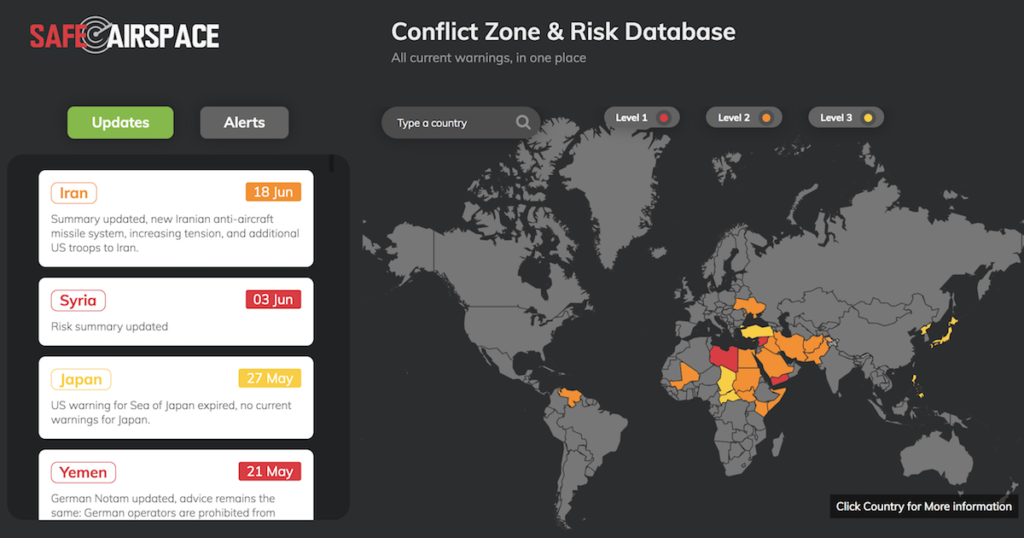
The Iran risk is being monitored at Safe Airspace – the Conflict Zone & Risk Database. The Iran country page also has more information on further overflight considerations in other parts of the Tehran FIR.

Further reading:


Sources for this article:


What’s going on in the Strait of Hormuz?

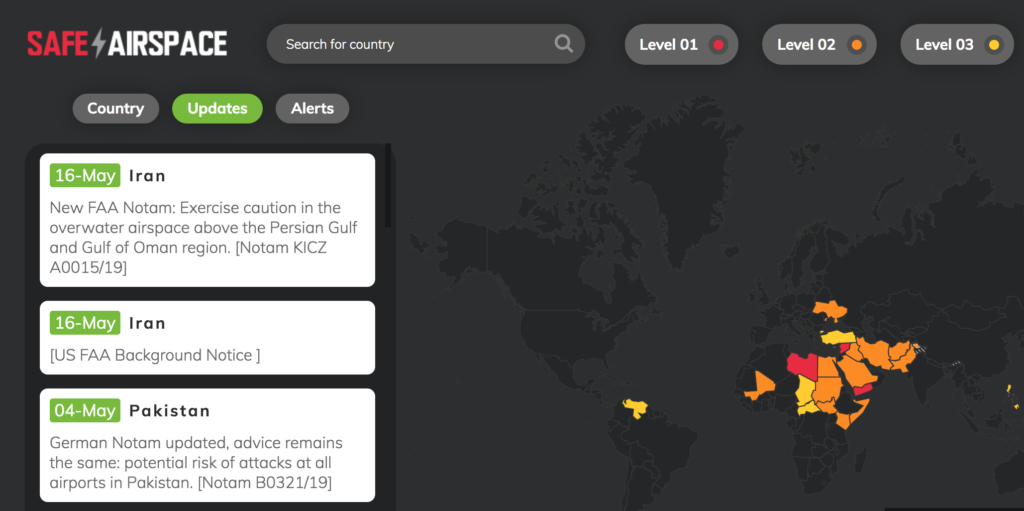
Amid rising tensions between the US and Iran, on 16th May the US FAA issued a new Notam and Background Notice advising operators to exercise caution in the overwater airspace above the Persian Gulf and Gulf of Oman.

The US has deployed warships and planes to the region, and withdrawn embassy staff from Iraq in recent days, and Iran has allegedly placed missiles on boats in the Persian Gulf.

In their Background Notice, the US FAA say that “Iran has publicly made threats to US military operations”, and are concerned about “a possible risk of miscalculation or misidentification, especially during periods of heightened political tension and rhetoric.” They also warn of increased GPS jamming by Iran throughout this region.

The US published another airspace warning for Iran back in September 2018, but that was mainly focussed on the risks of overflying Iran itself due to missiles fired from sites in the far west of the country against targets in Syria. That warning only made passing reference to the Gulf region – the only tangible risk at that time being due to Iran’s “test launches” in the area between Iran and Dubai, where the Iranian military regularly fire missiles during drills to practise blockading the Strait of Hormuz. 

In May 2018, the US pulled-out of the Iran nuclear deal, and re-imposed sanctions. Since then, the relationship between the two countries has rapidly gone downhill. This week, the White House Press Secretary said that Washington would continue its “maximum pressure” campaign on Iran, adding the US would like to see “behavioural change” from the country’s leadership. 

With the military build-up in the Gulf region, the US government has been quick to defend its actions, but the message seems to be clear: we don’t want war, but we’re ready for one.

As National Security Adviser John Bolton said in a statement this week: “The United States is not seeking war with the Iranian regime… but we are fully prepared to respond to any attack, whether by proxy, the Islamic Revolutionary Guard Corps or regular Iranian forces.”

The full FAA Notam and Background Notice text is below. SafeAirspace.net is now updated with the new information.

KICZ NOTAM A0015/19 
SECURITY..UNITED STATES OF AMERICA ADVISORY FOR OVERWATER AIRSPACE ABOVE THE PERSIAN GULF AND GULF OF OMAN. 

THOSE PERSONS DESCRIBED IN PARAGRAPH A BELOW SHOULD EXERCISE CAUTION WHEN OPERATING IN OVERWATER AIRSPACE ABOVE THE PERSIAN GULF AND THE GULF OF OMAN DUE TO HEIGHTENED MILITARY ACTIVITIES AND INCREASED POLITICAL TENSIONS IN THE REGION, WHICH PRESENT AN INCREASING INADVERTENT RISK TO U.S. CIVIL AVIATION OPERATIONS DUE TO THE POTENTIAL FOR MISCALCULATION OR MIS-IDENTIFICATION. ADDITIONALLY, AIRCRAFT OPERATING IN THE ABOVE-NAMED AREA MAY ENCOUNTER INADVERTENT GPS INTERFERENCE AND OTHER COMMUNICATIONS JAMMING, WHICH COULD OCCUR WITH LITTLE TO NO WARNING. 

A. APPLICABILITY. THIS NOTAM APPLIES TO: ALL U.S. AIR CARRIERS AND COMMERCIAL OPERATORS; ALL PERSONS EXERCISING THE PRIVILEGES OF AN AIRMAN CERTIFICATE ISSUED BY THE FAA, EXCEPT SUCH PERSONS OPERATING U.S.-REGISTERED AIRCRAFT FOR A FOREIGN AIR CARRIER; AND ALL OPERATORS OF AIRCRAFT REGISTERED IN THE UNITED STATES, EXCEPT WHERE THE OPERATOR OF SUCH AIRCRAFT IS A FOREIGN AIR CARRIER. 

B. PLANNING. THOSE PERSONS DESCRIBED IN PARAGRAPH A PLANNING TO OPERATE IN THE ABOVE-NAMED AREA MUST REVIEW CURRENT SECURITY/THREAT INFORMATION AND NOTAMS; COMPLY WITH ALL APPLICABLE FAA REGULATIONS, OPERATIONS SPECIFICATIONS, MANAGEMENT SPECIFICATIONS, AND LETTERS OF AUTHORIZATION, INCLUDING UPDATING B450. 

C. OPERATIONS. EXERCISE CAUTION DURING FLIGHT OPERATIONS DUE TO THE POSSIBILITY OF INTERRUPTIONS TO INTERNATIONAL AIR TRAFFIC DUE TO HEIGHTENED MILITARY ACTIVITIES AND INCREASED POLITICAL TENSIONS IN THE REGION. POTENTIALLY AFFECTED OVERWATER AIRSPACE ABOVE THE PERSIAN GULF AND THE GULF OF OMAN INCLUDES PORTIONS OF THE TEHRAN FIR (OIIX), BAGHDAD FIR (ORBB), KUWAIT FIR (OKAC), JEDDAH FIR (OEJD) , BAHRAIN FIR (OBBB), EMIRATES FIR (OMAE), AND MUSCAT FIR (OOMM). THOSE PERSONS DESCRIBED IN PARAGRAPH A MUST REPORT SAFETY AND/OR SECURITY INCIDENTS TO THE FAA AT +1 202-267-3333. 

SFC – UNL,16 MAY 23:11 2019 UNTIL PERM. CREATED: 16 MAY 23:17 2019

FAA Background Information Regarding U.S. Civil Aviation – For the Overwater Airspace Above the Persian Gulf and Gulf Of Oman Region.

Due to increased political tensions and heightened military activities in the region, there is an increasing inadvertent risk to U.S. civil aviation operating in overwater airspace above the Persian Gulf and Gulf of Oman. As a result, on 16 May 2019, the FAA issued Notice to Airmen (NOTAM) KICZ A0015/19, advising U.S. civil flight operations to exercise caution when operating in the above area. 

Iran has publicly made threats to U.S. military operations in the Gulf region. In addition, Iran possesses a wide variety of anti-aircraft-capable weapons, including surface-to-air missile systems (SAMs), man-portable air defense systems (MANPADS) and fighter aircraft that are capable of conducting aircraft interception operations. Some of the anti-aircraft-capable weapons have ranges that encompass key international air routes over the Persian Gulf and the Gulf of Oman. Additionally, Iran recently conducted a military exercise in the region, demonstrating their unmanned aircraft system (UAS) capabilities. Although Iran likely has no intention to target civil aircraft, the presence of multiple long-range, advanced anti-aircraftcapable weapons in a tense environment poses a possible risk of miscalculation or misidentification, especially during periods of heightened political tension and rhetoric. 

There is also the potential for Iran to increase their use of Global Positioning System (GPS) jammers and other communication jamming capabilities, which may affect U.S. civil aviation operating in overwater airspace over the Persian Gulf and the Gulf of Oman. 

The FAA will continue to monitor the risk environment for U.S. civil aviation operating in the region and make adjustments, as necessary, to safeguard U.S. civil aviation.


World’s longest flight? That’s about to change …

So what is the longest scheduled air route in the world at the moment? If you said Panama-Dubai, you’d be right – but only for a few more days. As things stand, the PTY-DXB route, all 7463nm of it, takes on average 17 hrs 30.

With the introduction of the Boeing 787, the number of routes around the 7000nm mark is steadily increasing, to the point that we’re probably going to have to stop calling them “Ultra Long Haul Routes”. They are becoming the new norm. United are operating a SFO-SIN route with the 787-9 at 7339nm, and LAX-MEL at 6905nm.

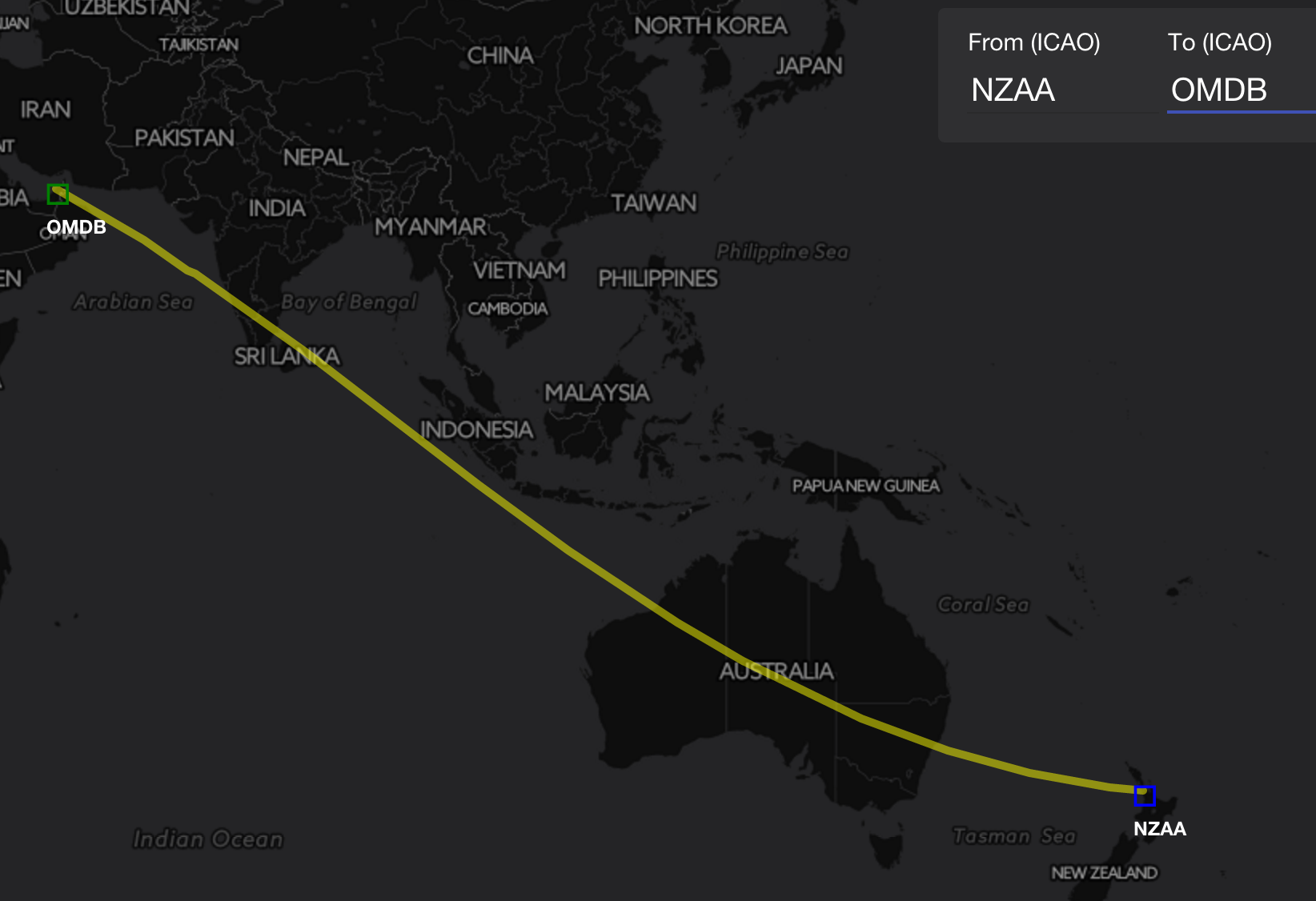
From March 1st, the longest route in the world will become Auckland-Dubai, operated by Emirates with a B777-200LR. The leg distance is 7668nm, and westbound this will be around 17 hrs 15. Use of the AUSOTS Track System and extension of UPR’s (User Preferred Routes) into the New Zealand FIR has allowed this route to work, so that UAE can select the optimum wind routing for much more of the flight.