Setting up your MEL can be a tricky business. It is definitely not something we know anything about. Thankfully though, we know some folk who do. AviationManuals have just issued an updated version of their MEL guide for clear info on what you need, how to use it, and how to maintain it.
So here is a little guide to their guide, plus some other things we think you might find helpful as well.
Why are we telling you about MELs?
Because it’s easy to get confused about what equipment is needed in certain areas, or to do certain things, or to go certain places.
So, first up, a quick “what’s the difference?” – when do you consult your MEL, and when do you consult the AIP or some other regulation document?
The MEL is all about your aircraft.
Actually, probably a better way to put it is it is all about your aircraft’s ability to fly safely, as opposed to being about specific operations it might want to do. The MEL can tell you whether, if you try to get airborne, it might become a bit of a Lethal Weapon…
More accurately, it is what “makes it possible to temporarily operate with inoperative equipment or instruments.”
Can it safety fly without Datalink? Yes. Can it safely fly without the nose wheel attached? No. The MEL will make that clear. It will also tell you how long you can operate without something being fixed, provides amended procedures (if needed) and maintenance guidance.
So – the MEL is a “Can I fly?” tool.
What you need to remember though is even if your MEL allows you to go fly, you still need to check that where you are going to fly doesn’t need that bit equipment or instrument. This is the gotcha.
Can I safely fly without Datalink working? Yes, the MEL says I can. So I am good to go on my flight through the NAT HLA? Well, hang on, that’s a different thing you’re asking. Your aircraft can can fly perfectly well without it, but you are going to have some planning considerations.
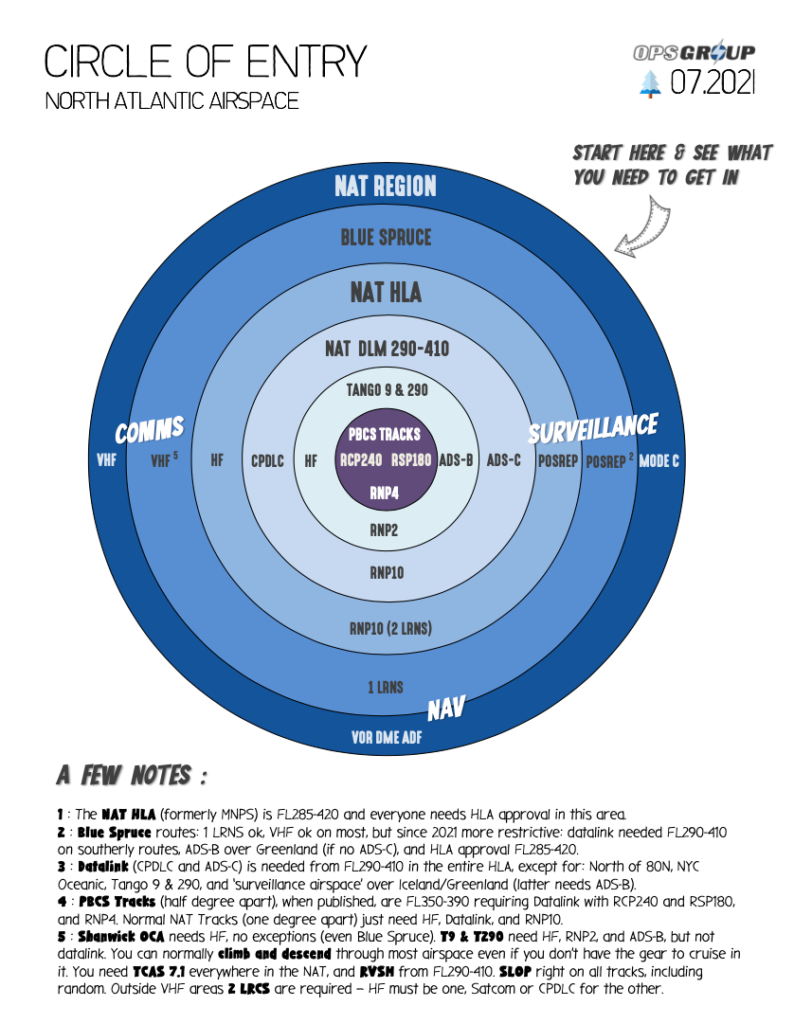
Throwing this in to be helpful. Click to download PDF.
Do you have anymore examples of this?
We said it once, and we’ll add it in again – even after establishing via the MEL that it is safe to go, you still need to confirm you are capable and compliant in the airspace you are planning on flying through, and that is not what your MEL is telling you.
The NAT HLA is probably the best and clearest one, but there are a lot of places and situations that this might be the case.
Your autopilot for example is not necessarily an MEL items, meaning you could take that airplane without it functioning. It would be annoying. It would make drinking coffee more difficult, but you could. However, if you want to fly through RVSM airspace then an autopilot is a requirement. So what the MEL might let you go without, the airspace you want to go to might not.

So, the MEL is confirming what your airplane needs to safely fly, but it is not (necessarily) confirming that your aircraft will meet all the capability requirements for where it is planning to fly.
When should you use your MEL?
Basically anytime before you start your takeoff roll, because it is the document that is going to guide you on whether your airplane needs what just broke to safely get up (and stay up) in the air. Once rollin’ though, your failure warning system is what you’re going to want to be consulting.
But an MEL is also a handy reference to consult in the air (when you’ve done everything else) because it will help you plan for the other end – can you dispatch without that ‘whatever just broke’ working. When you’re back on the ground the MEL is going to become the “controlling” document once more, so it is worth a look.
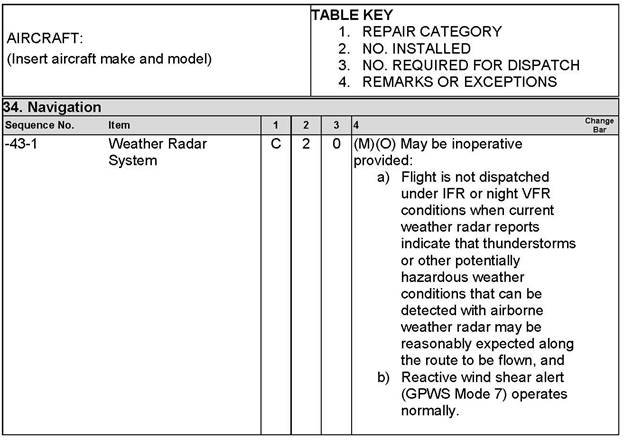
Here’s a sample example.
OK, I understand the MEL’s purpose, but…
We have gotten to the bottom of how, and what, to use the MEL for, and what its intentions and limitations are. But I know what your next question will be –
“I already have an MMEL, so why can’t I just use that?”
The MMEL is a Master Minimum Equipment list. This is made by the authority and the aircraft manufacturer for the aircraft type in general. Some of what is in it might not be useful for you though because you might not actually have all the equipment installed. Maybe you didn’t want it, or maybe your airplane is just a way more modern version of the type that the massive all inclusive MMEL is covering.
Which is why you want an MEL.
It is tailored to your actual aircraft, and your operation and procedures. This makes it shorter, easier to use and more relevant (but not less restrictive).
Now, the FAA do allow Part 91 operators to use their MMEL as an MEL. You need a D095 LOA and some other paperwork for this. But a lot of places don’t allow this, or just aren’t used to it, so you’re probably going to need an MEL (not just the MMEL) if you’re heading abroad.
An MEL is actually a requirement for dispatch so if they don’t accept your MMEL as an MEL you could be in for some lengthy debates and delays if you’re ramp checked.
Here’s something we wrote about it back in 2019 when it started to become a thing.
The FAA are also planning to do away with the D095 in the possibly not too distant future, meaning all US operators will need a D195 – the custom MEL.
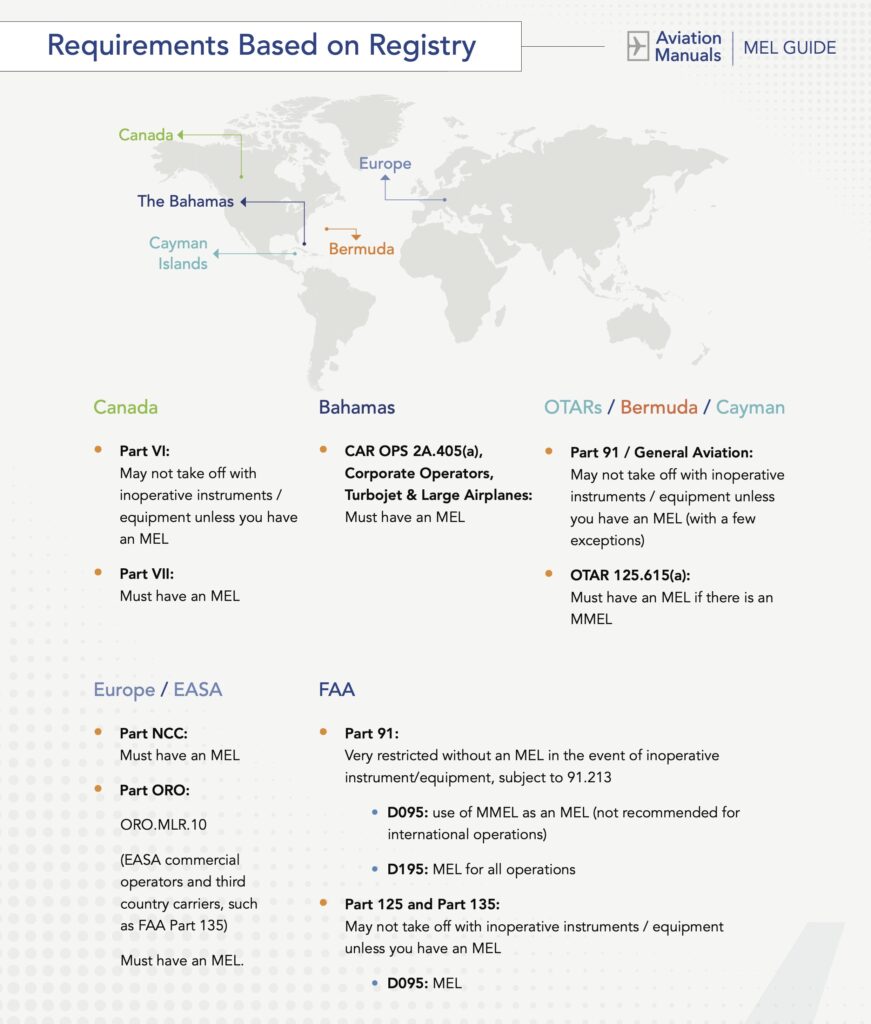
From AviationManuals updated MEL Guide. Click to download PDF.
In case you aren’t familiar with the terms, Part ORO “establishes organisational requirements to be followed by an air operator conducting specialised and non-specialised commercial air operations and specialised and non-specialised non-commercial air operations with complex motor-powered aircraft.”
Part NCC refers to “non-commercial operations with complex motor-powered aircraft.” So chances are this is going to apply to you and your aeroplane.
Our Guide to their Guide
The AviationManual folk put it better than we can so go check out the website for info on what is involved in the MEL setting up process.
It does look fairly simple though:
- Complete a simple questionnaire
- Get a copy of the draft manual for your review
- Send feedback (and probably some money at some point) and receive your Final Copy. And off you go.
That’s it!

A summary of who to ask?
“I need an MEL written up” – Talk to the folk at AviationManuals, they can help. Here is the link direct to their guide.
“I am on my airplane, ready to go on a flight and something has broken” – Consult your MEL.
“I am flying and something has broken, is my MEL useful now?” – Check your checklist and read through your FCOM. When you’ve done that, know the plan and have a few minute to spare, take a look in the MEL as well to see if it will cause issues for the return flight.
“I am a Flight Planning Person and I’ve just been told that an aircraft is flying tomorrow but its *insert something random* isn’t working, can it still fly on the usual route?” – Check the AIP, or drop us a quick email and we’ll see if we can fathom it out for you.