Portugal’s new Punishment Tax (NAT Tech Stops beware!)
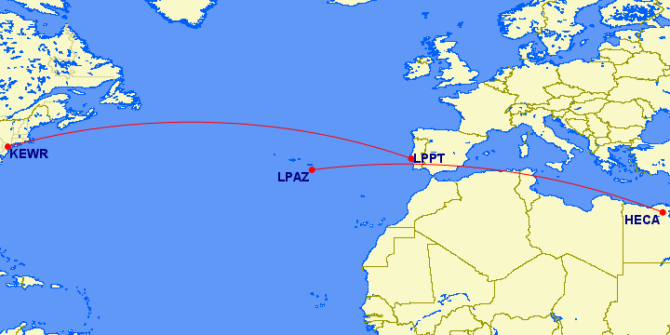
Effective July 1st, Portugal has introduced a new tax directed at business aviation. If you are operating an aircraft with 19 seats or less, you’ll have to pay the hefty new tax – a G650 operating Lisbon-Newark will get a bill for around €2,000 (US$2,200).

It’s billed as a “Carbon Tax” – ostensibly to mirror the same regulation that has applied since 2021 to airline passengers. However, an airline operating the same route with 250 passengers will only pay €500, despite having a fuel burn three times higher.

As such, it’s better labeled as a Punishment Tax for business aviation.


Tech stops in the Azores are included

If you are planning a tech stop in the Azores (LPLA/Lajes or LPAZ/Santa Maria, for example) – think again. The Azores is “Portuguese Territory” and so covered by the new tax, and the exemption for “technical reasons” doesn’t mean tech stops. So, if you divert in with a fire warning, no tax. If LPAZ or LPLA is your destination, however, you can add about $2,000 USD to your invoice.

You might want to find another NAT tech-stop.
 

How to calculate your bill

The official regulation is here (Artigo 184.º) – in Portuguese. The basics are:

  1. From July 2023, a carbon tax is introduced for “consumers of air travel on aircraft with a maximum capacity of up to 19 seats” ,
  2. The amount to pay is calculated as: € (TC x CP x L x (D + 1)). TC is the Carbon Tax (€2), CP is a Coefficient of Pollution (10x), L is the number of seats and D is the distance flown in kilometres divided by 1000.
  3. The fee applies to each commercial and non-commercial flight departing from airports in Portuguese territory.
  4. Exemptions: “Fully electric aircraft”, PSO flights, State, Instruction, Medical emergency, SAR, and departures following landings for technical, meteorological or similar contingency reasons.


Examples: G650 Lisbon-Newark, G7500 Azores-Cairo

The formula can be more easily written as:
€20 x Seats x Distance

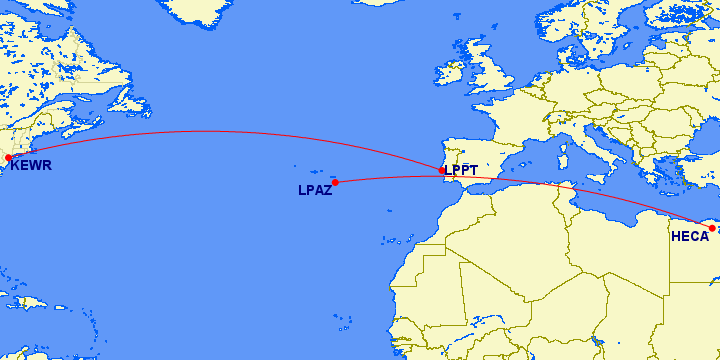
  • A Gulfstream 650 with 14 seats operating LPPT/Lisbon – KEWR/New York Newark: The distance is 5,447km. The charge is thus €20 x 14 x (5.4+1) will get a bill for 1,792 Euro ($2,000 USD).
  • A Global 7500 with 19 seats calling in to LPAZ/Santa Maria for gas on the way to Cairo: the LPAZ-HECA distance is 5,223 km. The charge here is €20 x 19 x (5.2+1) = 2,356 Euro ($2,600 USD)
  • For comparison, an Airbus 330-200 operating LPPT/Lisbon – KEWR/New York Newark will pay 500 Euro ($550 USD). The charge is simply based on €2 per passenger (250 on board). An A330 will burn about 90,000 lbs of fuel, compared to about 30,000 lbs for a G650. This means that the G650 is being charged about 12 times more in total.


Why is this happening?

Because of the “war” on private jets declared by Greenpeace and other groups. Their aim: tax business jets out of existance.

Although the new tax only came into effect a few days ago, it was signed into law in April 2023. The first few months of this year saw media across Europe pay attention to a Greenpeace “report” on business aviation, claiming massive increases in business jet use using super-flawed data (their baseline was 2020, which wasn’t that busy for some reason). The EBAA countered with some actual facts, but it wasn’t enough to stop the disinformation spread.

In Portugal, the PAN (People, Animals, Nature) political party convinced the government to sign this tax into law as a budget amendment.


So who has to pay, and who doesn’t?

Since this has just come into effect, expect further clarifications and changes, but so far:

👿 Pay the punishment tax:

  • Any flight leaving Portgual using an aircraft with 19 seats or less (aka all business jets)
  • Irrelevant if commerical or private ops – all must pay

🦄 Exempt from the punishment tax:

  • Fully electric aircraft (If you see one flying, let us know)
  • PSO flights (A European thing where governments give you money to operate unpopular routes, so they would be charging themselves)
  • State flights (The government exempting themselves again)
  • Flights wholly operated by reticulated, northern, or southern giraffes (we threw that in, but it makes as much sense as the others)
  • Medevac, training, SAR flights, and diversions for unforeseen events


More on the tax

There’s plenty of uncertainty around the new rules for now, but we’ll update this article as we find out more.

Do you know more about this? Help us out with any new information! Email news@ops.group or post below in the comments – Obrigado!


The Lajes Lowdown: Atlantic Stopover and ETOPS Alternate

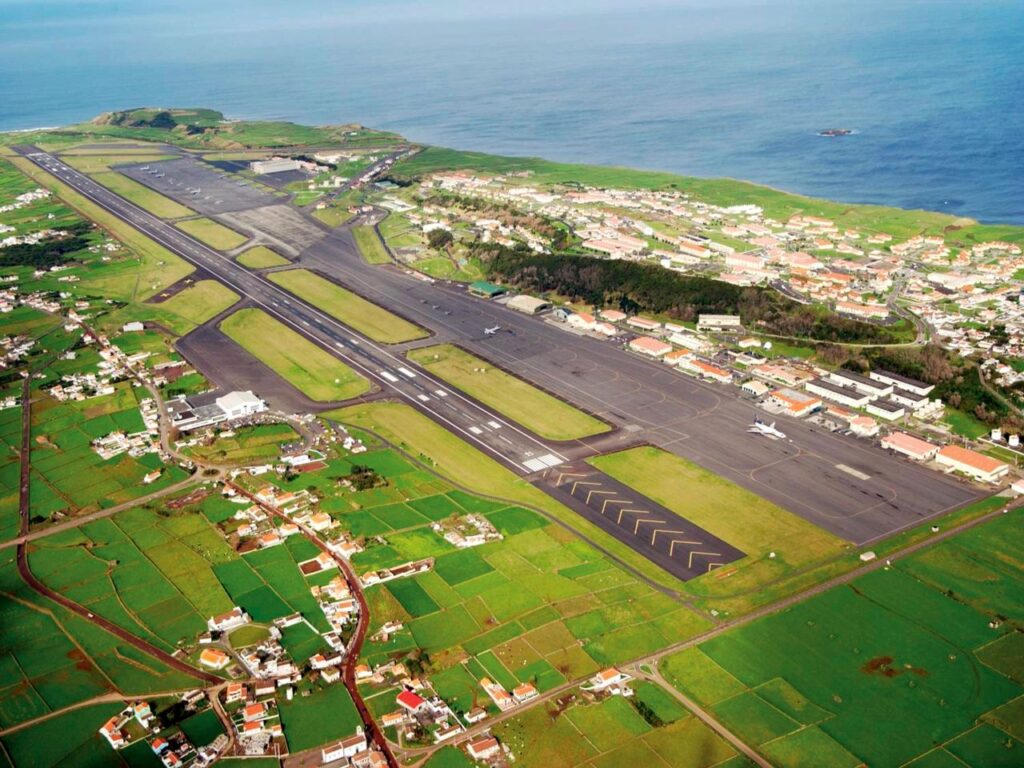
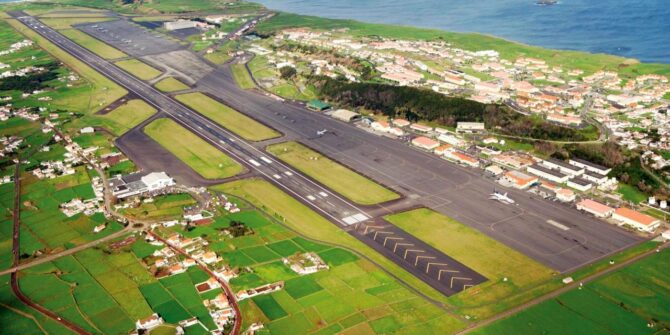
In 2001, Air Transat Flight 236, a heavily laden Airbus A330, developed a massive fuel leak midway across the Atlantic and lost power to both engines. It was hundreds of miles from land. The pilots managed to glide the stricken jet to an emergency landing at a lesser known air force base, Lajes, in the middle of the ocean. Its runway saved the lives of 306 people.

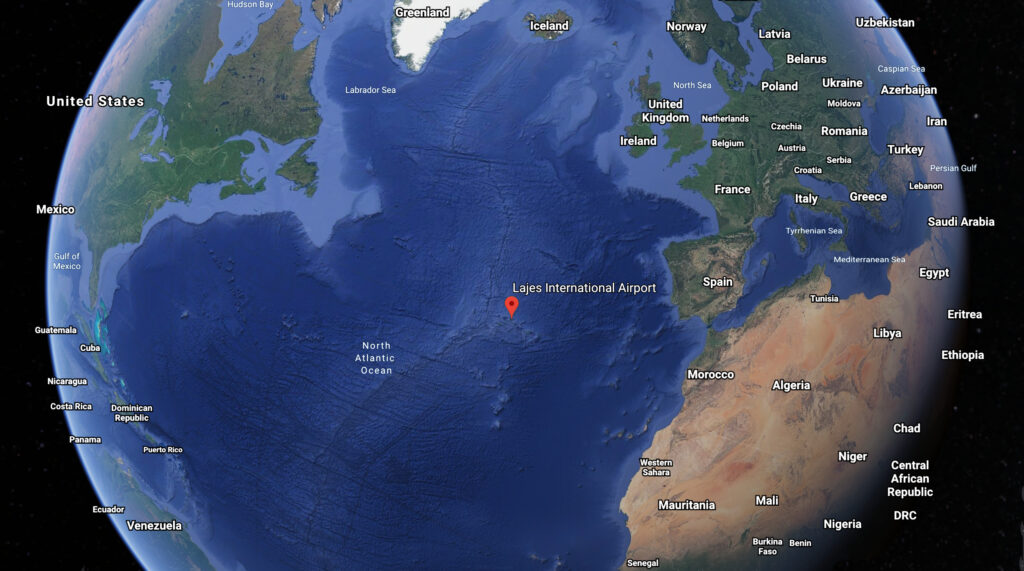
LPLA/Lajes is a large military airfield located in the Azores Islands – a Portuguese territory found midway across the Atlantic Ocean. It’s nestled amongst the NAT Tracks, 1900nm east of New York City, and 800nm west of Lisbon.

LPLA/Lajes was approved for civilian use by ANAC (the Portuguese Aviation Authority) in 2018.

Since then, it has grown considerably in popularity as a convenient stopover, refuelling point and ETOPs alternate airport for aircraft crossing the Atlantic. Lajes is regularly used by a variety of operations including scheduled airline services, ferry flights, air ambulance, VIP and private traffic. 

The Lajes Lowdown

It’s long enough, and strong enough. The fully lit asphalt runway is 10,870 feet (3,330m) long and 164 feet (50m) wide and has no weight restriction.

It’s fully IFR equipped. ILS approaches are available for landing in either direction and the runway is equipped with PAPI slope guidance and a Category 1 approach lighting system.

There’s always someone home. The airport is open and ATC is on watch 24 hours a day. There is no curfew at night and landing fees remain competitive. RFF category 8 and emergency medical services are available around the clock, along with accurate weather forecasting. Santa Maria FIR will direct aircraft experiencing an emergency in their airspace to LPLA/Lajes.

Fuel is available.  Jet A1 is available through Petrogal/Galp (a reputable Portuguese company) in partnership with WFS World Fuel Services, Total Aviation, AEG Fuels, US Government Air Card and AML Global. They will also happily accept cash and credit card payments.

It was good enough for the Space Shuttle. Lajes was used by NASA as an emergency landing site in the event of aborted shuttle launches. Emirates have also used Lajes as a primary alternate for their A380 aircraft crossing the Atlantic since they received approval in 2013. The USAF and NATO forces regularly use Lajes for large scale air exercises.

There’s ample parking. It has a spacious ramp capable of accommodating the largest transport category aircraft in the world including the A380 and Antonov AN225.

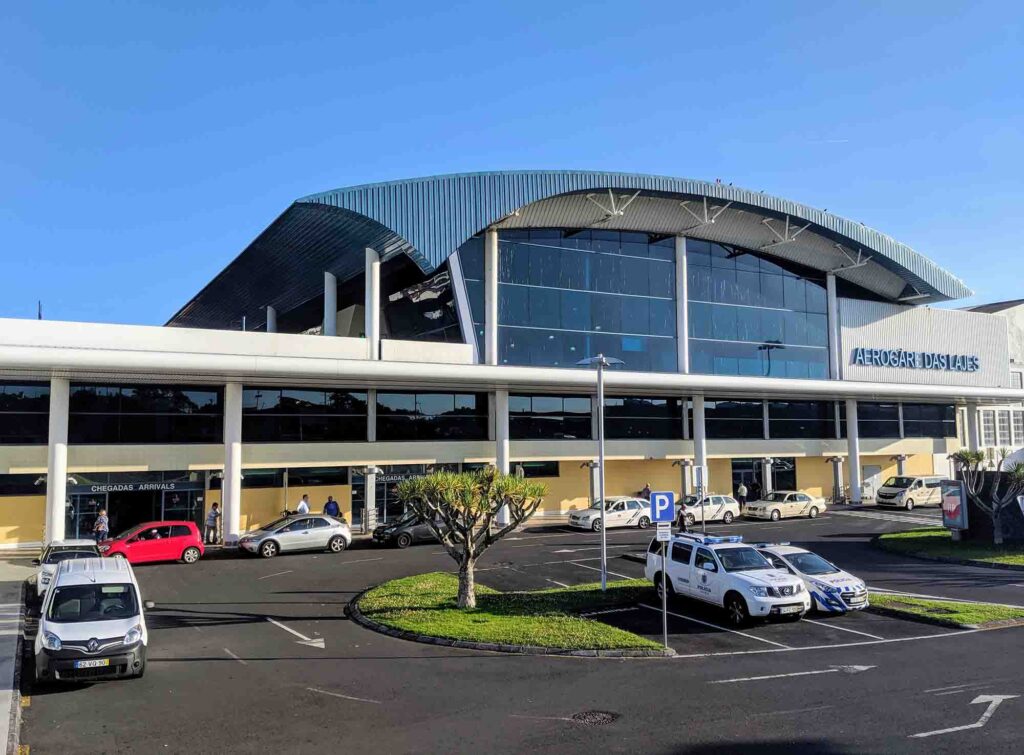
It is an EU entry point. Customs and immigration are on hand to process entry to Europe, and the terminal has both Schengen and non-Schengen circulation areas.

It has all the usual amenities. A well-equipped terminal includes check in counters, dining, security, customs and immigration, lounges, ground handling and rental cars. The airport is located an easy twenty-minute drive from downtown where ample accommodation options exist for crew and passengers.

How do I land there?

To land at LPLA/Lajes you need prior approval.

The good news is that it is really easy to get. Your request will generally be processed within four hours by the Civilian Terminal Operations.

If it is just a simple fuel stop you need, refuelling at the airport is also now authorised with passengers onboard.

If you prefer to handle things yourself, you can apply directly here or call airport operations on +351 295 545 461.

However, there are several local handling agents who can take care of clearances, approval, fuel, lavatory servicing and catering for you:

GROUNDLINK
Phone: +351 217 923 750
Email: portugal@groundlink.pt

SATA AZORES AIRLINES
Phone: +351 295 540 033
Email: terklsp@sata.pt
By VHF radio: 131.700 MHZ

WEXJET SUPPORT
Phone: +351 218 701 025
Cell: +351 938 650 864
Email: lpla@wexjet.com

For fuel enquiries contact:

PETROGAL/GALP
Lisbon Office
Mr Joao Meneses
Phone: +351 217 240 739
Email: joao.c.meneses@galp.com

Terceira (local) Office
Mr Gilberto Pereira
Phone: +351 295 512 396
Email: galpair.lgs@mail.telepac.pt


Thanks to Miguel Santos for this post. Visit www.atlantis-lajes.com for more information.


Covid impact on North Atlantic diversion airports

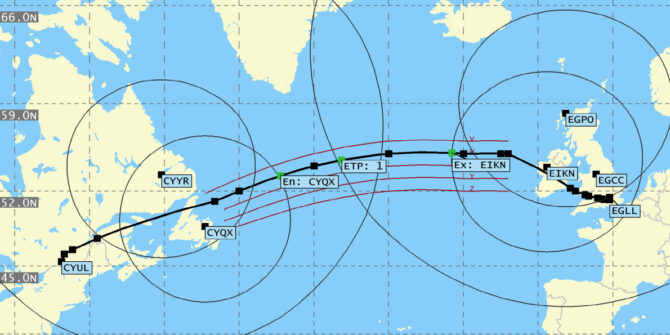
Planning diversion alternates is always fun – particularly when flying across vast tracts of open ocean like the North Atlantic. Check a few Notams, google some airport pics to work out just how scary the runway is, stick a couple of en-route alternates into your flight plan, and away you go…

The reality is it’s a bit more complicated than that. For use as a diversion alternate, an aircraft operator must ensure that the airport concerned meets basic criteria to be classified as ‘adequate’. In other words, just a runway is not enough – if only it were that simple!

Here are the kinds of things we’re interested in:

  • Sufficient weather forecasting.
  • ATC (or Flight Information Service) hours of operation.
  • Runway availability.
  • Instrument approach availability.
  • Runway Lighting.
  • Runway slope guidance (PAPI, VASI, Glideslope or similar).
  • RFF (Rescue Fire) operational status.
  • Status of facilities: refuelling, handling, parking bays etc.

During the course of the Covid-19 pandemic, a number of airports have used the lull in traffic to undertake work that can affect their operational status. As a result, these changes may create additional operational issues for pilots and flight planners seeking diversion alternates that meet their requirements.

Also, due to the general chaos of Covid-19, many airports have limited staff which has an effect on how your aircraft, passengers and crew will be handled on the ground if you do need to divert.

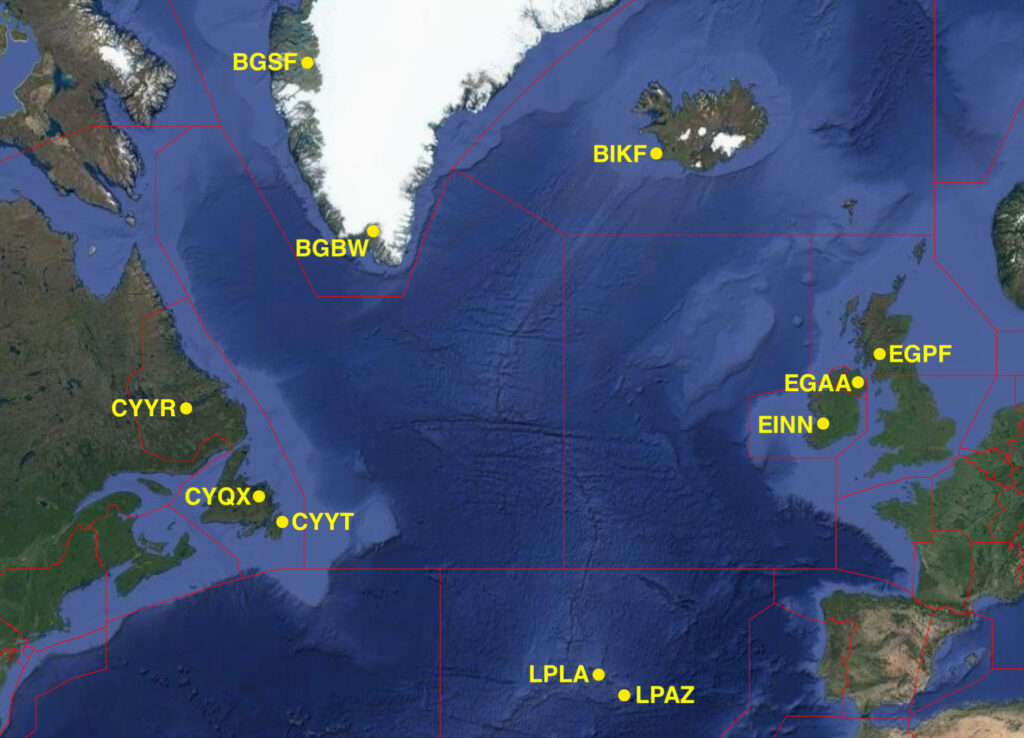
Here’s a summary of changes to operational status of airports commonly used as diversion alternates for aircraft crossing the North Atlantic. (Unless stated otherwise, airports listed below are open H24 for emergency diverts).

The Biggies

BGSF Kangerkussuaq Airport, Greenland – Airport is open 1000-1900z Monday to Saturday. Closed on Sundays. If you want them to stay open for you outside their opening times, you have to request it in advance – watch out for hefty fees if doing this, which get charged even if you don’t end up actually diverting there. Same applies if you just casually list BGSF as an en-route alternate on your flight plan if operating out of hours. More info on that here.

However, until at least June 10 the airport is classified as ‘non-instrumental.’ Effectively you can only use it during daylight hours in good conditions (NOTAM A0283/20 refers).

BGBW Narsarsuaq, Greenland – Similar deal to BGSF – airport is only open 1000-1900z Monday to Saturday, and closed on Sundays. And again, extra fees which get charged if filing BGBW as an en-route alternate on flight plans. RFF category 5, but grab a coffee because it requires 3 hour’s notice (NOTAM A0098/20 refers). Officially, the current rules for Greenland are that crew and pax will not be allowed to disembark, not even for diverts. Unofficially, the local handler says that if a divert was to happen, they’d “find a solution”.

LPLA Lajez, Azores – Several restrictions apply due to Covid. Essentially you can go there if you really need somewhere to land but expect chaos once you do. The airport is currently closed to international arrivals unless it’s an emergency. And even then you cannot disembark without permission and strict quarantine measures apply (NOTAM A1487/20 refers). Unscheduled arrivals of emergency aircraft can expect ‘extensive handling delays’ (NOTAM A1485/20 refers). All passengers and crew must wear face masks, and once you and your passengers leave the aircraft you will be quarantined in the local air force base (room service is unlikely).

LPAZ Santa Maria, Azores. If you have to divert there, no crew or pax are allowed to disembark. For medical emergencies, they actually recommend you go to LPLA instead!

EINN Shannon, Ireland – Aerodrome is currently only operational from 0500-2100z due to the impact of Covid (NOTAM A1062/20 refers). The airport has confirmed they are not available outside of these hours for emergency diverts – so if you’re operating overnight, the nearest available H24 airports are EGAA/Belfast and EIDW/Dublin.

And watch out for these potential ‘gotchas’

CYYR Goose Bay, Canada – Until June 29, runway 16/34 is closed. In strong northerly or southerly conditions, cross wind limitations may be reached – so keep an eye on your ETOPs alternate minima (NOTAM E3107/20 refers).

CYQX Gander, Canada – In case of divert, crew/pax all need to fill out a Government Declaration COVID form to stay overnight, and need to have proper PPR (Masks, Gloves and Sanitary Cleaner). RFF category 5 which requires at least 30 minutes notice.

BIKF Keflavik, Iceland – RFF category 8 from 0500-1900z, RFF category 7 from 1900-0500z (NOTAM A0123/20 refers).

EGAA Belfast, Ireland – Until June 13, RFF category 6 overnight between 1800-0600z (NOTAM A1968/20 refers). And until June 11, this is reduced to just RFF cat 4 between the daytime hours of 0600-1800z (NOTAM A1993/20 refers).

EGPF Glasgow, Scotland. Until June 16, available RFF category is 6 for the majority of the day due to staffing issues caused by Covid (NOTAM A1983/20 refers).


In other NAT-related news, the datalink mandate rules have been relaxed until the end of June, due to the fact that there’s now significantly less traffic because of all the COVID restrictionsNon-datalink mandate compliant aircraft may therefore flight plan and operate between FL290-410 until June 30. ICAO are saying that due to the decrease in traffic, there is a significantly higher chance of flights being cleared as requested, and are encouraging operators to file and request their optimal profiles at all stages of the flight. More info on the NAT Datalink Mandate can be found here.