Covid impact on North Atlantic diversion airports
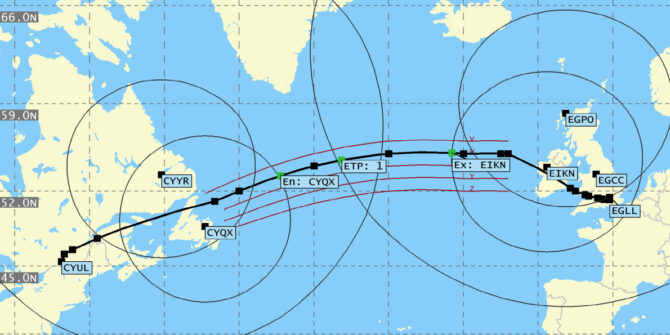
Planning diversion alternates is always fun – particularly when flying across vast tracts of open ocean like the North Atlantic. Check a few Notams, google some airport pics to work out just how scary the runway is, stick a couple of en-route alternates into your flight plan, and away you go…
The reality is it’s a bit more complicated than that. For use as a diversion alternate, an aircraft operator must ensure that the airport concerned meets basic criteria to be classified as ‘adequate’. In other words, just a runway is not enough – if only it were that simple!
Here are the kinds of things we’re interested in:
- Sufficient weather forecasting.
- ATC (or Flight Information Service) hours of operation.
- Runway availability.
- Instrument approach availability.
- Runway Lighting.
- Runway slope guidance (PAPI, VASI, Glideslope or similar).
- RFF (Rescue Fire) operational status.
- Status of facilities: refuelling, handling, parking bays etc.
During the course of the Covid-19 pandemic, a number of airports have used the lull in traffic to undertake work that can affect their operational status. As a result, these changes may create additional operational issues for pilots and flight planners seeking diversion alternates that meet their requirements.
Also, due to the general chaos of Covid-19, many airports have limited staff which has an effect on how your aircraft, passengers and crew will be handled on the ground if you do need to divert.
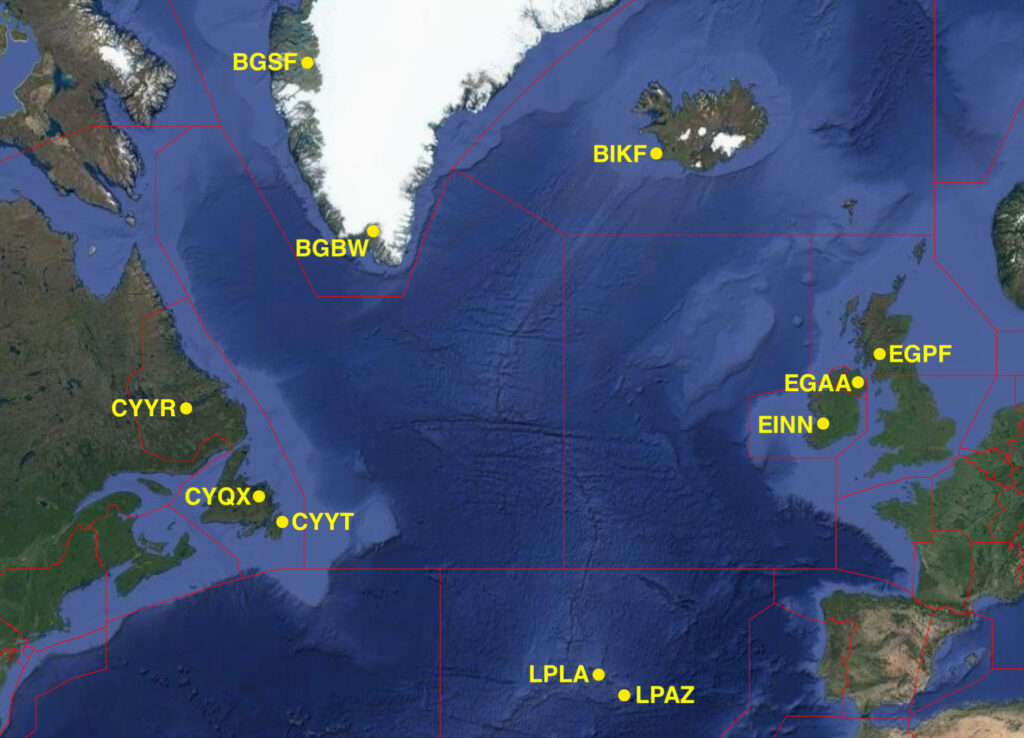
Here’s a summary of changes to operational status of airports commonly used as diversion alternates for aircraft crossing the North Atlantic. (Unless stated otherwise, airports listed below are open H24 for emergency diverts).
The Biggies
BGSF Kangerkussuaq Airport, Greenland – Airport is open 1000-1900z Monday to Saturday. Closed on Sundays. If you want them to stay open for you outside their opening times, you have to request it in advance – watch out for hefty fees if doing this, which get charged even if you don’t end up actually diverting there. Same applies if you just casually list BGSF as an en-route alternate on your flight plan if operating out of hours. More info on that here.
However, until at least June 10 the airport is classified as ‘non-instrumental.’ Effectively you can only use it during daylight hours in good conditions (NOTAM A0283/20 refers).
BGBW Narsarsuaq, Greenland – Similar deal to BGSF – airport is only open 1000-1900z Monday to Saturday, and closed on Sundays. And again, extra fees which get charged if filing BGBW as an en-route alternate on flight plans. RFF category 5, but grab a coffee because it requires 3 hour’s notice (NOTAM A0098/20 refers). Officially, the current rules for Greenland are that crew and pax will not be allowed to disembark, not even for diverts. Unofficially, the local handler says that if a divert was to happen, they’d “find a solution”.
LPLA Lajez, Azores – Several restrictions apply due to Covid. Essentially you can go there if you really need somewhere to land but expect chaos once you do. The airport is currently closed to international arrivals unless it’s an emergency. And even then you cannot disembark without permission and strict quarantine measures apply (NOTAM A1487/20 refers). Unscheduled arrivals of emergency aircraft can expect ‘extensive handling delays’ (NOTAM A1485/20 refers). All passengers and crew must wear face masks, and once you and your passengers leave the aircraft you will be quarantined in the local air force base (room service is unlikely).
LPAZ Santa Maria, Azores. If you have to divert there, no crew or pax are allowed to disembark. For medical emergencies, they actually recommend you go to LPLA instead!
EINN Shannon, Ireland – Aerodrome is currently only operational from 0500-2100z due to the impact of Covid (NOTAM A1062/20 refers). The airport has confirmed they are not available outside of these hours for emergency diverts – so if you’re operating overnight, the nearest available H24 airports are EGAA/Belfast and EIDW/Dublin.
And watch out for these potential ‘gotchas’
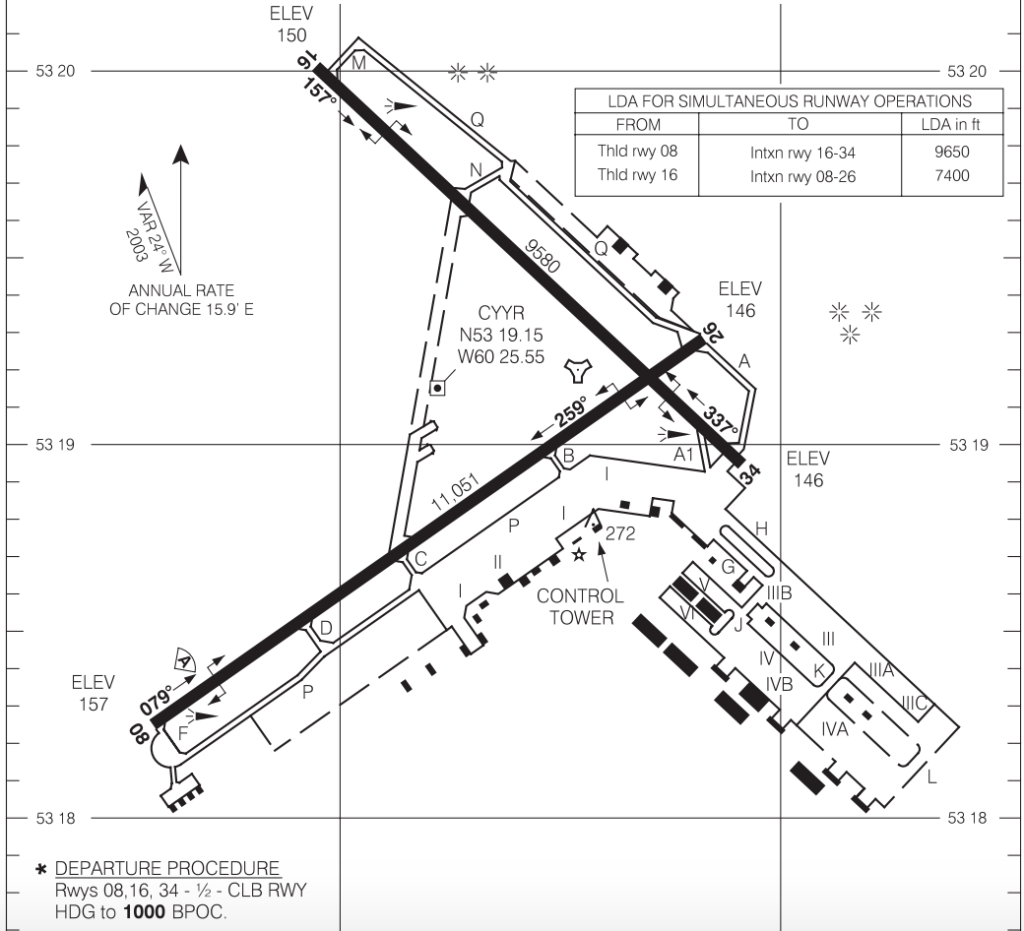
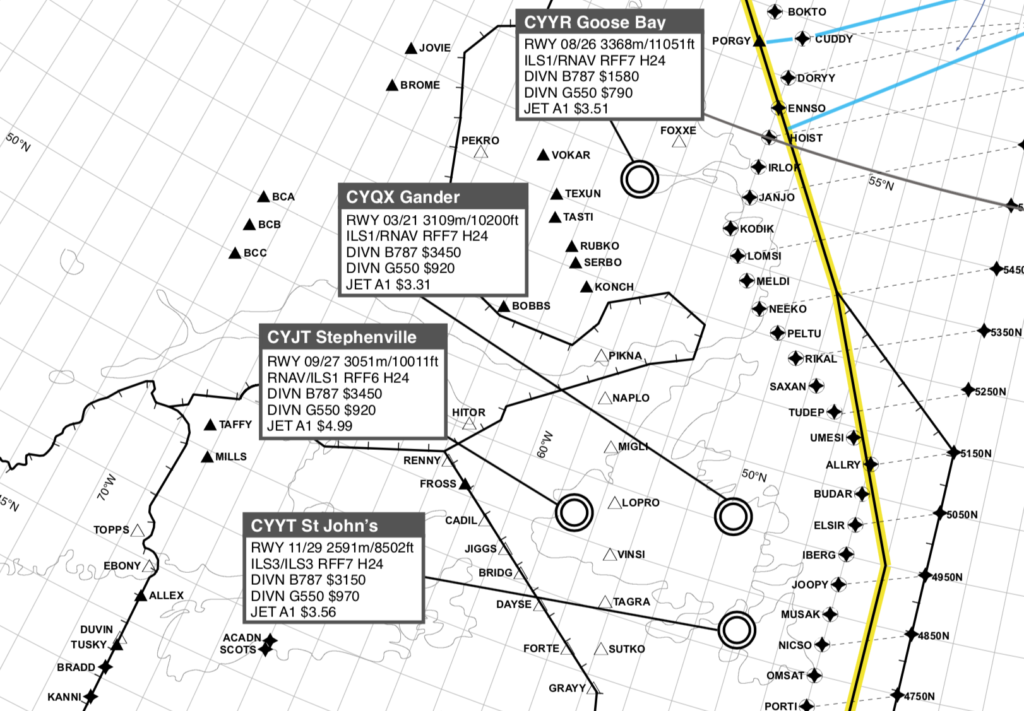
CYYR Goose Bay, Canada – Until June 29, runway 16/34 is closed. In strong northerly or southerly conditions, cross wind limitations may be reached – so keep an eye on your ETOPs alternate minima (NOTAM E3107/20 refers).
CYQX Gander, Canada – In case of divert, crew/pax all need to fill out a Government Declaration COVID form to stay overnight, and need to have proper PPR (Masks, Gloves and Sanitary Cleaner). RFF category 5 which requires at least 30 minutes notice.
BIKF Keflavik, Iceland – RFF category 8 from 0500-1900z, RFF category 7 from 1900-0500z (NOTAM A0123/20 refers).
EGAA Belfast, Ireland – Until June 13, RFF category 6 overnight between 1800-0600z (NOTAM A1968/20 refers). And until June 11, this is reduced to just RFF cat 4 between the daytime hours of 0600-1800z (NOTAM A1993/20 refers).
EGPF Glasgow, Scotland. Until June 16, available RFF category is 6 for the majority of the day due to staffing issues caused by Covid (NOTAM A1983/20 refers).
In other NAT-related news, the datalink mandate rules have been relaxed until the end of June, due to the fact that there’s now significantly less traffic because of all the COVID restrictions. Non-datalink mandate compliant aircraft may therefore flight plan and operate between FL290-410 until June 30. ICAO are saying that due to the decrease in traffic, there is a significantly higher chance of flights being cleared as requested, and are encouraging operators to file and request their optimal profiles at all stages of the flight. More info on the NAT Datalink Mandate can be found here.