New NAT Doc 007: North Atlantic Changes from March 2026

A new NAT Doc has landed, effective 19 March 2026. As ever, it’s a meaty sucker, and probably not something you’ll want to read cover to cover. So we’ve done that part for you. We’ve gone through it and pulled out the changes that actually matter operationally, plus a few important “this hasn’t changed” reminders. If you’re crossing the North Atlantic, this is the stuff worth knowing.
You can access the new 2026 version of the doc here, and the old 2025 version here, if you want to compare the two.

Shanwick OCR delay
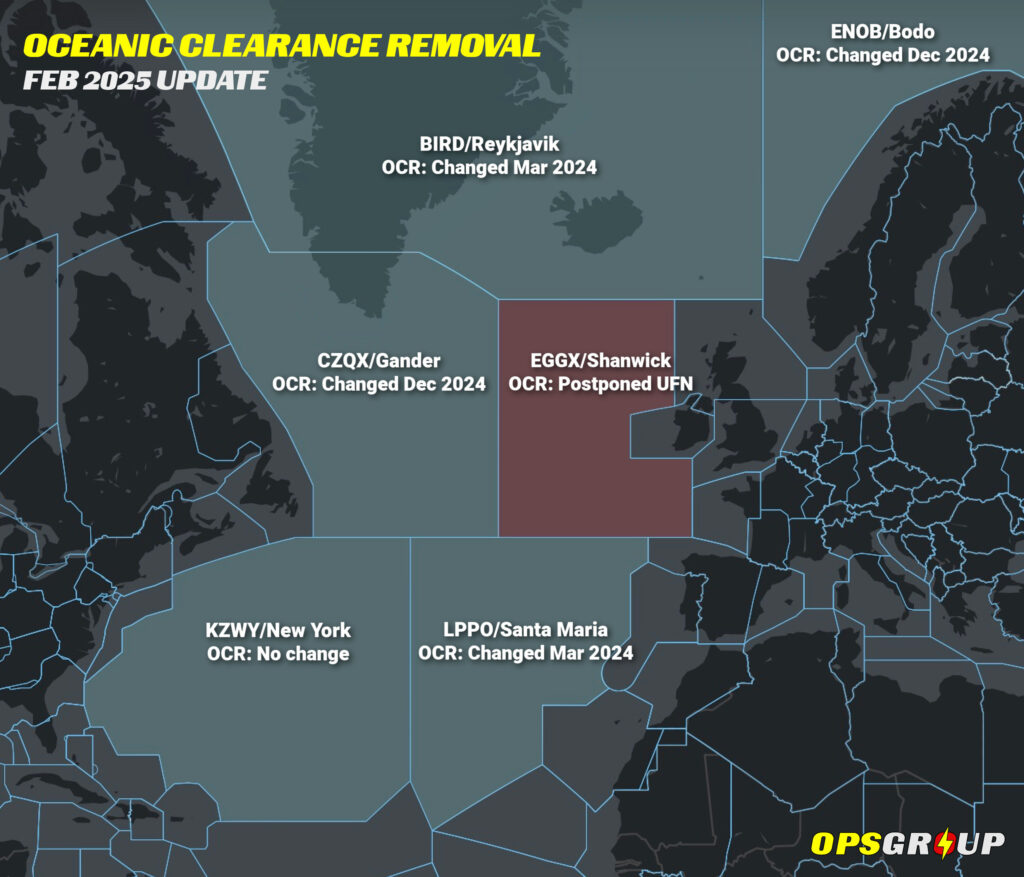
The new NAT Doc now clearly states what operators have known for a while: Shanwick has not implemented Oceanic Clearance Removal. A specific note states that, due to delayed OCR implementation, Shanwick will continue issuing oceanic clearances following submission of an RCL, until further notice.
The document itself does not give a timeline. However, Shanwick has separately confirmed that OCR is not expected to go live before summer 2026. Operationally, nothing changes at Shanwick for now – crews must still request and fly an oceanic clearance. The key point is that, despite much of Chapter 6 reading like an OCR-style environment, Shanwick is explicitly not there yet.
Ref: Chapter 6, Section 6.3.
RCL timing switches from ETA to ETO – new terminology
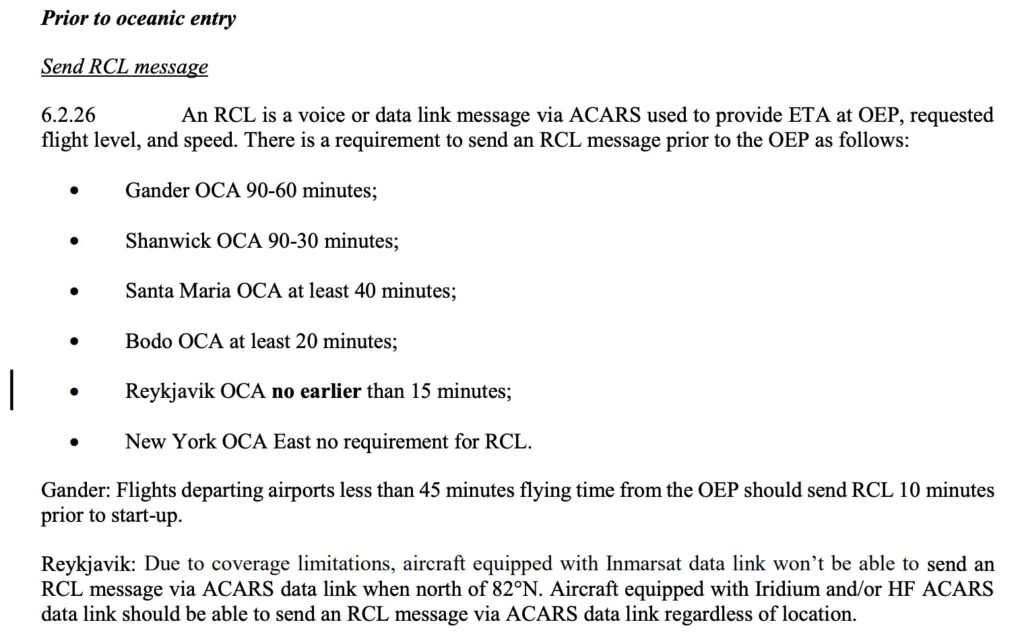
The new 2026 edition introduces ETO – Estimated Time Over Significant Point for the Oceanic Entry Point in RCLs, replacing the way ETA was used in previous editions.
Doc 007 doesn’t explicitly explain the change, but the logic is pretty clear. ETA can be vague and is often taken as a general arrival estimate. ETO is much more precise – it’s the FMS-predicted time over a specific waypoint. That’s what ATC actually uses for longitudinal separation in procedural airspace.
The shift also lines up with two big themes in the new doc: the move toward OCR-style operations, and growing concern about time accuracy after GNSS jamming and spoofing.
Ref: Chapter 6, Sections 6.3.23-6.3.25
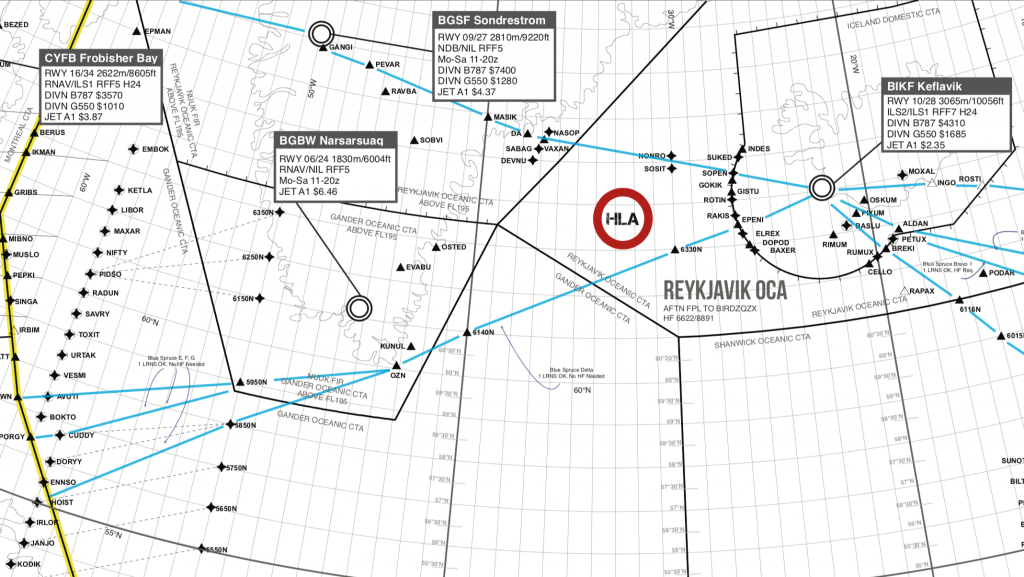
Reykjavik no longer requires an RCL
Reykjavik effectively steps away from the RCL process altogether in the 2026 edition. Doc 007 now says that an RCL is not required for Reykjavik, and that if one is sent anyway, crews will be told it wasn’t needed.
The main issue with RCL was confusion with some crews about what it actually meant. In some cases, crews assumed that once they’d sent it, they could climb or descend to the level in the message without first receiving an ATC clearance. So Reykjavik have decided to discontinue RCL altogether for safety reasons.
Other NAT OCAs still require RCLs, so this doesn’t simplify things overall. It just means procedures are even more mixed than before. The main risk for operators is assuming the same process applies everywhere across the NAT, when it very much doesn’t!
Ref: Chapter 6, Section 6.3.24
Bigger push on FMS waypoint and route verification
The 2026 doc puts much more weight on careful FMS programming and verification. It highlights known traps with half-degree waypoints, ARINC 424 coding, and CPDLC route amendments that arrive in full LAT/LONG and don’t visually match stored waypoint names.
There’s a strong emphasis on independent PF/PM crosschecks and verifying expanded coordinates, courses, and distances. This isn’t theoretical – it’s a direct response to navigation errors seen since OCR and more frequent CPDLC route changes.
Ref: Chapter 6, Sections 6.3.18-6.3.32
GNSS interference treated as a routine NAT problem
GNSS jamming and spoofing are no longer treated as rare edge cases. In the 2026 doc, they’re framed as a normal operational hazard. The guidance highlights how GNSS interference can quietly degrade aircraft time, with knock-on effects to ADS-C, ADS-B, CPDLC, and longitudinal separation – even after position accuracy appears to have recovered.
The practical takeaway is simple: “it recovered” doesn’t mean “it’s fine”. So operators need to think about downstream impacts before entering the NAT. More detailed guidance is in NAT Ops Bulletin 2025-001, which sets out what to watch for and what to do if you’re entering the NAT with GPS problems. This mainly affects westbound flights coming out of spoofing or jamming areas. Bottom line – tell ATC early in your RCL if there are any issues. Doing so can help avoid off-track reroutes, step-downs, and delays.
Ref: Chapter 1 and Chapter 6 (Plus referenced NAT Ops Bulletin as above)
Flight Level Allocation Scheme (FLAS) – now gone
Until now, NAT Doc 007 included a Flight Level Allocation Scheme (FLAS). It was a simple table that gave crews and dispatchers a sensible planning starting point for random routes outside the OTS, mainly by biasing eastbound and westbound traffic onto different flight levels. It wasn’t mandatory, but if you planned within FLAS, you were usually aligned with what ATC expected.
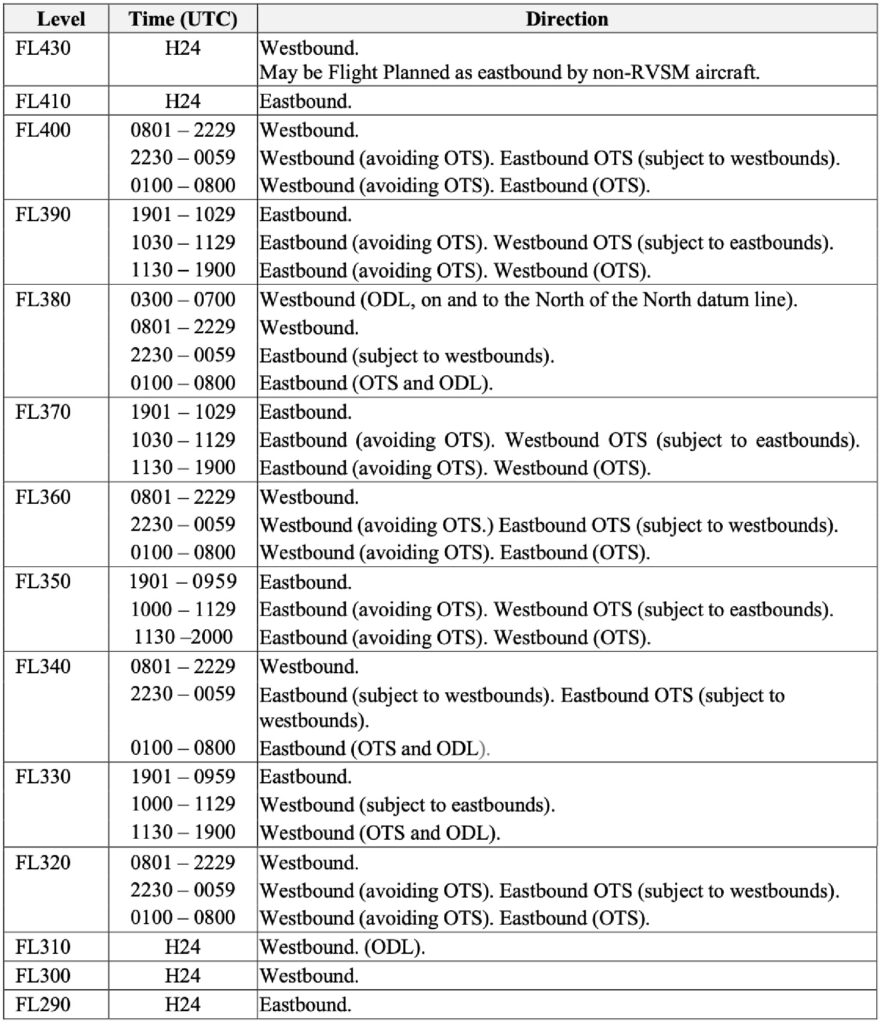
In the March 2026 edition, FLAS has quietly disappeared. The attachment has been removed and there’s no replacement scheme. Instead, the new wording says that random-route flights can plan any flight level, as long as it works with traffic flows and ATC can make it fit. 🤔

So there’s nothing in the new Doc to say that the old FLAS separation logic has disappeared – it’s just no longer explicitly written down! We’re guessing the practical impact will be less predictability up front and more tactical level changes, especially if you’re flying counter-flow or close to track changeover times.
What didn’t change
Despite all the discussion around NAT procedures lately, the new NAT Doc does not introduce new requirements in several key areas:
- NAT HLA approval is still required (though there was some chatter about this last year)
- CPDLC and ADS-C mandates are unchanged
- No new equipage requirements
- No new separation standards
So the real changes here are about clarity, procedures, and reducing error, not new boxes to tick.
Ref: Chapters 1, 5, and 6
So what do crews actually do now? (RCLs and oceanic clearances, made simple)
Even when the 2026 version takes effect in March, OCR will still be uneven across the NAT, so procedures depend on which OCA you’re entering. Here’s what crews will need to do at Gander, Shanwick, and Reykjavik:
Eastbound via Gander (no change)
Gander is fully in OCR mode. You still send an RCL 90-60 minutes before the OEP, but it’s for planning only. You are not asking for an oceanic clearance, and none will be issued. Fly your last domestic clearance unless ATC gives you a change before the OEP. Once oceanic, expect any further changes via CPDLC or HF. This is the area that caused most of the early confusion, but the rule is simple: RCL yes, oceanic clearance no.
Westbound via Shanwick (no change… yet)
Shanwick is not on OCR yet. You must send an RCL or make a voice clearance request 90-30 minutes before the OEP, and you will receive an oceanic clearance by ACARS or voice. Fly that clearance. NAT Doc 007 confirms this will continue until further notice. Shanwick has separately said OCR is not expected until sometime after summer 2026.
Departing Iceland (changes from March 2026)
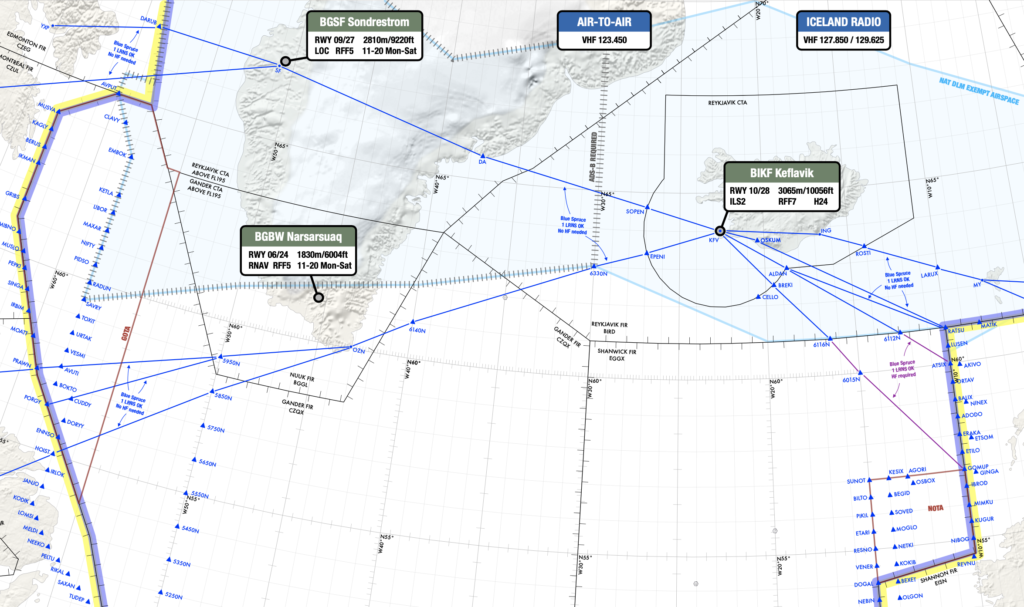
From 19 March 2026, Reykjavik will not require an RCL. If you send one anyway, they’ll tell you it wasn’t needed. Departing from BIKF/BIRK, you’ll enter the Reykjavik OCA on your existing ATC clearance unless instructed otherwise.
What the NAT Doc does not spell out is what happens next for flights leaving Reykjavik and entering either Gander or Shanwick!
We’ve asked Gander and Shanwick directly to confirm what the deal will be, and here’s what they’ve said:
- Eastbound flights entering Shanwick: No additional RCL or oceanic clearance is required. Iceland will coordinate electronically with Shanwick, so crews should not expect to request a clearance or submit an RCL when exiting Reykjavik into Shanwick. This is similar to how flights entering Gander from New York FIR are handled today.
- Westbound flights entering Gander: The same applies. Flights transitioning from Reykjavik into Gander will do so via electronic coordination between Iceland and Gander. An RCL is not required in this case. Gander RCLs are only required for flights transitioning directly from a Canadian domestic agency into Gander Oceanic.
In short: if you’re coming out of Reykjavik, don’t add an extra step. The handoff to both Shanwick and Gander will be coordinated automatically.
Other NAT Doc changes spotted by OPSGROUP members!
Thanks to everyone who wrote in with extra details they’d spotted in the new NAT Doc! A few of these aren’t brand-new changes, but they’re easy to miss and worth flagging. Here’s a round-up of the most useful bits members sent in.
- WATRS terminology unchanged: The NAT Doc still uses the term WATRS and continues to defer the details to the US AIP. This hasn’t been updated, despite the FAA having moved to “WAT” terminology in its own AIP.
- Squawk 2000 timing (10 minutes after OEP): This wasn’t new in the 2026 NAT Doc, but we missed it in our write-up back in 2025 so it’s worth flagging here! The NAT Doc says aircraft should retain the last assigned SSR code and squawk 2000 10 minutes after passing the oceanic entry point, everywhere in the NAT except when operating in the Reykjavik CTA or when transitioning Bermuda radar, where assigned codes are retained due to radar coverage. (Some older guidance and legacy SOPs often referred to squawking 2000 after 30 minutes, particularly in New York OCA.)
- WAH reports no longer treated as mandatory: The updated Doc removes earlier ambiguity around “When Able Higher” reports. WAH is now clearly optional unless ATC specifically requests it, aligning with how several FIRs have already been operating.
- SLOP still treated as a blanket NAT procedure: The NAT Doc continues to describe SLOP as standard NAT practice and does not list route-specific or FIR-specific limitations. In practice, some published ATS routes and oceanic areas have local procedures that restrict the routine use of automatic offsets. Examples include T9 and T290, which are treated as RNP 2 continental offshore routes in the UK AIP, and parts of the WAT structure in New York OCA, where procedures expect aircraft to remain on the cleared route unless otherwise instructed. These nuances come from State AIPs rather than the NAT Doc, so crews still need to check local rules before applying SLOP.
- Magnetic variation tolerance still inconsistent: A new note highlights that magnetic variation tables and track reference points can shift displayed tracks by up to ±3 degrees. However, nearby guidance still refers to ±2 degree tolerances, and earlier numeric tolerances have been removed from the sample checklist, leaving some internal inconsistency.
- Oceanic checklist partly modernised: The sample oceanic checklist removes the old taxi groundspeed check, which no longer makes sense for modern navigation systems. However, the present-position check remains, even though its operational value is limited on newer aircraft.
- RCL maximum level wording updated: The recommended RCL format for requesting a maximum flight level is now “MAX FL380”, replacing the older “MAX F380” wording. Some State AIPs still show legacy formats, so crews may see differences.
- Azores departures – no RCL to Santa Maria: If you’re departing from the Azores, you don’t need to send an RCL to Santa Maria. This exemption has been in place since 201, but it isn’t clearly reflected in NAT Doc 007. It’s published in Portugal AIP ENR 1.1.15.1.
- Some Santa Maria local procedures still sit outside the NAT Doc: The NAT Doc applies a generic NAT baseline to Santa Maria, but several Santa Maria-specific procedures only live in the Portugal AIP. These include squawk handling in the surveillance area, limits on routine offsets in some sectors, exemptions from voice position reports when space-based surveillance is in use, and CPDLC-related SELCAL and RCL differences. None of this is new, but it still isn’t captured in Doc 007. Bottom line – don’t rely on the NAT Doc alone for Santa Maria.
Anything we missed?
Spotted any other big changes in the new NAT Doc that we missed? Please let us know, and we will update this article! Email: news@ops.group