Argentina: Overflight Permits Now Required

Key Points
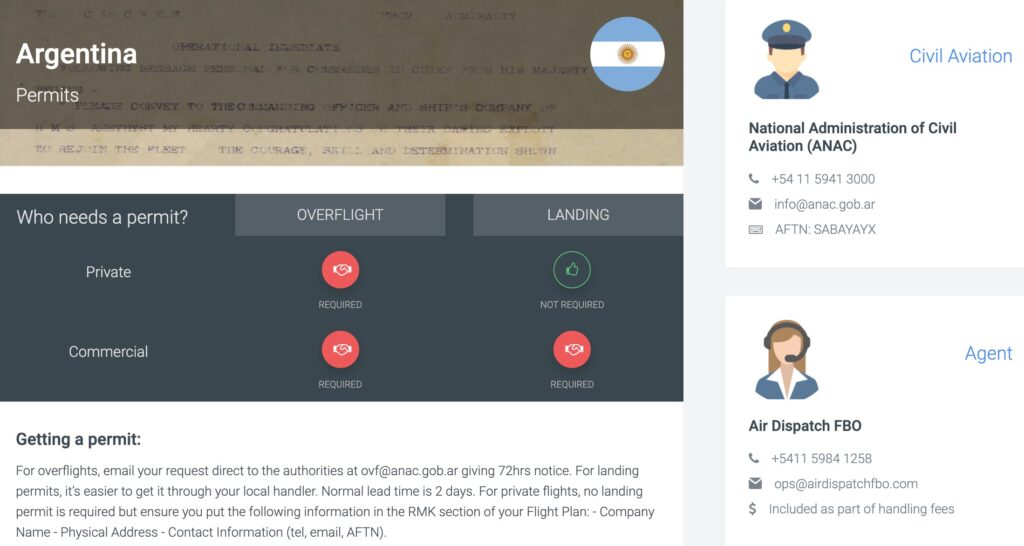
  • Effective March 13, all foreign aircraft now need an overflight permit when transiting Argentinian airspace.
  • There’s been no change to landing permit requirements: private flights don’t need one, all other flights do (including tech stops).
  • AI is still not great at making images with planes or handshakes in them 😂

AIP SUP 32/2024 has been published with all the new requirements – but here’s a quick summary of what you need to know.

Airspace Affected

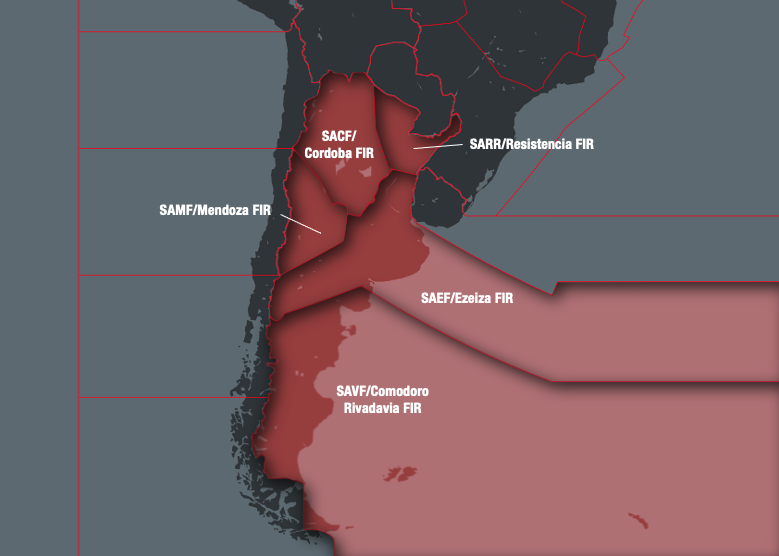
This change applies to all Argentinian airspace, namely the:

  • SAVF/Comodoro Rivadavia FIR
  • SAEF/Ezeiza FIR
  • SACF/Cordoba FIR
  • SARR/Resisitencia FIR
  • SAMF/Mendoza FIR

How to apply

You’ll need to provide at least 72 hours’ notice.

Send your application to the National Administration of Civil Aviation (ANAC)’s AFTN address SABAYAYX, and via email to ovf@anac.gob.ar (also cc. in interaerodromosbis@gmail.com). For emails, use the subject line ‘Application for Overflying the Argentine Territory.’

If you need to give ANAC a call, you can also reach them on +54 11 5941 3000.

Private operators will need to provide copies of two documents:

  • Certificate of airworthiness
  • Proof of insurance

Commercial operators also need to provide an air operator certificate.

Important: It may sound obvious, but they are quite specific about it. Don’t assume you have been granted a permit until you have specifically heard back from them.

Exemptions to the 72-hour rule

You can only get around this if you are operating an essential flight. This basically means SAR, humanitarian, air ambulance or firefighting ops.

What about landing permits?

Nothing has changed! Private flights don’t need one – but make sure you include your company name, physical address and contact info (tel, email, AFTN etc) in the RMKS section of your flight plans.

All other flights (including tech stops) must obtain one.

Need help with other permits?

OPSGROUP members have access to the Permit Helper, found under ‘Apps’ in your Member’s Dashboard. Just search for the country you are planning to visit to see current overflight and landing permit requirements.

You can also reach out to the team (and other members) via the Slack channels, or email us team@ops.group.


Where is the spoofing today? Two maps to help

If you’re keen to know exactly where GPS Spoofing – or GPS Jamming – might be happening today, there are two handy live maps to share with you.

Both of these use data from flight tracking websites to look for position anomalies, and convert those into hotspots that show where the activity is.

These are very useful in-flight to get a heads up on where you might encounter issues with GPS interference.

Live GPS Spoofing tracker

First up is this live GPS spoofing tracker from SkAI Data Services, in partnership with the Zurich University of Applied Sciences.

About a month ago, SkAI and Zurich University were following the discussions about GPS spoofing, and wondered if they could detect spoofing in real-time based on the ADS-B data from the OpenSky Network. As it turns out, they can. Having up-to-date information can help raise the situational awareness and prepare the flight crew for the possibility of spoofing.

Their algorithm can detect spoofing anywhere in the world where they have ADS-B coverage. The website is free to use. Unfortunately, the receiver network doesn’t quite have the same coverage as other ADS-B websites, let alone space-based ADS-B. Regardless, it’s a great tool for planning flights into areas of potential GPS issues.

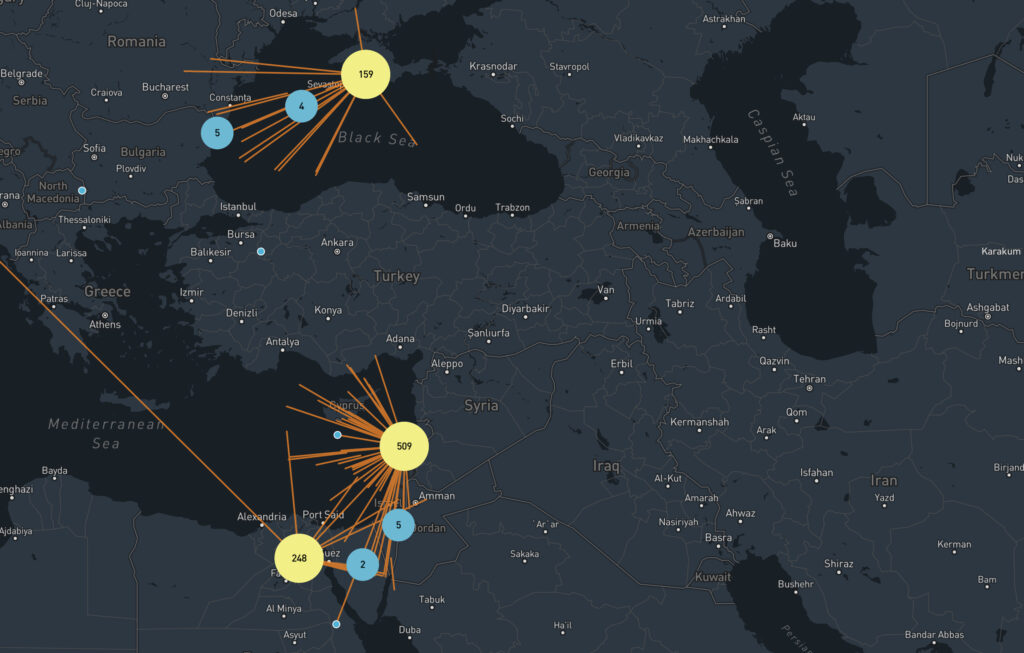
The screenshot above is from this morning, May 7th. It matches exactly the three primary GPS spoofing hotspots this year: Sevastopol, Beirut, and Cairo. These are the three locations that you can expect your GPS to “think” it’s at, when you are over the Black Sea, Eastern Med/Israel, and Egypt, respectively.

GPS Jamming tracker

This map has been around a little longer, and will be familiar to some. GPS Jam uses data from ADS-B Exchange, and looks for aircraft indicating low navigation accuracy. More details are in their FAQ.

This was created when jamming was the only type of GPS interference we encountered, but now that spoofing is on the scene, it most likely shows both jamming and spoofing. That said, when being spoofed, the aircraft doesn’t know it has an issue with navigation accuracy (and that’s the very problem). Maybe someone knows more about this.

Either way, it’s a great map to see potential GPS trouble spots.

What’s the latest on GPS Spoofing?

The spoofing tracker above is probably the best answer to that!
Since OPSGROUP first reported the new GPS Spoofing phenomenon in September last year, we continue to receive daily reports of spoofing. However, the areas affected remain largely the same. Our GPS Spoofing Pilot QRH from November last year still holds true, except that we’ve seen far fewer reports from the Iraq/Iran area, and a new area in Sevastopol affecting Black Sea transits.

We continue to ask members to report GPS spoofing events (pictures are very useful too) to us at team@ops.group, or via WhatsApp to +1 747 200 1993. Thank you!


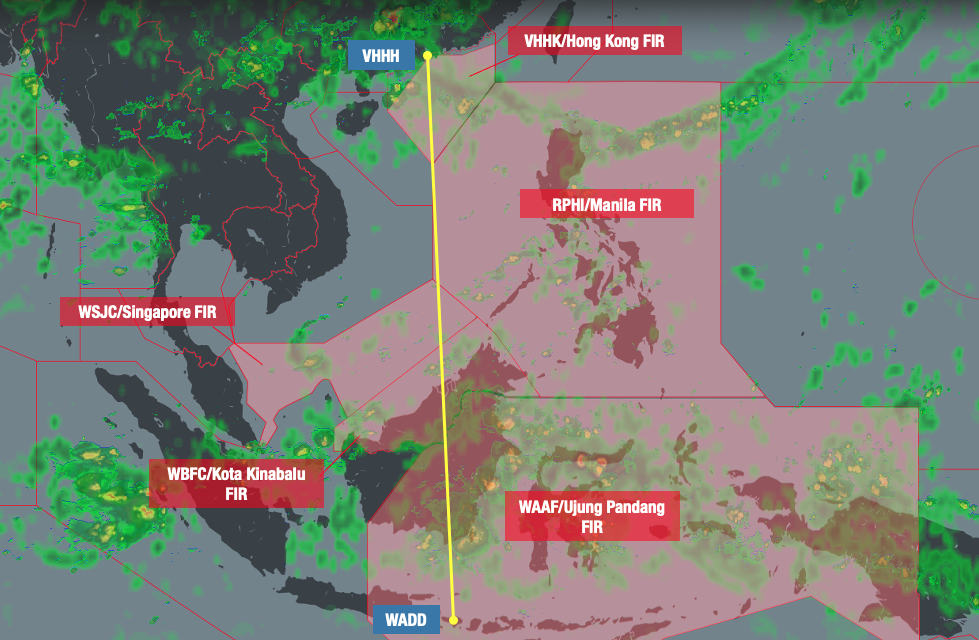
Philippines: Down The Permit Rabbit Hole

Key Points
  • Charter/Non-Sched/Pt135 landings in the Philippines need a Foreign Air Operator Certificate (FAOC). 
  • It’s a bit of a pain to get one. Takes 2-3 weeks, but local agents can help get a landing permit while the FAOC is in process.
  • Read below for the latest on all Philippines Permits

A Cautionary Tale

An OPSGROUP member recently reported the following:

  • To operate non-scheduled air services into the Philippines we were told that we need a Foreign Air Operators Certificate.
  • We were also asked to supply an ICAO Airline Three letter code. This is not something as a non-scheduled operator that we believe we can get!
  • We used a local agent as our Third Party. They supplied the FAOC application form.
  • We were successful in getting a one-off permit, however we still had to complete everything in the application form.
  • We haven’t determined if what we have submitted now as a one-off will be sufficient for the entire FAOC application – we’ll find out soon…

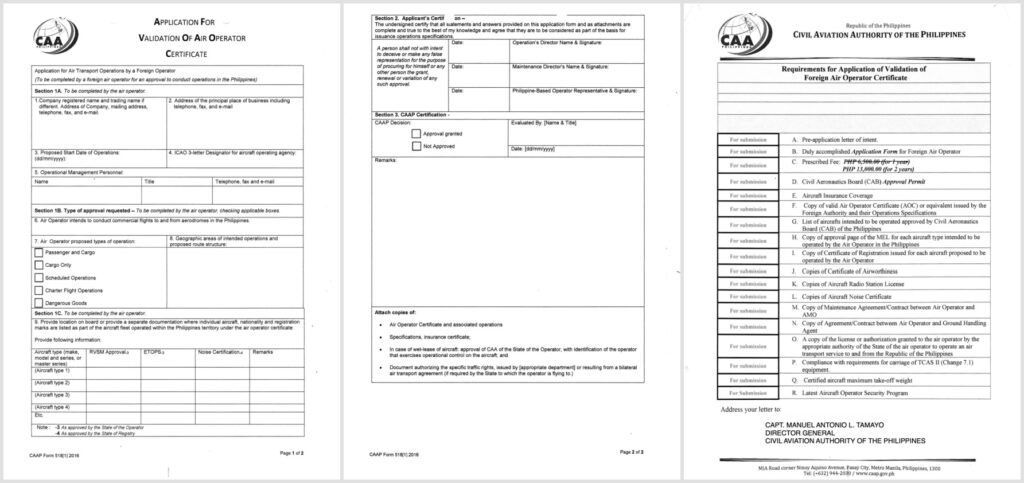
The Application Form

You can download it here:

What are the Philippines Permit Requirements?

Here’s some utterly useless official stuff to “help” start you on your journey.

The Philippines AIP

Requires a log-in. Don’t have one, and can’t get one. Website doesn’t even load most days.

I sent them an email and got a reply saying that even if you have a login, the site doesn’t actually have the eAIP on it. But if you would like to pay them $324 USD each year, they can send you a hard copy.

Nope.

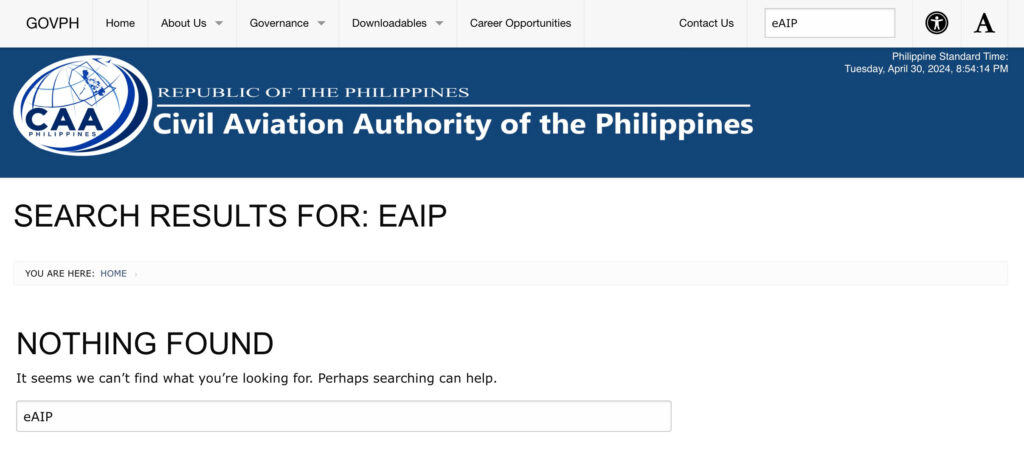
Philippines CAA Website

Searched for “eAIP”. Nothing found. Moved on.

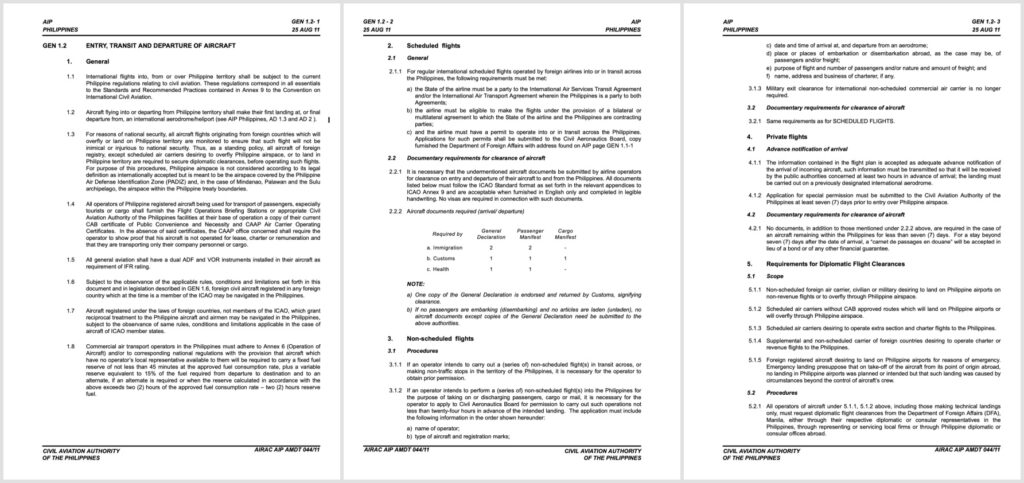
GEN 1.2

Backdoor access achieved via the EAD website! We have found the elusive AIP GEN 1.2!

But wait… it’s dated 2011, and is an enraging mix of INCORRECT INFO and NOTHINGY PAP.

The quest continues…

Ask An Expert

We asked Jeff at Airmach Aviation for help – a local agent in the Philippines who knows all the answers:

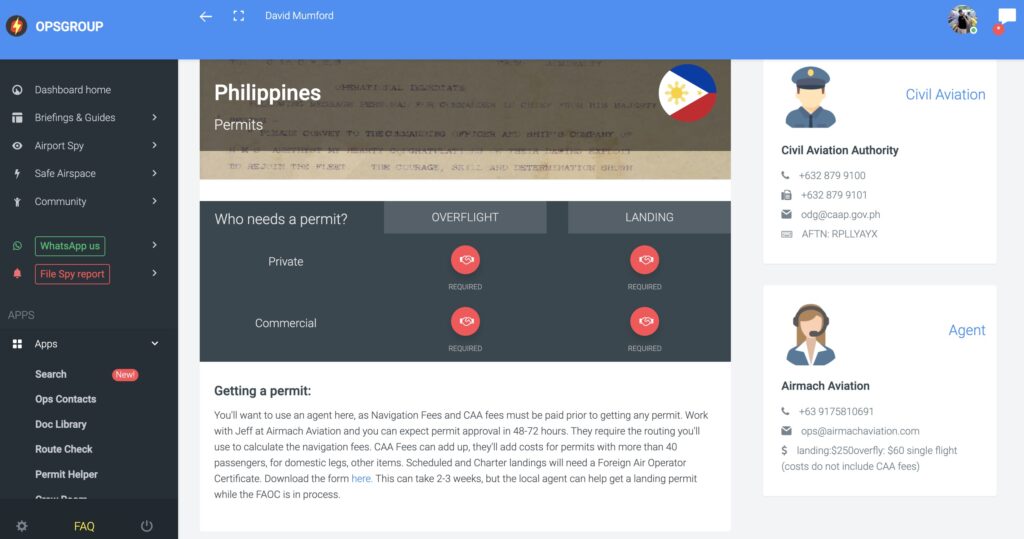
  • All flights need a permit. Landings, overflights, private, charter, scheduled, weird non-standard airworthiness… whatever you’re doing, if you enter Philippines airspace, you need a permit.
  • You’ll want to use an agent here, as Navigation Fees and CAA fees must be paid prior to getting any permit.
  • Permit approvals take anywhere between 48-72 hours.
  • They require the routing you’ll use to calculate the navigation fees.
  • Permit fees can add up, especially for Charter flights as there are different permits you need to get – one from CAAP (the CAA) and another from CAB ( Civil Aeronautics Board).
  • Scheduled and Charter landings will need a Foreign Air Operator Certificate.

OPSGROUP members can access all this info via the Permit Helper app on the Dashboard. This tool has permit info for every country in the world – what’s required, and who to contact to get your permit.

Tell me about the Foreign Air Operator Certificate one more time

  • This is required for Non-Scheduled (i.e. Charter/Pt135 landings) as well as Scheduled (i.e. Airline) flights landing in the Philippines.
  • The application form is here.
  • Download it, fill it in, gather together the required docs listed in the form, and ask a local agent in the Philippines to get it for you. We recommend Airmach Aviation. Other agents are out there.
  • Yes, you could try going direct to the authorities instead (CAAP: odg@caap.gov.ph). We once knew some people who tried. Their bodies have never been found.

Have you been through this FAOC process? Got any extra tips to share? Or maybe you’ve operated a flight to the Philippines recently and have some stories to share?  Let us know!


We Want Your Ops Stories!

Know something worth knowing about something? Got a story to share? Let us know! That’s basically how OPSGROUP works – you tell us, and we’ll tell everyone in the group.

  • Been to Nicaragua and had to use their silly new overflight permit system? Let us know!
  • Experienced one of those annoying security checks at an airport in Germany where they try to sneak onto the plane? Let us know!
  • Had to disinsect your aircraft heading into Italy? Let us know!

Or maybe your story is weirder still. Maybe it’s a NIGHTMARE. Something like this recent account of what to do when trying to take-off in a cicada swarm…

Ooh, that’s a nasty one! But an excellent story – and USEFUL!

It’s many years since we wrote this piece: What is OPSGROUP All About? It still holds true. We’re still about all the same things – keeping each other safe, being real, being human, helping each other out, speaking plainly, and sharing radically.

So tell us your story! Chances are that other pilots and operators would be interested in what you know.

Or maybe you know how specific stuff works?

  • Know how to get an Australian TSP approved with minimal misery? Let us know!
  • Got the lowdown on operating over Central Africa? Let us know!
  • Fly regularly to China and know about Himalayan routings? Let us know!

We’ve already published a bunch of posts written by people in the group who know about specific things like these. Here are some of our faves: (give em a click if you like!)

So if you’ve got a story, or you know about some specific thing, and you think other pilots and operators would be interested to hear about it, let us know!


Why do we see US Military Notams?

Back in March, an OPSGROUP member reached out to us after the following Notam appeared in their flight plan briefing package.

As EGKB/Biggin Hill (UK) was their filed alternate, the Notam was of some interest. A quick email to the airport authority confirmed that the ILS was fully serviceable and available.

The member contacted Jeppesen directly about the Notam, and here was their response:

“The Notam in question is actually a US DOD procedural Notam which only applies to US military pilots and those flying under contract/partnership with the DOD. So, while the tower may confirm that the approach is in-service, the US military is not authorized to fly it for reasons known only to them…”

The following questions remained:

• Why are we seeing these Notams in the first place?

• What is the reason for the restriction on military aircraft?

The short answer is that the response from Jeppesen was correct – but could use a little more explanation.

Where we get our Notams from.

There are two primary “original” sources for Notams around the world:

  1. The European AIS Database (EAD) – run by Eurocontrol
  2. The US DoD (Department of Defense). It supplies Notams to the FAA for their ‘Notam Search’ app, and their SWIM feeds – the FAA’s information-sharing platform.

If your flight plan package is sourcing Notams from the US DoD (and not being filtered correctly), you will see military Notams included – like the one above. Think of them like company notams, for internal use. In this sense, they are not ‘true’ Notams and shoud be completely disregarded by civilian operators.


But why the UK?

To use the DoD Notam feed correctly, military Notams need to be filtered out. But there may be more to it than that.

You’ll see the EGKB Notam above has a ‘V’ designator.

In the UK ‘V’ series Notams mean the following:

“Notification of Security Advice to UK Air Operators by Government to provide guidance/instructions on Airspace Security Risks. Volcanic Ash related information within En-Route Airspace London FIR/UIR, Scottish FIR/UIR, Shannon FIR/UIR and Shanwick Oceanic FIR…”

In the US, they mean something different:

“A NOTAM information pertaining to a location’s published instrument procedures, i.e., Standard Instrument Approach Procedure (SIAPs), Standard Instrument Departure (SIDs), Departure Procedures (DPs). These NOTAMs shall be published under the direction of TERPS personnel…”

Which is why in this case (and many others) we may still see these Notams find their way into our briefing packs.

In a Notam-tale as old as time: just because they’re there, doesn’t mean they’re relevant. The potential for confusion holds strong – especially if civilian operators misinterpret Notams never meant for them in the first place.

Why does the military have their own restrictions?

Because they do! In the same sense one airline can do something another does not allow.

Common sense indicates that the way military aircraft are operated differs substantially from civilian aircraft – and that the margins and procedures designed for us do not necessarily work in the same way for them.

Have more info?

If you have something you’d like to add to this article, we’d love to hear from you. You can reach us at team@ops.group.


US Midwest: Cicada’s are coming to town

This spring, the US Midwest will see Cicada’s emerging in numbers that have not been seen in generations.

This is quite frankly terrifying. It may sound ridiculous that something like this matters, but rest assured, it is crucial. I know from first-hand experience.

It was a hot summer afternoon in 2021 on the ramp at KSUS/Spirit of St Louis airport. There were massive bugs EVERYWHERE, buzzing around, hitting you in the head, flying into the rental car or aircraft if the door was open for even ONE second. Their dead bodies were scattered across the ramp from being run over or stepped on. It was Cicada swarming season, according to the line guys.

We had the APU running and the main cabin door open, attempting to cool the cabin while waiting for our passengers. Even with the curtain closed, the Cicadas entered the cabin and cockpit through the cracks. It was truly disgusting, and I still have nightmares to this day.

The captain was busily chasing the bugs around, attempting to capture each one and throw it back outside. Meanwhile, the FA and I were cowering in the corner, trying to stop them from flying into our hair. When the passengers arrived, they DASHED as fast as they could from their SUV towards the aircraft, hoping to escape getting hit in the face by a Cicada (spoiler: they did not escape this). The SECOND we opened the curtain for them to run in, a load more Cicadas flew in, and we were back to square one, trying to capture/dispose of each one. I heroically went outside, hastily loaded the bags, and shut the cargo door. We had no choice but to close the main cabin door with many 2-3 inch bugs still hiding inside.

Our attempt to escape was met with a HUNG START. QRH blah blah… after several minutes on the phone with our maintenance department and a few more attempts, we were fresh out of ideas. Right then, a frightened Cicada almost flew right into my mouth, prompting the realisation, that, of course this unique variable must be the thing causing the problem.

A quick climb up a ladder confirmed that the APU intake was COVERED in dead Cicadas. It wasn’t getting enough air to provide high-load pneumatic functions. We got a ladder and a broom and brushed some cicada-carcass off the intake, a feeble attempt in rectifying a problem that was concentrated far deeper than the external grate. Somehow, though, we managed to get #1 running (it took precisely 59 seconds, of course), and we were off to the races.

As we taxied off the ramp the most foul, PUTRID smell began to penetrate our nostrils. The smell of HOT/DEAD/LARGE BUGS is not a smell I’d wish on my worst enemy. We quickly switched the bleeds over to the engines and prayed for no circumstances requiring us to switch them back.

Upon arrival, our maintenance team opened the APU and manually removed the burnt cicada crust. It took almost a year for the smell to be removed entirely from any APU-fed PACK usage. We would later learn that Cicadas are attracted to the high-pitched sound of the APU, hence so many of them flew into the intake.

If you’re still reading, I’m surprised, but here’s the point: this year is supposed to be the most giant Cicada swarm in decades across the Midwest, specifically concentrated in Illinois (St.Louis and Chicago). Allegedly this swarm will be at least twice as large as the one in the story above.

For my crews, given that we will likely find ourselves in these locations this spring, I’ve set out the following procedures for operating in a Cicada swarm (think of it like you would a cold weather operational procedure):

  1. Do not run the APU until RIGHT before you want to start the engines.
  2. Attempt to leave all aircraft doors shut as much as possible.
  3. If it is very hot and the swarms are very bad, try to get a hangar the night before departure. Also, have the aircraft put online as close as possible to departure so that the cabin isn’t extremely hot for passenger boarding
  4. As a precaution ahead of departure, research whether an air cart is available on the field and what the procedures would be to get it (just in case).

I hope our “Cicada QRH Actions” can save you a new cabin fragrance for your aircraft this spring!


Got a story to share? Let us know!

If you come across a new risk, a new danger, a new procedure, something weird, something unusual – tell us, and we’ll tell everyone in the group.


Saudi Arabia Overflights – Free Route Gotcha

Key Points
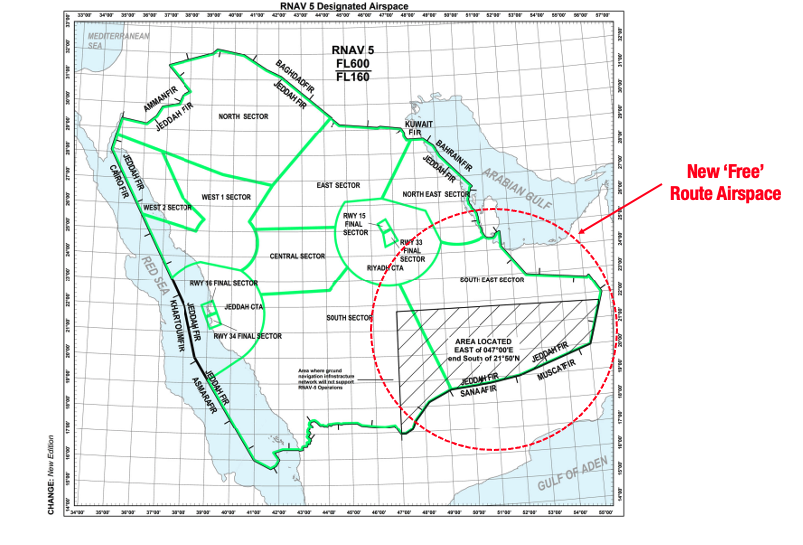
  • The Southeastern section of the OEJD/Jeddah FIR is now Free Route Airspace.
  • It’s not straightforward. New procedures have been published in the Saudi AIP.
  • If your flight plan does not comply, you are likely to be instructed to descend below FL300.

Background

We’ve received a new report from an OPSGROUP member after a recent run-in with ATC in the OEJD/Jeddah FIR.

The problem stemmed from a small (and confusing) change that became effective on April 18.

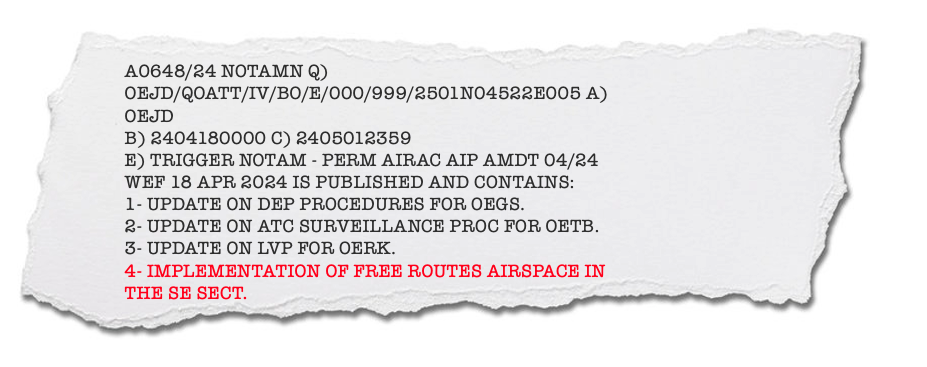
Essentially, ATC were upset that their filed route did not comply with newly published Free Route Airspace (FRA) procedures buried deep within the bowels of the Saudi AIP.

The fallout of non-compliance is the ATC equivalent to the ‘naughty corner’ with aircraft directed to descend below FL300 for the duration of their crossing of the affected airspace.

In this case, the member was able to negotiate to remain at their preferred level but not before a fair amount of head scratching as to why they got in trouble in the first place.

As large amounts of traffic are now transiting Saudi Arabia to avoid Iran further north, it is especially relevant right now.

New Free Route Airspace

On April 18, a large chunk of Southeastern Saudi Arabia (known as the SE Sector) became Free Route Airspace (FRA).

Typically, FRA means that pilots can freely plan any route they like between defined entry and exit points without reference to the ATS route network. This saves both money and time – simple.
However, this is where things get hazy.

The change was notified in this easily overlooked FIR Notam:

This directs you to the Saudi AIP. This is great if you have a spare half an hour to prove who you are, download a special app and access it. To save you the trouble, the relevant bit is ENR 2.2.4 which you can find here.
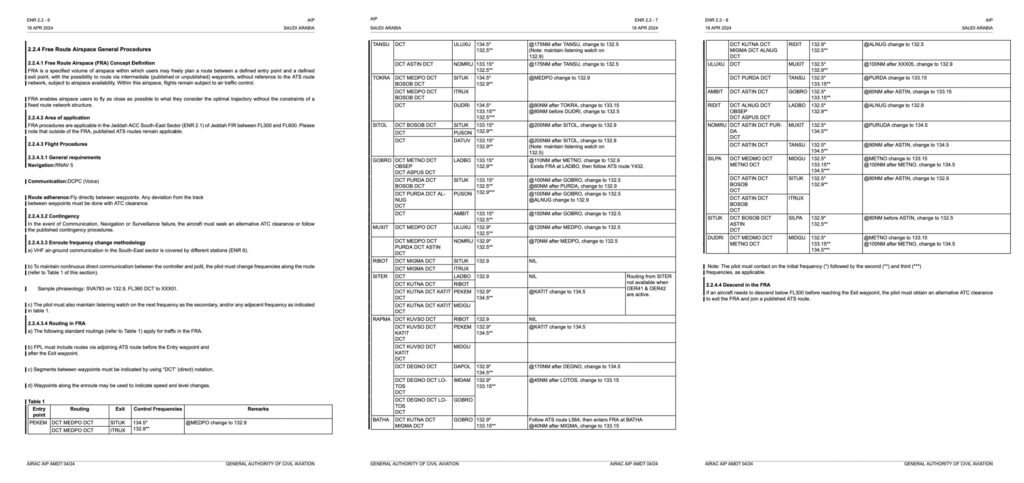
Here’s the kicker – it’s Free Route Airspace, but not really. You still need to plan and file via the standard routes found via the link above.

In other words – ‘fly whatever route you like, as long as it is one of these ones.’

Turns out if you don’t, they will want you out of the ‘FRA’ which means a descent below FL300 (or a climb above FL600 if you’re piloting the Space Shuttle).

Keep listening out.

There are also some really specific comms requirements you need to follow along each route as the sector is controlled by several VHF frequencies. It seems you cannot rely on ATC to tell you when to switch.

“Normal” routes.

Don’t forget the Free Route Airspace only applies to the SE Sector of the Jeddah FIR. Everywhere else in Saudi airspace, you’ll need to follow “normal” ATS routes as per usual.

But even these “normal” routes are a pain. Saudi Arabia (like many other countries in the region) has preferred routes depending on where you’re flying from/to – so you’ll need to make sure you file on one of these. For some reason Jeppesen recently stopped publishing them, so now you have to get them from (yes, you guessed it) the Saudi AIP! SUP 8/24 talks about it. You basically download this Route Availability Doc and work out a route from there.

Other Free Route Airspace in the region.

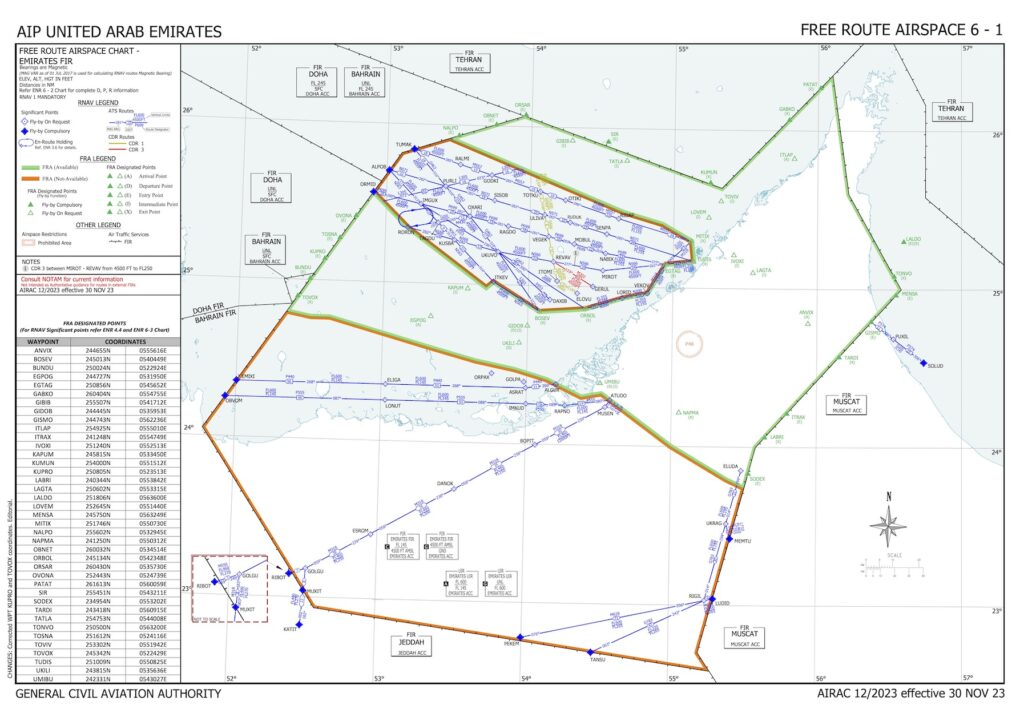
Qatar and the UAE are the only other countries in the Middle East that have implemented FRA, and unlike Saudi Arabia, both seem fairly straightforward.

Qatar – has implemented a corridor of FRA straight through the middle of the OTDF/Doha FIR, available from FL275-460. The Qatar AIP does not currently list any restrictions on its use.

The UAE – has implemented FRA in parts of the OMAE/Emirates FIR from FL355-600 – basically the parts around all the airports, and the airspace connecting with the OOMM/Muscat and OIIX/Tehran FIRs. Like Qatar, the UAE AIP does not currently list any restrictions on its use.

Please report back.

Thank you to the member who got in touch.

These changes can be hard to spot. Especially when you pay an operational penalty for procedures like this one that are poorly written, hard to find, or obscure.

We need your help to spread the word whenever you come across something different – in Saudi Arabia or elsewhere. Thousands of other like-minded pilots will thank you later.

If you have something you’d like to share, you can reach us on team@ops.group. We’d love to hear from you.


International Ops Bulletin

Hey! Are you here for our World Famous International Ops Bulletin? The one where you get all this weeks new dangers and changes in International Ops? The one that 50,000 people read every week?

Cool. Here’s how to get it.

Every Wednesday, OPSGROUP issues a weekly International Ops Bulletin for International Pilots, Dispatchers, ATC, Regulators, Authorities, Airlines and Aircraft Operators.

We cover this weeks changes to International Flight Operations – Airports, ATC, Procedures, New rules, Visas, Airspace alerts, Weather issues, and warnings and dangers to international aviation.

You got choices:

  1. Get the free version. Grab a copy!
  2. Join OPSGROUP and get the full version.


Want to see a sample first?

Sure thing. It looks a little like this (click to open the full sample):


Outsmarting the GPS spoofers: A clever app

GPS spoofing is fast becoming a real headache in aviation, causing confusion and navigation problems for pilots in several hotspots around the world.

We first saw this happening in September 2023, when we started getting reports of spoofing across the Middle East, including instances near Iraq, Iran, Egypt, Israel, Jordan, Turkey, Cyprus, and Lebanon.

Since then we’ve had reports from all kinds of strange places including Pakistan, Niger, and China. 

GPS spoofing involves sending false GPS signals to aircraft, leading to potential navigation errors and safety risks.

Manufacturers have been slow to work out what advice to pass on to pilots and operators on how to counteract these issues. But the effectiveness of these measures can be limited without the right tools, especially during live spoofing events where the reliance on ATC becomes critical.

NaviGuard, developed by APG, is a new tool designed to counter GPS spoofing threats. It’s a plotting application that uses traditional ground navigation aids (e.g., VORs, DMEs, NDBs) to cross-check and verify the aircraft’s GPS-reported position. And best of all – it’s free. You can download it here.

When NaviGuard detects discrepancies indicative of GPS spoofing, it alerts the pilots with a clear “GPS anomaly detected” message, enabling them to take corrective action promptly.

NaviGuard offers pilots a straightforward solution for maintaining navigational accuracy amidst GPS spoofing threats.

I used NaviGuard last month when I was spoofed whilst operating in Cairo. I got to try out the app for 30 minutes while our GPS tried to convince us that we were flying on top of Beirut.

As promised by Michael and the team at APG, the app was easy to use, and it allowed me to quickly verify that my IRS position was not compromised (we have a Hybrid IRS, so a spoofed GPS signal can corrupt the position data).

This is a no-bells-or-whistles solution, which I believe is an excellent addition to any pilot’s EFB; after this flight, I installed the app on all of our aircraft’s EFBs. It takes up very little space and is free. This is the great insurance when doubting your GPS position’s integrity.


TIBA in Australia: What’s Going On?

Key Points
  • TIBA still seems to be an issue in Australia – shortage of ATC resulting in big bits of restricted Class G airspace, often at short notice.
  • We wrote about this last year, including guidance on what to do (see updated post below), but now IFALPA have published a Safety Bulletin saying the problem is still ongoing.
  • Amid accusations of understaffing, Australian ATC has announced they intend to strike. This process will take a few weeks to action, and so we’ll likely see disruptions from May. This may include full 24hr work stoppages and will be notified in advance via the YMMM/Melbourne and YBBB/Brisbane FIR Notams.

Since early in 2023, we’ve seen large sections of restricted TIBA airspace (traffic information broadcasts by aircraft) established by Notam up Australia’s East Coast in both the YMMM/Melbourne and YBBB/Brisbane FIRs.

In fact, there were 340 instances of uncontrolled airspace between June 2022 and April 2023 alone. And it’s still happening.

The cause here appears to be a fundamental shortage of air traffic controllers.

Where has this been happening?

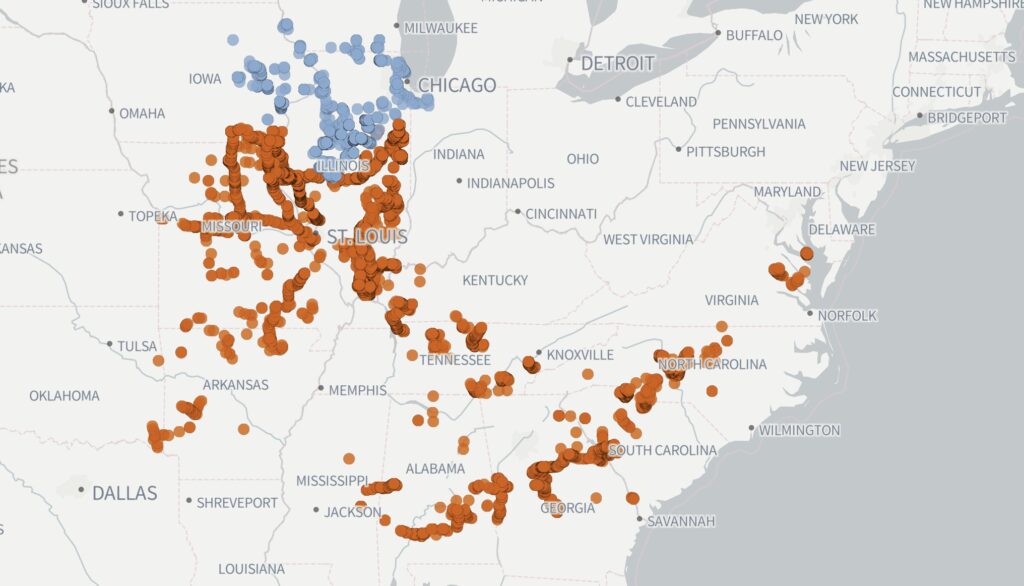
In the South, look out for TIBA airspace east of YSCB/Canberra airport, Australia’s capital city found inland from Sydney.

Further north there has been a greater effect as large portions of coastal airspace near YBCG/Gold Coast and YBTL/Townsville airports have been impacted. This is an extremely busy air corridor – 80% of Australia’s population live on the East Coast.

At the top end of Australia, YPDN/Darwin airport has also been affected which can result in re-routes for international traffic headed up into South-East Asia and beyond.

Here’s what those hotspots look like on a map:

It’s not all the time.

TIBA airspace is being activated by Notam, typically for hours at a time. A look at today’s batch indicated all is ops-normal. However, a local airline captain has advised OPSGROUP that it is currently a frequent occurrence.

Broadcast, or avoid?

The vast majority of airline traffic appear to be avoiding the TIBA airspace. This typically involves less direct routes at the expense of delays and fuel. Helpfully, for major city pairings the NOTAMs contain suggested routes that will keep you clear. But expect SIDs or STARs you may be less familiar with.

In fact, major carriers have policies in place that prevent them from using TIBA airspace anyway – unless they happen to be in it when it is activated.

That’s not to say there won’t be other traffic taking advantage of the more advantageous routes though. The East Coast is characterised by a huge variety of traffic including charter, skydiving, medevac and survey all of which may have valid reasons for using TIBA.

It can still be used safely, but with the procedures below (a heads up: dual comms are a requirement).

How on earth do I ‘do TIBA’?

First things first. Whatever you do, don’t enter without permission. Australia’s TIBA airspace is typically restricted – in the sense you will need PPR to use it. The relevant Notams are quite helpful, and provide all the information on how to get it. Here’s an example.

Your approval will typically involve a phone call beforehand, and a chat to a flight information service in adjacent airspace for traffic information.

Once you’re in, you are totally responsible for terrain and collision avoidance. Turn that radio up and make sure you’re both alert and monitoring both the TIBA frequency and the relevant ATS one – now is not the time for controlled rest. Whoever is on the radios is going to be busy.

The Australian AIP then takes over. You can find the procedures in full here (time saver: flick to ENR 1.1-91). We’ve also put together a summary of those in this handy little briefing card which may be useful to keep in your flight bag:

Other questions?

You can also get in touch with CASA via this link, or alternatively Airservices Australia here with questions. Both have been very helpful in answering our pesky conundrums in the past.


That MMEL Thing: Here’s an Update

It looks like there might finally be a solution to the long-running MEL vs MMEL issue for US operators headed to Europe, keen to not get a ramp check finding!

The brief Backstory

Since 2017, US aircraft have been getting hit with ramp check findings in Europe because EASA decided that the D095 LOA wasn’t good enough – they wanted to see a D195 LOA instead, but it was taking operators a long time to get these approved by the FAA in the US due to a big backlog of applications.

The Solution

The FAA has published an updated Advisory Circular (AC 91-67A) which speeds up the process of getting this D195 LOA.

The NBAA have reported that the FAA has also updated guidance to its field offices, who will now issue the LOA after a brief review, provided the application is accompanied by an “attestation letter”.

The slightly longer Backstory

Over the past few years, ramp checks on some US aircraft in Europe highlighted an important issue – EASA and the FAA have different interpretations of the ICAO standards regarding deferring aircraft discrepancies.

In the US, with FAA authorization operators can use a master minimum equipment list (MMEL) to defer repairing certain equipment. But in Europe, MMEL cannot be used in lieu of an MEL specific to each aircraft or fleet.

The European Aviation Safety Agency (EASA) began requiring all aircraft transiting European airspace to have an approved Minimum Equipment List (MEL) for each, individual aircraft (i.e. a D195 LOA). An MEL that references the MMEL was not acceptable (i.e. a D095 LOA).

This was a pain for US operators, as to get an individual MEL approved under the LOA from the FAA takes time – but by not doing so, they ran the risk of getting a ramp check finding in a European country. (France seems to be the place where this happens most often!)

At the start of 2018, the rumour was that the FAA and EASA reached an agreement: the FAA would start requiring international operators with D095 LOAs to obtain new D195 LOA’s instead, and in return EASA would halt any findings for a period of 12 months to allow for these new LOA’s to be issued. There was no official announcement on this, but SAFA data did indicate that ramp check findings for use of D095 were greatly reduced for a time.

The FAA proposed a policy change to phase out the D095 LOA over the next 3-5 years, and to work out a streamlined approval process to issue everyone with D195’s instead.

The French CAA said they would stop issuing ramp check findings once the FAA has launched the new policy.

FSDOs across the US then started processing the backlog of D195 requests from operators (there were lots!). In the meantime, US operators with the D095 LOA continued to face the same old MMEL findings on ramp checks in Europe.

How to prepare for a ramp check in Europe?

Here’s the article we wrote all about how to make a ramp check painless.

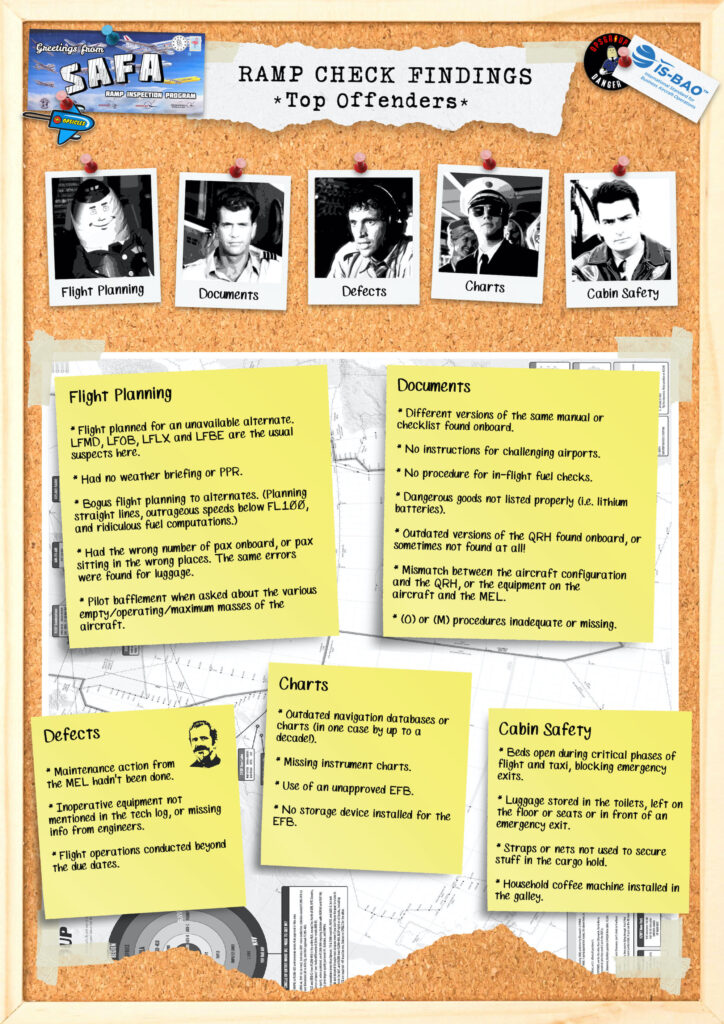
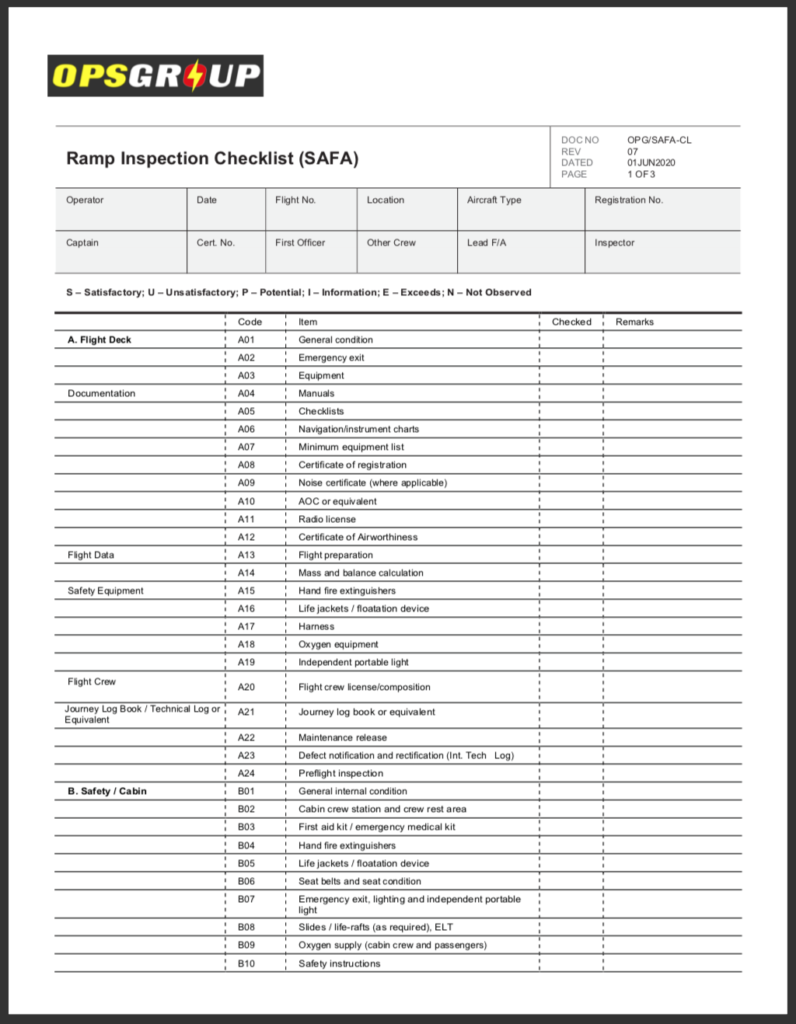
And here is a copy of the OPSGROUP SAFA Ramp Checklist. Download it here.

Keep a copy with you and run through it before you head to Europe.

Further Reading


China-Taiwan M503 Airway Dispute

China has cancelled all concessions previously made to Taiwan regarding the M503 airway that runs along the ZSHA/Shanghai and RCAA/Taipei FIR boundary.

What does this mean in practice?

  • China have moved the airway 6nm back towards the FIR boundary.
  • They have started allowing eastbound flights on the the W122 and W123 connecting routes.

So now, of all these routes, the only one that is not bi-directional is W121 (westbound only).

Taiwan aren’t happy, same argument as before: they say the airway is too close to existing routes that serve airports in outlying groups of Taiwan-controlled islands, and thus poses a risk to safety. China have ignored them.

Can I use M503?

China only allow airway M503 to be used under certain conditions:

  1. Aircraft must be RNAV2 capable.
  2. The flight must be going between VHHH/Hong Kong or VMMC/Macau and certain Chinese airports: ZSPD/Shanghai Pudong, ZSQD/Qingdao, ZSYT/Yantai, ZYTL/Dalian.

Everything else transiting east-west across this region will need to use the congested parallel A470 airway along the southeastern coast of mainland China.


April 2024: Israel/Iran Situation, All Call active

Attn all Members:

A briefing with all known information on the Israel/Iran situation is now live in the OPSGROUP Members Dashboard. Situation summary, group intel, airspace closures, reroute options, and operator/crew reports.

ALL CALL currently active, please continue to report any information in confidence to team@ops.group.

Briefing URL: https://ops.group/dashboard/briefings/middle-east/


Airport Fire Fighter Strike in Australia

Disruption looms at Australian airports on April 15. Rescue fire fighters have announced a four-hour strike from 06:00 – 10:00 local time at twenty-seven airports across the country – including the majors.

It seems the cause extends beyond just pay and conditions with safety concerns over staffing levels the United Fire Fighters Union has described as ‘dire.’

Here’s everything we know, and how to decode the inevitable RFFS Notams soon to grace your pre-flight briefing.

Impact to Ops

The strike will see RFFS categories simultaneously reduce as low as zero (more on these categories below).

While the exact impact of the impending strike isn’t clear yet, previous strikes have given us a good idea of what to expect.

Traffic delays could extend beyond the strike period as airlines scramble to re-schedule cancelled or delayed services, with the added addition of peak school holidays. For inbound traffic this means delays and holding.

The RFFS downgrades themselves will be announced by Notam closer to the time and may also affect the use of Australian airports as ETOPS alternates.

‘Leaked’ Controversy

The plot thickens over the alleged leaking of a safety assessment which supposedly identified major flaws at several Australian airports over a lack of staff, procedures, trucks and other frontline fire-fighting equipment for the type of aircraft using them.

If this is correct, YBBN/Brisbane, YPPH/Perth, YMML/Melbourne, YSCB/Canberra and YSSY/Sydney airports are all operating at high levels of risk in some emergency scenarios – something that Air Services Australia (who is responsible for RFFS staffing) has denied. The Australian Aviation Authority (CASA) has also weighed in on the issue, and sides with Air Services.

The Fire Fighter Union has also claimed that in some cases, flights have been operating at regional airports (such as YMLT/Launceston and YBSU/Sunshine Coast) with less than the minimum required RFFS staff on watch – although we can’t confirm this.

Regardless of who is correct, the two parties are locked in a row that has led to the upcoming strike.

RFFS Categories

The effect of the strike will become apparent in the next couple of weeks via Notams like this:

If you’re not familiar with what these categories actually mean, here’s a quick rundown on how they work.

An airport’s RFFS Category refers to the largest aircraft it is intended to receive (think length and fuselage diameter).

This dictates the amount of water, agents, vehicles and response time required to fight fires on planes of these size.

With that in mind, here are the current ICAO RFFS Categories.

Further Strikes Are Likely

Right now, April 15 is the only scheduled RFFS strike. However, if no deal is struck between the Fire Fighters’ Union and Air Services Australia, we are likely to see more.

The good news is that we all also receive advance notice of any that are planned. We’ll continue to report those as they arise.

If you encounter disruptions during the upcoming strike, we’d love to hear from you. You can reach us on news@ops.group.


Schengen area expands to almost all EU countries

Effective March 31st, Romania and Bulgaria are now part of the Schengen area. This means that passengers and crew arriving in these countries are able to move freely within the EU (by air and sea) without any further immigration or border checks. “Schengen Flights” landing in Romania or Bulgaria are not required to clear customs.

The first “Schengen flight” landed at 0020L on March 31 at LBSF/Sofia, from Naples.

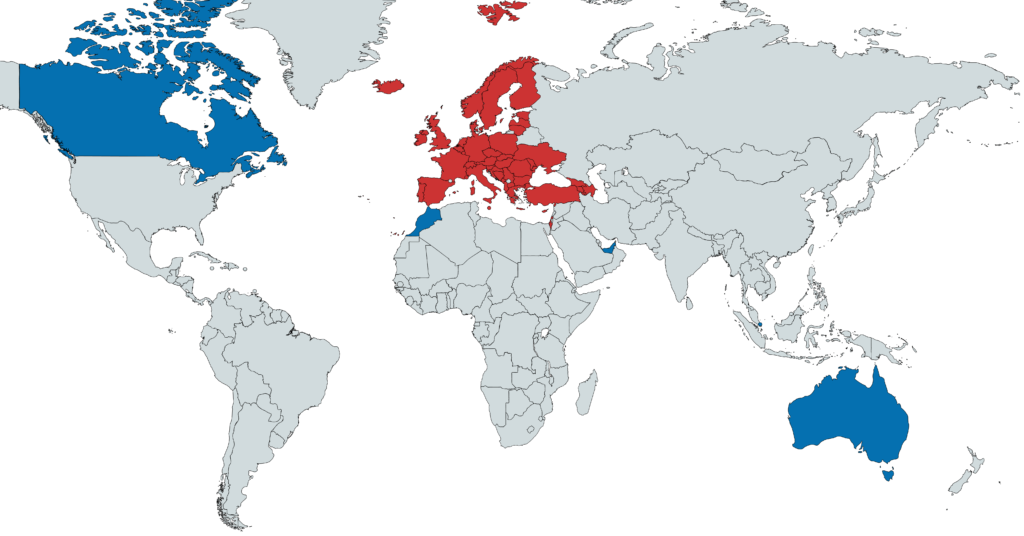
The Schengen Area was established in 1985. Before Bulgaria and Romania’s admission, it was comprised of 23 of the 27 EU member countries, along with Switzerland, Norway, Iceland and Liechtenstein. The only remaining Non-Schengen countries in the EU are Ireland (because Ireland has a common travel area with the UK, and the UK doesn’t like the Schengen idea very much), and Cyprus.

Schengen countries: Austria, Belgium, Bulgaria, Croatia, the Czech Republic, Denmark, Estonia, Finland, France, Germany, Greece, Hungary, Iceland, Italy, Latvia, Liechtenstein, Lithuania, Luxembourg, Malta, the Netherlands, Norway, Poland, Portugal, Romania, Slovakia, Slovenia, Spain, Sweden and Switzerland.

Non-Schengen countries in Europe: Ireland, the UK, Albania, Belarus, Bosnia & Herzegovina, Cyprus, Kosovo, Moldova, Montenegro, North Macedonia, Serbia and Turkey.

Non-Schengen countries in the EU: Ireland, Cyprus.


NAT FAQ: No HLA approval – Where can we go?

No HLA Approval – Where can we go?
  • You can make a crossing at FL280 or below, or FL430 or above
  • You can enter the NAT region outside HLA airspace
  • You might get special ATC approval to enter, or to climb/descend through it

The North Atlantic (NAT) High Level Airpsace (HLA) is the busiest Oceanic airspace in the world. Special approval is needed to fly in it. The NAT HLA extends from FL285-FL420, and takes in 6 different Oceanic Control Areas’s (OCA’s): Reykjavik, Shanwick (excluding SOTA & BOTA), Gander, Santa Maria, Bodo, and NY Oceanic East north of 27N.

HLA approval is issued by your country of registry, or the country of your operator.

Without NAT HLA approval, you can make a crossing at these altitudes:

  • FL280 or below
  • FL430 or above – but you should be familiar with NAT HLA procedures in case of drift-down, especially if above the NAT Tracks

ATC may approve you to (briefly) enter the HLA in some cases: if you are under radar control (or other surveillance), have VHF contact, and can navigate appropriately [NAT Doc 007, 1.5.1]

You can also get ATC approval to climb/descend through HLA airspace [1.5.2].


This didn’t answer your question?

Comment below. Sadly (for us), we enjoy digging into this stuff. So, post your question below and we’ll update this page with the answer (probably quite quickly!)


Useful links for more on this … 


NAT FAQ: No RVSM – Where can we go?

No RVSM – Where can we go?
  • You can make a crossing at FL280 or below, or FL430 or above
  • You can briefly enter RVSM airspace to climb/descend to your cruise level
  • You might get approval if on delivery flight, or ferry flight to repair.

Reduced Vertical Separation Minima (RVSM) is required throughout the NAT region. RVSM applies between FL290 and FL410, which matches the dimensions of the NAT HLA (FL285-FL420).

Without RVSM, you can only cruise at a level outside the FL290-FL410 band. However, ATC will generally approve a climb/descent through RVSM airspace to reach your cruising level. This is different to Europe, where you can’t do this.

ATC may approve you to fly within RVSM airspace [NAT Doc 007, 1.6], if you:

1. Are a delivery flight, or
2. Did have RVSM approval but returning for repairs, or
3. Humanitarian.

Contact the first Oceanic Centre by phone 4-12 hours before you plan to enter. If you get approval, note it in Field 18 on the Flight Plan. (eg. RMK/NON-RVSM APPROVED BY GANDER 23MAR2024). HLA approval is required in all cases. Use the call “Negative RVSM” on initial contact with ATC.


This didn’t answer your question?

Comment below. Sadly (for us), we enjoy digging into this stuff. So, post your question below and we’ll update this page with the answer (probably quite quickly!)


Useful links for more on this … 


New FAA Approach Warning for Aspen

Key Points
  • Be careful to select and fly the correct LOC approach at KASE/Aspen – there are two. The normal public use one is the ‘LOC-DME-E.’ The second is the ‘SPECIAL LOC-DME RWY 15’ which requires approval to fly.
  • Some FMS systems have both in their databases which is causing confusion.
  • There are some safety-critical differences between the two so make sure you shoot the right one.

The FAA has put out a new Letter to Airmen with a warning for ops at Aspen.

There are two localiser approaches available which is causing potentially safety-critical confusion.

The primary (public use) approach is the LOC-DME E. The second is the SPECIAL LOC-DME RUNWAY 15 which requires prior approval via an LOA from FAA Flight Standards.

Many FMS systems have both in their database, and it’s not always crystal clear which is the correct one to select:

The notice goes on to explain that there are some really important differences between the two which could lead to pilots accidentally busting crossing heights or minimums and losing safe separation from terrain.

As arguably one of the most challenging airports in the US, it’s important to get it right.

What’s the difference?

The first is the minima. If your ride is a CAT C for instance, the standard ‘E’ approach will get you down to 3122’ AGL.

The ‘SPECIAL’ approach gets you lower – up to two grand closer to terra firma. Extra simulator training is required to make this possible. This includes the next big difference – changes to the way missed approaches must be flown.

Some operator-versions of this approach include an ’emergency extraction procedure’ for go-arounds beyond the missed approach point for instance.

…Not unlike an emergency extraction at the dentist, things are going to get white knuckle if you haven’t received the proper training first.

And finally, there is the time of day – the publicly available ‘E’ approach cannot be flown at night. In some cases, the special can with the right paperwork.

The standard ‘E’ approach will be advertised and offered by default when the localiser approach is in use. Here’s what it looks like:

The LOA

If you’re seeking an approval to actually use the SPECIAL LOC approach, you’ll need to obtain an OpSpec C081 special authorisation like the one below. This will include Aspen specific training for all operating crew.

If you’d like to know more about this process, the NBAA has published this doc which is worth a read.

Have More Info?

We’re always on the lookout for intel from pilots out there. If you’re familiar with KASE and would like to add to this article, please get in touch with us on team@ops.group. We’d love to hear from you.


NAT Changes 2024: No More Oceanic Clearances

Key Points
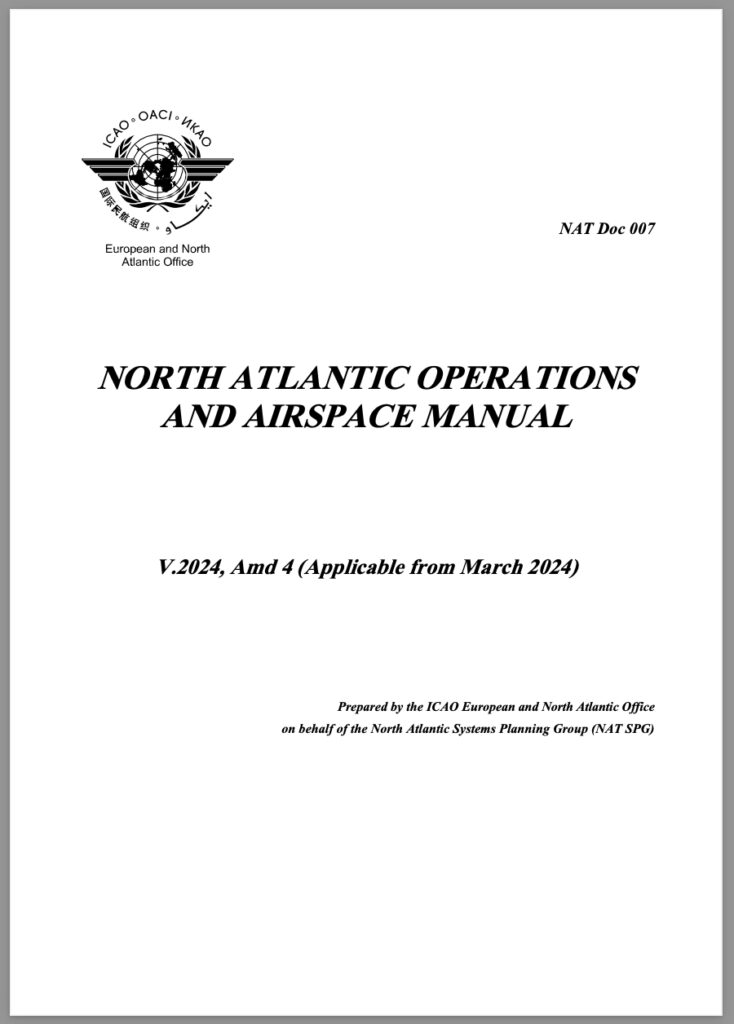
  • ICAO have published a new NAT Doc 007, effective from March 2024.
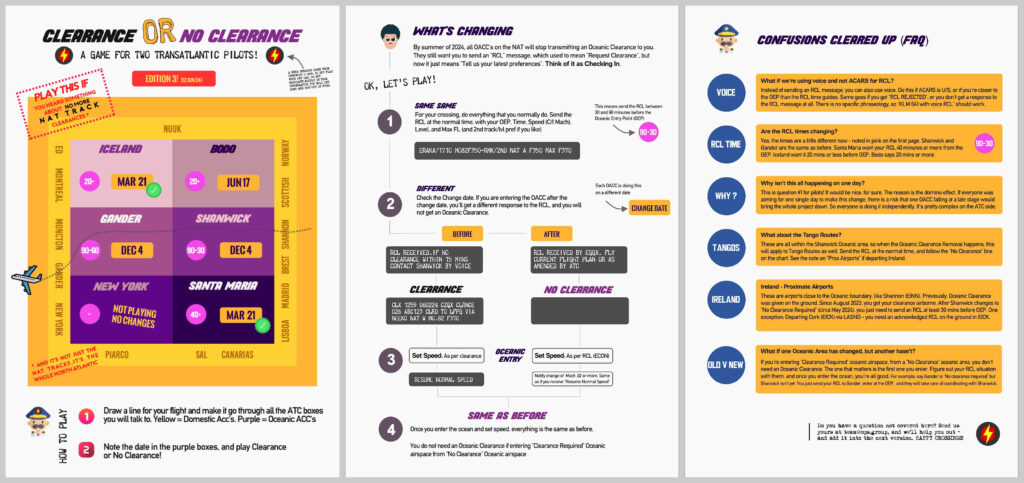
  • Big Change #1: There will be no more Oceanic Clearances on the NAT (now a mess).  
  • Big Change #2: NAT Comms Failure Procedures have been simplified.
  • Big Change #3: Squawking 2000 ten minutes after OEP will be standard everywhere in the NAT. 

Once (or sometimes twice) every year, ICAO update their NAT Doc 007 – the main guidance doc for ops over the North Atlantic. All the specifics about how to operate your aircraft safely through the complex airspace of the region are here!

The new version for March 2024 has just been released!

Where’s the new Doc?

You can find it on the ICAO page here.

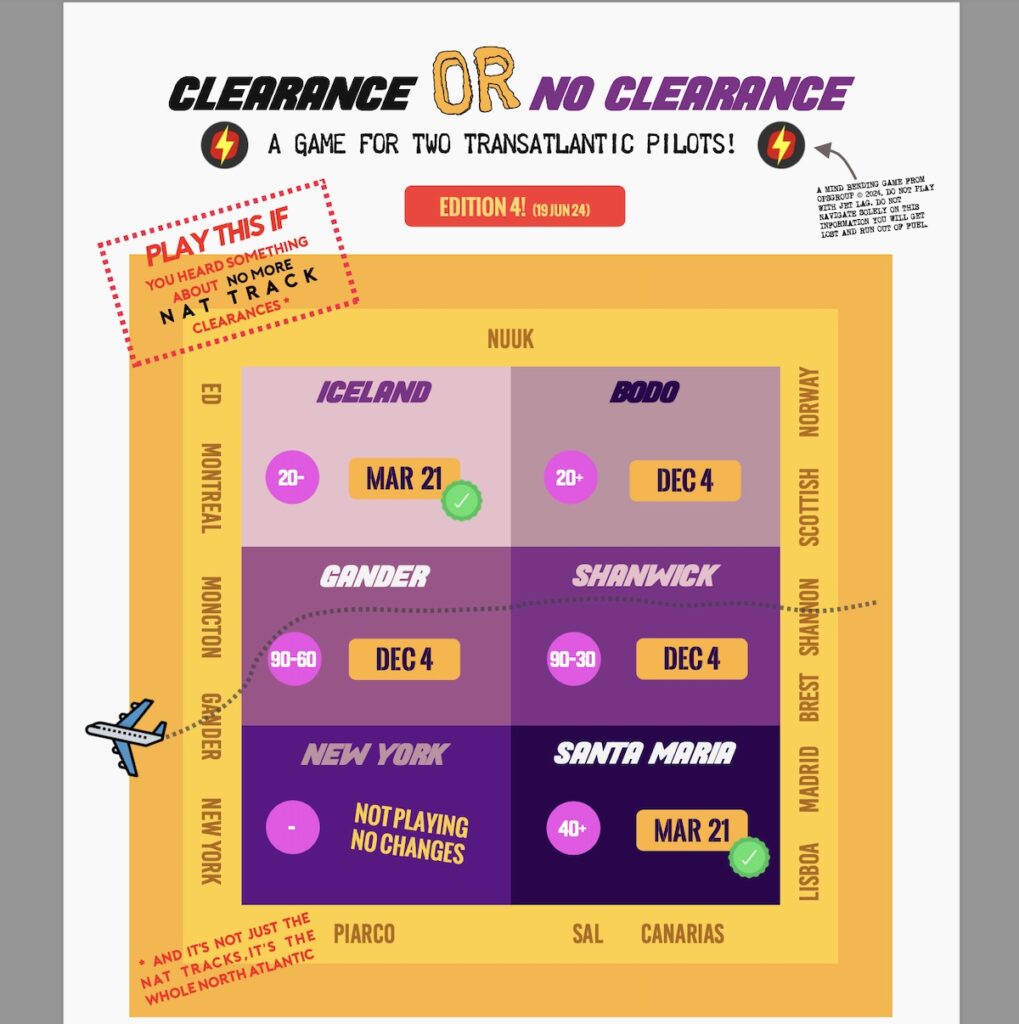
Big Change #1: No More Oceanic Clearances

The idea is that with all the fancy tools ATC now have at their disposal (CPDLC, RSP and RCP compliance, and space-based ADS-B), we have reached a point where the Oceanic Clearance is no longer required.

It sounds drastic, but think of it this way: the NAT will now just be the same as the rest of the world – you fly what is loaded in the FMS or as amended by ATC.

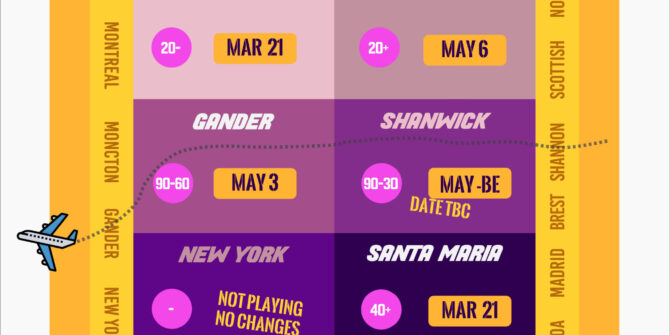
ICAO have also published this Bulletin for flight crews on this specific issue of the removal of Oceanic Clearances. This Bulletin has been updated as of 22nd Jan 2024. There are now different dates when Oceanic Clearances will cease to be issued in the following FIRs:

  • ShanwickApril 9  May  Q4 2024  December 4
  • GanderMarch  May 3  December 4
  • BodøMarch  May 6 June 17  December 4
  • Santa Maria: completed March 21
  • Iceland:  completed March 21

NATS (who manage Shanwick airspace) have published a video about this change, which shows exactly how it will work and what you will need to do.

Big Change #2: Simplified Comms Failure Procedures

As per Chapter 5 of the 007 Doc, from March 2024 here’s what you do:

  • Comms failure before entering the NAT: assuming you don’t divert, you enter the NAT via the Oceanic Entry Point at the level and speed resulting from whatever radio comms failure (RCF) procedures you just had to do in adjacent airspace.
  • Comms failure after entering the NAT: maintain the cleared route/level/speed until reaching the Oceanic Exit Point (ideally don’t change route/level/speed unless you have to), then get back to your flight planned route “in the most direct manner possible” no later than the next significant point.
  • Comms failure if operating to an airport in the NAT: follow the standard PANS-ATM procedures. What are these? – head to an airport aid/fix, hold until the ETA as per the flight plan, do a normal instrument approach, land!

Big Change #3: “Last Assigned Code” Procedures Standardized

A bonus one we spotted! We don’t have to wait til April 2024 for this either – it has already happened. Essentially, squawking 2000 ten minutes after OEP is now standard in the NAT.

Since the dawn of time, everywhere on the NAT, this domestic code had to be retained for 30 minutes after entering NAT airspace. But back in July 2023, the UK changed it to 10 minutes for the entire EGGX/Shanwick FIR, and since then, all the other NAT FIRs have updated their rules to say the same – so this new 10-minute rule has now become the standard across the NAT Region. One exception: if you’re in the Reykjavik CTA, don’t do it (they still have you on radar).

Phew, we survived!


US: Total Solar Eclipse Incoming

Key Points
  • On the afternoon of April 8, a total solar eclipse will be visible across a large portion of Mexico, the US and Canada.
  • If you’re lucky enough to be flying, it may be a once-in-a-career type thing. The next one won’t happen in the US again until 2044.
  • There will be some impact on flight ops too. The FAA has published a list of airports on either side of the eclipse track, along with guidance on what flights in the area should expect on the day – check it here.

What’s so special about this one?

It is ‘total’ – in other words, the moon will pass directly between the sun and earth completely blocking the face of the sun. The sky will darken as though it were night (or very close to it). The sun’s outer atmosphere will become visible as a halo.

This ‘path of totality’ as it were, will begin over the South Pacific before hitting Mexico’s Pacific Coast at around 11:07 PDT.

From there it will enter the US over Texas, and travel across Oklahoma, Arkansas, Missouri, Illinois, Kentucky, Indiana, Ohio, Pennsylvania, New York, Vermont, New Hampshire and Maine.

Across the border it will then be visible in Canada over Southern Ontario, Quebec, New Brunswick, Prince Edward Island and Cape Breton.

The show will end east of Newfoundland at 17:16 NDT.

In each instance complete totality will last for approximately 4 minutes. However, depending on your direction of flight, this may be longer in the air.

Here are the exact timings NASA has published for each region:

Don’t stare at the big shiny light!

It may go without saying, but be careful of your eyes. If the sun is anything but completely obscured, peering at it through a camera, telescope or your eyes will fry your corneas without appropriate protection. This will cause problems when it comes time to land again.

Your trusty Ray Bans won’t do it either – NASA says that sunglasses aren’t enough. You’ll either need to source yourself some funky eclipse glasses (which are thousands of times darker), a handheld solar viewer or use an ‘indirect’ viewing method.

Sidenote – don’t stare at it through a hole in a piece of cardboard either. No idea why, but this is what springs to mind to many. You’ll simply blind yourself through a very small hole. NASA have said no-bueno to that idea too.

Busy GA Traffic

Aside from a great view, an influx of traffic to GA-friendly airports is expected along the eclipse’s path. It’s a relatively narrow band of the most premium viewing (130nm wide) and so people will be travelling far and wide to get a good view.

As such, expect ATC-related delays and parking restrictions at larger airports along its path. It’d be worth checking ahead with your handling agent to ensure there will be no impact to your operation.

The FAA has published a list of airports on either side of the eclipse track – check it here.

If you’re headed into un-towered fields in something fast and fancy be aware you are likely to encounter more traffic than usual. Some of it will be transient and potentially not as proficient at being seen and heard as commercial operators are.

Gram Famous

Chances are you’ll want to take a picture of the eclipse with your smart phone. Here is a handy article with some tips to how to set up your camera and get the best results.

Better yet, share them with us on team@ops.group. We’d love to see them and show the rest of the group.

More Info

NASA has everything else you need to know about the eclipse on their website here.


Oceanic Errors on the North Atlantic

ICAO have updated their “Oceanic Errors” NAT Ops Bulletin – the doc which has all the advice for operators on how to avoid the common mistakes when flying the North Atlantic.

These include: Gross Nav Errors, Large Height Deviations, and Longitudinal Separation busts. There’s also some advice on Flight Planning, SLOP, and some datalink things to watch out for.

You can download the NAT Ops Bulletin here:

Looks like there are no big changes in terms of content for this updated version when compared with the old one from last year – they’ve improved the language to be more friendly to human ears, and corrected some of the references. But if you operate over the North Atlantic it’s still worth a read, as there’s lots of top tips on how to avoid the most common gotchas!


Haiti Crisis: Airport Attacked, Aircraft Shot

Key Points
  • Worsening gang violence in Haiti. A state of emergency is now in place, and the US Embassy has issued a new warning for its citizens to leave immediately.
  • Aviation has also come under direct threat, with reports of several armed attacks at MTPP/Port-au-Prince in recent days. All flights have been cancelled until further notice and the airport is now effectively closed.
  • There are no official airspace warning for Haiti. However, conditions on the ground have been likened to an active war zone. For flights, normal services are unlikely to be available, and crew security cannot be guaranteed.

Airport Attacks

On March 4, several dozen heavily armed gang members attempted to take control of MTPP/Port-au-Prince airport.

They breached the airport perimeter and exchanged machine gun fire with police but ultimately failed. Airport staff were forced into hiding. Soldiers have since been stationed there for protection.

Since then, all flights have been cancelled.

This followed a separate attack last week where an A321 was damaged by a bullet after landing. Sustained gun fire was reported along the access road to the airport during this time.

Don’t look to the MTPP Notams for help – you won’t find anything. However, the media has reported several closures of the airport in recent days in light of these events.

Gangs are fighting fiercely for resources and revenue. This includes control over key transport routes hindering freedom of movement and further empowering the gangs – which is why the airport is being actively targeted. Gangs may also have the additional political motivation to interfere with ops at the airport in an attempt to stop the existing president from being able to re-enter the country.

State of Emergency

The Haitian Government declared a state of emergency on March 3, which will apply until further notice. On the same day, the US Embassy issued its own warning asking citizens to leave. 

The Embassy itself is periodically closing, and its staff are highly unlikely to be able to help anyone who finds themselves in trouble.

Impact on Overflights

The FAA does not currently have any active airspace warnings in place for Haiti.

The country operates its own small chunk of airspace – the MTEG/Port-au-Prince FIR. Adjacent sectors include Cuban, Dominican Republic and US airspace. Its Notams are also conspicuously quiet.

No restrictions on overflights have been published, with flight tracking still showing sporadic airline traffic overflying– although the bulk appear to be transiting further east over the Dominican Republic.

The Dominican Republic has banned all passenger and cargo flights to and from airports in Haiti (MDCS Notam A0111/24 refers), but this does not restrict overflights.

The gangs however have shown an active intent to target government infrastructure – its not clear yet what effect this may have on controllers’ ability to perform their duties at short notice.

At the very least, a solid contingency should be in place right now for a short notice reversion to Class G.

Special care also needs to be taken for the possibility of unplanned landings or diversions – especially to Port-au-Prince. Normal services are unlikely to be available, and crew security cannot be guaranteed.

As the situation evolves, keep an eye out for updated information from aviation authorities such as the FAA who may publish background information or additional flight restrictions.

We will report any we see on our conflict zone and risk database, safeairspace.net.

If you have any other information you’d like to share with us, don’t hesitate to get in touch via news@ops.group.


TCAS Saves the Day in Somalia

Last week we told you about a new risk emerging over Somalia, where several enroute aircraft reported being contacted by unauthorized ATC units. These “fake” controllers have been issuing climb/descent instructions that conflict with the official ones issued by Mogadishu Control.

This week, the very same thing happened to crews of a Qatar Airways 787 and an Ethiopian Airlines A350 headed towards each other off Somalia’s northern coastline.

The 787 was instructed to climb from FL380 to FL400 whilst the A350 was cruising at FL390 in the opposite direction on the same UB404 airway – near position ESTIK. A TCAS alert was triggered, and the 787 descended back to FL380 to resolve the conflict.

From some reports it looks like the two aircraft were separated by as little as 2.5 nm when the incident happened, though the situation was helped by the fact that both aircraft were laterally offset from the airway (yay for SLOP!).

Who should I be talking to?

The two competing ATC centres here are Hargeisa (Somaliland) and Mogadishu (Somalia).

For aircraft transiting the HCSM/Mogadishu FIR, it’s Mogadishu ATC that you should be talking to – not Hargeisa.

Mogadishu Control holds authority over the entire Mogadishu FIR, responsible for coordinating and providing ATS services in the Upper FIR. Hargeisa in Somaliland issues secondary transmissions, posing a potential threat to enroute traffic.

Notably, these transmissions from Hargeisa seem to mimic Mogadishu rather than clearly identifying as “Hargeisa Control” or “Somaliland Control.” Reports suggest that control instructions from Hargeisa aim to create confusion rather than ensure traffic de-confliction, possibly as a strategy to draw political attention to their recent dispute with Somalia.

Advice to operators

Check our previous post for a full Risk Warning, including Crew Reports, Maps, Analysis, and Guidance. And if you can’t access, just email the team and we’ll send you a copy.

The main advice is this:

1. If possible, avoid the Mogadishu FIR.
2. If entering the airspace, expect secondary ATC transmissions from Hargeisa.
3. Limit any contact with Mogadishu to CPDLC only. Only controllers in Mogadishu have access to CPDLC.
4. Do not accept any level changes without ensuring they are genuinely from Mogadishu Control.
5. Avoid requesting any level changes while within the Mogadishu FIR.
6. Listen out on 126.9 (IFBP) and follow the IFBP procedure.
7. Note that related NOTAMs issued by Somalia may not present the full picture, or be updated regularly.

Download the Risk Warning (PDF, 9 pages, 2Mb)


Delays and Diversions in Dubai

An OPSGROUP member reported that on Feb 21, several long-haul carriers were forced to divert due to extended airborne delays.

The problem stemmed from the following unassuming needle-in-a-haystack Notam…

 It was later re-issued (after-the-fact), somewhat sheepishly with an actual holding advisory …

The good news is that you can easily access the referenced AIP SUP online – provided you provide scans of your passport, your contact details, favourite colour, hobbies and the name of your first-born.

OR

You can just read the following summary of what’s been going on.

The Trouble SUP

You can read it in full here (but it’s heavy).

Basically, what you need to know is that there are ongoing taxiway works happening at the airport.

These are divided into areas, and the one causing issues is ‘C08’.

For Runway 30L, this is causing a bottle neck for aircraft exiting on the rapids bound for terminals 2 and 3.

The preferred exit (K8) is partially blocked by the works, along with the next non-rapid exit (K7) which is completely closed.

The next option is K6, which is further up the runway. The extra time needed to allow aircraft to vacate means increased spacing for arrivals. Word on the street is that frequent A380 ops are also compounding the problem.

Here’s what that looks like on a chart.

During peak times, arrivals are stacking up.

Those times are daily between:

  • 00:00 – 03:00z (04:00 – 07:00 LT)
  • 07:00 – 09:30z (11:00 – 13:30 LT)
  • 13:30 – 21:30z (17:30 – 01:30 LT)

If Runway 30L is in use, and you are arriving during one of these periods – carry at least an extra 40 minutes of holding fuel.

How long will this last?

The current Notam says until March 9, but may get extended. The SUP doesn’t provide an end date, and strangely the original Notam applied until April 6. In other words, your guess is as good as ours…

But wait, there’s more.

There are some other Notams hidden in the pile that include closures of the other runway (12L/30R) that infringe these times. That’s an average of seventy-five arrivals and departures per hour using the one problem runway – 40 minutes may still not be enough.

Please report back.

If you experience delays in Dubai related to works (or otherwise) we’d love to hear from you so we can share that info with the group. You can reach us on news@ops.group around the clock.


US FAA: Who wants to land on the runway?

  1. Flying to an airport in the US?
  2. Want to land on the actual runway, rather than some taxiway or dirt road which looks a bit like the runway?
  3. Not afraid of some basic pics showing you how NOT to mess it up?

Well then today’s your lucky day, friend!

Arrival Alert Notices

The US FAA has published things called Arrival Alert Notices at several airports with a history of “misalignment risk” – i.e. where aircraft line up to or land on the wrong runway, taxiway, or even sometimes the wrong airport.

The best thing about these Notices is that they are dead simple. No superfluous symbology, no weird language, just a nice big picture of the runway with a clear instruction on what to do. 

The FAA published the first batch of these in May 2022, and then a whole bunch more in Jan 2024. So they now have them for 41 airports in total, all of which have a history of misalignment risk or “wrong surface events” – i.e. times where folks landed on something other than the actual runway.

They say that many of these wrong surface events occur “during the daytime and in visual meteorological conditions, and the majority of the time, the pilot has read back the correct landing clearance.” In other words, folks have got it wrong even at the best of times, so it’s probably worth a quick glance at these docs.

Which Airports?

This map on the FAA AAN site shows the airports that have Arrival Alert Notices.

What else is the FAA doing to improve safety?

A whole bunch of things. You can read all about it on their Runway Safety site, but here’s a summary. And as a cheap marketing trick by way of parting, I will say that the last one on this list is probably the best – so make sure you read to the end!

  1. Runway Status Lights (RWSL): In operation at 20 airports, signals potential hazards through illuminated red lights on runways and taxiway/runway crossings. More info.
  2. Airport Surface Detection Equipment, Model X (ASDE-X): In operation at 35 airports, integrates various data sources to provide ATC with better aircraft positions, and pings up alerts for potential traffic conflicts. More info.
  3. Airport Surface Surveillance Capability (ASSC): Similar to ASDE-X, ASSC operates at 9 airports, works in all kinds of weather, and lets ATC see aircraft on approach and departure within a few miles of the airport. More info.
  4. ASDE-X and ASSC Taxiway Arrival Prediction (ATAP): ATAP is an enhancement to the previous two, and alerts ATC when an aircraft is aligned with a taxiway instead of the runway. In operation at these airports.
  5. Engineered Material Arresting System (EMAS): We like these things so much, we wrote an article on them. Installed at 70 airports, EMAS are those crushable bits of tarmac at the ends of runways which you can plough into to stop overruns. Very cool. More info.
  6. Electronic Flight Bag (EFB) with Moving Map Displays: Everyone loves their EFBs and moving maps. So do the FAA – they encourage pilots to use them!
  7. Runway Safety Areas (RSA): Because many runways were built before the 1000-foot RSA standard was adopted, the FAA implemented the Runway Safety Area Program which made improvements to over 1000 runways at 500 airports.
  8. Runway Incursion Mitigation (RIM): A national initiative identifying and mitigating specific risks at 80 airports that might lead to a runway incursion. Things like: unclear taxiway markings, airport signage, runway or taxiway layout.
  9. Hot Spot Standardization: The FAA now has standardized hot spot symbology on their airport charts. We wrote about this here.
  10. Arrival Alert Notices: i.e. this article!
  11. Automated Closure Notice Diagrams: They now have a site where you can get a big airport chart showing all the runway or taxiway closures on it. It looks like AI might be involved behind the scenes on this one, so it’s a bit clunky for some airports, but it’s still pretty cool. Check it out here.
  12. “From the Flight Deck”: This might just be the best of the bunch! This FAA website basically has videos showing how to land at specific airports (real footage), plus a bunch of other useful info: hotspots, things local ATC want pilots to know, airport comms, airspace details and other preflight planning resources. Take a look here!