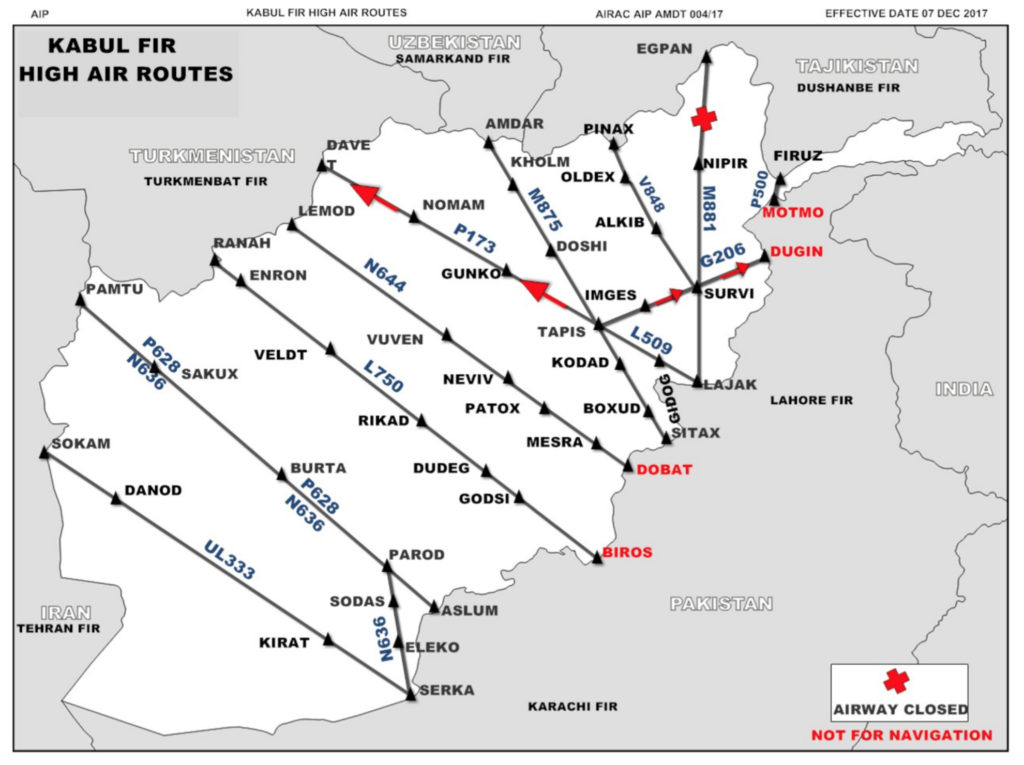
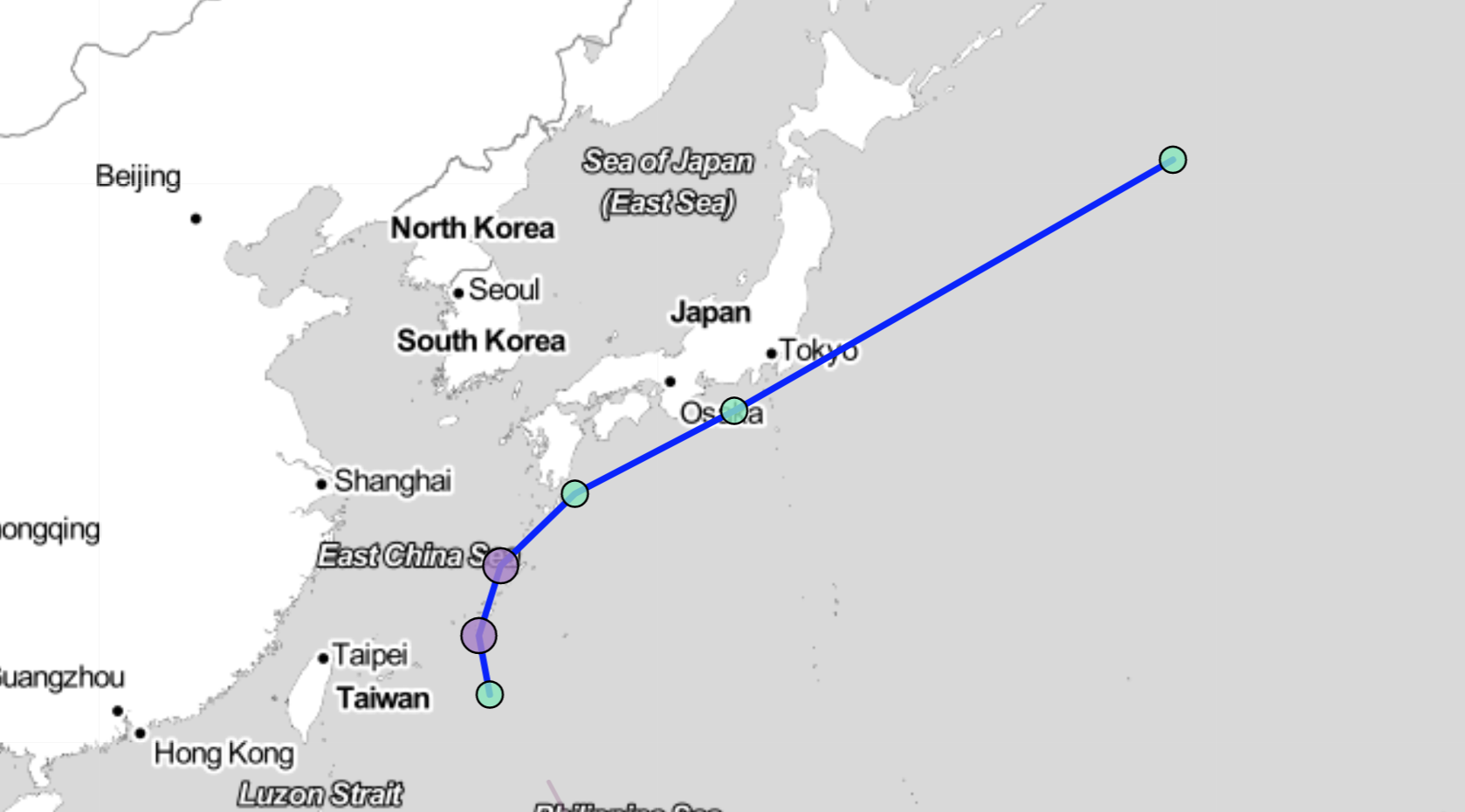
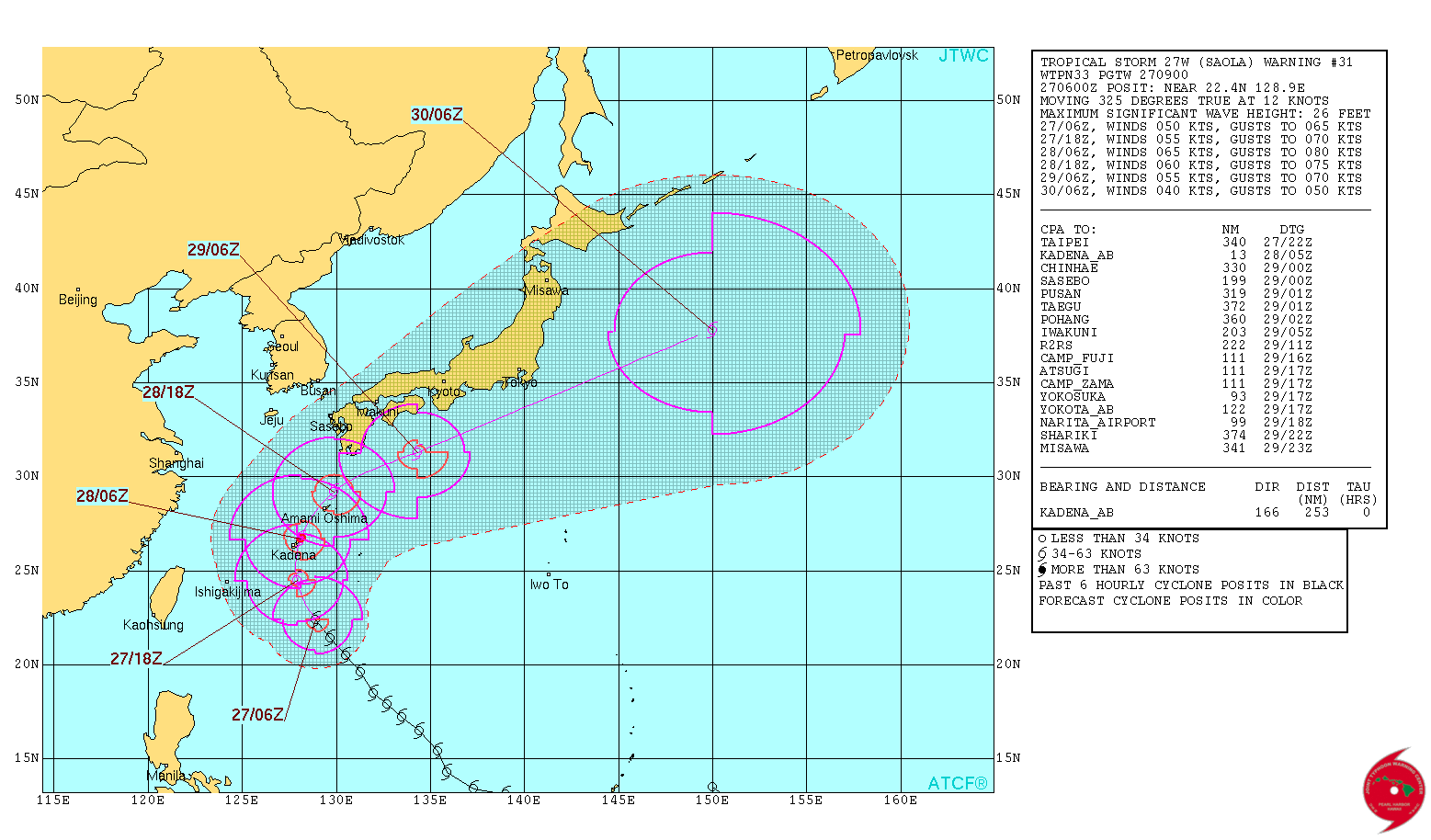
Inbound Japan this weekend: Tropical Storm Saola

CPDLC Departure Clearance for US Airspace – 22Oct

Earlier this month we reported about the transition of the United States ATC system to a National Single Data Authority (NSDA). https://ops.group/blog/cpdlc-for-us-airspace-the-implementation-process/
The initial phase of this process is scheduled to start this weekend on 22Oct at 0330Z with a single CPDLC logon ID for domestic US airspace (KUSA) and ATC issuing departure clearances using CPDLC.
You can read more details about Controller-Pilot Data Link Communication–Departure Clearance (CPDLC-DCL), general procedures for logging on/notifying, loading the flight plan, receiving the CPDLC-DCL, responding to the CPDLC-DCL message, and disconnecting/logging off here:
Oceanic ATC’s tell us their position on Iridium Satcom

Last week we reported on an equipment issue with Iridium satcom that prompted a ban by a number of Oceanic ATC agencies. Some aircraft were receiving massively delayed clearances sent by ATC via CPDLC – and one took the instruction and climbed 1000 feet, even though the message was meant for the flight the aircraft operated previously.
Today, we checked-in again with all the oceanic ATC centres, to see what their current policy is on the issue.
EGGX/Shanwick told FSB that they are aware of the issue, reviewed it, but have decided not to ban the use of Iridium for either CPDLC or ADS-C just yet. LPPO/Santa Maria have the same position. So, in this airspace, you can use Iridium, for now.
CZQX/Gander said they did a safety analysis of it, and decided not to ban it. They have all kinds of conformance alerts in place to prevent any problems from happening – so if aircraft deviate they get notified immediately.
BIRD/Reykjavik aren’t that concerned about the issue – they use HF most of the time anyway.
Chile (SCIZ)
Japan (RJJJ)
Anchorage (PAZA)
Oakland (KZAK)
New York (KZNY and KZWY)
All these centres have published Notams instructing crews not to use Iridium for CPDLC or ADS-C. Until the fault is fixed, in those regions you’ll have to either use HF for ATC comms, or use another SAT provider.
Auckland (NZZO) and Brazil (Atlantico SBAO) have applied the ban to CPDLC alone. Use ADS-C if you like.
From Iridium themselves, they told FSB: “We’ve updated their queue management system. Every minute, there is a queue check. If there is any message that is older than 4 minutes, it marks as timed out, and will not be delivered. This update was done at ground level, so it does not require any software updates by the user. We’re still waiting on feedback from FAA workgroup on the fix and if it’s sufficient to allow use of Iridium for CPDLC and ADS-C.”
That’s it for now! We’ll keep you posted, or, even better – tell us below in the comment section if you hear news.
NAT Airspace Closures

Update 18th Oct: No more events are planned at this time. However, we will keep this page updated with the latest news as we get it.
Sections of NAT airspace are set to close on various different dates in October. This is all due to U.S. and NATO joint military exercise that’s going on, called Formidable Shield, which will mean huge chucks of airspace will be closed to civil ops for many hours.
The basics for each event are the same:
- Airspace closed, SFC-UNL.
- Aircraft capable of flying in MNPS airspace will have to keep at least 30nm away from the area, other aircraft will need to keep 60nm away.
Event 1 – Happened on 25th Sep.
Event 2 – Happened on 7th Oct.
Event 4 – Happened on 15th Oct. (Yes, Event 4 happened before Event 3 – just to confuse us!)
Event 3 – Happened on 17th Oct.
Crew Visa Requirements for India

India has new crew visa requirements.
- Visa upon arrival is no longer available.
- It is mandatory for all crew to have visas arranged before arrival to India.
When flying as operating crew you will need an e-Business Visa. Carry a copy with you when disembarking.
Processing time is around 4 to 5 days.
Use the following link to apply.
https://indianvisaonline.gov.in/evisa/Registration
Keep in mind e-tourist visa is for pax only.
Airspace Changes Coming for the OMAE FIR

On October 12th, GCAA announced the changes to the OMAE FIR. They’ve got it all detailed in the latest AIRAC (AIP link below).
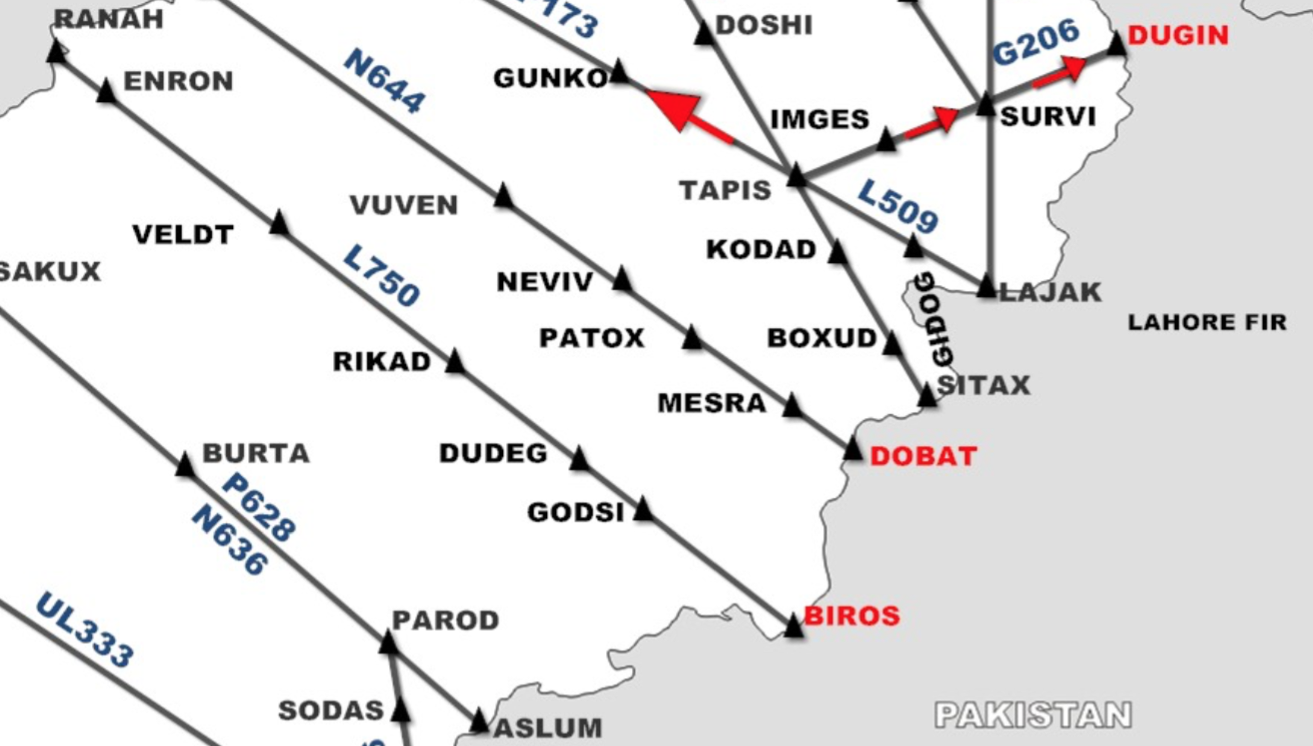
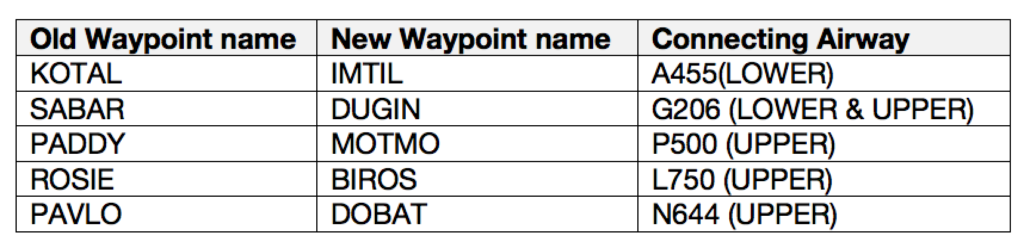
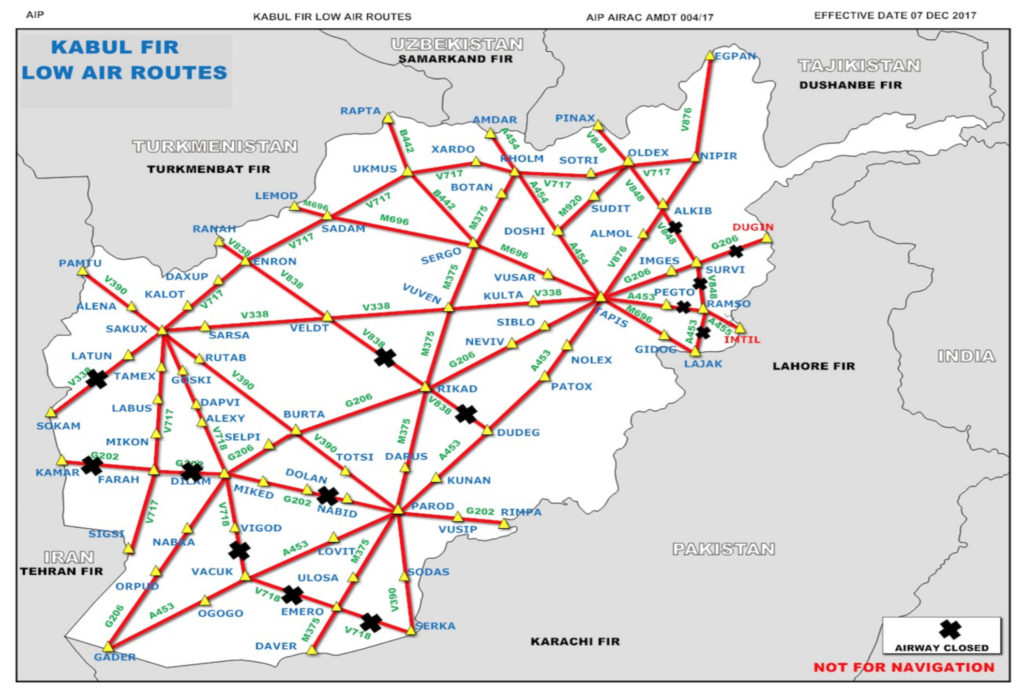
The major change–all aircraft require RNAV1 with GNSS to operate in the Emirates FIR, starting December 7th. This is a change from the previous RNAV5. With that, you can expect changes to SIDs, STARs, all ATS routes, holding procedures, communication frequencies, and others. It’s a major overhaul to anticipate for the expected increase in traffic.
We’ve got for you:
–AIC 04/2017
–AIP Link (you can find all the specifics to the changes here)
–UAE ENROUTE CHART
OMAE/UAE TRIGGER NOTAM - PERM AIRAC AIP AMDT NR 13/2017 WEF 07 DEC 2017 RNAV 1 WITH GNSS OPS RQMNTS MANDATED RNAV 1 ROUTES ADDED STD ROUTINGS AMD CONDITIONAL ROUTES ADDED ENR HOLDINGS ADDED WAYPOINTS ADDED, DELETED AND AMD OMR-51 LOWER LIMIT AMD ADDED FREQ FOR EMIRATES FIR. 07 DEC 00:00 2017 UNTIL 21 DEC 23:59 2017.
After Hurricane Maria – Airport Status

Post Maria Airport and Airspace status:
Updated October 25, 2017 1800Z
Bahamas
- MYMM/Mayaguana: Open and operating
- MYSM/ San Salvador: Open and operating
Turks & Caicos
-
MBPV/Providenciales: Open and operating
- MBGT/Grand Turk: Open and operating
Dominican Republic
- All Airports Open and operating
Puerto Rico
TJZS all aircraft should use caution when operating within the interior or near the Island due to numerous low flying rotary wing aircraft. For additional operation information click here.
- TJSJ/San Juan: Open and operating. Airport continues to be under massive strain and Humanitarian flights are still top priority. The VHF frequencies and radar are working but intermittent. CPDLC unavailable. Fuel is available. Operators must make contact with Aerostar or handler for gate allocation. Slots now only required if you’re using the contingency ramp there. Call MFOC at 001-850-283-5994 all other flights file FPL normal. Overnight parking is available.
- TJIG/Isla Grande: Open and operating from 0600-1900. Customs open 0800-1730. Frequency 121.7 for advisory. Tower is operational. Overnight parking available.
- TJBQ/Aguadilla: Military and Relief flights only. Tower is open and operating. Limited water, electricity, and internet. For services phone contact has been more successful due to internet complications.
- TJPS/Ponce: Military and Hurricane relief and Air Carriers with PPR.
- TJRV/Ceiba: Military, Hurricane relief, and GA flights only. Sunrise to Sunset only due to airport lighting down. VFR only no ATC or Tower. Fuel available. No heavy equipment available to offload supplies. Military flights are required 48HR PPR contact: 805-326-9041.
- TJVQ/Vieques: Open and operating. Sunrise to Sunset only due to airport lighting down. Internet not available.
For more information on operating into Puerto Rico
For Ops reports in Puerto Rico
U.S. Virgin Islands
-
TISX/St.Croix: Open and operating. A contingency ramp has been established for FEMA/DOD flights they require Slot reservation contact MFOCC at 1-850-282-0236. All aircraft should contact Longhorn Ops on 251.9 or 139.9 (+/-20min) before landing to arrange parking and fueling. Normal ATC procedures. Customs available.
- TIST/St.Thomas: Open and operating. Airport hours are 0900-1800 local time. Customs available 0800-1600LT. Equipment available for Cargo offload. Fuel available. Fema permit NOT required. Tower and unicom frequency is 118.8. Limited coverage from SJU Center. ATIS, navaids, ILS, runway lights – all out of service. For services contact St.Thomas Jet Center customerservice@sttjetcenter.com (email is best as phones are intermittent Contact Roy Romney: 340-690-5076/ or Terri Thomas: 340-626-5270 for immediate questions.
Include the following when requesting services:
Company name
Tail #
Make and model of aircraft
Date of arrival/departure
Local time ETA/ETD
Number of crew and pax both in and out
Method of payment - TIST have island curfew 1900-0800 still in place
For more information on operating into TIST/STT
British Virgin Islands
- TUPJ/Beef Island-Tortola: Open and operating 1130-2100z, but VFR only. Fuel available, limited internet, and electrical power. The perimeter fence was badly damaged by hurricane Irma, so the airport is no longer secured. No overnight parking. Only Property owners, residents and citizens are allowed in the territory at this time. ATS services reduced to 5nm radius of the airport. Flights will need to get PPR here: http://ppr.bviaaops.com or via email: clevons@bviaa.com mfrance@bviaa.com Csmith@bviaa.com Lyrubain@bviaa.com Dhamm@bviaa.com
- TUPA/Anegada: Airport closed.
- TUPW/Virgin Gorda: Airport closed.
Sint Maartin
- TNCM/Princess Juliana: Open and Operating 0700L-Sunset (due to no lighting). Fuel is available. File FLP from point of origin due to com difficulties. Equipment to offload cargo is fine, Menzies in charge of the cargo loader. Main Frequency 118.7. ATC is operational (1100Z-Sunset daily). 3 fire vehicles active at the airport, fire CAT 9. Hotel rooms are difficult to find but handler can help arrange.
St. Kitts & Nevis
- TKPK/Basseterre: Open and operating
- TKPN/Nevis Island: Open and operating
Antigua
- TAPA/Antigua: Open and operating.
Anguilla
- TQPF/The Valley: Open and Operating. Open from 1100Z to Sunset only. PPR required. Call sign Anguilla Radio on 118.500 25NM out. Fuel is available, Internet, Water and Electrical in terminal. ATC not available contact: 1-264-476-9642 or 1-264-476-5655. Comms with weather and traffic only. Call Aeronautical station for slot reservations (arrival and departure) 1-264-497-1646 and 1-264-584-5397
Guadeloupe
- TFFR/Pointe-a-Pitre: Open and operating
Dominica
Serious damage. Homes and trees flattened. Recovery efforts are currently being coordinated from the nearby islands of St Lucia and Antigua.
-
TDPD/Roseau: Open and operating with limitations. Hours Sunrise – Sunset. Electricity is via standby generator. Water supply is limited and JetA1 fuel is available only. Comms 118.9 standby radio is working and Fire CAT5. Ground handling available on request. Customs, Immigration, and agriculture officers present. Perimeter fence is limited to 60%.
-
TDCF/Canefield: Open and operating on a limited basis. Largest aircraft that can operate there is a Twin Otter. Only handheld ATC from offsite location, tower was heavily damaged. Difficult to contact as most communications are still down. Most utilizing Helicopters and St.Lucia is being used as a staging airport.
- TTCP: Open and operating normally
- TTPP: Open and operating normally
Turkey suspends US Visas

Effective immediately Turkey has suspended all Visa services to US citizens. This includes both physical Visa and E-Visa.
- Any visa granted before 08OCT will stand until expiry of validity date.
- Any visa granted after 08OCT will be revoked.
- No new visa will be granted from now.
However, most operating crew will not be impacted. When listed on Gendec as Operating crew and you have a valid crew ID, you may stay up to 72hrs without visa.
We will update any changes here as and when known.
French ATC strike updates

Several ATC unions have called for a national strike, affecting French airports and airspace from Monday evening at 1700UTC (Oct 9) through Wednesday at 0400UTC (Oct 11).
All FIRs are experiencing high delays.
Impact expected to the FIR’s per current (10OCT) information are as follows:
LFRR/Brest Experiencing high delays
LFFF/Paris All sectors experiencing delays with highest delays in the west. Situation is starting to show signs of improvement.
LFEE/Reims All sectors experiencing delays with highest delays in the East and North
LFBB/Bordeaux Some high delays and with no ease forseen
LFMM/Marseille High delays all around. Regulations will be in place until a least 2359UTC
The following routes are available:
Tango 9 Global and Tango 213 Global, UM30 and UZ180 are fully available.
T9 is still dealing with alot of delays.
Airports:
LFPG/Paris DeGaulle and LFPO/Paris Orly are experiencing delays and there is a 30% capacity reduction in both airports plus at the following airports:
LFOB/Beauvais, LFLL/Lyon, LFML/Marseille, LFMN/Nice, LFBO/Toulouse and LFRS/Nantes
LFSB/Basel – unconfirmed as of yet but may be used as an alternate
LFPB /Paris-Le Bourget will not be affected.
Expect high impact. Ops over or to France are best avoided today.
We will continue to post any further information here as soon as received.
Tropical Storm Nate headed for U.S. Gulf Coast

Tropical Storm Nate is currently just off the northern coast of Nicaragua, moving NW at 8kts with sustained winds of 35kts.
It’s forecast to move on towards Louisiana over the weekend as a Cat 1 Hurricane.
Heavy rain expected across Nicaragua, Costa Rica, Panama, Honduras, Belize and Mexico’s Yucatan Peninsular.
No airport closures anywhere yet, but keep an eye on the forecast for MMUN/Cancun, as that’s directly in the path of the storm.
CPDLC for US Airspace: The Implementation Process.

Update 03Oct: The FAA has released AC_90-117, which is their updated overview of Data Link Communications.
- The United States ATC system transition to a National Single Data Authority (NSDA) is here.
- The changeover will take place on 22Oct at 0330Z
- A single CPDLC logon ID (KUSA) will be provided for domestic US airspace.
- The initial phase is set up to issue departure clearances only
- En-route CPDLC communications within US airspace will be implemented at a later time.
- More details about the transition process are found here NSDA – Data Comm Program
- We’ll post further information as it becomes available
TIST/St. Thomas airport re-opens

St Thomas re-opens to commercial flights today.
All non-military aircraft need to use St. Thomas Jet Center. To request ops, there’s a Notam out saying you should try calling them direct on +1-340-777-9177, but we’ve heard from our local contacts that might not work. If so, you should send your request via SMS to +1-340-998-7243, but make sure you include complete info about your planned flight:
- Company name
- Tail number
- Make and model of aircraft
- Date of arrival/departure
- Local time ETA/ETD (TIST is GMT-4)
- Number of crew/pax both in and out
- Fuel requirements
- Method of payment
Airport hours are 0900-1800 local time. Only military ops allowed outside these hours.
Tower and unicom frequency is 118.8. Limited coverage from SJU Center.
ATIS, navaids, ILS, runway lights – all out of service.
No customs at the airport – if you need to clear customs then you can do so through TJIG/Isla Grande.
No internet, no ability to print out anything for flight crews, no rental cars. The only phone service that seems to work is AT&T, and that is patchy at best. SMS messages seem to work much better than phone calls.
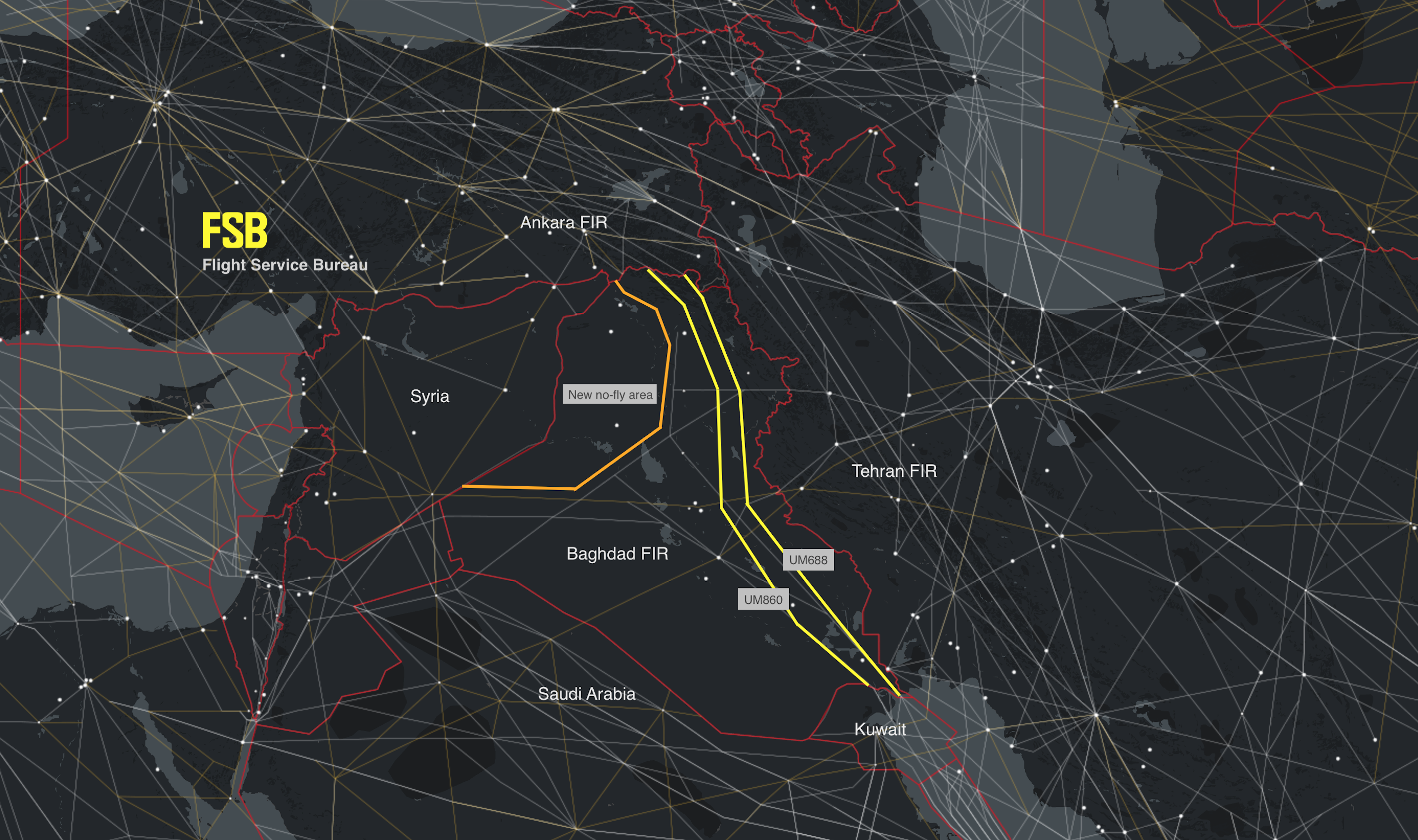
ORER and ORSU: Closed to International Ops

The Iraqi CAA will ban all international flights to/from ORER/Erbil and ORSU/Sulaimaniyah starting from Friday 29th Sep.
From then on, those airports will only be open for Iraqi carriers and domestic ops.
Tensions around the Kurdish autonomous region of Iraq are rising following a referendum on independence.
The Iraqi govt has demanded that the KRG (Kurdistan Regional Government) hand over control of its two international airports – ORER and ORSU. Until the KRG comply with this request, the international ban on flights to these airports is set to continue.
At the request of the Iraqi govt, Iran had already closed it’s airspace to ORER/ORSU traffic earlier this week, and Turkey was considering implementing the same ban.
The KRG are now deciding whether to give up control of their airports or lose their international flights. Should it be the latter, then from now on anyone attempting to travel to the region will have to transit via Baghdad.
We will update as more information becomes available.
Operating to Puerto Rico and US Virgin Islands

Update – 1700Z / 05Oct:
Each airport is dealing with PPR individually, so best to make contact locally for full requirements.
Please see our main Maria post here for individual airport and PPR requirements.
First Hand Accounts: https://ops.group/blog/ops-reports-puerto-rico/
Local Contacts:
Airport Aviation Services – (787) 797-8500 / (787) 424-9499 / info@tjsjfbo.com
Western Aviation Service – (787) 890-2323 / ops@wascobqn.com
Mexico City Airport – After Earthquake Status

Following the 19Sep earthquake in Mexico City, MMMX airport sustained damage, and forced closure:

- If you require information about your flight, get in touch with your airline.
- Access to Terminal 2 is only through the roundabout, plan ahead to arrive on time.
- The airtrain is out of service. Bus service is available between P6 and P7 from T1 and P4 from T2.
- AICM is currently working on fixing both terminals, and this work is not risking the security the customers.
MMTO/Toluca Remained operational, did not close, no issues reported.
Any updates to MMMX operations will be posted here.
Hurricane Maria – Where is it going?

As of 2100Z today 19 September Hurricane Maria was located about 80 miles SE of the island of St. Croix and 175 miles SE of San Juan, Puerto Rico. The category 5 storm is slowly moving WNW at 10 mph. This movement and speed will place the cyclone right over the whole island of Puerto Rico by Wednesday 20 September at around 1800Z.
All Puerto Rican coastal areas are under hurricane warning and all airports in the island are expected to close at some point tomorrow. The East and North coasts of the Dominican Republic are expected to be hit by the storm in the early hours of Thursday 21 September; these coastal areas are also under hurricane warning mainly affecting Punta Cana (MDPC) and Puerto Plata (MDPP), which will most likely stop operations sometime tomorrow.

After Irma- Airport Status

Last update: 20September at 2000Z
Note: some airports in the Caribbean are closing for the expected arrival of Hurricane Maria.
Due to damage and weather caused by Hurricane Irma below is the most recent information on Airports affected.
FLORIDA
- KEYW/Key West: GA flights have resumed 18SEP with limited amenities in the area due to damage (Hotac, transportation, catering) Airline flights resume 20SEP with some cancellations. Advised only people who live or are assisting with relief should be traveling to the area for now
- KMTH/Marathon: open and operating as normal
- KMKY/Marco Island: Open and operating as normal
- KTMB/Tamiami: Open and operating as normal
- KMIA/Maimi: Open with minor delays
- KFLL/Ft. Lauderdale: Open with minor delays
- KFXE/Ft. Lauderdale Executive: Open and operating as normal
- KPBI/Palm Beach: Open and operating as normal
- KMLB/Melbourne: Open and operating as normal
- KJAX/Jacksonville: Open and operating as normal
- KTLH/Tallahassee: Open and operating as normal
- KTPA/Tampa: Open with operating as normal.
- KPIE/St. Petersburg: Open and operating as normal
- KSRQ/Sarasota: Open and operating as normal
- KRSW/Ft. Myers: Open with as normal
- KFMY/Ft. Myers: Open and operating as normal
- KAPF/Naples: Open with some limited services (monitor Notams) as of 18SEP.
- KMCO/Orlando: Open and operating as normal
- KSFB/Orlando Sanford: Open and operating as normal
Antigua & Barbuda
- TAPA/St. Johns: Open and operating as normal from 0800-1700LCL as of 20 SEP
- TAPH/Codrington: Closed until further notice due to serious damage to the airport. TAPA will be used as the hub and aid will be ferried by boat and helicopter to Barbuda
Anguilla
- TQPF/The Valley: Closed for Hurricane Maria until 22SEP1000Z
British Virgin Islands
- TUPJ/Roadtown: Closed for passage of Hurricane Maria until at least 20SEP 1800Z
- TISX/St.Croix: Closed for passage of Hurricane Maria until 21SEP 1100Z
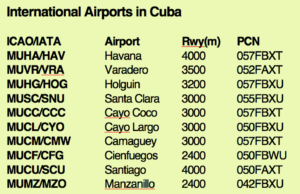
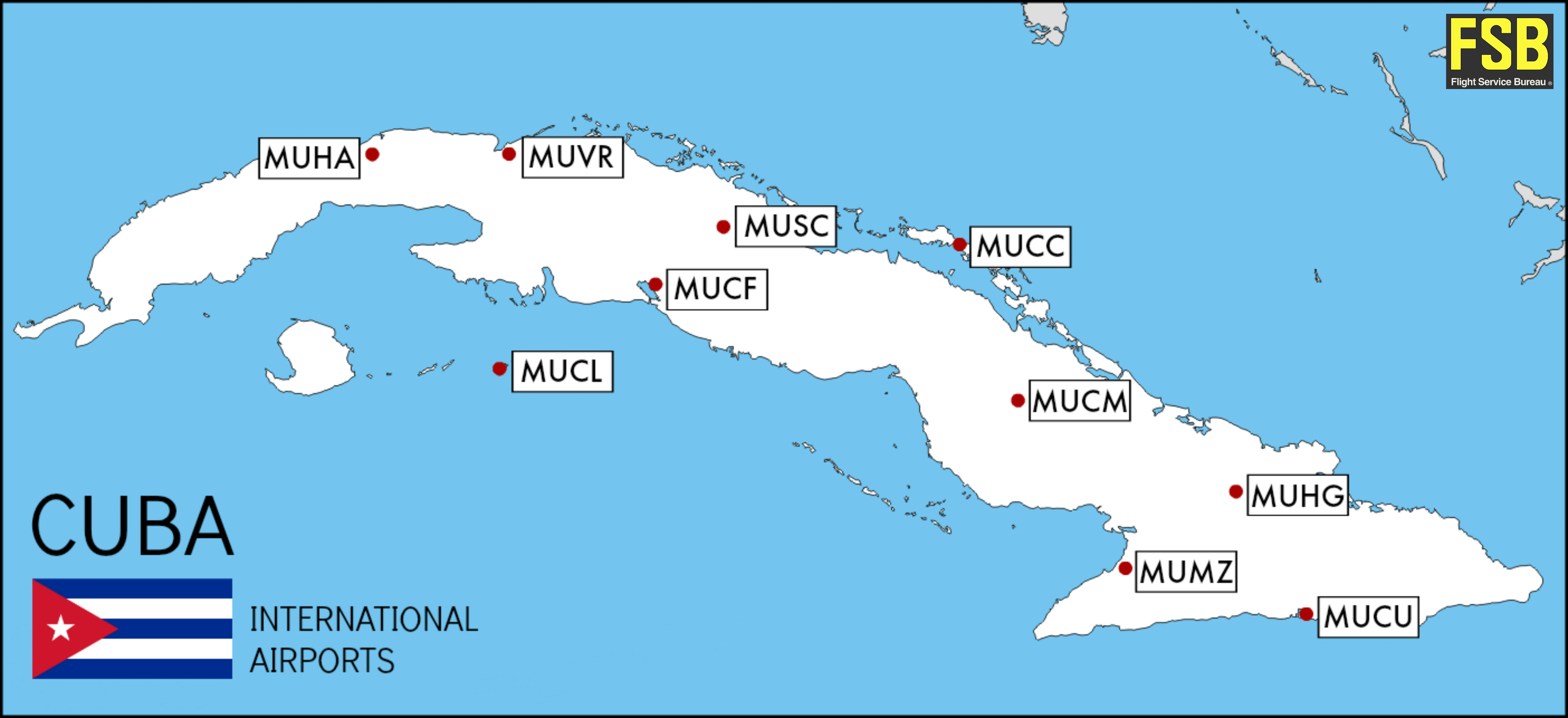
Cuba
- MUHA/Havana: Open and operating as normal
- MUVR/Varadero: Open and operating as normal
- MUCM/Camaguey: Closed expected to open 28SEP due to extensive damage in the Camaguey Archipelago area.
- MUCC/Cayo Coco: Closed until further notice due to extensive infrastructure damage
- MUSC/Santa Clara: Closed until further notice
Dominican Republic
- MDSD/Santo Domingo: Open and operating as normal
- MDLR/La Romana: Open and operating as normal
- MDPC/Higuey Punta Cana: Closed due to passing of Maria until 21SEP 1200Z
Guadeloupe
- TFFR/Pointe-a-Pitre: Open but accepting Humanitarian, Military and State flights only. ATC is operational 20SEP
Dominica
- TDPD/Roseau: Closed to all flights apart from relief/humanitarian. Runway and Apron have been determined usable, flights operate at their own risk. Unicom frequency active, no ATC – 118.9.
- TDCF/Canefield: Open Emergency flights only as of 20SEP
Haiti
- MTCH/Cap Haitien: Open and operating as normal
- MTPP/Port-au-Prince: Open and operating as normal
Puerto Rico
- TJSJ/San Juan: Closed for passage of Hurricane Maria as of 20SEP
- TJBQ/Aguadilla: Closed for passage of Hurricane Maria as of 20SEP
- TJPS/Ponce: remains closed until further notice
St. Kitts & Nevis
- TKPK/Basseterre: Planned to open at 1600Z today, not yet confirmed operating
- TKPN/Nevis Island: Closed for passage of Hurricane Maria until 20SEP
Turks & Caicos
- MBGT/Grand Turk: Closed for passage of Hurricane Maria as of 20SEP. Due to flooding during Hurricane Irma the airport is expected to open 25SEP
- MBPV/Providenciales: Closing for passage of Hurricane Maria as of 20SEP0230Z. Estimating to remain closed until 24SEP
St. Maarten
- TNCM/ St. Maarten: Closed for passage of Hurricane Maria as of 19SEP. ATC is expect to be operational again by end of the month. Still no internet and water but electricity is slowly recovering. Flights will possibly start beginning of October or mid-October at the latest. Ship with fuel should arrive soon for local flights.
St. Thomas
- TIST/St. Thomas: Closed for passage of Hurricane Maria until 21SEP
St. Barthelemy
- TFFJ/St. Jean: Open with daily charter evacuation services. No status update as of 20SEP
Montserrat
- TRPG/Gerald’s: Closed for passage of Hurricane Maria as of 20SEP
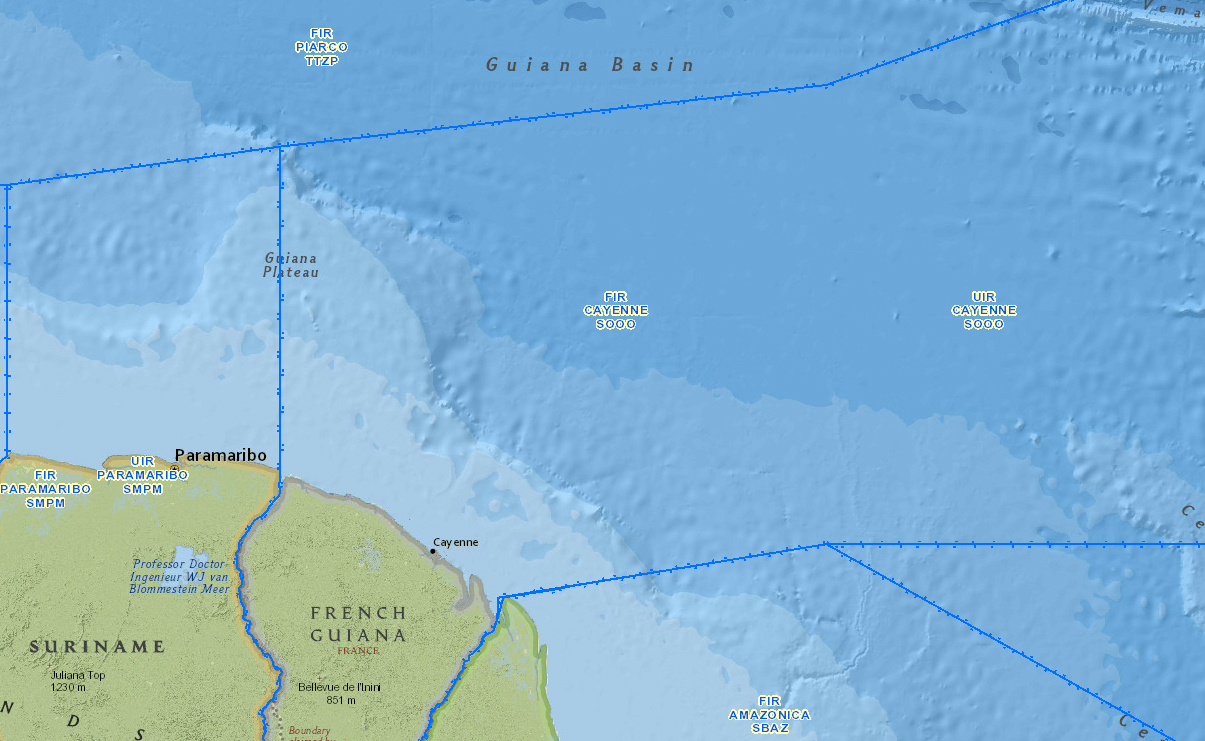
Cayenne FIR: ATC gives up

SOOO/Cayenne FIR: French Guiana ATC has finally given up the ghost – they’ve now implemented their contingency plan for their airspace, due to continued strike action.
If you want to cross this bit of airspace, there are now very specific routes and levels you have to fly at. Once you’re inside the airspace, don’t change your sped or level. All the details have been published in the Notams – check these carefully!
North Korea: Another launch, extended range.

Just the Facts:
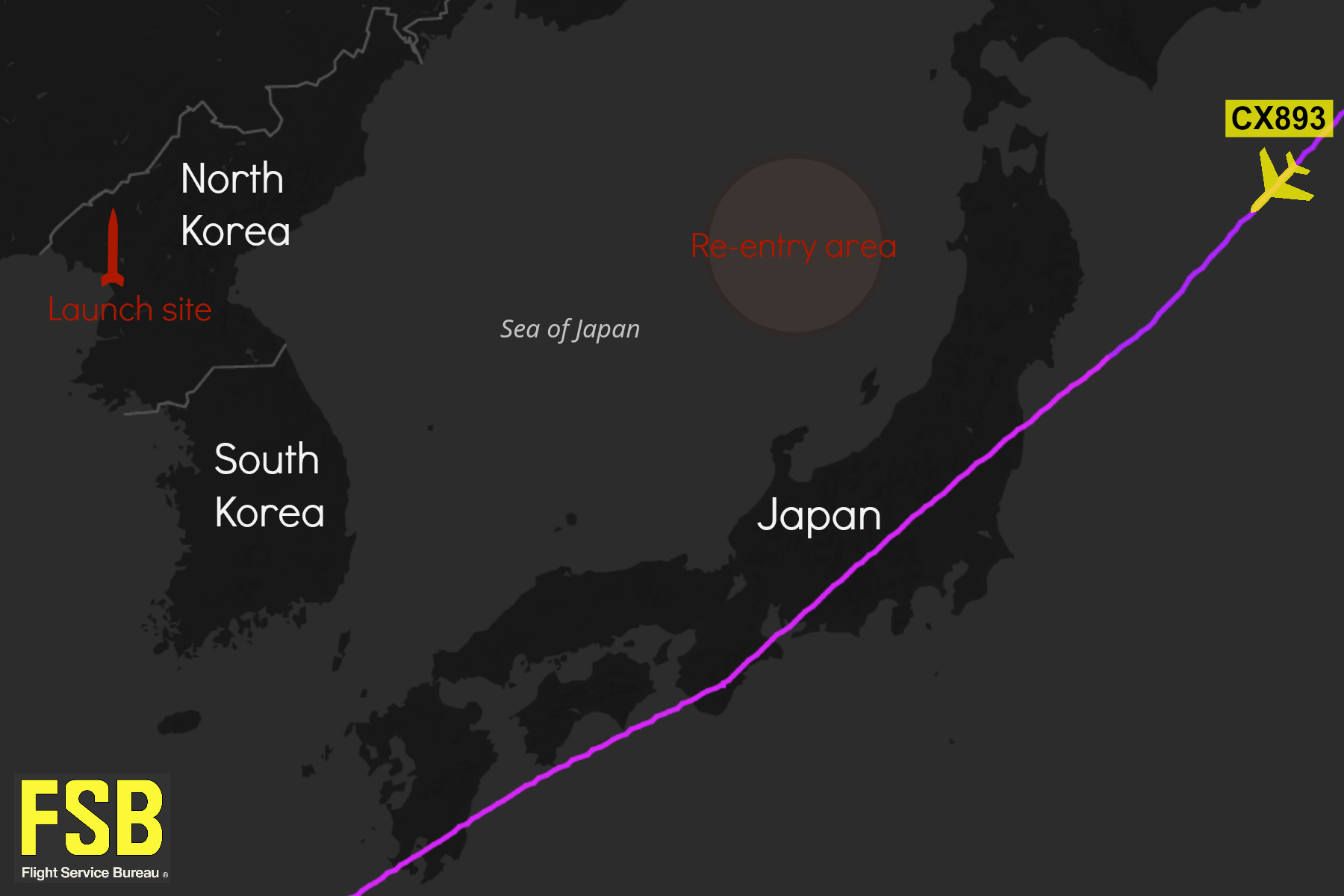
On September 15th, North Korea launched another missile, for the first time crossing over Japanese landmass. This one flew for 19 minutes, flew 2300 miles, and was likely a variant of the Hwasong-12 missile.

With the extended range, it puts more airspace at risk from debris fields. Once can reasonably exclude quite a bit of this airspace, as all launches are easterly.
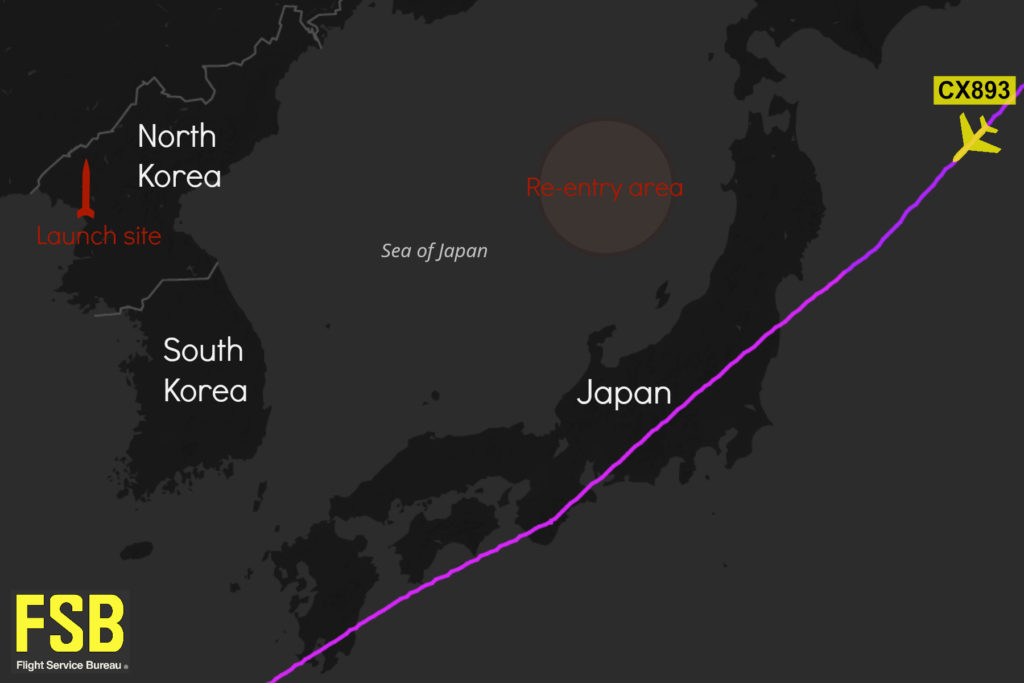
This launch passed over the airways below off the coast of Japan:

Continued caution should be taken in oceanic airspace west of North Korea.
For more reading, read our post on the missiles specific to the Sea of Japan:
https://ops.group/blog/heres-why-north-korean-missiles-are-now-a-real-threat-to-civil-aviation/
Typhoon Talim headed for Japan

Typhoon Talim, the equivalent of a category 4 hurricane, is now headed straight for Japan.
On Miyako-Jima Island in Okinawan island chain in the far south-west of Japan, Talim has already brought destruction: winds of over 100mph, power cuts, and the highest recorded rainfall in more than 50 years. The typhoon its expected to progress up towards the Japanese mainland over the weekend.
Forecasters had previously predicted it would pass over Taiwan’s northern cities before continuing on towards the Chinese coastline. A few flights were cancelled, more than 200,000 people were evacuated from Fujian and Zhejiang provinces, and flow restriction Notams were issued for both countries airspace (RCAA/Taipei FIR & ZSHA/Shanghai FIR) – although airports in the region remained open as the typhoon’s progress was closely monitored.
However, now it seems likely that Japan will bear the worst of the impact. If you’re operating anywhere in this region over the next few days, best keep an eye on the Japanese Met Agency’s dedicated webpage for Typhoon Talim… just in case it decides to change course again.
ZBAA/Beijing: New departure rules

There are some new rules at ZBAA about how to go about getting clearance to depart. The new guidance doesn’t seem to have been officially published anywhere yet, but ground handling agents have been handing out a bit of paper translated from Chinese. Check out the image below for original version, which shows what you need to do. Here’s the short version:
- Make sure your tow tug is in position.
- Contact the delivery frequency for ATC clearance. Tell them you’re ready to go.
- Next, contact the ground frequency to apply for clearance to push-back and start-up. (This clearance can only be given by controllers on the ground frequency, not the delivery frequency.)
Also, it’s been reported by an Opsgroup member that if you do not then push-back within 5 minutes of getting your clearance, you will get bumped to the bottom of the pile. Same thing happens if your EOBT is more than 15 minutes early or late from the filed time in the FPL.
Remember, slots are required at ZBAA, and GA aircraft are not permitted to arrive/depart between peak hours 0700-0900 local. There’s also only 24 hours maximum parking time allowed at ZBAA for foreign GA.

EUROPE: Third Country Operators (TCO)

A TCO is an authorization issued by EASA to any third-country operator wishing to perform commercial air transport in any of the following European countries:
- 28 EU Member States
- Iceland, Liechtenstein, Norway, Switzerland
Plus the following territories:
- Gibraltar, Aland Islands, Azores, Madeira, Canary Islands, Guadeloupe, French Guiana, Martinique, Reunion, Saint-Martin, Mayotte
Applications are made directly to EASA using their application form.
https://www.easa.europa.eu/document-library/application-forms/fotco00160
You will need to provide the following documentation:
- AOC
- Operating Specifications
- Insurance
Contact details for applications are made to:
European Aviation Safety Agency
Applications Handling Department
Postfach 10 12 53
D-50452 Köln
Germany
Fax: +49 (0)221 89990 ext. 4461
E-mail: tco.applications@easa.europa.eu
Should EASA deem the application in order the operating authorization process is completed in approximately 30 days. Some flights can avoid this requirement, such as Air Ambulance or Humanitarian flights.
Please note:
- Overflights of the above states do not require a TCO permit.
- EU member states cannot issue a permit for their country if the operator does not already hold a TCO operating authorization.
If you plan to operate to these areas, we’d suggest getting your TCO right away, even if you don’t have a planned flight at the moment. They can take some time to obtain.
BGSF/Sondrestrom to shut on August 27th

For NAT Ops on Sunday August 27th, note that BSGF/Sondrestrom will be closed to all traffic, as they are upgrading infrastructure. Sundays in Greenland see most airports closed in any case, but the option of paying $1000 or so to have them open for you is normally there. On this date, BGSF won’t be, which may affect your diversion options.
They do say that if there’s an emergency, call them on +299 52 42 27 to determine availability.
Venezuela airspace risk – brink of civil war?

All operators, in particular those with an N-reg on the tail, should be aware of the rapidly deepening crisis in Venezuela. The more tabloid news sources will say that “Venezuela is on the brink of civil war”; while that’s not quite the case (yet), it does give you a good indication of the level of concern. In OPSGROUP Note to Members #29 we will summarise the current situation.
Sanctions On July 31, the US government imposed sanctions on Venezuela, specifically on President Maduro. This creates an uncertain situation for US registered aircraft operating in Venezuelan airspace. Retaliatory sanctions, even as far as grounding a US aircraft, are not out of the question.
Embassy withdrawals On August 1st, the UK Foreign Office followed the US in withdrawing family of personnel from their respective embassies. This is a common precursor to a deeper security risk, and in the last 5 years we’ve seen this pattern in Libya, Syria, and Yemen.
Flight Ops See below on overflight. There have been interruptions to Notam and Metar service throughout 2017. At one point it appeared that SV** had lost its connection to the international AFTN system.
Aireport The most recent OpsGroup member reports are not encouraging. The top report on SVMI is titled “Hazardous in Caracas“. “The operating conditions in Caracas have deteriorated to a new level. New ATC controllers that have been installed in the last few months do not speak English very well, if at all, and in some cases and they are issuing clearances not appropriate for IFR or terrain clearance. Tremendous caution should be exercised especially when moving internally within Venezuela. SVMI authorities are now demanding to see the complete insurance policy for the aircraft, not just proof of insurance. We had Spanish speaking personnel with us and when we questioned a local SVMI controller about not using English, his response was that we should all be speaking Spanish! “. More in Aireport. If you’ve been through recently, add your report.

Threats SVMI/Caracas Simón Bolívar airport is located in an extremely high-risk area for armed robbery and kidnappings. The US describes the greatest current risks as social unrest, violent crime, and pervasive food and medicine shortages.
Travel advice Western countries are all now recommending against “all but essential travel”. A large majority of airline carriers have now stopped operating to Venezuela, for a mix of reasons – primarily the fact that onward payment of ticket monies have been stopped by the Venezuelan government. There are frequent violent protests.
Overflight Operations through Venezuelan airspace do not require an overflight permit, and so there have been no incidences recorded of US aircraft being denied a permit. However, on several occasions in the last month, Venezuela has for short periods arbitrarily closed its airspace to overflying aircraft. A common problem with Venezuelan overflight is the denial of airspace entry due to unpaid navigation fees, which is why checking this in advance is recommended. This may be a tool used to deny US aircraft entry in the future. Plan operations through the SVZM/Maiquetia FIR with caution. To be clear, we do not assess any risk to enroute aircraft, but be mindful of the fact that if you do enter SVZM airspace, you may end up diverting to an SV** airport. Right now, that’s not ideal.
Avoiding Venezuela If you elect to avoid SVZM airspace, to the west will be via Colombia – permit required for all overflights, and to the east will be via the SYGC/Georgetown FIR (Guyana) – permit not required, or via the Paramaribio FIR (Suriname) – permit required. Finally to the east, if you use the SOOO/Rochambeau FIR (French Guyana) – permit required unless operating a GA aircraft under 12.5k lbs.
If you need a tech stop and previously used/considered SVMI, then look at alternatives like TNCC, TTPP, SBEG, SMJP. Use the OpsGroup planning map to figure your best alternate options.
Published August 2nd, 2017 :
- The full Note to Members is available to OPSGROUP Members as Note to Members #29 in your OPSGROUP dashboard.
- We recommend you review this in full before operations in the northern half of South America.
You can request membership of OPSGROUP to receive the full International Ops Bulletin delivered every Wednesday, along with all OPSGROUP member benefits: Members Questions, Group Discussions, Slack, free maps and charts (normally $25), Full access to aireport for group reviews of handlers and airports, regular alerts for critical international ops info, complimentary Airports Database (normally $375), Full access to safeairspace.net including updated risk alerts, and guidance and help when you want it on any International Operations topic (that last one is really useful!). Read 125 different member reviews.
Enhanced Security – new rules for US Inbounds

KZZZ/USA The US has opted for ‘Enhanced Security’ instead of a wider laptop ban. In fact, the existing ban is likely to end once airports can comply with the new rules. The information in the official DHS release is somewhere between vague and zero, which kind of makes sense.
So, the story is pretty simple – there is no wider laptop ban, but no specifics have yet been released publicly as to what exactly ‘Enhanced Security’ means for Aircraft Operators. The DHS will work directly with larger AO’s directly affected.