Venezuela & Caribbean Airspace Update

It’s been a busy few days across Venezuelan and Caribbean airspace.

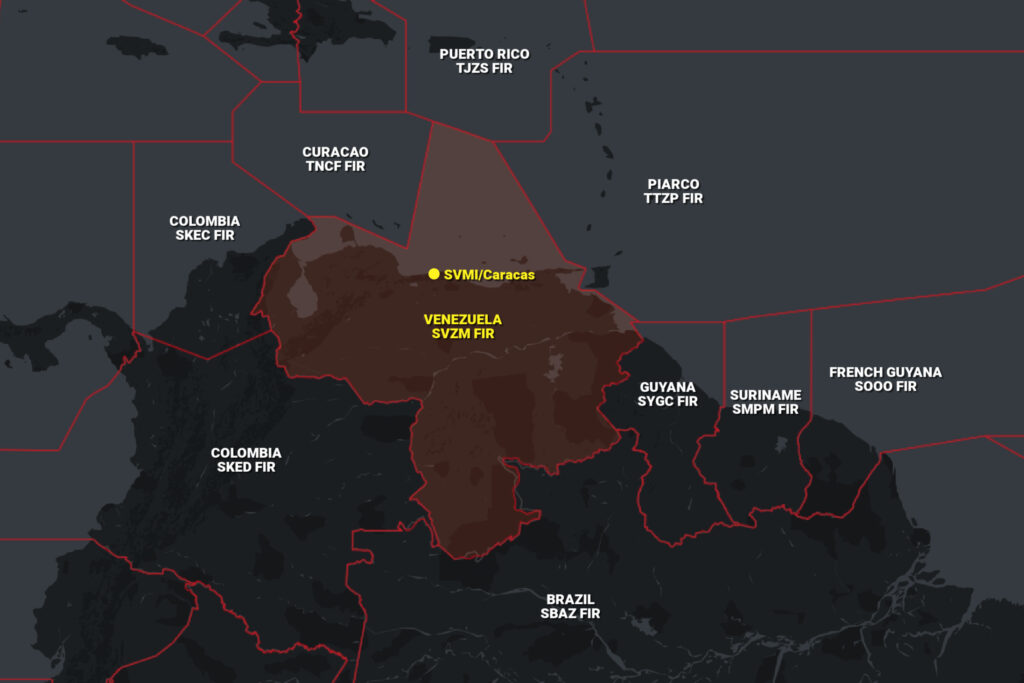
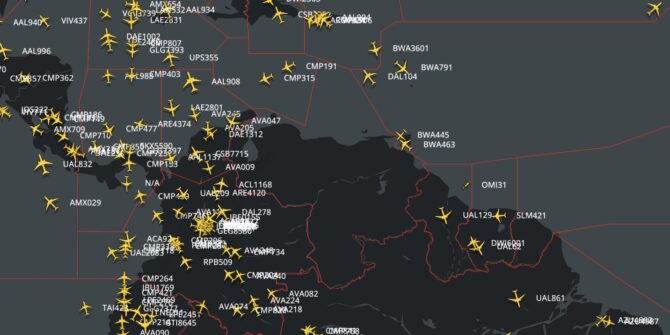
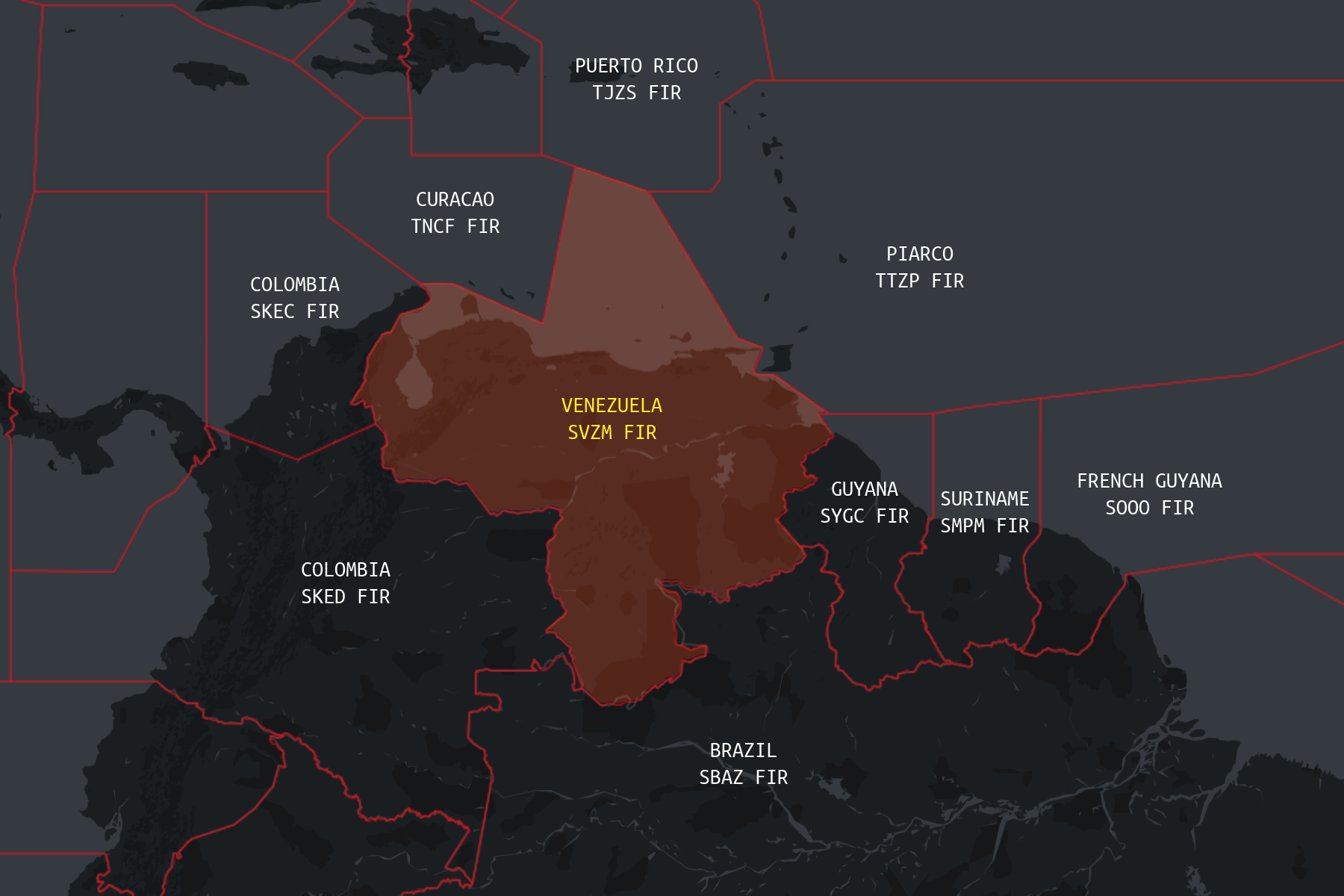
On Jan 3, the US FAA issued a temporary flight ban for US operators in Venezuela’s SVZM/Maiquetia FIR, the TJZS/San Juan and TNCF/Curacao FIRs, plus the TTZP/Piarco FIR west of 57W – which in practice covers the entire eastern Caribbean island chain.

The move followed US airstrikes in Venezuela and was driven by safety-of-flight concerns linked to military activity and misidentification risk.

That prohibition was short-lived. Within hours, the FAA lifted the ban and reverted to advisory Notams, returning to earlier guidance for US operators to exercise caution at all altitudes in the affected FIRs.

While the temporary FAA ban has ended, airspace warnings still remain in place. The US, Canada, EASA and several European states continue to advise avoiding Venezuelan airspace and to exercise caution across the surrounding region.

These sit on top of earlier warnings from late 2025 flagging GPS interference, reduced ATC visibility, and unpredictable traffic. Operators have been reporting these issues for months, with no clear indication they’ve fully gone away.

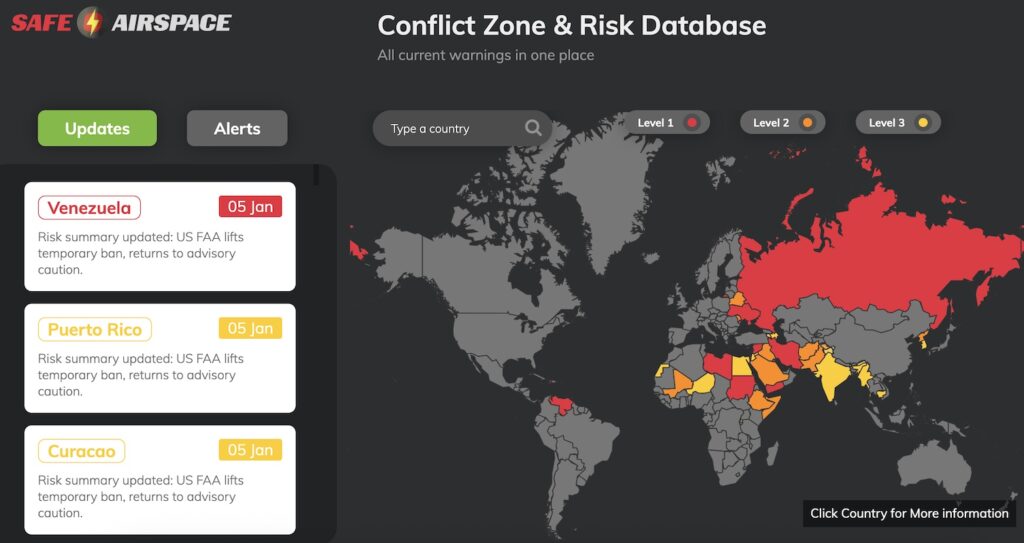
On safeairspace.net, we continue to list Venezuela as Level 1: Do Not Fly.

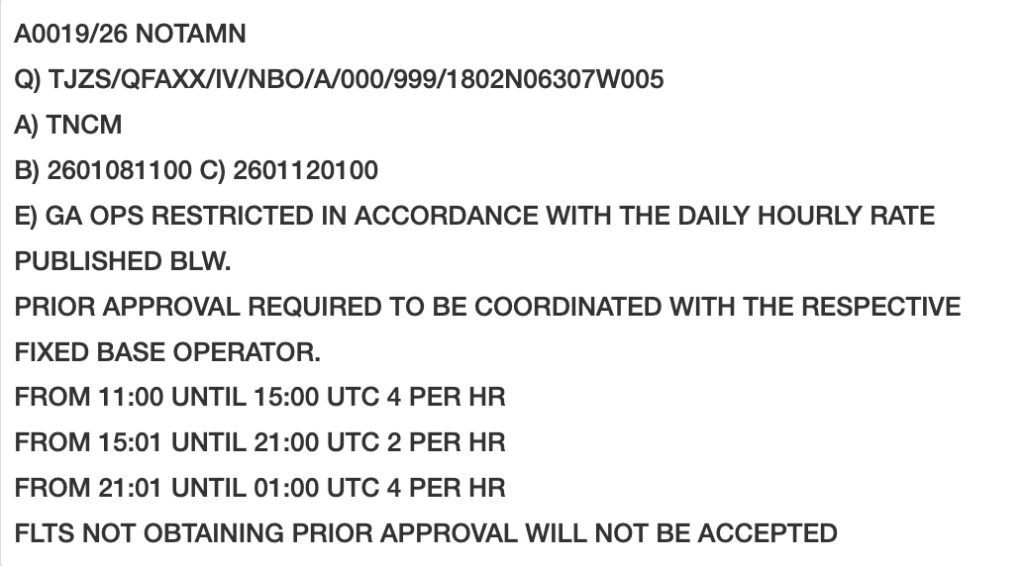
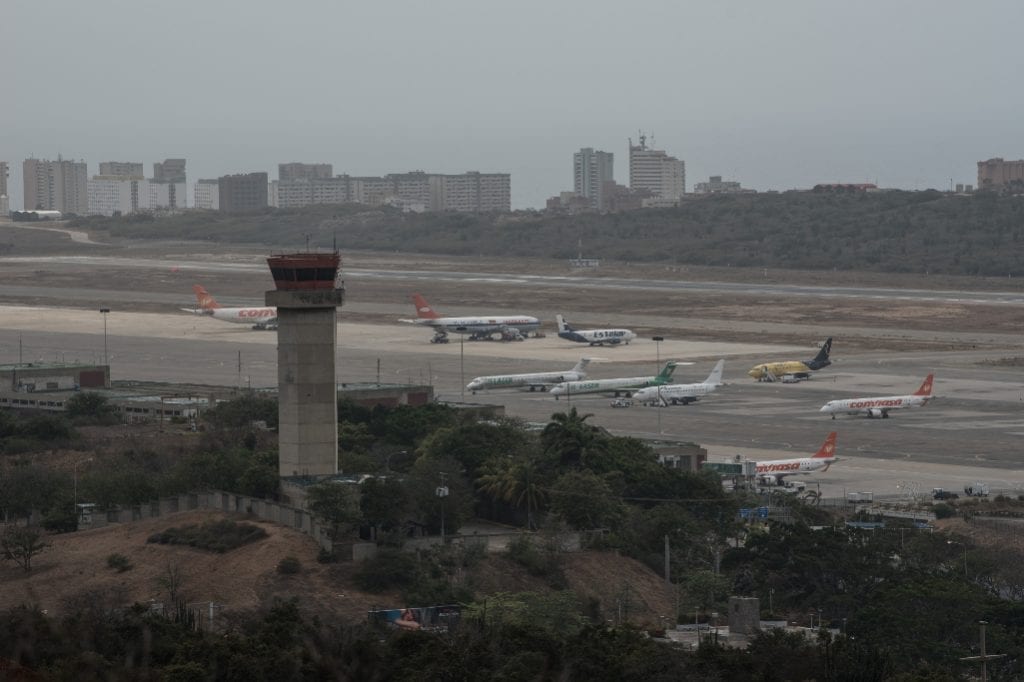
For several days after Jan 3, departures from parts of the eastern Caribbean were heavily delayed, with aircraft held on the ground due to parking constraints and ATC flow controls. Most of that disruption has now cleared. FAA flow programs are no longer active and the situation at the airports has largely returned to normal. The main exception is TNCM/St Maarten, where ramp congestion continues to limit GA flights through Jan 12 as per the current Notam.

If you’re operating in the area and have updates to share with OPSGROUP members, please email news@ops.group and we’ll update this article as things change.


New FAA Airspace Warnings for Venezuela and Puerto Rico

Key Points
  • The FAA has issued new airspace warnings for both the TJZS/San Juan and SVZM/Maiquetia FIRs, following a sharp rise in state aircraft activity across the southern Caribbean.
  • SVZM is the main concern: the FAA cites a worsening security picture, GPS interference, and increased Venezuelan military mobilisation, including air-defence capability that raises the overflight risk.
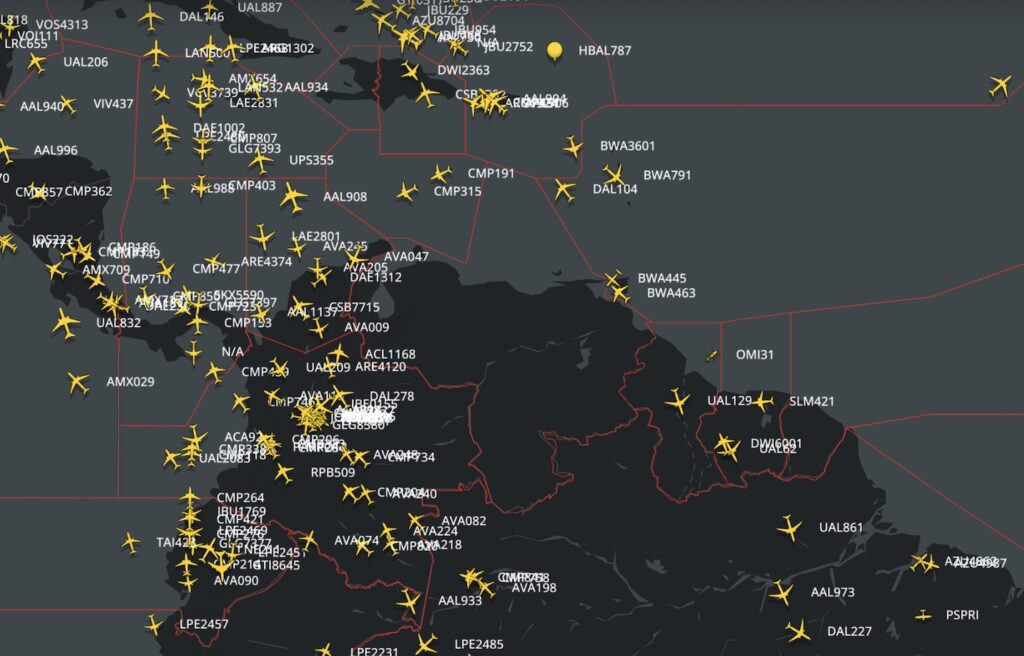
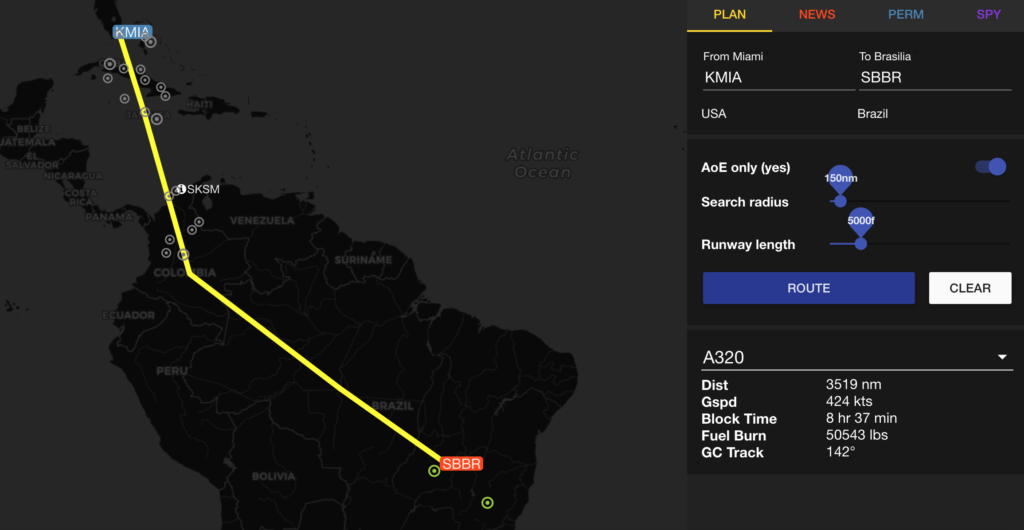
  • Airlines have already suspended flights to Venezuela and are routing around the SVZM FIR via Colombia and neighbouring FIRs.
  • Avoid SVZM unless absolutely necessary. The risk level for overflights is higher than usual.
  • TJZS remains open, but expect more state traffic, occasional non-standard ATC coordination, and busier airspace as military activity increases near Puerto Rico.

Puerto Rico: New FAA warning for the TJZS/San Juan FIR

On 18 November, the FAA issued KICZ A0010/25, advising extreme caution at all levels in the TJZS FIR because of an increase in state aircraft operations. They don’t say who these aircraft are, but the language almost always means military traffic that may not be working standard civil ATC.

That matches what’s happening: more US reconnaissance, tanker and transport flights, plus a larger naval presence in nearby waters. The US has also carried out strikes on suspected drug-smuggling boats. Venezuela has publicly objected to the buildup, raising tension across the wider region.

For crews, the key point is that TJZS may now see unpredictable state movements and non-standard ATC interactions.

Venezuela: A much stronger FAA warning

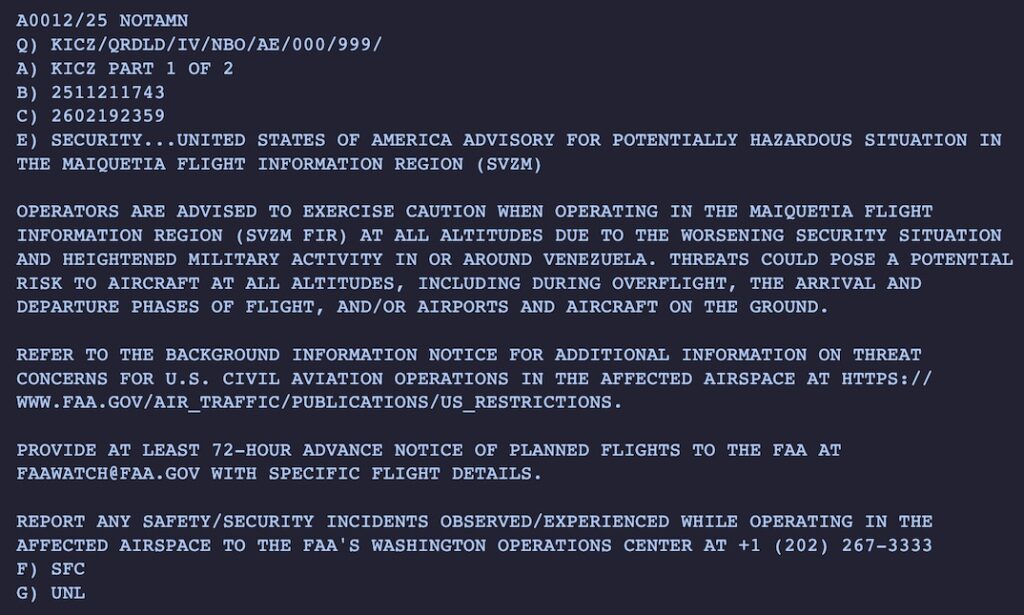
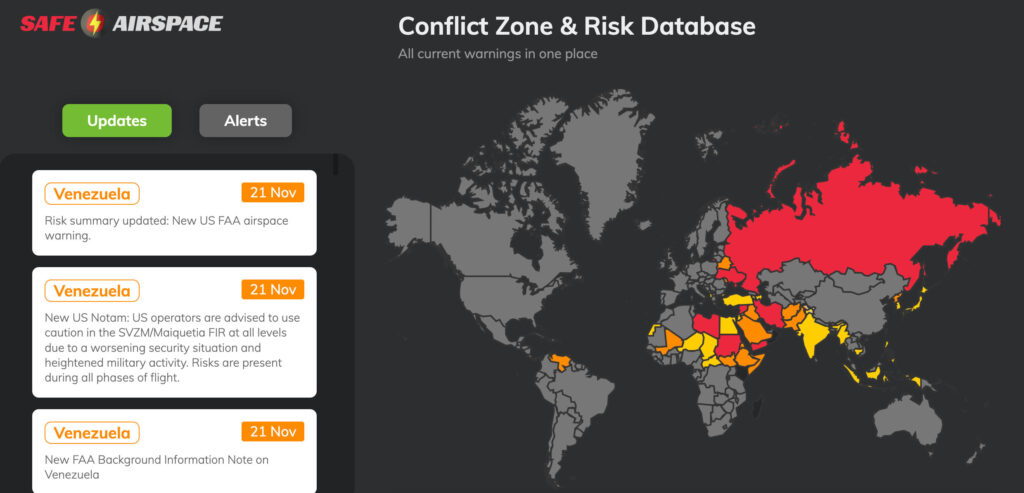
On 21 November, the FAA issued the more serious KICZ A0012/25 for the entire SVZM FIR. It cites a worsening security situation and increased military activity, and requires 72 hours’ advance notice from US operators planning to enter the FIR.

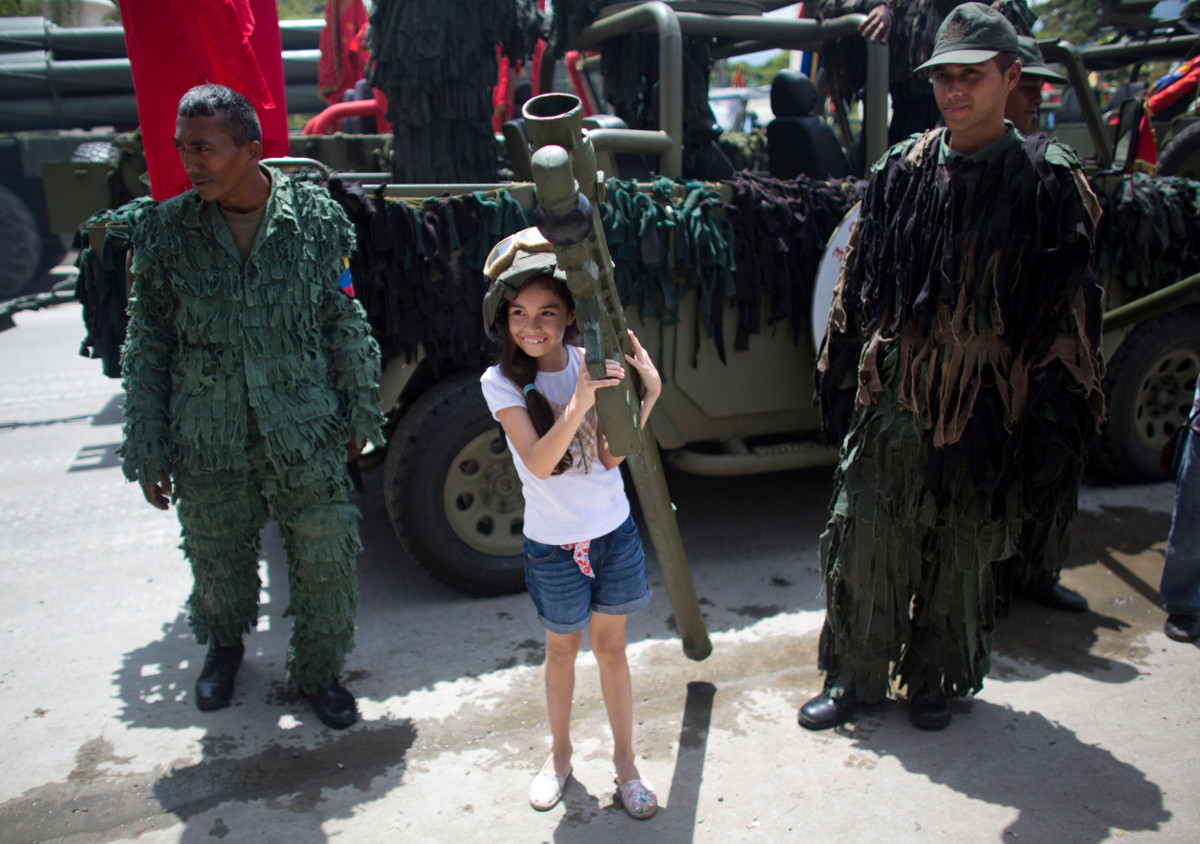
The FAA’s Background Note backs this up: crews have reported GPS interference in the SVZM FIR with effects that can extend 250 nm from the source, and Venezuela has stepped up its military posture with mass mobilisation and air-defence systems that can reach civil levels. There’s also a low-altitude risk from MANPADS. Venezuela isn’t threatening civil aviation, but the overall environment means the risk level for overflights is higher than usual.

Spain and Portugal have also issued their own near-identical warnings for Venezuelan airspace. Both tell crews to avoid the SVZM/Maiquetia FIR until early December. They cite increased military activity, air-defence systems active at all levels, and poor coordination between parties in the area. This matches the FAA’s view and adds two more state recommendations to stay clear of Venezuelan airspace.

Airlines are already pulling back

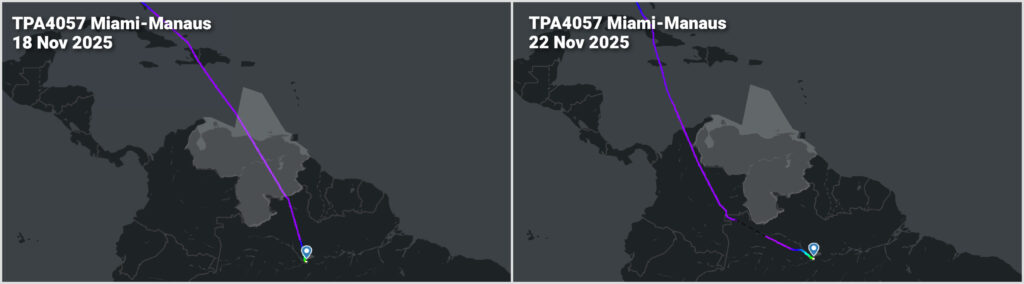
In the past few days, several airlines have suspended services to Venezuela (the ones we know about so far: Iberia, Air Europa, Plus Ultra, TAP, LATAM, Avianca, GOL, Caribbean Airlines and Turkish Airlines).

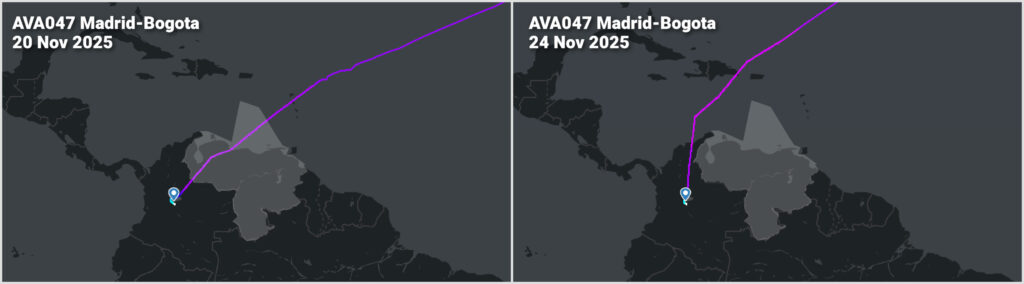
It looks like most overflights are now adopting the same strategy: avoid SVZM completely and route via Colombia or neighbouring FIRs, rather than cut across Venezuelan airspace.

Venezuela’s civil aviation authority INAC has announced that it revoked operating permits for six foreign airlines on 26 Nov 2025: Iberia, TAP Air Portugal, Avianca, LATAM Airlines Colombia, Turkish Airlines and GOL. INAC said the decision followed the airlines’ move to suspend their services to and from Venezuela after recent air safety alerts issued by the US and Spain. IATA has urged the Venezuelan authorities to reconsider the move.

Why all this is happening

The FAA hasn’t given a detailed explanation, but recent US military activity in the region gives plenty of context. Public reporting shows:

  • The USS Gerald R. Ford carrier group and several destroyers off northern South America.
  • USAF heavy bomber flights along the Venezuelan coast.
  • Multiple recent strikes on suspected drug-smuggling boats.
  • Venezuela condemning the buildup and calling the US presence a direct threat.

All of this is happening in airspace corridors used by civil traffic, which explains the new warnings.

What crews need to watch for

Three main things:

  1. GPS interference is active. Crews have reported GNSS issues in SVZM with lingering effects after exit.
  2. Military traffic is up and less predictable. State aircraft may not be on civil ATC, may appear without ADS-B, and may manoeuvre unexpectedly – particularly in TJZS and on the northern edge of SVZM.
  3. Avoid SVZM unless absolutely necessary. Airlines are already doing this, and the FAA warning together with Venezuela’s current military activity makes overflight risk higher than usual.

For more info on these airspace warnings, check safeairspace.net – our conflict zone and risk database. And if you have any info you’d like to share with us, please get in touch via news@ops.group.


Venezuela: FAA Restriction Lifted

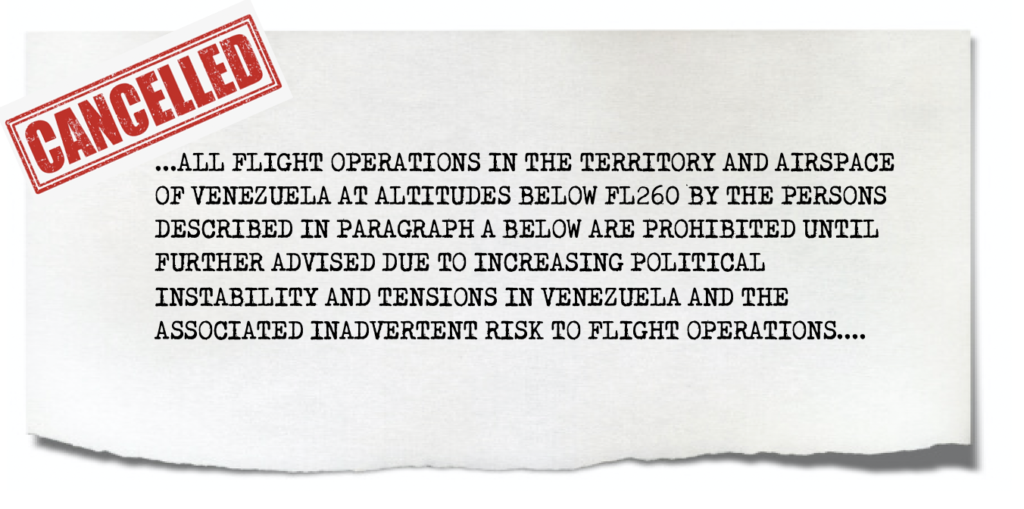
The US FAA has cancelled a long standing Notam which prevented US operators from overflying Venezuelan airspace below FL260.

KICZ Notam A0013/19 expired in June, and hasn’t been renewed. This effectively means that there are no longer any restrictions on the enroute use of the SVZM/Maiquetia FIR.

In fact, there are no active airspace warnings issued by any other states either. Here’s a closer look at the airspace, why there was a restriction in the first place and what you should know now if you want to use it.

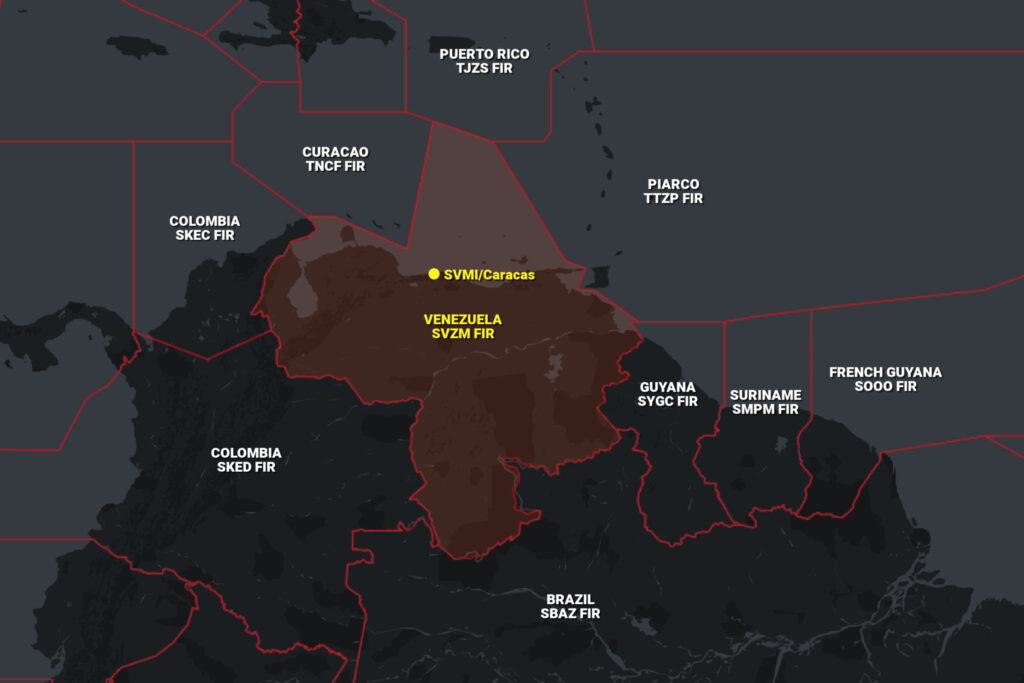
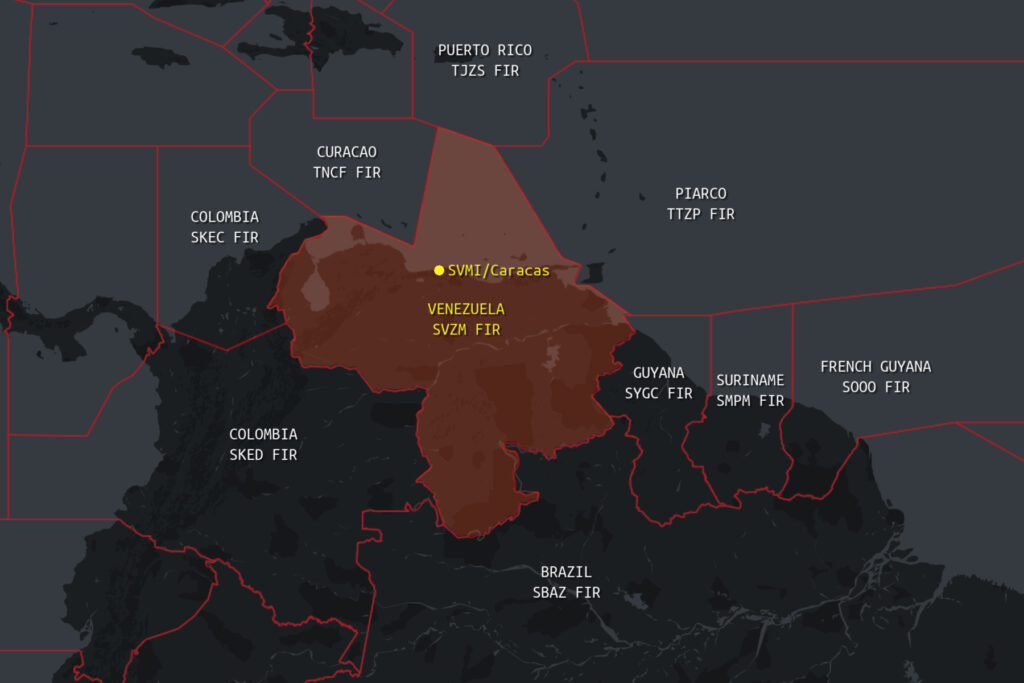
The Maiquetia FIR

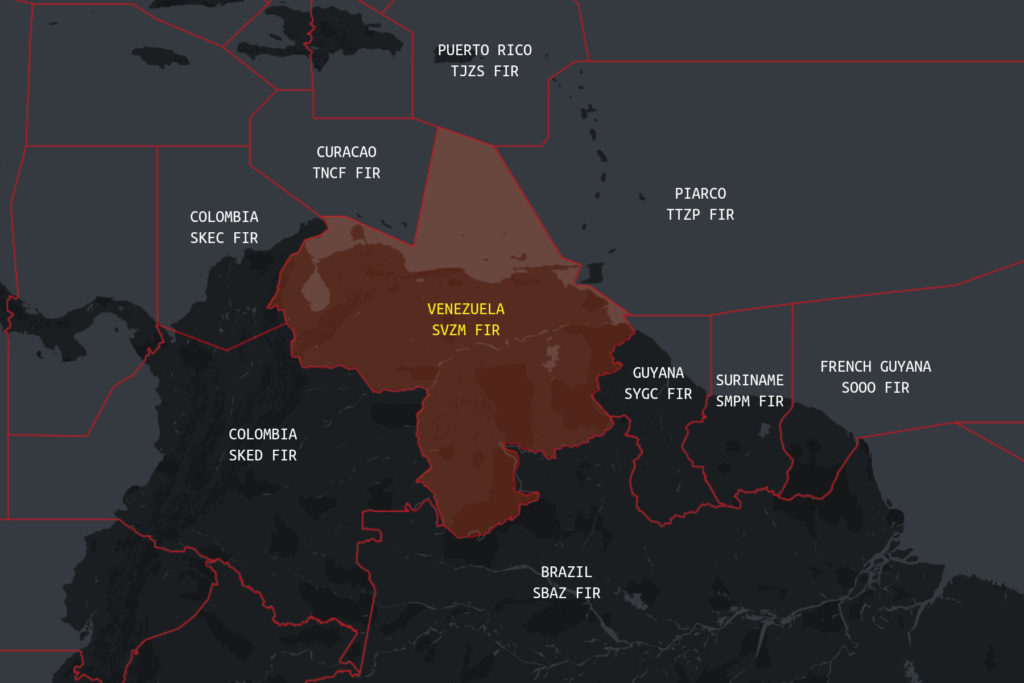
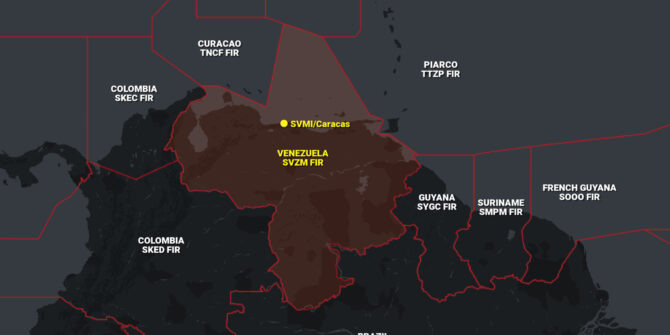
Venezuela controls its own skies – the SVZM/Maiquetia FIR. It’s a large chunk of Class C airspace that sits squarely on top of South America.

From a geographical perspective it provides a handy gateway between the US, Caribbean and destinations further south down the continent – especially Brazil.

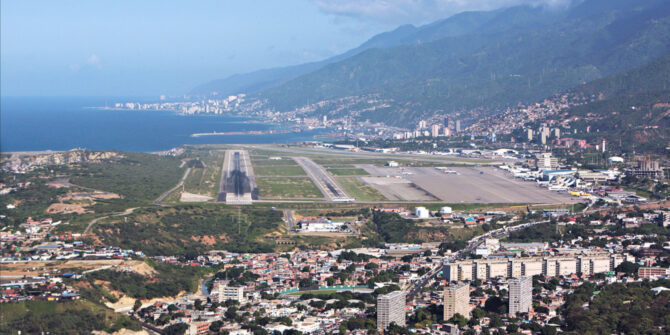
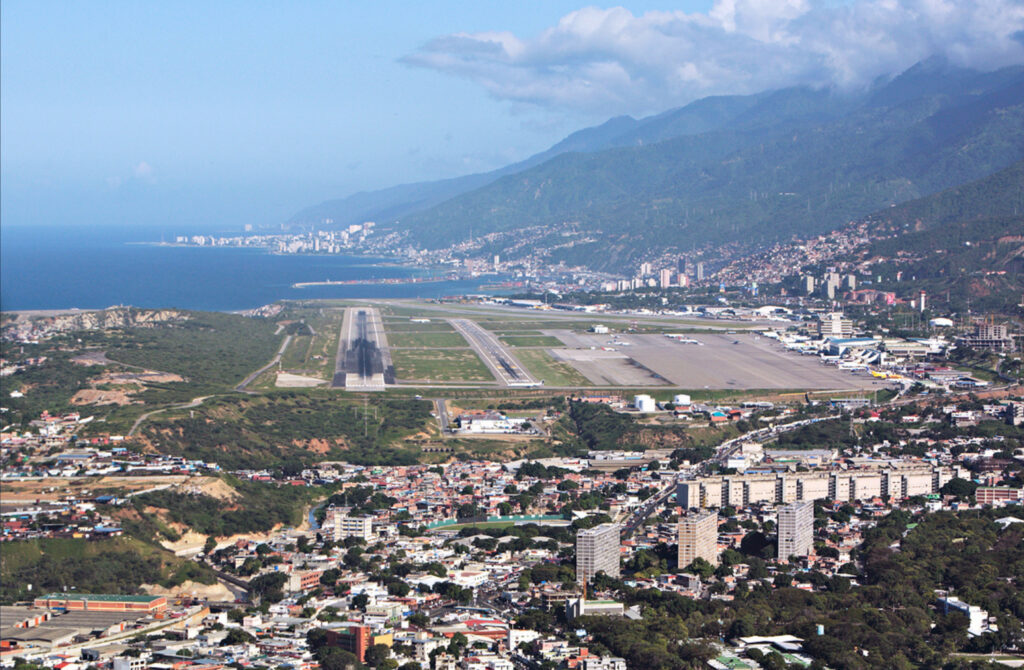
It is also home to the country’s largest airport, SVMI/Caracas. Here’s what that all looks like on a map:

If you’d like to know more about Venezuela’s airspace, here is a link to the online AIP.

Why was there a US restriction in the first place?

Back in 2019, the US FAA issued the above Notam which banned US operators from overflying Venezuelan airspace below FL260, citing political instability.

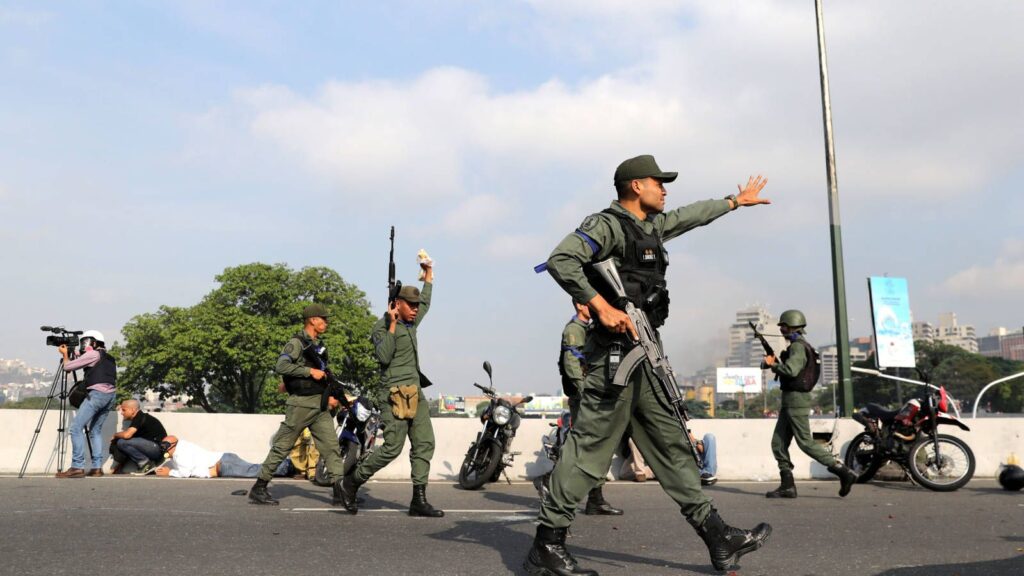
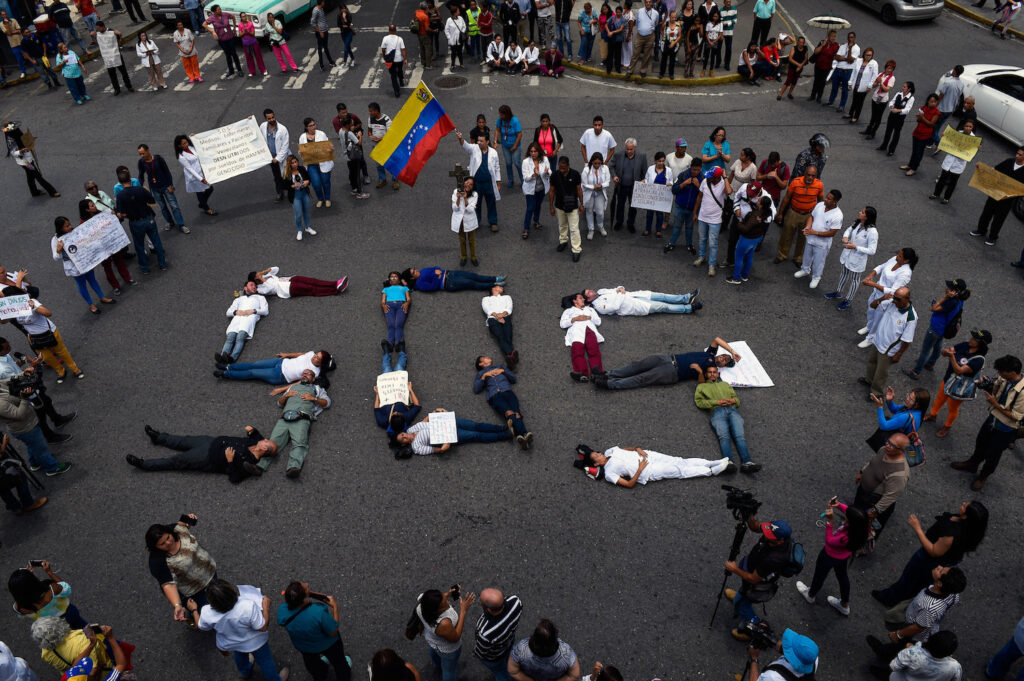
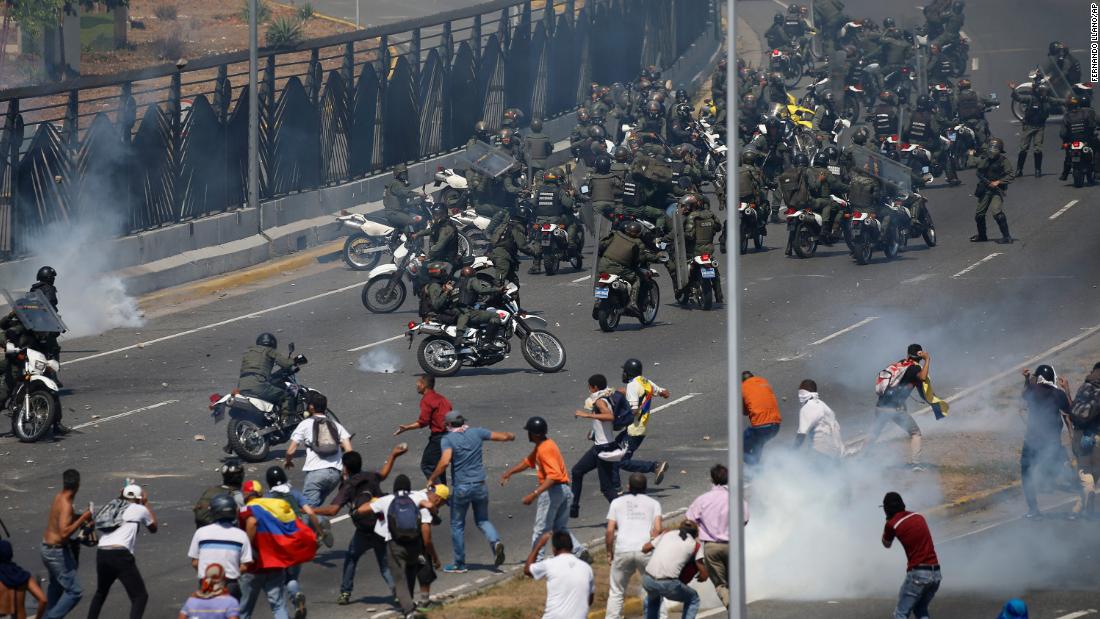
The (extremely) short story was that after years of steady decline, a political power struggle led to an attempted uprising. Widespread civil unrest followed while people suffered from economic collapse, inflation and shortages of food and medicine. This has continued to the current day. Here is what we had to say at the time.

The FAA had multiple concerns for the traffic above.

There were two major worries. The first was that the military may fracture and begin fighting against each other. Additionally, there was the known presence of mercenaries who had been employed to augment the military and police force.

It was known that the Venezuelan armed forces had large stockpiles of advanced man portable air defence systems (MANPADS) capable of targeting aircraft as high as FL250.

While there was no obvious intent to target civil aircraft, the FAA were worried that extremely high tensions may lead to inadvertent firing which could endanger them indirectly. They were also concerned that some of the MANPADS may find their way into the hands of non-state actors who were less predictable, and had less training.

As such US operators were banned at lower levels out of an abundance of caution while the situation evolved.

If you’d like to know more, here is a copy of the Background Information note the FAA published at the time.

So, have things improved?

It would be a logical assumption given that the flight restriction has been lifted, but the short answer is that we don’t know. And the FAA hasn’t (yet) provided any explanation as to why the Notam has been cancelled.

The situation in Venezuela is at a standstill. It remains in the middle of an unprecedented social and humanitarian collapse. Although there’s news lately of high-level talks to try and improve the situation, right now, it’s just that – talk.

It’s possible that the immediate threat of active fighting and the intentions behind the issue of the original Notam have subsided sufficiently that the risk to civil aircraft from anti-aircraft fire is now considered extremely remote. Although this is purely speculation.

The safest course of action until we know more would be to remain above FL260 – although this is no longer mandated.

Beware the diversion

If you do overfly Venezuelan airspace, the most important consideration is crew and passenger safety in the event of a diversion. The security situation on the ground in Venezuela isn’t great – in fact it is among the twenty most dangerous countries in the world, while Caracas itself has previously been ranked as the most dangerous city of all.

The US Department of State maintains a ‘Do Not Travel’ warning (its highest alert) for Venezuela citing risk of kidnapping, crime, civil unrest, terrorism and unlawful imprisonment. All to be avoided. If you’re looking for the latest information, the US Embassy website is a good place to check – keep an eye out for any new security alerts.

Does this mean I can now fly between Venezuela and the US?

At this stage, no. The FAA restriction was purely to protect traffic transiting Venezuelan airspace below FL260. Another (more political) restriction remains in place, issued by the Department of Transport. It’s a heavy read, but basically the commercial transport of passengers or cargo between airports in Venezuela and the US remains banned.

We’re unsure at this stage whether there is an intention to drop this rule too, and have reached out to both the FAA and the DOT for more feedback. We’ll keep this article updated as more info comes to hand.


Venezuela Aviation Situation: Anything to Report?

In April 2019 the US FAA issued a Do Not Fly” instruction to US operators, barring all operations into or over Venezuela, unless operating at or above FL260. This came after several years of steady decline in the situation in Venezuela, and an attempted uprising.

This is what we said about the FAA notice back in 2019, but now we thought we would take a look at the current situation in Venezuela and consider what the ongoing impact to international aviation might be.

Give us some background.

The basic story, without getting into the politics of it all, is that there is a political power struggle between the government of President Nicolás Maduro and the opposition party led by Juan Guaidó.

The growing political discontent has led to skyrocketing fuel prices, power cuts and shortages in things like food and medicine. This has all, in turn, led to rising crime levels and security concerns.

Tell us about the general situation for aviation.

SVMI/Caracas Airport lies in an area of extremely high risk for armed robberies and kidnappings. In fact, Caracas was rated the most dangerous capital city in 2017 and has continued to hold a Top 3 spot since.

A report received in 2019 said the following:

“Foreign maintenance providers were evacuated last week… Runway surface has worsened and now there are big potholes and loose asphalt.”

Other reports suggested ATC controllers were under-qualified with poor English speaking standards. Inappropriate IFR and terrain clearances were being issued and “tremendous caution” should be exercised if operating in.

Pre-pandemic, most major airlines had been ceasing operations for a variety of reasons, the main one being an issue with onward payment of ticket monies which the Venezuelan government put a stop on.

What about neighbouring countries?

The border between Colombia and Venezuela is more volatile with disputes and armed conflict occurring along it. Bombs targeting local airports in Colombia have occurred through the end of 2021/ start of 2022, and a major attack occurred near SKNA/La Macarena airport, 100nm south of Bogota, on Jan 6.

A US travel warning remains in place for Colombia due to terrorism and other security related threats.

And a quick mention of the Covid situation?

Covid led to major restrictions on international flights into Venezuela. In October 2021, only scheduled flights from Bolivia, Mexico, Panama, Dominican Republic, Russia and Turkey were authorised. The government also allowed 13 specific flights to Spain with approved operators.

What has the US’s response been?

The US has had sanctions in place against Venezuela for sometime now. The FAA notice is a Permanent Notam A0013/19 with no expiration date.

“ALL FLIGHT OPERATIONS IN THE TERRITORY AND AIRSPACE OF VENEZUELA AT ALTITUDES 
BELOW FL260 BY THE PERSONS DESCRIBED IN PARAGRAPH A BELOW ARE PROHIBITED UNTIL 
FURTHER ADVISED DUE TO INCREASING POLITICAL INSTABILITY AND TENSIONS IN VENEZUELA 
AND THE ASSOCIATED INADVERTENT RISK TO FLIGHT OPERATIONS.”

The FAA’s Background Info document states there is an “increasing inadvertent risk” to civil operations below FL260 due to increasing political instability and tensions. They also advise that the Venezuelan military has large stockpiles of MANPAD defence systems which has the capability to reach 25,000ft. There have also been reports of temporary GPS outages in the territory and airspace of Venezuela.

At the end of 2019, the US FAA also downgraded the safety status to Category 2 under their IASA program, deciding the Venezuelan CAA was not adequately complying with ICAO safety standards with regards to regulating and supervising their own airlines.

What has the rest of the World said?

Surprisingly little, perhaps because few operators fly there…

EASA have no Conflict Zone Information Bulletin (CZIB) relating to Venezuela at all.

ICAO has not flagged Venezuela under their AUSOPS Safety Audit Program, and in fact rates them fairly well alongside the US with the exception of their aerodrome standards.

We have rated Venezuela as a Risk – Level Three Caution on Safeairspace because of the FAA prohibition, and due to a lack of information on the situation within the country.

However, there are many reports on the number of MANPADS which Venezuela are armed with and it is considered amongst the most highly unstable countries politically. Libya and Syria are the most unstable with the highest number, but Iraq, Pakistan, North Korea, Afghanistan and Venezuela come not too far behind.

A Quick NOTAM Review.

Several years ago, Venezuelan NOTAMs appeared to, well, disappear. They also stopped sending out METARs. Thankfully, the systems seem to be up and running just fine nowadays.

There are currently (as of Jan 2022) a few NOTAMs which may impact navigation, or which have a minor impact to operations, but given few international flights are operating in right now, there is not much to consider.

A0488/21 – SVMG/Margarita Island primary surveillance radar is U/S and not expected back until January 2022.

A0494/21 – SVMG has also been downgraded to RFF 7 (from 9).

A0486/21 – SVPR/Ciudad Guayana Airport radar systems are all U/S.

What is the ‘Risk Rating’?

If you are a US operator it remains a no-go. If you are any other operator… well, that is the question.

The FAA’s notice remains in force, but there has been little update on the situation since. No other authority or state has put out a notice, but the conflict within the company is not easing and reports of fuel shortages and a growing refugee crisis suggest there may be some threat to operations which are not being reported. We asked the question and received just 10 responses, all of which said the situation remains “neither safe nor secure”.

If you have operated into Venezuela in 2021 we would be interested in hearing your report on what the operational situation was like. Send us an email at news@ops.group


Going Viral: The non-Covid nasties to watch out for

With Covid running rampant across the globe, other risky diseases have been forgotten somewhat, but there are a fair few out there which can pose a threat to crew on layovers.

So here’s a quick round up on the regions where you might need to cover up, dose up, or just be extra cautious during your international flight operations, split into sections based on the active travel health alerts that the CDC and other health authorities have out at the moment.

Red Warning Level 3: Avoid all non-essential travel

Guinea – Ebola

They had a serious outbreak earlier in 2021. Actually, cases have reduced significantly and the US has just removed their travel restriction which required travelers coming from Guinea to enter the US via 6 main airports only. Caution is still very much advised though if traveling in the country.

Venezuela – Infrastructure

Not a specific disease caution here, just a warning that their healthcare infrastructure is breaking down and if you are taken ill here you may not be able to access treatment. One to think about if you ever have crew on a layover here.

Amber Warning Level 2: Extra caution

Fiji – Leptospirosis

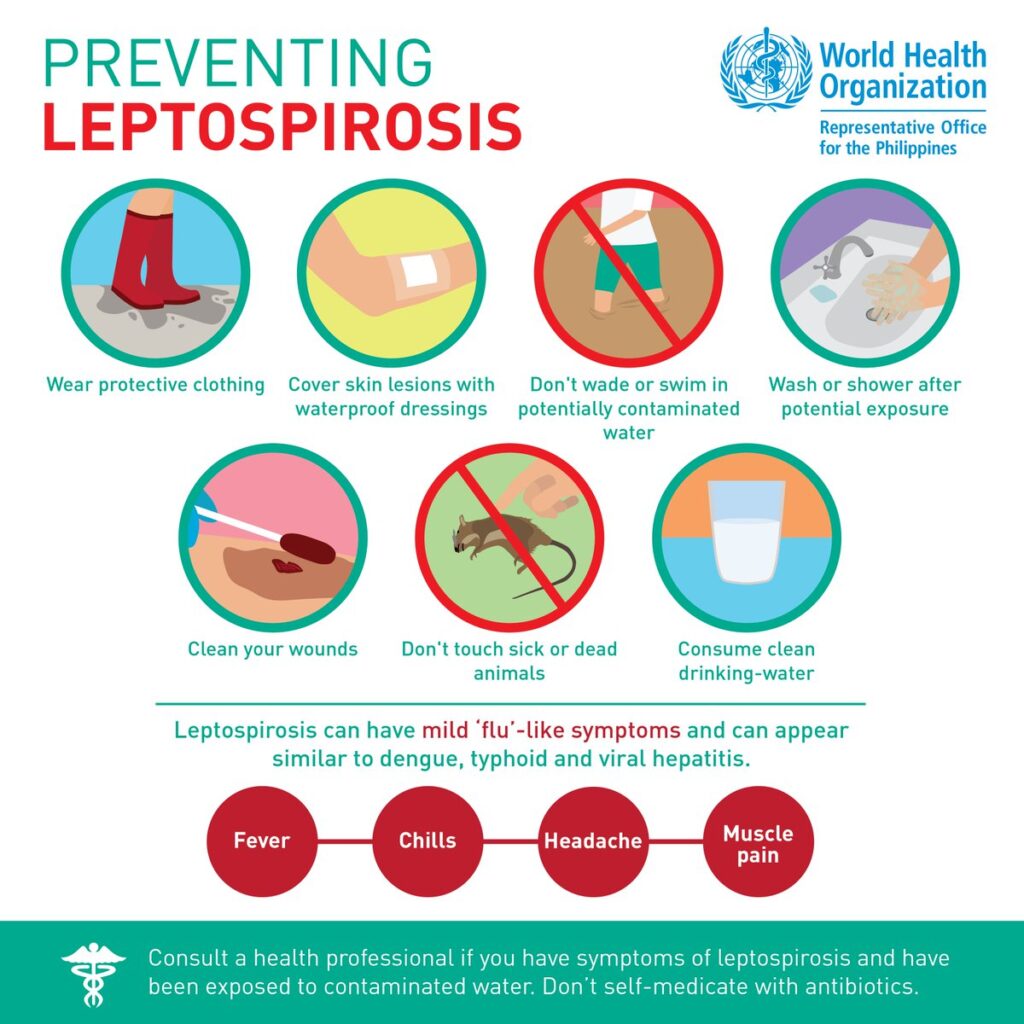
This really prevalent in Fiji at the moment, particularly rural areas. It is caused by a bacteria spread around by animal pee, and can get into water and soil and live there for months. The main guidance is to avoid swimming or wading in water that could have had infected animals in it. Wear protective clothing and footwear and cover any cuts and scratches with waterproof bandages.
Haiti – Rabies

Haiti currently has a big problem with rabid dogs. The bigger issue is that there is an extremely limited supply of treatment drugs in Haiti, so the recommendation is to get vaccinated before you head there.

Avoid dogs, and cats for that matter – even the cute baby ones. You can catch it if you are bitten, scratched or even licked, and treatment is only effective if administered early. Once symptoms present themselves it is often fatal. Plus, getting bitten by anything is never pleasant.

Polio – Africa and Asia

Everyone should be vaccinated against this. If you are not, get vaccinated (or don’t travel) because this is continues to be very prevalent in African countries and there is always a risk.

Nigeria – Yellow Fever

Consider getting vaccinated if you head here regularly, and try to prevent mosquito bites (also, because they carry loads of horrid stuff).

International flight crew generally are required to have had Yellow Fever Vaccinations – if you have not then take care because some countries will not allow crew (anyone) to enter who does not have a vaccination booklet if they have traveled to a Yellow Fever region recently.

What else to watch out for

Malaria

Malaria is a parasite carried around by mosquitos. There are actually four types of it, and it is in a lot of places!

The big risk here is it can take a while for symptoms to show. They reckon you’re most likely to have symptoms between 10 days and 4 weeks from being infected, but it could take as long as a year. The little beasties also like to loiter around in your liver, popping out at random times when you’re run down, and so can cause recurring illness for as long as 4 years after infection.

Where?

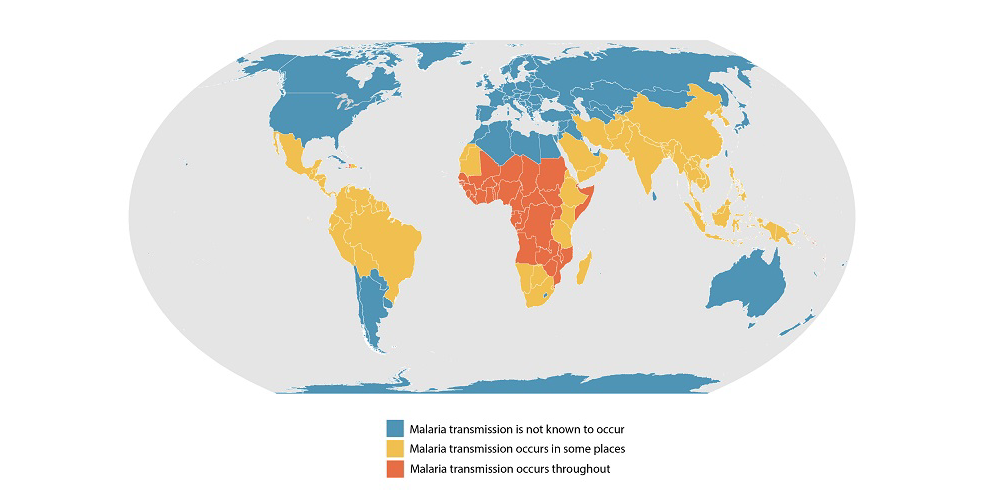
According to the CDC it is found in warmer regions, which doesn’t narrow it down an awful lot – basically anywhere hot and humid where there are places for mosquitoes to breed and grow. Just after rainy season is likely to be the worst, and rural areas will be more risky.

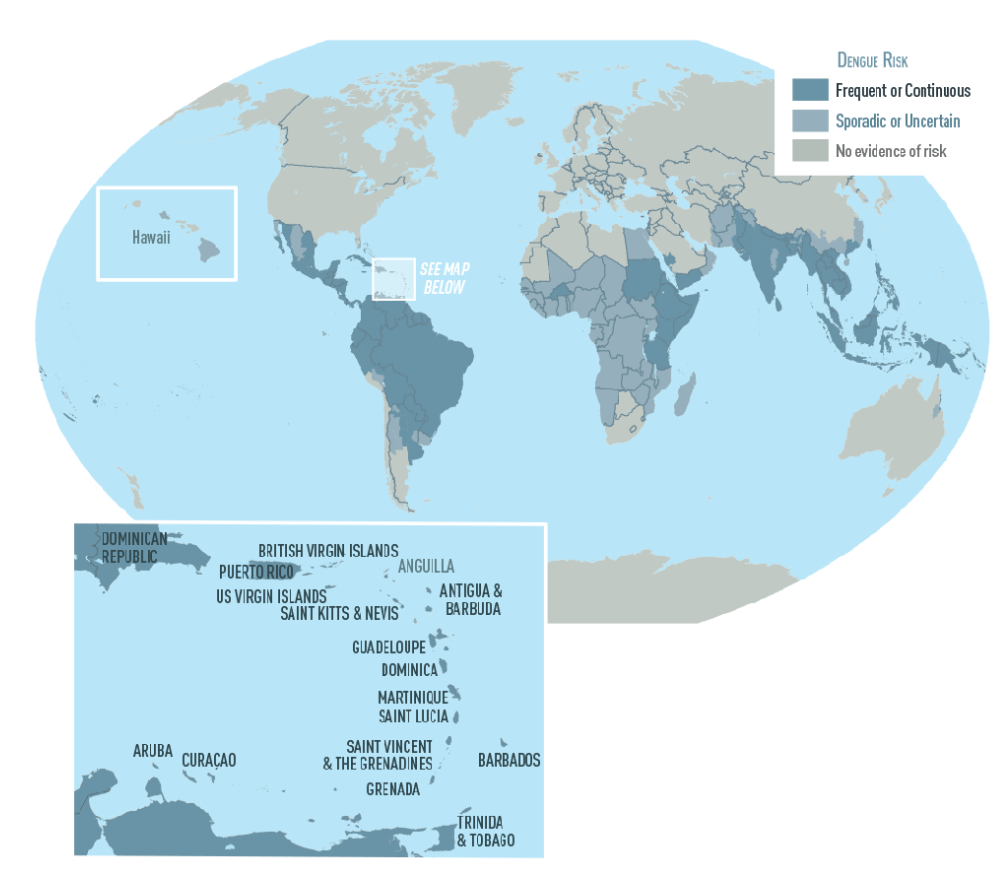
We have borrowed the CDC map because it is easier than trying to list everywhere to watch out.
How to prevent it

If you are going to a Malaria riddled area then you can take preventative medicine, but watch out! Not many are approved for operating pilots because they can have some nasty side effects. Malarone is the most commonly approved (and generally has the least side effects) but we ain’t no doctor so check with an AME from your licensing state before taking.

The other option is to slather yourself in deet and wear long clothing to prevent the little nippers from getting at you in the first place.

The Symptoms

  • Fever, sweats ad chills
  • Muscle ache
  • Nausea and sickness

So, basically generic symptoms of about a thousand other possible diseases.

If you have been to a malaria area and are thinking “I got chills, they’re multiplying”, don’t write them off as a random cold – tell a doctor so you can get tested because it can get very serious!

Dengue Fever

Another one to blame on the pesky mosquito, Dengue is common in over 100 countries, and over 400 million people catch it every year, 100 million getting sick and 22,000 dying. Dengue Fever is Malaria’s bigger, badder brother, and there is no specific treatment.

Like Malaria, there are also different strains of the virus meaning you can get different sorts, multiply times.

Where?

Outbreaks are coming across the Americas (including North America, although the mosquitoes aren’t there, people just head in already infected), Africa, the Middle East and Asia, and the Pacific Islands. It is most prevalent in tropical and sub-tropical areas.

There is currently a growing outbreak in Reunion.

Brazil has the highest rate of Dengue fever in the world.

How to prevent it

Best plan, don’t get bitten. Insect repellent is smelly, sticky stuff but it works. Here’s what the CDC recommends:

  • DEET
  • Picaridin (known as KBR 3023 and icaridin outside the US)
  • IR3535
  • Oil of lemon eucalyptus (OLE)
  • Para-menthane-diol (PMD)
  • 2-undecanone

There is a vaccine but it is only given to people who have been infected before and have a risk of getting severe Dengue, and for kids between 9-16 who live in a Dengue area.

The Symptoms

The early, mild ones tend to get confused with other diseases so again, ff you’ve been somewhere with Dengue, don’t assume it is something else. Go get tested.

Initial symptoms usually appear within 4 to 10 days:

  • Nausea and sickness
  • Rash
  • Aches and pains, especially behind the eyes and in bone joints and muscles

These last around a week, unless you develop serious Dengue fever, which 1 in 20 do:

  • Belly pain
  • Vomiting (a lot)
  • Bleeding from nose and gums
  • Lethargy

Zika

This one made the news a few years ago as it can cause serious birth defects. The symptoms for most tend to be fairly mild though.

It is also transmitted by our old friend the mosquito and there is no particular treatment so your preventative tricks are the best – don’t get bitten!

Chikengunya

Transmitted by mosquitoes, this has very similar symptoms to Dengue Fever and Malaria, and is found in all the same spots.

There is no treatment for it and no vaccine to prevent it, so preventing bites is really important.

There are currently serious outbreaks in Brazil, and in Asia (Vietnam, Philippines)

Ebola

This is a nasty one, often deadly, and causes lasting damage. They don’t really know where it comes from but it possibly started with monkeys and apes and was passed onto us human folk.

It is spread through direct contact with all the gory stuff that comes out of sick people.

Where?

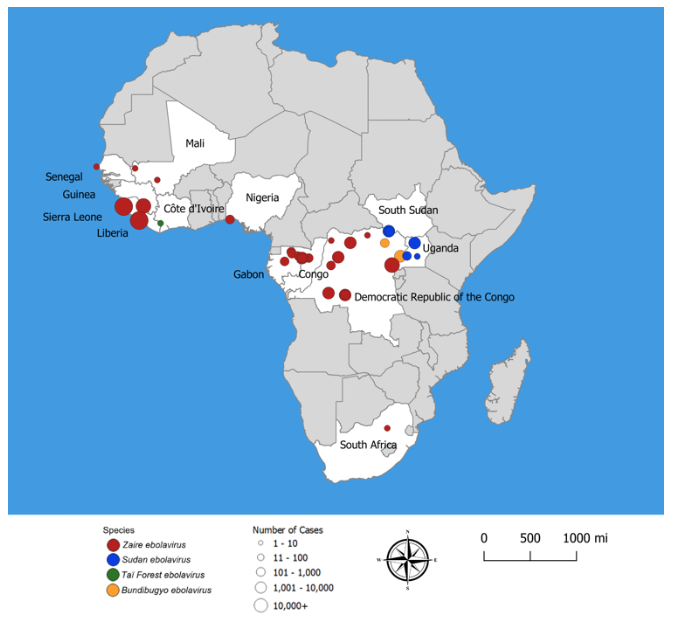
Guinea had a major outbreak in 2021, but cases have fallen again. The US previously restricted travelers from here, and from the DRC, only allowing entry through 6 specific airports.

In 2020, the DRC (formerly Zaire) had a major outbreak.

It is most common in African countries, particularly the central African countries, and along the north west coast.
How to prevent it

It is spread through bodily fluids so avoiding contact with these is important. You also should avoid contact with animals that live in Ebola regions. Bats, primates, forest antelope all carry stains of the virus. So don’t eat them.

There is a vaccine but it is only used in areas where an outbreak is occurring. There is medicine for treating it, and the do help survival rates. You also need medication to support blood pressure, to manage the fever etc, so this really is a serious disease which you do not want to catch

The symptoms

These can appear between 2 and 21 days of infection, usually around the 8 day mark. The main symptoms are:

  • Fever
  • Severe aches and pains
  • Sore throat
  • Loss of appetite
  • Gastrointestinal symptoms
  • Unexplained hemorrhaging, bleeding and bruising

Yellow Fever

This is pretty rare nowadays, but still on to watch out for across Africa and South America. It gets its name from the fact it generally causes jaundice.

Insect repellant works well. It is transmitted by the mosquito (again)

There is also a vaccine. It has been used for 80 years and it pretty well tested, safe and effective, with 1 dose providing life long protection. In fact, many countries require travelers to have had the vaccine if they are entering from a country (or have visited one) where there are high incidences of Yellow Fever.

Meningitis

This is serious – it makes your brain and spinal cord membranes swell up which sounds horrid and painful. It can be bacterial, viral, parisitic, fungal, amebic… so there are a bunch of different sorts all with varying degrees of nastiness.

Good news though, there is treatment for most, and vaccines. You have likely had some already, it is another one that flight crew are often vaccinated for because this can be caught from all over the place. Bacterial in particular can be in food.

General travel recommendations

The CDC has good guidance for flight crew which you can read here.

Many international airlines require their crew to have the following vaccinations, and they are often recommended in general for any traveller:

Cholera – Africa, Asia, Central America and the Caribbean

Diphtheria – Africa, south Asia, former Soviet Union. This protects you against Diptheria, polio and tetanus

Hepatitis A – Africa, Asia, Middle East, Central and South America. This is common in places with poor sanitation and hygiene and can be picked up a lot of ways.

Hepatitis B – Africa, Asia, Middle East, Central and South America. This is spread by bodily contact generally.

Japanese Encephalitus – Common in rural areas of Asia with a tropical climate, after the rain season. It is also found in western Pacific island and near Pakistan, China and Australia. Actually, it is rarely found in Japan because they did a mass immunization program years ago. There is a tick borne version too. Also with a vaccine available.

Typhoid  – the Indian sub continent, south and south east Asia, South and Central America, Middle East

Venezuela issues another surprise ban on GA/BA Flights

On Nov 15, authorities in Venezuela issued a Notam immediately suspending all GA/BA flights from operating to airports in the country. The ban was due to remain in place until 2359z on Nov 20, but got cancelled on Nov 18.

Here was the Notam, issued by the SVZM/Maiquetia FIR:

A0842/19 – GENERAL AND PRIVATE AVIATION OPS INCLUDING REMOTELY PILOTED AIRCRAFT SYSTEM (RPAS) ARE SUSPENDED. OVERFLIGHTS CROSSING SVZM / FIR ARE ALLOWED. 15 NOV 10:00 2019 UNTIL 20 NOV 23:59 2019. CREATED: 15 NOV 04:01 2019

The last time the Venezuelan government issued a ban like this was back in Feb 2019, which seemed to be related to wider attempts by the government to limit the travel of opposition politicians. This latest ban probably had similar motivations – with Venezuela’s President Maduro calling for government supporters to march and rally across the country on Nov 16 to counter protests called for by oppposition leader Juan Guaidó in Caracas on the same date.

U.S. operators have been prohibited from operating to Venezuelan airports — and from overflying the country below FL260 — ever since 1st May 2019 when the US FAA issued a “Do Not Fly” instruction. Two weeks after that, the U.S. ordered the suspension of all commercial passenger and cargo flights between the U.S. and Venezuela, and this applies to both U.S. and foreign registered carriers.

Our advice remains the same: you don’t want to go to Venezuela at the moment. The official advice of both the US and Canada couldn’t be clearer, they both say the same thing: do not travel to Venezuela due to risks posed by the ongoing unstable political and economic situations and the significant levels of violent crime.

For overflights, here’s what we suggest…

To the WEST
– via Colombia (SKED/Bogota FIR) – permit required for all overflights.
Note: watch out if planning a flight through the TNCF/Curacao FIR – although a permit to overfly is not required here, you will need to prepay for navigation fees in advance. More on that here.

To the EAST
– via Guyana (SYGC/Georgetown FIR) – permit not required
– via Suriname (SMPM/Paramaribio FIR) – permit required
– via French Guyana (SOOO/Rochambeau FIR) – permit required unless operating a GA aircraft under 12.5k lbs.

If you need a tech stop and previously used/considered SVMI, then look at alternatives like TNCC, TTPP, SBEG, SMJP. Use OpsGroup’s GoCrow planning map to figure your best alternate options:


“THIS NOTAM IS AN EMERGENCY ORDER” – FAA on Venezuela

At 8.30pm tonight, the FAA issued a new “Do Not Fly” instruction to US operators, barring all operations into or over Venezuela, unless operating at or above FL260, and giving a window of 48 hours to leave the country.

The order comes on a day of an information battle waged between Maduro and Guaidó, and although the coup status is uncertain, one thing is clear: taking your aircraft to Venezuela is not a good idea.

The new Notam, KICZ A0013/19, has as postscript: “THIS NOTAM IS AN EMERGENCY ORDER ISSUED UNDER 49 USC 40113(A) AND 46105(C).” It gives US operators 48 hours to leave Venezuela.

Over the past year, the situation in Venezuela has steadily declined, and in OPSGROUP we have issued multiple alerts and warnings, most recently today, on the back of several member reports:

The Venezuelan authorities had also published a Notam on 30 APR banning all GA/BA flights from operating to/from airports in the country, but this has since been cancelled.

The new FAA Notam leads with:

“ALL FLIGHT OPERATIONS IN THE TERRITORY AND AIRSPACE OF VENEZUELA AT ALTITUDES BELOW FL 260 BY THE PERSONS DESCRIBED IN PARAGRAPH A BELOW ARE PROHIBITED UNTIL FURTHER ADVISED DUE TO INCREASING POLITICAL INSTABILITY AND TENSIONS IN VENEZUELA AND THE ASSOCIATED INADVERTENT RISK TO FLIGHT OPERATIONS.”

and is issued as a Permanent Notam with no expiration date.

Rerouting options for overflights choosing to avoid, would be either west via Colombia, or east via Guyana and Piarco.

The full FAA Notam text is below. SafeAirspace.net is now updated with the new information.

FAA Notam KICZ A0013/19 issued May 1st, 2019, 0025Z.:

KICZ A0013/19 – SECURITY..UNITED STATES OF AMERICA PROHIBITION FOR
VENEZUELA

ALL FLIGHT OPERATIONS IN THE TERRITORY AND AIRSPACE OF VENEZUELA AT ALTITUDES BELOW FL
260 BY THE PERSONS DESCRIBED IN PARAGRAPH A BELOW ARE PROHIBITED UNTIL FURTHER ADVISED
DUE TO INCREASING POLITICAL INSTABILITY AND TENSIONS IN VENEZUELA AND THE ASSOCIATED
INADVERTENT RISK TO FLIGHT OPERATIONS.

A. APPLICABILITY. THIS NOTAM APPLIES TO: ALL U.S. AIR CARRIERS AND COMMERCIAL OPERATORS;
ALL PERSONS EXERCISING THE PRIVILEGES OF AN AIRMAN CERTIFICATE ISSUED BY THE FAA, EXCEPT
SUCH PERSONS OPERATING U.S.‐REGISTERED AIRCRAFT FOR A FOREIGN AIR CARRIER; AND ALL
OPERATORS OF AIRCRAFT REGISTERED IN THE UNITED STATES, EXCEPT WHERE THE OPERATOR OF
SUCH AIRCRAFT IS A FOREIGN AIR CARRIER.

B. PERMITTED OPERATIONS. THIS NOTAM DOES NOT PROHIBIT PERSONS DESCRIBED IN PARAGRAPH
A (APPLICABILITY) FROM CONDUCTING FLIGHT OPERATIONS IN THE ABOVE-NAMED AREA WHEN
SUCH OPERATIONS ARE AUTHORIZED EITHER BY ANOTHER AGENCY OF THE UNITED STATES
GOVERNMENT WITH THE APPROVAL OF THE FAA OR BY A DEVIATION, EXEMPTION, OR OTHER
AUTHORIZATION ISSUED BY THE FAA ADMINISTRATOR. OPERATORS MUST CALL THE FAA
WASHINGTON OPERATIONS CENTER AT 202-267-3333 TO INITIATE COORDINATION FOR FAA
AUTHORIZATION TO CONDUCT OPERATIONS.

C. ALLOWANCES. PERSONS DESCRIBED IN PARAGRAPH A ABOVE WHO ARE IN THE TERRITORY AND
AIRSPACE OF VENEZUELA AT THE TIME THIS NOTAM IS ISSUED MAY DEPART THE TERRITORY AND
AIRSPACE OF VENEZUELA BY THE MOST EXPEDITIOUS POSSIBLE ROUTE WITHIN 48 HOURS FROM THE
TIME THIS NOTAM IS ISSUED, IF THE PILOT IN COMMAND DETERMINES THAT THE OPERATION CAN
BE CONDUCTED SAFELY.

D. EMERGENCY SITUATIONS. IN AN EMERGENCY THAT REQUIRES IMMEDIATE DECISION AND ACTION
FOR THE SAFETY OF THE FLIGHT, THE PILOT IN COMMAND OF AN AIRCRAFT MAY DEVIATE FROM THIS
NOTAM TO THE EXTENT REQUIRED BY THAT EMERGENCY.

THIS NOTAM IS AN EMERGENCY ORDER ISSUED UNDER 49 USC 40113(A) AND 46105(C).
SFC – FL259; 01 MAY 00:25 2019 UNTIL PERM. CREATED: 01 MAY 00:28 2019


Venezuela: do not travel

Amid an escalating crisis in Venezuela, on Mar 11, U.S. Secretary of State Mike Pompeo announced via Twitter that the U.S. Embassy in Caracas will be withdrawing all of its remaining diplomatic personnel from Venezuela by Mar 16, citing the “deteriorating situation.”

Power outages continue in at least 16 states across the country. The opposition says there has been sporadic looting, and at least 17 people have died as a result of the blackout.

On Mar 9, there was an attempted armed robbery of Air Europa airline crew. Armed assailants on motorbikes chased the vehicle of the crew from the airport to their hotel, where they engaged in a shoot-out with hotel security staff before escaping. None of the crew was injured, but refused to stay at the hotel, and instead were escorted back to the airport by police convoy and returned on the flight back to Madrid. Air Europa has reportedly now decided to add a stopover to its Caracas service and crew will now layover in Punta Cana in the Dominican Republic.

On Feb 21, the barely-still-president Mr Maduro banned all general and private aviation. But reports from Opsgroup members on Feb 28 suggest that this has now been cancelled (although the ban on flights to/from the islands of Aruba, Bonaire and Curacao, as published by Notam, still stands). One member reported: “Our permit to operate in and out of SVMI/Caracas next week was approved. However, I would still NOT recommend any crew remain there overnight.”

Local handling agents we have spoken to in Venezuela have also said that the country’s airspace is open again, although nothing has officially been published to confirm this.

Our advice remains the same: you don’t want to go to Venezuela at the moment. The official advice of both the US and Canada couldn’t be clearer, they both say the same thing: do not travel to Venezuela due to risks posed by the ongoing unstable political and economic situations and the significant levels of violent crime.

The Maduro government has closed Venezuela’s borders with Colombia and Brazil, and has reportedly positioned one of its air defense missile system near the border with Brazil – within range of Brazil’s SBBV/Boa Vista airport, as well as overflights of most of Guyana’s airspace (SYGC/Georgetown FIR).

The US FAA has also published a new Notam and Background Notice warning operators to exercise caution when operating in the SVZM FIR below FL260 due to potential hazards to aviation associated with ongoing political instability in Venezuela.


Background info on SVMI/Caracas Airport   

The most recent Opsfox reports for SVMI are not encouraging:

    • The airport is located in an extremely high-risk area for armed robbery and kidnappings. Before suspending all flights to Venezuela in Aug 2017, Avianca hired bodyguards after shots were fired during a robbery of a bus carrying its crew. Some other carriers took to flying crew to spend the night in neighbouring countries, rather than risk staying overnight anywhere in Caracas.
    • On Aug 8, 2017, a Venezuelan lawyer was shot dead at a ticket counter at SVMI/Caracas airport. In 2016, an Egyptian visitor was killed walking outside the airport between terminals after arriving on a flight from Germany.
    • In Feb 2018, Ecuadorian state airline Tame joined Avianca in a long list of airlines that no longer operate to the country, including: Aerolineas Airlines, United Airlines, Aeromexico, Lufthansa, Alitalia and Air Canada. Most reports estimate that international traffic in Venezuela has dropped by around 65-75% since its peak in 2013.
    • Colombia’s pilots’ association says its members who have flown to Venezuela have had to deal with contaminated fuel and hours-long delays as the National Guard pulls suitcases off flights to loot them. More info. 

Venezuela NOTAMs, where have you gone?

Last year, Venezuela partly stopped sending out Metars.

This year, they’ve gone one better, and stopped sending out NOTAMs entirely.

Anything with an SV** in front of it shouldn’t be high on your tech stop list at the moment, but for those that do need to operate to an airport in the country, or carry it as an alternate, this is definitely a problem.

How are you handling the outage? Comment below.


International Bulletin: B767 shot on approach to Rio, Updated SafeAirspace Map

B767 Shot on approach to Rio 

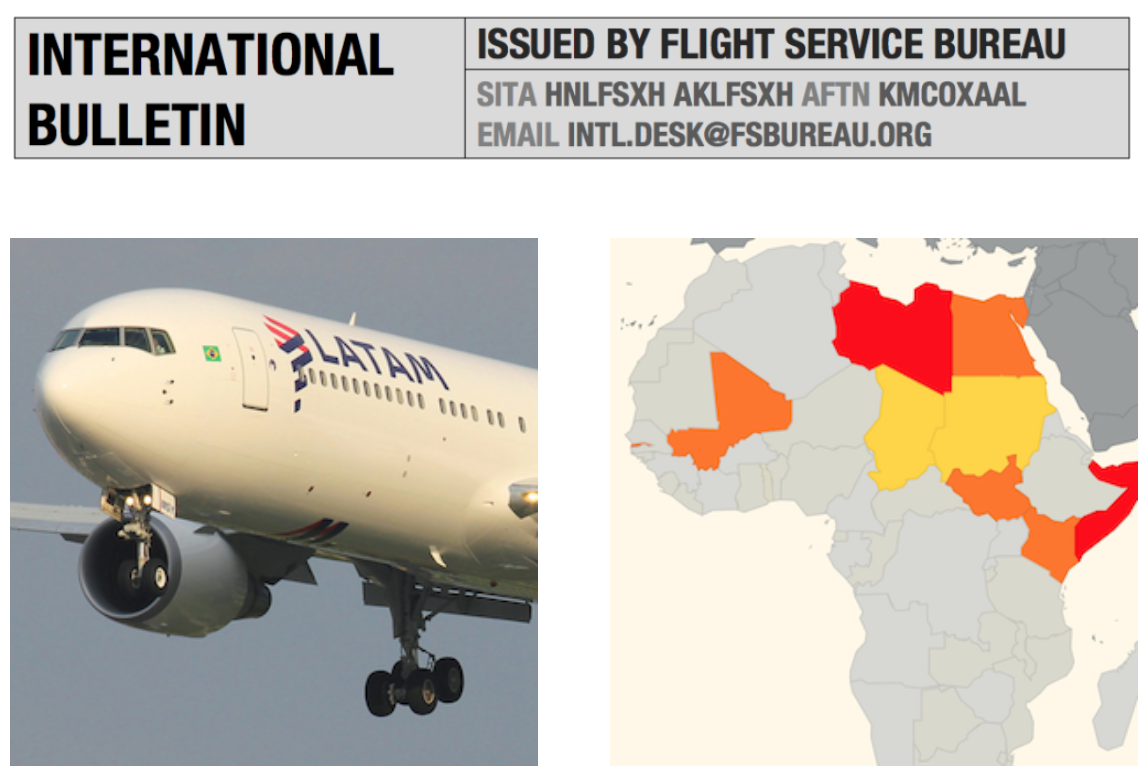
18JAN A B767-300 was fired on last night during approach to Runway 15 SBGL/Rio de Janeiro. One 7.62mm bullet lodged in the left wing. Read the article.

Updated SafeAirspace Risk Map 

18JAN We have updated SafeAirspacewith information for Aircraft Operators on The GambiaNorth KoreaBrazilUkraine, and Turkey.


GBZZ/The Gambia State of emergency declared on 17th January. Foreign citizens being evacuated. Banjul International Airport (GBYD/BJL) and land borders remain open, for now. More at safeairspace.net/information/the-gambia.

UKZZ/Ukraine Flight Service Bureau has issued an updated summary for Ukraine’s airspace. There are two risk issues in Ukraine. First: arms fire. Including MH17, multiple aircraft (the others all military) have been shot down since the beginning of the Donbass region war in 2014. The 10th ceasefire was declared in December 2016, but not holding. This risk is contained within the Dnipropetrovsk FIR – UKDV. The second issue affects the Simferopol FIR which is Disputed Airspace. (Ukraine:UKFV, Russia:URFV). In March 2014, Russia annexed Crimea. The ATC Center is in Simferopol, Crimea, and is now run by Krymaeronavigatsiya. Russia claims the airspace. Ukraine refuses to recognise the change, and asks crews to talk to Ukrainian controllers in Dnipro/Odesa ACC instead of Simferopol ACC. Four routes are approved by EASA through the high seas portion of the airspace.

KIAD/Washington and area airports – guaranteed busy during the Presidential Inauguration this Friday, Jan 20. Updated restrictions here. Departure slots required for aircraft departing IAD between Friday, Jan. 20 and Sunday, Jan. 22. Departure slots can be obtained through an IAD FBO of choice (Ross Aviation or Signature Flight Support). Slots will be divided equally between the two FBOs at IAD.

VZZZ/Southeast Asia Lunar New Year holiday season, which falls on 28th Jan. Travel-related delays and government office and business interruptions will peak 27 Jan to 01 Feb, and could last longer in Taiwan, Vietnam and China, where the holiday will be celebrated through 02FEB.

BGBW/Narsarsuaq A seasonal reminder that if you’re planning to use Narsarsuaq as a destination, alternate, or enroute alternate outside of the operating hours (MON-SAT 1000-1900z daily until 03APR), you must contact the airport in advance to apply for them to stay open for you:
Email: bgbw@mit.gl. Also make sure you file your ATC FPL including the AFTN address: BGBWZTZX.

EKCH/Copenhagen A copy of the AOC must accompany fuel release or expect an MOT charge of approximately $1.70 USD to be charged. Next destination must be shown on the fuel release or expect delays.

EGPH/Edinburgh, Scotland Until Apr 1st, you will need PPR to operate to Edinburgh, due to reduced parking capacity.

RPLB/Subic Bay will be closed for maintenance bewtween 0100-0800z until January 20th.

SKZZ/Colombia New Tower and ACC for Bogota. From 16th Jan – 15th Feb moving of Bogota’s ACC will take place. ATS/AIS/COM/MET/ATFM services transition process should not affect operations, however, due to the large change extent foreseen, some failures might occur in the process.  AIC 1/17 outlines contingency procedures in place

SVZZ/Venezuela has closed its land borders with Colombia and Brazil periodically in the last 12 months. Border closures occur frequently, often with short notice. The Venezuelan government will withdraw the 100 bolivar note (VEF 100) from circulation as of 20 January 2017.

LYBA/Beograd If you have any outstanding navigation fees in Serbia, better get them paid, or they’ll add a 9.88% interest charge.

HSSS/South Sudan Flight Service Bureau has issued an updated summary for South Sudan’s airspace: Conflict Zone. South Sudanese Civil War since 2013. The security situation in Juba has been relatively calm since the July 2016 crisis. Daily reports of fighting throughout the rest of the country. The security situation is especially unstable in the Equatorias in the south. MANPADS risk to overflights. In addition, the South Sudanese army has declared intention to shoot down Aircraft without permits. Most Authority guidance recommends min FL260. We think FL300 is a better minimum for overflights.

ZKKP/North Korea Flight Service Bureau has issued an updated summary for DPRK North Korea’s airspace: The level of tension on the Korean peninsula can change with little notice. Multiple missile launches in 2016, increasingly without prior notice to ICAO. The range of these has increased – previously safe airways B467 and G711 are now at risk. Over 1000 reports of GPS jamming issues reported by operators in the vicinity of the North/South Korean border. SFAR79 prevents US operators from operating west of 132E, other Authorities restrict operationseast of that line.

ZZZZ/Worldwide How have you been getting on with the new ICAO SID/STAR phraseolgies? In short, some countries are implementing, and others aren’t. What is your country doing? Tell us at bulletin@fsbureau.org.


View the full International Bulletin 18JAN2017


Midweek Briefing 04MAY: New US CBP Airport, Iceland ATC Strike continues

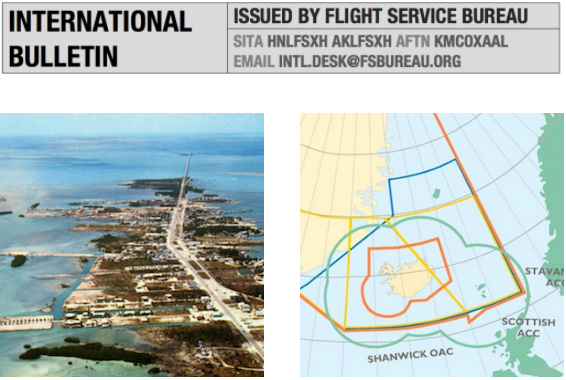
New US CBP Airport 04MAY A new US Customs facility opened in KMTH/Marathon on 20APR, to facilitate increased traffic to Cuba. Read the article.

Iceland ATC Strike continues 04MAY Icelandic controllers are in a pay dispute with Isavia, leading to multiple strike actions at BIKF/Keflavik and BIRK/Reykjavik. Last week BIKF was closed overnight at short notice. Read the article.


EHAM/Amsterdam and other Dutch airports will observe a two minute silence on ATC frequencies today, 04MAY, from 1800-1803Z. ATC will arrange traffic flow so that no aircraft will land or taxi during this period, meaning likely delays, albeit for a short period.

SECU/Cuenca, Ecuador remains closed after an E190 slid off the main runway on 29APR, latest estimate is no reopening before 06MAY.

CZZZ/Canada Visa-exempt foreign nationals can enter and exit Canada by air without an Electronic Travel Authorization until 29SEP2016. After that date, these travelers will need to obtain online authorization to visit.

BIZZ/Iceland Multiple ATC Strike actions for BIRK and BIKF are ongoing, check NOTAMS and with handler for latest. Read article.

TFFR/Guadeloupe has ongoing main runway closures due to WIP, current shown are 04MAY 0200-1015Z, 17MAY 1000Z- 18MAY 1600Z. Only helicopters will be allowed to operate during these periods.

UIBB/Bratsk has a fuel shortage until 31MAY, non-scheduled movements are by PPR only.

NWWW/Tontouta has an ATC staff shortage and requires slots for arrival until 31MAY, Tel +687 352437. Work on 11/29 is also ongoing, check NOTAMS for any current outages, which will close the airport.

EGGX/Shanwick is trialling transferring westbound flights direct to a HF frequency rather than via an initial VHF frequency, using CPDLC. The default frequencies will be HF 5649 H24, 2872 0000-0900 and 1800-2400, and 8879 0900-2100.

PAZA/Anchorage has published new procedures Eff 28APR for User Preferred Routes within the PAZA FIR, refer A0075/16.

SVZZ/Venezuela changed timezones on 01MAY to UTC-4. In addition, all public offices, including public ministries, will only operate on Mondays and Tuesdays until further notice.

TTZP/Piarco FIR is trialing ADS-C and CPDLC with ident TTZP until 31MAY. Flights entering the FIR east of 57W should log on 15 minutes prior to the boundary with TTZP.

UHSS/Yuzhno has advised that B777 aircraft are limited to 310T during the summer period.

UIAA/Chita is only available as alternate for one specific airline (Aurora) between 0930-2100Z. Outside these times ops normal.

WSZZ/Singapore has introduced a fingerprint clearance system to verify the thumbprints of arriving and departing travelers ages six and above at select immigration checkpoints. The system will be progressively implemented starting at the manned immigration counters of sea and land checkpoints, followed by air checkpoints until full implementation is completed in the months ahead. Travelers should be prepared for slightly longer immigration clearance times at manned checkpoints, especially during the initial implementation stage of the project.

YZZZ/Australia Border Force employees have been banned from taking industrial action at airports for three months; the threat of ongoing strike action caused much concern for operations in March.

RJTT/Haneda the airport authority has changed the number of slots available for general aviation aircraft. Effective 25APR, slots for GA during the daytime (0600-2259 local) will be increased to 16 total for arrival and departure (from eight in the past). Note that there are no slots restrictions for night time operations (2300-0559 local).

CYVR/Vancouver will have one of its main runways 08R/26L closed nightly between the hours of 05-13Z 08MAY-02SEPT for construction. During the day (13-05Z) the runway will have the ILS on 08R/26L out of service, along with no approach lighting on runway 26L.

SLZZ/Bolivia Certain medications prescribed for personal use are treated as narcotics in Bolivia, with severe penalties for import or export without a valid prescription from a doctor; make sure you carry a letter from a doctor describing the medical condition and any prescribed drugs and that they are in their original containers and clearly labelled.

EBBR/Brussels has partially reopened the departure hall, which has remained closed since 22MAR. 110 Check-in counters will be open in the airport departure hall along with an additional 36 counters that are housed in temporary buildings. The EBBR airport authority expects this will bring the airport up to 80% of capacity.

EZZZ/Europe Bulgaria, Turkey and Romania will begin a project to interface their ATC systems so they can handle a significant build-up of airspace traffic in the Black Sea area. New routes are expected by mid 2016.

LEZZ/Spain The Spanish F1 Grand Prix is being held from 13MAY-15MAY and will bring heavier than normal traffic to LEBL/Barcelona and LEGE/Girona.

HEZZ/Egypt Individual travellers will in the future require a visa before entering Egypt. The exact date of the implementation of this rule is not yet determined. The visa must be applied for from the Egyptian embassy and the consulate generals before departure.

GVZZ/Cape Verde Aviation officials issued a statement announcing that national airports are open and operational. The statement was released following reports that flight operations had been suspended at the country’s airports.

ORZZ/Iraq Iran canceled all flights to Baghdad following a breach of the International Area by protesters on 30APR. The demonstrations have caused problems for pilgrimage flights to Baghdad, and those flights will operate instead to ORNI/Najaf.

VIDP/Delhi has opened a new ATC tower (which is the country’s tallest at 60 metres). VIDP will also be starting construction on a 4th runway this year and is expected to be completed by 2018 which will increase the airport arrival rate to 105 landings an hour, and will mitigate the common airborne holding.

View the full International Bulletin for 04MAY 2016


Monday Briefing: Security in Caracas, Tripoli, UK Permit rules

Security issues rule out Venezuela, Libya Mar 23: SVMI/Caracas, Venezuela, and HLLT/Tripoli, Libya, should be off your tech stop or charter lists for the foreseeable future. Both airports have been subject to rising security risks over the last months, reaching a climax last week with a bomb attack on RWY 09/27 in Tripoli and increased civil unrest in Caracas.

New rules for UK Permits Mar 23 : Significant changes to the approval process for Landing Permits for the UK will take effect on 06 APR. CAA will take over the responsibility for issuing approvals from the Department for Transport (DFT). Also, previously, a cabotage objection could be raised by a group of UK Charter Operators – this is removed. A fee is likely to be charged by the CAA for permits from this point forward.

SVMI/Caracas, Venezuela Public unrest has raised tensions in the capital to the point where several airlines have suspended service, including Air Canada this past week. Coupled with the security issue is a payment issue, with the Venezuelan government not releasing ticket payments. SVMI remains open and operational, but not recommended. For tech stops, consider TNCC/Curacao just to the north.

Uxxx/Crimea Region. Following the referendum on 16MAR, Crimea is now officially Russian Territory. This places the Simferopol FIR under Russian Control, but service is still provided by Ukraine. Simferopol Sectors 3,4 and 5 are now controlled by Odesa, and Sectors 1 and 2 are controlled by Dnipropetrvosk. UKFF/Simferopol and UKFB/Sevastopol are closed to civil traffic. No decision has yet been made by the Russian CAA as to whether permits will be required to overfly Crimea. It seems unlikely that there will be any change to the present ‘no permit required’ situation in the coming weeks at least, though when Simferopol Airport reopens we would anticipate Landing Permits being required through Russia.

VTSP/Phuket – International restrictions due to construction until 31MAR. Slot and PPR require 48HR PN, Landing Permit requests should allow 10 days.

LIxx/Italy ATC Industrial action announced for 30MAR 1030-1430Z. For this and subsequent strikes, ENAC, the Italian provider, will accept a limited number of pre-arranged flights from each AO.

EHAA/Amsterdam FIR Due to Nuclear Summit in the Hague on 24 and 25MAR, most of the FIR is accessible by Prior Permission only, including all flights to EHAM, EHRD, EHEH. Contact nss.ppr@minienm.nl or +31 (0) 577453696.
LLOV/Ovda, Israel will be closed to all flights 01MAY-07MAY

DGAA/Accra, Ghana Until 23JUN, The main runway (03/21) is open daily from 0500-2300Z only; no traffic accepted outside these hours.

YPXM/Christmas Island is closed and unmanned at present due to a Cyclone.

HLLT/Tripoli, Libya was subject to a bomb attack on Friday. The device was placed on the centerline of RWY09/27 overnight and detonated with a timer. Most regular operators cancelled flights immediately, with no set date to resume operations.

OSDI/Damascus FIR – For those still overflying, Syria has closed airway L513 from BURSA to LEBOR UFN.
UK Charter Permits. Significant changes to the approval process for Landing Permits for the UK will take effect on 06 APR. CAA will take over the responsibility for issuing approvals from the Department for Transport (DFT). Also, previously, a cabotage objection could be raised by a group of UK Charter Operators – this is removed. A fee is likely to be charged by the CAA for permits from this point forward.

Turkey. Effective 10APR2014 Visa on Arrival is no longer available at Turkish Airports. Visitors must apply online through https://www.evisa.gov.tr/en/ for an e-Visa.

Australia. A reminder to all operators who are not ADS-B equipped, of the restrictions when operating into Australian Airspace effective from 15DEC13. If you not ADS-B equipped you must file with CASA, a Form 208 exemption application 14 days in advance of proposed operations into Australian Airspace. Then operations will be confined to the SSR radar coverage area extending from 200 nm north of Cairns down the East coast to 200 nm west of Adelaide. This is commonly referred to as the J curve. If you intend operating into the Brisbane or Melbourne FIRs from the west and north west of Australia, and are not ADB-B equipped you will be required to operate at FL290 or below.

URSS/Sochi Starting from 20JAN, including period of XXII Winter Olympic Games and XI Winter Paralympic Games 2014, airlines are obliged to send the passenger manifest with exact Name, Surname, Passport number and series, or other ID, Ticket number, 24 hours prior to departure and no less then 4 hours prior to departure – passenger manifest changes, when operating to Sochi International airport (IATA code-AER). Information should be sent to the following e-mails: Checkin_DIsp@aer.basel.aero, Chief_smena_SAB@aer.basel.aero. See NOTAM A3075, A4018.