US issues Emergency Order – No Fly Zone for Civil Aircraft – Iran
The FAA has issued an Emergency Order to US Civil Aircraft, prohibiting all American aircraft operators from entering the Tehran Flight Information Region (OIIX) FIR in the area above the Persian Gulf and Gulf of Oman.

Notam A0019/19 was issued at 0148 UTC, June 21st.

The Notam specifically prohibits any airline or aircraft operator from flying within Iranian airspace in the region that the US drone was shot down in on June 20th.
Some airlines had already reported suspending operations in Iranian airspace. This Notam ensures that US operators cannot operate in the area. Although the official applicability is to US aircraft only, since MH17 all countries rely on advice from the US, the UK, France and Germany to highlight airspace risk.

The full Notam follows (bolded parts by OPSGROUP):
A0019/19 NOTAMN Q) KICZ/QRDLP/IV/NBO/AE/000/999/
A) KICZ PART 1 OF 2
B) 1906210148
C) PERM
E) SECURITY..UNITED STATES OF AMERICA PROHIBITION AGAINST CERTAIN FLIGHTS IN THE OVERWATER AREA OF THE TEHRAN FLIGHT INFORMATION REGION (FIR) (OIIX) ABOVE THE PERSIAN GULF AND GULF OF OMAN ONLY.


ALL FLIGHT OPERATIONS IN THE OVERWATER AREA OF THE TEHRAN FLIGHT INFORMATION REGION (FIR) (OIIX) ABOVE THE PERSIAN GULF AND GULF OF OMAN ONLY ARE PROHIBITED UNTIL FURTHER NOTICE DUE TO HEIGHTENED MILITARY ACTIVITIES AND INCREASED POLITICAL TENSIONS IN THE REGION, WHICH PRESENT AN INADVERTENT RISK TO U.S. CIVIL AVIATION OPERATIONS AND POTENTIAL FOR MISCALCULATION OR MIS-IDENTIFICATION.THE RISK TO U.S. CIVIL AVIATION IS DEMONSTRATED BY THE IRANIAN SURFACE-TO-AIR MISSILE SHOOT DOWN OF A U.S. UNMANNED AIRCRAFT SYSTEM ON 19 JUNE 2019 WHILE IT WAS OPERATING IN THE VICINITY OF CIVIL AIR ROUTES ABOVE THE GULF OF OMAN.


A. APPLICABILITY. THIS NOTAM APPLIES TO: ALL U.S. AIR CARRIERS AND COMMERCIAL OPERATORS; ALL PERSONS EXERCISING THE PRIVILEGES OF AN AIRMAN CERTIFICATE ISSUED BY THE FAA, EXCEPT SUCH PERSONS OPERATING U.S.-REGISTERED AIRCRAFT FOR A FOREIGN AIR CARRIER; AND ALL OPERATORS OF AIRCRAFT REGISTERED IN THE UNITED STATES, EXCEPT WHERE THE OPERATOR OF SUCH AIRCRAFT IS A FOREIGN AIR CARRIER.


B. PERMITTED OPERATIONS. THIS NOTAM DOES NOT PROHIBIT PERSONS DESCRIBED IN PARAGRAPH A (APPLICABILITY) FROM CONDUCTING FLIGHT OPERATIONS IN THE ABOVE NAMED AREA WHEN SUCH OPERATIONS ARE AUTHORIZED EITHER BY ANOTHER AGENCY OF THE UNITED STATES GOVERNMENT WITH THE APPROVAL OF THE FAA OR BY A DEVIATION, EXEMPTION, OR OTHER AUTHORIZATION ISSUED BY THE FAA ADMINISTRATOR. OPERATORS MUST CALL THE FAA WASHINGTON OPERATIONS CENTER AT 202-267-3333 TO INITIATE COORDINATION FOR FAA AUTHORIZATION TO CONDUCT OPERATIONS.


C. EMERGENCY SITUATIONS. IN AN EMERGENCY THAT REQUIRES IMMEDIATE DECISION AND ACTION FOR THE SAFETY OF THE FLIGHT, THE PILOT IN COMMAND OF AN AIRCRAFT MAY DEVIATE FROM THIS NOTAM TO THE EXTENT REQUIRED BY THAT EMERGENCY.
THIS NOTAM IS AN EMERGENCY ORDER ISSUED UNDER 49 USC 40113(A) AND 46105(C). ADDITIONAL INFORMATION IS PROVIDED AT: HTTPS://WWW.FAA.GOV/AIR_TRAFFIC/PUBLICATIONS/US_RESTRICTIONS/

Earlier today, we published an article summarizing the risk to Aircraft Operators in the Gulf region – “The Threat of a Civil Aircraft Shootdown in Southern Iran is Real


In addition to the Notam, the FAA Threat Analysis Division have also published background information on the current situation (download that PDF here )


In that document, the FAA says: “Although the exact location of the attack is not yet available, there were numerous civil aviation aircraft operating in the area at the time of the intercept. According to flight tracking applications, the nearest civil aircraft was operating within approximately 45nm of the Global Hawk when it was targeted by the Iranian SAM. FAA remains concerned about the escalation of tension and military activity within close proximity to high volume civil air routes and the Iran’s willingness to use long-range SAMs in international airspace with little to no warning. As a result, there is concern about the potential for misidentification or miscalculation which could result in the inadvertent targeting of civil aviation.”

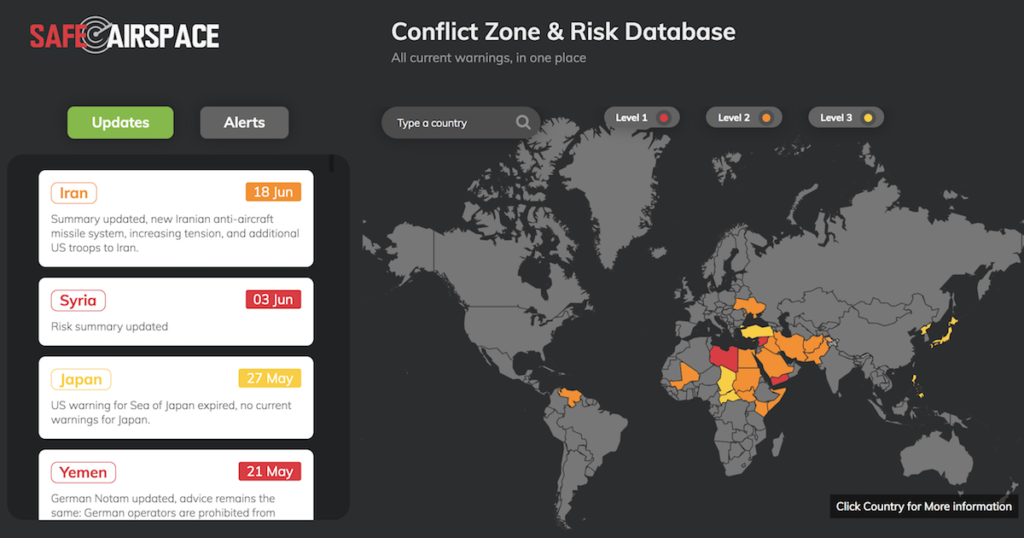
The Iran risk is being monitored at Safe Airspace – the Conflict Zone & Risk Database. The Iran country page also has more information on further overflight considerations in other parts of the Tehran FIR.


The Threat Of A Civil Aircraft Shootdown In Iran Is Real

As we know by now, at 23:35Z last night (June 19, UTC), Iran shot down a US UAV on a high-altitude recon mission in the Straits of Hormuz. This was no small incident. The UAV was a $200 million aircraft, weighing 32,000 lbs, with the same wingspan as a 737.

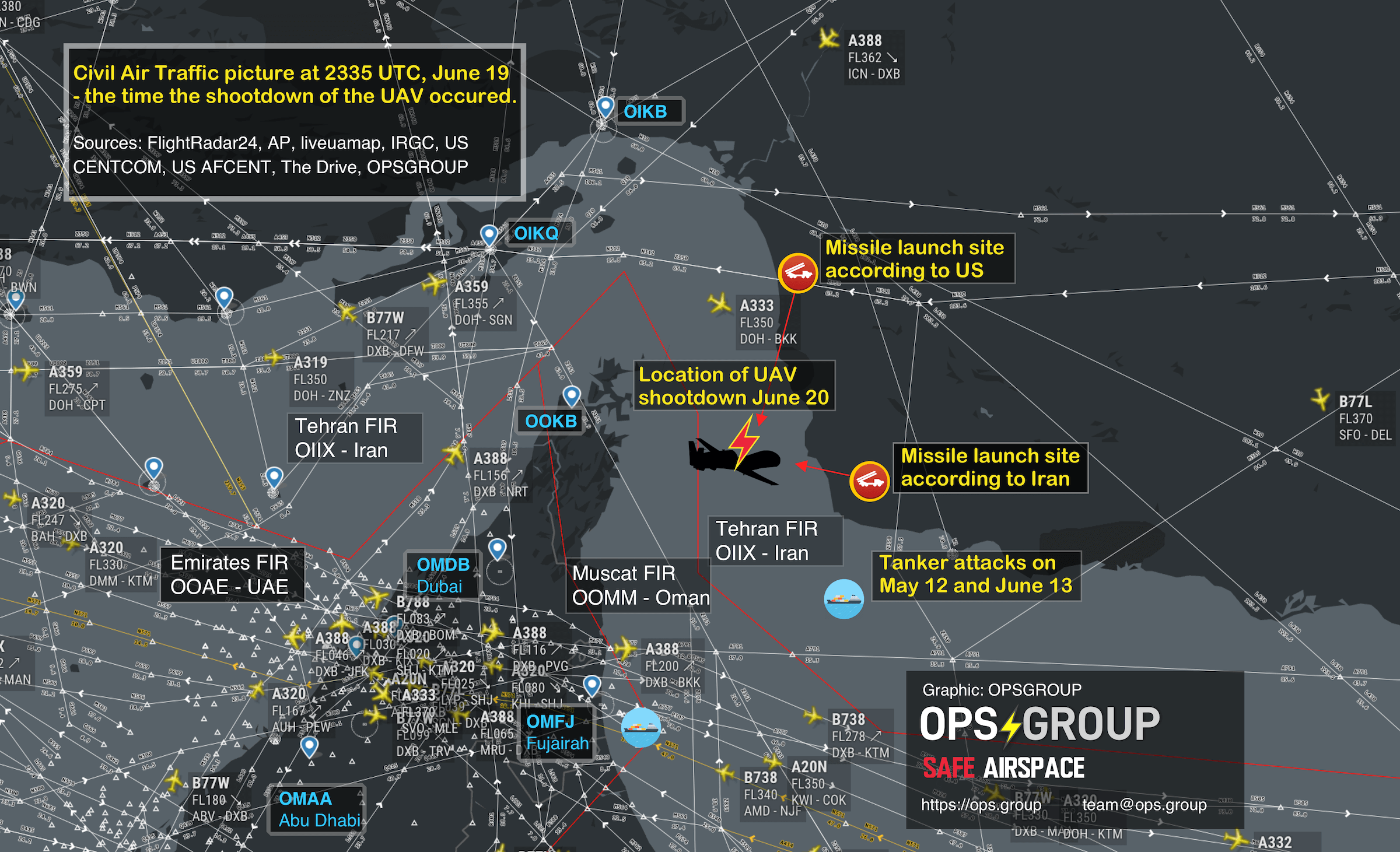
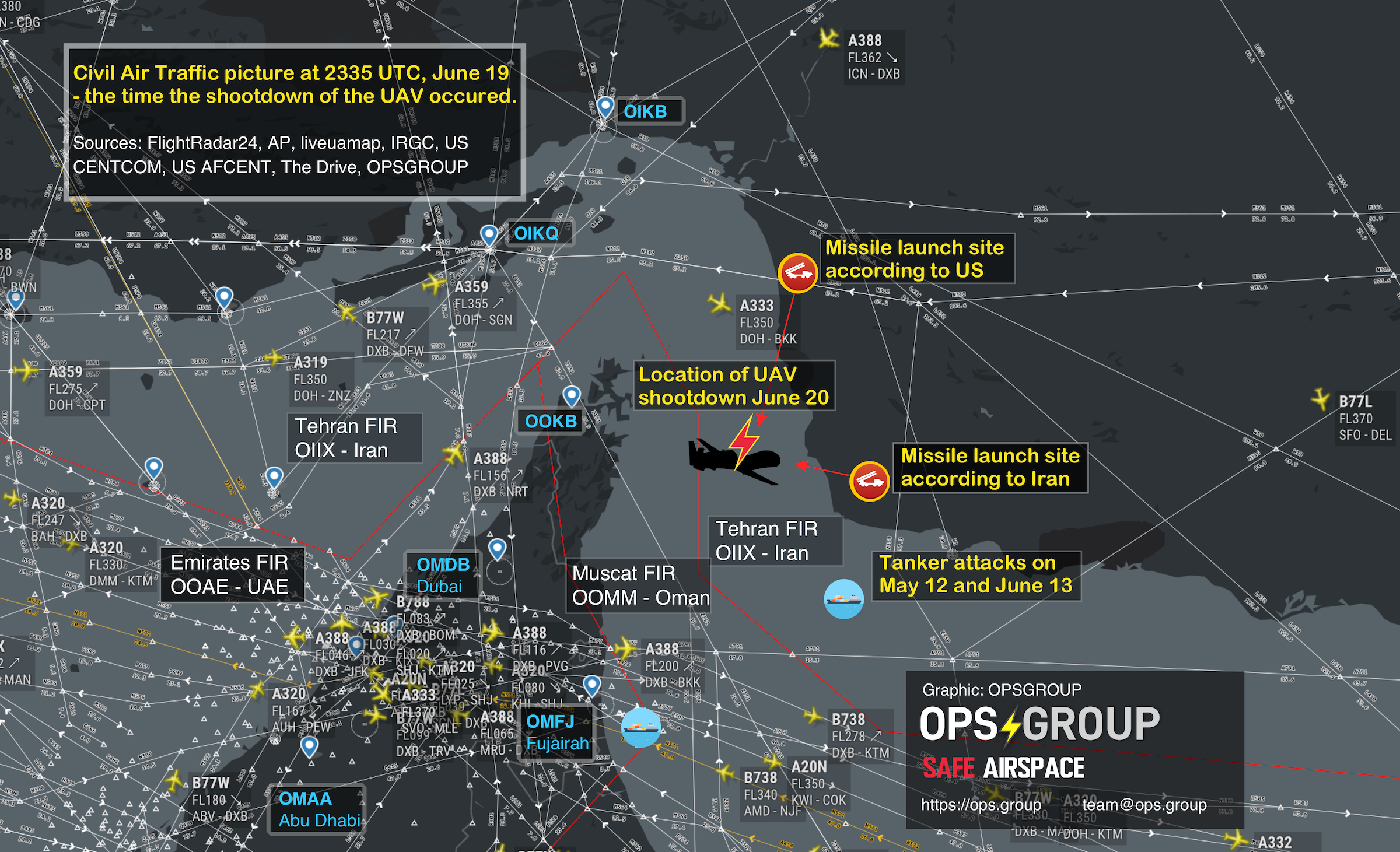
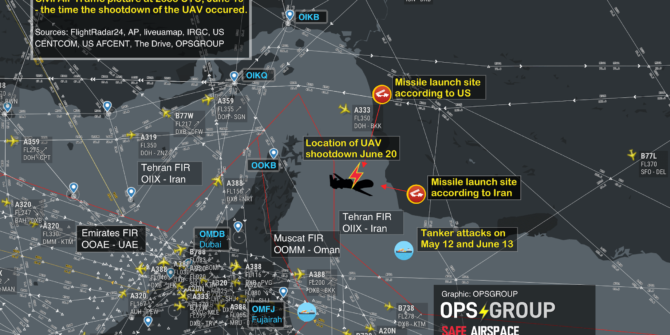
Although Iran and the US have slightly different versions of the position of the shooting down in the media, the approximate area is very clear, and marked on the map below, which shows the airspace picture at 2335Z, the time of the shootdown.

A high-res version of this map is available here.

For civil operators, the Straits of Hormuz have always been an area of high military activity, so it’s tempting to mark this as ‘more of the same’.  However, over the last few weeks tension between the US and Iran has heightened, and the launching of a surface to air missile by Iran represents an escalation in the current situation that crosses a threshold –  warranting a very close inspection by airlines and aircraft operators overflying, or using airports like Dubai, Abu Dhabi, Ras Al Khaimah, Muscat, and Fujairah.

As we approach five years since MH17, we should remember the build up to that shootdown took several months, and there are the warning signs here that we must pay close attention to. In the lead up to MH17, 16 military aircraft were shot down before MH17 became the 17th. Look closely at the map. Civil aircraft were very close to the site of this incident.

This morning, we sent this out to our members in OPSGROUP:

OIZZ/Iran Earlier today, a large US military drone was shot down by Iran over the Strait of Hormuz. The US say it was over international waters, Iran say it was within their FIR. Either way, it means that SAM missiles are now being fired in the area, and that represents an escalation in risk. It appears a 787 was very close to the missile site this morning. Avoiding the Strait of Hormuz area is recommended – misidentification of aircraft is possible. If you are coming close to Iran’s FIR, it’s essential that you monitor 121.5, as Iran uses this to contact potentially infringing aircraft. Local advice from OPSGROUP members says ‘Even if the operator/pilots think they will come close or penetrate Irans Airspace they should contact Iran Air Defense on 127.8 or 135.1’. If the Iranians have an unidentified aircraft on their radar and not in contact with them they will transmit on guard with the unidentified aircraft coordinates, altitude, squawk (if there is one), direction of travel and then ask this aircraft to identify themselves as they are approaching Iranian ADIZ. Monitor safeairspace.net/iran for the latest. 

Last September, when Syria shot down a Russian transport aircraft, we published an article on that risk, and noted “50 miles away from where the Russian aircraft plunged into the sea on Monday night is the international airway UL620, busy with all the big name airline traffic heading for Beirut and Tel Aviv. If Syria can mistakenly shoot down a Russian ally aircraft, they can also take out your A320 as you cruise past.” That same risk of misidentification exists here in the Straits of Hormuz.

Apart from the misidentification risk, is the risk of a problem with the missile itself. The missile used by Syria in September was a Russian S-200 SAM, which was the same missile type that brought down Siberian Airlines Flight 1812 in 2001. The missile can lock on to the wrong target, and this risk is higher over water. The missile system used by Iran last night was a domestically-built Raad Anti-Aircraft system, similar to the Russian Buk that was used against MH17. Any error in that system could cause it to find another target nearby – another reason not to be anywhere near this part of the Straits of Hormuz.

Bear in mind that as an aircraft operator you won’t be getting any guidance from the Civil Aviation Authorities in the region. As we saw with Syria, even when an aircraft had been shot down on their FIR boundary, the only Notams from Cyprus were about firework displays at the local hotels. It won’t be any different here. You need to be the one to decide to avoid the area.

A further risk, if you needed one, is retaliation by the US. It seems probable that the US will at least try to find an Iranian target to make an example of. If you recall the Iran Air 665 tragedy, back in July 1988, which occurred in the same area, the US mistakenly shot down that aircraft thinking it was an Iranian F-14.

Bottom line: we should not be flying passenger aircraft anywhere near warzones. That’s the lesson from MH17, and that’s the lesson we need to keep applying when risks like this appear on our horizon.

The Iran risk is being monitored at Safe Airspace – the Conflict Zone & Risk Database. The Iran country page also has more information on further overflight considerations in other parts of the Tehran FIR.
Further reading:


Sources for this article: