Has The Yemen Conflict Reached The UAE?
On January 17, bomb laden drones reportedly struck oil tankers and a construction site in Abu Dhabi, UAE. The impact sites were close to OMAA/Abu Dhabi International Airport.

Around the same time, Al-Houthi rebels claimed the group would be launching an attack “deep in the UAE”. While this attack in itself caused no disruption at the airport, it does highlight some serious concerns for safety in UAE airspace, and the wider impact of the conflict and volatility across the Middle East region in general.

What are the concerns?

The precise technical capabilities of the Yemeni rebel forces are not entirely known. In general their drone attacks have primarily targeted Saudi airports OEAB/Abha and OEGN/Jazan which lie close to the Yemen border. The capability and intent to send weapons through Saudi Arabia and to target the UAE is an escalation on what they have previously carried out.

Drone attacks in Saudi Arabia are a fairly common and persistent threat, however, Saudi Air Defence systems manage to intercept the vast majority before damage occurs. How these drones avoided detection is a concern.
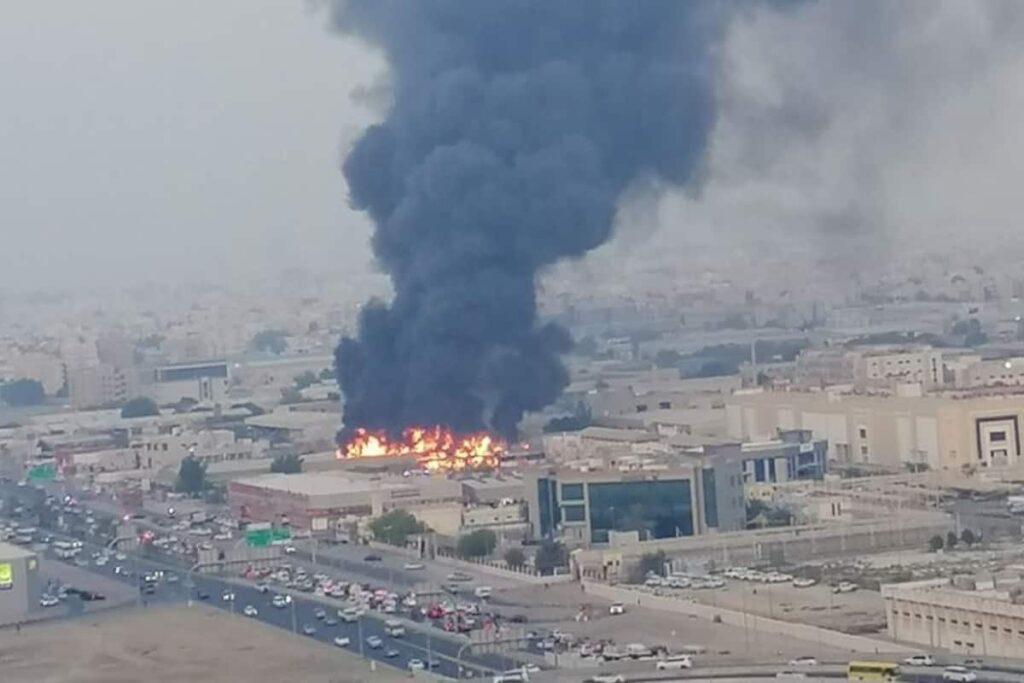
Smoke and flames from oil tankers targeted near OMAA/Abu Dhabi Airport.

What is the situation in Yemen?

Yemen has been an active conflict zone since 2014, with Saudi Arabia leading a coalition of countries from North Africa and West Asia against the rebel forces. OYSN/Sana’a airport has been impacted by multiple airstrikes throughout 2017 and 2018, and continues to be targeted in response to attacks such as this one, along with other regions of Yemen with known rebel activity.

Yemen airspace is prohibited by most major authorities. Saudi Arabian airspace has cautions for the southern Jeddah FIR bordering Yemen.

What is the general situation in the region?

While missile and drone attacks in Saudi territory have intensified recently, attacks against the UAE by the Al-Houthi group have never been confirmed until now.

OEJD/Jeddah lies almost 400 km north along the western coast and has seen some attempted attacks by drones throughout 2021, as well as attempted missile attacks.

OERK/Riyadh which lies in central Saudi Arabia has seem a number of attempts as well, however, Al-Houthi rebels denied they were responsible for a recent attempt in Riyadh. This took place in January 2021 and Saudi Air Defences destroyed the drone before any damage occurred. It was attributed to an Iraqi militant group.
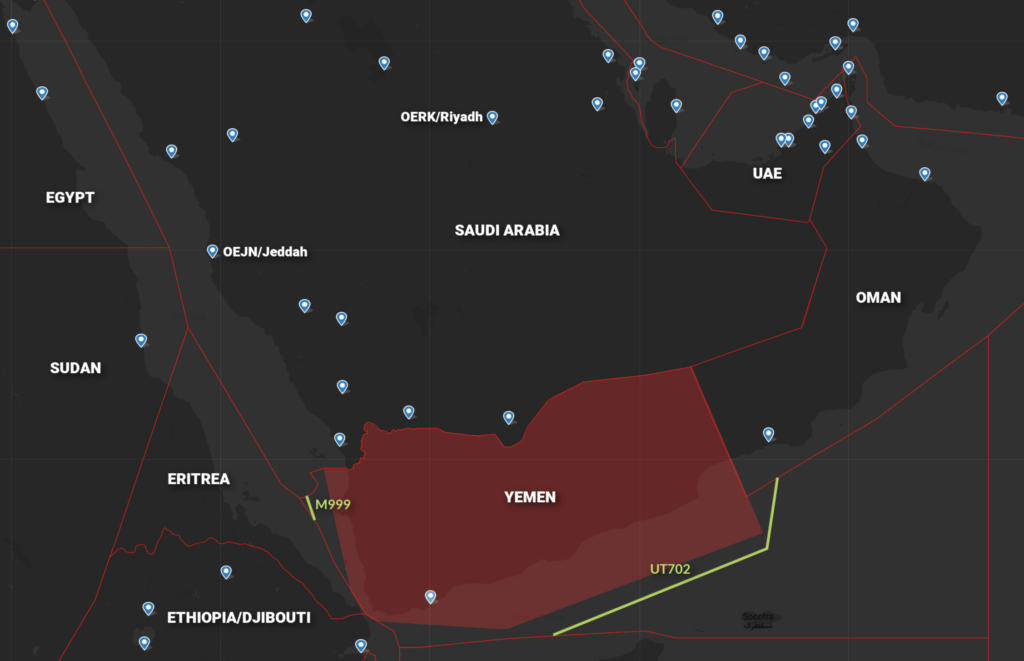
Yemen airspace is prohibited and the southern Jeddah FIR bordering it has cautions in place.

Does this change the risk level for UAE airspace?

The rebels have suggested they will continue to target the UAE, however, they are targeting ‘sensitive sites’ on the ground such as oil refineries. There is no apparent intent to target aircraft or civilian airports. Unfortunately, such sites tend to be located along the coast and are in proximity to busy airspace and major airports.
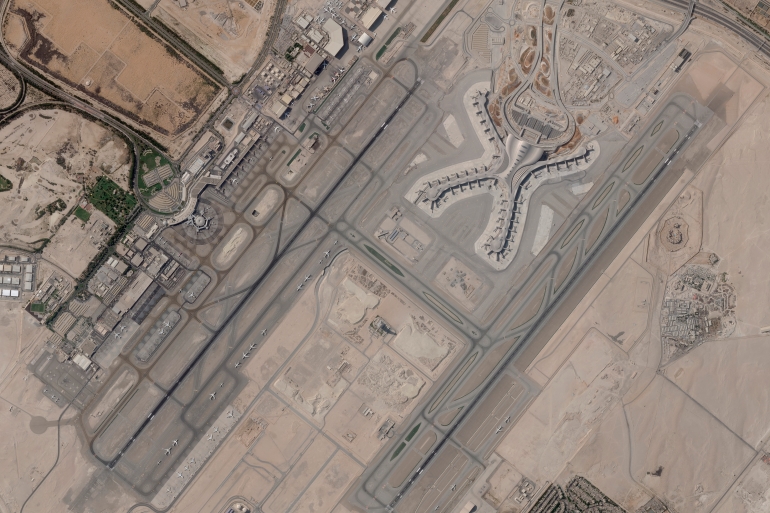
Abu Dhabi airport lies along the coast, close to a major port and oil refinery.

Can we mitigate any of the risk?

The UAE have significant military defense capabilities as well. If you are operating into the region, be aware of increased military helicopter traffic. Maintain a good listening watch on frequency, and on 121.5.

The UAE do not use special procedures (like the Saudi ESCAT ones) but are proactive in closing their airspace if drones are identified within it – be aware of what your route options and alternate options are in case this occurs.

Keep an eye on Safeairspace for further updates or changes to the risk rating.

The Threat Of A Civil Aircraft Shootdown In Iran Is Real

As we know by now, at 23:35Z last night (June 19, UTC), Iran shot down a US UAV on a high-altitude recon mission in the Straits of Hormuz. This was no small incident. The UAV was a $200 million aircraft, weighing 32,000 lbs, with the same wingspan as a 737.

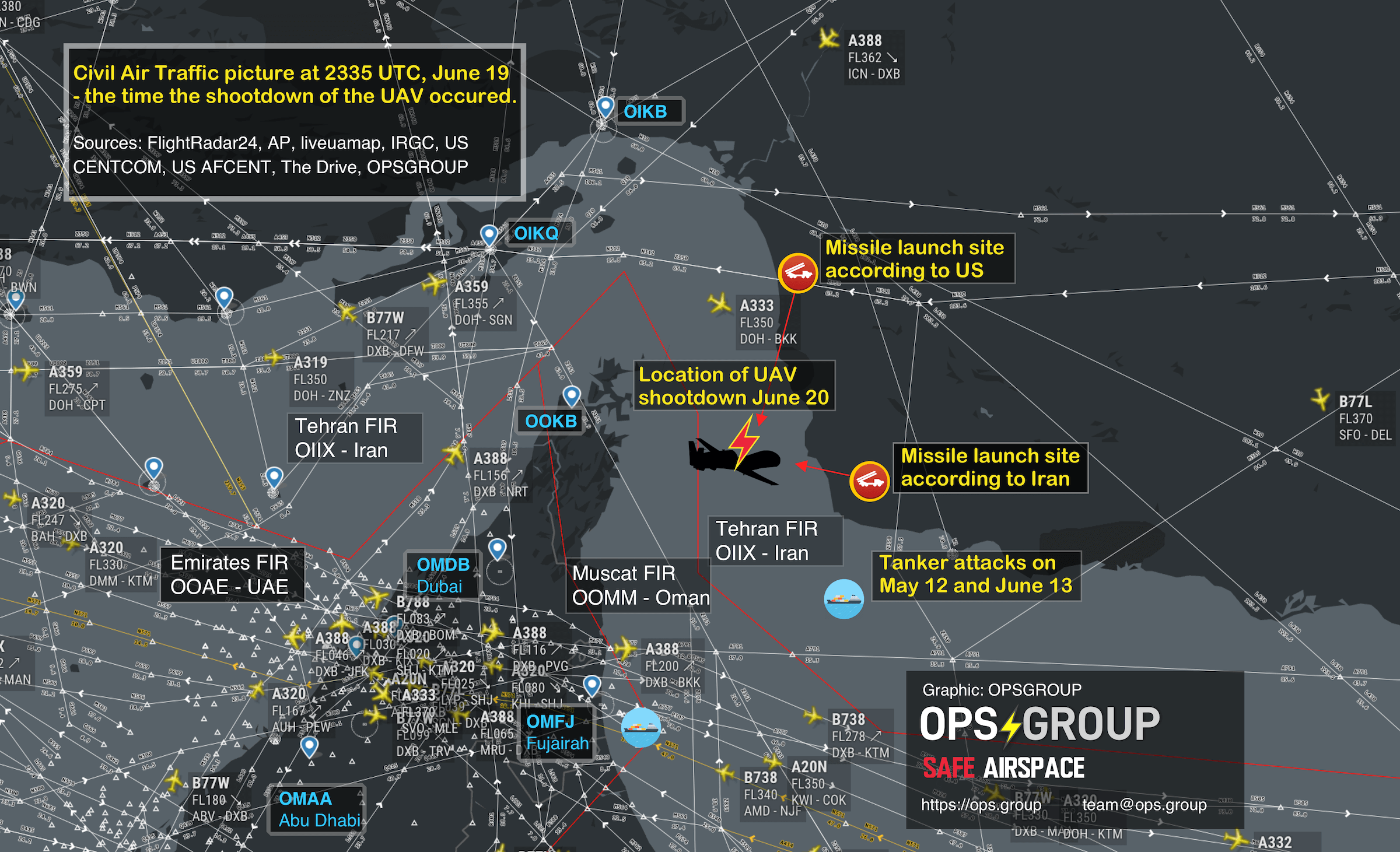
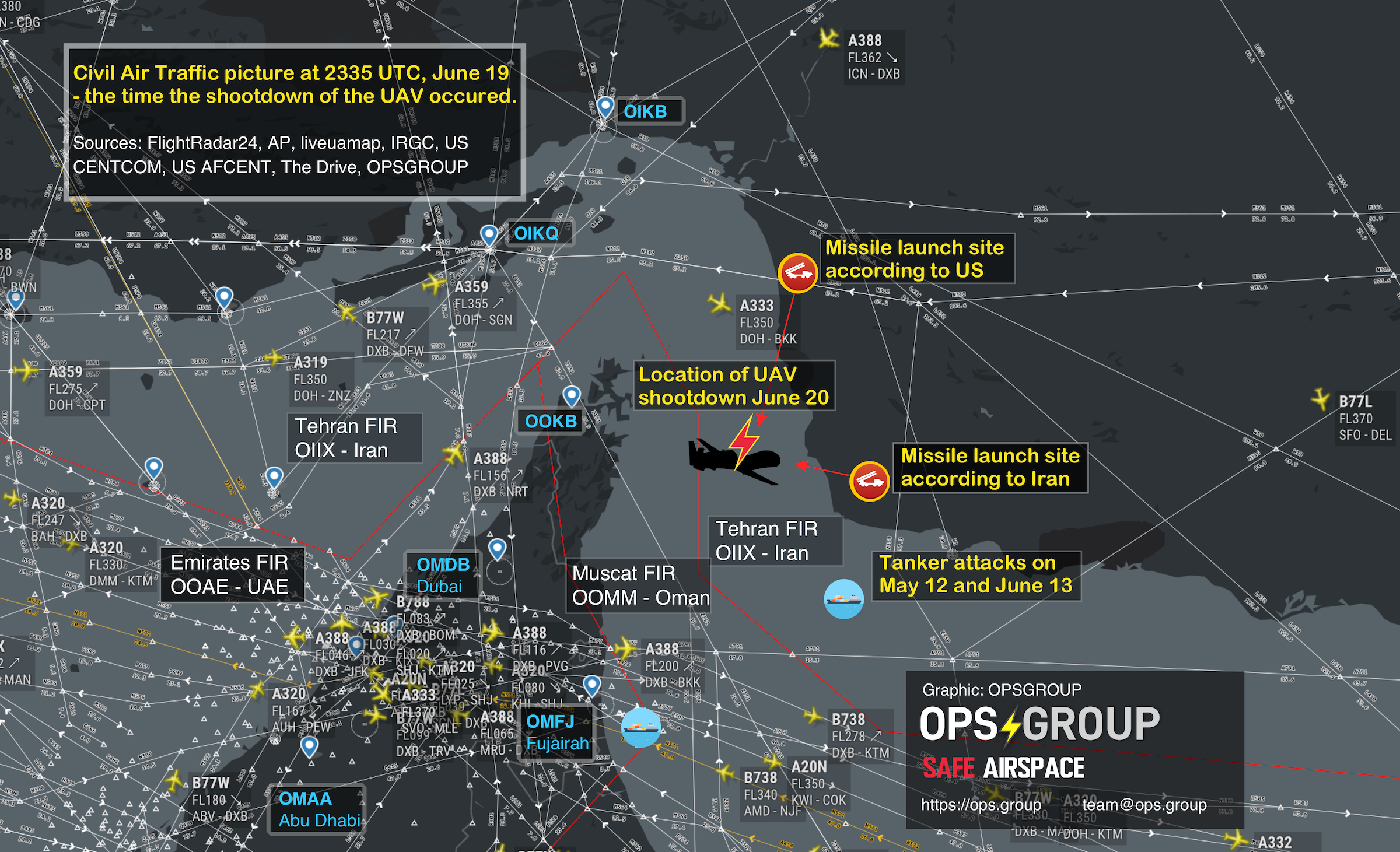
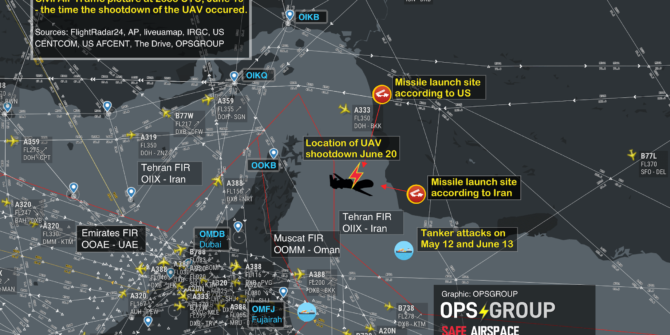
Although Iran and the US have slightly different versions of the position of the shooting down in the media, the approximate area is very clear, and marked on the map below, which shows the airspace picture at 2335Z, the time of the shootdown.

A high-res version of this map is available here.

For civil operators, the Straits of Hormuz have always been an area of high military activity, so it’s tempting to mark this as ‘more of the same’.  However, over the last few weeks tension between the US and Iran has heightened, and the launching of a surface to air missile by Iran represents an escalation in the current situation that crosses a threshold –  warranting a very close inspection by airlines and aircraft operators overflying, or using airports like Dubai, Abu Dhabi, Ras Al Khaimah, Muscat, and Fujairah.

As we approach five years since MH17, we should remember the build up to that shootdown took several months, and there are the warning signs here that we must pay close attention to. In the lead up to MH17, 16 military aircraft were shot down before MH17 became the 17th. Look closely at the map. Civil aircraft were very close to the site of this incident.

This morning, we sent this out to our members in OPSGROUP:

OIZZ/Iran Earlier today, a large US military drone was shot down by Iran over the Strait of Hormuz. The US say it was over international waters, Iran say it was within their FIR. Either way, it means that SAM missiles are now being fired in the area, and that represents an escalation in risk. It appears a 787 was very close to the missile site this morning. Avoiding the Strait of Hormuz area is recommended – misidentification of aircraft is possible. If you are coming close to Iran’s FIR, it’s essential that you monitor 121.5, as Iran uses this to contact potentially infringing aircraft. Local advice from OPSGROUP members says ‘Even if the operator/pilots think they will come close or penetrate Irans Airspace they should contact Iran Air Defense on 127.8 or 135.1’. If the Iranians have an unidentified aircraft on their radar and not in contact with them they will transmit on guard with the unidentified aircraft coordinates, altitude, squawk (if there is one), direction of travel and then ask this aircraft to identify themselves as they are approaching Iranian ADIZ. Monitor safeairspace.net/iran for the latest. 

Last September, when Syria shot down a Russian transport aircraft, we published an article on that risk, and noted “50 miles away from where the Russian aircraft plunged into the sea on Monday night is the international airway UL620, busy with all the big name airline traffic heading for Beirut and Tel Aviv. If Syria can mistakenly shoot down a Russian ally aircraft, they can also take out your A320 as you cruise past.” That same risk of misidentification exists here in the Straits of Hormuz.

Apart from the misidentification risk, is the risk of a problem with the missile itself. The missile used by Syria in September was a Russian S-200 SAM, which was the same missile type that brought down Siberian Airlines Flight 1812 in 2001. The missile can lock on to the wrong target, and this risk is higher over water. The missile system used by Iran last night was a domestically-built Raad Anti-Aircraft system, similar to the Russian Buk that was used against MH17. Any error in that system could cause it to find another target nearby – another reason not to be anywhere near this part of the Straits of Hormuz.

Bear in mind that as an aircraft operator you won’t be getting any guidance from the Civil Aviation Authorities in the region. As we saw with Syria, even when an aircraft had been shot down on their FIR boundary, the only Notams from Cyprus were about firework displays at the local hotels. It won’t be any different here. You need to be the one to decide to avoid the area.

A further risk, if you needed one, is retaliation by the US. It seems probable that the US will at least try to find an Iranian target to make an example of. If you recall the Iran Air 665 tragedy, back in July 1988, which occurred in the same area, the US mistakenly shot down that aircraft thinking it was an Iranian F-14.

Bottom line: we should not be flying passenger aircraft anywhere near warzones. That’s the lesson from MH17, and that’s the lesson we need to keep applying when risks like this appear on our horizon.

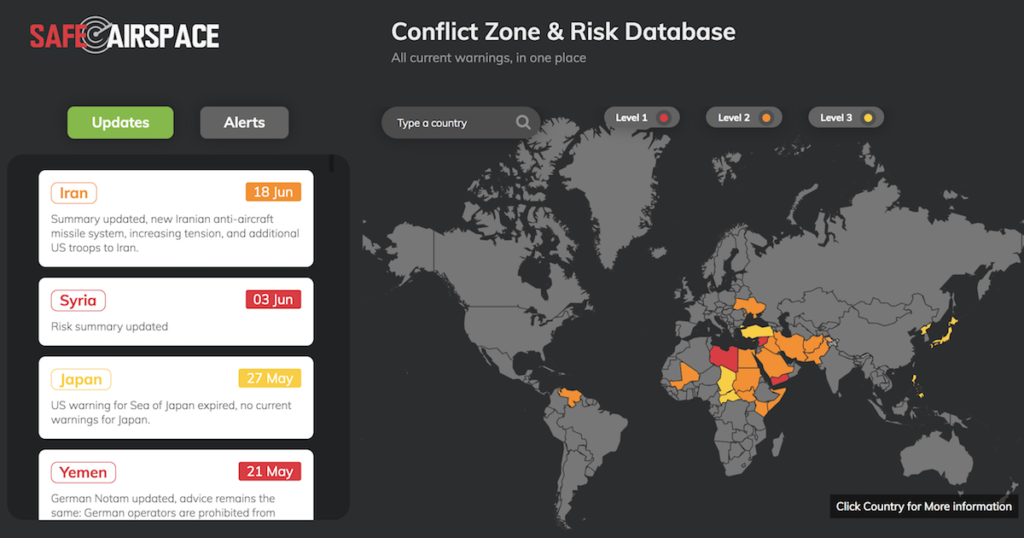
The Iran risk is being monitored at Safe Airspace – the Conflict Zone & Risk Database. The Iran country page also has more information on further overflight considerations in other parts of the Tehran FIR.

Further reading:


Sources for this article: