Pilot vs Crew: ID Confusion in Nice

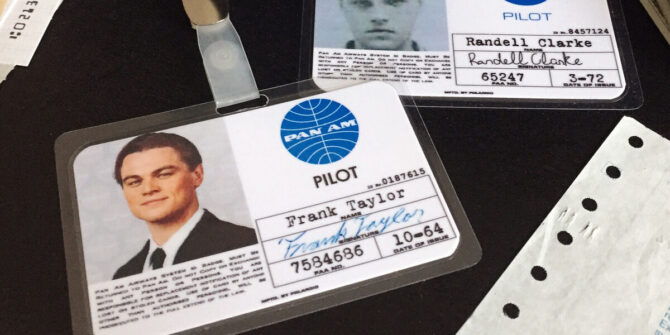
We’ve had a few reports from crews facing problems at LFMN/Nice because their ID cards said “PILOT” instead of “CREW.” In one case, a delay caused a missed slot. Other incidents have been reported elsewhere, such as LSGG/Geneva. The issue isn’t just a matter of wording—it’s about how rules are being applied differently to EU and non-EU operators.

Why the Confusion?

At the heart of this is EU security law:

  • EU-based crews: Under EU Reg. 2015/1998, airport authorities are right to insist on IDs that show “CREW.” Section 1.2.4.1 requires this wording in English, along with a validity date and other criteria. IDs showing “PILOT” do not meet the EU requirement.
  • Non-EU crews: These rules don’t apply to you. Instead, you must meet your own national crew ID requirements. ICAO provides guidance in Annex 17 and Doc 8973, but leaves specifics to each country. This means ID formats can vary widely, which sometimes leads to problems at European airports.

Reality at LFMN/Nice

Despite the legal distinctions, local security often applies a simpler standard—they just want to see “CREW” on the badge. If your ID lacks it, you could face delays, requests for extra docs (licence, passport), and additional paperwork from your handler (Signature advise that in the case of flight attendants, they will need to be listed as PAX on the Gen Dec if their IDs are not accepted).

Some members report that using IDs from services like IBAC or CrewID has avoided problems entirely.

Security may require an escort or additional security clearance if your ID differs from EU requirements.

What Should You Do?

  • EU crews: Ensure your ID meets EU requirements—“CREW” must appear.
  • Non-EU crews: Even though it’s not legally required, consider carrying an ID with “CREW” clearly displayed. It can save you time and hassle. And just brief your handler in advance if you think your ID might raise questions.

Have Something to Report?

We rely on member reports to discover these kinds of issues. If you have some extra info, chances are it will be a huge help to other operators.

Please get in touch with us on blog@ops.group around the clock.


Heat Damage in Nice: When APU Rules Damage Aircraft

Key Points
  • APU use is limited – only allowed 10 minutes before TSAT, and only after towing.
  • GPU reliability is shaky – some units failed or had to be replaced during operations.
  • Heat may be damaging systems – OPSGROUP member reports of aircraft experiencing electrical failures, suspected to be caused by overheating while waiting without APU or proper cooling.

Recent reports from OPSGROUP members highlight growing concerns over the strict APU restrictions at LFMN/Nice.

Like many French airports, LFMN restricts APU use – aiming to cut noise and emissions. But as summer peaks on the Riviera, enforcement remains rigid despite the operational challenges this creates in high heat.

Beyond hot cabins, new concerns have emerged: potential electrical damage linked to the airport’s fixed ground power units (GPUs). Reports submitted to the airport remain unanswered. Here’s what we know so far.

A Little Context

Private jet flights at LFMN primarily use the ‘Kilo Apron.’ This is the designated parking area for BizAv close to FBO facilities.

The rules for APU usage are found under the airport briefing in the French AIP. Specific guidelines apply to the Kilo Apron:

  • Arriving flights must stop on a designated line labelled ‘STOP ENGINE AND APU.’ From there towing to your parking spot is mandatory.
  • Departing flights must be towed to start-up stands fitted with 400Hz/28v ground power units, along with air. APU usage is limited to 10mins prior to TSAT (Target Start-up Approval Time).
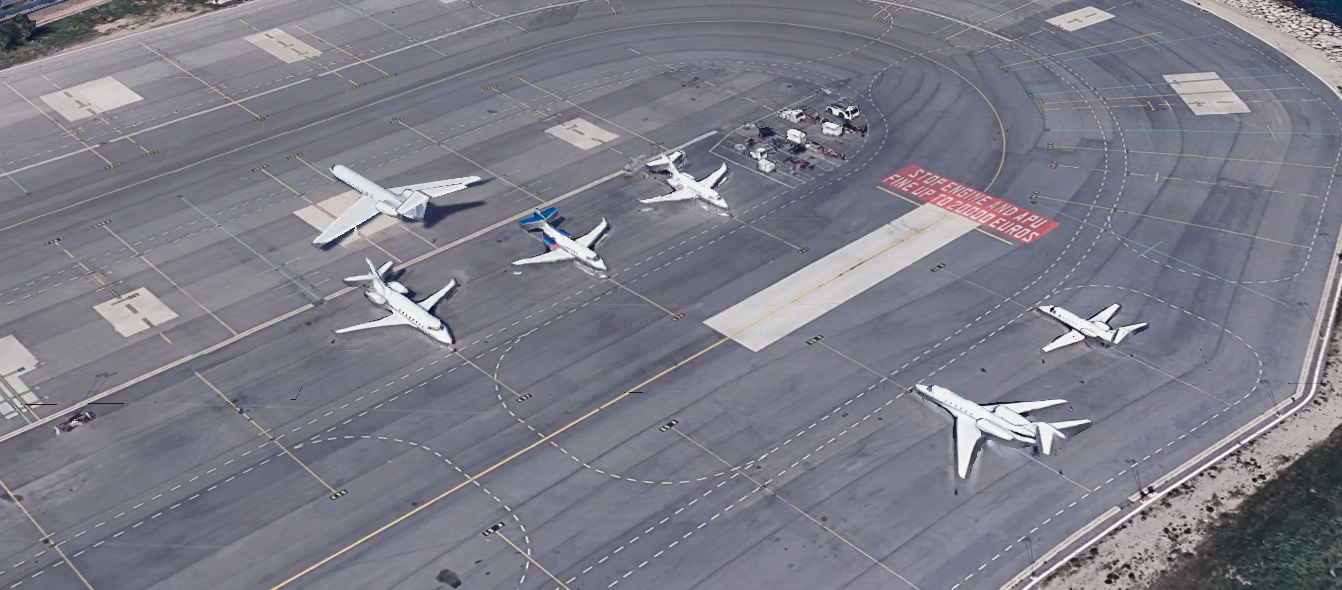
The Kilo Apron at LFMN

Exemptions are very limited. You either need to be operating a medivac, state or cargo flight (carrying temperature sensitive payload). Or if the plug isn’t compatible with your aircraft.

Recent Member Reports

Here are three recent member reports received from OPSGROUP members there.

Report 1:

After towing to Stand 35, the crew connected to the fixed GPU. CAS messages flickered, followed by complete electrical failure and aircraft blackout. Despite heatwave conditions and an overheated crew, APU start was denied. A portable GPU was brought in – but it was dead. When permission to start the APU was finally granted, it was too late: navigation and communication systems had already failed. The aircraft departed under MEL and required expensive repairs at the next stop. The ramp agent advised us to file a report, which we did. According to them, this wasn’t the first time such an event had happened.

Report 2:

Another crew experienced a similar issue. One of two FMS units failed after GPU connection. While the cause wasn’t immediately clear, the symptoms matched those described in the earlier report. The unit was removed for repair.

Report 3:

The GPU caused a fault on our GVII upon disconnect. Our FA that understands French overheard ground personnel stating “it’s too hot” in reference to the GPU. Surface temp at time was 24C so it was the equipment. Had to shut down aircraft to dark and restart to clear fault and get a new CTOT 40 mins later.

Potential GPU Issues

While we can’t confirm the GPUs are the direct cause, it’s plausible. Aircraft systems are sensitive, and power issues — including frequency drift, incorrect voltage, poor grounding, or surges — can trigger serious failures.

Heat may be a compounding factor. Ground air units often underperform in high temperatures, especially if hoses are blocked or airflow is weak. Aircraft may exceed thermal limits before crews can start APUs or get adequate air.

The GPUs themselves may also struggle in heat – output may sag or drift, or thermal protection systems may shut them down.

All of this increases operational risk – especially when APU use is restricted with no flexibility for safety.

And, despite being mandatory, GPU usage at LFMN comes with a charge.
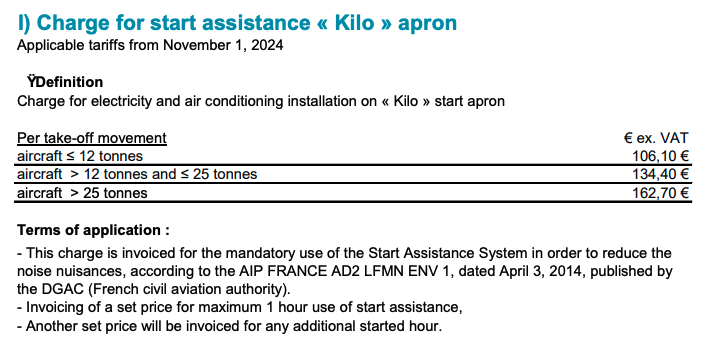
Despite their mandatory use, operators are charged to connect their aircraft to ground power.

If you’re going to enforce the rules on APU usage in summer there needs to be some flexibility for the operational safety of multi-million dollar aircraft and their crews. Quiet airports are great, but it’s easy to forget we are customers. In fact, Nice is the second busiest airport for business aviation in France, second only to Paris Le Bourget.

Mitigators

Following an alert issued to the group regarding these reports, another member (also a fully qualified pilot and aircraft engineer) got in touch with some practical advice to operators.

Here is what he had to say:

I thought it would be prudent to post some operational hints and tips to avoid problems like this event in the future. Not just with LFMN, but with any hot weather destination with restricted APU use (i.e. most  of Europe).

Most biz jet hydraulic pumps demand very high KVA from the GPU’s – avoid/delay applying hydraulic power to test systems and parking brake until APU start is approved.

Keep all the shades/sun shields drawn until packs are available.

Dim all the display units in the cockpit until air conditioning is available.

Open cargo and main door to allow air flow throughout the cabin. Small fans can run off the GFI plugs.

Open gear doors on some models as the exhaust for the avionic cooling fans use the wheel wells as the exit point.

Has this happened to you here, there, or elsewhere?

Please get in touch with us via blog@ops.group. We’d love to hear from you.

For ops at LFMN, if you identify a GPU issue (malfunction, incorrect configuration, electrical hazard, emissions), report it via your handling agent to the airport’s operations or safety department, or directly to Aéroports de la Côte d’Azur: +33 4 08 20 42 333, or via this contact form.
Formula 1 & Movie Stars: Special Procedures in Southern France

In Southern France, two of the biggest events of the year are taking place almost simultaneously – and it’s the perfect storm for an influx of private jet traffic to the region’s main airports.

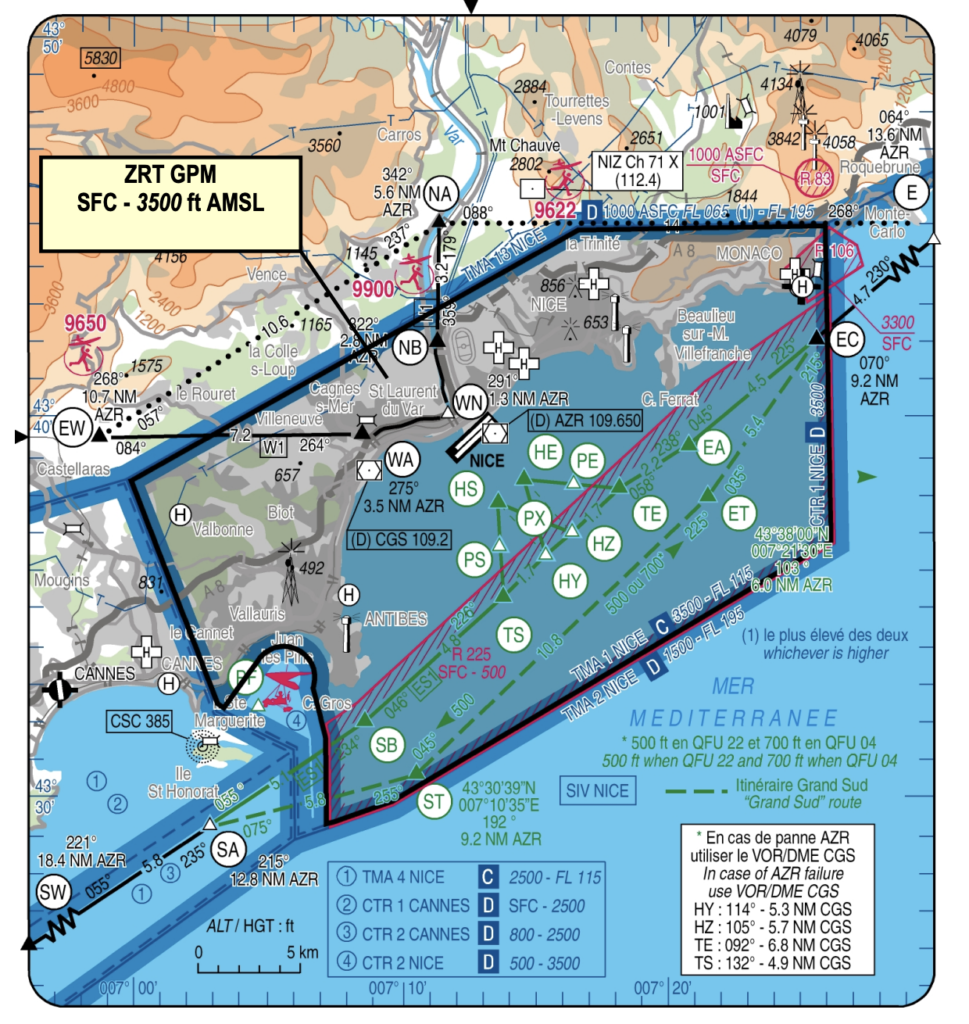
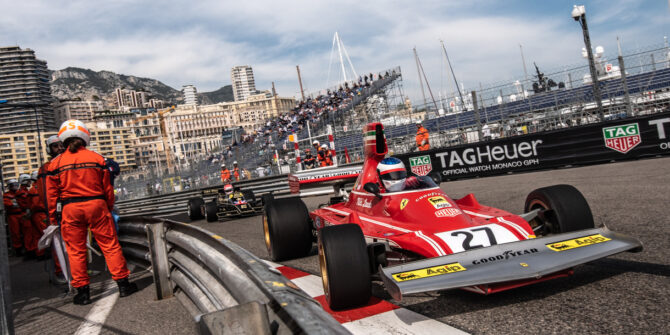
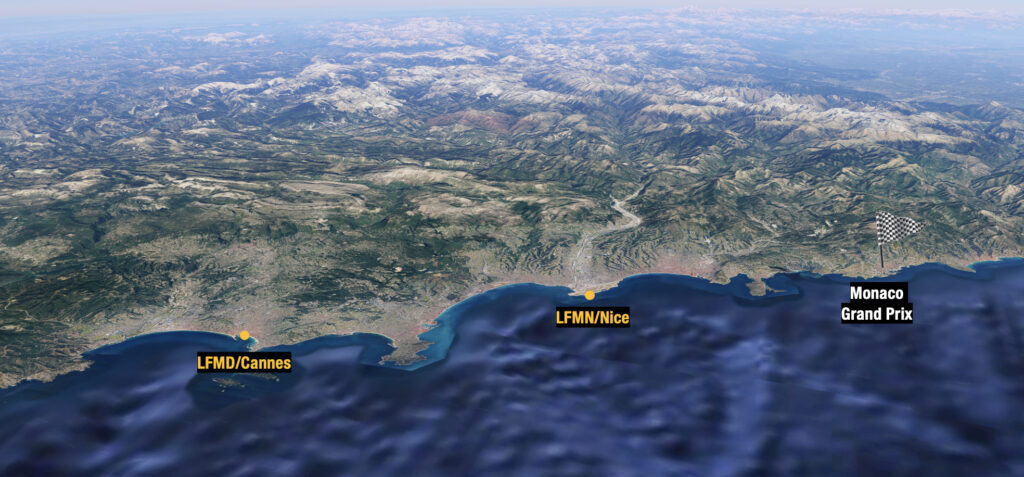
The Cannes Film Festival has just started, and will run until May 28. This is followed by the Formula 1 Monaco Grand Prix on May 29.  As one of the most famous events in motorsport, it attracts huge crowds. Both these events are happening within 50nm of each other.

As a result, the nearest major airports, LFMD/Cannes and LFMN/Nice will see much higher traffic volumes than normal – and both airports are heavily restricting operations.

Three AIP SUPs have been issued for the events . Don’t feel like delving into all of them? We don’t blame you. Here’s a quick summary of what they cover.

LFMD/Cannes

AIP SUP 052/22 has the deets here.

The apron is going to be full. The airport isn’t normally coordinated, but you’ll need a slot if operating in or out between May 17 – 30. You’ll get a slot ID that needs to go into Item 18 on your ICAO flight plan.

Even if you like to manage things yourself, the use of handling agents will be mandatory during this time.

Also, if you’re planning on a short hop to LFMN/Nice on May 28-30, no bueno. More on that below.

Monaco

Monaco itself doesn’t have an airport. In fact, it is the second smallest country in the world and is found on France’s Côte d’Azur – its south-eastern coast. Inside Monaco is the district of Monte Carlo, where the race is taking place.

The majority of passengers for the Grand Prix will enter via LFMN/Nice which is found around 20nm further west along the coast.

LFMN/Nice is the closest major airport to Monaco. Further west is LFMD/Cannes.

LFMN/Nice

AIP SUP 058/22 is the one to check here.

  • All arriving and departing aircraft operating at Nice from May 24 -30 will also need to co-ordinate a time slot. You can either request one directly, or ask your handling agent to get one for you.
  • You won’t be eligible for a slot unless your handler has guaranteed you a parking space when you get there – so make sure there is room for your ride first.
  • When filing your flight plan, commercial operators won’t need to include their slot ID number. But if your arrival or departure time is outside your allocated slot, your plan will bounce back.

Restricted airspace.

Info on this is published in yet another SUP – this one: AIP SUP 107/22

  • From May 28 – May 30, special restrictions will apply to all traffic.
  • All VFR ops will be banned, and IFR flights will not be allowed between LFMN/Nice and LFMD/Cannes, which is a little further west along the coast.
  • There will be intensive low level helicopter traffic to look out for. For IFR traffic departing on a SID, it is important to follow published climb gradients and altitude requirements.
  • If you don’t think your ride will make it, you’ll need to let ATC know with your start up request. In that case you may get hit with a delay, but don’t spring it on them at the last minute.
  • A temporary restricted area will be in effect which will primarily affect traffic over the event, and at LFMN/Nice airport, and will apply from surface to 3,500’.
  • If you’re operating on a valid flight plan, the impact will pretty minor. Just make sure you are in contact with Nice Tower on 122.375, and follow their instructions. You’ll need permission to enter it.

Temporary restricted airspace will be in effect – make sure you’re in contact with Nice Tower before entering.

The big question, who will win?

Not only is he the championship leader, but Ferrari driver Charles Leclerc is also a local to Monaco. He’s the home favourite to top the podium on race day.

Some useful contacts.


LFMD/Cannes Airport Authority +33 (0) 4 89 88 98 28.

Handling

Skyvalet  +33 (0) 4 93 90 41 10, operations-acm@cote-azur.aeroport.fr


LFMN/Nice Airport Authority +33 (0) 4 93 17 21 18. If you’re looking to get a slot approval directly from them, email nice-caz-agta-ld@aviation-civille.gouv.fr.

Handling

Menzies +33 (0) 4 83 76 26 02, Florence.augustyniak@johnmenzies.aero

Signature +33 (0) 4 93 21 82 18, NCE@signatureflight.fr

Swissport  +33 (0) 4 93 21 58 12, nce.operations@swissportexecutive.com


New Procedures at Nice: Beware the Big CDM Computer

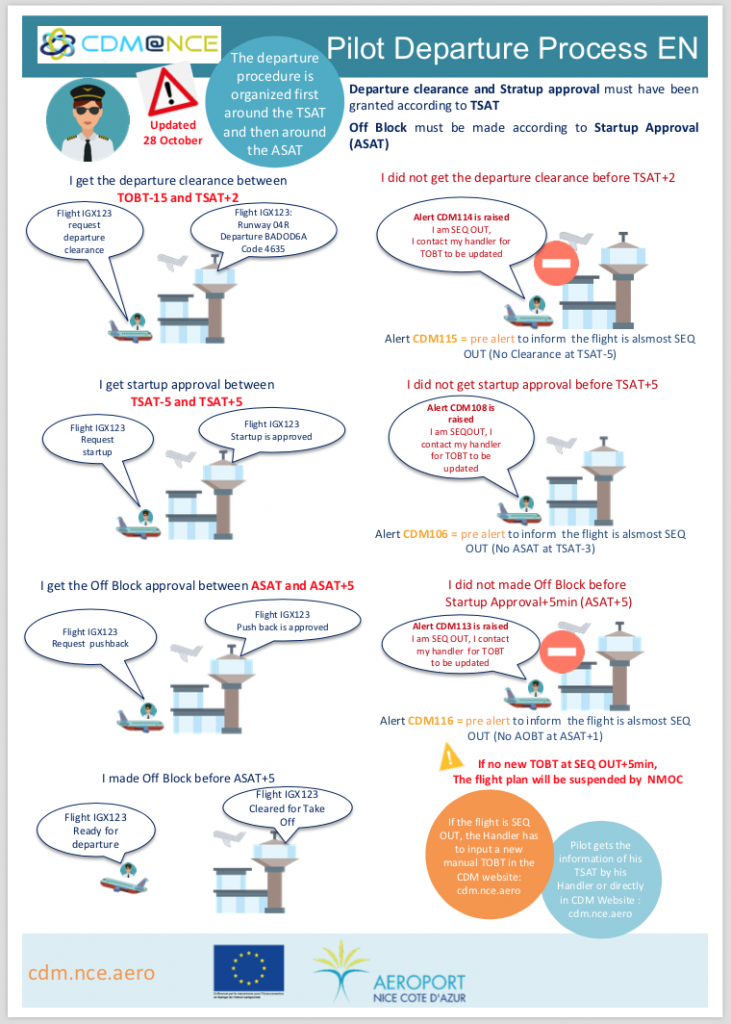
Nice Airport will launch Airport Collaborative Decision Making (A-CDM) on Nov 25. The main impact to operators will basically be that strict timings will have to be adhered-to for the entire start-up process: flight clearance, engines start-up approval and parking off-block will all have to be done within strict timeframes, otherwise your flight will drop out of the CDM system and you’ll likely get hit with a significant delay.

Top tips from local handler Swissport are as follows (we’ve paraphrased slightly):

Flight dispatch:

  • It is now compulsory to file the flight plan so that it exactly matches the Airport Slot booked by your ground handler. If the flight plan and the Airport Slot timings are not exactly the same, the Big CDM Computer at the airport will get terribly confused, your flight plan will get rejected, and you won’t be flying anywhere.
  • As a consequence, any time you want to change your schedule you must let your handler know first! They get a new Airport Slot for you first, then enter your flight into the CDM system, and then you can change your flight plan.

Flight deck crew:

  • Strict timings will have to be respected for the start-up process : flight clearance, engines start-up approval and parking off-block will have to be performed in due time, otherwise the flight will be SEQUENCE OUT and the CDM process will have to be reset, resulting in significant delays.
  • The TSAT (Target Start-up Approval Time) is the key timing since all the departure process is based on it. Your ground handler can provide you with your TSAT, and it can also be monitored directly by the crew on the CDM website (see the attachments below on how to do that).
  • The transponder is part of the process for the validation of some CDM milestones. The transponder should be switched on before taxiing and switched off once on-block. Switching the transponder on/off during taxiing generates wrong timings in the whole process management, and the Big CDM Computer doesn’t like that.

Bottom line, just make sure you keep talking with your ground handler throughout the whole departure process, so they can manage all these times for you in the system.

Swissport has provided a handy guide for operators on what to expect (click the image below to open the full version!):

Other things worth knowing at LFMN/Nice:

  • With the change to RNP approaches only (i.e. what would be known in the U.S. as RNAV GPS approaches), the airport is filing violation reports even if you request and get cleared for any other type of approach. The tip is to double check your FMS database before you fly to confirm all approaches are loaded, especially the RWY 04 RNAV-A and RWY 22 RNAV-D. See Airport Spy reports on LFMN for full reports.
  • From March 2019, any schedule change (ETA, ETD, flight number, provenance or destination airport) will generate a new PPR number – now called “Slot ID” – that will have to be updated in the FPL, still in field 18. Bear in mind that this process will take at least 10-15 minutes to have the new schedule validated by the airport and get the new Slot ID.
  • France has started a thing called CASH – Collaborative Aerodrome Safety Highlights. It’s basically a selection of briefing packages for certain airports, drawn from information supplied by airlines, operators, and ATC. So far, they’ve published ones for LFBK/Bastia, LFOB/Beauvais, LFKC/Calvi, LFPB/Paris Le Bourget, LFPG/Paris Charles De Gaulle, LFMN/Nice, and LFBO/Toulouse. More info


No fuel at LFMN/Nice

Update July 9th: Following last week’s issues with a break in the fuel pipeline coming into the airport, local handlers are now saying there are no more issues with fuel supply and availability. However, some third-party fuel providers are warning they still cannot arrange fuel for BA/GA operators, and are advising them to tanker inbound. Do you know different? Let us know!

July 5th: Due a break in the pipeline into the airport, for most operators there is no fuel available at LFMN/Nice.

Check with your handler before operating if your uplift at Nice is essential, as many are now advising all ad-hoc operators to tanker-in.

Information is still coming in, but it appears this may affect operations for a few days. No word of other airports affected, and nothing has been published in the Notams yet.


Germany issue new warnings, Manila may not ban GA after all

Germany issues new warnings 25JAN Germany has issued fresh warnings on the airspace of EgyptSouth Sudan, and North Korea, in three separate Notams issued in the last week. We have updated the SafeAirspace.net country information pages with the specifics. Read the article


Manila may not ban GA after all 25JAN RPLL/Manila is not moving as quickly towards a complete ban of non-scheduled and General Aviation traffic as feared. This is good news for International Operators. Read the article.


HEZZ/Egypt, HSZZ/South Sudan, ZKZZ/North Korea Germany has issued fresh warnings on the airspace of EgyptSouth Sudan, and North Korea, in three separate Notams issued in the last week. We have updated the SafeAirspace.net country information pages with the specifics.

RPLL/Manila is not moving as quickly towards a complete ban of non-scheduled and General Aviation traffic as feared. This is good news for International Operators. Read the article.

NTAA/Tahiti The airport is open again as of Monday morning local time, after closing due to flooding after torrential rains, but many taxiways remain flooded. Expect delays in handling and tech stops.

KZZZ/USA Announced yesterday and expected to come into force this week, is an immediate ban on US visas (and therefore US travel) for citizens from 7 countries: Iraq, Iran, Syria, Yemen, Sudan, Somalia and Libya. This is distinct from the Visa Waiver Program ban in effect since January 2016.

GBZZ/Gambia FSB Risk Level changed from Level Three to “No Warnings” on Jan 24. New president has taken power. Parliament revoked State of Emergency. Situation calm.

SBZZ/Brazil In the last bulletin we had a headline about a Boeing 767 shot on approach in Brazil. A bullet was found lodged in the wing. Some updates to that story are here, and safeairspace.net’s Brazilpage is updated.

VZZZ/Southeast Asia Don’t forget it’s New Year in Asia this weekend. Travel-related delays and government office and business interruptions will peak 27 Jan to 01 Feb, and could last longer in Taiwan, Vietnam and China, where the holiday will be celebrated through 02 Feb.

EDDB/Berlin Brandenburg will now not open until 2018, as they found more problems with the fire system this week. This is a recurring story, which dates back to 2012. So, for the foreseeable, you’re stuck with Tegel and Schoenefeld.

LTFJ/Sabiha Gökçen (Istanbul) Due to insufficient capacity at LTFJ, applications for individual non-scheduled flights will be refused, and private/charter flights can only be operated at “non-busy hours”.

KBPI/Palm Beach is going to see some new TFR restrictions due to the proximity of Donald Trumps Mar-a-Lago estate. If operating when he’s down here, you’ll have to depart from a gateway airport to PBI – those are TEB, HPN, IAD, MCO and FLL. NBAA has the details.

LSGG/Geneva EBACE is on from Monday, 22 May through Wednesday, 24 May 2017. Now would be a good time to get those slots booked if you’re planning to head over.

LFMN/Nice has a new procedure where ATC will alert crews to windshear.

MSLP/San Salvador‘s only runway 07/25 will be closed from 1600-1700 each day until Feb 3rd.

VGHS/Dhaka The UK Department for Transport (DfT) announced today that it recently carried out assessments of security at Dhaka International Airport. Following this, the DfT has assessed that security at Dhaka airport does not meet some international security requirements (they haven’t said which).

OMAD/Abu Dhabi (Al Bateen) is hosting the International Defence Exhibition in February, so will not be available to IFR traffic daily between 0600-0800Z until Feb 23rd. There are also restrictions on using it as an alternate.

DNAA/Abuja The latest on the Abuja closure is that it will be completely closed to all traffic from March 8th – April 19th.

SKCG/Cartagena‘s only runway 01/19 is closed daily 0530-1100Z until Feb 6th.

NVZZ/Vanuatu Health authorities have declared a dengue outbreak following a large increase in suspected cases in December 2016 and January 2017. Protect yourself against mosquito bites

WSZZ/Singapore is implementing the new ICAO SID/STAR phraseologies from March 2nd. Read AIP SUP 29/17.

LIRF/Rome Fiumicino is working on 16R until March, so 25 will be used for deps and 16L for arrivals. This means delays, especially if you want 16L/34R for departure – they say up to a 60 minute taxi time.

UKZZ/Ukraine amended the military boundaries of its airspace on Monday Jan 23rd, identifying the Donbas conflict zone region as a separate area. More details here.


View the full International bulletin 25JAN2017


International Bulletin: Sharm El Sheikh reopens, New ICAO Phraseologies 10NOV

Sharm El Sheikh reopens 03NOV  HESH/Sharm El Sheikh, Egypt has reopened to international traffic, with a number of airlines starting services again on 01NOV. However, there are conflicting views on security at the airport, depending on your state of registry. Read article.

New ICAO Phraseologies 03NOV From 10NOV, new international aviation phraseology for SIDs and STARs is effective, but there’s a problem. Read article.


OEJN/Jeddah, Saudi Arabia On 27OCT, Saudi Arabia intercepted and destroyed a ballistic missile launched from Houthi-controlled territory in Yemen. The Houthis confirmed the launch via the Saba news agency, saying that the missile was targeting Jeddah International Airport (OEJN), not the holy city of Mecca, as some other news reports had claimed.

EHEH/Eindhoven has new procedures for PPR effective 30OCT – if you’re flying there, get PPR direct from the airport. You can read all the info on their new GA page. Oh, and there’s now a fee. €300 for PPR for a 21 ton aircraft, for example.

LFMN/Nice Runway 04R/22L will be closed during November.

WARR/Juanda Airport is closed due to works in progress except for helicopter medical evacuations from until 15NOV

UTZZ/Tajikistan Disagreement between Russia and Tajikistan may lead to operational restrictions between the two countries. Air traffic between Moscow and Dushanbe may be suspended from 08NOV.

FAZZ/South Africa Reports this week suggest that foreign nationals entering South Africa through any port of entry should expect delays up to four hours due to a new enhanced security measure that requires the capture of fingerprints and a photograph. OR Tambo in Jo’burg seems to be the worst offender.

BGKK/Kulusuk has updated opening hours: 1100-1900Z Tuesday to Saturday. They ask for 3 hours minimum notice PPR.

PLCH/Christmas Island Fuel is in short supply, notified as being only available for Scheduled service and emergency flights. PLCH is often used on Pacific crossings as an alternate, so any diversion would be considered an ‘emergency’, but check before actually planning a tech stop.

LEZZ/Spain Previously notified fuel strike now appears to be one provider only, so it looks like impact minimal.

DGAA/Accra ATC is having a few VHF issues, primarily on 126.7 – if you can’t reach them, call HF 8903 instead.

EDDT/Berlin Tegel will be busy 14-18 NOV due to state visits, they won’t accept GA/Private traffic during this time, but you can check specifics with them at vvd-txl@berlin-airport.de

HLLS/Sabha, Libya The airport has been closed for over 2 years due to fighting in the area. A new Notam has been issued which officially extends the closure period to 26DEC, as talks continue between the authorities and local groups to find a way to re-open the airport.

LYBE/Belgrade Jet A1 not available through the airport fuel service provider until the end of the month. Make sure you get a confirmed fuel release through a third-party fuel provider before operating here.

LTZZ/Turkey On 29 October, the US Department of State ordered the departure of family members of employees posted to the US Consulate General in Istanbul due to security information indicating extremist groups continued aggressive efforts to attack US citizens in Istanbul. US Operators should consider ops into airports in Turkey carefully.

OMDB/Dubai Traffic was stopped for approx 1.5 hours on 29OCT due to a drone. The Airport closed from 1930-2050 LT, and some flights were diverted. OMSJ/Sharjah was also briefly closed due to the same drone. Unauthorized drones have halted airport operations in Dubai twice in recent months.

GMZZ/Morocco is busy from 4-20NOV, GA and non-sched traffic will see restrictions. Check their Notam A0896 from 01NOV. If you’re part of the event, put RMK/COP22 in your FPL. No long stays will be allowed.

WSSL/Singapore Seletar We’ve received crew reports of challenges with visual approaches into Seletar (there are no instrument approaches). There are unlighted obstacles on the approach to Runway 21. After dark, approaches are only possible to Runway 03. More importantly, noise rules will soon demand a challenging base turn, greater than 5 degrees, to a half-mile 3.5 degree final, to a 1% down slope runway. We welcome further comments (bulletin@fsbureau.org).

LGZZ/Greece There will be a ferry strike between the Greek mainland and all Islands on 24NOV. No services will operate that day.

FTZZ/Chad Reports of nationwide public service strike including Airport operations at N’Djamena. The unions stated that the strike will persist until the government pays overdue wage arrears.

View Full International Bulletin 03NOV2016