Operation Orion: French Airspace Closures
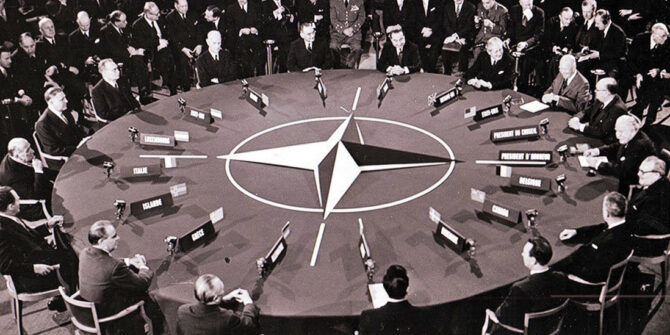
France are worried about “the deterioration of the international context”. Basically, they are worried about the state of the world. So, they have decided to run a fairly major crisis management readiness, preparedness sort of a thing over a 3 year period.

As they put it, it will “consider the hypothesis of a major engagement of high intensity as possible” and help the armed forces prepare for it by practicing a whole bunch of exercise.

Or as we put it – “a great big load of military mayhem in French airspace to look out for”.

Sounds big?

It will be. The biggest in 30 years in fact, involving a whole load of NATO members. But the main impact is going to be within French airspace.

Orion is the first of the 3 exercises which are planned over the next 3 years. It consists of 4 phases, expected to take place on the following dates:

  • Phase 1 & 3 (computer assisted exercises, so no impact to ops)
  • Phase 2: from 21 Feb to 10 March (taking place in the southern part of France)
  • Phase 4: from 17 April to 5 May (taking place in the north-eastern part of France)

What does that mean for flight ops?

We heard someone say it will have a “huge impact on the network” with numerous flights impacted through re-routes, delays and probably cancellations because of airspace capacity reductions.

So, what do we need to worry about?

Phases 1 and 3 are computer assisted, but phase 2 involves real people and real military stuff including real military airplanes in real bits of airspace we normally really like to fly in.

The ramp up for this will start on Feb 16 so you can expect disruption from them, through to March 10 when the phase finishes.

The maps aren’t the best quality but you can view them in the document here. We have recreated the two main upper level ones for you below.
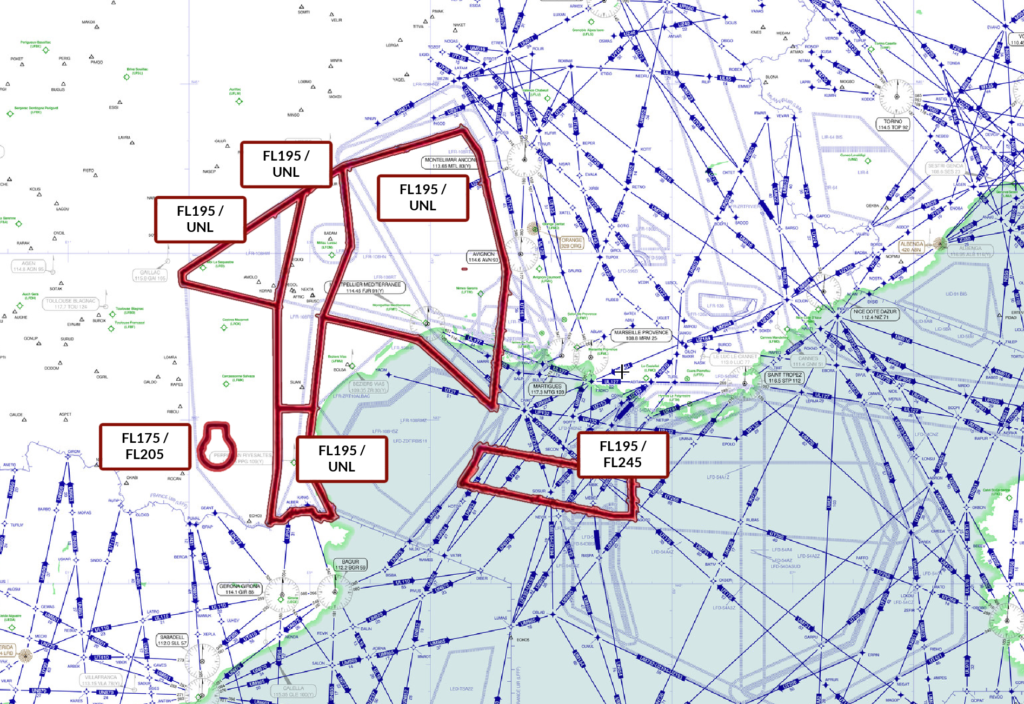
France upper level overlay.
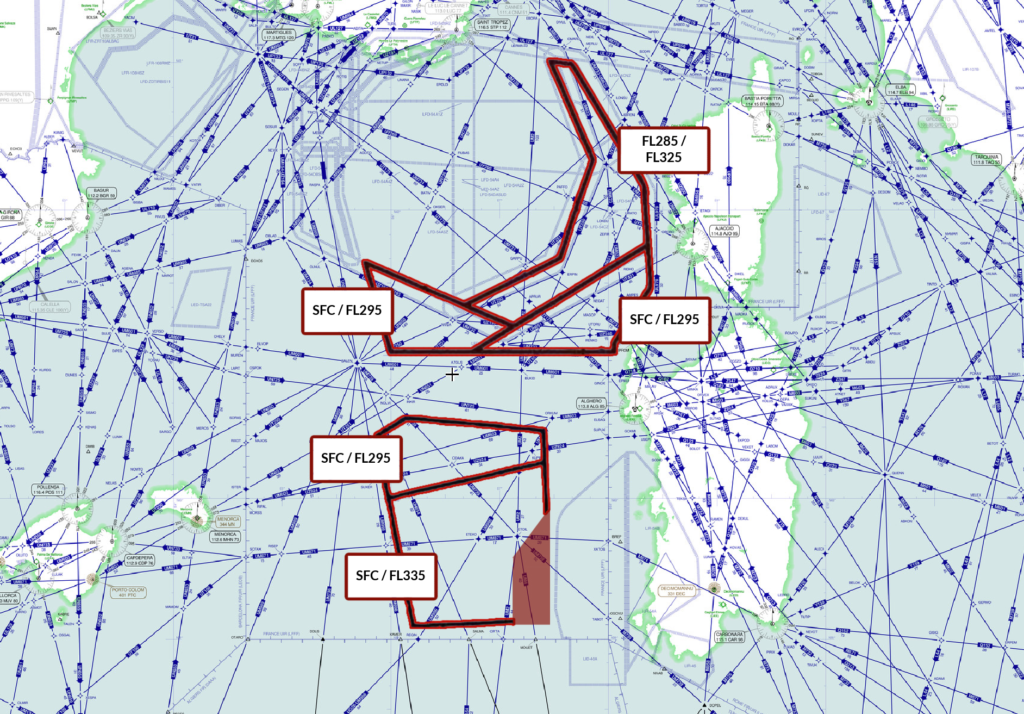
Mediterranean upper level overlay.

Because there are various different areas scattered across the region, flights may be disrupted in the areas between resulting in significant re-routes for overflights, with the impact felt across France and into UK airspace with NATS managing the routings that end.

A summary of possible threats:

  • Re-routes and inflight delays
  • Congested airspace resulting in slots and disruption, possibly cancellations
  • Reduced diversion options in France during exercises
  • Military traffic to watch out for
  • Complex danger and prohibited areas across multiple levels and regions to be aware of

There will be more information though right?

Yes, plenty hopefully:

  • AIP SUP is due out imminently.
  • Eurocontrol are expected to run some conferences on this which will be announced by their Network Operations Portal here.
  • The specific danger and prohibited areas will have notams issued closer to the dates.

You can find a calendar of NATO planned exercises here to give a heads-up on future plans (and AIPs and Notams to look out for).

So, watch this space and be prepared for some frustrating planning and routing disruptions through Feb and March, and again in April.
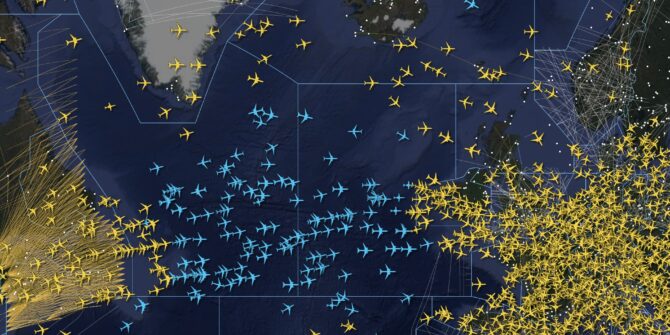
NAT Ops: Atlantic Thunder 22

Remember that big NAT military exercise a couple of years ago? And then the one that happened last year (Formidable Shield) around May time?

Well, now Atlantic Thunder is happening, which means once again large parts of North Atlantic airspace will be closed to all flights for several hours at a time.

Not quite as big as Formidable Shield though, but still big enough to have a conference about it.

The Conference.

They are holding one so you can find out exactly what the deal is.

Join it by visiting the Eurocontrol NOP page and find the link there under ‘latest news’. They have one before each of the days where the most impact is expected, so the first takes place on September 6th at 14:30 UTC (and then on the 8th and the 10th).

The Event itself.

Atlantic Thunder will take place from September 1-12, but the main exercise takes place on the Sep 7 (or Sep 9 or 11 if it doesn’t go ahead on Sep 7).

The official PDF issued by Shanwick is available here, and has lots of lists of everything closed and when…

We prefer pictures though.

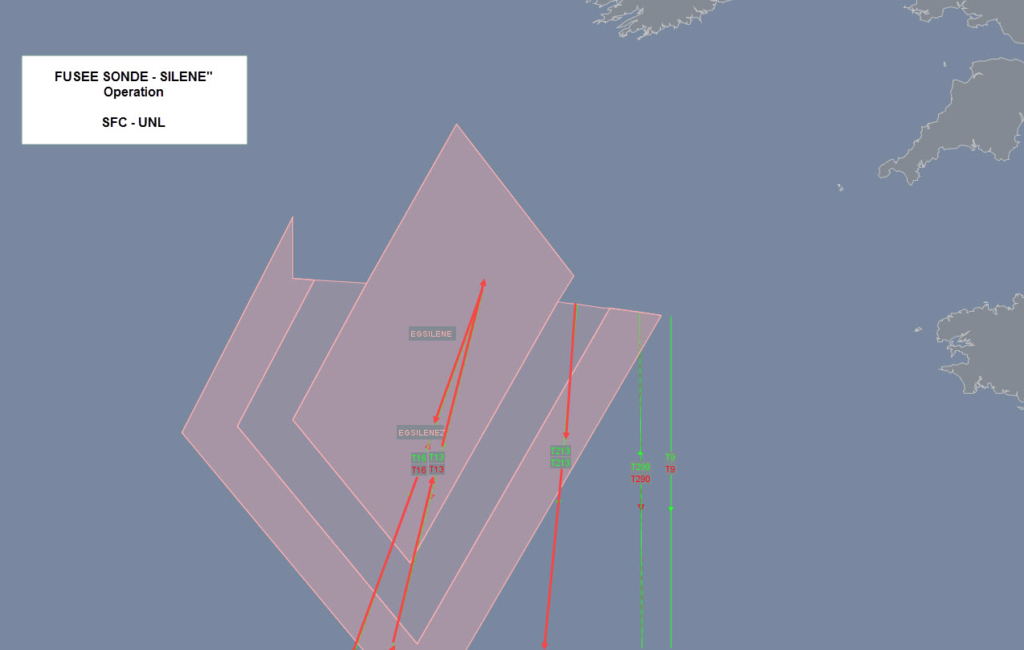
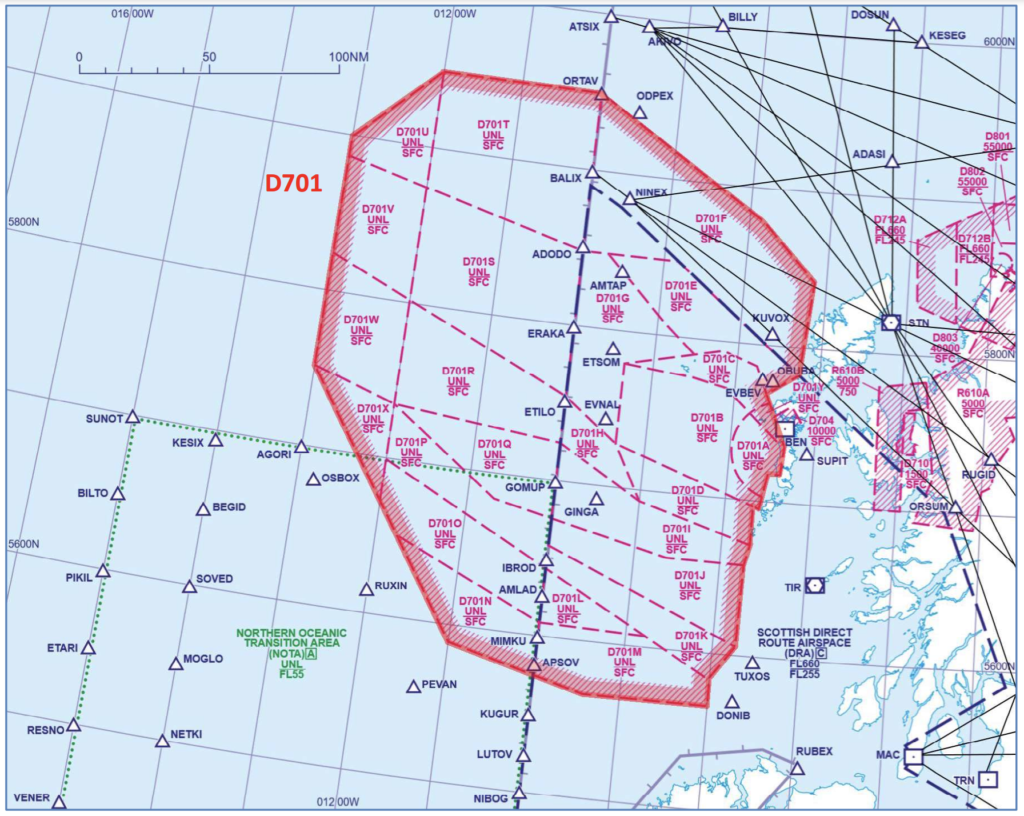
So first up, danger area EGD701 

This area is tricksy because as you can see, it is made up of loads of smaller bits that can be activated at different times (and to different levels). They affect a bunch of the routes out of the NAT HLA, and potentially both the EGGX/Shanwick and EGPX/Scottish FIRs.

Initially it will be closed 1-6, and then on the 12th as well. The timings are annoying. Sometimes it is FL200, sometimes it is FL270, but then bits of it, between 1400-2359, are shut to FL UNL.

Like we said, tricksy.

But then…

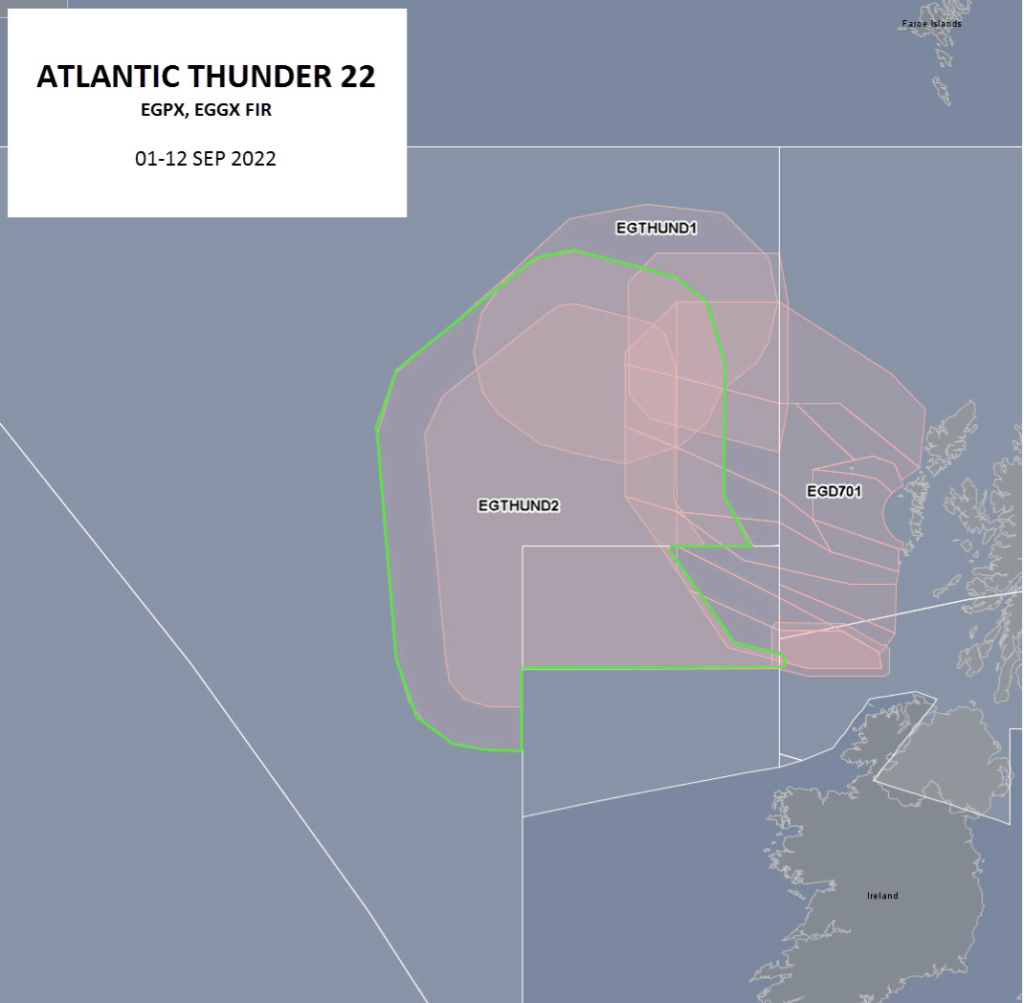
But then there is Configuration 2 which involves the closure of EDG701 and also EGTHUN1 and EGTHUN2, which is a bigger area looking like this –

Of course, they only publish the exact timings and configurations 24 hours in advance so you’re going to have to keep your eyes out for Notams and info on those.

Routing around the closed airspace.

Aeronautical Information Messages (AIM) will be issued prior to the start of each exercise, which will include suggested routings for flight planning around the closed areas.

Traffic overflying around these closed areas can expect to get 30NM separation if in NAT HLA airspace (FL285-420), or 60NM separation if flying at lower levels.


May’s Military Exercises in Europe

There are a bunch of military exercises scheduled in Europe for May. Normally we would just pop out a few little alerts on them, but there are enough big ones that we thought a post combining them might also be handy.

Or you can go look on the Eurocontrol Operations Portal.

The Operations Portal hurts my eyes. Just tell me now.

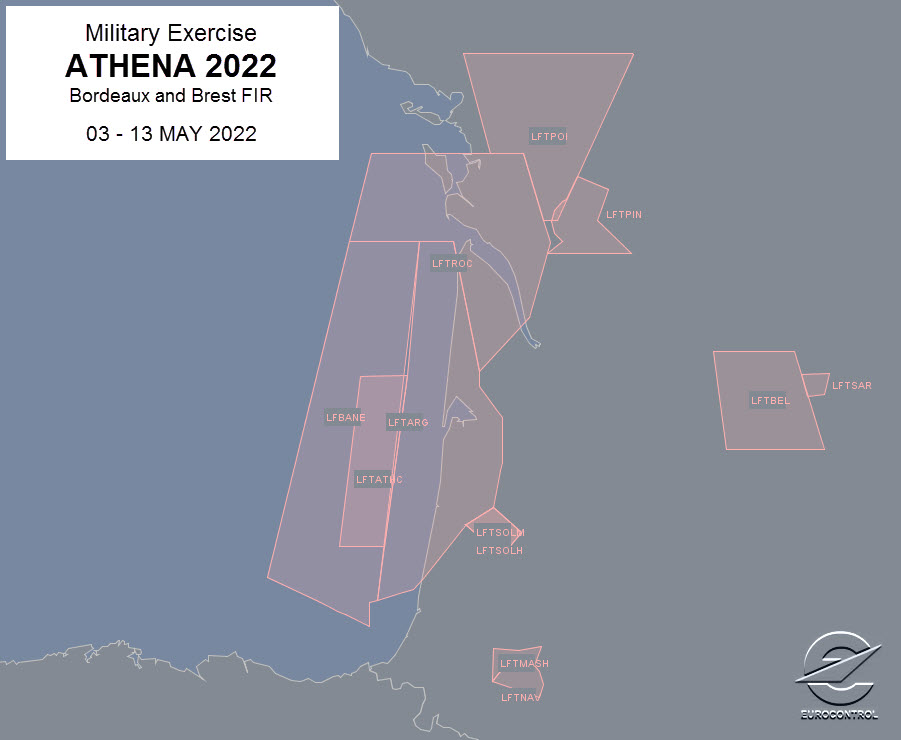
Athena 2022

First up, starting with the biggest, is ‘Athena 2022’. You know its a big one because it is named after the Goddess of War…

This takes place in France between May 3rd and 13th, with the main exercises on the 10th and 11th.

It involves a lot of aircraft at all levels, and live firing which means some prohibited airspace in the affected FIRs – namely LFFF/Paris, LFRR/Brest and LFBB/Bordeaux. That said, the live firing is all scheduled to take place at night so the operational impact is only low to medium.

Read all about it here in the French AIP SUP 083/22.

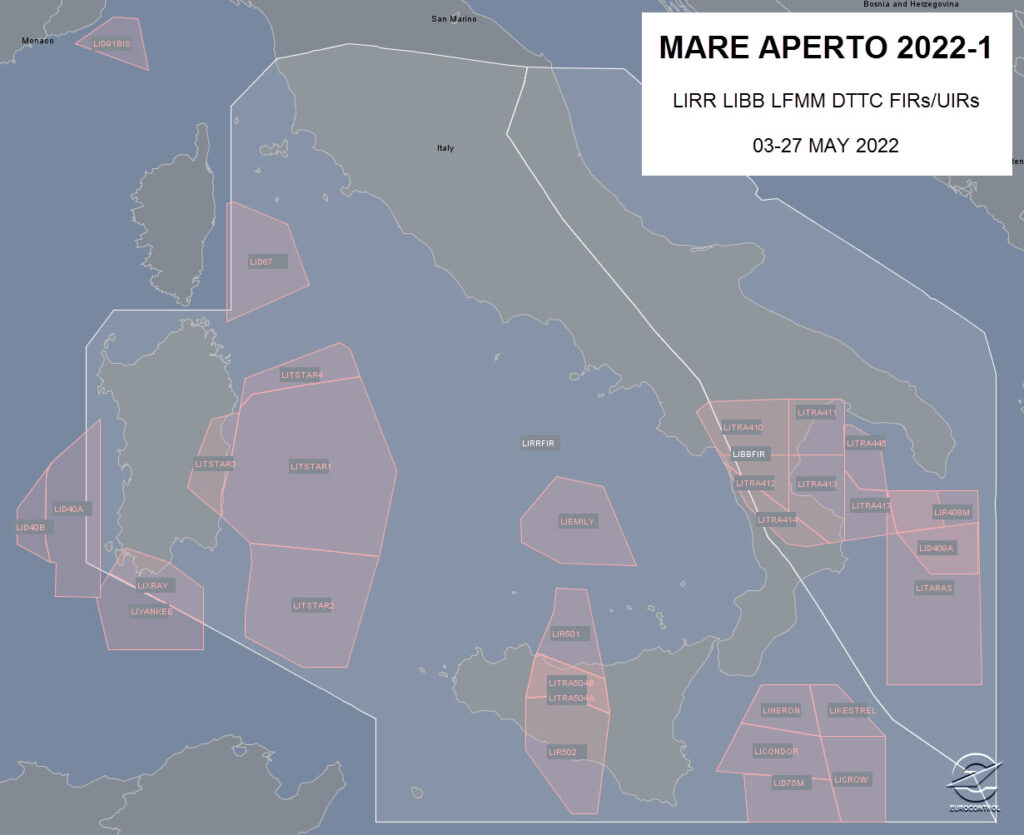
Mare Aperto

Another big military exercise, ‘Mare Aperto’ takes place in Italy from May 3-27. The LIRR/Roma, LIBB/Brindisi and DTTC/Tunis FIRs are the main ones to be impacted.

It is described as a ‘multinational large scale exercise, involving naval and air assets’ and is expected to have a low to medium operational impact.

Again, there are some forbidden areas which will be activated at different times to keep an eye out on normals or read all about it here in Italian AIP SUP S3/22.

Swift Response 22

Less big, this takes place in Lithuania from May 3rd to 16th and is only expected to have a low impact.

Lithunia’s AIP SUP 004/2022 tells you all about it.

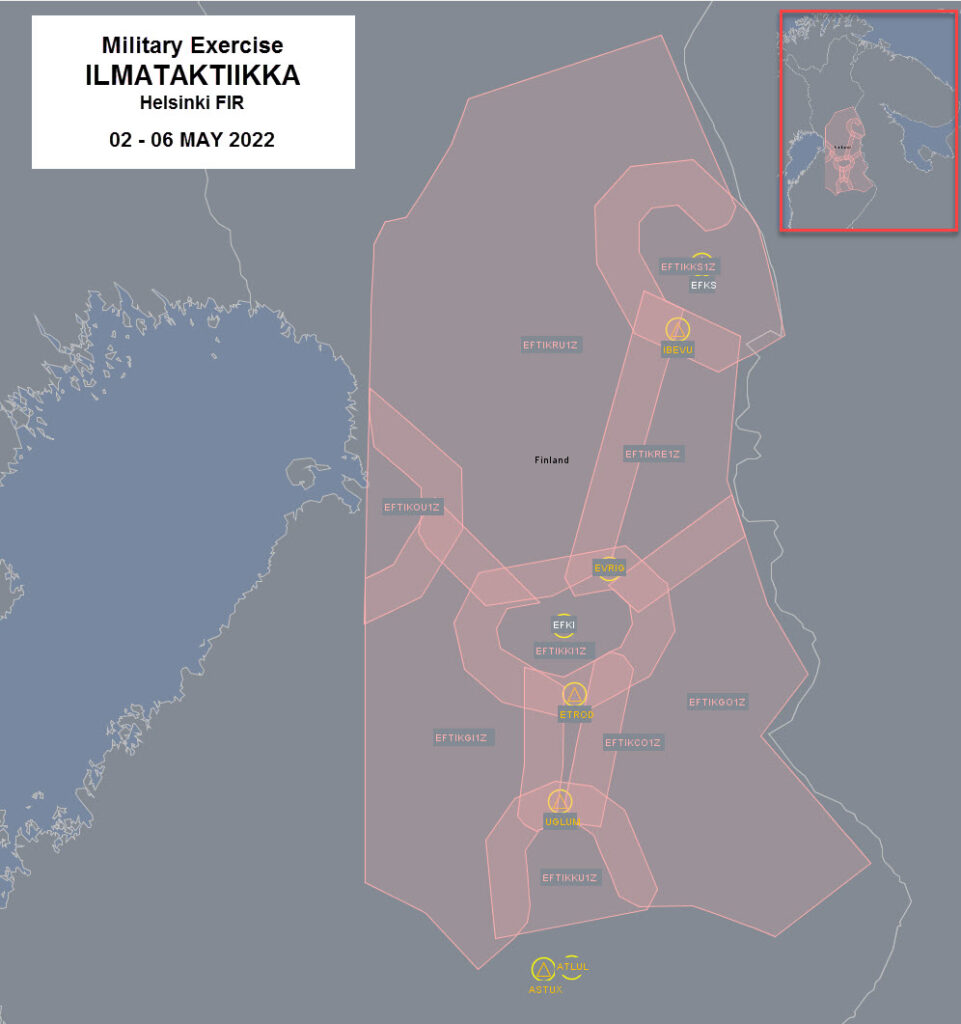
Ilmataktiika

Last but actually not least is ‘Ilmataktiika’ which I thought might mean something exciting, but actually just translates as ‘Air Tactics’ (quite obvious in hindsight).

This takes place in Finland daily between May 2-6. There are the usual danger zones, but they also have some big buffer zones in this one so it impacts quite a large chunk of the EFIN/Helsinki FIR.

AIP SUP 04/2022 from Finland has the full info.

They published some flight planning ideas for this one, which are useful if you’re going to be below FL110:

DEP EFKI: ETROD T95 UGLUM DCT ASTUX …
ARR EFKI: … ATLUL DCT UGLUM T95 ETROD
DEP EFKS: IBEVU DCT EVRIG DCT ETROD T95 UGLUM DCT ASTUX …
ARR EFKS: … ATLUL DCT UGLUM T95 ETROD DCT EVRIG DCT IBEVU


The Missile that Missed by a Mile (or 25)

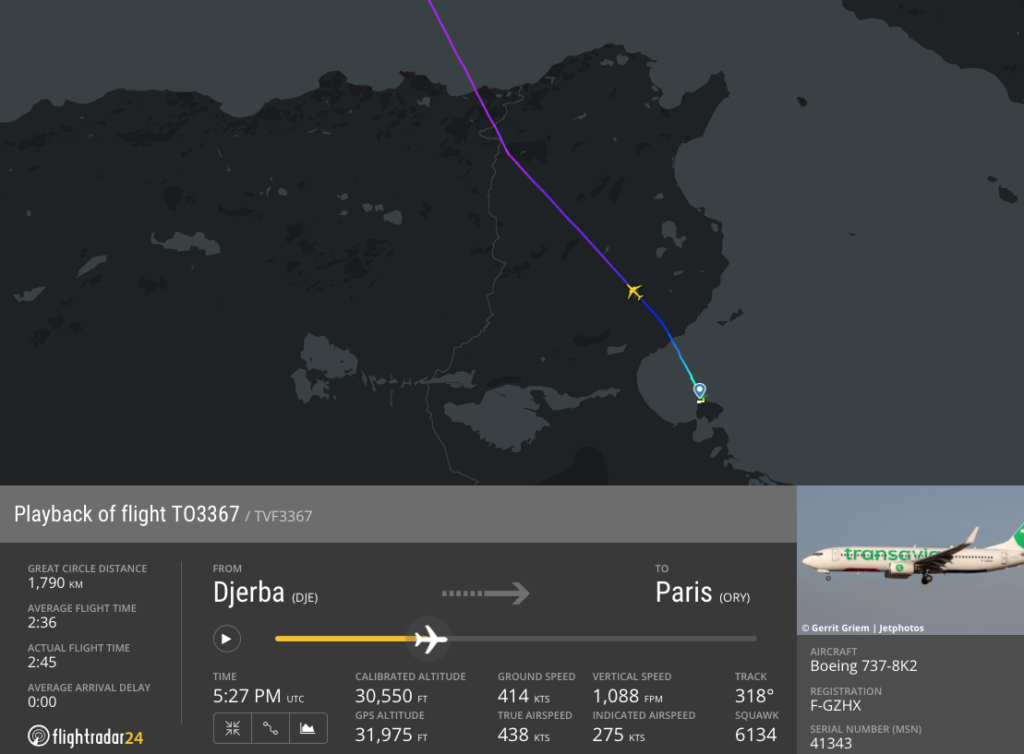
On October 6, 2021, a Transavia Boeing 737-800 was routing from DTTJ/Djerba, Tunisia to LFPO/Paris Orly when they reported seeing a missile explode in what they thought was close proximity to the aircraft.

The Flight Report

TO-3367, registration F-GZHX was climbing through approximately FL300. Their position was around 80nm north west of DTTJ/Djerba, and about 110nm south of DTTA/Tunis when they reported a missile exploding in their 10 o’clock position, at the same altitude, and in close proximity. A second aircraft in the area also confirmed seeing an explosion.

When reported, ATC advised there was an active military area approximately 25nm west.

Where did it happen?

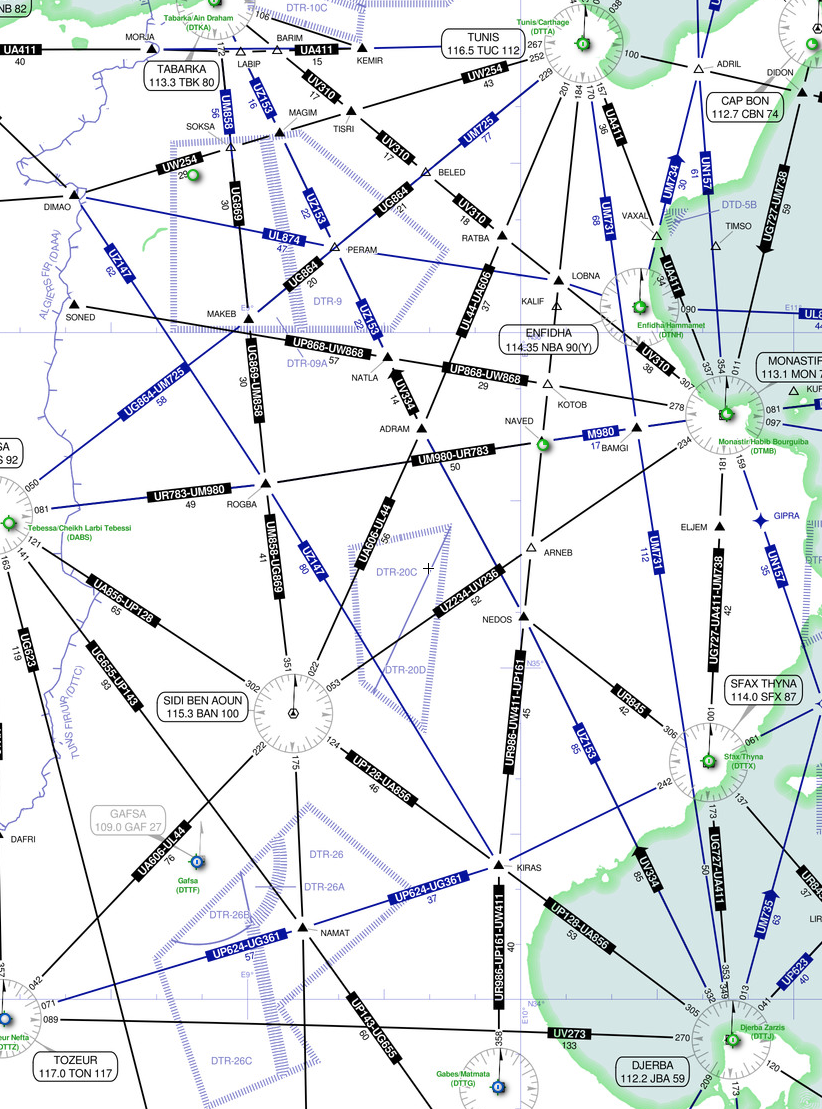
The FlightRadar tracking of the flight suggests they were likely routing along the UZ153 airway.

Waypoint NEDOS appears to correspond with the approximate position of the aircraft, and this lies to the east of the DTR-20C/DTR-20D military zone suggesting this is likely to be the zone where activity was taking place.

What does the Tunisia AIP say?

ENR 5.1 – 4 details DTR 20c and 20D as being active for military exercises in VMC only. It is operational Monday to Friday from sunrise to sunset and on Saturdays from sunrise to 1300. The limits are FL105 to FL245.

Are there other active areas?

Search Notams for the DTTC/Tunis FIR and you will find a long list of military activities and firing exercises.

The ‘firings’ are for guns, rockets or missiles, but at low levels (below 2,500’ msl for the most part). The military activities are of more interest because they are not all bounded by published restricted, danger or prohibited areas, meaning you are going to need to check these by plotting them out.

A2070/12 reserves an airspace which reaches from 13,000’ to 30,000’. A second some extends from FL100 to FL250, advised via Notam A2072/21.

There are also Notams advising that ‘due to military activities new corridors are being implemented’.

While these did not impact the Transavia flight, and do not necessarily mean any risk for overflying traffic, they do pose a threat simply because of the upper limits and the sheer number of spots to avoid.

So was there a risk here?

The unusual element of the Transavia incident would be the proximity of a major airway to an active missile firing zone, or rather the firing of a missile which may have reached altitudes above the published upper limits, in close proximity to a major airway. 

However, this assumption is based off the crew’s observation of the missile altitude. Tunisia does not reportedly possess missiles which are capable of reaching altitudes of 30,000′, and the difficulty in accurately observing the altitude of an ‘object’ at a distance with little external context is extremely hard.

An investigation is underway but a highly probable explanation is that the crew misjudged the altitude and proximity of this missile, and no risk occurred.

Should we watch out for military exercises?

Military exercises are common, particularly across Europe, and Eurocontrol notifies of these via its Operations Portal. These often utilise airspace which has some impact on commercial operations. 

The airspace closures are advised via Notam and AIP SUP, and where required, alternative routes are advised to ensure flights are not planned through the airspace.

For the remainder of October 2021 the following exercises are planned:

Flight planners and crew should be aware of these, but generally flight plans which attempt to route through prohibited or restricted airspace will be rejected, and ATC will prevent flights from entering areas during weather avoidance or other route detours.

What can we do to maintain safety near military zones?

During any operation operators, flight planners and the crew should remain vigilant in reading Notams and ascertaining which military areas are active, the altitude of activities and restrictions or prohibitions which might affect their safe routing.

GPS jamming around major military sites is also worth considering.

Safeairspace provides information on conflict zones, and airspace where risks are high for overflying traffic.

North Korea, and certain airways which route close to their airspace and the Sea of Japan are worth mentioning because of North Korea’s recent number of un-notified missile tests.