New FAA Airspace Warning: Mali

On Feb 23, the US FAA re-issued its warning for overflights of Mali, with one essential difference:

It is now dangerous to overly Mali’s airspace at all levels, not just below FL260.

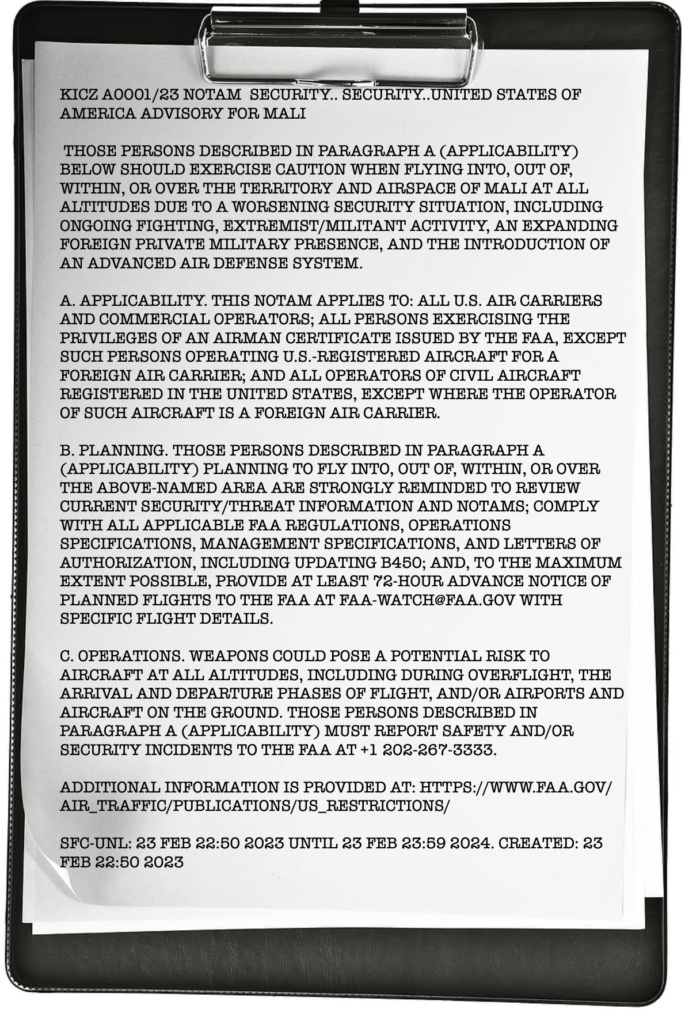
Here is what the new KICZ Notam says:

So what’s changed there, and why is the FAA so concerned?
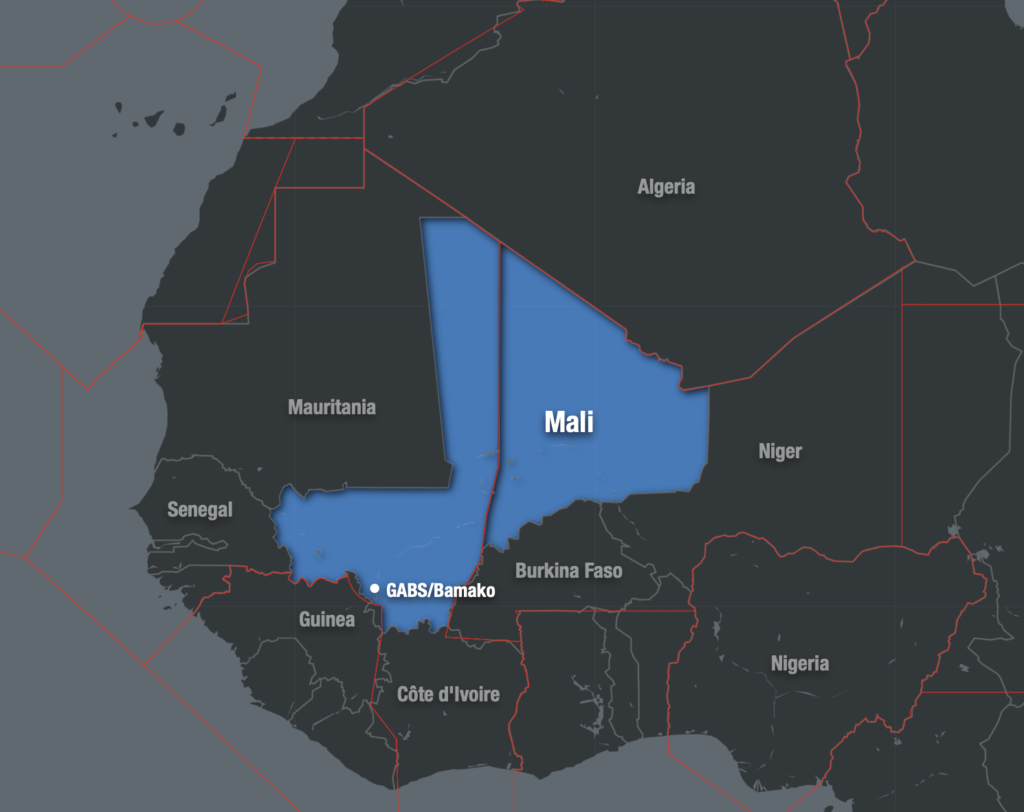
The Stage

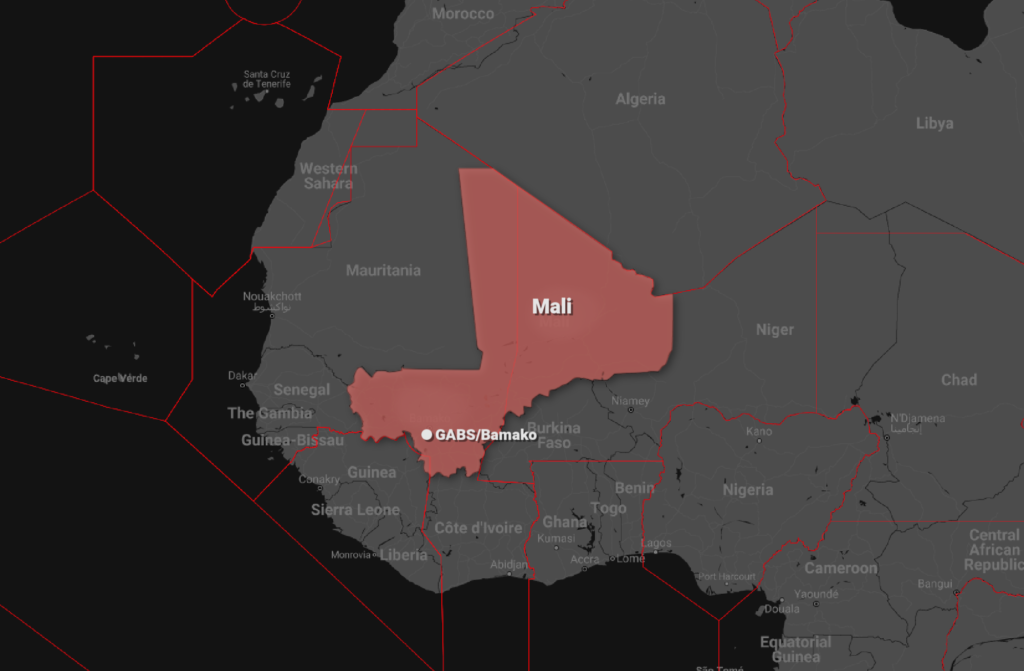
Mali is a large land locked country in Central Western Africa and borders several states including Niger, Algeria, Mauritania, Guinea and Burkina Faso.

Several major high altitude airways run through the country facilitating traffic both north and south, and east and west. They are major thoroughfares through the heart of Africa, which is why this new warning is significant.

Mali’s borders (blue) do not match the FIR regions for the airspace (red).

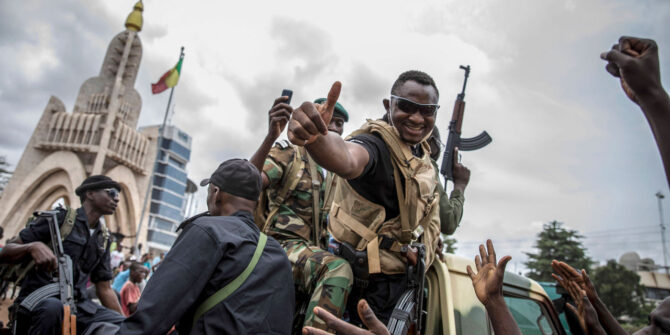
In the past three years Mali has suffered from continuous political instability after two armed coups – the first in 2020, and then again in 2021. This has been compounded by delays in holding an election.

It was dropped from ECOWAS (Economic Community Of West African States) as a result, and has faced several international sanctions. 

It has a long history of insurgent militant activity who oppose the government, along with the intervention of foreign military to try and restore peace and stability.

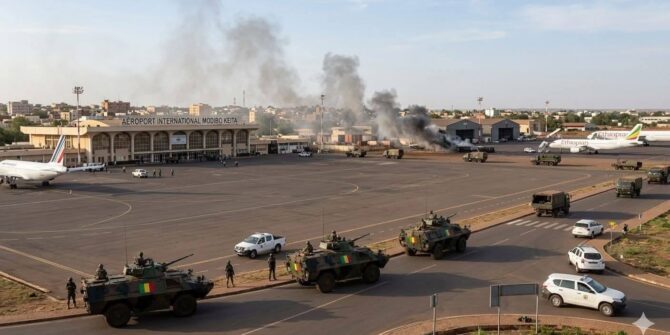
Despite best efforts, insurgent militia have continued to spread and strengthen in Mali allowing well funded groups such as Al Qaeda to increase their presence there. Military operations and terrorist attacks have become more frequent.

Of special concern is the fragmented tri-border region that divides Mali, Burkina Faso and Niger. It is a hotspot for fighting that targets both the existing government, along with the foreign military presence.

What has changed?

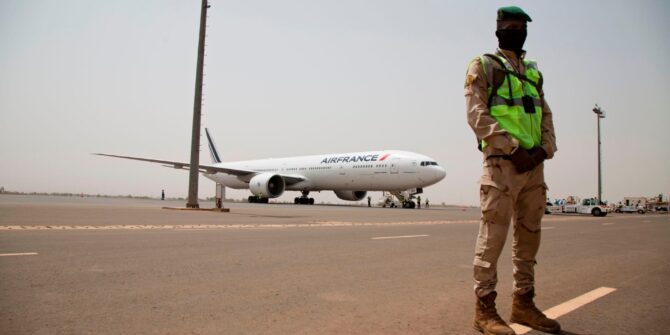
Hot on the heels of the new KICZ Notam, the FAA has published a new information note which raises major red flags to anyone considering overflights.

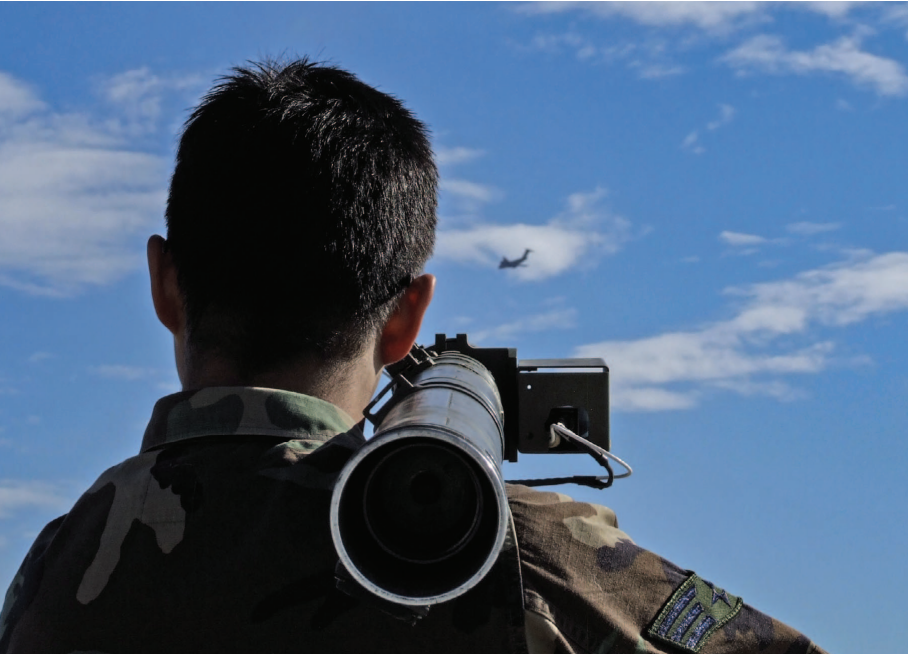
Historically the concern to aviation in Mali has been from militant use of MANPADs (man portable air defence system) to target low and slow flying aircraft up to FL250.

However as the transitional government continues to fight against insurgent militia, their emphasis has moved from the support of foreign peacekeeping forces to the use of private military. One in particular is of major concern – the Wagner Group.

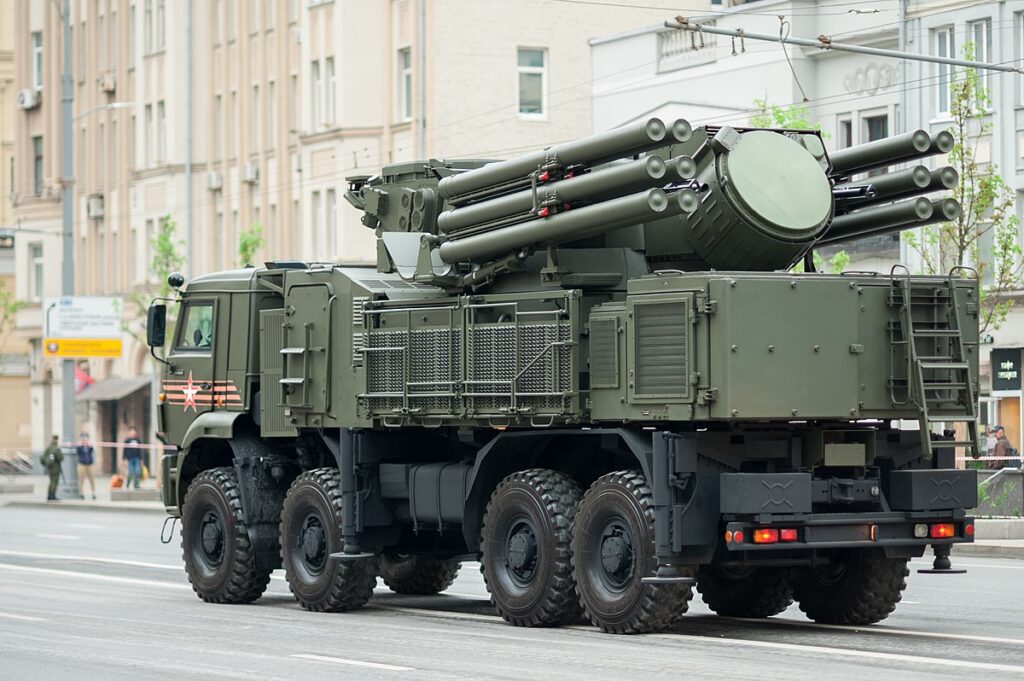
In Spring last year, this Russian backed paramilitary group has deployed over one thousand troops in Mali near Bamako, along with an advanced radar guided air defence system capable of targeting aircraft as high as FL490. A similar system was used to shoot down MH17 in 2014.

This radar guided system is now present in Mali, which can target aircraft as high as FL490.

While there may be no specific intent to target civilian traffic, the FAA suggests the Wagner Group have a sordid history of unprofessional and heavy handed air defence activity. This was previously evident in Libya, where US operators have been completely banned for some time.

What we’re now seeing in Mali is that civilian aircraft may be at far greater risk of advanced anti-aircraft fire through mistaken identity or mis-targeting, which can likely reach higher than you can fly.

The risk is now two-fold.

The existing risks are still present – militant groups continue to be active with MANPADS. They are likely to target foreign and local military forces which are often located close to international airports including GABS/Bamako.

MANPADS are a known risk in Mali, and typically endanger aircraft flying low and slow. Landing and take-off are especially vulnerable times.

At higher levels, aircraft are now at risk from radar guided air defence systems that may be used with little verification that their target is correct.

It is a dangerous brew.

Why the FAA has only cautioned US operators, rather than ban them as is the case in Syria, Libya and Iran among others where similar weapons are also present is a question we don’t have an answer for yet.

We are actively seeking more information.

I still want to overfly. Can I?

Yes you can, but it’s dangerous at all levels. Once again, the new Notam is a precaution, not a ban. The new KICZ Notam allows room for you to do so, provided you:

  • Take into account all current security and airspace warnings and perform your own risk assessment.
  • Comply with and update your OPSPEC/LOA B450 approval to operate in internationally sensitive ares.
  • Where possible, provide the FAA with at least 72 hours notice via FAA-WATCH@FAA.GOV
  • Report any safety or security issues ASAP to the FAA on +1 202-267-3333.

Where to from here?

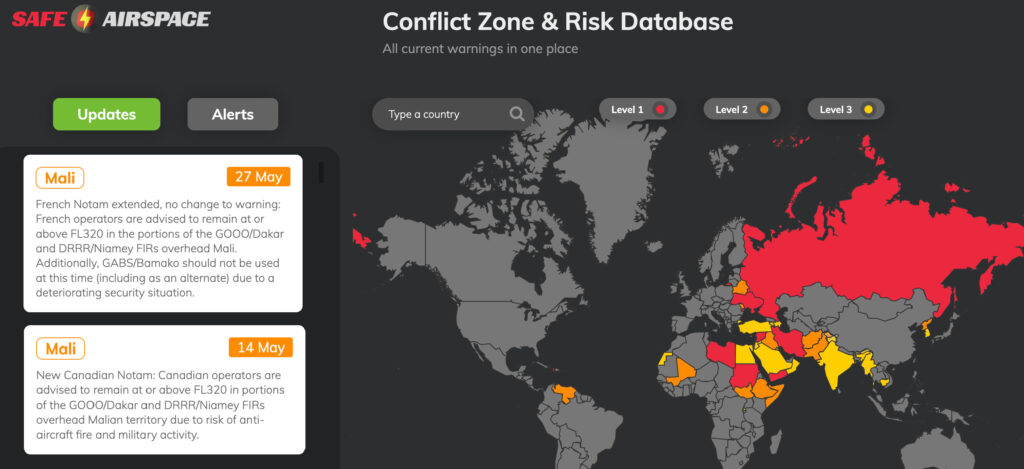
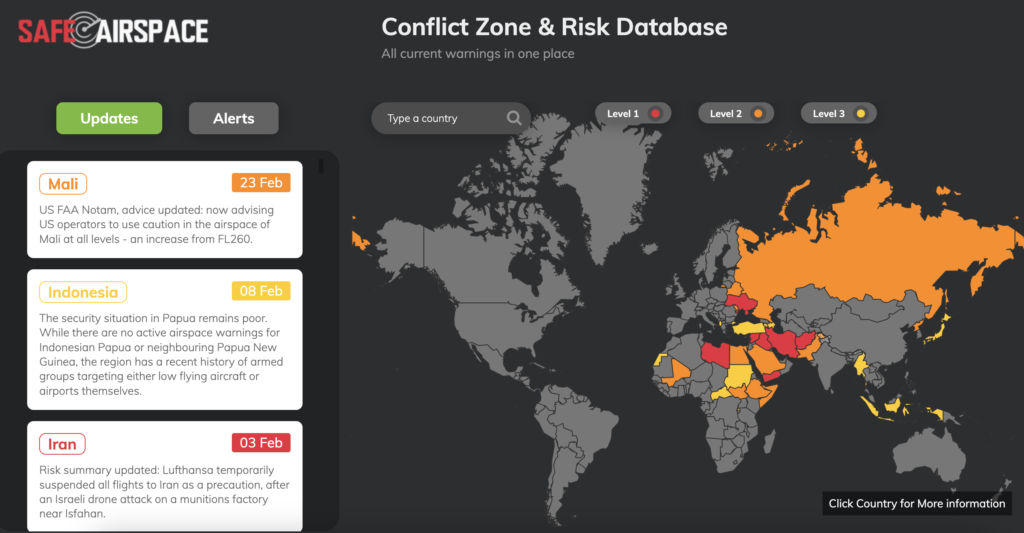
We will report on any new FAA information on the situation in Mali as it becomes available, along with any other security or risk alerts. These will be published on OPSGROUP, along with safeairspace.net – our free risk and conflict zone database.


Sanctions-hit Mali bans flights from neighbouring countries

Update March 10:

ECOWAS (14 of Mali’s neighbour countries) has extended their sanctions against Mali, and in response, Mali’s land and air borders are still closed to traffic routing direct from an airport in ECOWAS to Mali. Although international flights can operate into Mali, and overfly ECOWAS and Mali, permits for Mali are problematic as must be approved by the military and then the CAA.  Mali is relatively high risk due to internal conflict and instability.


Story from Jan 20:

Mali underwent a military coup in 2020, and authorities have reneged on an agreement to hold elections in February 2022, delaying them instead to December 2025.

The result is a series of escalating sanctions from Mali’s neighbouring countries which are now impacting aviation in Mali.

What measures have been taken?

The Economic Community of West African States (ECOWAS) – a 15 state regional bloc – have condemned the Malian authority’s actions as an act of “taking the Malian people hostage.”

The result is the suspension of Mali’s membership in ECOWAS and sanctions including the freezing of assets and suspension of non-essential financial transactions. Fuel supplies are still being  permitted via regional borders at this time.

Neighbouring countries have closed both road and air borders with Mali. These closures are so far limited to preventing Mali registered aircraft movements and trade.

Then on Jan 10, Mali closed its own borders in protest. Several airlines have since cancelled flights, citing “security risks”, but have not provided further detail.

There is no indication international flights overflying Mali airspace are impacted, and GABS/Bamako airport remains open for flights to/from non-ECOWAS countries.

What might these risks be?

Security and safety in the capital, Bamako, is a high cause for concern and authorities warn against all but essential travel here. 

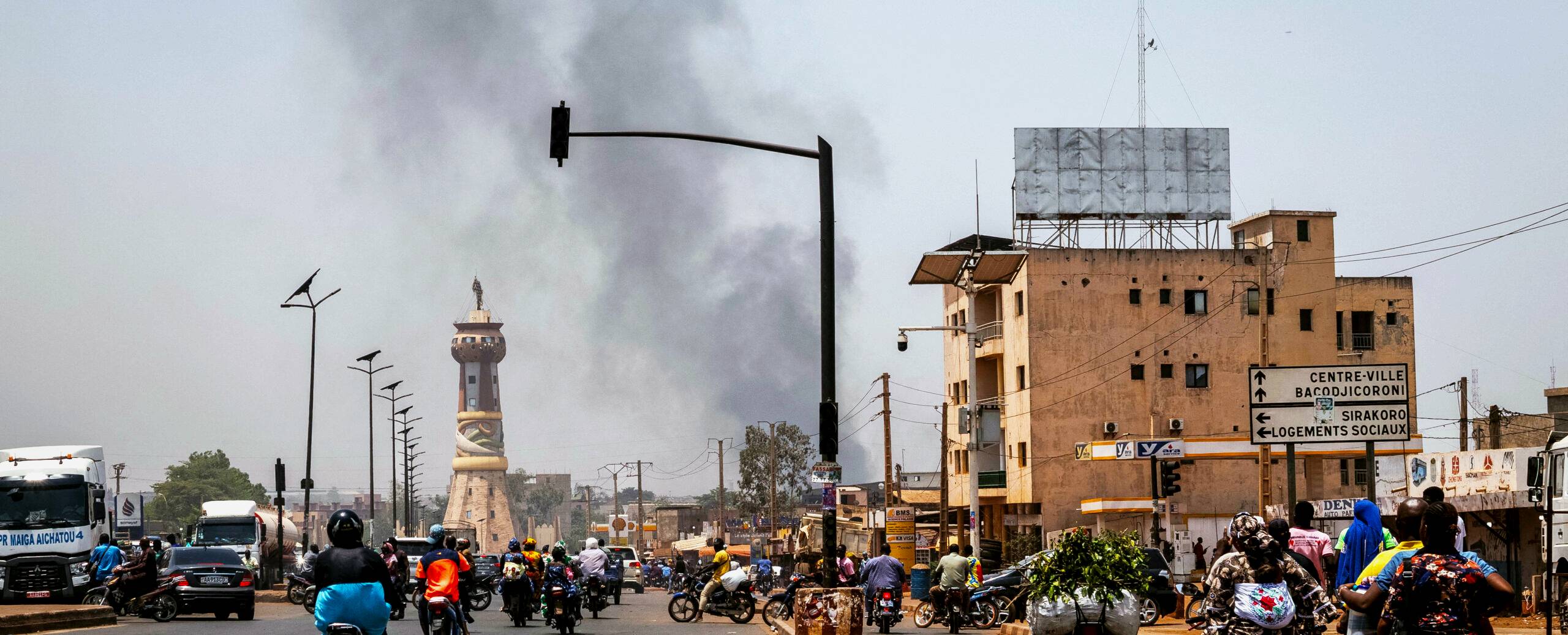
Large scale protests which may escalate to armed conflict are likely in Bamako as political volatility increases. Heightened security and transport disruptions are likely. Safety may be impacted if protests and riots become violent.

What risk warnings are currently in place?

Current warnings in place relate only to the ongoing threat from terrorist and militant activity. We wrote this piece in 2017 which discusses various risks including that posed by ground weapons. These risks remain and full details can also be found on the Safeairspace page.

Several countries have warnings in place advising caution if overflying or operating in Mali airspace below FL260 due to ‘ongoing fighting and extremist/militant activity’. Militants often target UN or Malian forces bases, however these are often based in close proximity to Malian civil airports and so attacks might indiscriminately impact civilian operations as well.

GABS/Bamako operations

Bamako International airport is a relatively important one due its position on the continent. It is a major alternate for western and southwestern coast airports such as GOOY/Dakar, Senegal. The interior of Africa provides few diversion options so Bamako also serves as a good en-route option.

The Risk to Aviation

The current airspace risk remains the same. The risk to safety and security on the ground may be deteriorating as political and civil conflict escalates, and armed protests and riots occur. Sanctions against the country by the region will likely also lead to more volatility. 

Contact information if operating to Mali

Permits are required for any flight looking to overfly or to land in Mali. These can be obtained from the aviation authority ANAC – +223 20 20 55 24 / +223 20 20 29 05 / survol@anac-mali.org

For more info on what services are available at GABS/Bamako airport, get in touch with local FBO Aurora Aviation: +971 4 523 5888 / ops@aurora-aviation.aero


Bamako Airport reopens following military coup

Bamako Airport has reopened following last week’s military coup which overthrew the government, though monitor GOOO/Dakar FIR and GABS/Bamako Airport Notams for further – it may change.

The Bamako TMA (which sits under the GOOO/Dakar FIR) remains operational with overflights unaffected.

ICAO is actively monitoring and ensuring that there is a timely flow of information on continued airspace/ATC service availability. MedAire have given us a local situation update: with the continuing uncertainty they recommend against overnights until things settle. There is likely to be a high demand for emergency/evac flights in the coming days, and they recommend those to be quick in and outs for now.

Meanwhile, the Northern Mali conflict continues, and there have been no improvements in stability. The US, Germany, France and the UK all have airspace warnings in place, advising to operate FL250/260 or higher, and avoiding GATB, GAGO, and GAKL airports. We would suggest, as usual, that a higher level closer to FL300 is more sensible.

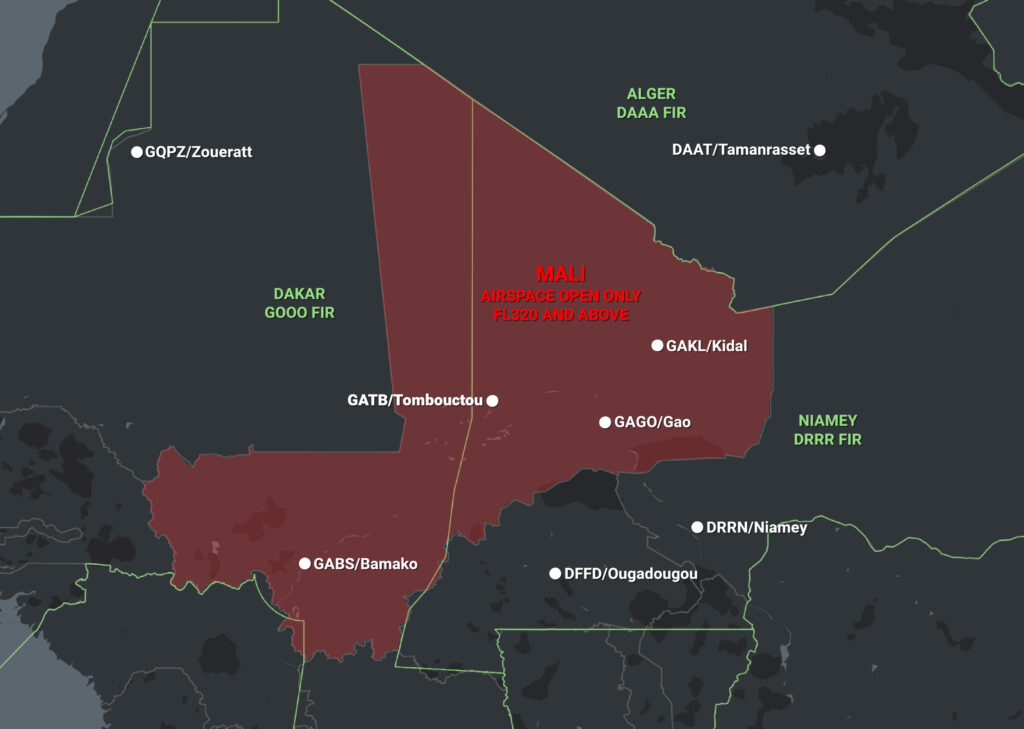
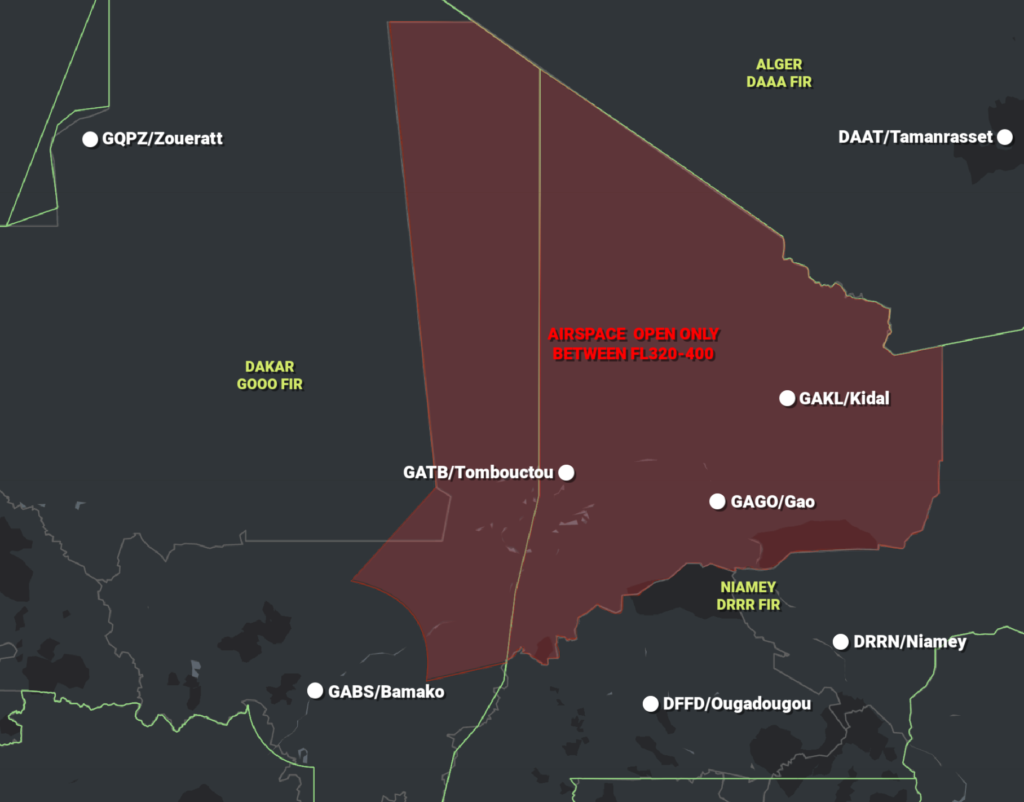
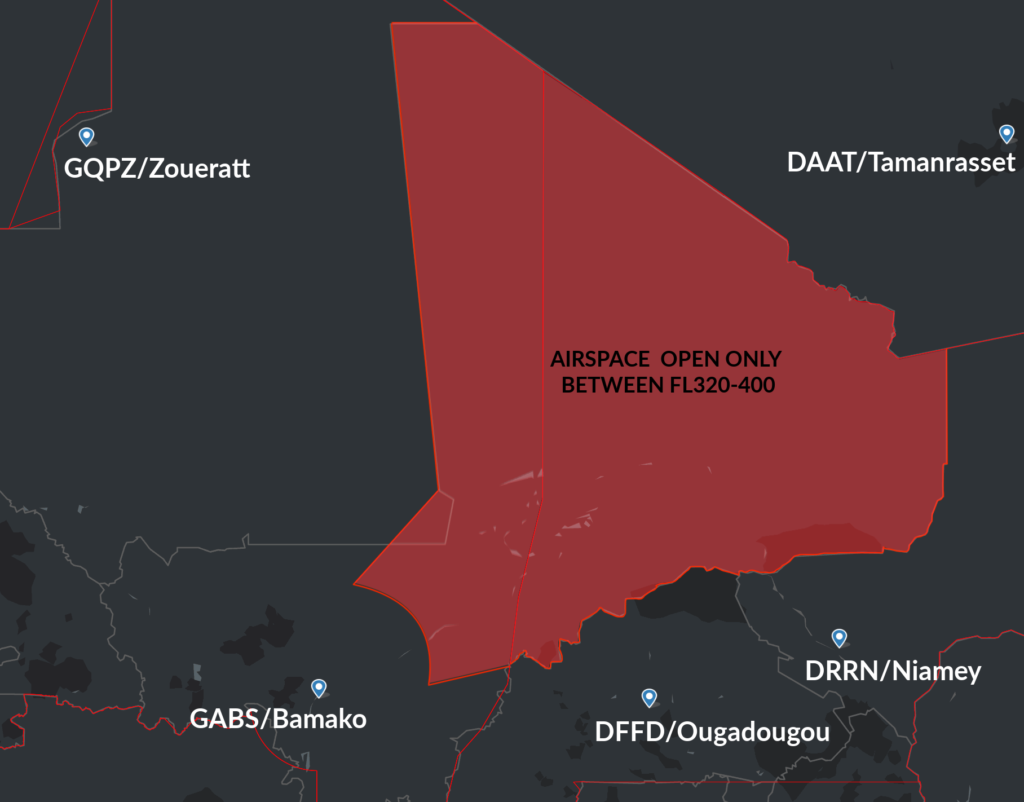
Senegal and Niger control the airspace over Mali, and they have long-standing Notams (published under the GOOO/Dakar and DRRR/Niamey FIRs) warning that you can only fly between FL320-400 through the entire airspace in Mali north of the GABS/Bamako TMA due to military ops across the region. Here’s what that looks like:

The UK recommend against all travel to northern Mali, and against all but essential travel to the south of the country, including Bamako. The US advice is more straight-forward: do not travel to Mali due to COVID-19, crime, terrorism, and kidnapping.

For more info on operating in this region, check out SafeAirspace.net


Fresh warnings as FAA clarifies weapons risk in Kenya, Mali airspace

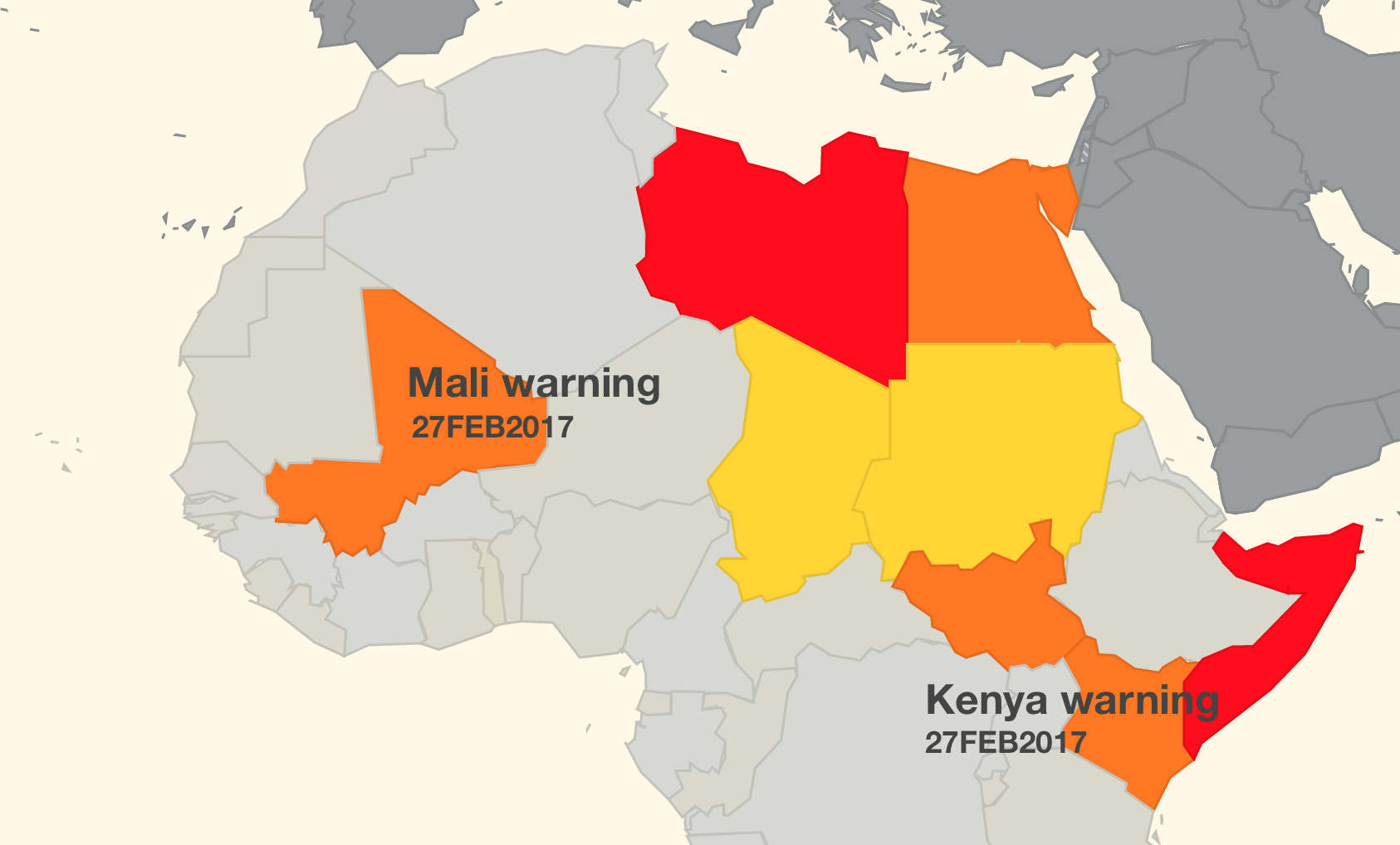
Feb 27th, 2017: The FAA has issued fresh warnings for Kenyan and Malian airspace, warning US operators of the potential dangers in operating through both the Nairobi and Malian FIR’s.

Published on Feb 26th, the new advice also adds new language with clarification of the type of weapons and phases of flight that the FAA is concerned about, specifically:

  • fire from small arms,
  • indirect fire weapons (such as mortars and rockets), and
  • anti-aircraft weapons such as MANPADS.

The scenarios considered highest risk include :

  • landings and takeoffs,
  • low altitudes, and
  • aircraft on the ground.

The FAA uses the same wording for both Kenya and Mali. Additionally for Mali, the Algerian CAA has concurrently published airspace closures along their southern border due to the conflict, and the FAA’s background notes on the Mali conflict still stand.

The updated guidance is intended for US operators and FAA License holders, but in reality is used by most International Operators including EU and Asian carriers, since only four countries currently provide useful information on airspace security and conflict zones.

The Notams both use FL260 as the minimum safe level, though we would suggest, as usual, that a higher level closer to FL300 is more sensible.

These updates have been notified through SafeAirspace.net, a collaborative and information sharing tool used by airlines, business jet operators, state agencies, military, and private members of  OPSGROUP.

This is the new wording in the latest FAA Notams on Mali and Kenya:

POSSIBILITY OF ATTACKS ON CIVIL AVIATION BY EXTREMISTS/MILITANTS.
AIRCRAFT MAY ENCOUNTER FIRE FROM SMALL ARMS; INDIRECT FIRE WEAPONS,
SUCH AS MORTARS AND ROCKETS; AND ANTI-AIRCRAFT CAPABLE WEAPONS,
INCLUDING MAN-PORTABLE AIR DEFENSE SYSTEMS (MANPADS).SUCH WEAPONS 
COULD TARGET AIRCRAFT AT LOW ALTITUDES, INCLUDING DURING THE ARRIVAL
AND DEPARTURE PHASES OF FLIGHT, AND/OR AIRPORTS AND AIRCRAFT ON THE
GROUND.

The NOTAMs in full are on our Kenya and Mali pages respectively.

References:

  • Kenya country information page at safeairspace.net
  • Mali country information page at safeairspace.net
  • OPSGROUP collaborative project


US, Canada may lose EU visa rights, More Free Route Airspace for Northern Europe

US and Canada may lose EU visa rights 13APR The European Commission published warning on 12APR that visa-free travel by US and Canadian citizens to Europe is at risk, due to the lack of a full reciprocal arrangement for EU citizens. Read the full article.

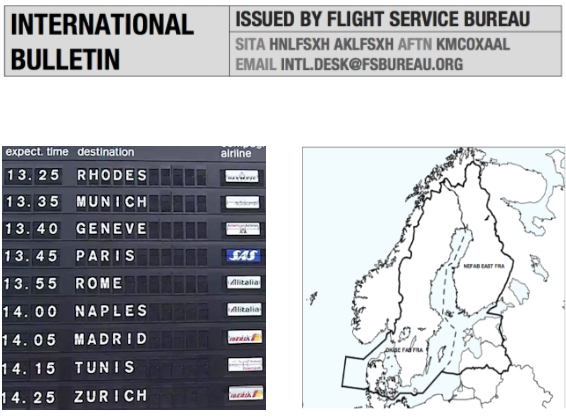
More Free Route Airspace for Northern Europe 13APR Sweden, Finland, Denmark, Estonia and Latvia will be increasing free route airspace from 23JUN16. This allows operators to utilize User Preferred Routes above FL285. Details of the implementation can be found through the AIC A3/2016 from Sweden.


RKSS/Gimpo is set to open South Korea’s first purpose-built FBO next month. It includes a passenger terminal with customs and a large hangar that can accommodate up to eight large jets. The FBO is a partnership between Korea Airport Crop and Avjet Asia.

EBBR/Brussels Controversial ATC Strike occurred without notice yesterday 12APR, restricting traffic at EBBR and in Belgian Airspace. Eurocontrol advises 4 of 6 sectors operational Wednesday 13APR, at this stage no significant further effect likely.

KZZZ/USA New security measures in the U.S. are being enacted in response to the Brussels Airport Bombings. The Senate voted to increase the vetting of airport workers, expand the number of TSA viper teams that sweep through airports unannounced to stop and search suspicious people, and double the number of TSA’s bomb-sniffing dogs. Also, local law enforcement may also conduct random checks of cars and taxis heading towards the airport.

KZZZ/USA the FAA has provided its NextGEN update for 2016. It highlights all the completed items along with the expected achievements for the year. You can find all the info through the NextGEN website.

EZZZ/Europe as of 05APR Eurocontrol as been publishing Target Time information together with Calculated Take-off time (CTOT) in the Slot Allocation and Slot Revisions Messages (SAM and SRM). The purpose of the initiative is to provide flight crew with operational awareness of their flight’s planned time at the congestion point in the air, rather than solely providing the corresponding delayed departure time (CTOT) to implement ATFM measures.

EGZZ/United Kingdom A large scale military exercise named ‘Joint Warrior 16-1’ has been taking place since 09APR16 and will last until 22APR06. EGPX and EGTT FIR/UIRs are affected. However, low to medium impact on airline operations is expected.

LFZZ/France beginning 03MAY16 France will be implementing CPDLC services within LFFF, LFEE, LFRR, LFMM and LFBB FIR’s. The full details of the IOC can be found in AIC 10/16.

EGGX/Shanwick OCA implemented a trail of 5 minute separation minimum between aircraft which are following the same track, irrespective of whether they are East or Westbound. Full details can be found through AIC Y 022/2016.

LOWW/Vienna every weekend until 24MAY16 LOWW will be operating under single runway ops beginning 2100 on the Friday until 1600 on the Sunday. The closures are weather dependent and the closure will be recalled if the forecast calls for the use of runway 11/29. In any single runway scenario use at Vienna delays are a guarantee.

OEZZ/Saudi Arabia The U.S. State department updated a travel warning to Saudi Arabia on 11APR16. It outlines the risk to travellers due to an increased risk with the threat of terrorism.

SKZZ/Colombia The U.S. State department has updated the travel warning to Colombia. They have actually improved the travel warning as the security in the country has improved significantly in recent years. Foreigners should still exercise caution though.

LTCC/Diyarbakir is now able to handle international flights due to a new terminal building that has opened.

OLBA/Beirut two airport employees were detained on suspicion of terrorist activity involvement on 08APR16. Traces of explosives and a handgun were found on the two individuals.

DIAP/Cote D’Ivoire has reduced the passenger departure tax by 50% and have also removed the solidarity contribution tax levied on airline tickets.

GABS/Mali began renovations last month (MAR16) to increase the airports capacity to handle 1.5 million passengers which is up from the 800,000 annual passenger traffic. The project is expected to be completed by the end of the year.

View the full International Bulletin for 13APR2016


Monday Briefing: Thanksgiving ATC Traffic Plan, New Missiles Warning – Baghdad FIR

Thanksgiving ATC Traffic Plan 23NOV The FAA have published details of Traffic Management plans for the east coast of the US during the Thanksgiving holidays, effective 24NOV to 30NOV. The highest volume days will be 25NOV and 29NOV, expect delays on north/south routes to Florida during this period. Read the full details of the airspace initiatives here.

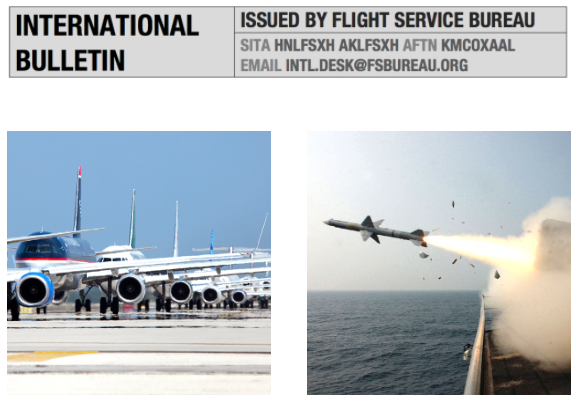
New Missiles Warning – Baghdad FIR 23NOV A NOTAM issued today by the Iraqi CAA indicated anticipated cruise missile traffic across the FIR from the Caspian Sea, leading also to the closure of Erbil Airport until Wednesday. See below for further.


EGGX/CZQX Shanwick/Gander The new NAT Track Structure and Reduced Lateral Separation Minima procdures, initially planned for 12NOV, are now re-planned for Monday 30NOV, following the resolution of computer issues related to the new format.

UIII/Irkustk will close the main runway on 01, 08, 15 and 22DEC from 1210-1450Z for repairs, not available as alternate during these times. As this is a common Polar alternate, check NOTAMS for current information.

UEEE/Yakutsk will close 31DEC-02JAN, not available for movements or as alternate after 0500Z on 31DEC.

EINN/Shannon has a runway closure on 23NOV from 2345Z-0500Z, not available as alternate. Caution before using as NAT alternate on this date. If another ETOPS alternate is required, consider EIDW/Dublin, EGAA/Belfast or EGPF/Glasgow.

ORBB/Baghdad FIR Iraq published the following NOTAM (A0413/15) effective today 23NOV CRUISE MISSILES CROSSING NORTHERN PART OF IRAQ, FROM CASPIAN SEA TO SYRIA,NORTH OF REP OTALO,NO CRUISE MISSILE OPS IN THE REST OF ORBB FIR,FLIGHTS OPERATING AT FL310 OR ABOVE AND FLIGHTS OPERATING AT ORBI,ORNI AND ORMM NOT AFFECTED. SFC – 30000FT MSL, 23NOV 0500Z – 25NOV 0500Z. In addition Erbil and Sulamaini airports will be closed until Wednesday.

OLBA/Beirut FIR Initially issued a NOTAM on 20NOV, closing a large part of the FIR including routes G2/UG2 , R219/UR219, L620/UL620, in response to Russia’s request for a training exercise in their airspace. Subsequently the government reversed their decision, and the NOTAM was cancelled on 22NOV, reference A0293/15.

BKPR/Kosovo Airspace to the north of Kosovo was released from UN/KFOR restriction, to Serbian control, on 20NOV, meaning that arrivals and departures from Europe will no longer have to make a circuitous approach and can depart to the north. Procedures are not yet in place, but technically the airspace is no longer restricted. For most operators this will see a route saving of up to 100nm.

GABS/Bamako, Mali. With great sadness we must report that 6 crew members of Volga-Dnepr Airlines were amongst those killed in the attack on the Radisson Hotel in Bamako on Friday.

KXXX/USA Thanksgiving Holidays 26NOV and 27NOV leading to increased traffic flows across US, but anticipated reduced traffic across the NAT region.

KXXX/USA Runway Closures DTW-RWY 4L/22R CLOSED SEA-RWY 16C/34C CLOSED LAS-RWY 7L/25R CLOSED LAX-RWY 6R/24L CLOSED 23/1430

FJDG/Diego Garcia Parking Stands A6-11 and B4-8, as well as some taxiways, closed for repair effected 19NOV.

NWWW/Noumea continues with runway closures 23-26NOV affecting the main runway.

FABL/Bloemfontein, South Africa will not accept widebody diversions 19-26NOV.

GCCC/Canarias FIR will have a HF outage today 23NOV from 0900-1500Z. In case of non-contact, use CPDLC, or HF via Santa Maria or Sal for relay.

LIXX/Italy ATC Strike planned for 24NOV 1200-1600Z has been postponed, refer NOTAM A8227/2015.

HLLL/Tripoli FIR Additional new southbound route available via RASNO UY751 LOSUL, for those operators using the airspace.

LFEE/Rheims ATC Strike 23NOV/0500Z – 28NOV/0500Z Confirmed for Monday only at this time – NOTAM F2093/15 refers. AOs are advised to reroute, avoiding LFEE area of responsibility. Those that are not able to reroute may expect delay.

RJJJ/Japan FIR will have a comms outage affecting Flight Plan filing on 25NOV, from 1410-1720Z. To avoid delays and missing plans, Flight Plans should be filed earlier than normal to RJJJZQZX for overflights and landings. Refer to J7545/15 for specifics.

SPJC/Lima, Peru Effective 12NOV the Location Indicator for the main airport in Lima, Jorge Chavez, changes from SPIM to SPJC.

TTZP/Piarco ATC has issued a request for operators to include KNYCZZZX when filing plans entering New York Oceanic airspace from the Piarco FIR, or operating east of 58W within the Piarco FIR, in order that New York has details of the aircraft.

With regard to business aviation, but equally interesting for airlines and private operators, the NBAA has published a useful list of the Top10 Issues for International Operators in 2016.


View the full International Operations Bulletin for 23NOV2015