Planning for “ATC Zero” events in Oceanic Airspace

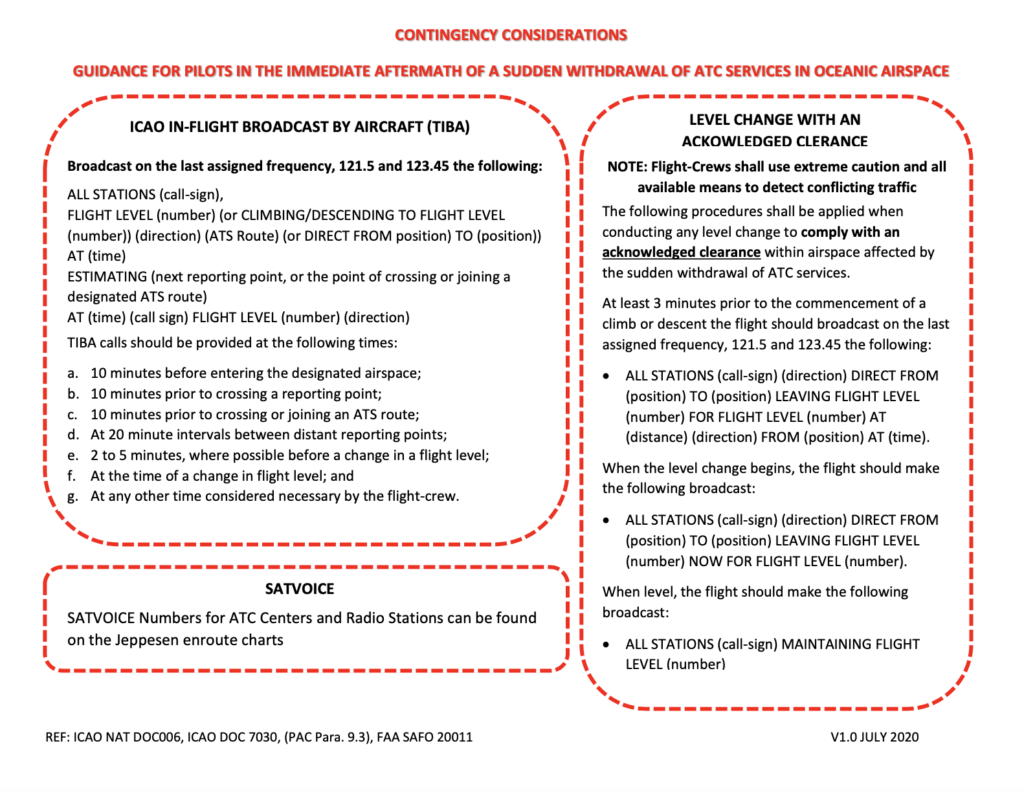
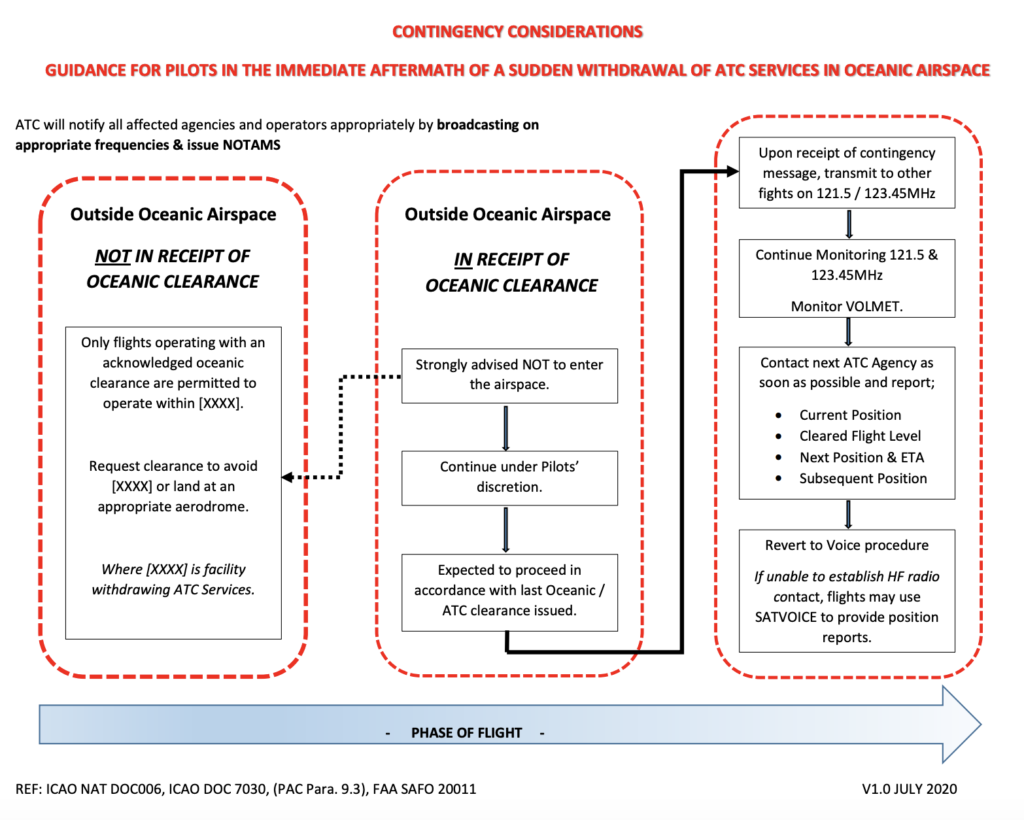
You’re halfway across the Atlantic when ATC declares that they are suspending all services. TIBA procedures are now in effect. Would you know what to do next? As Covid infections impact ATC facilities, short notice closures are currently a constant risk. With the possibility of an entire oceanic ATC area being shut down due to Covid, there are some big questions to consider, and to factor in to your planning: Are you tankering enough fuel if you suddenly have to fly around large sections of oceanic airspace? Where are your ETPs? Do you have a wet footprint?

Back in 2011, there was an incident where transatlantic flights were not allowed to enter CYQX/Gander oceanic airspace due to a smoke situation in ATC control centre which meant that controllers had to be evacuated. They issued a Notam, but that wasn’t much use to the traffic en-route at the time, which all had to be re-routed around the CYQX/Gander Oceanic FIR – a vast portion of oceanic airspace.
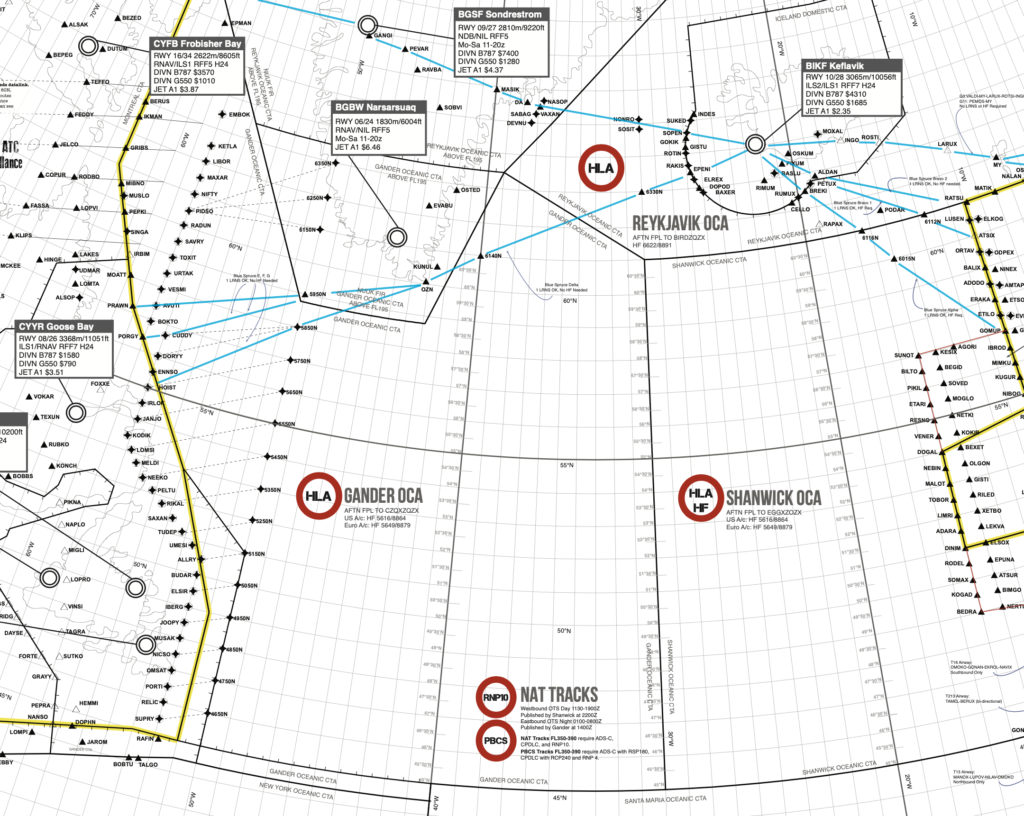
Fast forward to March of this year, where New York Air Route Traffic Control Center was forced to temporarily close due to a controller testing positive for Covid-19. The affected airspace restricted flights into New York area airports, with aircraft having to take longer routes in order to avoid closed sectors, as well as Oceanic airspace which stretches from New York past Bermuda and services flights heading to the Caribbean, Europe, South America, and Africa.

The New York ARTCC is not the only ATC center that has been affected over the past few months due to controllers coming down sick with coronavirus. Eleven sites across the US, including at major airports in New York, Chicago, and Las Vegas, have been temporarily closed for cleaning, affected flight operations. Some facilities have been closed for several days leaving inbound and departing aircraft left to their own devices for taxi, take-off, and landing.

NAT Doc 006 is the official go-to manual to check what happens during these “ATC Zero” events on the North Atlantic, but the spate of recent ATC shutdowns in the US led the FAA to re-examine the increased potential for these situations occurring during the Covid crisis, and in early July they published a SAFO as a result.

The NAT Doc 006 and the US SAFO are great resources, but here are two more which you might not know about!

Code7700.com has published an excellent 2-page crib sheet with clear guidance for pilots on what to do in these situations. You can download it here:
And 30WestIP.com have recorded a video webinar discussing this topic in more detail, which you can view here:


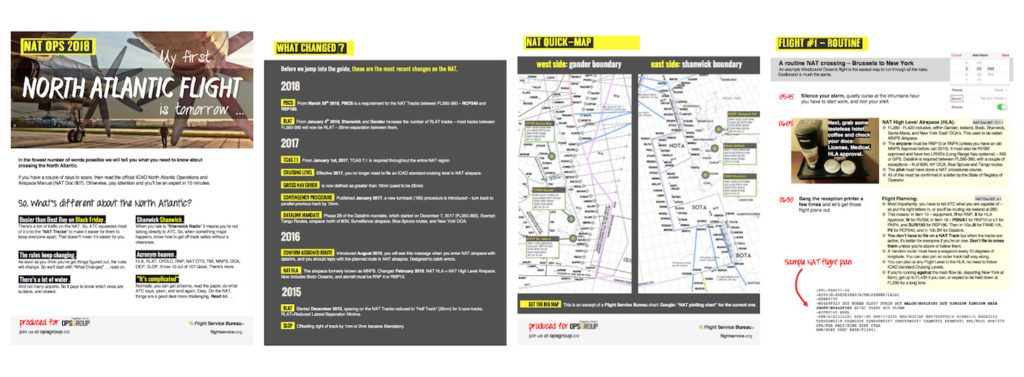
My first North Atlantic Flight is tomorrow – NAT Ops Guide (Updated 2018)

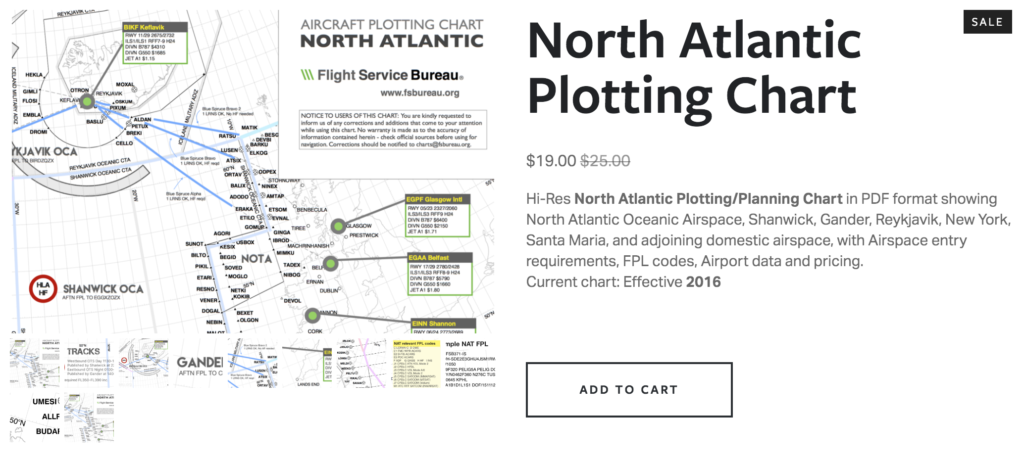
For the latest changes and updates on the North Atlantic, including our most recent Guides and Charts, use our NAT reference page at flightservicebureau.org/NAT.

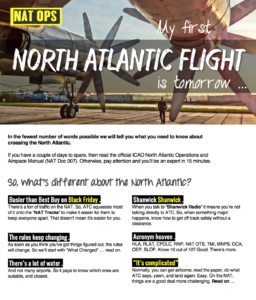
Of all the hundreds of questions we see in OPSGROUP, one region stands out as the most asked about – the NAT/North Atlantic. So, we made one of our legendary guides, to get everything into one PDF.  It’s called “My first North Atlantic Flight is tomorrow” – and now we’ve updated it for 2018!

Contents:

  • 1. What’s different about the NAT?
  • 2. Changes in 2018, 2017, 2016, 2015
  • 3. NAT Quick Map – Gander boundary, Shanwick boundary
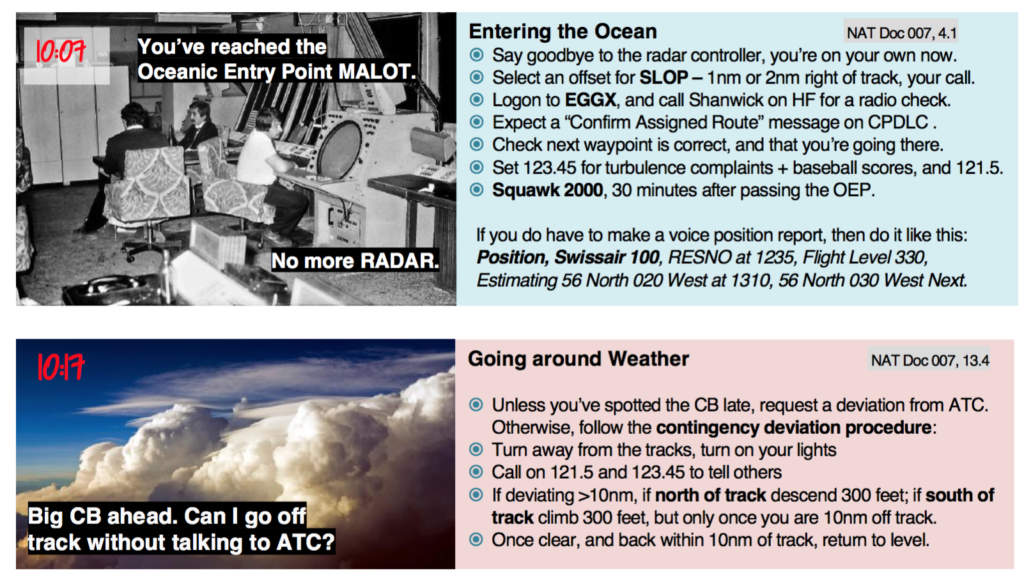
  • 4. Routine Flight Example #1 – Brussels to JFK (up at 5.45am)

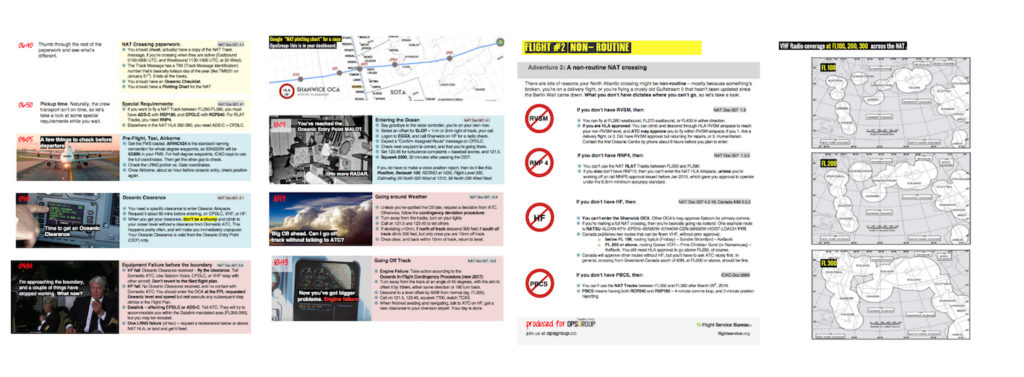
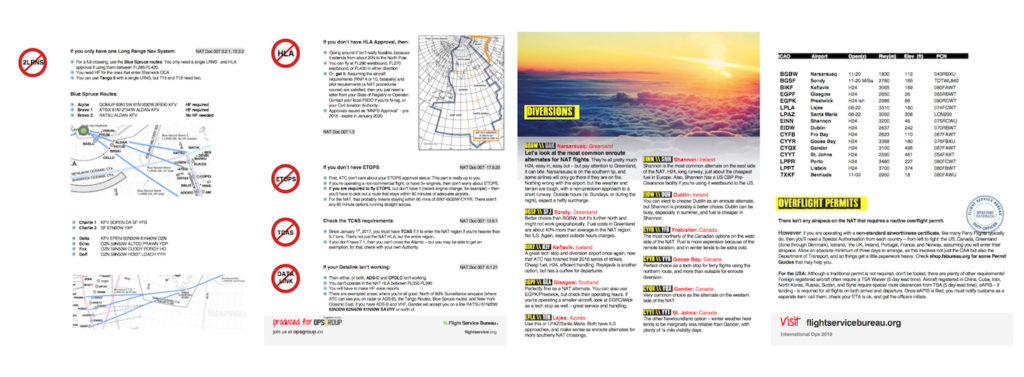
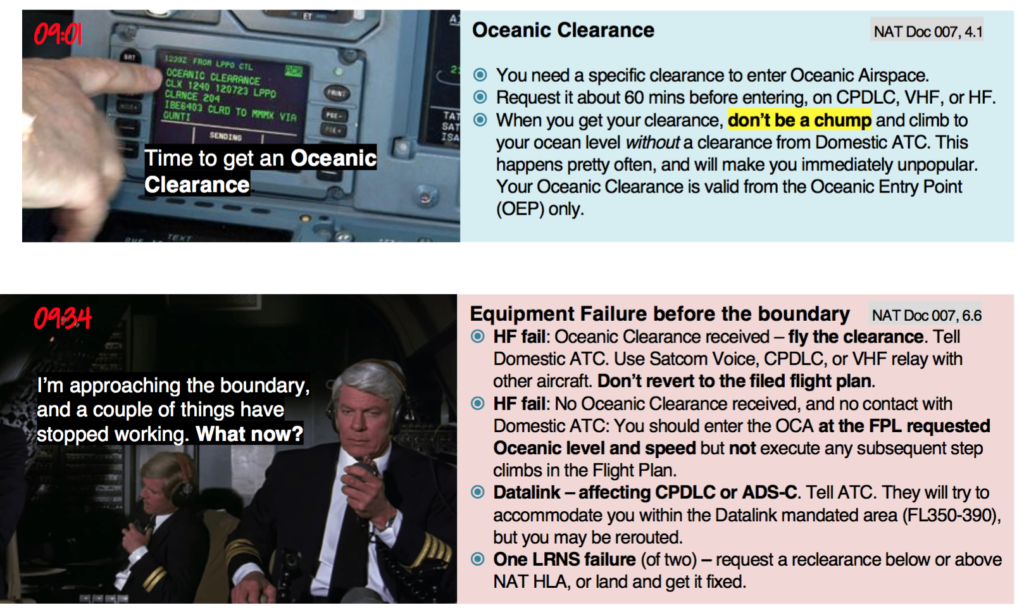
  • 5. Non Routine-Flights: No RVSM, No RNP4, No HF, 1 LRNS, No HLA, No ETOPS, No TCAS, No Datalink – what you can do and where you can go
  • 6. Diversion Airports guide: Narsarsuaq, Sondy, Kef, Glasgow, Dublin, Shannon, Lajes, Fro Bay, Goose Bay, Gander, St. Johns
  • 7. Airport data
  • 8. Overflight permits – routine and special

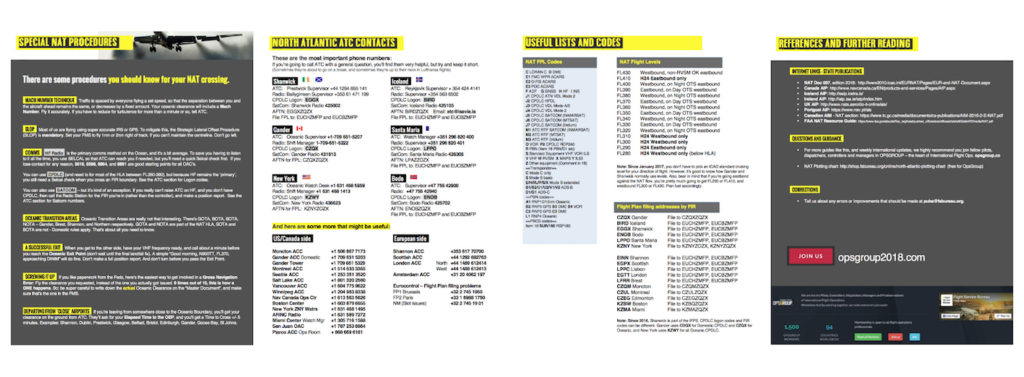
  • 9. Special NAT procedures: Mach number technique, SLOP, Comms, Oceanic Transition Areas, A successful exit, Screwing it up, Departing from Close Airports
  • 10. North Atlantic ATC contacts for Shanwick, Gander, Iceland, Bodo, Santa Maria, New York – ATC Phone, Radio Station Phone, AFTN, Satcom, CPDLC Logon codes; and adjoining Domestic ATC units – US, Canada, Europe.
  • 11. NAT FPL Codes
  • 12. NAT Flight Levels
  • 13. Flight Plan Filing Addresses by FIR
  • 14. Links, Questions, Guidance

Excerpt from the Routine Flight #1:


Buy a copy ($20)   Get it free – join OPSGROUP

To get your copy – there are three options:

  1. OPSGROUP Members, login to the Dashboard and find it under “Publications > Guides”. All FSB content like this is included in your membership, or
  2. Join OPSGROUP with an individual, team, or department/airline plan, and get it free on joining (along with a whole bunch of other stuff), or
  3. Purchase a copy in the Flight Service Store!


Iridium Fault Fixed

Last week we reported on an equipment issue with Iridium satcom that prompted a ban by a number of Oceanic ATC agencies. Some aircraft were receiving massively delayed clearances sent by ATC via CPDLC – and one took the instruction and climbed 1000 feet, even though the message was meant for the flight the aircraft operated previously.

Here were the areas which had previously published Notams restricting the use of Iridium: Brazil Atlantico (SBAO), Auckland (NZZO), Chile (SCIZ), Japan (RJJJ), Anchorage (PAZA), Oakland (KZAK), New York (KZNY and KZWY).

However, all FIR’s have now removed their notams which banned the use of Iridium for CPDLC and ADS-C. This has happened after tests were performed last week using Iridium SATCOM which confirmed that Iridium no longer queues CPDLC uplinks for more than five minutes.

Article header photo by @Zelgomat


Oceanic ATC’s tell us their position on Iridium Satcom

Last week we reported on an equipment issue with Iridium satcom that prompted a ban by a number of Oceanic ATC agencies. Some aircraft were receiving massively delayed clearances sent by ATC via CPDLC – and one took the instruction and climbed 1000 feet, even though the message was meant for the flight the aircraft operated previously.

Today, we checked-in again with all the oceanic ATC centres, to see what their current policy is on the issue.

EGGX/Shanwick told FSB that they are aware of the issue, reviewed it, but have decided not to ban the use of Iridium for either CPDLC or ADS-C just yet. LPPO/Santa Maria have the same position. So, in this airspace, you can use Iridium, for now.

CZQX/Gander said they did a safety analysis of it, and decided not to ban it. They have all kinds of conformance alerts in place to prevent any problems from happening – so if aircraft deviate they get notified immediately.

BIRD/Reykjavik aren’t that concerned about the issue – they use HF most of the time anyway.

Chile (SCIZ)
Japan (RJJJ)
Anchorage (PAZA)
Oakland (KZAK)
New York (KZNY and KZWY)
All these centres have published Notams instructing crews not to use Iridium for CPDLC or ADS-C. Until the fault is fixed, in those regions you’ll have to either use HF for ATC comms, or use another SAT provider.

Auckland (NZZO) and Brazil (Atlantico SBAO) have applied the ban to CPDLC alone. Use ADS-C if you like.


From Iridium themselves, they told FSB: “We’ve updated their queue management system. Every minute, there is a queue check. If there is any message that is older than 4 minutes, it marks as timed out, and will not be delivered. This update was done at ground level, so it does not require any software updates by the user. We’re still waiting on feedback from FAA workgroup on the fix and if it’s sufficient to allow use of Iridium for CPDLC and ADS-C.”

That’s it for now! We’ll keep you posted, or, even better – tell us below in the comment section if you hear news.


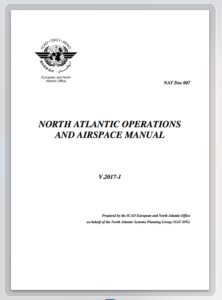
2017 Edition: NAT Doc 007 2017 – North Atlantic Airspace and Operations Manual

The 2017 version of NAT Doc 007, North Atlantic Airspace and Operations Manual, was published in January 2017 by ICAO/NAT SPG.

Download the original document here (PDF, 5mB), and see also:


Feb 15th, 2017 In the first six weeks of 2017 there have been some important changes on the NAT/North Atlantic. These are published in the latest edition of NAT Doc 007, January 2017.

  • TCAS 7.1: From January 1st, 2017, TCAS 7.1 is required throughout the entire NAT region.
  • Cruising Level: Effective 2017, you no longer need to file an ICAO standard cruising level in NAT airspace.
  • Gross Nav Error:  is now defined as greater than 10nm (used to be 25nm)
  • Contingency Procedure: Published January 2017, a new turn-back (180) procedure is introduced – turn back to parallel previous track by 15nm.
  • Datalink Mandate Exemptions: Announced January 2017, new exemptions for Phase 2B of the Datalink mandate, which will start on December 7, 2017 (FL350-390). Exempt: Tango Routes, airspace north of 80N, and New York OCA.

Feb 15th, 2017: FSB published the full NAT Crossing Guide “My first North Atlantic Flight is tomorrow“.

– What’s different about the NAT, changes in 2017, 2016, 2015, NAT Quick Map
– Routine Flight Example #1 – Brussels to JFK (up at 5.45am)
– Non Routine-Flights: No RVSM, No RNP4, No HF, 1 LRNS, No HLA, No ETOPS, No TCAS, No Datalink – what you can do and where you can go
Take a look.