International Ops Bulletin

Hey! Are you here for our World Famous International Ops Bulletin? The one where you get all this weeks new dangers and changes in International Ops? The one that 50,000 people read every week?

Cool. Here’s how to get it.

Every Wednesday, OPSGROUP issues a weekly International Ops Bulletin for International Pilots, Dispatchers, ATC, Regulators, Authorities, Airlines and Aircraft Operators.

We cover this weeks changes to International Flight Operations – Airports, ATC, Procedures, New rules, Visas, Airspace alerts, Weather issues, and warnings and dangers to international aviation.

You got choices:

  1. Get the free version. Grab a copy!
  2. Join OPSGROUP and get the full version.


Want to see a sample first?

Sure thing. It looks a little like this (click to open the full sample):


Saudi Ops for Hajj 2021

Hajj is the annual pilgrimage to Mecca, which means a change in traffic density and also some flight restrictions into Saudi Arabia.

The Hajj period this year is July 17-22

However, with current quarantine measures (1 week in a hotel if you haven’t been jabbed), the increase in inbound traffic might start a little sooner.

Where in Saudi?

OEJN/Jeddah and OERK/Riyadh airports are the two main entry points to Saudi Arabia for those attending Hajj. In fact, to fly in here during Hajj period your passengers may well need special Hajj visitor visas, or will likely experience some pretty long delays in customs.

Use these airports as alternates with caution during this period because traffic is going to be much higher even this season (2021) when visitor numbers are restricted. You might also experience delays if a VIP is landing as they tend to add in security measures (which can include holding other aircraft if there are enough “V”s before the “IP”)

Where else?

OEMA/Madinah can also see more traffic since those holding Visit or Seasonal Work visas are often transferred via here instead.

OETF/Taif Regional airport is also apparently open for Hajj flights if you are moving people domestically.

If you are planning on operating a Hajj charter

You are going to need to get a request in with the GACA (General Authority of Civil Aviation) Administrative Liaison Center. There are quite strict quotas because they want a 50/50 split with Saudi air carriers so an early request is a good plan.

We suggest doing it through an authorized agent like fbo@spa.sa – these folk are nice and responsive.

Operations requests have to be sent to GACA through official channels. Hajj flight schedules should sent via e-mail to: hajflights@gaca.gov.sa

You can find a bunch of useful info on how to apply for that here. Actually, if you are thinking of operating a Hajj flight then definitely read this since there are a lot of things you need to be aware of. It is the official GACA produced ‘Hajj Instructions Governing the Carriage of Pilgrims by Air’.

Airspace Warnings

There are a fair few in place for the south-western region of the Jeddah FIR. The general view is to avoid that part of the Jeddah FIR, and avoid Yemen, and anywhere near the Yemeni border.

It is also worth reading up on the ESCAT procedures Saudi Arabia have because an escalation in attacks is possible during Hajj season, particularly with a focus on Riyadh and Dammam airports due to the higher numbers of traffic. Basically, if they activate, you will have to follow exactly what ATC tell you and will probably be required to land at the nearest suitable aerodrome, or leave Saudi Airspace right away.

Any other alerts I should know about?

We have a few alerts out at the moment for Saudi Arabia including one about hotel room shortages. Anyone who is unjabbed needs to quarantine for at least a week so these have been filling up fast.

Crew are exempt from quarantine but do still need a PCR test less than 72 hours old.

Hajj Routes

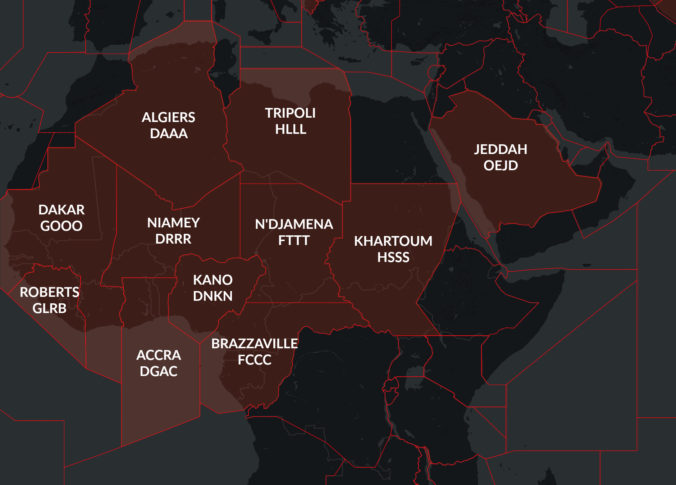
Usually, ASECNA put out an AIP SUP for Hajj routes through Africa, because the number of Muslims routing from Africa to Saudi Arabia means changes to the traffic flows and standard routings are required so ATC can deal with it all.

Normally, traffic is very much north-south predominant, with Europe-Africa flights being the main flow. When Hajj operations start up, a good amount of traffic starts operating east-west (ie. Africa-Saudi Arabia and vice versa), and this is something to be aware of when cruising along at FL330 with spotty HF comms.

However, we haven’t seen one published yet this year, possibly because numbers are so restricted. So keep on a look out, and listen out if routing through Africa just in case.

Where can I find more info?

You can find it right here with this handy list:

Finally, if you are flying any Muslim passengers and they ask which direction Mecca is in, then there is a waypoint MECCA which you can use to find the bearing.


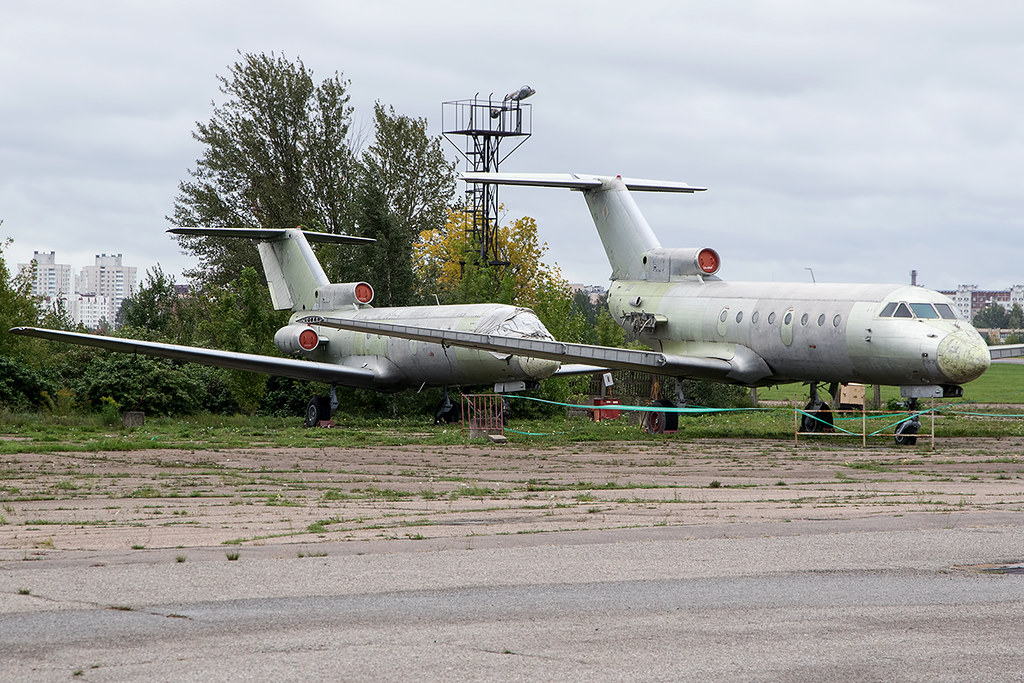
Belarus: A closer look at their aviation industry

Belarus is in the spotlight at the moment for their recent, controversial decision to force a foreign civilian aircraft to land under false pretences and for political reasons.

We thought we would take a look at their aviation industry, what you might experience if operating into the region, and a brief review of what it will mean if other countries ban use of their airspace.

Who is ‘Belarus’

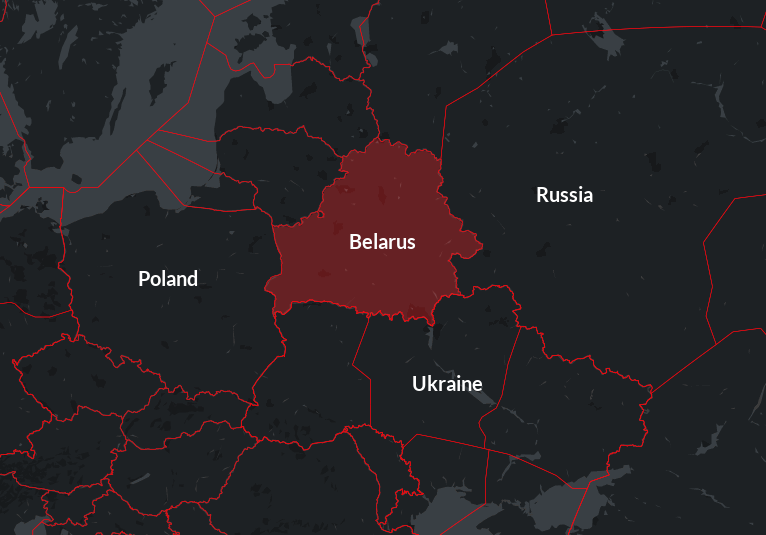
The Republic of Belarus is a landlocked country in Eastern Europe. They border Russia, Ukraine, Poland, Lithuania and Lativia. The capital is Minsk. Before gaining their independence in 1991, the country was known as Belorussia, or ‘White Russia’, and was a small Slavic Republic included in the Soviet Union (along with Russia and the Ukraine.)

The are considered a developing country and rank pretty high on the Human Development Index. They are a member the UN and have a decent bilateral agreement with the EU, but are not a member of it.

Tell us about their airports.

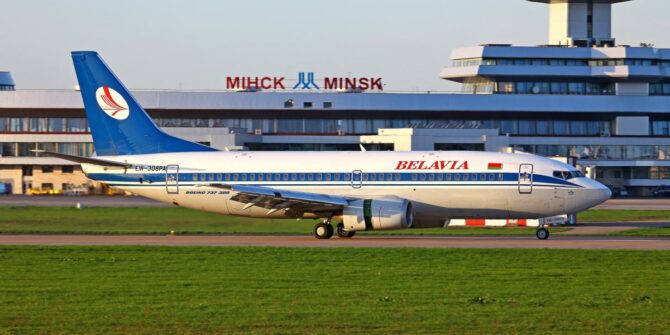
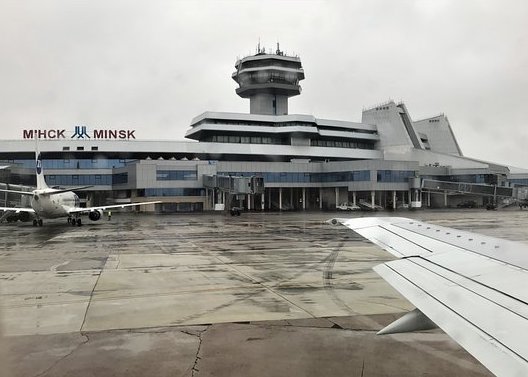
The main international airport is UMMS/Minsk:

  • 13R/31L    11,946ft/3641m    ILS CAT I
  • 13L/31R    12,139ft/3700m    ILS CAT III / CAT I

It is a decent airport with good facilities and no major threats for operating in.

Aside from UMMS, you also have the following airports with customs facilities (although none of them have a runway longer than 9000ft)

  • UMBB/Brest (not to be confused with Brest, France) with an 8596ft/2620m runway 11/29
  • UMGG/Gomel also known as Homiel/Gomel/Pokalubichi with an 8428ft/2569m runway 10/28
  • UMMG/Grodna with a 8399fr/2560m runway (limited taxi and apron space) 17/35
  • UMOO/Mogilev offering a 8419ft/2566m runway 13/31 (there is one taxiway off the runway so 180° turns and backtracks required here, and very limited facilities)
  • UMII/Vitebsk why 8550fr/2606m runway 05/23 (also very limited)
  • UMIO/Orsha opened in November 2020, offering a new cargo hub for the country. Runway 05/23 is a decent 9846ft/3001m with a CAT II ILS

Tell us about their airspace.

The airspace is what most operators are really interested in. Belarus is a fairly decent sized country which is the main airspace between Russia and Poland, and Western Europe (unless aircraft want to route further north through Lithuania and Latvia).

Above FL275 in the UMMV FIR is Free Route Airspace meaning you can plan directs between Entry and Exit points (AIP ENR 4.1)

Several authorities are currently banning their operators from routing through Belarus Airspace. This means significant detours to the north for aircraft routing to Russia.

The Ukraine borders Belarus and Russia has multiple airspace warnings and restrictions preventing many operators from overflying their airspace, so Belarus is a fairly important trade route for aircraft routing from Western Europe to Russia.

Using Minsk as a connection to Russia can have some customs issues though. Reports suggest Russia considers flights between the two as domestic (leading to cabotage issues with Russian customs), and so most operators seem to opt for EYVI/Vilnius or EVRA/Riga instead.

Tell us about their infrastructure.

Belarus’ infrastructure is a relatively aging ex-Soviet one. However, they have focused on improving their aviation infrastructure over the last decade or so. The major airports all offer at least a CAT I ILS landing system, and their en-route navigation facilities meet ICAO standards.

In 2020, the Belarussian government announced they would offer Minsk as a Fifth Freedom hub, allowing foreign operators to layover in Minsk, and fly onto other long-haul destinations.

The Aviation Market in Belarus was (pre-Covid) outpacing the growth of the wider Eastern and Central European market, with short haul carriers such as Wizz looking to increase flights to the country.

Tell us who to talk to if we want to fly there.

You need overflight and landing permits if you are a private or commercial operator. Easiest way is to fill out Form 2 and send it by AFTN direct to the authorities. They need 3 days notice if you’re heading to an international airport, and 5 if you want to fly to a domestic one.

The email for the Belarus CAA is ops@ban.by
AFTN: UMMDYAYX +375 17 222 5517

If you want to get in touch direct with someone at UMMS/Minsk airport then their admin number is +375 17 279 1436 or you can try one of the main handling agent, Belavia at +375 17 220 2555.

The Belarus AIP is available online http://www.ban.by/AIP/Belarus210715/html/index.html

Anything else to tell us?

Notam O0401/21 is in force from Apr 30 to July 31 closing runway 13R/31L at UMMS

For updated information on current airspace advisories and restrictions, check out our article on the current events surrounding Belarus.


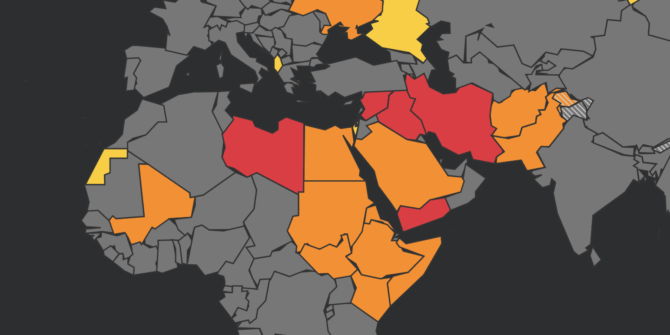
Assessing the Risk: Operations Over Conflict Zones

ICAO Doc 10084, if you have not come across it, is a sixty plus page document looking at ‘Risk Assessment for Civil Aircraft Operation Over or Near Conflict Zones’. Important stuff.

But despite manuals and procedures, regulations and recommendations telling us how to watch out for, assess, mitigate and manage the risk of conflict zones, there remains a much bigger and more significant risk to safety because of conflict zones.

So, what is this risk, and more importantly, what can we do about it in the aviation community?

Information

The huge hindrance to maintaining safety does not lie just with the SAMs themselves. It lies with information – the quality, quantity, reliability and promulgation of it. The result is that risk assessments are fundamentally flawed, understanding is limited and critical information does not reach those who need it.

So, there are four big points that need considering when we look at conflict zones and their impact on airspace safety:

  1. The Bigger Question – A risk assessment is much more than just asking “Is there a weapon down there?”
  2. Rules alone do not change the behavior of states – Information from states is critical, but it is often not shared, or not shared very well.
  3. Are we actively seeking information, or simply waiting for it to come our way? – The safety process does not stop at the state level, it continues (should continue) dynamically with operators and with the pilots, so understanding the situation is important.
  4. How can we do better? – Individuals and the industry have a responsibility to ensure information and strategies are shared.
1. The Bigger Question

The bigger question is to do with how risk is assessed, and it is a complex process even when information is available.

ICAO Doc 10084 lays out the risk assessment process. It’s an interesting read and worth taking a few minutes to think about because understanding the background to conflicts and what the key factors at play are is the only way for safety strategies and risk assessments to continue, and continue they should – it does not stop when a Notam is released.

The process is dynamic and needs to continue with the operator and the pilots too.

What are the key factors in a risk assessment?

First up, what are we actually talking about here? Long-range Surface-to-air missiles (SAMs) can reach aircraft cruising in excess of 25,000ft (7600m). They are often linked with radar sensor systems to help identify targets, and are mobile and easily and quickly relocated.
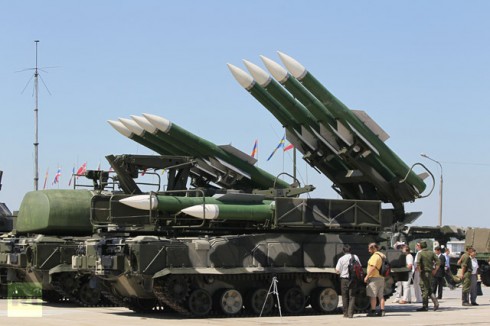
So we need an assessment of what danger these pose to airlines and airplanes, and this means we need to know who has them (the capability) and also their intent (who or what do they plan to target).

But it is not that simple. Where there is intent, there is not always capability; and as importantly, where there is capability there is not always intent. The Iranian shoot down is a clear example of this. So we also need to consider the unintentional risks as well.

The questions asked look something like this:

  • Is there use of military aircraft in combat roles or for hostile reconnaissance (including unmanned aircraft)?
  • Are aircraft used to transport troops into the area and do these routes coincide with civil air corridors, or lie close and so pose a risk of misidentification between civil and military aircraft operating in the area?
  • What are the politics relating to the region?
  • What are the training levels of SAM operators and what is the military deployment of SAMs? How reliable and credible is the information shared by the state regarding this?
  • Is there a lack of effective air traffic management over the relevant airspace? Is the state fully in control of their own territory and do they fulfil all their ATC, coordination and promulgation (of information) obligations?
  • Do civil aircraft route pass over or close to locations or assets of high strategic importance or which may be considered vulnerable to aerial attack in a conflict situation?
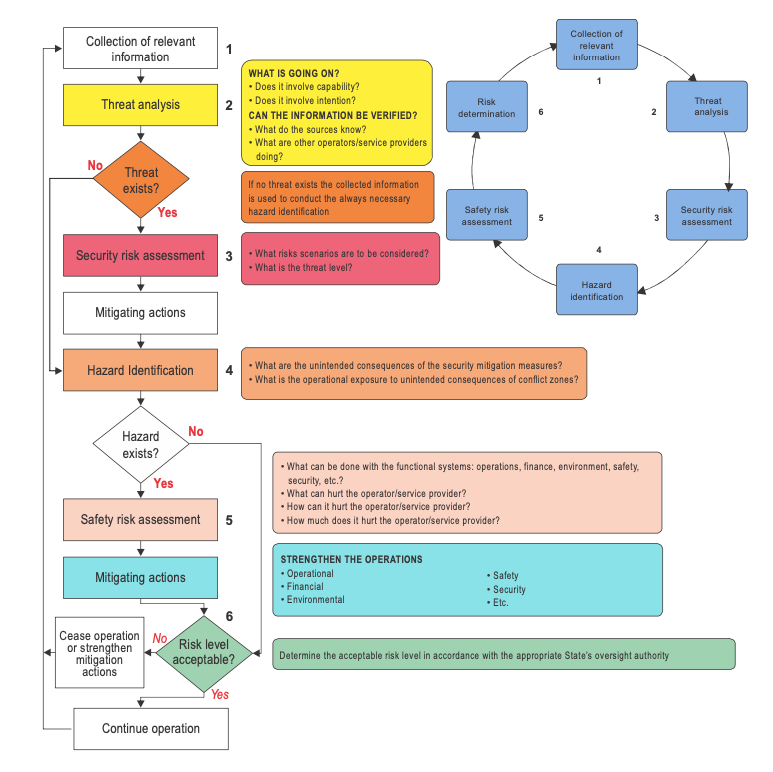
But, the risk continues beyond this initial assessment because we also have to identify any ongoing consequences of an event. If a major airport is targeted, the impact is not only with the initial damage – if that initial damage is to the ATC systems required to maintain control and separation of aircraft then now we have reduced safety in the airspace and a much larger level of disruption.

So, we must think about the overall severity, and with that the tolerability of an infrastructure or operation. We are asking both ‘What can it hurt?’ and ‘How much it will hurt?’ 

This assessment, according to the ICAO document, is thrown into a matrix and churns out a ‘Risk Level’ which leads to the actions taken. 

Sounds simple, but there is one key point here – 

This info is not easy to come by. It is rarely reliable, and there is a qualitative narrative that makes it very subjective. The information has to be promulgated from states.

Which leads us to Point Number 2.

2. Rules do not change the behavior of a state….

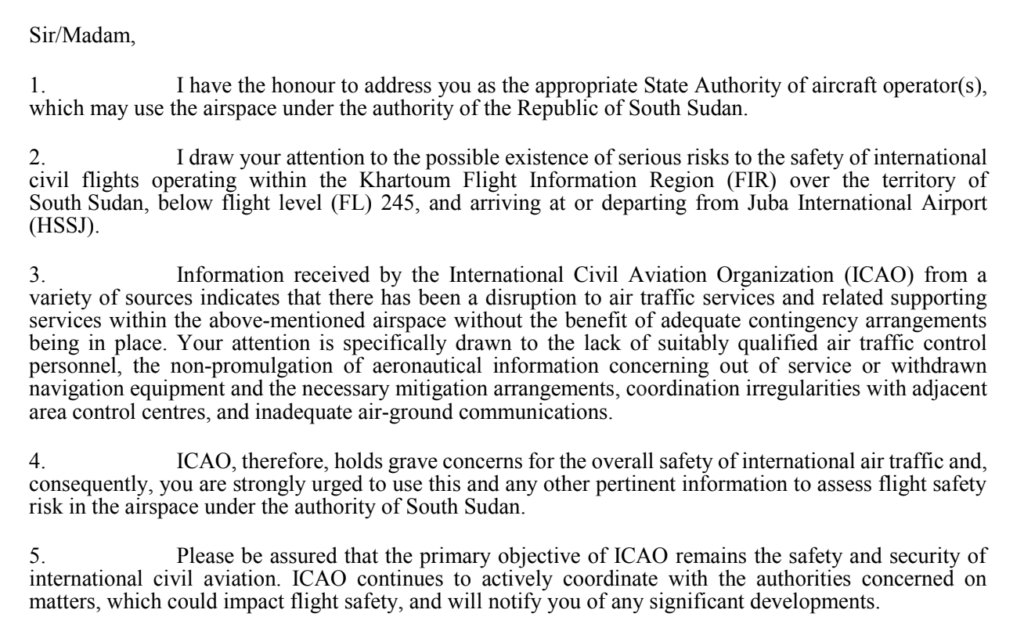
States are responsible for sharing info on hazards, on what mitigation strategies they have in place, and the assessed impact of the strategies they adopt.

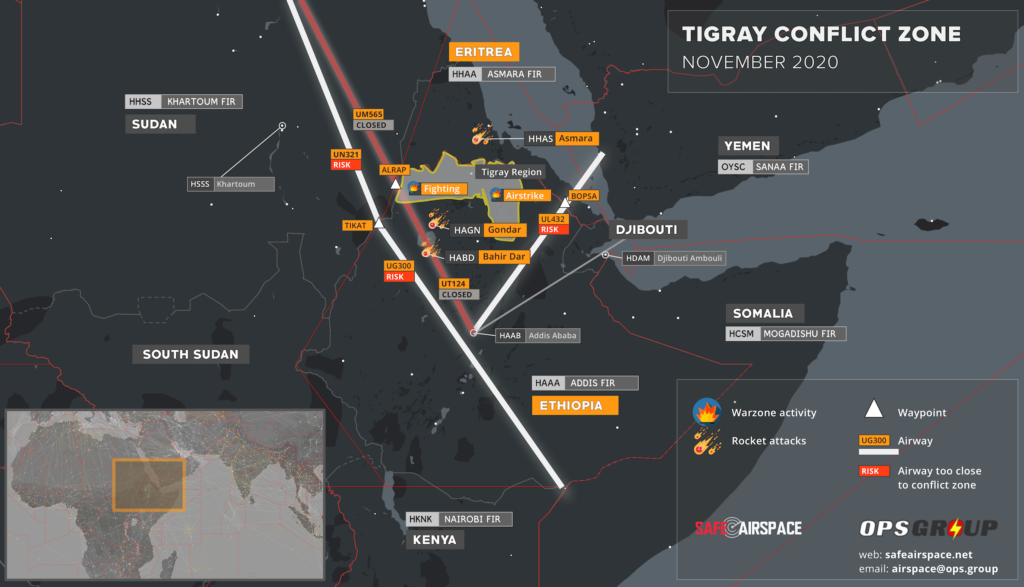
This often does not happen, or it does not happen well. Look at Ethiopia/Tigray region situation – misleading Notams and no guidance from the Ethiopian authorities led to Opsgroup issuing our own warning regarding the situation.

Further to that, ICAO only mandated the reporting of hazards in notices to pilots since 2020, and some states are still failing to do so.
3. People are not seeking information, they are waiting for it to come their way

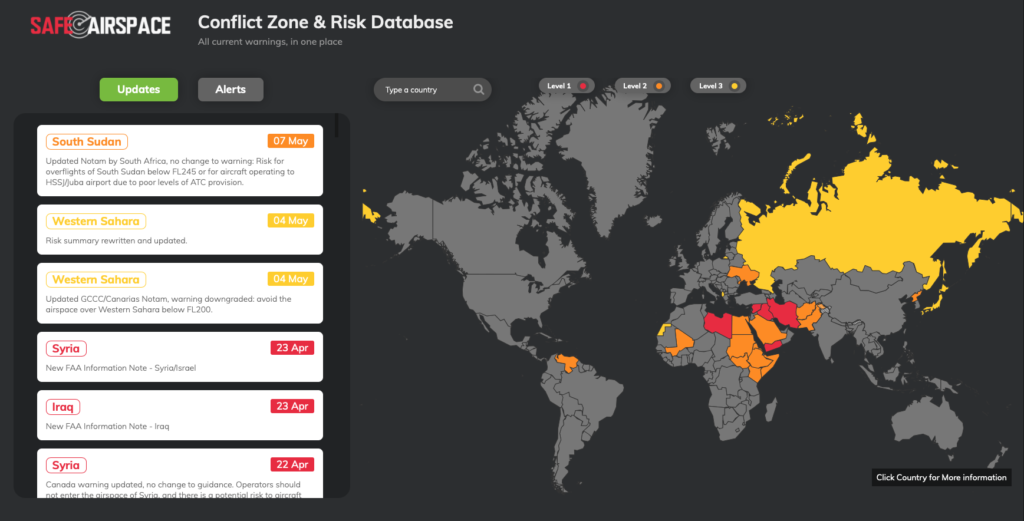
This is why SafeAirspace was created.

Information is not being shared well and risk assessments are fundamentally flawed because the information on key factors is simply not available or reliable most of the time.

What’s more, people are rarely questioning whether the information they received was reliable, accurate or complete. Few proper risk assessments are taking place because those responsible are waiting for the information to come to them, and without a proper risk assessment, mitigation strategies are not sufficient, and are not being passed on to those who need them – the pilots.
What is the Operator’s continued role in the process?

Every operator is responsible for continuing the risk assessment. It is not enough to simply direct crew to a Notam. Ensuring crew have a full briefing on the threat and any mitigation strategies is important.

  • Emergency and abnormal procedures should be considered in advance. Take Mogadishu airspace where only flights on specific airways over the water are allowed. What is the strategy here in case of an engine failure or depressurization? If you operate over this region, you should have access to this information.
  • Operators are also responsible reviewing fuel requirements – ensuring additional fuel is provided for potential diversions around conflict zones.
  • If aircraft will be operating into conflict zones, then a review of MEL items which can be deferred is a good call – can the aircraft get out again without requiring maintenance or fueling?

What is the pilot’s continued responsibility in the process?

The information and strategies we see at the operations end are things like these:

  • Coordination between military authorities, security and ATS units
  • Briefings of personnel
  • Identification of civil aircraft by military units
  • Issuance of warnings and navigation advice
  • Air Traffic Restrictions
  • Closure of Airspace

But this does not mean the full risk has been removed. Understanding this, understanding how the situation got to this point, and understanding the risk assessment and safety management that has taken place is vital because the process now continues with you, the pilot, and this a fundamental step in continuing to manage safety.

  • The Crew, and the Commander of the aircraft are responsible for the safety of the aircraft and the passengers. Of course, we all know that, but if you are given a Notam saying “this airspace ain’t great, maybe avoid it” and then you fly through it, where does the responsibility of your operator end and yours begin?
  • Reading notams, the AIPs, AICs, and being aware of the threats of the airspace you might be asked to operate into is vital. More than that, ensure you are aware of any mitigation strategies required.
  • Pre-prepare for diversions and know where you can safely go. Some diversions might take you through prohibited airspace so if you are operating in the vicinity of some, have a route ready in box two so you can easily avoid airspace when you need to.
  • Be aware of security threats and hazards on the ground, in advance.
  • Consider the serviceability of aircraft equipment before you go – critical equipment would be communication systems, and those required to ensure military units can identify them as civilian;
  • Have an awareness of the potential political implications if diverting into some regions with certain nationalities onboard. If you divert there, what will happen to your passengers and crew, and why?
  • Report things. Keep the information loop going.
4. How can we do better?

Aeronautical info from states and authorities is your first point of call. AICs, AIPs and Notams are going to contain info on advisories, restrictions and recommendations.

If you are an FAA operator, then the FAA put out KICZ notams and this page has all the current ones for airspace.

Networks and organizations such as us here at OPSGROUP try to share relevant and up-to-date information on airspace, conflicts and the risks that are out there.

Open sources like social media and news sites are also good – but be careful, these may come from unconfirmed or unreliable sources. We recommend checking info with other sources too, like handling agents in the area.

Finally, talk to other pilots and operators, and be sure to report information you have from operating in or through airspace.

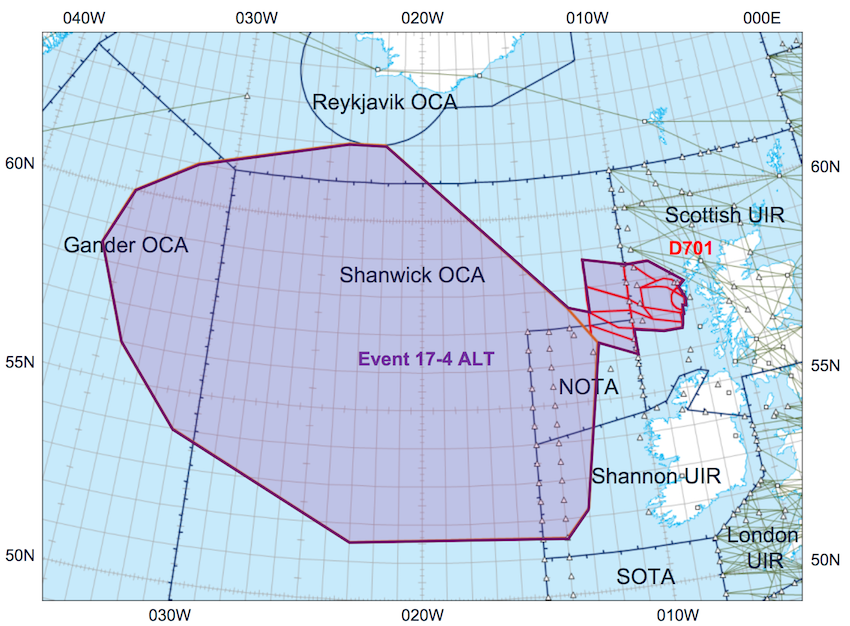
NAT Airspace Closures

Update 18th Oct: No more events are planned at this time. However, we will keep this page updated with the latest news as we get it.


Sections of NAT airspace are set to close on various different dates in October. This is all due to U.S. and NATO joint military exercise that’s going on, called Formidable Shield, which will mean huge chucks of airspace will be closed to civil ops for many hours.

The basics for each event are the same:

  • Airspace closed, SFC-UNL.
  • Aircraft capable of flying in MNPS airspace will have to keep at least 30nm away from the area, other aircraft will need to keep 60nm away.


Event 1 Happened on 25th Sep. 


Event 2 Happened on 7th Oct.


Event 4Happened on 15th Oct. (Yes, Event 4 happened before Event 3 – just to confuse us!)


Event 3 Happened on 17th Oct.


EUROPE: Third Country Operators (TCO)

A TCO is an authorization issued by EASA to any third-country operator wishing to perform commercial air transport in any of the following European countries:

  • 28 EU Member States
  • Iceland, Liechtenstein, Norway, Switzerland

Plus the following territories:

  • Gibraltar, Aland Islands, Azores, Madeira, Canary Islands, Guadeloupe, French Guiana, Martinique, Reunion, Saint-Martin, Mayotte

Applications are made directly to EASA using their application form.

https://www.easa.europa.eu/document-library/application-forms/fotco00160

You will need to provide the following documentation:

  • AOC
  • Operating Specifications
  • Insurance

Contact details for applications are made to:

European Aviation Safety Agency
Applications Handling Department
Postfach 10 12 53
D-50452 Köln
Germany

Fax: +49 (0)221 89990 ext. 4461
E-mail: tco.applications@easa.europa.eu

Should EASA deem the application in order the operating authorization process is completed in approximately 30 days.  Some flights can avoid this requirement, such as Air Ambulance or Humanitarian flights.

Please note:

  • Overflights of the above states do not require a TCO permit.
  • EU member states cannot issue a permit for their country if the operator does not already hold a TCO operating authorization.

If you plan to operate to these areas, we’d suggest getting your TCO right away, even if you don’t have a planned flight at the moment.  They can take some time to obtain.