Somalia joins the A Team

Full ATC service is returning to Somalia! The HCSM/Mogadishu FIR is currently Class G uncontrolled, which means a lot of fairly annoying IFBP calls to make. This is about to change though…

(Well, not the IFBP thing sadly, they recommend you continue these even during the trial period).

From May 11 to September 21 they will be running a trial which will see the airspace from FL245 up become Class A controlled airspace.

The trial will only be between 0300-1800z (so during the day), but will cover the entire FIR including oceanic areas.

Notam A0051/22 (A0028/22) advises on this, whilst AIP SUP 02/22 has all the info (we’re still waiting for a copy!)
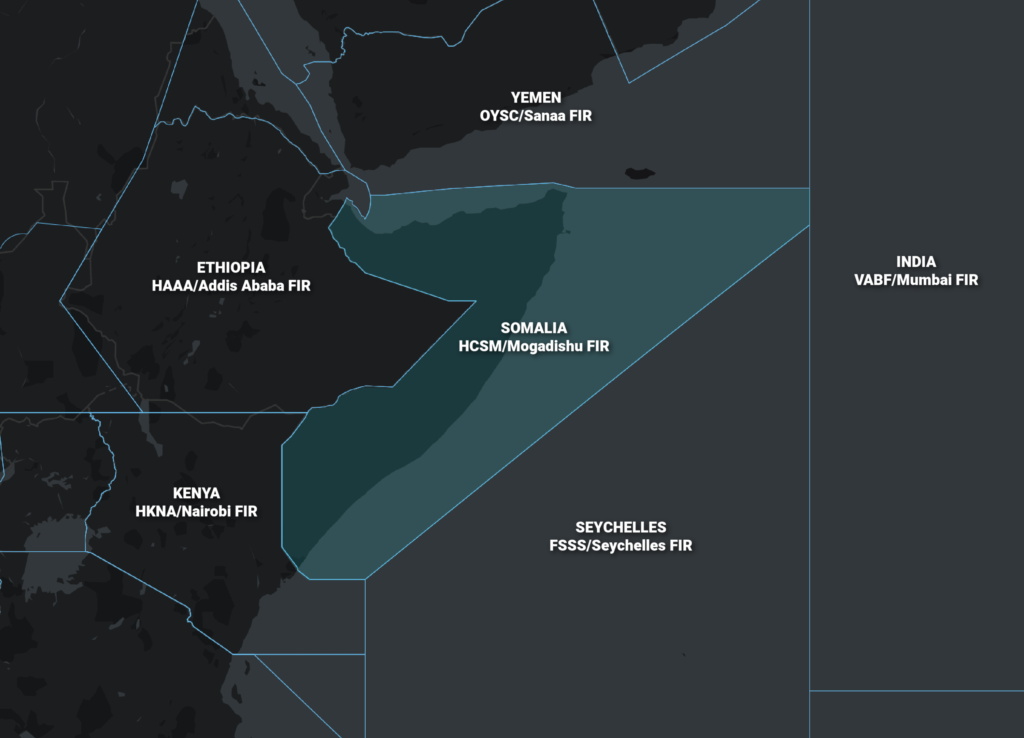
The entire FIR will be Class A at and above FL245

Who to talk to in Class A?

The following frequencies are your best bet:

  • VHF 132.5 MHz if within 240NM of position MOGDU.
  • HF (Mogadishu Control)
    Day Primary 11300Khz
    Day Secondary 8879Khz or 13288Khz
    Night Primary 5517Khz
    Nigh Secondary 11300Khz or 3467Khz
  • CPDLC for those FANS1 equipped, logon address HCSM

If you lose comms, then the procedures are pretty standard. These are available in the Somalia SUP 05/2018. Or you have the full contingency plans to follow in SUP 03/22.

SATCOM

Mogadishu have also re-confirmed their dedicated SATCOM numbers. Here they are:

  • +252 6133 50047
  • +252 6233 50047
  • +252 1857 390
  • +252 1857 391
  • +252 1857 392
  • +252 1857 393

What’s the difference between Class A and Class G?

In a nutshell, Class A doesn’t have VFR traffic in it, and you do need ATC clearances. Traffic will be provided with 10mins lateral/longitudinal separation and 2000′ vertical separation at and above FL410, 1000′ at and below FL400

Class G is uncontrolled which means it is all procedural, deconfliction services and traffic advisory services only.

What’s (less) new in Mogadishu.

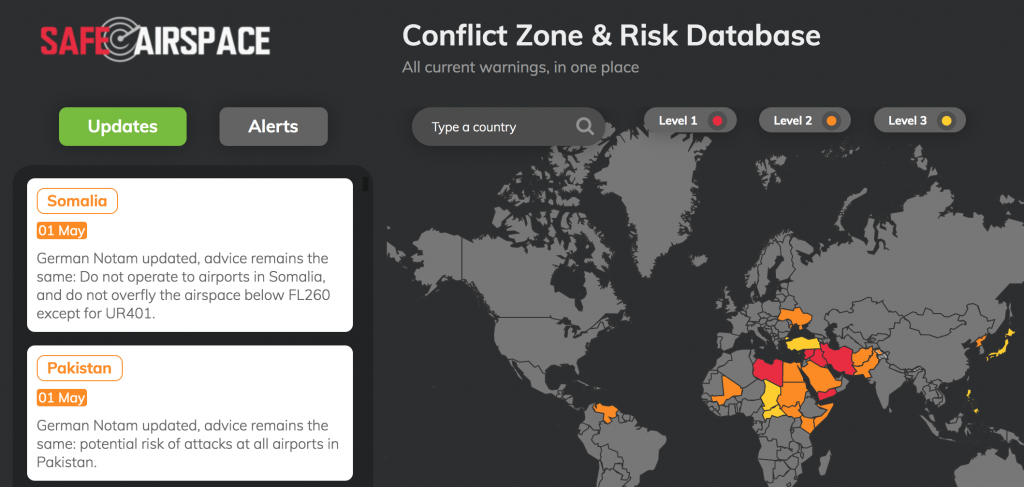
  • Somalia still isn’t the safest region to fly through. Major authorities prohibit flights below (generally) FL260, and recommend sticking to the oceanic routings rather than overflying the land. All the up to date airspace warnings are available on Safeairspace.
  • IFALPA also published a bulletin back in 2018 talking about procedures in the Mogadishu FIR.
  • We shared a bunch of stuff on the general security threats and risks in Somalia here. Currently airports in Somalia are basically off limits though due big safety concerns.
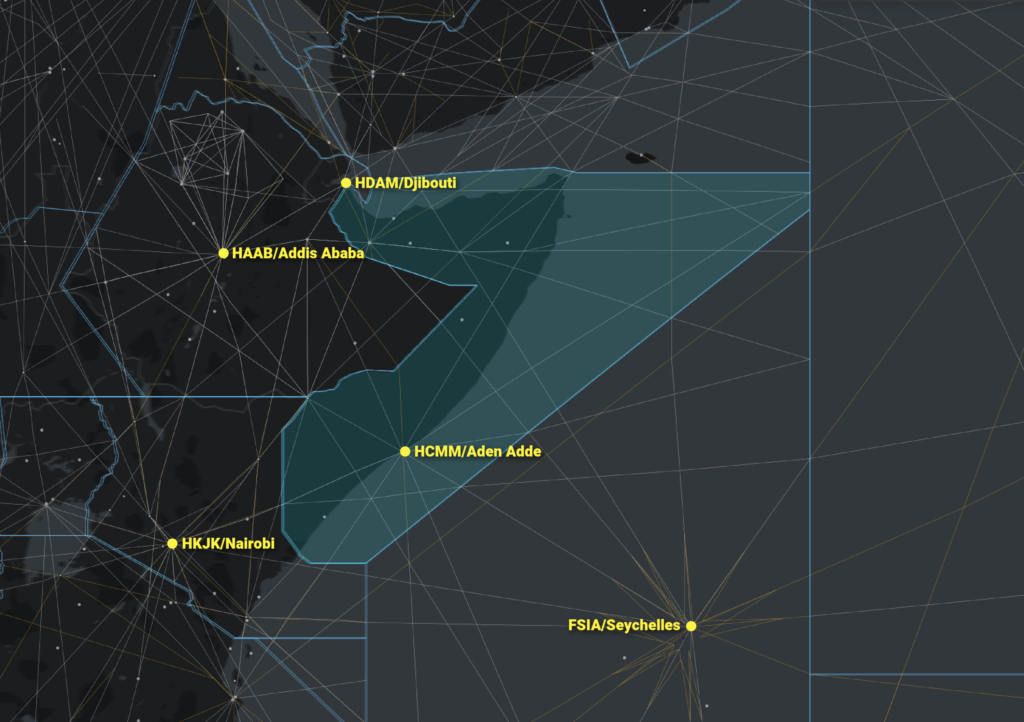
The Mogadishu FIR provides a major routing region for southern Africa.
Cargo plane in Somalia was shot down

Update: Ethiopia has confirmed that this was a shoot-down event. The Ethopian Army misidentified the aircraft – or at least its intentions. 

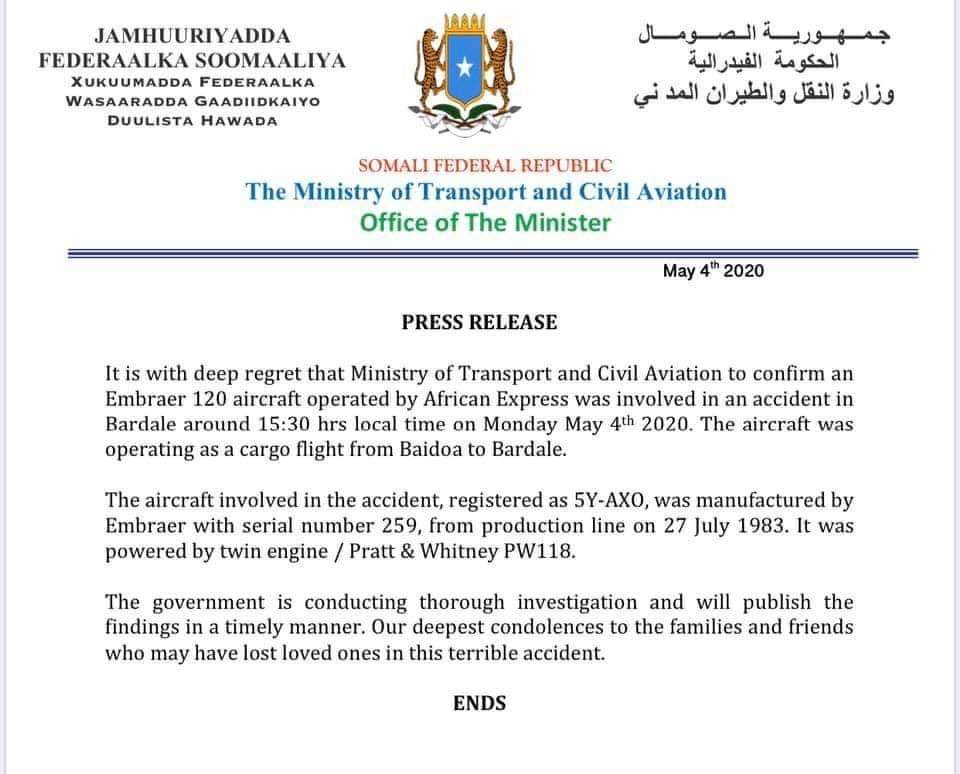
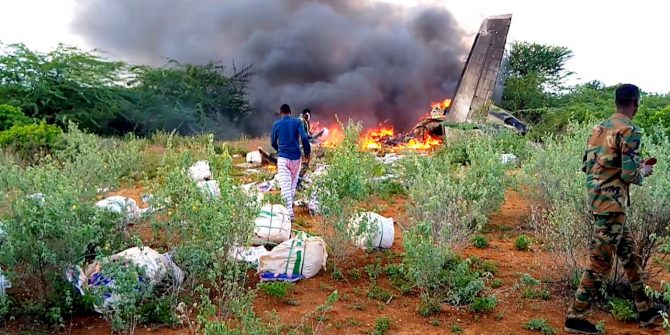
Somalia is investigating how an Embraer EMB-120 aircraft crashed while on approach to Bardale airstrip in Somalia, killing all six people on board. Local officials say the cause of the crash is not yet clear but there has been speculation it might have been shot down.

The Kenyan private cargo plane, operated by African Express, was operating a humanitarian mission with coronavirus medical supplies when it crashed on Monday afternoon in southern Somalia, about 300km northwest of Somalia’s capital Mogadishu.

Bardale airstrip is a base for the Ethiopian military under the multinational African Union mission, which is combating the al-Shabab terrorist group in the region.

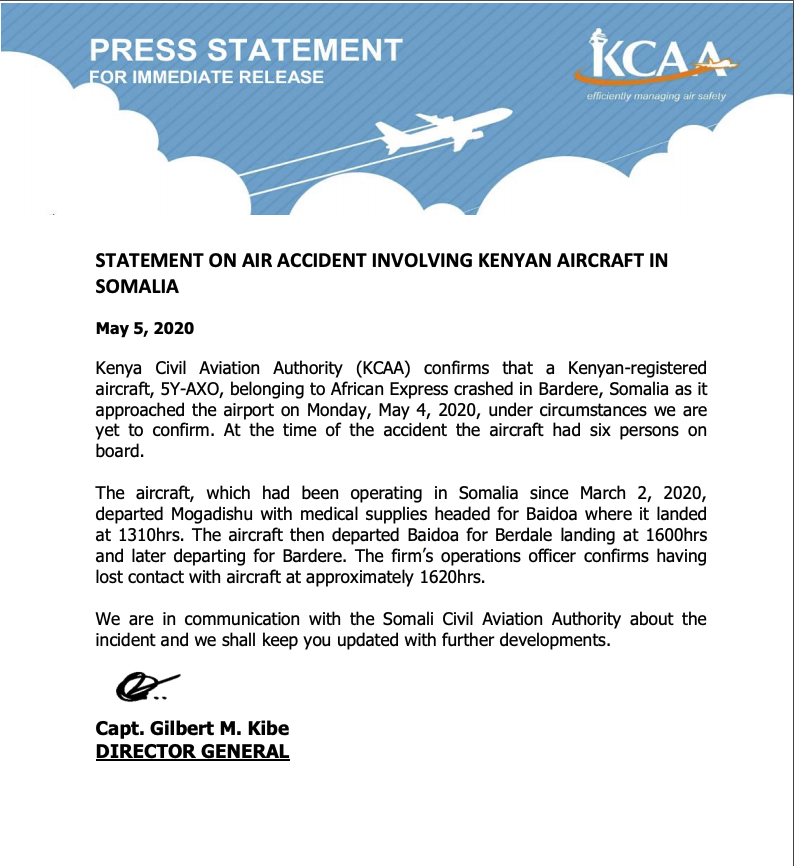
The Kenyan Civil Aviation Authority on Tuesday said the plane crashed on approach to Bardale “under circumstances we are yet to confirm.” However, the Associated Press are quoting local state officials who have told them that a projectile fired from the ground hit the plane as it approached the airstrip.

If that is the case, and the aircraft was in fact shot down, it’s not yet clear whether this was an intentional attack carried out by al-Shabab militants, or an accidental shoot-down by Ethiopian forces stationed in the region.

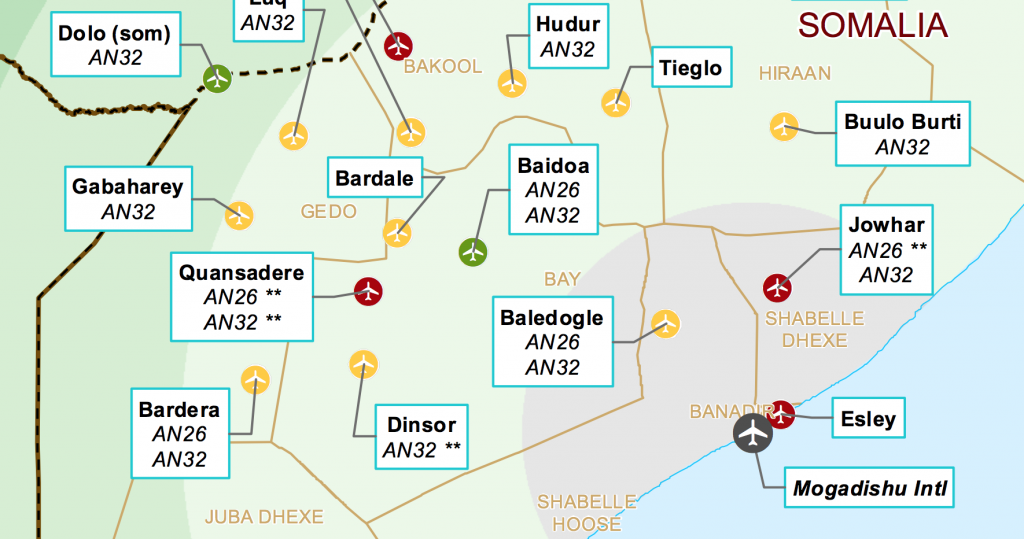
The plane had left HCMM/Mogadishu, and stopped in HCMB/Baidoa before going on toward Bardale airstrip. Kenyan authorities said they were in contact with the Somali CAA – who called the crash “a terrible accident” and said the government was investigating.

Multiple countries have long-standing airspace safety warnings in place for Somalia. The advice from all sources is similar – do not operate below a minimum of FL260 in the airspace of Somalia due to a high risk to overflying aircraft from anti aviation weaponry. The FAA completely prohibit US operators from flying below FL260, as per the guidance in the Special Federal Aviation Regulation issued in Dec 2019, which reads as follows:

“The FAA continues to assess the situation in the territory and airspace of Somalia at altitudes below FL260 as being hazardous for U.S. civil aviation operations due to the poor security environment and fragile governance structure in Somalia, as well as the threat posed by al-Shabaab, an al-Qa’ida-aligned extremist group, and other extremists/militants.

Al-Shabaab has demonstrated an intent and capabilities to target civil aviation operations in the territory and airspace of Somalia through a variety of means, including the use of an insider to smuggle a concealed IED onto a civil aircraft, use of anti-aircraft-capable weapons, and direct and indirect attacks on Somali airports.

Al-Shabaab has frequently targeted Aden Adde International Airport (HCMM) with attacks using indirect fire, small arms fire and vehicle-borne IEDs. Al-Shabaab has conducted multiple mortar attacks targeting the African Union Mission in Somalia (AMISOM) at Aden Adde International Airport (HCMM), and has done so as recently as January 1, 2019. Al-Shabaab frequently conducts vehicle-borne IED attacks targeting Western interests and public venues in Mogadishu, including detonating vehicle-borne IEDs near malls (February 2019), hotels (November 2018) and near a security check point close to Aden Adde International Airport (HCMM) (June 2019).

In addition, al-Shabaab is assessed to have access to anti-aircraft-capable weapons presenting a risk to U.S. civil aviation operations at altitudes below FL260.”

Our recommendation is to avoid the airspace of Somalia entirely. The situation on the ground is highly unstable and there is an inherent risk to civilians and aircraft. The central government has little control of the major cities and ports with ongoing attacks from extremist militants targeting civilians. For more information, check Somalia’s dedicated page on SafeAirspace.net