EU Updates Lost Comms and Emergency Descent Rules

On May 1, the Standardised European Rules of the Air (SERA) were updated – bringing new procedures for lost comms, emergency descents, and even a brand-new transponder code.

SERA is essentially the rulebook that ensures consistent flight procedures across EU airspace. It’s developed by EASA and is legally binding for all EU member states.

Each country still publishes its own AIP, but when SERA is updated, it overrules anything outdated in those local documents. So even if a country’s AIP hasn’t caught up yet, you’re still expected to follow the new SERA rules!

You can download the updated SERA guidance here, but here’s a quick look at the main changes:

Radio Communication Failure Procedures

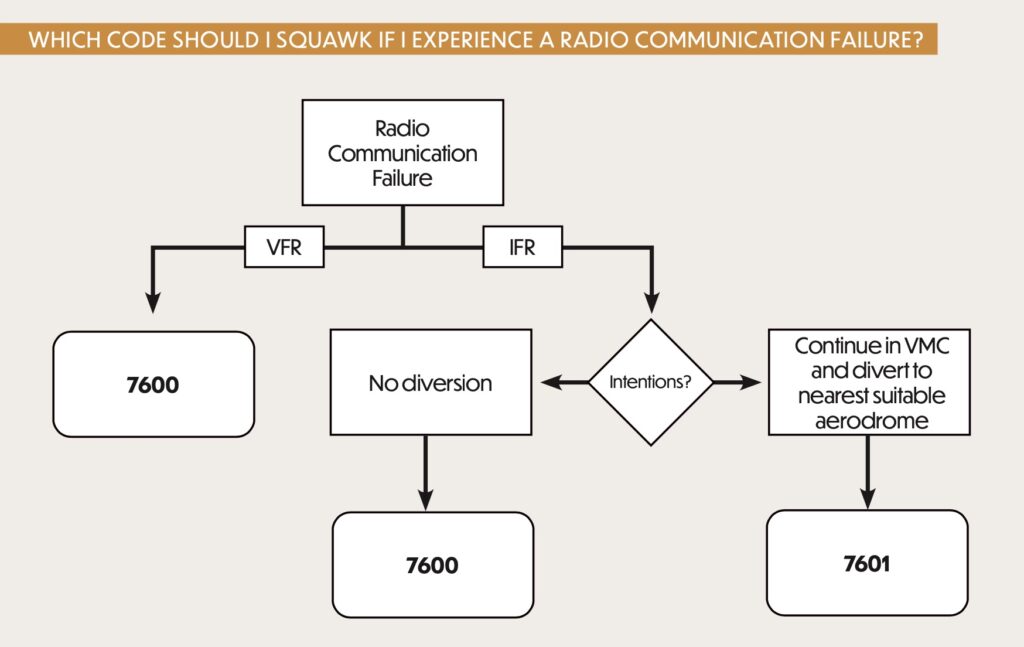
Lost comms? The new SERA rules introduce a second transponder code, and defines which one to use – depending on whether or not you’re diverting.

🟦 Squawk 7600 = Not diverting

Use 7600 if you’re flying under IFR and:

  • You’ve lost radio communication, and
  • You’re continuing with your IFR flight – even if you’re in VMC.

This means you’re sticking to the standard lost comms procedures: continue based on your last clearance, possibly to your destination or alternate, and let ATC protect that airspace.

One important change to be aware of when using the 7600 code: the old 7-minute rule in lost comms situations has been replaced. Under the updated rules, if you’re continuing under IFR after losing communications, you must now maintain your last assigned level and speed for 20 minutes (instead of 7) before taking further action under lost comms procedures. This extended buffer gives ATC more time to identify your position and protect your track.

🟩 Squawk 7601 = You ARE diverting

Use 7601 if:

  • You’re flying under IFR
  • You’ve lost comms
  • You’re in VMC, and
  • You decide to land at the nearest suitable airport instead of continuing the flight.

So 7601 is a brand-new code introduced to give ATC a clear picture of what you’re doing. Instead of guessing whether you’re continuing IFR or trying to land visually, ATC knows right away: you’re diverting to land, and they can adjust separation and support accordingly.

From the helpful PDF published by Skeyes (the Belgium air navigation service provider). Click to download.

Emergency Descent Procedure

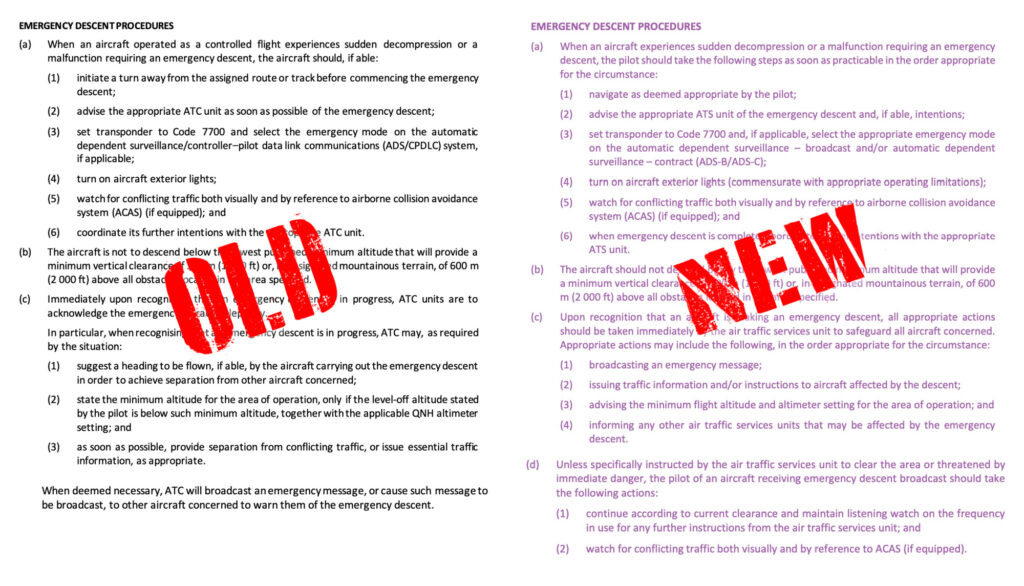
This has been updated with clearer priorities! The procedure now starts with “Navigate as deemed appropriate by the pilot” – replacing the older instruction to always turn off route before beginning the descent. So the new rule gives the pilot full discretion to navigate as needed – possibly turning, possibly descending straight ahead.

There are also some changes to what ATC should do: broadcasting an emergency message now comes first (not just “if necessary”), and there’s clearer guidance to inform other ATS units (this wasn’t explicitly stated before).

Plus some guidance on what other aircraft should do if they hear the emergency descent broadcast: keep flying their current clearance, maintain listening watch, and watch for conflicting traffic visually and with ACAS. Pretty standard stuff, but this wasn’t explicitly mentioned in the previous guidance.

Notams and AIP Updates

One issue to be aware of here – most countries won’t update their AIPs until May 15 with the next AIRAC cycle. But these new SERA rules are legally binding from May 1 and take precedence over any outdated AIP content, so you must follow the updated SERA guidance!

So far, France appears to be the only country that has issued a Notam acknowledging/warning us about the changes:

LFFF F0627/25 (Issued for LFBB LFEE LFFF LFMM LFRR) - 
APPLICATION OF THE NEW EUROPEAN REGULATION IR SERA 2024/404 
IN FORCE ON MAY 1ST, 2025 WITH THE INTRODUCTION OF POINT SERA.14083 
RELATING TO PROCEDURES IN CASE OF RADIO COMMUNICATION FAILURE. 
MODIFICATION OF RADIO FAILURE PROCEDURE : INTRODUCTION OF THE NEW 
EMERGENCY CODE 7601 AND MODIFICATION OF THE 7-MINUTE RULE TO 20 MINUTES. 
REF AIP ENR1.1. 01 MAY 00:00 2025 UNTIL PERM. CREATED: 30 APR 10:03 2025

And another issue to be aware of – some non-EU countries in Europe are not updating their rules! 

Switzerland have decided to confuse everyone by saying they won’t be implementing the 7601 code anytime soon:

LSAS A0252/25 - IFR FLT SHALL USE SSR CODE 7600 IN CASE OF RCF EVEN WHEN 
CONTINUING IN VMC TO THE NEAREST SUITABLE AD. SSR CODE 7601 AS DEFINED 
BY SERA.14083 NOT YET IMPLEMENTED. 15 MAY 00:00 2025 UNTIL 31 JAN 23:59 2026. 
CREATED: 02 MAY 10:01 2025

And the UK has published this doc saying that no changes are being made to the UK’s RCF procedures.

As the UK and Switzerland are not EU countries, they can do what they like. EU countries don’t have this option – they’re all legally required to apply new SERA rules on the effective date.

Bottom line: keep an eye out for more AIRAC/AIP updates and Notams from other European countries in the coming days as they clarify how they’re implementing the new SERA procedures!


FIRE on the NAT! Where to go in an emergency?

In OPSGROUP, we talk a lot about the North Atlantic. Whether it’s a Plotting Chart you need, or an explanation of the Datalink Mandate, or a summary of big changes stretching back to the dawn of time – we’ve got you covered. We love the NAT so much we even enjoy asking ourselves annoying questions about it over and over again to see if we can answer them (we can).

But here’s something we haven’t fully looked into before – if you’re in big trouble on the NAT (like an engine on fire, for example), where can you go? 

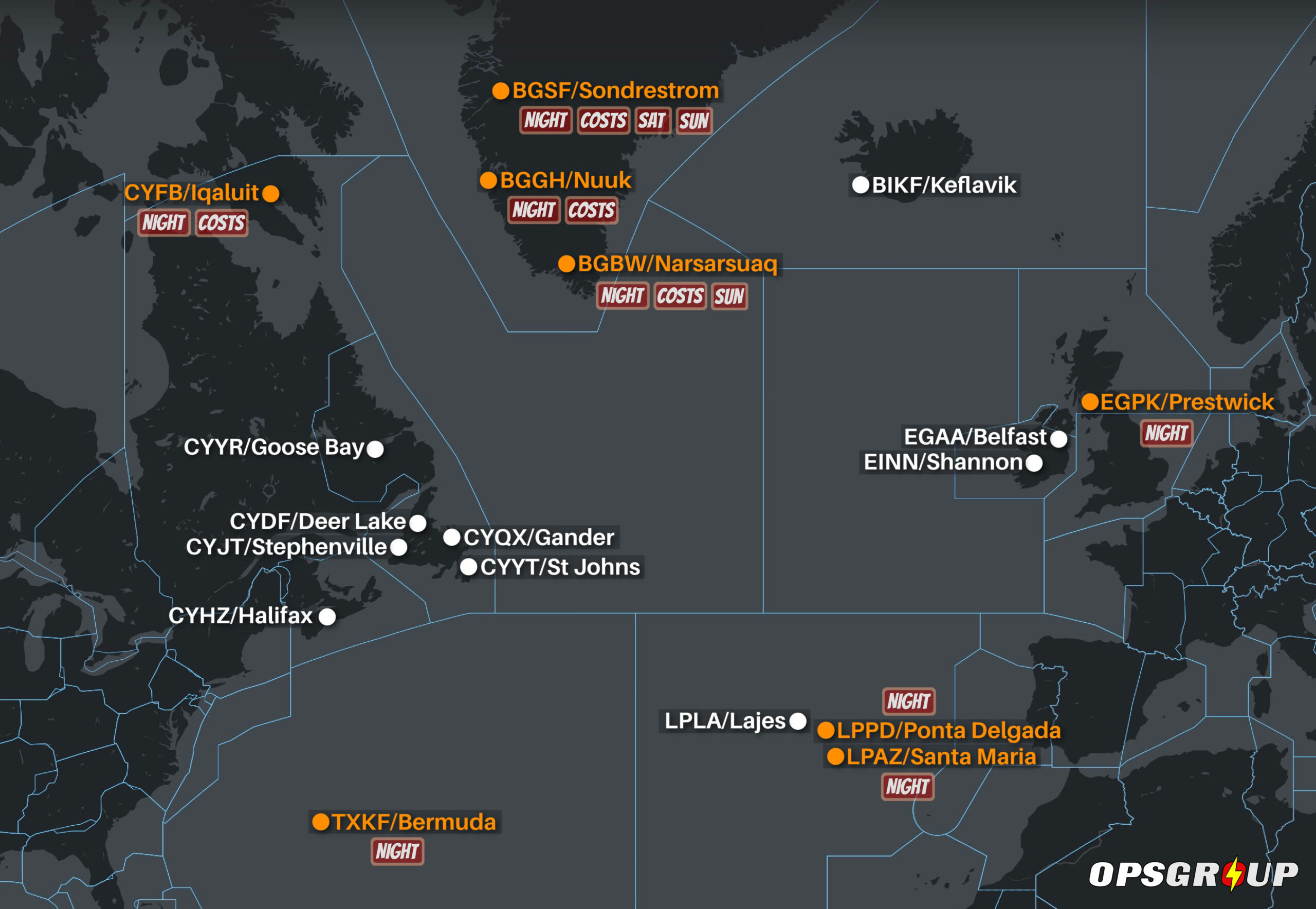
Turns out there’s quite a bit of complexity to this. Some airports don’t have amazing levels of fire cover, some are closed at night, and some have weird setups where you have to pay them in advance to make sure they stay open in case you need them.

We’ll start with these odd ones. And we’re going to do everything in local time to keep things easy. Also, for the uninitiated, RFFS means Rescue and Fire Fighting Services (i.e. what level of fire cover an airport has), and if you’re confused about what number means what, you can read all about it here.

Odd Ones

CYFB/Iqaluit

  • Airport open: Mon-Fri 08-17, other times 12hrs notice required
  • RFFS: 5
  • Why odd? So it’s basically closed at night unless you make a special request for them to stay open in case you need them. If extended hours are needed, additional costs will apply to keep staff on standby. Requests to extend operating hours at the airport must be submitted using a specific document for either RFF5 or RFF7. CYFB provides extra RFF coverage at night on average 40 to 50 times a month. The cost for them to stay open with RFF5 is $1714 which gives you a 4 hour block of time. For RFF7 it’s $3427.

BGGH/Nuuk

  • Airport open: 06-21 every day
  • RFFS: 5 (or RFFS 8 with 4 hours notice)
  • Why odd? Technically it’s open at night, but as it’s a brand new airport, night opening is unrealistic at the moment – especially in winter. In the summer months, when there’s no snow and it’s daylight almost all day every day, there won’t be the same need for runway sweeping and using the airport as a diversion alternate might be more possible because they will only require standby personnel on short notice.

BGBW/Narsarsuaq

  • Airport open: Mon-Sat 08-17 (yep, closed on Sundays!)
  • RFFS: 7
  • Why odd? Can be requested to stay open at night most of the time. But watch out! As we reported before, Greenland airports will charge you the better part of $3k if you list either of them on your flight plan as diversion alternates when they’re closed.

BGSF/Sondrestrom

  • Airport open: Mon-Fri 08-16 (yep, recent change here is that they’re closed on weekends!)
  • RFFS: 5 (or RFFS 8 with 4 hours notice)
  • Why odd? Same as BGBW, can be requested to stay open at nights or on weekends, but same costs will apply.

EGPK/Prestwick

  • Airport open: H24
  • RFFS: 7
  • Why odd? Often at night they close the terminals building (they always Notam it) so there are no facilities for diversions at these times.

LPPD/Ponta Delgada

  • Airport open: 0615-0000
  • RFFS: 7 (can be increased to RFFS 9 with 24hrs notice at a cost of 70 Euros per hour, although they say this can usually be increased for emergencies too).
  • Why odd? At night (0000-0615), the airport has told us that they are closed and will only guarantee reopening for urgent medical evacuation flights, or humanitarian flights at the request of the Portuguese Air Force. LPLA/Lajes is the only airport in the Azores that is open all night for diverts.

LPAZ/Santa Maria

  • Airport open: It’s complicated.
  • RFFS: It’s complicated.
  • Why odd? Ok, here we go. So from 0635-2130 they are fully open with RFFS 6 (RFFS 8 available for a surcharge if you arrange in advance). Then from 2130-0000 the airport is closed but you can request they stay open for around 900 Euros (plus a fee to the handling agent). Then from 0000-0645 the airport is completely closed and cannot accept emergency diverts at all. Bottom line, just go to LPLA/Lajes instead.

TXKF/Bermuda

  • Airport open: 07-23 every day
  • RFFS: 9
  • Why odd? To get them to open at night (ATC and RFFS) for emergencies, you need to give them 30 mins notice – so not ideal if your needs are super urgent. Also, they do sometimes publish Notams saying that ATC will not be available for certain periods at night, even for emergencies.
Not Odd Ones

Ok great! Here are all the straightforward airports that are open H24 with decent fire cover:

CYYR/Goose Bay
Open H24
RFF 5 (RFF 8 on request)

CYQX/Gander
Open H24
RFF 5 (RFF 6/7/8 with 2hrs notice)

CYDF/Deer Lake
Open H24
RFF 6 (RFF 7 with 30 mins notice)

CYJT/Stephenville
Open H24
RFF 5 (RFF 6 with 30 mins notice)
In winter months, they often have a Notam saying that they might need 2hrs notice at night to clear the runway of snow.

CYYT/St Johns
Open H24
RFF 7

CYHZ/Halifax
Open H24
RFF 7

BIKF/Keflavik
Open H24
RFF 8 daytime 05-19 (RFF 7 overnight 19-05)

EGAA/Belfast
Open H24
RFF 7 (RFF 8/9 with 24hrs notice)

EINN/Shannon
Open H24
RFF 9 (may on occasion be reduced to RFF 7 depending on staffing)

LPLA/Lajes
Airport open 07-21 (but H24 for emergencies)
RFF 8 at all times

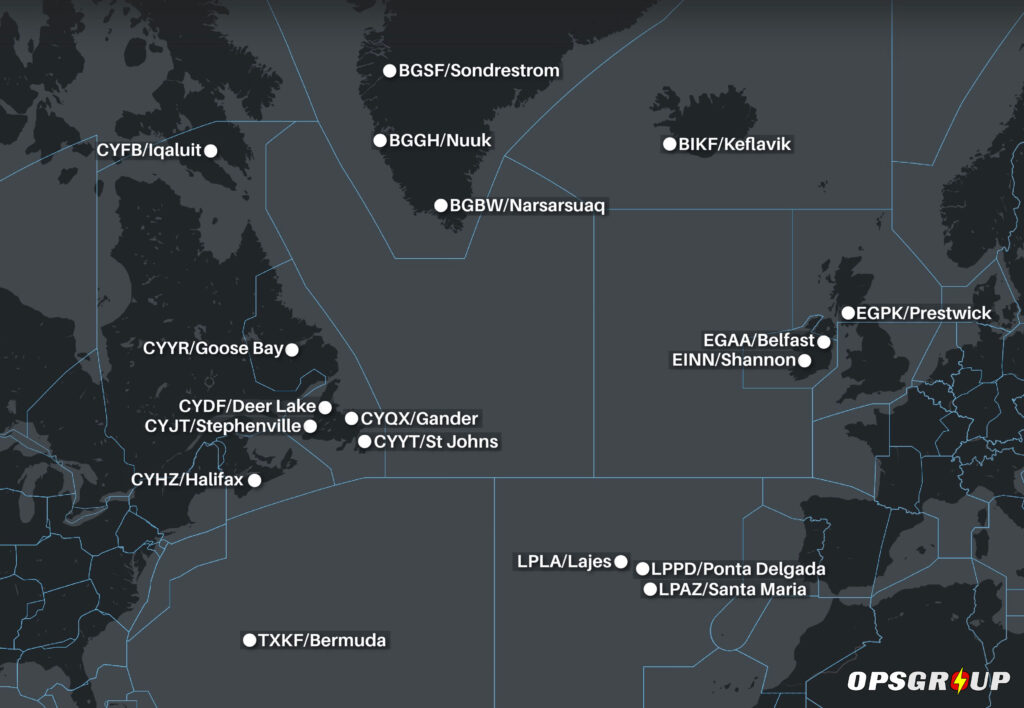
So let’s give that map another try, this time with a tasteful splash of orange colour…

So there you have it, friend! While we’re on the subject of Emergency Diverts, you might also be interested to read about NAT Contingency Procedures (what to do when you need to deviate from your ATC clearance due to an emergency). For more info about recent changes to Greenland Airports, click here. And to download the latest OPSGROUP NAT/North Atlantic Plotting and Planning Chart 2025, head over here.

As usual, any questions, let us know at team@ops.group.


Fire Onboard: A Pilot’s Worst Fear?

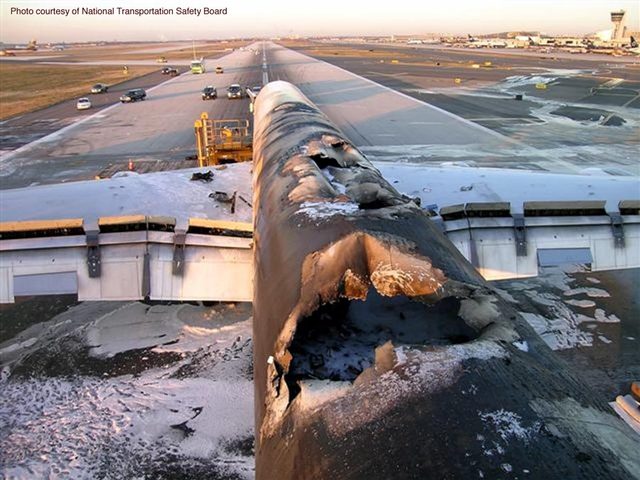
Ask a pilot what their worst fear is and one of the responses you will probably hear the most is FIRE! Ironically, an aircraft’s engines only actually work when they are “on fire” so not having a fire “onboard” could be problematic…

But a fire in the cabin or cargo hold is a rather different deal. So, here is a look at what many consider to be one of the most challenging and concerning problems they could encounter in-flight.

For those who don’t think it is that scary.

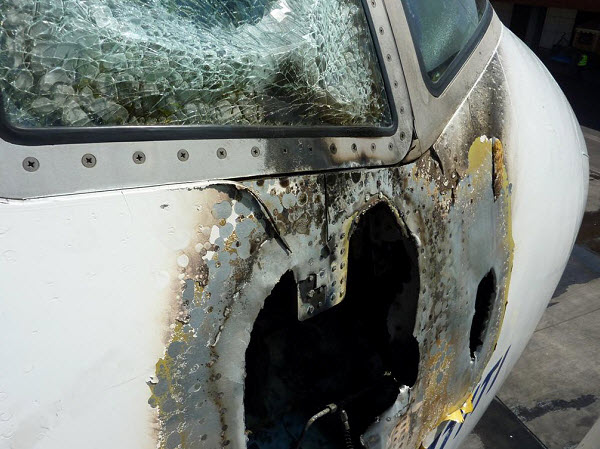
A CAA study back in 2002 looked at aircraft crashes due to fires onboard and discovered a rather fearsome statistic – the average time it took for an aircraft to become catastrophically uncontrollable was under 20 minutes. Various fire tests saw that a fire allowed to spread through the aircraft’s overhead area could become uncontrollable in just 8-10 minutes.

The average time for a crew to get their aircraft onto the ground was around the 17 minute mark.

So, not much time to spare.

The infamous Nimrod ditching (a favourite CRM example of decision making) shows how quickly a fire can disable an aircraft.

The problem is aircraft are built to burn.
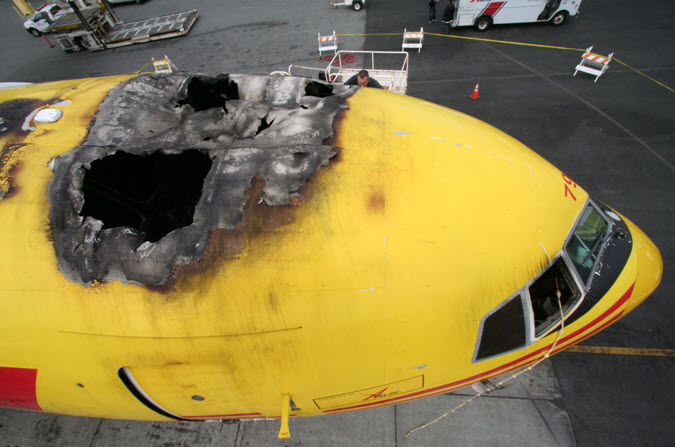
Well, not literally, but there is a significant amount of flammable, combustible and generally burnable bits onboard. Add in the fact there are very hot bits (the engines) linked to big chambers full of fuel and the risk of an un-contained fire suddenly seems a lot worse.

Un-contained being the important word here.

Engines have fire identification and protection systems in them. So do cargo bays. So do cabins for that matter (Cabin Crew make wonderful fire detection and fire suppression systems). Aircraft interiors, and cabin fire fighting procedures, and the monitoring of Dangerous Goods transit have also developed significantly over the last decade or two.

So, the means to prevent or control fires before they become uncontrollable have increased.

Unfortunately, though, so have the number of devices coming onboard which could start a fire in the first place.

Lithium Ion batteries burn hot. They are hard to put out, and every passenger on your flight probably has at least one, probably nearer three of them (phone, second phone, computer, tablet, smart luggage, spare power banks, watches, electric toothbrushes…)

And of course phones are not the only potential fire hazard onboard. There are ovens (hot), hydraulic fluid (thankfully not in the cabin, but very flammable), electrical things (seats, tvs, lights), waste bins (in toilets for hiding illegally smoked cigarettes in), oxygen systems (a food delicacy for fires) and a multitude of wires.
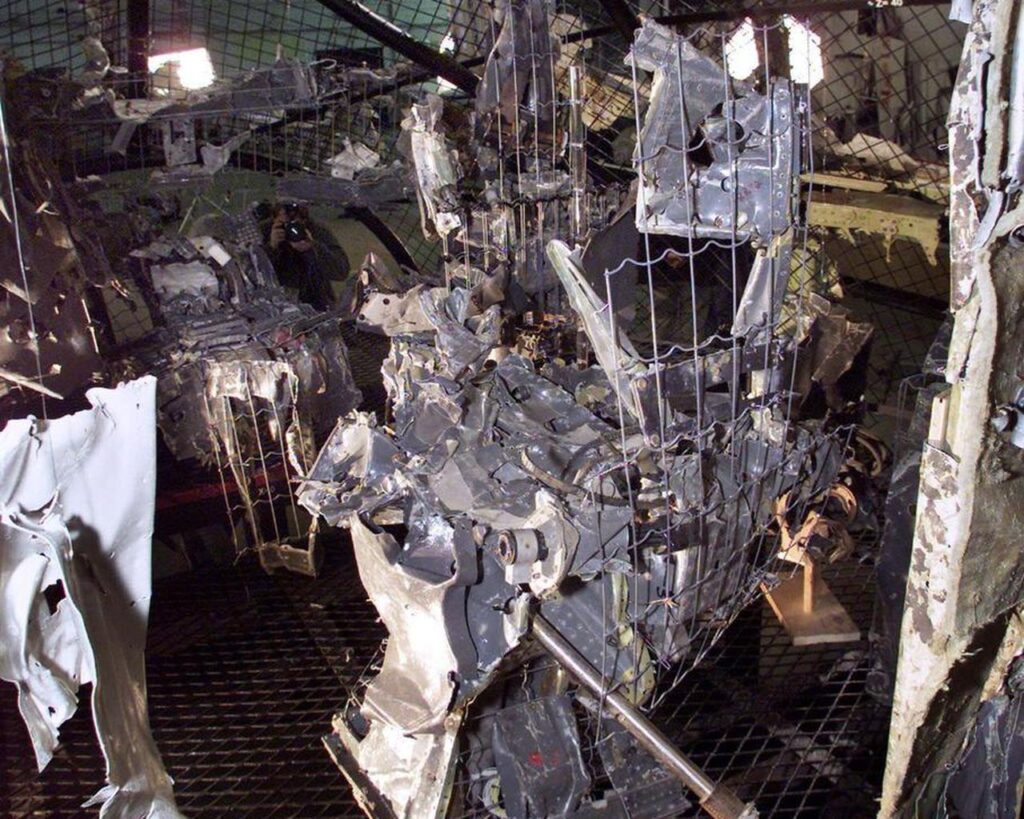
An FAA study from 1995 to 2002 found reports of nearly 400 wiring failures. 84% of these were burned, loose, damaged, shorted, failed, chafed or broken. And this is probably not a representative number given how many might go unreported.

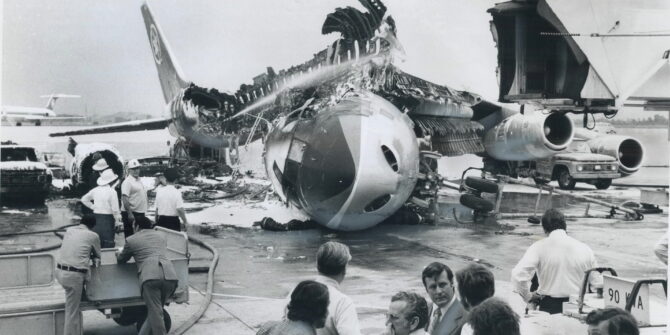
The Swissair accident was due to faulty wiring, with a secondary prominent factor being the flammability of materials that ignited and propagated the fire. The crash occurred just 16 minutes after the first alert message.

Let’s take a look at what can burn in the cabin.

Seat coverings, blankets, cushions, other furnishings, clothes… basically everything inside the cabin can burn.

In 1993 a Northwest Airlines B727 had a fire in the cabin and it turned out they were using 100% polyester blankets. Polyester actually melts more than burns, but it gets really hot when it does and tends to set alight to everything else around it. The incident led to the FAA developing new fire performance test methods and criterion for all blankets.

Interesting fact: Emirates actually make their economy blankets out of recycled plastic bottles. 28 of them per blanket.

Actually, the burning ability of everything onboard is now monitored.

Since 1990, aircraft interiors have had to comply with a maximum total heat release of 65 kilowatt minutes per square meter, and specific optical smoke density of 200. Basically burn less, burn less hot, and put out less smoke if they do burn.

The current rules for what everything should be made of, and how burny/smoky/toxic they can be are contained in FAR/JAR/CS 25.853.
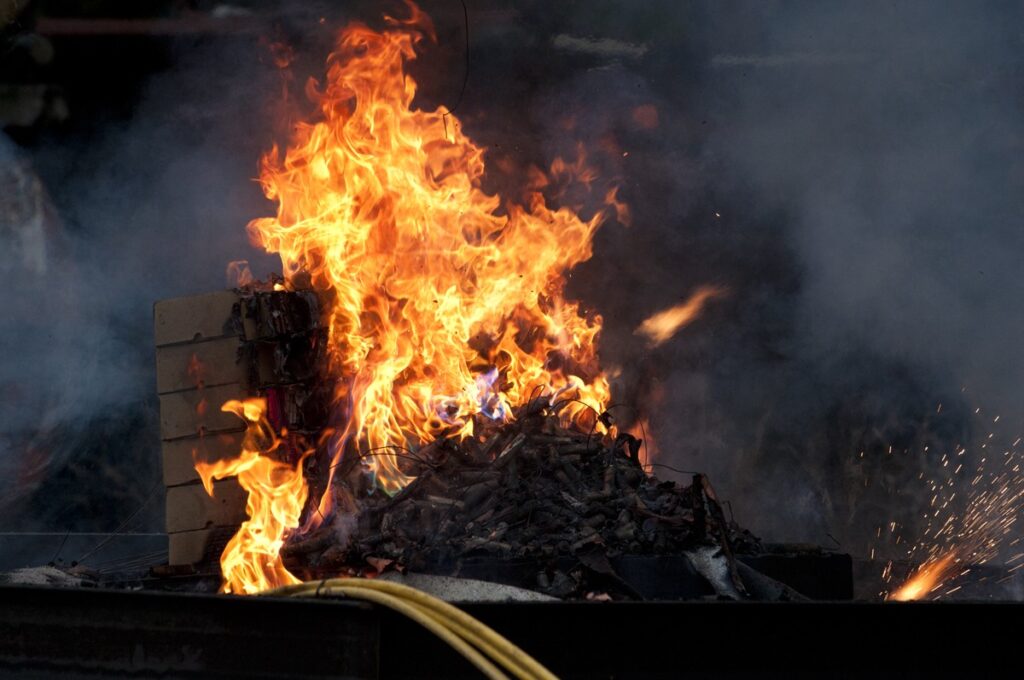
Crew training is important as well.

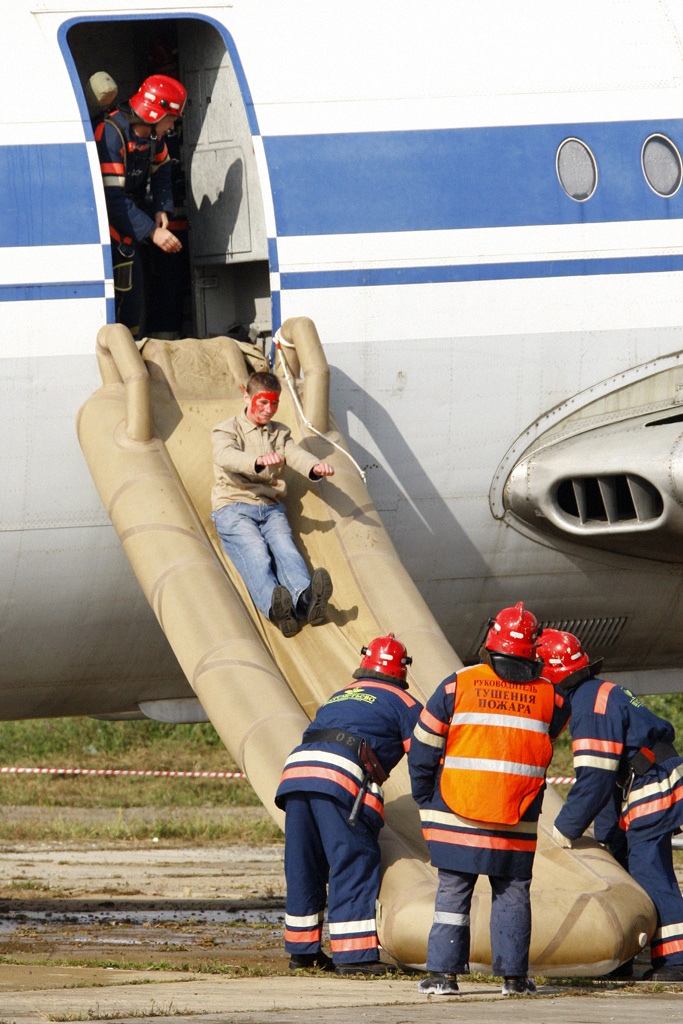
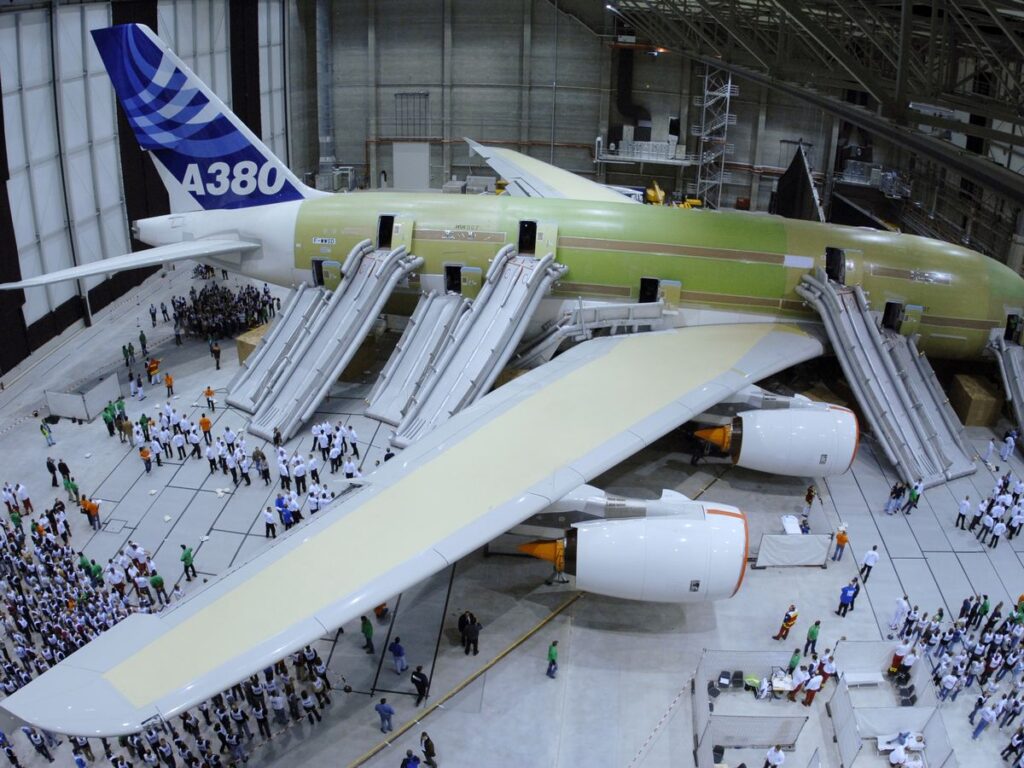
The training and ability of the crew to both fight the fire, and evacuate the aircraft is strictly monitored. The FAA require that an airplane can be evacuated in 90 seconds. For big commercial aircraft (these are Boeing stats) this means the slides have to be able to inflate within 10 seconds (15 if it is a big wing slide), and they need to be able to support 60 people sliding down at once.

It doesn’t take into account the huge heap of people at the bottom of the slide, but once they are out and away from the fire all bets are off.
But accidents still happen.

Between 1990 and 2010 there have been 18 major accidents involving in-flight fires which resulted in fatalities. During the 1990’s, the US saw, on average, one flight a day diverting due to smoke; and a report by IATA suggests there are more than 1,000 smoke related events annually.

That’s about 1 in 5,000 flights which is a pretty big number when you consider how many flight you will do in your career, or how many movements there are worldwide every day.

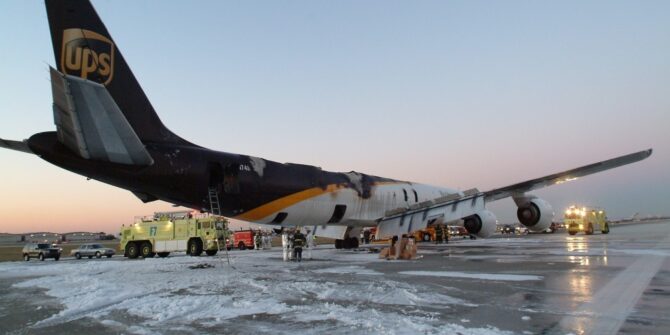
In 2010, a UPS B747 freighter crashed in Dubai following a main cargo deck fire which ultimately led to loss of control of the aircraft. The pilots were incapacitated earlier however due to the rapid build up of smoke in the flight deck.

What to do. The important bit.

1. Troubleshoot.

Finding the source should be a top priority. That means working out where the smoke is coming from.

If it is coming from something avionics related then you are going to want to switch it off. If it is something in the cabin then it might be locatable, reachable and extinguishable. Don’t forget to get your crew to check the lavs.
2. Communicate.

One of the biggest challenges in dealing with a fire in the cabin is the communication between the cabin and the flight deck.

  • Ensure there is a communicator in place who can pass messages to you and keep you updated.
  • If you are trying to establish the severity of the situation, ask open, non-leading questions:
    • “How much smoke?” could lead to “lots/loads/not as much as you’d see at a rock concert in the 60s…” . Instead, try “How many rows of seats can you see?”
  • Establish whether they can see where the smoke is coming from, if they can get to the source, and if they can put it out:
    • Ask about the colour, the smell, and while troubleshooting make sure you leave enough time for them to identify a change (after turning stuff off or on).

3. Keep flying!

Don’t forget to keep flying – one pilot should focus on the fire procedures (or on the comms with the cabin) while the other flies the aircraft! This probably means aiming for an airport.

Declare an emergency – this can be downgraded later if the situation improves, but get the support you need early on.

If there is an autoland option you might want to set up and plan for that in case the smoke in the flight deck builds up too much.

4. Don’t forget…

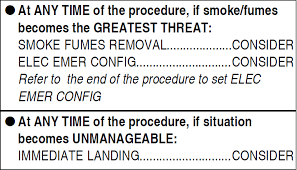
You have two procedures – one for sourcing and “fighting” the fire, and one for dealing with smoke (and fumes). If you need to, suck that smoke out!
On the ground.

Your Ops Manual will have a required RFF category for airports. However, this is based off the equipment available at an airport (and the response time). A Captain can chose to disregard this if the only option does not meet their RFF requirement.

The emergency isn’t over until you and the passengers are safely off. If the cabin is filling with smoke then a top priority is getting those engines switched off so your cabin crew can evacuate. If in doubt, evacuate!

Depending on where the fire is (and how the wind is blowing) you might need to avoid evacuating through certain doors. Getting folk away from the aircraft is critical. The main injuries resulting from the Emirates B777 accident in Dubai were some inhalation from passengers and crew, and heat stroke from the firefighters – it took 16 hours for them to bring the fire under control.

What to do earlier…

1. Have a plan

This means knowing what airports are around that you could go to if you suddenly, urgently need to. 

  • Check the weather and Notams en-route.
  • Have something in the box ready (if it is a difficult airport to route to, or there is airspace to avoid, or if a straight in visual might not be an option).

2. Know what equipment you have onboard.

Know what it is, where it is, and how to use it:

  • Halon: Great for electrical fires, not so good for you. If you are using this in the flight deck, get a smoke hood or oxygen on first.
    • Remember PASS: Pull the pin, Aim at the base of the fire, Squeeze the handle or lever, Sweep it about from side to side like an aggressive elephant.
    • EASA are recommending the removal and substitute of Halon Extinguishers because of their mean effect on the environment, and also on people.
  • Oxygen masks: If there is smoke in the cabin, don’t drop these thinking it will help your passengers breathe better. Oxygen + Fire = not a good result, and their masks are not designed to keep smoke and fumes out anyway.
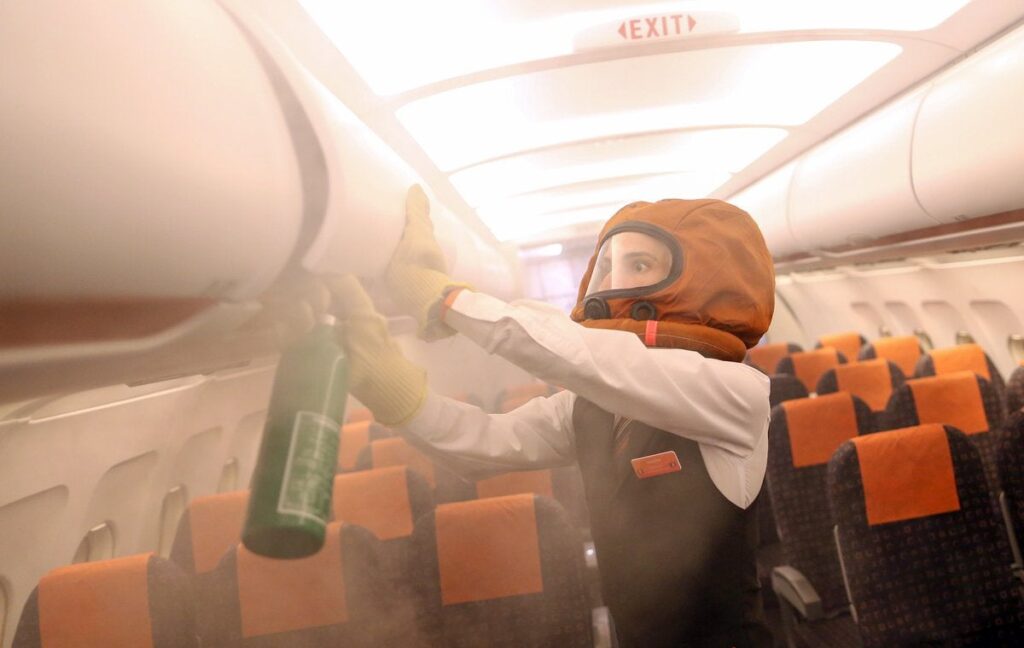
  • Smoke hood: You look like a weird spaceman in it, and sound like Darth Vader, but this is a very important bit of equipment.
    • If you are on the ground and evacuating, use this before doing the cabin checks.
  • Fire Sock: For putting things in. Usually has some gloves nearby for picking the hot burning thing up with.
False Alarms

These do happen.

An IATA study saw 2,596 reports of fire/sparks/smoke or fume occurrences. Of these, 20% were false warnings, which meant 11% of the in-flight diversions were due to false warnings. 50% of cargo compartment fire warnings were also false.

Air spray is a common culprit for causing false alarms in toilets.

But – if you get a fire warning, treat it as real unless there is some very, very obvious something to suggest it is not. 

FIRE!

They critical thing is to be prepared. Have that airport option in mind, know where to find the procedures (and familiarise yourself with them), and make sure that if it does happen, you and your team are ready.

A fire onboard is a time issue. Being prepared and ready will hopefully give you those extra minutes that could make a big difference.

Burning desire to read some more?

Dangerous Goods: The Bad Ones

IATA recently ‘urged action’ over rogue lithium-battery shippers. Folk are apparently sneaking them onboard without proper notification or packaging, and this could turn into one big, hot mess for airlines.

So, here is a closer look at Lithium Ion batteries, what they are, what they can do, and how to better deal with them onboard.

What are they?

In big terms they are things that power a lot of our airplanes. In smaller terms, they are the batteries in our phones and portable electronics.

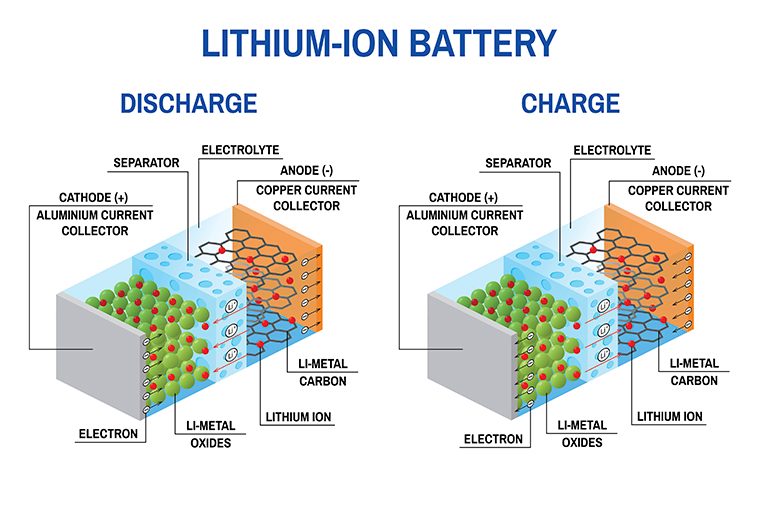
And in super simple terms (and with some creative licence thrown in) they are a cell that contains an electrolyte liquid. Lithium Ions get all charged up, and when they are feeling particularly positive, they dive into the electrolyte and swim through it. The movement of them gets the electrons all excited too, and they go zooming along from the current collector, through the device (your phone, laptop, airplane) which sucks out their charge, and then they get collected up by the negative current collector. 

They are different to regular Lithium (without the ion) batteries because they are rechargeable. They also have no memory effect (they don’t get lazy when repeatedly recharged) and they have good energy-to-weight ratios.

What is the risk?

They sometimes go into thermal runaway, usually when charging, but also if you bash them about (think iPhone stuck under business class seat, getting repeatedly run over by the chair mechanism as the passenger tries to pull it out again).

Thermal runaway, as the name suggests, involves them getting really hot – so hot it reaches the melting point of the metallic lithium and causes a pretty horrid reaction when it just keeps getting hotter and hotter until flame, fire, explosion…

You might think a small phone would not be much of a hazard but there are a lot of very flammable things in your airplane cabin. And there are a lot of things with lithium ion batteries in them that people bring onboard.

Then there are airplane batteries themselves. Boeing had an issue early on with their 787 Lithium Ion batteries leading to an All Nippon Airways 787 having a pretty serious incident with one before the problem was resolved.

The biggest risk though comes from those in the cargo bay. Particularly the ones that you don’t know are there, should not be there, and which you cannot monitor. A UPS 747 crashed in Dubai after LI batteries in the cargo hold caught fire. The report suggested the heat and smoke from the fire disabled the crew oxygen system and entirely obscured their view within 3 minutes of the initial warning.

What can we do about them?

Most airlines will have a procedure written into their manuals, but it is worth a quick recap because there are some important bits to note.

  • If it has flames, use Halon. If you are using halon (in the cockpit) make sure at least one of you puts a smoke hood on – the stuff is very bad for you.
  • If there are no flames and it is just smoking hot, then cool it down by pouring water or a non-alcoholic liquid on it. If it is a laptop or something fixed in the cockpit then have a little think before you go slugging water on it though, because there are other electrics around which might not like it that much.
  • Don’t try to pick it up (without gloves on). Don’t cover it with ice thinking this will help cool it better, because it actually just insulates it more making it hotter. Don’t put it in fire resistant bags for the same reason.
  • Once it is safe to move, use fire gloves and put it in a receptacle – things like waste bins are good. Fill with water and store it somewhere safe where you can keep monitoring it.

Getting your crew to be vigilant for phones under seats (and passengers not moving said seat until phone is retrieved) is a good plan too.

The Cargo Concern

Lithium Ion batteries in the cargo hold are a different matter. If you have Dangerous Goods approval then you will have manuals and info on this. If you don’t have DG approval then any mention of Lithium Ion batteries on a NOTOC should be concerning you.

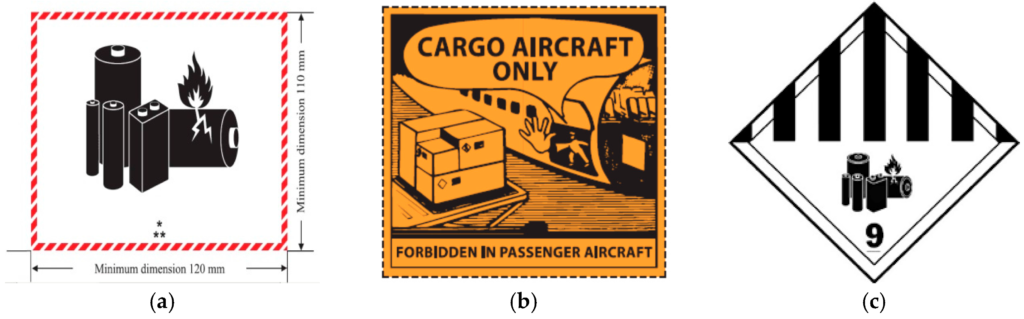
Lithium Ion batteries are a Class 9 Dangerous Good. The ones to look out for are the UN3480 and UN3090 numbers:

  • UN 3090, Lithium metal batteries (shipped by themselves). These are are not rechargeable and are designed to be chucked out after their initial use. They are actually Lithium Metal batteries. These are prohibited for carriage on passenger aircraft.
  • UN 3480, Lithium ion batteries (shipped by themselves). These are the rechargeable ones found in your phones and things.
  • UN 3091, Lithium metal batteries contained in equipment or packed with equipment
  • UN 3481, Lithium ion batteries contained in equipment or packed with equipment

Lithium Ion batters are allowed to be carried on cargo aircraft so long as they have been handled properly. The proper handling, packing, labelling and loading (what they need to be separated from) is all covered by IATA in their massive DG Manual. You can get that here, and find some handy online while you’re at it.

Again, if your operator doesn’t have DG Approval then this is just for info. If you’re wondering whether they do have approval then they don’t – crew have to undergo a yearly Dangerous Goods refresher course and you would remember this (because it is generally quite boring).

So, the simplest thing is to not carry them…

That would be great, but unfortunately it is not that simple. Lithium Ion batteries are in everything nowadays. They come in all shapes and sizes. So the first step is ensuring your passengers know what they are in, and are aware that they shouldn’t be putting these in their checked baggage.

Here is a handy info brochure to give to passengers.

This is a general ‘heads up’ list of some of the things an LI battery might be lurking within:

  • First up, those luggage bags which have them installed in them – if the battery can’t be removed and is more than 0.3g or 2.7Wh it probably shouldn’t be carried. If the battery is under those limits, or if it is removable then it can come onboard but only in the cabin, not in checked baggage.
  • Any lithium ion battery that is under 2g or 100Wh can generally be brought into the cabin. There is often a limit here (20 per person) but this varies with different operators.
  • Mobility aids – electric wheelchairs – often cause problems because folk don’t always know what their battery details are, and it is the airport staff who have to deal with this. The battery on these has to be in an enclosed container to prevent short circuits, and it must be attached as per the manufacturer instructions, or removed if it can be. If it is removed then it must not exceed 300 Wh or 160Wh if there are two of them on the device.
  • Hidden batteries – A lot of devices contain batteries. eBikes. Drones. Things that passengers don’t always think about.

The Captain probably needs to know about the location of these, so if you see stuff being loaded on and haven’t been informed about it, ask.

Finally, rogue shippers. Because of the restrictions, people are sneaking them onboard hidden in incorrect packaging, and without declaring them. They key to stopping this is going to lie with the airlines, operators and ground staff who need to be vigilant. The crew cannot do much more than mitigate the situation if some are onboard, and do cause issues.

Here is the full note from the US Department of Transport and IATA

What to do if you have an incident

If you have a Dangerous Goods Incident, you need to report it, and usually quite quickly. The FAA info page is here to help.

Lithium Ion battery fires are extremely hot and burn incredibly fast. If you think you have LI onboard that might be compromised, get that airplane on the ground as quickly as possible, and get your passengers off.

Want to read some more?

Bomb Onboard: Do you know your procedures?

Airport security means the threat of a bomb onboard is greatly reduced. But if you do receive a bomb threat, or find a suspicious package onboard, what procedure does your operator have in place for you to follow?

How much risk is there?

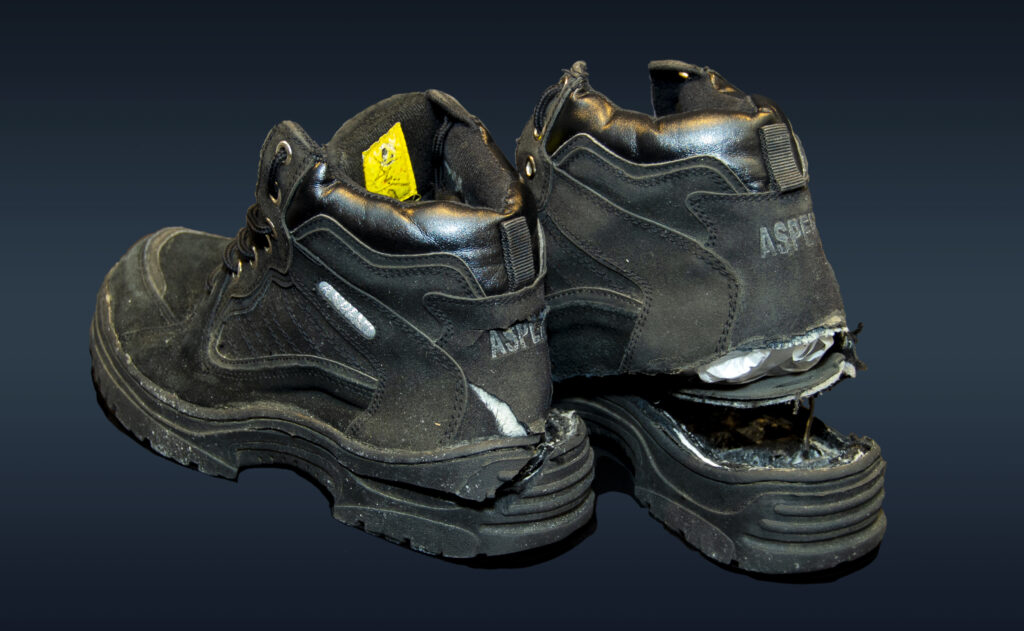
You have probably all heard the Shoe Bomber attempt from 2001. This was thwarted by some brave passengers and crew, and also the fact the bomber had sweaty feet – his swamp foot dampened the trigger preventing it from igniting.

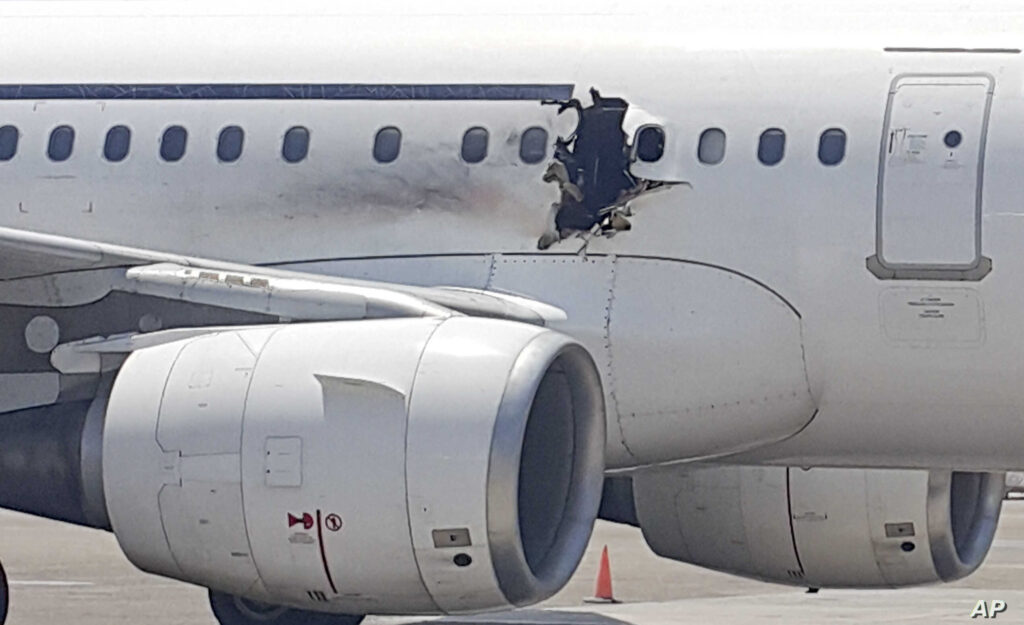
In 2016, an aircraft made an emergency at HCMM/Mogadishu airport after a bomb exploded onboard. The bomb was likely brought on concealed within a laptop. This flight was lucky though – the impact of the bomb was minimal, limited because the bomb exploded while the aircraft was at a lower altitude (11,000ft).

In 2020 a European airline found a ‘bomb note’ onboard. The flight was escorted to a safe landing and passengers disembarked without incident.

So bomb threats, and attempted bombings, do occur, and while security is getting better and better, unfortunately terrorists are getting more creative in finding ways to bring items on board. The attempts are not always aimed at causing destruction either – threats alone cause a huge amount of disruption to operations. So understanding how to assess the risk and credibility of a threat is as important as knowing how to deal with a possible explosive device if one is found onboard.

Is the threat credible?

Threats received regarding an aircraft need to be assessed, and the credibility determined. The threat classification will generally be based around how specific the threat is. Most operators will have a procedure in place for determining this, and probably take into account something along the following lines:

If a threat mentions a specific target, or is made by a known terrorist organization and is deemed credible then this is going to be considered more serious. Often these are referred to as a red threat.

On the other hand, a threat which is vague, general, and doesn’t specify targets might be considered less credible. A hand scribbled note in the toilet for example. This would be categorized as a green threat.

However, regardless of the assessed credibility, a bomb threat has to be taken seriously and treated as a genuine situation.

If you are on the ground

The simplest and safest option if you are on the ground is to disembark and carry out a full search of the aircraft. It might be a hassle and result in some big delays, but the possible alternative is much worse.

A serious threat may require a precautionary disembarkation – which will result in offloading the passengers as quickly and as safely as possible. This creates a risk to safety in itself, and generally the credibility of the threat will be communicated to the crew so that they can judge the risk of waiting (for steps) versus disembarking immediately to clear the aircraft (but have passengers hurling themselves towards the tarmac).

If you are in flight

If a threat is received against your aircraft while in flight, carry out a search checking those places which are often overlooked during security checks on the ground, but where an article might easily be concealed – toilets, galleys, jump seats, stowage areas, closets etc. Try and do it discreetly to avoid unnecessary worry for passengers.

If an article is found, do not move it or touch it. Move passengers away from the immediate area, and remove any flammable items and have fire extinguishers ready in case. A PA asking for anyone onboard with ‘BD or EOD experience’ might help – these are terms which experts will recognize without saying “Hey, passengers, is there a bomb expert onboard?”

Not terrifying your passengers is probably a good call, but ensuring they are following your crew’s orders, and that they are prepared for the situation on the ground, is also necessary. This means providing them with clear information, but without dramatizing the situation.

“Ladies and Gentlemen, we have received a message that a threat has been made against one of our aircraft/an aircraft in this airspace. These threats do happen, however, until we can establish how credible it is, we will take all possible precautions and therefore intend to land at… in…”

If you find a suspicious article

Most manufacturers provide checklists for bomb-on-board situations. Know where this is, and understand what it says. 

There are a few measures you might want to consider:

  • Talk to ATC so they know exactly what is going on and what you need. They all assist with locating an airport with services needed, and coordinating with military if necessary.
  • Try to avoid routes over heavily populated areas.
  • Consider carefully the choice between flying fast to minimize airborne time versus flying slow to minimize air-loads and damage (in the event of fuselage rupture).
  • Request remote parking on the ground if there isn’t a designated bomb location.
  • Brief your crew for a possible emergency landing, and in any event, brief them to ensure passengers are disembarked quickly and moved to at least 200m upwind from the aircraft.
  • Avoid large and rapid changes to pressure altitude – consider using manual cabin altitude controls to minimize rapid pressure changes while still lowering the cabin altitude to reduce the differential pressure.

Aircraft are designed to not ‘explode’ if there is a rupture in the fuselage – that’s why they tend to have a lot of smaller sections attached together. It makes the overall structure more resilient to the effects of an explosive decompression, aiming to keep it “localized”.

Reducing the differential pressure to around 1 PSI will also reduce the damage if an explosion does occur. Maintaining a slight differential will ensure the blast moves outwards, but the lower differential limits the force of air from the cabin outwards. 

1psi is the equivalent of about 2,500 feet difference, but flying at an altitude that allows you to manually reduce the differential will probably mean a much lower level and much higher fuel burn.

Where is your aircraft’s LRBL?

A Least Risk Bomb Location is an area where the least damage will occur should a bomb explode. This should be specified in your aircraft manual. These are often near aft doors or in washroom stowage areas. The area provides the least risk, in the event of an explosion, to flight critical structures and systems.

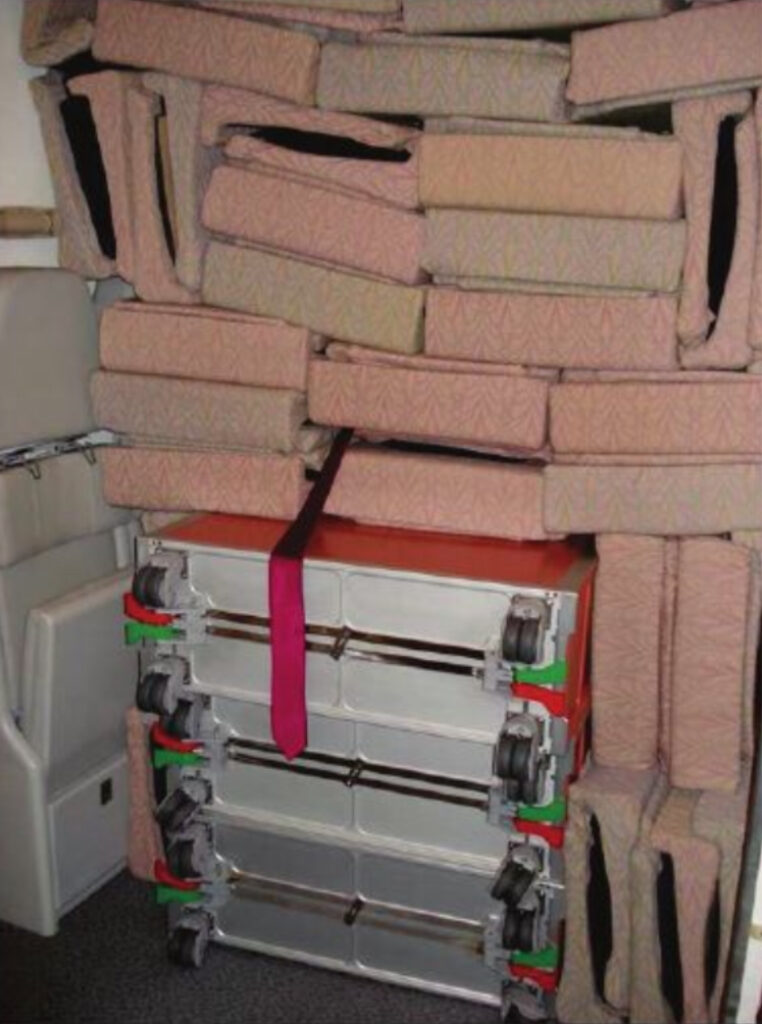
If the article is deemed unsafe to move, cover it in plastic to prevent any liquids getting in, and then pile blankets and pillows, seat cushions and soft clothing around it. We’re talking as big a pile as you can, and once done, saturate in water to minimize fire risk in case an explosion does occur. Don’t forget the plastic sheets first though –  liquid damage to electrical components is also a big risk.

If you can move it, and only if it is deemed essential to do so, then check that LRBL. Once in place, build up the barricade.

Always minimize movement to any article as much as possible, and don’t put anything directly on top of it. An igloo of saturated cushions around it and the gaps stuffed with blankets etc is good.  This ‘cushioning’ will help minimize the force if an explosion does occur. Never put inside an oven or trolley though as a sealed container will amplify the pressure and explosive force of a bomb.

Where to go

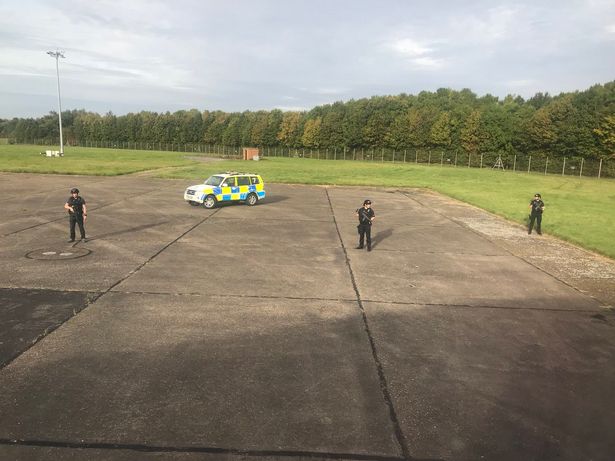
You will likely be accompanied by fighter jets to an airport with a designated bomb area – usually a remote apron away from buildings, fuel supplies and other aircraft.

What next?

Getting your aircraft safely on the ground is Step One. Getting your aircraft to a safe point to disembark/evacuate your passengers and crew is Step Two and coordinating this with ATC and airport services is important. Knowing in advance where you will taxi to will get you there more quickly and safely. Landing, slamming on brakes and bursting tires will get you nowhere fast, so plan ahead and be prepared.

A bomb threat or bomb onboard situation is difficult to plan for because the ‘where you are and what will happen’ is not something we can prepare for, other than being ready to follow our procedures and remaining calm. Chances are this is not a situation many of us will (thankfully) find ourselves in, but understanding the resources you have to assist, and knowing the onboard procedures so you can coordinate passengers and crew will no doubt help if it ever does occur.


Do you use Bermuda (TXKF) as a NAT alternate at night?

The Bermuda AIP says that they have Fire Category 9 from 07–23 local time, but also that “during uncontrolled hours of operations BFRS/ARFF will be called out at CAT 9″.

So does this mean that Fire Category 9 is essentially ALWAYS available? And how long does it really take to call them out in an emergency?

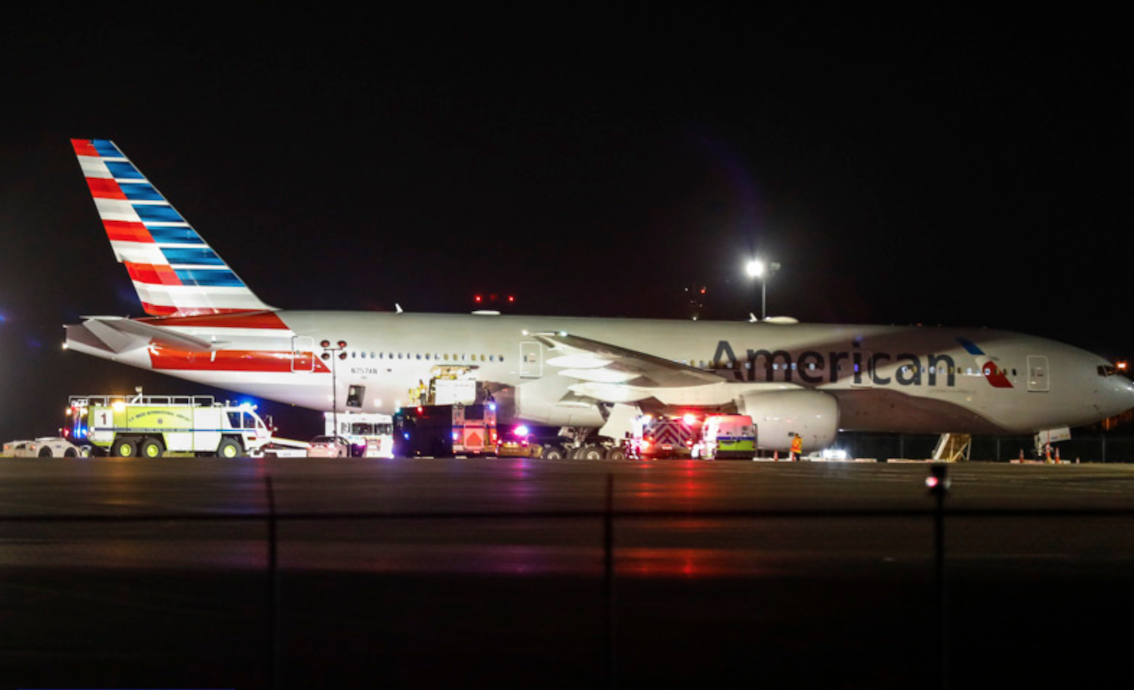
We got an answer to that question the other day, when an American Airlines B777-200 en-route from KJFK/New York to SBGL/Rio de Janeiro had to make an emergency divert to TXKF/Bermuda due to a suspected fire in the cargo hold.

ATC cleared the flight direct to TXKF/Bermuda. They advised the crew that the tower at the airport was not staffed at the time (although the runway has pilot controlled runway lighting), but that emergency services had been alerted and would be on standby for their arrival.

38 minutes later, at 12.18 am, the flight landed, and the emergency services were indeed there as promised.

The whole cargo fire thing turned out to be a false alarm, although we’re very thankful to one of the passengers–the supermodel Joan Smalls–for documenting the ordeal on social media.

We contacted the airport authority to check exactly how long they really need for emergency diverts, and whether they really do provide Fire Cat 9 in these situations. Here is their response:

“ARFF is available 24hrs and yes will be staffed at the appropriate level to be cat 9 at all times. After 2300 Local Time when the local airport is uncontrolled , ARFF requires 20 minutes for call out for such events like diversions.”

So there you have it. You can always rely on Fire Cat 9 at TXKF – just make sure you give them at least 20 minutes notice!


A lesson in emergency handling, from Aer Lingus

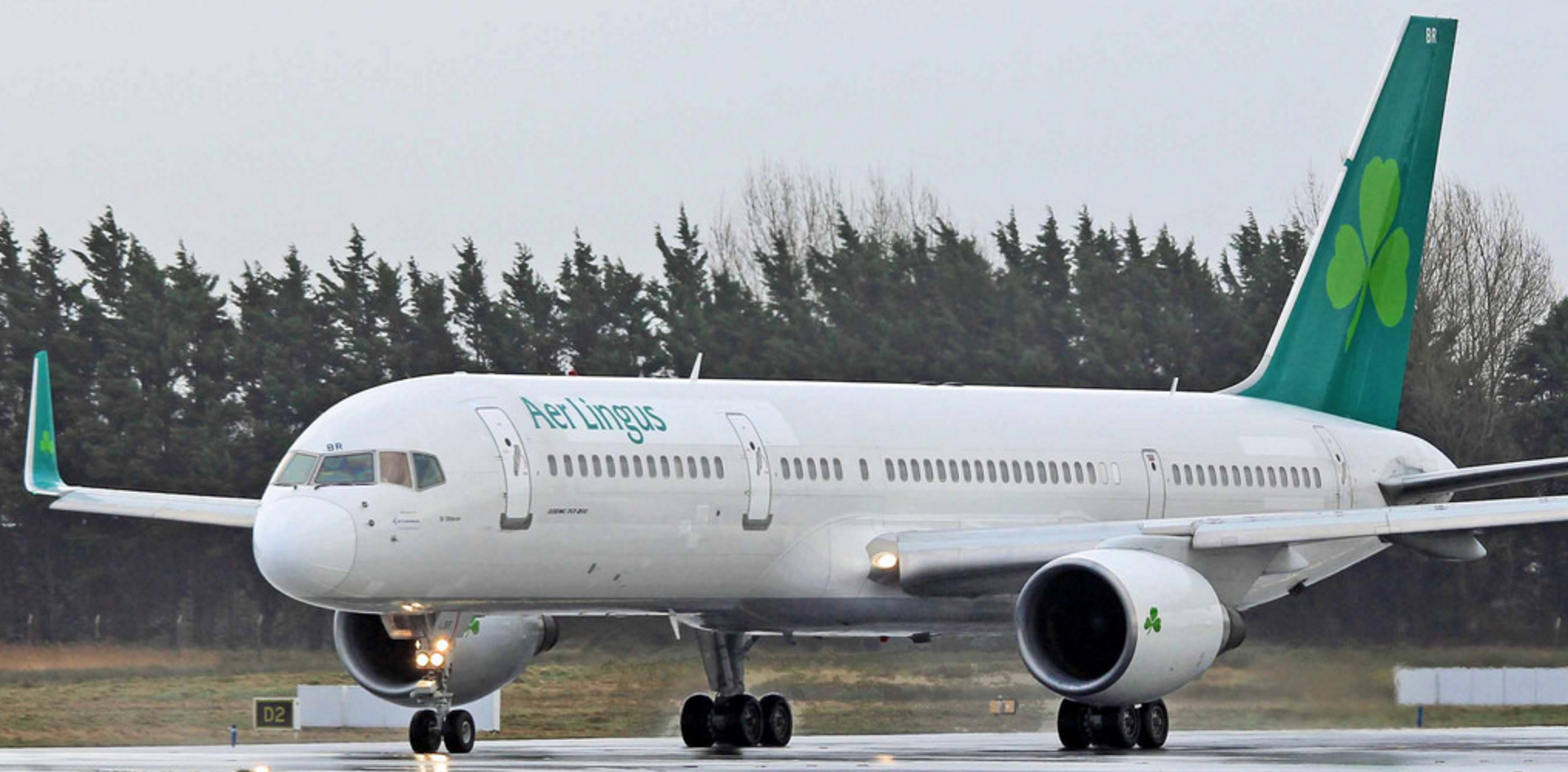
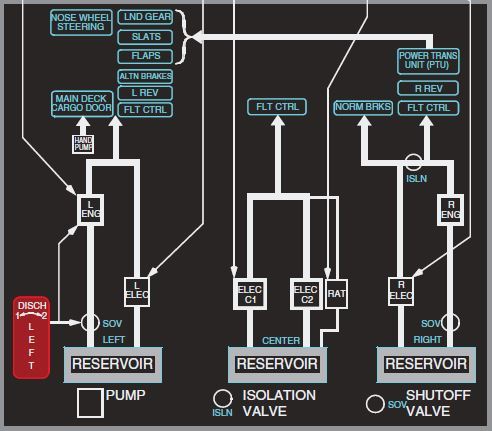
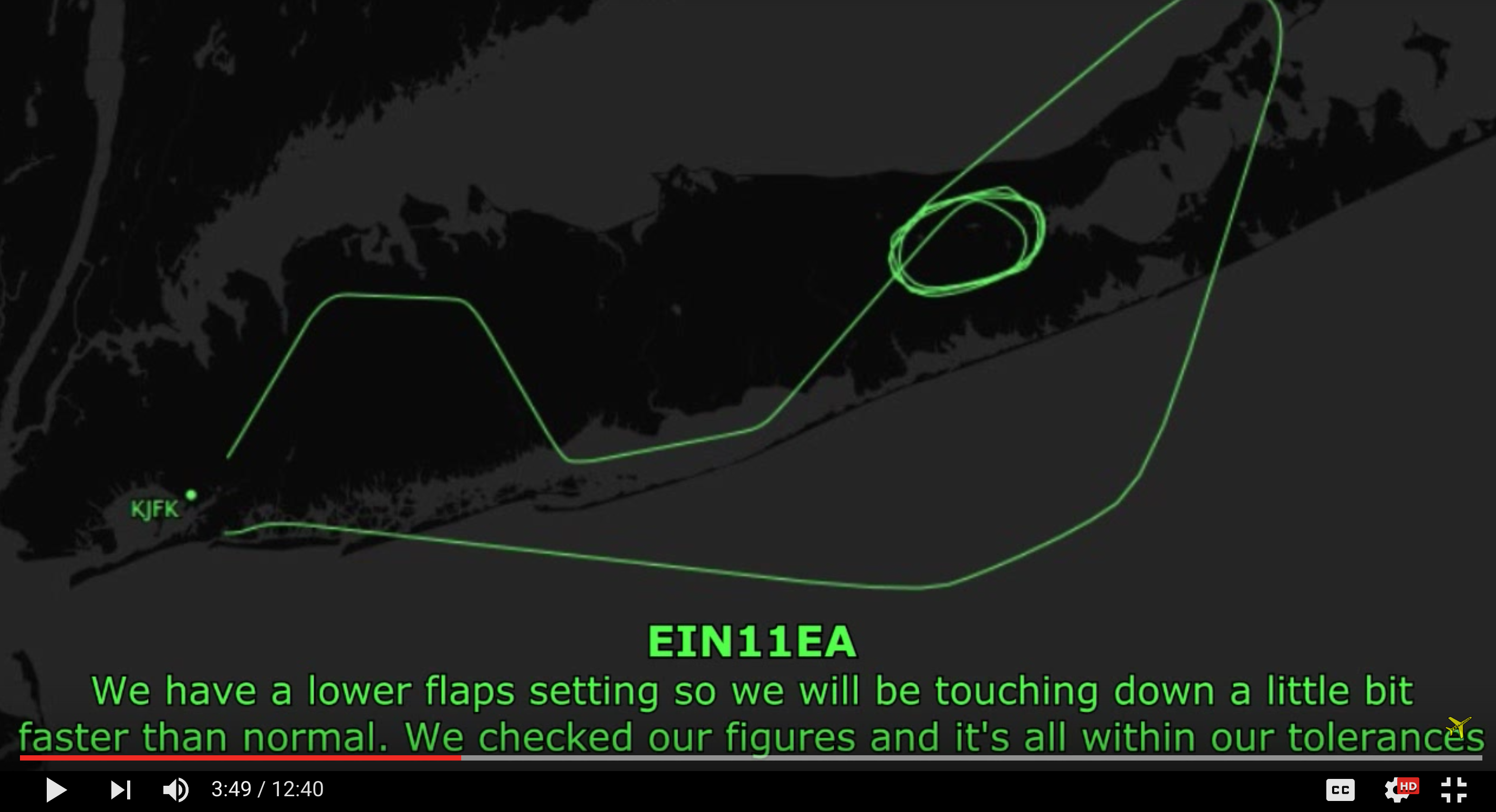
In September last year, an Aer Lingus Boeing 757 (operated by Air Contractors), suffered a loss of the Left Hydraulic system on departure from JFK. The left hydraulic system is the main one, meaning that Flaps, normal gear extension, and Nosewheel steering all become unavailable. The failure is therefore serious, albeit one that would be a favourite for simulator practice.

There are some really interesting lessons to learn from this incident, not least of which is how we now get access to the information that emanates from it. No longer do we need the offical report; it’s all out there on Live ATC and YouTube.  It’s 12 minutes 40′ of highly worthwhile viewing, whatever your thoughts on how public this all is.

EIN emer


And so to the incident. Foremost, this is a lesson in professionalism and communication, from an outstanding crew. Listen carefully, and observe how:

  • A clear report is made as to the situation and what’s needed immediately.
  • Potential for a spillage of fluid on the runway – not their problem, right now – but passed on as the first consideration for others.
  • Early message to JFK, via Boston Centre, that ILS22L is the best runway for them, that they cannot vacate, and that the gear doors may look unusual.
  • Communication is clear, precise, and authoritative – making sure everyone has all the information they need.
  • Taking full command of the situation on the ground, during the fire incident. “Say again, and make sure nobody speaks apart from you“. Communications involving rescue vehicles on ATC frequencies are notoriously confusing and unclear, this crew handled the confusion with authority.

Some International Differences that can be seen here:

  • Pounds and Kilos – this 757’s indications are in Kilos; ATC don’t know the conversion either, and another US aircraft on the frequency steps in to help out. Since the Gimli Glider, this has always been an issue.
  • Mayday and Emergency – read more below, but the US likes the phrase “Declaring an emergency”


Some other interesting factors
:

  • A really awful callsign. Bad enough for a normal crossing and 6 hour flight; brutal in an emergency. The flight was EI110 – so the callsign should be Shamrock-one-one-zero (one-ten works fine). Problem: lots of other airlines have this number too, so to avoid callsign confusion, someone in an office somewhere decided to change it to Shamrock-One-One-Echo-Alpha.
  • Callsign confusion is in fact the result. Try saying it a few times in a row. The controller variously calls them “Shamrock 11E”, “Speedbird 11EA”, “Shamrock 11A”. The callsign alone made things difficult for ATC and the crew.
  • ATC did a pretty good job of keep comms to a minimum. In most incidents, ATC create stress and workload for the crew by asking non-essential questions the moment that an emergency is declared – which is the same time as the crew have a bunch of checklist work to do. When you get a Mayday or Emergency call on your frequency, hang tough with the questions for a minute or two, unless you need answers for immediate traffic separation.
  • ATC will always ask Souls on Board and Fuel on Board. Why? To know how many people to account for on the rescue, and how much Jet fuel is going to fuel a fire if there is one after landing. Get the souls on board accurate (not a bad idea to have this written at the top of the flight plan), but a rough estimate of fuel will do. If you’re using a decimal, you’re doing it wrong.


Emergency/Mayday/Pan:

  • In the US, normal practice is that you either declare an emergency, or you don’t – unlike many other countries where a choice between Mayday (serious) and Pan-Pan (cautionary) exists.
  • US ATC Handbook: “If the words “Mayday” or “Pan-Pan” are not used and you are in doubt that a situation constitutes an emergency or potential emergency, handle it as though it were an emergency. “
  • Sidenote: Many think that only the flight crew can declare an emergency. In fact, Flight Crew, Dispatch, Company Representatives, and ATC can all declare an emergency. An emergency can be declared without notifying the flight crew.
  • In this case, the crew were comfortable in their communication with ATC – and able to “not declare” but at the same time request emergency equipment on standby. As it turned out, this emergency equipment was critical because there was a small fire after landing. If you are uncertain whether ATC understands the nature of your situation – declare an emergency. You can always cancel it later on.
  • Fuel Reserves Approaching Minimum: Internationally, ’Fuel Emergency’ or ‘fuel priority’ are not recognised terms. Flight crews short of fuel must declare a PAN or MAYDAY to be sure of being given the appropriate priority.
  • In 2005, ATPAC recommended changing FAAO 7110.65 (the regs for controllers) to include “emergency” as a term that could be used in lieu of “mayday” and “pan-pan.” They then withdrew the recommendation because they decided that creating more differences from ICAO standards was a bad thing.

It’s easy to forget that in a real emergency, no matter how strong your training, you have to deal with stress and adrenaline that doesn’t appear in the simulator.

A hydraulic loss is considered ‘routine’ in the books, but many accidents in the past have come from compounding errors – those holes in the swiss cheese line up pretty easily once the first one is as big as a hydraulic leak.

The cool, clear, and decisive communications from this crew indicate that they have the Big Picture firmly under control. It’s a lesson for all of us.


757_Hydraulics_1