US Pre-Clearance: How does it work?
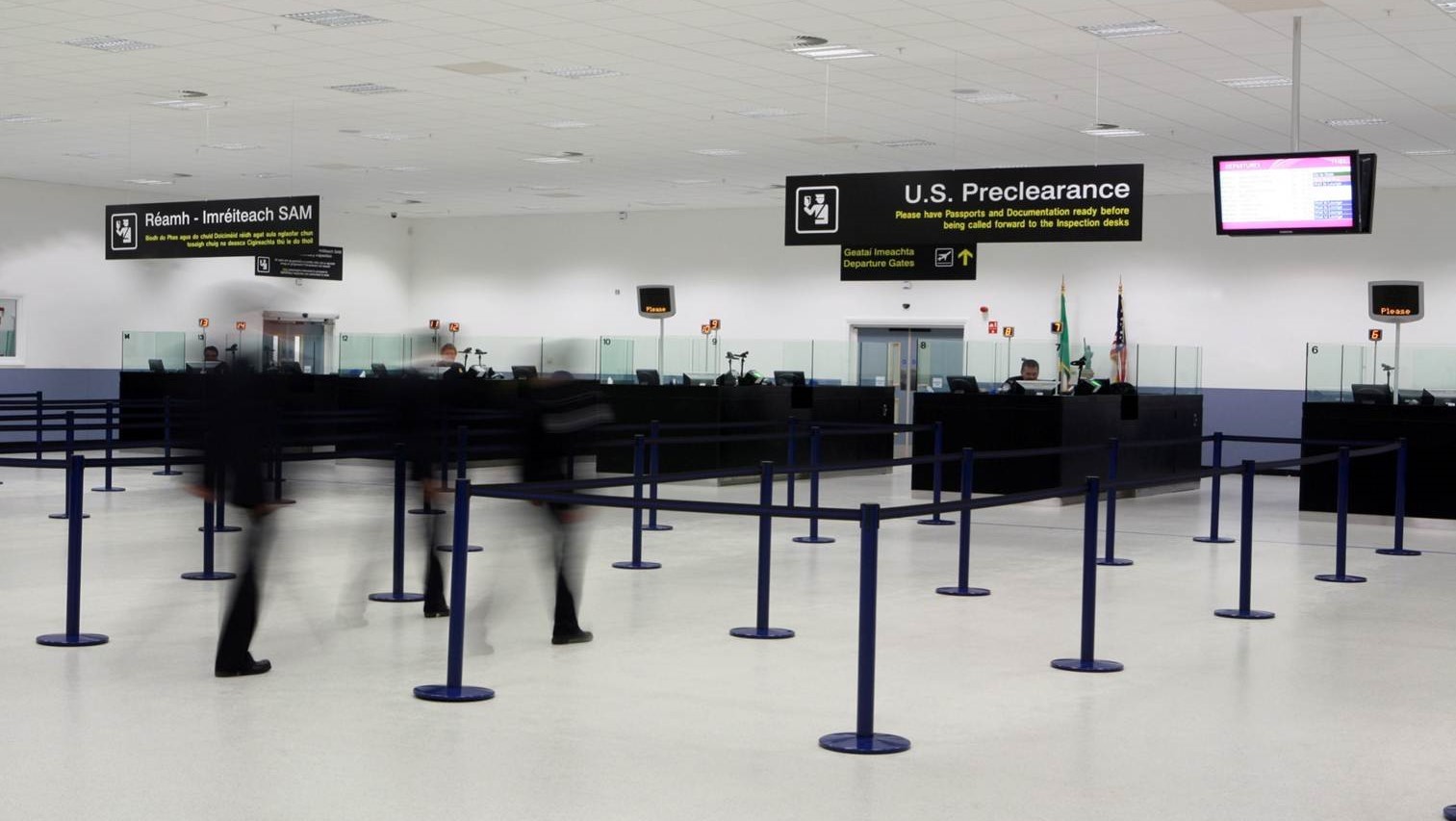
What is US Customs and Border Protection Pre-Clearance?

This service basically allows aircraft flying from certain approved airports direct to the US to complete their entry procedures at their departure airport – instead of on arrival in the US.

Where can I do it?

If you’re a bizav flight (i.e. private or charter), you can only do it at EINN/Shannon and TNCA/Aruba.

Scheduled airline flights can do it at these airports too:

  • The United Arab Emirates – OMAA/Abu Dhabi
  • The Bahamas – MYGF/Freeport or MYNN/Nassau
  • Bermuda – TXKF/Bermuda
  • Canada – CYYC/Calgary, CYEG/Edmonton, CYHZ/Halifax, CYUL/Montreal, CYOW/Ottawa, CYYZ/Toronto, CYVR/Vancouver, or CYWG/Winnipeg
  • Ireland – EIDW/Dublin

Where can I fly to in the US once I’ve Pre-Cleared?

Turns out it’s not that easy to find a list of US airports approved for the arrival of Pre-Cleared aircraft. But thanks to Signature FBO at EINN/Shannon, here is a copy:
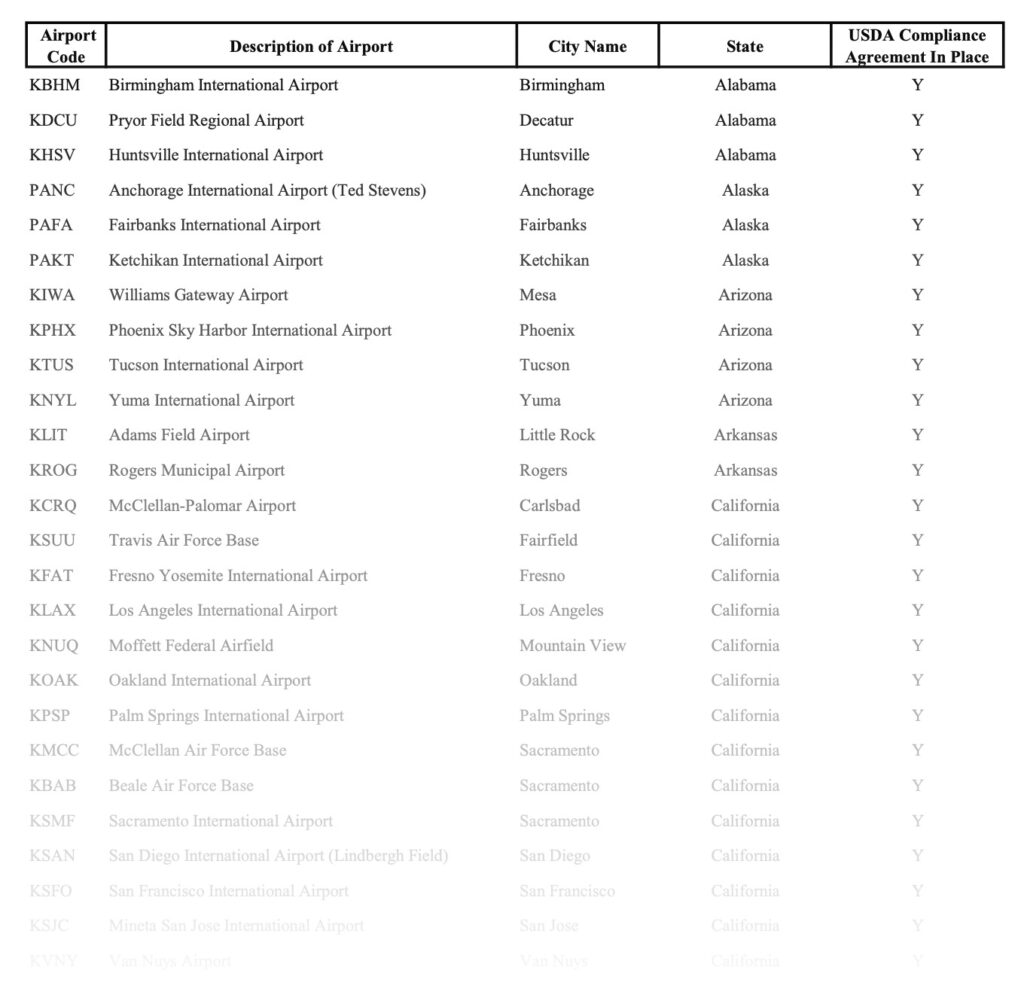
Click for PDF.

Finding a list of US International Airports of Entry is pretty easy, just go to the CBP website and use their interactive map. But it’s worth noting that not all US International Airports of Entry are on the list of those approved to accept Pre-Cleared flights, due to lack of agriculture agreements, and/or local CBP agreements there.
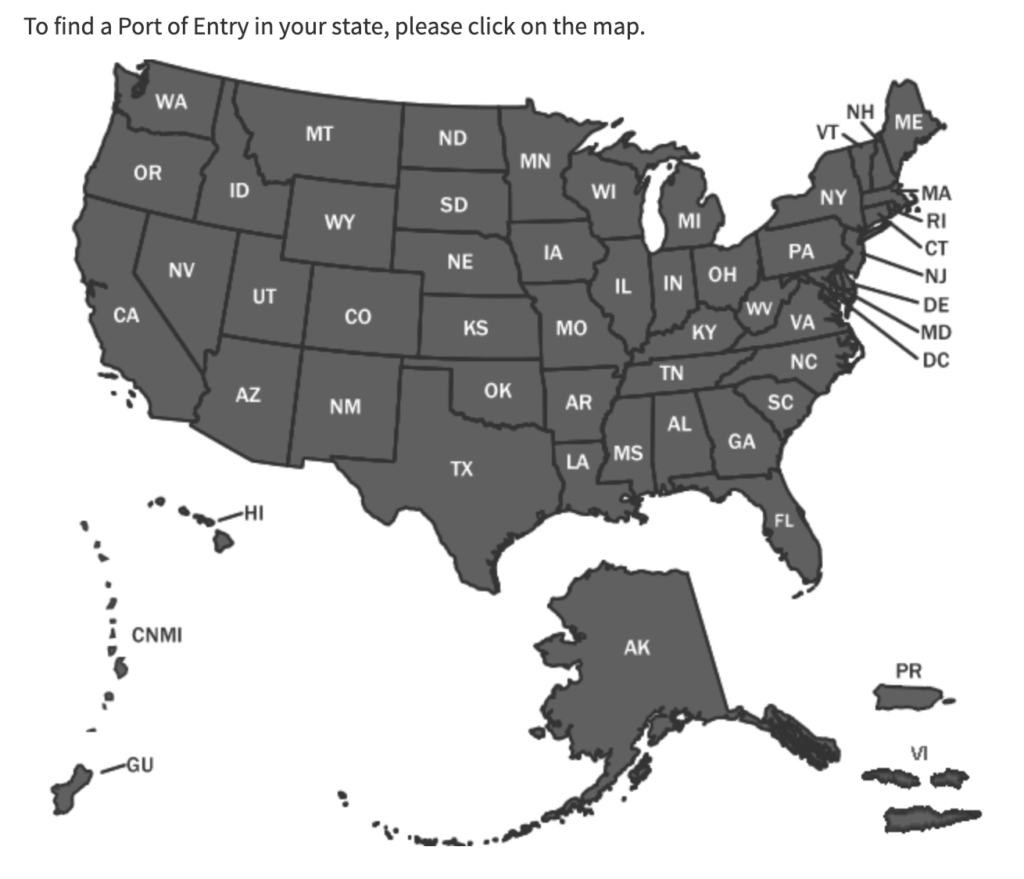
Click for CBP website.

How does Pre-Clearance work in reality?

US CBP has published this guide on exactly how the Pre-Clearance service works, but here’s the lowdown:

  1. Request the service with CBP – Get in touch with CBP telling them that you want to do it! Pass them a bunch of information – details about the flight, passengers and crew. You can do this step through your ground handler (recommended).
  2. Submit APIS – Slightly tricky here, because for Pre-Clearance you have to submit this no less than one hour before the scheduled Pre-Clearance processing time itself, rather than the departure time from the Pre-Clearance airport. For example, you want to fly from EINN-KALB at 2pm, and you’ve got your Pre-Clearance set up for 1pm, so that means you need to file your APIS no later than 12pm!
  3. Pre-Clearance approval – US CBP will email notice of approval, including the appointment confirmation number.
  4. The Pre-Clearance procedure – When you arrive at the Pre-Clearance airport, CBP will conduct the same procedures as if you were at an airport in the US. Travelers and luggage are screened and the aircraft is inspected.
  5. Departure – Crew, passengers and luggage board the aircraft, and off you go. (And remember – no opening of any aircraft doors from this point before departure!) The kindly CBP chaps you’ve just dealt with will zap your info across to their counterparts at whichever US airport you’re flying to, so everything should be nice and smooth on arrival.
  6. Arrival – Upon arrival in the US, bag up your garbage for CBP to collect. Note that if you have to land somewhere other than where you said you’d be landing in your APIS, Pre-Clearance approval will be voided and you’ll have to go through the normal entry process.

Remember, if you’re a bizav flight, you can only do Pre-Clearance at EINN/Shannon Airport or TNCA/Aruba. So here’s some info specific to both of these airports…

Pre-Clearance at EINN/Shannon

One of the FBOs there is Signature Aviation, and they have provided a summary of what you can expect when you Pre-Clear, with a few more details than the basic summary above. You can download the PDF here, but key points are: you must give 24hrs notice, and the CBP office opening hours are 0900-1700 local each day with out of hours available between 0700-0900 and 1700-2100 local. You can contact them at snn@signatureflight.ie.

Pre-Clearance at TNCA/Aruba

Jet TNCA is the only FBO at Aruba, and they can provide Pre-Clearance to bizav flights. They need 24hrs notice, it costs $315, and CBP there are open from 0930-1100 and 1530-1700 local time each day (not available on afternoons at weekends). You can find more info here, and contact them at ops@jet-tnca.com.

A note on the US Virgin Islands

Technically, airports in the Virgin Islands “offer” this service too, but it’s not really Pre-Clearance in the same sense as at EINN and TNCA – here it’s actually more of a requirement than an optional extra. The US CBP say the following:

For flights leaving the USVI enroute to other United States locations, GA aircraft operators are required to contact CBP in the USVI prior to departure. Aircraft cannot be moved from the U.S. Virgin Islands to other U.S. locations until CBP Agriculture Specialists (CBPAS) have:

  • had the opportunity to inspect the aircraft;
  • crew, and passengers; and
  • the CBPAS has provided clearance for departure from the USVI.

Standard Aviation FBO at TIST/St Thomas say that Customs requires a minimum notice of 2hrs in advance of the appointment time. Appointments are available 7 days a week from 0800-1630 local, and it costs $250. Contact them at ops@sa-stt.com.

Shannon, BizJets and Level Busts

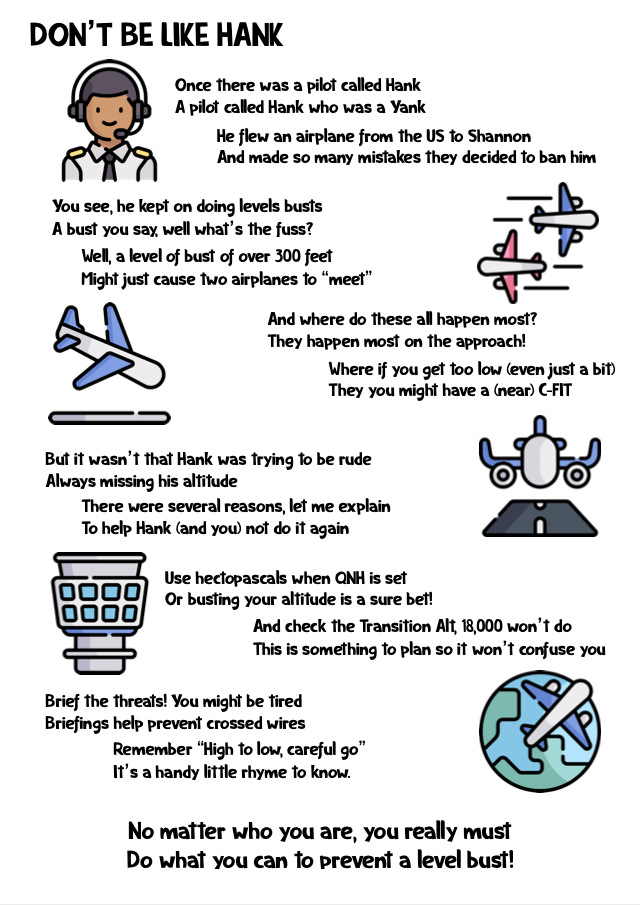
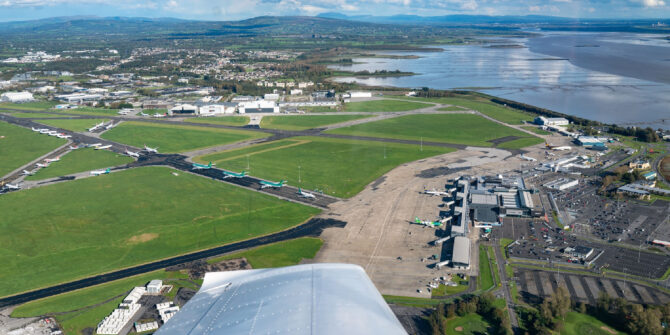
Level busts at EINN/Shannon Airport are a problem. A big problem. Big enough that the IAA have made a presentation on them, alongside the NBAA. Why the NBAA? Well, because a disproportionate number involve North American Business jets.

We’ll start with a little story.

Once upon a time, not so long ago, a pilot called Hank* (*name changed for anonymity) was flying his Business Jet over from the US to Europe, and he decided to stop off at Shannon airport. Shannon is, after all, on the Emerald Coast so it’s very pretty but more importantly its just on the other side of the Atlantic, you can do your US customs stuff there, and they have fuel for your airplane and Guinness for you.

So off Hank heads, and he’s done his homework. He’s planned for the whole NAT HLA bit. Alas, though, he has not planned for the actual landing into Shannon bit. Tired, distracted by the thoughts of Guinness and caught out by a much lower transition altitude, Hank forgets to change his altimeter from inches mercury to hectopascals, and when ATC says “Set QNH 988” what does he do?

He sets 2988inHg…

And so he descends down, aiming to level off at a nice safe altitude. Only his altimeter is over-reading by 720 feet. Hank gets within 2nm and 500ft of some pretty sticky-uppy terrain before ATC spots the errant aircraft and saves the day…

So, Hank was added to a long list of North American Business Jet operators who had a nasty level bust in Shannon and was embarrassed.

Now, the story really begins…

I am not a North American BizJet operator so it doesn’t apply to me?

Well, it could and it’s useful for anyone to think about really. Level busts are an issue all over, and if you operate into any high traffic density spot (London is a particularly good example) then even the most minor of busting can result in a traffic conflict.

Then there is the risk of CFIT – controlled flight into terrain. Busting downwards in areas with high terrain could lead to this. In fact, most CFITs occur during the approach and landing phase.

300 feet is your limit. Anything beyond that and you’ve got a bust on your hands.

What’s with Shannon and North American BizJet operators?

EINN/Shannon is a US Customs and Border pre-clearance airport, and it is in a handy spot on the west coast of Ireland making it perfect for aircraft with slightly less range to hop between the US and Europe. So it gets a higher number of BizJets from the US. In fact, 30% of their flights are North American BizJets (out of 25,000 or so flights a year).

But despite being only 30% of traffic, they are involved in the majority of level busts. In 2019, 68% of busts in Shannon were, you guessed it, by the NABJ brigade. So far, in 2022, they’ve been responsible for a whopping 100%!

So why does Shannon see so many?

Well, in all fairness, there are some things that make it more complicated if you’re used to flying in the US. 

Shannon, like most of Europe, uses hPa instead of inches of mercury, and this can lead to “mis-setting” on the QNH. Like we saw with poor Hank (based on an actual true story) – this is probably the most common cause of level busts in Shannon.

Then there is the transition altitude. Unlike the US and their nice standard always 18,000ft, Shannon uses 5000ft which can lead to a late (or early) change to and from local QNH. Chuck in some weather and particularly non-ISA one and there’s your problem.

And of course, folk heading in from a long North Atlantic night flight might be tired, unfamiliar, or just not planning it very well.

So what can pilots do to avoid level busts?

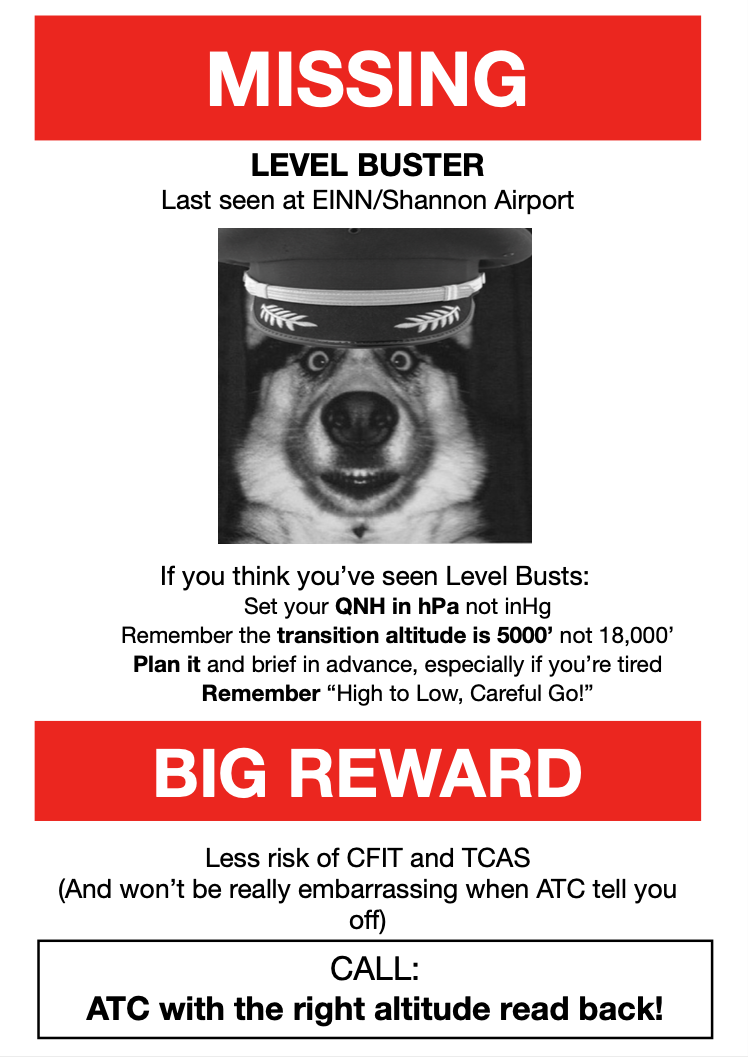
  • Add a mention of the risk into your briefing if you’re heading to Shannon. Or anywhere where level busts are an issue.
  • Remember “High to low: careful go!”
  • Don’t forget to set QNH in hectopascal and not inches mercury when operating into Europe.
  • Check the transition altitude, and plan ahead if it’s a low one.
  • Avoid aggressive descents – you can ask ATC for more track miles if you need.
  • Read the NBAA/IAA presentation for more info.


Covid impact on North Atlantic diversion airports

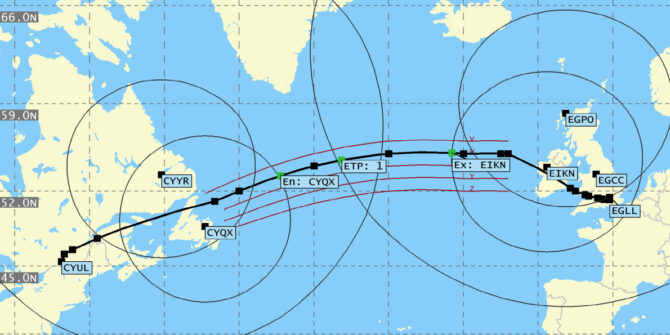
Planning diversion alternates is always fun – particularly when flying across vast tracts of open ocean like the North Atlantic. Check a few Notams, google some airport pics to work out just how scary the runway is, stick a couple of en-route alternates into your flight plan, and away you go…

The reality is it’s a bit more complicated than that. For use as a diversion alternate, an aircraft operator must ensure that the airport concerned meets basic criteria to be classified as ‘adequate’. In other words, just a runway is not enough – if only it were that simple!

Here are the kinds of things we’re interested in:

  • Sufficient weather forecasting.
  • ATC (or Flight Information Service) hours of operation.
  • Runway availability.
  • Instrument approach availability.
  • Runway Lighting.
  • Runway slope guidance (PAPI, VASI, Glideslope or similar).
  • RFF (Rescue Fire) operational status.
  • Status of facilities: refuelling, handling, parking bays etc.

During the course of the Covid-19 pandemic, a number of airports have used the lull in traffic to undertake work that can affect their operational status. As a result, these changes may create additional operational issues for pilots and flight planners seeking diversion alternates that meet their requirements.

Also, due to the general chaos of Covid-19, many airports have limited staff which has an effect on how your aircraft, passengers and crew will be handled on the ground if you do need to divert.

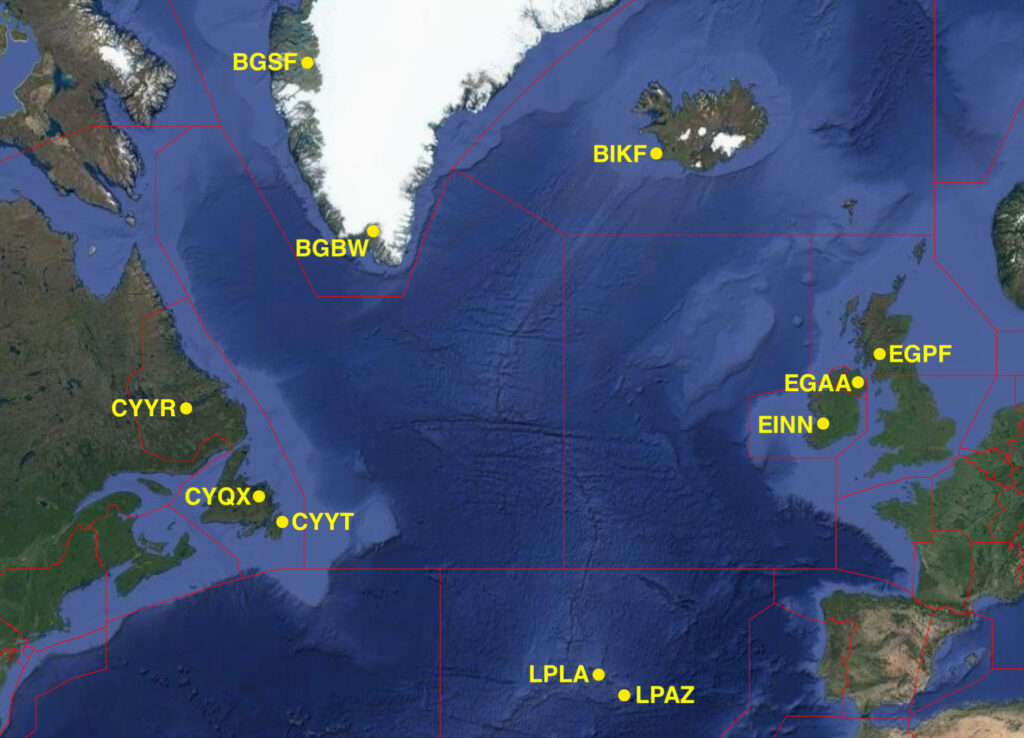
Here’s a summary of changes to operational status of airports commonly used as diversion alternates for aircraft crossing the North Atlantic. (Unless stated otherwise, airports listed below are open H24 for emergency diverts).

The Biggies

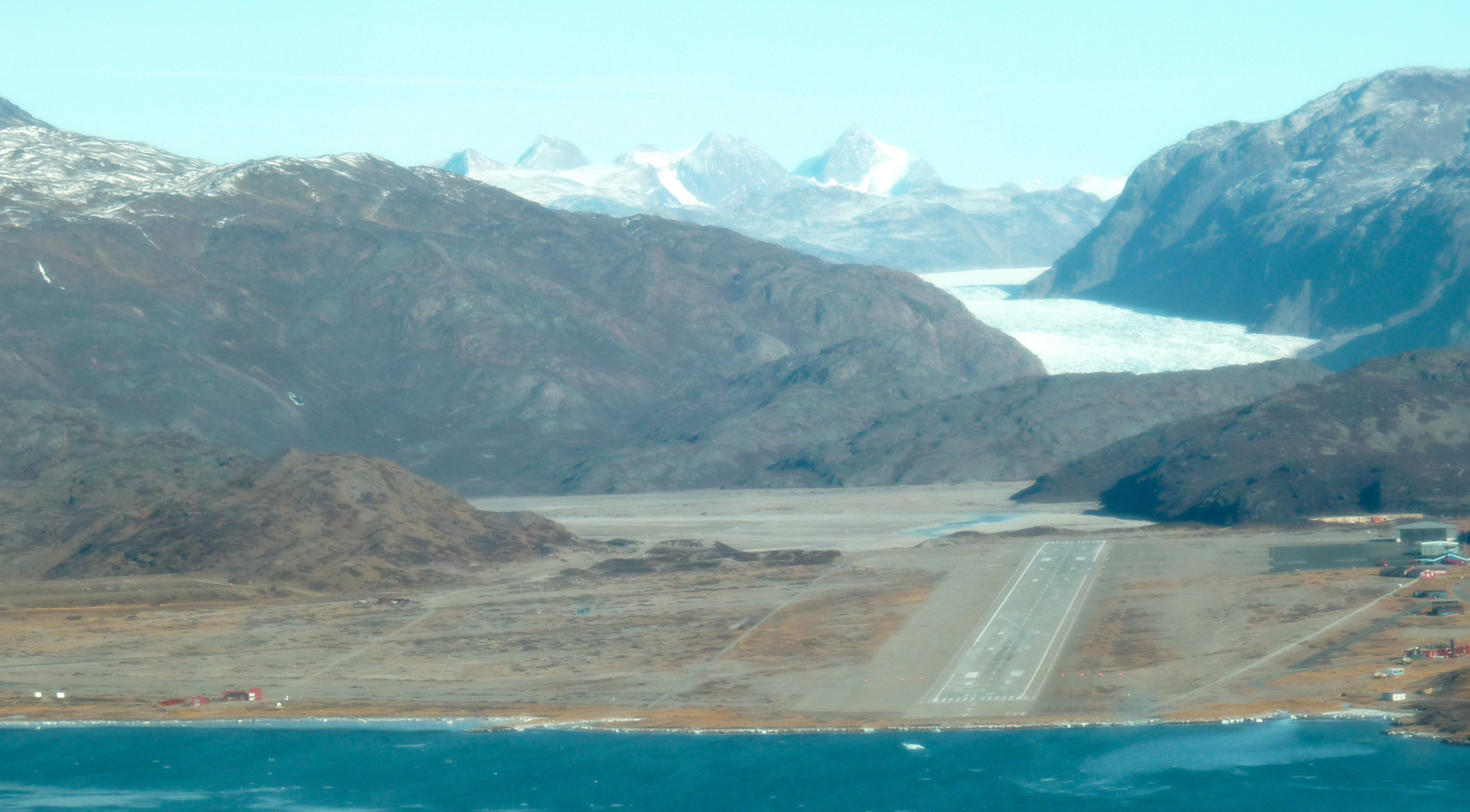
BGSF Kangerkussuaq Airport, Greenland – Airport is open 1000-1900z Monday to Saturday. Closed on Sundays. If you want them to stay open for you outside their opening times, you have to request it in advance – watch out for hefty fees if doing this, which get charged even if you don’t end up actually diverting there. Same applies if you just casually list BGSF as an en-route alternate on your flight plan if operating out of hours. More info on that here.

However, until at least June 10 the airport is classified as ‘non-instrumental.’ Effectively you can only use it during daylight hours in good conditions (NOTAM A0283/20 refers).

BGBW Narsarsuaq, Greenland – Similar deal to BGSF – airport is only open 1000-1900z Monday to Saturday, and closed on Sundays. And again, extra fees which get charged if filing BGBW as an en-route alternate on flight plans. RFF category 5, but grab a coffee because it requires 3 hour’s notice (NOTAM A0098/20 refers). Officially, the current rules for Greenland are that crew and pax will not be allowed to disembark, not even for diverts. Unofficially, the local handler says that if a divert was to happen, they’d “find a solution”.

LPLA Lajez, Azores – Several restrictions apply due to Covid. Essentially you can go there if you really need somewhere to land but expect chaos once you do. The airport is currently closed to international arrivals unless it’s an emergency. And even then you cannot disembark without permission and strict quarantine measures apply (NOTAM A1487/20 refers). Unscheduled arrivals of emergency aircraft can expect ‘extensive handling delays’ (NOTAM A1485/20 refers). All passengers and crew must wear face masks, and once you and your passengers leave the aircraft you will be quarantined in the local air force base (room service is unlikely).

LPAZ Santa Maria, Azores. If you have to divert there, no crew or pax are allowed to disembark. For medical emergencies, they actually recommend you go to LPLA instead!

EINN Shannon, Ireland – Aerodrome is currently only operational from 0500-2100z due to the impact of Covid (NOTAM A1062/20 refers). The airport has confirmed they are not available outside of these hours for emergency diverts – so if you’re operating overnight, the nearest available H24 airports are EGAA/Belfast and EIDW/Dublin.

And watch out for these potential ‘gotchas’

CYYR Goose Bay, Canada – Until June 29, runway 16/34 is closed. In strong northerly or southerly conditions, cross wind limitations may be reached – so keep an eye on your ETOPs alternate minima (NOTAM E3107/20 refers).

CYQX Gander, Canada – In case of divert, crew/pax all need to fill out a Government Declaration COVID form to stay overnight, and need to have proper PPR (Masks, Gloves and Sanitary Cleaner). RFF category 5 which requires at least 30 minutes notice.

BIKF Keflavik, Iceland – RFF category 8 from 0500-1900z, RFF category 7 from 1900-0500z (NOTAM A0123/20 refers).

EGAA Belfast, Ireland – Until June 13, RFF category 6 overnight between 1800-0600z (NOTAM A1968/20 refers). And until June 11, this is reduced to just RFF cat 4 between the daytime hours of 0600-1800z (NOTAM A1993/20 refers).

EGPF Glasgow, Scotland. Until June 16, available RFF category is 6 for the majority of the day due to staffing issues caused by Covid (NOTAM A1983/20 refers).


In other NAT-related news, the datalink mandate rules have been relaxed until the end of June, due to the fact that there’s now significantly less traffic because of all the COVID restrictionsNon-datalink mandate compliant aircraft may therefore flight plan and operate between FL290-410 until June 30. ICAO are saying that due to the decrease in traffic, there is a significantly higher chance of flights being cleared as requested, and are encouraging operators to file and request their optimal profiles at all stages of the flight. More info on the NAT Datalink Mandate can be found here.


Cheapest Jet fuel on the Atlantic? $1.15 a gallon

The cost of a gallon of Jet A1 has been rather unstable lately. Over the last couple of years, we’ve produced several versions of our  North Atlantic Plotting Chart, and as we’ve done so, the price of Jet A1 has dropped each time across the Atlantic seaboard.

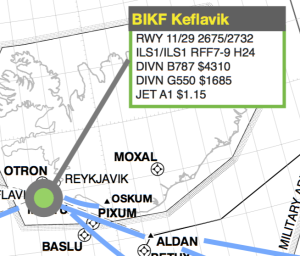
So, where is cheapest? Answer: Keflavik. $1.15 for a gallon of Jet A1 at the best available commercial airline rate. Now, that was six weeks back or so, when we did the research for the chart, and prices have been rising since (tracking the Oil price pretty well).

BIKF

Next best on the list is Shannon, Ireland – $1.37 USD/USG, thanks to the Shannon Free Zone, which strips out most of the taxes that the EU levies as standard.

Next question, then: most expensive? Narsarsuaq, at $5.65 for a gallon. Why so much more? Primary reason: getting the fuel to BGBW is an awful lot harder than getting it to BIKF. The rest is down to the difference in government tax policy.

Fuel price is of course not the only tech stop or diversion consideration on the North Atlantic, but given that security, safety, and service quality is pretty much equal across the entire NAT region, it’s an important factor – along with the cost of handling.

If you look at the snapshot above, you can see that your G550 will cost around $1685 including Airport Fees; taking a B787 to KEF will run around $4300 all in.

The North Atlantic Plotting Chart has all this information for all the common North Atlantic ETOPS/Diversion Fields – namely: CYYT/St Johns, CYQX/Gander, CYJT/Stephenville, CYYR/Goose Bay, CYFB/Iqaluit, BGSF/Sondrestrom, BGBW/Narsarauq, BIKF/Keflavik, EGPF/Glasgow Intl, EGAA/Belfast, EINN/Shannon, and LPLA/Lajes.
Download NAT Plotting Chart