Belarus: A closer look at their aviation industry
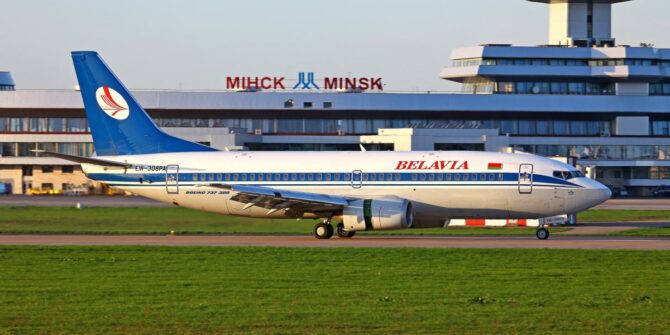
Belarus is in the spotlight at the moment for their recent, controversial decision to force a foreign civilian aircraft to land under false pretences and for political reasons.

We thought we would take a look at their aviation industry, what you might experience if operating into the region, and a brief review of what it will mean if other countries ban use of their airspace.

Who is ‘Belarus’

The Republic of Belarus is a landlocked country in Eastern Europe. They border Russia, Ukraine, Poland, Lithuania and Lativia. The capital is Minsk. Before gaining their independence in 1991, the country was known as Belorussia, or ‘White Russia’, and was a small Slavic Republic included in the Soviet Union (along with Russia and the Ukraine.)

The are considered a developing country and rank pretty high on the Human Development Index. They are a member the UN and have a decent bilateral agreement with the EU, but are not a member of it.
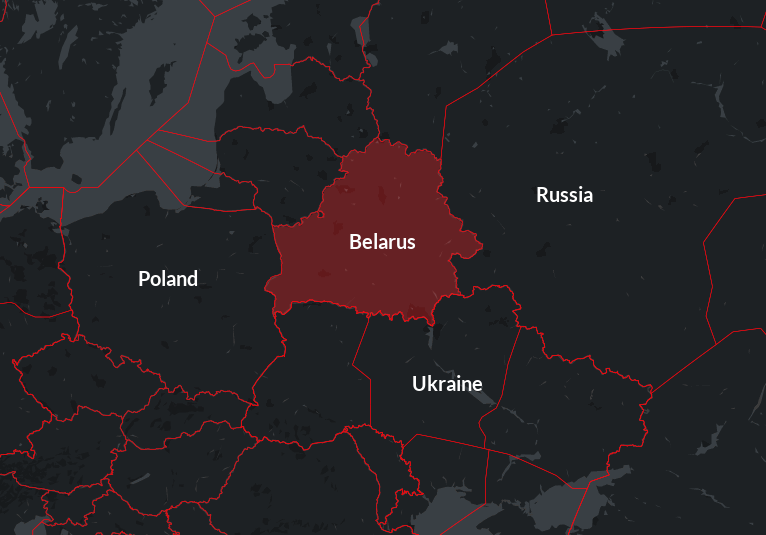
An important route connecting Russia to the rest of Europe.

Tell us about their airports.

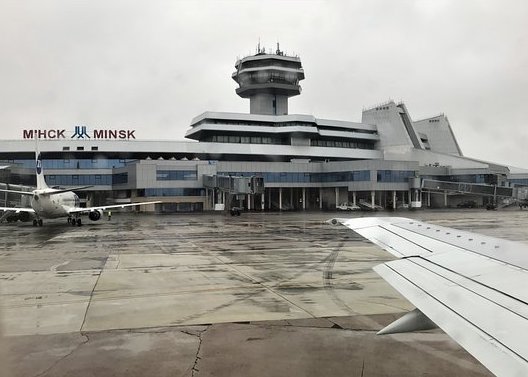
The main international airport is UMMS/Minsk:

  • 13R/31L    11,946ft/3641m    ILS CAT I
  • 13L/31R    12,139ft/3700m    ILS CAT III / CAT I

It is a decent airport with good facilities and no major threats for operating in.

Aside from UMMS, you also have the following airports with customs facilities (although none of them have a runway longer than 9000ft)

  • UMBB/Brest (not to be confused with Brest, France) with an 8596ft/2620m runway 11/29
  • UMGG/Gomel also known as Homiel/Gomel/Pokalubichi with an 8428ft/2569m runway 10/28
  • UMMG/Grodna with a 8399fr/2560m runway (limited taxi and apron space) 17/35
  • UMOO/Mogilev offering a 8419ft/2566m runway 13/31 (there is one taxiway off the runway so 180° turns and backtracks required here, and very limited facilities)
  • UMII/Vitebsk why 8550fr/2606m runway 05/23 (also very limited)
  • UMIO/Orsha opened in November 2020, offering a new cargo hub for the country. Runway 05/23 is a decent 9846ft/3001m with a CAT II ILS
Those aprons could do with some work

Tell us about their airspace.

The airspace is what most operators are really interested in. Belarus is a fairly decent sized country which is the main airspace between Russia and Poland, and Western Europe (unless aircraft want to route further north through Lithuania and Latvia).

Above FL275 in the UMMV FIR is Free Route Airspace meaning you can plan directs between Entry and Exit points (AIP ENR 4.1)

Several authorities are currently banning their operators from routing through Belarus Airspace. This means significant detours to the north for aircraft routing to Russia.

The Ukraine borders Belarus and Russia has multiple airspace warnings and restrictions preventing many operators from overflying their airspace, so Belarus is a fairly important trade route for aircraft routing from Western Europe to Russia.

Using Minsk as a connection to Russia can have some customs issues though. Reports suggest Russia considers flights between the two as domestic (leading to cabotage issues with Russian customs), and so most operators seem to opt for EYVI/Vilnius or EVRA/Riga instead.

Tell us about their infrastructure.

Belarus’ infrastructure is a relatively aging ex-Soviet one. However, they have focused on improving their aviation infrastructure over the last decade or so. The major airports all offer at least a CAT I ILS landing system, and their en-route navigation facilities meet ICAO standards.

In 2020, the Belarussian government announced they would offer Minsk as a Fifth Freedom hub, allowing foreign operators to layover in Minsk, and fly onto other long-haul destinations.

The Aviation Market in Belarus was (pre-Covid) outpacing the growth of the wider Eastern and Central European market, with short haul carriers such as Wizz looking to increase flights to the country.
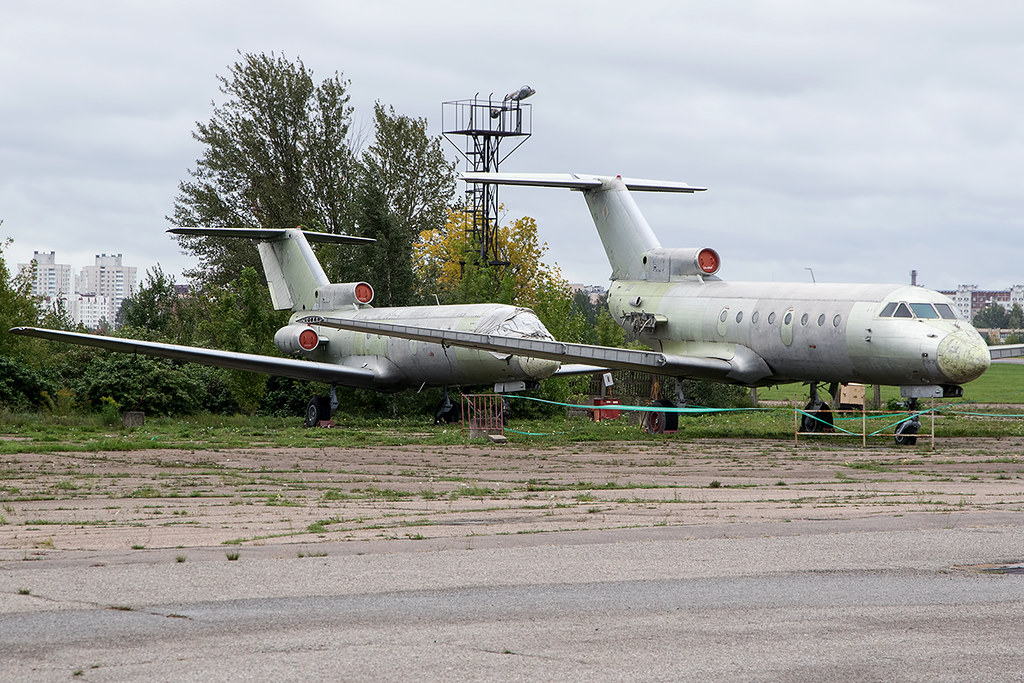
Minsk 1 (UMMM) closed in 2015

Tell us who to talk to if we want to fly there.

You need overflight and landing permits if you are a private or commercial operator. Easiest way is to fill out Form 2 and send it by AFTN direct to the authorities. They need 3 days notice if you’re heading to an international airport, and 5 if you want to fly to a domestic one.

The email for the Belarus CAA is ops@ban.by
AFTN: UMMDYAYX +375 17 222 5517

If you want to get in touch direct with someone at UMMS/Minsk airport then their admin number is +375 17 279 1436 or you can try one of the main handling agent, Belavia at +375 17 220 2555.

The Belarus AIP is available online http://www.ban.by/AIP/Belarus210715/html/index.html

Anything else to tell us?

Notam O0401/21 is in force from Apr 30 to July 31 closing runway 13R/31L at UMMS

For updated information on current airspace advisories and restrictions, check out our article on the current events surrounding Belarus.
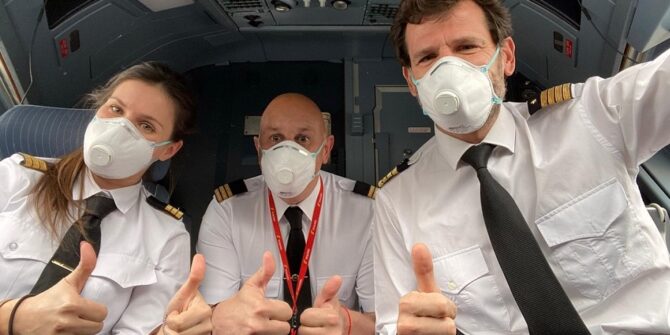


In the Know-se: Current Covid Crew Requirements

Covid has been around for nearly a year, and we have seen countries closed, reopen, close again, slightly close, close to some, not to others… It has been an endless jumble of restrictions, sticks up your snout, and “are you or aren’t you allowed” confusion.

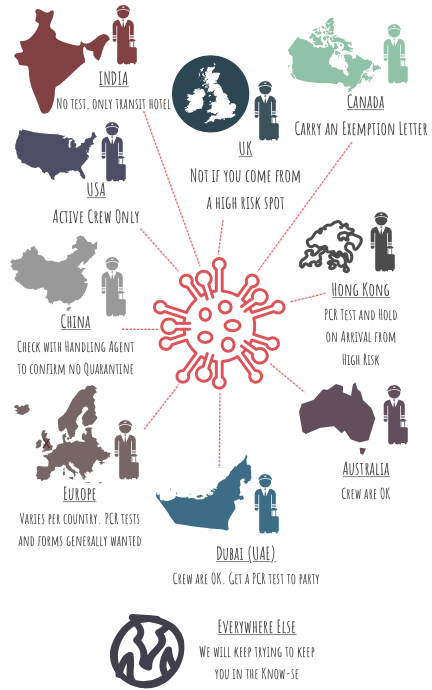
So, we thought we would provide a quick summary of the current Covid Air Crew restrictions, because, after all, these are what you probably want to know.

AmeriCan if you’re crew

The US want proof of a negative Covid test for passengers – that’s a PCR or antigen test, and it needs to have been taken a maximum 72 hours before travel. This covers all flights. That means private flights, GA flights, chartered balloons, even people who find a way to ride in on giant pigeons…

However, ACTIVE crew are exempt.

So for crew travelling to the US – you don’t need to get a Covid test in advance as long as you’re “active crew” – i.e. you’re operating the flight or travelling in an assigned deadhead status (i.e. positioning crew into the US). You also have to follow the health and safety rules set out in the FAA’s SAFO 20009.

We’ve had some reports of issues when positioning crew into the US, with gate staff requiring they show proof of a Covid test. To be clear: deadheading/positioning crew are officially exempt from this requirement, as per the CDC guidance found here.

Try to connect with the carrier being used in support of deadheading crew to verify their processes and documentation requirements. One thing to try: the NBAA has developed a template letter for deadheading/positioning crew to use for these situations. Print it out, fill it in, and send it in advance to the carrier you’re flying in with, and ask for written confirmation back from them to mitigate against any last-minute issues at the gate.

Maintenance personnel and contractors are also exempted if their travel is for the purpose of operating the aircraft, or ensuring the safety of flight ops.

Canadargghhh 

Canada recently changed their entry restrictions for all, and they are only allowing passenger flights to fly into CYUL/Montreal, CYYC/Calgary, CYYZ/Toronto or CYVR/Vancouver.

Despite the clampdown, crew are still exempt provided they are on duty.

Annex G contains the Template Letter for Crew confirming they are on active duty which you should make sure your crew have with them. The exemption covers quarantine and Covid testing.

Chi-not the place to go

Aside from locally based Chinese crew being asked to wear nappies, the information for air crew is tough to pin down for China. We think it is this – every airport is different.

The China Airlines Immigration page has the most useful information, and where it refers to C Visa, this is the bit you want to look at because that’s what crew will have.

Generally, you seem to be able to enter and stay overnight in a crew rest hotel without 14 days of quarantine, but your best bet is to confirm with a local airport agent (operations@groundexpress.aero have been really helpful).

The goings on in Hong Kong

From January 23, any air crew who have visited somewhere deemed Extremely High Risk will have to self-isolate in a designated quarantine hotel for 21 days… we think this might just apply to local crew though, because it goes on to say – 

All non-local based crew [who have been to Extremely High Risk areas] must have a negative PCR taken with 48 hours, and must undergo another test on arrival and remain in isolation until a negative result is received. They call this their Test and Hold procedure.

If the crew were not in an extremely high risk place up to 21 days before going to Hong Kong then you still need the PCR test taken 48 hours before, and the arrival test, but you can stay at your airline-organized hotel instead.

The official website is here.

Are U(o)K?

The UK has seen a lot of changes to their entry restrictions over the year. After they discovered a right royal variant of their own, they locked down (and pretty much every other country in the world locked them out). Then the cases of other mutant variants starting popping up all over the world so the UK closed their borders to a whole bunch of countries.

What does this mean for crew though?

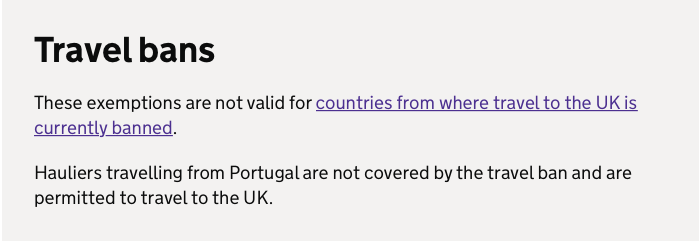
It means that if you are foreign flight crew and have been in (or even transited through) a banned country in the last 10 days then you will not be granted access to the UK. If you are a UK citizen or resident then you can enter, but will have to self-isolate for 10 days. The list of banned countries is here.

This is the bit we are talking about – the Travel Exemptions list, which lists jobs exempt from restrictions. The top message is pretty conclusive we think – even exempted jobs are not exempt if they are coming from/ have recently been to a country currently banned.

Europtions…

Europe has a lot of countries in it and all of them have their own regulations and restrictions. Here are the “big” ones.

France is getting a bit more restrictive with passengers of late, and borders are closing to a lot of higher risk countries – and to anyone who doesn’t have legitimate and essential reasons to be travelling there. The UK and non-EU countries are pretty much banned at this point.

For the crew, the requirements haven’t changed (as of February 3). You need to fill out a Passenger Locator Form, but are exempt from all the other isolation requirements (isolation and tests).

Swissport in LFMN/Nice keep a great little table regularly updated with all the latest rules in France for pax and crew, depending on where they’re flying in from.

Germany are closing their borders to all places where mutated viruses can be found as well. That means the UK, Ireland, South Africa, Portugal, Brazil, Lesotho and Eswatini so far.

Watch out here – crew need a Covid test in advance if you’ve been in certain countries within the past 10 days (EDWW mega-Notam B0123 carries that announcement).

Germany classifies other countries into four groups: No Risk Areas, Risk Areas, High Incidence Areas, and Areas of Variant Concern (this government page has the latest details on which countries fall into each of these groups). Crew who have been in Areas of Variant Concern within the past 10 days must have a Covid test taken within 48 hours, and pre-register electronically. Crew who have been in High Incidence Areas within the past 10 days are only exempt from these requirements if they’re staying in Germany for less than 72 hours.

Austrailing behind…

Australia remain very restrictive on how many international travellers they let into their country, and there are a lot of restrictions and requirements in place for entry. Luckily, for air crew, you are exempt. You do need to stay in your hotel during the layover though. Here is their official page on this.

Say Dubai-bye to restrictions

Dubai have remained fairly lax on their restrictions and lockdown measures, and as a result people who have been through Dubai are now being classified as high risk when they go to other places.

But for crew heading to Dubai, it is fairly straightforward – no Covid test required on arrival but if you want to move freely around Dubai during your layover then you can either bring a negative test result with you (taken 72 hours before), or get one on arrival (takes about 24 hours) and wait in your hotel until the results are received.

In and out of India

India have a general ban on scheduled international flights, except under special approval or existing bubbles. This ban does not mention charter flights and local agents have confirmed that GA/BA can come in, but just need prior approval.

For crew on these flights, you are going to need a valid visa, but no test is required. However, if you don’t have one, then you are only able to stay in transit hotels in VIDP/Delhi and VABB/Mumbai.

Where else in the World is there?

Lots of places, obvs! And with restrictions changing almost daily, it’s tough to keep up.

Pre-departure Covid tests are fast becoming the new thing, with more and more countries around the world starting to make this a mandatory requirement. For a quick check of each country’s rules for passengers, go here.

Often the crew requirements are not published alongside the passenger ones, so we will keep digging for this information, and the alerts we publish will try to give you the main passenger changes, and the crew requirements where we can.