Storm in the Cockpit: Tales of Conflict and Clashes
We’ve said it before, and we’ll say it again – the flight deck is a weird little world to work in. We lock ourselves into our button-filled booth, with one other person, and sit there for hours on end, putting ourselves through no end of challenging things.

I am talking things like fatigue, boredom, stress and, yep, dealing with people.

You’re one, I’m one, they’re one (if they’re not then you’ve got an even bigger problem). Point is, we’re all people, people can be challenging. and dealing with those challenges is a big part of our jobs. But we rarely talk about it. At least not in a very human way.

Well that stops now!

We want to talk about human stuff. The good, the bad and the ugly stuff that makes us human, and often ‘not such ok’ humans from time to time.

We wrote a little book.

It’s just 3 stories. Tales of things that happened to pilots (to us!) where there was a storm brewing, a conflict growing, a nugget of irritation and anger flowering.

You can download the PDF here.
We want pilots (people) to share these stories, because these are the experiences we can all learn from, think about, probably have happen to us.

So, if you have a story, share it – please – we will even add it in (anonymously if you prefer). Send it to team@dangerrr.club

A normal day at work, as a pilot, is often anything but normal.

Just think about it for a moment – everything you do is monitored, you are strapped into a little box and expected to work away for hours on end, doing things where one little error can easily escalate, where one small slip can slide you into a catastrophe. And you can’t step out if you feel off.

You can’t even step out to have a simple bathroom break with having to prioritise it, and awkwardly announce it to the other person.

The airplane “office” is a strange spot to work in at the best of times, and then we add in a whole load of challenges that make living up to the ‘ok pilot’ standards even more difficult.

What are we talking about?

All the things that make our little, puppy brains act even more strangely:

Fatigue – flying at crazy hours of the day and night, across timezones, and expecting our brains to go “yeah, ok, I’m good with this! I don’t need sleep.”

Boredom –  yeah, I’ve said it. Sitting in the cruise in the middle of the night, monitoring monitoring monitoring can get tedious, and a bored brain can be a bad (or at least not as good as usual) brain.

Stress – The pilot job can be a tricky one. Things happen. Often they are things we don’t like having happen, but we’re the only two up there in that cockpit who can sort it.

Random pressure – it’s all over the shop. At home, from the company, from the passengers, from inside your own little brain.

And of course… People – The behaviour, attitude, values, ideas, smell, sounds, way they put a glove on to fly all impacts how we act too.

Whether it’s a ‘Stranger Danger’ (working with someone you don’t know at all, and maybe are struggling to find any common ground with) to the ‘Friendly Foe’ (flying with the same person you always fly with, who you know really, really well…), and all the others in between. They all have their challenges. People do weird stuff from time to time, but we never talk about how to deal with it.

Not really.

I mean really talk about how to deal with someone doing something weird, or how to spot it in yourself when you’re getting cranky, grumpy, grouchy, slouchy, slack or mad or mean.

So, we’re here to talk about it.

Now, before we do, let’s have a quick chat on CRM courses. These are of course great.

Sometimes.

Especially the ones where you have to pick which shape appeals to you most. In fact, let’s do it now quickly –

Which shape appeals to you most?
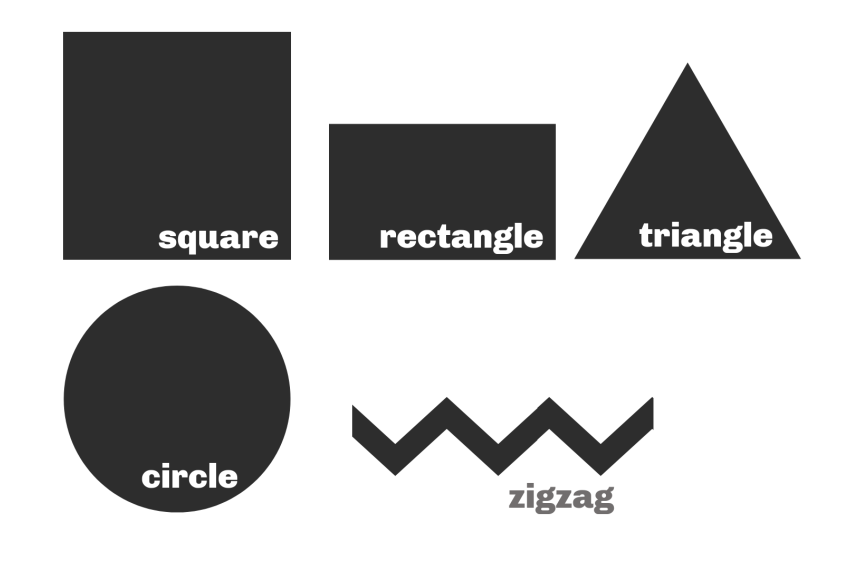
Pick one. Only one.

Right, so, whichever shape you have picked tells us so much about you as a person…

  • The square is a tireless worker. Diligent, patient, methodical, neat, organised, logical. Predictable, rational, data driven.
  • The Rectangle is a transitional shape which means this person is curious, inquisitiveness, adventurous, motivated. Always trying new things, always lively and interested.
  • The Triangle is the shape that symbolises leadership. This person focuses on goals, analyses situations fast, is confident, thinks they’re always right, assertive and argumentative. Their career gives their life meaning.
  • The Circle is a harmonious person who loves good interpersonal relationships. They value people and wellbeing, are the glue that holds the team together. They have sympathy, and empathy, lots of emotional IQ and often super creative.
  • The Zigzag is (not a shape!) but a symbol of creativity, imagery, conceptualism and aesthetics. They live for experience and reflection, new ideas and methods, possibilities rather than actual realisation.

I bet you fit perfectly into one, and not any others right?

No? No! Of course you didn’t! Because we aren’t defined by one shape and a couple of sentences about said shape.

We can change on a fairly daily basis (or by the minute, if you’re like me and particularly susceptible to things like hunger rage). What’s more, this does very little to actually help us establish how to work with a triangle if I’m a circle, or to deal with that flimsy whimsical zigzag while you, the square, are trying to get a basic job done.

Human Factors has some answers though.

They do indeed have some.

We have (thankfully) moved a long way from simple symbols and SHELL models to tell us what sort of errors and mistakes, biases and behaviours can cause concerns in the cockpit. We know about our non-tech competencies, we know about those hazardous attitudes. We know that a too steep cockpit gradient might lead to an unassertive FO not speaking up, and we even know that there is a risk of the too friendly flight deck and the risk of complacency.

The thing is, we read the reports, accident investigations, and we think about how that crew crashed. 

But what we rarely talk about is the bits that lead to that. The off day, the slight challenge, the things we see and experience all the time which never lead to the big bad accident, but which could, one day, if we don’t deal with it right. The reason we don’t is… well, why would we? Unless you bring them up yourself then they aren’t in an accident investigation report, they generally aren’t covered in a CRM manual, because they just aren’t big enough.

Which means we are never talking about us, each other, our experiences. We assume we all know how to deal with them, because they are everyday human things. But in the cockpit, in that locked chamber, these are what often amplify.
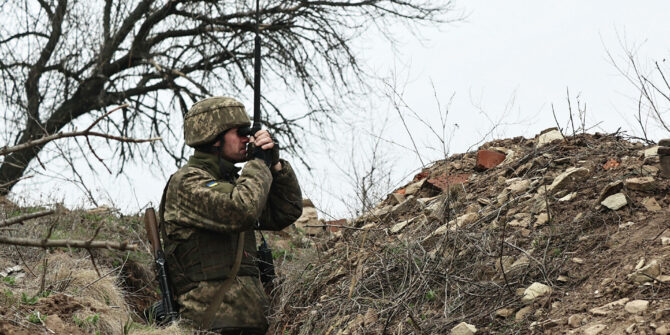
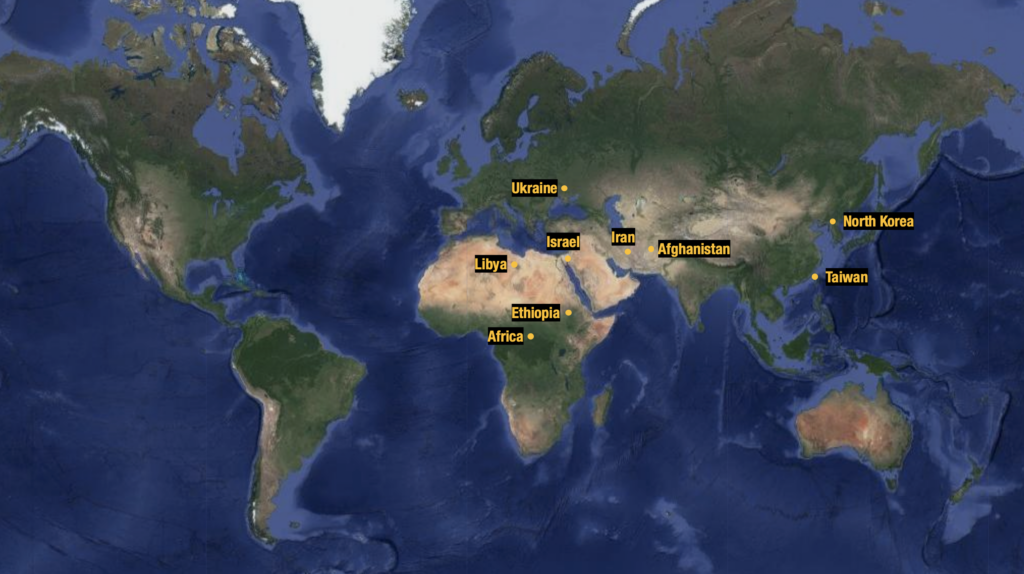
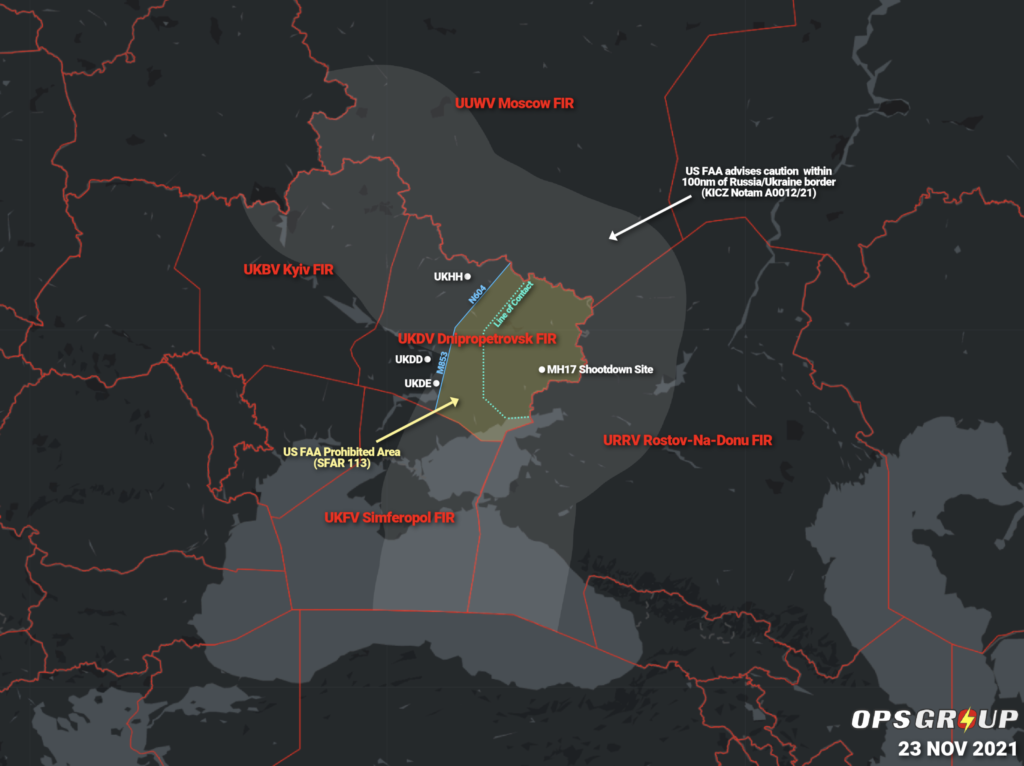
Airspace Risk: Conflicts to watch in 2022

Conflict zone risk assessments aren’t easy. Airspace dangers are heavily dependent on what is happening on the ground, which can improve or deteriorate quickly and with little warning. For an aircraft to be at risk, there must be someone present who has both the ability and intent to either deliberately target an airplane, or endanger one indirectly.

But in order to prove that these two things are present in any given airspace, regulators and operators have to rely on intelligence and inherently limited information to make educated decisions about what is safe, and what is not.

The best defence? Know what is happening down there. Or in other words, an idea of the geo-politics playing out thousands of feet beneath you. Often the warning signs are there, even before Notams have had a chance to catch up. The best defence is always situational awareness.

Here is a summary of some the conflicts making headlines that are worth keeping a close eye on in 2022 which may have an impact on the safety of overflights.

Ukraine

Tensions are high near the eastern border with Russia right now. In the latter half of 2021, the Russian military began to mobilise equipment and troops on their side of the border. This has continued to cause international concern that a major offensive may be possible in 2022.

There is advanced anti-aircraft weaponry present on both sides of the border which could present risks to civil aviation at all levels if things escalate. There are also separatist groups active in the region, and it is possible they have access to the same weapons. MH17 was shot down in this region in similar circumstances in 2014.

Overflights near the border – especially in the western part of the URRV/Rostov FIR near the UKDV/Dnipro FIR boundary should keep monitoring the situation closely.

Click here for a full briefing.

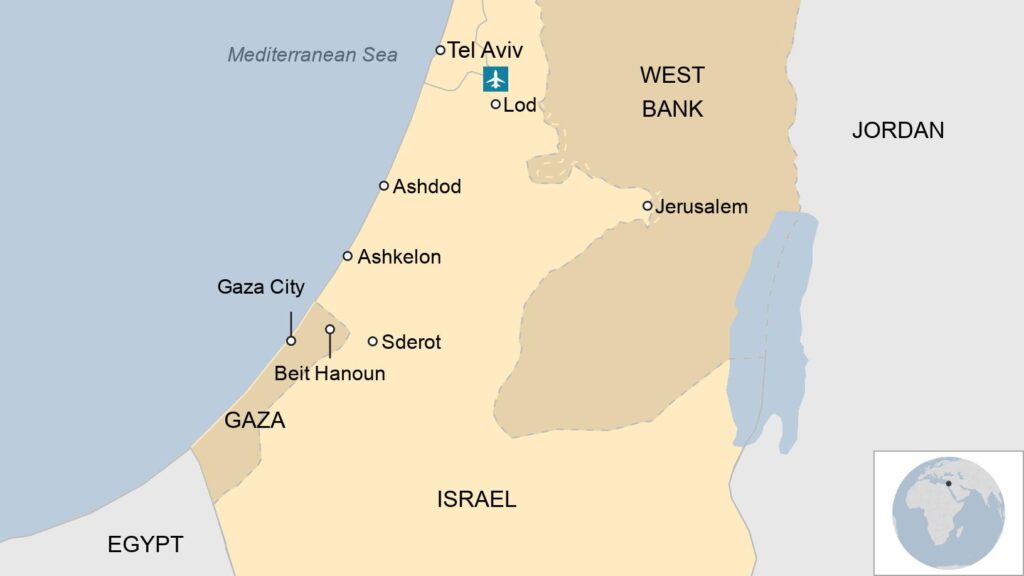
Israel/Palestine

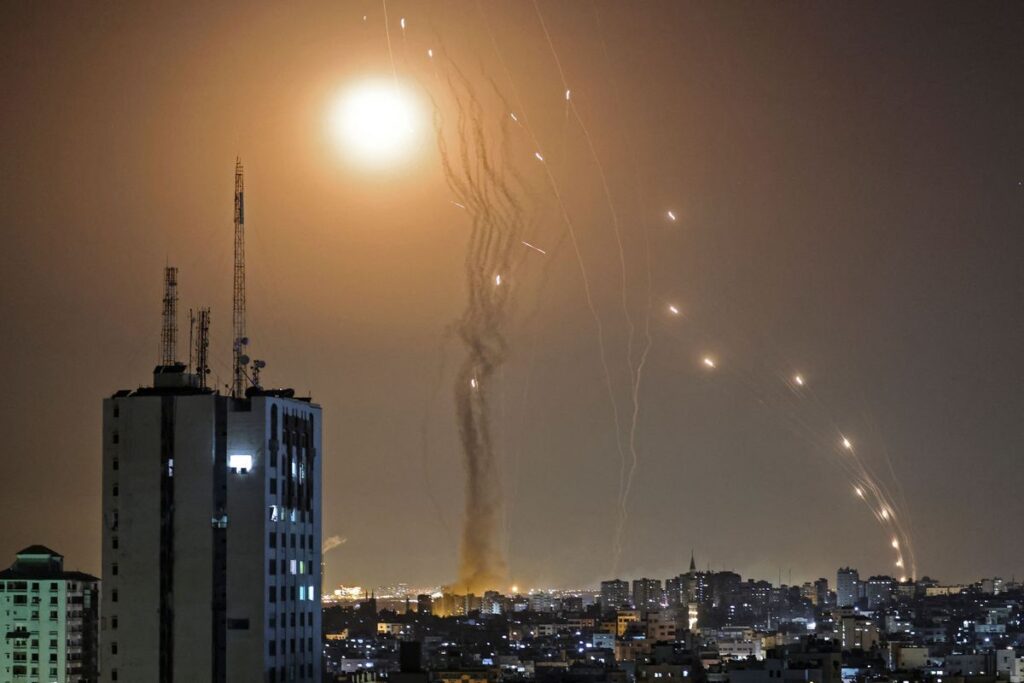
Events in April-May 2021 lead to a sudden escalation involving hundreds of Hamas rockets being fired at Tel Aviv and Israeli air strikes in Gaza. Civilian traffic was heavily impacted, while LLBG/Tel Aviv airport was forced to close on several occasions.

Recent events have hinted that things may be no better in 2022. On Jan 1, several rockets were fired at Tel Aviv, followed by airstrikes in Gaza. Surface-to-air missiles were launched at military helicopters during the strikes.

Aircraft in the LLLL/Tel Aviv FIR may continue to be at risk from these types of events with little notice this year.

Click here for a full briefing.

Taiwan

Mainland China continues to show political interest in Taiwan. While an armed conflict is still unlikely, it is not impossible. And the consequences of one would be a big deal with other major world players likely to become involved.

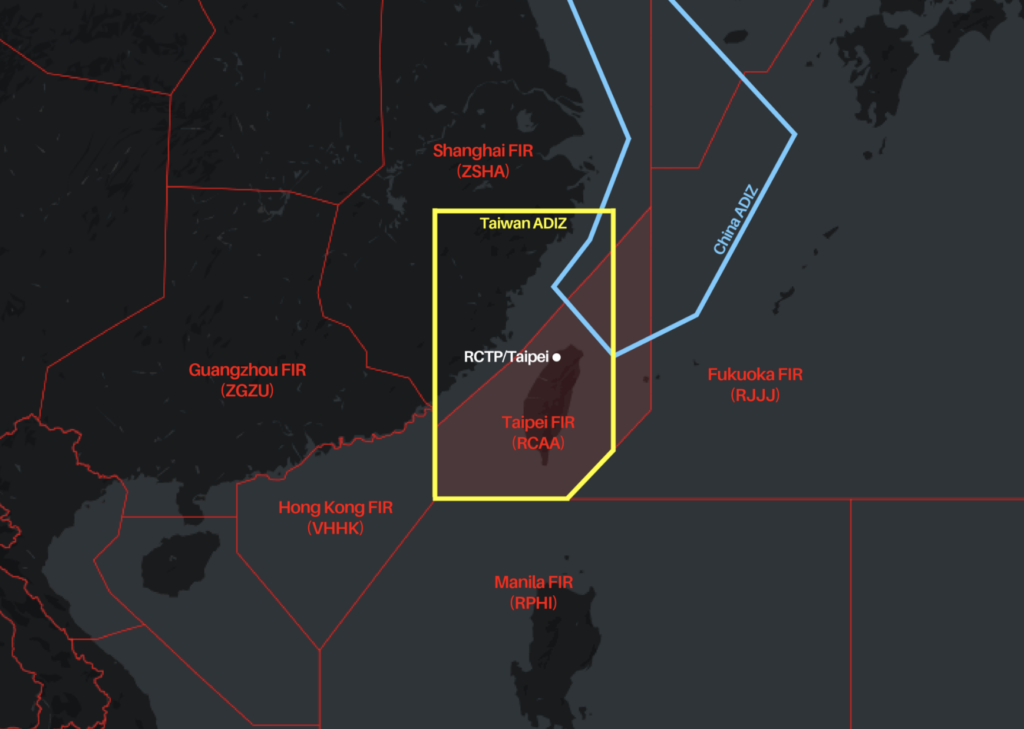
Last year a record number of Chinese military aircraft carried out exercises near Taiwanese airspace, while in October a wave of aircraft entered Taiwan’s air defence identification zone (ADIZ). This caused authorities to issue warnings by radio and mobilise their air defence systems.

In 2022, the primary risk to aircraft in the region continues to be risk of being misidentified by the Taiwanese military. It is important to follow the correct procedures when entering Taiwan’s ADIZ airspace.

Click here for a full briefing.

Iran

Tensions between Israel and Iran are at an all time high. Various sources are speculating that airstrikes on nuclear targets in Iran could rapidly escalate the situation. If this were to happen, the overflight risk in the OIIX/Tehran FIR would increase dramatically. Anti-aircraft weapons are present there that can reach all levels. Iran has previously shown willingness to use them during heightened tensions and in close proximity to heavily flown international air routes. In January 2020, a Ukrainian 737 passenger jet was shot down over Tehran by the military after being mistaken for a missile.

Click here for a full briefing.

Militant activity in Africa

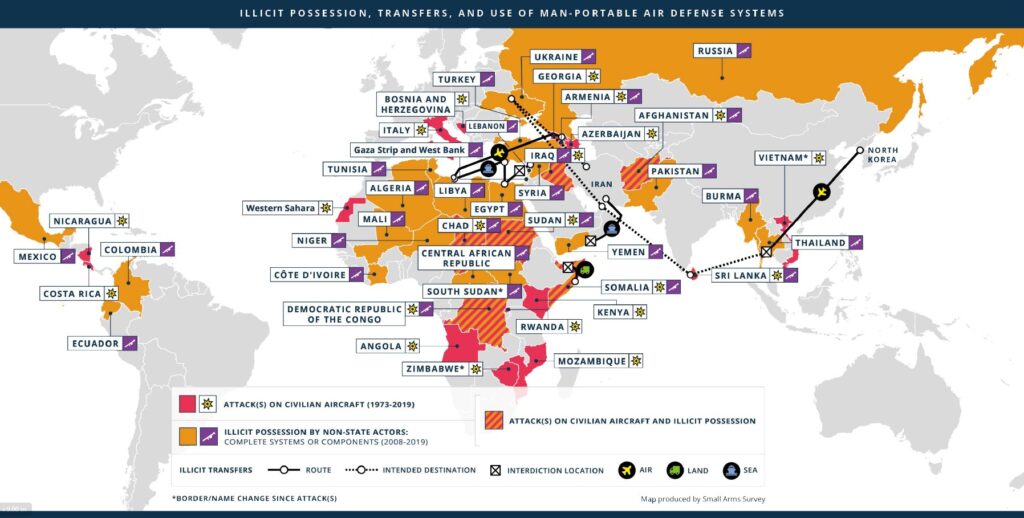
Militant groups throughout several African countries with links to terrorist organisations such as Al Qaeda or Al Shabaab have been mobilising in recent years. Often engaged in fighting with weakened states, these militia may have a desire to make international statements, and are known to actively target civilians which could include overflying aircraft.

Hotspots to look out for: In the west, Nigeria, Mali and Burkina Faso. In Central Africa, Niger, Chad and the Democratic Republic of Congo. And to the east, take particular care when operating over the Horn of Africa – especially Somalia and Sudan. New groups are also emerging in Mozambique, and Uganda.

These groups typically have access to man portable air defence systems (MANPADS), rockets and other similar weapons that pose a primary threat to aircraft at lower levels (below FL250). Although this should be considered carefully on a case-by-case basis.

Other mentions

In Libya, an election has been delayed indefinitely and armed groups are mobilising throughout country, which could see the civil war escalate in 2022.

The conflict in the Tigray region of Northern Ethiopia remains unpredictable. Despite signs of improvement in Dec 2021, the conflict in the north has intensified again with military operations in western and southern Tigray. The Amhara region north of Addis Ababa is also under curfew. The 6 month state of emergency remains in place. Several states continue to warn aircraft throughout the HAAA/Addis FIR to maintain minimum flight levels due to anti-aircraft weaponry.

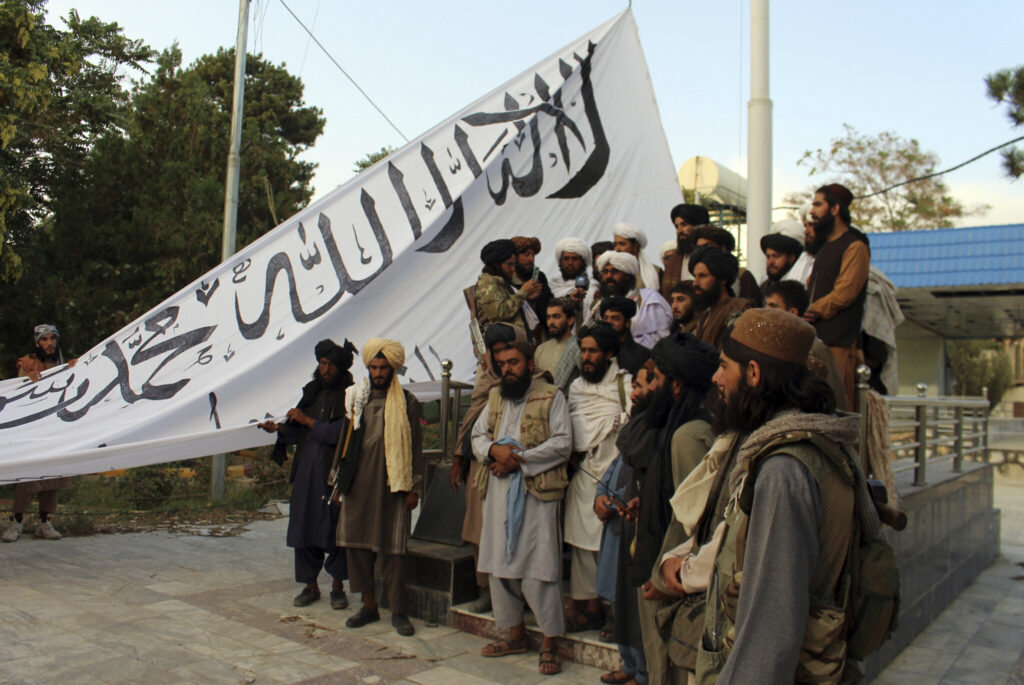
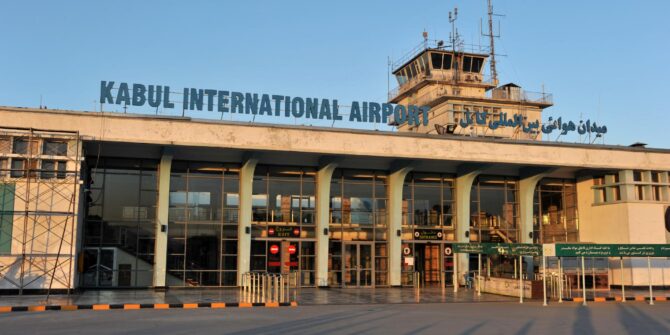
The situation in Afghanistan also remains volatile for 2022. The country is firmly under Taliban control, and the OAKX/Kabul FIR without ATC. A humanitarian crisis is developing there and it’s hard to predict what the international response (if any) will be, and how the Taliban might respond. Watch this space.

Stay updated

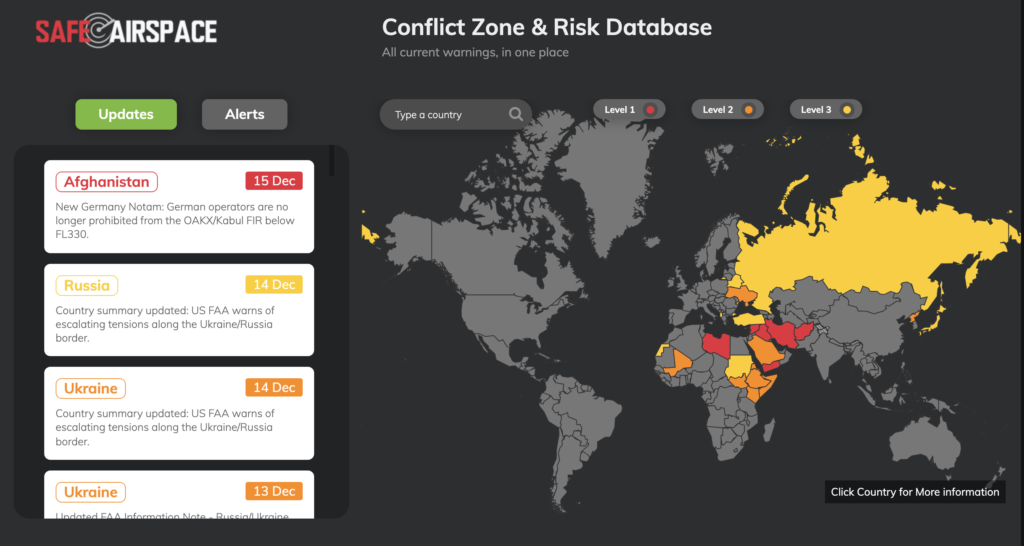
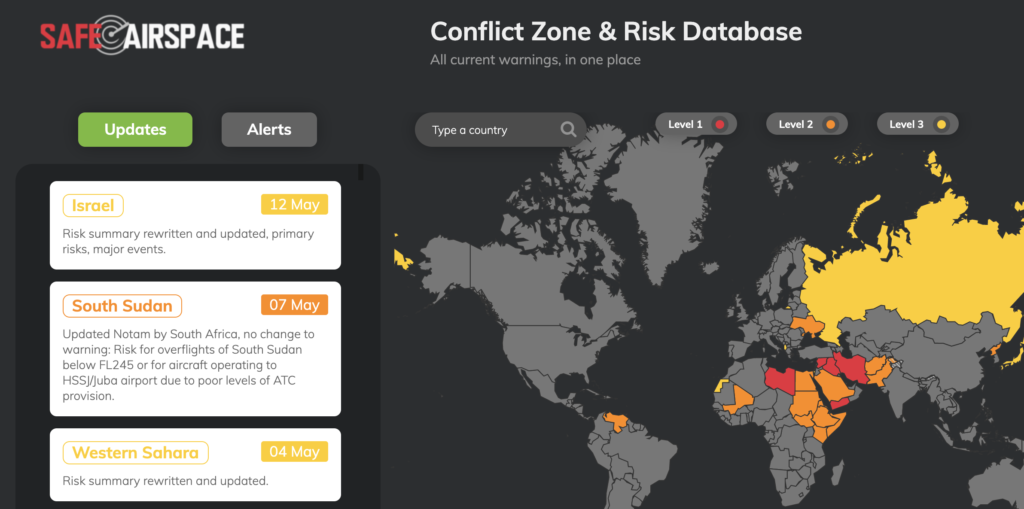
Safeairspace.net is our conflict zone and risk database. Our team updates it constantly with risk, security and hazard alerts from around the world. Click below for a full PDF briefing on hotspots around the world, or add your email to our risk briefing that goes out every second Monday.


New FAA Airspace Warning for Afghanistan

The FAA has issued an emergency order for Afghanistan’s airspace which bans all US operators below FL260 throughout the OAKX/Kabul FIR.

KICZ Notam A0020/21 has the details but essentially there are only three exceptions:

  • Flights in and out of OAKB/Kabul are allowed to continue.
  • If a flight has a special approval from either the FAA or the state.
  • If you have an emergency and have to land.

What’s the risk?

Due to increased extremist activity on the ground, civil aircraft are increasingly exposed to a number of threats. Aircraft at low levels and those taking-off and landing are especially vulnerable.

The first is indirect fire caused by militant groups targeting airports with mortars and rockets. OAKB/Kabul was attacked in December last year by ballistic weapons which damaged a parked aircraft.

The second is direct fire from a variety of sources. Militia are known to have access to multiple weapons that can be used to target low level aircraft. These include rocket propelled grenades and man-portable air defence systems (MANPADS) which are capable of reaching aircraft as high as FL250. Even small arms fire has been actively used to target aircraft.

In recent years there have been several reports of anti-aircraft fire incidents from both military and civilian traffic. Tragically in two cases, military aircraft were actually shot down.

So why now? What’s changed?

While the threat from militant activity in Afghanistan isn’t new, the FAA has been closely monitoring the situation there for changes in safety and security. And things are changing…

As US forces begin to withdraw, two groups are now engaged in an escalating conflict there – the Taliban and Afghanistan’s own military, which may lead to a civil war if no agreement can be met. Essentially the Taliban seek to regain power, while the existing government is defending itself.

For aviation this means an increase in exposure to known risks. The situation is volatile, and no one really knows where the conflict is headed. But with increasing extremist activity on the ground and a possible intention to make an international statement, the FAA appears to have decided that a simple caution is no longer enough.

What about above FL260?

US operators can continue to overfly the OAKX/Kabul FIR above FL260 but is recommended you stay on established airways. It’s also important you continue to monitor the situation on the ground which may change with little warning.

What are other countries saying?

Several long running airspace warnings remain in place, and it is likely we will see these changed in the near term as the situation in Afghanistan continues to evolve.

France follows similar rules and requires all operators to remain at or above FL260 throughout the Kabul FIR. Both German and UK operators are advised to consider the risks of operating below FL330 and FL250 respectively.

Stay safe up there.

As US troops withdraw the real question now is whether the Afghan Government (or another international force) can put the brakes on a resurgent Taliban.

Until that happens, the situation remains unpredictable. You can keep up to date with airspace risk changes as they happen over at SafeAirspace.net – our conflict zone & risk database.

Click here for a full global briefing.


May 2021: Israel Airspace Risk

Update May 23, 2000z:

  • The ceasefire between Israel and Hamas in Gaza agreed on May 21 is continuing to hold.
  • Israel has now removed its Notam advising caution to operators in the LLLL/Tel Aviv FIR.

Update May 15, 1200z:

  • The Israeli CAA have now published a Notam advising caution in the LLLL/Tel Aviv FIR due to the ongoing conflict between Israel and Gaza. Operators can contact the Israel Airports Authority for operational info: contactus@iaa.gov.il.
  • Militants continue to launch rockets and drones at towns in central Israel, while the Israeli Defense Force continue to target locations in the Gaza.
  • LLBG/Tel Aviv airport will be closed all day tomorrow, May 16.
  • The US has updated its Travel Advisory for Israel, increasing the level of advice to “Level 3: Reconsider Travel”.

Story from May 12:

Flights at LLBG/Tel Aviv Airport were temporarily suspended on May 11, with some diverting to Greece and Cyprus, as the city was bombarded with multiple long range rockets launched by militant groups in Gaza. No damage has been reported at the airport, although some airlines have cancelled flights this week.

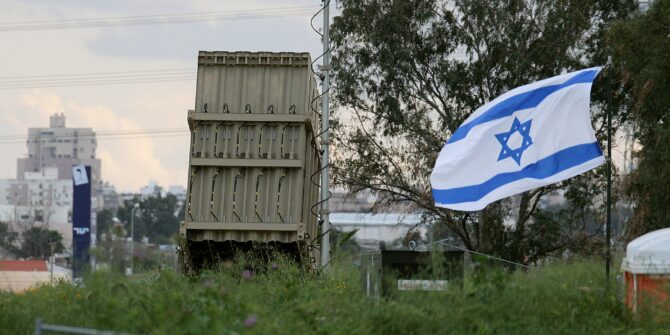
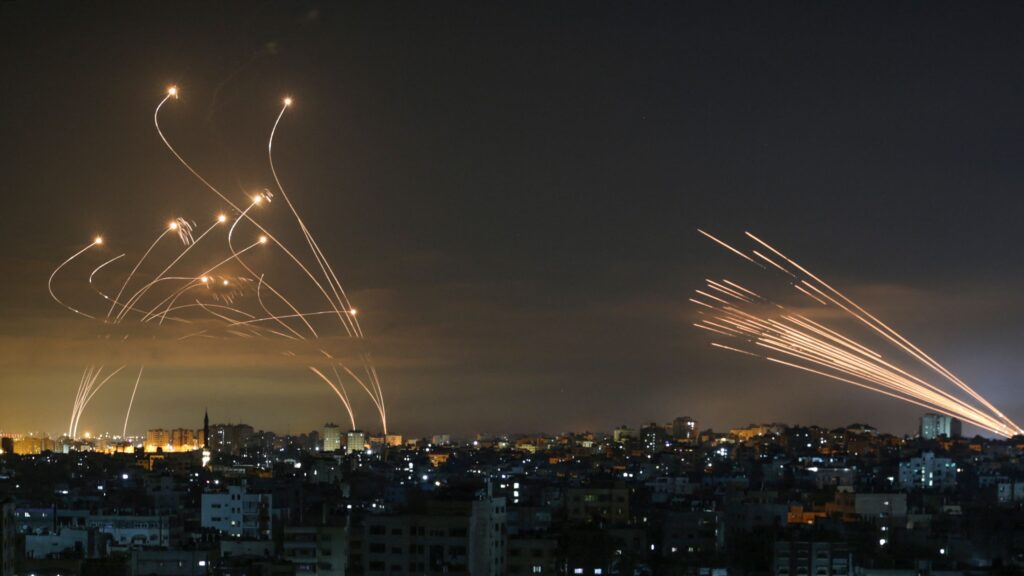
Israel has an Air Defense System – “Iron Dome” which protects populated areas of Tel Aviv from rocket attacks by launching interceptor missiles to ensure rockets detonate prior to reaching the ground, minimizing damage. However, the sheer number of rockets launched resulted in several impacting the city.
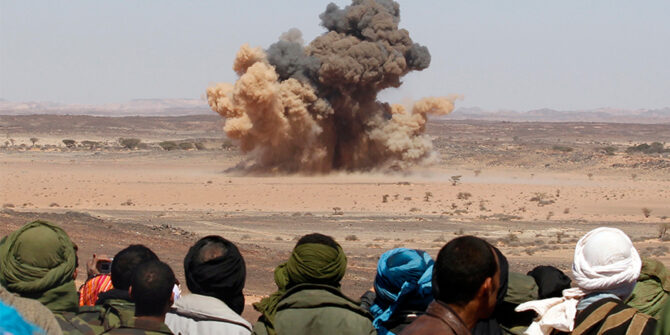
Sporadic rocket attacks in Southern Israel are not unusual but don’t often target Tel Aviv itself, and certainly not on this scale. One look at the footage of the attack and you will begin to see just how dangerous the skies of Israel became on Tuesday night.

The conflict has been escalating throughout the month of Ramadan, which coincides this year with the significant religious Jewish event Shavuot.

Earlier on Tuesday, a series of Israeli airstrikes in Gaza led to the collapse of a residential building and the reported deaths of several people. Militant groups in Gaza immediately retaliated by unleashing a large-scale rocket attack on Central Israel, forcing the temporary suspension of flights at LLBG/Tel Aviv Airport as air defence systems were activated around the country.

It marks a major escalation in the conflict which may present a new risk to aviation.

Are there new airspace warnings?

EASA have published a warning, available via the Eurocontrol homepage:

12/05/2021 16:15
Considering the heightened tensions in Israel, including exchange of rocket fire 
and retaliatory airstrikes, air carriers operating within Israeli airspace and 
to or from Ben Gurion International Airport (LLBG/TLV) in particular, should 
monitor closely these developments and adapt their operations according to 
Israeli Authorities aeronautical publications. Several NOTAMs are already in 
place for FIR Tel Aviv (LLLL) and its commercial aerodromes rerouting civilian 
aviation flight paths as necessary to ensure safety and security of the air 
operations. Due to the unstable regional situation, these publications may be 
more restrictive within short notice. The situation in the region remains a 
matter of high concern for commercial aviation – It is recommended to exercise 
caution by taking into account any relevant information, alongside available 
guidance or directions from your national authorities as appropriate.

So just a warning for now – no firm restrictions on flights. The most recent incident of major rocket fire from Gaza against Tel Aviv was in 2014 during the Gaza War. Back then, the US FAA responded quickly by imposing restrictions at LLBG/Tel Aviv airport for a two day period, and EASA advised that operators should suspend flights, which ultimately resulted in 30 airlines cancelling flights.

What are the risks?

There are parallels between the situation in Israel and similar rocket attacks carried out recently on Saudi Arabia’s major cities. Previously issued guidance on those and the threat which they pose to civil aircraft may also be relevant here.

The major risks identified from rocket attacks were:

  • Misidentification or miscalculation by air defence systems.
  • Falling debris from air defence activities.
  • Ballistic impact while on the ground.
  • Short notice airspace closures.

Where to from here?

We’re likely to see further rocket attacks on Israel and Israeli air strikes on Gaza. From an operator’s perspective, perhaps the most significant development here stems from the fact that militant groups are now showing renewed ability and intent to mount major aerial attacks on Tel Aviv.

Keep an eye on the SafeAirspace.net page for Israel where we will report changes as they happen, and continue to monitor the situation if planning to operate within the LLLL/Tel Aviv FIR – the events of this week have shown us just how quickly quiet skies can become active conflict zones.


Western Sahara Airspace Update

On May 4, the GCCC/Canarias FIR updated their airspace warning for Western Sahara, due to the ongoing conflict there.

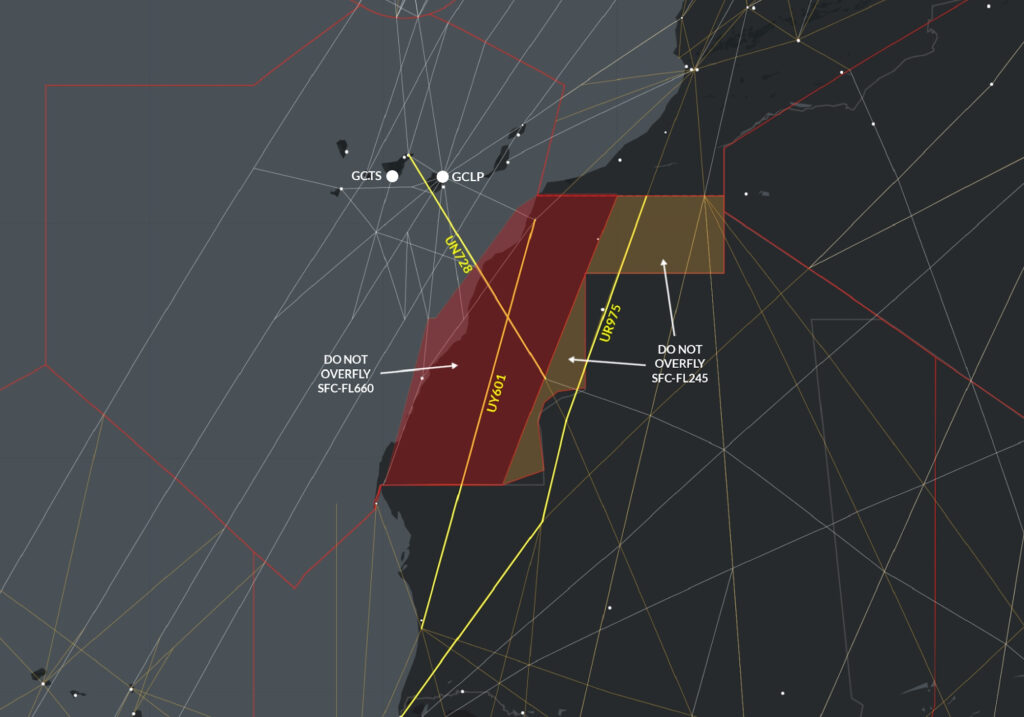
Previously, they said that aircraft overflights should be completely avoided in the eastern part of the country (i.e. airways UY601 and UN728), and should not be below FL245 in the western part. Here’s how that looked:

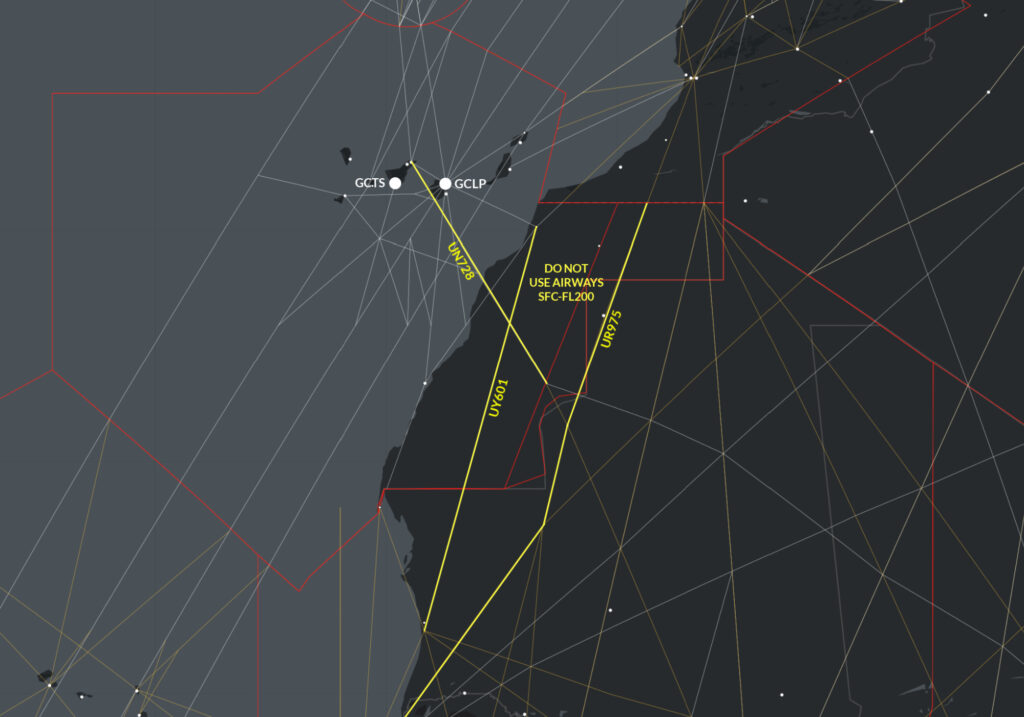
However, the updated warning issued on May 4 simply advises operators to avoid using the airways over Western Sahara below FL200:

Here’s the Notam:

GCCC B3323/21  - OPERATORS ARE REQUESTED TO EXERCISE PARTICULAR CAUTION 
DURING FLIGHT OPERATIONS IN WESTERN SAHARA AS PART OF FIR CANARIAS. 
IT IS RECOMMENDED TO AVOID OVERFLIGHT AT FLIGHT LEVELS BELOW FL200 
ON THE FOLLOWING ROUTES: UY601, UN728 AND UT975. 
04 MAY 08:53 2021 UNTIL 04 JUN 23:59 2021 ESTIMATED. 
CREATED: 04 MAY 08:54 2021

Still, not much of a warning. What’s really important is exactly what is missing: why.

The answer: Because the airways are over an active conflict zone, with a known threat of anti-aircraft fire.

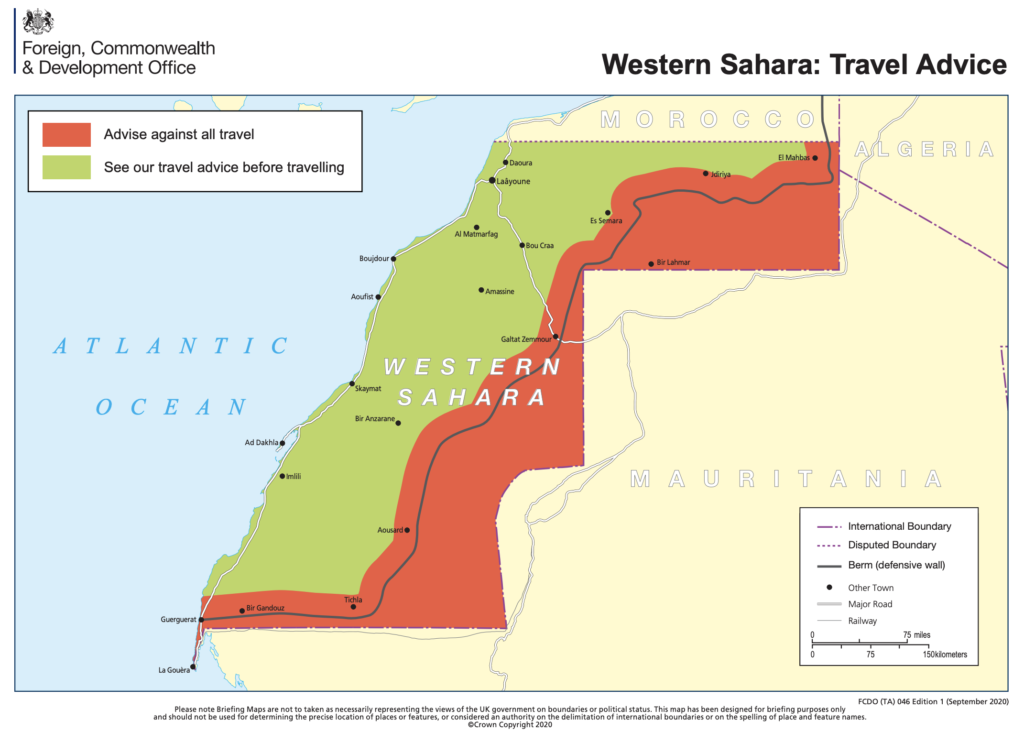
Western Sahara is effectively divided straight down the middle, literally by a wall. Morocco controls one side, while the region’s independence movement (the Polisario) controls the other. In Nov 2020, the Polisario declared war on Morocco.

Why do they want to fight?

The two have never gotten along. The Polisario want independence and were at war with the Moroccan Government for a very long time, until a fragile ceasefire agreement in 1991. Since then there has always been tension.

In early Nov 2020, a Polisario protest blocked a whole bunch of Moroccan truck drivers at the border with Mauritania, shutting down an essential route that connects Morocco to the rest of Sub-Saharan Africa. Morocco weren’t happy, and breached the ceasefire agreement by sending forces into the demilitarized zone to remove them.

The Polisario immediately declared war on Morocco, and clashes began straight away.

Why does it matter?

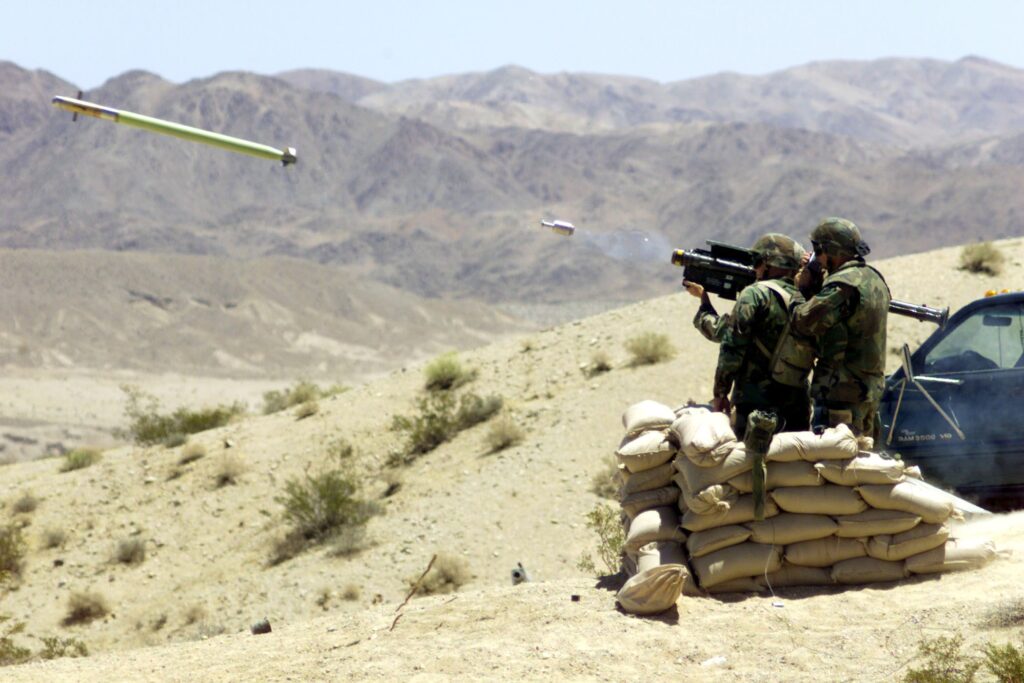
The FAA were onto it when they immediately carried out a risk assessment and published a notice. The big deal is that the Polisario are likely to have access to anti-aircraft weaponry left over from the previous war. This includes man-portable air defence systems (MANPADS) and surface-to-air missiles. The FAA think these weapons pose a risk to aircraft as high as 12,000 feet.

To make matters worse, they are suspicious that Morocco are flying drones over their territory – something that has been denied by Morocco. It wouldn’t be the first time an aircraft has been shot down there either – the Polisario downed two DC-7 airliners with missiles back in 1988.

What about airspace?

The sky over Western Sahara airspace is split between two FIRs –GCCC/Canarias and GOOO/Dakar. If the conflict escalates further, this is likely to complicate things.

So far there has been only one warning from the Canarias side – the NOTAM above. Nothing from Dakar yet.

There are currently three major airways affected. Two of them (UY601 and UT975) run the length of the region in a south westerly direction – likely to be used by aircraft transiting some routes between Europe and South America. The other airway, UN728 is a direct track from the coast to GCTS/Tenerife which may be used by smaller aircraft or those doing tech stops in the Canary Islands.

So if you’re  planning flights to the Canaries, or overflying central Africa, pay close attention to the risks involved. Continue to monitor Safeairspace.net as the situation develops.


Greece-ing the Turkey: The Aegean Dispute

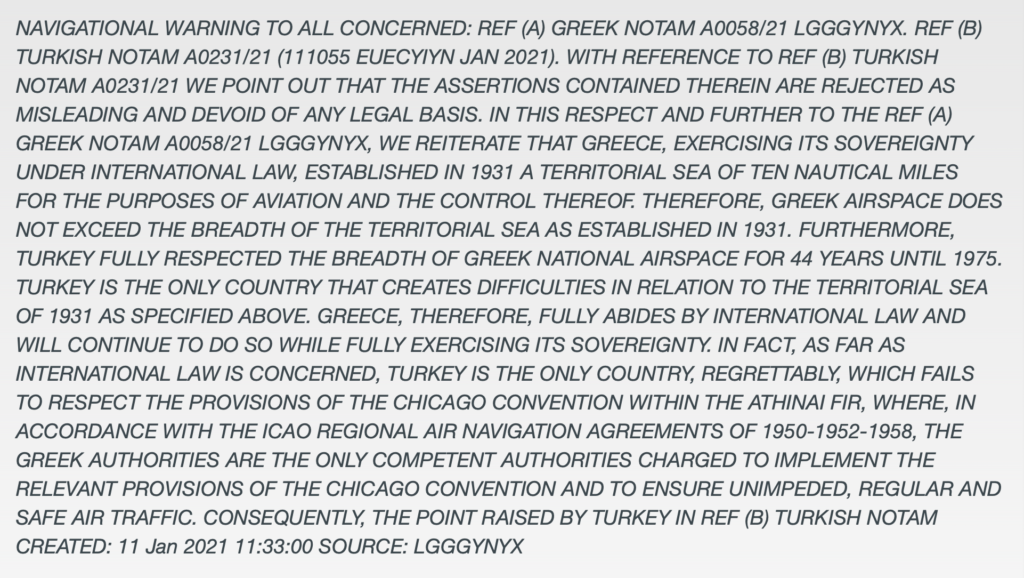
The dispute between Turkey and Greece is one we have mentioned before. Not because it was having a particularly big impact on aviation operations, but because of the vaguely amusing Notam battle they have been waging against each other for the last few years.

But what appears to be a rather silly conflict actually has a more serious side to it, so we thought we would take a little look at what is going on.

What are they arguing over?

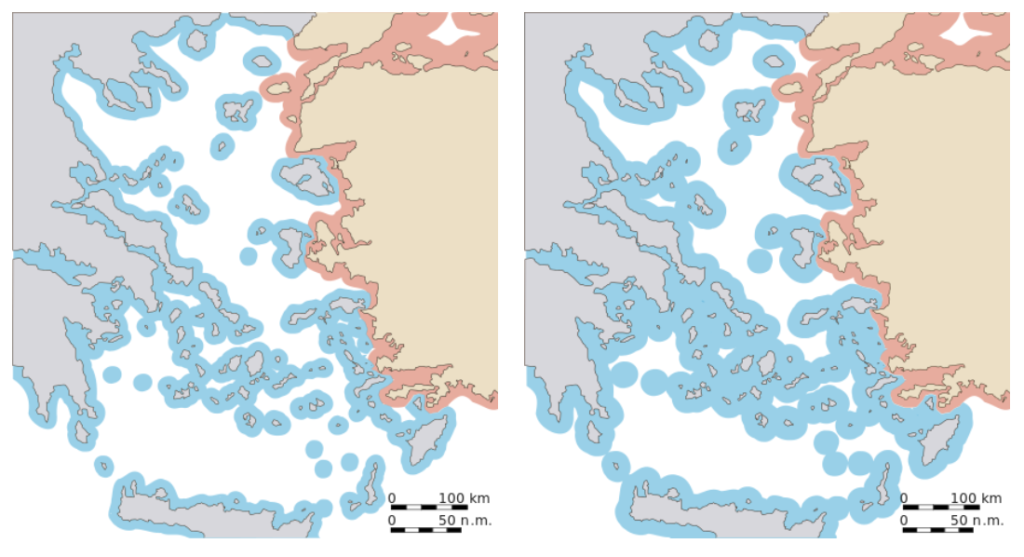
This dispute is about what disputes always seem to be about – who owns some bit of land, or in this case, a Continental Shelf (so a bit of land that is submerged under several miles of Eastern Mediterranean Sea). Turkey want it because it is a treasure chest of energy resources, while Greece want it because, well, they reckon it was always theirs.

The dispute goes a bit “higher” than the continental shelf though. Like those annoying neighbours who keep pushing their fence backwards into your garden, so Greece have decided that their airspace extends not the usual 6nm (based off territorial waters), but 10nm. Turkey refuse to recognise those extra 4nm as Greek. Nor do ICAO who have a 1948 statute saying airspace must coincide with territorial water boundaries. 

So we would say that’s one:nil to Turkey, except for Greece’s point that they actually laid claim to those extra 4nm way back in 1931 before ICAO came along with their statute. Plus, this isn’t the only area Turkey has had disputes over, so maybe Greece have a bit of a point.

But do we care, or can we just let them keep bickering?

Well, the permanent Notam battle can be ignored with a simple filter that removes the likes of these from your Notam package:

However, that is not the only repercussion. Actually, all this makes for some messy airspace controlling because it impacts FIRs and with that, who controls military flight activity. This has led to a bunch of provocations from both sides, with them regularly sending military aircraft into the 4nm disputed bit just to annoy the other side. And this is a problem, because it often escalates with retaliations. In 1996, Turkey claimed one of their aircraft had been shot down by a Greek fighter jet, and in 2014 the number of Turkish incursions into Greek airspace rose to nearly 1,500.

Tensions flared up again in 2020 when Turkey finalised their purchase of Russian S-400 mobile surface-to-air missile system. Now, this wasn’t specifically aimed at Greece, but it did go against NATO and US orders, resulting in big sanctions against Turkey.

Greece spent 2020 developing stronger defensive ties with their neighbouring countries, and at the start of this year, placed an order for 18 French Rafale fighter jets to pad out their Air Force. 

A bit of a jam

Deliberate GPS Jamming is also a major issue in the Eastern Mediterranean and across Turkish airspace, adding to the list of threats commercial aircraft have to consider.

So is this a conflict to watch?

2020 was a tense year between the two nations, and 2021 seems unlikely to see much de-escalation. While direct conflict between the two will likely be prevented by neighbouring countries and the EU and NATO, the dispute is still simmering away.

For commercial flight operations, the impact remains primarily in the Notam world, but attention does need to be paid to any temporary prohibited or restricted airspaces which might pop up because of increased military activity in the region.

Additionally, Turkey is a large country and their airspace provides a major overflight route between Asia, the Middle East and Western Europe. Having an awareness of the political tensions between the two countries is important, particularly if routing to or from Greece, or carrying Greek nationals onboard, since this might compound your problems if you have to divert into a Turkish airport.


Feb 2018: Tel Aviv Airport closes as a precaution against attack

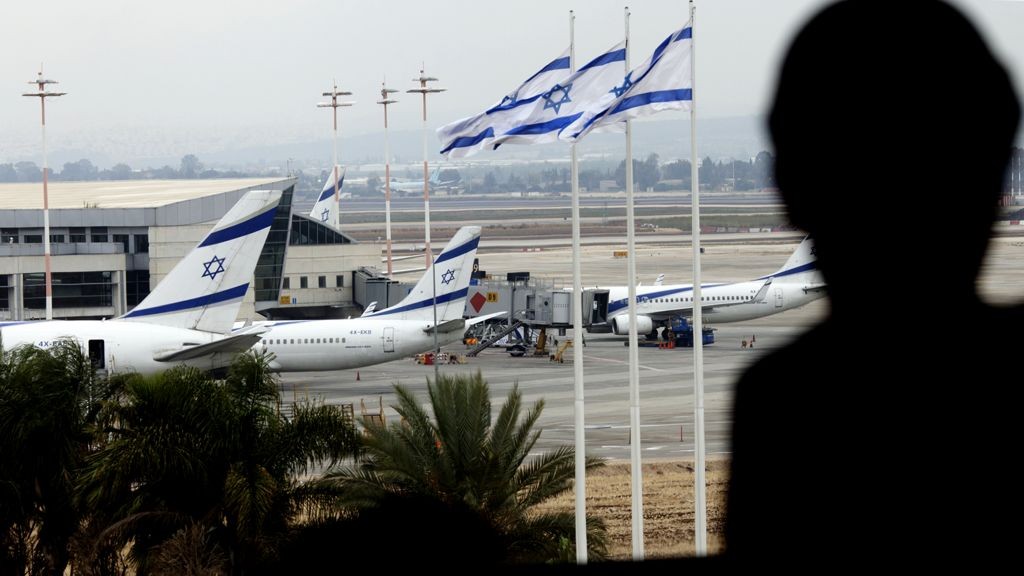
LLBG/Tel-aviv: Israel’s main airport briefly suspended operations on Feb 10, due to military clashes along the northern border with Syria.

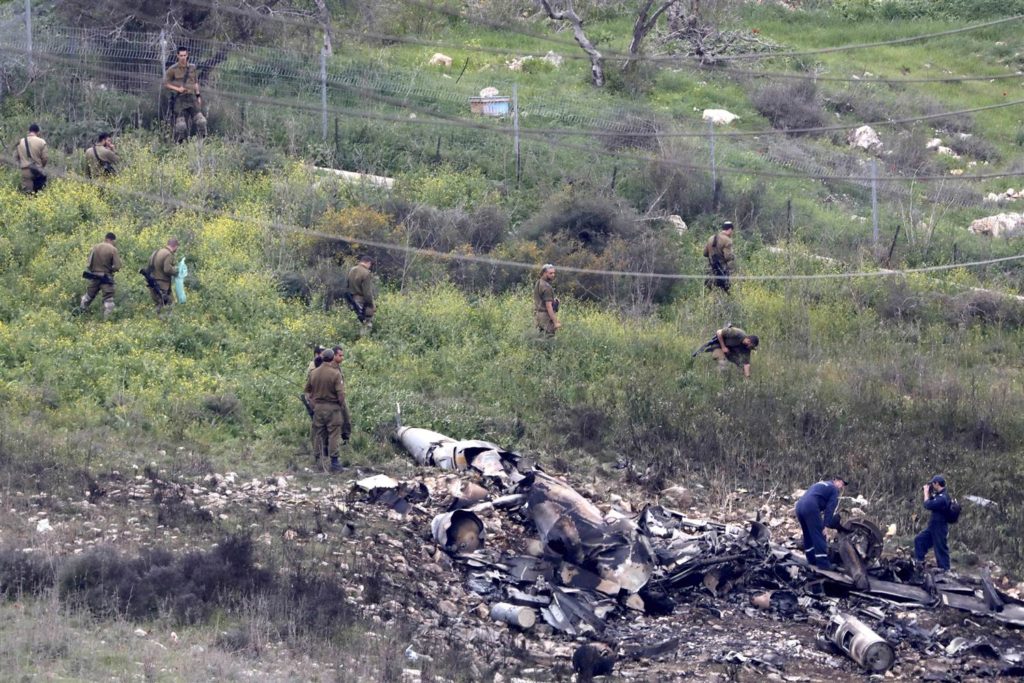
Two Israeli pilots were forced to abandon their F-16 jet, which crashed near the border after being hit by a Syrian anti-aircraft missile. The jet was on a mission in which it struck an Iranian facility in Syria that had previously operated a drone which Israel shot down over its territory.

This resulted in all flights from LLBG/Tel-aviv Airport being grounded for around an hour starting at 9am local time, as a precaution against any further attacks. The airport is considered a strategic location that could be targeted during military conflict.

Here’s what Israel’s PM had to say about it:

This incident marks the most significant engagement by Israel in the fighting that has been taking place in neighbouring Syria since 2011. Israel has mostly stayed out of the conflict so far, but has recently become more concerned about the increased Iranian presence along its border.