Venezuela Aviation Situation: Anything to Report?

In April 2019 the US FAA issued a Do Not Fly” instruction to US operators, barring all operations into or over Venezuela, unless operating at or above FL260. This came after several years of steady decline in the situation in Venezuela, and an attempted uprising.

This is what we said about the FAA notice back in 2019, but now we thought we would take a look at the current situation in Venezuela and consider what the ongoing impact to international aviation might be.

Give us some background.

The basic story, without getting into the politics of it all, is that there is a political power struggle between the government of President Nicolás Maduro and the opposition party led by Juan Guaidó.

The growing political discontent has led to skyrocketing fuel prices, power cuts and shortages in things like food and medicine. This has all, in turn, led to rising crime levels and security concerns.

Venezuela has some of the cheapest fuel in the world, but low incomes mean increases make it unaffordable.

Tell us about the general situation for aviation.

SVMI/Caracas Airport lies in an area of extremely high risk for armed robberies and kidnappings. In fact, Caracas was rated the most dangerous capital city in 2017 and has continued to hold a Top 3 spot since.

A report received in 2019 said the following:

“Foreign maintenance providers were evacuated last week… Runway surface has worsened and now there are big potholes and loose asphalt.”

Other reports suggested ATC controllers were under-qualified with poor English speaking standards. Inappropriate IFR and terrain clearances were being issued and “tremendous caution” should be exercised if operating in.

Pre-pandemic, most major airlines had been ceasing operations for a variety of reasons, the main one being an issue with onward payment of ticket monies which the Venezuelan government put a stop on.
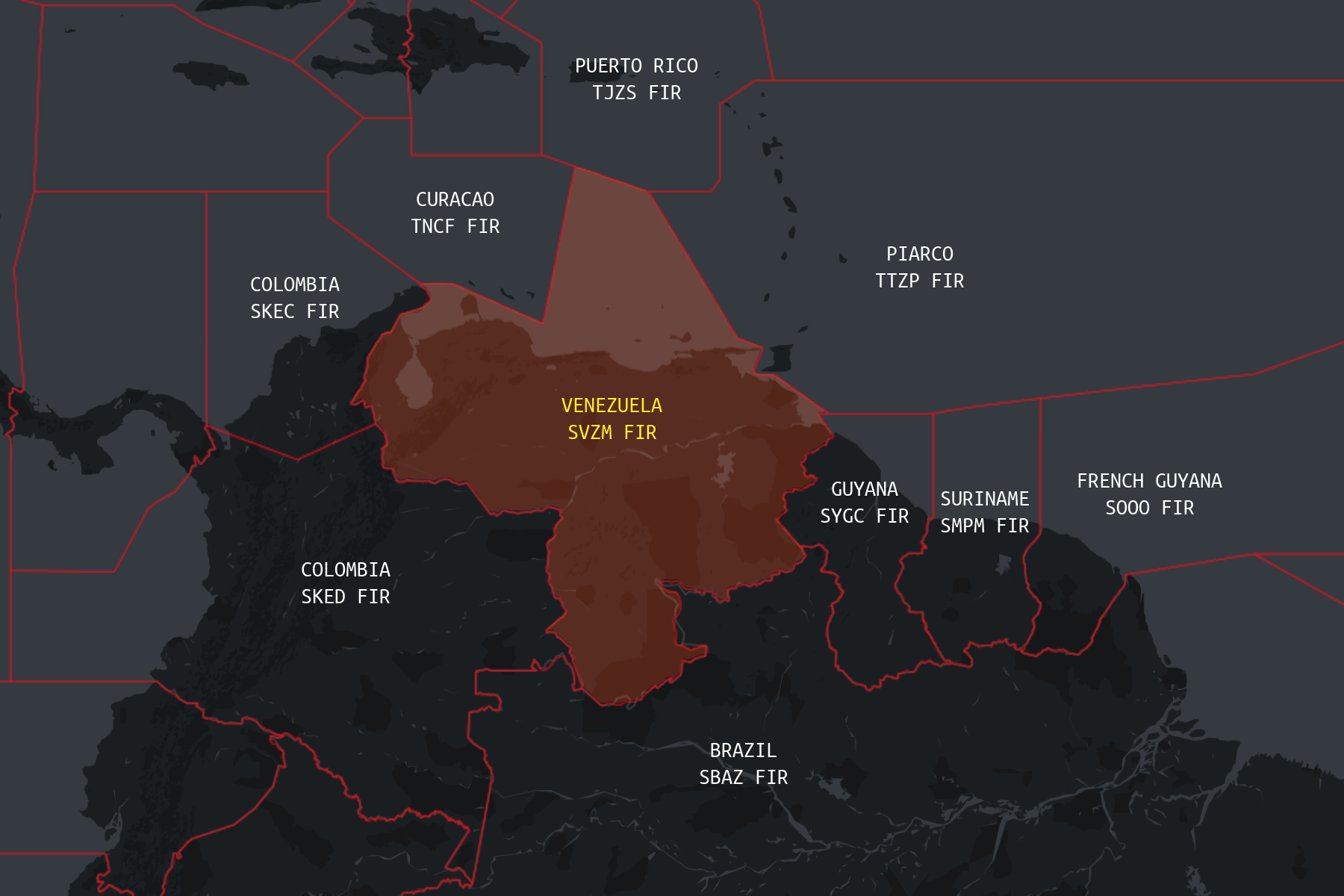
In case you aren’t sure where we are talking about.

What about neighbouring countries?

The border between Colombia and Venezuela is more volatile with disputes and armed conflict occurring along it. Bombs targeting local airports in Colombia have occurred through the end of 2021/ start of 2022, and a major attack occurred near SKNA/La Macarena airport, 100nm south of Bogota, on Jan 6.

A US travel warning remains in place for Colombia due to terrorism and other security related threats.

And a quick mention of the Covid situation?

Covid led to major restrictions on international flights into Venezuela. In October 2021, only scheduled flights from Bolivia, Mexico, Panama, Dominican Republic, Russia and Turkey were authorised. The government also allowed 13 specific flights to Spain with approved operators.

What has the US’s response been?

The US has had sanctions in place against Venezuela for sometime now. The FAA notice is a Permanent Notam A0013/19 with no expiration date.

“ALL FLIGHT OPERATIONS IN THE TERRITORY AND AIRSPACE OF VENEZUELA AT ALTITUDES 
BELOW FL260 BY THE PERSONS DESCRIBED IN PARAGRAPH A BELOW ARE PROHIBITED UNTIL 
FURTHER ADVISED DUE TO INCREASING POLITICAL INSTABILITY AND TENSIONS IN VENEZUELA 
AND THE ASSOCIATED INADVERTENT RISK TO FLIGHT OPERATIONS.”

The FAA’s Background Info document states there is an “increasing inadvertent risk” to civil operations below FL260 due to increasing political instability and tensions. They also advise that the Venezuelan military has large stockpiles of MANPAD defence systems which has the capability to reach 25,000ft. There have also been reports of temporary GPS outages in the territory and airspace of Venezuela.

At the end of 2019, the US FAA also downgraded the safety status to Category 2 under their IASA program, deciding the Venezuelan CAA was not adequately complying with ICAO safety standards with regards to regulating and supervising their own airlines.
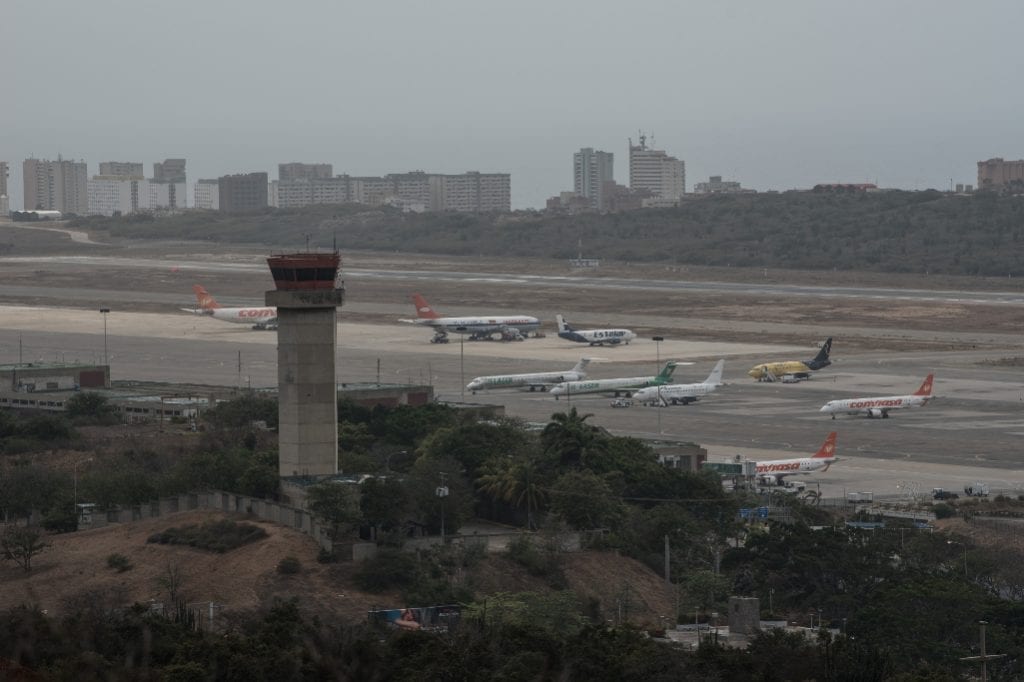
Airport infrastructure and security has been questioned.

What has the rest of the World said?

Surprisingly little, perhaps because few operators fly there…

EASA have no Conflict Zone Information Bulletin (CZIB) relating to Venezuela at all.

ICAO has not flagged Venezuela under their AUSOPS Safety Audit Program, and in fact rates them fairly well alongside the US with the exception of their aerodrome standards.

We have rated Venezuela as a Risk – Level Three Caution on Safeairspace because of the FAA prohibition, and due to a lack of information on the situation within the country.

However, there are many reports on the number of MANPADS which Venezuela are armed with and it is considered amongst the most highly unstable countries politically. Libya and Syria are the most unstable with the highest number, but Iraq, Pakistan, North Korea, Afghanistan and Venezuela come not too far behind.

Venezuela is known to have a large number of MANPADs available.

A Quick NOTAM Review.

Several years ago, Venezuelan NOTAMs appeared to, well, disappear. They also stopped sending out METARs. Thankfully, the systems seem to be up and running just fine nowadays.

There are currently (as of Jan 2022) a few NOTAMs which may impact navigation, or which have a minor impact to operations, but given few international flights are operating in right now, there is not much to consider.

A0488/21 – SVMG/Margarita Island primary surveillance radar is U/S and not expected back until January 2022.

A0494/21 – SVMG has also been downgraded to RFF 7 (from 9).

A0486/21 – SVPR/Ciudad Guayana Airport radar systems are all U/S.

What is the ‘Risk Rating’?

If you are a US operator it remains a no-go. If you are any other operator… well, that is the question.

The FAA’s notice remains in force, but there has been little update on the situation since. No other authority or state has put out a notice, but the conflict within the company is not easing and reports of fuel shortages and a growing refugee crisis suggest there may be some threat to operations which are not being reported. We asked the question and received just 10 responses, all of which said the situation remains “neither safe nor secure”.

If you have operated into Venezuela in 2021 we would be interested in hearing your report on what the operational situation was like. Send us an email at news@ops.group

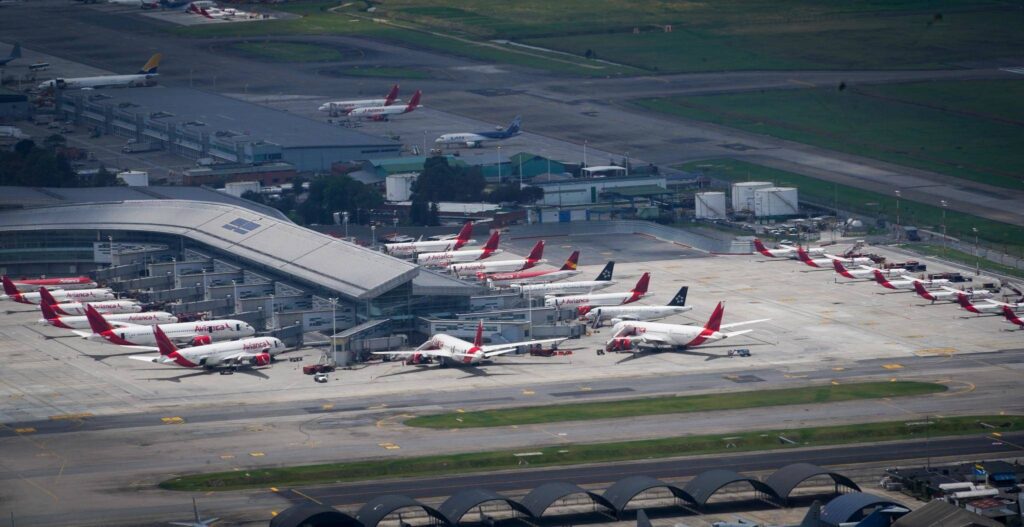
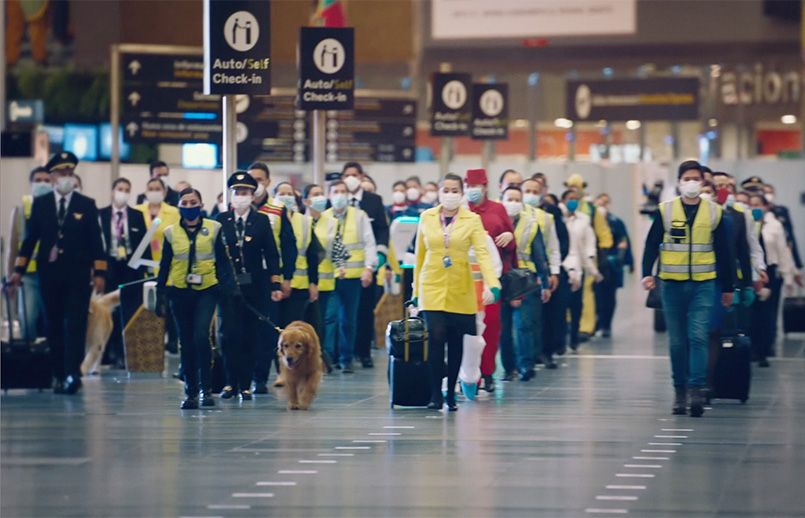
Bogged down in Bogota

Bogota International has a problem. Severe delays. It seems they are as long as the airport’s official name – El Dorado International Airport Luis Carlos Galán Sarmiento.

And it isn’t just the airport with the problem – delays cost money, they frustrate passengers, waste fuel, result in aircraft circling in the air, and make pilots angry.

Luckily IATA have a plan.

A set of recommendations were issued by them on October 7, 2021 suggesting how these severe delays might be severely improved.

For those who don’t speak Española, here it is (briefly) in English:

  • Elimination of the ground delay program.
  • Prioritisation of commercial services during peak hours.
  • Restriction of non-commercial services to off-peak hours without exceeding allocated quota.
  • Ensure ATC centers and control towers are adequately staffed.

Before we get into all that though…

We thought we would take a look at the airport, procedures and current situation, and ask just how bad the “severe” delays are.

How bad are the severe delays?

The main problem seems to be with the ground delays.

Since May 2021 the Ground Delay Program (the one that holds aircraft at their departure airport because there isn’t room for them at the destination) has been invoked some 300 times. On one day alone it resulted in 130 affected flights, meaning 17,600 passengers.

And on average the delays were between 2 and 4 hours.

To compare, this is more than all the US airports combined (the August stat was 63), and more than KJFK/New York, EGLL/London Heathrow or RJTT/Tokyo Haneda which, let’s face it, often have delays.

Interesting fact: It isn’t just the airport. It is also the most congested city in the world. Drivers lose on average 133 hours of their life to traffic jams every year.

Elimination of the GDP

This is *normally used at airports that have some sort of bad weather type situation going on, and is designed to prevent aircraft having to hold in the air because, you know, fuel issues…

If you want to read more about it, then check out this handy article from the NBAA which is all about just that.

The way it is being applied at SKBO unfortunately is not entirely as intended and while it prevents holding in the air, it is having a knock on effect at departure airports with blocked stands, and for operators with aircraft utilisation and schedules.

So eliminating the program will hopefully *encourage better ATC traffic planning, or will require better ATC traffic planning in order to eliminate the program. Either way, that would be beneficial.

Prioritisation and Restriction

The plan is to restrict peak hour slots to scheduled commercial traffic only. The benefit of this is schedules are actually kept. Aircraft routing in will also be prioritised if they are a scheduled carrier.

For private or ad-hoc flights this will mean less availability of slots, permits (during peak times) and general flexibility in operation times.

Right now, the permit process for landing is pretty quick. If you are going to spend less than 48 hours on the ground at one airport only then you don’t need a permit. The CAA is efficient and responsive and you can contact them at +571 296 2208 / sobrevuelos@aerocivil.gov.co

ATC

A lack of qualified ATC staff means efficiency in their procedures cannot really improve. One of the issues is poor labour and pension conditions – something ATC have previously gone on strike over, back in 2019.

The current shortage has seen shift times increase from 6 to 12 hours leading to more sick leave and fatigue, leading to a cycle of longer hours.

New radio systems were installed across 36 more airport in Colombia earlier in 2021, adding to the 80 already benefiting from a system which enables a centralised network area and better redundancy for controllers. In addition, there is a specific plan for ATC at Bogota Airport. It involves installing better navigation communication systems, surveillance and management systems and more automation.

A new El Dorado

El Dorado II was under construction, due to open 2022, and the new airport would have substantially improved the capacity for the region. In 2018, the government suggested they would scrap this and expand the existing airport instead. The expansion plan includes the moving of military operations to a dedicated military base, and new terminals and infrastructure.

Anything else?

  • GDP are not the only delays you can expect coming to SKBO. Reports of 3 hour waits for fuel trucks, issues obtaining departure clearance, and hold-ups in Customs (related to passports, not bandits) are relatively common.
  • The “operational concept of TMA BOGOTA is based on defined trajectories and the homogeneity in speeds to be able to maintain an orderly, safe and efficient flow.” In other words, fly the speeds you’re told to fly, they are pretty strict on it.
  • The airport is high altitude which means your TAS will be around 15% higher than IAS. Which means you might find slowing down harder.


International Bulletin: B767 shot on approach to Rio, Updated SafeAirspace Map

B767 Shot on approach to Rio 

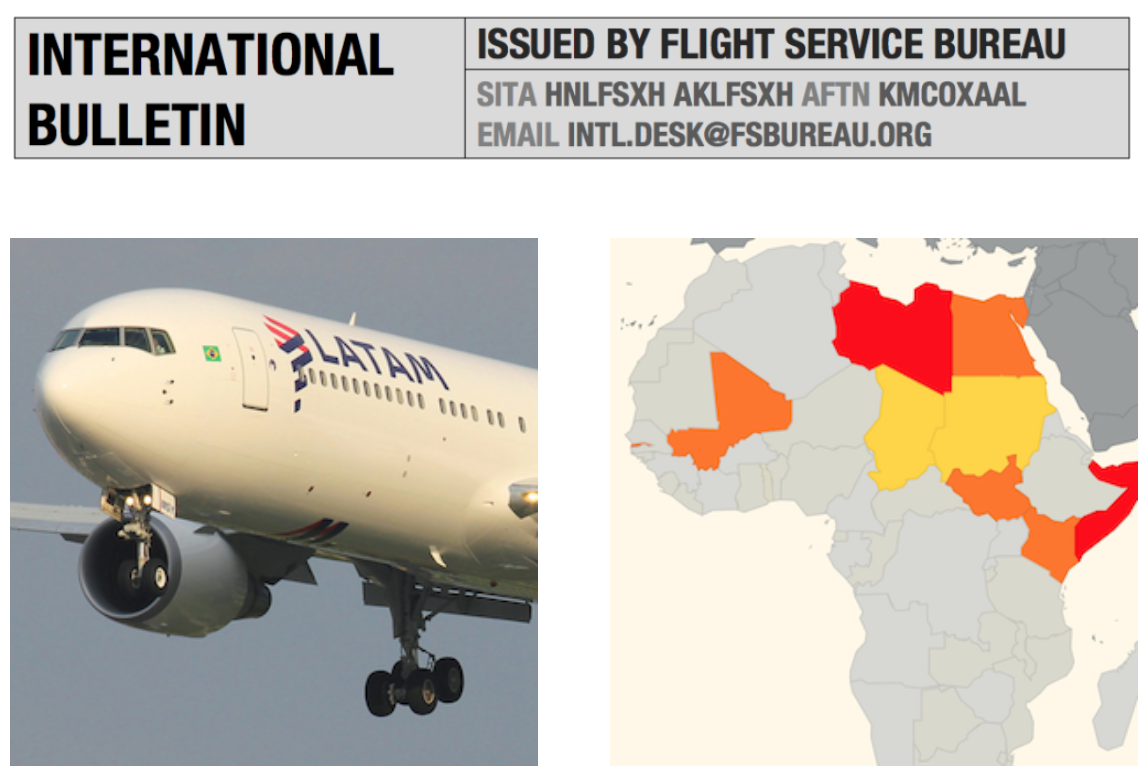
18JAN A B767-300 was fired on last night during approach to Runway 15 SBGL/Rio de Janeiro. One 7.62mm bullet lodged in the left wing. Read the article.

Updated SafeAirspace Risk Map 

18JAN We have updated SafeAirspacewith information for Aircraft Operators on The GambiaNorth KoreaBrazilUkraine, and Turkey.


GBZZ/The Gambia State of emergency declared on 17th January. Foreign citizens being evacuated. Banjul International Airport (GBYD/BJL) and land borders remain open, for now. More at safeairspace.net/information/the-gambia.

UKZZ/Ukraine Flight Service Bureau has issued an updated summary for Ukraine’s airspace. There are two risk issues in Ukraine. First: arms fire. Including MH17, multiple aircraft (the others all military) have been shot down since the beginning of the Donbass region war in 2014. The 10th ceasefire was declared in December 2016, but not holding. This risk is contained within the Dnipropetrovsk FIR – UKDV. The second issue affects the Simferopol FIR which is Disputed Airspace. (Ukraine:UKFV, Russia:URFV). In March 2014, Russia annexed Crimea. The ATC Center is in Simferopol, Crimea, and is now run by Krymaeronavigatsiya. Russia claims the airspace. Ukraine refuses to recognise the change, and asks crews to talk to Ukrainian controllers in Dnipro/Odesa ACC instead of Simferopol ACC. Four routes are approved by EASA through the high seas portion of the airspace.

KIAD/Washington and area airports – guaranteed busy during the Presidential Inauguration this Friday, Jan 20. Updated restrictions here. Departure slots required for aircraft departing IAD between Friday, Jan. 20 and Sunday, Jan. 22. Departure slots can be obtained through an IAD FBO of choice (Ross Aviation or Signature Flight Support). Slots will be divided equally between the two FBOs at IAD.

VZZZ/Southeast Asia Lunar New Year holiday season, which falls on 28th Jan. Travel-related delays and government office and business interruptions will peak 27 Jan to 01 Feb, and could last longer in Taiwan, Vietnam and China, where the holiday will be celebrated through 02FEB.

BGBW/Narsarsuaq A seasonal reminder that if you’re planning to use Narsarsuaq as a destination, alternate, or enroute alternate outside of the operating hours (MON-SAT 1000-1900z daily until 03APR), you must contact the airport in advance to apply for them to stay open for you:
Email: bgbw@mit.gl. Also make sure you file your ATC FPL including the AFTN address: BGBWZTZX.

EKCH/Copenhagen A copy of the AOC must accompany fuel release or expect an MOT charge of approximately $1.70 USD to be charged. Next destination must be shown on the fuel release or expect delays.

EGPH/Edinburgh, Scotland Until Apr 1st, you will need PPR to operate to Edinburgh, due to reduced parking capacity.

RPLB/Subic Bay will be closed for maintenance bewtween 0100-0800z until January 20th.

SKZZ/Colombia New Tower and ACC for Bogota. From 16th Jan – 15th Feb moving of Bogota’s ACC will take place. ATS/AIS/COM/MET/ATFM services transition process should not affect operations, however, due to the large change extent foreseen, some failures might occur in the process.  AIC 1/17 outlines contingency procedures in place

SVZZ/Venezuela has closed its land borders with Colombia and Brazil periodically in the last 12 months. Border closures occur frequently, often with short notice. The Venezuelan government will withdraw the 100 bolivar note (VEF 100) from circulation as of 20 January 2017.

LYBA/Beograd If you have any outstanding navigation fees in Serbia, better get them paid, or they’ll add a 9.88% interest charge.

HSSS/South Sudan Flight Service Bureau has issued an updated summary for South Sudan’s airspace: Conflict Zone. South Sudanese Civil War since 2013. The security situation in Juba has been relatively calm since the July 2016 crisis. Daily reports of fighting throughout the rest of the country. The security situation is especially unstable in the Equatorias in the south. MANPADS risk to overflights. In addition, the South Sudanese army has declared intention to shoot down Aircraft without permits. Most Authority guidance recommends min FL260. We think FL300 is a better minimum for overflights.

ZKKP/North Korea Flight Service Bureau has issued an updated summary for DPRK North Korea’s airspace: The level of tension on the Korean peninsula can change with little notice. Multiple missile launches in 2016, increasingly without prior notice to ICAO. The range of these has increased – previously safe airways B467 and G711 are now at risk. Over 1000 reports of GPS jamming issues reported by operators in the vicinity of the North/South Korean border. SFAR79 prevents US operators from operating west of 132E, other Authorities restrict operationseast of that line.

ZZZZ/Worldwide How have you been getting on with the new ICAO SID/STAR phraseolgies? In short, some countries are implementing, and others aren’t. What is your country doing? Tell us at bulletin@fsbureau.org.


View the full International Bulletin 18JAN2017


Midweek Briefing 27JUL: Iceland Strike Over, Brazil Olympic Ops Update

Iceland Strike Over 27JUL It’s been promised a few times over the last few months but then closures continued – but what we can tell you is that: There was an agreement on July 18,  that appears to be holding. Read the article.

Brazil Olympic Ops Update 27JUL The opening ceremony of the 2016 Olympics in Brazil is on 5AUG, in Rio de Janeiro. There are a ton of airspace restrictions, slot controlled airports, and changes from 19JUL-23SEP. Here is a summary.


LRBB/Bucharest FIR Crews have experienced several ‘fake’ calls on 121.5 within the Bucharest ACC airspace. No reports of control instructions being issued, but operators should be aware of the situation.

SKZZ/Colombia On 25 July, the Colombian health ministry declared the Zika epidemic to be over in the country. The epidemic began in September 2015 and peaked in March of this year. A total of approximately 100,000 Colombians were infected. While authorities believe outbreaks will continue, the number of cases reported is expected to continue to decline.

LTBA/Istanbul has issued a long list of restrictions to discourage additional flights from operating to LTBA. New requests for charter flights are denied. LTBA cannot be carried as an alternate on your FPL.

TNCC/Curacao has daily work on the main runway throughout August. Some closures and shortened lengths. Check for latest with Airport operations on CAP OPS(+5999) 8391030/31/32.


To view the full International Bulletin 27JUL2016 Join OPSGROUP

Screen Shot 2016-07-21 at 1.12.13 PM


US, Canada may lose EU visa rights, More Free Route Airspace for Northern Europe

US and Canada may lose EU visa rights 13APR The European Commission published warning on 12APR that visa-free travel by US and Canadian citizens to Europe is at risk, due to the lack of a full reciprocal arrangement for EU citizens. Read the full article.

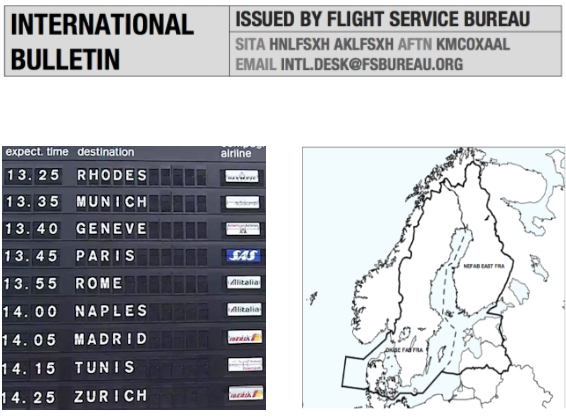
More Free Route Airspace for Northern Europe 13APR Sweden, Finland, Denmark, Estonia and Latvia will be increasing free route airspace from 23JUN16. This allows operators to utilize User Preferred Routes above FL285. Details of the implementation can be found through the AIC A3/2016 from Sweden.


RKSS/Gimpo is set to open South Korea’s first purpose-built FBO next month. It includes a passenger terminal with customs and a large hangar that can accommodate up to eight large jets. The FBO is a partnership between Korea Airport Crop and Avjet Asia.

EBBR/Brussels Controversial ATC Strike occurred without notice yesterday 12APR, restricting traffic at EBBR and in Belgian Airspace. Eurocontrol advises 4 of 6 sectors operational Wednesday 13APR, at this stage no significant further effect likely.

KZZZ/USA New security measures in the U.S. are being enacted in response to the Brussels Airport Bombings. The Senate voted to increase the vetting of airport workers, expand the number of TSA viper teams that sweep through airports unannounced to stop and search suspicious people, and double the number of TSA’s bomb-sniffing dogs. Also, local law enforcement may also conduct random checks of cars and taxis heading towards the airport.

KZZZ/USA the FAA has provided its NextGEN update for 2016. It highlights all the completed items along with the expected achievements for the year. You can find all the info through the NextGEN website.

EZZZ/Europe as of 05APR Eurocontrol as been publishing Target Time information together with Calculated Take-off time (CTOT) in the Slot Allocation and Slot Revisions Messages (SAM and SRM). The purpose of the initiative is to provide flight crew with operational awareness of their flight’s planned time at the congestion point in the air, rather than solely providing the corresponding delayed departure time (CTOT) to implement ATFM measures.

EGZZ/United Kingdom A large scale military exercise named ‘Joint Warrior 16-1’ has been taking place since 09APR16 and will last until 22APR06. EGPX and EGTT FIR/UIRs are affected. However, low to medium impact on airline operations is expected.

LFZZ/France beginning 03MAY16 France will be implementing CPDLC services within LFFF, LFEE, LFRR, LFMM and LFBB FIR’s. The full details of the IOC can be found in AIC 10/16.

EGGX/Shanwick OCA implemented a trail of 5 minute separation minimum between aircraft which are following the same track, irrespective of whether they are East or Westbound. Full details can be found through AIC Y 022/2016.

LOWW/Vienna every weekend until 24MAY16 LOWW will be operating under single runway ops beginning 2100 on the Friday until 1600 on the Sunday. The closures are weather dependent and the closure will be recalled if the forecast calls for the use of runway 11/29. In any single runway scenario use at Vienna delays are a guarantee.

OEZZ/Saudi Arabia The U.S. State department updated a travel warning to Saudi Arabia on 11APR16. It outlines the risk to travellers due to an increased risk with the threat of terrorism.

SKZZ/Colombia The U.S. State department has updated the travel warning to Colombia. They have actually improved the travel warning as the security in the country has improved significantly in recent years. Foreigners should still exercise caution though.

LTCC/Diyarbakir is now able to handle international flights due to a new terminal building that has opened.

OLBA/Beirut two airport employees were detained on suspicion of terrorist activity involvement on 08APR16. Traces of explosives and a handgun were found on the two individuals.

DIAP/Cote D’Ivoire has reduced the passenger departure tax by 50% and have also removed the solidarity contribution tax levied on airline tickets.

GABS/Mali began renovations last month (MAR16) to increase the airports capacity to handle 1.5 million passengers which is up from the 800,000 annual passenger traffic. The project is expected to be completed by the end of the year.

View the full International Bulletin for 13APR2016


Midweek Briefing:EU Border Controls Expanded, New NAT Plotting Chart published

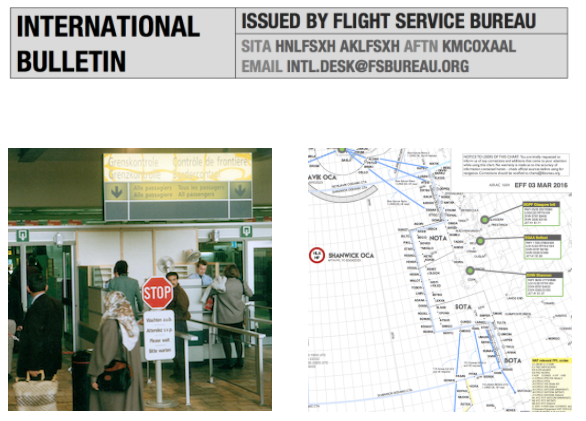
EU Border Controls expanded 02MAR Travellers and crews operating to Denmark, Belgium and other EU countries will need to present travel documents to enter from another Schengen country. The security checks will likely cause travel delays for EU and non-EU travellers into the Schengen area.

New NAT Plotting Chart published 02MAR With the multitude of changes on the North Atlantic in the last few months, including new Tracks, end of MNPS, new HLA, RNP4 – we have published an updated and revised Plotting Chart for the NAT region, showing all new requirements and with updated Airport and Fuel pricing. It’s effective 03MAR.


VOXX/India has expanded its e-Tourist Visa (eTV) program to applicants from 37 additional countries. Eligible visitors under the eTV include business visitors and those traveling to sightsee, visit friends or relatives or to make short medical visits. Nationals from a total of 150 countries are now eligible for the program.

EXXX/Europe Due to the introduction and continuation of border controls in the European Union, travellers to Denmark, Belgium and other EU countries will need to present travel documents to enter from another Schengen country. The security checks will likely cause travel delays for EU and non-EU travellers into the Schengen area. Belgium has instituted border controls at its borders with France. The security checks will remain in place until at least 23MAR.

KTEB/Teterboro will close 0500-1700Z (12 hour closure) this weekend – from midnight Saturday until noon Sunday. This closure is necessary to install new, mandatory hold short signs on Runway 19, which will close the runway intersection. Helicopter operations will be permitted during the closure.

HKXX/Kenya A visa on arrival is now available again at Nairobi, reversing the previous procedure established last year forcing all visitors to obtain one prior to flying. Online visas are still available. http://evisa.go.ke/evisa.html

NFXX/Fiji As of 25FEB, there are 42 confirmed deaths in Fiji due to the damage caused by Cyclone Winston, which made landfall over the 20-21 February weekend. Approximately 35,000 people are sheltering in evacuation centers. There has been little to no contact with remote islands; therefore, the number of casualties and people displaced is likely much higher. Concern about the outbreak of mosquito-borne viruses, such as Zika and dengue fever.

WAXX/Indonesia Australian DFAT updated its travel advice for Indonesia, which reads: “We advise you to exercise a high degree of caution in Indonesia, including Jakarta, Bali and Lombok, due to the high threat of terrorist attack. We continue to receive information that indicates that terrorists may be planning attacks in Indonesia”

SKXX/Colombia is introducing ADS-B, with associated new phraseologies that crew should be aware of. ATC may ask “Notify capacity ADS-B”; response “ADS-B transmitter”, “ADS-B Receiver”, or “Negative ADS-B”. Full AIC.

LOWW/Vienna has a couple of new RNP AR (Authorisation Required) approaches to RWY 16 and 34 on test.

LIXX/Italy is joining the Free Route Airspace (FRA) bandwagon, airspace trial this coming weekend 05-07MAR at FL370 and above in Roma, Milano, Padova and Brindisi ACC, and Malta ACC.

UKXX/Ukraine Did you know that there was reduced horizontal separation in Ukraine airspace (RHSM)? Neither did we. Check out AIC 02/16.

UIBB/Bratsk has fuel supply issues again, current shortage until 31MAR.

View the full International Bulletin 02MAR2016


Midweek Briefing: New Canada Entry Rules, Winter Storms clear Newfoundland

New Canada Entry Rules 10FEB CXXX/Canada Starting 15 MAR 2016, visa-exempt foreign nationals who fly to or transit through Canada will need an Electronic Travel Authorization (eTA). Exceptions include U.S. citizens and travellers with an existing visa, and commercial aircrew. Read more …

Winter Storms clear Newfoundland 10FEB Nova Scotia and Newfoundland (CYQX, CYHZ, CYYT) have two severe Winter Storms passing through this week; Halifax will see up to 40cm of snow, affecting diversion choices on the North Atlantic. The visualisation above shows the US Winter storm at the end of January.


MKJK/Kingston FIR Jamaica, has ongoing issues with radar coverage and serviceability, leading to ad-hoc flow management procedures including 15 minute en-route separation, and 10 minute arrival separation at international airports. Latest update indicates this will continue throughout February. We have had several reports from international airlines of delays averaging around 1 hour on departure. Further reports welcome to bulletin@fsbureau.org.

SKED/Bogota ACC, Colombia is applying 20 minute spacing for northbound flights heading into Jamaican airspace due to the increasing delays there.

SPIM/Lima FIR Peru have published new Aircraft Interception procedures for Civil Aircraft. Probably worth a look – although, we must warn you, they are in Spanish only, and exceptionally lengthy. Maybe just double check that overflight permit and keep in touch with ATC instead.

North Atlantic As mentioned last week, effective 04FEB MNPS Airspace is replaced by HLA/High Level Airspace on the North Atlantic. A popular topic. RNP4 or RNP10 now required. Read our International Ops Notice 01/2016 or our blog post: Did you know MNPS is over?

NVVV/Port Vila, Vanuatu Several airlines have suspended operations here effective 01FEB16 over concerns as to the condition of the runway. Airport remains open without restriction.

PACD/Cold Bay has no Jet A1 Fuel avaiable until 29FEB

HRYR/Kigali‘s runway is closed on a nightly basis from 0200-0700 local time (0000-0500 UTC) until 31MAR for repairs.

North Korea launched a long range rocket at 0031Z on 07FEB. According to preliminary reports, the rocket passed over the Japanese island of Okinawa and landed in the Pacific Ocean. US military officials stated that the rocket did not pose a threat to the United States or allies in the region. South Korean media reported that North Korea is preparing for another nuclear test and has the technology necessary for an inter-continental ballistic missile (ICBM).

AYPY/Port Moresby has a number of common VHF frequencies out of service because of a Telecomms fault. ATC advise to call them on HF HF 5565, 8861, 6622, or 8837, if able.

View the full International Bulletin 10FEB2016