Airbus 380 flips CL604 – full report is now published
  • Interim report finally released by the German BFU
  • Flight Service Bureau version of events confirmed
  • New pictures released by the investigators

Back in March, FSB covered a major wake turbulence upset experienced by a Challenger 604 after passing an A380.  After our initial story was published, it was covered in various versions in The Times of London, Flying magazine, AIN Business Aviation News,  Deutsche Welle, and NBC. The picture on the Flight Service Bureau facebook page was viewed 1.1 million times.

From the interim report, these facts are confirmed:

  • The incident was caused by the wake from an Airbus A380 at FL350
  • The Challenger 604 passed directly underneath the A380 at FL340
  • The wake encounter occurred 48 seconds after the cross – when the two aircraft were 15nm part
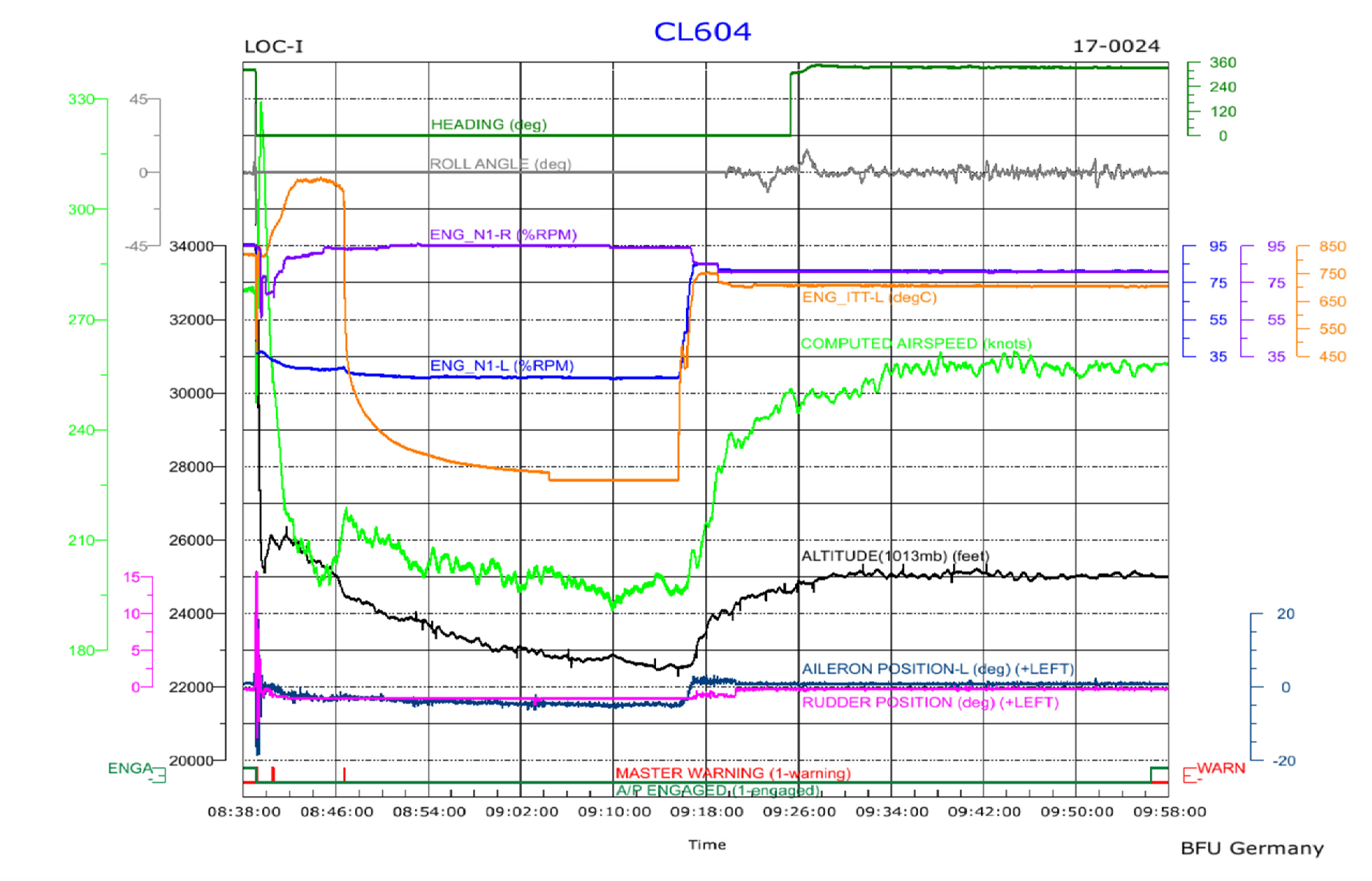
  • The Challenger initially rolled 42 degrees to the right, then 31 degrees left, and experienced G-Loads of 1.6g positive followed 1 second later by -3.2 g.
  • It lost altitude from FL340 to FL253 over a 2 minute period – loss of 8700 ft.

In an interview, the crew said:

The airplane shook briefly, then rolled heavily to the left and the autopilot disengaged. [We] actuated the aileron to the right in order to stop the rolling motion. But the airplane had continued to roll to the left thereby completing several rotations. Subsequently both Inertial Reference Systems (IRS), the Flight Management System (FMS), and the attitude indication failed”

“… since the sky was blue and the ocean’s surface almost the same colour [I] was able to recognise the aircraft’s flight attitude with the help of the clouds

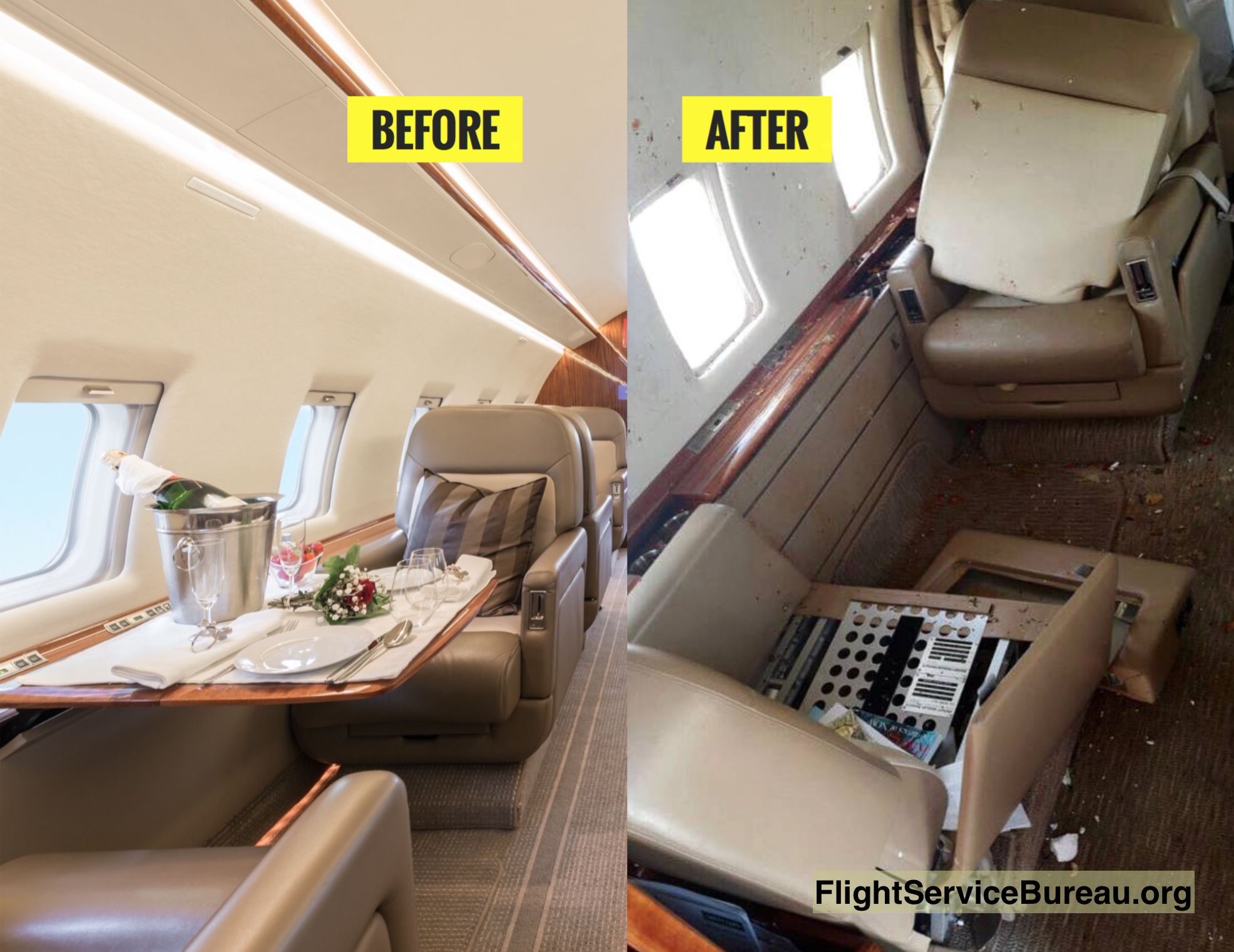
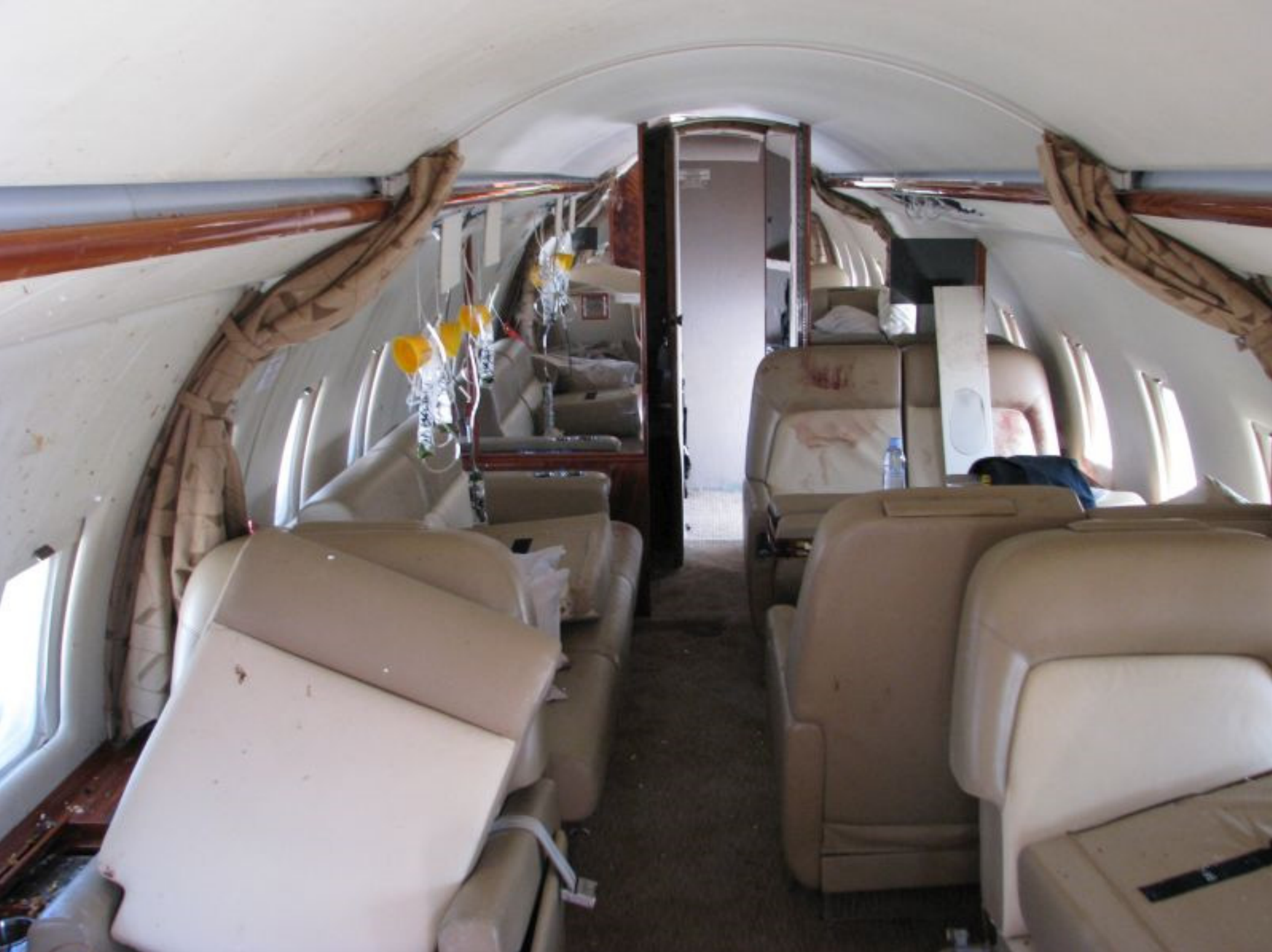
The BFU published the FDR excerpt above, and a full interior picture of the cabin, post event.
 

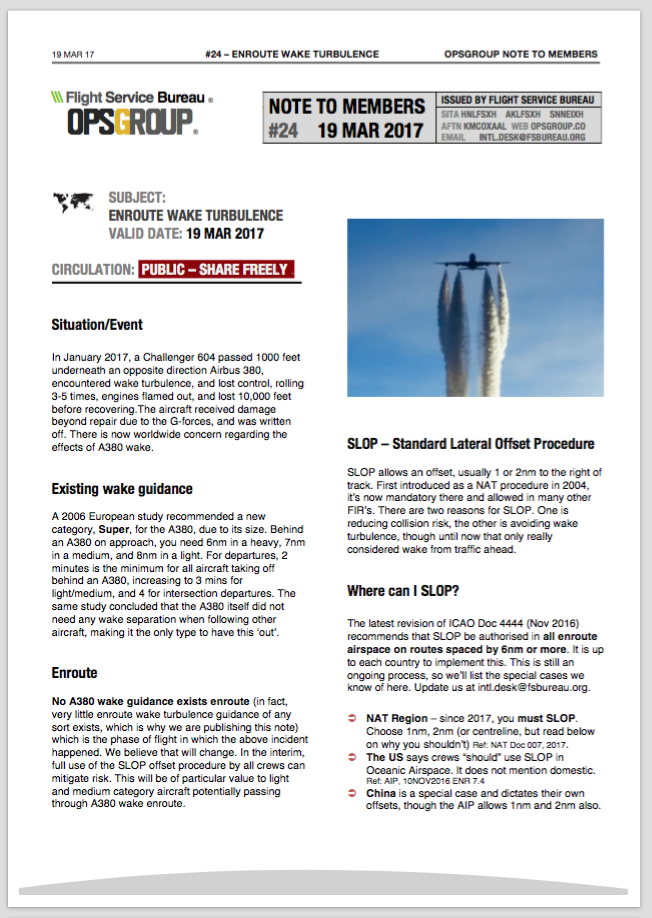
Flight Service Bureau has issued guidance to OpsGroup members, in Note to Members #24 (March 19th, 2017), which can be downloaded publicly here. The highlights are:

  • As Aircrew, use SLOP whenever you can.
  • As Controllers, be mindful of smaller aircraft passing underneath A380’s.
  • Avoid flying the centreline if you can. SLOP 0 is not an offset. Choose 1nm or 2nm.
  • Note the new SLOP rules from ICAO in the 16th edition of Doc 4444.
  • Expect guidance from EASA and the FAA to follow

With very recent updates to both NAT Doc 007 and ICAO Doc 4444, the rules for SLOP are a little different than before.
 

References:


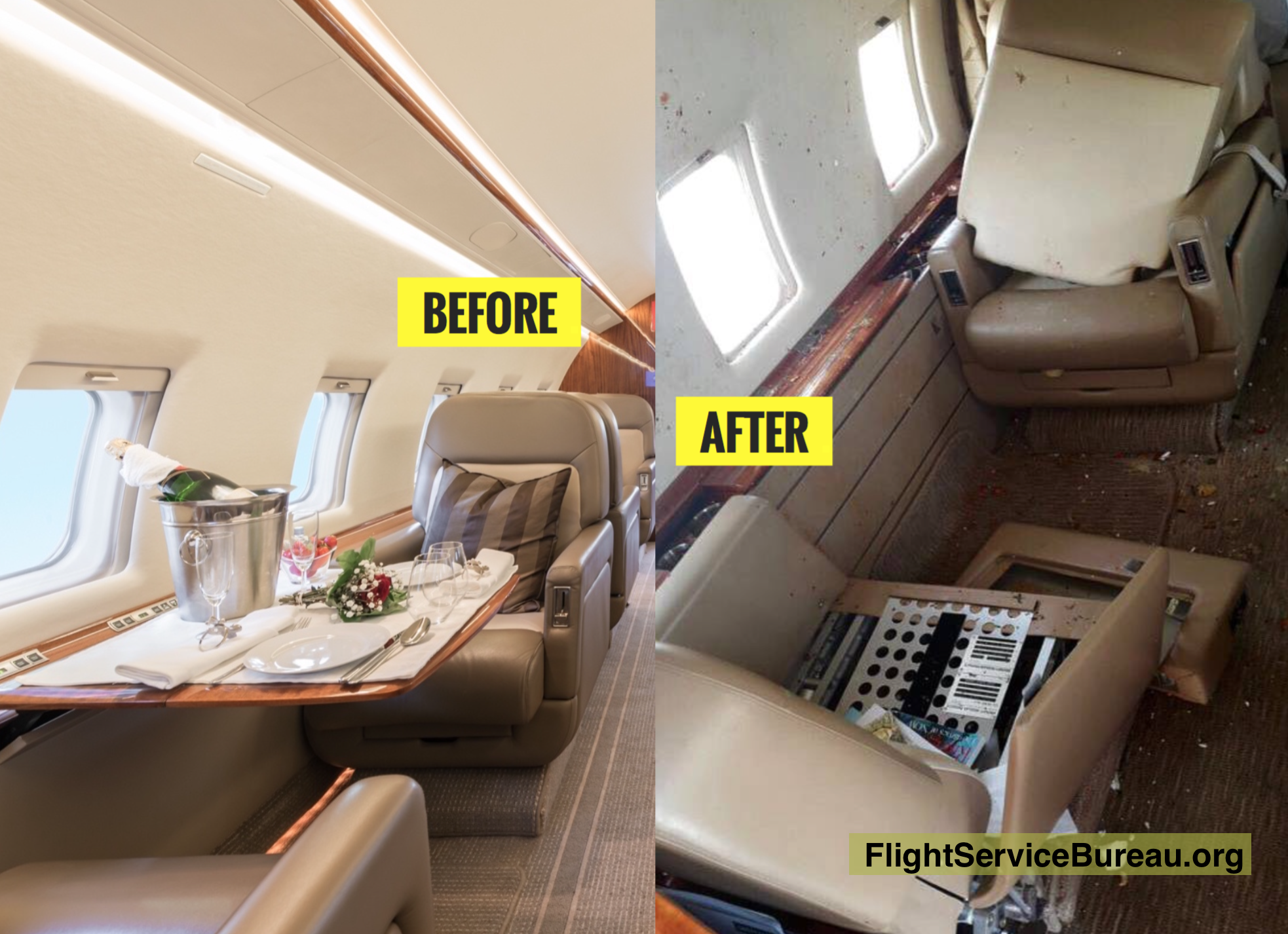
Inside the cabin – before and after the wake turbulence encounter

The Challenger 604 vs Airbus 380 story has gone once around the world.

But is it even true? Some have asked. Let’s do a reality check.

After our initial story was published in last weeks International Operations Bulletin, which we first monitored thanks to the great work of the Aviation Herald, it was republished in various versions in The Times of London, Flying magazine, AIN Business Aviation News,  Deutsche Welle, and NBC. The picture on the Flight Service Bureau facebook page was viewed 1.1 million times.

First, the picture.

The incident happened. This has already been confirmed by the German BFU, who have responsibility for investigating accidents. The Canadian TSB have assigned an accredited representative to the investigation, and Bombardier have assigned a technical advisor.

So to the cause. The crew reported that 1-2 minutes before the loss of control, at about 0840 UTC, an Airbus A380-800 had passed overhead, slightly to the left. The Aviation Herald’s reporting is of the highest standard, and we trust their source.

Like the Aviation Herald, we also deal in facts. Joining the dots to form the bigger picture doesn’t require Colombo on the job.

  • The incident happened on January 7th, since which time the German BFU have been aware of the case.
  • The story has been out in the aviation community since February 7th, when it was posted that: “A CL604 enroute Male to Europe, upset by opposite direction, 1,000′ above, A380’s wake. Several rolls, large G excursions. Diverted into Muscat.”


Since the authority, manufacturer, and operator are all aware of the story, it is reasonable to deduce that were a material part of the widely reported incident not true, then that would have been stated rather quickly.

The ultimate confirmation will come from the Germany BFU, hopefully on this Interim Reports page.


The Boeing 757 parallel

On Sunday, we reported the similarity between this A380 story, and the 10 years it took to determine that the Boeing 757 had a wake 1.5 times stronger than other similar aircraft.

Our primary interest here at Flight Service Bureau is keeping the International Flight Operations community safe and informed. Consider this opening line from the New York Times on Dec 23rd, 1993:

Nearly a year after being alerted to the problem, the Federal Aviation Administration has ordered air-traffic controllers to warn aircraft flying behind Boeing 757 jets of the potential for dangerous wake turbulence.

In the last year, two crashes that together killed 13 people have been attributed to turbulence caused by Boeing 757's. In the more recent crash, on Dec. 15, five people were killed when their private jet went down in Orange County during a landing approach" 

Wake Turbulence Enroute

The entire topic of wake turbulence is not fully understood by any of us. There is much more to learn. Truly innovative studies were last done back in the 1970’s. Some experienced crews have even questioned whether enroute wake turbulence even exists.  Flight school drills into us as pilots, that wake lives around the airport. “Heavy, clean and slow” are the dangerous ones. But “slow” means about about 150 knots for aircraft like the 380. In the cruise, that goes up to about 250 knots IAS at the higher altitudes. If 150 knots is slow, then 250 knots isn’t really “fast”.

Before the crash of a Delta Tristar at DFW in 1985, we didn’t know much about windshear and microbursts.  Maybe we have to learn the same lesson with enroute wake.

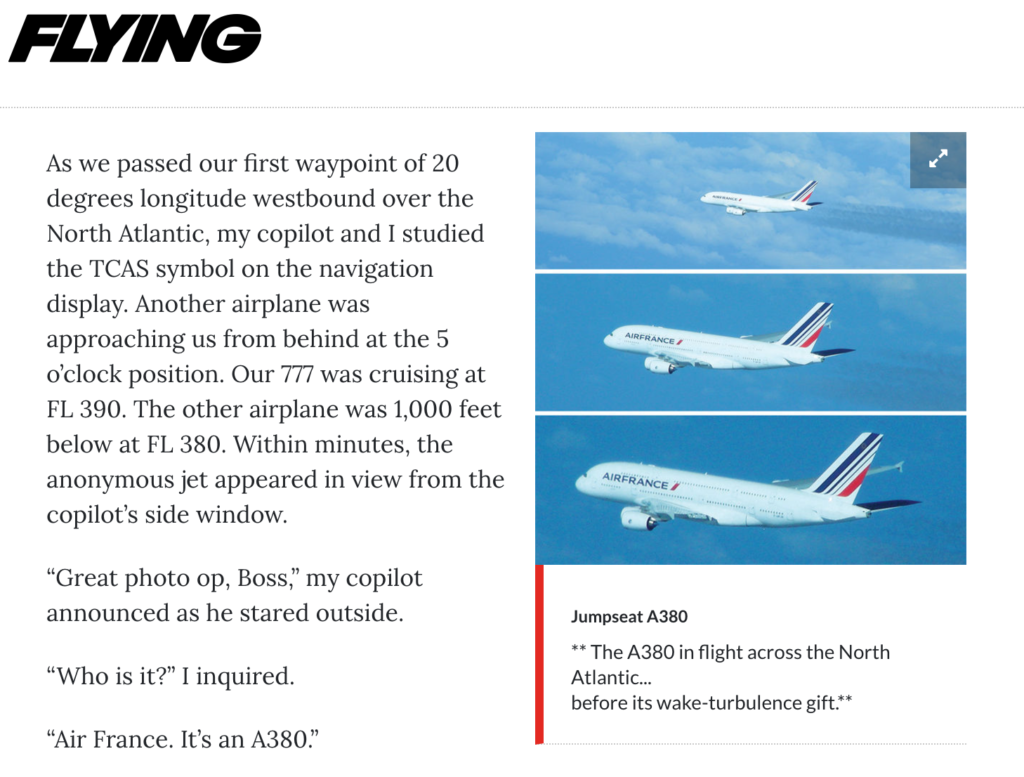
In Flying magazine, Les Abend has a very readable example of enroute wake in this article.


And here are some other examples of enroute wake turbulence encounters:

  • Air Canada, FL370, 55 degree roll at FL370 – wake from Boeing 747
  • Virgin Australia, FL350, 45 degree bank – wake from A380
  • American Airlines, FL220, bang – wake from B777
  • Air France, FL360, 25 degree bank – wake from A380
  • United Airlines, FL240, severe turbulence – wake from MD11
  • British Airways, FL320, 30 degree roll – wake from A380
  • Antonov 124, FL320, 15 degree roll, altitude loss – wake from A380
  • Vueling, FL320, sudden 40 degree right bank – wake from A340
  • Japan Airlines, E170 – uncommanded increasing roll to left – wake from A340
  • Armavia, A320 – A/P disconnect, steep banks – wake from A380

Note to Members #24 – Wake Turbulence Enroute

While the industry awaits further guidance from the authorities, Flight Service Bureau has made public its Note to Members #24 (normally restricted to OpsGroup circulation). Revised 22MAR2017.

Key points from our Note:

  • We might be wrong! Like we said above, there is much still to learn about enroute wake. Read the note, but make up your own mind.
  • Consider the wind. The danger point is roughly 15-20nm after the crossing point, as this is when the wake will have drifted down 1000 feet. In stronger winds, the wake may have drifted well away from the centreline. A turn away may not be necessary.
  • SLOP where possible. It may not prevent all situations, especially crossing traffic, but if you’re 2nm right of track you’re a lot less likely to be directly underneath another aircraft.
  • Read the note for the full guidance, and tell us if you have any further thoughts.


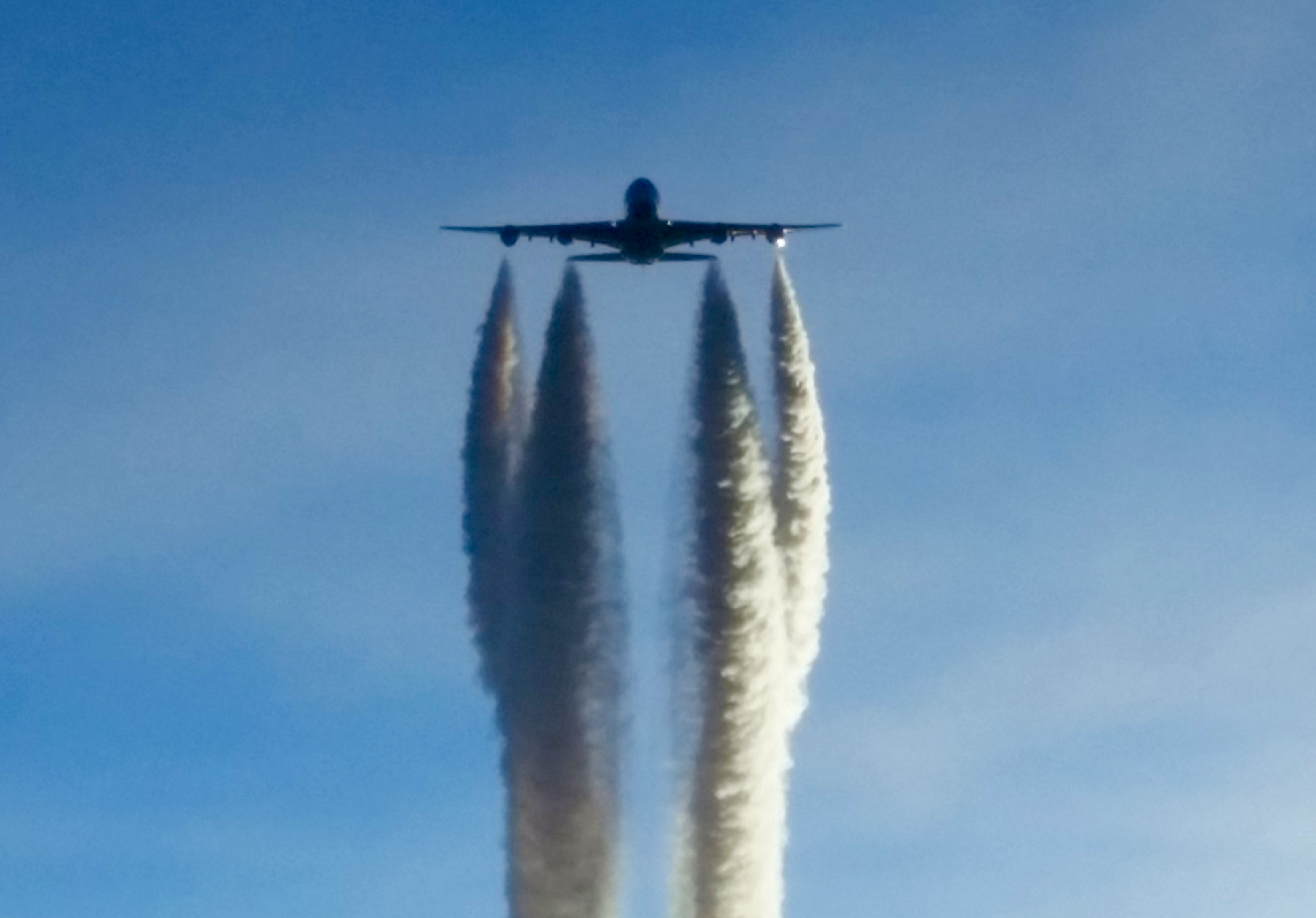
This is what an Airbus 380 looks like when it’s coming to get you

  • New guidance issued to OpsGroup by Flight Service Bureau
  • New warnings to be issued by Air Traffic Controllers – EASA SIB to follow
  • Updated 2017 SLOP offset procedures


With the A380 vs Challenger 604 incident,
there is now growing concern amongst aircrews about the effects of the A380’s wake turbulence.

In this incident, reported by the Aviation Herald, a Challenger 604 at FL340 operating from Male-Abu Dhabi passed an A380 opposite direction at FL350, one thousand feet above, about 630nm southeast of Muscat, Oman, over the Arabian Sea. A short time later (1-2 minutes) the aircraft encountered wake turbulence sending the aircraft into an uncontrolled roll, turning the aircraft around at least 3 times (possibly even 5 times), both engines flamed out, the aircraft lost about 10,000 feet until the crew was able to recover the aircraft, restart the engines and divert to Muscat. The aircraft received damage beyond repair due to the G-forces, and was written off.

This is a recovery that is in the same category as the ‘Miracle on the Hudson’, and the DHL A-300 recovery in Baghdad. Envision the alternate scenario, which was far more likely: Challenger 604 business jet missing in remote part of the Indian Ocean. Last contact with was a HF radio check with Mumbai. No recent satellite logons. Position uncertain. Search and Rescue attempt called off after 15 days. Nothing found. Probable cause: flew into CB.

Thanks to the remarkable job by the crew, we don’t have to guess. We know what happened. And now, there are questions.

We’ve seen this story before

Back in 1992/3, two back-to-back fatal crashes (a Citation, and a Westwind) were attributed to the unusual wake turbulence pattern of the Boeing 757. In fact, at the time, NOAA said it was the most intense wake they had ever seen. In December 1993, the FAA told controllers to increase the separation, and warn aircraft following a 757 of its presence.

This was 10 years after entry into service of the 757, which had its first revenue flight in 1983.

Sound familiar? The A380 had its first revenue flight in 2007. We are 10 years down the track, and it’s very tempting to apply the logic that because this degree of incident hasn’t happened before, it’s a one-off. An outlier. That the crew reacted erroneously to a small wake upset at the limit of their flight envelope. This is both unlikely, and, given the potential threat to other crews, a dangerous perspective.

The last review of A380 wake turbulence was done in 2006, primarily by Airbus. As a result, a new category was required – “Super“, in addition to the existing Light, Medium, and Heavy, for use by controllers when applying the minimum separation on approach and departure. However, no additional considerations were applied for enroute wake turbulence.

Most pointedly, the review concluded that the A380 did not need any wake turbulence separation itself, because of its size. The A380 is the only aircraft in the world to have this “out”. It’s a beast. Even an Antonov 124 or Boeing 747 needs 4nm from the traffic ahead.

New guidance

Given the incident, the similarity to the B757 story, and that quiet pointers towards a bigger risk, Flight Service Bureau has issued guidance to OpsGroup members, in Note to Members #24 (March 19th, 2017), which can be downloaded publicly here. The highlights are:

  • As Aircrew, use SLOP whenever you can.
  • As Controllers, be mindful of smaller aircraft passing underneath A380’s.
  • Avoid flying the centreline if you can. SLOP 0 is not an offset. Choose 1nm or 2nm.
  • Note the new SLOP rules from ICAO in the 16th edition of Doc 4444.
  • Expect guidance from EASA and the FAA to follow

With very recent updates to both NAT Doc 007 and ICAO Doc 4444, the rules for SLOP are a little different than before.

Download the OPSGROUP Note to Members #24 – Enroute Wake Turbulence.