China steps up incursions into Taiwan’s ADIZ
Relationships between Taiwan and China have become increasingly strained over the last month and officials are starting to question whether this might be impacting aviation safety in the region. Here is a look at the conflict and the potential impact it may have on commercial operations.

The background.

Taiwan and China have a long and ongoing dispute over whether Taiwan is Taiwan – an independent country, or Taiwan – a breakaway province that is still part of China. China is officially known as the People’s Republic of China (PRC), while Taiwan refers to themselves as the Republic of China (ROC).

Similar to Hong Kong, Taiwan has retained a high level of independence from mainland China, and effectively governs itself, having its own constitution, democratically-elected leaders, and own armed forces.

Unlike Hong Kong however, Taiwan rejected China’s “one country, two systems” formula which would have enabled them to retain autonomy, while reunifying with China. It remains a disputed country with few countries around the world recognising it as a sovereign nation independent of China.

This is at the root of this conflict, and in recent months China has become more assertive in their control over Taiwan.

Here is a good summary of the political situation.

What are China doing?

China have been “re-asserting” themselves over Taiwan by carrying out repeated incursions into the Taiwanese Air Defense zone. A recent incursion saw 39 military jets fly into the zone, for the second day in a row. The aircraft included 2 Y-8 anti-submarine aircraft, 26 J-16 fighter jets, 10 Su-30 fighters and a KJ-500 early warning and control aircraft.

They are reports of a 52 aircraft incursion which included 16 nuclear-capable H-6 bombers.
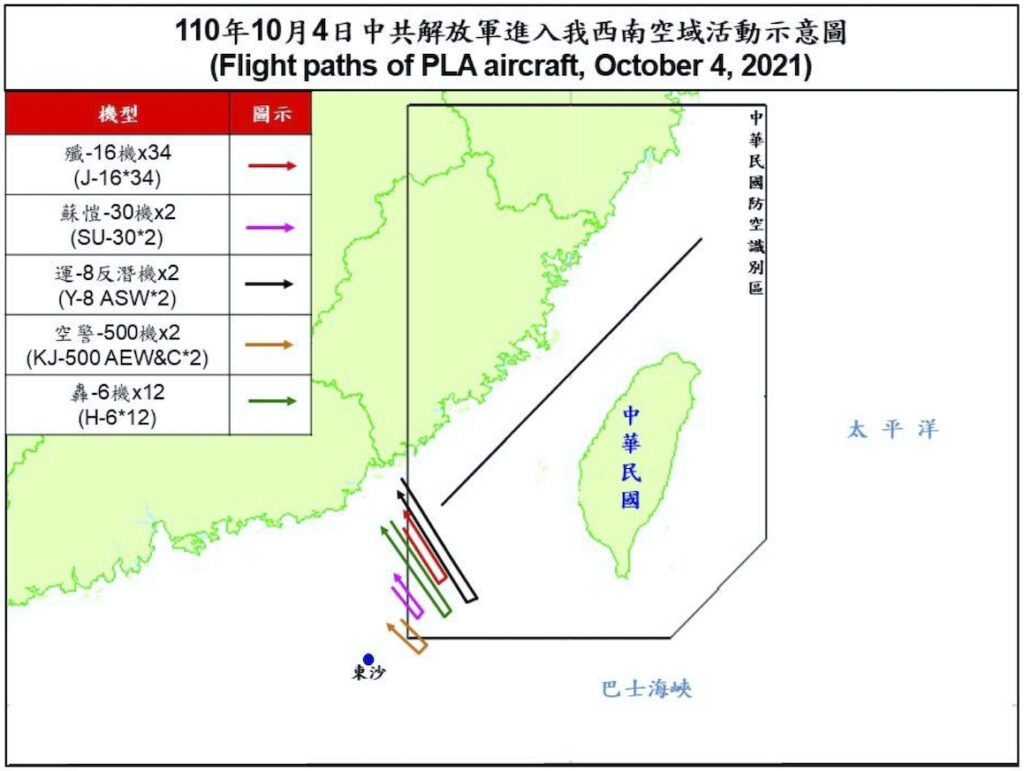
PLA (Peoples’ Liberation Army) = China’s military forces.

Where is the airspace?

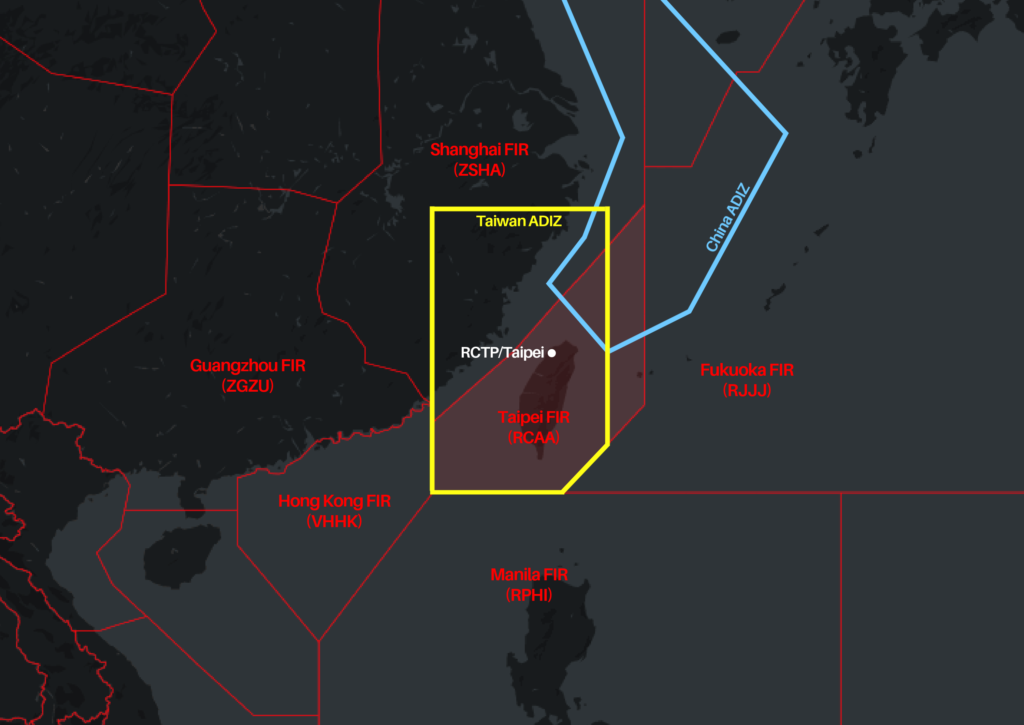
Taiwanese national airspace is the airspace over Taiwanese land, extending to 12nm off their coast over the territorial waters. Military aircraft are not allowed to enter any national airspace without express permission from the state. China did not violate the national airspace, but did violate the ADIZ.

An ADIZ is different to national airspace, and is specifically declared by a state for reasons of military air defence. Some states designate their entire airspace as an ADIZ (Iran being a good example).

Taiwan’s ADIZ sits between Taiwan and continental Asia, over the South China Sea (the Taiwan Strait), shown (approximately) below. The ADIZ itself is disputed as well though since it overlaps and includes disputed territories.
Is there any threat to civil aircraft?

The ADIZ overlaps international civil flight routes. The increase in military traffic and activity in the area is a potential threat.

Taiwan’s response to the repeated incursions has been to scramble their own military aircraft, issue radio warnings and deploy their air defence missile systems. The deployment of air defence systems could raise the risk of misidentification between civil and military aircraft, if Chinese aircraft do stray beyond the ADIZ and into national airspace.

The Vice Defense Minster for Taiwan suggested the incursions “are affecting the safety of international flights,” but the statement was possibly political and as yet there has been no report of civil aircraft being impacted by the situation.

Procedures in Taiwan’s ADIZ.

You can read the procedures in full in Taiwan’s AIP ENR 1.12.1, or download a PDF here. But here’s a summary of how it works:

  • There are restrictions for non-tactical aircraft in the area including no flight below 4000’, and to maintain flight along designated airways. ATC contact must be obtained prior to entry.
  • Aircraft will be intercepted by the Chinese Air Force if they fail to follow ADIZ procedures, or if they exceed 5 mins ETA of a designated reporting point, deviate more than 20nm from the airway entrance or have greater than a 2000’ difference from assigned altitude.
  • Basically, if you are flying in the ADIZ, make sure you’re in contact with ATC, and don’t do anything without telling them first. Pretty standard stuff for operating through an ADIZ.
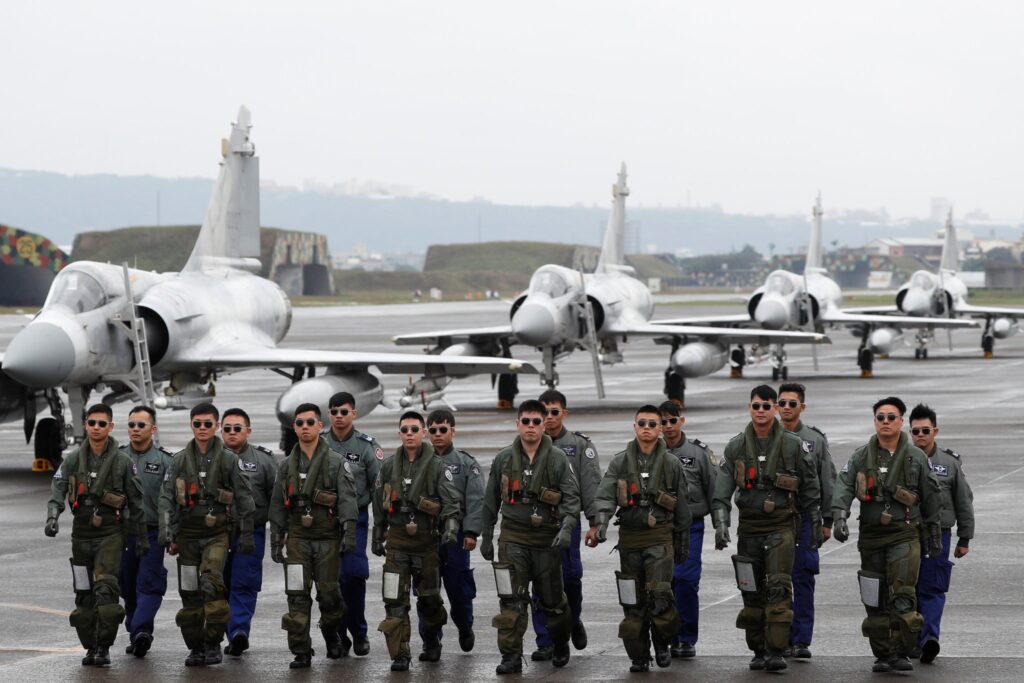
The Taiwanese do have their own Air Force, partly funded by the US.

General ops.

We wrote about operations to Taiwan back in 2019 and it is worth having a quick read because if you are a foreign registered aircraft because:

  • You are not allowed to operate directly between China and Taiwan
  • If you need to make a tech stop between the two then aim for VHHH/Hong Kong or VMMC/Macau
  • You probably aren’t going to get permission to overfly China if you are routing to Taiwan from anywhere else.

You can read more on this here.

Back in 2018, there was also a dispute over China’s M503 airway. The airway is a main north-to-south route for aircraft heading to Hong Kong or Macau from Southeast Asia. Taiwan didn’t like it because it lies so close to the FIR boundary separating Chinese and Taiwanese airspace.

The result of the dispute seemed to be a sort of “tough luck” from China, and aircraft still regularly use the airway. More on this here.

The risk level?

While the ongoing conflict and aggressions do threaten the general peace and stability of the region, there is no immediate threat to commercial operations. Maintain a good listening watch if operating in the area and ensure you are in contact with ATC if operating through the ADIZ.

Buenos Aires airports closed to GA/BA during G20 summit

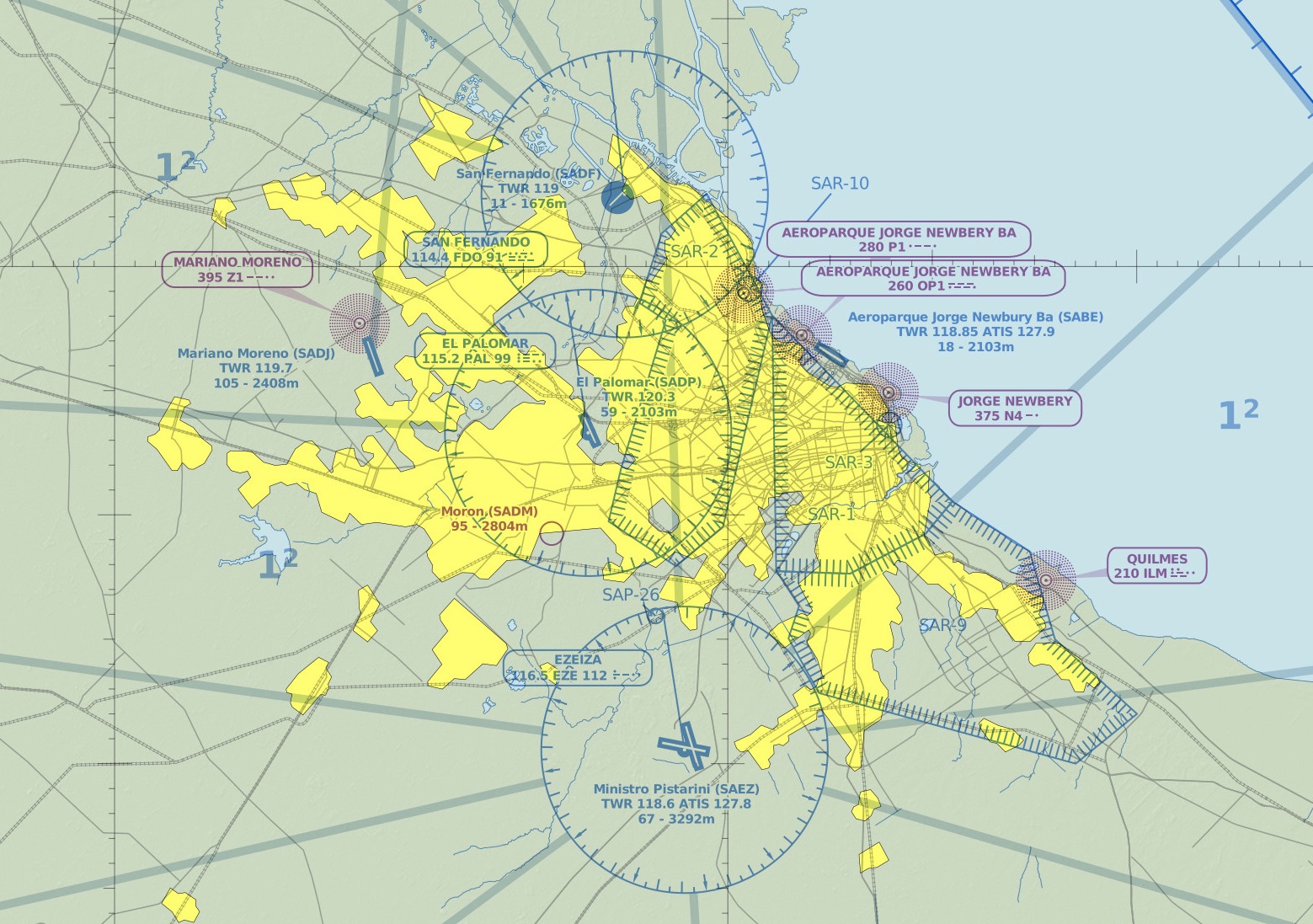
The 2018 G20 Leaders meeting will be held in Buenos Aires on November 30 and December 1, 2018. GA/BA flights will be prohibited from operating to both SAEZ/Ministro Pistarini and SABE/Jorge Newbery – but also all the smaller airport across the city as well.

AIP SUP A28/2018 goes into all of the restrictions in detail, but here are the key takeaways.

The airports…

Between 1500L on Nov 29 to 2200L on Dec 1 (1800Z Nov 29 to 0100Z Dec 2), here are the restrictions:

  • SABE/Jorge Newbery – will be totally closed to all non-G20 aircraft.
  • SAEZ/Ministro Pistarini – will only accept regular airline flights. All GA/BA flights are prohibited. RWY 17/35 will be closed and used as a taxiway and for parking only. Many SID and STARS will be suspended and a full list is in Appendix 2 of the SUP(UPDATE 22NOV: Notam A9669/18 has now been published which brings forward the start time for the ban at this airport to midnight local time on Nov 26).
  • SADP/El Palomar – closed to civil ops, although 8 slots will be made available to airlines from 1800Z-2300Z on Nov 29.
  • SADF/San FernandoSADJ/Mariano Moreno, SADM/Morón – all closed to civil ops.

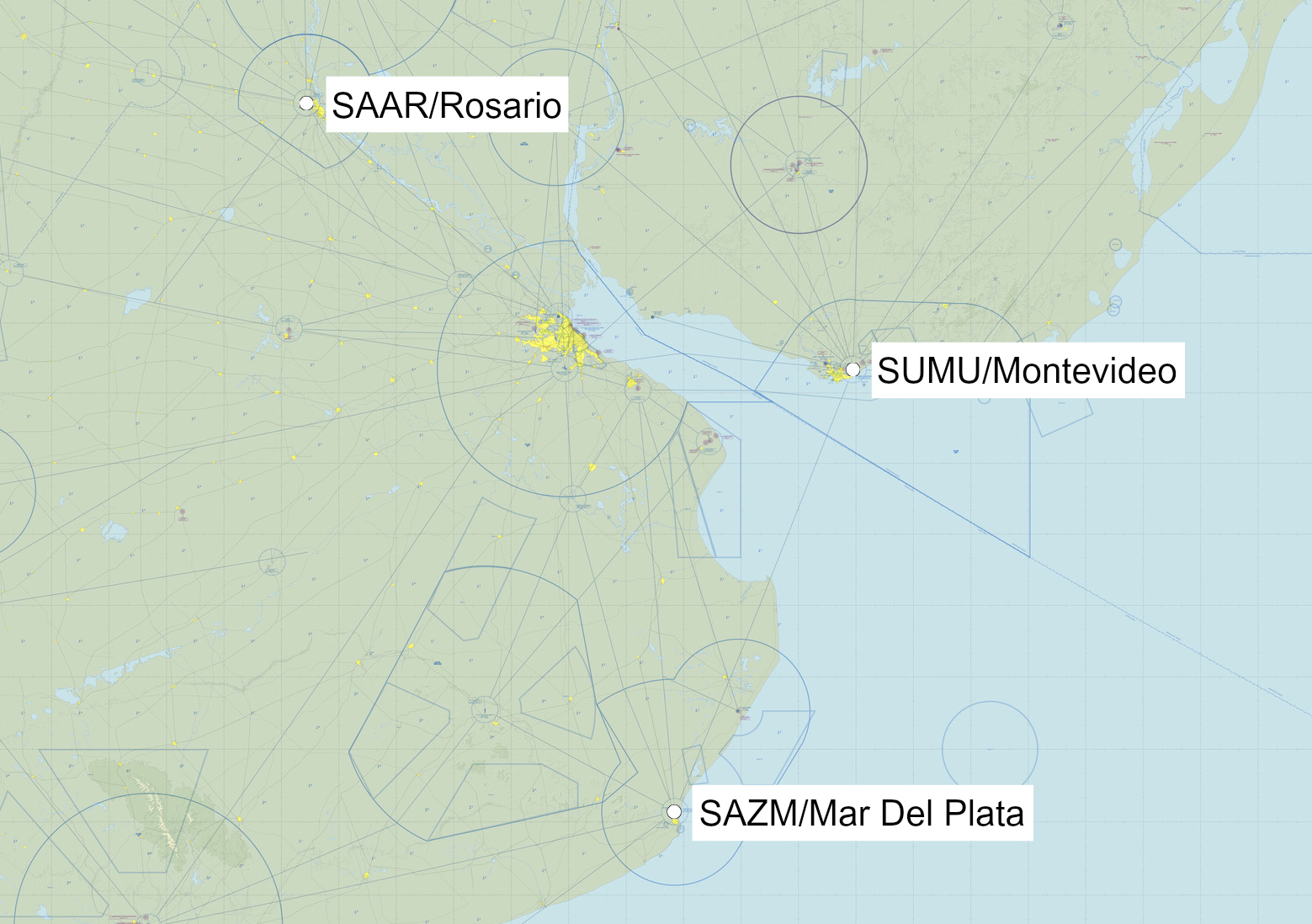
So with all the Buenos Aires airports out of action for GA/BA over these dates, there aren’t a lot of other options. The closest international airports are: SAAR/Rosario to the north, SAZS/Plata Del Mar to the south, or SUMU/Montevideo – but that’s in a different country!

Bottom line – if you’re GA/BA and you need to get to Buenos Aires at the end of the month, you’ll need to make sure you go there before the G20 restrictions come into force on 1800z on Nov 29.

The airspace…

SAEF/Ezeiza FIR will see the following restrictions in place between those same timings, 1800z Nov 29 – 0100z Dec 2:

  • All users must submit a flight plan a minimum of 6 hours before estimated off blocks time.
  • All aircraft must operate on discreet transponder codes at all times.
  • An ADIZ is in place out to 250NM from EZE VOR from SFC-UNL within the FIR.
  • There will be 3 temporary restricted areas in place, BAIRES, SPY GLASS and ROJO.
  • The BAIRES airspace overlays on top of SAEZ/Ministro Pistarini  out to 55nm.
  • Expect Air Force fast jets to be patrolling and operating with ‘due regard‘ overhead during various times.

Did we miss something? Get in touch!


Expanded Canadian ADIZ

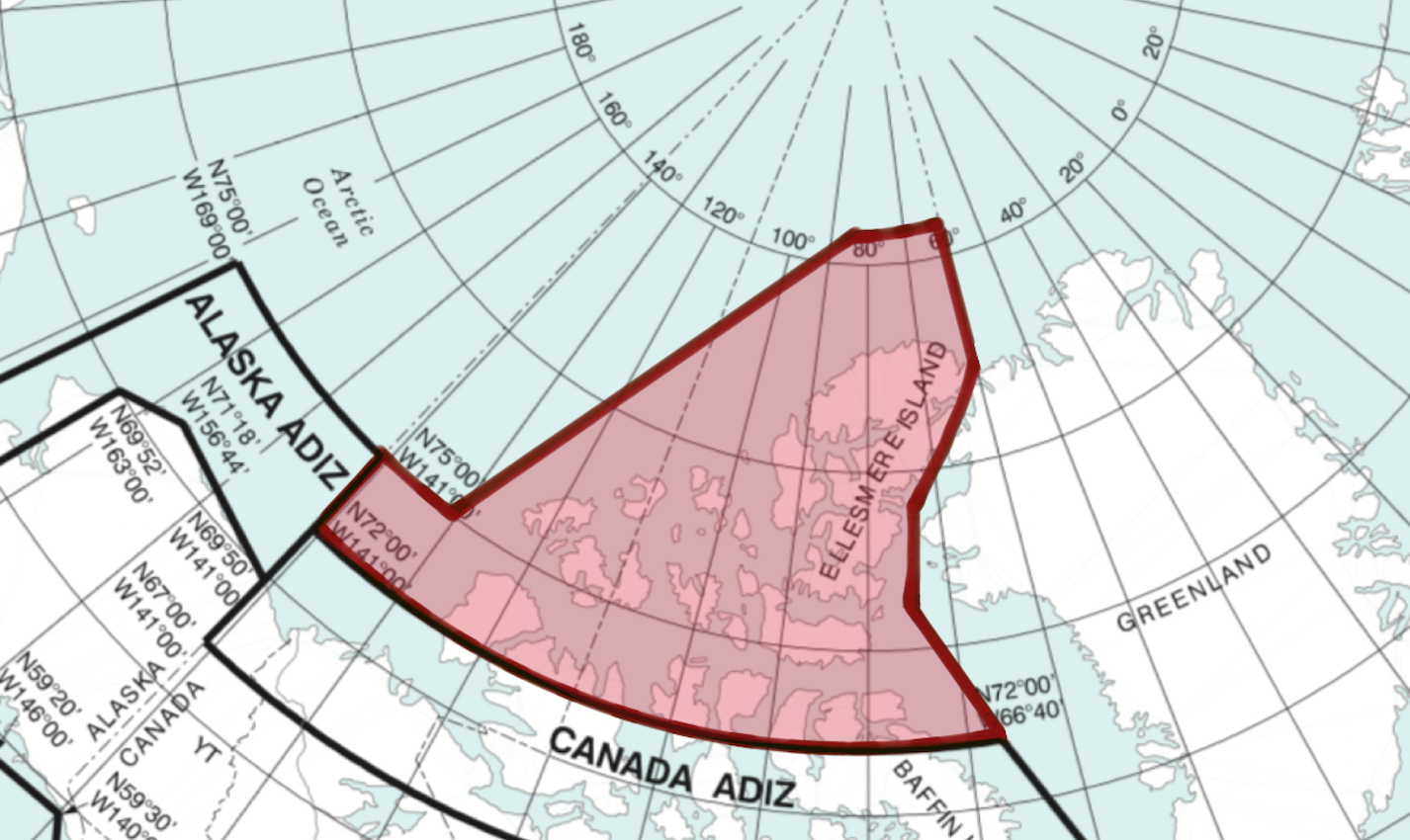
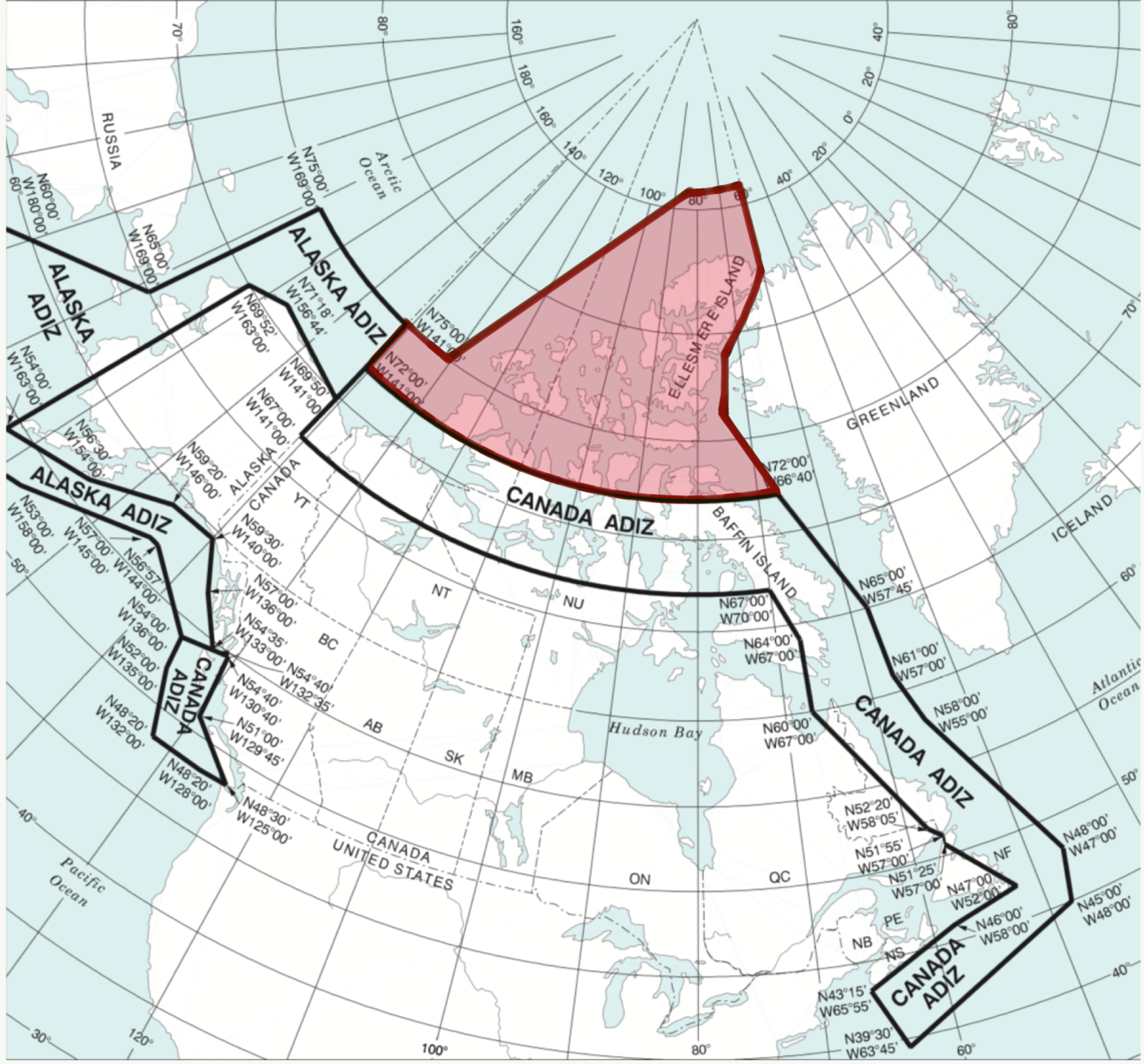
As of May 24, Canada has expanded its ADIZ to include all its national territory in the Arctic Archipelago.


Requirements for operations in the ADIZ remain the same. You’ll need a transponder with altitude reporting and a working two-way radio. Remember, you’ll need to include the time and location of ADIZ border crossing in your flight plans RMK section.

Full AIC 2/18 for the detailed lat/long of the expanded area here.


Bangladesh is now one big ADIZ

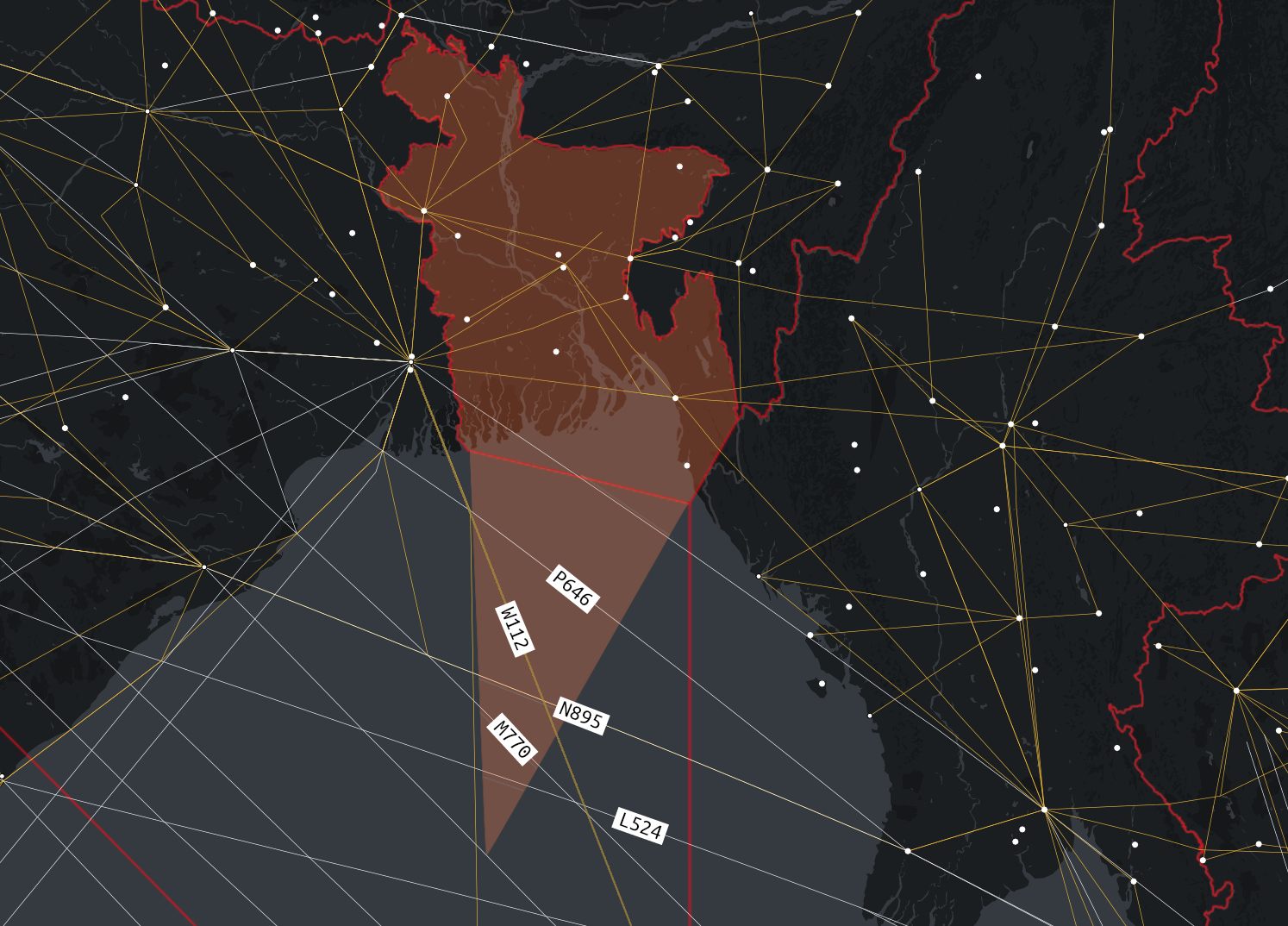
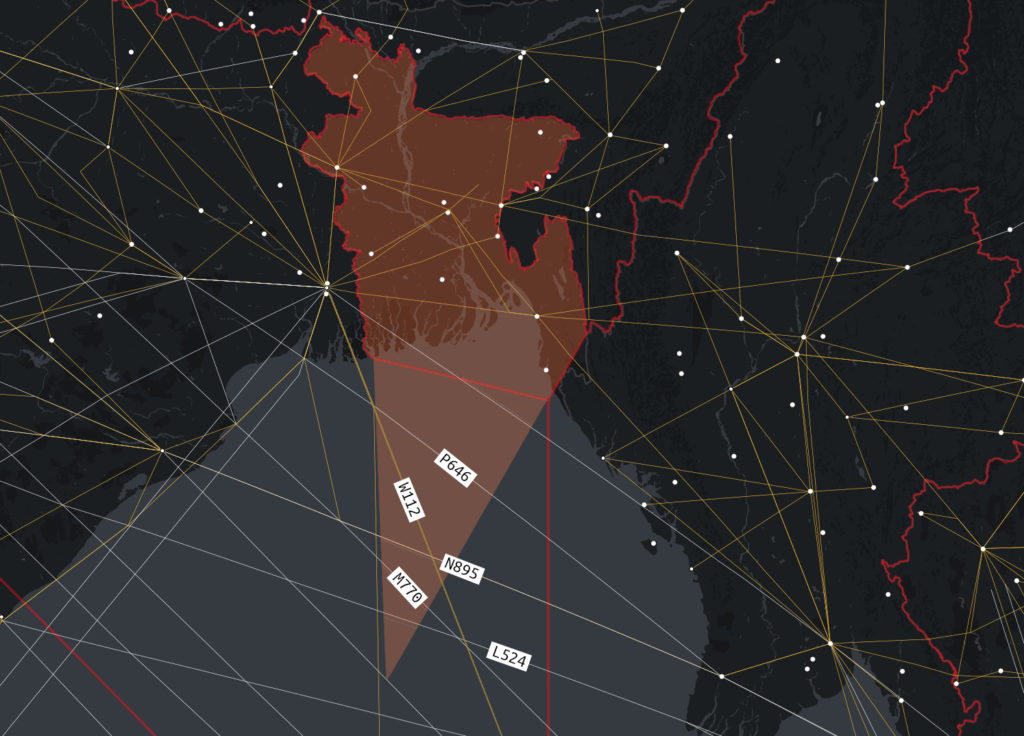
Bangladesh has decided to establish an ADIZ over the entire country, including a massive chunk of airspace off their south coastline that actually extends over much of the adjoining Indian VECF/Kolkata FIR.

Aircraft intending to fly into, through, or within this new Bangladesh ADIZ must now obtain an ADC (Air Defence Clearance) number beforehand. Just file your flight plan, and they will send this to you by AFTN. Make sure you write it down – as they will ask you for it on HF before you enter their airspace.

If you don’t have AFTN access, you can get the number by calling +880-2890-1081 or emailing adnc@baf.mil.bd

The authorities in Bangladesh have released a scary sounding AIP SUP on all this, which you can read in full here. What they fail to mention there, but did publish by Notam at the time, is that there are actually a bunch of airways over the ocean (P646, N895, M770, L524 and W112) where you won’t have to get this ADC number, unless you deviate towards the landmass of Bangladesh.

Here’s the Notam:

A0032/18 NOTAMN
Q) VGFR/QXXXX/IV/BO/AE/000/999/
A) VGFR B) 1802010001 C) PERM
E) THE FLW AMDT/UPDATES ARE BROUGHT TO THE AIP-SUPP 01/2018:
1. ACFT INTENDING TO OPR INTO, THROUGH OR WI BANGLADESH ADIZ SHALL
OBTAIN ADC NR FM THE FLW CONTACT DETAILS.

TELEPHE: +880 2 8901081
FAX : +880 2 8901081
E- MAIL: ADNC AT THE RATE OF BAF.MIL.BD
AFTN : VGHSZQZX

2. FLT OPR ON ATS RTE P646, N895, M770, L524 AND W112 SHALL NOT
REQUIRED TO OBTAIN ADC NR UNLESS DEVIATED TOWARDS THE LAND
MASS OF BANGLADESH.

3. GUARD FREQ. 121.50 MHZ SHALL NOT BE USED TO CTC THE AIR
DEFENCE UNIT.

4. ARTICLE ‘L’ IN THE PROCEDURES FOR AIR DEFENCE CLEARANCE IN
THE AIP-SUPP SHALL BE TREATED AS CNLD.

5. FOR THE TIME BEING DOMESTIC FLT AND FLT OF STATE ACFT AND
GENERAL AVIATION ACFT OF BANGLADESH SHALL NOT BE REQUIRED
TO OBTAIN ADC NUMBER

So you won’t need an ADC number on those airways, but for everywhere else in that big red ice pick-shaped chunk of airspace, you’ll need to get authorisation. As the Bangladesh AIS office politely warn in their AIC: “Aircraft flying without a valid ADC number or failing to comply with any restriction or deviating from flight plan will be liable to interception by Bangladesh Air Force Interceptor aircraft according to ICAO Standard Interception Procedure.”


US 737 tests the China ADIZ

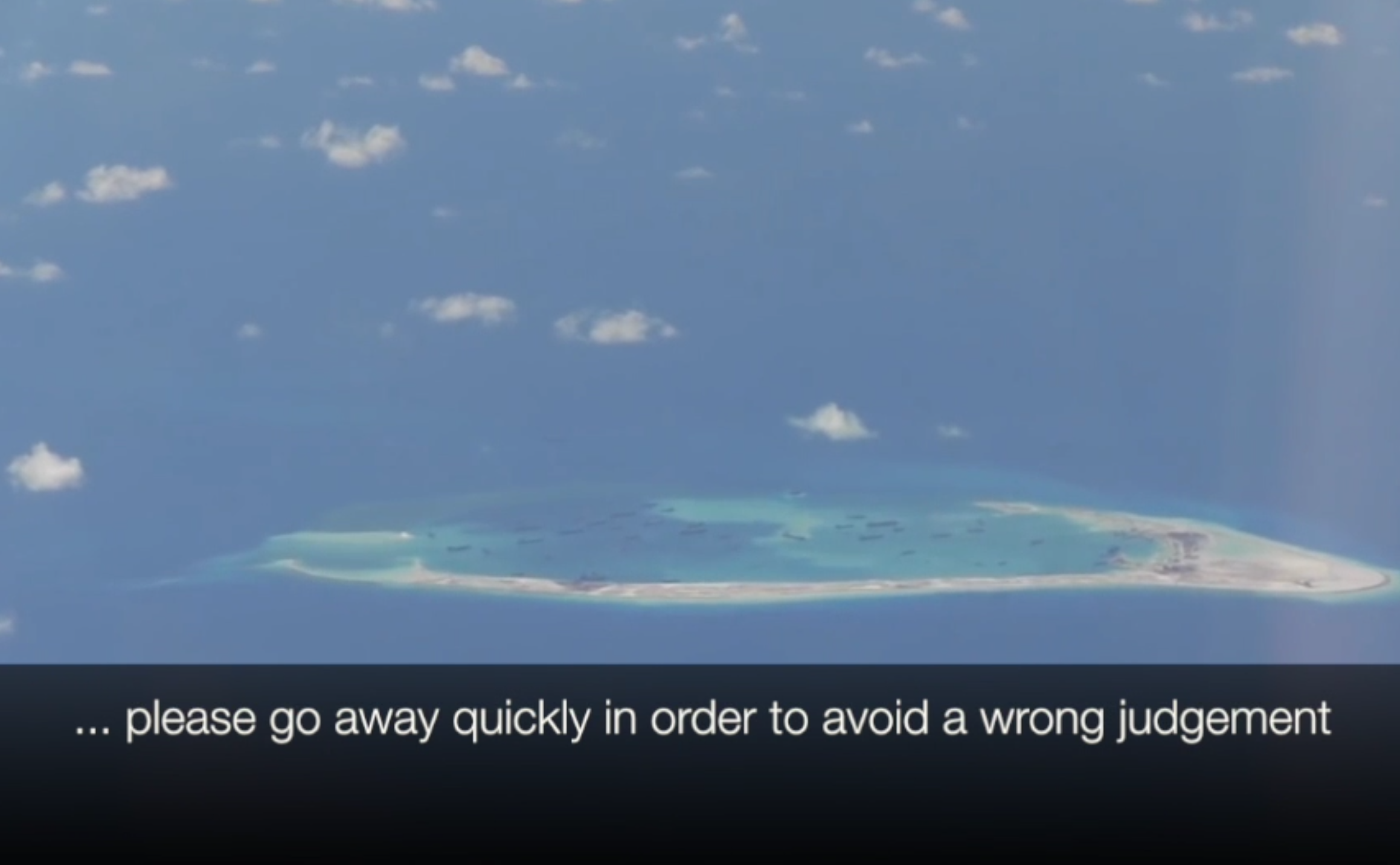
China: Go away quickly please
US Aircraft: Nope
China: Go away quickly!
US Aircraft: No!

The US is doing us all a huge favour at the moment. In fact, it’s been providing this service to the world for some time.

Every so often, a country extends its borders a little too far – outside the normal 12nm limit, for example. China has been busy. They’ve been building some things in the South China Sea. Islands, in fact. And on those islands they’ve built runways, control towers, and big radars. Naturally, they confirmed last Friday that they are for civilian use only. Hmmm.

So the US dusts off an airplane and knocks on the door. Flies around for a bit. Sees what’s going on. And reminds the country that international waters are just that. They publish a list each year of where they’ve done this. Worth a read.

In 2013 they popped up an ADIZ. And made everyone passing through it copy their Flight Plans to Beijing. In principle, ADIZ’s are a pretty good idea. The normal 12nm isn’t really much time for the military to figure out if you’re coming to bomb them. Especially on the weekend.

But you can’t tell airplanes to get out of an ADIZ. It’s an Identification Zone, not an Intercept Zone. So, normally ADIZ’s require you to squawk something and have a Flight Plan.

That much is OK. But China has been warning aircraft to get out of ‘their airspace’. And it’s not. This 737 (aka P-8 Poseidon) went for a nosey.

These operations help us all operating internationally to have less rules to worry about. Which is good.


Initially, most abided by the 2015 ADIZ rules. In 2016 that adherence quietly eroded. And China quietly didn’t care too much. It did threaten a second ADIZ in the South China Sea, but since the first one didn’t really take off, they probably won’t.

It’s part of a bigger diplomatic game. Interesting to watch, though.