NAT Clearance changes – a game! (V4)

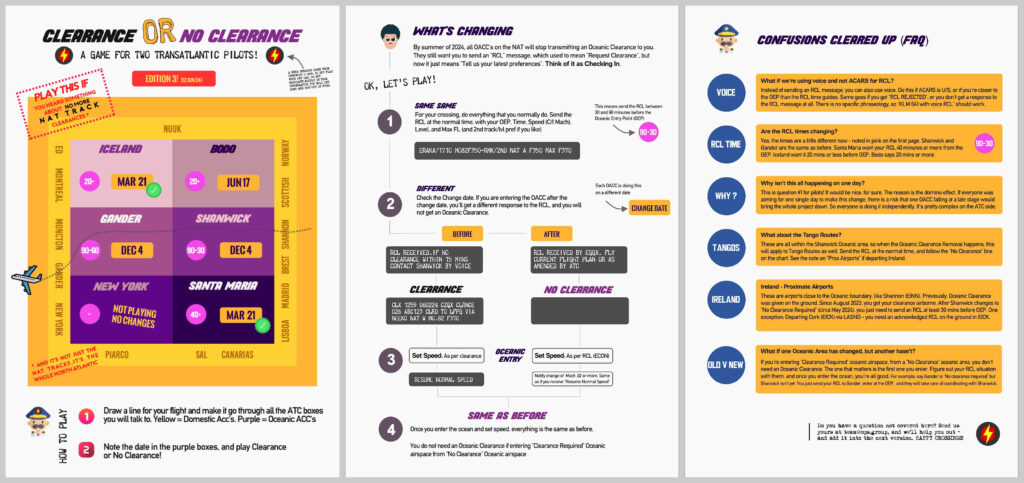
  • We’ve made a little game to help with Oceanic Clearances changes on the NAT.
  • You can download it here.
  • Updated June 19, 2024 – Edition 4!

Click for PDF.

Why the game?

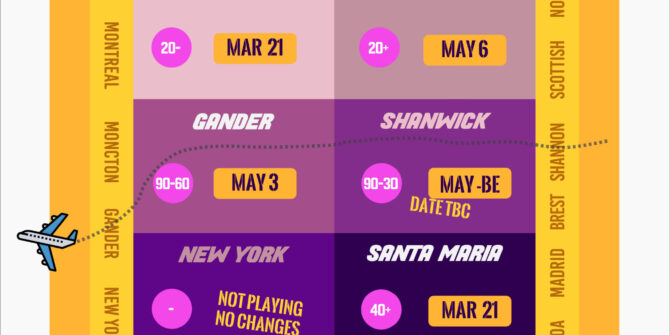
By Christmas of 2024, all OACC’s on the NAT will stop transmitting an Oceanic Clearance to you. They still want you to send an “RCL” message, which used to mean “Request Clearance”, but now it just means “Tell us your latest preferences”. Think of it as Checking In.

There are different dates when Oceanic Clearances will cease to be issued in the following FIRs:

  • Shanwick: April 9  May  Q4 2024  December 4
  • Gander: March  May 3  December 4
  • BodøMarch  May 6 June 17  December 4
  • Santa Maria: completed March 21
  • Iceland:  completed March 21

But let there be no further blather about it here! We’ve done enough of that already – check here for our full post on the topic. Just play the game – it’s fun, and will tell you everything you need to know in 3 pages! Print it out, share it, pin it on a wall somewhere if you so desire. We do so desire.

And if you have a question not covered in the game, send it to us at team@ops.group, and we’ll help you out – and add it into the next version.


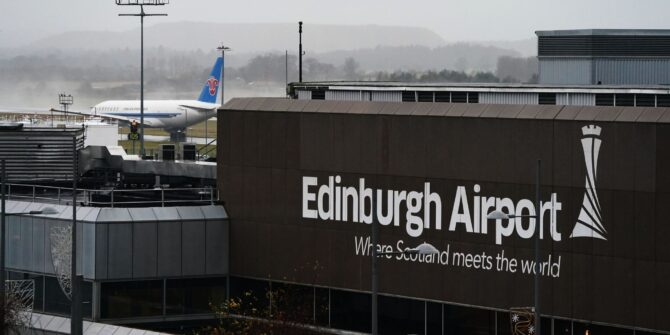
Edinburgh security rules create painful delays

Key Points
  • EGPH/Edinburgh airport has a rule that means all aircraft have to go through outbound security screening, regardless of weight or type of flight.
  • Airport Spy reports suggest this can easily take an extra hour to complete, so plan for departure delays.
  • If planning a trip to the region, consider EGPF/Glasgow instead!

There’s a rule in the UK that means outbound security screening is required for commercial flights over 10 tonnes MTOW, and all flights over 45.5 tonnes whether commercial or private.

But at EGPH/Edinburgh, outbound screening is required for all flights, regardless of weight or type of flight.

This means all crew and pax must pass through security, and abide by the 100ml liquid rule for carry-on luggage.

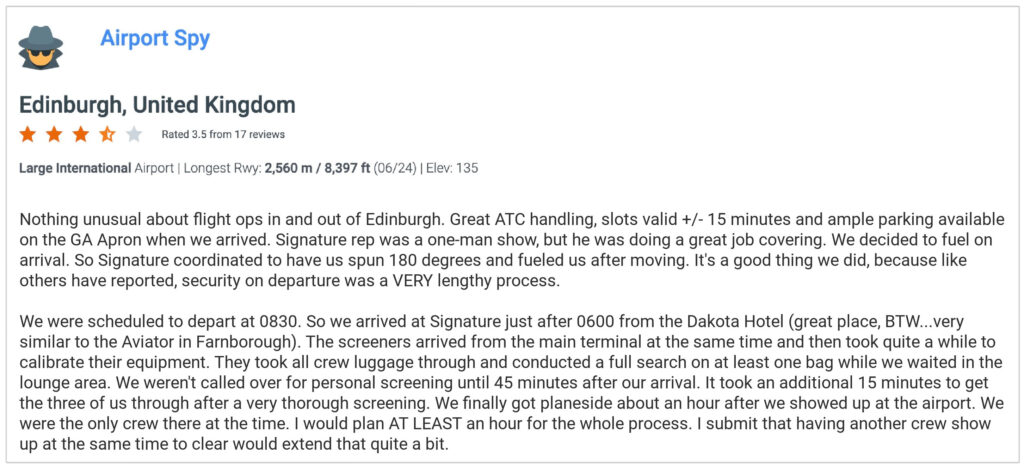
A recent Airport Spy report says that this whole process took around an hour, and they were the only crew there at the time!

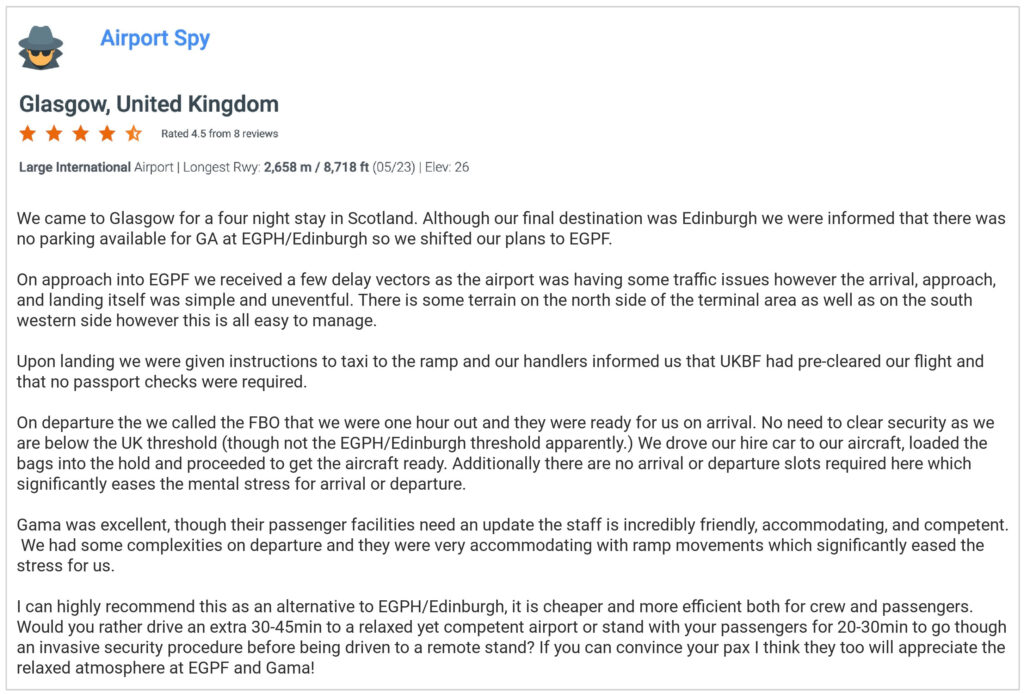
Another Airport Spy report says to consider using EGPF/Glasgow instead, where they just have the standard UK rules for screening, and also don’t have arrival or departure slots.

Painful.

Less painful.

The reason that EGPH/Edinburgh has this strange rule is something to do with it being a “Critical Part” airport.

What is a “Critical Part” airport?

Some folks we spoke to called this term “Critical Park”, others “Critical Path”, but we think it’s “Critical Part”.

Either way, there’s nothing about it in the UK AIP or seemingly anywhere else online.

It’s apparently something to do with how the specific layout of the airport affects zoning for security purposes.

And that’s all we know.

Are there any other UK airports that do this?

Yes. EGLL/Heathrow and EGKK/Gatwick are both “Critical Part” airports, so both have the same rule: all outbound flights must have security screening here.

EGWU/Northolt is the only other airport in the UK that we know of which has mandatory outbound security screening for all outbound flights, but that’s due to some kind of requirement in place from the military there, as the airport is a joint civil/military field.

We contacted a whole bunch of other airports (EGSS/Stansted, EGGW/Luton, EGMC/Southend, EGLC/London City, EGTK/Oxford, EGLF/Farnborough, EGKB/Biggin Hill), and they all said the same thing: no weird “Critical Part” stuff here – the normal UK rules apply.

So tell me the rules again?

EGPH/EGLL/EGKK/EGWU: Outbound screening is required for all flights, regardless of weight or type of flight.

All other UK airports: Outbound screening only required for commercial flights over 10 tonnes MTOW, and all flights over 45.5 tonnes whether commercial or private. You can read more about this here.


Mexico Permit Confusion – The Latest

Right on the heels of the implementation of the new Single Entry Authorization, known as an “AIU”, the Mexican Civil Aviation authority (AFAC) has issued a new Mandatory Circular which is causing issues at certain airports for BOTH Part 91 and Part 135 operations. Here’s the lowdown:

Issue #1: Private flights might get mis-identified as Commercial flights. The Circular claims that the “majority” of non-mexican registered aircraft indicate the type of service they are authorized to perform in their Registration or Airworthiness Certificates. Mexican registered aircraft identify their intended use through their tail number XA-Commercial, XB-Private, XC-Government. However, this claim in the circular could lead to an incorrect interpretation of Standard Airworthiness Certificates in the commuter, or transport categories to be an indication of the type of operation being performed. With this incorrect interpretation, a Private operation could be mis-interpreted to be a Commercial operation.

Issue #2: You need a noise certificate to get a landing permit. The minimum documents required now include a noise certificate. While required under 14 CFR 91.703 (a) (5) many pilots and operators do not know where to find it. In turboprop and turbojet aircraft, it is usually in the AFM. Smaller aircraft may need to create their own using the FAA Circulars AC 91-86 and AC_36-1H

Issue #3: You also need a Journey Logbook. An aircraft Journey Logbook is indicated as a required document. The aeroplane journey log should contain aeroplane nationality and registration, dates of flights, crew member names and duty assignments, departure and arrival points and times, purpose of flight, observations regarding the flight, signature of the pilot-in-command.

Issue #4: You also need Radio Station Licenses.Radio Station Licenses are now specifically required. While required under US law, many pilots/operators have chosen to ignore this and could be in for a harsh surprise.

Issue #5: Watch out for cabotage rules. Charter flights can only extract from Mexico those passengers that they brought in and cannot make any flights from one Mexican airport another.

Issue #6: You might need Mexican insurance for private flights. The circular states that the insurance policy for all aircraft must be a Mexican approved policy. It does not indicate that for private aircraft, the policies issued in their country of registry are accepted. This may be interpreted that ALL aircraft must now buy Mexican policies. More news to follow!

Issue #7: You might need a copy of the Mexican AIP. The circular states that the Aeronautical Information Publication (AIP) must be carried aboard in physical or electronic form. In the past, an equivalent document (Jeppesen Trip Kit) was accepted in lieu of the AIP. More news to follow!

Issue #8: You might need a review of your AOC. The circular states that for charter/freight/ambulance flights, a Mexican AOC must be obtained. There is no guidance on whether this is simply a review of the existing AOC of the operator or they actually want operators to undergo some new procedure to obtain a Mexican AOC. More news to follow!

The circular is sufficiently ambiguous and referring to numerous articles and sections of Mexican laws and Circulars that it will require a lot of homework to understand. As such, much appears to be left to interpretation which will most likely go against a pilot rather than to their benefit.

We recommend that you contact the civil aviation authorities at the Mexican airport of your intended arrival to determine what they are going to require of you.

If you are a Part 135 charter operator AND even if you have a blanket Mexican Charter Permit, you should contact your handler immediately to determine whether you will be allowed to operate at your intended Mexican airport of landing.  We were informed that over the past weekend, well over a dozen charter flights were denied entry as a result of this Mandatory Circular.

Unfortunately, this Mandatory Circular is sufficiently vague that it is being handled differently airport to airport. However, we are receiving reports of charter flights being denied entry into Mexico at huge cost to all involved. We have not heard any reports yet regarding Part 91 but the ambiguity in this Circular leaves that door open as well. Just check in advance to avoid unpleasant surprises on arrival in Mexico.

Thanks to Rick Gardner of CST Flight Services for this article. CST Flight Services provides a wide range of international trip support services in Mexico and beyond. You can contact them for more info at: customersvc@cstflightservices.com


South Korea Airspace Risk Update

Key Points
  • There are no official airspace warnings for South Korea, but the risk situation seems to be getting worse.
  • Airspace safety is gradually deteriorating due to several factors: GPS Interference, North Korean space launches and missile tests, military drills and failed agreements with North Korea, and weird balloon incidents.

If you’re operating in the RKRR/Incheon FIR, it is important to stay up to date with airspace risk.

In stark comparison to North Korean airspace, which is rife with warnings and flight prohibitions, operations over South Korea continue with almost no active advisories to crew – save for the odd FIR Notam.

It is not so much a matter of disinformation, but a lack of it that can create complacency amongst pilots operating there.

The situation on the Korean Peninsula is unique. The two nations are not at war but remain in a state of constant readiness to engage in one. They live in what was once described as a ‘reciprocal fear of surprise attack.’

This means South Korea’s airspace is at constant risk of instability caused by some kind of political crisis. Things have potential to change quickly, and without warning.

It is therefore vital to monitor changes in airspace that is considered by most to be completely safe. Here is a review of what has been happening in the RKRR/Incheon FIR lately that may have subtly been increasing risk to civil aircraft.

GPS Interference

The US FAA previously published a warning for GPS interference in South Korean airspace via a KICZ Notam – but this was cancelled back in 2018. The signs are that this advice may need to be re-visited.

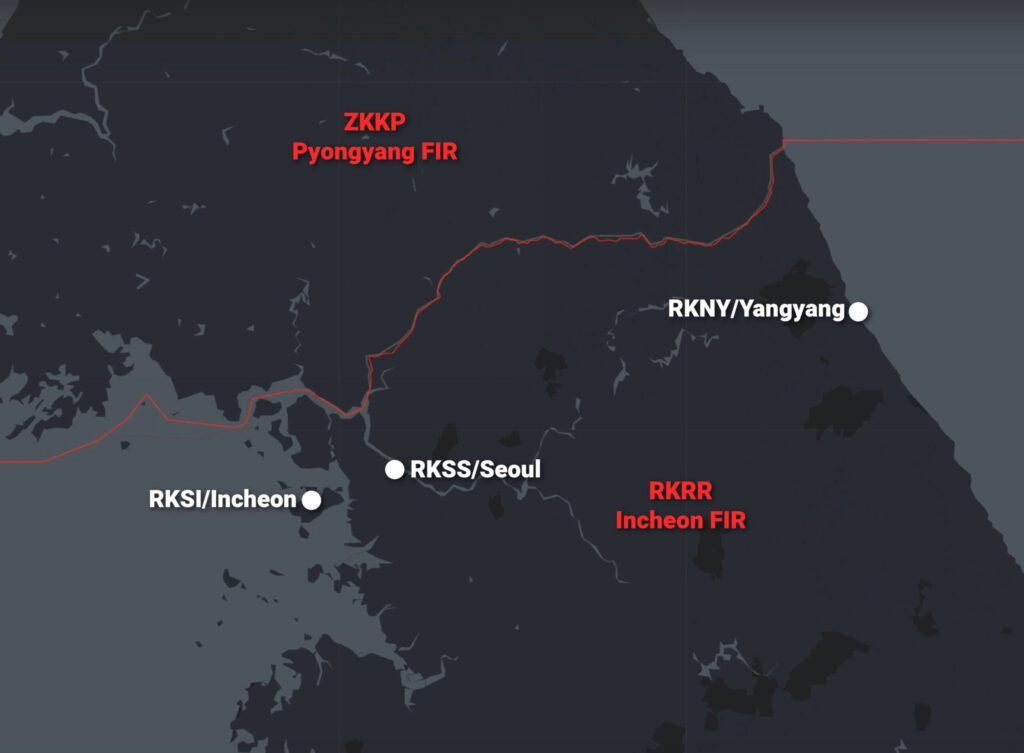
On March 11, the RKRR/Incheon FIR issued a new warning advising extreme caution for GPS interference including the vicinity of RKSI/Incheon, Seoul. The nature of the interference wasn’t specified but was likely to have included spoofing.

RKRR Z0558/24 - CAUTIONARY INFO FOR ACFT OPERATING IN INCHEON FIR :
PILOTS HAVE REPORTED THAT GPS SIGNALS ARE UNRELIABLE OR LOST 
INTERMITTENTLY IN INCHEON FIR(AROUND INCHEON AND SEOUL AREA). 
EXERCISE EXTREME CAUTION WHEN USING GPS. 
10 JUN 05:51 2024 UNTIL 17 JUN 15:00 2024. 
CREATED: 10 JUN 05:51 2024

The source of the interference was suspected to be North Korea attempting to interfere with military drills in the area.

This was followed by an OPSGROUP member report of GPS interference during an approach to RKSS/Seoul on May 16:

“GPS spoofing into RKSS/Seoul [while] on approach to RWY 32R. We disabled hybrid and deselected GPS after seeing the risk reported on ATIS…”

Any kind of GPS interference, especially when operating in and out of Seoul, is cause for concern. It’s 20nm from the North Korean border and a bunch of prohibited areas which carry chart warnings that say in very clear language that you may get shot at if you inadvertently enter.
North Korea’s Race to Space

Late last year, North Korea surprised the world by launching a satellite into space creating a potential debris field in the Yellow Sea between South Korea and China. The launch prompted a missile warning in Southern Japan.

Unannounced North Korean space launches create airspace risks on a much wider scale than conventional missile tests.

Unlike conventional missile tests, space launches create hazards to aviation that extend far beyond the ZKKP/Pyongyang FIR rendering existing airspace warnings arguably inadequate. Here is an example of a warning hurriedly issued for large portions of the RKRR Incheon FIR following a previously attempted space launch.

Then just weeks ago, North Korea attempted to launch another (with no prior warning) which failed spectacularly in a mid-air explosion. This prompted South Korea to conduct air drills with over twenty military fighter jets near the demilitarised border zone.

North Korea have since announced to Japan their intention to try again with another potential debris field near the Korean Peninsula, and the Philippines Island of Luzon. The original target was June 4 but we’re still waiting.

Behind this persistence to have satellites in space is Pyongyang’s ability to gather intelligence on South Korea should a conflict escalate – it seems that risk to civil aviation is an afterthought.

Ballooning Tensions

Earlier this month, North Korea sent at least three and a half thousand balloons across the border into South Korea carrying animal excrement, garbage and scrap paper. Some landed in Seoul.

No flight disruptions were reported, but images circulating in the media show that the balloons were not small and could easily cause low level hazards to aircraft operating in South Korean airspace near the border.

Earlier this month, North Korea sent three and a half thousand of these balloons across the border into South Korean airspace – some landing near Seoul.

Failed Pact

On June 4, Seoul axed a six-year old agreement with Pyongyang that was designed to calm things down between the two countries. It hoped to achieve this by prohibiting provocative military drills or carrying out psychological warfare near the border.

Just two days later, joint drills with the US were carried out using a long-range bomber to drop precision-guided bombs over the Korean Peninsula. It was the first time this has happened in seven years.

Existing Airspace Warnings for South Korea

They’re extremely limited. The Incheon FIR routinely issues temporary ones by Notam, under the RKRR designator but these can be easily missed in briefing packages. There are no other state issued warnings or advisories to report.

Safe Airspace

Perhaps more concerning to airspace safety than a single large event (such as the outbreak of war) are situations where risk gradually deteriorates in open and busy airspace.

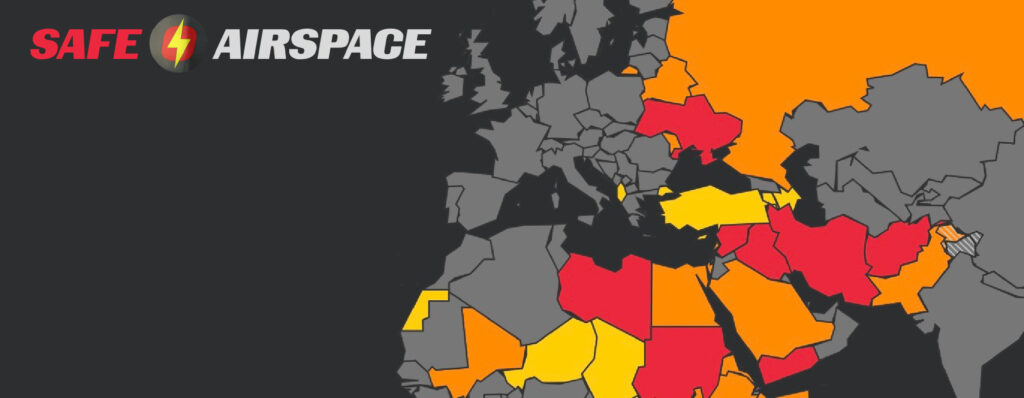
This is arguably what we are seeing right now over South Korea. All of these changes are reported on safeairspace.net – our conflict zone and risk database.
If you have more information to add to this briefing, we’d love to hear from you. You can reach us on team@ops.group.
OPSGROUP is hiring: Writer wanted

OPSGROUP is hiring. We’re looking for a Writer – someone to help write some articles and interview some people.

What are we looking for?

  • Someone with great energy! The most important thing is that you enjoy working with us, and we with you.
  • Writing experience! The ability to tell good stories, and bring a sense of humour.
  • Experience in international flight operations is a bonus – pointy end, on the ground, dispatcher, flight planner, trip specialist – all good.

What will you do?

  • Write helpful, clear articles in plain, human-friendly English.
  • Listen to members! Set up interviews with members to get their stories.
  • Communicate with CAA’s, FBO’s, ATC, Airports to get the lowdown on the latest risks and changes.
  • Research larger operational risks and changes.
  • Interview pilots, dispatchers, and other ops people to get a story straight

About the role:

  • Working hours: Weekdays, daytime hours, preferably based in the Americas (North or South) or Euro timezones, but flexible.
  • Payment: Monthly, fixed-rate, 20 hours or so of work a week. Some weeks more, some weeks less – depends what’s going on.
  • Location: Anywhere you like!

What is OPSGROUP?

OPSGROUP is a membership organisation of Pilots, Air Traffic Controllers, Flight Dispatchers, Ops Managers and other dedicated people that realise that sharing information on dangers and changers is what keeps us all safe. We come together to make aviation more human-friendly for all of us.

How to apply?

You can do your first interview already! It’ll take about 10 minutes, we’ll take you on a little adventure, ask you some things, tell you some things. All you need is your big computer (couple of practical things to do, so your phone isn’t ideal) and a little time.

Ready? Go … (or open in a new window)


SE Asia Monsoon Season: What Are LSWDs and Why Will They Cost You Fuel?

June marks the start of monsoon season throughout Southeast Asia. From now until October, enroute weather deviations will routinely exceed 100nm.

This creates a significant challenge for controllers and coordination between the high number of FIRs that span congested air corridors between Taiwan, Hong Kong, Singapore and Indonesia.

To make matters worse, the 2024 Monsoon season is predicted to be a bad one.

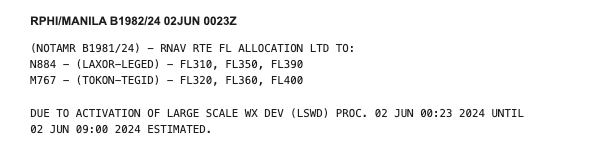
And so, the answer is something called Large Scale Weather Deviation Procedures (LSWD) already innocuously appearing in FIR Notams like the one below.

This raises two important questions:

  • What does LSWD actually mean?
  • What are operators doing about it?

In a nutshell, your standard contingency allowance may no longer be enough – meaning unfamiliar operators (especially on fuel critical routes) may unexpectedly be caught with their pants down.

So, let’s take a closer look.

The 2024 monsoon season is going to be bad.

The clever folk at the World Meteorological Organization recently said so.

Last year, in comparison, was weak.

You can take a look at their full report here, but the short story is that thanks to a spicy combination of ‘ninas and ninos’ much of Southeast Asia is about to receive up to ninety percent of its annual rainfall in the next few months. Which means large scale build-ups will be everywhere.

The airspace picture.

Spanning this area of unstable weather is a large number of adjacent FIRs serving some of the busiest air corridors in the world.

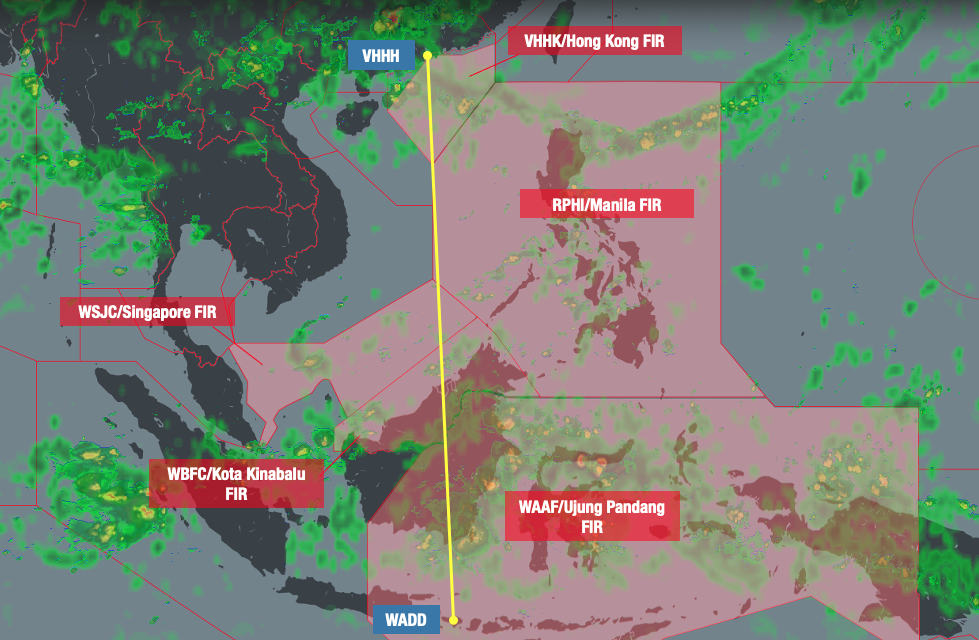
Take this routing (WADD/Bali to VHHH/Hong Kong) as an example, overlaid with current precipitation in the region. It’s very early days, but you can already begin to see the extent of the deviations FIRs are dealing with.

The sheer scale of weather deviations required by aircraft in this area creates a major challenge for air traffic control.

The lateral separation between adjacent airways is often far less than the deviation each aircraft will require, along with the narrower vertical margins of RVSM airspace.

This creates numerous problems for controllers – providing priority handling to one aircraft creates delays and disruptions for others. It’s your standard ripple effect.

To create room, ATC has specific protocols to manage these deviations. They call them LSWDs and they are used to reign in the mess.

How do these procedures work?

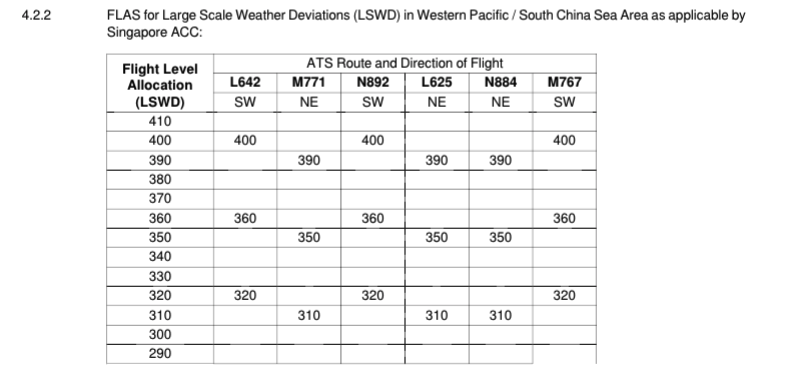
Traffic will be processed through a limited number of routes with level restrictions bound by their direction of flight. These routes can be found in each state’s respective AIPs.

Here’s an example found buried in Singapore’s docs:

To make co-ordination easier between the numerous ATS sectors, all traffic operates with the same level availability whenever LSWDs are active.

For business jets, this may become problematic as higher flight levels (FL400+) may not be available for extended periods of time.

As a locally-based G550 Captain explains:

“Even if higher flight levels are available in one FIR, controllers may be reluctant to give them to you. This is because there is no guarantee that the next sector can accommodate it and it can be hard to get you down again…

 …The main thing with LSWD is knowing that a lot of levels we usually get won’t be available. And so, we carry more fuel accordingly. It may also be worth briefing the pax that conditions may be bumpier than they’re used to…”

Flow control and crossing time restrictions are also common which may mean the use of less efficient mach numbers.

This can also lead to delays for start-up clearances due to enroute spacing. When asked what additional fuel our local G550 Captain carries for these procedures, his answer was this – “at least thirty minutes.”

Have more to add?

Local operator feedback is invaluable to everyone in the group. If you’ve got anything to add to this article, get in touch with us at team@ops.group


Caribbean: File Your Flight Plans Early!

The Cricket T20 World Cup is taking place at various spots in the USA and West Indies throughout June.

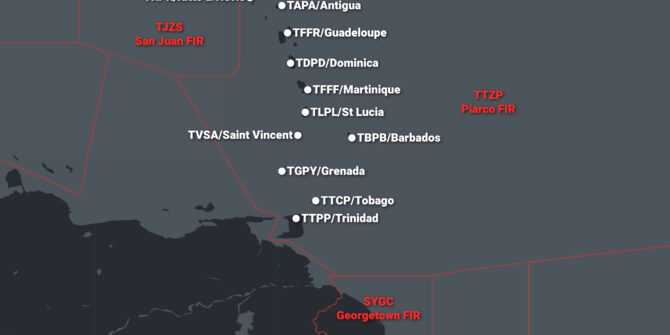
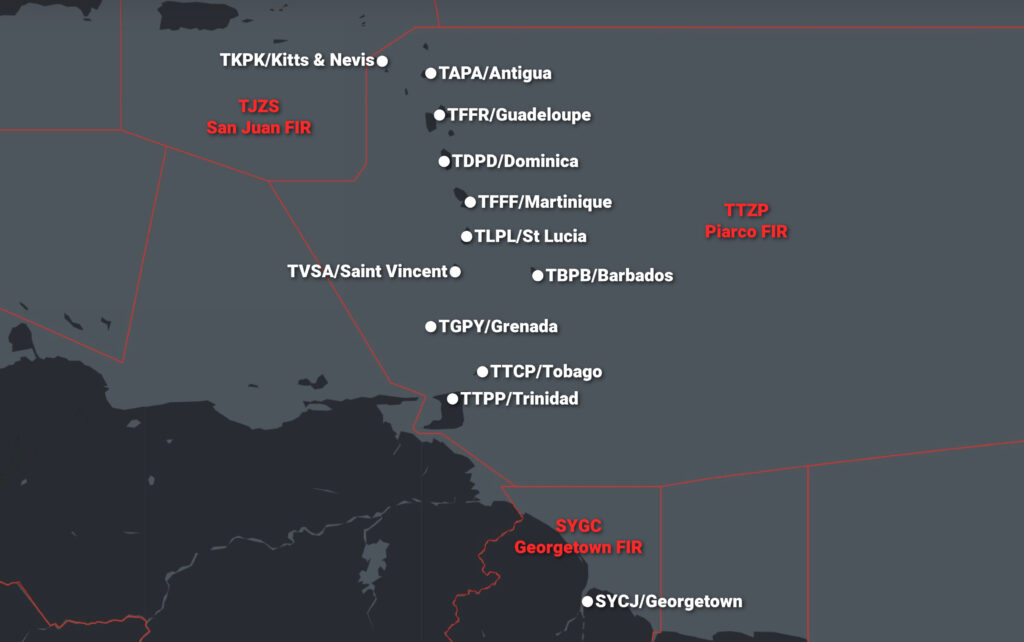
From May 20 to July 15, if you want to operate a flight to any airports within the TTZP/Piarco or SYGC/Georgetown FIRs, they want you to submit your flight schedule to the authorities 72hrs before departure.

So that’s basically every airport in the island chain from TKPK/St Kitts & Nevis in the north down to SYCJ/Georgetown in the south.

Check AIC 1-24 for details of how this is going to work. But essentially, if you’re heading to any of these airports, send an email to piarcoatfmu@caa.gov.tt 72hrs before departure telling them the following info:

(a) Aircraft call sign
(b) Aircraft type
(c) Point of departure
(d) Date of flight
(e) Estimated Time of Departure (ETD)
(f) Destination
(g) Estimated Time of Arrival (ETA) for arrivals to airports within the Piarco (TTZP) FIR and airports within the Georgetown (SYGC) FIR
(h) Estimated Elapse Time (EET) for Piarco FIR
(i) Route
(j) Flight Level (FL) requested.

They also want you to file your flight plan early, to avoid delays. 4hrs prior to departure should do the trick.

They’re also warning of extra delays in the TJZS/San Juan FIR to the north.

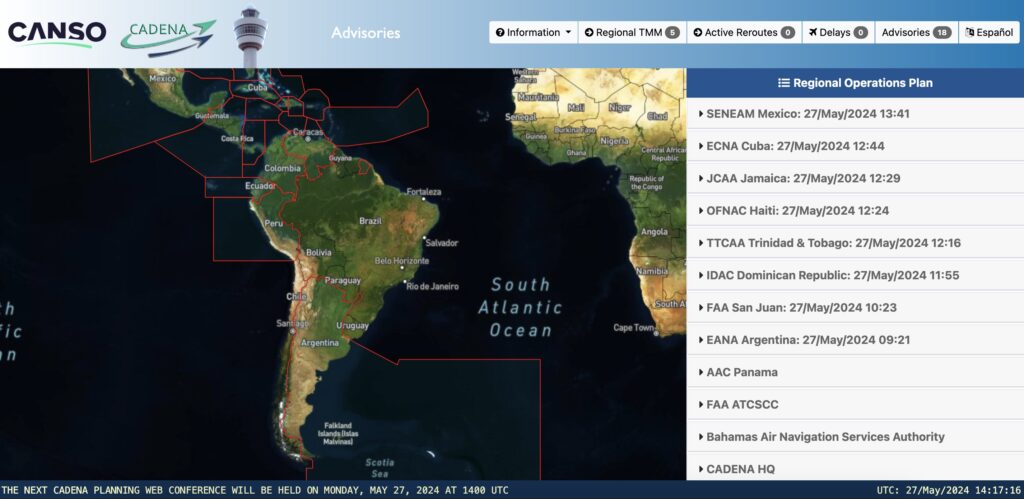
For updates, keep an eye on the Cadena website.


France Wants Your Cash

Key Points
  • You must make a customs declaration when entering or leaving the EU with €10,000 or more in cash or its equivalent in other currencies – this rule has been around forever.
  • But watch out for this gotcha in France – if you’re planning on bringing in cash over this threshold and leaving it on the aircraft, you need to declare it in advance, or else you might get fined.
  • Both reports we have received relate to LFPB/Paris Le Bourget airport. It’s not yet clear whether this issue is just limited to this airport, or affects other airports in France.

OPSGROUP member report

On arrival at LFPB/Paris Le Bourget recently, we were met by a team of customs officials who asked us if we carried aircraft cash on board. We were told that we should have declared any amount over €10,000.

As we had not attempted to take any cash into the country we asked if we could file at that time. The answer was that we have to file before departure online and that failure to do so was counted as attempting to bring in undeclared cash from outside of the EU. Unaccompanied cash must be declared online before entry and before departure.

There is no limit to the amount of cash that you can declare, and once declared any amount can be taken into the country and spent. I would imagine that there may be a requirement to account for any difference between the amount declared inbound and the amount declared outbound, but have not tested this.

We were fined a substantial sum, put on a EU watchlist for 5 years and told that any repeat violations will be subject to a sliding scale of sanctions up to complete confiscation of the funds. We have flown in the area for many years, but have never been notified of the this rule.

ANOTHER member report

We had Customs officials board our aircraft in LFPB/Paris Le Bourget for a “routine pre-departure check” and they were exclusively focused on declared/undeclared cash.

We had not declared (we were not carrying anything close to the qualifying amounts of cash), so they asked questions about our onboard safe. They knew most Global models had one, and they knew exactly where it was. We never use it, so we didn’t even take the key on the trip and were unable to open it for inspection.

That made them suspicious, so we were delayed 20 minutes while they phoned supervisors to decide if we were grounded or not. They even discussed bringing in a team to physically break into the safe to verify contents, but supervisors decided to forego that option.

They cautioned us to have the key with us next time we entered France. Needless to say, it is onboard now.

Bottom line: They know about safes and want to inspect their contents. Be able to open it.

What are the rules?

These are all in EU Regulation 2018/1672, which got updated in 2021, and are basically as follows:

  1. You must lodge a cash declaration to customs when entering or leaving the EU with €10,000 or more in cash or its equivalent in other currencies (banknotes, coins, cheques, traveller cheques, promissory notes, money orders without a named beneficiary, and all manner of gold coins/bars/nuggets etc).
  2. If customs think you’re bringing in cash over this threshold in any kind of “unaccompanied way” they can tell you to lodge a “disclosure declaration” – which you have to have to then do within 30 days.

So, nothing about having to tell them in advance.

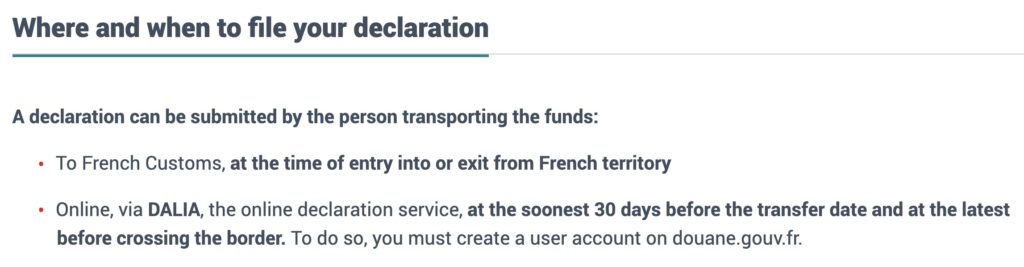
Even on the French customs website, there’s no mention of having to declare or disclose anything in advance. It says you either do it on arrival, or use their DALIA website to declare it online.

How to make the declaration?

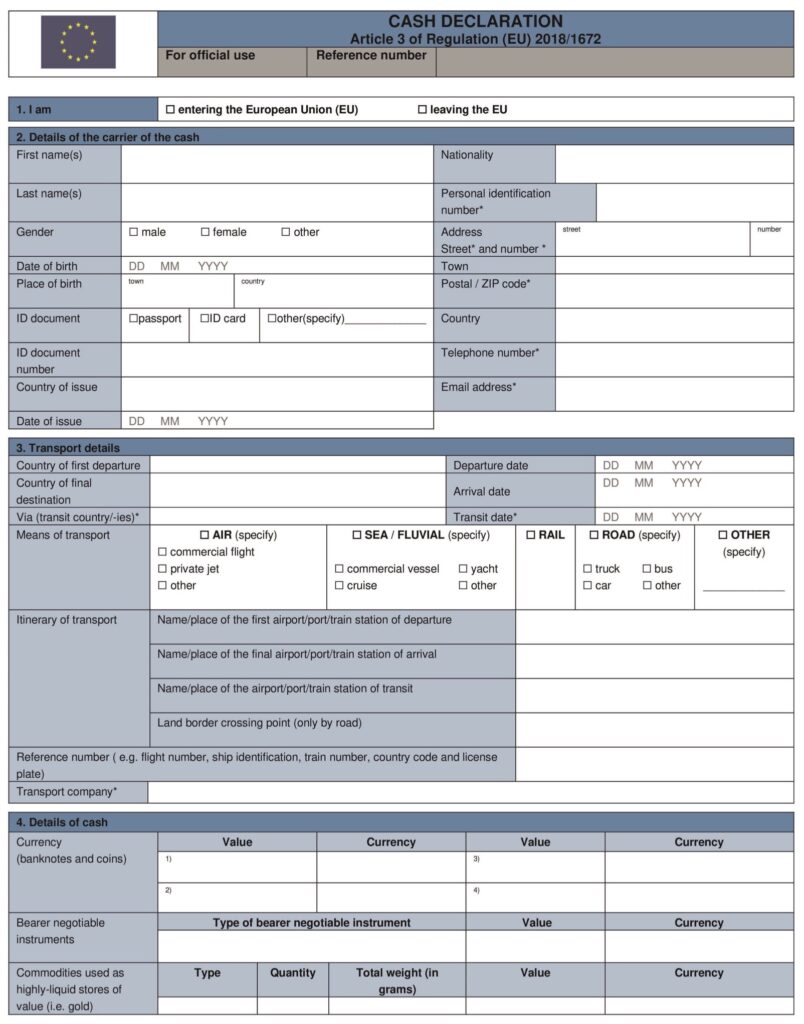
As of 2021, there’s now a standard form that the EU have published for this.

Click for PDF.

This is available in other languages, if you’re headed somewhere in the EU and they want a copy in something other than English.

Why the weird rule in France about having to do it in advance?

As far as we can tell, it’s an incorrect reading and application of the EU Regulation.

Both reports we have received relate to LFPB/Paris Le Bourget airport. It’s not yet clear whether this issue is just limited to this airport, or affects other airports in France. If you have experienced similar at LFPB or other airports in the country, please let us know: news@ops.group.

We did reach out to some local agents at LFPB, one of whom told us that from their understanding the principle is to do the declaration online before arrival, or if you are already on ground – go spontaneously to the customs advising that you have something to declare before they make any check!


US Domestic Enroute CPDLC Update

Key Points
  • Domestic en-route CPDLC in the US is now available to everyone – the Notam limiting GA/BA participation to approved trial participants has been removed.
  • To get CPDLC, you’ve got to have the right avionics and submit a form – the FAA has published a list of aircraft types, which you will need to check to see if you comply.

Here’s a very brief summary. For the full, untarnished info, head to the dedicated FAA site here.

So for a long time, domestic en-route CPDLC in the US was only available to operators of bizav aircraft who were signed up to the FAA trial. That trial has now ended, and as long as your avionics make the grade, you can now make use of this service.

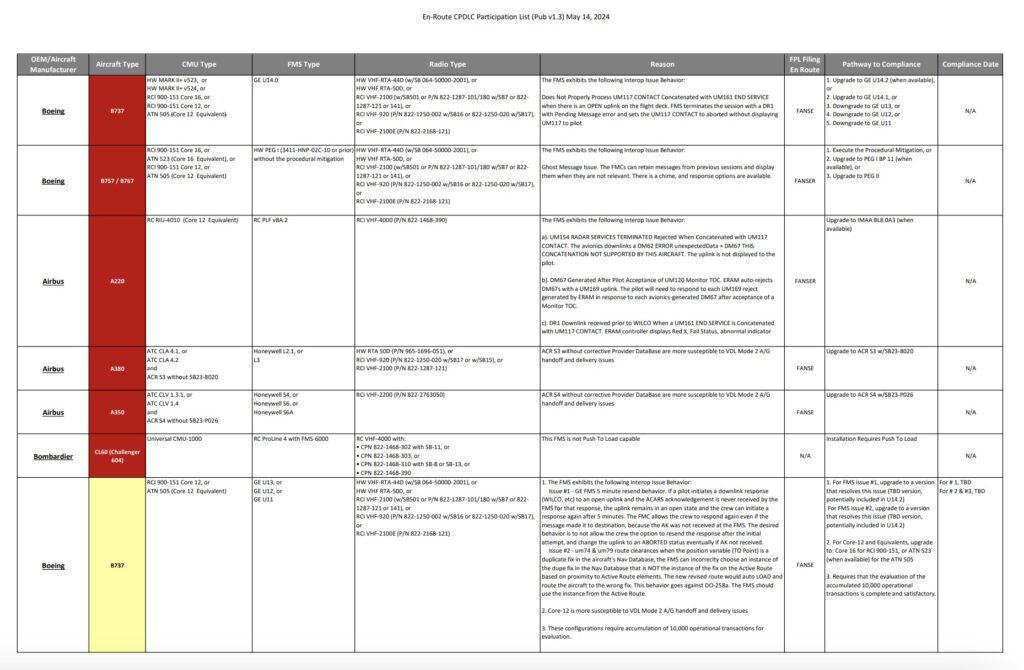
The FAA has published a list with a whole bunch of aircraft types on it.

If your aircraft is highlighted in yellow or green, you can get datalink (as long as you complete and submit the participation form).

If it’s highlighted in red (or not on the list at all), you can’t get datalink.

Click for PDF.

L3Harris have provided this guidance:

  • Ensure that your avionics are configured to use VDL Mode 2 as the primary media for U.S. Domestic En Route CPDLC. VDLM2 is the only approved media for participation in the domestic U.S.
  • Ensure that both the ‘J4’ code in the field 10a equipment field as well as the FANSE (e.g. ‘1FANSE2PDC’) DAT Code in field 18 (other information/DAT) are both included on the flight plan to indicate eligibility for U.S. Domestic En Route CPDLC (see the US Domestic Flight and Planning Guide for more information).
  • Verify that VHF3/COM3 is set to DATA.
  • The aircraft registration/tail in field 18 (other information/REG).
  • If you are still researching your avionics in response to questions from L3Harris, please continue to file for CPDLC-DCL only (FANS) until your verification of eligibility is complete.

Also, a member has reported that if you’re now eligible but tried to log on in the past when you were not eligible, your aircraft reg might have been placed on a “blocked list”. To get off this list, you need to contact L3Harris, who will forward to the FAA to ask to unblock you (should take less than 24hrs).

Where is CPDLC available in the US?

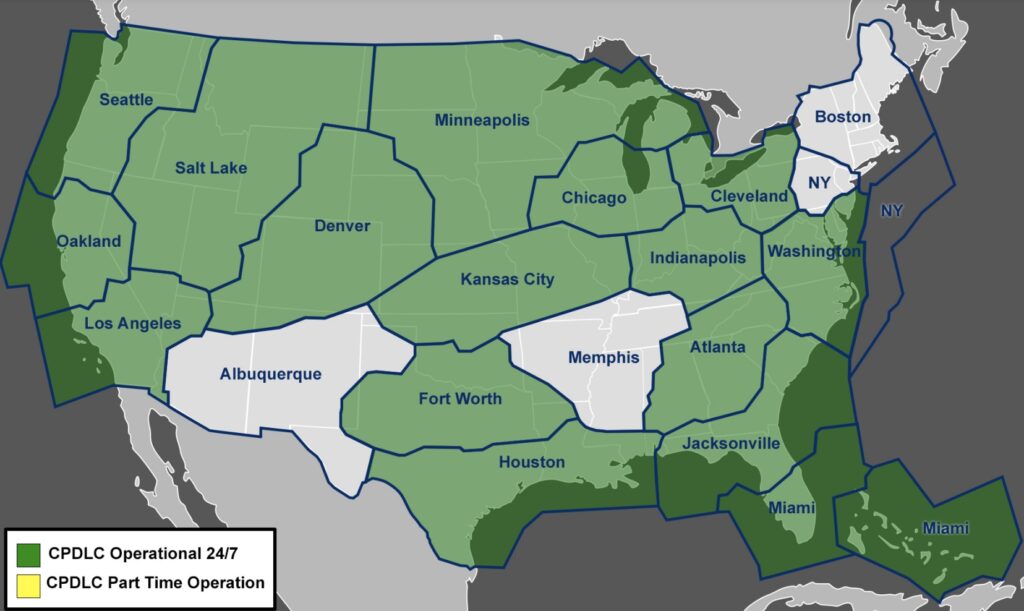
L3Harris published this updated map on 3 June 2024:

Come on, Albuquerque and Memphis!

So do I need CPDLC now?

No. US domestic datalink is not mandated.

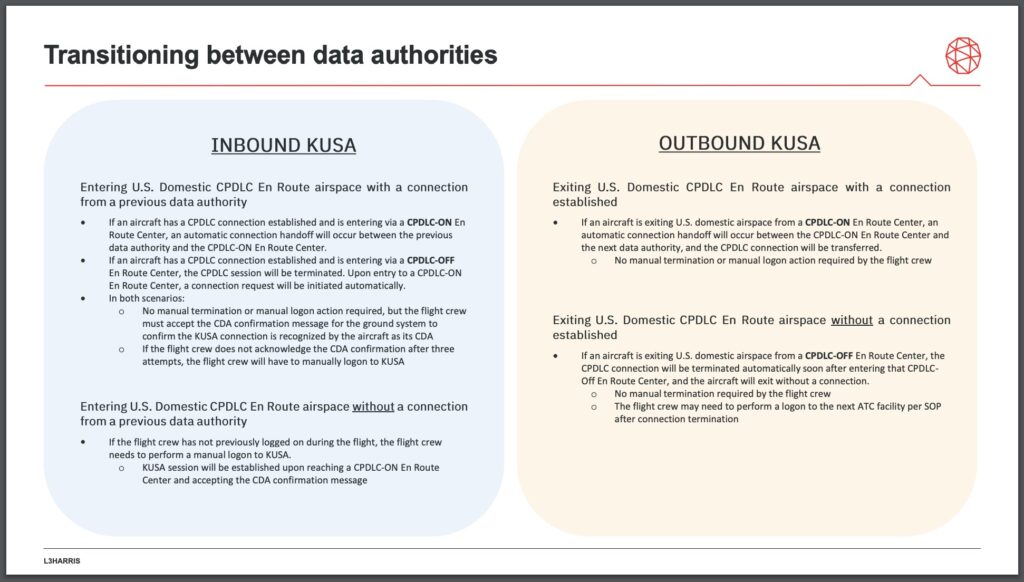
What if I’m flying into the US internationally?

L3Harris have published a guide answering this very question. You can access it here:

Click for PDF.

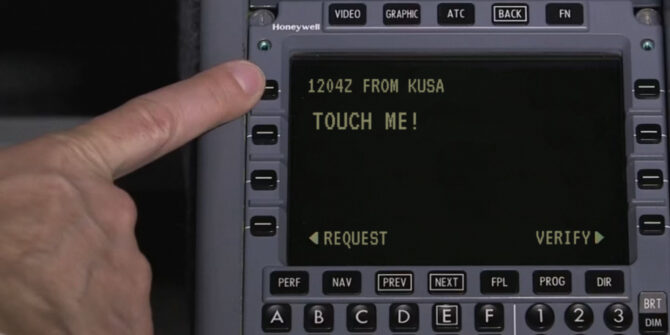
For those of you who aren’t so familiar with the US, KUSA is the CPDLC logon code – and that is the one and only logon code you need, all the way across.


Report-A-Thing is a new thing to report stuff

We love a good snitch here at OPSGROUP.

The Daily Brief, Weekly Bulletin, Ops Alerts – pretty much everything we put out usually comes from one helpful member sharing something new.


Introducing the Report-A-Thing

We just built this. It’s new. Prepare to be amazed.

Currently operating with 2Mb of RAM and an 80Mb HDD, this machine is fully set up and ready to go. You can use Report-A-Thing to share new useful things with the rest of the group, and do so anonymously.

Try it out, and bookmark the address: OPS.GROUP/RAT


What should I share?

  • Something new, something dangerous, something risky
  • Something that will annoy other pilots (like a new parking procedure at TEB)
  • Something that affects airspace risk or security
  • Something shady
  • Something scary
  • Something interesting

Up to you. If you read the Daily Brief, you’ll know what kind of stuff appears there: so … that type of thing.


Are there other ways to report stuff?

Yes.


Argentina: Overflight Permits Now Required

Key Points
  • Effective March 13, all foreign aircraft now need an overflight permit when transiting Argentinian airspace.
  • There’s been no change to landing permit requirements: private flights don’t need one, all other flights do (including tech stops).
  • AI is still not great at making images with planes or handshakes in them 😂

AIP SUP 32/2024 has been published with all the new requirements – but here’s a quick summary of what you need to know.

Airspace Affected

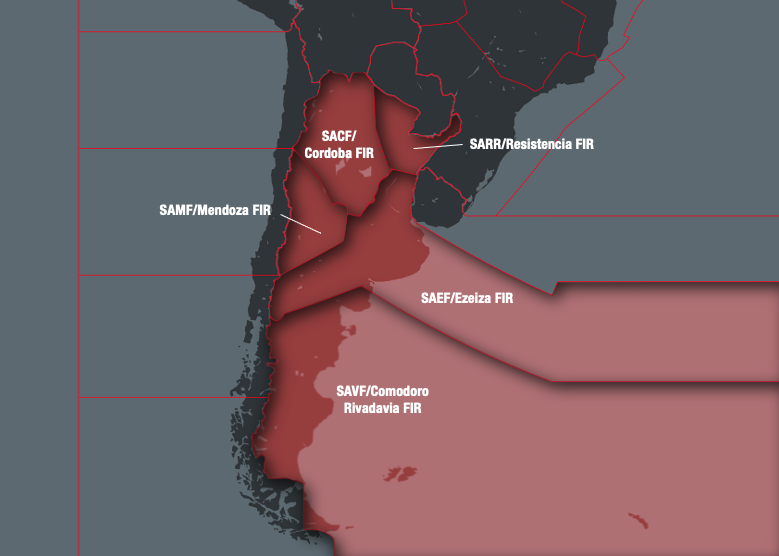
This change applies to all Argentinian airspace, namely the:

  • SAVF/Comodoro Rivadavia FIR
  • SAEF/Ezeiza FIR
  • SACF/Cordoba FIR
  • SARR/Resisitencia FIR
  • SAMF/Mendoza FIR

How to apply

You’ll need to provide at least 72 hours’ notice.

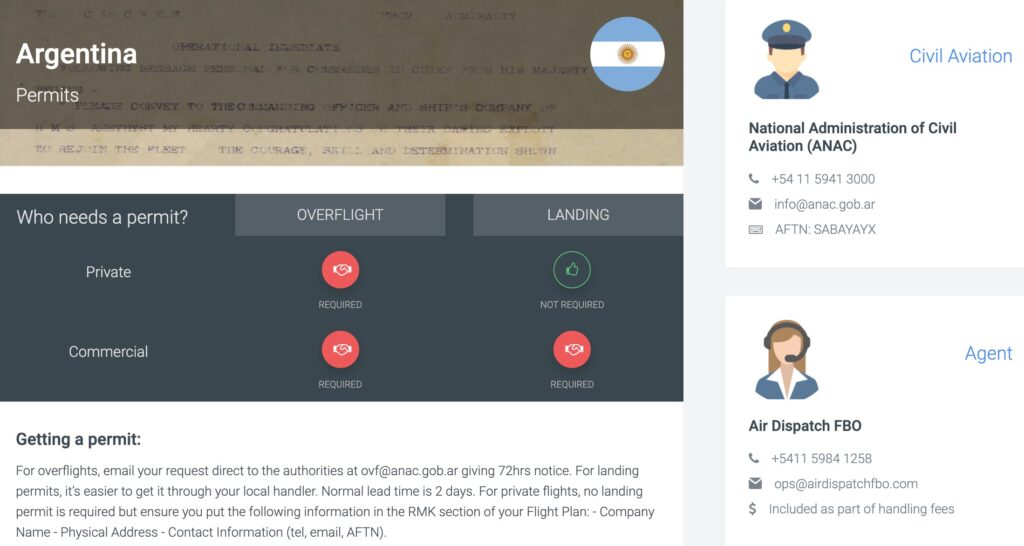
Send your application to the National Administration of Civil Aviation (ANAC)’s AFTN address SABAYAYX, and via email to ovf@anac.gob.ar (also cc. in interaerodromosbis@gmail.com). For emails, use the subject line ‘Application for Overflying the Argentine Territory.’

If you need to give ANAC a call, you can also reach them on +54 11 5941 3000.

Private operators will need to provide copies of two documents:

  • Certificate of airworthiness
  • Proof of insurance

Commercial operators also need to provide an air operator certificate.

Important: It may sound obvious, but they are quite specific about it. Don’t assume you have been granted a permit until you have specifically heard back from them.

Exemptions to the 72-hour rule

You can only get around this if you are operating an essential flight. This basically means SAR, humanitarian, air ambulance or firefighting ops.

What about landing permits?

Nothing has changed! Private flights don’t need one – but make sure you include your company name, physical address and contact info (tel, email, AFTN etc) in the RMKS section of your flight plans.

All other flights (including tech stops) must obtain one.

Need help with other permits?

OPSGROUP members have access to the Permit Helper, found under ‘Apps’ in your Member’s Dashboard. Just search for the country you are planning to visit to see current overflight and landing permit requirements.

You can also reach out to the team (and other members) via the Slack channels, or email us team@ops.group.


Where is the spoofing today? Two maps to help

If you’re keen to know exactly where GPS Spoofing – or GPS Jamming – might be happening today, there are two handy live maps to share with you.

Both of these use data from flight tracking websites to look for position anomalies, and convert those into hotspots that show where the activity is.

These are very useful in-flight to get a heads up on where you might encounter issues with GPS interference.

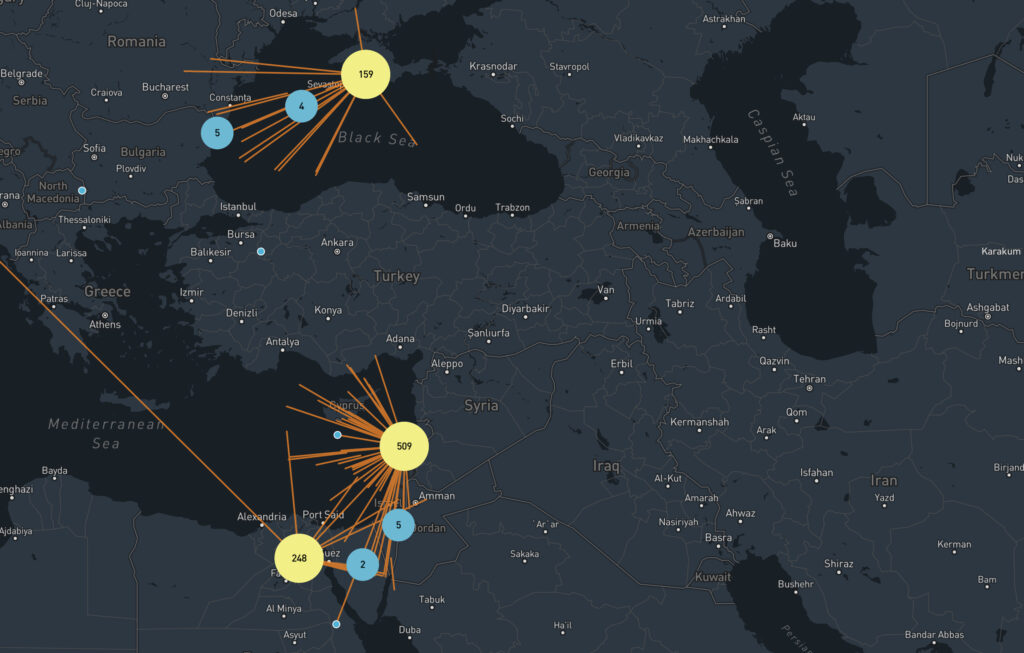
Live GPS Spoofing tracker

First up is this live GPS spoofing tracker from SkAI Data Services, in partnership with the Zurich University of Applied Sciences.

About a month ago, SkAI and Zurich University were following the discussions about GPS spoofing, and wondered if they could detect spoofing in real-time based on the ADS-B data from the OpenSky Network. As it turns out, they can. Having up-to-date information can help raise the situational awareness and prepare the flight crew for the possibility of spoofing.

Their algorithm can detect spoofing anywhere in the world where they have ADS-B coverage. The website is free to use. Unfortunately, the receiver network doesn’t quite have the same coverage as other ADS-B websites, let alone space-based ADS-B. Regardless, it’s a great tool for planning flights into areas of potential GPS issues.

The screenshot above is from this morning, May 7th. It matches exactly the three primary GPS spoofing hotspots this year: Sevastopol, Beirut, and Cairo. These are the three locations that you can expect your GPS to “think” it’s at, when you are over the Black Sea, Eastern Med/Israel, and Egypt, respectively.

GPS Jamming tracker

This map has been around a little longer, and will be familiar to some. GPS Jam uses data from ADS-B Exchange, and looks for aircraft indicating low navigation accuracy. More details are in their FAQ.

This was created when jamming was the only type of GPS interference we encountered, but now that spoofing is on the scene, it most likely shows both jamming and spoofing. That said, when being spoofed, the aircraft doesn’t know it has an issue with navigation accuracy (and that’s the very problem). Maybe someone knows more about this.

Either way, it’s a great map to see potential GPS trouble spots.

What’s the latest on GPS Spoofing?

The spoofing tracker above is probably the best answer to that!

Since OPSGROUP first reported the new GPS Spoofing phenomenon in September last year, we continue to receive daily reports of spoofing. However, the areas affected remain largely the same. Our GPS Spoofing Pilot QRH from November last year still holds true, except that we’ve seen far fewer reports from the Iraq/Iran area, and a new area in Sevastopol affecting Black Sea transits.

We continue to ask members to report GPS spoofing events (pictures are very useful too) to us at team@ops.group, or via WhatsApp to +1 747 200 1993. Thank you!


Philippines: Down The Permit Rabbit Hole

Key Points
  • Charter/Non-Sched/Pt135 landings in the Philippines need a Foreign Air Operator Certificate (FAOC). 
  • It’s a bit of a pain to get one. Takes 2-3 weeks, but local agents can help get a landing permit while the FAOC is in process.
  • Read below for the latest on all Philippines Permits

A Cautionary Tale

An OPSGROUP member recently reported the following:

  • To operate non-scheduled air services into the Philippines we were told that we need a Foreign Air Operators Certificate.
  • We were also asked to supply an ICAO Airline Three letter code. This is not something as a non-scheduled operator that we believe we can get!
  • We used a local agent as our Third Party. They supplied the FAOC application form.
  • We were successful in getting a one-off permit, however we still had to complete everything in the application form.
  • We haven’t determined if what we have submitted now as a one-off will be sufficient for the entire FAOC application – we’ll find out soon…

The Application Form

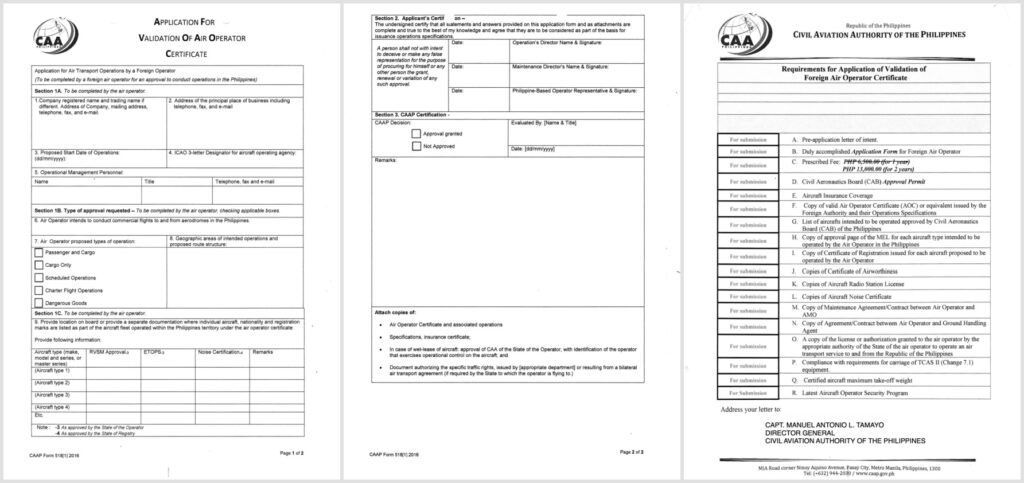
You can download it here:

Click for PDF.

What are the Philippines Permit Requirements?

Here’s some utterly useless official stuff to “help” start you on your journey.

The Philippines AIP

Click for… a dead end.

Requires a log-in. Don’t have one, and can’t get one. Website doesn’t even load most days.

I sent them an email and got a reply saying that even if you have a login, the site doesn’t actually have the eAIP on it. But if you would like to pay them $324 USD each year, they can send you a hard copy.

Nope.

Philippines CAA Website

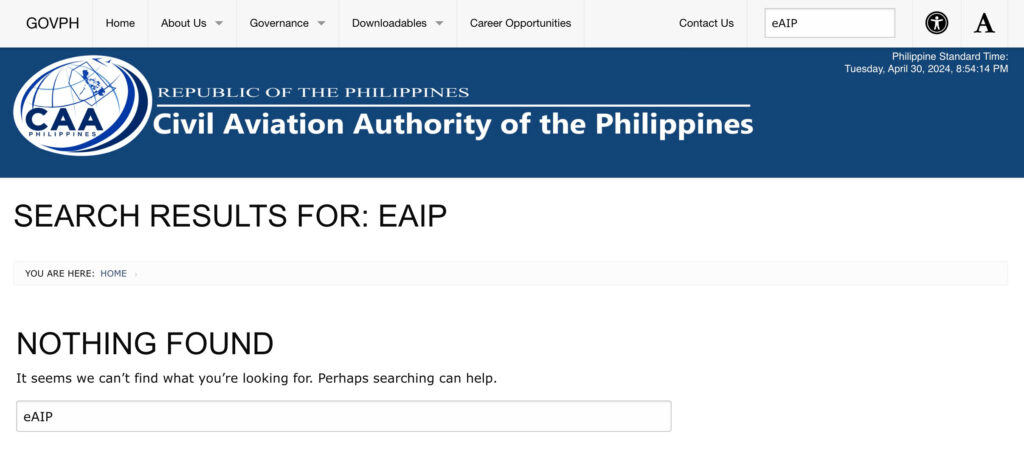
Click for… nothing.

Searched for “eAIP”. Nothing found. Moved on.

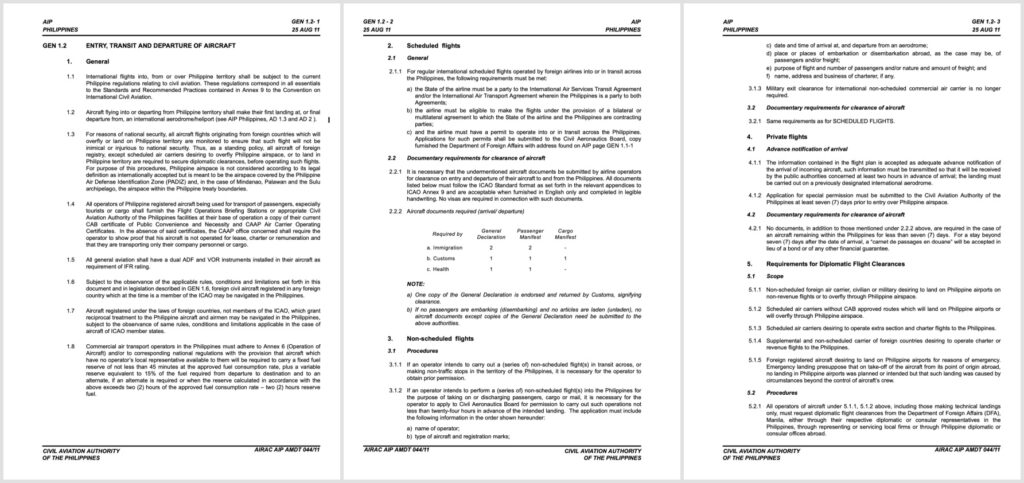
GEN 1.2

Backdoor access achieved via the EAD website! We have found the elusive AIP GEN 1.2!

Click for… words and numbers, passed through the digestive tract of a bird, and then re-arranged into some vague semblance of order.

But wait… it’s dated 2011, and is an enraging mix of INCORRECT INFO and NOTHINGY PAP.

The quest continues…

Ask An Expert

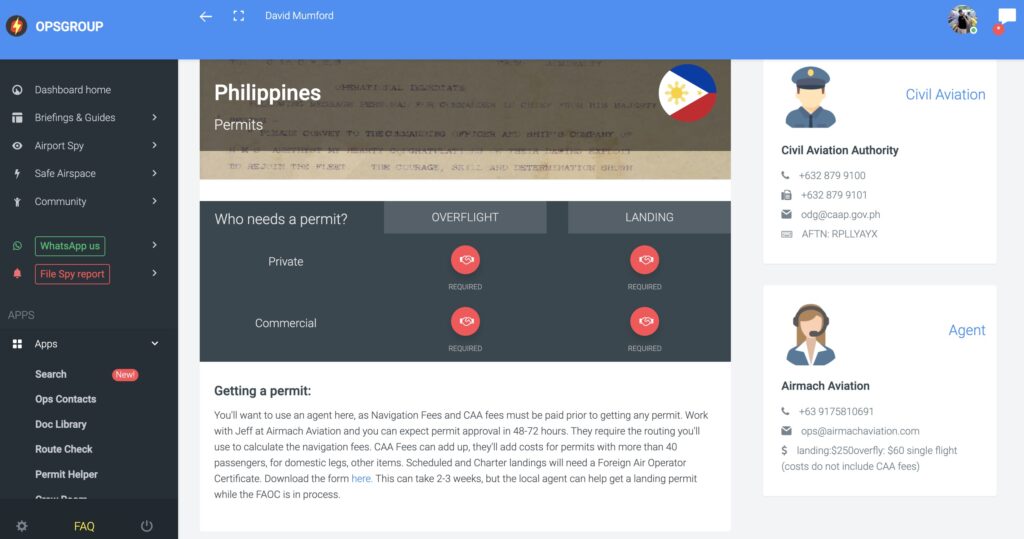
We asked Jeff at Airmach Aviation for help – a local agent in the Philippines who knows all the answers:

  • All flights need a permit. Landings, overflights, private, charter, scheduled, weird non-standard airworthiness… whatever you’re doing, if you enter Philippines airspace, you need a permit.
  • You’ll want to use an agent here, as Navigation Fees and CAA fees must be paid prior to getting any permit.
  • Permit approvals take anywhere between 48-72 hours.
  • They require the routing you’ll use to calculate the navigation fees.
  • Permit fees can add up, especially for Charter flights as there are different permits you need to get – one from CAAP (the CAA) and another from CAB ( Civil Aeronautics Board).
  • Scheduled and Charter landings will need a Foreign Air Operator Certificate.

OPSGROUP members can access all this info via the Permit Helper app on the Dashboard. This tool has permit info for every country in the world – what’s required, and who to contact to get your permit.

Click for… clarity.

Tell me about the Foreign Air Operator Certificate one more time

  • This is required for Non-Scheduled (i.e. Charter/Pt135 landings) as well as Scheduled (i.e. Airline) flights landing in the Philippines.
  • The application form is here.
  • Download it, fill it in, gather together the required docs listed in the form, and ask a local agent in the Philippines to get it for you. We recommend Airmach Aviation. Other agents are out there.
  • Yes, you could try going direct to the authorities instead (CAAP: odg@caap.gov.ph). We once knew some people who tried. Their bodies have never been found.

Have you been through this FAOC process? Got any extra tips to share? Or maybe you’ve operated a flight to the Philippines recently and have some stories to share?  Let us know!


We Want Your Ops Stories!

Know something worth knowing about something? Got a story to share? Let us know! That’s basically how OPSGROUP works – you tell us, and we’ll tell everyone in the group.

  • Been to Nicaragua and had to use their silly new overflight permit system? Let us know!
  • Experienced one of those annoying security checks at an airport in Germany where they try to sneak onto the plane? Let us know!
  • Had to disinsect your aircraft heading into Italy? Let us know!

Or maybe your story is weirder still. Maybe it’s a NIGHTMARE. Something like this recent account of what to do when trying to take-off in a cicada swarm…

Ooh, that’s a nasty one! But an excellent story – and USEFUL!

It’s many years since we wrote this piece: What is OPSGROUP All About? It still holds true. We’re still about all the same things – keeping each other safe, being real, being human, helping each other out, speaking plainly, and sharing radically.

So tell us your story! Chances are that other pilots and operators would be interested in what you know.

Or maybe you know how specific stuff works?

  • Know how to get an Australian TSP approved with minimal misery? Let us know!
  • Got the lowdown on operating over Central Africa? Let us know!
  • Fly regularly to China and know about Himalayan routings? Let us know!

We’ve already published a bunch of posts written by people in the group who know about specific things like these. Here are some of our faves: (give em a click if you like!)

So if you’ve got a story, or you know about some specific thing, and you think other pilots and operators would be interested to hear about it, let us know!


Why do we see US Military Notams?

Back in March, an OPSGROUP member reached out to us after the following Notam appeared in their flight plan briefing package.

As EGKB/Biggin Hill (UK) was their filed alternate, the Notam was of some interest. A quick email to the airport authority confirmed that the ILS was fully serviceable and available.

The member contacted Jeppesen directly about the Notam, and here was their response:

“The Notam in question is actually a US DOD procedural Notam which only applies to US military pilots and those flying under contract/partnership with the DOD. So, while the tower may confirm that the approach is in-service, the US military is not authorized to fly it for reasons known only to them…”

The following questions remained:

• Why are we seeing these Notams in the first place?

• What is the reason for the restriction on military aircraft?

The short answer is that the response from Jeppesen was correct – but could use a little more explanation.

Where we get our Notams from.

There are two primary “original” sources for Notams around the world:

  1. The European AIS Database (EAD) – run by Eurocontrol
  2. The US DoD (Department of Defense). It supplies Notams to the FAA for their ‘Notam Search’ app, and their SWIM feeds – the FAA’s information-sharing platform.

If your flight plan package is sourcing Notams from the US DoD (and not being filtered correctly), you will see military Notams included – like the one above. Think of them like company notams, for internal use. In this sense, they are not ‘true’ Notams and shoud be completely disregarded by civilian operators.

But why the UK?

To use the DoD Notam feed correctly, military Notams need to be filtered out. But there may be more to it than that.

You’ll see the EGKB Notam above has a ‘V’ designator.

In the UK ‘V’ series Notams mean the following:

“Notification of Security Advice to UK Air Operators by Government to provide guidance/instructions on Airspace Security Risks. Volcanic Ash related information within En-Route Airspace London FIR/UIR, Scottish FIR/UIR, Shannon FIR/UIR and Shanwick Oceanic FIR…”

In the US, they mean something different:

“A NOTAM information pertaining to a location’s published instrument procedures, i.e., Standard Instrument Approach Procedure (SIAPs), Standard Instrument Departure (SIDs), Departure Procedures (DPs). These NOTAMs shall be published under the direction of TERPS personnel…”

Which is why in this case (and many others) we may still see these Notams find their way into our briefing packs.

In a Notam-tale as old as time: just because they’re there, doesn’t mean they’re relevant. The potential for confusion holds strong – especially if civilian operators misinterpret Notams never meant for them in the first place.

Why does the military have their own restrictions?

Because they do! In the same sense one airline can do something another does not allow.

Common sense indicates that the way military aircraft are operated differs substantially from civilian aircraft – and that the margins and procedures designed for us do not necessarily work in the same way for them.

Have more info?

If you have something you’d like to add to this article, we’d love to hear from you. You can reach us at team@ops.group.


US Midwest: Cicada’s are coming to town

This spring, the US Midwest will see Cicada’s emerging in numbers that have not been seen in generations.

This is quite frankly terrifying. It may sound ridiculous that something like this matters, but rest assured, it is crucial. I know from first-hand experience.

It was a hot summer afternoon in 2021 on the ramp at KSUS/Spirit of St Louis airport. There were massive bugs EVERYWHERE, buzzing around, hitting you in the head, flying into the rental car or aircraft if the door was open for even ONE second. Their dead bodies were scattered across the ramp from being run over or stepped on. It was Cicada swarming season, according to the line guys.

We had the APU running and the main cabin door open, attempting to cool the cabin while waiting for our passengers. Even with the curtain closed, the Cicadas entered the cabin and cockpit through the cracks. It was truly disgusting, and I still have nightmares to this day.

The captain was busily chasing the bugs around, attempting to capture each one and throw it back outside. Meanwhile, the FA and I were cowering in the corner, trying to stop them from flying into our hair. When the passengers arrived, they DASHED as fast as they could from their SUV towards the aircraft, hoping to escape getting hit in the face by a Cicada (spoiler: they did not escape this). The SECOND we opened the curtain for them to run in, a load more Cicadas flew in, and we were back to square one, trying to capture/dispose of each one. I heroically went outside, hastily loaded the bags, and shut the cargo door. We had no choice but to close the main cabin door with many 2-3 inch bugs still hiding inside.

Our attempt to escape was met with a HUNG START. QRH blah blah… after several minutes on the phone with our maintenance department and a few more attempts, we were fresh out of ideas. Right then, a frightened Cicada almost flew right into my mouth, prompting the realisation, that, of course this unique variable must be the thing causing the problem.

A quick climb up a ladder confirmed that the APU intake was COVERED in dead Cicadas. It wasn’t getting enough air to provide high-load pneumatic functions. We got a ladder and a broom and brushed some cicada-carcass off the intake, a feeble attempt in rectifying a problem that was concentrated far deeper than the external grate. Somehow, though, we managed to get #1 running (it took precisely 59 seconds, of course), and we were off to the races.

As we taxied off the ramp the most foul, PUTRID smell began to penetrate our nostrils. The smell of HOT/DEAD/LARGE BUGS is not a smell I’d wish on my worst enemy. We quickly switched the bleeds over to the engines and prayed for no circumstances requiring us to switch them back.

Upon arrival, our maintenance team opened the APU and manually removed the burnt cicada crust. It took almost a year for the smell to be removed entirely from any APU-fed PACK usage. We would later learn that Cicadas are attracted to the high-pitched sound of the APU, hence so many of them flew into the intake.

APU Intake - Side order of Cicada

APU Intake – Side order of Cicada

If you’re still reading, I’m surprised, but here’s the point: this year is supposed to be the most giant Cicada swarm in decades across the Midwest, specifically concentrated in Illinois (St.Louis and Chicago). Allegedly this swarm will be at least twice as large as the one in the story above.

Cicada Hotspots 2024. (Source: University of Connecticut Cicada Project. Map: CBS News)

For my crews, given that we will likely find ourselves in these locations this spring, I’ve set out the following procedures for operating in a Cicada swarm (think of it like you would a cold weather operational procedure):

  1. Do not run the APU until RIGHT before you want to start the engines.
  2. Attempt to leave all aircraft doors shut as much as possible.
  3. If it is very hot and the swarms are very bad, try to get a hangar the night before departure. Also, have the aircraft put online as close as possible to departure so that the cabin isn’t extremely hot for passenger boarding
  4. As a precaution ahead of departure, research whether an air cart is available on the field and what the procedures would be to get it (just in case).

I hope our “Cicada QRH Actions” can save you a new cabin fragrance for your aircraft this spring!


Got a story to share? Let us know!

If you come across a new risk, a new danger, a new procedure, something weird, something unusual – tell us, and we’ll tell everyone in the group.


Saudi Arabia Overflights – Free Route Gotcha

Key Points
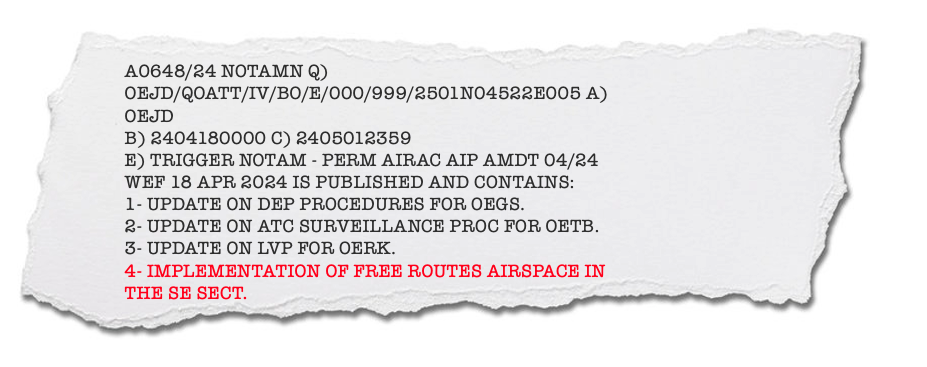
  • The Southeastern section of the OEJD/Jeddah FIR is now Free Route Airspace.
  • It’s not straightforward. New procedures have been published in the Saudi AIP.
  • If your flight plan does not comply, you are likely to be instructed to descend below FL300.

Background

We’ve received a new report from an OPSGROUP member after a recent run-in with ATC in the OEJD/Jeddah FIR.

The problem stemmed from a small (and confusing) change that became effective on April 18.

Essentially, ATC were upset that their filed route did not comply with newly published Free Route Airspace (FRA) procedures buried deep within the bowels of the Saudi AIP.

The fallout of non-compliance is the ATC equivalent to the ‘naughty corner’ with aircraft directed to descend below FL300 for the duration of their crossing of the affected airspace.

In this case, the member was able to negotiate to remain at their preferred level but not before a fair amount of head scratching as to why they got in trouble in the first place.

As large amounts of traffic are now transiting Saudi Arabia to avoid Iran further north, it is especially relevant right now.

New Free Route Airspace

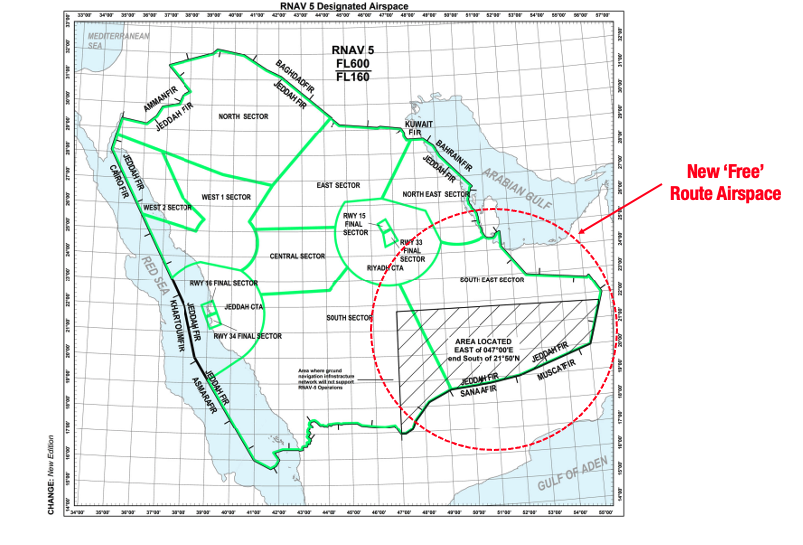
On April 18, a large chunk of Southeastern Saudi Arabia (known as the SE Sector) became Free Route Airspace (FRA).

Typically, FRA means that pilots can freely plan any route they like between defined entry and exit points without reference to the ATS route network. This saves both money and time – simple.

However, this is where things get hazy.

The change was notified in this easily overlooked FIR Notam:

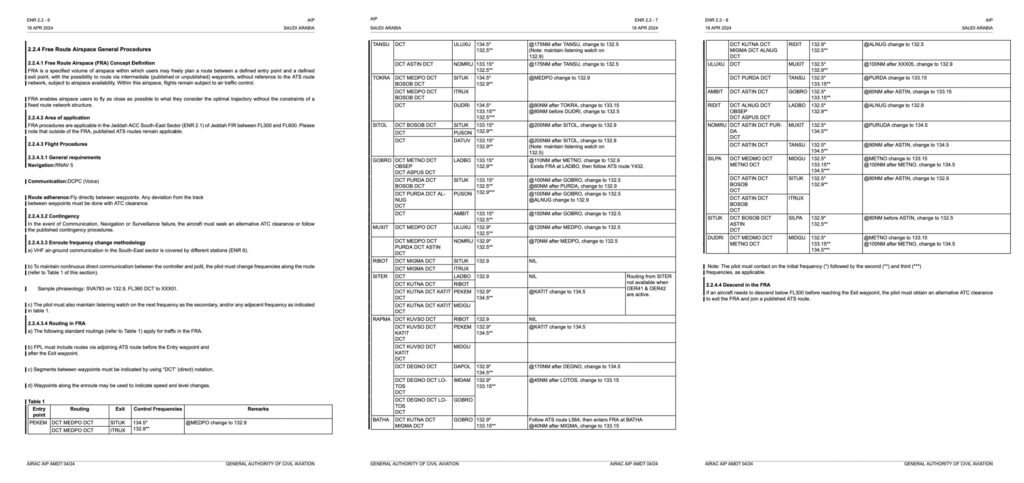
This directs you to the Saudi AIP. This is great if you have a spare half an hour to prove who you are, download a special app and access it. To save you the trouble, the relevant bit is ENR 2.2.4 which you can find here.

Click for PDF.

Here’s the kicker – it’s Free Route Airspace, but not really. You still need to plan and file via the standard routes found via the link above.

In other words – ‘fly whatever route you like, as long as it is one of these ones.’

Turns out if you don’t, they will want you out of the ‘FRA’ which means a descent below FL300 (or a climb above FL600 if you’re piloting the Space Shuttle).

Keep listening out.

There are also some really specific comms requirements you need to follow along each route as the sector is controlled by several VHF frequencies. It seems you cannot rely on ATC to tell you when to switch.

“Normal” routes.

Don’t forget the Free Route Airspace only applies to the SE Sector of the Jeddah FIR. Everywhere else in Saudi airspace, you’ll need to follow “normal” ATS routes as per usual.

But even these “normal” routes are a pain. Saudi Arabia (like many other countries in the region) has preferred routes depending on where you’re flying from/to – so you’ll need to make sure you file on one of these. For some reason Jeppesen recently stopped publishing them, so now you have to get them from (yes, you guessed it) the Saudi AIP! SUP 8/24 talks about it. You basically download this Route Availability Doc and work out a route from there.

Other Free Route Airspace in the region.

Qatar and the UAE are the only other countries in the Middle East that have implemented FRA, and unlike Saudi Arabia, both seem fairly straightforward.

Qatar – has implemented a corridor of FRA straight through the middle of the OTDF/Doha FIR, available from FL275-460. The Qatar AIP does not currently list any restrictions on its use.

Click for PDF.

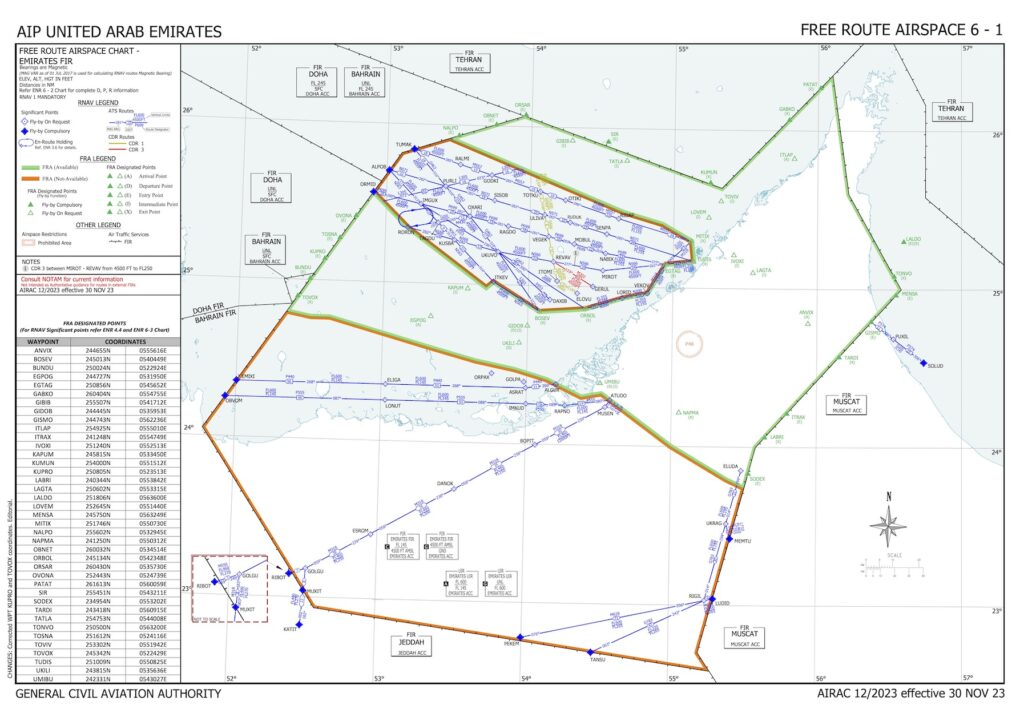
The UAE – has implemented FRA in parts of the OMAE/Emirates FIR from FL355-600 – basically the parts around all the airports, and the airspace connecting with the OOMM/Muscat and OIIX/Tehran FIRs. Like Qatar, the UAE AIP does not currently list any restrictions on its use.

Click for PDF.

Please report back.

Thank you to the member who got in touch.

These changes can be hard to spot. Especially when you pay an operational penalty for procedures like this one that are poorly written, hard to find, or obscure.

We need your help to spread the word whenever you come across something different – in Saudi Arabia or elsewhere. Thousands of other like-minded pilots will thank you later.

If you have something you’d like to share, you can reach us on team@ops.group. We’d love to hear from you.



International Ops Bulletin

Hey! Are you here for our World Famous International Ops Bulletin? The one where you get all this weeks new dangers and changes in International Ops? The one that 50,000 people read every week?

Cool. Here’s how to get it.

Every Wednesday, OPSGROUP issues a weekly International Ops Bulletin for International Pilots, Dispatchers, ATC, Regulators, Authorities, Airlines and Aircraft Operators.

We cover this weeks changes to International Flight Operations – Airports, ATC, Procedures, New rules, Visas, Airspace alerts, Weather issues, and warnings and dangers to international aviation.

You got choices:

  1. Get the free version. Grab a copy!
  2. Join OPSGROUP and get the full version.


Want to see a sample first?

Sure thing. It looks a little like this (click to open the full sample):


Outsmarting the GPS spoofers: A clever app

GPS spoofing is fast becoming a real headache in aviation, causing confusion and navigation problems for pilots in several hotspots around the world.

We first saw this happening in September 2023, when we started getting reports of spoofing across the Middle East, including instances near Iraq, Iran, Egypt, Israel, Jordan, Turkey, Cyprus, and Lebanon.

Since then we’ve had reports from all kinds of strange places including Pakistan, Niger, and China. 

And just like that - Spoofed

And just like that – Spoofed.

GPS spoofing involves sending false GPS signals to aircraft, leading to potential navigation errors and safety risks.

Manufacturers have been slow to work out what advice to pass on to pilots and operators on how to counteract these issues. But the effectiveness of these measures can be limited without the right tools, especially during live spoofing events where the reliance on ATC becomes critical.

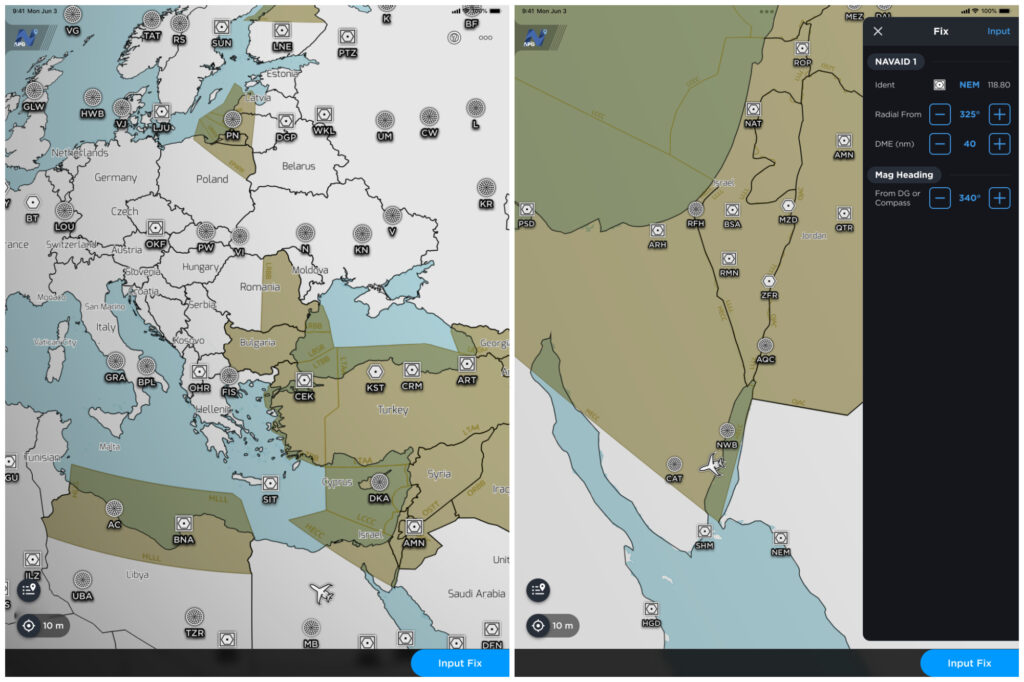
NaviGuard, developed by APG, is a new tool designed to counter GPS spoofing threats. It’s a plotting application that uses traditional ground navigation aids (e.g., VORs, DMEs, NDBs) to cross-check and verify the aircraft’s GPS-reported position. And best of all – it’s free. You can download it here.
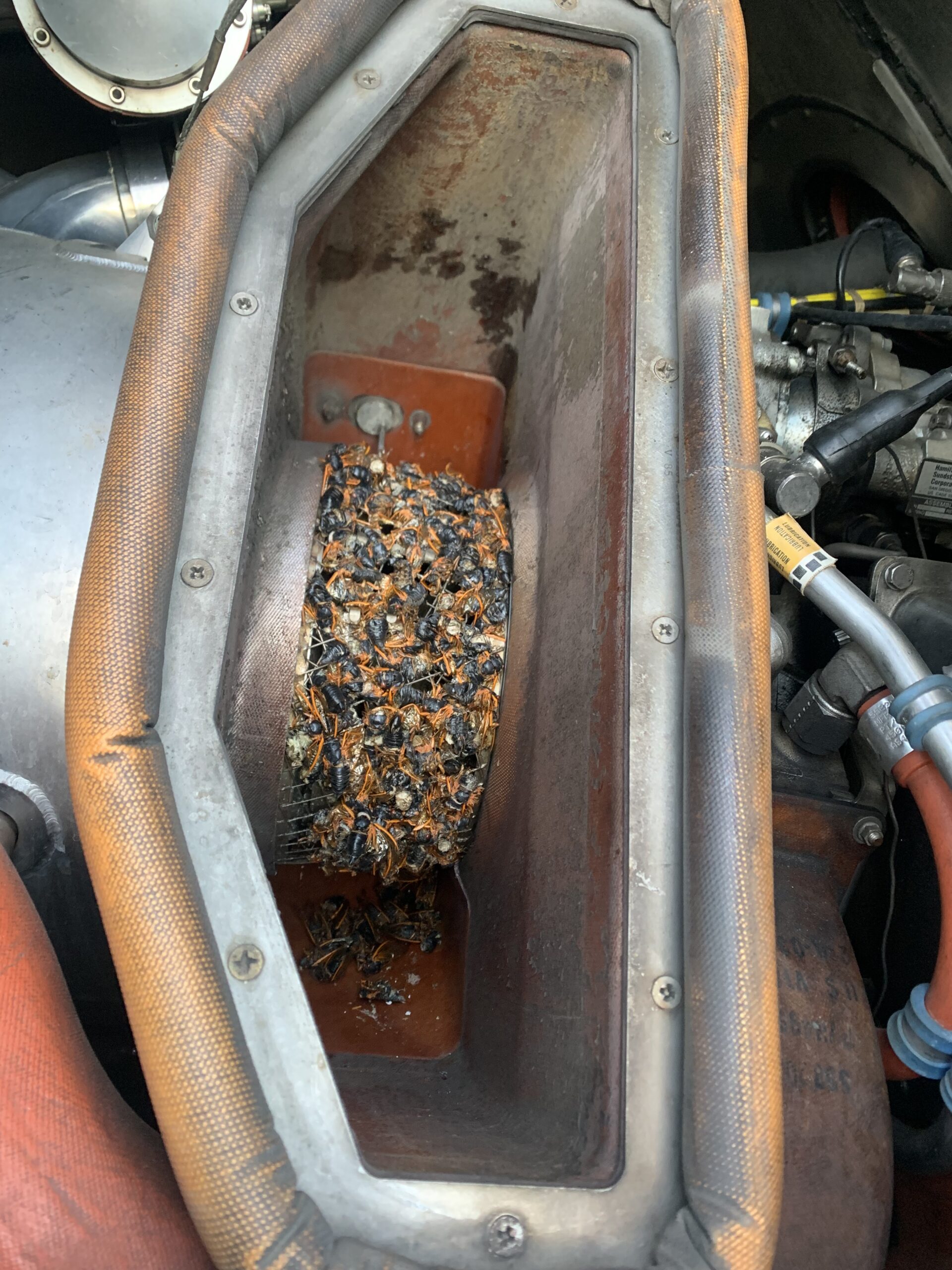
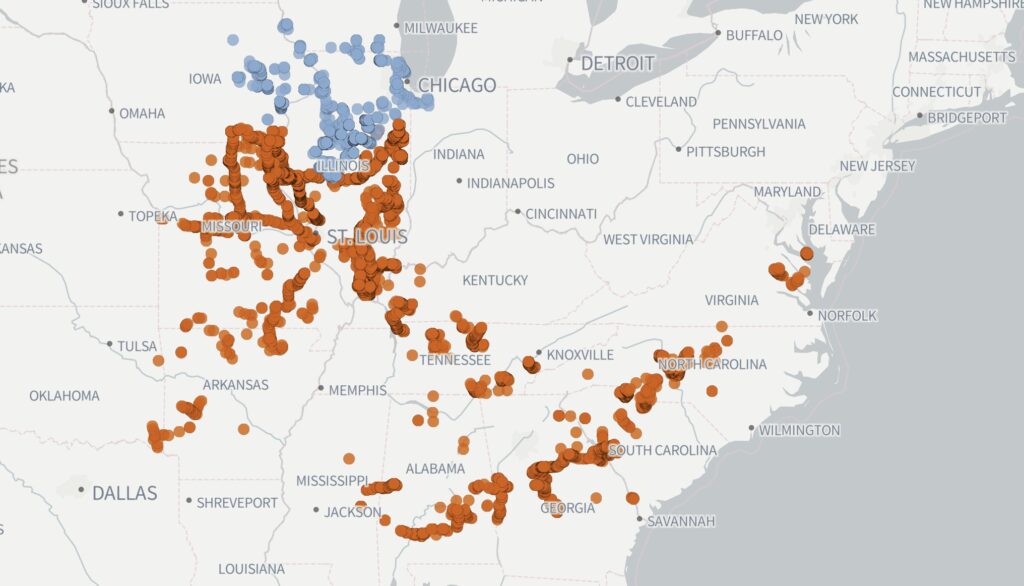
Chart to the rescue!

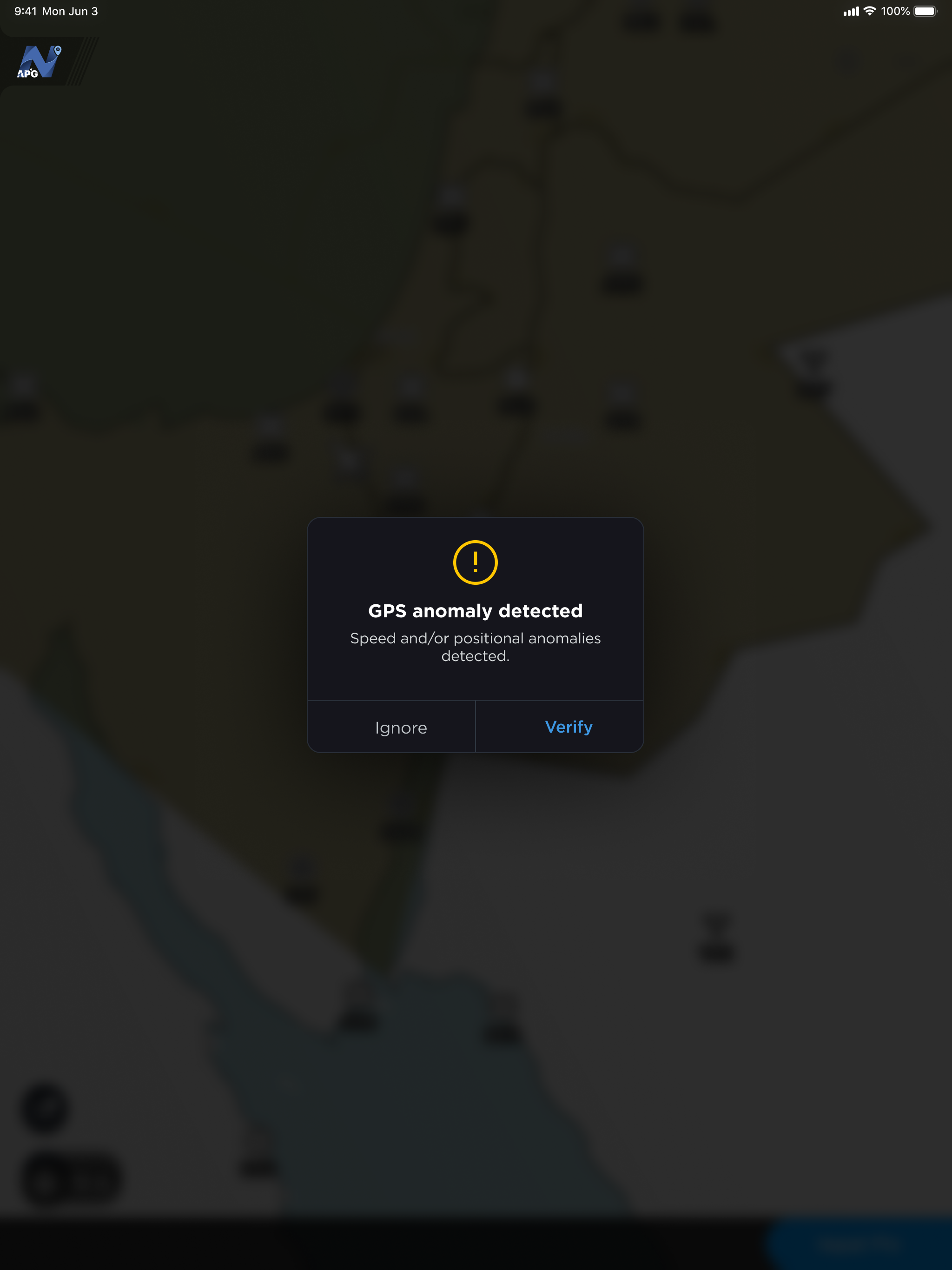
When NaviGuard detects discrepancies indicative of GPS spoofing, it alerts the pilots with a clear “GPS anomaly detected” message, enabling them to take corrective action promptly.

Hard to miss.

NaviGuard offers pilots a straightforward solution for maintaining navigational accuracy amidst GPS spoofing threats.

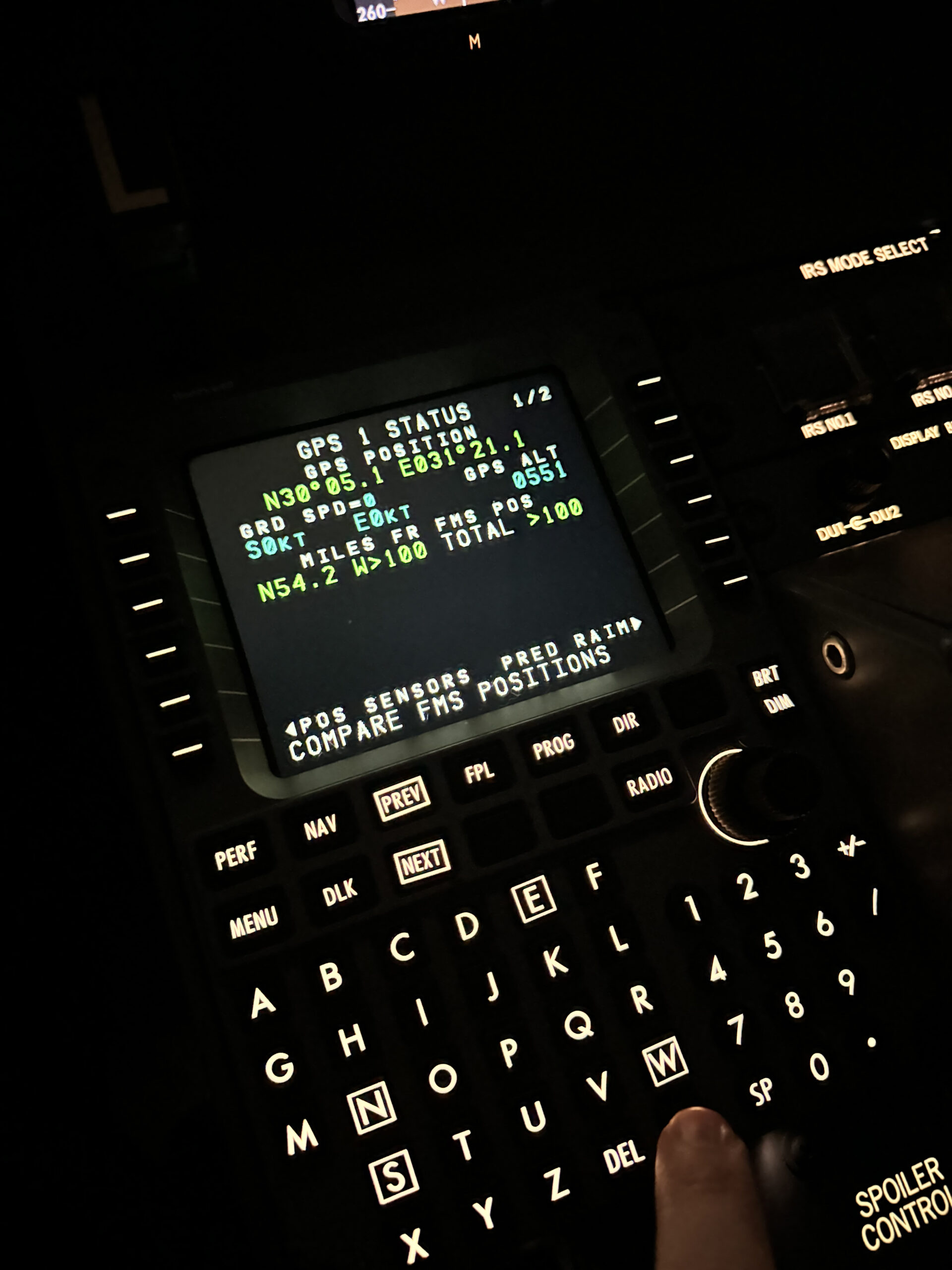
I used NaviGuard last month when I was spoofed whilst operating in Cairo. I got to try out the app for 30 minutes while our GPS tried to convince us that we were flying on top of Beirut.

Hello Beruit

Hello, Beirut.

As promised by Michael and the team at APG, the app was easy to use, and it allowed me to quickly verify that my IRS position was not compromised (we have a Hybrid IRS, so a spoofed GPS signal can corrupt the position data).

This is a no-bells-or-whistles solution, which I believe is an excellent addition to any pilot’s EFB; after this flight, I installed the app on all of our aircraft’s EFBs. It takes up very little space and is free. This is the great insurance when doubting your GPS position’s integrity.


TIBA in Australia: What’s Going On?

Key Points
  • TIBA still seems to be an issue in Australia – shortage of ATC resulting in big bits of restricted Class G airspace, often at short notice.
  • We wrote about this last year, including guidance on what to do (see updated post below), but now IFALPA have published a Safety Bulletin saying the problem is still ongoing.
  • Amid accusations of understaffing, Australian ATC has announced they intend to strike. This process will take a few weeks to action, and so we’ll likely see disruptions from May. This may include full 24hr work stoppages and will be notified in advance via the YMMM/Melbourne and YBBB/Brisbane FIR Notams.

Since early in 2023, we’ve seen large sections of restricted TIBA airspace (traffic information broadcasts by aircraft) established by Notam up Australia’s East Coast in both the YMMM/Melbourne and YBBB/Brisbane FIRs.

In fact, there were 340 instances of uncontrolled airspace between June 2022 and April 2023 alone. And it’s still happening.

The cause here appears to be a fundamental shortage of air traffic controllers.

Where has this been happening?

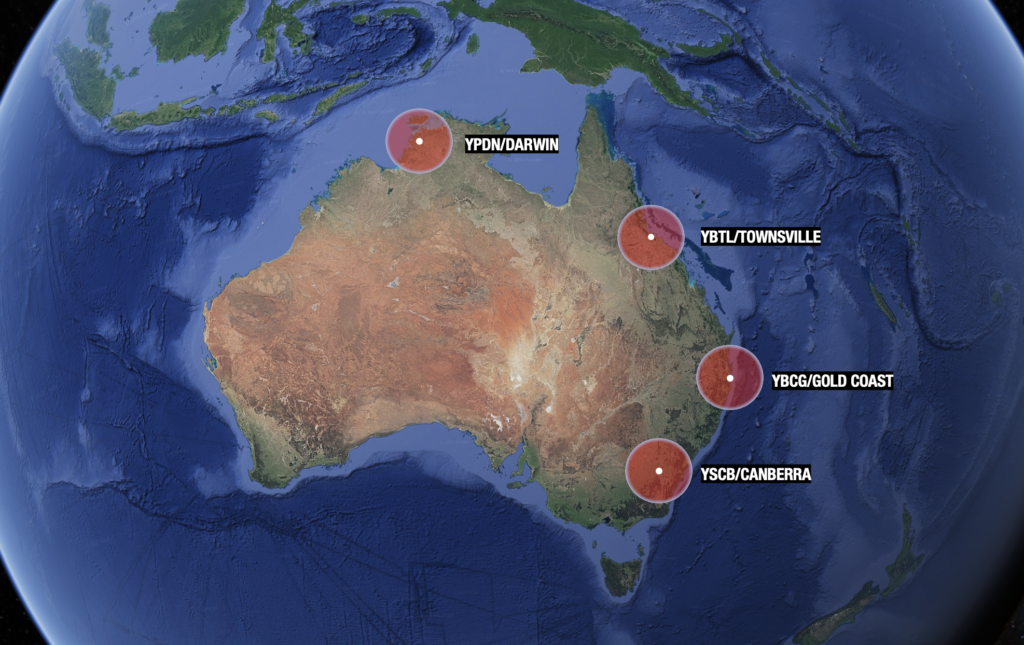
In the South, look out for TIBA airspace east of YSCB/Canberra airport, Australia’s capital city found inland from Sydney.

Further north there has been a greater effect as large portions of coastal airspace near YBCG/Gold Coast and YBTL/Townsville airports have been impacted. This is an extremely busy air corridor – 80% of Australia’s population live on the East Coast.

At the top end of Australia, YPDN/Darwin airport has also been affected which can result in re-routes for international traffic headed up into South-East Asia and beyond.

Here’s what those hotspots look like on a map:

TIBA airspace has been reported in or near these hotspots.

It’s not all the time.

TIBA airspace is being activated by Notam, typically for hours at a time. A look at today’s batch indicated all is ops-normal. However, a local airline captain has advised OPSGROUP that it is currently a frequent occurrence.

Broadcast, or avoid?

The vast majority of airline traffic appear to be avoiding the TIBA airspace. This typically involves less direct routes at the expense of delays and fuel. Helpfully, for major city pairings the NOTAMs contain suggested routes that will keep you clear. But expect SIDs or STARs you may be less familiar with.

In fact, major carriers have policies in place that prevent them from using TIBA airspace anyway – unless they happen to be in it when it is activated.

That’s not to say there won’t be other traffic taking advantage of the more advantageous routes though. The East Coast is characterised by a huge variety of traffic including charter, skydiving, medevac and survey all of which may have valid reasons for using TIBA.

It can still be used safely, but with the procedures below (a heads up: dual comms are a requirement).

How on earth do I ‘do TIBA’?

First things first. Whatever you do, don’t enter without permission. Australia’s TIBA airspace is typically restricted – in the sense you will need PPR to use it. The relevant Notams are quite helpful, and provide all the information on how to get it. Here’s an example.

Your approval will typically involve a phone call beforehand, and a chat to a flight information service in adjacent airspace for traffic information.

Once you’re in, you are totally responsible for terrain and collision avoidance. Turn that radio up and make sure you’re both alert and monitoring both the TIBA frequency and the relevant ATS one – now is not the time for controlled rest. Whoever is on the radios is going to be busy.

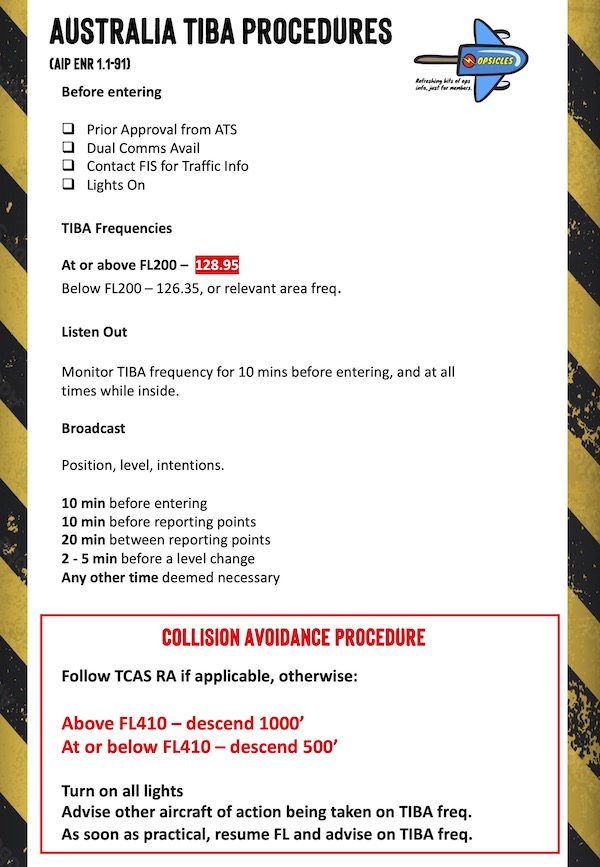
The Australian AIP then takes over. You can find the procedures in full here (time saver: flick to ENR 1.1-91). We’ve also put together a summary of those in this handy little briefing card which may be useful to keep in your flight bag:

OPSGROUP members: click to download hi-res PDF.

Other questions?

You can also get in touch with CASA via this link, or alternatively Airservices Australia here with questions. Both have been very helpful in answering our pesky conundrums in the past.


That MMEL Thing: Here’s an Update

It looks like there might finally be a solution to the long-running MEL vs MMEL issue for US operators headed to Europe, keen to not get a ramp check finding!

The brief Backstory

Since 2017, US aircraft have been getting hit with ramp check findings in Europe because EASA decided that the D095 LOA wasn’t good enough – they wanted to see a D195 LOA instead, but it was taking operators a long time to get these approved by the FAA in the US due to a big backlog of applications.

The Solution

The FAA has published an updated Advisory Circular (AC 91-67A) which speeds up the process of getting this D195 LOA.

The NBAA have reported that the FAA has also updated guidance to its field offices, who will now issue the LOA after a brief review, provided the application is accompanied by an “attestation letter”.

The slightly longer Backstory

Over the past few years, ramp checks on some US aircraft in Europe highlighted an important issue – EASA and the FAA have different interpretations of the ICAO standards regarding deferring aircraft discrepancies.

In the US, with FAA authorization operators can use a master minimum equipment list (MMEL) to defer repairing certain equipment. But in Europe, MMEL cannot be used in lieu of an MEL specific to each aircraft or fleet.

The European Aviation Safety Agency (EASA) began requiring all aircraft transiting European airspace to have an approved Minimum Equipment List (MEL) for each, individual aircraft (i.e. a D195 LOA). An MEL that references the MMEL was not acceptable (i.e. a D095 LOA).

This was a pain for US operators, as to get an individual MEL approved under the LOA from the FAA takes time – but by not doing so, they ran the risk of getting a ramp check finding in a European country. (France seems to be the place where this happens most often!)

At the start of 2018, the rumour was that the FAA and EASA reached an agreement: the FAA would start requiring international operators with D095 LOAs to obtain new D195 LOA’s instead, and in return EASA would halt any findings for a period of 12 months to allow for these new LOA’s to be issued. There was no official announcement on this, but SAFA data did indicate that ramp check findings for use of D095 were greatly reduced for a time.

The FAA proposed a policy change to phase out the D095 LOA over the next 3-5 years, and to work out a streamlined approval process to issue everyone with D195’s instead.

The French CAA said they would stop issuing ramp check findings once the FAA has launched the new policy.

FSDOs across the US then started processing the backlog of D195 requests from operators (there were lots!). In the meantime, US operators with the D095 LOA continued to face the same old MMEL findings on ramp checks in Europe.

How to prepare for a ramp check in Europe?

Here’s the article we wrote all about how to make a ramp check painless.

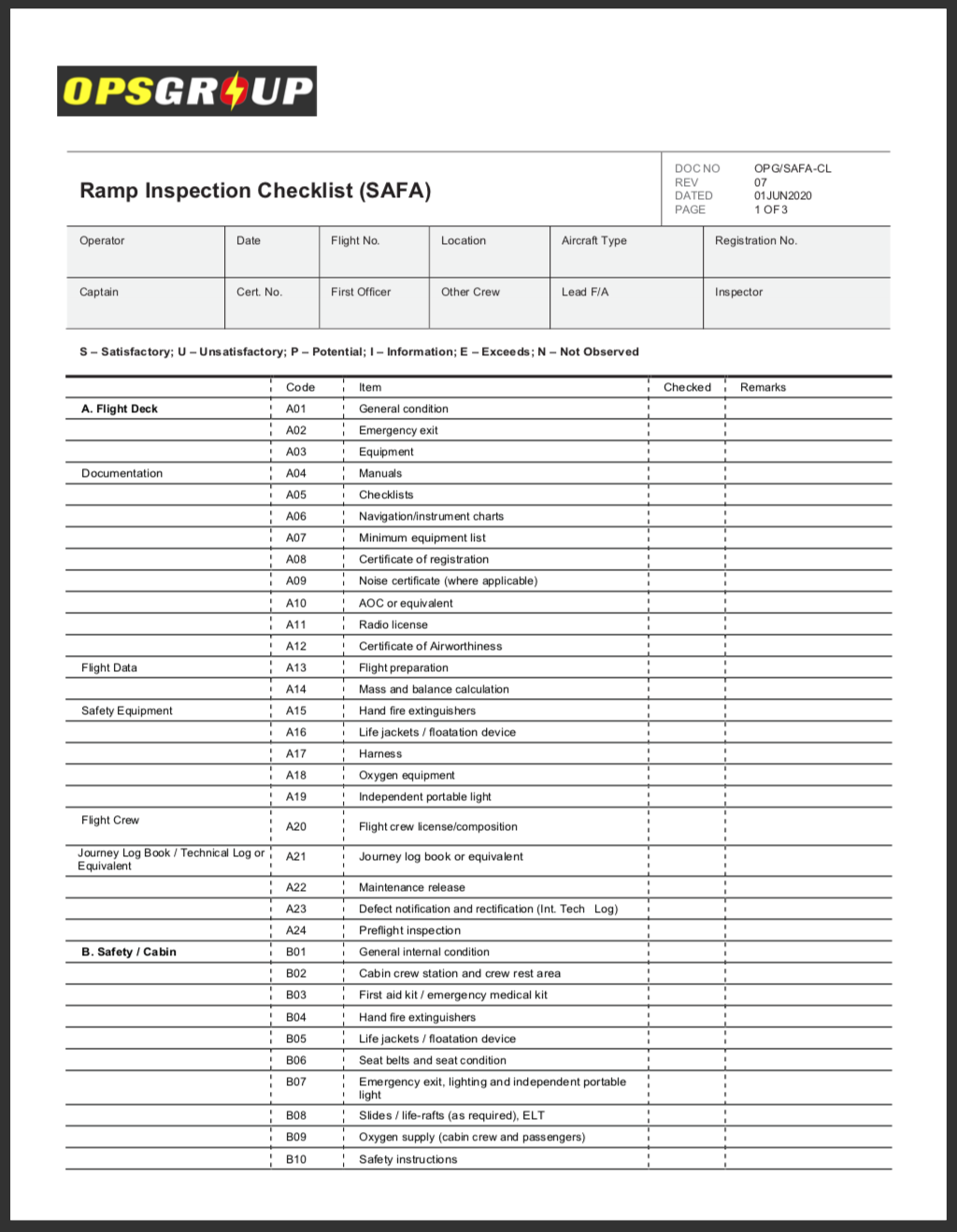
And here is a copy of the OPSGROUP SAFA Ramp Checklist. Download it here.

Keep a copy with you and run through it before you head to Europe.

Further Reading


China-Taiwan M503 Airway Dispute

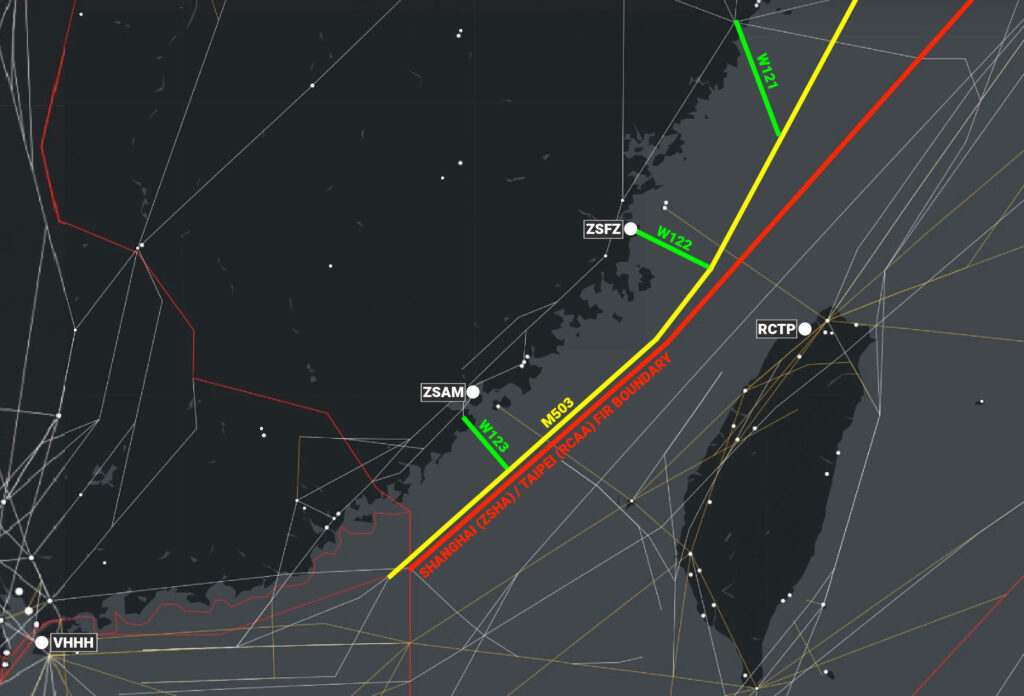
China has cancelled all concessions previously made to Taiwan regarding the M503 airway that runs along the ZSHA/Shanghai and RCAA/Taipei FIR boundary.

What does this mean in practice?

  • China have moved the airway 6nm back towards the FIR boundary.
  • They have started allowing eastbound flights on the the W122 and W123 connecting routes.

So now, of all these routes, the only one that is not bi-directional is W121 (westbound only).

Taiwan aren’t happy, same argument as before: they say the airway is too close to existing routes that serve airports in outlying groups of Taiwan-controlled islands, and thus poses a risk to safety. China have ignored them.

Can I use M503?

China only allow airway M503 to be used under certain conditions:

  1. Aircraft must be RNAV2 capable.
  2. The flight must be going between VHHH/Hong Kong or VMMC/Macau and certain Chinese airports: ZSPD/Shanghai Pudong, ZSQD/Qingdao, ZSYT/Yantai, ZYTL/Dalian.

Everything else transiting east-west across this region will need to use the congested parallel A470 airway along the southeastern coast of mainland China.


April 2024: Israel/Iran Situation, All Call active

Attn all Members:

A briefing with all known information on the Israel/Iran situation is now live in the OPSGROUP Members Dashboard. Situation summary, group intel, airspace closures, reroute options, and operator/crew reports.

ALL CALL currently active, please continue to report any information in confidence to team@ops.group.

Briefing URL: https://ops.group/dashboard/briefings/middle-east/


Airport Fire Fighter Strike in Australia

Disruption looms at Australian airports on April 15. Rescue fire fighters have announced a four-hour strike from 06:00 – 10:00 local time at twenty-seven airports across the country – including the majors.

It seems the cause extends beyond just pay and conditions with safety concerns over staffing levels the United Fire Fighters Union has described as ‘dire.’

Here’s everything we know, and how to decode the inevitable RFFS Notams soon to grace your pre-flight briefing.

Impact to Ops

The strike will see RFFS categories simultaneously reduce as low as zero (more on these categories below).

While the exact impact of the impending strike isn’t clear yet, previous strikes have given us a good idea of what to expect.

Traffic delays could extend beyond the strike period as airlines scramble to re-schedule cancelled or delayed services, with the added addition of peak school holidays. For inbound traffic this means delays and holding.

The RFFS downgrades themselves will be announced by Notam closer to the time and may also affect the use of Australian airports as ETOPS alternates.

‘Leaked’ Controversy

The plot thickens over the alleged leaking of a safety assessment which supposedly identified major flaws at several Australian airports over a lack of staff, procedures, trucks and other frontline fire-fighting equipment for the type of aircraft using them.

If this is correct, YBBN/Brisbane, YPPH/Perth, YMML/Melbourne, YSCB/Canberra and YSSY/Sydney airports are all operating at high levels of risk in some emergency scenarios – something that Air Services Australia (who is responsible for RFFS staffing) has denied. The Australian Aviation Authority (CASA) has also weighed in on the issue, and sides with Air Services.

The Fire Fighter Union has also claimed that in some cases, flights have been operating at regional airports (such as YMLT/Launceston and YBSU/Sunshine Coast) with less than the minimum required RFFS staff on watch – although we can’t confirm this.

Regardless of who is correct, the two parties are locked in a row that has led to the upcoming strike.

RFFS Categories

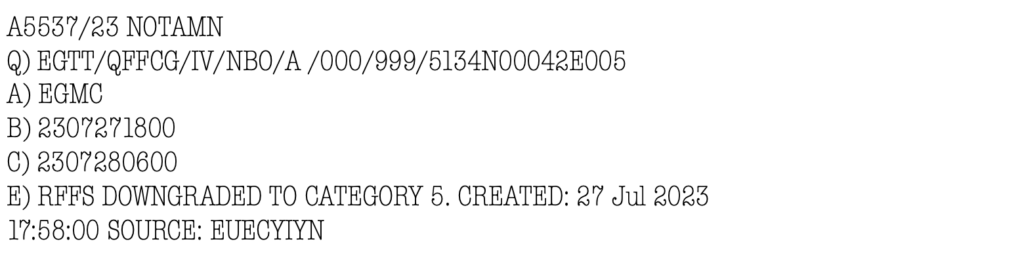
The effect of the strike will become apparent in the next couple of weeks via Notams like this:

If you’re not familiar with what these categories actually mean, here’s a quick rundown on how they work.

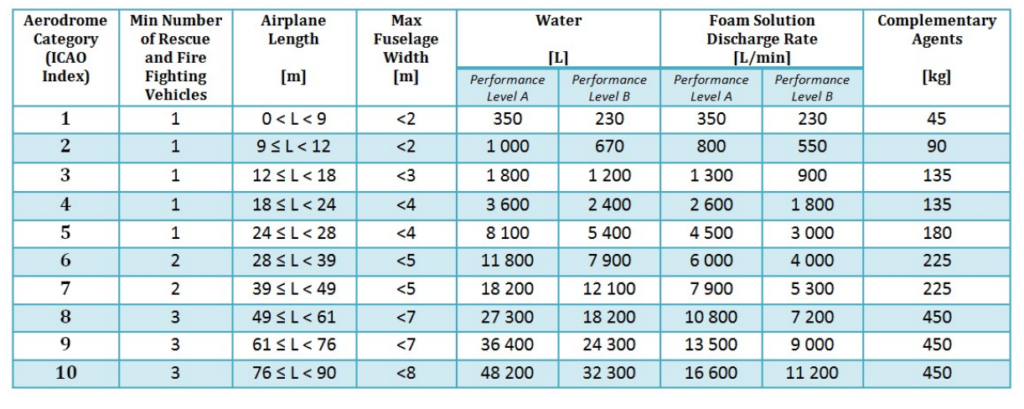
An airport’s RFFS Category refers to the largest aircraft it is intended to receive (think length and fuselage diameter).

This dictates the amount of water, agents, vehicles and response time required to fight fires on planes of these size.

With that in mind, here are the current ICAO RFFS Categories.

Further Strikes Are Likely

Right now, April 15 is the only scheduled RFFS strike. However, if no deal is struck between the Fire Fighters’ Union and Air Services Australia, we are likely to see more.

The good news is that we all also receive advance notice of any that are planned. We’ll continue to report those as they arise.

If you encounter disruptions during the upcoming strike, we’d love to hear from you. You can reach us on news@ops.group.


Schengen area expands to almost all EU countries

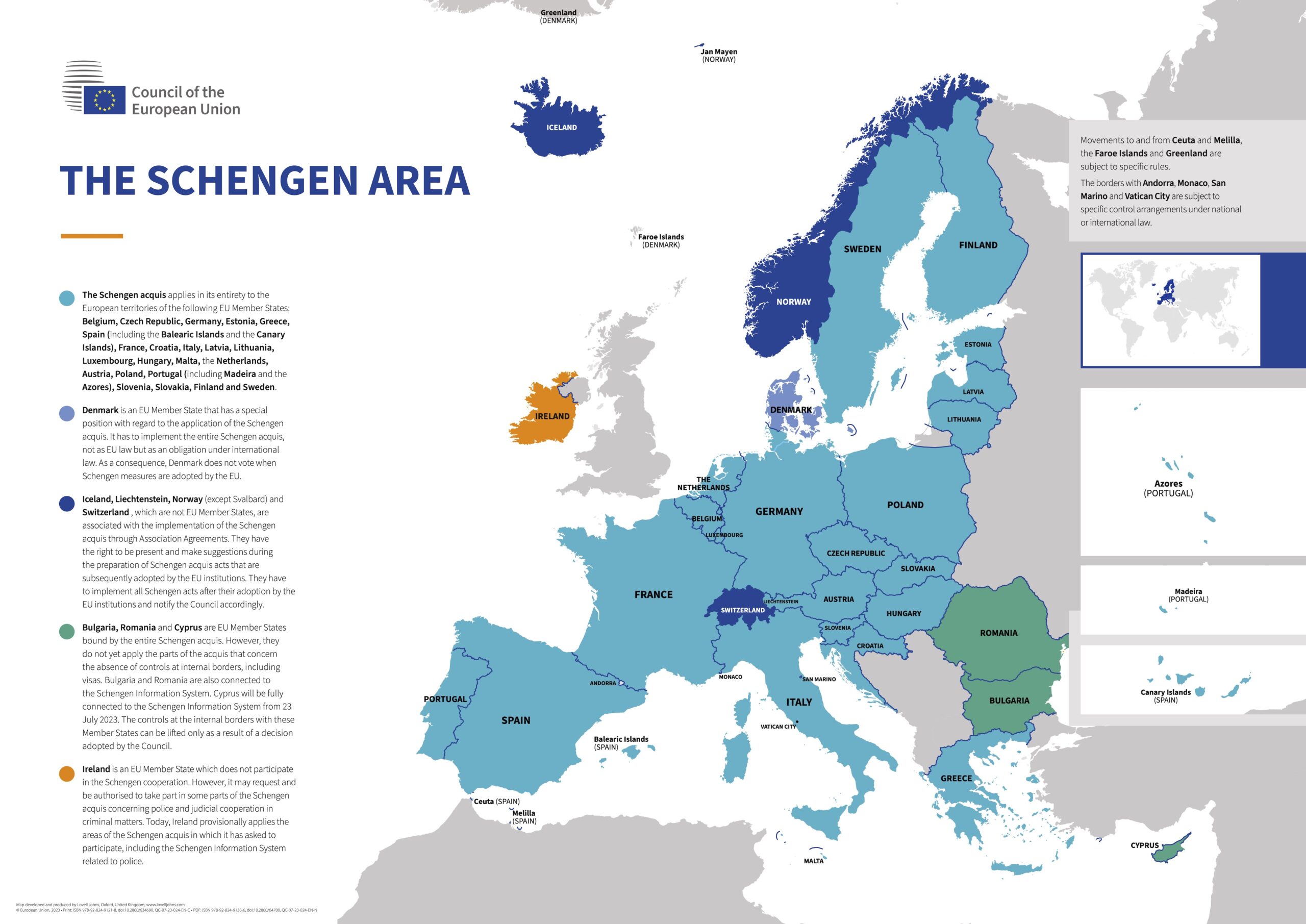
Effective March 31st, Romania and Bulgaria are now part of the Schengen area. This means that passengers and crew arriving in these countries are able to move freely within the EU (by air and sea) without any further immigration or border checks. “Schengen Flights” landing in Romania or Bulgaria are not required to clear customs.

The first “Schengen flight” landed at 0020L on March 31 at LBSF/Sofia, from Naples.

The Schengen Area was established in 1985. Before Bulgaria and Romania’s admission, it was comprised of 23 of the 27 EU member countries, along with Switzerland, Norway, Iceland and Liechtenstein. The only remaining Non-Schengen countries in the EU are Ireland (because Ireland has a common travel area with the UK, and the UK doesn’t like the Schengen idea very much), and Cyprus.

Schengen countries: Austria, Belgium, Bulgaria, Croatia, the Czech Republic, Denmark, Estonia, Finland, France, Germany, Greece, Hungary, Iceland, Italy, Latvia, Liechtenstein, Lithuania, Luxembourg, Malta, the Netherlands, Norway, Poland, Portugal, Romania, Slovakia, Slovenia, Spain, Sweden and Switzerland.

Non-Schengen countries in Europe: Ireland, the UK, Albania, Belarus, Bosnia & Herzegovina, Cyprus, Kosovo, Moldova, Montenegro, North Macedonia, Serbia and Turkey.

Non-Schengen countries in the EU: Ireland, Cyprus.