Hab Dich! German Ops Gotchas

OPSGROUP members have reported several strange things happening at airports in Germany recently. We asked the German Aviation Authority and a few local handling agents and FBOs, who confirmed these were not isolated incidents. So here’s the lowdown on these latest German Ops Gotchas…

#1: The Baggage Hold Gotcha

After a few back-and-forth emails with the German Aviation Authority (LBA – Luftfahrt-Bundesamt, website here), the following is what applies.

If you are operating a commercial flight (i.e. Part 135)  out of a German airport, and your aircraft has an inflight-accessible baggage hold, then ALL baggage will be required to be screened and deemed cabin baggage. Size isn’t considered, so it could be a Citation or an Airbus 330.

This means that passengers won’t be able to take any security-restricted items in their luggage. If they want to carry something sharp, or perhaps some hunting gear, then this would need to have some big lockable box.

You can apply for approval to carry prohibited items from the Ministry of the Interior BMI. The list of goods is here. However, LBA have said that it is not an exhaustive list, and the screener shall have the final judgement.

Bottom line, if you are flying most bizav aircraft out of a German airport and you have something that could be “dangerous”, you are likely to have the item confiscated if screened correctly.

Possible solution: one member has reported that authorities accepted in their AOC to install a wire-lock to the “impact-curtain”, so it is not easy to access the compartment during flight.

#2: Sneaky Security Checks

Jan 2025 update: We’re now hearing that the LBA have started charging operators for these checks! One member reported receiving a 330 Euro invoice for a check that took place at EDDM/Munich. It seems that opting-out of these checks is not possible!

These are not ramp checks, they are “security checks” performed by LBA staff to see whether crew follow the right security procedures.

They basically try to enter the aircraft, and your job is to make sure you stop them. So man the doors! Check their identity, make sure they’re wearing the right ID cards, and you will have passed the test. Another common thing is that they leave a note behind the GPU hatch door to check if you do the security check properly.

EDDS/Stuttgart is one of the top spots for this, but we’ve had reports of this happening at EDDV/Hannover and other airports in Germany too.

We asked LBA about this one too. They reference EU Implementing Regulation 2015/1998 which is all about basic standards on aviation security. We read it, and couldn’t find anything in it warning flight crew to watch out for people in yellow jackets trying to trick them by switching their ID cards around and leaving weird notes on their aircraft.

So we don’t like this one very much. Security is a team effort, and flight crew are a big part of this. Tricking them into compliance like schoolchildren isn’t the way to go.

#3 Fuel Payments

The simple rule we’re all used to: if you’re a commercial flight, you don’t pay tax on fuel. So you fuel up, pay the bill, then if you’re a commercial flight you get Customs to issue you a refund of the fuel tax.

Problem is, what’s been happening more often recently is that Customs have not been showing up to aircraft – presumably due to lack of staff.

We also heard one recent case where Customs refused to accept an AOC of a commercial flight, and the operators had to pay the associated taxes with a private operation.

Possible solution: one of the local handlers recommends that operators make sure they always carry the charter contract for the flight on board, along with the AOC. And if Customs don’t show up for the refund, you can fill in a form and apply after the flight. Here’s a copy. Email it to: poststelle.hza-potsdam@zoll.bund.de


Been to Germany recently and know any more Ops Gotchas to watch out for? Let us know.


Lebanon Risk Update

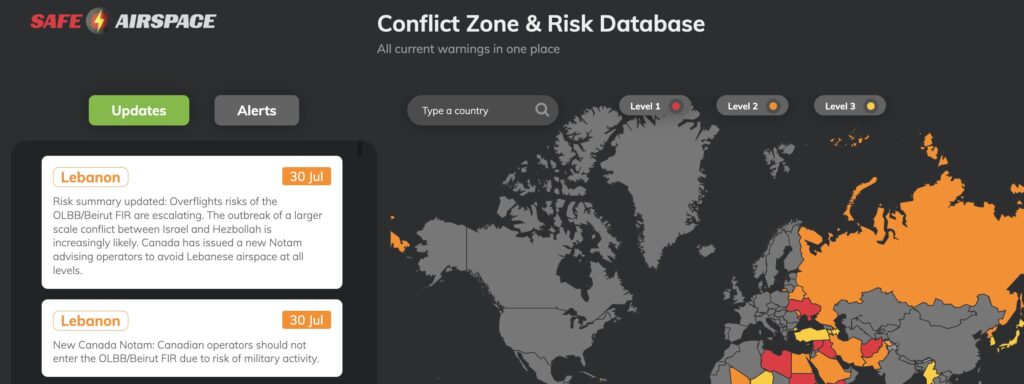
  • Overflights risks of the OLBB/Beirut FIR are increasing. The outbreak of a larger scale conflict between Israel and Hezbollah is increasingly likely. 
  • Several airlines (Air France, Eurowings, Lufthansa, Swiss, Transavia and Middle East Airlines – the Lebanese flag carrier) have temporarily suspended flights to OLBA/Beirut airport.
  • Canada has issued a new Notam (July 30) advising operators to avoid Lebanese airspace at all levels. 
  • Surface-to-air weaponry may be present capable of reaching aircraft at all altitudes. 

Risk to aircraft operating over Lebanon is increasing

There was a significant escalation in hostilities between Israel and Hezbollah in Lebanon over the weekend.

On July 27 a suspected Hezbollah rocket attack caused Israeli casualties in the Golan Heights region – although Hezbollah has been uncharacteristically quick to deny their involvement.

This was quickly followed by Israeli airstrikes well inside Lebanese territory.

The US Embassy has since issued an alert to citizens that scheduled flights to/from Beirut may change or be cancelled at short notice. They’re also recommending anyone there develop a ‘crisis plan’ to leave if the current situation escalates.

There is widespread concern that the two sides could imminently be drawn into a full-scale conflict. In which case the risk picture for aircraft in both the LLLL/Tel Aviv and OLBB/Beirut FIR could change dramatically.

Here is a brief summary of the situation.

Why are Israel and Hezbollah fighting?

The two have fought in several wars – the latest was in 2006. The background to these hostilities is beyond the scope and intent of this article – but you can read more about that here.

The most recent cross-border fighting began almost immediately after the Hamas assault in Southern Israel which sparked the current war in Gaza.

The situation in Gaza has mobilised Iranian-backed militants across the region to act, and Hezbollah is widely considered one of the most powerfully equipped.

Hezbollah has said they will not stop hostilities against Israel until there is a cease-fire in Gaza.

So Far…

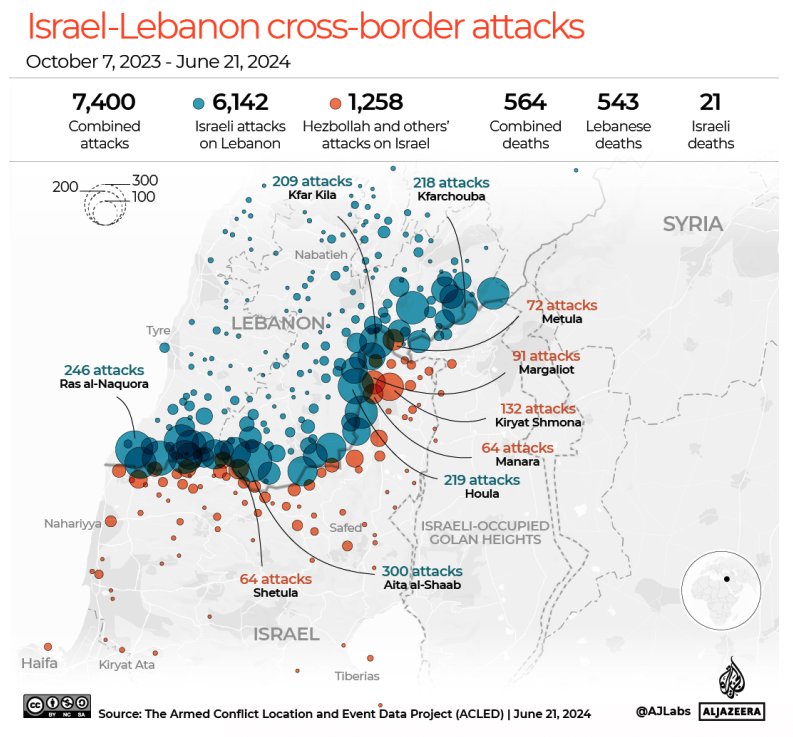
Since the start of the war in Gaza, sporadic fighting across the Israeli/Lebanese border has been almost a daily occurrence. It is not immediately obvious in existing airspace warnings just how frequent these skirmishes have become.

Here is a statistic that may cause alarm to traffic regularly overflying – as of the end of June, the media reported 7,400 cross-border attacks between Israel and Hezbollah in the preceding nine months.

This has included artillery firing, rocket attacks, missiles, drones, and of most concern – air defense activations on both sides. Various instances of false identification have been reported.
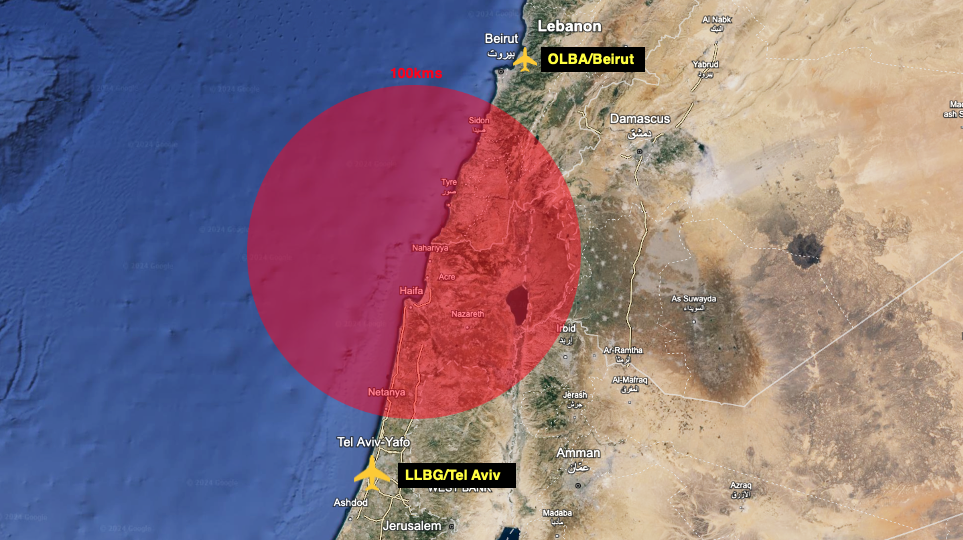
This fighting has mostly been constrained. If a full-scale conflict develops as feared, things may get a lot worse.

In the skies

Just last month, Hezbollah reported targeting Israeli fighter jets using surface-to-air missiles for the first time. Existing airspace warnings for the OLBB/Beirut FIR do not any mention level restrictions.

There has been some credible concern recently that Hezbollah might possess more sophisticated surface-to-air weaponry. One report speculates this includes mobile Iranian made radar-guided SAMs which are capable of targeting aircraft as high as 90,000 feet with range of up to 100kms (depending on the variant).

The Wall Street Journal have also suggested another system may be present with similar capabilities supplied by Wagner Group mercenaries.

It is possible we have just not seen these types of weapons used by Hezbollah in this conflict to date.

While the LLLL/Tel Aviv FIR has arguably been a masterclass in how to maintain safe and informed overflights near a conflict zone in recent month, should a larger conflict arise it is unlikely the safety of civil aircraft in the OLBB/Beirut FIR will be protected to the same extent.

Existing Airspace Warnings

We maintain a Safe Airspace Risk Level of Two (Danger Exists) for the OLBB/Beirut FIR.

Here is a summary of existing state-issued airspace warnings for Lebanon:

  • Canada Operators should not enter the OLBB Beirut FIR at all levels due to risk of military activity. CZQX Notam H3476/24. New, July 29.
  • US FAA Exercise caution within 200nm of the Damascus FIR due to military activity. Possibility of GPS interference, communication jamming, and long-range surface to air missiles in the area. KICZ Notam A0009/18.
  • United Kingdom Caution to UK operators in the OLBB/Beirut FIR due to potential risk from military activity. EGTT Notam V0025/24.

Why have these warnings not been upgraded?

History has taught us that we need to be more responsive to airspace threats – a danger may exist or develop before states publish official airspace warnings or restrictions. And all of that takes time.

The events of the past days have happened quickly, and extensive diplomatic efforts are now underway to prevent a larger-scale conflict in the Middle East, but it remains to be seen if one can be avoided. We’re monitoring the situation closely – keep an eye on safeairspace.net for updates.


Teterboro: RIP the RUUDY SIX

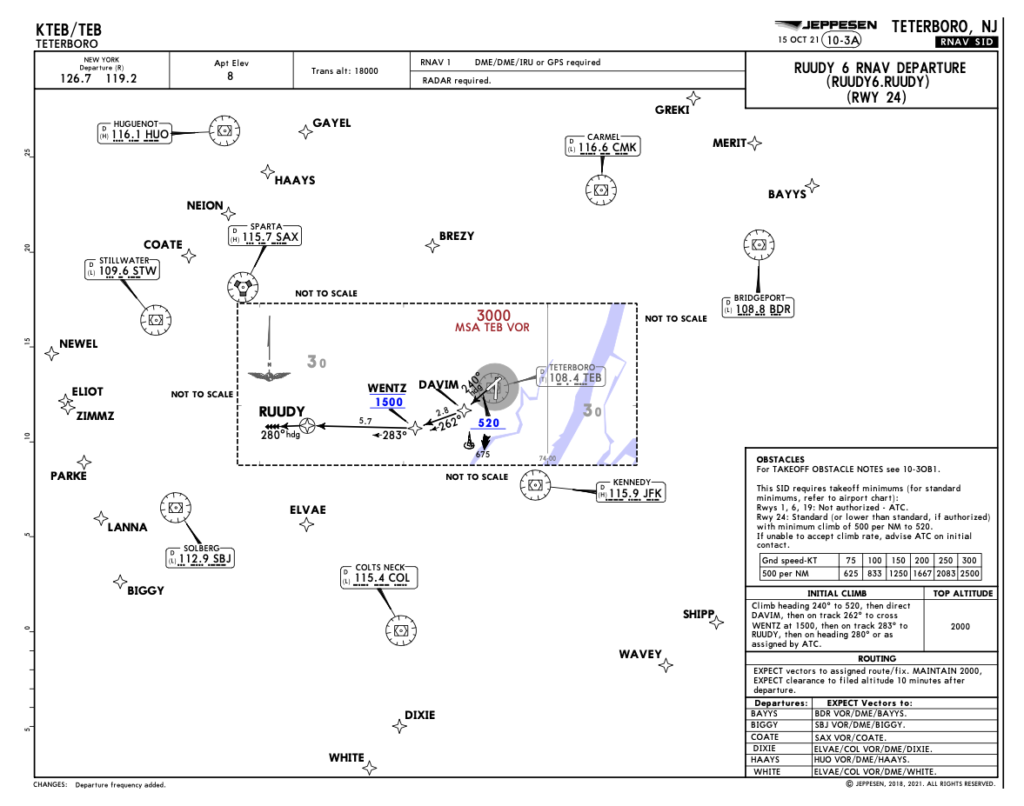
For some time now, the problematic RUUDY 6 SID out of KTEB has been causing trouble. In fact, just prior to the pandemic the FAA reported it had resulted in nearly two hundred pilot violations in just six years.

If you’re not familiar with it, it is a departure from Runway 24. Here’s the chart:

The reason for the high number of deviations is cause for debate with both lateral and vertical excursions reported. In the case of the latter, one suggestion is that the procedure itself isn’t that clear. For instance, a typical IFR clearance out of TEB includes the phrase “climb via the SID.”

Take another look at the chart – it requires a level off at 1500’ and an instruction to maintain 2000’.

This can be interpreted in two different ways – either to maintain 1500’ until cleared to 2000’, OR to continue climb to 2000’ passing the waypoint WENTZ.

The Teterboro Users Group (TUG) since clarified the latter is correct, given there are actually three things going on at once:

  • A turn to WENTZ to separate aircraft on Newark’s 22L ILS above.
  • A level restriction at WENTZ to keep aircraft away from aircraft descending to 2500’ above.
  • Achieving the minimum vectoring altitude for the area – hence the subsequent climb to 2000.’

And all of this while managing the energy of high-performance business jets shortly after take-off into some of the busiest airspace in the world. There is little room to get things wrong.

But people were, and quite consistently. And so, work began to develop a clearer SID to replace the troublesome RUUDY.

Welcome Wentz.

On July 11 that finally happened with the publication of the new WENTZ ONE SID – almost.

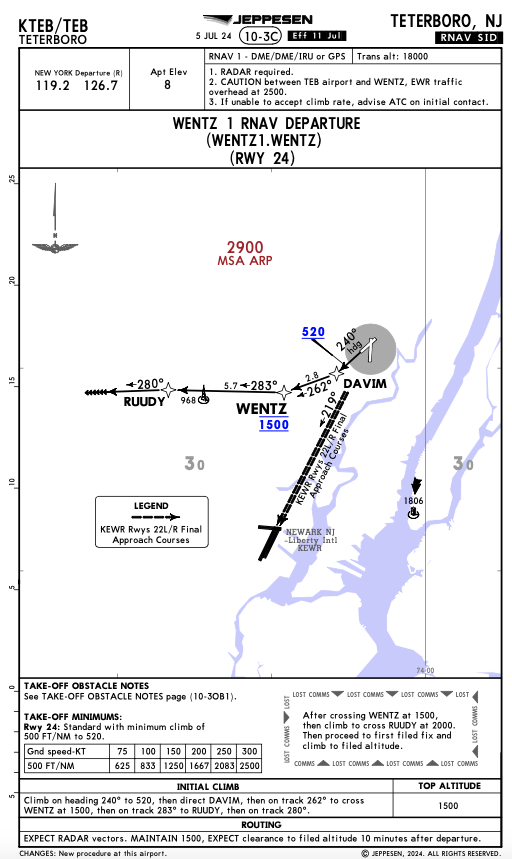
The WENTZ ONE is effectively an improvement to remove the ambiguity. It does away with the step climb to 2000’, instead requiring aircraft using it to maintain the one level – 1500’.

ATC will issue any subsequent climb instruction.

Here’s what the new procedure looks like:

Here’s the kicker though, while the charts have been published, no one is flying it just yet. Why?

TUG explains that this is due to FAA controller training requirements, which are essential. Given the pending relocation of Newark’s airspace from NY TRACON to Philadelphia TRACON it is difficult to predict exactly when this process will be finished.

So, while the plate will appear in your EFB, expect the RUUDY SIX for a short while yet.

What about an instrument approach to Runway 01?

While we have you here – there is another problem pilots need to contend with at TEB.

An instrument approach to Runway 01, or lack thereof.

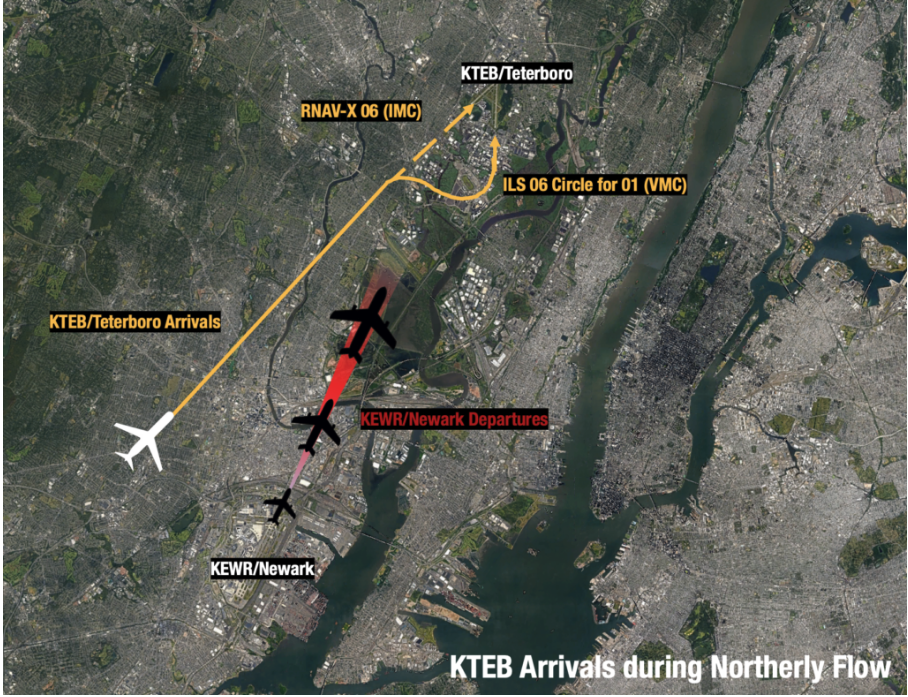
Right now, the common procedure is the ILS 06, circle-to-land 01 to keep you clear of Newark.

This approach is challenging for a number of reasons. If you’re not familiar with those, check out Code 7700’s full briefing here.

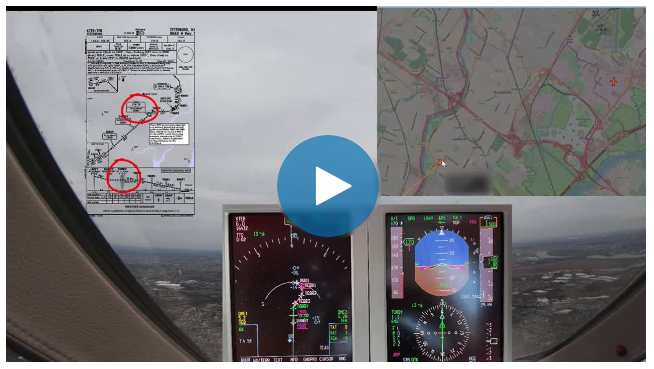
For some time now TUG has been advocating tirelessly for a proper RNAV approach which is long since overdue. There has been some progress for some Honeywell users. Since last year there has been a coded FMS visual approach that replicates the visual to Runway 01, but with lateral guidance and vertical guidance using familiar waypoints DANDY and TORBY. It does this with moderate angles of bank and a gentle 3.5 degree slope alleviating some of the existing threats of the procedure.

You can watch that approach below:

With regards to a publicly available instrument approach to KTEB’s 01, TUG advises we will need to wait a while longer yet. They will have a formal update for us later this year.


400% increase in GPS Spoofing; Workgroup established

GPS Spoofing Risk changes, grows
  • 900 flights a day on average are now encountering GPS Spoofing
  • Safety risks changing and growing: EGPWS primary concern
  • GPS Workgroup established to address issue


Troubling data shows a significant spike in GPS Spoofing over the last few months, with an increasing impact on flight safety.

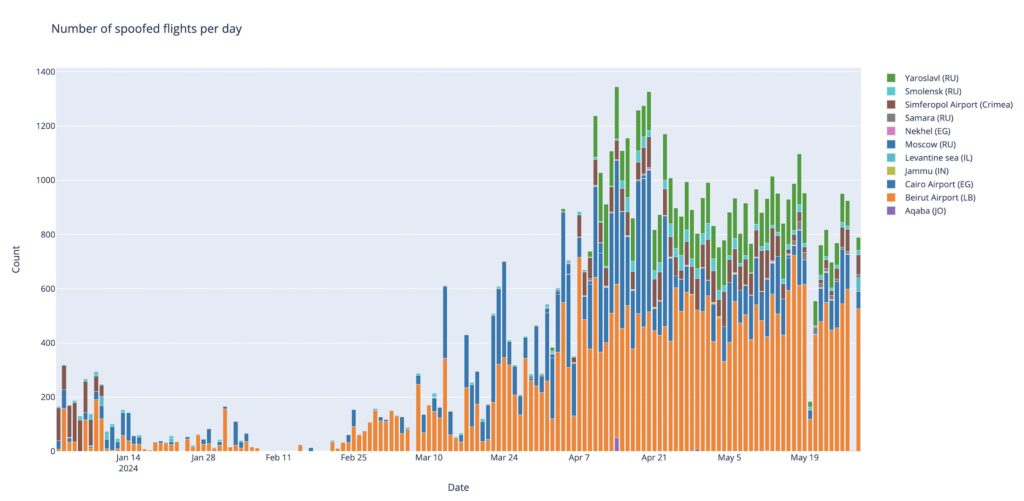
The number of flights affected has risen from an average of 200 daily in the period January-March, to around 900 daily for the second quarter of 2024. On some days, as many as 1350 flights have encountered spoofing. Flight crews also report that the intensity of the spoofing is increasing.


At the same time, the number of locations where spoofing is highly active has increased from three to more than ten. At the outbreak of the new spoofing phenomenon in September 2023, spoofing was encountered in northern Iraq (near Baghdad), Egypt (near Cairo), and Israel. Since then, the Black Sea, Cyprus, the Korean border, and Russia have become spoofing hotspots.


Safety risk changing and growing

For flight crews, the workload and knock-on safety risk resulting from spoofing encounters is both changing and growing. Initially, the primary risk from a GPS spoof was navigational: autopilots began turning aircraft unexpectedly, aircraft position became uncertain, IRS was sometimes lost. With ATC help, often through radar vectors, the situation could be resolved.

With both the increase in intensity and frequency of spoofing this year, a second, more concerning set of risks is emerging.

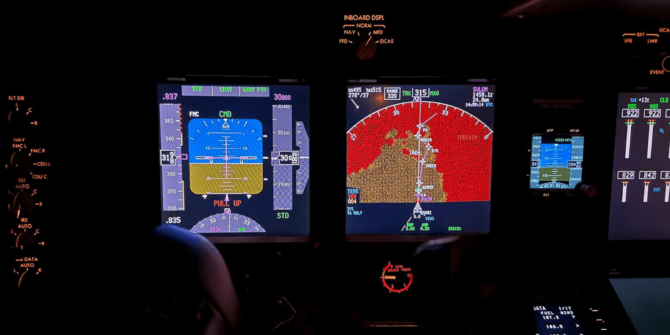
The list is long. GPS is interwoven into many, if not most, aircraft systems these days. The EGPWS – our trusted friend to keep us away from terrain – is suffering heavily, and is becoming unreliable. False alerts – sometimes hours after the spoofing event – are now routine, and as a result, many are inhibiting the system. Crews are losing trust in what was until now an exceptionally reliable and critical device to eliminate CFIT accidents.

Go-arounds directly caused by GPS spoofing effects are also being seen more regularly. False EGPWS alerts are the primary culprit, but in some cases, the indicated wind on the Navigation Display is false and leads to confusion. In others, autopilot behaviour and unusual glideslope/localizer indications are causing missed approaches. Any go-around immediately increases crew workload and reduces the safety margin.

Safety layer of “Swiss Cheese” removed

Other aircraft systems directly affected include TCAS, ADS-B, HUD guidance, and transponders. The aircraft clock, which crews are getting used to seeing “run backwards”, is often one of the first victims of a spoofing encounter, and has knock-on effects which include making CPDLC unusable. Eurocontrol report now seeing this on a daily basis.

For Air Traffic Control, especially in Oceanic and remote regions requiring on-board responsibility for navigation accuracy, life has thus become more challenging. Shanwick and Gander OACC’s now deal daily with aircraft unable to meet the RNP4 requirement for oceanic crossings as a result of spoofing. Controllers have to work harder to separate aircraft, and this has caused occasional diversions to Iceland.

The trouble is that these shifts in safety risk are happening without much attention to them. They are largely unaddressed, latent pitfalls, that will become painfully clear when the first accident attributable to spoofing occurs. A single, full layer of the “Swiss Cheese” has quietly been pulled out of our safety system this year.

GPS Spoofing Workgroup established

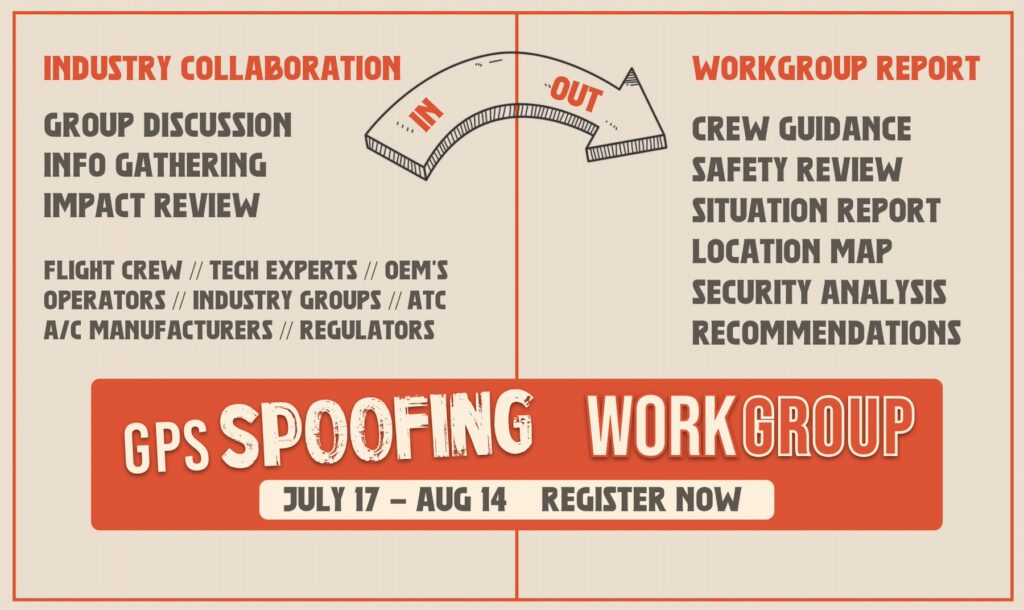
A GPS Spoofing Workgroup has been hastily established to bring the international civil aviation community together and address the problem. The Workgroup is now running, and will tackle the issue by collecting data and information, surveying flight crew, discussing the distinct elements of the problem, and producing a community report. With the 14th ICAO Air Navigation Conference taking place at the end of August, the timing of the final report will aim to support discussions there.

450 participants have registered to take part in the Workgroup, which includes representatives of industry organizations IFALPA, IFATCA, OPSGROUP, IBAC, EBAA, ECA, and BALPA. Airlines and Operators represented include Aer Lingus, Air Atlanta, Alaska Airlines, Cathay, Cargolux, Singapore Airlines, Turkish Airlines, United Airlines, Netjets, El Al, Royal Jordanian, Italian Air Force, USAF, American Airlines, LOT Polish Airlines, and Fedex.

An encouraging element of the Workgroup is the involvement of PNT and GPS experts from NASA, Boeing, Collins Aerospace, FlightSafety International, Honeywell International, Safran Electronics & Defense, Satcom Direct, Aircraft Performance Group, Fokker Services, Honda Aircraft Company, Zurich University of Applied Sciences, and SkAI Data Services. Aviation Authorities participating include the Swedish CAA, Transport Canada Civil Aviation, Civil Aviation Authority of Singapore, Civil Aviation Authority of Thailand, CAA Isle of Man, Eurocontrol, FAA, and NATS UK.

To date, the industry has largely focused on ad-hoc mitigation efforts to deal with the GPS Spoofing problem. The focus of the Workgroup will be to shift to discussing quickly available solutions, and broaden industry awareness of the growing safety risks. It will also seek to provide Flight Crews with better guidance, actions and GPS systems information.

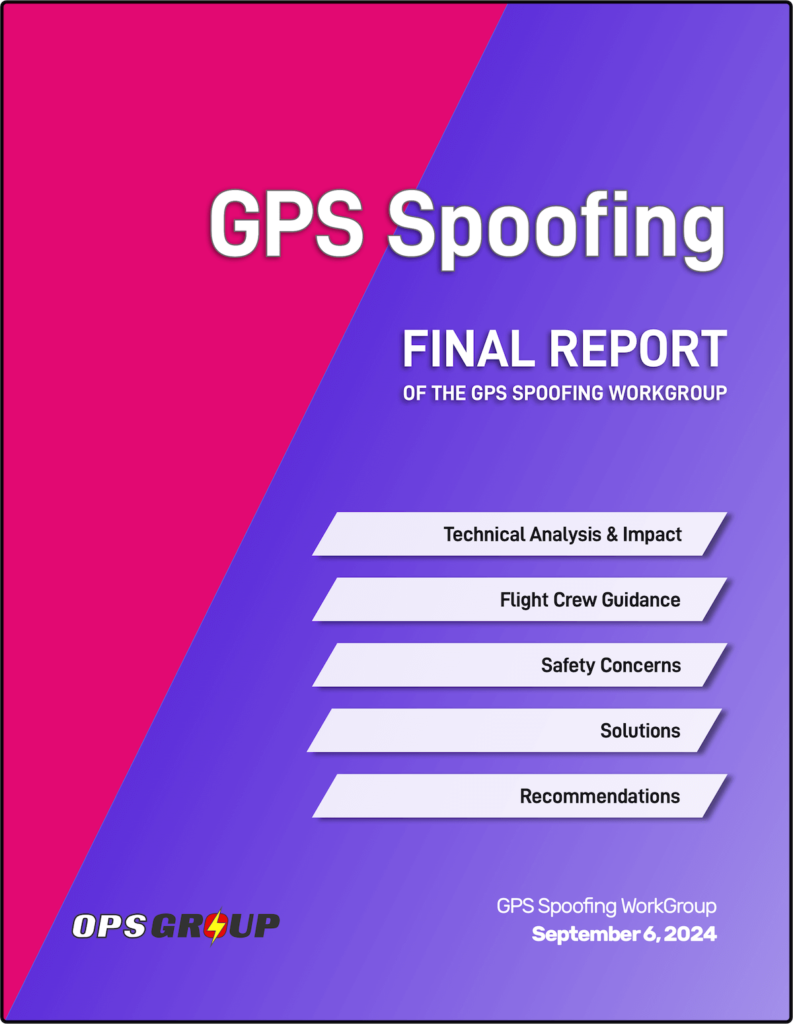
The Workgroup is now complete. A final report will be published on September 6, 2024.


GPS Spoofing WorkGroup 2024

GPS Spoofing WorkGroup 2024
  • A GPS Spoofing WorkGroup is now up and running.
  • We will collaborate and discuss all issues, and produce a report for the community
  • The Workgroup is now complete. A final report will be published on September 6, 2024. 

GPS Spoofing is starting to get out of hand. At first, very few aircraft were being affected – now, it’s hundreds every day. Today we learned of a second fake location over the Black Sea. We are starting to get used to ignoring EGPWS warnings, that we once ALWAYS followed. Navigation is degraded, EICAS messages are confusing, clarity on GPS systems and how they actually work is missing. A single, full slice of the Swiss Cheese has been removed. It’s likely we are heading for an accident directly caused by this issue.

This is why we are organizing a GPS Spoofing WorkGroup, starting this week. Our aim is to collaborate with as many experts, OEM’s, operators, flight crew, ATC, agencies, and industry organizations as possible to discuss all aspects of this issue, and find solutions.

We will present a community report on impact, safety, security, and our recommendations together with crew guidance.

To contact the organzing team, send a note to gps.workgroup@ops.group.

The Workgroup is now complete. A final report will be published on September 6, 2024.


Participation – how much of my time do you require?

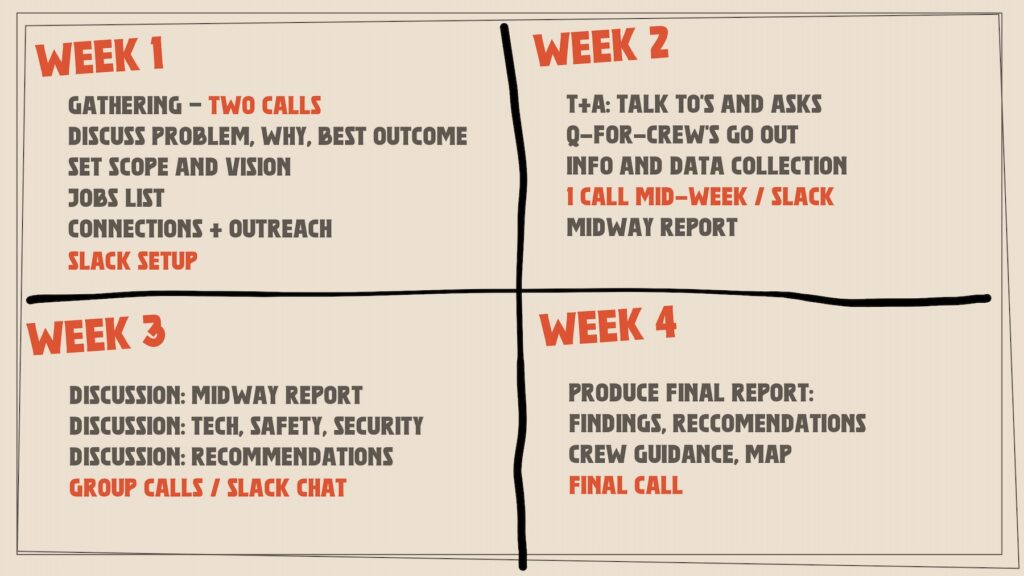
Participate as much or as little as your schedule allows. We’ll have several calls and discussions, but if you can’t make them, no worries. The WorkGroup will be kept updated by regular email summaries and updates. There will be a Slack channel to collaborate, and some shared Google Docs.


WorkGroup Calendar

Volunteers

We’re looking for a couple of volunteers to help with organizing things during the WorkGroup. This is turning into quite a big workgroup already (200+ registrations already), and there will be lots of admin tasks to keep the ball rolling. If you’re good with Google Sheets, organizing info, writing short summaries, organizing people, and that kind of thing .. we would love your help! This would just be “now and then”, when your time allows, during the workgroup which will run for the next few weeks.


July 2024: Afghanistan Overflight Update

Key Points
  • Read to the end for an OPSGROUP Team report from a recent flight over Afghanistan.
  • Afghanistan’s procedural Notams for overflights have been re-issued: the entire airspace remains uncontrolled.
  • The US FAA has amended its airspace warning for the OAKX/Kabul FIR: US operators are still permitted to overfly at FL320 or above but they can now use airways P500/G500 in the far east of the airspace as low as FL300.
  • For the large volume of traffic now using Afghanistan as an air corridor connecting Europe, the Middle East and Asia, we figured it was time for an update on what to expect, and the risks aircraft are taking to use it.

A Little Background

For all intents and purposes, the security situation and the safety of the airspace above has not changed since the Taliban re-assumed control of the country in late September 2021.

What has changed is the normalisation of risk – as more traffic (including major carriers) has been using the airspace without incident, it is important to remember these two facts when considering an overflight (along with your own appetite for risk):

  • The entire FIR is uncontrolled.
  • There is no guarantee of crew or passenger safety if you have to land.

With these factors in mind, here is a brief refresher on what you need to know if you do choose to go ahead and overfly.

Before You Go

Essentially you need to check three things:

  1. PPR. All operators need prior approval to enter the Kabul FIR with at least 72 hours’ notice. To get that, you need to email flightpermissions.acaa@gmail.com.
  2. Compliance with state-issued rules. Several states have long-term airspace warnings in place for Afghan airspace. US operators need to check the current SFAR (more on that below) and any applicable KICZ Notams.
  3. Insurance. Some providers will not cover extended flight through uncontrolled airspace with the risks that apply both in the air and on the ground in Afghanistan.

Overflight

The procedures to overfly the Kabul FIR have not changed – they’re found in a series of Notams recently republished and extended. We previously took a detailed look at those here.

For the purposes of this article, this is the highlight reel:

  • Adjacent FIRs manage the flow in and out of the Kabul FIR and apply 15 minute spacing.
  • Only some routes and levels are available.
  • The entire Kabul FIR is uncontrolled, with TIBA procedures in effect.
  • You can’t change speed or level once inside the Class G (except to avoid traffic or you have an emergency).
  • ICAO contingency procedures apply if you need to descend in a hurry.

Unplanned Landings

For traffic deciding to overfly the Kabul FIR, it is critical to have contingency plans in place for a diversion.

For most operators, this would be to consider a landing at an Afghan airport a last resort (akin to a ditching in oceanic airspace).

Enroute planning should include ETP considerations for the most fuel critical scenario so that aircraft have enough on board to remain airborne and clear Afghan airspace before landing.

As such, be aware of westward diversions into Iran (the OIIX/Tehran FIR). US operators are currently banned from entering at any level due to high risk of misidentification, anti-aircraft fire and unannounced military activity. France, Germany, Canada and the UK also hold similar warnings.

On the Ground

If you do need to land in Afghanistan, welcome to the wild west.

OAKB/Kabul airport is your most likely target and there is no approach control, or tower service in use. As such, weather forecasting and Notams should be considered unreliable at best.

They do provide a phone number you can try and contact for the Kabul Notam Office, +93730006669. Failing that, try +93705769453.

As for crew/pax security, there is none. No country officially recognizes the Taliban as a legitimate government yet.

The Latest US Department of State Travel Advisory is starkdo not go there. If you do, you are at risk of wrongful detention, kidnapping and crime. There is no consular assistance available.

Updated FAA Airspace Warning

Another change to report.

On July 5, the US FAA (slightly) amended its airspace warning for Afghanistan.

US operators are still permitted to overfly the OAKX/Kabul FIR at FL320 or above but they can now use airways P500/G500 in the far east of the airspace as low as FL300.

The FAA’s reason for the change: some operators were struggling to use these airways at higher levels. There have been no incidents here so far, and you don’t spend much time in Afghan airspace while transiting them.

You can view the updated SFAR here.

Our Pilot Report – here’s what we did …

There is a hefty dose of ‘at your own risk’ about all of this. The choice to overfly is not an easy one. To give you a much better idea of what to expect, here’s an OPSGROUP Team report from a recent flight over Afghanistan:

We operated through OAKX FIR on a EHAM/Amsterdam-WMSA/Kuala Lumpur flight

Overflight Permit: Getting the permit was relatively easy. We emailed flightpermissions.acaa@gmail.com (cc to flightpermission.atm@mota.gov.af) and received a response within 24 hours. They replied to us saying that to cross the airspace is charged a flat fee of $700 USD. You will need to fill out the form provided (this Excel document) and then forward that, plus copies of your Insurance, Airworthiness Certificate, and Aircraft Reg. If you are operating commercially, they also want your AOC. They ask for a minimum of 48 hours’ notice, although we put our application in a week in advance.

Insurance: Our insurance (like most) doesn’t allow operations within certain countries; however, they permit overflights on ATC-approved airways, and if you end up diverting due to an emergency, you are covered. We checked, and L750 was considered OK. Several air routes are “open.”

Routing: We had planned on L750, which runs from UTAV (Turkmenabat) to OPLR (Lahore). They also sent us the Kabul FIR Contingency Procedure document. The most important thing to read is the broadcast procedures since there is NO ATC service. The flight was very straightforward, and this route saved us a fair chunk of time and fuel.

ATC Comms: About 5 minutes before Kabul’s boundary, the UTAV controller asked us to “report ATC established with Kabul.” We tried calling Kabul on 125.2, knowing full well there was no ATC service. We told UTAV that we were going to continue TIBA procedures in Kabul FIR, and they told us, “Radar services terminated, frequency change approved. Good night.” All our external lights were switched on. We used Comm 2 as our TIBA box (125.2), Comm 1 stayed with the UTAV frequency, and Comm 3 (our data link was set to SAT) to monitor 121.5. Revise your TIBA calls; they suggest you broadcast them every 5 minutes. We used each fix, and it worked at about the right time.

Over Afghanistan: There was one aircraft departing OAKB/Kabul airport, a commercial jet on its way to Dubai, and aside from that, there was no one else. Up at FL450, we had a great view of the terrain – the word is “inhospitable.”

We could continue to hear UTAV on Comm 1 until about 15 minutes into Kabul when we switched to 124.1, the OPLR (Lahore) FIR frequency; about 15 minutes before we got to the boundary, we could hear calls from other aircraft. We had about 10 minutes of “dead” time on Comm 1.

I had an ETP using UTAV/Turkmenabat and OPIS/Islamabad and did not consider using any of the airports within Kabul FIR as available airports. This was treated just like a NOPAC or NAT crossing. There is nowhere to go, so if something eventful happens, you can keep going or turn back based on your ETP.

We checked in with Lahore about 10 minutes before reaching BIROS, and they told us to call overhead BIROS.

Key Points: It is relatively straightforward; brush up on the TIBA calls. There is more traffic nowadays as several airlines are using the routes for daytime flights, so it was a bit busier the last time I used it. However, at best, you will have a couple of airliners in the mid to high FL300s. There was no GPS Spoofing / Jamming or bad ATC, so I would use this route again, considering the other options in that region.

Let’s help crew make a more informed decision with more reports from other pilots.

You experience is invaluable – if you are overflying Afghanistan and have some operational advice, please share it with the group. You can reach us on team@ops.group, or file an Airport Spy report anonymously here.


NAT Crossing after GPS spoofing: a guide

An increasing issue for the NAT Oceanic FIR’s is how to handle aircraft with an in-flight degradation of GPS. This normally follows a GPS Spoofing encounter somewhere prior to Oceanic Entry, leading to a degraded RNP capability.

If you run into GPS issues before entering the Ocean, you will likely end up with RNP10 as the best you can manage for navigational accuracy. This presents some issues for the Oceanic controllers, as RNP4 is commonly used to ensure separation. We’ll take a look at some scenarios and how to best handle these.


Normal RNP requirements on the NAT

NAT Doc 007 specificies two RNP options for entry into the NAT HLA.

The first is RNP10 (accuracy of 10 nm, 95% of the time). An important consideration here is that RNP10 is really RNAV10, but they call it RNP10 to keep things simple [See NAT Doc 007, 1.3.4]. The critical difference is that for RNAV10, on-board monitoring is not required. Since this can only be done by GPS, that’s an important relief when it comes to spoofed flights.

The other is RNP4 (accuracy of 4nm, 95% of the time). RNP4 is only an absolute requirement for PBCS Tracks (“Half-Tracks”). In practice, ATC commonly uses RNP4 for separation purposes on the NAT (Since the introduction of ASEPS). GPS is required for the monitoring part of RNP4; without GPS, RNP4 is not possible.


Loss of GPS Prior to the NAT

Since GPS Spoofing became prevalent in September of 2023, increasing numbers of aircraft are arriving at the Oceanic Boundary with one or both GPS sensors inoperative. A textbook GPS Spoofing encounter will initially see the GPS sensors rapidly change from the real coordinates to fake coordinates. If all GPS sensors agree on the fake coordinates, the FMS becomes confused. IRU values will increase, and in some cases, the IRS may also become “infected”.

The primary spoofing locations have not changed much since the onset of the issue: you will encounter spoofing at the Iraq/Iran border, the Sinai peninsula area (showing Tel Aviv as the spoofed location), Israel and Cyprus (showing Beirut as the spoofed location), and the Black Sea (showing Sevastopol as the spoofed location).

We have no reports in OPSGROUP that the other type of GPS interference – GPS Jamming – leads to lasting effects. Once the jamming has stopped, aircraft systems are normal.

However, we do have reports that if GPS inputs are turned off before departure, and later turned back on in flight, that issues may occur. This is mostly reported for departures from Tel Aviv (LLBG).


GPS failure, Ocean approaching

Since RNP4 requires a functioning GPS, if you encounter spoofing and lose your GPS, you can’t fly RNP4. Assuming that you have an RNP10 approval (one of the only two options for the NAT HLA), you will become RNP10.

The problem occurs when Shanwick, or the OACC at the entry point, get late notice of this fact, and you are close to other aircraft. That leaves the Planning Controller with little time to figure out how to separate you (an RNP10 aircraft) from the others (RNP4 aircraft).

In some cases, “spoofed” aircraft have had to descend  to FL280 to exit the NAT HLA, and this has caused diversions.


How to best handle a NAT crossing with a failed GPS

The key is to advise Shanwick, or the first OACC, early. Shanwick’s preference is that you use the RCL request to do this, and add a note to the end of the RCL along the lines of ATC REMARK/GPS DEGRADED RNP10 ONLY. If using voice to get your clearance, that’s what to say as well. Shanwick NOTAM EGGX G0106/24, and a note on the OTS Track message, has this information.

The RCL for Shanwick should ideally be sent 90 minutes before the Oceanic Entry in this case. Normal RCL timeframes are -30 to -90. An RCL sent any earlier will be rejected, but if you have something more unusual to discuss, you could use SATCOM to contact the supervisor and ensure a smooth crossing.


RNP10 time limit

With the change to RNP10 for your crossing, double check the time limit for RNP10. ICAO Doc 9613 (Volume II, Part B, Chapter 1) specifies that RNP is limited to 6.2 hours of flying. The timing starts from when “the systems are placed in navigation mode” or at the last point at which the “systems are updated”. The logic here is that the IRS will drift without updates enroute, and after 6.2 hours of flying, will no longer be capable of maintaining the RNP10 accuracy.

For an aircraft spoofed in the Mediterranean, or Black Sea area, it will take 4 hours before Oceanic entry, so this time limit becomes relevant. If the impact of the spoofing is severe enough, there is potential for inputs – including DME/DME or VOR/DME –  to the IRS to stop working. This is one of the potential unknowns at present.


Shanwick comments

Shanwick are encountering several GPS jammed aircraft per day, and it is sometimes difficult (or impossible) to find optimum profiles for aircraft without moving several other aircraft to accommodate. The only instance where they have to insist on FL280 and below, is when an aircraft does not meet the requirements for MNPS (such as single LRNS), and needs to be cleared outside HLA.

If a pilot advises that they have lost RNP4, but are still capable of RNP10, Shanwick controllers will look to find a solution where the aircraft can be cleared with at least 10 minutes longitudinal and 60nm lateral separation. These aircraft also need coordinating with the next Oceanic Center before clearance, and sometimes there are limited options available.

In general, the earlier they informed about the degradation, the easier it is for the Shanwick controllers to find satisfactory solutions.


Member input

This is a developing issue and we gratefully welcome any input from members on this. Email us at team@ops.group.


NAT Doc 007 – New Edition

A new version of NAT Doc 007 has been published today (July 4th, 2024).

NAT Doc 007 is the main go-to guidance doc for ops over the North Atlantic. All the specifics about how to operate your aircraft safely through the complex airspace of the region are here. As of this morning, the latest version is NAT Doc 007 2024 Amendment 4. Download a copy.


What’s changed?

For this particular update, not a lot. The changes relate to the language around the new RCL process, and what to expect back from ATC once you send your RCL. This is part of the Oceanic Clearance Removal project.

Earlier in the year, the new RCL response included the language “RCL RECEIVED BY [ANSP]. FLY CURRENT FLIGHT PLAN OR AS AMENDED BY ATC

That turns out to have been creating confusion, so the RCL response will now just say:
RCL RECEIVED BY [ANSP]

These changes are in section 6.2.26 onwards.


What’s the latest with the RCL/OCR project?

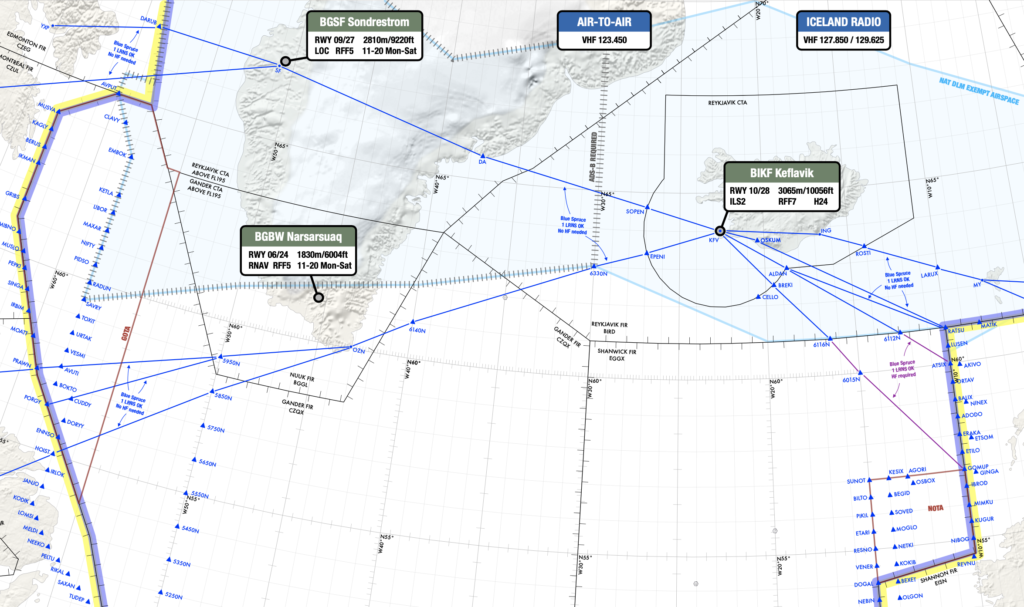
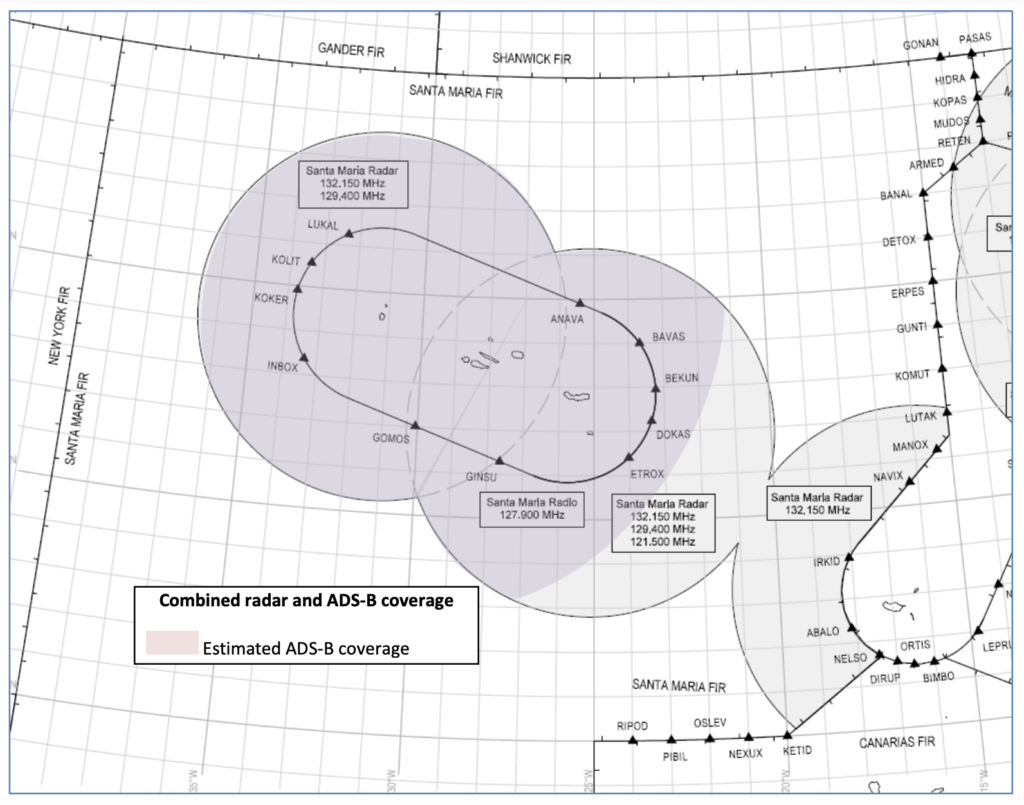
Santa Maria and Iceland have made the change, so entering that portion of the NAT HLA does not require an Oceanic Clearance. You do still have to send an RCL in the same way as if you were requesting an Oceanic Clearance, but once sent, and you get an ACK – that’s it. For more on the new process, read about Oceanic Clearance Removal.

Gander, Shanwick, and Bodø have postponed their change to December 4th, 2024. This means that for now, nothing has changed – you get an old-school Oceanic Clearance in the same way you always did – with an RCL, or via voice.


So there are two kinds of RCL then?

Yep. For Gander, Shanwick, and Bodø, RCL means Request Clearance. You send this message, then wait to get your Oceanic Clearance back, usually via an OCL message on datalink.

For Iceland and Santa Maria, RCL means RCL Message. This is a “Check-In” of sorts, but the format is the same as the old meaning of RCL.

Confused? You’re not alone. But by Christmas, all will be easier – once everyone is on the same page. Play “Clearance or No Clearance” to help get things straight.


The hole in NAT Doc 007

There’s one problem with NAT Doc 007 – we’re in limbo land until Christmas. All of the guidance relates to how to send an RCL in a post-Clearance world. But for the next 5 months, most of us still need an Oceanic Clearance, and there’s no information on how to actually get one.

In the previous version of NAT Doc 007, Chapters 5 and 7 related to the Oceanic Clearance process, but those have been deleted. So, here’s a copy of the old NAT Doc 007 from 2023, which details that process.


Can we help?

If you have a question about this or need some help, just write us a note and we’ll do our best: team@ops.group.


Hurricane Beryl

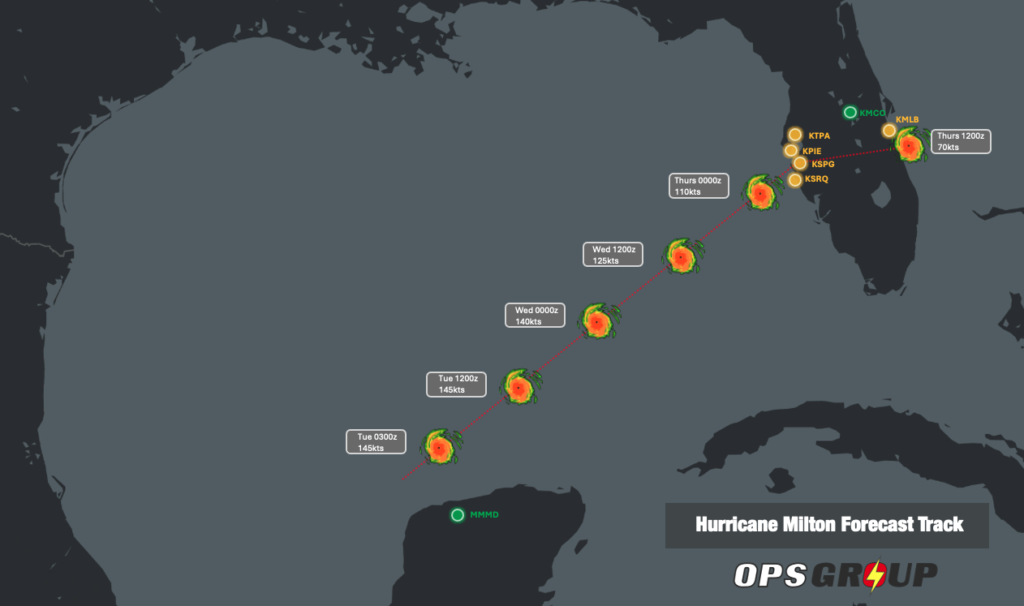
The OPSGROUP Hurricane tracker is now active for Hurricane Beryl, which is on track to hit Jamaica on Wednesday, with sustained winds of 110 kts. A hurricane warning has been issued for the entire country, along with the Cayman Islands. 

Click here for the interactive map.

MKJP/Kingston and MKJS/Montego Bay are already closed.

Further west, MWCB/Cayman Brac and MWCR/Grand Cayman will close on Wednesday at 1500 and 1800 local.

The Hurricane Beryl Situation Report is being updated as airports close, and will have information on reopening.

There has been significant damage to airports in St. Vincent & the Grenadines post-Beryl, and all are now focused on relief operations. TVSA/Argyle is open and operating for relief flights, the smaller ones (TVSB/Bequia, TVSC/Canouan, TVSU/Union & TVSM/Mustique) have different degrees of infrastructure damage and are closed other than for specific relief operations.

If you have an update to share regarding Airport Status for any affected airports, please use the link below or email news@ops.group.


Member Meetup: July 3rd – Agenda

Member Meetup – July 3rd
  • OPSGROUP Meetup starts at 1900 UTC today
  • New member intros, Ops Topics, Workshop, OPSGROUP Updates
  • Final Agenda below: highlights are GPS Spoofing, NAT Chat, Euro Summer Ops


Hi all, here is the final agenda for today’s Member Meetup at 1900 UTC (Wednesday 3rd July)

Abbreviated Agenda

  • Welcome!
  • What’s all this about then? Quick intro to Member Meetup
  • New members – 968 new people so far this year, a round of hello’s, intro’s, where you are and what you fly or operate
  • OPS Topics – group discussion and action items
    • GPS Spoofing – discussion, locations, OEM updates, IRS/Hybrid infection, plan for Workshop on the issue.
    • NAT Chat – discussion of changes in 2024, RCL/OCR, Don’t Climb problem, NAT jamming.
    • Euro Summer – discussion of major pain points in Europe this summer: parking issues, ATC Strikes, CPDLC logon lists,  EU LISA.
  • Workshop Projects – EVS vs LED lights, Stand Guidance, GPS Spoofing, Euro First time ops, and suggestions for new projects
  • OPSGROUP Update – Report-A-Thing, Daily Brief changes, Below The Line Workshop, GoCrow/Route Check
  • Danger Club – conversations about cockpit happenings we normally don’t talk about. New series, suggestions for incidents.
  • Meetup Notepad: shared Google Doc


How do I take part?

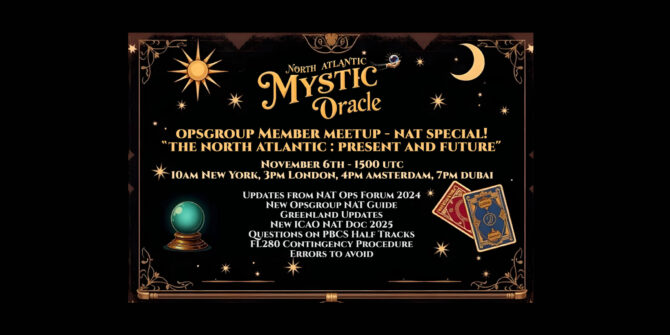
  • Meetup starts at 1900 UTC, Wednesday 3rd July – that’s 1500 New York, 2000 London, 2100 Amsterdam, 2300 Dubai.
  • Register for the call here.
  • For full Meetup info, visit the Meetup page in your Dashboard.
  • If you have any issues registering or accessing the link, just email team @ops.group.


Ops to Paris for the Olympics

Key Points
  • Paris will be busy from July 22 to Aug 11 (Olympics) and Aug 26 to Sep 8 (Paralympics).
  • LFPB/Paris Le Bourget will likely be the airport you want to go to, but expect quick turns only with reposition elsewhere for parking (options below).
  • There’s a procedure to know about (slots, PPR, no late changes).
  • Paris will be a no-fly zone on July 26 for the opening ceremony.

France has published new AIC 13/24 (effective 27 June 2024) with procedures for operators to follow if they want to fly to a Paris airport during the Olympics. It’s essentially a corrected AIC, because the previous one had confusing advice for business aviation!

Here’s what bizav flights have to do

  • You must file a “flight intention” for each flight (send this to your handler/FBO no later than 2 hours before take-off for flights to LFPB/Paris Le Bourget, or 4 hours for other airports).
  • There’s no accreditation for pilots or operators during the Olympics, and everything will proceed pretty much as normal. The AIC only applies to VFR flights.
  • The airport authorities will implement slots/PPR from July 12 to Sep 16 (these are obtained by the handler and sent to the operator), so you just need to fill out the FPL with the airport slot ID in Field 18.
  • LFPB/Le Bourget airport authorities will not allow any updates with two hours prior arrival or departure – no change of timing, no change of crew or pax. The handler will send this info to the authorities prior to the flight, and if they don’t reply then the flight is approved. If there is any issue with the pax or crew, the handler will be notified, and the flight will be refused.
  • It’s going to be busy, so LFPB/Le Bourget will only be accepting quick turns with parking elsewhere.
  • If you get a slot, you best keep it – if you cancel it there’s no guarantee you’re going to get another one.
  • Check with your handler of choice about their fees cancellation policy, as some of these will be non-refundable.

At LFPB/Le Bourget you have a few options for handling:

Astonskywebsite
lfpb@astonsky.com

Dassault Falcon Servicewebsite
handling@dassault-falcon.com

Jetexwebsite
fbo-lbg@jetex.com

Signaturewebsite
lbgt1@signatureflight.fr

The Opening Ceremony

France has published a SUP showing the closed airspace for the opening ceremony of the Olympics in Paris on July 26.

On that day, between 1630-2200z, Paris will basically become a no-fly zone – no flights will be able to enter the airspace or go to/from the airports. Watch out for overflights too – these won’t be allowed either!

Flight plans to Paris airports will be rejected starting 1530z. Departures from LFPG/Charles De Gaulle might be allowed starting 2130z with special approval.

Where to go?

LFPB/Paris Le Bourget, LFAQ/Albert, and LFOK/Vatry seem like the best bets.

LFPT/Pontoise and LFPM/Villaroche might be options too, but there’s no customs available here, so these airports are only available for flights between EU/Schengen airports only (i.e. not direct from the likes of the US).

Ones to cross off your list

  • LFPO/Orly and LFPG/Charles De Gaulle as they are dedicated to airline flights
  • LFOB/Beauvais and LFOP/Rouen as they have no support for bizav flights.

Most operators are doing one of the following

  1. Drop and go: Get a slot into LFPB/Le Bourget, fly in, drop off pax and then reposition elsewhere for parking. LFPM/Villaroche and LFPT/Pontoise are good options for this.
  2. Clear customs elsewhere: Clear customs at some intermediate EU airport (somewhere like LFAT/Le Touquet or LFOP/Rouen), do fast turns for just customs, and then fly to either LFPT/Pontoise or LFPM/Villaroche for parking and pax can access Paris directly. This avoids the slot situation at LFPB/Le Bourget.
  3. Do everything elsewhere: Use LFOK/Vatry (2:30 drive into Paris) or LFAQ/Albert (2:10 drive into Paris) directly, where there is customs, and avoid a positioning, but have a very long car journey into Paris.
  4. Avoid! Just avoid the Olympics altogether. Go somewhere else for your holiday instead.

Tell me more about LFPM/Villaroche

Here’s a report from local handler Elyxan Aviation: ops@elyxan-aviation.fr

LFPT/Pontoise does not have a customs facility and neither do we. This is frustrating as we are the two main Paris airports within a reasonable driving distance of the city centre.

LFPM/Villaroche is actually a good option as we have lots of parking and a modern FBO/with VIP lounge. We can offer 24/7 operations, which even LFPB/Le Bourget cannot. That the French authorities don’t allow LFPT/Pontoise or LFPM/Villaroche customs and immigration is extremely unfortunate, especially as LFPB/Le Bourget is overloaded even normally in the summer.

LFPM/Villaroche is marginally closer to Paris than LFPT/Pontoise in real world times as we have better and closer motorway connections. We’re 45-50 mins from the center and LFPT/Pontoise is 50-55 mins. In reality we are the best for South Paris, and LFPT/Pontoise and LFPB/Le Bourget are better for North. LFPM/Villaroche and LFPT/Pontoise are about equidistant for the Versailles region in real driving times. As the heliport is on the south side of Paris, we at LFPM/Villaroche are better situated for heli transfer into the city (10-15 mins from LFPM/Villaroche and 20-25 from LFPT/Pontoise).

LFPM/Villaroche is less well known, but a substantial airfield and a longer runway than LFPT/Pontoise. Sadly, the airport is managed by the French State and not the private company ADP that manages LFPB/Le Bourget and LFPT/Pontoise. Hence, the lamentable marketing of our airports capability and absolutely superb position.

You can download the brochure for the Elyxan Aviation FBO at LFPM/Villaroche here.


Don’t Climb! A Big NAT No-No

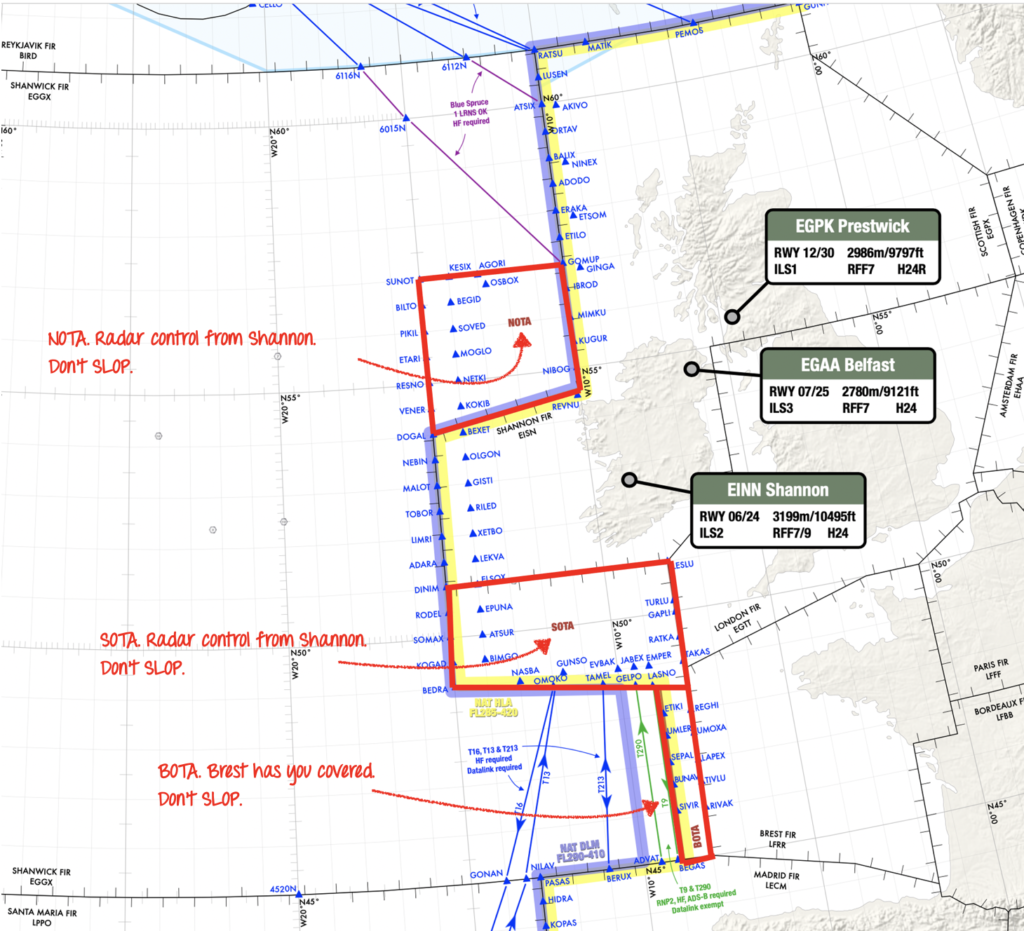
Last week, Gander Oceanic asked us to get the word out on this growing problem. More and more crews are getting this wrong, especially since OCR/RCL is starting to happen elsewhere on the ocean. The same issue is common on the other side of the pond, most frequently in the Shannon FIR.

What’s the problem?

Pilots climbing without a clearance.

Why would we do that?

Because we think we have a clearance.

OK, tell me more

When you get your Oceanic Clearance – or send your RCL, it contains an Oceanic Entry Point, Flight Level, and Speed. From that point, that’s what you should fly. But if you are currently at a different level to the Oceanic Cleared Flight Level, you have to ASK for the level change. That’s really all there is to it.

Oceanic Clearance is not a Domestic Clearance

Your Oceanic Clearance is valid only from the Oceanic Entry Point (OEP). Take this example.

ACA123 CLRD TO LFPG VIA NEEKO 54NO50W 56N040W 57N030W 57N020W PIKIL SOVED
FM NEEKO/1348 MNTN F330 M082

Your Oceanic Clearance commences at NEEKO. You must be at FL330 by the time you reach NEEKO, and then track to 54N50W.

But, if you’re still somewhere over Newfoundland at say FL320, you have to request higher from Gander Domestic ATC, before you climb to your Oceanic Level.

If you just decide to climb without asking, that’s where your day will start to go wrong.


Recent procedural changes to the NAT may also be compounding the problem, so let’s take a closer look.

Wait, I thought Oceanic Clearances on the NAT were a thing of the past?

Soon soon, but not yet. While Reykjavik and Santa Maria have removed oceanic clearances, Bodø, Gander and Shanwick are still targeting December 4 for the big switch. Until then, expect to receive a conventional oceanic clearance when approaching their airspace.

Oceanic Clearances

 You can read all about them in NAT OPS Bulletin 2020_001 Rev 1, but the crux of the issue is found in Section 5.3 (Clearance Delivery):

… The flight level contained in the ACARS data link oceanic clearance is the “cleared oceanic flight level” for the purposes of complying with the lost communication procedures detailed in State AIPs, ICAO Doc 7030 (North Atlantic Regional Supplementary Procedures) and NAT Doc 007. ATC is responsible for providing a clearance to enable the flight to reach this flight level before reaching the OEP. If there is a concern, flight crews should contact ATC…

They made this handy picture too:

 In other words, the flight level contained in the ACARS datalink oceanic clearance is NOT a clearance to climb (or descend). You need to request this with your active ATC.

Why is this becoming a problem again?

We can only speculate – Gander aren’t sure either. But we suspect the use of datalink, in addition to recent RCL changes may be the culprit. For instance, back in May, the automated response to an RCL message was changed (ironically to reduce any ambiguity). It now only reads “RCL Received by (ANSP).” In other words, the “fly current flight plan or as amended by ATC” bit was removed. A full oceanic clearance therefore contains more information, and the use of ambiguous phrasing such as ‘cleared level’ may be creating more confusion on the NAT than ever before.

Questions?

Comment below, or email the OPSGROUP Team for help!


SAFA Ramp Checks: The Top 5 Offenders (+Alcohol test)

Highlights (updated 2024)
  • The Top 5 SAFA Ramp Check Findings are Flight Planning, Aircraft Documents, Defects, Charts, and Cabin Safety
  • It’s not a knowledge test, so feel free to say “I don’t know”
  • Alcohol testing is now common, see below for a guide

Ramp check! Not our favourite couple of words in the aviation vernacular, but when your number’s up, wouldn’t it be good to know what things most of us are getting wrong?

Well, here they all are, in a handy little guide. Download, print, attach to wall-of-your-choice, and enjoy.

What do we base this on? Well, something pretty special happened recently. The French DSAC partnered up with IS-BAO to take a look at hundreds of de-identified ramp check findings in order to analyse the most frequent CAT 2 and CAT 3 findings in business aviation.

This is “special” for three reasons

  1. It’s great that an aviation regulator has actually shared this info because now we can see the top things we’re getting wrong.
  2. If we can see the top things we’re getting wrong, we can stop getting them wrong, and then ramp checks become faster and more efficient for everyone. 
  3. It’s great that this specific aviation regulator happens to be the one from France – because that’s where a lot of ramp checks seem to occur!

So, all good. IS-BAO published the results here, and it’s worth giving that a read first before we press on…

The Top 5 Offenders

As the good folks from IS-BAO point out – EASA Ramp checks cover 52 inspection items spread over 5 areas: flight deck, cabin, aircraft condition, cargo, and general/other.

But some of those 52 items generate more findings than others. The DSAC/IS-BAO study found that the top inspection items by number of CAT2 and CAT3 findings for business aviation were these ones:

1. Flight preparation (RI checklist item A13)
2. Mass and balance calculations (A14)
3. Manuals (A04)
4. MEL (A07)
5. Checklists (A05)
6. Defect notification and rectification (A23)
7. Navigation/instrument charts (A06)

So essentially, these findings all relate to five key areas: Flight Planning, Documents, Defects, Charts, Cabin Safety. Get these right, and your “sweatin over a ramp checkin” days are over, partner!

Have you been ramp checked recently?

Let us know! Where did it happen? How did it go? What things surprised you?

As always, we will de-identify anything you share with us before we tell anyone else about it. But we’d love to hear your stories, and other people will too! Our idea is to gather together as many of these stories as possible, and put them into a little book to help give other pilots and operators an idea of what to expect. So if you’ve got a story to share, send us an email at news@ops.group

In related news: the EASA RIM has been updated.

What’s the EASA RIM? Europe’s version of the Pacific Rim movie only with ramp inspectors saving the aviation industry from danger? Or just an updated version of a rather boring manual?

Sadly, just an updated manual.

EASA have made some amendments, corrections and added some other details to their Ramp Inspection Manual, so here is our guide to their 131 pages of guidance (and an Appendix).

What’s up?

The Changes to the RIM are contained in a 131 page document here. So this is the doc that crew might want to read. (The massive doc that ramp inspectors use is called the Appendix – we’ll get to that later).

The big stuff to look out for (that we could see) is stuff on Alcohol testing and they’ve changed the name of the “Standard Report” to “Safety Report”.

Page 76.

Let’s start with something small.

This isn’t actually a change, but just something we think might be of particular use. It is the Checklist for on-the-job training for ramp inspectors. Basically, it is a long list of all the stuff they need to check. Which means it’s a long list you might want to check so you know what you are going to get checked on.

Alcohol Testing.

Scroll to page 98 (section 10.3) and it lays out all the info on alcohol testing and how it should be carried out. There is a lot of info here (most of it for the inspecting agents rather than you) but still not uninteresting to read.

The general principles are that it should be done somewhere private, out of sight of anyone else, and if you aren’t happy with the spot they pick then chose another. 

They’re testing to see if you blow more than 0.2 grams of blood alcohol concentration. If you blow below that then you pass. If you test above then don’t panic straight out, they must do a follow up confirmation test which mustn’t happen before 15 minutes, or outside of 30.

Certain drinks can mess up the results:

  • “Aromatic beverages” like fruit juice (never heard them called that)
  • Mouth sprays with alcohol content
  • Medical juices (I don’t even want to know what that might be)
  • Burping on the test can create false positives.

Here is a particularly hideous flow chart of the entire process. 

We think it’s easier to sum up stuff like this:

  1. Don’t ever go to work drunk. Most operators/states specify a minimum time between drinking and working but if you aren’t sure 12 hours is a generally decent one to work off.
  2. Of course even 12 hours won’t get you sober in time if you’ve been on a mega bender the night before. So don’t do that.
  3. If you wake up before you’re report time and realise you’re drunk/potentially drunk then CALL SICK!
  4. If you think a colleague is drunk, stop them from going to the airport! Report them if you need to.
  5. If you are at work, and get picked for a random test, make sure they do it correctly, in a private space following the right procedures.
  6. If you blow positive then don’t panic (unless you are drunk in which case do panic, you’ve messed up bad, partner). Have a think if you’ve maybe ingested something that could cause a false positive. Tell the inspector and wait for the confirmation test. They leave it at least 15 minutes, but don’t push for more than 30.

Moving onto The Appendix.

The Appendix to the RIM is a whole 304 pages filed with information on ramp check instructions and pre-described findings.

Many of which have just been updated.

Now, you might be thinking “why do I care how they’re instructing their inspectors on stuff?”. But you should care because if you know how they’re inspecting stuff, then it makes it a whole lot easier to not mess up on ramp checks and getting told off.

If you just want to scroll through the list of changes, then take a look here at the first 7 or so pages.

If you want a full description in standard EASA English, then read the whole 304.

If you want a summary of the changes then check this out.

Other useful stuff.

We wrote a whole post on ramp checks a while back and the stuff we wrote in that hasn’t really changed that much.

While ensuring you are complaint is important, remember is works both ways. Ramp Inspectors need to follow the rules and procedures as well. Particularly when it comes to not delaying you or disrupting your duties too much.

The manual only recommends they must give you 8-10 minutes of quality quiet time to set up for a flight. If you need more for safety reasons then tell them the time you need them to complete their checks by.

Final note.

Ramp checks can be frustrating. The best way to reduce that is make sure everything is in order and be prepared for them.

There are some airports we’ve heard are particularly vigorous with them:

  • Anywhere in France
  • Florence, Italy
  • Edinburgh, Scotland
  • London Heathrow
  • Copenhagen, Denmark (keen on the breath tests)
  • Amsterdam, Netherlands (also keen on the breath tests)

Let us know where you’ve experienced them so we can update the list!


Making a Ramp Check painless (with checklist)

The EU Ramp Inspection Program (RIP) is still alive and kicking – or the EU SAFA Programme, as it used to be called.

The RIP is not exclusive to Europe. Your aircraft can be inspected under the program in 49 different countries around the world, including Canada, Morocco, Singapore, and the United Arab Emirates.

Here are the key points:

  • Even though it’s now called the EU Ramp Inspection Program, ramp inspections for third country operators are still referred to as “SAFA ramp checks”. Yeah, it’s confusing.
  • Ramp checks are possible in every country in the world – but follow a more regulated and common structure in SAFA countries – totalling 49 – see the map and list below.
  • There is a standard checklist that is used by Inspectors in all SAFA countries, which you should be familiar with – see further down.
  • Three categories of findings have been defined. A “Category 1” finding is called a minor finding; “Category 2” is a significant finding and “Category 3” a major finding. The terms “minor”, “significant” and “major” relate to the level of influence on safety.
  • If there is a “corrective actions before flight authorised” finding – then the inspector is concerned and a repair must be made before the aircraft is released to fly.
SAFA

Unless your aircraft looks like this, you have little to worry about.

Here’s how a ramp check normally goes down:

  • The flight selected will either be your last of 6 legs for the day, or after a gruelling 12 hour jetlag-inducer, or at 3am when you were thinking about a quick nap during the turnaround. This much is guaranteed.
  • As you pull on to the stand, you will notice more yellow vests than normal hanging around.
  • Two of these will be your friendly ramp inspection team (to be fair, they almost always are)
  • A short time later, those yellow vests will be in the cockpit, and the first request will be for a look at your license, medical, aircraft documents (like Insurance, Airworthiness), and flight paperwork. Make sure you’ve done your fuel checks and there are a few marks on the flight plan.
  • If you get a good cop, bad cop scenario, one will disappear down the back (this will be the nice guy) and check the cabin, while the first will stay and ask you tough questions about the TCAS system.
  • Some time later, you’ll get a list of findings. The average check is probably about 30 minutes.
  • You can be guaranteed they will always have at least one finding – which will probably be obscure.
  • Sign off the checklist, and you’re on your way.

Some interesting points:

  • The Inspectors can ask you for manuals, documents, or guidance – but they are not supposed to test your knowledge of procedures, regulations, or technical matters. This doesn’t always happen in practice – so if you get a tough question – just say “I don’t know” – and let them note it if they want to. This isn’t a classroom test.
  • This guidance is given to Inspectors: Delaying an operator for a non-safety related issue is not only frustrating to the operator, it also could result in unwanted human factor issues with possible negative effects on the flight preparation. They can (should) only delay your flight for a safety related issue.
  • Remember, it’s not you that’s being inspected. It’s your aircraft. If you’re uncomfortable with the questions, get them noted and allow your operator to discuss later.
  • Every inspector is a little different. Work with them and you’ll find that 90% of your ramp checks will be over in 20 minutes with little issue.
  • Private Operators – especially in GA (even more so under the 5700kg mark) – are far less likely to get ramp checked. EASA guidelines do apply to General Aviation, but they are far more interested in Commercial Operators.
  • The items checked during ramp checks are based on a risk based approach and can differ from operator to operator (for example depending on findings raised during previous inspections). Meaning that operators who get ramp checked with findings will most likely get ramp checked again, to see if they’ve sorted out the problems!
  • EASA regulations requiring alcohol testing during ramp checks will take effect across all SAFA countries in Aug 2020. But some countries have already started doing this: Austria, Belgium, Czech Republic, France, Germany, Greece, Iceland, Ireland, Italy, Netherlands, Portugal, Spain, Switzerland, UK, and Singapore. More info

Common Findings:

See article: SAFA Ramp Checks: The Top 5 Offenders

Ramp checks cover 52 inspection items spread over 5 areas: flight deck, cabin, aircraft condition, cargo, and general/other.

But some of those 52 items generate more findings than others. A DSAC/IS-BAO study found that the top inspection items by number of CAT2 and CAT3 findings for business aviation were these ones:

1. Flight preparation (RI checklist item A13)
2. Mass and balance calculations (A14)
3. Manuals (A04)
4. MEL (A07)
5. Checklists (A05)
6. Defect notification and rectification (A23)
7. Navigation/instrument charts (A06)

So essentially, these findings all relate to five key areas: Flight Planning, Documents, Defects, Charts, Cabin Safety. Get these right, and your “sweatin over a ramp checkin” days are over, partner!

The Countries:

The 49 Participating States engaged in the EU Ramp Inspections Programme are:

Europe: Albania, Armenia, Australia, Austria, Azerbaijan, Belgium, Bosnia and Herzegovina, Bulgaria, Croatia, Cyprus, Czech Republic, Denmark, Estonia, Finland, France, Georgia, Germany, Greece, Hungary, Iceland, Ireland, Israel, Italy, Latvia, Lithuania, Luxembourg, Malta, Republic of Moldova, Monaco, Montenegro, Netherlands, Norway, Poland, Portugal, Romania, Serbia, Slovak Republic, Slovenia, Spain, Sweden, Switzerland, The Republic of North Macedonia, Turkey, Ukraine, and United Kingdom.

Rest of world: Canada, Morocco, Singapore, United Arab Emirates.

The Checklist:

Download by clicking above, or here: Opsgroup Ramp Checklist

If you want to delve deep into each item on this checklist to find out exactly what inspectors should be looking for, check out this document published by EASA in Sept 2019, which has the inspection instructions in full. For all things Ramp Inspection Program related, check EASA’s dedicated webpage here.


Oceanic Clearance Removal mess – Version 4!

Update: 19th June 2024

Our excitement at seeing another OACC cross the “Oceanic Clearance Removal” finish line has been short lived. Bodø implemented the change on June 17, but it did not go well. As a result, they’ve rolled back the software, and have now decided to try again on December 4, when Shanwick and Gander are doing theirs. So, as things stand – Iceland and Santa Maria have removed the clearance requirement, and Bodø, Shanwick, and Gander will now all transition on the same day in December.


Original Story

Last August, the headlines pointed to a promising development for all of us: No More Oceanic Clearances Required on the North Atlantic. The reason? Rapid improvements in comms and surveillance coverage (through satellite-based CPDLC and ADS-C) have created an environment far more like a regular radar sector. The idea of getting a separate Oceanic Clearance was becoming dated.

The reality from the pointy end is – you guessed it – not quite as exciting. After the Oceanic Centre changes to OCR (Oceanic Clearance Removal), you don’t have to request an Oceanic Clearance. This is true. But you do have to send a new-style “RCL message”, which is precisely the same message as if you were getting an Oceanic Clearance. In fact, that Oceanic Clearance does still exist, behind the scenes. You just don’t get a copy of it any more. More on that below.

The bigger issue for operators and pilots is trying to align cockpit procedures and crew expectations with the ever-shifting dates of when this is happening. Originally, all 5 Oceanic Centres (Shanwick, Gander, Iceland, Bodø, Santa Maria) were going to do this in March of this year. The current dates are now:

    • Shanwick: April 9  May  Q4 2024  December 4
    • Gander: March  May 3  December 4
    • BodøMarch  May 6 June 17  December 4
    • Santa Maria: completed March 21
    • Iceland:  completed March 21

Shanwick, Gander and Bodø have now delayed OCR implementation until December 4. This creates a 2024 year-long limbo for NAT crews, and raises some questions about the way in which changes to this complex airspace are made.

OCR Delayed – So, what now?

  • If you are crossing the NAT solely via Shanwick and Gander‘s airspace, don’t worry about OCR/RCL changes until December 4. Do everything as you normally do. You will request, and get, a clearance as normal. But keep in mind that a lot of confusing documentation will now be out there with incorrect dates and procedures that are not yet in place.
  • If you are entering via Iceland or Santa Maria, the Oceanic Clearance Removal has been completed. You don’t need a clearance, but you do need to send an RCL message. The same will apply in Bodø from December 4. If you are transiting into Shanwick or Gander, you don’t need a separate clearance. Iceland/Santa Maria will take care of that for you.
  • If you are entering via New York, nothing has changed, and won’t. New York already operate without Oceanic Clearances, and your flight is coordinated tactically with the next Oceanic Unit.
  • ICAO NAT Bulletin 001/23 (Rev 4) was issued on June 20, and all the dates are now finally correct!

Gotcha’s to watch out for

  • NAT Doc 007 is unreliable. The Chapter on Oceanic Clearances (Chapter 5) was removed for the current edition, and crossings now refer to an RCL process that the majority of traffic will not use.
  • Your EFB/Ops manuals are likely to have incorrect dates and procedures regarding Oceanic Clearances.
  • AIP, AIP SUP, and AIRAC updates relating to Oceanic Clearances are likely to be confusing, as a lot of AIP changes have already been made for the planned March/May dates – which are now not happening.

Complexities and Confusion

The North Atlantic is probably the most complex piece of airspace in the world for crews to get to grips with. NAT Doc 007, the bible for NAT Ops, runs to about 170 pages. This complexity is the primary reason for the NAT “HLA” airspace itself, and needing specific approval to be able to operate within it. Crews need to know a lot.

Every change on the North Atlantic imputes responsibility on the flight crew to understand and execute it. Being able to do that requires clear and simple wording, and above all, for the information to align between the various centre’s and domestic units involved. Potential confusion for flight crew should be minimised, and not underestimate just how hard it is for pilots to keep up with the litany of changes around the world every month.

The Oceanic Clearance Removal change has now created quite significant doubt in the minds of crews as to what is happening, and when. In the first place, the headline story “No More Clearances” is misleading. There is still an Oceanic Clearance, we’re just not getting a copy of it (An Oceanic Clearance Message (OCM), is still sent to domestic ATC units, so they can see your clearance!). This mismatch between what the pilot thinks is happening (no Oceanic Clearance), and what is actually happening (there is still an Oceanic Clearance) gives rise to understandable confusion, and potential for errors. This explains why an RCL is still required … and also explains why trying to think of the RCL as something other than “Request for Clearance” is difficult.

The continual shuffling of dates further creates a big workload for operators and pilots, and points to the need for a more integrated approach to making changes on the North Atlantic. One single date for a change of this magnitude would have been ideal, but as mentioned, it’s complex airspace. Nonetheless, the way this has played out has been frustrating for everyone involved.

Clearance game update

We’ve updated the “Clearance or No Clearance” game with the new dates, and some FAQ.

Download the current version (PDF, 0.5 Mb).


NAT Clearance changes – a game! (V4)

  • We’ve made a little game to help with Oceanic Clearances changes on the NAT.
  • You can download it here.
  • Updated June 19, 2024 – Edition 4!

Why the game?

By Christmas of 2024, all OACC’s on the NAT will stop transmitting an Oceanic Clearance to you. They still want you to send an “RCL” message, which used to mean “Request Clearance”, but now it just means “Tell us your latest preferences”. Think of it as Checking In.

There are different dates when Oceanic Clearances will cease to be issued in the following FIRs:

  • Shanwick: April 9  May  Q4 2024  December 4
  • Gander: March  May 3  December 4
  • BodøMarch  May 6 June 17  December 4
  • Santa Maria: completed March 21
  • Iceland:  completed March 21

But let there be no further blather about it here! We’ve done enough of that already – check here for our full post on the topic. Just play the game – it’s fun, and will tell you everything you need to know in 3 pages! Print it out, share it, pin it on a wall somewhere if you so desire. We do so desire.

And if you have a question not covered in the game, send it to us at team@ops.group, and we’ll help you out – and add it into the next version.


Edinburgh security rules create painful delays

Key Points
  • EGPH/Edinburgh airport has a rule that means all aircraft have to go through outbound security screening, regardless of weight or type of flight.
  • Airport Spy reports suggest this can easily take an extra hour to complete, so plan for departure delays.
  • If planning a trip to the region, consider EGPF/Glasgow instead!

There’s a rule in the UK that means outbound security screening is required for commercial flights over 10 tonnes MTOW, and all flights over 45.5 tonnes whether commercial or private.

But at EGPH/Edinburgh, outbound screening is required for all flights, regardless of weight or type of flight.

This means all crew and pax must pass through security, and abide by the 100ml liquid rule for carry-on luggage.

A recent Airport Spy report says that this whole process took around an hour, and they were the only crew there at the time!

Another Airport Spy report says to consider using EGPF/Glasgow instead, where they just have the standard UK rules for screening, and also don’t have arrival or departure slots.

The reason that EGPH/Edinburgh has this strange rule is something to do with it being a “Critical Part” airport.

What is a “Critical Part” airport?

Some folks we spoke to called this term “Critical Park”, others “Critical Path”, but we think it’s “Critical Part”.

Either way, there’s nothing about it in the UK AIP or seemingly anywhere else online.

It’s apparently something to do with how the specific layout of the airport affects zoning for security purposes.

And that’s all we know.

Are there any other UK airports that do this?

Yes. EGLL/Heathrow and EGKK/Gatwick are both “Critical Part” airports, so both have the same rule: all outbound flights must have security screening here.

EGWU/Northolt is the only other airport in the UK that we know of which has mandatory outbound security screening for all outbound flights, but that’s due to some kind of requirement in place from the military there, as the airport is a joint civil/military field.

We contacted a whole bunch of other airports (EGSS/Stansted, EGGW/Luton, EGMC/Southend, EGLC/London City, EGTK/Oxford, EGLF/Farnborough, EGKB/Biggin Hill), and they all said the same thing: no weird “Critical Part” stuff here – the normal UK rules apply.

So tell me the rules again?

EGPH/EGLL/EGKK/EGWU: Outbound screening is required for all flights, regardless of weight or type of flight.

All other UK airports: Outbound screening only required for commercial flights over 10 tonnes MTOW, and all flights over 45.5 tonnes whether commercial or private. You can read more about this here.


Mexico Permit Confusion – The Latest

Right on the heels of the implementation of the new Single Entry Authorization, known as an “AIU”, the Mexican Civil Aviation authority (AFAC) has issued a new Mandatory Circular which is causing issues at certain airports for BOTH Part 91 and Part 135 operations. Here’s the lowdown:

Issue #1: Private flights might get mis-identified as Commercial flights. The Circular claims that the “majority” of non-mexican registered aircraft indicate the type of service they are authorized to perform in their Registration or Airworthiness Certificates. Mexican registered aircraft identify their intended use through their tail number XA-Commercial, XB-Private, XC-Government. However, this claim in the circular could lead to an incorrect interpretation of Standard Airworthiness Certificates in the commuter, or transport categories to be an indication of the type of operation being performed. With this incorrect interpretation, a Private operation could be mis-interpreted to be a Commercial operation.

Issue #2: You need a noise certificate to get a landing permit. The minimum documents required now include a noise certificate. While required under 14 CFR 91.703 (a) (5) many pilots and operators do not know where to find it. In turboprop and turbojet aircraft, it is usually in the AFM. Smaller aircraft may need to create their own using the FAA Circulars AC 91-86 and AC_36-1H

Issue #3: You also need a Journey Logbook. An aircraft Journey Logbook is indicated as a required document. The aeroplane journey log should contain aeroplane nationality and registration, dates of flights, crew member names and duty assignments, departure and arrival points and times, purpose of flight, observations regarding the flight, signature of the pilot-in-command.

Issue #4: You also need Radio Station Licenses.Radio Station Licenses are now specifically required. While required under US law, many pilots/operators have chosen to ignore this and could be in for a harsh surprise.

Issue #5: Watch out for cabotage rules. Charter flights can only extract from Mexico those passengers that they brought in and cannot make any flights from one Mexican airport another.

Issue #6: You might need Mexican insurance for private flights. The circular states that the insurance policy for all aircraft must be a Mexican approved policy. It does not indicate that for private aircraft, the policies issued in their country of registry are accepted. This may be interpreted that ALL aircraft must now buy Mexican policies. More news to follow!

Issue #7: You might need a copy of the Mexican AIP. The circular states that the Aeronautical Information Publication (AIP) must be carried aboard in physical or electronic form. In the past, an equivalent document (Jeppesen Trip Kit) was accepted in lieu of the AIP. More news to follow!

Issue #8: You might need a review of your AOC. The circular states that for charter/freight/ambulance flights, a Mexican AOC must be obtained. There is no guidance on whether this is simply a review of the existing AOC of the operator or they actually want operators to undergo some new procedure to obtain a Mexican AOC. More news to follow!

The circular is sufficiently ambiguous and referring to numerous articles and sections of Mexican laws and Circulars that it will require a lot of homework to understand. As such, much appears to be left to interpretation which will most likely go against a pilot rather than to their benefit.

We recommend that you contact the civil aviation authorities at the Mexican airport of your intended arrival to determine what they are going to require of you.

If you are a Part 135 charter operator AND even if you have a blanket Mexican Charter Permit, you should contact your handler immediately to determine whether you will be allowed to operate at your intended Mexican airport of landing.  We were informed that over the past weekend, well over a dozen charter flights were denied entry as a result of this Mandatory Circular.

Unfortunately, this Mandatory Circular is sufficiently vague that it is being handled differently airport to airport. However, we are receiving reports of charter flights being denied entry into Mexico at huge cost to all involved. We have not heard any reports yet regarding Part 91 but the ambiguity in this Circular leaves that door open as well. Just check in advance to avoid unpleasant surprises on arrival in Mexico.

Thanks to Rick Gardner of CST Flight Services for this article. CST Flight Services provides a wide range of international trip support services in Mexico and beyond. You can contact them for more info at: customersvc@cstflightservices.com


South Korea Airspace Risk Update

Key Points
  • There are no official airspace warnings for South Korea, but the risk situation seems to be getting worse.
  • Airspace safety is gradually deteriorating due to several factors: GPS Interference, North Korean space launches and missile tests, military drills and failed agreements with North Korea, and weird balloon incidents.

If you’re operating in the RKRR/Incheon FIR, it is important to stay up to date with airspace risk.

In stark comparison to North Korean airspace, which is rife with warnings and flight prohibitions, operations over South Korea continue with almost no active advisories to crew – save for the odd FIR Notam.

It is not so much a matter of disinformation, but a lack of it that can create complacency amongst pilots operating there.

The situation on the Korean Peninsula is unique. The two nations are not at war but remain in a state of constant readiness to engage in one. They live in what was once described as a ‘reciprocal fear of surprise attack.’

This means South Korea’s airspace is at constant risk of instability caused by some kind of political crisis. Things have potential to change quickly, and without warning.

It is therefore vital to monitor changes in airspace that is considered by most to be completely safe. Here is a review of what has been happening in the RKRR/Incheon FIR lately that may have subtly been increasing risk to civil aircraft.

GPS Interference

The US FAA previously published a warning for GPS interference in South Korean airspace via a KICZ Notam – but this was cancelled back in 2018. The signs are that this advice may need to be re-visited.

On March 11, the RKRR/Incheon FIR issued a new warning advising extreme caution for GPS interference including the vicinity of RKSI/Incheon, Seoul. The nature of the interference wasn’t specified but was likely to have included spoofing.

RKRR Z0558/24 - CAUTIONARY INFO FOR ACFT OPERATING IN INCHEON FIR :
PILOTS HAVE REPORTED THAT GPS SIGNALS ARE UNRELIABLE OR LOST 
INTERMITTENTLY IN INCHEON FIR(AROUND INCHEON AND SEOUL AREA). 
EXERCISE EXTREME CAUTION WHEN USING GPS. 
10 JUN 05:51 2024 UNTIL 17 JUN 15:00 2024. 
CREATED: 10 JUN 05:51 2024

The source of the interference was suspected to be North Korea attempting to interfere with military drills in the area.

This was followed by an OPSGROUP member report of GPS interference during an approach to RKSS/Seoul on May 16:

“GPS spoofing into RKSS/Seoul [while] on approach to RWY 32R. We disabled hybrid and deselected GPS after seeing the risk reported on ATIS…”

Any kind of GPS interference, especially when operating in and out of Seoul, is cause for concern. It’s 20nm from the North Korean border and a bunch of prohibited areas which carry chart warnings that say in very clear language that you may get shot at if you inadvertently enter.

North Korea’s Race to Space

Late last year, North Korea surprised the world by launching a satellite into space creating a potential debris field in the Yellow Sea between South Korea and China. The launch prompted a missile warning in Southern Japan.

Unlike conventional missile tests, space launches create hazards to aviation that extend far beyond the ZKKP/Pyongyang FIR rendering existing airspace warnings arguably inadequate. Here is an example of a warning hurriedly issued for large portions of the RKRR Incheon FIR following a previously attempted space launch.

Then just weeks ago, North Korea attempted to launch another (with no prior warning) which failed spectacularly in a mid-air explosion. This prompted South Korea to conduct air drills with over twenty military fighter jets near the demilitarised border zone.

North Korea have since announced to Japan their intention to try again with another potential debris field near the Korean Peninsula, and the Philippines Island of Luzon. The original target was June 4 but we’re still waiting.

Behind this persistence to have satellites in space is Pyongyang’s ability to gather intelligence on South Korea should a conflict escalate – it seems that risk to civil aviation is an afterthought.

Ballooning Tensions

Earlier this month, North Korea sent at least three and a half thousand balloons across the border into South Korea carrying animal excrement, garbage and scrap paper. Some landed in Seoul.

No flight disruptions were reported, but images circulating in the media show that the balloons were not small and could easily cause low level hazards to aircraft operating in South Korean airspace near the border.

Failed Pact

On June 4, Seoul axed a six-year old agreement with Pyongyang that was designed to calm things down between the two countries. It hoped to achieve this by prohibiting provocative military drills or carrying out psychological warfare near the border.

Just two days later, joint drills with the US were carried out using a long-range bomber to drop precision-guided bombs over the Korean Peninsula. It was the first time this has happened in seven years.

Existing Airspace Warnings for South Korea

They’re extremely limited. The Incheon FIR routinely issues temporary ones by Notam, under the RKRR designator but these can be easily missed in briefing packages. There are no other state issued warnings or advisories to report.

Safe Airspace

Perhaps more concerning to airspace safety than a single large event (such as the outbreak of war) are situations where risk gradually deteriorates in open and busy airspace.

This is arguably what we are seeing right now over South Korea. All of these changes are reported on safeairspace.net – our conflict zone and risk database.

If you have more information to add to this briefing, we’d love to hear from you. You can reach us on team@ops.group.


OPSGROUP is hiring: Writer wanted

OPSGROUP is hiring. We’re looking for a Writer – someone to help write some articles and interview some people.

What are we looking for?

  • Someone with great energy! The most important thing is that you enjoy working with us, and we with you.
  • Writing experience! The ability to tell good stories, and bring a sense of humour.
  • Experience in international flight operations is a bonus – pointy end, on the ground, dispatcher, flight planner, trip specialist – all good.

What will you do?

  • Write helpful, clear articles in plain, human-friendly English.
  • Listen to members! Set up interviews with members to get their stories.
  • Communicate with CAA’s, FBO’s, ATC, Airports to get the lowdown on the latest risks and changes.
  • Research larger operational risks and changes.
  • Interview pilots, dispatchers, and other ops people to get a story straight

About the role:

  • Working hours: Weekdays, daytime hours, preferably based in the Americas (North or South) or Euro timezones, but flexible.
  • Payment: Monthly, fixed-rate, 20 hours or so of work a week. Some weeks more, some weeks less – depends what’s going on.
  • Location: Anywhere you like!

What is OPSGROUP?

OPSGROUP is a membership organisation of Pilots, Air Traffic Controllers, Flight Dispatchers, Ops Managers and other dedicated people that realise that sharing information on dangers and changers is what keeps us all safe. We come together to make aviation more human-friendly for all of us.

How to apply?

You can do your first interview already! It’ll take about 10 minutes, we’ll take you on a little adventure, ask you some things, tell you some things. All you need is your big computer (couple of practical things to do, so your phone isn’t ideal) and a little time.

Ready? Go … (or open in a new window)


SE Asia Monsoon Season: What Are LSWDs and Why Will They Cost You Fuel?

June marks the start of monsoon season throughout Southeast Asia. From now until October, enroute weather deviations will routinely exceed 100nm.

This creates a significant challenge for controllers and coordination between the high number of FIRs that span congested air corridors between Taiwan, Hong Kong, Singapore and Indonesia.

To make matters worse, the 2024 Monsoon season is predicted to be a bad one.

And so, the answer is something called Large Scale Weather Deviation Procedures (LSWD) already innocuously appearing in FIR Notams like the one below.

This raises two important questions:

  • What does LSWD actually mean?
  • What are operators doing about it?

In a nutshell, your standard contingency allowance may no longer be enough – meaning unfamiliar operators (especially on fuel critical routes) may unexpectedly be caught with their pants down.

So, let’s take a closer look.

The 2024 monsoon season is going to be bad.

The clever folk at the World Meteorological Organization recently said so.

Last year, in comparison, was weak.

You can take a look at their full report here, but the short story is that thanks to a spicy combination of ‘ninas and ninos’ much of Southeast Asia is about to receive up to ninety percent of its annual rainfall in the next few months. Which means large scale build-ups will be everywhere.

The airspace picture.

Spanning this area of unstable weather is a large number of adjacent FIRs serving some of the busiest air corridors in the world.

Take this routing (WADD/Bali to VHHH/Hong Kong) as an example, overlaid with current precipitation in the region. It’s very early days, but you can already begin to see the extent of the deviations FIRs are dealing with.

The sheer scale of weather deviations required by aircraft in this area creates a major challenge for air traffic control.

The lateral separation between adjacent airways is often far less than the deviation each aircraft will require, along with the narrower vertical margins of RVSM airspace.

This creates numerous problems for controllers – providing priority handling to one aircraft creates delays and disruptions for others. It’s your standard ripple effect.

To create room, ATC has specific protocols to manage these deviations. They call them LSWDs and they are used to reign in the mess.

How do these procedures work?

Traffic will be processed through a limited number of routes with level restrictions bound by their direction of flight. These routes can be found in each state’s respective AIPs.

Here’s an example found buried in Singapore’s docs:

To make co-ordination easier between the numerous ATS sectors, all traffic operates with the same level availability whenever LSWDs are active.

For business jets, this may become problematic as higher flight levels (FL400+) may not be available for extended periods of time.

As a locally-based G550 Captain explains:

“Even if higher flight levels are available in one FIR, controllers may be reluctant to give them to you. This is because there is no guarantee that the next sector can accommodate it and it can be hard to get you down again…

 …The main thing with LSWD is knowing that a lot of levels we usually get won’t be available. And so, we carry more fuel accordingly. It may also be worth briefing the pax that conditions may be bumpier than they’re used to…”

Flow control and crossing time restrictions are also common which may mean the use of less efficient mach numbers.

This can also lead to delays for start-up clearances due to enroute spacing. When asked what additional fuel our local G550 Captain carries for these procedures, his answer was this – “at least thirty minutes.”

Have more to add?

Local operator feedback is invaluable to everyone in the group. If you’ve got anything to add to this article, get in touch with us at team@ops.group


Caribbean: File Your Flight Plans Early!

The Cricket T20 World Cup is taking place at various spots in the USA and West Indies throughout June.

From May 20 to July 15, if you want to operate a flight to any airports within the TTZP/Piarco or SYGC/Georgetown FIRs, they want you to submit your flight schedule to the authorities 72hrs before departure.

So that’s basically every airport in the island chain from TKPK/St Kitts & Nevis in the north down to SYCJ/Georgetown in the south.

Check AIC 1-24 for details of how this is going to work. But essentially, if you’re heading to any of these airports, send an email to piarcoatfmu@caa.gov.tt 72hrs before departure telling them the following info:

(a) Aircraft call sign
(b) Aircraft type
(c) Point of departure
(d) Date of flight
(e) Estimated Time of Departure (ETD)
(f) Destination
(g) Estimated Time of Arrival (ETA) for arrivals to airports within the Piarco (TTZP) FIR and airports within the Georgetown (SYGC) FIR
(h) Estimated Elapse Time (EET) for Piarco FIR
(i) Route
(j) Flight Level (FL) requested.

They also want you to file your flight plan early, to avoid delays. 4hrs prior to departure should do the trick.

They’re also warning of extra delays in the TJZS/San Juan FIR to the north.

For updates, keep an eye on the Cadena website.


France Wants Your Cash

Key Points
  • You must make a customs declaration when entering or leaving the EU with €10,000 or more in cash or its equivalent in other currencies – this rule has been around forever.
  • But watch out for this gotcha in France – if you’re planning on bringing in cash over this threshold and leaving it on the aircraft, you need to declare it in advance, or else you might get fined.
  • Both reports we have received relate to LFPB/Paris Le Bourget airport. It’s not yet clear whether this issue is just limited to this airport, or affects other airports in France.

OPSGROUP member report

On arrival at LFPB/Paris Le Bourget recently, we were met by a team of customs officials who asked us if we carried aircraft cash on board. We were told that we should have declared any amount over €10,000.

As we had not attempted to take any cash into the country we asked if we could file at that time. The answer was that we have to file before departure online and that failure to do so was counted as attempting to bring in undeclared cash from outside of the EU. Unaccompanied cash must be declared online before entry and before departure.

There is no limit to the amount of cash that you can declare, and once declared any amount can be taken into the country and spent. I would imagine that there may be a requirement to account for any difference between the amount declared inbound and the amount declared outbound, but have not tested this.

We were fined a substantial sum, put on a EU watchlist for 5 years and told that any repeat violations will be subject to a sliding scale of sanctions up to complete confiscation of the funds. We have flown in the area for many years, but have never been notified of the this rule.

ANOTHER member report

We had Customs officials board our aircraft in LFPB/Paris Le Bourget for a “routine pre-departure check” and they were exclusively focused on declared/undeclared cash.

We had not declared (we were not carrying anything close to the qualifying amounts of cash), so they asked questions about our onboard safe. They knew most Global models had one, and they knew exactly where it was. We never use it, so we didn’t even take the key on the trip and were unable to open it for inspection.

That made them suspicious, so we were delayed 20 minutes while they phoned supervisors to decide if we were grounded or not. They even discussed bringing in a team to physically break into the safe to verify contents, but supervisors decided to forego that option.

They cautioned us to have the key with us next time we entered France. Needless to say, it is onboard now.

Bottom line: They know about safes and want to inspect their contents. Be able to open it.

What are the rules?

These are all in EU Regulation 2018/1672, which got updated in 2021, and are basically as follows:

  1. You must lodge a cash declaration to customs when entering or leaving the EU with €10,000 or more in cash or its equivalent in other currencies (banknotes, coins, cheques, traveller cheques, promissory notes, money orders without a named beneficiary, and all manner of gold coins/bars/nuggets etc).
  2. If customs think you’re bringing in cash over this threshold in any kind of “unaccompanied way” they can tell you to lodge a “disclosure declaration” – which you have to have to then do within 30 days.

So, nothing about having to tell them in advance.

Even on the French customs website, there’s no mention of having to declare or disclose anything in advance. It says you either do it on arrival, or use their DALIA website to declare it online.

How to make the declaration?

As of 2021, there’s now a standard form that the EU have published for this.

This is available in other languages, if you’re headed somewhere in the EU and they want a copy in something other than English.

Why the weird rule in France about having to do it in advance?

As far as we can tell, it’s an incorrect reading and application of the EU Regulation.

Both reports we have received relate to LFPB/Paris Le Bourget airport. It’s not yet clear whether this issue is just limited to this airport, or affects other airports in France. If you have experienced similar at LFPB or other airports in the country, please let us know: news@ops.group.

We did reach out to some local agents at LFPB, one of whom told us that from their understanding the principle is to do the declaration online before arrival, or if you are already on ground – go spontaneously to the customs advising that you have something to declare before they make any check!


US Domestic Enroute CPDLC Update

Key Points
  • Domestic en-route CPDLC in the US is now available to everyone – the Notam limiting GA/BA participation to approved trial participants has been removed.
  • To get CPDLC, you’ve got to have the right avionics and submit a form – the FAA has published a list of aircraft types, which you will need to check to see if you comply.

Here’s a very brief summary. For the full, untarnished info, head to the dedicated FAA site here.

So for a long time, domestic en-route CPDLC in the US was only available to operators of bizav aircraft who were signed up to the FAA trial. That trial has now ended, and as long as your avionics make the grade, you can now make use of this service.

The FAA has published a list with a whole bunch of aircraft types on it.

If your aircraft is highlighted in yellow or green, you can get datalink (as long as you complete and submit the participation form).

If it’s highlighted in red (or not on the list at all), you can’t get datalink.

L3Harris have provided this guidance:

  • Ensure that your avionics are configured to use VDL Mode 2 as the primary media for U.S. Domestic En Route CPDLC. VDLM2 is the only approved media for participation in the domestic U.S.
  • Ensure that both the ‘J4’ code in the field 10a equipment field as well as the FANSE (e.g. ‘1FANSE2PDC’) DAT Code in field 18 (other information/DAT) are both included on the flight plan to indicate eligibility for U.S. Domestic En Route CPDLC (see the US Domestic Flight and Planning Guide for more information).
  • Verify that VHF3/COM3 is set to DATA.
  • The aircraft registration/tail in field 18 (other information/REG).
  • If you are still researching your avionics in response to questions from L3Harris, please continue to file for CPDLC-DCL only (FANS) until your verification of eligibility is complete.

Also, a member has reported that if you’re now eligible but tried to log on in the past when you were not eligible, your aircraft reg might have been placed on a “blocked list”. To get off this list, you need to contact L3Harris, who will forward to the FAA to ask to unblock you (should take less than 24hrs).

Where is CPDLC available in the US?

L3Harris published this updated map on 3 June 2024:

Come on, Albuquerque and Memphis!

So do I need CPDLC now?

No. US domestic datalink is not mandated.

What if I’m flying into the US internationally?

L3Harris have published a guide answering this very question. You can access it here:

For those of you who aren’t so familiar with the US, KUSA is the CPDLC logon code – and that is the one and only logon code you need, all the way across.


Report-A-Thing is a new thing to report stuff

We love a good snitch here at OPSGROUP.

The Daily Brief, Weekly Bulletin, Ops Alerts – pretty much everything we put out usually comes from one helpful member sharing something new.


Introducing the Report-A-Thing

We just built this. It’s new. Prepare to be amazed.

Currently operating with 2Mb of RAM and an 80Mb HDD, this machine is fully set up and ready to go. You can use Report-A-Thing to share new useful things with the rest of the group, and do so anonymously.

Try it out, and bookmark the address: OPS.GROUP/RAT


What should I share?

  • Something new, something dangerous, something risky
  • Something that will annoy other pilots (like a new parking procedure at TEB)
  • Something that affects airspace risk or security
  • Something shady
  • Something scary
  • Something interesting

Up to you. If you read the Daily Brief, you’ll know what kind of stuff appears there: so … that type of thing.


Are there other ways to report stuff?

Yes.