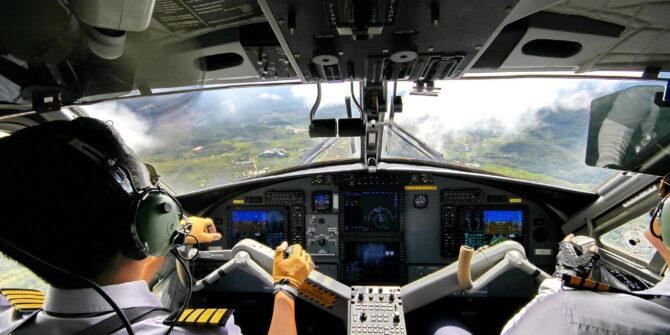
There is a recent history in the US of serious incidents that have occurred during visual approaches – you don’t have to hunt long to find them. The reality is this: when we accept a visual approach, we accept more risk.
That isn’t to say that this risk cannot be effectively and safely managed. Visual approaches are still an important way to increase the efficiency of congested airspace. But we do have to give ourselves the room, the capacity, and the mitigations to fly them safely. And in my opinion, that’s where the true risk lies.
The FAA seems to agree. On April 2, it issued an eye-opening Safety Alert for Operators (SAFO) regarding visual approaches. The lowdown is this: visual approaches can be riskier than they seem, especially in today’s busy airspace. Let’s take a closer look.
FAA SAFO on Visual Approaches
The FAA’s SAFO is resolute in its message – the pilot-in-command has the ultimate responsibility (by law) to say no to clearances that excessively increase workload or erode safety margins. In other words, they don’t want us to hesitate to say ‘UNABLE’. Ultimately, it’s our decision as pilots, and no one else’s.
FAA Reg 14 CFR § 91.3 specifically says:
“…The pilot in command of an aircraft is directly responsible for, and is the final authority as to, the operation of that aircraft.”
This includes the full authority to refuse or decline any clearance or instruction that they deem unsafe or beyond the operational limits of the aircraft or crew. The SAFO then continues with another important message – ATC will support a PIC’s authority to declare ‘unable’ when a clearance may reduce safety margins.
This is where the SAFO falls short a little, at least on a real-world basis. What needs to be included is ‘with impunity.’
Recent Events
In a US NAS burdened by traffic volume, aging infrastructure and controller shortages we continue to hear reports of excessive delays and even confrontation when a clearance is declined.
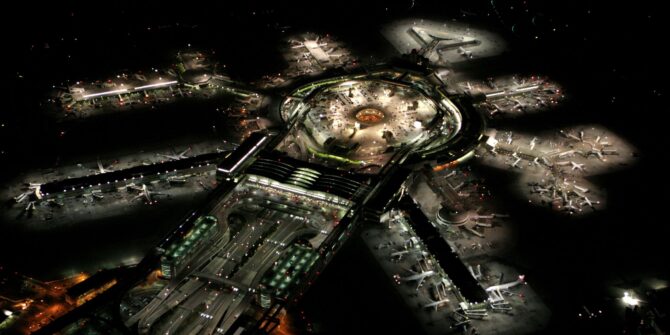
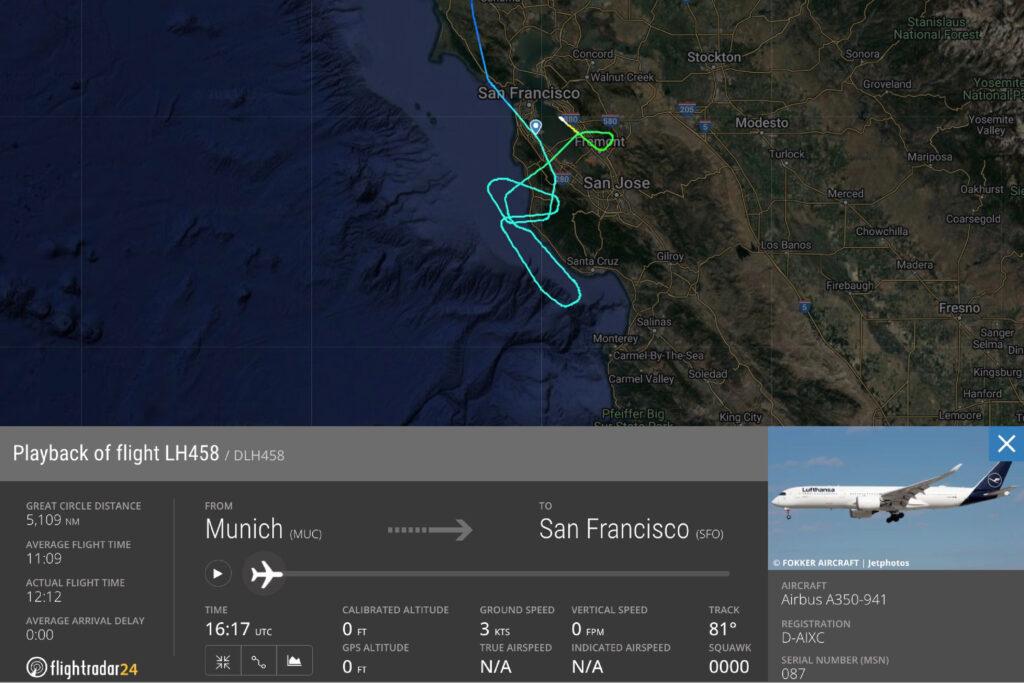
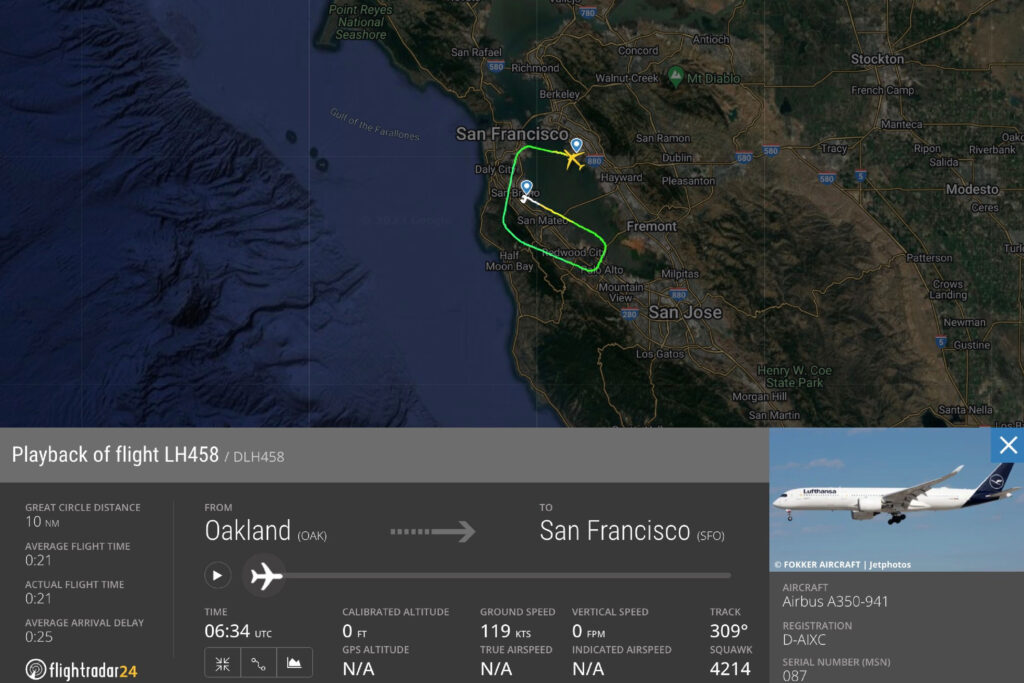
Check out the recent diversion of a Lufthansa A350 at KSFO/San Francisco due to non-acceptance of visual separation at night.
There appears to be a growing disconnect here between what the FAA wants in its SAFO, and what’s actually happening in the real world.
It’s seems clear that more needs to change amongst all stakeholders before we can begin to consistently practice ‘safety over sequence’ while accommodating all traffic.
FAA Mitigations
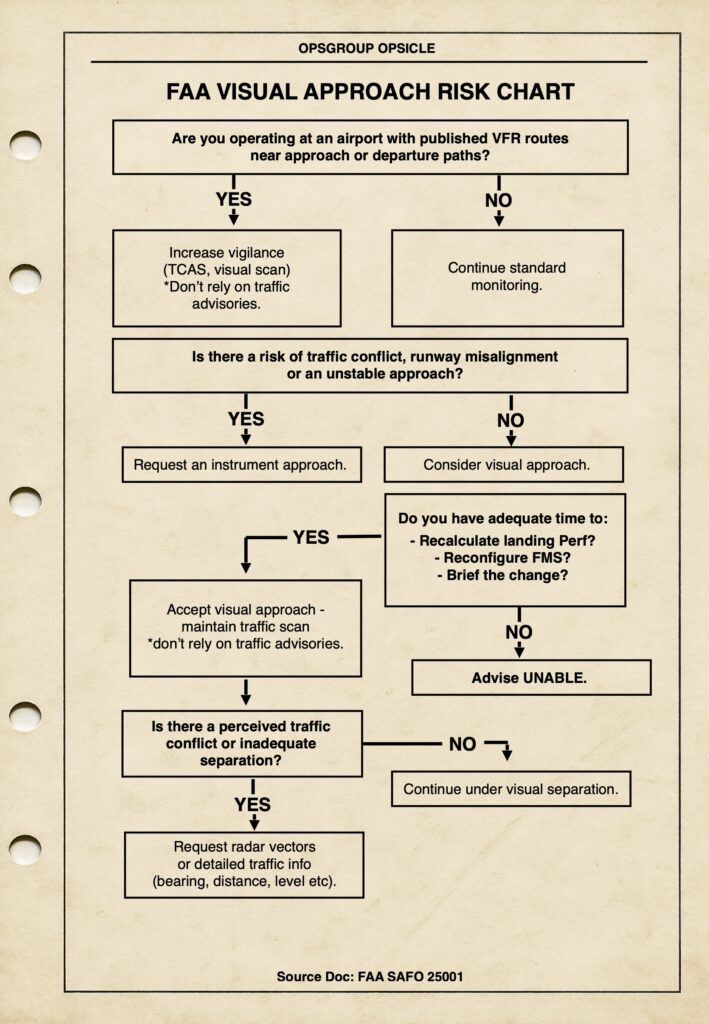
The FAA’s recent SAFO also provides some guidance for pilots on how to mitigate some of the risks of accepting visual approaches. We’ve summarized those in the following little Opsicle.
Click to download PDF.
A note about Business Aviation
In researching this article, several suggestions were also raised about the human factors involved with why pilots find it so hard to say no to challenging clearances. Attend any Human Factors course and you’ll be familiar with the common culprits – saying ‘unable’ can feel like a form of noncompliance, the need to be perceived as competent, an innate desire to ‘make it work’, or the struggle of time compression.
What’s more interesting to us on this occasion is the vulnerability (when compared to airline ops) of business aviation crew to accept challenging clearances despite the increased risk. In other words, are there unique factors? BizAv pilots are faced with a unique combination of industry culture, operational demands and perception of role.
Under Pressure:
BizAv pilots usually find no solace in the anonymity of a flight deck door, a staff number, or a large airline. They have direct contact with those who employ them (sometimes even in the cockpit). Whether we like it or not, this can have an insidious effect on our tolerance for risk. Saying ‘unable’ can feel like failing to deliver.
Professional Flexibility:
Travel by private jet can typically cost anywhere between ten to forty times more than flying commercial. Those who pay may have a certain expectation that we can land anywhere, anytime and circumventthe constraints of conventional airline travel.
No One’s Watching:
Unlike the airlines, there is no requirement for business jets operated under Part 91 to be equipped with Flight Data Recorders or even CVRs, or even under Part 135 (with less than ten seats). And it is hard to deny (even with the best intentions) that this doesn’t have some kind of impact in moments of unexpectedly high workload. Strict adherence to stabilized approach criteria for instance can become more flexible without fear of reprisal.
Safety Management Under Part 91:
The FAA SAFO also specifically mentions the use of safety management systems (SMS) to better mitigate the risks of conducting visual approaches. However a looming mandate will only apply to Part 135 operations – not Part 91, where they will remain voluntary. It’s therefore possible that some BizAv pilots will not be exposed sufficiently to the FAA’s advice.
Want to join the discussion?
We’d love to hear from you. You can reach us at: news@ops.group.
US Visual Approaches: lessons from the LH458 incident
written by Andy Spencer | 28 May, 2025
On October 16, the crew of a Lufthansa A350 inbound to San Francisco found themselves in an unenviable situation: a seemingly unnecessary last-minute diversion to Oakland after a long-haul flight. The diversion was forced by ATC, following the crews inability to accept a visual approach. The incident highlights issues with visual approaches in the US, particularly during late-night arrivals.
LH458 – What happened?
Here’s how it went down:
ATC:Expect a visual approach. CREW:We can’t do visual approaches at night-time due to company procedures. ATC:In that case, expect delays.
At this point in the story, instead of a visual approach on runway 28R, the crew were told to expect an ILS approach on runway 28L. They were then put into a hold – perfectly understandable for their integration into the approach sequence. After holding for 20 minutes, ATC advised there would be another 10-minute delay. 10 minutes go by.
4 minutes later:
CREW:If we can’t land soon, we’ll have to declare a fuel emergency. ATC: What’s your diversion airport? CREW: Oakland. ATC: You need vectors to Oakland? CREW: Er, no. What’s the problem here? ATC:I can’t have this conversation with you. Either divert to Oakland, or you can continue to hold, it’s up to you. CREW: Okay, you promised me 10 minutes, that ran out four minutes ago. So how many more minutes? ATC: Conversation is over. You want to divert? Or you want to continue with the delay? CREW: We’re diverting to Oakland.
This resulted in a flight time of over 12 hours, landing in Oakland an hour after commencing the approach to KSFO (and at 7 am Munich local time – the crew’s local time). After one hour of turnaround, the crew resumed their flight to KSFO, which took another 45-minutes block to block.
The first flight: Munich – San Francisco (diverted to Oakland)
The second flight: Oakland – San Francisco
The delays are crucial to this story. It’s not uncommon for delays to occur, but ATC announcing a 10-minute delay (which is essentially treated as an EAT or Expected Approach Time), and then not adhering to it (especially after 30 minutes of holding) is not great. This significantly alters the situation and could have had more severe consequences.
A video of the flight path, including part of the audio between the crew and ATC is here:
What’s the problem?
In terms of flight safety, one can question the wisdom of subjecting the crew to signficiant extra fatigue after a long flight. Was it really not possible to create an additional two or three nautical miles of spacing between two aircraft for over 30 minutes to accommodate this flight?
Long Haul operations entail heightened risks due to extended duties and activities during circadian lows. While instrumental in facilitating aviation, the prevailing attitude within the US ATC tends to prioritize maximizing movements without seemingly adequate consideration for the nature of specific operations. It’s essential to recognize that not all arrivals are equal; when a pilot communicates inability, it’s not mere difficulty but a conscientious acknowledgment of the immense responsibility for the safety of hundreds on their shoulders. After a lengthy night of flying, we would all find it challenging to justify opting for a visual approach as the safer choice.
The FAA prohibits visual separation on an ILS. Consequently, questions arise about the request made to the crew in this regard, as well as the system that forces night-time visual approaches on all aircraft, regardless of the fatigue level of the crews and their unique circumstances.
This is a systemic issue. But it does feel like there is room to hope for a more comprehensive systemic approach to avoid putting a crew in a potentially safety-compromising situation.
Why was there a delay in the flight’s approach?
While a delay in air traffic is understandable, adhering to the announced duration (which clearly had the characteristics of an Expected Approach Time) is crucial to ensure safety. In this case, the crew experienced confusion when their EAT was not met, leading to concerns about fuel reserves and potential emergencies. Efficient coordination between ATC and crews is essential to prevent such situations.
Could the flight have been accommodated within the initially announced timeframe?
Considering that the flight had already spent over 30 minutes holding, it seems reasonable to think that they could have been inserted and provided with a few nautical miles in a thirty-minute sequence.
Based on the announcement of an additional 10-minute holding, this crew could have converted their diversion reserves into holding time, as allowed by regulations, and found themselves unable to divert and potentially facing a fuel emergency. This would have disrupted the sequence far more than adjusting a few nautical miles over 30 minutes.
Some aircraft, like the 777, may have to land with reduced flap settings in case of low fuel quantity, further diminishing margins. This outcome does not align with improved safety, and ATC should consider this for these long-haul approach flights.
It should be remembered that the pilots of this flight did all they could to communicate in a clear manner (sans the frustration at the end of the conversation) that they were unable to do what was initially conveyed. The fact that they were forced into a corner of a very near fuel emergency by the actions of ATC should highlight just how critical it is for us to get this fixed, pronto.
What can be done to improve safety and coordination in such cases?
Air traffic management needs to communicate effectively with flight crews, announce and adhere to EAT’s, and consider unique circumstances, especially for long-haul flights at night.
The FAA’s Safety Alert for Operators (SAFO) 21005 states that ‘it is the pilot’s responsibility, according to 14 C.F.R. § 91.3, to advise ATC as soon as possible if a visual approach is not desired.’ This SAFO recommends ‘Communicating “UNABLE” to ATC when, in the judgment of the pilot-in-command, compliance with a specific instruction, request, or clearance may reduce safety.’
Ultimately, a crew adhering to the FAA’s SAFO should not find themselves in a situation that compromises the safety of their flight by subjecting them to additional fatigue. The situation is even more concerning given the example of this flight and its implications for the crew, substantial financial consequences for the airline, and potentially for some passengers. This may make future crews hesitant about declining a visual approach, even when safety would necessitate it, as emphasized by the SAFO.
Why are visual approaches important?
Visual approaches allow for increased airport efficiency when weather conditions permit.
At KSFO/San Francisco, efforts were made in 2016 to enhance airport efficiency through new approach procedures, such as the RNP to GLS study. Being the seventh busiest airport in the US at the time, the airport could, during good weather conditions, sequence arrivals to runways 28L and 28R using visual separation, resulting in a peak arrival rate of 56 per hour. However, less favourable weather conditions necessitated instrument approach procedures, reducing airport efficiency to 28 to 36 arrivals per hour. This highlights the critical role of visual separation in maximizing KSFO’s capacity, despite runways being only 750 feet apart.
The visual approaches involve reducing the spacing between arriving aircraft, which can lead to higher traffic capacity and profitability. But they also shift some responsibility to the flight crew, particularly the captain, who must accept the risk of wake turbulence and become responsible for maintaining proper spacing to benefit the system.
This dual nature of visual approaches underscores the delicate balance between efficiency and safety in aviation operations.
How does the US differ from international standards regarding visual approaches?
The US aviation regulations do not strictly adhere to the ICAO standards regarding visual approaches. In the US, air traffic controllers may initiate a visual approach without the explicit consent of the pilot, unlike standard ICAO procedures, which require pilot agreement. This difference in approach procedures can lead to unique challenges. For more info, have a read of this IFALPA Bulletin.
Key Issues
This recent incident in San Francisco highlights several issues:
Crew’s Spacing Responsibility: Visual approaches in airports enhance efficiency but shift responsibility to flight crew for maintaining spacing and managing risks.
US vs ICAO Practices: There is a discrepancy between US aviation practices and ICAO standards.
ATC-Crew Safety Coordination: The incident shows the need for precise coordination between air traffic management and flight crews to ensure the safety of operations.
Night Approach Restrictions: Certain airlines have procedures that prohibit crews from conducting night visual approaches, and ATC needs to be aware of and accommodate these restrictions.
Managing Approach Delays: The delay in the flight’s approach raises questions about managing holding times and adhering to announced durations.
Risks in Night Approaches: Long-haul flights arriving at night using visual approaches might pose safety risks, considering crew fatigue and FAA’s SAFO.
Safeguarding Flight Operations: A comprehensive systemic approach is required to prevent compromising situations for flight crews, emphasizing effective communication, adherence to EAT’s, and crew judgment.
ATC Safety Guidelines: ATCs must be aware of safety guidelines (SAFOs) to ensure crew adherence and avoid jeopardizing safety.
Crew Safety Priority: Prioritizing safety over convenience is essential for flight crews.
This final point – ensuring flight crews are not hesitant to prioritize safety over convenience – is vital to maintaining the highest level of aviation safety. The KSFO incident serves as a reminder that aviation is a delicate balance of safety, efficiency, and coordination.