Has Russia stopped playing me-trics on us?
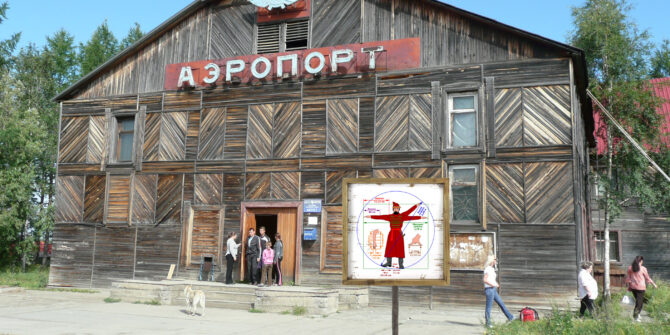
Russia have never been in much of a rush to join (most) of the rest of the world in how they measure stuff, but they are slowly getting there…

No longer playing me-trics on us?

Way back in 2011, they decided they would start using Feet instead of Meters above the transition level. So traffic cruising on through did not have to worry about sudden changes to metric levels, but any descending down into Russian airports still needed to whip out the old conversion tables once they went below transition.

Then in 2017, they started a trial at ULLI/St Petersburg to see if the whole Foot thing might work for them.

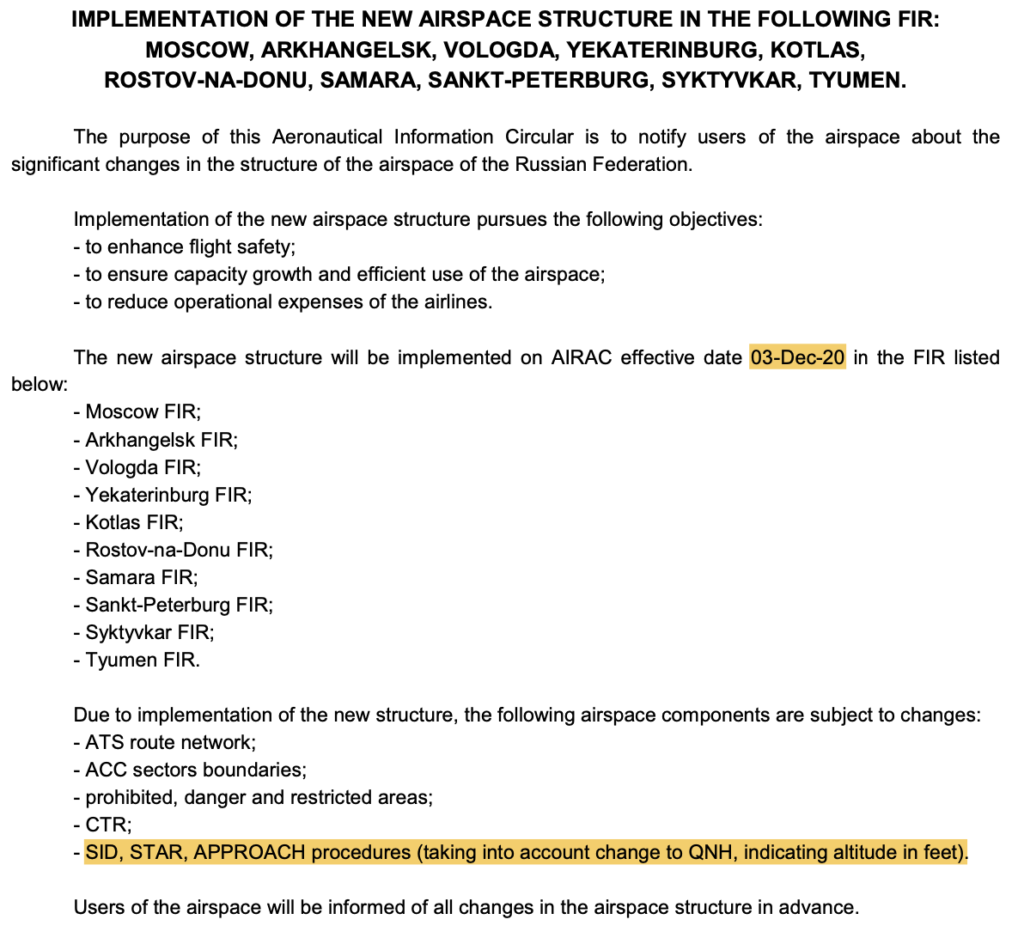
It turns out it went ok, because as of 3rd December 2020 they will be implementing this across Russian airspace – check out AIC 08/19 for the official announcement.

It’s not all smooth sailing yet though…

The AIC seems to suggest that changes will occur in all airspace from Dec 3, but this requires lots of chart updates – in reality it’s more likely that the big international airports will get updated first, and then the rest will follow.

At the end of November, European Regulators issued a caution to operators because some of the chart and database folk are struggling to update everything in time. We are talking en-route charts, SID and STAR charts, updates to prohibited and danger areas, updates to sector boundaries…

In their Safety Information Bulletin, EASA say if you are heading to Russia, check your charts to ensure they are in date, and keep an eye out to see what the changes are and if they have been implemented where you are heading.

What has changed?

  • En-route stays the same: Flight Levels in feet, and metres if you are in a Russian aircraft.
  • Below transition you will now also receive clearances in Feet (QNH).
  • Pressure will be reported in hPa, unless you are a Russian aircraft then you can request in mmHg.

Last time we checked 188 out of 193 ICAO member states are using feet and QNH, instead of meters and QFE. The only countries still working in Meters are China, Mongolia, North Korea, and Russia and Tajikistan (in lower airspace).

Here is a picture of UUWW airport showing the change:
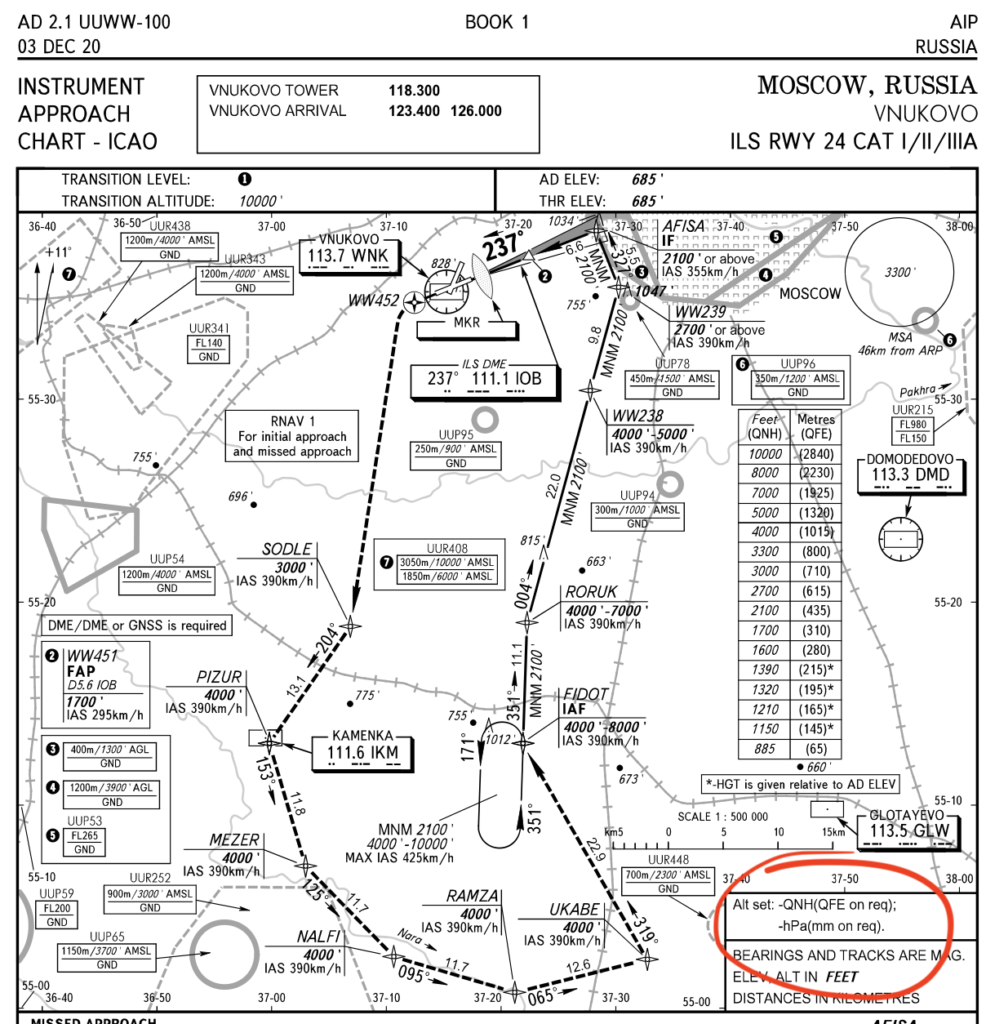
The bit to look out for

Transition Levels

Initially, we had information that the transition altitude was going to be fixed at 10,000 feet across Russian airspace. Not so, it turns out. Each airport will have their own transition altitude and associated transition levels, so be sure to check the approach plates.

It looks as if Moscow is standardising it across their airspace with a transition altitude of 10,000′, and transition levels based on the pressure

  • FL110 when QNH is 1012hPa or above
  • FL120 when QNH is 977hPa or above
  • FL130 when the QNH is less than 977hPA

And there is more

  • All ATS routes have changed to RNAV5.
  • A lot of TMA structures, and airspace areas around airports have changed which means a lot of arrivals and departures for airfields in the Moscow TMA airfields will also have changed.
  • UUDD/Moscow Domodedovo and UUEE/Moscow Sheremetyevo airports now have independent simultaneous arrivals on their parallel runways.
Click to download PDF

References:

  • You can access the Russian AIP here
  • You can read up on Metric Altitude Reference info here
  • Read our article from 2017 when ULLI/St Petersburg made the switch to feet and QNH

Thanks to Igor Nikolin, Deputy Head of the Air Navigation Support Service UTair Airlines for assistance with this post.
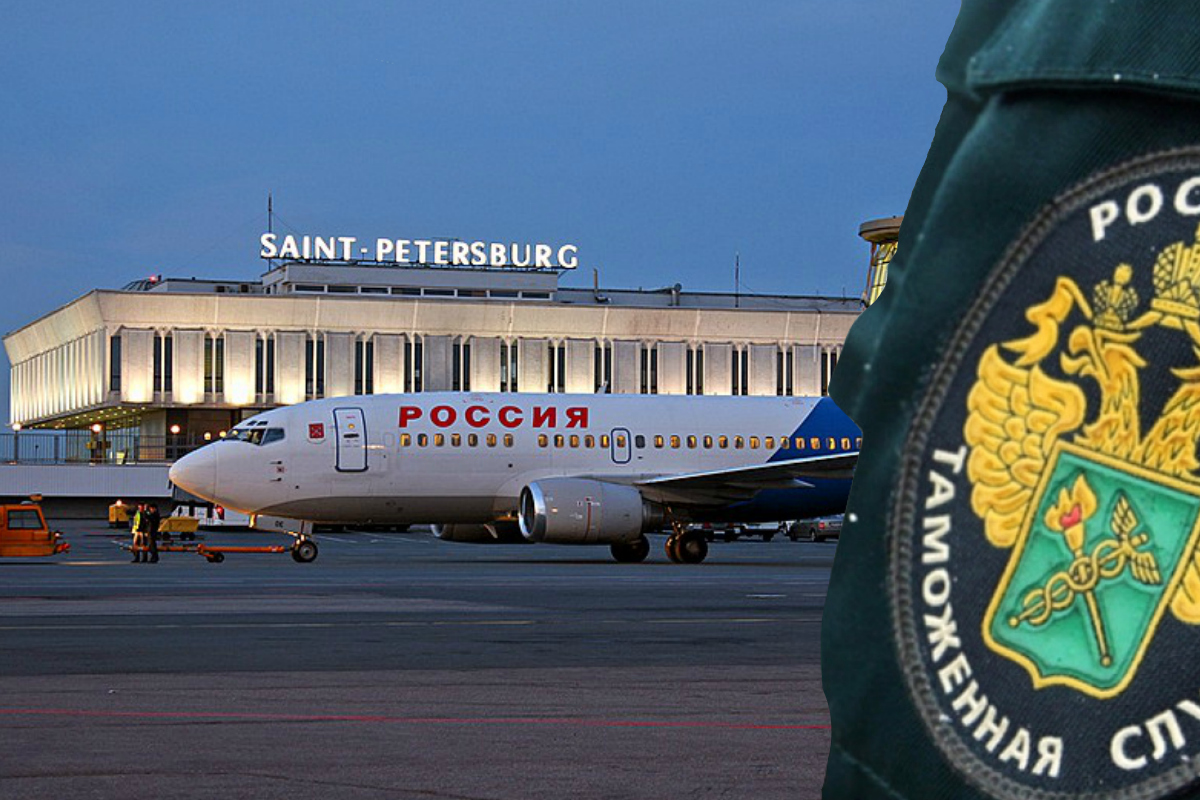

Flying within Russia just got tougher – leave your business jet at home

There’s a new Customs procedure in Russia that we’re trying to get to grips with. It’s called “Import 53” (IM53), and it affects foreign aircraft looking to do private flights on domestic legs within Russia. It’s a tricky one – so much so that some of the Customs authorities at the airports there in Russia don’t even understand it themselves.

The standard block of text doing the rounds is this:

Please be aware cabotage flights are strictly prohibited in Russia. To perform flights inside Eurasian Economic Union(EAEU) by aircraft with foreign registration, customs clearance must be obtained by aircraft owner in accordance with the customs legislation. Import to the territory of the Eurasian Economic Union (EAEU) of a foreign aircraft of business aviation with dry weight(BOF) less than 28 tons with the number of passenger seats less than 19 without payment of customs taxes is possible according to customs procedure called IM53(Import 53) which must be performed without commercial benefit by aircraft owner, authorized person or by customs broker. Otherwise, 3% of the amount of import customs duties and taxes would be applied upon the release of the aircraft for domestic consumption.

Most of the bigger handling agents at the major airports are sending this out. But what does it mean? We asked a dozen questions to try to get a clear answer, and it seems this is it:

Private flights: you can operate domestic legs in Russia if your aircraft is below 28 tonnes (62,000 lbs) and less than 19 seats – by applying for IM53. If your aircraft busts either of those two metrics (above 28 tonnes, or 19 seats or more) you can’t apply for IM53, and you therefore can’t fly domestic legs in Russia.

And here’s where it gets super annoying – to get IM53 approval, you have to request it direct with Customs yourself, or use a customs broker. From the handling agents we’ve spoken to, they are not allowed to help with this.

(Also watch out for the whole ‘Eurasian Economic Union’ thing – that includes: Russia, Belarus, Kazakhstan, Armenia, Kyrgyzstan. So watch out if you’re planning on flying between Russia and any these other countries, as Customs will consider it to be a domestic flight!)

We have received reports from members saying that this new rule is already affecting some of their trips to Russia, and that some local Customs at smaller airports are as confused as everyone else about exactly how it interpret them:

Our local handler in [insert second tier Russian city] advises us to cancel the trip there.

The problem is that this Customs procedure, Import 53, is pretty new, and very complicated. It must be opened first in the airport of entry, then closed in the last airport of EAU. Their Customs officers don’t know how to interpret the new rules (probably afraid, who knows?), and refuse to do this.

The last client who arrived to [insert second tier Russian city] had to delay the departure for 6 hours due to the new Customs procedure, and our handler says it is a very good result, and they were lucky.

Our handler cannot guarantee that everything will go well in [insert second tier Russian city], the situation could become worse any time, and there is nothing we can do with Customs. If the customer still wants to go there, it will be at their own risk. 

With the new IM53 rule, the authorities seem to be attempting to establish a standard rule for foreign aircraft operating domestic legs in Russia. Have you been to Russia recently and tried to do a domestic leg? How did it go? Let us know, and help us get the word out.