ATC VS PILOTS: The Battle for the Skies
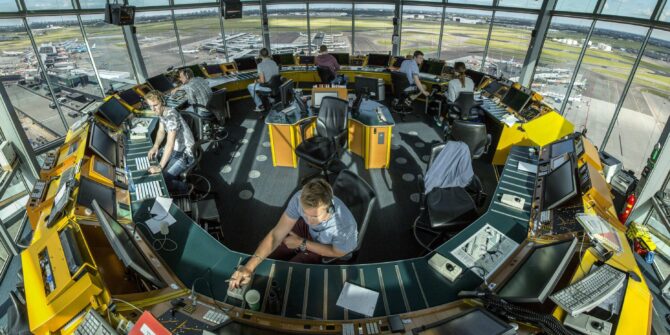
The great battle of the skies! Pilots trying to fly wherever and however they like, free like birds, while mean old air traffic controllers tell them off and put a stop to the fun having…

OK, not quite. Our ATC colleagues are a vital part of the safety infrastructure and it is only with their support and services that operations remain safe and efficient. Which is why we should be asking how their pandemic situation is going as well. So, this is a look into the concerns, challenges and events that ATC are dealing with because of Covid, and some feedback on how pilots and ATC can work together to fix ‘em.

So, if you are all sitting comfortably…
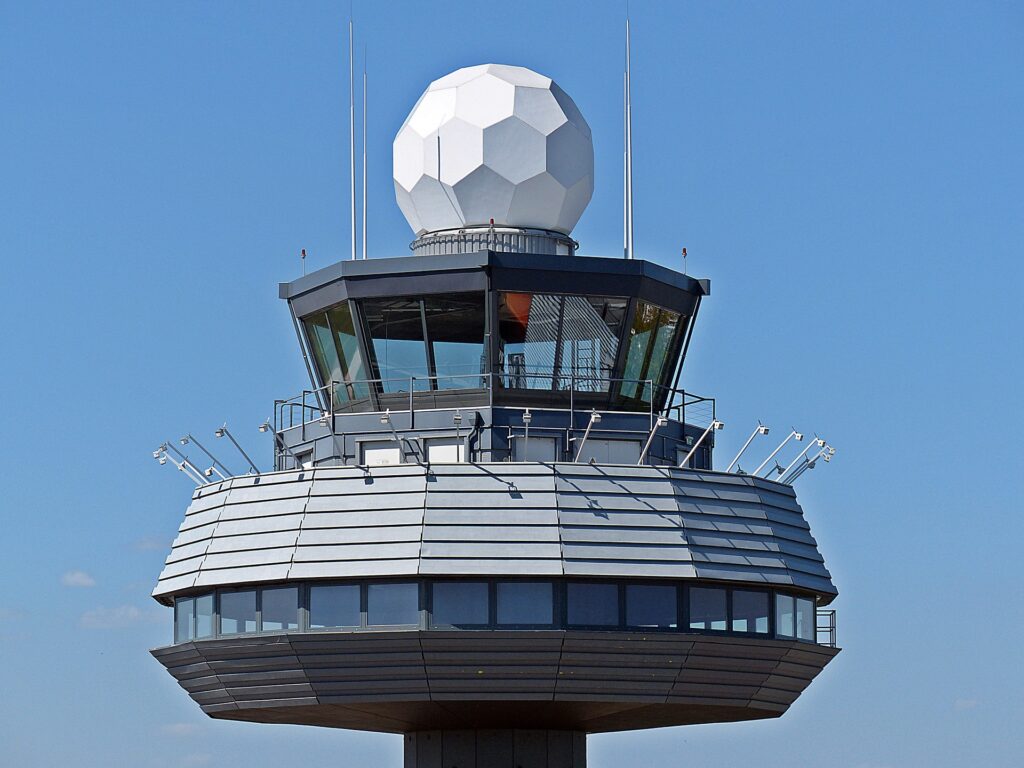
Let’s take a look inside…

What’s been going on inside the towers?

  • Challenge #1 Low workload, low arousal levels

ATC have seen reductions in traffic to as low as 20% pre-covid levels, but workload is not linear to traffic reduction, it is exponentially lower. So this is a challenge for ATC who thrive on dynamic, high workload environments. In one area of the UK, 7 sectors previously controlled by 7 individual controllers is now handled by just one to ensure the workload (and arousal levels) are at a level which can maintain skills and concentration.

  • Challenge #2 Technical & Procedural changes

The risk of Covid has meant bit changes in how procedures are carried out, in an attempt to avoid ATC Zero events due rampantly spreading sickness. But this means ‘situational awareness’ handovers traditionally carried out face-to-face are now not leading to potential communication risk and lack of effectiveness. Safety management procedures have had to adapt, fast.

  • Challenge #3 Different events requiring different mitigations

New events, previously not even thought of events are happening, and like our pilot CRM, ATC use TRM (team resource management) to debrief and learn from them. But unlike pre-Covid days they don’t have oodles of time to disseminate information across the operational audience – the learning and sharing has to happen fast to avoid repeats. So they are dealing with new situations, quickly.

We like this guy in Wellington, he looks fun

What events have been happening?

  • Event Type #1 Altitude busts

Level deviations aren’t a new thing but apparently numbers have increased in some regions. The UK and parts of Europe have variable transition altitudes and these can be low, which means your level-off on departure could be a fairly low flight level. Add to this some low atmospheric pressures and it can get messy. For example, if you take off with 983hPa set and forget to change to standard, you’ll find yourself 900 feet higher than you should be.

  • Event Type #2 CPDLC

Frequencies across Europe were at saturation level pre-Covid which is why CPDLC was getting popular. It is a great thing, we like it, and controllers are still encouraging the use of it now ready for when those traffic levels pick up and the frequencies get busy again. But they are also reporting a few issues with it.

First up, pilots are reverting to voice when CPDLC doesn’t give them the direct or the level they want. If you get a “negative” on CPDLC then it is going to be the same controller giving you the same “negative’ over the radio, only a little more irritatedly since they’ve already told you once.

Secondly, directs are causing issues (for once, not a pilot’s fault). When you receive a clearance by voice it usually goes something like “Route alpha then bravo”. When you receive it by CPDLC it might be formatted “Route Bravo via Alpha”… and when you receive this on certain systems the message might be truncated leaving the pilots thinking “we are cleared direct Bravo”. So check your CPDLC message carefully if in doubt, then double check.

  • Event Type #3 Airspace Incursions

Empty airspace means more directs are possible, but it also means some GA pilots cutting corners into airspace where big planes are playing. ATC do their best to kick them out again before they get in your way, but keep a good watch out on your TCAS for errant traffic.
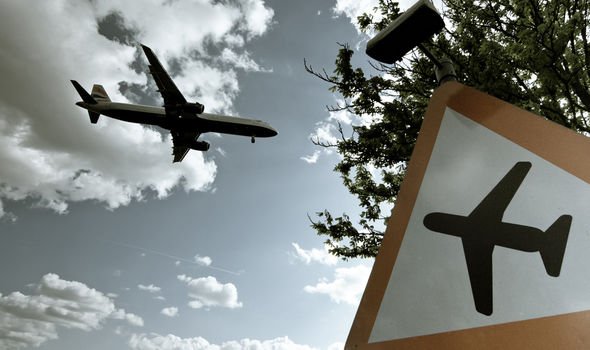
Maintain your own SA and keep a good look out

Unstable Approaches

This one gets a section of its own.

Let’s step back a few miles from the 300 knots, 6000 feet at 12 miles though, and ask how we got ourselves into that position in the first place? Was it the moment ATC offered us a shortcut? Was it at 15nm when, honestly, it was looking a little tight but they would have said something?

Feedback from ATC is that they are there to help, and they want to offer the most efficient approaches they can, cutting down our track miles wherever possible… and lower traffic levels mean this is much more possible at the moment. Problem is, back in pre-Covid days when traffic levels were higher and most approaches were kept “standard”, ATC knew what to look for. If an aircraft looked a bit high, a bit fast, compared to “normal”, they could give us a cheeky “do you need a few more miles?” prompt.

Fast forward to post-Covid times though and ATC have much less idea of what is “normal”. It might be ok for you, and your aircraft type, to do 300 knots at 12nm, but ATC do not necessarily know. So we cannot depend on ATC to say something when it doesn’t look right – the pilots need to do this. If you are too high, too fast, too close, speak up, you will get those track miles, but don’t rely on ATC to recognize it is all going a bit wrong.

The big point?

The big point is this – we are in it together. ATC and pilots, directly tackling the operational challenges that this pandemic has brought.

So next time you are out flying, have some of these points in mind when working with ATC. Talk to them, work with them, and above all support them because they are what are keeping us safe in the skies.
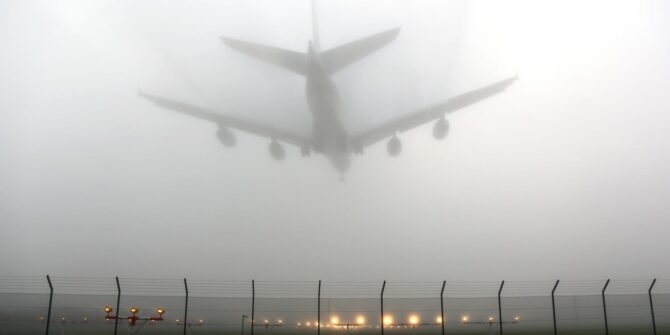
Unstable Approaches: Why Aren’t We Going Around?

Late last year, IATA put out a bulletin noting that the number of unstable approaches in 2020 was a lot higher than in previous years.

Look a little further back and you’ll see this has been a trend for some time now.

Fly the line and it’s not hard to see why we are getting unstable – there are a bunch of reasons including weather, other traffic, challenging clearances, complex airspace, fatigue and even currency given the state of the industry, to name only a few.

So what’s the big deal?

IATA also know that in most cases, we’re not going around.

The numbers don’t lie, and they’re scary. Get this – a recent study estimated that 97% of unstable approaches flown in IMC didn’t fly a missed approach. That’s huge.

The leading cause of aviation accidents worldwide are runway excursions. The Flight Safety Foundation looked into all of them over a fourteen-year period and found that 83% of them could have been prevented by a go-around. That’s over half of all accidents recorded. It’s a big deal.

What do we actually mean by ‘unstable’?

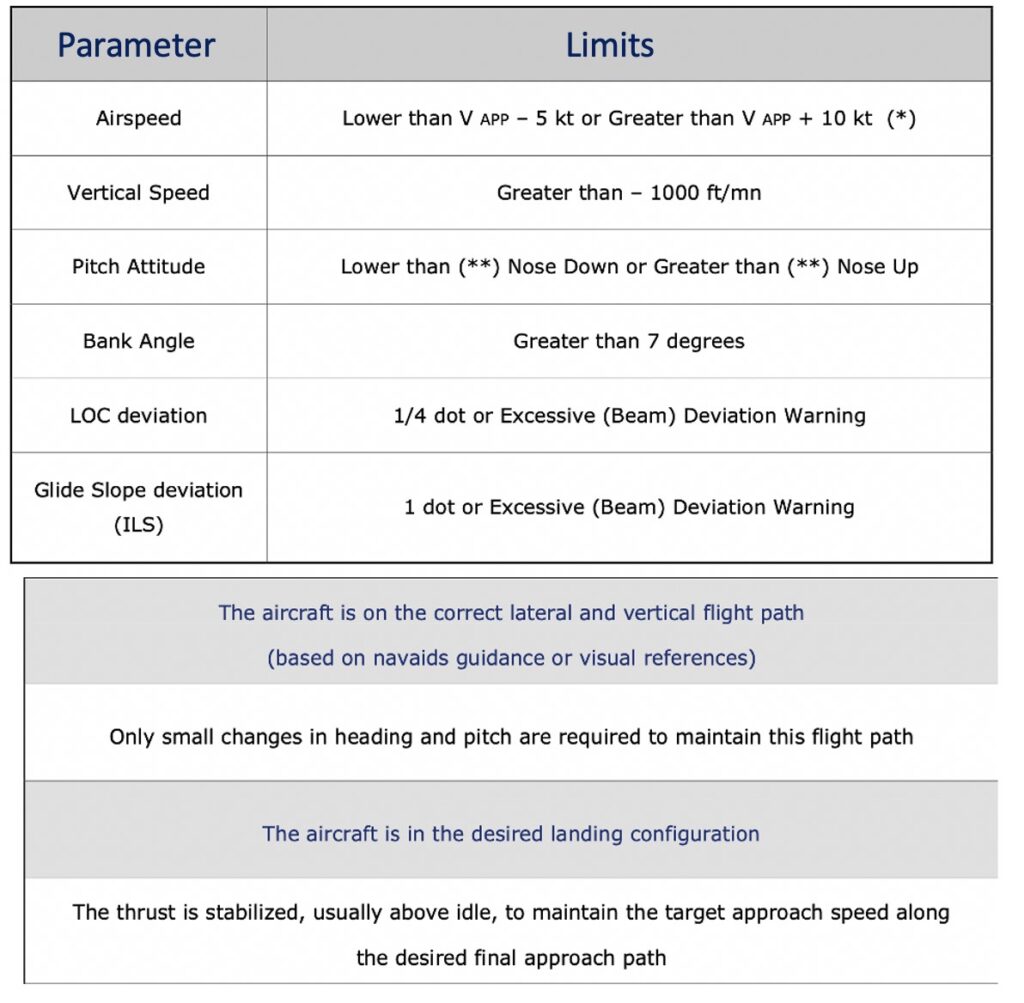
In a nutshell it is any approach that doesn’t meet the stable approach criteria in your SOPs by a certain height – usually 1,000 feet off the deck. And it’s not just the ones that have gone badly wrong either – the criteria are usually pretty tight…

Like the picture, the decision appears to be black and white: If you don’t meet the criteria, you have to go-around.

So why aren’t we doing it?

Good question. There are a bunch of factors but the most important is pilot psychology. Either consciously or sub-consciously we are making a decision to not go-around. Here are some suggestions about what may be happening inside our heads.

1. We’re pilots

Which means we’re mission-orientated. We want to get in and we don’t like conceding defeat. Nor do we enjoy being reminded that we have reached the limit of our ability to fix whatever has gone wrong.

Experience also tells us that if we persist a little longer we can re-stabilise. After all a little speed brake, a little more sink rate you’ll have the thing back on rails long before the runway out the window is too close for comfort.

The problem is we’re fixating on completing the mission.

Studies have shown this behaviour is insidious. It creeps up on you and you begin to normalize the risk. Just like a speeding driver arriving home unscathed, the danger becomes typical. But it gives you far less capacity and room to deal with anything unexpected.

2. Training

A go-around is a normal procedure, but boy do things happen quickly. It’s okay when you know it’s coming. But it’s when you’re off the script that they get especially challenging. Especially after something stressful has already happened.

Studies show that pilots are more reluctant to go-around in scenarios they haven’t practiced. This includes when the aircraft is only partially configured or is very low to ground (such as a bounced landing or botched flare). Complicated airspace and procedures can also be major deterrents to hitting those TOGA switches.

3. What the other guy/gal thinks

Everyone’s personality is different, and we don’t always get along. You might like a good book, while your offsider might prefer a good base jump. When it begins to matter is when it affects safety.

We react differently depending on the dynamic with the other pilot. This can include embarrassment at going around, a lack of support for the decision or disagreement with whether the approach can be safely salvaged. But if you begin to see a go-around as a reflection of your abilities, you are already on a slippery slope. Add an offsider who might judge you for going around and you’re in for a dangerous ride together.

Cockpit gradient is another contentious issue. Too steep and it can turn a multi-crew aircraft into a single pilot one. Age, experience, rank or culture can all contribute. Take this animation of a visual approach on a calm sunny day in San Francisco a few years back. Watch the animation and decide when you would have said something. There were two Captains and a First Officer on the flight deck.

Credit: Airboyd

4. Organisational Pressure

The elephant in the room. No one is pointing fingers but now more than ever operations need to run on the ‘scent of an oily rag.’ Fuel is a big part of that. Crew may be encouraged to carry less of it in the first place which can lead to  fuel anxiety and reluctance to go-around. Or it may be the simple economic cost of using it compared to trying to re-stabilise an approach. It’s no secret that go-arounds use a lot of fuel.

Other factors may come into play too – scheduling, delays, an unwanted diversion or even duty time limits. There are a bunch of external factors which can creep their way into the flight deck and affect our decision making.

So what can we do to improve our Go-Around decision making?

IATA have made some solid suggestions:

1. Make the decision as early as you can. Historically, accidents that follow a decision to go-around usually reflect a late decision. Don’t wander down that garden path. Lion Air Flight 904  serves as another example.

2. Brief the heck out of them. Every time.  Make sure you include what you will be looking for to continue the approach, what may make a go-around more difficult on that particular day and how you will get around those challenges.

3. Encourage acceptance on the flight deck that a go-around is a possibility at any stage. Always prioritise the safest outcome.

4. Follow those SOPs. Operators should always have a mandatory requirement to go-around when stable approach criteria aren’t met. On the flipside, there should never be any punitive reaction to a crew’s decision to go-around. They show good decision making.

5. Fuel policy. Have one which always allows for go-arounds and accept they are a necessary cost of operating an airplane out there.

Up for more reading?

It’s a big issue so there are plenty more places to look. Here are a couple of really good links to get you started.

  • IATA periodically publish a whole bunch of useful stuff about unstable approaches, go-arounds and risk mitigation.
  • Flight Safety’s work on unstable approaches.