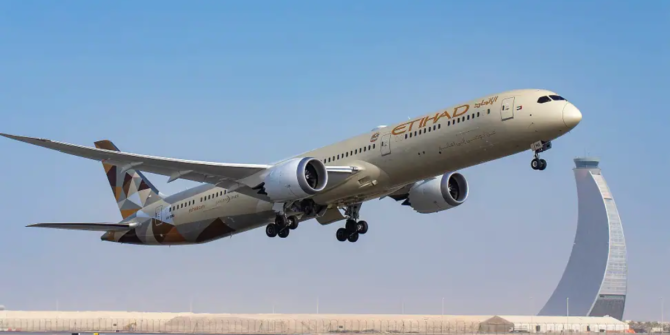
Say GooDubai to a runway for 45 days

OMDB/Dubai International airport (the main one in Dubai) is closing a runway again. But that’s not all. Another UAE based airport is also closing. And it is Ramadan.

So what will all this mean for operations into there?

The Dubai Runway Closure

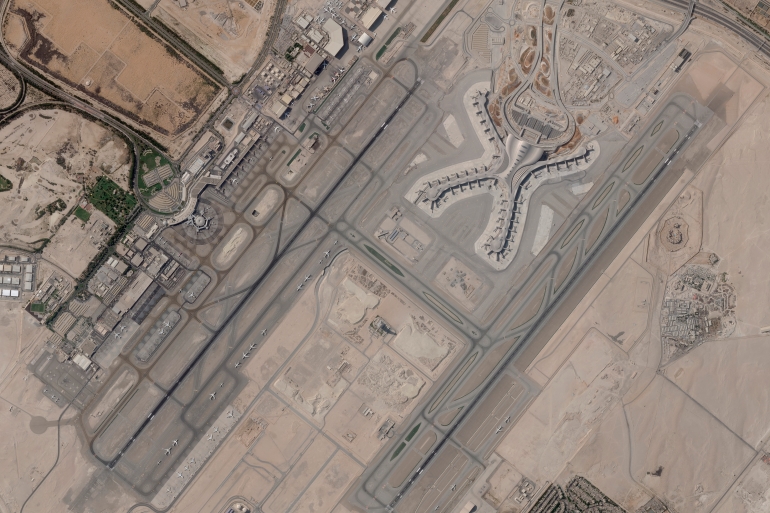
This happens every few years. The last one was in 2019 where they shut the Southerly runway for 45 days to fix it up. Not it is the turn of the Northerly runway again – 12L/30R.

The closure is from May 9 to June 22, and it does mean a pretty big reduction in capacity at what is the busiest airport in the world in terms of international passenger numbers.

But…

The Dubai runways are actually too close together for proper simultaneous ops meaning the closure of one does not mean a halving of capacity. On top of that, the biggest operators into the airport are all planning some reduction in their flights during this period, or are sending a portion of their flights over to OMDW/Dubai Al Maktoum which is just down the road (20 miles or so).

So…

So if you operate in during peak times (the worst is between 7-11pm UTC) then take some extra fuel for holding delays. You also can’t file OMDB as an alternate during peak times (and that’s during normal ops, so definitely don’t try it during the closure period).

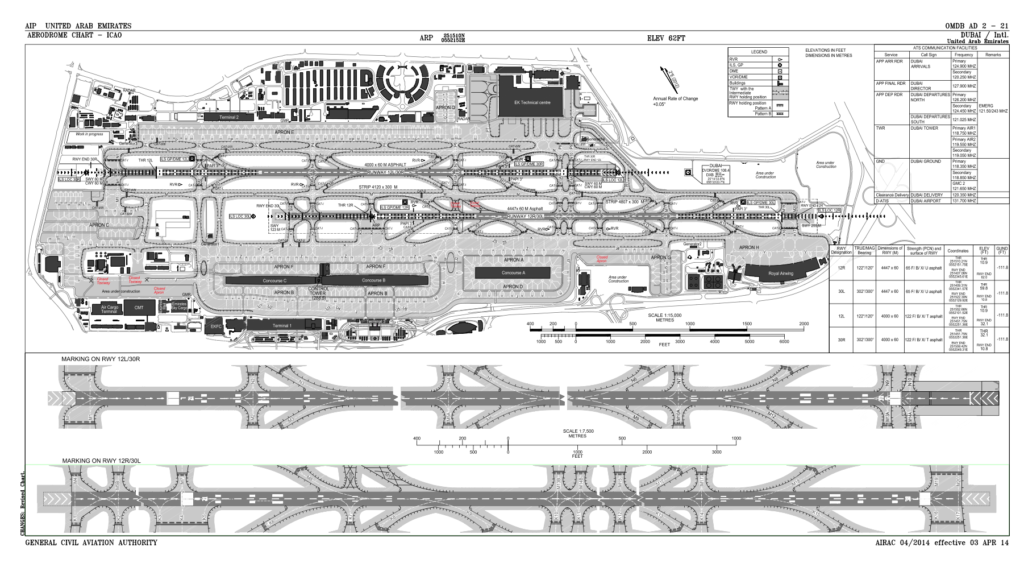
Old Dubai chart.

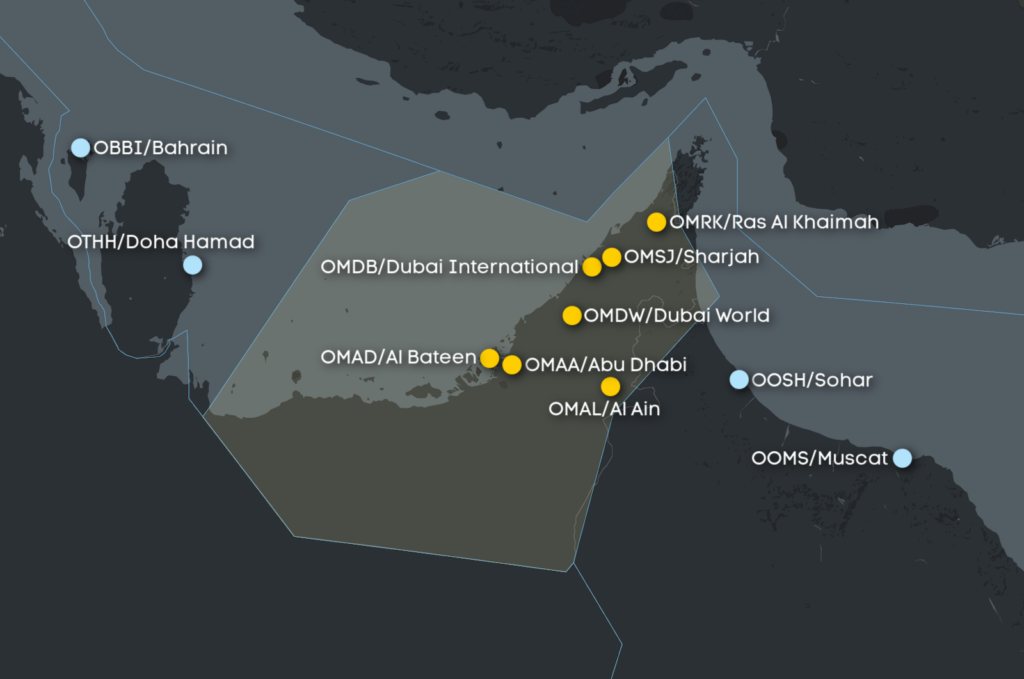
The other airport out in the UAE closure

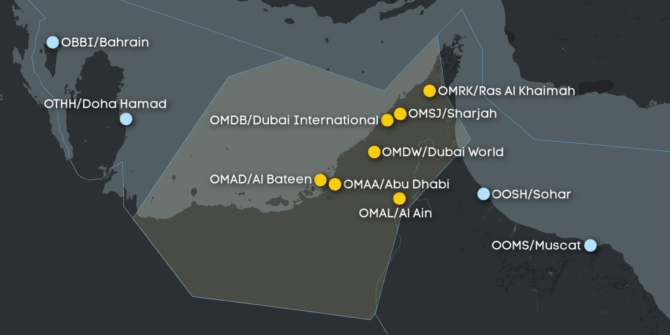
OMAD/Al Bateen is a small but quite busy executive airport near OMAA/Abu Dhabi, which just caters for private jet ops. This airport will be completely closing from May 11 to July 20.

So what options do you have?

  • OMAA/Abu Dhabi International is the main airport for the UAE. They generally prefer not to be used as an alternate for Dubai bound flights since they are very busy.
  • OMSJ/Sharjah International is the next door neighbour to OMDB/Dubai (around 20km north and you fly past it on some Dubai arrivals). Runway 12/30 is 13,320 ft long with an ILS either end. Watch out if OMDB is getting foggy though because OMSJ won’t be far behind given it is also close to the sea, and it will fill up fast with diversions if it isn’t.
  • OMDW/Dubai World is the slightly smaller international Dubai airport just next door. Mainly used for cargo flights, it offers a good alternate to OMDB. There is limited parking and fuel trucks though so if you divert here on a day a lot are diverting then expect long delays. Runway 12/30 has CAT 3 ILS both ends and is 14,764 ft long
  • OMRK/Ras Al Khaimah is a decent airport to consider as an alternate with an ILS on 34, an RNAV on 16 and 12,336 ft of tarmac between the two ends. Watch out for terrain here though.
  • OMAL/Al Ain has a 13,140 ft runway with ILS/RNAV approaches. Another UAE option for an alternate.
  • OMFJ/Fujairah can be a good alternate (especially when the weather gets foggy as it is on the Eastern side of the peninsular and less susceptible).
  • OOMS/Muscat is slightly further afield in neighbouring Oman, but included here because its often used as an alternate. 08L/26R is currently the only operational runway. It offers an ILS either end and 13,123 ft. Muscat is a decent fuel and tech stop if routing from the Far East.

UAE Airports and closest neighbours.

Some other info on the UAE.

The UAE only became the UAE fairly recently. Before that it was seven separate emirates and a big port in Jebel Ali which the Brits took an interest in. When they got their independence from Britain, the emirates joined up, led by Abu Dhabi. Dubai is the most westernized of the all emirates.

During Ramadan, be cautious about eating and drinking in public, but beyond that there is not huge difference for foreign visitors visiting Dubai and Abu Dhabi, just remain respectful of their culture and customs. Sharjah is much stricter.

Conditions across the UAE (like all the Middle East) can be challenging:

  • Extreme summer temperatures leading to brake temperature issues, hot fuel etc.
  • Dubai can see some nasty lingering fog during the more humid months
  • Cloud seeding is common and often leads to large storms building up. When it rains everywhere (including airport aprons) tend to flood.

Other challenges?

  • Holding for Dubai can bring you close to the Iranian border
  • Departures can enter Iran quickly so ensure you call the ADIZ early if routing that way.
  • Watch out for the Burj Khalifa – World’s  tallest building. It is near the airport.
  • Conflict is common across the whole Middle East region. Monitor Safeairspace for the full lowdown on risk in the region.

For more operational info on Dubai, the UAE, and the Middle East in general – check out our earlier post here.


Middle by Middle East

A lot of people lump ‘The Middle East’ together into one singular region of “Middle Eastyness”, but actually each country is very different, particularly during Ramadan. Each has diverse cultures and rich histories, very different political interests, and of course their own unique operational and environmental challenges that pilots should know a bit about before heading in.

So, here is your ‘In the Middle of the Middle’ guide to the ‘Middle East’ (or at least the parts of it you’re likely to need to know about.)

Starting with the ‘Need to Know’

The UAE

The UAE only became the UAE fairly recently. Before that it was seven separate emirates and a big port in Jebel Ali which the Brits took an interest in. When they got their independence from Britain, the emirates joined up, led by Abu Dhabi. Dubai is the most westernized of the all emirates, and each pretty much has its own international airport.

  • OMAA/Abu Dhabi International is the capital airport for the UAE. They generally prefer not to be used as an alternate for Dubai bound flights since they are vert busy.
  • OMDB/Dubai International is the main Dubai airpot, and the busiest airport by passenger numbers in the world. You have two parallel runways 12/30 left and right with CAT III approaches.
  • OMSJ/Sharjah International is the next door neighbour to OMDB/Dubai (around 20km north and you fly past it on some Dubai arrivals). Runway 12/30 is 13,320 ft long with an ILS either end. Watch out if OMDB is getting foggy though because OMSJ won’t be far behind given it is also close to the sea, and it will fill up fast with diversions if it isn’t.
  • OMDW/Dubai World is the slightly smaller international Dubai airport just next door. Mainly used for cargo flights, it offers a good alternate to OMDB. There is limited parking and fuel trucks though so if you divert here on a day a lot are diverting then expect long delays. Runway 12/30 has CAT 3 ILS both ends and is 14,764 ft long
  • OMRK/Ras Al Khaimah is a decent airport to consider as an alternate with an ILS on 34, an RNAV on 16 and 12,336 ft of tarmac between the two ends. Watch out for terrain here though.
  • OMAL/Al Ain has a 13,140 ft runway with ILS/RNAV approaches. Another UAE option for an alternate.
  • OMAD/Al Bateen is a small but quite busy executive airport near OMAA/Abu Dhabi, which just caters for private jet ops. This airport will be completely closing from May 11 to July 20.

We put together a little regional brief on this with some handy contacts for you.
Saudi Arabia

Saudi Arabia is the largest country in the Middle East.

They are a major world economy, the third biggest producer of oil (behind the USA and Russia) and the largest exporter. It is also at the heart of the Islamic religion and you need to bear their customs and laws in mind if heading in there. Women are expected to dress modestly and cover their heads, and alcohol, swearing, gambling etc is forbidden. This will be much more strictly enforced during Ramadan.

  • OEJN/Jeddah – long taxis possible. Keep an eye on those brake temperatures. This airport can accommodate the most number of aircraft in the world so… it’s big! There are no less than three runway 16/34s here. The longest is 13,123 ft and all of them have an ILS approach. Jeddah has recently been targeted by drone attacks and the southern Jeddah FIR (close to Yemen border) should be avoided).
  • OERK/Riyadh – high elevation airport with steeper than normal GS on some approaches. You have two runways to chose from, although they tend to stick to one for takeoff and one for landing. 15R/33L is the longer of the two, offering 13,797 ft (a whole 2 ft more than 15L/33R)
  • OEDF/Damman – Often keep you high or use track shortening. 34L/16 R and 34R/16L are both 13,123 ft long with an ILS approach.

Because of the ongoing conflicts with neighbors, Saudi have a procedure called ESCAT (used to be called SCATANA) which is basically an emergency procedure when the airspace is under threat. If they announce it, be prepared to follow whatever instructions given – probably either to leave the airspace, or to land where they tell you.

  • Consider what your alternative routing options or alternates will be in advance. ESCAT has been activated more frequently of late, and this may mean long holding at the boundary of their airspace.
  • Egypt is available to the west, but Israel may not accept you if you haven’t advised them in advance. The process for landing and overflying Israel is still quite lengthy and dependant on where you come from, are registered, who you carry etc.
  • Jordan is available, but Syria is a no go country, and landing in Iraq is less advisable.
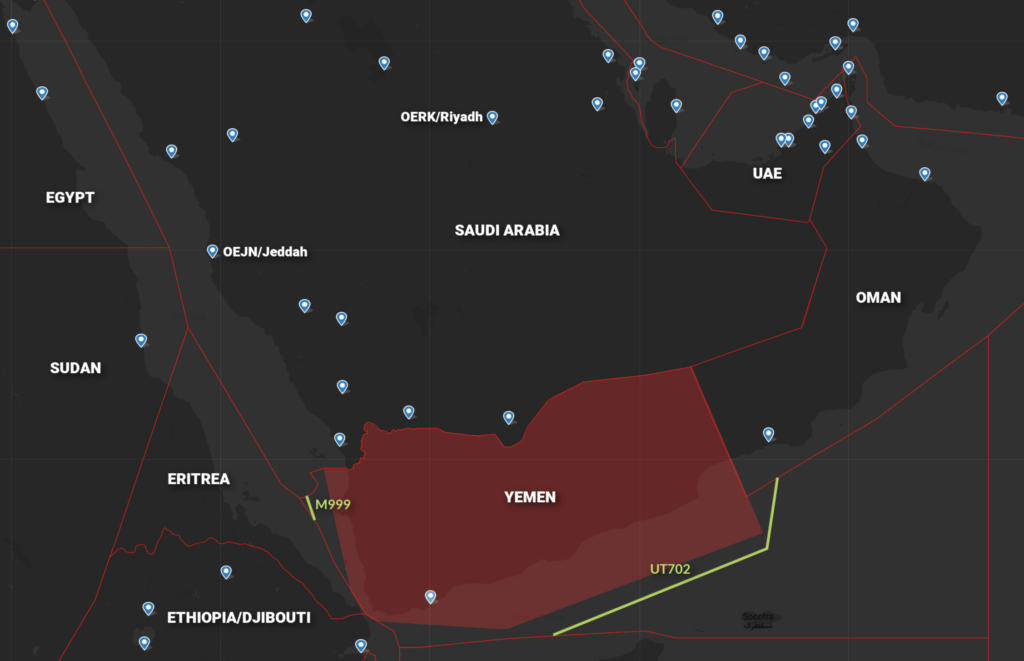
  • Yemen to the south is a no fly area.

Full info on ESCAT is found in their AIP. We wrote a bit about the Yemen conflict threat here.
Oman

Oman is a funny shaped country with a bit above the UAE and most of it below, bordering Yemen. They generally aren’t too political and get on with everyone.

  • OOMS/Muscat is the main airport. 08L/26R is currently the only operational runway. It offers an ILS either end and 13,123 ft. Muscat is a decent fuel and tech stop if routing from the Far East.

Iran

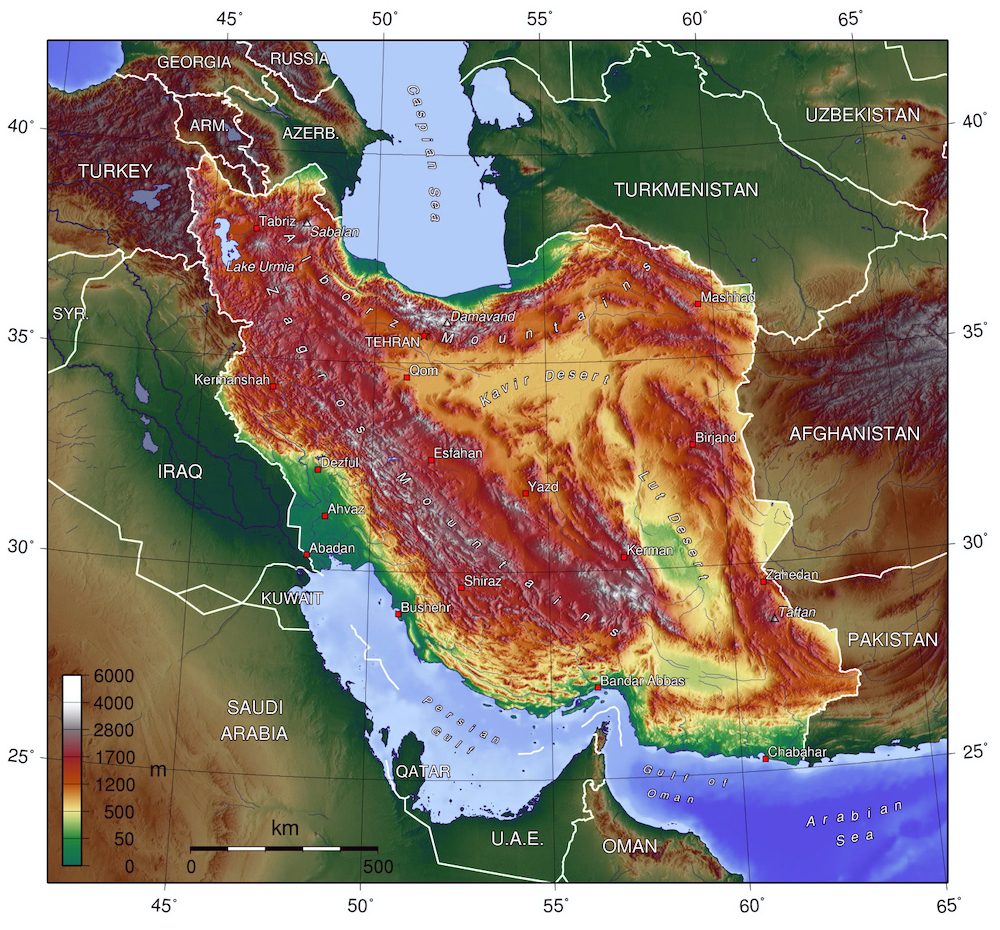
US operators are not allowed to overfly Iran, and there are overflight warnings associated with the country. If you do overfly and need to divert in the country, be aware that if you are coming from other countries, or have some nationalities onboard, this might cause some problems for you on the ground.

If you operate in with female crew, expect them to be asked to cover their heads leaving the airplane at some airports. There are also potential issues with lack of female security staff and crew have reported female pilots being asked to let their male co-pilot carry out walk-arounds to avoid difficulties with male security staff escorting a female.

The main airport OIIE/Tehran is a pretty decent one to go into though, although it is in the middle of some high terrain.

  • OIMM/Mashad – Another high altitude, high terrain airport with two decent length parallel runways (longest being 12,861 ft). Only 31R has an ILS approach (VOR DME on the rest) and you can likely expect a procedural to the ILS. Watch out on the GA because there is a large Holy Shrine which you are not allowed to fly over below 6000′
  • OISS/Shiraz – Right in the middle of a load of terrain. Not easy approaches to fly. The longest runway here is 14,200 ft and only 29L has an ILS. The GA on this is another one to watch – a lot of turns to keep you away from high ground.
  • OITT/Tabriz – Ok, all airport in Iran have high terrain around them. Tabriz is no exception. A little easier since it is only on three sides. Like the others, it has two decent length runways, but limited taxiways. There is an ILS approach onto 30 L and R but if you want to land onto either runway 12 you will need to circle…
  • Most smaller airports are not always well maintained. A quick Notam search shows up no less than 16 holes in poor runway 30 at OIIP/Payam Interational, and OIII/Tehran International (the other one), OIBB/Bushehr, OIHH/Hamadan, OINZ, OITL, OIMS… also come up

Jet Business Solutions, based in the UAE, can assist with support and handling in Iran – ops@jbs.aero
Qatar

  • OTHH/Doha Hamad is the main airport here. Doha is one of the most modern airports in the world and fantastic for passengers. The longest runway is a whopping 15,912 ft and there is a CATIII approach onto all four. The airport and ground operations here tend to be very efficient.

It is nice to operate into because it is built out on its own little bit of land. The city is quite futuristic looking and its a nice view on approach. There is high terrain close by so watch out for GPWS warnings if you mess up your tracking or speeds. The buildings also lead to wind shear and turbulence on approach.

While fairly westernised like Dubai, Qatari customs and laws can be stricter and should be carefully observed during Ramadan.

Kuwait

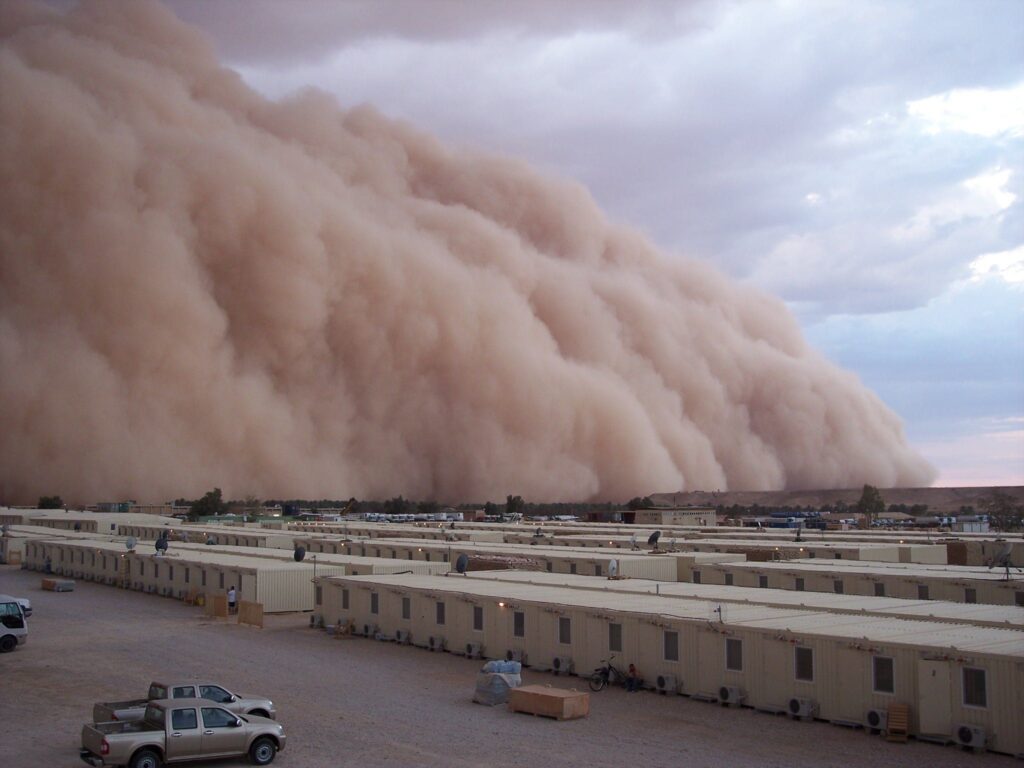
  • OKBK/Kuwait – pretty restricted airspace close into the airport so be careful if deviating. Get those calls for weather in early. This is another big airport with long but efficient taxis. Kuwait is more prone to big sand storms than some of the other areas. The longest runway is 11,483 ft and there is a CATII approach onto all four. Watch out if you’re operating on the 15s though – the taxi can be long and brake temperatures can heat up fast.
Bahrain

  • OBBI/Bahrain – This airport gets a lot of thermal activity in the summer to watch out for turbulence on short finals. The runways 30L and R have been known to confuse folk in the past as well. 30R is the long one in case you’re not sure (13,305 ft vs 8,301 ft so the difference should be quite obvious).

Iraq

  • US operators are permitted to overfly the ORBB/Baghdad FIR above FL320, but landing there would be unadvisable due to conflict, security and safety concerns.
  • ORER/Erbil, ORBI/Baghdad, ORMM/Basra, ORNI/Al Najaf international airports are all fairly well equipped.

Safeairspace

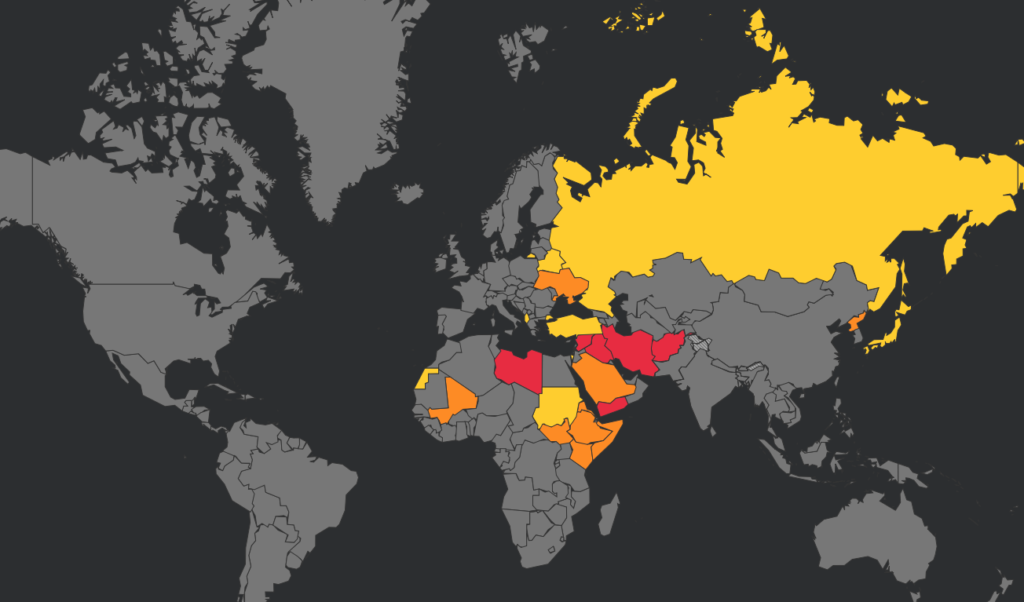
Conflict is common across the region. Currently several countries are no fly areas, with cautions applied to others. Visit Safeairspace for full information on the current status.

  • Syria is a no fly country
  • Yemen is a no fly country
  • The southern Jeddah FIR (Saudi Arabia) and OEJN/Jeddah airport have cautions due attacks from Yemen
  • Iraq can be overflown, but with certain restrictions
  • Iran is off limits to US operators
  • Israel has political tensions with neighbouring countries. Overflying and landing is possible but requires pre-planning
  • Lebanon has some risk due to proximity to other conflict nations.
Why fly to the Middle East?

It is very central and provides a connection between the west and the Far East and Asia. The main airports offer good tech and fuel stop options.

It is also an interesting region. There is great golf in Dubai, World Heritage sites in Saudi and Iran. And then of course there are the Finance and Oil Industries so corporate companies might find themselves flying business folk over. So, if you are ever operating in make the most of the layover, there are some cool sites to see and interesting things to see and do.

And ending with some ‘Good to Know’.

Some history of the region if you want to read some more. And a little mention is necessary because conflicts and Safeairspace aside, actually the political goings-on of the region are fairly important to our airplane goings-on.

For example, until the end of 2020 Israel was out of bounds. You could not fly across it if you were routing from a big old bunch of places. It was BIG news at the end of 2020 when the likes of Saudi Arabia and the UAE rebuilt their relationship with Israel and agreed to flights between the nations. Neighbors followed suit, and Jordan now also allow flights passing over Israel to utilize their airspace. Being able to fly across Israel significantly shorterns the flight time for aircraft routing from the Middle East and Europe.

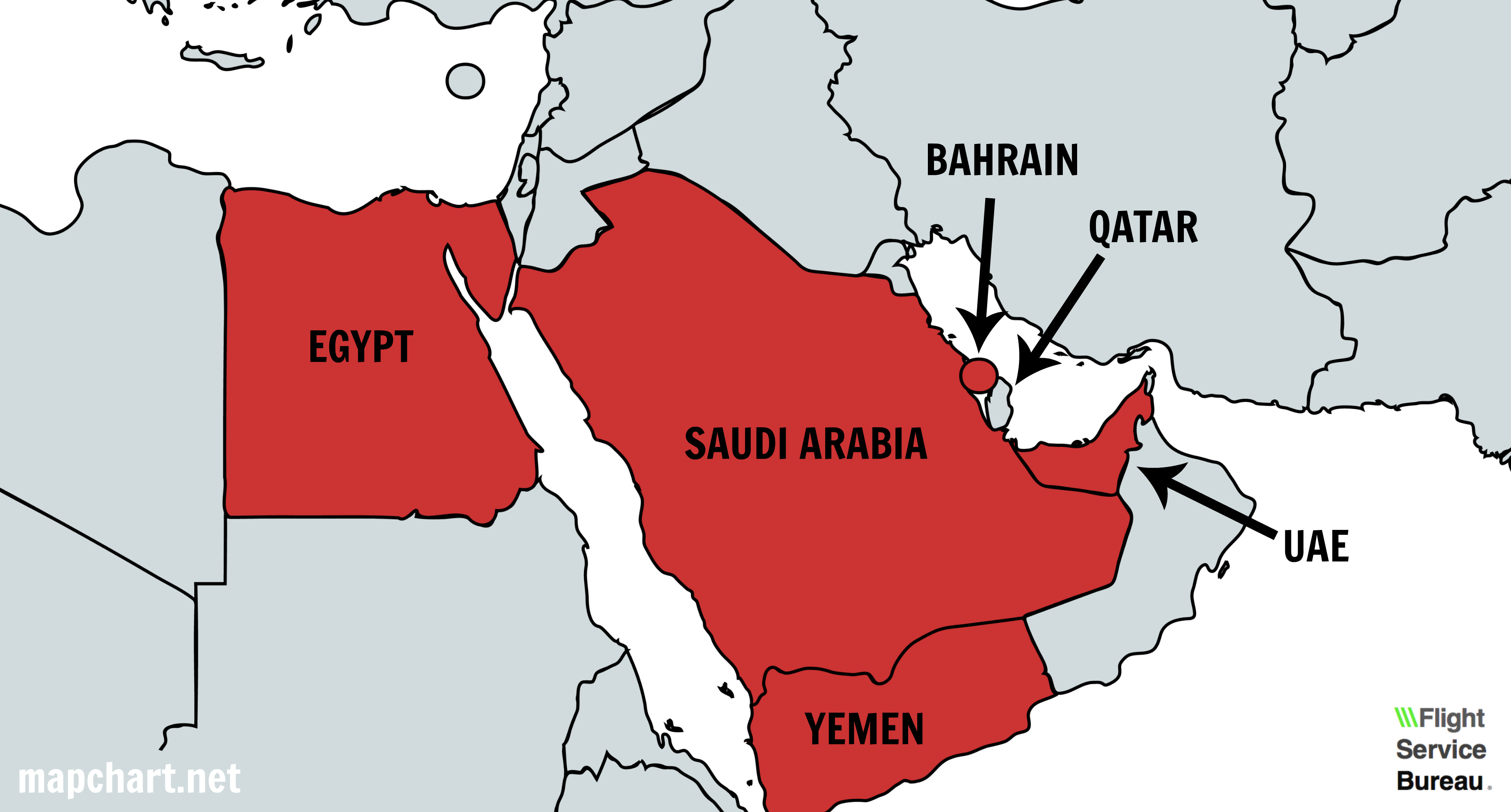
A second big political/ aviation newsworthy event was the ending of the Qatar blockade by Saudi, the UAE, Egypt and Bahrain. Obviously, this primarily helped Doha bound flights, but for all operators in the region it means easier airspace and radio work, and the opportunity to once again use OTHH/Doha as an alternate. 

The politics of Iran and Iraq mean if you are routing through one airspace, you probably should not divert into the other. Iran is the bigger worry here because they have an ADIZ and need you to check in prior to entering their airspace. One of the main southbound routes through Iraq (UM688) brings you close to the Tehran FIR border, and if you meet a big thunderstorm along the way and deviate in the wrong direction, you might just find yourself accidentally edging over the border. The same goes for routing along the M677 in Kuwait. If you are heading to Dubai, the VUTEB hold sits close to the border and again, weather can push you close to the FIR boundary.

The tensions with Iran and much of the rest of the Middle East are constantly simmering. One big no-no on your routings here is to refer to the Arabian Gulf as the Persian Gulf. At least to the wrong controller.
Has The Yemen Conflict Reached The UAE?

On January 17, bomb laden drones reportedly struck oil tankers and a construction site in Abu Dhabi, UAE. The impact sites were close to OMAA/Abu Dhabi International Airport.

Around the same time, Al-Houthi rebels claimed the group would be launching an attack “deep in the UAE”. While this attack in itself caused no disruption at the airport, it does highlight some serious concerns for safety in UAE airspace, and the wider impact of the conflict and volatility across the Middle East region in general.

What are the concerns?

The precise technical capabilities of the Yemeni rebel forces are not entirely known. In general their drone attacks have primarily targeted Saudi airports OEAB/Abha and OEGN/Jazan which lie close to the Yemen border. The capability and intent to send weapons through Saudi Arabia and to target the UAE is an escalation on what they have previously carried out.

Drone attacks in Saudi Arabia are a fairly common and persistent threat, however, Saudi Air Defence systems manage to intercept the vast majority before damage occurs. How these drones avoided detection is a concern.

What is the situation in Yemen?

Yemen has been an active conflict zone since 2014, with Saudi Arabia leading a coalition of countries from North Africa and West Asia against the rebel forces. OYSN/Sana’a airport has been impacted by multiple airstrikes throughout 2017 and 2018, and continues to be targeted in response to attacks such as this one, along with other regions of Yemen with known rebel activity.

Yemen airspace is prohibited by most major authorities. Saudi Arabian airspace has cautions for the southern Jeddah FIR bordering Yemen.

What is the general situation in the region?

While missile and drone attacks in Saudi territory have intensified recently, attacks against the UAE by the Al-Houthi group have never been confirmed until now.

OEJD/Jeddah lies almost 400 km north along the western coast and has seen some attempted attacks by drones throughout 2021, as well as attempted missile attacks.

OERK/Riyadh which lies in central Saudi Arabia has seem a number of attempts as well, however, Al-Houthi rebels denied they were responsible for a recent attempt in Riyadh. This took place in January 2021 and Saudi Air Defences destroyed the drone before any damage occurred. It was attributed to an Iraqi militant group.

Does this change the risk level for UAE airspace?

The rebels have suggested they will continue to target the UAE, however, they are targeting ‘sensitive sites’ on the ground such as oil refineries. There is no apparent intent to target aircraft or civilian airports. Unfortunately, such sites tend to be located along the coast and are in proximity to busy airspace and major airports.

Can we mitigate any of the risk?

The UAE have significant military defense capabilities as well. If you are operating into the region, be aware of increased military helicopter traffic. Maintain a good listening watch on frequency, and on 121.5.

The UAE do not use special procedures (like the Saudi ESCAT ones) but are proactive in closing their airspace if drones are identified within it – be aware of what your route options and alternate options are in case this occurs.

Keep an eye on Safeairspace for further updates or changes to the risk rating.


Gulf routings set to ease up as Qatar blockade comes to an end

After three and a half years of political stalemate, the Gulf blockade against Qatar by Saudi Arabia, the UAE, Egypt, and Bahrain, is coming to an end. These countries have restored diplomatic relations and opened their borders and airspace to Qatar – with Egypt also expected to follow suit shortly.

What does this mean for operators?

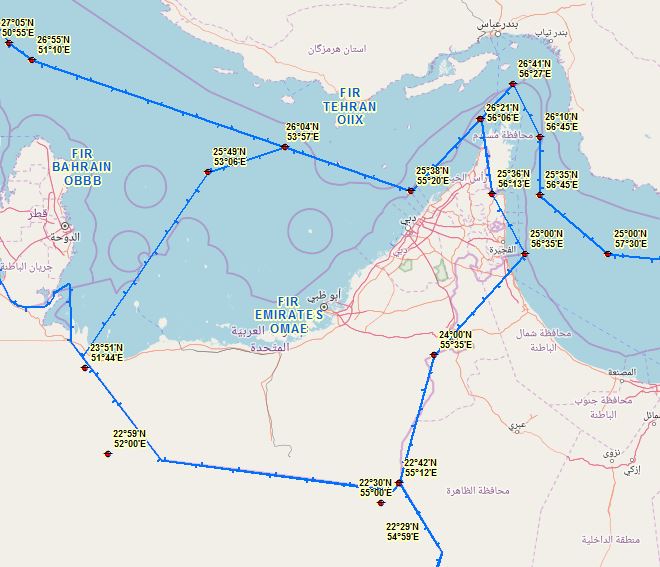
The biggest change seen will be for aircraft registered in Qatar (A7-) which will now be allowed to route via OEJD/Jeddah FIR and OMAE/Emirates FIR, and gain more efficient use of OBBB/Bahrain FIR – in addition to reinstated landing rights in those countries. This is as opposed to routing via OIIX/Tehran FIR, which incurs time and fuel penalties and in the worst cases requires a tech stop.

But this is also good news for foreign operators. For the past three years, foreign operators had been faced with various different restrictions if trying to fly to/from Qatar – they needed special permission from Saudi Arabia, Bahrain and the UAE if planning to overfly any of those countries, and Bahrain had banned direct flights from Qatar completely.

This has now changed. With Saudi Arabia, Bahrain and the UAE lifting their blockade against Qatar, they have cancelled a bunch of Notams which effectively means there are no longer any special requirements for foreign-registered aircraft flying to Qatar via Saudi/Bahrain/UAE airspace. In short, more efficient routings are now available if you are operating into, out of, and through the Arabian Gulf region.

Here is the current state of play as of 20 January 2021:

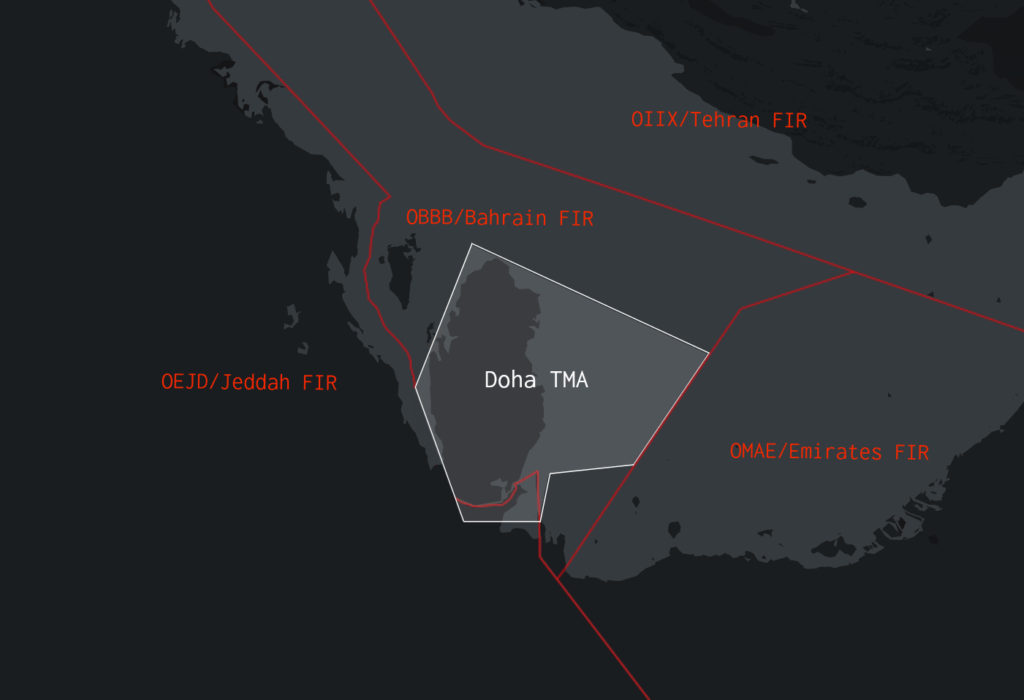
Remember: Qatar does not have its own FIR, and is nested completely under the OBBB/Bahrain FIR – any Qatar Notams are therefore published under OBBB. The Doha TMA extends SFC to FL245, above which is the Bahrain UIR.

If you have a question or have information to share, use our Slack channels! We are a community based on sharing information and resources to help each other – jump in! 


Qatar airspace update – military jets intercepting civil flights

In short: The situation is volatile and constantly changing, even by the hour. Military interception has been reported so the best advice is to be vigilant with sticking to assigned routes for all operations around the region.

The airspace blockade of Qatar has been ongoing since June 2017 with little end in sight.

But over the past few months, tensions have been escalating;

Here is the latest operational information we have:

A reminder that Qatar does not have its own FIR. It sits entirely within the Bahrain FIR- you will find Qatar airspace NOTAMs under OBBB. The Doha TMA extends SFC to FL245. Above this sits the Bahrain UIR.

Bahrain and Egypt have relaxed some of their initial restrictions. Saudi and UAE have not.

The current state of play as of 6 April 2018.


_________________________________________________________________________

Have you been through the region recently? Can you provide an update?

Extra Reading:

Some fascinating reporting about what this whole blockade is all about.

  • How a ransom for Royal falconers reshaped the Middle East” – New York Times
  • What the falcons up with Qatar?” – NPR Podcast


Emirates aircraft intercepted, Qatar complains to UN

OTZZ/Qatar The UAE allege that on Jan 15, Qatari fighter jets intercepted an Emirates aircraft in international waters just north of the tip of Qatar. Qatar denies the claim.

Following the incident, the UAE CAA published a safety alert, warning about “unannounced and hazardous military activities within Bahrain FIR in airways UP699 and P699”, which they consider to be “a potential hazard to the safety of flight.”

Qatar have filed a complaint of their own with the UN, claiming that UAE military aircraft have repeatedly violated their airspace during the ongoing diplomatic crisis between the Gulf states.

All this complaining on both sides is much more likely to be political wrangling, rather than any kind of genuine airspace safety issue.


Airspace Changes Coming for the OMAE FIR

On October 12th, GCAA announced the changes to the OMAE FIR.  They’ve got it all detailed in the latest AIRAC (AIP link below).

The major change–all aircraft require RNAV1 with GNSS to operate in the Emirates FIR, starting December 7th.  This is a change from the previous RNAV5.  With that, you can expect changes to SIDs, STARs, all ATS routes, holding procedures, communication frequencies, and others.  It’s a major overhaul to anticipate for the expected increase in traffic.

We’ve got for you:

AIC 04/2017
AIP Link (you can find all the specifics to the changes here)
UAE ENROUTE CHART

OMAE/UAE 
TRIGGER NOTAM - PERM AIRAC AIP AMDT NR 13/2017 WEF 07 DEC 2017
RNAV 1 WITH GNSS OPS RQMNTS MANDATED
RNAV 1 ROUTES ADDED
STD ROUTINGS AMD
CONDITIONAL ROUTES ADDED
ENR HOLDINGS ADDED
WAYPOINTS ADDED, DELETED AND AMD
OMR-51 LOWER LIMIT AMD
ADDED FREQ FOR EMIRATES FIR. 
07 DEC 00:00 2017 UNTIL 21 DEC 23:59 2017.


Qatar – What We Know

There have been many reports of countries cutting diplomatic ties with Qatar.  We’ll leave the speculation to the media, we want to break down what it means for operators and aircraft owners.  Just the facts.

Saudi Arabia, Egypt, Bahrain, UAE, Libya, Yemen, Maldives, and Mauritius have all cut diplomatic ties with Qatar.

As of now, only Saudi Arabia, Bahrain, Egypt, and UAE have placed flight restrictions on flights to/from Qatar. No known restrictions (beyond those known for Libya and Yemen anyhow) for the remaining countries mentioned in reports.

The new regulations are quite clear. You cannot overfly or land at any airport in Saudi Arabia, Bahrain, Egypt, or UAE with a Qatari registered aircraft. If you have a non-Qatari registered aircraft, and need to operate to/from Qatar and use the mentioned countries airspace you’ll need special approvals from the authorities below:

Saudi Arabia GACA:
+966115253336
special@gaca.gov.sa

Egypt ECAA:
+202 22678535
+202 24175605
AFTN: HECAYAYX

UAE GCAA:
+971 50 642 4911
avsec-di@gcaa.gov.ae


No special exemptions have been mentioned by Bahrain, but they’ve given the following routing for those effected by the restrictions:

UT430 OUTBOUND VIA RAGAS
UR659 INBOUND VIA MIDSI

Due to the situation, Iran has published special routing schemes for transitioning their airspace, as they’ll get quite busy:

Qatar to Ankara:
FL150-FL190, RAGAS-UT430-LAGSA-UL223-TESVA/ALRAM

Qatar to Muscat and Karachi FIR:
FL150-FL19, expect climb after KIS
RAGAS-M561-ASVIB (To Karachi)
RAGAS-M561-KHM-BUBAS (To Muscat)

Ankara to Qatar:
Between FL240 to FL300, ALRAM-UT36-MIDSI

Muscat to Karachi to Qatar:
Between FL240 to FL260, N312/A453-MIDSI

Also, if flying from Ankara to UAE (except OMAA), use the below routing:
BONAM-L319-RADID-M317-KUPTO-G666-ORSAR

The situation is fluid, and we will update this post as we continue to collect news.