Gulf routings set to ease up as Qatar blockade comes to an end

After three and a half years of political stalemate, the Gulf blockade against Qatar by Saudi Arabia, the UAE, Egypt, and Bahrain, is coming to an end. These countries have restored diplomatic relations and opened their borders and airspace to Qatar – with Egypt also expected to follow suit shortly.
What does this mean for operators?
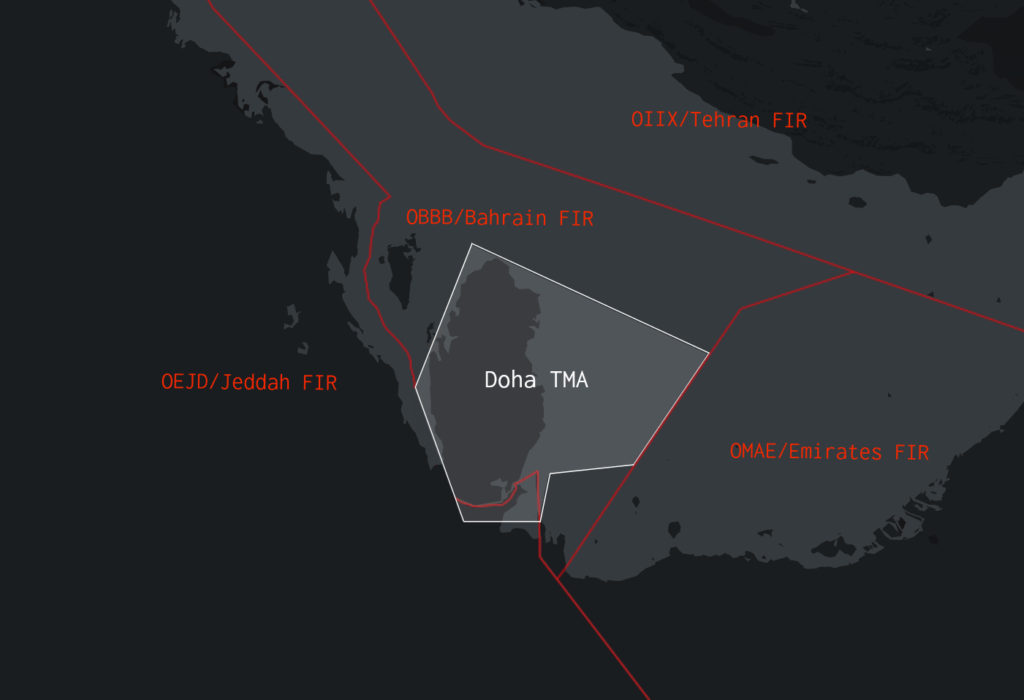
The biggest change seen will be for aircraft registered in Qatar (A7-) which will now be allowed to route via OEJD/Jeddah FIR and OMAE/Emirates FIR, and gain more efficient use of OBBB/Bahrain FIR – in addition to reinstated landing rights in those countries. This is as opposed to routing via OIIX/Tehran FIR, which incurs time and fuel penalties and in the worst cases requires a tech stop.
But this is also good news for foreign operators. For the past three years, foreign operators had been faced with various different restrictions if trying to fly to/from Qatar – they needed special permission from Saudi Arabia, Bahrain and the UAE if planning to overfly any of those countries, and Bahrain had banned direct flights from Qatar completely.
This has now changed. With Saudi Arabia, Bahrain and the UAE lifting their blockade against Qatar, they have cancelled a bunch of Notams which effectively means there are no longer any special requirements for foreign-registered aircraft flying to Qatar via Saudi/Bahrain/UAE airspace. In short, more efficient routings are now available if you are operating into, out of, and through the Arabian Gulf region.
Here is the current state of play as of 20 January 2021:
| Country | Non-QATAR registered | QATAR registered |
|---|---|---|
| Egypt (HECC) | No NOTAM'd restrictions. | Ban on Qatar-registered aircraft lifted 11 Jan 2021. (NOTAM A0027/21) Temporary RNAV route established for Qatar Registered aircraft between Beirut and North African Airports. |
| Bahrain (OBBB) | No longer any special requirements for foreign-registered aircraft flying to/from Qatar via Bahrain airspace. However, Bahrain publishes a Standard Routes Document as an AIP SUP which contains all the routes they want you to fly, depending on who you are, and where you are flying from/to. They also publish a bunch of Notams with corrections to this document. So be sure to check both the AIP SUP and the OBBB Notams before planning a route through Bahrain’s airspace. | Ban on Qatar-registered aircraft lifted 10 Jan 2021. (NOTAM G1202/20) Establishment of temporary RNAV route for Qatar Registered Aircraft arriving Qatar Aerodromes. |
| Saudi Arabia (OEJD) | No NOTAM'd restrictions. | Ban on Qatar-registered aircraft lifted 4 Jan 2021. |
| UAE (OMAE) | No NOTAM'd restrictions. | Ban on Qatar-registered aircraft lifted 7 Jan 2021. |
| Oman (OOMM) | No NOTAM'd restrictions. | No NOTAM'd restrictions. |
| Kuwait (OKAC) | No NOTAM'd restrictions | No NOTAM'd restrictions |
| Iran (OIIX) | No NOTAM'd restrictions. | Various Traffic Orientation Schemes are NOTAM'd depending on your routing through the Tehran FIR. OIIX will not be publishing a AIRAC AIP amendment in January or February 2021, so watch for the plethora of NOTAM'd ATS route closures, amendments, or installations. Next AIRAC AIP amendment due 25 March 2021 |
| Yemen (OYSC) | No NOTAM'd restrictions. See Safeairspace.net - there is ongoing conflict in the region. Risk Level One - DO NOT FLY. We strongly recommend avoiding this airspace entirely. | OEJD/Saudi NOTAM A0604/17 purports to be a NOTAM "On behalf of Republic of Yemen/Aden." "All aircraft registered in the State of Qatar not authorized to overfly Republic of Yemen airspace. Although it appears Qatar aircraft are not strictly adhering to this. No such NOTAM issued by OYSC FIR. See Safeairspace.net - there is ongoing conflict in the region. Risk Level One - DO NOT FLY. We strongly recommend avoiding this airspace entirely. |
Remember: Qatar does not have its own FIR, and is nested completely under the OBBB/Bahrain FIR – any Qatar Notams are therefore published under OBBB. The Doha TMA extends SFC to FL245, above which is the Bahrain UIR.
If you have a question or have information to share, use our Slack channels! We are a community based on sharing information and resources to help each other – jump in!
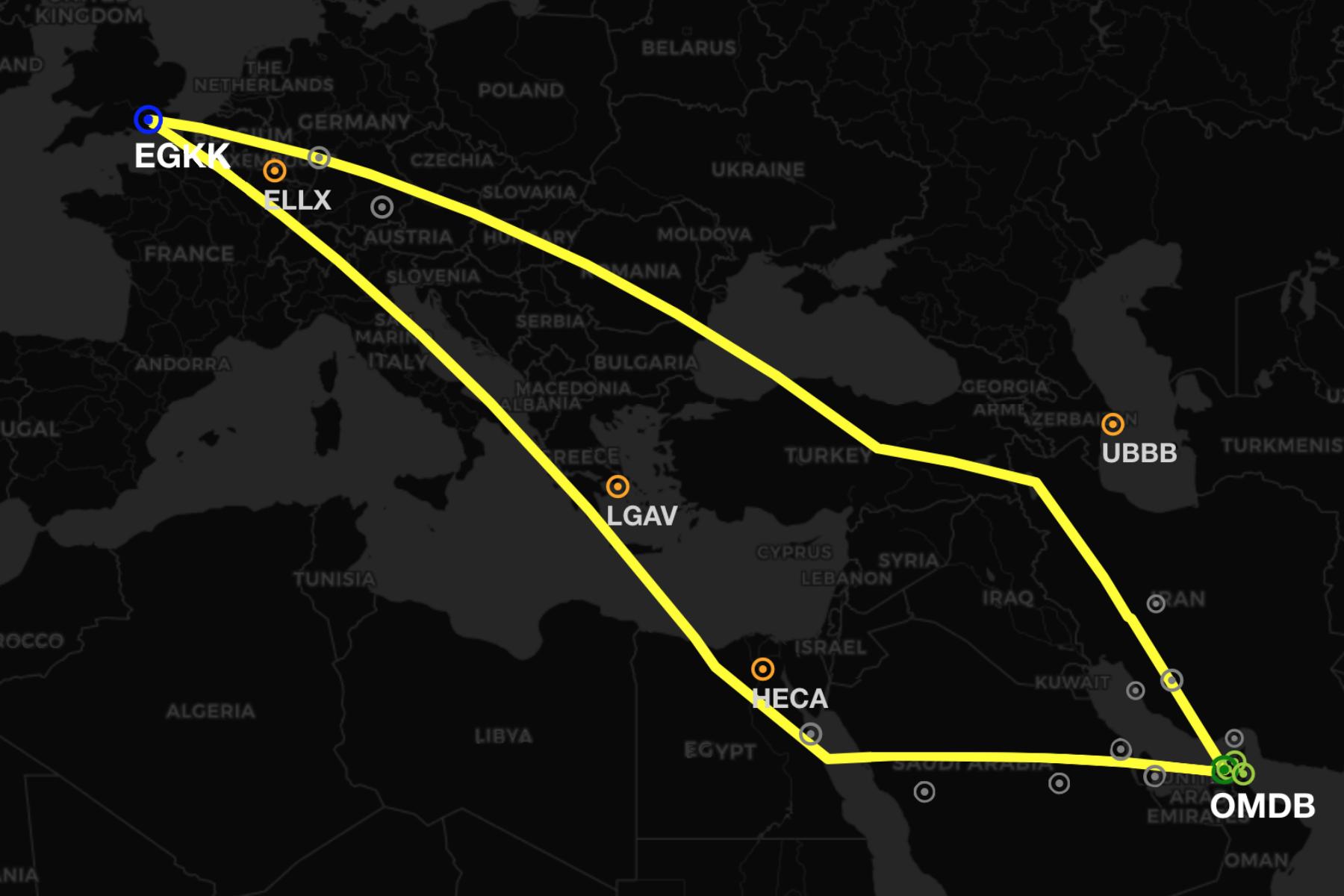
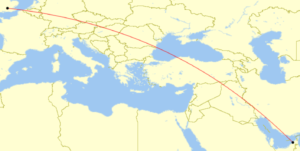 There are more business aviation operators flying between the Middle East and Europe than ever before. So we took the time to look over the route options between the two regions. For our example we will be using a flight from Dubai to London, but similar operational considerations are valid for the plethora of route combinations through this whole region.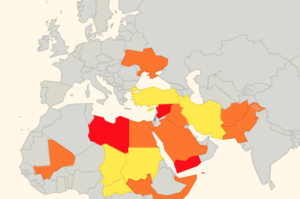
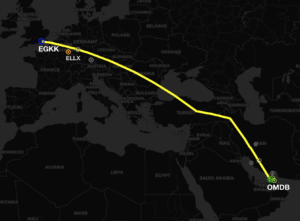 Safety: Both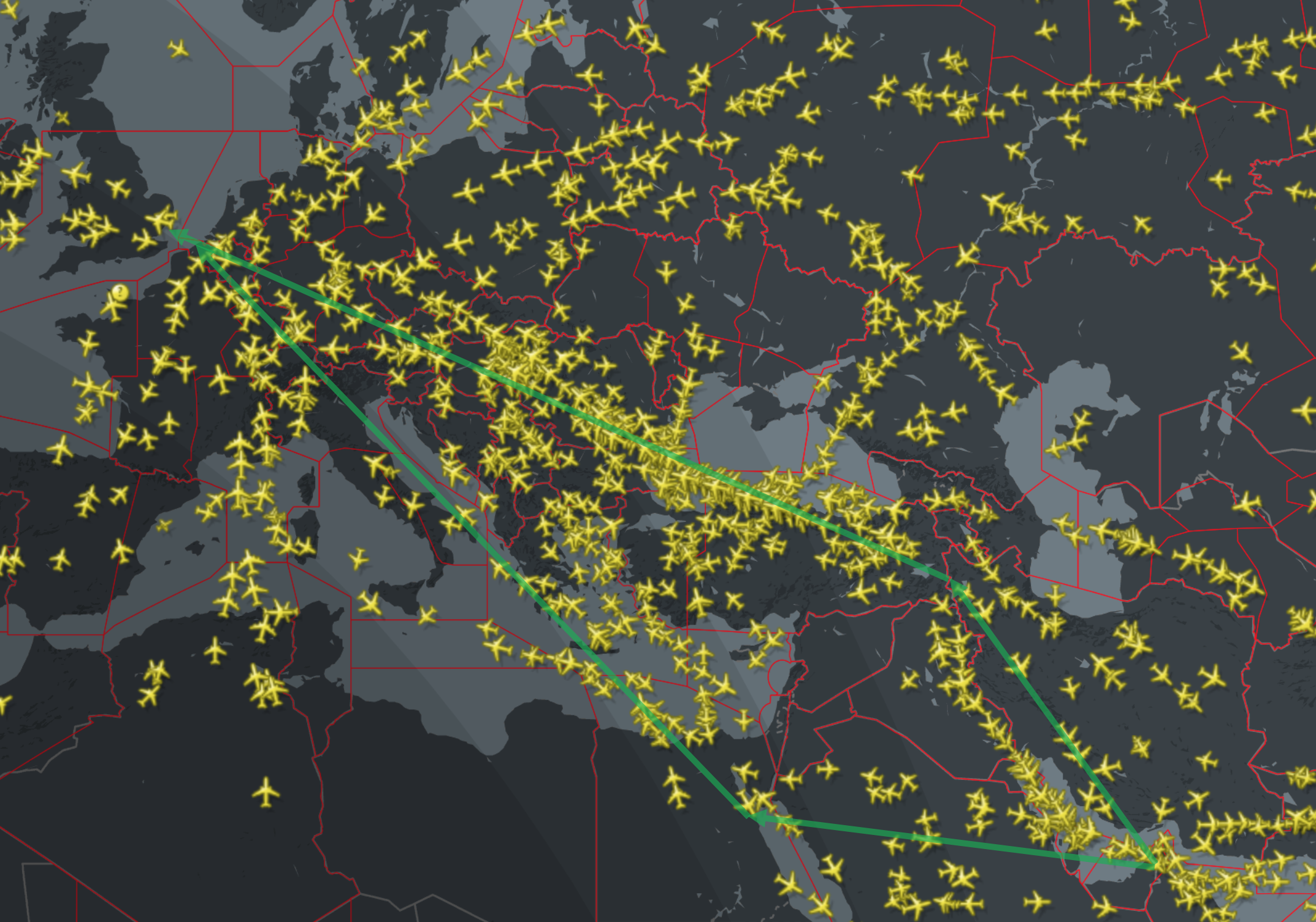
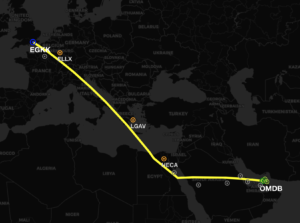 Safety: In terms of airspace warnings and risk, this route is slightly better. We have rated